Il Villaggio Olimpico di Roma at MAXXI: Il mondo in 300.000 mq, December 18, 2026 to April 25, 2027
In short. Il Villaggio Olimpico di Roma at MAXXI: the focus exhibition Il Villaggio Olimpico di Roma.
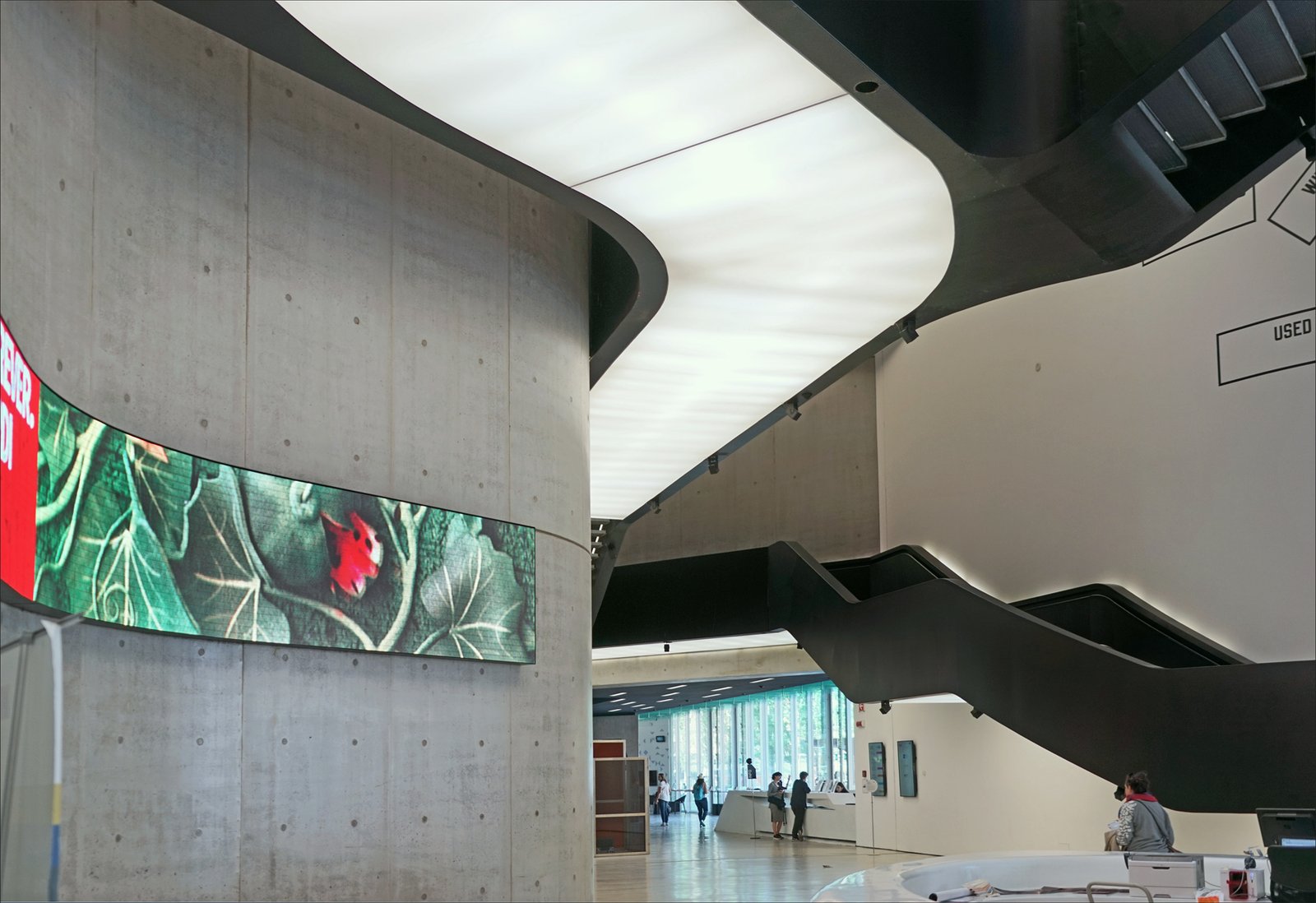
Il Villaggio Olimpico di Roma at MAXXI: the focus exhibition Il Villaggio Olimpico di Roma. Il mondo in 300.000 mq (Rome's Olympic Village: The World in 300,000 Square Meters) is on at MAXXI from December 18, 2026 to April 25, 2027, at the National Museum of 21st Century Arts, Via Guido Reni 4/A, 00196 Rome, in the Flaminio district. The museum is open Tuesday to Sunday from 11:00 to 19:00, with the ticket office open until an hour before closing, and closed every Monday, December 25 and May 1. Take Metro A to Flaminio and then tram 2 to the Apollodoro stop, or buses 53 (De Coubertin/Palazzetto dello sport stop), 168 (MAXXI, Reni/Flaminia stop), 280 (Mancini terminus) and 910 (Flaminia/Reni stop). Museum tickets cost €15 full price at the ticket office and €14 online, €12 reduced at the office and €11 online, and there's also an €18 open ticket. Tickets are sold at the desk or on the venue's official website, which also lists the call center, 800266300, open every day from 10:00 to 19:00.
The focus belongs to the series "architecture from the MAXXI archives" and is produced by the museum's architecture archive center, curated by Micaela Antonucci and Carla Zhara Buda. Through archive material, drawings and images, it tells the story of the neighborhood built to house the athletes of the Games of the XVII Olympiad, in summer 1960. The detail that makes the visit almost paradoxical is geographic: the Olympic Village begins a few hundred meters from the galleries where it's being told. You leave the museum and walk right into the subject of the exhibition.
Il Villaggio Olimpico di Roma at MAXXI: dates, hours and tickets
The focus on the Olympic Village stays open for 129 days, from Friday, December 18, 2026 to Sunday, April 25, 2027, that is, from the holiday weeks to full spring.
Dates
The first day is a Friday, a week before Christmas, and the last falls on April 25, Liberation Day, which in 2027 is a Sunday. In between are the museum's fixed closures: every Monday and December 25, which in 2026 is a Friday. Easter Monday, March 29, 2027, falls on a Monday: for special holiday openings, the calendar published by the museum is what counts.
Hours
MAXXI is open Tuesday to Sunday from 11:00 to 19:00. The ticket office closes an hour before the museum, so at 18:00: arrive at 18:10 and you're left outside, even though the galleries are still open. For an archive focus made of drawings and documents to read, go in no later than 17:00.
Cost
MAXXI admission costs €15 full price and €12 reduced at the ticket office, €14 and €11 online, there's also an €18 open ticket, and free entry for the categories the museum lists. MAXXI is part of the Roma Pass network. You can change the date until the day before your visit, by 18:00, for €2.50, by request through the museum's customer service form.
Audio guides
MAXXI audio guides cost €3 and offer routes devoted to Zaha Hadid's building and the current exhibitions, in Italian and English. You buy the card at the ticket office and listen on your own phone by scanning a QR code or entering a unique code.
What the exhibition on Rome's Olympic Village is about
The MAXXI exhibition presents the Olympic Village as a territory contested between architectural vision and geopolitical strategy. During the 1960 Olympics the neighborhood became a space of coexistence for athletes from all over the world, which the museum calls a temporary experiment in "geopolitical cohabitation".
An experiment in cultural diplomacy
The curators' key reading is cultural diplomacy through sport and temporary housing. For a few weeks delegations from distant, and sometimes rival, countries shared the same neighborhood, the same avenues, the same common spaces. The focus reconstructs this coexistence through archive material: the neighborhood plan becomes a political map, and the allocation of lodgings a chapter in the history of international relations.
Drawings, documents, photographs
The material on display is of three kinds, according to the official presentation: archive documents, drawings and images. The image chosen as the exhibition's header is a view of the Olympic Village in 1960, kept in the MAXXI Architecture and Contemporary Design Collection, Monaco-Luccichenti Archive. It's a clear clue to where much of the material comes from: the archive of one of the two firms that signed the project.
Why the title speaks of 300,000 square meters
The subtitle, "The World in 300,000 Square Meters", puts two scales together. On one side the area of the neighborhood, on the other the whole world, represented by the nations that lived there for the length of the Games. It's a phrase that sums up the focus: a piece of city designed to hold, for a few weeks, the political geography of the planet.
The history of Rome's Olympic Village, from the Parioli camp to the neighborhood
The Olympic Village was built between 1958 and 1959 on the plain between the Villa Glori hill and the Tiber, designed by Vittorio Cafiero, Adalberto Libera, Amedeo Luccichenti, Vincenzo Monaco and Luigi Moretti.
Before the Village: the Parioli camp
In the 1940s, because of the war, a cluster of refugee shacks had formed on that plain, known as the Parioli camp. The Olympics awarded to Rome provided the occasion to clear and demolish it. It's a beginning the Olympic postcards don't tell: the model neighborhood of 1960 was born on top of a postwar emergency settlement.
Who paid and who moved in
The complex was built with funding from the state employees' pension fund, the City of Rome and CONI, the Italian Olympic Committee. After the Games the apartments were handed to INCIS, the national institute for state employees' housing, and assigned by competition to public employees. In 1972, when INCIS was dissolved, management passed to the public housing authority, and in 1985 the tenants bought out over 90% of the apartments, which became private property.
Corso di Francia
To protect the neighborhood's life while linking the center, on the Parioli side, with the Cassia and Flaminia roads, Corso di Francia was built: a kilometer-long viaduct designed by Pier Luigi and Antonio Nervi, crossing the Tiber on the Ponte Flaminio. The viaduct still cuts through the Village from north to south.
Streets named after nations
Most of the Village's streets are named after the countries that took part in the 1960 Games, and the main avenue is called Viale XVII Olimpiade. Other streets are dedicated to Pierre de Coubertin, founder of the modern Games, to Olympic champions Giulio Gaudini, Nedo Nadi and Dorando Pietri, to Indira Gandhi and Jan Palach, and one street, Via degli Olimpionici, honors all the athletes who have taken part in the Games.
A curious fact about Il Villaggio Olimpico di Roma at MAXXI, December 18, 2026 to April 25, 2027
The most surprising curious fact is that the Olympic Village has a twin, on the other side of the city. On Via Ostiense stands the Decima neighborhood, built directly by INCIS using the same design by the same architects. Two neighborhoods drawn by the same hands, one born for the Olympics and the other for the daily life of state employees, at opposite ends of Rome.
So whoever visits the MAXXI focus and looks at the Village drawings is also looking, without knowing it, at a piece of Decima. It's a detail that changes how you read the whole project: the Olympic Village wasn't just temporary housing for athletes, it was a public housing prototype meant to be replicated. Its fate after the Games confirms it, with the apartments assigned by competition to state employees.
A second, smaller and very Roman curiosity: the Village has a coat of arms, the same as Parioli's. On a red field, two crossed silver swords with golden hilts and a green palm leaf set upright. A neighborhood born in 1960 inherited, in short, the heraldry of the area where it was built.
A third curiosity, from the movies: the Olympic Village is one of the places in Rome where the most films and TV series are shot every year. It's a ready-made set for anyone looking for modern Rome, far from the domes and ruins.
The architects of Rome's Olympic Village and the Monaco-Luccichenti Archive
The Olympic Village project bears five signatures: Vittorio Cafiero, Adalberto Libera, Amedeo Luccichenti, Vincenzo Monaco and Luigi Moretti. The MAXXI exhibition draws on the archive of the firm founded by two of them, Monaco and Luccichenti, which the MAXXI Foundation bought in 2015.
Amedeo Luccichenti
Amedeo Luccichenti was born in Isola del Liri on January 8, 1907, grew up in Grottaferrata and graduated in 1934 from Rome's Royal School of Architecture. In 1937 he began his long partnership with Vincenzo Monaco, with whom he founded a firm. The two made their name with a design for the Palazzo dei Congressi of the 1942 Universal Exposition, placed second behind the winning design by Adalberto Libera, who years later would be their colleague on the Olympic Village. Luccichenti died in Neuilly-sur-Seine on October 10, 1963.
The Monaco-Luccichenti firm after the war
After the war the firm worked a great deal in Rome. Between 1948 and 1950 Monaco and Luccichenti built three apartment buildings in Parioli, on Viale Parioli, Via Archimede and Via di San Valentino, followed by others on Via di San Valentino and in the Trieste district, and between 1952 and 1953 two buildings on Via del Circo Massimo and an office building on Via Emanuele Gianturco, then seven more apartment buildings in Parioli. The Olympic Village, in short, was born a few steps from a neighborhood the two architects knew building by building.
The Village years
Between 1957 and 1960 the firm tackled the most important projects in its history. With Belgiojoso, Gardella, Peressutti, Perugini, Quaroni and Rogers it built the Italian pavilion for the 1958 Brussels World's Fair, it submitted a design for the Fiumicino air terminal, some of whose solutions were incorporated into the built project, and in 1958, with Cafiero, Libera and Moretti, it designed the Olympic Village on commission from INCIS. In the early 1960s it handled the SIAE headquarters on Viale dell'Arte, in EUR.
Rome 1960: the Olympics that built the neighborhood
The Games of the XVII Olympiad took place in Rome from August 25 to September 11, 1960. The Olympic Village was built to house the athletes.
The award
Rome's bid for 1960 was submitted to the International Olympic Committee in early 1955, at the request of Prime Minister Mario Scelba, CONI led by Giulio Onesti and Mayor Salvatore Rebecchini. The Games were awarded to Rome on June 16, 1955, at the 50th IOC session in Paris.
A chance half a century in the making
Rome had already been awarded the 1908 Olympics, but after the 1906 eruption of Vesuvius it gave them up, handing the organization to London. Before 1960 only one other Italian city had hosted the Olympics: Cortina d'Ampezzo, with the 1956 Winter Games.
The venues nearby
The Village wasn't an island. A few steps away stood two venues built for the same Games: the Palazzetto dello Sport on Piazza Apollodoro, designed between 1958 and 1960 by Annibale Vitellozzi with engineer Pier Luigi Nervi, and the Stadio Flaminio, built between 1957 and 1959 to a design by Antonio Nervi with Pier Luigi Nervi. If you arrive at MAXXI by tram 2, you get off right at the Apollodoro stop, in front of the Palazzetto.
Something nobody tells you about Il Villaggio Olimpico di Roma at MAXXI, December 18, 2026 to April 25, 2027
Hardly anyone remembers it, but four sculptures older than the neighborhood stand in the Olympic Village. They're Amleto Cataldi's bronze groups depicting Soccer, Running, Wrestling and Boxing, which originally decorated the facade of the Stadio Nazionale, the venue demolished in 1957 to make way for the Stadio Flaminio.
The four sculptures tell the continuity between this part of Rome's sporting eras better than any panel. The Stadio Nazionale was torn down, the Stadio Flaminio built in its place for the 1960 Games, and the bronzes that adorned the old venue were placed in the new neighborhood, among the athletes' buildings. When you leave MAXXI after seeing the Village drawings you can look for them walking through the neighborhood's streets: it's the most concrete way to complete the exhibition.
The second thing few people mention concerns the museum entrance. Besides the main entrance at Via Guido Reni 4/A, MAXXI has a second entrance at Via Guido Reni 8, usable during bookshop and café hours. And Piazza Alighiero Boetti, the open space the building faces, stays freely accessible even outside opening hours during scheduled events.
How to get to MAXXI for the Olympic Village exhibition
MAXXI recommends two main ways to reach Via Guido Reni by public transit: Metro A to Flaminio followed by tram 2 to the Apollodoro stop, or one of the four bus lines serving the area.
Metro A and tram 2
From Flaminio station on Metro A, on Piazzale Flaminio, take tram 2 and get off at the Apollodoro stop, in front of the Palazzetto dello Sport. From there the museum is a few minutes' walk. It's the simplest combination if you're starting from Termini, Piazza di Spagna or San Giovanni, all Metro A stations.
Buses
The museum lists four lines: the 53, stopping at De Coubertin/Palazzetto dello sport, the 168, stopping at MAXXI, Reni/Flaminia, the 280, whose terminus is at Piazza Mancini, and the 910, stopping at Flaminia/Reni. For up-to-date times and full routes, use the Rome transit company's journey planner before you set out.
On foot across the Tiber
The Ponte della Musica, named after Armando Trovajoli, is reserved for pedestrians and bicycles and links Flaminio with Lungotevere Cadorna, by the Foro Italico. It's 190 meters long and part of the wider Parco della Musica e delle Arti project, running from Villa Glori to Monte Mario along Via Guido Reni axis. If you're staying in Prati or the Della Vittoria district, it's the nicest way to arrive.
By car
By car you arrive from Via Flaminia or the riverside roads, and street parking is hard on weekdays and almost impossible on concert nights at Auditorium Parco della Musica or match days at the Stadio Olimpico. The Auditorium has two paid parking areas, a surface lot and a multistory garage, entered from Viale Pietro de Coubertin and with spaces reserved for people with disabilities: from there it's about a 10-minute walk to the museum.
My tip for Il Villaggio Olimpico di Roma at MAXXI, December 18, 2026 to April 25, 2027
My tip is to turn the exhibition into a half day in two parts: first the focus at MAXXI, then the real Village, on foot. No other architecture exhibition in Rome lets you compare the drawings with the built result within a quarter of an hour's walk.
The first part happens inside the museum. Go in early in the afternoon, when the winter light is still full, give the focus the time it takes to read the documents and look carefully at the plans: they're the key to finding your way afterward, on the street. If you have a smartphone you can photograph the overall plan of the neighborhood, if the gallery rules allow it, and use it as a map.
The second part happens outside. Leaving MAXXI you cross the Auditorium area, which borders the Village, and reach Viale XVII Olimpiade. From there you can look for the Corso di Francia viaduct, the streets named after the nations of the Games, Via degli Olimpionici, Amleto Cataldi's bronzes and the church of San Valentino. In an hour's walk you rebuild what the focus tells on paper.
The best day, in our opinion, is a Tuesday or Wednesday: the museum is quieter, and the residential neighborhood shows its everyday life. If you come in spring, in March or April, you'll have longer days and can end the visit by climbing the Villa Glori hill, behind the Auditorium.
Zaha Hadid's MAXXI, home of the architecture archives
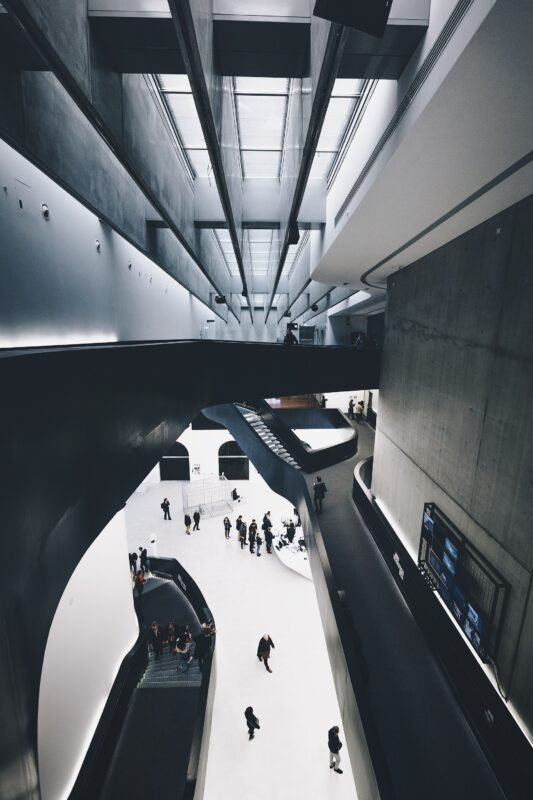
MAXXI is Italy's first national museum devoted to contemporary art and architecture, opened in 2010 to a design by Zaha Hadid. Hosting a focus on the Olympic Village here makes obvious sense: the museum holds architecture collections and, through its archive center, preserves the papers of firms such as Monaco and Luccichenti's.
A barracks turned museum
The site where the museum stands was occupied by the former Caserma Montello, a complex of military workshops and pavilions long disused. In 1997 the Ministry of Cultural Heritage obtained it from the Ministry of Defense, and in 1998 the international competition was launched, drawing 273 entries from around the world and won by Zaha Hadid. So Flaminio saw military land turned into a museum, just as the Parioli camp plain had become an Olympic neighborhood 40 years earlier.
The square and the building
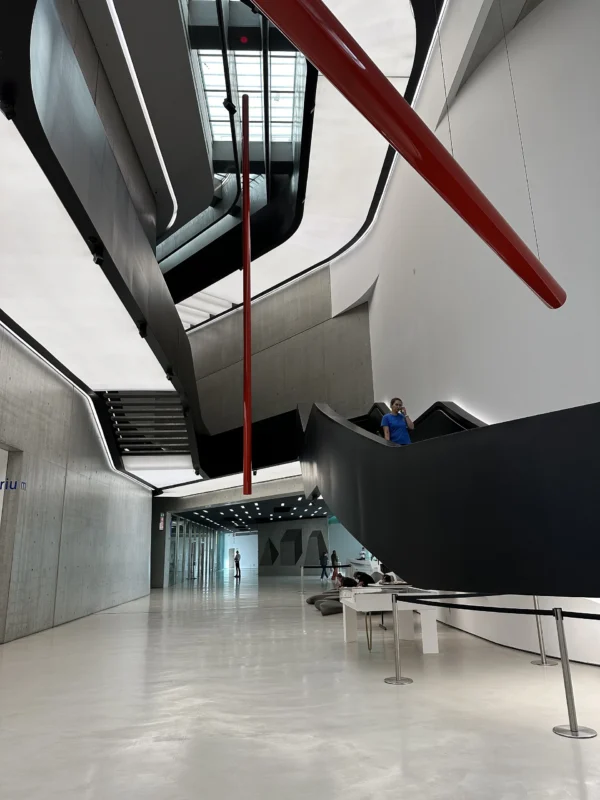
The project covers 29,000 square meters around a large open square, now named after Alighiero Boetti. The building is organized on three levels, with galleries linked by long walkways that let you see the rooms and the outside. It's a museum you walk through, and if you've come to see an exhibition about living spaces, pay attention to the space you're moving through as well.
Other exhibitions in the same museum
MAXXI's calendar is packed, and during the focus the museum also hosts other exhibitions, with the full calendar on the official website. If you're interested in architecture, our site has a page on Vitalità dell'architettura italiana 1946-2026, and for the full museum page start from our MAXXI page.
Another well-known fact, yet one rarely mentioned
It's well known that Renzo Piano's Auditorium Parco della Musica is one of the symbols of contemporary Rome. Rarely mentioned, though, is that the Auditorium stands inside the Olympic Village: the Village's planning zone includes the Auditorium Ennio Morricone on Viale Pietro de Coubertin, and the competition the City launched in 1993 named as its site precisely the area between the Village and the Stadio Flaminio.
That fact changes the perspective. Whoever goes to a concert at the Auditorium enters, often without knowing it, the 1960 Olympic neighborhood, and MAXXI, a few hundred meters away, is the neighbor that now tells its story. In just over half a century the same plain went from the shacks of the Parioli camp to the athletes' village, from the state employees' neighborhood to Renzo Piano's music citadel, whose competition he won in 1994 and which opened in 2002.
There's a second fact, known to architects and little remembered elsewhere: the neighborhood's main avenue, Viale XVII Olimpiade, carries the number of the Games in its name, and walking along it means following the axis around which the sporting world lived in 1960.
Finally, a fact that in our opinion explains why the focus is worth visiting even if you're not into sports. The Village was designed by five architects working together, all of whom had already signed apartment buildings, competitions and pavilions in Rome. Seeing their drawings is a direct way to understand how the city was imagined at the end of the 1950s.
Around MAXXI: what to see between Flaminio and the Olympic Village
MAXXI stands in Flaminio, between Via Flaminia and the Tiber, and borders the Olympic Village to the east. A few minutes on foot take you to the Auditorium, the Palazzetto dello Sport, the Ponte della Musica and the Villa Glori hill.
Auditorium Parco della Musica Ennio Morricone
Designed by Renzo Piano, the Auditorium opened in two stages, in April and December 2002, to give a home to the Accademia Nazionale di Santa Cecilia. During construction the remains of an ancient Roman villa emerged and were integrated into the complex. After Ennio Morricone's death in 2020, the Auditorium was named after the composer. In the gardens and foyer are works by Keith Haring, Alberto Burri, Alexander Calder and Maurizio Nannucci.
Palazzetto dello Sport
On Piazza Apollodoro, where tram 2 stops, stands the Palazzetto dello Sport by Annibale Vitellozzi and Pier Luigi Nervi, built between 1958 and 1960. It's one of the venues built for the Games and, coming from an exhibition on the Olympic Village, the first Olympic monument you meet getting off the tram.
Villa Glori
Behind the Auditorium rises the Villa Glori hill, opened to the public in 1924 as the Parco della Rimembranza, designed by Raffaele De Vico. Since 1997 it has hosted installations by contemporary artists, including Kounellis and Staccioli and, since 2000, Giuseppe Uncini's Porta del Sole and Paolo Canevari's Uomo-erba.
Foro Italico, Ponte Milvio and Villa Borghese
Crossing the Ponte della Musica you reach the Foro Italico and the Stadio Olimpico, and heading upriver to the north you find Milvian Bridge. To the south, along Via Flaminia, tram 2 takes you back to Piazzale Flaminio and Villa Borghese. During the focus the Stadio Olimpico also hosts Italy's matches in the 2027 Six Nations: on those days the area is very crowded.
The right photo to take at Il Villaggio Olimpico di Roma at MAXXI, December 18, 2026 to April 25, 2027
The right photo is taken outside the museum, under the Corso di Francia viaduct, with the Village buildings in the background. It's the image that brings together the two projects that shaped the neighborhood: the athletes' homes and the Nervis' infrastructure built to shield them from traffic.
The kilometer-long viaduct crosses the Village from north to south. Seen from below, with the structure in the foreground and the building facades behind, it conveys the scale of the project and the relationship between the boom-era city and the automobile. My advice is to find a spot where the viaduct cuts the frame diagonally and wait for someone to cross the street: the human presence gives the scale.
The second photo is taken on Viale XVII Olimpiade, framing the street sign. It's a simple image, but it tells the whole point of the focus on its own: an entire neighborhood named after the number of an edition of the Games. If you have time you can complete the series by photographing the signs of the streets named after nations.
The third photo is at MAXXI, on Piazza Alighiero Boetti, with Zaha Hadid's building behind you. Set beside the Village shot, it tells half a century of Roman architecture in two frames taken a few minutes apart. Inside the galleries the museum sets the photo rules: ask at the entrance, especially for the archive material.
Some important events that happened here in history
The plain between Villa Glori and the Tiber, where the Olympic Village, the Auditorium and, a little farther on, MAXXI now stand, went through radical transformations in a century.
The 1940s: the Parioli camp
With the war, a cluster of refugee shacks formed on the plain, the Parioli camp, which remained until the late 1950s.
1955: Rome wins the Games
On June 16, 1955, in Paris, the International Olympic Committee awarded Rome the Games of the XVII Olympiad. The decision set in motion the construction of the neighborhood and the nearby venues.
1957 to 1960: stadiums, arena and village
In 1957 the Stadio Nazionale was demolished to build the Stadio Flaminio, between 1958 and 1959 the Olympic Village was built, and between 1958 and 1960 the Palazzetto dello Sport went up. From August 25 to September 11, 1960 the neighborhood housed the athletes of the Games.
1972 and 1985: from public housing to private homes
In 1972 management passed from INCIS to the public housing authority, and in 1985 the tenants bought out over 90% of the apartments.
2002, 2010, 2015: culture arrives
In 2002 Renzo Piano's Auditorium opened, in 2010 Zaha Hadid's MAXXI, and in 2015 the MAXXI Foundation bought the archive of the Monaco-Luccichenti firm, the source of the focus's signature image.
Who has passed through Il Villaggio Olimpico di Roma at MAXXI, December 18, 2026 to April 25, 2027
In summer 1960 athletes from all over the world passed through the Olympic Village: it's the fact MAXXI builds the focus on, speaking of a temporary coexistence between delegations from different countries, an experiment in "geopolitical cohabitation" housed in a few blocks in northern Rome.
Before them came the architects. Vittorio Cafiero, Adalberto Libera, Amedeo Luccichenti, Vincenzo Monaco and Luigi Moretti signed the project in 1958, Pier Luigi and Antonio Nervi designed the Corso di Francia viaduct, and nearby Annibale Vitellozzi and Pier Luigi Nervi built the Palazzetto dello Sport. From the old Stadio Nazionale came Amleto Cataldi's bronzes, and with them the memory of a venue that no longer exists.
After the Games came the state employees, assigned the apartments by competition: for decades the Olympic neighborhood was a neighborhood of public employees, and largely remained so even after the homes were bought out. Then came the architects of the new era, Renzo Piano with the Auditorium and Zaha Hadid with MAXXI, and in 1986 Francesco Berarducci with the church of San Valentino on Viale XVII Olimpiade.
The streets themselves bear the names of those who passed through here, at least in spirit: Pierre de Coubertin, Olympic champions Dorando Pietri, Nedo Nadi and Giulio Gaudini, and all the athletes honored by Via degli Olimpionici. Every year film and TV crews pass through too, finding in the Village one of the most sought-after sets of modern Rome. And with this focus, finally, come the curators Micaela Antonucci and Carla Zhara Buda, who bring the neighborhood's drawings back a few steps from the place they were drawn for.
How to plan your visit to the Olympic Village focus
A full visit, museum plus a walk through the neighborhood, takes three to four hours, not counting transit.
How much time you need
The focus itself generally takes an hour, if you read the documents and captions calmly. Add half an hour for Zaha Hadid's building and the permanent installations, perhaps with the audio guide devoted to the museum's architecture, and an hour and a half for the walk through the Village and the Auditorium area.
Museum services
MAXXI has a bookshop, café and restaurant, plus audio guides in Italian and English. The museum also runs guided tours and educational activities: for bookings of educational activities, call 338 6419518, Monday to Friday from 9:30 to 13:00.
If you come as a group
If you're visiting the focus as a group, with friends, colleagues or a class, book tickets online and ask about the museum's own guided tours. The compact size of an archive focus makes it unwise for many people to go in at once: better to split up and meet at the café.
Accessibility at MAXXI
MAXXI devotes a section of its official website to accessibility, listing services and visiting conditions for people with disabilities.
Getting there
The two paid parking areas at the Auditorium, about 10 minutes away on foot, have spaces reserved for people with disabilities. To choose the most convenient bus or tram stop, check the Rome transit company's journey planner, which flags accessible stops.
Inside the museum
For discounts, free entry for companions and routes, the reference is the museum call center, 800266300 from Italy and +39 351 2428135 from abroad, open every day from 10:00 to 19:00. Calling before your visit lets you know which elevators and walkways to use to reach the focus.
Il Villaggio Olimpico di Roma at MAXXI with children
The Olympic Village focus is an archive exhibition, made of drawings and documents, and speaks mainly to adults and teens. With children it works if you turn it into a treasure hunt in the neighborhood.
With younger children
A good idea is to look at the Village plan in the gallery and then go out to find, in the surrounding streets, the signs bearing the names of nations. For a child who follows sports, discovering that a whole neighborhood was built for the Olympics is a story that sticks. Villa Glori, a few minutes away, has lawns and paths to run around.
Where to eat near MAXXI
MAXXI has a café and a restaurant inside, also reachable from Via Guido Reni 8 entrance during opening hours: if you're pairing the exhibition with a walk, it's the most convenient base.
Parioli and Ponte Milvio
For dinner after your visit the two natural directions are Parioli, known for its cocktail bars and fashionable restaurants, and Ponte Milvio, upriver to the north. Both are a few minutes away by taxi.
Frequently asked questions about Il Villaggio Olimpico di Roma at MAXXI
When can you see the Olympic Village exhibition at MAXXI?
The focus Il Villaggio Olimpico di Roma. Il mondo in 300.000 mq is open at MAXXI from December 18, 2026 to April 25, 2027. The museum is open Tuesday to Sunday from 11:00 to 19:00, with the ticket office open until 18:00, and closed on Mondays, December 25 and May 1.
How much is a MAXXI ticket?
A MAXXI ticket costs €15 full price and €12 reduced at the ticket office, €14 and €11 online, and the open ticket costs €18. The museum is part of the Roma Pass network. Audio guides are available for €3, in Italian and English.
How do you get to MAXXI by public transit?
MAXXI, at Via Guido Reni 4/A, is reached by Metro A to Flaminio and then tram 2 to the Apollodoro stop. Buses 53, 168, 280 and 910 also serve the area, with stops the museum lists at De Coubertin, MAXXI Reni/Flaminia, Piazza Mancini and Flaminia/Reni.
Who designed Rome's Olympic Village?
Rome's Olympic Village was designed by Vittorio Cafiero, Adalberto Libera, Amedeo Luccichenti, Vincenzo Monaco and Luigi Moretti and built between 1958 and 1959 for the 1960 Games. The Corso di Francia viaduct that crosses it is by Pier Luigi and Antonio Nervi.
Who are the curators of the exhibition?
The Olympic Village focus at MAXXI is curated by Micaela Antonucci and Carla Zhara Buda, for the museum's architecture archive center. It's part of the series "architecture from the MAXXI archives" and uses archive material, drawings and images, including a 1960 view from the Monaco-Luccichenti Archive.
How long does the visit take?
The Olympic Village focus at MAXXI generally takes an hour. If you also want to see Zaha Hadid's building and walk through the real Village, a few minutes away on foot, allow three or four hours in all.
Where is the Olympic Village in relation to MAXXI?
The Olympic Village borders Flaminio, where MAXXI stands, and includes the Auditorium Parco della Musica area. From the museum you reach it on foot in a few minutes, crossing the Auditorium area to Viale XVII Olimpiade, the neighborhood's main avenue.
Is the exhibition suitable for children?
The Olympic Village focus at MAXXI is an archive exhibition aimed mainly at adults and teens. With children it works best paired with a walk through the neighborhood looking for the streets named after the nations of the 1960 Games, ending at Villa Glori.
Final tip on Il Villaggio Olimpico di Roma at MAXXI
My final tip is not to treat the focus as an exhibition to see and leave behind, but as the start of a route. MAXXI offers a rare chance: telling the story of a neighborhood a few steps from the neighborhood itself. Go in early in the afternoon on a weekday, read the drawings carefully, then step outside and cross the Auditorium area to Viale XVII Olimpiade, looking for the nations' street signs, the Nervis' viaduct and Cataldi's bronzes.
In our opinion, if you're interested in modern Rome, this is one of the smartest ways to spend half a day in the city between December and April: few crowds, plenty of history, and architecture you understand better after seeing it on paper. Official information on the focus is on the MAXXI website.
Article written by the editorial team of Tour Leader Pro, contact them for Private/Corporate/V.I.P. Tours and Experiences.
Planning a trip to Rome? The English-language guides for visiting the city are on ItalyPlanner.com.
Contact Information
Nearby
 MAXXI – National Museum of 21st Century Arts100 m
- Flaminio100 m
- Teatro Olimpico500 m
- Ponte della Musica – Armando Trovajoli600 m
- Auditorium Parco della Musica700 m
- Museum of Musical Instruments (MUSA)700 m

Upcoming events nearby
- Sophie Calle at MAXXI, from October 16, 2026 to February 7, 2027100 m
- NATURE: Tatiana Bilbao Estudio. Campo aperto at MAXXI, from October 16, 2026 to February 7, 2027100 m
- Gordon Matta-Clark. Not the Work…The Worker at MAXXI, November 13, 2026 to February 28, 2027100 m
- 11 plus Rooms at MAXXI, November 27, 2026 to February 7, 2027100 m
You might also like
- Ordinare il mondo: The Nanda Lanfranco Archive at MAXXI, November 13, 2026 to January 31, 2027
- Sensing the Future at MAXXI, November 25, 2026 to January 31, 2027
- MAXXI Bvlgari Prize 2026 at MAXXI, from November 6, 2026 to March 7, 2027
- Alessandro Bergonzoni Arrivano i Dunque at Teatro Olimpico, February 20 and 21, 2027
- Back To Hawkins at Teatro Olimpico, February 17, 2027
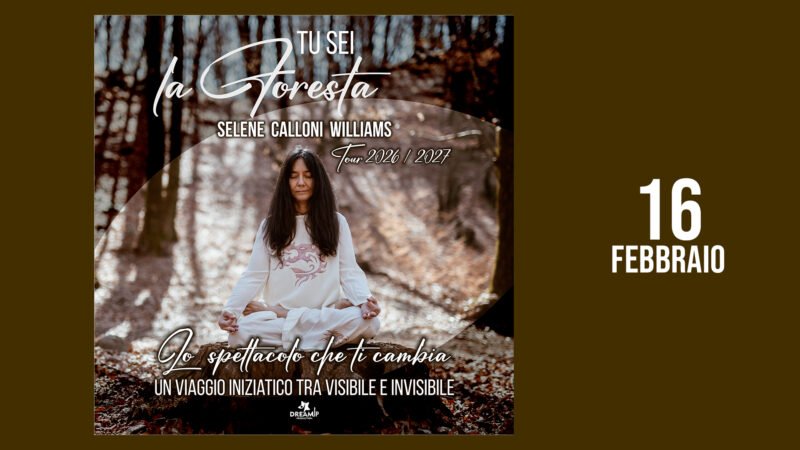
- Selene Calloni Williams: Tu sei la Foresta at Teatro Olimpico in Rome, February 16, 2027