NATURE: Tatiana Bilbao Estudio. Campo aperto at MAXXI, from October 16, 2026 to February 7, 2027
In short. NATURE: Tatiana Bilbao Estudio. Campo aperto is the site-specific installation that MAXXI presents from October 16, 2026 to February 7, 2027 in the Claudia Gian Ferrari room, in the museum at Via Guido Reni 4a, in Flaminio (00196 Rome).
NATURE: Tatiana Bilbao Estudio. Campo aperto is the site-specific installation that MAXXI presents from October 16, 2026 to February 7, 2027 in the Claudia Gian Ferrari room, in the museum at Via Guido Reni 4a, in Flaminio (00196 Rome). It is the ninth edition of NATURE, the program the museum entrusts to internationally known architects, and it is curated by Tatiana Bilbao herself. MAXXI is open Tuesday to Sunday from 11:00 to 19:00, closed on Monday, and the ticket office closes one hour before the museum. You get there by Metro A to Flaminio and then tram 2 toward Piazza Mancini, or by bus 910 from Termini and 53 from Largo Chigi. On Via Guido Reni there is an ATAC stop that bears the museum's name. Prices are published on MAXXI's official website, and tickets are bought at the museum's box office or online, through the channel indicated by the venue's official website.
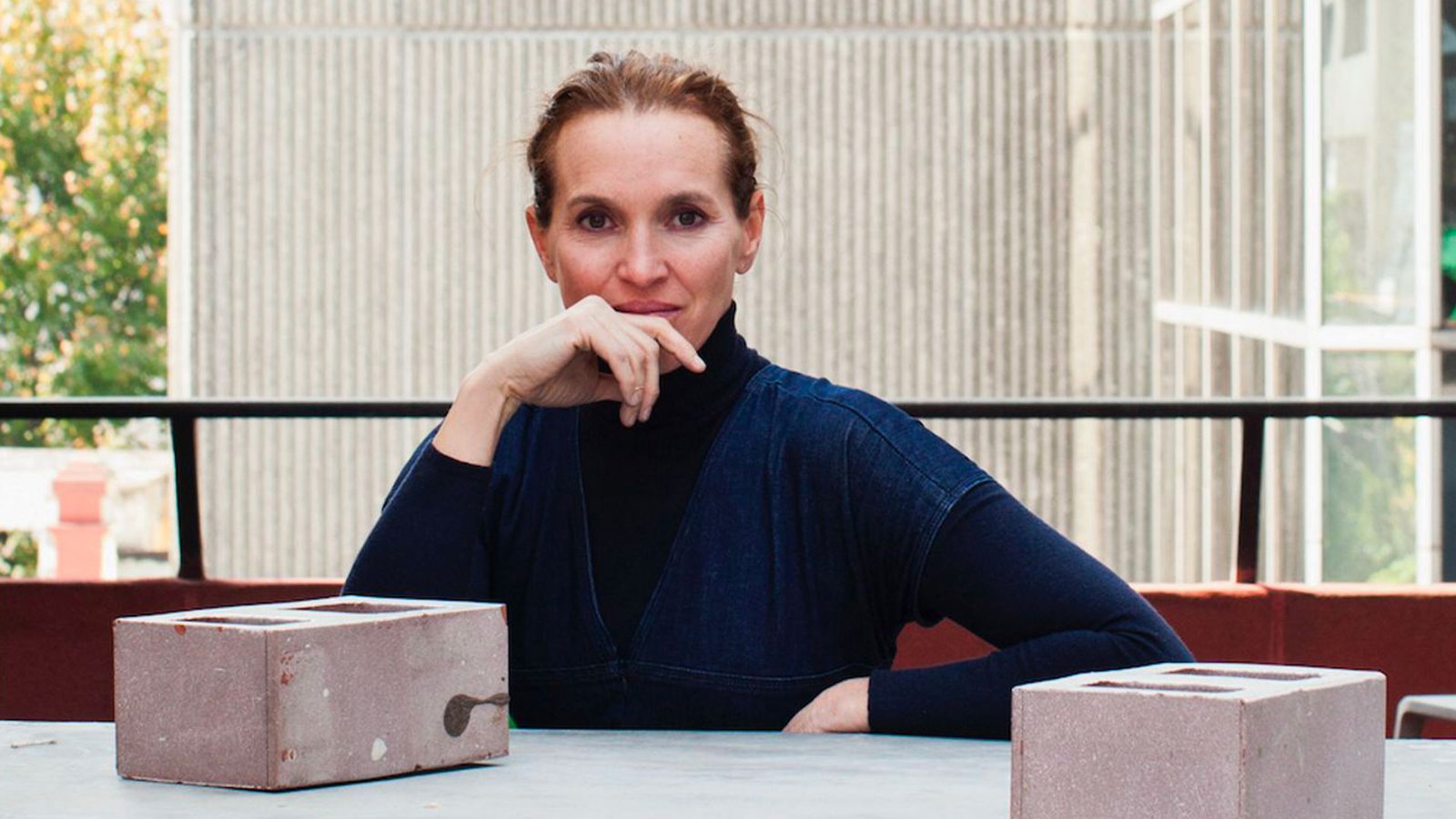
For those who follow contemporary architecture, Tatiana Bilbao is one of the most interesting names on the American continent: a Mexican designer who works on social housing, botanical gardens, public spaces, and who has made the relationship between people and nature her material. MAXXI hands her a room and asks her to transform it. In our view, for anyone going to MAXXI in these months, it's the one thing not to skip even if you came for something else.
NATURE: Tatiana Bilbao at MAXXI in Brief: Dates, Hours and Room
Tatiana Bilbao Estudio's installation opens Friday, October 16, 2026 and closes Sunday, February 7, 2027, in MAXXI's Claudia Gian Ferrari room.
The Dates
Almost four months, from the middle of autumn to the beginning of February. The period runs through the Christmas holidays and the quietest season of Rome's museums, January. Whoever wants to see it in peace has time. Whoever puts it off to the last weeks will find the museum more crowded.
Hours
MAXXI is open Tuesday to Sunday from 11:00 to 19:00. It is closed on Monday. The ticket office is open until one hour before the museum closes, so until 18:00. On holidays the hours may change: it's best to check the museum's website, especially between Christmas and Epiphany.
The Claudia Gian Ferrari Room
NATURE has a fixed venue: the Claudia Gian Ferrari room, dedicated by the museum to the site-specific installations of international architects. It is a space designed to be transformed every year by a different designer. At the entrance it's best to ask right away how to reach it, because MAXXI is made of ramps and paths that cross.
Tickets
Prices are published by MAXXI on its official website, where you'll also find the link for buying online. The museum offers reductions and free admission, including free entry for under-18s and for people with disabilities with a companion.
Campo aperto: What Tatiana Bilbao Proposes at MAXXI
Campo aperto is, in MAXXI's words, a project that joins history, community and architecture, transforming the space into a place of relationship.
The NATURE Program
NATURE is the program the museum devotes to site-specific installations in the Claudia Gian Ferrari room, each time entrusted to internationally known architects. Bilbao's is the ninth edition. The underlying idea is simple and intelligent: an architecture museum that doesn't limit itself to showing drawings and models but asks an architect to truly build something, at real scale, inside its rooms.
Why Tatiana Bilbao
MAXXI explains the choice with Bilbao's ability to hold together attention to nature, materials and ecological practices with a strong expressive quality of architecture, understood as a space open to relationship and social life. It's a good summary of her work, which for 20 years has swung between highly visible projects, like a botanical garden or an exhibition pavilion in China, and low-cost social housing projects.
What to Expect
A site-specific installation is not an exhibition with works on the walls. It is a space to walk through, in which architecture is experienced with the body. The title, Campo aperto, suggests a space without fences, designed to be inhabited and shared. The detail of materials and forms is not described by the official presentation, and I prefer not to give it away: it has to be seen.
The Curation
The curation is by Tatiana Bilbao herself. For NATURE it's the rule: the invited architect is not a guest of a curator but author and person responsible for their own space.
Who Is Tatiana Bilbao: The Architect of Social Housing
Tatiana Bilbao Spamer, born in Mexico City in 1972, is a Mexican architect known for her work on sustainable design, museums and social housing. She founded her studio, Tatiana Bilbao Estudio, in 2004.
A Family of Architects
Bilbao was born into a family of architects. Her grandfather, Tomás Bilbao Hospitalet, was an architect and politician of Basque origin who left Spain and settled in Mexico in 1942. Tatiana studied architecture at the Universidad Iberoamericana, where she graduated in Architecture and Urbanism in 1996. In 1998 her thesis received a mention as the best of the year.
The Earthquake and the House
Her interest in housing comes from Mexico City. After the great earthquake of 1985 the Mexican government answered the need for homes with mass construction, millions of houses built in a few years. Bilbao, who didn't like seeing the territory consumed by that model, has worked with other architects and with Infonavit, the public institute that finances home mortgages, to rethink urban centers and peripheral settlements. From there comes her commitment to low-cost social housing.
From City Government to the Studio
Between 1998 and 1999 she was a consultant for urban projects for Mexico City's department of housing and urban development. In 1999 she founded LCM, a research studio on geometries. In 2004 she founded, with Derek Dellekamp, Arturo Ortiz and Michel Rojkind, MX.DF, an urban research center on the Mexican capital. In the same year she opened Tatiana Bilbao Estudio.
Jinhua and Ai Weiwei
The studio's first built project is the exhibition pavilion of the Jinhua Architecture Park, in China, on the bank of the Yiwu River, near Shanghai. The park was coordinated by the artist Ai Weiwei, who had chosen a group of young architects from all over the world to design a network of pavilions. Bilbao's pavilion, completed in 2007, is still one of her best-known works.
Culiacán, Jalisco, Chiapas
Among the main projects are the Botanical Garden of Culiacán, in Sinaloa, a masterplan and an open chapel for the Ruta del Peregrino in Jalisco, a biotechnology center, a funeral home. And a prototype of sustainable social housing of 62 square meters, designed to be doubled in size, costing about 120,000 Mexican pesos, presented at the 2015 Chicago Architecture Biennial and tested in Chiapas. More recently she has worked on the expansion of Museo Anahuacalli in Mexico City and on the Mazatlán Aquarium.
Awards, Teaching, Museums
Her work has been recognized with the Architectural League's Emerging Voices in 2010, the Berliner Kunstpreis in 2012, the LOCUS Foundation's Global Award for Sustainable Architecture in 2014, the A+Awards Impact Award in 2017, the Marcus Prize in 2019 and the Tau Sigma Delta gold medal in 2020. She has taught at Yale, Rice, Columbia University and the Universidad Iberoamericana. Her projects are in the collections of the Centre Pompidou in Paris, the Carnegie Museum of Art and the Art Institute of Chicago. In 2019 the Louisiana Museum in Denmark dedicated an exhibition to her in The Architect's Studio series. She has published A House Is Not Just a House, devoted to her housing projects.
A Curiosity About NATURE: Tatiana Bilbao Estudio. Campo aperto at MAXXI, from October 16, 2026 to February 7, 2027
The most interesting curiosity concerns the start of Bilbao's career. The first building built by her studio is not in Mexico but in China: the exhibition pavilion of the Jinhua Architecture Park, a park coordinated by the artist Ai Weiwei, who had called young architects from different countries to design a network of pavilions along the Yiwu River. A 30-year-old Mexican architect makes her debut this way, inside a collective project led by an artist.
Seen from MAXXI, the coincidence is instructive. The Roman museum is by statute a place where art and architecture coexist, and NATURE is the program in which an architect builds inside an art museum. Bilbao arrives in Rome with exactly this experience behind her: having designed, at the beginning, at an artist's invitation.
Second curiosity: her 62-square-meter social housing, presented at the Chicago Biennial in 2015, was designed to be doubled in size. A house that grows with the family. It's an idea that says a lot about how Bilbao looks at space: not as a finished object but as a field open to what comes. The title of the Roman show sounds, in this light, almost like a statement of method.
Zaha Hadid's MAXXI, the Home of NATURE
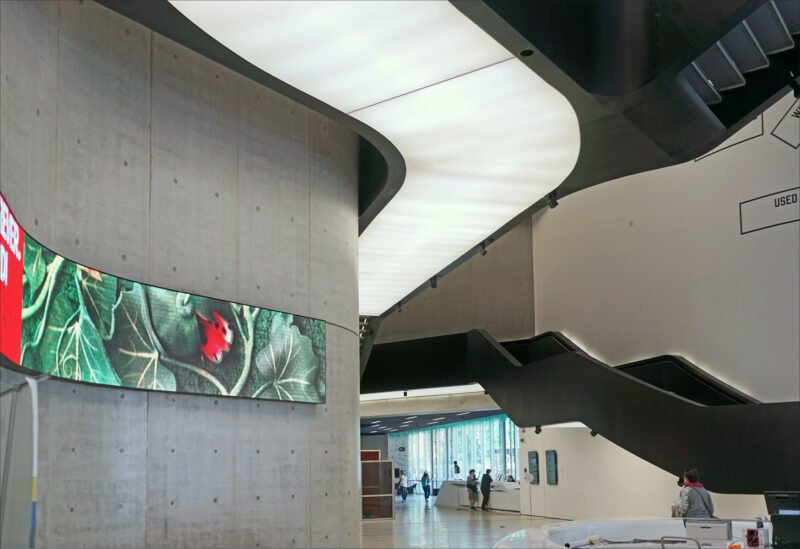
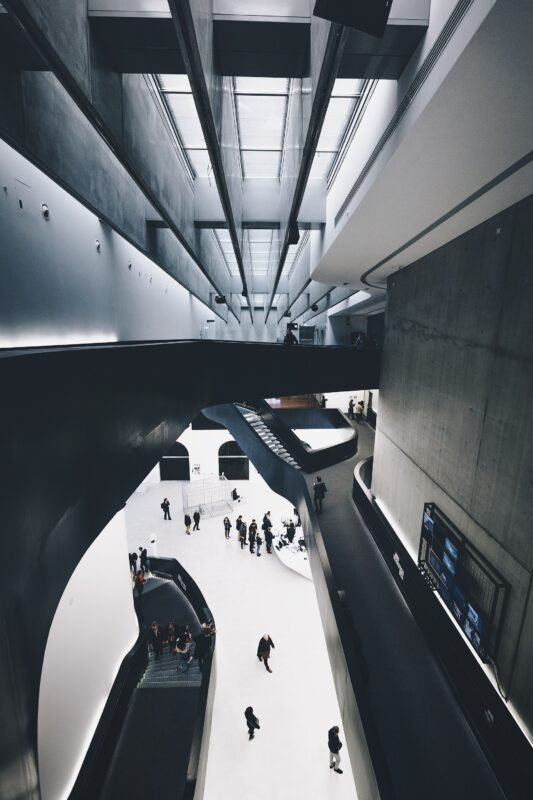
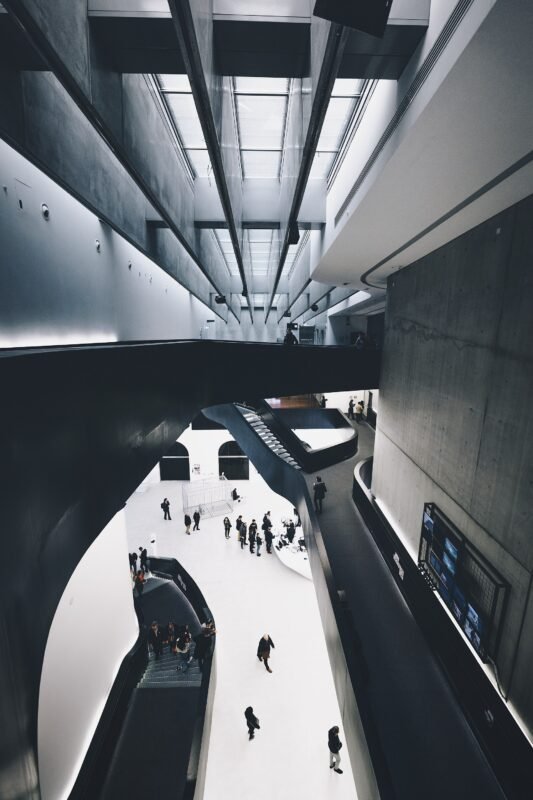
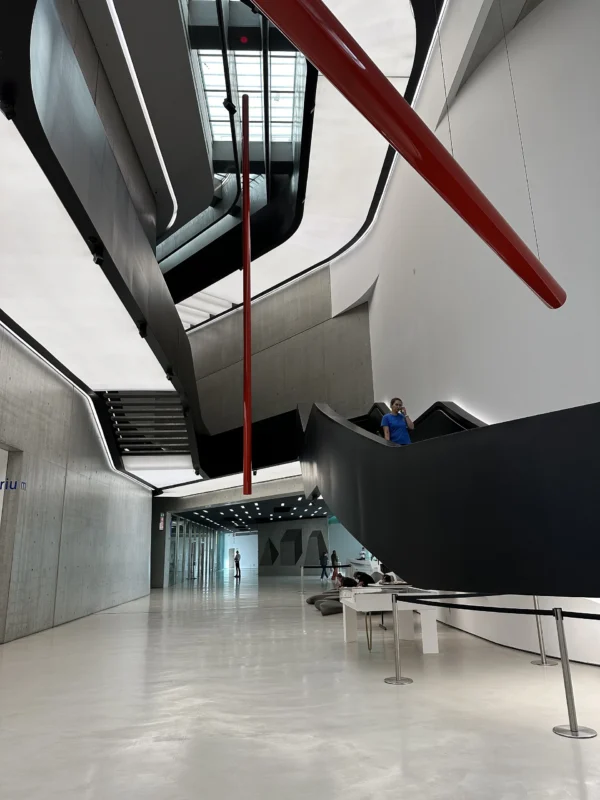
Inaugurated in 2010 on a design by Zaha Hadid, MAXXI is Italy's first national museum devoted to contemporary arts and architecture. For a program like NATURE, which has an architect build inside a museum, it is the natural venue.
From the Caserma Montello to the Museum
The museum was born on a military site. In 1997 the Ministry of Cultural Heritage obtained from the Ministry of Defense the area of the former Caserma Montello, in Flaminio, with disused workshops and pavilions. A plot closed to the city became, in a little more than a decade, a national museum.
The Competition Won by Zaha Hadid
The 1998 international competition asked for a museum for architecture and one for the arts of the 21st century, with spaces for experimental productions, a library, an auditorium and education. Out of 273 entries Zaha Hadid won, with a project chosen for its ability to integrate into the urban fabric and to open the museum with a sequence of public spaces.
Piazza Alighiero Boetti
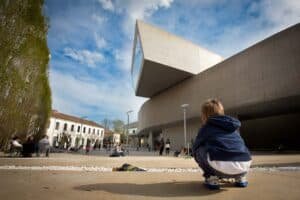
The complex extends over 29,000 square meters around a large open square, named for Alighiero Boetti, where works are displayed. For a visit to Campo aperto the square is the right prelude: a public, shared space, crossed by people who live in the neighborhood. It is the very theme of Bilbao's work.
The Always-Visible Works
MAXXI collections rotate, but three installations always remain visible: those by Anish Kapoor, Sol LeWitt and Maurizio Mochetti. Since October 2015 the museum has displayed its own collection of art and architecture with different installations.
The Other Exhibitions in the Same Period
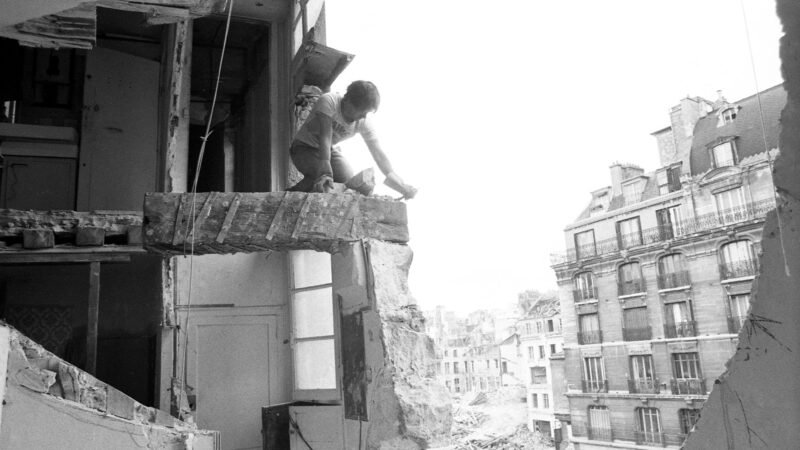
In the same months MAXXI presents, from that same October 16, the overview of Sophie Calle at MAXXI and, from November 13, 2026 to February 28, 2027, in Galleria 4, Gordon Matta-Clark. Not the Work...The Worker, curated by Jessamyn Fiore and Francesco Stocchi. Matta-Clark, an architect by training who cut buildings, is the most consistent pairing with Bilbao: two different ways of thinking about architecture as social space.
Something Nobody Tells You About NATURE: Tatiana Bilbao Estudio. Campo aperto at MAXXI, from October 16, 2026 to February 7, 2027
What almost nobody says is that an architecture installation is poorly seen in a hurry. Many visitors walk into the NATURE room as a pass-through room between one exhibition and another, take a look and move on. That's a mistake. A space designed for relationship asks you to stop, sit if you can, watch how others move. Staying 10 minutes inside is worth more than three quick passes.
The second point concerns the name. In the months before the opening the project also circulated under a different title, Un-natural Space. The museum's official page today presents it as Campo aperto, signed Tatiana Bilbao Estudio. Anyone searching for information online may find both versions: it's the same installation.
Third, the hours. The ticket office closes at 18:00, the museum at 19:00. Whoever arrives late on Saturday thinking they'll see everything ends up having to choose among the exhibitions. On Monday MAXXI is closed, and many passing visitors find that out at the gate.
Fourth, practical: the museum has a coat check, café, bar and restaurant. On a rainy November day in Flaminio that makes a difference.
How to Get to MAXXI for Tatiana Bilbao's Campo aperto
From the center to MAXXI the most reliable combination is Metro A to Flaminio and then tram 2 toward Piazza Mancini. It also works on days of heavy traffic, and I recommend it to those staying between Termini, Spagna and the Vatican.
Metro A and Tram 2
From Flaminio station on Metro A, in Piazzale Flaminio, tram 2 leaves for Piazza Mancini. The useful stop is the one closest to Via Guido Reni, and from there you walk toward the Tiber. It's the same combination indicated by Auditorium Parco della Musica, about 650 meters from the museum.
Buses
Four useful lines run in the area: the 910, from Termini to Piazza Mancini. The 53, from Piazza Mancini to Largo Chigi. The 168, from Largo Maresciallo Diaz to Tiburtina station. The 982, from Viale XVII Olimpiade to Quattro Venti station. On Via Guido Reni, about 130 meters from the entrance, the ATAC stop that bears the museum's name is marked as wheelchair accessible.
By Car and Parking
By car you arrive from Via Flaminia or Lungotevere. Street parking is hard on weekdays and almost impossible on concert nights at the Auditorium or match nights at Stadio Olimpico. The Auditorium has two paid parking lots with access from Viale Pietro de Coubertin, with spaces reserved for people with disabilities, about 10 minutes on foot from the museum.
On Foot from Ponte della Musica
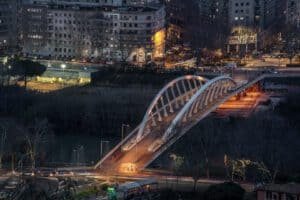
From Prati or the Della Vittoria area you cross the Tiber on Ponte della Musica, pedestrian and bike-only, from Lungotevere Cadorna to Piazza Gentile da Fabriano, and continue along Via Guido Reni. For an installation about public space, arriving on foot is consistent.
The Advice I Give You for Visiting NATURE: Tatiana Bilbao Estudio. Campo aperto at MAXXI, from October 16, 2026 to February 7, 2027
The advice is this: make Campo aperto the first stop of your MAXXI visit, not the last. Arrive with a fresh head, enter the Claudia Gian Ferrari room before the exhibitions in the galleries, and give it at least 20 minutes. An architecture installation is understood while you still have patience.
Before going in, take a lap of MAXXI's square watching how the neighborhood's people use it: who sits, who crosses, who waits. It is exactly the kind of observation Bilbao works on, and it prepares you to look at the room with the right eyes.
Then, if you have time, pair the visit with Gordon Matta-Clark, from November 13. Seeing in the same afternoon an architect who builds spaces of relationship and an architect who cut buildings to give them back to the city is the best lesson in contemporary architecture Rome can offer this winter.
Pick a weekday: on winter weekends the museum fills up. For groups that want a private visit of MAXXI and Flaminio, Tour Leader Pro organizes tailor-made routes.
How to Plan Your Visit to Tatiana Bilbao at MAXXI
The visit to Campo aperto takes little time, between 20 minutes and half an hour. It's the chance to build half a day around it at MAXXI and in Flaminio.
How Much Time You Need
For the installation 20 or 30 minutes is enough. Add half an hour for the always-visible works by Kapoor, LeWitt and Mochetti, and an hour and a half or more for the temporary exhibitions in the galleries. With transport from the center, a full visit takes between three and five hours.
Museum Services
MAXXI offers a coat check, restrooms also for people with disabilities, café, bar, restaurant, audio guides also in other languages, guided tours, school activities and workshops, as well as the bookshop.
To Pair in the Same Day
In the neighborhood are the Auditorium Parco della Musica and the Ponte della Musica, which leads to the Foro Italico. Further south, on the edge of Villa Borghese, is the National Gallery of Modern and Contemporary Art. The museum's general page is the MAXXI page.
Another Well-Known Fact, Yet Rarely Mentioned
Everybody knows MAXXI is a Zaha Hadid museum. It is less often remembered that MAXXI is really two museums: one for the arts and one for architecture, as the 1998 competition asked. The NATURE program was born within this double identity. Whoever visits the museum thinking only of contemporary art risks not noticing that half its meaning is architecture.
The second fact, known to architects and little cited in presentations, concerns Bilbao herself: her projects are held in the collections of the Centre Pompidou in Paris, the Carnegie Museum of Art and the Art Institute of Chicago. An architect who works on low-cost social housing has entered the collections of three of the world's great museums. It's proof that the most interesting architecture today is not necessarily the most expensive.
The third, even more overlooked: in 2015 Bilbao presented at the Chicago Biennial a house prototype of about 120,000 pesos, a few thousand euros. MAXXI, which has in its collection projects by big names, now hosts the work of someone who has shown that you can also design well with very little.
Flaminio Around MAXXI: What's Nearby
MAXXI is in Flaminio, between Via Flaminia, the Tiber and the Parioli. In recent decades disused areas here have become places of culture: a fitting context for those leaving an installation about shared space.
Auditorium Parco della Musica Ennio Morricone
Designed by Renzo Piano and opened in 2002, the Auditorium has been named after Ennio Morricone since 2020. During the works the remains of a Roman villa emerged, integrated into the complex. In the foyer there is a small archaeological museum. It is open every day from 11:00 to 20:00, and in the foyer you can see for free the neons of Maurizio Nannucci and some Cellotex by Alberto Burri.
The Ponte della Musica
Dedicated to Armando Trovajoli, the Ponte della Musica is 190 meters long and connects Flaminio to Lungotevere Cadorna, at the height of the Foro Italico. The design is by the London firm Buro Happold with the Roman company Carlo Lotti e Associati. It can be crossed only on foot or by bicycle.
Villa Glori
Behind the Auditorium rises Villa Glori, opened in 1924 as Parco della Rimembranza on a design by Raffaele De Vico. Since 1997 the park has hosted installations by contemporary artists, including works by Kounellis, Staccioli, Giuseppe Uncini's Porta del Sole and Paolo Canevari's Uomo-erba. After an architecture installation about nature, it's the right walk.
Foro Italico, Stadio Olimpico and Ponte Milvio
Across the Tiber are the Foro Italico and the Stadio Olimpico. Going up the river you reach Milvian Bridge. On league match Sundays traffic along the Tiber grinds to a halt: better to know before planning the visit.
The Right Photo to Take at NATURE: Tatiana Bilbao Estudio. Campo aperto at MAXXI, from October 16, 2026 to February 7, 2027
The right photo, for Campo aperto, has people in it. An installation conceived as a place of relationship makes sense when it is inhabited: photograph it with the visitors who cross it, sit, talk. A photo of the empty room would betray the project. The rules on photography are set by the museum: ask at the entrance and respect the privacy of those you frame.
Second photo, outdoors: Piazza Alighiero Boetti from the point where Zaha Hadid's building juts out over the visitors' heads. The museum's great cantilever, with people beneath, tells in one image the relationship between architecture and public space that is at the center of Bilbao's work.
Third photo, for those with time: the Ponte della Musica toward Flaminio, at the moment the sky turns dark blue. Between November and January it happens shortly after 17:00. The lines of the bridge give the image strength, the neighborhood behind gives depth.
Some Important Events That Happened Here in History
In a little more than a decade, the place that hosts Campo aperto has gone from military site to national museum, in a neighborhood also marked by the Risorgimento.
1997: The Transfer of the Caserma Montello
In 1997 the Ministry of Cultural Heritage obtained from the Ministry of Defense the area of the former Caserma Montello, with disused workshops and pavilions. It is MAXXI's birth certificate.
1998: The International Competition
The following year the competition was announced for the new center of contemporary arts. Out of 273 entries the project by Zaha Hadid won, extending over 29,000 square meters around an open square.
2010: The Inauguration
In 2010 MAXXI opened as Italy's first national museum for contemporary arts and architecture. Since October 2015 the collection has been displayed with different installations, alternating with temporary exhibitions and with programs like NATURE.
1867: The Cairoli at Villa Glori
A kilometer from the museum, on the hill of Villa Glori, on October 23, 1867 about 70 Garibaldian volunteers led by Enrico and Giovanni Cairoli, who had come to bring weapons to the Roman insurgents, were intercepted and defeated by the papal army. Enrico died, Giovanni was seriously wounded. In 1924 the hill became Parco della Rimembranza.
Who Has Passed Through NATURE: Tatiana Bilbao Estudio. Campo aperto at MAXXI, from October 16, 2026 to February 7, 2027
First of all, Zaha Hadid passed through MAXXI. She won the 1998 competition and designed Italy's first national museum for the arts and architecture of the 21st century. With her, permanently, the artists whose works are always visible: Anish Kapoor, Sol LeWitt, Maurizio Mochetti. The square bears the name of Alighiero Boetti.
Through the Claudia Gian Ferrari room, every year, passes an internationally known architect called to transform it: Bilbao is the ninth. With her her studio comes to Rome, Tatiana Bilbao Estudio, and with the studio a story that crosses Mexico and the world: the Botanical Garden of Culiacán, the Jinhua pavilion wanted by Ai Weiwei, the social housing prototypes of Chiapas, Museo Anahuacalli in Mexico City.
In the same months two other important names pass through the museum. Sophie Calle, the French artist of narrative and photography, with her overview. And, from November 13, Gordon Matta-Clark, the American artist trained as an architect, presented in Galleria 4 by the curators Jessamyn Fiore and Francesco Stocchi.
Outside the museum, the neighborhood preserves other presences: Renzo Piano, who built the Auditorium a few steps away. Kounellis and Uncini, whose works are at Villa Glori. The Cairoli brothers, who fell on that same hill in 1867. For an architect who works on the memory of places, Flaminio is a rich context.
MAXXI Accessibility
MAXXI is indicated by Roma Capitale's tourist portal as a museum accessible to people with disabilities, with dedicated restrooms. The ATAC stop on Via Guido Reni is marked as wheelchair accessible.
Free Admission and Companions
The museum offers free admission, with the EU Disability Card or a letter from the relevant association, for people with disabilities and a companion, people on the autism spectrum, deaf people, people with cognitive disabilities and their caregivers. For routes and elevators it's best to ask at the ticket office.
Audio Guides and Tours
MAXXI provides audio guides also in other languages and guided tours. For an installation to walk through, those with mobility difficulties would do well to ask at the entrance if the space can be fully traversed.
Tatiana Bilbao at MAXXI with Children
Campo aperto is one of MAXXI's offerings best suited to children this season. An installation is explored with the body, and children do it better than adults.
With the Little Ones
Under-18s get in free. With small children the visit is short and direct: the NATURE room, the museum's square to run in, maybe the Auditorium gardens. The museum organizes educational workshops: the calendar is on the official website.
With Teenagers
With older kids I'd suggest a simple exercise: after the visit, draw the house they'd like to live in 20 years from now, and then tell who would live there. Bilbao works on exactly this question, and turning the visit into a design exercise works better than any explanation.
Where to Eat Near MAXXI
MAXXI has a café, bar and restaurant inside: it's the most convenient solution for a break between an installation and an exhibition.
At the Auditorium
A 10-minute walk away, Auditorium Parco della Musica has a bar and food service, and plenty of green around. For a long day in the neighborhood it's a good base.
Flaminio, Parioli and Ponte Milvio
Flaminio is residential, and around the museum the food is neighborhood fare, suited to a quick lunch. For the evening, the Parioli are known for cocktail bars and fashionable restaurants. The other direction is Ponte Milvio, along the Tiber. Both can be reached in a few minutes by taxi.
Campo aperto at MAXXI Between October and February: The Time of Year in Rome
Tatiana Bilbao's installation runs through the cold season, from mid-October to early February: the months when museums become places to spend an afternoon again.
October and November
In mid-October Rome still has mild days, and MAXXI's square is enjoyed outdoors. In November the first rains arrive and, from the 13th, the Matta-Clark show: from that moment the combined visit becomes possible.
December and the Holidays
In December the light disappears early and museums fill with visitors on vacation. For holidays it's best to check the opening hours on the museum's website.
January and February
January, once Epiphany has passed, is the quietest month for Rome's museums. The installation closes Sunday, February 7, 2027: if you can, don't wait for the last week.
Frequently Asked Questions About Tatiana Bilbao at MAXXI
When Can You See Tatiana Bilbao's Installation at MAXXI?
NATURE: Tatiana Bilbao Estudio. Campo aperto is at MAXXI from October 16, 2026 to February 7, 2027, in the Claudia Gian Ferrari room. The museum is open Tuesday to Sunday from 11:00 to 19:00, with the ticket office until 18:00. On Monday MAXXI is closed.
What Is MAXXI's NATURE Program?
NATURE is MAXXI's program devoted to site-specific installations in the Claudia Gian Ferrari room, each time entrusted to internationally known architects. Tatiana Bilbao's, titled Campo aperto, is the ninth edition. The architect is also its curator.
Who Is Tatiana Bilbao?
Tatiana Bilbao is a Mexican architect born in Mexico City in 1972, who founded Tatiana Bilbao Estudio in 2004. She is known for low-cost social housing projects, for the Botanical Garden of Culiacán and for the pavilion of the Jinhua Architecture Park in China. Among other awards she received the Marcus Prize in 2019.
Are Campo aperto and Un-natural Space the Same Exhibition?
Tatiana Bilbao's installation at MAXXI also circulated under the title Un-natural Space. The museum's official page today presents it as NATURE: Tatiana Bilbao Estudio. Campo aperto, with the same dates and the same room. It's the same project.
Where Is MAXXI and How Do You Get There?
MAXXI is at Via Guido Reni 4a, in Flaminio. You get there by Metro A to Flaminio and then tram 2 toward Piazza Mancini, or by bus 910 from Termini and 53 from Largo Chigi. On Via Guido Reni there is an ATAC stop named for the museum.
How Much Does a MAXXI Ticket Cost?
MAXXI's prices are published on the museum's official website, where you'll also find the link for buying online. Under-18s get in free, as do people with disabilities and their companion. The ticket can also be bought at the box office, open until 18:00.
How Much Time Do You Need to See Campo aperto?
For Tatiana Bilbao's installation at MAXXI 20 or 30 minutes is enough, but it's best to fit it into a broader visit to the museum. With the permanent works and the other exhibitions on view, including Sophie Calle and, from November 13, Gordon Matta-Clark, you get to three hours.
Final Advice on Tatiana Bilbao at MAXXI
Architecture installations are the ones people cross fastest and remember least. With Campo aperto, do the opposite. Enter the Claudia Gian Ferrari room first, stay as long as it takes, watch how others use it. Then go out onto MAXXI's square and look at it again. If the installation has worked, you will see a public space with different eyes.
Among Rome's winter offerings, this is the one I recommend to those who think architecture is a matter for insiders: it talks about homes, community, nature, and doesn't ask for expertise. For the museum's page and the other offerings in the neighborhood, the starting point is the MAXXI page. Official information is on the MAXXI website.
Article written by the editorial team of Tour Leader Pro, contact them for Private/Corporate/V.I.P. Tours and Experiences.
Planning a trip to Rome? The English guides for visiting the city are on ItalyPlanner.com.
Contact Information
Nearby
 MAXXI – National Museum of 21st Century Arts100 m
- Flaminio100 m
- Teatro Olimpico500 m
- Ponte della Musica – Armando Trovajoli600 m
- Auditorium Parco della Musica700 m
- Museum of Musical Instruments (MUSA)700 m

Upcoming events nearby
- Sophie Calle at MAXXI, from October 16, 2026 to February 7, 2027100 m
- Gordon Matta-Clark. Not the Work…The Worker at MAXXI, November 13, 2026 to February 28, 2027100 m
- 11 plus Rooms at MAXXI, November 27, 2026 to February 7, 2027100 m
- Ordinare il mondo: The Nanda Lanfranco Archive at MAXXI, November 13, 2026 to January 31, 2027100 m
You might also like
- Il Villaggio Olimpico di Roma at MAXXI: Il mondo in 300.000 mq, December 18, 2026 to April 25, 2027
- MAXXI Bvlgari Prize 2026 at MAXXI, from November 6, 2026 to March 7, 2027
- Sensing the Future at MAXXI, November 25, 2026 to January 31, 2027
- La Vie en Rose and Bolero by Balletto di Milano at Teatro Olimpico, April 2 to 4, 2027
- Le Coliche in 10 anni di Coliche e siamo ancora vivi at Teatro Olimpico, March 25 and 31, 2027
- Marta e Gianluca in Io e Gianlu at Teatro Olimpico, March 23 and 24, 2027