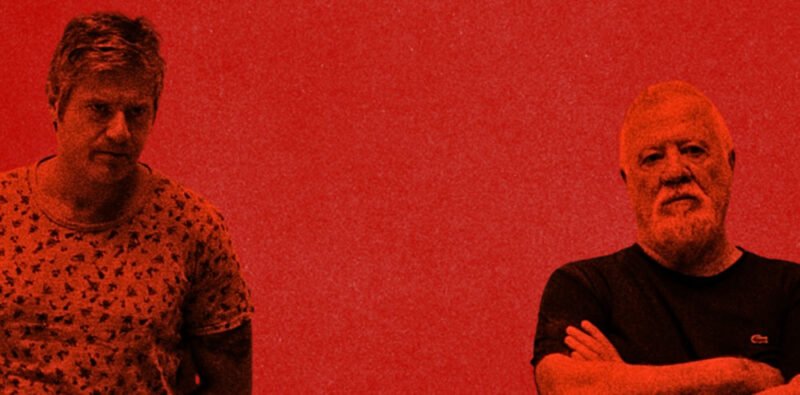
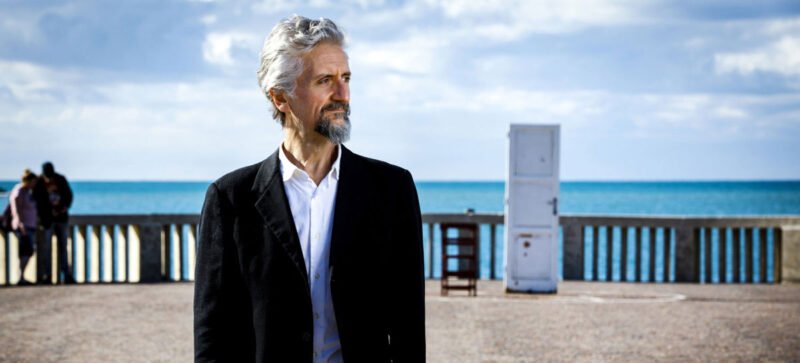
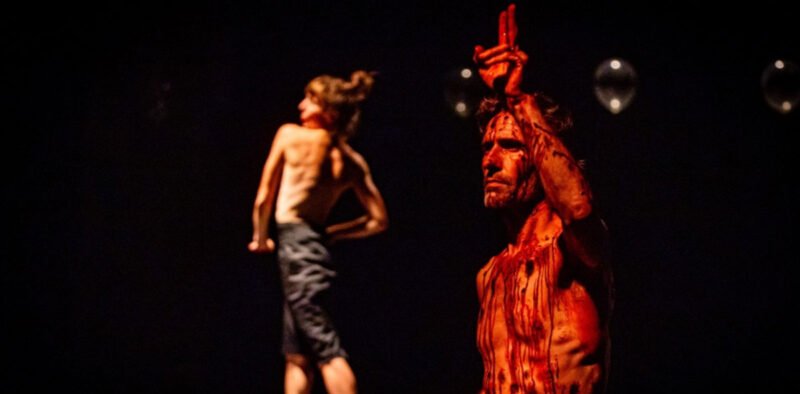
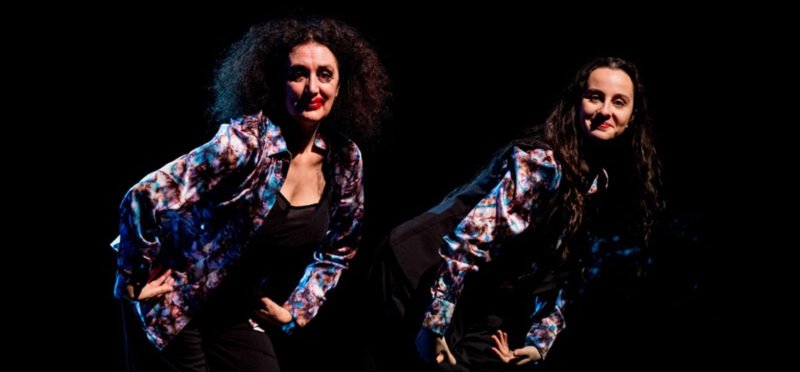
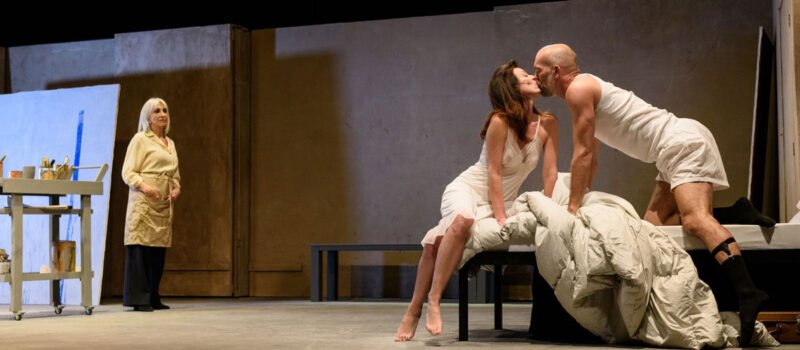
Fuggire, cadere e altre cose inutili by Carrozzeria Orfeo at Teatro Vascello, March 2 to 14, 2027
In short. Fuggire, cadere e altre cose inutili, the new show by Carrozzeria Orfeo, is on stage at Teatro Vascello in Rome from March 2 to 14, 2027, at Via Giacinto Carini 78, in Monteverde Vecchio.

Fuggire, cadere e altre cose inutili, the new show by Carrozzeria Orfeo, is on stage at Teatro Vascello in Rome from March 2 to 14, 2027, at Via Giacinto Carini 78, in Monteverde Vecchio. Performances follow the hall's usual schedule: Tuesday through Friday at 21:00, Saturday at 19:00, Sunday at 17:00, for two consecutive weeks (on Monday the theater is closed). Dramaturgy by Gabriele Di Luca, direction by Di Luca and Massimiliano Setti. On stage are Aldo Ottobrino, Massimiliano Setti, Sara Cianfriglia, Sebastiano Bronzato, Sara Wegher and Massimo Filoso. Teatro Vascello is reached by bus 75, which stops in front of the entrance, or by lines 44, 710, 870 and 871. By train you get off at Quattro Venti station, on the line that leaves from Ostiense. Tickets are bought from the official show page on Teatro Vascello website, which links to the authorized presale network, or at the theater's box office. Prices are published on the venue's official channels.
Language: performed in Italian. No English version or English surtitles are announced.
The text comes from reading Raymond Carver's short stories and is the first work by the Mantua-based company since Misurare il salto delle rane, winner of the Critics' Prize of the Associazione Nazionale dei Critici di Teatro in 2025. It is produced by five public and private theaters from half of Italy: Teatro Stabile d'Abruzzo, Teatro Nazionale di Genova, Teatri di Bari, Teatro Elfo Puccini in Milan and Teatro Biondo of Palermo. Below are the complete calendar, the plot and the author's intentions, the history of Carrozzeria Orfeo, the link with Carver, Teatro Vascello, the neighborhood, how to get there and the most frequently asked questions.
Fuggire, cadere e altre cose inutili at Vascello: dates and times
Fuggire, cadere e altre cose inutili has 12 performances at Teatro Vascello, from Tuesday, March 2 to Sunday, March 14, 2027, with Monday, March 8 as a day off.
The first week
Tuesday, March 2, Wednesday, March 3, Thursday, March 4 and Friday, March 5 at 21:00. Saturday, March 6 at 19:00. Sunday, March 7 at 17:00.
The second week
Tuesday, March 9, Wednesday, March 10, Thursday, March 11 and Friday, March 12 at 21:00. Saturday, March 13 at 19:00. Sunday, March 14 at 17:00, final performance.
The running time
The running time is not given on the show page. To plan the trip home or dinner it's best to count on a full evening and check the information on the theater's website close to the date.
The full credits
A show by Carrozzeria Orfeo. Dramaturgy by Gabriele Di Luca. Direction by Gabriele Di Luca and Massimiliano Setti. With Aldo Ottobrino, Massimiliano Setti, Sara Cianfriglia, Sebastiano Bronzato, Sara Wegher, Massimo Filoso. Assistant director Matteo Berardinelli. Original music by Massimiliano Setti. Sets by Enzo Mologni. Organization by Luisa Supino and Giulia Zaccherini. Press office Raffaella Ilari.
The production
The project is supported by five co-producers: TSA Teatro Stabile d'Abruzzo, Teatro Nazionale di Genova, Teatri di Bari, Teatro Elfo Puccini and Teatro Biondo Stabile di Palermo. A network this wide, for an independent company, says a lot about the credit Carrozzeria Orfeo has built in Italian theaters.
What Fuggire, cadere e altre cose inutili is about
Fuggire, cadere e altre cose inutili tells small stories of ordinary men and women, caught in a hostile and ferocious world where, apparently, nothing sensational ever happens. It is the key given by Gabriele Di Luca in the dramaturgy notes published by Teatro Vascello.
Incursions into homes
The stories are brief irruptions into the lives of ordinary people. The audience enters them from unexpected points of view: from windows, rooftops, gardens, a van, a phone booth. A minimal and domestic geography, made of spaces of passage and of border.
Characters on the brink
Di Luca describes his characters as tightrope walkers always about to fall: a step from divorce, from having to start over, from a memory that overwhelms them or a future that scares them. The title comes from here: fleeing and falling are the two movements that run through all the stories.
Between story and dialogue
The form alternates narrated moments and dialogued moments. The story suddenly turns into scene, taking the audience inside a concrete, physical, carnal situation, then with an abrupt change of style and language it returns to narration. The author speaks of an abrupt but harmonious passage, which is the compositional principle of the show.
Magical realism and metaphor
From the author's point of view, the whole gives the feeling of a bubble, of a great dream suspended between realism, magical realism and metaphor. Compared with Carver's stories, there is more room for poetry and image: it is a world inspired by that of the American writer, but one that in many ways moves away from it.
Comedy and unease
The text doesn't give up comedy and a few grotesque digressions, but it is crossed by a constant sense of instability. The audience, Di Luca warns, will face an imminent sense of death that overwhelms everything. And he adds, with the lightness typical of the company, that the fun won't be missing.
Gabriele Di Luca's intentions: an interesting life even when nothing happens
Gabriele Di Luca, the author of the text, says he wanted to write a story that would make life interesting even when little or nothing seems to happen in it.
Continuity with Misurare il salto delle rane
In the notes the author links the new work to the previous one: this too is an existential text, which seeks, through the beauty of word and image, a balance between classical and contemporary. Teatro Vascello's presentation speaks of a poetic and ironic observation of the human condition today, between realism and symbolism.
Contemporary Western man
The protagonists are average human beings, but they carry something very recognizable: today's Western man, hostage to his own anxieties, fears and neuroses. It's a theme the company has always worked with, with a predilection for those who live on the margins or struggle to stay on their feet.
Getting lost and finding yourself again
The official presentation closes on an image that comes back, almost identical, in the text on Misurare il salto delle rane too: the complexity of the human being, with his infinite capacity to get lost and find himself again. A common thread that ties the two shows into an ideal diptych.
Raymond Carver, the writer behind Fuggire, cadere e altre cose inutili
Raymond Carver, born in Clatskanie, Oregon, on May 25, 1938 and died in Port Angeles on August 2, 1988, was an American writer, poet and essayist, a master of the short story.
A working-poor life
The son of a waitress and a sawmill worker, raised in Yakima, Washington State, Carver alternated writing for years with precarious jobs: delivery man, factory worker, night custodian in a Sacramento hospital. Married very young, with two children before he turned 20, he wrote for a long time in his spare moments, and ironically described himself as a full member of the working-poor category.
The collections
The first collection, Will You Please Be Quiet, Please?, came out in 1976 and was nominated for the National Book Award. It was followed in 1981 by What We Talk About When We Talk About Love, heavily cut by the editor Gordon Lish, and in 1983 by Cathedral, with which Carver's writing became fuller. In 1988 came the anthology Where I'm Calling From.
Couples, homes, objects
The most frequent theme in his stories is the couple inside the domestic space. The objects of the home, the refrigerator that breaks, the television left on, the telephone that rings at the wrong moment, express the characters' unease. It's exactly the territory in which Fuggire, cadere e altre cose inutili moves, with its houses observed from windows and rooftops.
A minimalist in spite of himself
Critics have considered him a forefather of American literary minimalism, but Carver always rejected that label. His method was omission, with dozens of revisions for each story. Cinema brought him to the screen with Short Cuts by Robert Altman, drawn from a group of stories and a poem.
Who Carrozzeria Orfeo are: the company from Mantua
Carrozzeria Orfeo is a professional theater company based in Mantua, artistically directed by Gabriele Di Luca and Massimiliano Setti, who founded it together with Luisa Supino.
The origins in Udine
The three founders met as students at the Nico Pepe Academy of Dramatic Art in Udine. On the year the company was born the sources don't agree: Teatro Vascello's presentation gives 2008, other profiles 2007, the year of the first production, Nuvole barocche.
A cooperative and a venue
From a legal standpoint Carrozzeria Orfeo is a social enterprise cooperative. In Curtatone, on the edge of Mantua, it runs the Sala Maddalena. Alongside producing shows, it works on training younger generations and on cultural networks, with a stated focus on inclusion and education.
The numbers
According to the official presentation, the company has produced 12 shows and one film, has four projects funded by Fondazione Cariplo, six texts by Gabriele Di Luca published by Cue Press and 16 national awards between prizes and mentions.
Pop theater
The company calls its language pop theater: original dramaturgies born from observing the present, which mix genres and blend entertainment with drama, with the audience as the main interlocutor. In our view that is the reason its shows fill theaters even outside the circuit of specialists.
Carrozzeria Orfeo's repertoire, from Thanks for Vaselina to the Frogs
Carrozzeria Orfeo's national success came in 2013 with Thanks for Vaselina, followed by Animali da bar in 2015 and Cous Cous Klan in 2018.
The formative years
After Nuvole barocche came Gioco di mano in 2008, Sul confine in 2009, Idoli in 2011 and Robe dell'altro mondo in 2012: five years of work in which the company honed its collective writing, with direction credited to several hands, Di Luca, Setti and Alessandro Tedeschi.
The turning point
Thanks for Vaselina took the company to stages all over Italy. Animali da bar and Cous Cous Klan were born as co-productions with Teatro dell'Elfo in Milan, the same theater that today is among the producers of Fuggire, cadere e altre cose inutili.
Cinema
In 2019 the film Thanks!, with Luca Zingaretti, came out of Thanks for Vaselina. In the same year Gabriele Di Luca and the actress Beatrice Schiros received the Premio Gli Olimpici del Teatro.
The latest shows
After Miracoli metropolitani, from 2020, and Salveremo il mondo prima dell'alba, from 2023, comes Misurare il salto delle rane, a dark comedy with three actresses, set in a fishing village in the 1990s, which won the Critics' Prize in 2025 and is published by Cue Press. In fall 2026 Rome also saw Cuore di porco at Spazio Diamante, a project by the company created by young authors.
The cast and team of Fuggire, cadere e altre cose inutili
Six actors are on stage: Aldo Ottobrino, Massimiliano Setti, Sara Cianfriglia, Sebastiano Bronzato, Sara Wegher and Massimo Filoso.
Massimiliano Setti, on stage and directing
Co-founder and co-artistic director of the company, Setti directs with Di Luca, performs in the show and composes the original music. A triple presence that is typical of the way Carrozzeria Orfeo works, where roles overlap.
Gabriele Di Luca, the author
Di Luca has been the company's playwright from the beginning: six of his texts are published by Cue Press. For Fuggire, cadere e altre cose inutili he is credited with text and direction, and the dramaturgy notes published by the theater are his.
The technical team
Matteo Berardinelli is assistant director, as he already was on Misurare il salto delle rane. The sets are by Enzo Mologni, who also designed the space of the previous show. Organization is by Luisa Supino, co-founder, and Giulia Zaccherini.
A curiosity about Fuggire, cadere e altre cose inutili by Carrozzeria Orfeo at Teatro Vascello, March 2 to 14, 2027
The most obvious curiosity concerns Teatro Vascello's calendar. After the last performance of Fuggire, cadere e altre cose inutili, on Sunday, March 14, the Monteverde hall doesn't change company: the official page of Misurare il salto delle rane in fact lists performances from March 16 to 21, always at the same times. For three weeks, almost back to back, Vascello becomes Carrozzeria Orfeo's Roman home, with the new show and the one that came before it and won the prize. It's a rare chance to see, a few days apart, two texts by the same author that talk to each other: on one side three women of three generations in an isolated village between a lake and a marsh, on the other a gallery of average men and women inside their homes. Di Luca's notes say so explicitly, linking the two works under the same search for a balance between classical and contemporary. A second curiosity concerns the traveling companions. Teatro dell'Elfo in Milan, now Elfo Puccini, co-produced Animali da bar and Cous Cous Klan, the shows that in the years after the success of Thanks for Vaselina consolidated the company's name. Years later it returns among the producers of Fuggire, cadere e altre cose inutili, alongside Teatro Stabile d'Abruzzo, Teatro Nazionale di Genova, Teatri di Bari and Biondo in Palermo. In our view it is the sign of a relationship of trust built show after show. The third curiosity is in the title: the useless things of the title are precisely the characters' escapes and falls, the apparently vain gestures the show focuses on.
Tickets for Fuggire, cadere e altre cose inutili at Vascello
Tickets for Fuggire, cadere e altre cose inutili can be bought from the official Teatro Vascello website, which links to the authorized presale circuit, or at the box office at Via Giacinto Carini 78.
Buying online
From the show's page a button leads straight to the purchase. Vascello explains that when you buy online, tickets, subscriptions and cards arrive on your phone, with no need to print anything.
Season cards
The theater offers cards for the 2026/2027 season, to be bought at least 24 hours before first use. With Fuggire, cadere e altre cose inutili and Misurare il salto delle rane on the bill a few days apart, for anyone who wants to see both Carrozzeria Orfeo shows they are a solution worth considering.
Prices
Prices are published on Teatro Vascello's official channels and on the presale circuit authorized by the organization.
Which evening to choose
The 12 performances let you choose without hurry. The advice is to book as soon as you decide on the date, especially for Saturday and Sunday.
Something nobody tells you about Fuggire, cadere e altre cose inutili by Carrozzeria Orfeo at Teatro Vascello, March 2 to 14, 2027
What nobody says is that you don't need to have read Carver. The American writer's name scares off people who fear a literary show, to be followed with the book in hand, and yet Di Luca is clear: from the stories he took a few narrative ideas, then built a world of his own, which in many ways moves away from them, with more room for image and poetry. Anyone who knows Cathedral or What We Talk About When We Talk About Love will recognize an atmosphere, perhaps a situation. Anyone who has never opened them will follow all the stories anyway, because the show is written for the audience, like all the company's theater. The second thing nobody says is about the tone. The keywords of the presentation are unease, instability, even a sense of death. But anyone who knows Carrozzeria Orfeo knows that their shows are very funny, and the author confirms it in the notes, recalling that the fun won't be missing. My advice is to arrive ready to go from laughter to a lump in the throat within a single line. The third thing is about the structure: the show is made of different stories that alternate, with sudden shifts from narration to dialogue. In the first minutes it can throw you off, then the mechanism becomes clear, and it is precisely that change of pace that keeps attention alive. Finally, a practical detail: on Saturday it starts at 19:00 and on Sunday at 17:00, times that leave the evening free.
Teatro Vascello, home of research theater in Monteverde
Teatro Vascello opened on May 4, 1989 on Via Giacinto Carini, on the initiative of Giancarlo Nanni and Manuela Kustermann and their company, La Fabbrica dell'Attore.
From Via Portuense to Monteverde
The story begins earlier, at Teatro La Fede on Via Portuense 78. There, in the 1970s, Nanni and Kustermann worked within the so-called Roman school, a theater that put image before word, and from that experience came artists such as Memè Perlini and Giuliano Vasilicò.
A Teatro Stabile d'Innovazione
In 1998 the Ministry recognizes La Fabbrica dell'Attore as a Teatro Stabile d'Innovazione. In 2004 the Sala Studio is added, a more intimate space next to the main hall.
Manuela Kustermann's direction
After Giancarlo Nanni's death in January 2010, the artistic direction passed to Manuela Kustermann, actress and co-founder, who is still in charge of the programming today.
The 2026/2027 season
The season alternates contemporary prose theater, dance and foreign companies. In the fall the hall hosted, among others, Tragudia, Il canto di Edipo by Alessandro Serra. In March the space is devoted to Carrozzeria Orfeo, with two shows in succession.
My advice for seeing Fuggire, cadere e altre cose inutili by Carrozzeria Orfeo at Teatro Vascello, March 2 to 14, 2027
My advice is to think big and book two evenings. Fuggire, cadere e altre cose inutili closes on March 14, Misurare il salto delle rane begins on the 16th: seeing both, a few days apart, is the best way to understand where Gabriele Di Luca's writing is heading, because the author himself presents them as two stages of the same search. Anyone with time for only one evening should choose the new show, which in Rome is a premiere and puts six actors on stage. Before going, it may be useful to read a couple of Carver stories, for example from the collection Cathedral: not to compare, but to get in tune with that world of houses, couples in crisis and silences. For weekday evenings at 21:00 it's better to have dinner afterward, in Monteverde or heading down toward Trastevere. For the Sunday matinee at 17:00 you can go up to the Janiculum first and then reach the theater. For those arriving by car, the parking lot in agreement with the theater saves you the circling of the alleys in search of a space. In our view it's best to sit in the central rows: in a show that lives on quick shifts between narration and dialogue, seeing the actors' faces well matters.
How to get to Teatro Vascello for Fuggire, cadere e altre cose inutili
Teatro Vascello is at Via Giacinto Carini 78, in Monteverde Vecchio, and bus 75 stops right in front of the entrance.
By bus
The 75 is the most convenient connection from the center. The theater also lists lines 44, 710, 870 and 871, which link Monteverde to Trastevere and the western neighborhoods. For evening departures and the return after 21:00 it's best to check Atac's route planner.
By train
From Ostiense the metropolitan train goes to Quattro Venti station, a few steps from the theater. If you're on metro line B, you reach Ostiense by getting off at Piramide.
By car
The theater indicates parking along Via delle Mura Gianicolensi, about 100 meters away. The nearest paid parking lots are at Via Giacinto Carini 43, at Via Maurizio Quadrio 22, in agreement with Vascello if you show your ticket, and at Via Raffaello Giovagnoli 20.
Another well-known fact, yet rarely mentioned
Every regular theatergoer knows that Carrozzeria Orfeo is one of the most followed companies in Italian theater. Less often mentioned is that it is an independent company, born among former students of an academy in Udine and grown far from the big cities, based in Mantua with a venue of its own in Curtatone, the Sala Maddalena. Its path doesn't go through a stable theater that adopted it, but through a network of co-productions built over time: today five theaters, from Genoa to Palermo, support Fuggire, cadere e altre cose inutili. A second well-known fact, and little told, concerns cinema: Thanks for Vaselina, the show of the national success in 2013, became in 2019 the film Thanks!, with Luca Zingaretti. A third fact concerns Carver, and ties the show to the city: Raymond Carver and Tess Gallagher, on their European trip in 1987, visited Rome too, in the months when his last story was coming out, Errand, devoted to Chekhov's last days. 40 years later, his world returns to the city on the stage in Monteverde, through the eyes of an Italian company.
The neighborhood around Vascello: Monteverde Vecchio and the Janiculum
Monteverde Vecchio is the upper, residential part of Monteverde, overlooking Trastevere, between the Janiculum and the big historic villas of the area.
The Janiculum
The Janiculum is a few minutes away: the terrace over the city, before a Sunday matinee, is the best prelude to an evening at the theater.
Two villas
Villa Sciarra and Villa Doria Pamphilj are the two green lungs of the neighborhood. It's best to go during the day, before the performance.
Acqua Paola and San Pancrazio
Going up you come to the Acqua Paola Fountain and a little farther the basilica of San Pancrazio.
Trastevere, below
At the foot of the hill lies Trastevere, with the basilica of Santa Maria in Trastevere and its piazzas, a natural destination for after the theater.
The right photo to take at Fuggire, cadere e altre cose inutili by Carrozzeria Orfeo at Teatro Vascello, March 2 to 14, 2027
No photos during the show: in a work built on sudden changes of light, rhythm and language, a lit screen in the audience breaks the effect for everyone, actors included. The right photo is taken before and after. The first is the simplest: the entrance of Vascello on Via Giacinto Carini with the show's poster, maybe in the evening, with the audience going in. The second is for those who decide to see Misurare il salto delle rane too: two tickets, two March dates, side by side on a table in the theater's bistro, telling the story of Carrozzeria Orfeo's diptych. The third is taken outside, and talks to the text. Di Luca tells stories seen from windows, rooftops, gardens: going up toward the Janiculum, at sunset, the lit windows of Monteverde's buildings and the rooftops of Trastevere offer exactly that framing, a look from the outside at so many ordinary lives. An always valid rule: no flash and no video in the hall, and no shots during the applause while the performers are still on stage, unless the theater indicates otherwise.
Where to eat before or after Fuggire, cadere e altre cose inutili
Inside Teatro Vascello there's a bistro, the Coffee Plant Bistrot, handy for a coffee or a snack before the start.
In Monteverde
The neighborhood offers trattorias and pizzerias frequented mostly by the people who live there, with bills generally lighter than in Trastevere: the most practical choice after the 21:00 performances.
Heading down to Trastevere
After the Saturday 19:00 performance there's plenty of time to go down to Trastevere, where osterias and trattorias stay open late. On weekends a reservation is almost essential.
Sunday afternoon
The 17:00 performance ends in time for an aperitivo in the neighborhood and an unhurried dinner: a good close to a March Sunday.
Some important events that happened here in history
The history of Teatro Vascello begins with a name that was already a program: on May 4, 1989 the hall on Via Giacinto Carini opened with I Shall Never Return by Tadeusz Kantor and the Cricot Theater of Warsaw, one of the most radical masters of the European stage of the 20th century. In the 1990s came Raul Ruiz, the Pontedera Research Center, American and French contemporary dance. In May 1996 the festival Extraordinario brought 16 young companies from all over Italy to the stage, a gesture of attention toward the new scene that Vascello has never abandoned. 1998 is a double year: the Ministry recognizes La Fabbrica dell'Attore as a Teatro Stabile d'Innovazione, and the theater co-produces a show with the Berliner Ensemble, the company founded by Bertolt Brecht. In spring 2001 Giancarlo Nanni is the first Italian called to work and teach at the Actors Studio in New York. In 2003 the Premio Valentino Zeichen is born, devoted to poetry. In 2004 the Sala Studio opens. In January 2010 Nanni's death marks the handover of the direction to Manuela Kustermann. For over 20 years, moreover, Fondazione Romaeuropa has brought part of its fall festival to Vascello, tying the Monteverde hall to the city's main international festival. Carrozzeria Orfeo's arrival in March 2027 fits into this line: an independent company, grown outside the capitals of theater, which for two consecutive shows occupies the stage of one of the historic halls of Roman research.
Accessibility, audience and practical information
Teatro Vascello devotes a section of its website to accessibility, to read before buying to learn about entrances, reserved seats and services.
Who it's for
The show's themes, among couple crises, anxieties and a sense of the end, and the register that alternates comic and grotesque make it suitable for an adult audience. For high school students who study 20th-century American literature it can be a good way into Carver's world.
Arriving on time
In a show that proceeds in tableaux and changes of rhythm, coming in after it has started disturbs actors and audience. Anyone taking the bus in the evening should leave with room to spare.
March in Rome
Early March is a quiet period for the city: the days get longer, the evenings stay cool and it's best to bring a jacket for the trip home from the theater.
Who has passed through: Fuggire, cadere e altre cose inutili by Carrozzeria Orfeo at Teatro Vascello, March 2 to 14, 2027
The stage that welcomes Carrozzeria Orfeo has a long history of illustrious guests, which begins even before Vascello. At Teatro La Fede on Via Portuense, in the 1970s, came the saxophonist Steve Lacy, the composer John Cage, the French director Gérard Gelas and the Living Theatre. Since 1989 on Via Giacinto Carini audiences have seen Tadeusz Kantor with Cricot, Raul Ruiz, the Pontedera Center, Teatri Uniti, Moni Ovadia, Carlo Cecchi, Giorgio Barberio Corsetti, Societas Raffaello Sanzio, Teatro Valdoca, Pippo Delbono. For dance, Enzo Cosimi, Sosta Palmizi, Virgilio Sieni, Wim Vandekeybus. Among the big international names, Bob Wilson and Peter Brook, who presented Beckett's Happy Days here with Natasha Parry. Manuela Kustermann, actress and artistic director, is the thread that holds this story together. From March 2 to 14, 2027 the list is joined by Gabriele Di Luca and Massimiliano Setti, founders of Carrozzeria Orfeo, with Aldo Ottobrino, Sara Cianfriglia, Sebastiano Bronzato, Sara Wegher and Massimo Filoso, the set designer Enzo Mologni, the assistant director Matteo Berardinelli and Luisa Supino, who founded the company with them. A few days later it will be the turn of Elsa Bossi, Marina Occhionero and Chiara Stoppa, the three performers of Misurare il salto delle rane. And with them, ideally, Raymond Carver also passes through Monteverde, with his American provincial characters, his couples on the edge and his houses full of objects that speak.
Frequently asked questions about Fuggire, cadere e altre cose inutili at Vascello
When is Fuggire, cadere e altre cose inutili on at Teatro Vascello?
Fuggire, cadere e altre cose inutili by Carrozzeria Orfeo is at Teatro Vascello from March 2 to 14, 2027: Tuesday to Friday at 21:00, Saturday at 19:00, Sunday at 17:00. There are 12 performances, with Monday, March 8 off.
Who performs in Fuggire, cadere e altre cose inutili?
Aldo Ottobrino, Massimiliano Setti, Sara Cianfriglia, Sebastiano Bronzato, Sara Wegher and Massimo Filoso perform in Fuggire, cadere e altre cose inutili. The text is by Gabriele Di Luca, the direction by Di Luca and Setti, the original music by Setti himself.
What is the show about?
Fuggire, cadere e altre cose inutili tells small stories of ordinary men and women, always on the verge of falling: a divorce, a memory, a future that frightens. The stories alternate narration and dialogue, comedy and unease, and are loosely inspired by the stories of Raymond Carver.
Do you need to know Raymond Carver to follow it?
You don't need to have read Carver to follow Fuggire, cadere e altre cose inutili. Gabriele Di Luca took a few narrative ideas from the stories and built a world of his own, with more room for poetry and image. Anyone who knows the writer will recognize the atmosphere of his stories.
Who is Carrozzeria Orfeo?
Carrozzeria Orfeo is an independent company based in Mantua, founded by Gabriele Di Luca, Massimiliano Setti and Luisa Supino, former students of the Nico Pepe Academy in Udine. It is known for Thanks for Vaselina, Animali da bar, Cous Cous Klan and Misurare il salto delle rane.
Where do you buy tickets?
Tickets for Fuggire, cadere e altre cose inutili can be bought from the show's page on the Teatro Vascello website, which links to the authorized presale circuit, or at the box office at Via Giacinto Carini 78. Prices are published on the theater's official channels.
How do you get to Teatro Vascello?
Teatro Vascello, at Via Giacinto Carini 78 in Monteverde Vecchio, can be reached by bus 75, which stops in front of the entrance, by lines 44, 710, 870 and 871, or by train from Ostiense to Quattro Venti station.
Are there other Carrozzeria Orfeo shows at Vascello?
After Fuggire, cadere e altre cose inutili, Teatro Vascello presents Misurare il salto delle rane, the Carrozzeria Orfeo show that won the critics' prize in 2025, with Elsa Bossi, Marina Occhionero and Chiara Stoppa: the official page lists the dates March 16 to 21.
Final advice on Fuggire, cadere e altre cose inutili
Fuggire, cadere e altre cose inutili is the new stage of one of the best-loved companies in Italian theater, and it arrives in Rome with six actors, five co-producing theaters and a reference author like Raymond Carver in the background. In our view it's worth going without reverential fear, ready to laugh and feel uncomfortable in the same scene, and if possible to come back to Vascello a few days later for Misurare il salto delle rane. Book early, arrive with room to spare, stay afterward in Monteverde or Trastevere: the stories do the rest.
Article written by the editorial team of Tour Leader Pro, contact them for Private/Corporate/V.I.P. Tours and Experiences.
Planning a trip to Rome? The English guides to visiting the city are on ItalyPlanner.com.
Contact Information
Nearby
 Teatro Vascello100 m
- Raphael in Rome: Where to See His Works100 m
- Museum of Mathematics300 m
- Villa Sciarra400 m
- Monteverde400 m
- Teatro dei Contrari, theater in Monteverde500 m
Upcoming events nearby
- Il giorno della civetta, reading concert at Teatro Vascello, November 11, 2026100 m
- C’era una volta, Korean contemporary dance at Teatro Vascello, November 10, 2026100 m
- Riccardo III by Antonio Latella with Vinicio Marchioni at Teatro Vascello, March 30 to April 4, 2027100 m
- The Sleeping Queen by Mauro Astolfi at Teatro Vascello, December 1 to 6, 2026100 m
You might also like
- L’ostaggio with Edoardo Pesce at Teatro Vascello, by Valentina Esposito, May 27 to 30, 2027
- La trilogia dei poveri cristi by Ascanio Celestini at Teatro Vascello, May 11 to 16, 2027
- La poésie de la résistance by Jan Fabre at Teatro Vascello, April 13 to 17, 2027
- The Forest at Teatro Vascello: Cristiana Morganti and Claudio Tolcachir, April 20 to 25, 2027
- Too Late at Teatro Vascello, by Jon Fosse with Anna Bonaiuto, April 6 to 11, 2027
- Edipus by Tiezzi and Lombardi at Teatro Vascello, February 23 to 28, 2027