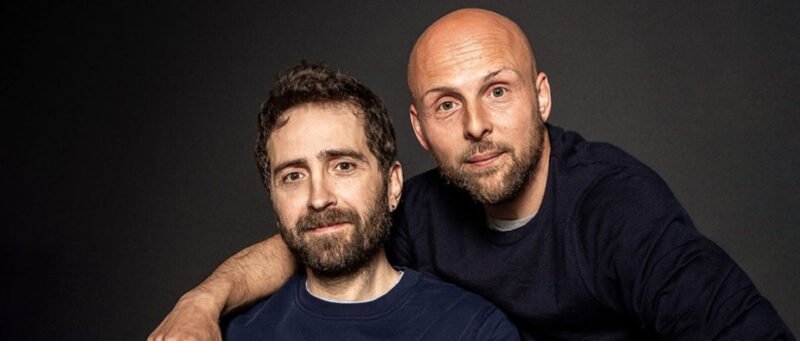
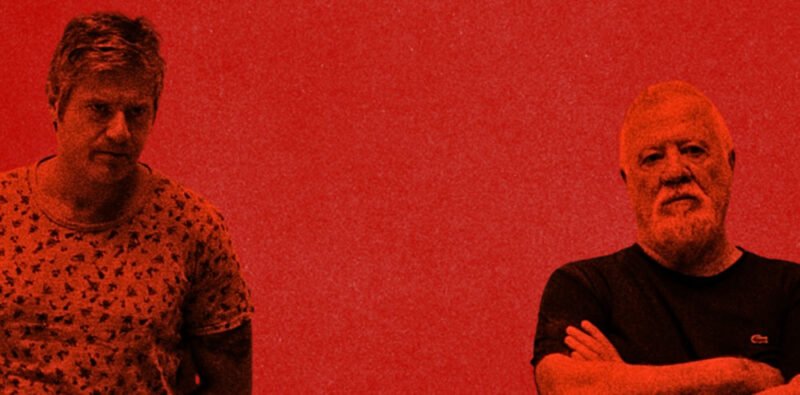
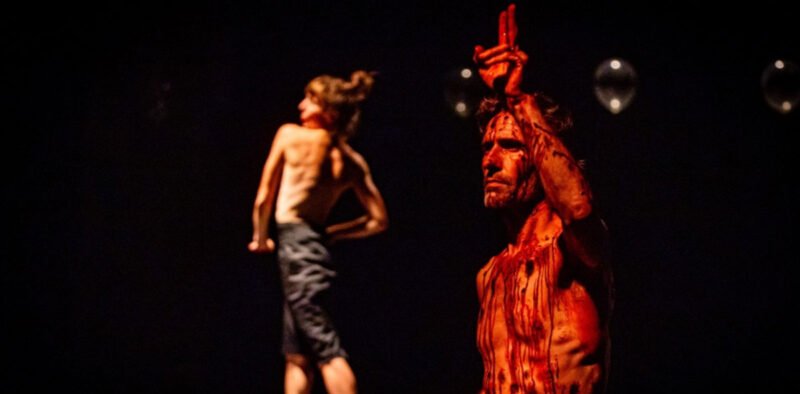
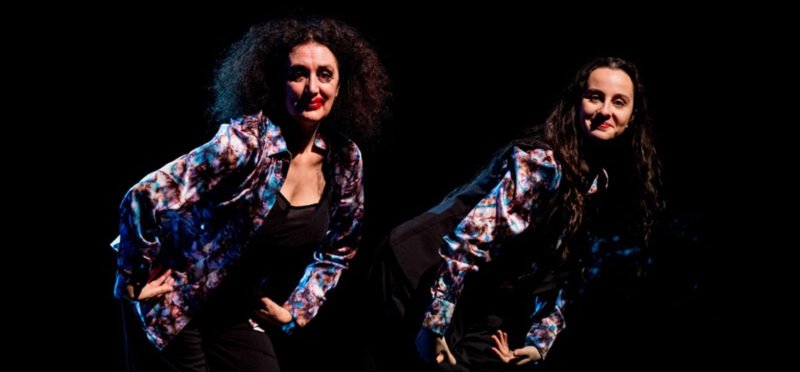
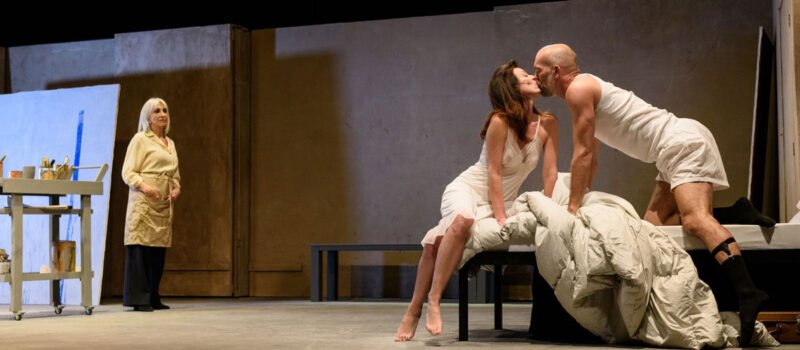
La trilogia dei poveri cristi by Ascanio Celestini at Teatro Vascello, May 11 to 16, 2027
In short. La trilogia dei poveri cristi, the trilogy of poor souls, the three shows written and performed by Ascanio Celestini, Laika, Pueblo and Rumba, is on at Teatro Vascello, Via Giacinto Carini 78 in Monteverde, from Tuesday, May 11 to Sunday, May 16, 2027.
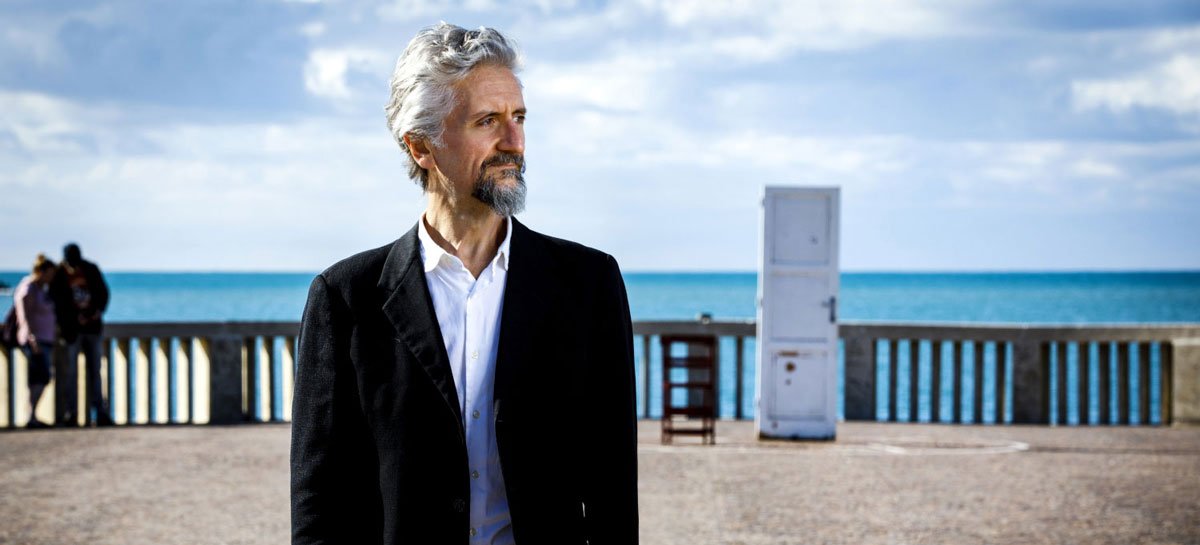
La trilogia dei poveri cristi, the trilogy of poor souls, the three shows written and performed by Ascanio Celestini, Laika, Pueblo and Rumba, is on at Teatro Vascello, Via Giacinto Carini 78 in Monteverde, from Tuesday, May 11 to Sunday, May 16, 2027. Laika is on Tuesday the 11th at 21:00 and Sunday the 16th at 17:00, Pueblo on Wednesday the 12th at 21:00 and Saturday the 15th at 19:00, and Rumba on Thursday the 13th and Friday the 14th at 21:00. The music is by Gianluca Casadei. The theater offers a €45 card for all three shows. Tickets for individual nights are sold on the official Teatro Vascello website, which links to the authorized presale network, where prices are also published. Vascello is reached by bus 75, which stops in front of the entrance, or by train to Quattro Venti station, a few steps away.
Language: a performance based on dance, music or visual acts; no English version is announced, any spoken parts are in Italian.
La trilogia dei poveri cristi at Teatro Vascello: dates, times and tickets
La trilogia dei poveri cristi fills Teatro Vascello for six nights, from May 11 to 16, 2027: each show has two performances, and with the €45 card you see all three.
Laika
Laika is on Tuesday, May 11 at 21:00 and Sunday, May 16 at 17:00. It runs 90 minutes with no intermission.
Pueblo
Pueblo is on Wednesday, May 12 at 21:00 and Saturday, May 15 at 19:00. It runs 90 minutes with no intermission.
Rumba
Rumba is on Thursday the 13th and Friday, May 14 at 21:00. It's the longest chapter: 110 minutes with no intermission.
The trilogy card
Vascello offers a €45 card valid for the three shows, Laika, Pueblo and Rumba, which can be bought online. Single ticket prices are listed on the theater's website, on each night's page.
Which order to see them in
The calendar lets you see the trilogy in the order it was written on three consecutive nights, Tuesday, Wednesday and Thursday, or over a weekend, with Rumba on Friday, Pueblo on Saturday and Laika on Sunday: in this second case you go backward.
What the trilogy of poor souls is
La trilogia dei poveri cristi brings together three shows Ascanio Celestini wrote over about 10 years and set in the same outskirts: a parking lot, a supermarket, an apartment building, a logistics warehouse.
Any old outskirts
In the presentation published by Vascello, Celestini says he started about 10 years ago thinking about a parking lot in any old outskirts. Historic centers are all different, he notes, which is why they end up on postcards, while outskirts look alike, from Rome to Paris, from Stockholm to New York.
Characters outside History
The protagonists are the homeless man, the homeless woman, the Romani man, the old woman, the woman with the muddled head, the racist with the dead son, the illiterate old man, the gravedigger, the supermarket cashier and the African porters. People on the margins of great History, but at the center of their own lives: if you get used to looking where there's little light, Celestini writes, you see them shine in the shadows.
The tone
Despite the themes, poverty, exploited labor, migration, the trilogy isn't gloomy theater. Celestini alternates comedy and tragedy, the lightning-fast joke and the silence, and the audience laughs often. In our opinion it's exactly this balance that makes the three shows accessible even to those who don't usually go to experimental theater: the denunciation comes through storytelling, never through preaching, and the characters remain people before they're symbols.
One story in three parts
The three shows are linked by recurring characters. The homeless man begging in Laika is the same one who tells, in Rumba, where his journey began. Seeing them all lets you piece the picture together.
Laika: Jesus in an outskirts studio apartment
Laika, first staged in Rome in 2015, imagines Jesus returning to earth, in a studio apartment on the outskirts overlooking a supermarket parking lot.
Peter's eyes
According to published accounts of the show, Jesus arrives as an observer but, being blind, has to use Peter's eyes. From that window he sees the homeless man begging, the old woman going to the supermarket and the woman with the muddled head in the building.
The title
Laika is the name of the Soviet dog sacrificed in the 1957 space launch, an episode the French version of the show explicitly recalls: a humble creature sent to die for a project bigger than herself.
Voices and images
In Laika the offstage voice is Alba Rohrwacher's, the image is by Riccardo Mannelli. The show is produced by Fabbrica, Romaeuropa Festival and Teatro Carcano.
Pueblo: the cashier, the homeless woman and the porter
Pueblo, presented in Rome in October 2017 at Teatro Vittoria for Romaeuropa Festival, is the natural continuation of Laika: from the parking lot you enter the supermarket, the bar, the streets of the outskirts.
Violetta
Celestini's text puts it this way: Pueblo enters the supermarket with Violetta, who works the register and feels like a queen. In the evening she clocks out and goes home, and through her you look into the windows of the apartment building.
Domenica and Said
Along the way Violetta talks to Domenica, the homeless woman who keeps the parking lot clean. Domenica has a great love, Said, a porter who takes the audience inside the huge logistics warehouse, among those who move packages and those who leave without knowing where the journey will end.
Voices and images
In Pueblo the voice is Ettore Celestini's, the image by Riccardo Mannelli, the lighting by Danilo Facco. It's produced by Fabbrica, Romaeuropa Festival and Teatro Carcano.
Rumba: the donkey and the ox in the supermarket parking lot
Rumba, from 2023, is subtitled L'Asino e il Bue del presepe di San Francesco nel parcheggio del supermercato, the donkey and the ox of Saint Francis's nativity scene in the supermarket parking lot, and was commissioned by the Comitato Nazionale Greccio 2023.
Francis and the nativity scene
The show evokes Francis of Assisi, who on Christmas night 1223 set up the first nativity scene in Greccio, with an ox, a donkey and a manger. In the year of the 800th anniversary, Celestini asks how the saint would have lived poverty, peace and brotherhood in today's Italy.
Joseph's journey
Rumba, the author writes, shows where the journey of the homeless man met in Laika began: before being homeless he was a porter, and before that he came from a faraway land. It's a story of shipwrecks and prisons, but also of songs. It's told by Joseph, who carries other people's lives in his heart and forgets to live his own.
Voices and images
In Rumba the voice is Agata Celestini's, the painted images by Franco Biagioni, the lighting by Filip Marocchi. It's produced by Fabbrica, Fondazione Musica per Roma and Teatro Carcano.
Ascanio Celestini, restorer of stories
Ascanio Celestini, born in Rome on June 1, 1972, is an actor, playwright, writer and director, one of the leading figures of the second generation of Italian narrative theater.
Roman roots
The son of a furniture restorer from Quadraro and a hairdresser from Torpignattara, Celestini grew up in the outlying neighborhood of Casal Morena. After a classical high school diploma he studied literature with an anthropological focus, and in the mid-1990s he came to theater with Teatro Agricolo O del Montevaso.
Shows of memory
From 1998, with Cicoria. In fondo al mondo, Pasolini, written with Gaetano Ventriglia, Celestini built a repertoire based on oral sources: the Milleuno trilogy, Radio clandestina on the Fosse Ardeatine massacre, Fabbrica, Scemo di guerra presented at the 2004 Venice Biennale, and La pecora nera on psychiatric hospitals, born from three years of interviews, including at Santa Maria della Pietà in Rome.
Film and books
The show La pecora nera became a film of the same name, in competition at the 2010 Venice Film Festival, which won him among other things the Ciak d'oro for best first feature. With the book Lotta di classe he won the Premio Volponi in 2009, and in 2019 he published Barzellette with Einaudi.
Radio, television and music
Since 2001 he has worked with Rai Radio 3, and for several years from 2006 he was a guest on Serena Dandini's Parla con me on Rai 3. In 2007 he released the album Parole sante, winner of the Premio Ciampi for best debut album.
The method
His texts come from interviews and field research with witnesses of historical and social events. In a 2022 interview, recalling his father's trade, Celestini described his work with a precise image: taking other people's stories, restoring them and placing them in the public space of the theater.
The trilogy in Europe
La trilogia dei poveri cristi has had a wide international life, especially in Belgium, France and Sweden.
David Murgia
Belgian actor David Murgia staged Laika in 2018 at Théâtre du Rond-Point in Paris and Pueblo in September 2020 at Théâtre de Namur, in Belgium.
Sweden
Celestini also directed Laika and Pueblo in Sweden, with Kurdish Swedish actor Özz Nûjen and Finnish musician Markus Räsänen, for Riksteatern.
Gianluca Casadei
On stage with Celestini is musician Gianluca Casadei, author of the trilogy's music and a longtime collaborator, already part of Dépaysement and Barzellette.
Teatro Vascello, an experimental venue in Monteverde
Teatro Vascello was inaugurated on May 4, 1989 on Via Giacinto Carini by Giancarlo Nanni and Manuela Kustermann, with the company La Fabbrica dell'Attore.
The roots at Teatro La Fede
Before Vascello there was Teatro La Fede, at Via Portuense 78, where in the 1970s Nanni and Kustermann worked within what was called the Roman school, a theater that put image before word.
Teatro Stabile d'Innovazione
In 1998 the Ministry recognized La Fabbrica dell'Attore as a Teatro Stabile d'Innovazione. In 2004 the Sala Studio opened. After Nanni's death, in January 2010, the artistic direction passed to Manuela Kustermann.
Vascello and Romaeuropa
For more than 20 years Fondazione Romaeuropa has brought part of its festival to Vascello: a link that also shows in the trilogy, since Laika and Pueblo are coproduced by Romaeuropa.
A curious fact about La trilogia dei poveri cristi by Ascanio Celestini at Teatro Vascello, May 11 to 16, 2027
The loveliest curious fact concerns the offstage voices. In each of the three shows, alongside Celestini and Gianluca Casadei's music, there's a recorded voice in dialogue with the narrator. In Laika it's Alba Rohrwacher's, one of the most admired actresses in Italian art house cinema. In Pueblo it's Ettore Celestini's, in Rumba Agata Celestini's: the names suggest a trilogy that's also partly a family affair, although the theater doesn't specify the relationships. A second curious thread links the trilogy to Rome. Laika premiered in Rome in 2015, Pueblo was presented in 2017 at Teatro Vittoria for Romaeuropa Festival, and Rumba is coproduced by Fondazione Musica per Roma. Celestini was born and raised on Rome's outskirts, in Casal Morena, the son of a restorer from Quadraro and a hairdresser from Torpignattara: the outskirts he describes, though presented as universal, have very specific roots. Finally, Vascello: the Monteverde hall celebrates its birthday on May 4, the day it opened in 1989, and in the week right after, this season, it hosts the complete trilogy of one of the authors who have best told the story of the city's margins. In our opinion it's a programming choice that says a lot about the theater's identity.
Something nobody tells you about La trilogia dei poveri cristi by Ascanio Celestini at Teatro Vascello, May 11 to 16, 2027
What's rarely said about Celestini's theater is how much research lies behind every sentence. His shows look like spontaneous stories, the musings of a narrator rambling freely, but they actually come from interviews, fieldwork and reading documents. La pecora nera, for example, came from three years of work with psychiatrists, nurses and staff of former psychiatric hospitals. La trilogia dei poveri cristi brings this method into the present: the supermarket, the logistics warehouse and the parking lot are everyday places, and the characters who live in them are built with the same anthropological care. Another rarely mentioned point is that the trilogy has had a longer life abroad than you'd imagine: in Belgium, France and Sweden the texts have been performed by other actors, translated and adapted. Laika, with David Murgia, reached Théâtre du Rond-Point in Paris. Seeing it here, in the language and the city where it was born, with its author on stage, has special value. Finally, a practical detail many miss: the Vascello page lists the trilogy card at €45. If you want to follow the characters from Laika to Rumba, it's the most logical option, and the calendar lets you do it all in three consecutive nights.
My tip for La trilogia dei poveri cristi by Ascanio Celestini at Teatro Vascello, May 11 to 16, 2027
My tip is to see the whole trilogy, in the order it was written. The Vascello calendar makes it possible with three consecutive nights: Laika on Tuesday the 11th, Pueblo on Wednesday the 12th, Rumba on Thursday the 13th, always at 21:00. The characters return from one show to the next, and those who met them in Laika find them in Pueblo with a different eye, until discovering in Rumba the origin of the homeless man's journey. If you can't give up three weeknights, there's the weekend alternative: Rumba on Friday the 14th at 21:00, Pueblo on Saturday the 15th at 19:00, Laika on Sunday the 16th at 17:00. In this case you go backward, from the end to the beginning: a less linear path, but not without charm, because you discover the origin first and then the destiny. If you can only see one show, in our opinion it should be Laika: it's the founding chapter, where the trilogy's outskirts are born, and it has the force of a complete story. For all three, arrive a bit early to find a seat calmly, and factor in the length: 90 minutes for Laika and Pueblo, 110 for Rumba, with no intermission. The practical advice is to buy the €45 card as soon as it's available.
How to get to Teatro Vascello for the trilogy
Teatro Vascello is at Via Giacinto Carini 78, in Monteverde Vecchio, and is reached by bus 75, which stops in front of the entrance.
By bus
The 75 is the most direct line from the center. The theater also lists lines 44, 710, 870 and 871 as useful, linking Monteverde to Trastevere and the western neighborhoods. For evening times, use the Rome transit company's journey planner.
By train
From Ostiense station the commuter train takes you to Quattro Venti station, a short walk from the theater: the fastest route if you're coming on Metro B, which connects to Ostiense at the Piramide stop.
By car
The theater suggests parking along Via delle Mura Gianicolensi, about 100 meters away. There are paid garages at Via Giacinto Carini 43, at Via Maurizio Quadrio 22, which offers a discount with your theater ticket, and at Via Raffaello Giovagnoli 20.
Another well-known fact, yet one rarely mentioned
It's well known that Ascanio Celestini is a political storyteller, an author of civic theater: Radio clandestina on the Fosse Ardeatine, Fabbrica on factory work, La pecora nera on psychiatric hospitals, Appunti per un film sulla lotta di classe on call center temp workers. Less often remembered is how deep his bond is with folk culture and fairy tales. Between 1998 and 2000 he wrote the Milleuno trilogy, based on oral storytelling traditions. In 2002 he staged Cecafumo, a collection of Italian folk tales, and in 2001 he made a 25-episode program on fairy tales for Rai Radio 3. With the musicians of the Agresta company he also worked on recovering the sounds and instruments of traditional music from many Italian regions. La trilogia dei poveri cristi should also be read in this light: the contemporary outskirts become a fairy-tale landscape, with their kings and queens, like Violetta at the supermarket register, and their saints without halos. Rumba, with the donkey and ox of the Greccio nativity scene moved into a supermarket parking lot, is almost a modern sacred fable. If you walk into Vascello expecting a political rally in the form of a show, you'll find instead a storyteller who uses the ancient weapons of oral narrative to talk about the present.
The neighborhood around Teatro Vascello: Monteverde Vecchio
Monteverde Vecchio is the upper, residential part of Monteverde, above Trastevere, between the Janiculum and the great historic villas.
The Janiculum
The Janiculum is very close: the view before the Sunday matinee is the best way to set up the day.
The villas
Villa Sciarra and Villa Doria Pamphilj are the area's two green stops. In May they're the right place for a walk before the matinee.
Il Fontanone
Heading up the hill you reach the Acqua Paola Fountain, with its view over the city.
Trastevere
At the foot of Monteverde lies Trastevere, with the Basilica of Santa Maria in Trastevere.
The right photo to take at La trilogia dei poveri cristi by Ascanio Celestini at Teatro Vascello, May 11 to 16, 2027
The right photo, for La trilogia dei poveri cristi, isn't taken in the hall: filming isn't allowed during the shows, and with a narrator speaking to the audience for an hour and a half any phone light is an intrusion. The photo is taken before or after, and the subject most in keeping with the spirit of the trilogy is exactly what Celestini describes: the outskirts. Vascello is in Monteverde, a residential, green neighborhood, far from the trilogy's supermarket parking lots, but one train stop, toward Quattro Venti station, is enough to find glimpses of everyday city, far from the postcards. My advice is to photograph an ordinary place, a bus stop, a sidewalk, a shop sign, with the trilogy's eye: that of someone who gets used to looking where there's little light. If you'd rather have a classic memento, the Vascello entrance on Via Giacinto Carini, with the trilogy poster, is the image of the evening. If you choose Laika's Sunday matinee at 17:00, you can first walk up to the Janiculum for the panoramic photo of Rome: the contrast between the postcard city and the one Celestini tells is, at heart, the theme of the trilogy.
Where to eat before or after the trilogy
Teatro Vascello has an in-house bistro, Coffee Plant Bistrot, handy for a coffee or a snack before the show.
In Monteverde
The neighborhood has trattorias and pizzerias used mostly by residents, with fairer prices than Trastevere: the right choice after the 21:00 performances, which for Rumba end around 23:00.
In Trastevere
After Saturday's Pueblo at 19:00, it's worth walking down to Trastevere, where osterias and trattorias stay open late. On Saturday night, book ahead.
On Sunday
Sunday's Laika at 17:00 ends at aperitivo time: a drink in Monteverde and then a relaxed dinner is the most natural way to end the day.
Some important events that happened here in history
The history of Teatro Vascello is told in dates. On May 4, 1989 the hall opened with Qui non ci torno più by Tadeusz Kantor and Teatro Cricot of Warsaw: a statement of intent, because Kantor was one of the most radical names on the European stage. In the early 1990s came Raul Ruiz, the Pontedera research center, and American and French contemporary dance. In May 1996 the Extraordinario festival presented 16 young companies from all over Italy. In 1998 the Ministry recognized La Fabbrica dell'Attore as a Teatro Stabile d'Innovazione, and that same year Vascello coproduced a show with the Berliner Ensemble. In spring 2001 cofounder Giancarlo Nanni was the first Italian invited to work and teach at the Actors Studio in New York. In 2003 the Premio Valentino Zeichen for poetry was created, and in 2004 the Sala Studio opened. In January 2010 Nanni died and the direction passed to Manuela Kustermann. For more than 20 years Fondazione Romaeuropa has brought part of its festival to Vascello, and in fall 2026 the season offered, among others, Tragudia, Il canto di Edipo by Alessandro Serra and Lemnos by Giorgina Pi. In May 2027, a few days after the hall's 38th birthday, Celestini's complete trilogy arrives.
Accessibility, students and practical information
Teatro Vascello publishes an accessibility section on its website, worth checking before you buy to learn about entrances, reserved seats and services.
With students
The trilogy is valuable for anyone studying narrative theater or interested in social themes: work, migration, poverty. Its language and themes make it suitable for adults and high school students.
Running time
Laika and Pueblo run 90 minutes, Rumba 110, all with no intermission. Arrive rested and a few minutes early. If you choose the three consecutive nights, plan on about four and a half hours of theater in all, spread over three evenings.
May in Rome
In mid-May Roman evenings are mild and the days long: the walk between the bus stop or train station and the theater is pleasant even after 23:00.
Who has passed through La trilogia dei poveri cristi by Ascanio Celestini at Teatro Vascello, May 11 to 16, 2027
Some of the biggest names in contemporary theater have passed across the Vascello stage and, even earlier, through the history of the company that founded it. At Teatro La Fede, the first home in the 1970s, came saxophonist Steve Lacy, composer John Cage, French director Gérard Gelas and the Living Theatre, and Memè Perlini and Giuliano Vasilicò came out of Nanni and Kustermann's company. At Vascello, since 1989, have come Tadeusz Kantor with Cricot, Raul Ruiz, the Pontedera center, Teatri Uniti, Moni Ovadia, Carlo Cecchi, Giorgio Barberio Corsetti, Societas Raffaello Sanzio, Teatro Valdoca and Pippo Delbono, and for dance Enzo Cosimi, Sosta Palmizi, Virgilio Sieni and Wim Vandekeybus. Among the international masters were Bob Wilson and Peter Brook, who presented Beckett's Happy Days here with Natasha Parry. Manuela Kustermann, actress and artistic director, is the constant presence in this story. From May 11 to 16, 2027 come Ascanio Celestini and Gianluca Casadei, with the voices of Alba Rohrwacher, Ettore and Agata Celestini and the images of Riccardo Mannelli and Franco Biagioni. And with them, in spirit, the whole crowd of the trilogy: Violetta, Domenica, Said, Joseph, the homeless man, the old woman, and Francis of Assisi with the donkey and ox of Greccio.
Frequently asked questions about La trilogia dei poveri cristi
When is La trilogia dei poveri cristi on at Teatro Vascello?
La trilogia dei poveri cristi by Ascanio Celestini is on at Teatro Vascello from May 11 to 16, 2027: Laika on Tuesday the 11th at 21:00 and Sunday the 16th at 17:00, Pueblo on Wednesday the 12th at 21:00 and Saturday the 15th at 19:00, Rumba on Thursday the 13th and Friday the 14th at 21:00.
How much is the card for Celestini's three shows?
Teatro Vascello offers a €45 card to see Laika, Pueblo and Rumba, which can be bought online on the theater's website. Single ticket prices are published on each night's page.
How long are Laika, Pueblo and Rumba?
In La trilogia dei poveri cristi, Laika and Pueblo run 90 minutes each and Rumba 110 minutes, all with no intermission, according to the Teatro Vascello website.
Do you have to see the shows in order?
La trilogia dei poveri cristi has characters who return from one show to the next, but each chapter stands on its own. At Vascello you can see them in the order they were written on three consecutive nights, Tuesday, May 11 to Thursday, May 13.
What is Rumba by Ascanio Celestini about?
Rumba by Ascanio Celestini, commissioned by the Comitato Nazionale Greccio 2023, brings the donkey and ox of Saint Francis's nativity scene into a supermarket parking lot and tells the journey of Laika's homeless man, from the faraway land he left.
Who is Ascanio Celestini?
Ascanio Celestini is a Roman actor, playwright and writer born in 1972, one of the leading authors of narrative theater, known for Radio clandestina, Fabbrica and La pecora nera, which he turned into a film in competition at Venice in 2010.
How do you get to Teatro Vascello?
Teatro Vascello is at Via Giacinto Carini 78, in Monteverde Vecchio. Bus 75 stops in front of the entrance. Alternatively, the train from Ostiense takes you to Quattro Venti station, a few steps from the theater.
Final tip on La trilogia dei poveri cristi
La trilogia dei poveri cristi is the chance to see, in a single week and in the same hall, 10 years of work by one of the most important storytellers in Italian theater. Laika, Pueblo and Rumba make up one great fresco of the contemporary outskirts, inhabited by characters History ignores and Celestini puts at the center of the stage. In our opinion the right formula is the €45 card and the three consecutive nights from Tuesday to Thursday, to follow the characters in the order they were born. If you have less time, choose Laika, the founding chapter. My tip is to arrive a bit early, eat in Monteverde after the show and, if you choose Sunday afternoon, walk up to the Janiculum first: from up there you see the postcard Rome, and in the hall you meet the one that never ends up on postcards.
Article written by the editorial team of Tour Leader Pro, contact them for Private/Corporate/V.I.P. Tours and Experiences.
Planning a trip to Rome? The English-language guides for visiting the city are on ItalyPlanner.com.
Contact Information
Nearby
 Teatro Vascello100 m
- Raphael in Rome: Where to See His Works100 m
- Museum of Mathematics300 m
- Villa Sciarra400 m
- Monteverde400 m
- Teatro dei Contrari, theater in Monteverde500 m
Upcoming events nearby
- Il giorno della civetta, reading concert at Teatro Vascello, November 11, 2026100 m
- C’era una volta, Korean contemporary dance at Teatro Vascello, November 10, 2026100 m
- Riccardo III by Antonio Latella with Vinicio Marchioni at Teatro Vascello, March 30 to April 4, 2027100 m
- The Sleeping Queen by Mauro Astolfi at Teatro Vascello, December 1 to 6, 2026100 m
You might also like
- Fuggire, cadere e altre cose inutili by Carrozzeria Orfeo at Teatro Vascello, March 2 to 14, 2027
- L’ostaggio with Edoardo Pesce at Teatro Vascello, by Valentina Esposito, May 27 to 30, 2027
- La poésie de la résistance by Jan Fabre at Teatro Vascello, April 13 to 17, 2027
- The Forest at Teatro Vascello: Cristiana Morganti and Claudio Tolcachir, April 20 to 25, 2027
- Too Late at Teatro Vascello, by Jon Fosse with Anna Bonaiuto, April 6 to 11, 2027
- Edipus by Tiezzi and Lombardi at Teatro Vascello, February 23 to 28, 2027