Fiume Historical Museum and Archive
In short. The Fiume Historical Museum and Archive occupies two floors of a residential building at Via Antonio Cippico 10, 00143 Rome, in the Giuliano-Dalmata district, the 31st district of the city, between Via Laurentina and EUR.
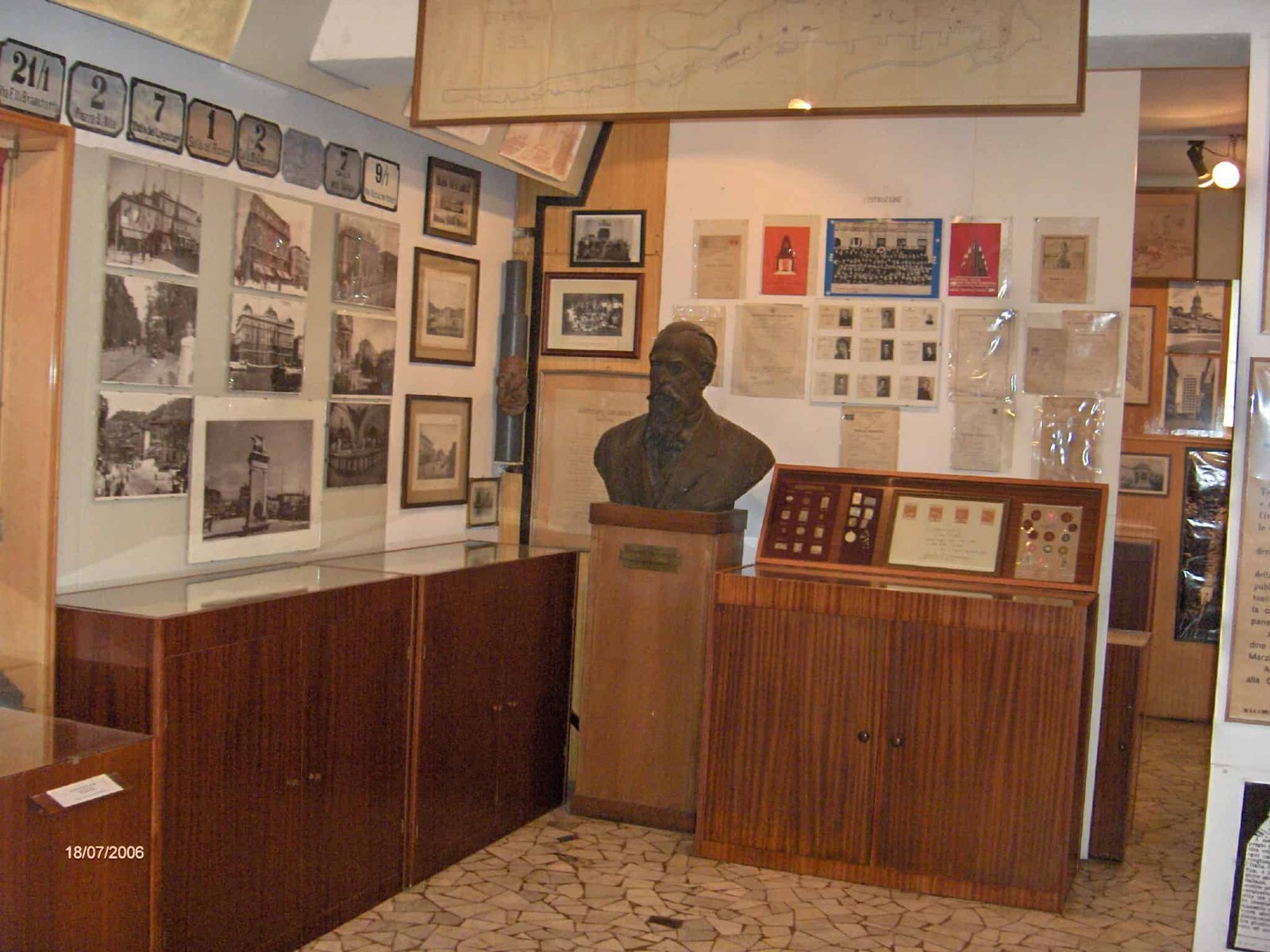
The Fiume Historical Museum and Archive occupies two floors of a residential building at Via Antonio Cippico 10, 00143 Rome, in the Giuliano-Dalmata district, the 31st district of the city, between Via Laurentina and EUR. Admission is free and there is no ticket office. The official website lists opening Monday to Friday with split hours: Monday, Wednesday and Friday from 15:00 to 19:00, Tuesday from 10:00 to 13:30, Thursday mornings starting at 10:00. Closed Saturday and Sunday. The phone is 06 5923485, the email info@fiume-rijeka.it, the certified email societastudifiumani@legalmail.it, the website fiume-rijeka.it. During opening hours you walk in to see the museum without formalities. To consult the archive, the library or the periodicals room it's best to write or call first, because the materials have to be prepared and the curators receive visitors during service hours, and visits by schools and groups are arranged with the management. The reference metro station is Laurentina, the southern terminus of line B, from which the bundle of buses serving the whole southern quadrant departs. The line numbers change with schedules and with roadworks, and should be checked on the transit company's website the same day. If you are looking for other Roman destinations on the same day, you'll find a reasoned index on the page of tourist attractions.
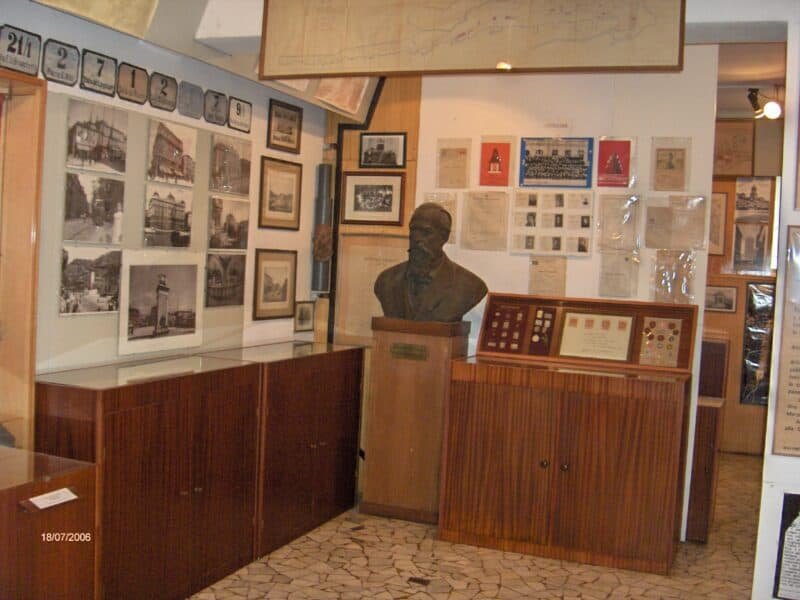
What the Fiume Historical Museum and Archive is and who runs it
It helps to clarify its legal nature right away, because it changes everything: the Fiume Historical Museum and Archive is not a city museum and not a state museum. It is a private institute, owned by the Società di Studi Fiumani, a cultural association with tax code 80254230586, which since 1998 has been joined in managing the cultural heritage by the Associazione per la Cultura Fiumana, Istriana e Dalmata nel Lazio, founded in 1995. Three practical consequences follow that are worth having in mind before you set out. The first: no city or state museum card is of any use here, because admission is already free. The second: the free Sundays of the state museums and the extraordinary openings of the Rome city network do not concern this address, which follows its own calendar. The third: the hours are those of a facility kept going by a small staff, so a phone call before heading out is always money saved.
The current setup has Giovanni Stelli as president of the Società, Roberto Serdoz as vice president and Marino Micich as secretary general and treasurer, who is also the director of the Archive Museum. The library is run by Franco Laicini, the archive by Emiliano Loria. These are names the visitor will meet on the title pages of the volumes on display and in the colophons of the journal: here whoever preserves is also whoever studies and whoever publishes, and you can feel it in the way the material is ordered.
Where the Fiume Historical Museum and Archive is: the Giuliano-Dalmata district
This is not a side detail. The institute did not end up here by urban-planning chance: it is here because here, since the postwar period, a community settled. The district began as the E42 Workers' Village, that is, as housing for the workers who were setting up the 1942 Universal Exposition of Rome, the event never held that left us EUR. The war emptied the village. In 1947 12 families of Giulian refugees settled there, and on November 7, 1948 the settlement was officially inaugurated in the presence of Giulio Andreotti and Francesca Romani, wife of Alcide De Gasperi. In 1955, with the arrival of about 2,000 Giulian and Dalmatian refugees, the village took its present name.
The result is a piece of Rome that reads like a document. The street names are almost all dedicated to people and events of the eastern Adriatic, with a few additions of military roads and astronomers. There is a Largo Vittime delle Foibe Istriane and a Largo Eccidio di Malga Bala. On Via Laurentina a Karst stone marker was placed, inaugurated on November 4, 1961. A bas-relief with the Lion of St. Mark dates from 1953. The monument to the victims of the foibe, in Largo Vittime delle Foibe Istriane, was inaugurated on February 10, 2008, that is, on a Day of Remembrance. The main churches are San Marco Evangelista in Agro Laurentino, in Piazza Giuliani e Dalmati, San Giuseppe da Copertino on Via dei Genieri, elevated to titular church in 2015, and Sante Perpetua e Felicita on Via Mentore Maggini.
Via Antonio Cippico, the name of the street
Antonio Cippico was born in Zara on March 20, 1877 and died in Rome on January 17, 1935. He descended from a noble family of Traù that had given humanist culture the names of Pietro, Alvise and Coriolano Cippico. He was professor of Italian literature at the University of London from 1911 to 1928, a member of the Royal Literary Society, a senator of the Kingdom in the 26th legislature, and a delegate to the assembly of the League of Nations between 1925 and 1928. In 1925 he founded and directed the Archivio storico della Dalmazia. In 1906, together with Tito Marrone, he translated the Oresteia into verse for a staging at the Teatro Argentina in Rome. An institute that preserves the papers of the eastern Adriatic therefore has as its address the name of a Dalmatian who was already collecting those papers a century ago: the coincidence is worth noting and almost no one notes it.
How to get to the Fiume Historical Museum and Archive
The rail reference is the Laurentina station, southern terminus of metro line B, originally opened in 1955 and rebuilt in its present form with works completed in 1990. From there you continue with the surface lines serving the southern quadrant. There are many of them and they are often reorganized, so the right number should be checked on the transit company's website on the day of the visit. By car the district is reached from Via Laurentina, with the warning that the area is residential and parking has to be sought patiently in the inner streets. On foot, anyone coming from EUR has a flat walk without stairs, which makes the route reasonable even for those with mobility problems. One tip: the afternoon of Monday, Wednesday and Friday is the most convenient slot, because the opening lasts four hours and lets you combine the visit with EUR on the same day.
What is around the Fiume Historical Museum and Archive
Within a few minutes by car or a willing walk is the whole EUR area, with its little lake and the large hub of the Museum of Civilizations, which absorbs the prehistoric and ethnographic collections once divided among independent institutes. On the side of 20th-century memory, moving toward the Ardeatino, are the Ardeatine Caves Mausoleum and, in the city, the Museo storico della Liberazione on Via Tasso and the Casa della Memoria e della Storia. Those who want to stretch toward greenery and Christian archaeology have the Abbey of Tre Fontane a few kilometers away.
The visit to the Fiume Historical Museum and Archive, floor by floor
The structure is simple and needs explaining well, because a visitor who arrives unprepared risks stopping at the first level and missing the part that is worth the most. Two floors, about 250 square meters each. The first is the museum proper. The second holds the archive, library, periodicals room, picture gallery, meeting room and offices. The full visit, done calmly and with someone telling the story, takes a good hour and a half. Those who limit themselves to the display cases take 40 minutes.
The first floor and the shrine of the Fiume Historical Museum and Archive
The exhibition is organized around a central shrine dedicated to the Giulian-Dalmatians who fell for the Italian homeland. It is the point around which everything else turns, and also the point where it's best to lower your voice and read rather than photograph. The route opens with documentation on the Adriatic exodus and continues with relics and original documents that tell the history of Fiume from its Roman origins to the Second World War. The thematic sections cover the city's urban planning, monuments, associative life, school, administration, religion and culture, with the emphasis placed on the Italian component. It is a traditionally conceived display, made of cases, panels and objects: no immersive projection, no scenography. Whoever is looking for a spectacle museum will be disappointed. Whoever is looking for documents finds a rare density.
The second floor: meeting room and picture gallery
On the upper floor there is a meeting room with 30 seats and audiovisual equipment, which hosts conferences, seminars and presentations. The walls of that room serve as a picture gallery: the institute's painting collection counts about 200 works by Fiuman, Istrian and Dalmatian artists covering a very long span, from the 18th century to the present day. It is the part of the museum that hurried visitors ignore and that instead tells a parallel story, that of an Adriatic artistic school which the 20th century scattered along with the people. On the same floor are computer stations and the administrative office, as well as storage and consultation spaces.
The archive of the Fiume Historical Museum and Archive
The archive holds more than 80,000 documents. The number alone says little: what counts is the quality of the collections. There are the papers of Riccardo Zanella, Antonio Grossich, Riccardo Gigante, Gabriele d'Annunzio, Icilio Bacci, Andrea Ossoinack, Maria Vitali, Giovanni Giurati, Oscar Sinigaglia, Armando Odenigo, Michele Maylender. Among the most notable pieces are two handwritten Italian versions of the Statute granted by Ferdinand I in 1530, d'Annunzio's autograph letters to Antonio Grossich and the minutes of the association Giovine Fiume. The photographic collection counts about a thousand images. Between 2019 and 2022 continuous digitization campaigns were carried out on documents from the 16th to the 20th century, periodicals, old maps, photographs and manuscripts, supported by grants from the Lazio Region.
The library and periodicals room of the Fiume Historical Museum and Archive
The library counts about 7,000 volumes, with rare manuscripts, works by d'Annunzio with autograph dedications and a large section on the literature of the exodus. The catalog is computerized and partly uploaded into the national library system, which means a search made from home can already tell you if the volume you are looking for is here. The periodicals room preserves historic Fiuman titles that by themselves are worth the trip for anyone working on the Adriatic: La Vedetta d'Italia, from 1919 to 1943, L'Eco di Fiume, from 1858 to 1860, La Giovine Fiume, from 1907 to 1910, as well as international press clippings. Added through reorganization and donation are the titles produced by the exodus associations, such as Difesa Adriatica and L'Arena di Pola, and those of the Italian communities that remained in Istria and Fiume, such as La Battana and the Atti and Quaderni of the Centro di ricerche storiche di Rovigno. It is worth dwelling on this pairing, because it is a precise cultural choice: on the same shelves live side by side the voice of those who left and the voice of those who stayed.
The archival collections of the Fiume Historical Museum and Archive, one by one
The archive is divided into historic collections that are still growing. Listing them is not an inventory exercise: each opens a different door onto the history of the city.
The Riccardo Zanella collection
Zanella was the elected president of the Free State of Fiume, the autonomist politician who opposed both annexation to Italy and absorption into the Kingdom of Serbs, Croats and Slovenes. His papers are the main source for understanding the Fiuman third way, the one that wanted an independent and bilingual city. It is the collection that most effectively dismantles the two-color reading of 1919-1924.
The Antonio Grossich collection
A surgeon of European fame, tied to the spread of disinfecting the operating field with tincture of iodine, Grossich presided in 1918 over the Italian National Council that proclaimed annexation to Italy. His correspondence includes d'Annunzio's autograph letters, material that scholars of the enterprise consult regularly.
The Attilio Depoli collection and the d'Annunzio papers
Attilio Depoli, first president of the Society after its Roman reconstitution, left a collection that concerns in particular the Fiume enterprise and includes autographs of Gabriele d'Annunzio. It is the core that links the institute directly to the events of 1919 and 1920.
The Whitehead collection
It documents the history of the torpedo factory, the industry that made Fiume a manufacturing city of international importance and not only a port. It is the collection that recalls something easily forgotten: before being a political symbol, Fiume was an economic machine.
The Giulian-Dalmatian Sport collection
About 6,000 documents on the sports clubs of the eastern Adriatic and those re-founded in exile. It seems a minor subject. It is not: for the scattered community, sports clubs were one of the few places where a collective identity kept existing in an everyday, not commemorative, form.
The Giulian-Dalmatian Exodus collection and the oral sources
50 folders on the refugees and on the assistance associations, alongside which sits a collection of oral sources made up of interviews with witnesses. The latter is perhaps the most fragile and most precious material in the whole institute, for an obvious generational reason: the recorded voices are by now almost all voices of people who are no longer with us.
The history of Fiume that the Fiume Historical Museum and Archive tells
To understand the display cases you need the chronology. I summarize it with the documented dates, without shortcuts.
From Tarsatica to the separate body
At the origins is Tarsatica, a Roman settlement whose founding is traced to 33 BC. The name Flumen reemerges in the 13th century. In the Middle Ages the city changes hands several times: from the Franks to the bishop of Pola, to the Frangipane in 1337, to the Walsee in 1399, to the Habsburgs in 1465. In 1530 Emperor Ferdinand I grants a statute that confirms the city's autonomy, and it is precisely of that statute that the archive preserves two handwritten Italian versions. In 1719 Fiume becomes a free port together with Trieste. In 1779 Maria Theresa recognizes its status as a separate body attached directly to the Hungarian crown: it is the legal formula that will explain a century and a half of claims.
The Hungarian idyll and 1918
In 1809 Napoleon assigns it to France. In 1813 it returns to Austria, in 1822 to the Kingdom of Hungary. The years between 1868 and 1895 are called the Hungarian idyll: they are those of the great economic growth, of the port, of the industries, of the torpedo factory. In 1940 the city counts 59,332 inhabitants, of whom 41,314 Italians. The language of public writings had long been Latin. In the street a Venetian koine was spoken, and in the surrounding area the Croatian Chakavian dialect. In 1918, with the empire dissolved, an Italian National Council is formed, presided over by Antonio Grossich, which proclaims annexation to Italy.
1919 and the d'Annunzio enterprise
On September 12, 1919 Gabriele d'Annunzio enters the city at the head of rebel units of the Royal Army, grenadiers, bersaglieri and arditi, and proclaims the annexation from the governor's seat. In the following months the legionaries come to number between 8,000 and 9,000. The arditi present are 2,065, among them Ettore Muti and Renato Ricci. Alceste De Ambris arrives in Fiume in January 1920 as head of the political cabinet and collaborates in drafting the constitutional document. On August 12, 1920 the Italian Regency of Carnaro is proclaimed. On September 8, 1920 the Charter of Carnaro is promulgated. On November 12, 1920 the Treaty of Rapallo between Italy and Yugoslavia establishes the independence of the Free State of Fiume. Between December 24 and 29, 1920 the regular army intervenes: it is the Bloody Christmas, with the battleship Andrea Doria bombarding the legionaries' positions, also hitting the Government palace, and with dead and wounded among the civilian population too. On December 28 d'Annunzio resigns, on the 31st he signs the surrender, on January 18, 1921 he leaves for Venice.
The Free State, Zanella and 1924
In 1921 the first Fiuman parliamentary elections are held and Riccardo Zanella, at the head of the autonomists, becomes president. His government lasts a short time: on March 3, 1922 it is overthrown by former legionaries and Fascists led by Francesco Giunta. On January 27, 1924 the Treaty of Rome sanctions the annexation to Italy, solemnly proclaimed on March 16 by Governor Giardino in the presence of Victor Emmanuel III. The policies of Italianization follow, which hit the surnames, place names, schools and associations of the Croatian and Slovene component.
1943, 1945 and the exodus
After the armistice of September 8, 1943 Fiume enters the Adriatic Littoral Operational Zone, under German control. On May 3, 1945 Tito's partisan army militarily occupies the city. The research carried out by the Società di Studi Fiumani counts about 650 Italians who lost their lives between May 1945 and December 1947. The Peace Treaty signed on February 10, 1947 assigns Fiume, with Istria and Zara, to Yugoslavia. The great majority of Fiumans choose the path of exodus: no fewer than 36,500 people, equal to about 94 percent of the city's Italian population. Today Rijeka belongs to Croatia, counts about 173,000 inhabitants and hosts an officially recognized Italian minority of about 3,000 people.
The historiographical readings, presented as readings
On this subject there is no single interpretation, and a serious institute does not pretend otherwise. The 1919 enterprise is read by one part of the historiography as an anomalous political and cultural laboratory, with the Charter of Carnaro and the contribution of De Ambris's revolutionary syndicalism. By another part it is read as the worksite in which liturgies, forms of mobilization and militia practices later absorbed into the repertoire of Fascism were tested. The two readings insist on elements that are both documented and have to be kept in mind together. On the violence of 1945 and on the exodus, likewise, there coexist the reading that stresses their character as political and national persecution by the new Yugoslav power and the one that places them within the chain opened by the Italian occupation of Yugoslavia in 1941 and by the denationalization of the Slavs during the Fascist 20 years. Recognizing the context takes nothing away from the mourning of the victims, and remembering the victims does not oblige us to erase the context. The most concrete sign that this path is viable was given by the institute on Via Cippico itself, as we will see further on, with the research carried out together with Croatian historians.
The Società di Studi Fiumani, from 1923 to today
The Society was born in Fiume in 1923, taking up the legacy of the Deputazione fiumana di storia patria active since 1910, and replacing its Bullettino with the journal Fiume. The founder was Guido Depoli. After the war and the exodus, the Society was reconstituted in Rome on November 27, 1960 on the initiative of Fiuman intellectuals in exile, among them Enrico Burich, Giorgio Radetti and Gian Proda. First president of the Roman phase was Attilio Depoli, who was succeeded by Burich.
The idea of creating an archive museum dates to 1956. The inauguration of the seat in the Giuliano-Dalmata district took place in 1964. The purchase of the property at Via Cippico 10 was completed in 1978, made possible by the contribution of Oscarre Fabietti, who was mayor of the Libero Comune di Fiume in exile and lived from 1912 to 1993. In 1972 the heritage was declared of exceptional historical and artistic interest. In 1986 the Presidency of the Council awarded the Society the Culture Prize. In 1987 the Soprintendenza recognized the notable historical interest of the materials. In 1998 the Fiuman Cultural Manifesto was drafted. Law 92 of March 30, 2004, which established the Day of Remembrance on February 10 of each year, also brought the official recognition of the Archivio museo storico di Fiume.
The journal Fiume
Founded in 1923 and published regularly until 1940, the journal began to appear again in Rome in 1952 with the subtitle Rivista di studi fiumani. It was based in Padua between 1981 and 1989, then returned to Rome. In 1955 the editorship passed to Giorgio Radetti. Since 2000 the subtitle has become Rivista di studi adriatici, to signal a widening of the horizon. It comes out twice a year, in a format of 16 by 24 centimeters, with an average of 150 pages and a print run of about 1,100 copies, free for members and distributed to many academic institutions. The managing editor is Giovanni Stelli, the editorial director Emiliano Loria, and the editorial staff includes Marino Micich, Franco Laicini, Federico Carlo Simonelli and Simone Conversi. The indexes by author, by subject and chronological cover the period 1910-2002, and the indexes of the issues from 2000 onward can be consulted online. Issue 55 came out in June 2026.
The publications of the Studi storici fiumani series
The series, active mainly between 1995 and 2007, includes, among others, Riccardo Zanella, l'antidannunzio a Fiume by Amleto Ballarini (1995), Heinrich von Littrow. Fiume e dintorni by Giovanni Stelli (1995), the proceedings of the conference L'autonomia fiumana 1896-1947 (1996), Italiani e ungheresi nelle lotte risorgimentali by Katalin Mellace (2003), Quell'uomo dal fegato secco by Amleto Ballarini (2003), Le comunità ebraiche della Provincia italiana del Carnaro by Silva Bon (2004), Fiume crocevia di popoli e culture (2007), Come parlavamo by Franco Gottardi (2007) and Fiume, una città dimenticata edited by L. Chiarappa (2007). Recent releases include Prendiamo la vittoria, a catalog of the d'Annunzio leaflets and posters of 1919-1921, the educational volume Fiume a scuola! on the history of the Italian school in Fiume and the reissue, edited by Giovanni Stelli and Emiliano Loria, of Italia e Fiume 1921-1924 by Danilo Luigi Massagrande.
How to consult the archive of the Fiume Historical Museum and Archive
Those who come for research should behave as they would in any private archive open to scholars: write or phone first, explain the subject of the research, agree on the day. The useful time slots are the opening ones, and the long afternoons on Monday, Wednesday and Friday allow four straight hours of work. The consultation room shares space with the meeting room, so on days of conferences or presentations availability can change: another reason to arrange things in advance. The library catalog, partly uploaded into the national library system, allows a first check from a distance. For the archive, on the other hand, direct contact with the curator remains the quickest way to know what exists. A practical warning for those coming from outside Rome: digitization has covered growing shares of the material, so it's worth asking if the piece you're interested in is already available in digital form before buying the train ticket.
The Fiume Historical Museum and Archive with schools and groups
The schools of Rome and Lazio are the privileged interlocutor of this institute, which promotes conferences and seminars free of charge on the history of Fiumans, Istrians and Dalmatians, and makes available to teachers downloadable teaching materials on the themes of the eastern border, the foibe and the exodus. Dedicated visits are arranged by contacting the management. The advice I would give a teacher is not to arrive with the class cold: an hour of preparation in the classroom on the essential chronology, from the separate body to 1947, turns the visit from a list of relics into a history lesson. For adult groups the same principle applies. The room with 30 seats lets you close the visit with a discussion, and it is the part that usually works best.
A curiosity about the Fiume Historical Museum and Archive
The nicest curiosity concerns two notebooks. Among the preserved pieces are two handwritten Italian versions of the Statute granted by Ferdinand I in 1530, the document that sanctioned the city's autonomy. Pause a moment on this combination of dates and places: a text produced in the Habsburg orbit of the full 16th century, copied by hand in Italian, survived four centuries of changes of sovereignty, two world wars and a mass exodus, and ended up in a building on Via Cippico built for the workers of a universal exposition that never took place. No state museum displays it, no general-interest guide mentions it. The thing says a lot about how the archives of dispersed communities work: when a population leaves, it takes its papers with it before its furniture, because the papers are the only proof that the community existed with that name and those rules. And then there is the detail of the address, which deserves repeating: the street bears the name of Antonio Cippico, a Dalmatian from Zara, senator and professor in London, founder in 1925 of the Archivio storico della Dalmazia. An archivist of the Adriatic gives his name to the street of an archive of the Adriatic. In the street naming of the district, where every sign was chosen with intention, it is an internal rhyme that no one points out and that is worth the trip.
Something nobody tells you about the Fiume Historical Museum and Archive
The periodicals room keeps on the same shelves the newspapers of those who left and the newspapers of those who stayed. Try to measure how unusual this choice is. On one side are the titles of the exodus associations, Difesa Adriatica, L'Arena di Pola, born to hold together communities scattered among Rome, Trieste, Turin, Australia and South America. On the other are the publications of the Italian communities that remained in Istria and Fiume after 1947, La Battana, the Atti and Quaderni of the Centro di ricerche storiche di Rovigno. For decades these two worlds looked at each other with mutual distrust: those who had left considered those who stayed a compromise with Yugoslav power, those who stayed considered those who had left a fugitive who had given up the land. Putting the two series side by side, in a consultation room, means declaring that history is written with both. The second thing nobody says: admission costs zero. In a city where a minor museum asks seven or eight euros, here you walk in for free, and this free admission is not a promotion but a choice of mission, because the institute lives on membership fees, public project grants and donations. If the visit leaves you with something, the way to say thanks is to buy a volume or join, not to leave a like.
My advice for visiting the Fiume Historical Museum and Archive
Call. It is not a polite formula: it is the most concrete advice I can give you. An institute kept going by a small staff, which hosts conferences in the same room where people consult documents, can have changes that no online calendar manages to keep up with. A call to 06 5923485 during opening hours settles everything in two minutes and also lets you ask if someone is available that day to accompany you, which changes the visit radically. Second tip: choose the long afternoon, Monday, Wednesday or Friday, and allow a full 90 minutes. Third: go up to the second floor right away. I say it against the natural order of the route, but the picture gallery and the journal room are the part that hurried visitors miss, and they are also the part that best explains what Fiuman culture was before and after 1945. Fourth: bring a notebook. The captions are dry, the documents are dense, and memory cannot hold the quantity of dates this place pours over you. Fifth, and take it as a firm opinion: don't come here on February 10 if you're looking for a quiet visit. On the Day of Remembrance the institute is busy with events and the room fills up. If instead you want to understand what that date means for a community, then it is exactly the right day, but know that you will see a commemoration, not a museum.
Another well-known fact, yet rarely mentioned
The district that hosts the institute was born to house the workers of the 1942 Universal Exposition. Many people in Rome know it, and almost no one connects the two facts all the way. The E42 was meant to celebrate the regime's twentieth anniversary with a new city, marble and definitive. The war interrupted it halfway and left standing a building site and a village of huts and small houses for the workforce. In 1947 that abandoned village took in 12 families of Giulian refugees. On November 7, 1948 it was officially inaugurated with Giulio Andreotti and De Gasperi's wife. In 1955, with the arrival of about 2,000 refugees, it took the name Giuliano-Dalmata. The reasoning that follows is this: the same 20th century that had designed EUR as the showcase of a policy of power produced, within a few years, the refugees who went to live in the homes of its workers. The district and the marble city look at each other from two kilometers away and tell the two faces of the same story. I add a minor fact that almost no one mentions: the Karst stone marker on Via Laurentina was inaugurated on November 4, 1961, and the bas-relief with the Lion of St. Mark dates from 1953. They are the two oldest signs of the Giulian-Dalmatian presence in Rome's place names, predating by half a century the 2008 monument in Largo Vittime delle Foibe Istriane.
The right photo to take at the Fiume Historical Museum and Archive
The right photo is not inside. It is outside, and it is a photo of street signs. Walk the streets around Via Cippico and photograph the street signs one after the other: names of people and events of the eastern Adriatic, Largo Vittime delle Foibe Istriane, Largo Eccidio di Malga Bala, Piazza Giuliani e Dalmati. Put in sequence, those signs make up a geographic index of a land that is no longer Italian, transplanted into a Roman suburb. It is the most effective image of what the exodus was, and it requires no permission. Inside the institute, on the other hand, the rule is simple: you ask. It is a private facility, some documents have restrictions, and the shrine on the first floor is a commemorative space before which the lens is lowered out of respect, not because of a ban. If you get permission, the best subject on the second floor is the wall of the picture gallery, with the paintings by Fiuman, Istrian and Dalmatian authors covering three centuries lined up above the 30 seats of the meeting room: it is a view that explains in a single frame the continuity of a scattered artistic school. The technical tip: natural light, no flash on documents, and if you can, come back on an overcast day, because the backlight from the afternoon windows ruins any shot of the display cases.
Some important events that happened here in history
The first event is the founding itself: the idea of creating an archive museum was born in 1956, 11 years after the exodus, when the community understood that oral memory would not be enough. The inauguration of the seat in the Giuliano-Dalmata district takes place in 1964. In 1972 the heritage is declared of exceptional historical and artistic interest. In 1978 the Society buys the property at Via Cippico 10 thanks to the contribution of Oscarre Fabietti, mayor of the Libero Comune di Fiume in exile. In 1986 the Presidency of the Council confers the Culture Prize. In 1987 the Soprintendenza declares the materials of notable historical interest. In 1990 the first official trip to Fiume departs, and in 1991 the celebration of the feast of St. Vitus, patron of the city, resumes. 1996 is the decisive year: the agreement is signed with the Croatian institute for joint research on the victims, which leads in 2002 to the bilingual Italian-Croatian publication of Le vittime di nazionalità italiana a Fiume e dintorni 1939-1947, signed by Amleto Ballarini and Mihael Sobolevski. In 1998 the Fiuman Cultural Manifesto is drafted. In 2004 Law 92 establishes the Day of Remembrance and officially recognizes the Archive museum. In 2006 President Ciampi confers the medals on the relatives of those thrown into the foibe. In 2007 a stamp dedicated to Fiume is issued, and in 2013 comes the visit of the Ambassador of Croatia. In 2018 the green light is given to bilingual street signs in Fiume. Between January 29 and February 20, 2026 the exhibition Fiume. Città del Ricordo was hosted in the Sala Alessandrina of the Archivio di Stato di Roma.
Who passed through the Fiume Historical Museum and Archive
Let's start with those who brought it into being. Enrico Burich, Giorgio Radetti and Gian Proda are the names tied to the Roman reconstitution of the Society on November 27, 1960. Attilio Depoli was its first president and his papers, with the d'Annunzio autographs, are today one of the main collections. Guido Depoli had founded the institution in Fiume in 1923. Oscarre Fabietti, mayor of the Libero Comune di Fiume in exile, is the man thanks to whom in 1978 the seat was bought rather than rented. Amleto Ballarini signed some of the series' most cited volumes and, together with the Croatian historian Mihael Sobolevski, the census of victims published in 2002: two researchers from two countries who for the first time counted the same dead from the same lists. Giovanni Stelli, Marino Micich, Franco Laicini and Emiliano Loria are the names you meet today both in the rooms and on the title pages. Then there are the institutional passages: in 2013 the Ambassador of Croatia to Italy visited the institute, a fact that 10 years earlier would have seemed unlikely and that marks the change of climate between the two shores. And there are, above all, the people who left their name on no list: the refugees who in the 1960s and 1970s brought here a photograph, a school diploma, a newspaper folded in four, a letter. They are the true authors of the archive's 80,000 papers. The interviews of the oral sources collection preserve their voices.
When to go to the Fiume Historical Museum and Archive
The season matters little, because the visit is indoors and attendance is always modest. What matters instead are the day and the hour. The afternoons of Monday, Wednesday and Friday, from 15:00 to 19:00, offer the widest window and let you combine the visit with a morning at EUR. Tuesday morning, from 10:00 to 13:30, is the choice of those who want to work in the archive with the best light. On Thursday morning the window is shorter. In the days around February 10 the institute is in full commemorative activity and the meeting room hosts events: a good occasion to understand, a bad occasion for a recollected visit. August is the month when changes of hours are most likely, so the advance phone call becomes mandatory. A last note for those planning a whole day in the southern quadrant: morning at the Museum of Civilizations, a quick lunch, afternoon here. It works, and it is one of the least beaten Roman itineraries I know.
Quick questions about the Fiume Historical Museum and Archive
Where is the Fiume Historical Museum and Archive
At Via Antonio Cippico 10, 00143 Rome, in the Giuliano-Dalmata district, between Via Laurentina and EUR.
How much is the ticket for the Fiume Historical Museum and Archive
Nothing. Access to the seat is free and there is no ticket office.
What are the hours of the Fiume Historical Museum and Archive
Monday, Wednesday and Friday from 15:00 to 19:00. Tuesday from 10:00 to 13:30. Thursday mornings starting at 10:00. Closed Saturday and Sunday. The official website remains the reference to check before the visit.
Do you need to book to visit the Fiume Historical Museum and Archive
For the museum visit alone during opening hours, no. For consulting the archive and library, and for visits by schools and groups, you arrange things beforehand with the management.
What is the phone number of the Fiume Historical Museum and Archive
06 5923485. The email is info@fiume-rijeka.it.
Who runs the Fiume Historical Museum and Archive
The Società di Studi Fiumani, owner of the institute, joined since 1998 by the Associazione per la Cultura Fiumana, Istriana e Dalmata nel Lazio.
Is the Fiume Historical Museum and Archive a city or state museum
Neither: it is a private institute of a cultural association, recognized by the institutions but not part of the city or state museum circuits.
How long does the visit to the Fiume Historical Museum and Archive last
40 minutes for the first-floor display cases alone, a good 90 minutes for a full visit that includes the picture gallery and the rooms of the second floor.
How many documents does the archive of the Fiume Historical Museum and Archive hold
More than 80,000, distributed in historic collections that are still growing.
How many volumes does the library of the Fiume Historical Museum and Archive have
About 7,000, with rare manuscripts and a large section on the literature of the exodus. The catalog is partly uploaded into the national library system.
What do you see on the first floor
The museum, organized around a central shrine dedicated to the fallen Giulian-Dalmatians, with sections on the exodus and on the history of Fiume from its Roman origins to the Second World War.
What is on the second floor
Archive, library, periodicals room, picture gallery, computer stations, administrative office and a meeting room with 30 seats and audiovisual equipment.
How many works does the picture gallery of the Fiume Historical Museum and Archive have
About 200, by Fiuman, Istrian and Dalmatian artists, from the 18th century to today.
Can you take photographs at the Fiume Historical Museum and Archive
You ask the staff. Some documents have restrictions and the shrine is a commemorative space before which discretion is required.
Is the Fiume Historical Museum and Archive accessible to people with disabilities
The exhibition occupies two floors of a residential building: those with mobility problems should have the elevator and access situation checked by phone before setting out.
How do you get to the Fiume Historical Museum and Archive by public transport
The reference station is Laurentina, terminus of metro line B. From there you continue with the surface lines of the southern quadrant, whose numbers should be checked on the transit company's website.
Is the Fiume Historical Museum and Archive suitable for children
More suitable for middle and high school students than for small children: it is a museum of documents, and the subjects it treats are harsh. Dedicated routes are arranged with schools.
Are there guided tours of the Fiume Historical Museum and Archive
They are arranged with the management, in particular for schools and groups. It is worth asking for an individual visit too: it radically changes how you read the display cases.
What is the relationship between the Fiume Historical Museum and Archive and the Day of Remembrance
Law 92 of March 30, 2004, which established the Day of Remembrance on February 10, officially recognized the Archive museum. Every year the institute takes part in the events of the anniversary.
What is the journal Fiume
The Society's semiannual, born in 1923 and resumed in Rome in 1952, now subtitled Rivista di studi adriatici. It comes out twice a year, about 150 pages, with a print run of about 1,100 copies.
Can you consult the historic Fiuman newspapers
Yes, in the periodicals room: among the titles are La Vedetta d'Italia from 1919 to 1943, L'Eco di Fiume from 1858 to 1860 and La Giovine Fiume from 1907 to 1910.
Which archival collections are the most requested
Those of Riccardo Zanella, Antonio Grossich and Attilio Depoli, the Whitehead collection on the torpedo factory, the Giulian-Dalmatian Sport collection with about 6,000 documents, the Exodus collection with 50 folders and the oral sources collection.
Are the documents of the Fiume Historical Museum and Archive digitized
Partly. Between 2019 and 2022 digitization campaigns were carried out on documents from the 16th to the 20th century, periodicals, maps, photographs and manuscripts, with grants from the Lazio Region. It's worth asking in advance if the piece you're interested in is already available in digital form.
Is there a bookshop or a cafe
No. The Society's volumes are bought by contacting the management directly. For a coffee you go out into the neighborhood.
Why is the Fiume Historical Museum and Archive in the Giuliano-Dalmata district
Because the district, born as a workers' village for the 1942 Exposition, took in the Giulian and Dalmatian refugees from 1947 and took its present name in 1955: the institute was born inside the community it preserves.
How many Italians left Fiume
No fewer than 36,500 people, equal to about 94 percent of the city's Italian population, which in 1940 counted 59,332 inhabitants of whom 41,314 Italians.
What to see near the Fiume Historical Museum and Archive
EUR with the little lake and the Museo delle Civiltà, and, widening the radius slightly, the Mausoleo delle Fosse Ardeatine and the Abbey of Tre Fontane.
How much time is needed for archive research
It depends on the collection, but a first serious survey takes at least a whole afternoon: the long afternoons of Monday, Wednesday and Friday are the best slot.
If the visit has made you want to continue on the Italian history of the 19th and 20th centuries, in Rome the natural route continues with the Museo centrale del Risorgimento and the Istituto per la storia del Risorgimento italiano, both tied to the Altar of the Fatherland, and then with the Museo della Repubblica Romana e della memoria garibaldina on the Janiculum. For military history there are the Museo storico della Fanteria and the Museo storico dei Carabinieri. For another story of community, memory and persecution, there is the Jewish Museum of Rome. Those who after the archive on Via Cippico want to widen their research into printed sources find in the Biblioteca nazionale centrale di Roma the obvious complement.
To close, an explicit opinion. Few Roman museums leave the feeling this one leaves: here you don't visit a collection, you visit the repository of a community that lost its city and decided to rebuild it in the form of papers. It is an uncomfortable place, in a suburb tourists don't touch, with office hours and without a single concession to spectacle. That is exactly why it works. Whoever deals with contemporary history, whoever teaches, whoever has an Adriatic root in the family should put it on the calendar and dedicate a whole afternoon to it. And whoever has none of these three reasons should go anyway: they will leave knowing that the eastern border is not a textbook chapter but a matter of people, of mixed languages, of mourning that asks to be counted precisely and named in full, on all sides.
Article written by the editorial team of TourLeaderPro, contact them for Private/Corporate/V.I.P. Tours and Experiences.
Planning a trip to Rome? The English-language guides to visiting the city are on ItalyPlanner.com.