Dalija Kaukėnaitė, hopecore at the space 10 documents, September 17 to November 8, 2026
In short. hopecore, the solo show by the Lithuanian artist Dalija Kaukėnaitė, is open from September 17 to November 8, 2026 at the space 10 documents, Via di San Calepodio 37, 00152 Rome, in the Monteverde neighborhood.
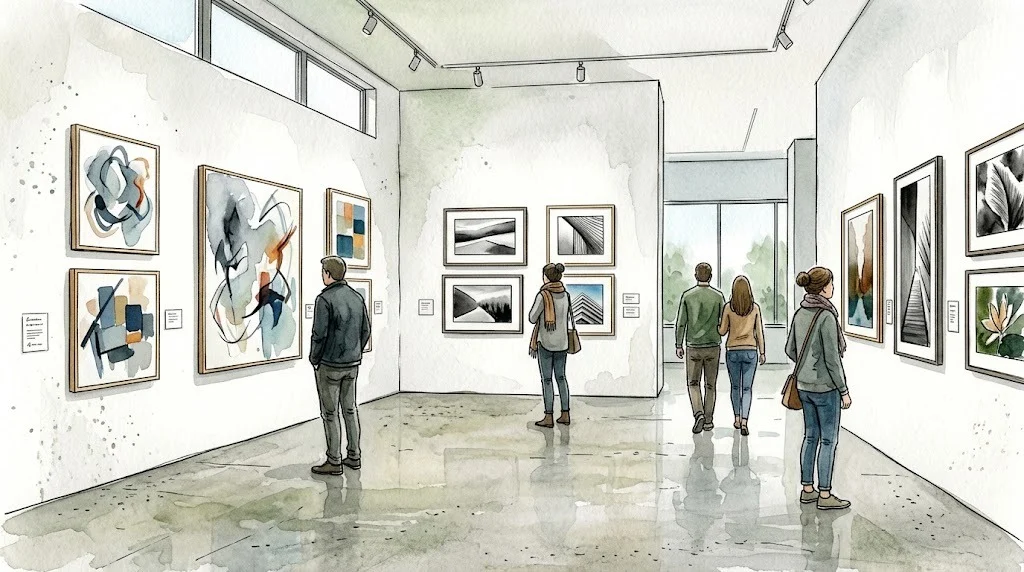
hopecore, the solo show by the Lithuanian artist Dalija Kaukėnaitė, is open from September 17 to November 8, 2026 at the space 10 documents, Via di San Calepodio 37, 00152 Rome, in the Monteverde neighborhood. The show is curated by Ginevra Ludovici. The space does not publish hours and prices on its website: for information, go to the official 10 documents website, with the email and Instagram contacts. To get there by public transport, use the ATAC route planner. hopecore is part of the program Lithuanian Culture in Italy 2025-2026, produced by the Lithuanian Culture Institute and the Embassy of the Republic of Lithuania in Italy.
Memes, posts, quotes, fragments of everyday conversations collected in an artist's book the size of a smartphone, and an immersive installation that turns the space into a temporary infrastructure of care and relationship: hopecore takes its name from a culture born online, made of radical sincerity, vulnerability and optimism, and uses it to reflect on how emotions circulate today, against cynicism and against doomscrolling, the endless scrolling of negative news. In our opinion the shows in independent spaces are the ones that best tell the story of a changing city: this one, in Monteverde, is about all of us and our phones.
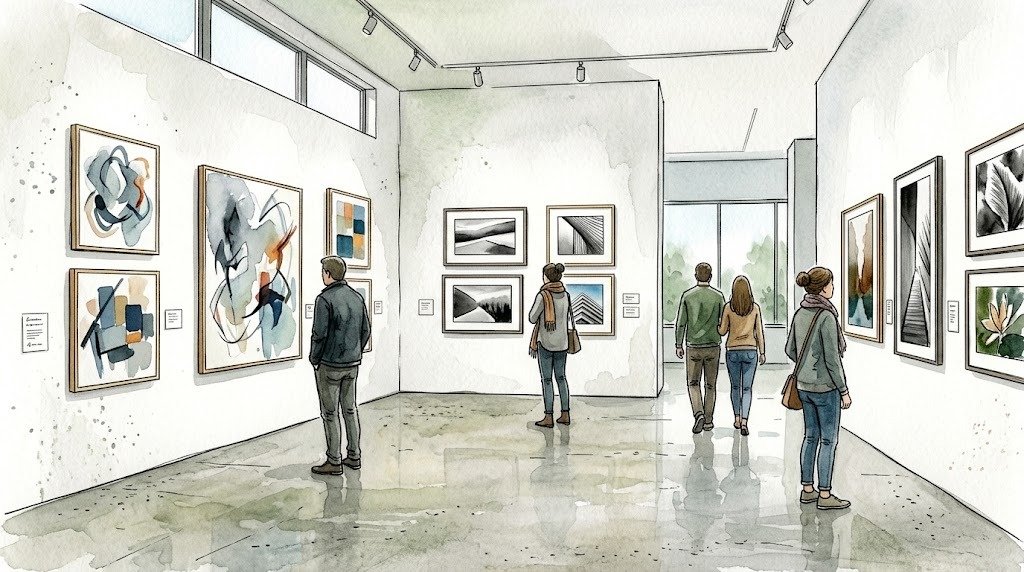
hopecore at 10 documents: the essential information
The show stays open until Sunday, November 8, 2026 in the space at Via di San Calepodio 37. It is curated by Ginevra Ludovici, co-founder of the space.
Dates and hours
hopecore opened on Thursday, September 17 from 18:00 to 21:00. The 10 documents website gives the dates, September 17 to November 8, but does not publish opening hours. The city's tourism portal lists it as open every day. My advice is to write to the space before going, through the email or the Instagram profile given on the website.
Admission
The official website does not give an admission price. 10 documents is a social promotion association, and its shows are part of public research programs: for this reason too it is best to contact the space to find out how to get in.
The public program
The show is accompanied by a public program of events and conversations on the cultural, political and emotional conditions from which these forms of online optimism arise. The dates are announced by the space: following its channels is the best way not to miss them.
What you see in hopecore
The show is built around two elements: a site-specific installation commissioned for the occasion and an artist's book. The starting point is hopecore, a culture born on the internet, founded on radical sincerity, vulnerability and optimism.
The artist's book
The book is designed with the dimensions of a smartphone. It collects memes, social media posts, quotes, images and fragments of everyday conversations gathered by Kaukėnaitė, and translates the continuous flow of the digital feed into a tangible, portable archive. The artist conceived it as an "emergency hope restorer": an object to keep in your pocket, like the phone, but with content that is chosen rather than imposed by the algorithm.
Between intimacy and collective experience
The materials in the book move between intimacy and collective experience, between humor and seriousness, between the personal and the algorithmic. It is the same ambivalence as the culture the show is named after: light, sometimes naive content, which nonetheless answers a real need for comfort.
The installation
In the spaces of 10 documents Kaukėnaitė transforms the room into a temporary infrastructure, giving spatial form to an imaginary of relationship, intimacy and care. The immersive environment brings together several elements, among them a site-specific work made in collaboration with Basak Tuna, which carries the visual and emotional language of hopecore out of the screen and into the physical space.
What hopecore is
The presentation of the show defines hopecore as a culture born online, made of radical sincerity, vulnerability and optimism. The show takes it as a starting point to reflect on three questions: the contemporary forms of circulation of emotions, collective reassurance, resistance to cynicism and to the endless cycle of doomscrolling.
Against doomscrolling
Doomscrolling is the word for the habit of endlessly scrolling through negative news and content on your phone. hopecore is, in a sense, its opposite: content that reassures, moves, gives hope. The show does not celebrate it naively, but takes it seriously as a cultural phenomenon.
A political and emotional theme
The show's public program sets out to explore the cultural, political and emotional conditions from which these forms of online optimism arise. It is a serious question: why, in an age of crisis, do millions of people look online for content of hope? The answer, the show suggests, says a lot about our present.
In our opinion
It is a theme that lends itself to easy irony, and the merit of the show is to avoid it. A book the size of a phone that contains emergency hope is an idea at once tender and critical: it reminds us how much we depend on the screen even to console ourselves, and offers us a physical object in its place.
There is also a generational aspect worth underlining. The artist was born in 1995, the space was founded in 2025, the curator belongs to the same generation: hopecore is a show made by people who grew up with social media, and who look at it from the inside. There is no nostalgia of someone who misses a world without screens, nor the enthusiasm of someone discovering them. There is the lucidity of someone who knows them well and looks, inside that flow, for what is worth keeping. For an older visitor it is a valuable point of view, because it tells from the inside an experience that is often judged only from the outside.
Who is Dalija Kaukėnaitė
Dalija Kaukėnaitė is a visual artist born in Vilnius in 1995, who now lives and works in Rome. She comes from graphic design and art direction, and her practice starts from observing everyday life, whose meanings she reworks through visual research.
Work driven by context
Her work moves freely between different media, guided more by concept and context than by form. It is an approach you recognize in hopecore: a book, an installation, a collaboration, a program of meetings, held together by an idea more than by a style.
The shows
Kaukėnaitė has exhibited at Circolo Scandinavo, at COSMO Trastevere, at Spazio Y, at AWAI and at the PAV, Parco Arte Vivente in Turin, and has taken part in urban billposting projects such as Oripeau in Nantes and in Montréal. It is a path that crosses independent spaces, institutions and the street: consistent with an artist who works on the border between visual communication and art.
Lithuania in Rome
hopecore is part of the program Lithuanian Culture in Italy 2025-2026, produced by the Lithuanian Culture Institute and the Embassy of the Republic of Lithuania in Italy. For the Roman public it is the chance to get to know a young Lithuanian artist who chose Rome as the city to work in.
10 documents: the space
10 documents is a platform for artistic, curatorial and theoretical research, founded in 2025 by Ginevra Ludovici and Flavio Michele, based at Via di San Calepodio 37. It works through public research programs, each dedicated to a different object of inquiry.
A living archive
Through shows, meetings, publications, conversations and sound or performative acts, the space builds each time what it calls a living archive: a collective lexicon made of presence, repetition and listening. The artist's book of hopecore, a portable archive of the feed, fits perfectly into this idea.
The name: Bataille and Documents
The space takes its name from the magazine Documents edited by Georges Bataille in 1929 and 1930, and in particular from its appendix, where images, objects and words were treated as material fragments, without hierarchy and without a thesis. It is a learned reference, which says a lot about the method: putting different materials side by side without imposing an interpretation.
Previous shows
Before hopecore the space presented, from February 28 to April 17, 2026, If time is an onslaught, love is a mission, a group show curated by Ginevra Ludovici, with a title taken from a line by Kae Tempest. There too the theme was the relationship between the urgency of the present and the emotional response.
How to visit an independent space
10 documents is neither a commercial gallery nor a museum: it is a research platform run by an association. Whoever has never visited spaces of this kind may find three pointers useful.
Get informed first
Independent spaces often publish dates and programs, but not always fixed hours. Writing first is not a formality: it is the way to know when the space is open and who will be there to welcome you.
Take part in the meetings
In spaces like this the show is only one part of the project. The meetings, conversations and presentations are the moment when the research becomes public, and often the best way to understand the work on display. The hopecore program includes several.
Talk to the people who work there
In independent spaces curators and founders are often present. Ask questions: about the show, the artist, the program. It is a direct relationship that doesn't exist in the big museums, and it is one of the pleasures of these visits.
Screens, hands, artificial intelligence: a theme of this Roman fall
hopecore is not the only Roman show this fall that questions the relationship between people and image technologies. It is a thread that runs through very different places.
From painting to installation
At Museo Nazionale Etrusco di Villa Giulia, L'indovino by Mouna Rebeiz presents an installation conceived between the globalization of artificial intelligence and symbolic traditions. At Galleria Nazionale d'Arte Moderna, until October 11, the painter Madalena Negrone writes on the back of her canvases that no robot or artificial intelligence was involved.
Three different answers
Three artists, three generations, three answers: the oracle against the algorithm, the hand against the machine, the paper book against the infinite feed. Kaukėnaitė, born in 1995, is the youngest of the three and the closest to internet culture, and her answer is the least polemical: she doesn't reject the screen, she gathers its best fragments.
A curiosity about Dalija Kaukėnaitė, hopecore at the space 10 documents, September 17 to November 8, 2026
The most interesting curiosity is the format of the artist's book. It is designed with the dimensions of a smartphone: you hold it in one hand, slip it in your pocket, flip through it with your thumb. But instead of scrolling infinitely, you turn it page after page, and it ends. It is an object that imitates the phone to do exactly the opposite of what the phone does: put a limit on the flow, choose the content, give time back to reading.
The second curiosity is the name of the space that hosts the show. 10 documents refers to the magazine Documents by Georges Bataille, which between 1929 and 1930 placed images, objects and words side by side without hierarchy. Almost a century later, an artist collects memes, posts and conversations, that is, the visual fragments of our time, and places them side by side without hierarchy in a book. The coincidence between the method of the space and that of the show is evident.
The third concerns the definition the artist gives of the book: an emergency hope restorer. It sounds like the name of an app, or of an over-the-counter medicine. In our opinion it is the best summary of the show, ironic and sincere at once, exactly like the hopecore culture it talks about.
One thing nobody tells you about Dalija Kaukėnaitė, hopecore at the space 10 documents, September 17 to November 8, 2026
Independent spaces like 10 documents don't work like museums. They have no ticket office, often have no published fixed hours, and open according to the program and the availability of the people who run them. The 10 documents website, in fact, gives the dates of the show but not the hours. Going without checking first means risking finding it closed.
The practical advice is simple: write to the space, through the email or Instagram given on the website, and ask when you can visit. In research spaces it is normal, and it is also a way to be welcomed by someone who built the show, who is usually happy to talk about it.
The second thing is about the public program. A show like hopecore also lives on the meetings and conversations that go with it: they are often the best time to visit, because the space is open, there is an audience, and you can listen to the artist or the curator. The advice is clear: if you can, go during one of these events.
The third thing is about the audience. A show on hopecore attracts, naturally, a young audience, used to the languages of the internet. Those who aren't should not feel excluded: the theme concerns anyone with a phone in their pocket, that is, almost everyone. In fact, the questions of someone looking at this culture from the outside are often the most useful, and in the meetings of the public program they find the right space to be asked.
My advice for visiting Dalija Kaukėnaitė, hopecore at the space 10 documents, September 17 to November 8, 2026
Before going, write to 10 documents to find out when it is open and if any meetings are scheduled. Then, once there, start with the installation: enter the space, look around, let the environment wrap around you. Only afterward pick up the artist's book, if it can be consulted, and flip through it slowly.
Try an experiment. Before going in, look at your phone for a minute and scroll your feed. Then, inside, flip through Kaukėnaitė's book. The comparison between the two flows, the infinite one of the screen and the limited one of paper, is the real experience the show offers. It is an exercise that lasts five minutes and will leave you something to think about.
Finally, talk to whoever runs the space. The curator Ginevra Ludovici is also one of the founders of 10 documents, and in independent spaces the people who curate the shows are often present. Ask what hopecore means to them: the answers are often more interesting than any critical text.
How to get to 10 documents
10 documents is at Via di San Calepodio 37, 00152 Rome, in the Monteverde neighborhood, in Municipio XII, on the right bank of the Tiber southwest of the center.
By public transport
Monteverde is served by public transport lines that connect it with Trastevere and with the center. Lines and schedules change with roadworks and seasons: for the exact route from your starting point use the ATAC route planner.
By car and by bike
Monteverde is a residential neighborhood, where street parking is often difficult. The advice is public transport.
Before you leave
Remember to check the opening hours with the space before setting out: Monteverde is not the historic center, and a wasted trip costs time.
Another well-known fact, yet rarely mentioned
It is well known that we spend hours every day looking at our phones. It is less often remembered that what we see on the screen is, to all effects, a visual culture, with its genres, its codes and its anonymous authors. Memes are images built according to precise rules, posts follow recognizable formats, conversations have their own lexicon. It is material that historians will one day study the way popular prints are studied today.
hopecore takes this culture seriously. It doesn't treat it as digital trash, nor does it celebrate it uncritically: it collects it, selects it, turns it into an object and an environment. It is the same gesture that Bataille's magazine Documents performed almost a century ago with the images and objects of its time, placing them side by side without hierarchy.
There is also a second, rarely mentioned aspect. Internet cultures are not only cynicism, polemic and negative news. Next to doomscrolling there is an opposite current, made of content that tries to console and to unite. The show reminds us that this too is a form of resistance, and that in an age of crisis shared hope is a social fact to be studied, not only a private feeling.
The right photo to take at Dalija Kaukėnaitė, hopecore at the space 10 documents, September 17 to November 8, 2026
For a show about social media culture, the temptation is to photograph everything and post it right away. The advice is the opposite: ask first if photos are allowed, and then take only one. Choose the point of the installation that struck you most and photograph it slowly, as if it were a page of the artist's book.
The second photo is a gesture consistent with the theme. If the book can be consulted, photograph your hand holding it, next to your phone: two objects of the same size, one of paper and one of glass. It is the image that sums up the show better than any overall view.
The third, if you like, is the only hopecore content the show asks of you: on your way out, photograph something that gives you hope in the streets of Monteverde. A tree, a window, a mural. And, for once, keep it to yourself.
Some important events that happened here in history
1929-1930: Georges Bataille edits the magazine Documents, which in its appendix places images, objects and words side by side as material fragments, without hierarchy and without a thesis. Almost a century later it will give its name to a Roman space.
1995: Dalija Kaukėnaitė is born in Vilnius.
2025: Ginevra Ludovici and Flavio Michele found 10 documents at Via di San Calepodio 37, in Monteverde, as a platform for artistic, curatorial and theoretical research.
2025-2026: the Lithuanian Culture Institute and the Embassy of Lithuania in Italy produce the program Lithuanian Culture in Italy.
February 28, 2026: If time is an onslaught, love is a mission opens, a group show curated by Ginevra Ludovici, until April 17.
September 17, 2026: opening of hopecore by Dalija Kaukėnaitė, with a site-specific installation made with Basak Tuna and an artist's book.
November 8, 2026: closing of the show.
It is a short chronology, but it tells how a cultural space is born in Rome today: outside the center, from a private and association-based initiative, with a network of international collaborations. Monteverde, a residential neighborhood, thus finds itself hosting a research program that dialogues with Vilnius, Paris and internet cultures.
Around 10 documents: Monteverde
10 documents is in Monteverde, a residential neighborhood of Municipio XII, on the right bank of the Tiber, between Trastevere and the great villas of the Janiculum.
Villa Doria Pamphilj
Villa Doria Pamphilj is the natural stop before or after the show: a walk in the green after a show about screens.
Villa Sciarra and San Pancrazio
Toward Trastevere are Villa Sciarra and the Basilica of San Pancrazio, two stops in the neighborhood.
Trastevere
Going down toward the Tiber you reach Trastevere, with its alleys and its venues. The guide Trastevere: what to see offers a complete picture. On the way, Porta Portese.
Who has passed through Dalija Kaukėnaitė, hopecore at the space 10 documents, September 17 to November 8, 2026
In its first year of life, 10 documents has seen the artists and thinkers involved in the space's research programs. The group show If time is an onslaught, love is a mission, curated by Ginevra Ludovici between February and April 2026, carried a title taken from a line by Kae Tempest, and a theme, the urgency of the present, that hopecore takes up from another angle.
With hopecore, these people pass through Via di San Calepodio: Dalija Kaukėnaitė, an artist born in Vilnius, trained in graphic design and art direction, already seen at Circolo Scandinavo, at COSMO Trastevere, at Spazio Y, at AWAI and at the PAV in Turin. Basak Tuna, with whom the artist made the site-specific work. The curator Ginevra Ludovici and the co-founder Flavio Michele. With them, ideally, the Lithuanian Culture Institute and the Embassy of Lithuania, which support the program Lithuanian Culture in Italy.
And Georges Bataille passes through, whose spirit gives the space its name: the idea that images, objects and words can stay together without hierarchy, like fragments of an always open archive.
Above all, though, the visitors pass through with their phones in their pockets. They are the real subject of the show: people who every day scroll an infinite feed, and who for a few minutes are invited to stop, flip through a book, enter a space of care. The photographer Jacopo Rinaldi documented the show for the space.
An afternoon in Monteverde
The show lends itself to becoming the center of an afternoon in a neighborhood that visitors to Rome rarely know.
Early afternoon
Visit 10 documents, at the time agreed with the space, or on the occasion of one of the meetings of the public program.
Late afternoon
A walk in Villa Doria Pamphilj, then toward the Janiculum for the view over the city at sunset. After a show about the infinite feed, a view that doesn't scroll.
Evening
Down toward Trastevere for dinner, or a neighborhood trattoria in Monteverde, quieter and less expensive.
Where to eat in Monteverde
Monteverde is a residential neighborhood, with neighborhood bars, bakeries, trattorias and pizzerias frequented mostly by residents. Prices are those of a lived-in area, lower than in Trastevere. For a livelier dinner, Trastevere is a short distance away. If you go to an evening meeting of the public program, ask whoever runs the space for an address in the neighborhood: people who live and work in Monteverde know the right places better than any guide, and than any review read in passing on a phone screen.
Accessibility and practical information
For the accessibility of the space it is best to ask 10 documents directly before the visit, through the contacts given on the website. Independent spaces have very different conditions from one another.
With teenagers and students
hopecore is a show that speaks directly to teenagers and young adults, who grew up with social media. For a teacher who wants to discuss digital culture, well-being and information in class, it is a very concrete starting point.
With a group
For a group it is essential to contact the space first. For a private itinerary among the independent spaces of Roman contemporary art, Tour Leader Pro organizes tailor-made visits.
Why hopecore is worth seeing
It is worth it for the theme, first of all: few shows in Rome this fall tackle the relationship between emotions, social networks and hope with as much precision. The book the size of a smartphone is a simple and successful idea, which stays in the mind. And the space, young and with a clear identity, deserves to be discovered.
The limit is practical: unpublished hours, a space outside the center, a show that asks you to get in touch first. Whoever wants an improvised visit risks finding it closed. But whoever plans ahead will find an experience that museums don't offer: a show about us, here and now, told by an artist who looks at Rome and the world through the screen and beyond.
Frequently asked questions about hopecore at 10 documents
Until when is the hopecore show by Dalija Kaukėnaitė open?
hopecore by Dalija Kaukėnaitė stays open at the space 10 documents, Via di San Calepodio 37, until Sunday, November 8, 2026. The space's website does not publish opening hours: it is best to contact 10 documents before the visit.
Where is 10 documents?
10 documents, the space that hosts hopecore, is at Via di San Calepodio 37, 00152 Rome, in the Monteverde neighborhood, Municipio XII. To get there by public transport, it is best to use the ATAC route planner.
What does hopecore mean?
hopecore is a culture born on the internet, founded on radical sincerity, vulnerability and optimism, which stands against cynicism and doomscrolling. The show by Dalija Kaukėnaitė uses it to reflect on how emotions and collective reassurance circulate today.
What do you see in the show?
hopecore presents an immersive site-specific installation, with a work made together with Basak Tuna, and an artist's book the size of a smartphone that collects memes, posts, quotes and fragments of conversations, conceived as an emergency hope restorer.
Who is Dalija Kaukėnaitė?
Dalija Kaukėnaitė is a visual artist born in Vilnius in 1995 who lives in Rome. She comes from graphic design and art direction and has exhibited at Circolo Scandinavo, at COSMO Trastevere, at Spazio Y, at AWAI and at the PAV in Turin.
Who curated hopecore?
hopecore is curated by Ginevra Ludovici, who founded 10 documents with Flavio Michele in 2025. The show is part of the program Lithuanian Culture in Italy 2025-2026 of the Lithuanian Culture Institute and the Embassy of Lithuania.
The final advice on hopecore
It is worth writing to 10 documents, booking a visit or choosing one of the meetings of the public program, and going to Monteverde with your phone in your pocket. The advice is to look at your own feed for a minute, then go in and flip through Kaukėnaitė's book, and on the way out take a few steps in Villa Doria Pamphilj without looking at the screen. In our opinion it is a small show that, at least for an afternoon, changes the way you hold your phone.
Article written by the editorial team of Tour Leader Pro, contact them for Private/Corporate/V.I.P. Tours and Experiences.
Planning a trip to Rome? The English guides to visiting the city are on ItalyPlanner.com.
Contact Information
Nearby
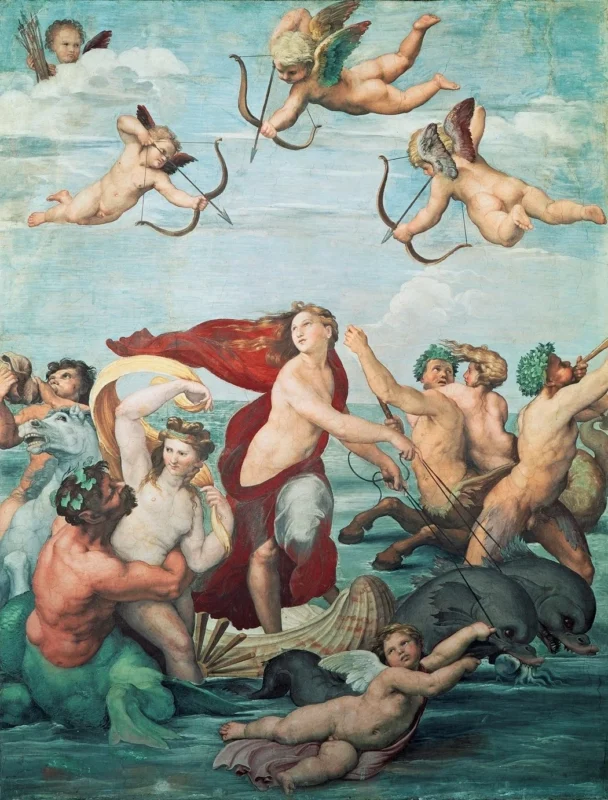
 Raphael in Rome: Where to See His Works200 m
- Teatro dei Contrari, theater in Monteverde300 m
- Teatro Vascello400 m
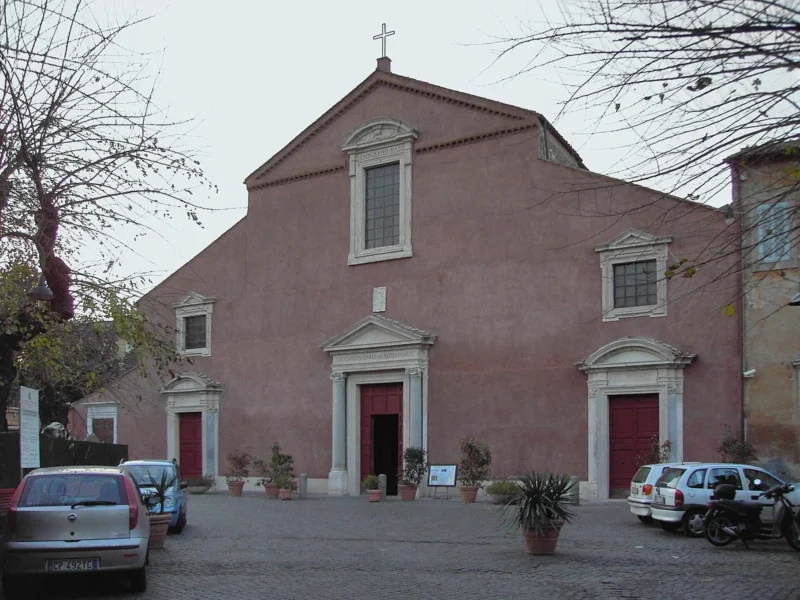
- Basilica of San Pancrazio600 m
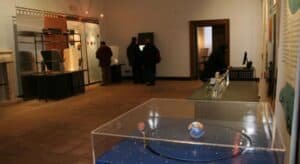
- Museum of Mathematics600 m
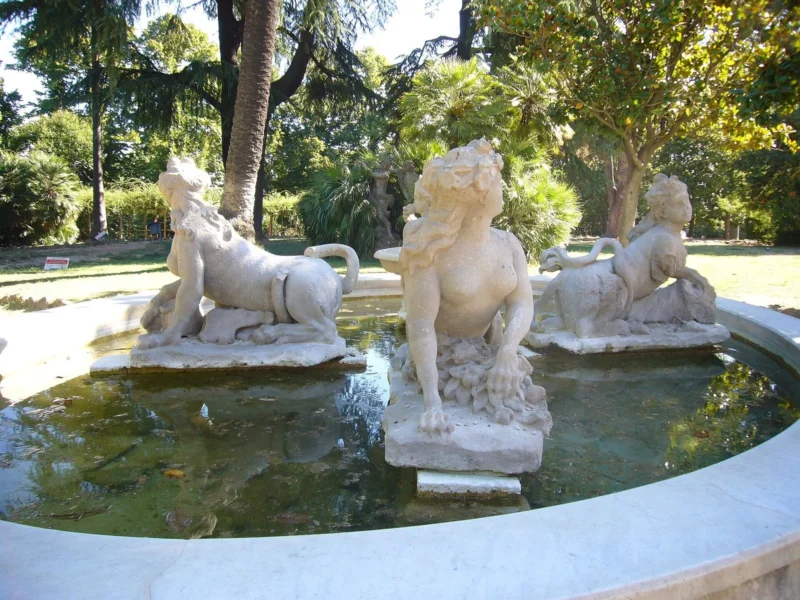
- Villa Sciarra700 m
Upcoming events nearby
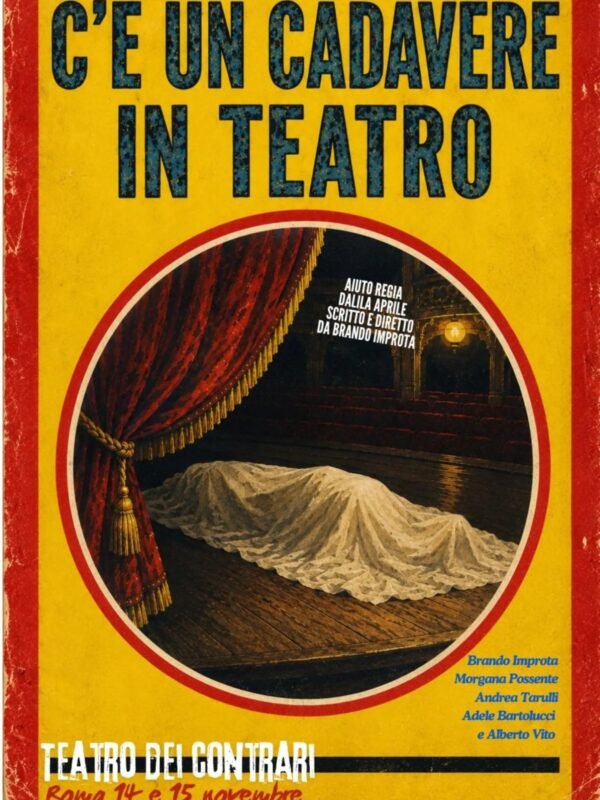
- C’è un cadavere in teatro at Teatro dei Contrari, November 14 and 15, 2026300 m
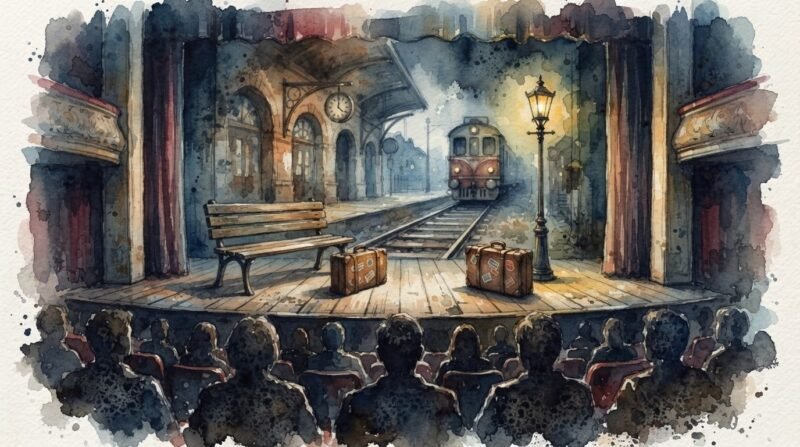
- Binario 1 by Debora Valentini at Teatro dei Contrari, November 8, 2026300 m
- Contro tempo at Teatro dei Contrari, December 4 to 6, 2026300 m
- L’ultima beffa di Adam at Teatro dei Contrari, March 20, 2027300 m


You might also like
- Diego Rivera at the Capitoline Museums: the Big Exhibition on 20th-Century Mexican Art
- Il non finito at the Capitoline Museums, the Unfinished Paintings of the Pinacoteca
- Thursdays at the GNAMC, evening openings at the Galleria Nazionale d’Arte Moderna, from September 10 to December 17, 2026
- I cattivi pensieri at Teatro Elsa Morante, performances from October 24 to November 6, 2026
- Troia e Roma. Miti, leggende, storie del Mediterraneo antico (Troy and Rome): through Sunday, November 8, 2026
- Tutti Satelliti – Ugo Borghetti | Podcast Live at Alcazar Live: Sunday, November 8, 2026