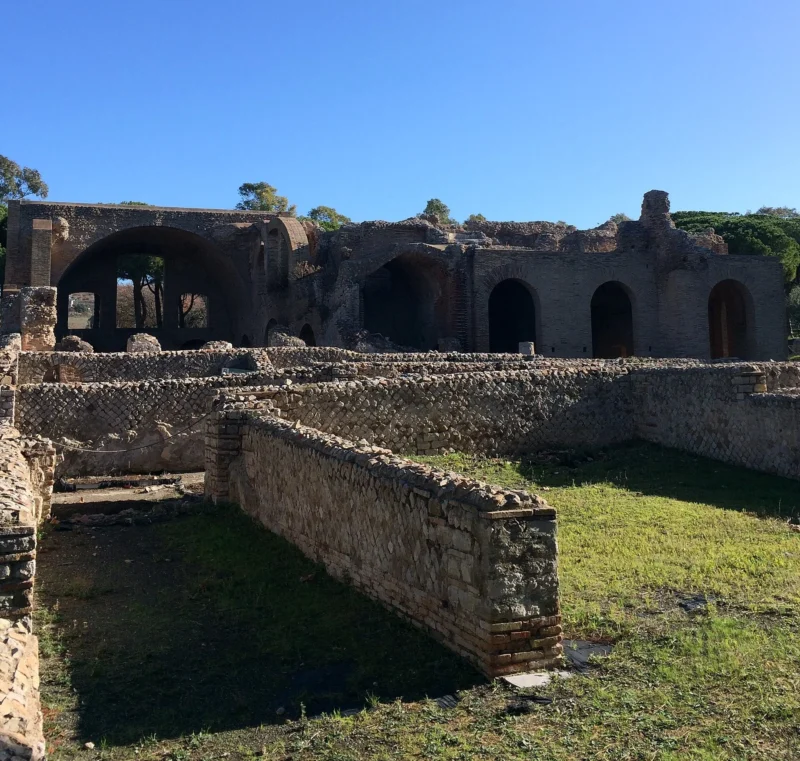
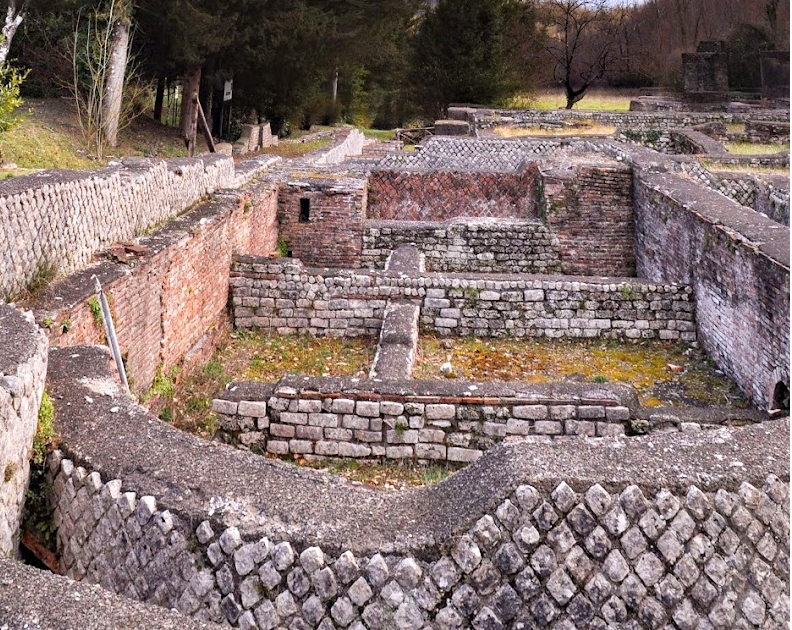
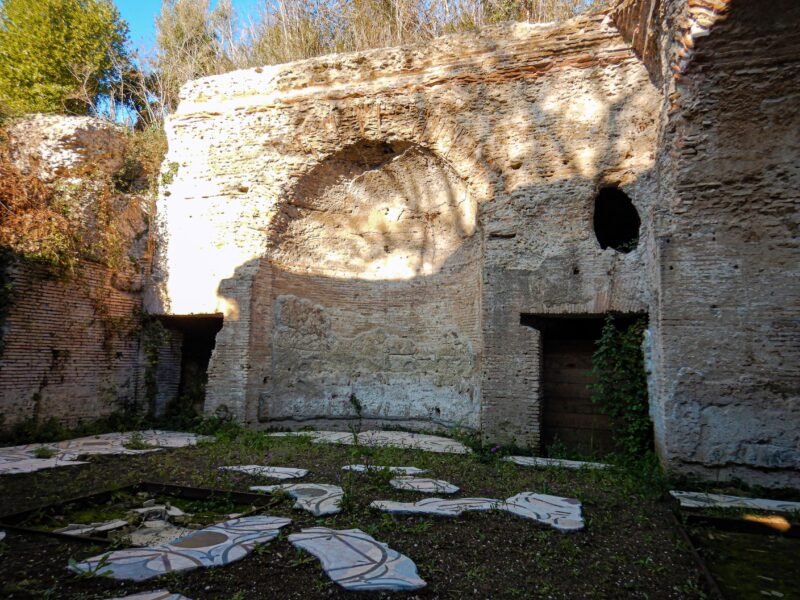
The ancient Roman baths in Rome that are easiest to visit are three: the Baths of Caracalla, the Baths of Diocletian and the Baths of Trajan on Colle Oppio. Caracalla costs €8 and is closed on Mondays. Diocletian is part of the National Roman Museum, with a €15 ticket. At Colle Oppio the park is free, while the Baths of Trajan have fixed tour times and a ticket. This guide compares them with other places, in the city and outside it. For the big picture, see the page on thermal baths and hot springs near Rome.
Ancient Roman Baths in Rome: The Three Main Sites Compared
Before choosing, look at the essentials. The information comes from the individual guides, which remain the reference for current hours and prices.
| Site | Closed | Ticket |
|---|---|---|
| Baths of Caracalla | Monday | €8 full price, €2 reduced for ages |
| Baths of Diocletian | Monday | €15 full price, valid for all museum sites |
| Colle Oppio and Baths of Trajan | Park open from 7:00 a.m. to sunset | Park free, baths with a ticket from September 12, 2026 |
Baths of Caracalla
The Baths of Caracalla are at Viale delle Terme di Caracalla 52, on the north side of the Piccolo Aventino. Take Metro Line B to Circo Massimo, then walk five minutes. By bus, lines 118, 628 and 760 serve the area.
The full ticket costs €8. When there is an exhibition, the stated surcharge is €5.
The monument is closed on Mondays and opens Tuesday through Sunday at 9 a.m. Closing time changes with the season: in midsummer it stays open until 7:15 p.m. Evening openings use the entrance at Via Antonina 5. Live music evenings should be checked case by case in the guide.
Baths of Diocletian and the Spaces Around Them
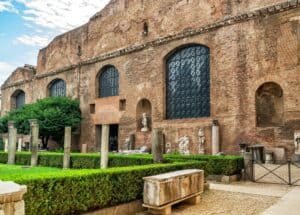
The baths commissioned by Diocletian between 298 and 306 AD cover a large area near Termini station. Inside the ancient enclosure there is now a museum, a hall, a cloister and two churches. You can visit them in sequence or pick just one.
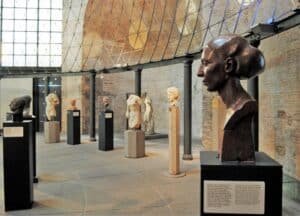
The Museum
The Baths of Diocletian – National Roman Museum is at Viale Enrico de Nicola 78, a two-minute walk from the Termini exit. It opens Tuesday through Sunday from 9:00 a.m. to 7:00 p.m., with last entry at 6:00 p.m. It is closed on Mondays.
The full ticket costs €15.00 and the reduced ticket €2.00, under the conditions that apply to state-run cultural sites. It is valid for all sites of the National Roman Museum, one entry to each, for one week from the first validation. There is also an annual MNRCard: €30.00 full price and €20.00 reduced.
The Octagonal Hall
The Octagonal Hall has its own entrance at Via Giuseppe Romita 8, near Piazza della Repubblica. Hours are the same as the museum. From July 4, 2026, a separate ticket for the Hall alone costs €5.00. Anyone who already has the museum ticket pays nothing more.
Michelangelo’s Cloister
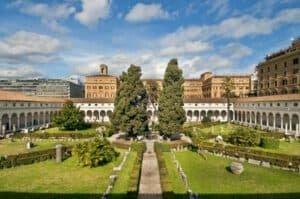
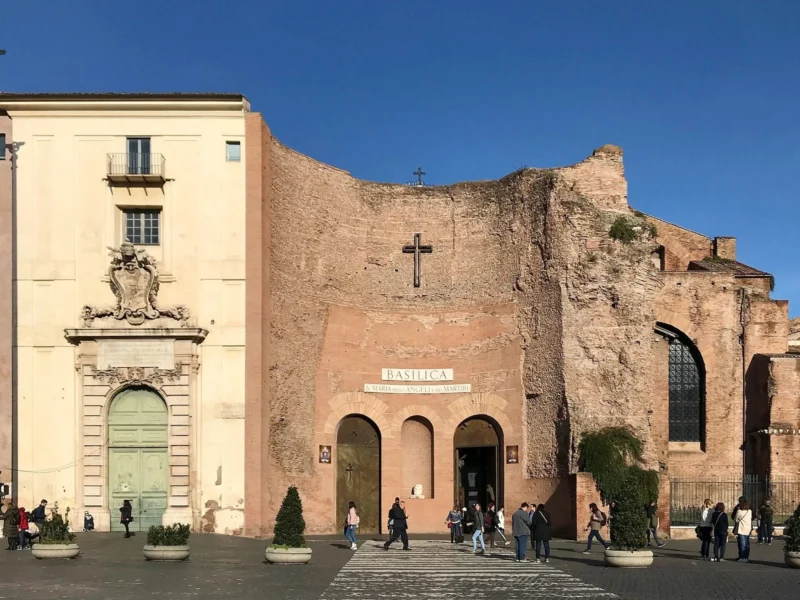
Michelangelo’s Cloister is the great cloister of the former Carthusian monastery of Santa Maria degli Angeli, built in the 1500s among the ruins of the baths. It has four arms about 100 meters long and around a hundred travertine columns. The design is attributed to Michelangelo, but scholars debate how much of it is really his.
The Basilica and San Bernardo
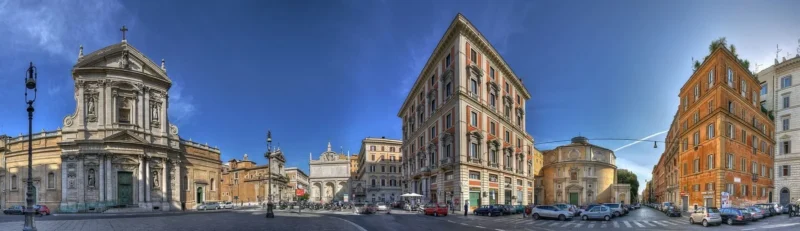
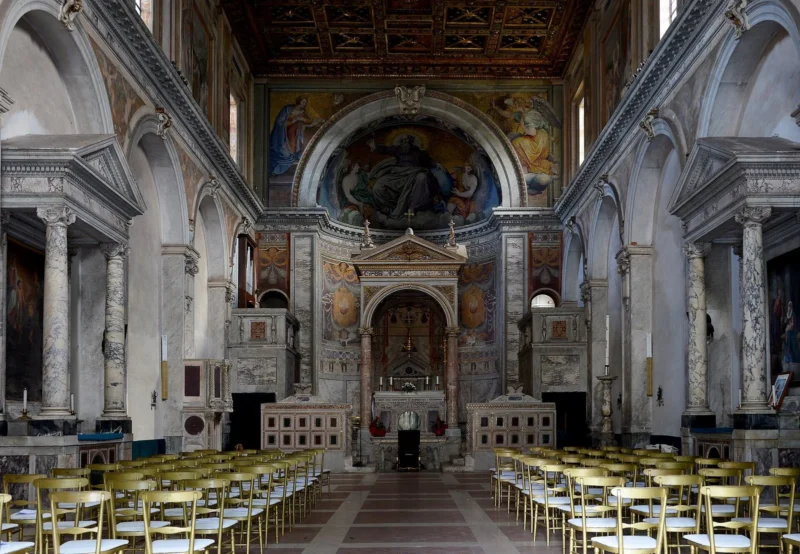
The Basilica of Santa Maria degli Angeli e dei Martiri opens on the north side of Piazza della Repubblica. Admission is free every day. The curved facade follows the exedra of the baths. In the transept runs the meridian line of Francesco Bianchini.
San Bernardo alle Terme is a round church at Via Torino 94, built into one of the two circular halls of the enclosure. It is 22 meters in diameter, with a coffered dome and a central oculus. You would not notice it from outside. For opening hours, check the guide.
Colle Oppio and the Baths of Trajan
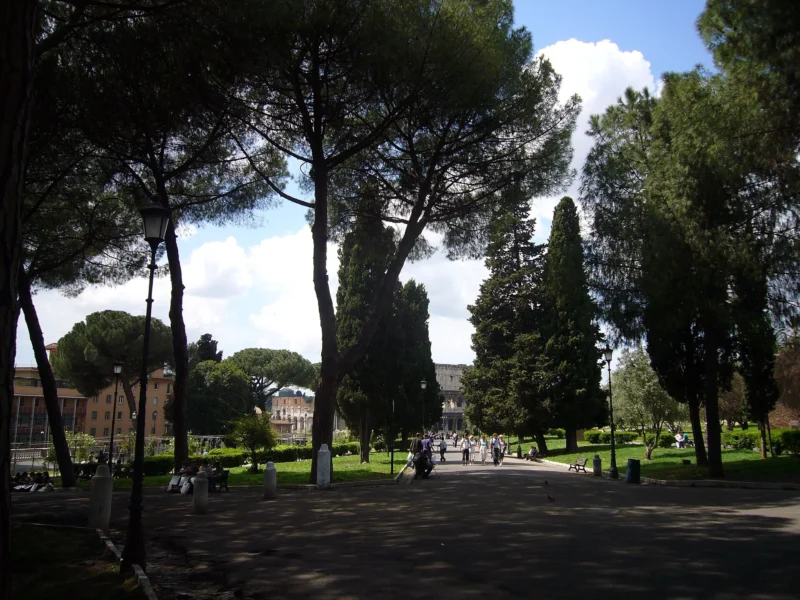
Colle Oppio is an 11-hectare public park above the Colosseum. Under the lawns lie three different things that are often confused: the Baths of Trajan, the Baths of Titus and the Domus Aurea. You can walk through the park for free from 7:00 a.m. to sunset.
The Baths of Trajan can be visited from September 12, 2026, with a ticket and fixed tour times. The Domus Aurea has a separate ticket office. The guide recommends seeing the park first and the underground remains afterward. The Baths of Trajan in Rome are a different place from the Terme Taurine in Civitavecchia, which go by the same name.
Other Ancient Roman Baths in Rome
Some traces of bath complexes sit inside sites that exist for other reasons. In these cases the baths are one part of the visit, not the main subject.
Domus Romane di Palazzo Valentini
The Domus Romane di Palazzo Valentini lie beneath the building on Via IV Novembre, near Trajan’s Forum. They are aristocratic homes from the imperial era, with colored marble, mosaics and frescoed walls. Among the remains there is also a small private bath complex. Excavations began in 2005.
San Cesareo de Appia
San Cesareo de Appia is at Via di Porta San Sebastiano 2. Under its floor it preserves two large rooms of a 2nd-century bath complex, with a black-and-white sea mosaic. The door, however, is closed almost all the time. Before going, read in the guide which day you can actually get in.
Villa dei Sette Bassi
Villa dei Sette Bassi is at Via Tuscolana 1700. On ordinary days it is closed. You can enter only on guided visits run by the Appia Antica Archaeological Park, with mandatory booking through the Musei Italiani portal. The ticket costs €6 full price and €2 reduced. The bath complex was converted into a Christian building in late antiquity.
Gabii
The Gabii Archaeological Park is on Via Prenestina Nuova, at kilometer 19.300. It is normally closed. Until Sunday, November 15, 2026, it opens on Saturdays and Sundays from 9:30 a.m. to 1 p.m., with last entry at noon. Access is open and free. The remains include baths.
Ancient Roman Baths Near Rome: Day Trips Out of the City
Outside the capital the situation is more varied. Some sites are open, others are not. The individual guides give the current status.
- Civitavecchia. Terme Taurine and Ficoncella are two different places. Taurine, on Via Terme di Traiano, is the Roman archaeological area. Ficoncella is the municipal facility with outdoor pools: €6 for a half day for non-residents, €10 for a full day.
- Licenza. Horace’s Villa has free admission, but only with mandatory booking through Aniene Turismo. It includes a bath complex on the west side of the residence.
- Supino. Supino (FR) is a town of about 4,600 people in the Monti Lepini, roughly 75 kilometers from Rome, a little over an hour by car. What to see there is covered in the guide.
- Castel Sant’Angelo (Rieti). Terme di Cotilia is listed as closed. As of September 2026 you cannot enter and there is no ticket. The remains known as the Baths of Vespasian can be visited by appointment only.
- Bracciano. Terme di Vicarello is closed: the facility is abandoned, inside a private estate. There is no swimming and no ticket office.
If you are looking for warm water to actually get into, you will find more options in our guide Free Hot Springs Near Rome.
How to Choose Among the Ancient Roman Baths in Rome
If you have half a day and want to see one large ruined complex, pick Caracalla. If you want a museum and several sites in the same neighborhood, pick Diocletian: the museum ticket covers all sites for a week, so the Octagonal Hall fits into the same route.
If you want a free option, there are the park at Colle Oppio, the Basilica of Santa Maria degli Angeli and, on its open days, Gabii. For sites that require booking, such as Horace’s Villa and Villa dei Sette Bassi, set the date before you leave.
On Mondays Caracalla, Diocletian and the Octagonal Hall are closed. Hours and prices change: check them in the guide and on the official website before you set out.
FAQ: Ancient Roman Baths in Rome
Which ancient Roman baths in Rome can I visit?
The main ones are the Baths of Caracalla, the Baths of Diocletian and the Baths of Trajan at Colle Oppio, which can be visited from September 12, 2026, with a ticket and fixed tour times.
How much does it cost to enter the Baths of Caracalla?
The full ticket costs €8. When an exhibition is running, the stated surcharge is €5.
What day are the baths in Rome closed?
The Baths of Caracalla, the Baths of Diocletian and the Octagonal Hall are closed on Mondays and open Tuesday through Sunday.
Does one ticket cover several sites at the Baths of Diocletian?
Yes. The €15.00 National Roman Museum ticket is valid for all museum sites, one entry to each, for one week. The Octagonal Hall also has its own €5.00 ticket, in effect since July 4, 2026.
Can you swim at Terme di Cotilia or Terme di Vicarello?
No. Both are closed to the public. For a swim, the guide points to Ficoncella in Civitavecchia: €6 for a half day for non-residents, €10 for a full day.
All the places in this guide (16)
 Baths of CaracallaRomeThe Baths of Caracalla are an incredible place to visit or experience during one of the exciting concerts and shows of Estate Romana. Tickets here…
- Baths of Diocletian – National Roman MuseumEsquiline HillBaths of Diocletian - National Roman Museum - Viale Enrico de Nicola, 78, 00185 Rome RM, Italy
- Colle Oppio and the Baths of TrajanRomeColle Oppio is a public park of 11 hectares above the Colosseum, and under that lawn there are three different things that almost everyone confuses…
- Octagonal Hall of the Baths of Diocletian – National Roman MuseumEsquiline HillThe Octagonal Hall is a fragment of the ancient complex of the Baths of Diocletian in Rome, built between 298 and 306 AD by Maximian.
- Michelangelo’s CloisterRomeMichelangelo's Cloister - Via Enrico de Nicola, 76, 00185 Rome RM, Italy
- Basilica of Santa Maria degli Angeli e dei MartiriRomeThe Basilica of Santa Maria degli Angeli e dei Martiri occupies the northern flank of Piazza della Repubblica, inside the great enclosure of the Ba…
- San Bernardo alle TermeRomeSan Bernardo alle Terme is a round church at Via Torino 94, at the corner with Piazza San Bernardo, carved out of one of the two circular halls tha…
- Domus Romane di Palazzo ValentiniRione MontiThe Domus Romane di Palazzo Valentini are a fascinating underground route through Imperial Rome, a true nerve center of the Urbe's cultural and pol…
- San Cesareo de AppiaRomeSan Cesareo de Appia is at Via di Porta San Sebastiano 2, about 30 meters past the point where Piazzale Numa Pompilio narrows and the road becomes…
- Villa dei Sette BassiAppio ClaudioVilla dei Sette Bassi is at Via Tuscolana 1700, in Rome, and is closed to the public on ordinary days. You get in only with the timed visits organi…
- GabiiNear RomeThe Gabii Archaeological Park, on via Prenestina Nuova at kilometer 19.300, 00132 Rome, is ordinarily closed to the public and can be visited only…
- Terme Taurine and FiconcellaCivitavecchia (RM)Terme Taurine and the Ficoncella are on provincial road 7b, which climbs from Civitavecchia toward Tolfa, four or five kilometers from the center,…
- Horace’s VillaNear RomeHorace's Villa is located in the valley of the Licenza stream, in the municipality of Licenza (RM), and is a state archaeological area entrusted to…
- Supino (FR)Supino (FR)Supino (FR) is a town of about 4,600 inhabitants on the eastern slope of the Monti Lepini, at the foot of Monte Gemma (1,457 meters), overlooking t…
- Terme di CotiliaCittaducale (RI)Terme di Cotilia are closed. The facility, Parco Cotilia Terme, is on Via Salaria at kilometer 102, in Castel Sant’Angelo, in the province of Rieti…
- Terme di VicarelloBracciano (RM)Terme di Vicarello are closed and you can't go in: the spa complex of the ancient Aquae Apollinares, on Via Settevene Palo, on the road to Trevigna…