Streghe da marciapiede at Teatro Vittoria, March 9 to 14, 2027
In short. Streghe da marciapiede, the black comedy by Francesco Silvestri directed by Stefano Amatucci, is on stage from March 9 to 14, 2027 at Teatro Vittoria, at Piazza di Santa Maria Liberatrice 10, in the heart of Testaccio.
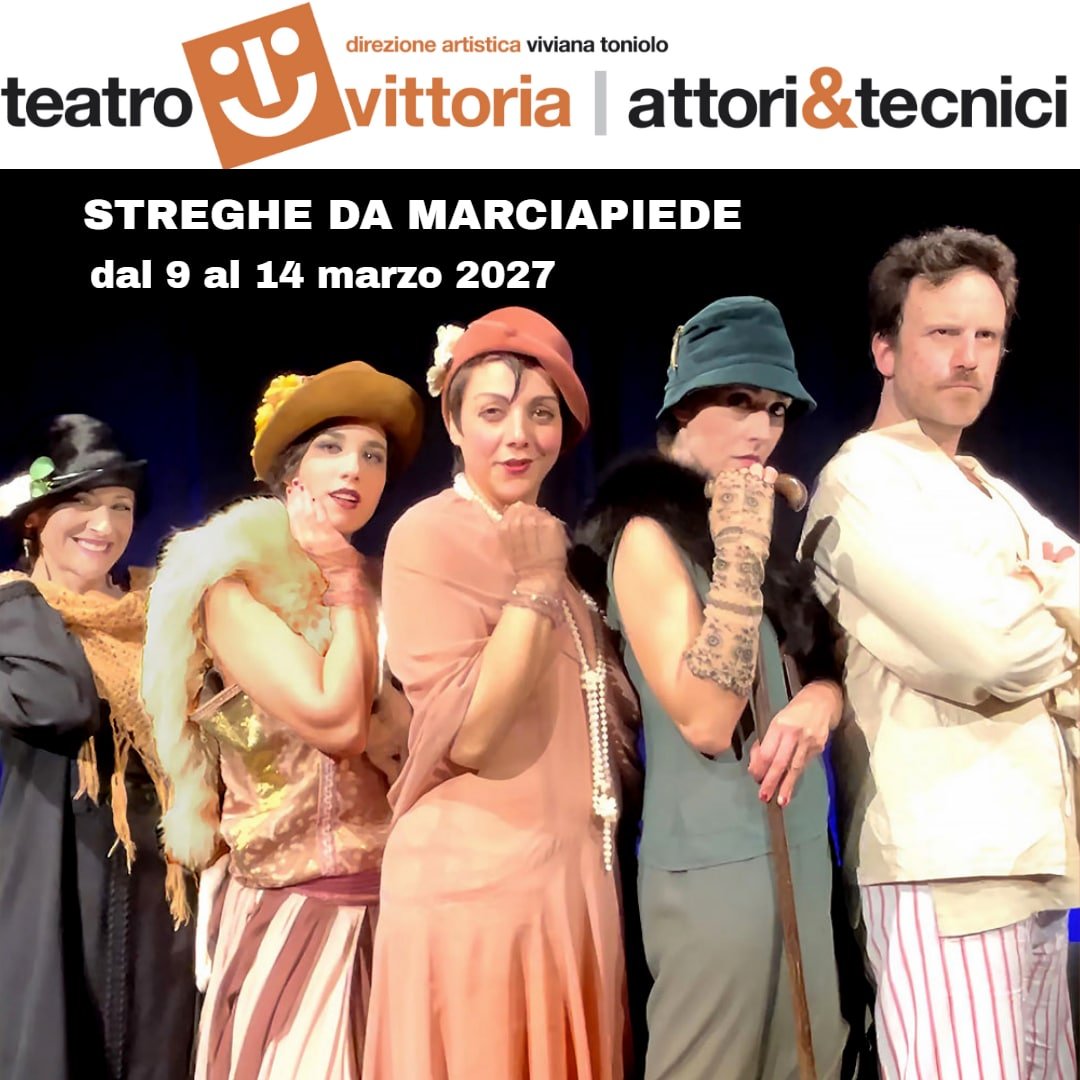
Streghe da marciapiede, the black comedy by Francesco Silvestri directed by Stefano Amatucci, is on stage from March 9 to 14, 2027 at Teatro Vittoria, at Piazza di Santa Maria Liberatrice 10, in the heart of Testaccio. The performances are Tuesday, March 9 at 21:00, Wednesday the 10th at 17:00, Thursday the 11th and Friday the 12th at 21:00, Saturday the 13th at 19:00 and Sunday the 14th at 17:30. On stage are Gina Amarante, Luisa Amatucci, Miriam Candurro, Antonella Prisco and Peppe Romano. The production is by Vomeroff. The theater is reached by Metro Line B, Piramide stop, and a walk of about 10 minutes along Via Marmorata. Prices are published on the official website of Teatro Vittoria, which leads to the presale network authorized by the organizers. For information and reservations the box office answers at 06 5740170 and 06 5740598.
Language: performed in Italian. No English version or English surtitles are announced.
Streghe da marciapiede at Teatro Vittoria: dates, times and tickets
Streghe da marciapiede stays at Teatro Vittoria for six performances, from Tuesday, March 9 to Sunday, March 14, 2027, with different times almost every day.
The calendar of the performances
The calendar published by the theater is this: Tuesday, March 9 at 21:00, Wednesday the 10th at 17:00, Thursday the 11th at 21:00, Friday the 12th at 21:00, Saturday the 13th at 19:00, Sunday the 14th at 17:30. The Wednesday afternoon and Sunday shows are the performances of the subscriber audience. The Saturday 19:00 one lets you leave the theater at dinnertime, with Testaccio already full of set tables.
Tickets and box office
Tickets are bought on Teatro Vittoria website, which links to the authorized presale network, or at the box office on Piazza di Santa Maria Liberatrice. For the show the theater lists two numbers, 06 5740170 and 06 5740598. The venue's general number is 06 5781960. Prices for the sections are on the dedicated page of the website, and the theater also offers subscriptions and carnets for the season.
Box office hours
According to the venue's information, the box office is open Monday from 10:00 to 13:00 and from 15:30 to 19:00, Tuesday through Saturday from 11:00 to 20:00, Sundays and holidays from 10:00 to 13:00 and from 15:30 to 19:00. Sunday afternoon is open only on show days. Anyone passing through Testaccio in the preceding days can pick up tickets at leisure.
The address
Teatro Vittoria, Piazza di Santa Maria Liberatrice 10, 00153 Rome. The square is the center of Testaccio, a tree-lined garden with the church of Santa Maria Liberatrice on the side opposite the theater.
What you'll see in Streghe da marciapiede
Streghe da marciapiede is a black comedy in which four prostitutes are questioned because they are accused of the murder of a young man, which took place in their home. During the interrogation, in the eyes of the inspector, symptoms of a witchlike nature emerge in them.
The boy who comes from outside
Teatro Vittoria's presentation describes the murdered young man as an enigmatic presence, who bursts into the lives of the four women like an extraterrestrial entity and upsets their fragile balance. The text does not tell a crime to be solved in the sense of the traditional mystery: it tells what that boy stirred up in the four protagonists.
Four versions of the truth
During the interrogation the four women adapt the truth to their own interests, building a labyrinth of ambiguity and mystery. Each version adds one detail and removes another, and the inspector's suspicion grows: what for him are contradictions become signs of something darker. The comedy comes precisely from this gap between the women's accounts and the conclusions of the man who questions them.
The black comedy
It is a dark comedy, and the genre matters. You laugh at a situation that in another key would be tragic: a murder, an interrogation, four lives on the margins. Silvestri's text plays on the line between the grotesque and the uncanny, and the word streghe in the title is to be taken in both senses, that of the insult and that of magic.
The songs
The show also has a musical part: text and music of the songs Zucchero Doce and Canzone delle streghe are by Michele Fierro, who also signs the graphics and visual marketing of the production.
Stefano Amatucci's direction: the 1920s and Art Nouveau
In Stefano Amatucci's staging the mysterious young man never appears: his presence lives only in the accounts of the four prostitutes and of the inspector, who in the original text was only evoked and here becomes a real character.
The absent young man
In his director's notes Amatucci explains that he physically removed the character of the young man from the stage, keeping his influence through the words of the others. It is a choice that shifts the show's center of gravity: the audience never sees the victim, and has to trust witnesses who have every interest in lying.
The inspector in flesh and blood
In Silvestri's text the inspector was only evoked. Amatucci brings him on stage, and involves him from the start in the shadow of suspicion that the four defendants are hiding a malevolent nature. The result is a duel of five voices, in which the questioner ends up under examination himself.
From the 1980s to the 1920s
The original setting of the text was in the 1980s. Amatucci moved it to the 1920s, in a spare and evocative set that leaves room for costumes and makeup. The director says he was inspired by the Art Nouveau style of some of Agatha Christie's finest novels: the interrogation thus becomes a small period mystery, with the hats, the fringes and the lights of a suspicious parlor.
The team
The show is by Stefano Amatucci, who also signs the scenic concept and the lighting. The costumes are by Teresa Acone, the assistant director is Francesco Effuso, the songs and graphics are by Michele Fierro. On stage are Gina Amarante, Luisa Amatucci, Miriam Candurro, Antonella Prisco and Peppe Romano. The production is by Vomeroff.
Francesco Silvestri, the author of Streghe da marciapiede
Francesco Silvestri, born in Naples on April 16, 1958 and died in Pozzuoli on December 24, 2022, was a playwright, actor and theater director, one of the most original voices of Neapolitan dramaturgy of recent decades.
Beginnings outside the academies
Silvestri trained outside academic circuits. He began as a teenager, working as a theater animator in prisons and in institutions for people with disabilities: an unusual apprenticeship, which explains the attention his texts pay to those who live on the margins.
Meeting Annibale Ruccello
In 1980 he met Annibale Ruccello, with whom he began a fruitful collaboration: this is how Le cinque rose di Jennifer was born, from which a film was made in 1989 with Silvestri himself as the lead. The bond with Ruccello, a fundamental author of the new Neapolitan dramaturgy, is a key to understanding Streghe da marciapiede too, with its ambiguous female characters and its black comedy.
The awards and the Streghe
In 1989 the Istituto del Dramma Italiano and the Ente Teatrale Italiano awarded him as best author under 35 for Saro e la rosa, which he directed and performed. In 1990 came a new Idi award for Angeli all'inferno, and in 1991 a special mention, again from the Idi, allowed him to stage Streghe da marciapiede. In 1999 he received the Premio Hystrio for dramaturgy and the Premio Umbria Teatro for Fratellini.
The book of the four witches
In April 2000 the publisher Gremese published the volume Teatro. Una rosa, due anime, tre angeli, quattro streghe, with four of his most established works: Saro e la rosa, Angeli all'inferno, Streghe da marciapiede and Fratellini. The four witches of the title are precisely the protagonists of Vittoria show.
The actor and the teacher
As an actor he worked with Annibale Ruccello, Enzo Moscato, Armando Pugliese, Carlo Cerciello and Toni Servillo, and in 2003 he won the Premio Ubu as best supporting actor for Sabato, domenica e lunedì by Eduardo De Filippo, directed by Servillo. He taught dramaturgical writing for a year at the Scuola Holden in Turin, founded the Clarence theater academy in Modica in 2011 and in 2021 co-wrote with Marco Andreoli the manual Lezioni di scrittura teatrale. He also wrote children's fables published by Unicef and plays for young audiences.
Miriam Candurro and the other witches
In the cast of Streghe da marciapiede the name best known to the general public is Miriam Candurro, a Neapolitan actress born on October 10, 1980, the face of the Rai 3 soap Un posto al sole in the role of Serena Cirillo since 2012.
Miriam Candurro, from film to television
A graduate in Classical Literature from Federico II University, Candurro debuted in 2004 with Certi bambini by Andrea and Antonio Frazzi, a film that won three David di Donatello: the role of Caterina earned her the Premio Domenico Rea as best debut actress. TV dramas followed such as E poi c'è Filippo, Angela with Sabrina Ferilli, Don Matteo, La squadra, Operazione pilota with Massimo Ranieri, and the series Capri. In film she was in The Eternal City, La seconda volta non si scorda mai, Vieni a vivere a Napoli, I peggiori, Veleno. In 2022 she published her first book, La settima stanza.
The rest of the company
Alongside her act Gina Amarante, Luisa Amatucci, Antonella Prisco and Peppe Romano. The theater does not say which actress plays each of the four women and who the inspector is. The casting is discovered in the hall. The production is by Vomeroff.
A curiosity about Streghe da marciapiede at Teatro Vittoria, March 9 to 14, 2027
The most interesting curiosity concerns the birth of the text. Streghe da marciapiede was born not from a commission or from a stable theater, but from an award: in 1991 a special mention from the Istituto del Dramma Italiano allowed Francesco Silvestri to stage it. It was therefore one of those texts that Italian dramaturgy of the 1990s could bring to the stage only thanks to competitions, and that then found a long life on the bills.
The second curiosity is in the direction. Stefano Amatucci moved the action from the 1980s to the 1920s, drawing on the Art Nouveau atmospheres of Agatha Christie's novels. It is a jump of 60 years that changes the tone of the comedy: the four women become figures from a period mystery novel, with clothes and makeup that tell more than the set. Anyone who knows mysteries with the final interrogation in the parlor will recognize the mechanism, reversed: here all four are suspects, and the investigator is not at all sure he is on the side of reason.
The third is about place. Teatro Vittoria, before becoming a prose theater, was a neighborhood variety theater where, according to the hall's official history, Aldo Fabrizi, Totò and Anna Magnani performed. A dark comedy with original songs, on that stage, has something of the old avanspettacolo.
Teatro Vittoria, home of Streghe da marciapiede in Testaccio
Teatro Vittoria is the prose theater of Testaccio: opened in its current form in December 1986, it has 560 red velvet seats in front of a large stage and is run by the Cooperativa Attori e Tecnici, founded in 1977 by Attilio Corsini and Viviana Toniolo.
From variety to cinema
From the early 20th century Vittoria was the neighborhood's theater, a two-story building facing a still unpaved square. Variety was staged there, and Aldo Fabrizi, Totò and Anna Magnani passed through that stage. After the war the building was demolished and in its place rose an apartment building with a large cinema on the ground floor, orchestra and balcony, built by the entrepreneur Amati: for years it was the entertainment place of the people of Testaccio.
The transformation of 1986
In May 1986 work began to transform the cinema into a prose theater, on a design by the architect Enrico Nespega, wanted by Attilio Corsini. The work was completed in record time, and in December of the same year Teatro Vittoria reopened to the public in its current form. The house's emblematic title is Rumori fuori scena.
A cooperative of actors
The Cooperativa Attori e Tecnici has always bet on its own brand more than on the draw of a single performer. After the death of Attilio Corsini, since 2008 the artistic direction has been Viviana Toniolo's. Alongside the season, Vittoria organizes the Tè letterari, now in their 30th edition, the Salviamo i Talenti series named after Corsini and a school for spectators aged 5 to 105.
The March bill
Streghe da marciapiede comes after Di isole e di città and before "Non c'è due senza me". Later in the season the bill continues with 13 13 the musical, Le due regine and "Non ti scordar di me".
Something nobody tells you about Streghe da marciapiede at Teatro Vittoria, March 9 to 14, 2027
What the presentations don't say is that in this staging the victim is never seen. Anyone going into the hall expecting a mystery with the corpse on stage and the investigation step by step will be wrongfooted: the young man exists only in the accounts, and everyone tells him differently. The spectator thus becomes the sixth character in the interrogation, the one who has to decide whom to believe. In our judgment it is the show's smartest choice, because it forces you to listen carefully to every line.
The second thing concerns the times. Vittoria's calendar changes almost every night: 21:00, 17:00, 21:00, 21:00, 19:00, 17:30. It's easy to get confused, and more than one spectator shows up at the wrong time. Before leaving home it's best to recheck the ticket and the show page: Saturday at 19:00 and Sunday at 17:30 are the times most often forgotten.
The third is about the audience. Vittoria has a neighborhood audience, of loyal subscribers, who laugh readily and comment under their breath. For a Neapolitan dark comedy it is the ideal house: the laughs come early and spread through the hall.
How to get to Teatro Vittoria
Teatro Vittoria is most easily reached by Metro Line B, Piramide stop, about 10 minutes on foot: you cross Piazzale Ostiense, take Via Marmorata and turn toward the center of Testaccio as far as Piazza di Santa Maria Liberatrice.
By metro
The Piramide stop on Line B is also the hub for Roma Ostiense station and the train to Lido. From Termini it is a few minutes' ride. On the way back, after the 21:00 performances, it's best to check the time of the last metro run on the transit company's website.
Tram and bus
Testaccio is served by trams and by several bus lines that pass along Via Marmorata and the Lungotevere. For the exact route from your starting point it's best to use the Rome transit company's route planner.
By car
Evening parking in Testaccio is hard, especially on Friday and Saturday, when the neighborhood fills up for the trattorias. The advice is to leave the car and use the metro.
On foot and by taxi
From the Circus Maximus you get there in about 20 minutes along Via Marmorata. From Trastevere you cross Ponte Sublicio and you are already in the neighborhood. The taxi drops you in the square, in front of the theater entrance.
The tip I give you for seeing Streghe da marciapiede at Teatro Vittoria, March 9 to 14, 2027
The first tip is to choose the Saturday 19:00 performance. You go in with the light of the March sunset, you come out at dinnertime, and Testaccio at 21:00 is the Roman neighborhood where you eat best without spending too much. For a dark comedy that leaves you wanting to talk about it, a dinner right afterward in a trattoria of the district is the natural close.
The second tip is to listen. Streghe da marciapiede is a spoken-word show: four versions of the same event, an inspector trying to put them together, a dead man nobody sees. Anyone who gets distracted loses the thread of the lies. Better to sit in the center rows of the orchestra, at a distance that lets you see the actresses' faces and catch the glances they exchange when they lie.
The third is to arrive early and take a short walk in the neighborhood. Piazza di Santa Maria Liberatrice, with its trees and benches, is the right place for a coffee before going in, and the surrounding streets, with the early 20th-century public housing, tell of the working-class Testaccio the theater was born from.
Another well-known fact, yet rarely cited
It is well known that Francesco Silvestri was a playwright of the Neapolitan school born with Annibale Ruccello: all his biographies recall it. It is less often cited that he was also a great actor, awarded in 2003 the Premio Ubu as best supporting actor for Sabato, domenica e lunedì by Eduardo De Filippo, directed by Toni Servillo. The playwright of witches and outcasts thus also performed Eduardo, and performed him at the highest level.
The fact says a lot about his texts. Silvestri wrote as an actor: he knew how much a pause, a change of tone, a lie told with a smile could carry a scene. Streghe da marciapiede is built that way, on lines that work only if delivered by performers able to lie naturally. This is why the text keeps returning to the bills: it offers four actresses four full roles, and the actor who plays the inspector the hardest part, that of someone who must believe and not believe at the same moment.
There is also a second well-known and rarely cited fact. Silvestri taught theater writing at Alessandro Baricco's Scuola Holden and founded an academy in Modica: his witches were studied by a generation of young authors even before returning to the stage.
Testaccio around Teatro Vittoria
Piazza di Santa Maria Liberatrice is the center of Testaccio, the working-class district born in the late 19th century between the Tiber, the Aventine and Monte dei Cocci. Opposite the theater rose the first public housing, the fruit of an international architecture competition and assigned mostly to carters and slaughterhouse workers. An overview of the district is in the guide to what to see in Testaccio.
The square and the church
The square is a tree-lined garden with benches, playgrounds and the comings and goings of the neighborhood. On the side opposite the theater stands the church of Santa Maria Liberatrice, which the history of Vittoria describes as brand new in the days of the first variety theater.
Ex Mattatoio and the market
A few minutes on foot away is Ex Mattatoio, the great industrial complex that for decades gave work to the district and today hosts cultural and university spaces. The Nuovo Mercato di Testaccio is the right place for a daytime stop, and the Museo diffuso del rione Testaccio tells the story of the district through its streets.
The Pyramid and the Non-Catholic Cemetery
On the way to the metro you meet the Pyramid of Cestius and, right behind it, the Non-Catholic Cemetery, one of the quietest places in Rome. For the Wednesday or Sunday matinee the walk from the Pyramid to the theater is worth the trip on its own.
The Aventine a step away
Testaccio is at the foot of the Aventine. In 20 minutes of climbing you reach the Orange Garden, with the terrace over the Tiber and St. Peter's: anyone who chose Saturday at 19:00 can go up in the afternoon and come down to the theater unhurried.
The right photo to take at Streghe da marciapiede at Teatro Vittoria, March 9 to 14, 2027
The right photo is taken in the square, before going in: the theater with the poster of Streghe on one side, the trees of the garden and the facade of Santa Maria Liberatrice on the other. It is the image that tells Vittoria better than any other, a neighborhood theater inside a postwar apartment building, facing a square where children play until dinnertime.
Inside the hall, during the show, no photographing and no filming. Before the lights go down, if the staff allows it, a shot of the orchestra with its 560 red seats is worth it: it is the color the theater chose in 1986 and has never changed.
The third photo is the one on the way out, with the square lit up and the trattorias glowing on the side streets. For a show set in the 1920s, with Art Nouveau costumes and makeup, a black-and-white photo of the square at night feels right: Testaccio, at night, still keeps the air of a district from a century ago.
Some important events that happened here in history
The history of Teatro Vittoria follows that of Testaccio, from the working-class district of the early 20th century to the neighborhood of today.
Early 20th century, variety
The theater is already the neighborhood's meeting point, facing an unpaved square and a just-built church, opposite rise the first public housing buildings. On the variety stage pass Aldo Fabrizi, Totò and Anna Magnani.
The postwar years, cinema
In the years of Rome's great building expansion the original building is demolished and replaced by a modern apartment building with a cinema on the ground floor, built by the entrepreneur Amati, with orchestra and balcony.
1977 and 1986, the cooperative and the theater
In 1977 Attilio Corsini and Viviana Toniolo found the Cooperativa Attori e Tecnici. In May 1986 work begins to transform the cinema into a prose theater, on a design by the architect Enrico Nespega. In December of the same year Teatro Vittoria opens with 560 red velvet seats.
2008, the new direction
After Corsini's death the artistic direction passes to Viviana Toniolo, and the Salviamo i Talenti series is named after the founder. Over time the theater also introduces an audio description service for some shows.
Who has passed through Streghe da marciapiede at Teatro Vittoria, March 9 to 14, 2027
Three generations of Roman entertainment have passed through Vittoria's stage. In Testaccio's first variety theater, according to the hall's official history, Aldo Fabrizi, Totò and Anna Magnani performed, before becoming the faces of Italian cinema. In the prose theater born in 1986 worked Attilio Corsini, founder of the Cooperativa Attori e Tecnici, and Viviana Toniolo, with the company's actors and the guest productions of each season.
The title that more than any other made the hall's history is Rumori fuori scena, the comedy of theatrical misunderstandings that the cooperative has staged for years. In the 2026-2027 season, among others, have passed through Piazza di Santa Maria Liberatrice the improvisation of Addue, the comedies Proposta di matrimonio and Happy Birthday, and the civic theater of Cervantes a Gaza.
With Streghe da marciapiede come to Vittoria the dramaturgy of Francesco Silvestri, the Neapolitan author who died in 2022, and the company of Stefano Amatucci, with the Neapolitan actress Miriam Candurro, a familiar face from Un posto al sole. It is a piece of Neapolitan dramaturgy returning to a Roman stage that was born, like Silvestri's theater, for the popular audience.
Accessibility and practical tips
Teatro Vittoria offers an audio description service for some shows of the season, listed on the website. To find out if Streghe da marciapiede is included, and for any need for wheelchair access to the hall, the reference is the box office.
Getting to the hall
The square is flat and the taxi can drop you in front of the entrance. For anyone with mobility difficulties it's best to ask the box office, when booking, which sections are the easiest to reach.
Running time and timing
The running time of the show is not given by the theater. To get organized it's best to arrive 20 minutes before the start time, pick up tickets and take your seat unhurried.
Streghe da marciapiede with teenagers
Streghe da marciapiede is a dark comedy for an adult audience: the protagonists are four prostitutes accused of murder, and the language follows the characters.
With teenagers
With high school kids used to the theater it can work, especially if they like mysteries: the mechanism of the interrogation and the conflicting versions is immediate. It's still best to explain the genre beforehand, the dark comedy, to avoid surprises.
With children
It is not the right show for children. Vittoria also has in its season titles designed for families, and the theater's school for spectators welcomes the youngest too.
Where to eat before or after the show
Testaccio is one of the Roman neighborhoods where you eat best: historic trattorias, pizzerias, Roman quinto quarto cuisine, and a covered market that by day is a stop for anyone who loves street food.
Before the show
For the 21:00 performances there is time for an early dinner in one of the trattorias on the streets around the square. For the Saturday 19:00 one, a light aperitivo and putting dinner off until afterward is the way to go.
After the show
Testaccio stays lively late, especially on Friday and Saturday. Anyone coming out of the 21:00 performances still finds kitchens open, but on weekends it's best to book: many places in the neighborhood fill up early.
Frequently asked questions about Streghe da marciapiede
When is Streghe da marciapiede on at Teatro Vittoria?
Streghe da marciapiede is on at Teatro Vittoria in Rome from March 9 to 14, 2027: Tuesday the 9th at 21:00, Wednesday the 10th at 17:00, Thursday the 11th and Friday the 12th at 21:00, Saturday the 13th at 19:00, Sunday the 14th at 17:30. The times change almost every day: it's best to recheck your ticket.
Who is the author of Streghe da marciapiede?
Streghe da marciapiede is by Francesco Silvestri, a Neapolitan playwright and actor born in 1958 and died in 2022, a student and collaborator of Annibale Ruccello. The text was staged after a special mention from the Istituto del Dramma Italiano in 1991.
Who is in the show?
In Streghe da marciapiede at Teatro Vittoria the cast is Gina Amarante, Luisa Amatucci, Miriam Candurro, Antonella Prisco and Peppe Romano. The show is by Stefano Amatucci, who signs direction, scenic concept and lighting. Costumes by Teresa Acone, songs by Michele Fierro, production by Vomeroff.
What is Streghe da marciapiede about?
Streghe da marciapiede is a black comedy: four prostitutes are questioned because they are accused of the murder of a young man that took place in their home. Each one adapts the truth to her own interests, and the inspector begins to suspect a witchlike nature in them. The direction moves the action to the 1920s.
Where is Teatro Vittoria?
Teatro Vittoria is at Piazza di Santa Maria Liberatrice 10, in Testaccio. The most convenient stop is Piramide on Metro Line B, about 10 minutes on foot along Via Marmorata.
How do you buy tickets?
Tickets for Streghe da marciapiede are bought on Teatro Vittoria website, which links to the authorized presale network, or at the box office on Piazza di Santa Maria Liberatrice. For the show the theater lists the numbers 06 5740170 and 06 5740598.
Is the show suitable for teenagers?
Streghe da marciapiede is a dark comedy for adults, with four prostitutes accused of murder as protagonists. It may interest high school kids used to the theater and mystery fans, it is not recommended for children.
The final advice on Streghe da marciapiede
The advice is to book Saturday at 19:00, sit in the center rows and listen to each version of the facts as if you were the inspector. Streghe da marciapiede is the text of a Neapolitan author who knew how to make people laugh at the dark, and Stefano Amatucci's direction, with the absent young man and the Art Nouveau setting, turns it into a small period mystery. In our judgment Teatro Vittoria, born as a neighborhood variety theater, is the right hall for this comedy about women on the margins, and Testaccio, on the way out, completes the evening.
Article written by the editorial team of Tour Leader Pro, contact them for Private/Corporate/V.I.P. Tours and Experiences.
Planning a trip to Rome? The English guides to visiting the city are on ItalyPlanner.com.
Contact Information
Nearby
 Teatro Vittoria100 m
- Testaccio: What to See in the Monte dei Cocci Neighborhood100 m
- Museo diffuso del rione Testaccio100 m
- Monte dei Cocci, Monte Testaccio300 m
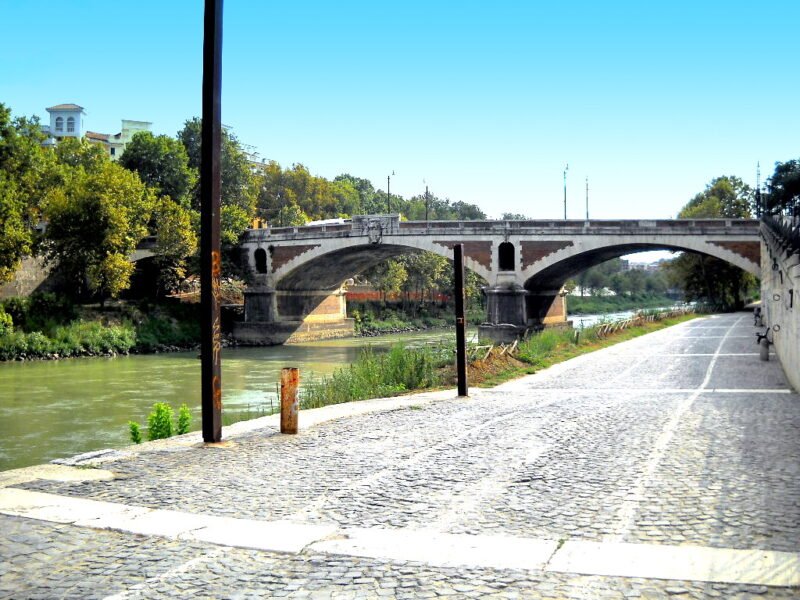
- Ponte Sublicio400 m
- Nuovo Mercato Testaccio400 m

Upcoming events nearby
- L’imbarazzo della scelta at Teatro Vittoria, December 26, 2026 to January 13, 2027100 m
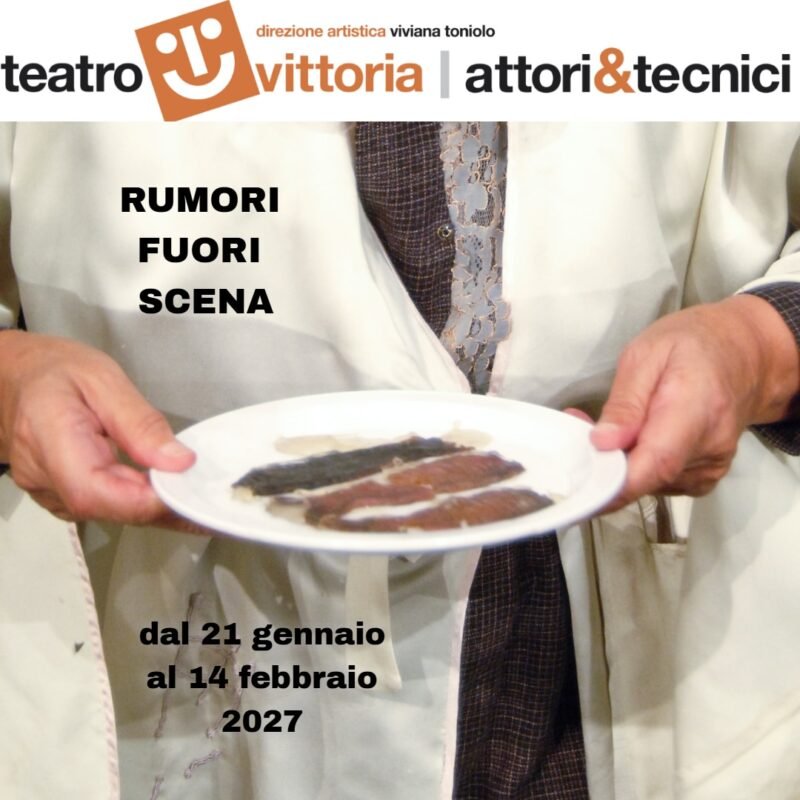
- Rumori fuori scena with the Compagnia Attori e Tecnici at Teatro Vittoria, January 21 to February 14, 2027100 m
- Non c’è due senza me at Teatro Vittoria, March 16 to 21, 2027100 m
- L’uomo, la bestia e la virtù by Augusto Zucchi at Teatro Vittoria, February 16 to 21, 2027100 m



You might also like
- Di isole e di città with Giuseppe Cederna and Giorgio Ieranò at Teatro Vittoria, March 2 to 7, 2027
- Giallo sai!, Faccestamagia at Teatro Vittoria, May 12, 2027
- Carta straccia with Pino Strabioli and Sabrina Knaflitz at Teatro Vittoria, November 26 to 29, 2026
- Donna non rieducabile with Ottavia Piccolo at Teatro Vittoria, February 23 to 28, 2027
- L’ultima notte di Giordano Bruno at Teatro Vittoria, November 10 to 22, 2026
- Thelma e Louise at Teatro Vittoria, from November 3 to 8, 2026