Carta straccia with Pino Strabioli and Sabrina Knaflitz at Teatro Vittoria, November 26 to 29, 2026
In short. Carta straccia, a comedy by Mario Gelardi with Pino Strabioli and Sabrina Knaflitz and with Giampiero de Concilio, directed by Strabioli himself, is on stage at Teatro Vittoria at Piazza di Santa Maria Liberatrice 10, in Testaccio, from November 26 to 29, 2026.
Carta straccia, a comedy by Mario Gelardi with Pino Strabioli and Sabrina Knaflitz and with Giampiero de Concilio, directed by Strabioli himself, is on stage at Teatro Vittoria at Piazza di Santa Maria Liberatrice 10, in Testaccio, from November 26 to 29, 2026. The times published by the theater are: Thursday 26 and Friday November 27 at 21:00, Saturday 28 at 19:00, Sunday 29 at 17:30. The running time isn't given. The Vittoria's 2026/27 season price list sets the full-price ticket at 27 euros in the stalls and 21 euros in the gallery, plus a 3-euro booking fee. The reduced ticket for under 35, over 65, people with disabilities and holders of partner cards costs 22 and 17 euros, valid Tuesday to Friday while promotional seats last. The under-18 reduced ticket costs 13 and 11 euros. For the first two days of each show the theater sells, at the box office only, 100 tickets per performance at a flat 18 euros. Tickets can be bought from the theater's official website, which links to online sales, or at the box office. The numbers given are 06 5740170 and 06 5740598. The production is by I due della Città del Sole and Stefano Francioni Produzioni. To get there by public transport, plan your route with the ATAC journey planner.
Language: performed in Italian. No English version or English surtitles are announced.
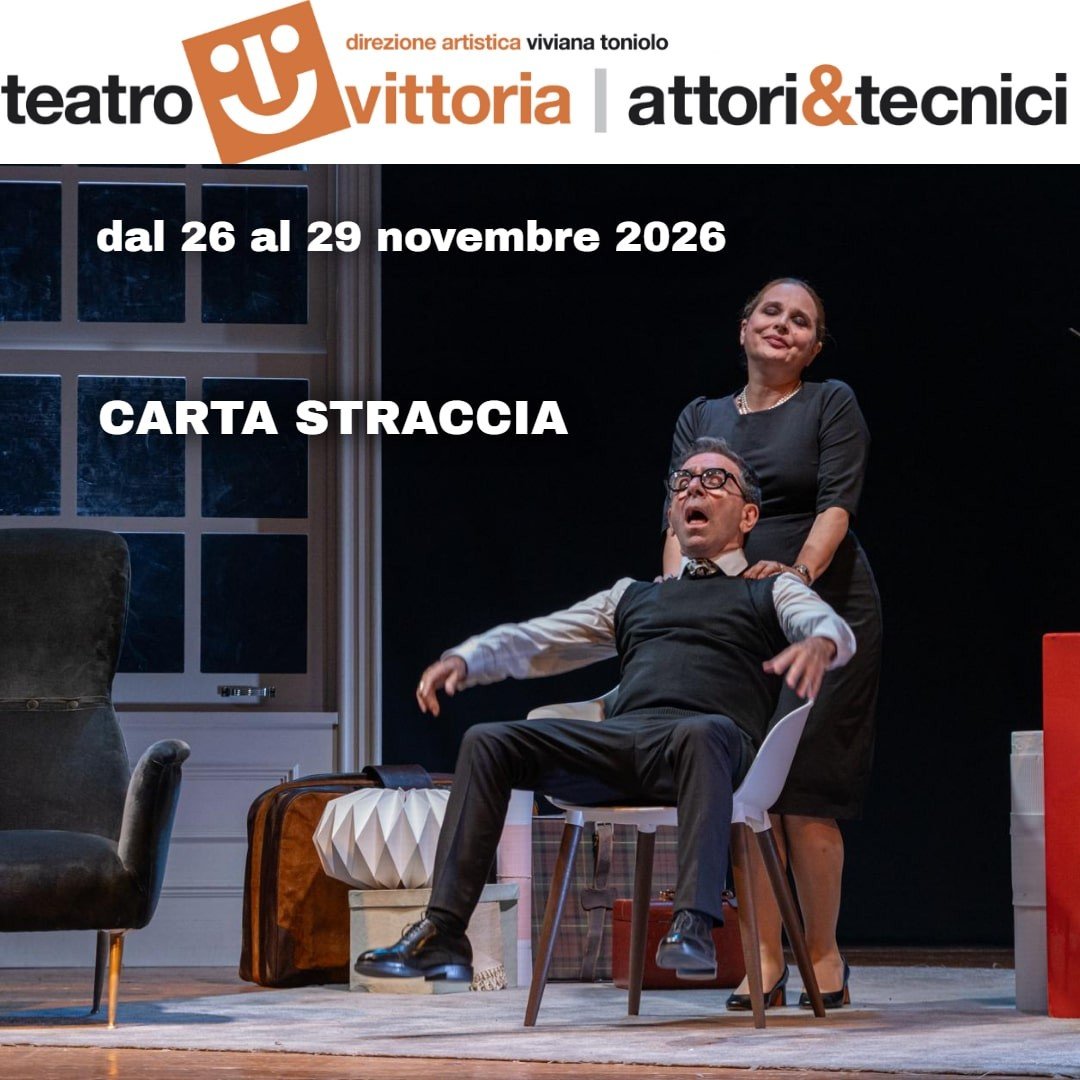
Carta straccia: the story
It's 1968 and Rome is pulsing to the rhythm of music, cinema, fashion and student protests. Women are loudly demanding radical change. Patty Pravo is the queen of the Piper. This is how the official presentation opens the story, placing it in one of the most turbulent years of the late 20th century. But the show's gaze isn't turned to the squares: it rests on a small handmade paper workshop, where the revolution seems very far away.
Working in the workshop are Teresa and Agostino, a brother and sister reluctantly forced to live together. Their world is enclosed within four walls, sheltered from a change that doesn't seem to concern them. Their life runs so quietly that even the business now seems a thing of the past, so much so that they decide to close up shop and go back to their hometown, where their father left them a house.
The last day of the shop
Carta straccia starts right here: on the last day the workshop is open, when one period of the siblings' life seems over and another, even quieter, seems about to begin. It's a beginning that tastes like an ending, and the theater makes good use of it: every gesture, every object, every sheet of paper becomes a farewell.
The unexpected nephew
Breaking the balance comes young Remo, an unexpected nephew. His arrival hides a personal secret, which the presentation calls as destabilizing as the revolution advancing outside. 1968 thus enters the workshop not through newspapers or squares, but through a member of the family.
A small slice of Italy
The official presentation sums up the authors' intention: to tell a small slice of Italy through theater. Not big history, but the way big history reaches the lives of those who think they are sheltered from it.
1968 as a backdrop
The show uses 1968 as a frame and as a contrast. Outside the workshop everything changes: music, customs, relations between men and women, between parents and children. Inside, a brother and sister keep making paper by hand, an old craft the new world no longer seems to need.
The contrast between inside and outside
The title itself, Carta straccia (Scrap Paper), plays on this contrast. Handmade paper is a precious, slow product. Scrap paper is what gets thrown away. The shift from one meaning to the other tells the fate of a craft and, perhaps, of a generation that feels overtaken by events.
Women and change
The presentation stresses that in 1968 women were loudly demanding radical change. Teresa, the sister, lives in a workshop the revolution doesn't reach: Sabrina Knaflitz's character is one of the points where the show measures the distance between the aspirations of the time and real lives.
Patty Pravo and the Piper
The reference to Patty Pravo as queen of the Piper isn't random. The Piper Club, opened in Rome on February 17, 1965 on Via Tagliamento, was one of the symbolic places of the music and customs of those years, and pop history remembers the singer as the Piper girl.
The Piper and the Rome of 1968
The Piper evoked by the show is a real place, with a precise history. It opened on February 17, 1965 on Via Tagliamento, opposite the Coppedè district, on the initiative of the lawyer Alberigo Crocetta with his partners Giancarlo Bornigia and Alessandro Diotallevi. On opening night The Rokes and Equipe 84 played.
The Piper girl
Pop history remembers Patty Pravo as the Piper girl, although some give the same title to Mita Medici, who in 1966 won a contest organized by the club. The reference in the Carta straccia presentation to Patty Pravo as queen of the Piper fits into this shared memory.
The concerts of those years
The Piper's stage saw, among others, I Pooh, The Byrds, Procol Harum and the New Trolls. Pink Floyd played there on April 18 and 19, 1968, the very year in which the comedy is set. In 1968 the club also launched the CantaPiper contest.
Art and the underground
On December 28, 1967 the Piper hosted Mario Schifano's event Grande angolo, Sogni, Stelle, considered a key step in the birth of the Italian underground. This was the Rome pulsing outside Teresa and Agostino's workshop.
The paper craft as a metaphor
The choice to set the comedy in a handmade paper workshop isn't neutral. Handmade paper is a slow product, the fruit of repeated gestures and handed-down know-how. In 1968, the year of speed and rupture, such a craft inevitably looks like a leftover from the past.
A world that is disappearing
The presentation says the siblings' business now seems like a memory, so much so that it pushes them to close. It's a situation many audience members recognize: historic shops closing, crafts being lost, generations that can't find anyone to pick up the baton.
Precious paper and scrap paper
The title condenses this tension. The same material can be a precious object or waste, depending on who is looking at it. The show seems to ask what happens to people when the world starts looking at them the same way.
Mario Gelardi, the author
Mario Gelardi was born in Naples in 1968, the same year in which the comedy is set. He is a playwright, director and writer. Since 2013 he has run Nuovo Teatro Sanità, a theater in the historic center of Naples housed in an 18th-century church.
Gomorrah on stage
His name is linked above all to the stage version of Gomorrah, written and directed with Roberto Saviano from the novel, which has passed 300 performances in Italy. With Saviano he also created La paranza dei bambini, in 2017.
Other works
His plays include Malamadre, which won him the Premio Flaiano in 2002, Idroscalo 93, Quattro, La città di fuori, Santos and A freva, inspired by Camus's The Plague and produced by Teatro Stabile di Napoli in 2020. In 2011 he founded the publishing house Caracò.
Awards
Besides the Flaiano, he has received among others the Premio Ustica, the Premio Fersen for playwriting, the Premio ETI Gli Olimpici del Teatro for best new Italian play and the Premio Enriquez for Gomorrah, and in 2017 the Premio Giuseppe Fava.
Pino Strabioli, actor and director
Pino Strabioli, registered as Giuseppe, was born in Porto San Giorgio on July 26, 1963 and grew up in Orvieto. The general public knows him as a face of public television, but theater has always been at the center of his work.
Television
For years he hosted morning programs on Rai 1 and Rai 3, from Unomattina to Cominciamo bene, then programs devoted to entertainment such as Colpo di scena, Rivediamoli and Grazie dei fiori. He hosted the live broadcast of the Premio Strega in 2016, 2019 and 2024, and since 2020 he has been on Il Caffè on Rai 1.
Paolo Poli, a mentor
The most important artistic bond of his career is with Paolo Poli. In 1996 he acted in Gulliver's Travels directed by and starring Poli, in the role of Jonathan Swift. In 2015 he hosted with him on Rai 3 the eight episodes of E lasciatemi divertire. With him he wrote the book Sempre fiori mai un fioraio, from which he created a show in 2021.
Patty Pravo, another coincidence
In 2020 Strabioli edited with Simone Folco the book Patty Pravo. Minaccia bionda, published by Rizzoli. In a show that opens by evoking the queen of the Piper, the coincidence doesn't go unnoticed: the director knows the singer's myth and the Rome of those years well.
Sabrina Knaflitz
Sabrina Knaflitz was born in Rome on November 25, 1968, to a Piedmontese father of Austrian descent and a Roman mother. She too, like the author, was born in 1968, the year in which the comedy is set.
Film
She made her debut in 1988 in Mario Monicelli's I picari. Her films include Luciano Manuzzi's I pavoni, presented at the Venice Film Festival, and Leonardo Pieraccioni's I laureati, in 1995.
Television
In Germany she shot the series Liceo Europa for ZDF. In Italy she has acted among others in Il mastino, Sei forte, maestro, Don Matteo, Distretto di Polizia and Una madre.
Theater
She made her stage debut very young with Memè Perlini in Giovanni Verga's La lupa and acted with Vittorio Gassman in Camper, presented at the Spoleto Festival in 1994. Her other work includes Coriolanus, The Vagina Monologues, Richard III and Un'ora a teatro with Erri De Luca. Since 1998 she has been married to the actor Alessandro Gassmann, who did the staging concept for Carta straccia.
The show's team
The text is by Mario Gelardi. On stage are Pino Strabioli, Sabrina Knaflitz and Giampiero de Concilio. Direction is by Strabioli. The staging concept is by Alessandro Gassmann, lighting design by Marco Palmieri, music by Carlo Vannini. The production is by I due della Città del Sole and Stefano Francioni Produzioni.
A partnership that continues
The presentation points out that Strabioli and Gelardi are working together again after their successful collaboration on L'abito da sposa. It was a 2014 show directed by Maurizio Panici, also cited under the title L'abito della sposa.
Three characters
The cast is made up of three performers for three main characters: the siblings Teresa and Agostino and their nephew Remo. The official page doesn't explicitly give the casting: the information isn't published.
Who the show is for
Carta straccia is a comedy with a melancholy undertone, and it speaks to different audiences. Those who lived through 1968, or heard about it in the family, will find the musical and cultural references evoked by the presentation. Younger audiences can look at that year from an unusual perspective, that of those who didn't take part in the protests.
For lovers of quality comedy
Mario Gelardi's writing, which has dealt with very harsh themes like those of Gomorrah and La paranza dei bambini, tries its hand here at a lighter register. It's a chance to discover another side of an author known mainly for civic theater.
For teenagers
The page doesn't give a recommended age. The price list includes a reduced ticket for under 18, at 13 euros in the stalls, and the theme of the relationship between generations, with a nephew who brings a secret and the outside world into the house, may also interest younger audiences.
A neighborhood theater that became the city's theater
The Vittoria's history is inseparable from that of Testaccio. The fact that the neighborhood already had its own variety theater in the early 20th century says a lot about its social life, which even then sought entertainment close to home. Today's Vittoria takes up that legacy, hosting both neighborhood audiences and people coming from all over the city, drawn by the company's productions and the season's guests.
Corsini's choice
When Attilio Corsini decided to turn a closed cinema into a drama theater, in the mid-1980s, the bet wasn't a sure thing: a 560-seat theater needed a loyal audience, to be won season after season. 40 years later, the Roma Capitale listing tells of a theater that has survived eviction attempts and economic crises, and continues to produce and host shows.
A cooperative
The cooperative form, Attori e Tecnici, is part of the Vittoria's identity. Actors and technicians are, literally, the partners of the enterprise: a model that ties the theater's fate to that of the people who work there.
Practical information
There are four performances, at different times: two evening shows at 21:00, Thursday and Friday, one on Saturday at 19:00 and an afternoon show on Sunday at 17:30. The variety of times lets you choose between a classic evening, the early Saturday evening and the Sunday afternoon.
The MeglioPrima formula
The Vittoria offers a special formula: for the first two days of each show, 100 tickets per performance are sold at a flat 18 euros, at the box office only, with no booking and no date changes. For Carta straccia the first two days are Thursday 26 and Friday November 27.
Discounts
The reduced ticket at 22 euros in the stalls and 17 in the gallery is for under 35, over 65, people with disabilities of at least 75 percent, CRAL members and holders of partner cards, Tuesday to Friday and while promotional seats last. People with disabilities are also entitled to the reduced price for a companion. The under-18 reduced ticket costs 13 euros in the stalls and 11 in the gallery.
Payments and refunds
The theater doesn't accept American Express and Diners. The booking fee applies until one hour before the start. Tickets are not refundable, except if the show is canceled or replaced. To use the Carta del docente, contact the box office.
The Vittoria's season and formulas
The 2026/27 season price list reveals a varied program. Alongside the subscription shows, the theater offers the A Porte Aperte series, in October, at reduced prices, the shows of the ADDUE and PremiumPLUS+ lines, the GIALLO SA! series and the literary teas, meetings with a single ticket of 11 euros and a reduced one of 8 euros for over 65 and under 35.
A school for audiences
The Lazio Region listing on the Teatro Vittoria project also mentions meetings with the audience and an acting school for theatergoers, an initiative that shows the cooperative's attention to training audiences as well as actors.
Civic themes
The same documentation describes a program that includes drama, dance, magic, physical theatre and music, with shows on pressing civic themes. Carta straccia, with its story of 1968 seen from the back lines, fits this line well.
Teatro Vittoria in brief
Teatro Vittoria is Testaccio's theater. According to the Roma Capitale tourism portal listing, as early as the beginning of the 20th century the neighborhood had its own theater, a two-story building where variety shows were staged. After the war the building was demolished and an apartment building with a cinema on the ground floor went up in its place.
From cinema to drama theater
The cinema closed at the end of the 1970s, when the building had become run-down. In May 1986 work began to turn it into a drama theater, to a design by the architect Enrico Nespega, at Attilio Corsini's wish. The theater opened in December of the same year.
A 560-seat hall
The Vittoria has 560 seats between stalls and balcony, and has a bar.
Attori e Tecnici
The theater is run by the cooperative Attori e Tecnici, founded and led by Attilio Corsini until his untimely death in 2008. The company produces its own shows, including Noises Off, and hosts companies and artists, including international ones.
A curious fact about Teatro Vittoria
The Vittoria has a formula for audiences who want to see a show that has just opened at a modest price: MeglioPrima tickets, 100 per performance, sold only at the box office on the first two days. It's a way to fill the hall on the first nights, when word of mouth hasn't started yet, and to reward those who trust the programming.
Courtesy tickets
Another particular feature of the price list concerns complimentary tickets: the theater has replaced them with 5-euro courtesy tickets. It's a choice that says a lot about the cooperative's attention to the value of theater work.
Something nobody tells you about Teatro Vittoria
Today's theater stands inside an apartment building. After the war the old variety building was demolished, and the businessman Amati built in its place a residential building with a cinema on the ground floor. When the cinema closed, at the end of the 1970s, it was that space that was turned into a theater: when you enter the Vittoria you are, literally, entering the ground floor of an apartment block.
Holding out
The Roma Capitale listing also recalls that the Vittoria has held out against eviction attempts, economic crises and competition from television, multiplexes and video games. It's the story of a neighborhood theater that managed to become a citywide reference point.
My advice for visiting Teatro Vittoria
My advice is to take advantage of the MeglioPrima formula and show up at the box office on Thursday 26 or Friday November 27: with 100 tickets at 18 euros per performance, it's the cheapest way to see the show in its first days. Before or after, a walk through the streets of Testaccio, with its trattorias and its market, rounds off the evening naturally.
Arrive early
With only 100 seats at the MeglioPrima price per performance, it's best to get to the box office early.
The Saturday performance
If you prefer an in-between time, you can choose the 19:00 performance on Saturday 28: you come out in time for dinner in the neighborhood, which in Testaccio is almost a ritual.
Another well-known fact, yet rarely mentioned
The name Noises Off is linked to the Vittoria in the memory of many Roman theatergoers. The comedy is listed by the Roma Capitale tourism portal as one of the productions of the Attori e Tecnici company. It's one of those titles that built the relationship between the theater and its audience.
The award named after Corsini
Another legacy of the founder is the Salviamo i Talenti series, Premio Attilio Corsini, devoted to finding new talent, mentioned in the Lazio Region documentation on the theater.
The right photo to take at Teatro Vittoria
The right photo is taken from Piazza di Santa Maria Liberatrice, framing the theater entrance with the season's posters. It's the image that best tells the Vittoria's character: a theater on a square, inside a working-class neighborhood, facing a space where the life of the district flows at all hours.
The church on the square
Widening the frame, you can also include the church that gives the square its name, so as to hold together in a single shot the theater and the place that gives the address its name.
Some important events that happened here
Early 20th century: variety
Testaccio already has its own theater, a two-story building with variety shows.
Postwar: the cinema
The building is demolished. The businessman Amati builds an apartment building with a cinema on the ground floor.
Late 1970s: the closure
The cinema closes and the building falls into decline.
May 1986: the works
To a design by the architect Enrico Nespega, at Attilio Corsini's wish, the conversion into a drama theater begins.
December 1986: the opening
Teatro Vittoria opens as a drama theater, run by the cooperative Attori e Tecnici.
2008: Corsini's death
Attilio Corsini, founder and leader of the company, dies prematurely. The theater continues its activity and dedicates an award for young talent to him.
Who has passed through Teatro Vittoria
The Vittoria is first and foremost the home of a company, Attori e Tecnici, and of its founder Attilio Corsini. The Roma Capitale portal recalls that the theater also hosts companies and artists from abroad, with a program that according to the Lazio Region includes drama, dance, magic, physical theatre and music.
The current season
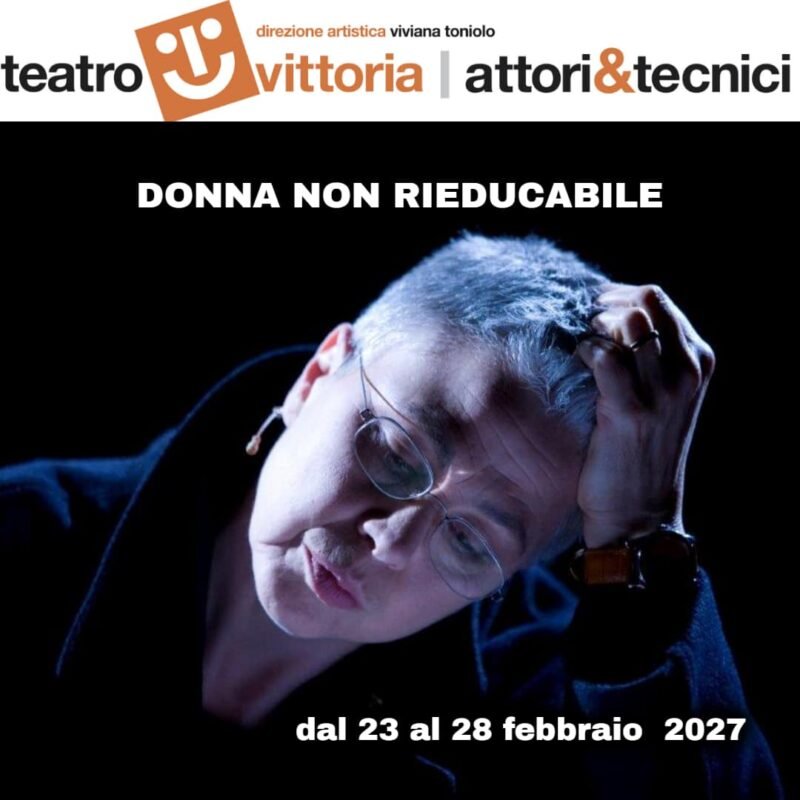
Among the titles the Vittoria has announced are very different shows, from civic theater to comedies. In 2027, among others, Donna non rieducabile with Ottavia Piccolo is expected.
Now Strabioli and Knaflitz
In November 2026 the Testaccio stage welcomes Pino Strabioli and Sabrina Knaflitz, with Alessandro Gassmann's staging concept: a team that brings to the stage experience in television, film and quality theater.
Before or after the show: the surroundings
The Vittoria is in the heart of Testaccio, one of the neighborhoods Romans love most for its food and its street life. A few minutes away is the Nuovo Mercato Testaccio, and the Museo diffuso del rione Testaccio tells the neighborhood's history through its streets.
Mattatoio
Toward the Tiber is the former Mattatoio, now a cultural space with exhibitions and shows.
The Pyramid and the Non-Catholic Cemetery
Toward Porta San Paolo you come to the Pyramid of Cestius and the Non-Catholic Cemetery, one of the quietest places in the city.
The Aventine
Heading north you reach the Aventine, with its churches and gardens. As a tribute to the 1968 evoked by the show, you can also remember the Piper Club, in another part of the city.
Frequently asked questions about Carta straccia
When is Carta straccia on at Teatro Vittoria?
From November 26 to 29, 2026, with four performances: Thursday 26 and Friday 27 at 21:00, Saturday 28 at 19:00, Sunday 29 at 17:30. The times are those published on the official show page, which is worth checking again when you buy in case of changes.
How much are tickets?
The season price list sets the full-price ticket at 27 euros in the stalls and 21 in the gallery, plus a 3-euro booking fee. The reduced ticket for under 35, over 65 and partner card holders costs 22 and 17 euros Tuesday to Friday. The under-18 reduced ticket costs 13 and 11 euros. On the first two days there are 100 tickets at 18 euros per performance, at the box office only.
Where do you buy them?
From the official Teatro Vittoria website, which links to online sales, or at the theater's box office at Piazza di Santa Maria Liberatrice 10. The numbers given are 06 5740170 and 06 5740598. Box office hours aren't given on the show page: the information isn't published there.
Who is on stage?
Pino Strabioli, Sabrina Knaflitz and Giampiero de Concilio. The text is by Mario Gelardi, direction by Pino Strabioli, the staging concept by Alessandro Gassmann, lighting design by Marco Palmieri and music by Carlo Vannini. The production is by I due della Città del Sole and Stefano Francioni Produzioni.
What is it about?
About a brother and sister, Teresa and Agostino, who in 1968 work in a small handmade paper workshop in Rome, far from the protests of that year. They decide to close up shop and go back to their hometown, but the arrival of an unexpected nephew, Remo, with a secret to reveal, upsets their plans.
How long is the show?
The running time isn't given on the official show page: the information isn't published. To plan your evening, especially the 21:00 performance, it's best to ask the theater's box office at the numbers given, which also answer questions about discounts.
What is the MeglioPrima formula?
It's a Teatro Vittoria promotion: for the first two days of each show, 100 tickets per performance are put on sale at a flat 18 euros. They're sold only at the box office, can't be booked and can't be exchanged for another date. For Carta straccia they apply on November 26 and 27.
How do you get to Teatro Vittoria?
The theater is at Piazza di Santa Maria Liberatrice 10, in the heart of Testaccio. For public transport, the most up-to-date route is calculated with the ATAC journey planner, entering the square's address as your destination.
Final advice on Carta straccia
Carta straccia tells 1968 from the point of view of those who didn't make it happen, a brother and sister shut in a workshop the new world risks making useless, and does so with the lightness of comedy and the precision of an author like Mario Gelardi. Pino Strabioli, who knows the Rome of Patty Pravo and the Piper well, and Sabrina Knaflitz, born in 1968 itself, bring to the stage a small story that speaks of great changes. My advice is to take advantage of the MeglioPrima tickets on the first two nights and to treat yourself, after the show, to dinner in Testaccio: it's the right neighborhood to talk about old crafts and changing families.
Article written by the editorial team of Tour Leader Pro, contact them for Private/Corporate/V.I.P. Tours and Experiences.
Planning a trip to Rome? The English-language guides to visiting the city are on ItalyPlanner.com.
Contact Information
Nearby
 Teatro Vittoria100 m
- Testaccio: What to See in the Monte dei Cocci Neighborhood100 m
- Museo diffuso del rione Testaccio100 m
- Monte dei Cocci, Monte Testaccio300 m
- Ponte Sublicio400 m
- Nuovo Mercato Testaccio400 m

Upcoming events nearby
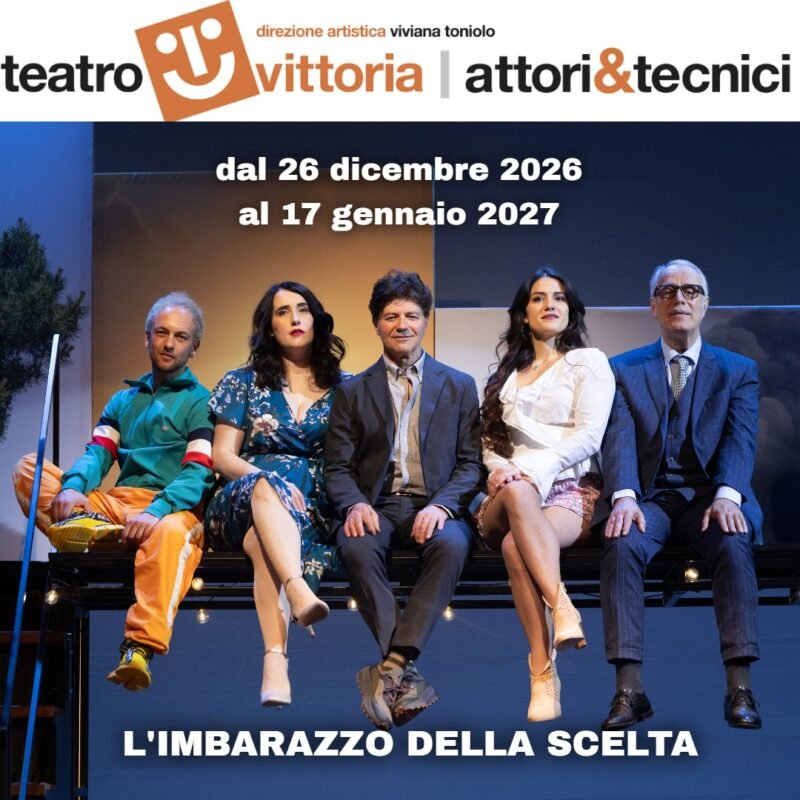
- L’imbarazzo della scelta at Teatro Vittoria, December 26, 2026 to January 13, 2027100 m
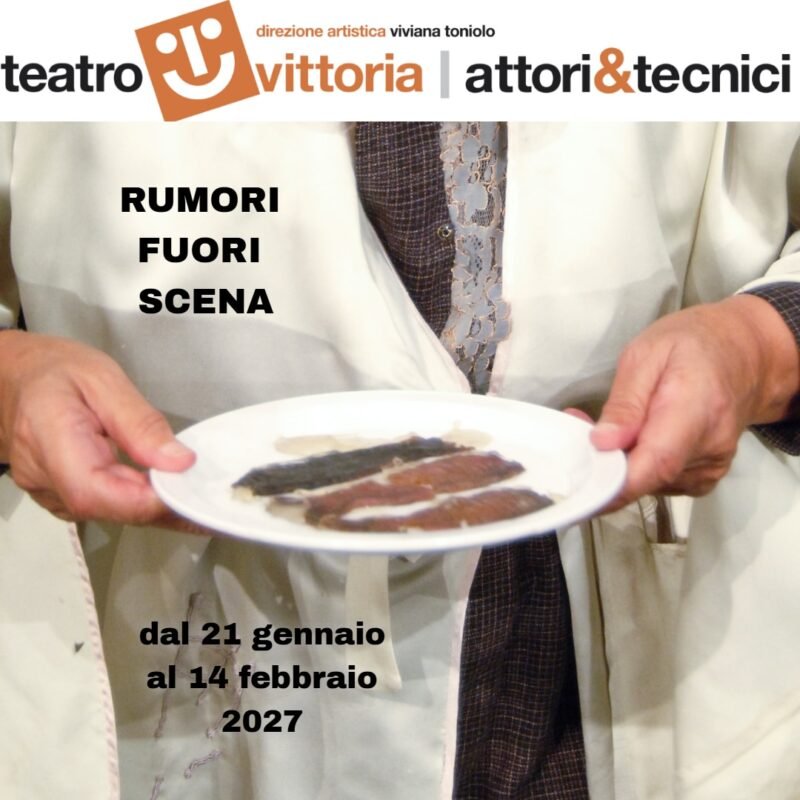
- Rumori fuori scena with the Compagnia Attori e Tecnici at Teatro Vittoria, January 21 to February 14, 2027100 m
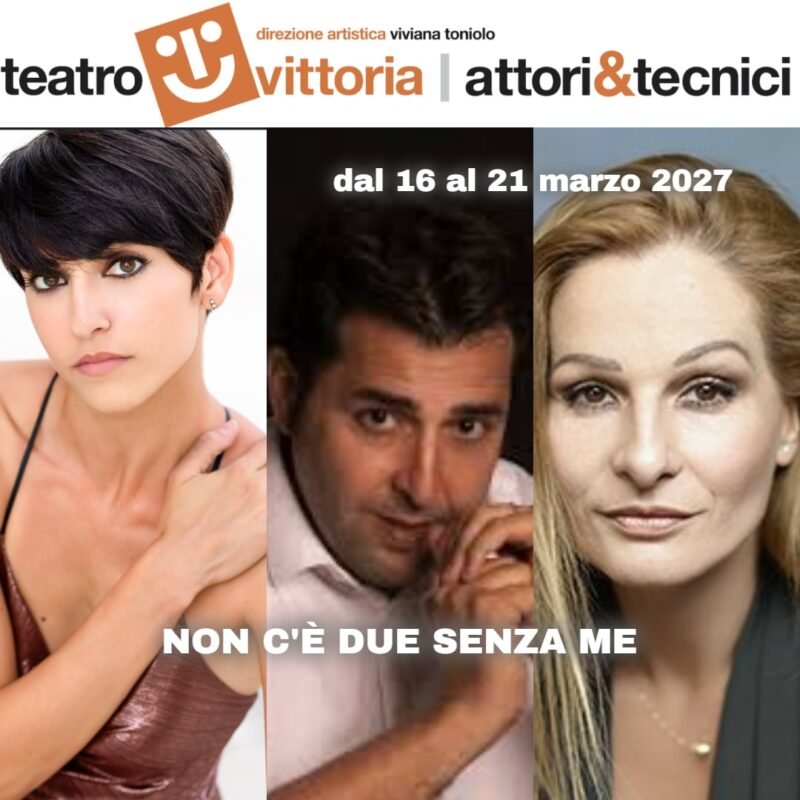
- Non c’è due senza me at Teatro Vittoria, March 16 to 21, 2027100 m
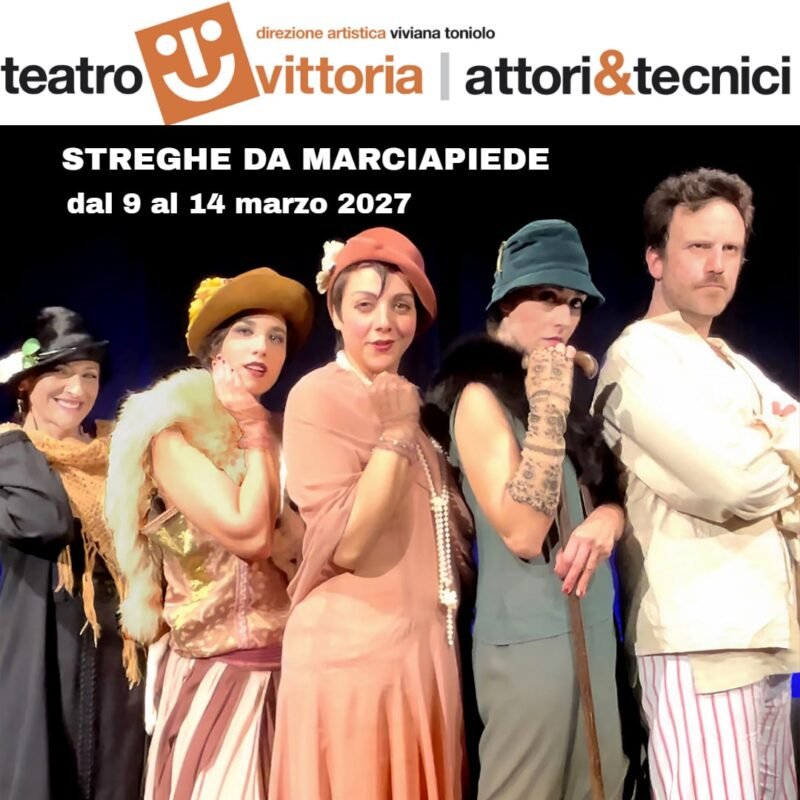
- Streghe da marciapiede at Teatro Vittoria, March 9 to 14, 2027100 m
You might also like
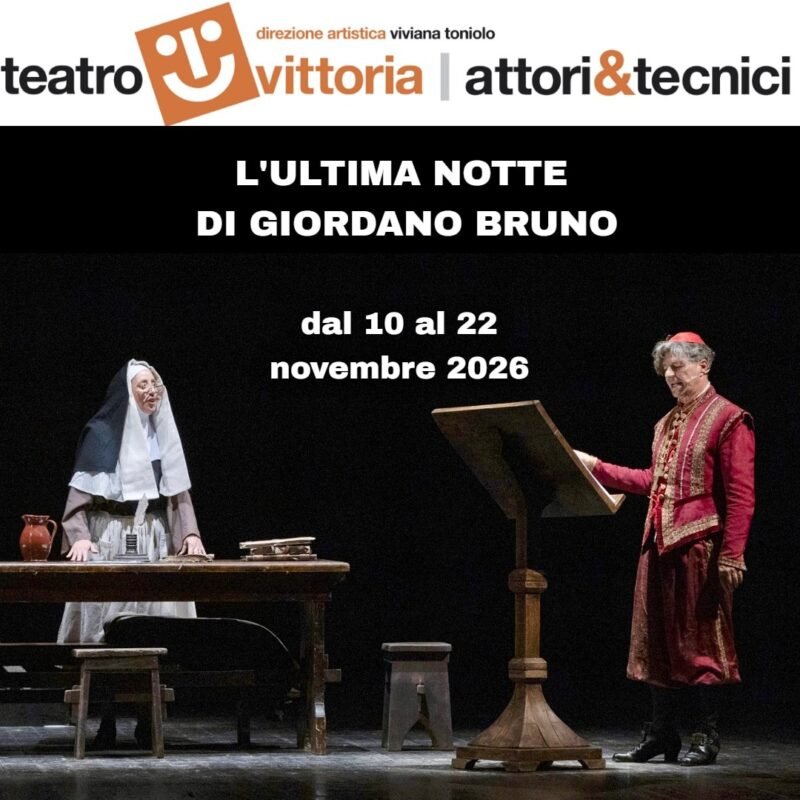
- L’ultima notte di Giordano Bruno at Teatro Vittoria, November 10 to 22, 2026
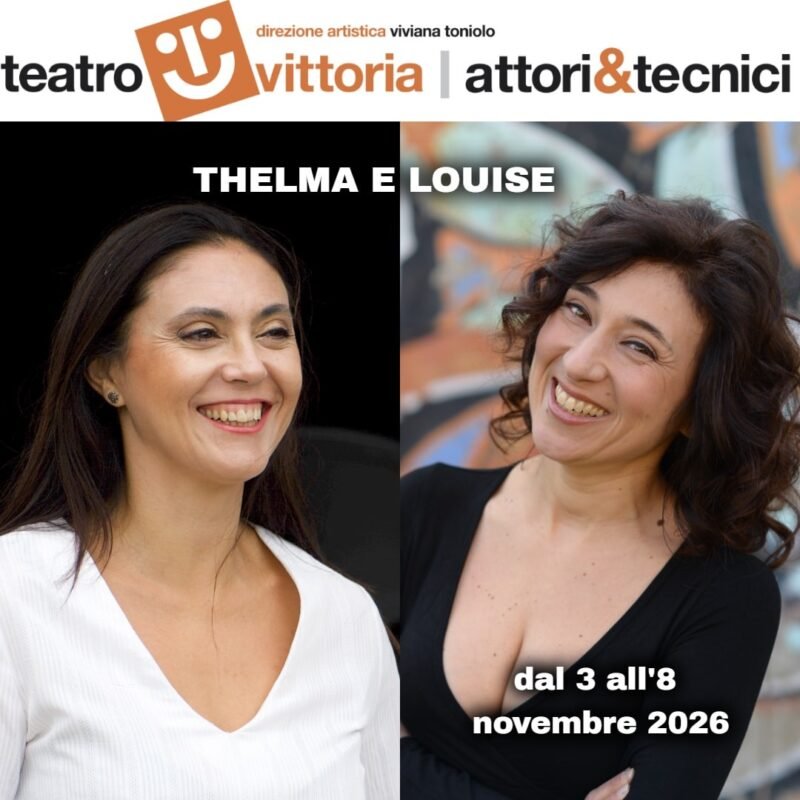
- Thelma e Louise at Teatro Vittoria, from November 3 to 8, 2026
- L’ora dei predatori, a reading with Elisabetta Pozzi and Tullio Solenghi at La Pelanda, November 3, 2026
- Di isole e di città with Giuseppe Cederna and Giorgio Ieranò at Teatro Vittoria, March 2 to 7, 2027
- Donna non rieducabile with Ottavia Piccolo at Teatro Vittoria, February 23 to 28, 2027
- L’uomo, la bestia e la virtù by Augusto Zucchi at Teatro Vittoria, February 16 to 21, 2027