Sophia Al-Maria and Lydia Ourahmane, if we could just talk in person, at Basement Roma, October 6 to November 27, 2026
In short. if we could just talk in person, the two-artist exhibition by Sophia Al-Maria and Lydia Ourahmane, opens at Basement Roma, at Viale Mazzini 128 (00195 Rome), on Tuesday, October 6, 2026 with an opening from 18:30 to 21:00, and stays…
if we could just talk in person, the two-artist exhibition by Sophia Al-Maria and Lydia Ourahmane, opens at Basement Roma, at Viale Mazzini 128 (00195 Rome), on Tuesday, October 6, 2026 with an opening from 18:30 to 21:00, and stays open from October 7 to November 27, 2026, Wednesday to Saturday from 14:30 to 19:00 or by appointment. Admission is free. Basement Roma is in the Della Vittoria neighborhood, on the stretch of Viale Mazzini toward Piazzale Clodio, where several bus lines arrive. The nearest Metro A stops are Lepanto and Ottaviano. The exhibition is curated by CURA. and produced by Basement Roma.
if we could just talk in person at Basement Roma in brief
if we could just talk in person is the third collaborative exhibition by Sophia Al-Maria and Lydia Ourahmane, open at Basement Roma for a little under two months, from October 6 to November 27, 2026, with free admission.
Dates
Opening Tuesday, October 6, 2026, from 18:30 to 21:00. Open to the public from October 7 to November 27, 2026. November 27 is a Friday. Anyone who wants to see it on the last weekend needs to keep that in mind, because on Saturday the 28th the exhibition is already closed.
Hours
Wednesday to Saturday, from 14:30 to 19:00, or by appointment by writing to hello@basementroma.org. Monday, Tuesday and Sunday the space is closed, except for appointments.
Admission
Admission is free. Basement Roma also mentions the possibility of visits on request, to be arranged with the space.
Who is behind it
The exhibition is curated by CURA., the platform that runs Basement Roma, and produced by the space itself.
if we could just talk in person: what you'll see
Basement Roma presents if we could just talk in person as an intermittent correspondence between the two artists, conducted against accumulating ruins: an exhibition about friendship at a distance and about the voice.
A meeting in Delphi
The exhibition's introductory text is written in the first person by the two artists. It tells that they met in Delphi in 2019, and that from that meeting grew a bond that is not exactly romantic love, but the feeling of something destined to last forever.
Postcards, visits, voice notes
The text lists the means of this relationship: postcards, visits, long nights together or on the phone. And above all voice notes, exchanged for years across continents, in moments of revelation and in moments of confusion.
The black box
The conceptual heart of the exhibition is the voice note as an object. When it arrives on the phone, the artists write, you don't know what it contains: it is a black box until you listen to it. It can be a confession or a seduction, a warning or a wound.
The questions
The text proceeds by questions. How do you sustain a love? How do you make someone feel close? And, at the end, a question about the voice: "What does the voice carry that the letter cannot?", that is, what the voice carries that the letter can't carry.
The image of the exhibition
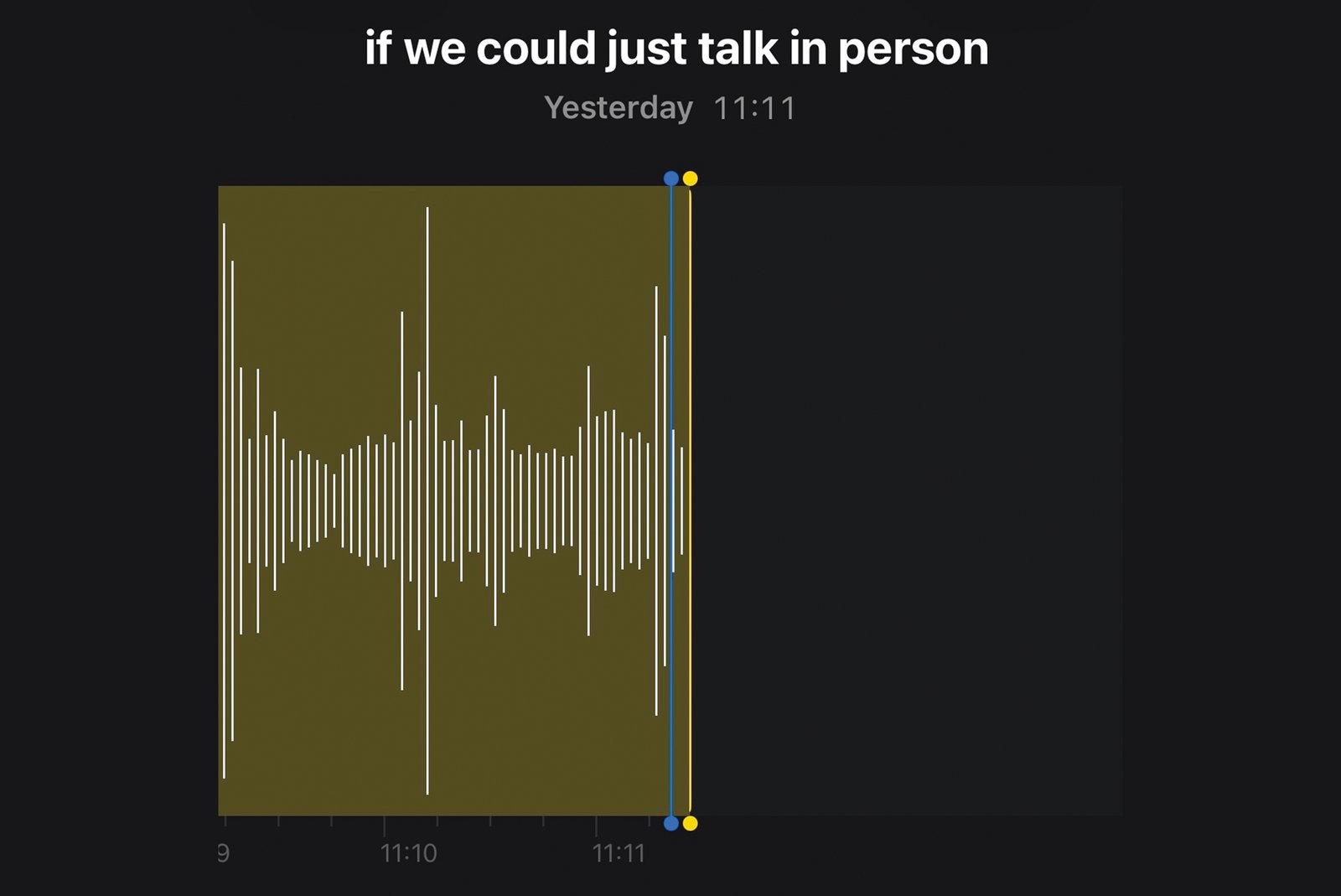
The official image released by Basement Roma reproduces the interface of a voice recording app: the title at the top, the waveform of a message, a time, 11:11. It is the most explicit manifesto of the theme.
Two artists, three exhibitions: the collaboration between Al-Maria and Ourahmane
According to Basement Roma's presentation, if we could just talk in person is the third exhibition project that Sophia Al-Maria and Lydia Ourahmane sign together.
A relationship as material
The exhibition text opens with a sentence that clarifies the method: if this show is about lovers at a distance, let's begin with ourselves. The material of the work is the relationship between the two artists, with its distances and its returns.
Distance and closeness
The artists ask if distance isn't a convenient place to keep a love going, because it never forces you to look each other in the face. And they answer that this same distance is also an abyss in which you get lost. It is the tension the title condenses: if only we could talk in person.
Final irony
The text closes by addressing the visitor directly, with a joke about vanity and a question. A way of reminding us that whoever looks is always, at least a little, inside the story they are looking at.
Sophia Al-Maria: biography
Sophia Al-Maria is a Qatari-American artist, writer and filmmaker, born in 1983 in Tacoma, in Washington state, whose work spans moving image, narrative, performance and installation.
Her origins
The daughter of an American mother and a Qatari father, she spent her childhood between the two countries. She studied comparative literature at the American University in Cairo and aural and visual cultures at Goldsmiths in London. Back in Qatar, she worked on the opening of the Mathaf contemporary art museum.
Gulf Futurism
At the end of the 2000s Al-Maria coined the expression Gulf Futurism, to describe the extremely rapid modernization of the cities of the Persian Gulf after the discovery of oil: luxury hotels, shopping malls, megaprojects, and the absorption of Bedouin tribes into a global consumer culture. In 2016 her exhibition Black Friday at the Whitney Museum in New York portrayed Qatar's shopping malls as places where you feel out of place, or trapped.
The writer
In 2012 she published the memoir The Girl Who Fell to Earth, presented as the first English-language memoir written by an author from Qatar, which tells of a childhood divided between the American family in Washington state and the Bedouin family in Qatar. She also wrote the novel Virgin with a Memory, in 2014. Her book Sad Sack is published by Book Works.
Film and television
In 2009 she received the award for most promising filmmaker at the Doha Tribeca Film Festival. She has written films such as The Watcher #1, The Magical Slate and Mirror Cookie, and in 2020 she produced and co-wrote the British miniseries Little Bird, aired on Sky Atlantic.
The exhibitions
Her works have been exhibited at Tate Britain, the Venice Biennale, the New Museum, the Gwangju Biennale, the Serpentine Galleries and Frieze London. According to Basement Roma, her most recent work can be seen in these months at the Qatar Pavilion of the Venice Biennale and at Tate Britain.
Lydia Ourahmane: biography
Lydia Ourahmane is an artist born in Saïda, Algeria, in 1992, a graduate of Goldsmiths in London in 2014, who lives and works in Barcelona and builds installations, videos, sculptures and sound works on the movement of objects and people across borders.
The debut: The Third Choir
For her 2014 degree Ourahmane presented The Third Choir, a sound installation made of 20 oil barrels from the Algerian company Naftal. According to the encyclopedia, it was the first artwork to legally leave Algeria since independence in 1962, when a law had banned the export of artworks to protect the national heritage. The rule was amended in the course of the process itself. The work, with an archive of 934 documents, was acquired by the Tate in 2023.
The gold tooth
In 2018 her first institutional solo show, at the Chisenhale Gallery in London, consisted of a single gold tooth displayed in the room and a twin tooth implanted in the artist's mouth, cast from a gold chain. The work recalled the story of her grandfather, who had pulled out his teeth to avoid military service under the French occupation.
Barzakh and 108 Days
At Kunsthalle Basel she presented Barzakh, an exhibition conceived as a limbo, with the entire furnishings of her apartment in Algiers. At MACBA in Barcelona she made 108 Days, leaving the rooms empty and inviting 108 participants to activate them.
Biennials and prizes
She took part in the 60th Venice Biennale in 2024, the 15th Gwangju Biennale, the 34th São Paulo Biennial, Manifesta 12 in Palermo in 2018, the 15th Istanbul Biennial in 2017 and, in 2026, the 10th Biennale Gherdëina. In 2024 she received the Rosa Schapire Art Prize at the Hamburger Kunsthalle. Among her recent solo shows are 1752 Photos at the Chantal Crousel gallery in Paris in 2026 and 5 Works at the Nicoletta Fiorucci Foundation in Venice.
The sound collaborations
In 2018 she presented with Nicolas Jaar Music for Two Seas, an underwater sound work off Stromboli. In 2022, at the KW Institute for Contemporary Art in Berlin, she made with Daniel Blumberg sync, a 24-hour performance of live heartbeats, later exhibited at the 2024 Venice Biennale. Sound, and the voice, have run through her work for years.
Basement Roma, the space of the exhibition
Basement Roma is a nonprofit organization and a center for contemporary art founded in 2012 and run by CURA., based at Viale Mazzini 128.
The founders
Basement Roma was founded by Ilaria Marotta and Andrea Baccin. The press office is handled by Maddalena Bonicelli, and the photographs of the installations are by Daniele Molajoli.
The partner institutions
Among its institutional partners the space lists the Comune di Roma, the Casa di Goethe, Fondazione Nuovi Mecenati, the French Academy in Rome at Villa Medici, the Istituto Svizzero, the Lissabon Kunsthalle, Pro Helvetia and the American Academy in Rome. A network that says a lot about the international vocation of the space.
A place supported by its members
Basement Roma states that it is supported by its own members, friends and patrons. The website offers a membership program and a shop for those who want to contribute to its activity.
The previous exhibition
Before if we could just talk in person, the space hosted Spit and Image by Dorota Gawęda and Eglė Kulbokaitė, from April 28 to July 10, 2026, and Clipped Horizon by Alice Bucknell, from February 10 to April 3, 2026.
How to get to Basement Roma
Basement Roma is at Viale Mazzini 128, on the stretch of the avenue toward Piazzale Clodio, where several bus lines have their terminus. Metro A stops at Lepanto and at Ottaviano.
By metro
The Lepanto stop on Line A is less than a kilometer as the crow flies from Basement Roma: you walk north, through Prati, to Viale Mazzini. Alternatively, Ottaviano, convenient for those arriving from the Vatican Museums area.
By bus
Lines 23, 30, 31, 70 and 495, among others, arrive at Piazzale Clodio. For the exact route from your own starting point, the most reliable tool is the ATAC route calculator.
By car
On weekdays the Piazzale Clodio area, home of the law courts complex, is very busy. The museum's afternoon opening hours partly coincide with the end of the office day. Public transport is the calmer choice.
The Della Vittoria neighborhood around Basement Roma
Viale Mazzini runs through the Della Vittoria neighborhood, born in 1911 on the area of the old Piazza d'Armi, established in 1921 under the name Milvio and renamed with its current name in 1935.
The artists' neighborhood
Della Vittoria was for a long time a neighborhood of artists. In 1921 the ARS cooperative built 13 villini with studios designed by Enrico Del Debbio. On Viale Mazzini lived Gino Severini and Tano Festa. On Via Oslavia lived Giacomo Balla, whose house can be visited today. On Lungotevere della Vittoria lived Alberto Moravia, with the Casa Moravia.
The RAI on Viale Mazzini
On the same avenue is the RAI headquarters, built in 1965 on a design by Francesco Berarducci, with the horse by Francesco Messina. For many Italians Viale Mazzini is, simply, public television.
20th-century architecture
The neighborhood preserves a catalog of modern architecture: Viale Mazzini Post Office of 1935, signed by Armando Titta. The nymphaeum of Piazza Mazzini by Raffaele De Vico. The small apartment buildings by Luigi Pellegrin in Piazzale Clodio and by Luigi Moretti in Via Romeo Romei.
Toward Prati and the Tiber
To the south the neighborhood borders Prati, toward the Palazzaccio and Castel Sant'Angelo. To the north, across the Tiber, the Foro Italico, and to the east the Flaminio neighborhood with the MAXXI.
How to organize the visit to if we could just talk in person
if we could just talk in person is visited in an afternoon, between Wednesday and Saturday, and can be paired with other exhibitions in the northern quadrant of Rome.
How much time
An exhibition in an independent space generally takes less time than a museum. Basement Roma doesn't state a duration. Still, it's best to arrive by 18:00, to have some margin before the 19:00 closing.
The opening
On October 6, from 18:30 to 21:00, the exhibition opens with an inauguration. It is the chance to see the space on opening day, together with the crowd of the first evening.
An afternoon of contemporary art
Basement Roma and MAXXI are in the same sector of the city. Anyone with a free afternoon can see both, starting from Basement in the first hours of opening and continuing toward Flaminio.
Where to eat around Viale Mazzini
Around Viale Mazzini and Piazza Mazzini there is a wide neighborhood offering: trattorie, pizzerias, bars with hot food counters, bakeries and gelaterie.
Before the visit
With the opening at 14:30, lunch in the neighborhood and a walk to Basement are a good combination. The bars of Prati and Della Vittoria serve a crowd of offices and courts, with hours designed for lunch.
After the opening
The opening ends at 21:00. For dinner the neighborhood offers several possibilities, and Prati, toward Cola di Rienzo, offers even more.
A curiosity about Sophia Al-Maria and Lydia Ourahmane, if we could just talk in person, at Basement Roma, October 6 to November 27, 2026
The most singular curiosity concerns the two artists' shared past with the same space. Sophia Al-Maria and Lydia Ourahmane both appear in the list of artists exhibited by Basement Roma between 2012 and 2026, which the website publishes in alphabetical order: two names far apart in the alphabet, Al-Maria almost at the top and Ourahmane toward the end, which this exhibition puts side by side. In a list that includes Mark Leckey, Jeremy Deller, Carsten Höller, Anri Sala and Jon Rafman, their pairing carries a theme the space had never put at the center: friendship as art material.
The second curiosity is geographical. The two artists tell of having met in Delphi, in Greece, in 2019. A collaboration that today runs through phones and voice notes was born, at the beginning, from an in-person meeting at one of the most famous archaeological sites of the Mediterranean. The title of the exhibition, if only we could talk in person, recalls precisely that first moment.
The third concerns the official image. The voice recording screen chosen as the poster shows a time, 11:11, and the word Yesterday. It is a time many people look at twice, and a yesterday that points to a message left there, perhaps not yet listened to: the black box the text speaks of.
One thing nobody tells you about Sophia Al-Maria and Lydia Ourahmane, if we could just talk in person, at Basement Roma, October 6 to November 27, 2026
What is rarely said about independent spaces like Basement Roma is that the hours are tight, and have to be taken seriously. The exhibition is open four days a week, Wednesday to Saturday, and only in the afternoon, from 14:30 to 19:00. Anyone passing through Rome on Sunday or Monday finds it closed. The alternative exists: Basement also receives by appointment, by writing to hello@basementroma.org. For anyone with only one day available, it's the solution to keep in mind.
The second thing concerns language. The exhibition text is in English, and the title is in English too, deliberately in lowercase. Anyone who doesn't read it with ease can prepare beforehand, because the text is part of the work: it is written like a letter, or like the transcript of a voice note.
Third thing: the closing date. November 27 is a Friday. Anyone planning to go on the last weekend of November will arrive to a closed exhibition. The advice is to note the date and, if possible, not to leave the visit to the last days.
The advice I give you for visiting Sophia Al-Maria and Lydia Ourahmane, if we could just talk in person, at Basement Roma, October 6 to November 27, 2026
My advice is to arrive prepared on the two artists, but without expectations about what you'll see. Basement Roma doesn't describe the works on show, and the exhibition text speaks of relationships, voices, letters, not of objects. Knowing at least two episodes, Al-Maria's Gulf Futurism and the oil barrels of Ourahmane's The Third Choir, helps you understand where they come from: a writer and filmmaker who tells the Gulf with the tools of science fiction, an artist who sends works across borders and their bureaucracies.
Second tip: go to the opening, on October 6 from 18:30, or on a weekday afternoon in mid-month, when the space is quieter. They are two different experiences: the first is social, the second is for listening. For an exhibition about the voice, in our view, the second is worth more.
Third tip: bring headphones or earbuds, in case the exhibition includes sound works to be listened to individually. The program doesn't specify it, but the theme of the voice note makes it plausible, and having them in your pocket costs nothing. For those who want to build a private, tailor-made stay around Roman contemporary art, Tour Leader Pro organizes private, corporate and V.I.P. experiences.
Another well-known fact, yet rarely cited
It is well known that Rome has a network of foreign academies and institutes, from Villa Medici to the American Academy, that bring artists from all over the world to the city. It is less often mentioned that alongside this historic network there are independent spaces that do the same work with much smaller means. Basement Roma is one of them: nonprofit, founded in 2012, and a partner of the very big foreign institutions, from the French Academy to Istituto Svizzero, from Casa di Goethe to the American Academy in Rome.
Another known and little-remembered fact concerns Viale Mazzini. Everyone associates it with the RAI, whose headquarters, built in 1965, has become a synonym for public television. It is less often remembered that the same avenue was a street of artists: the painters Gino Severini and Tano Festa lived there. A research gallery on the avenue of television is, in the end, the continuation of this double history.
Finally the two artists. It is well known that Sophia Al-Maria and Lydia Ourahmane have exhibited in the major international biennials, from Venice to Gwangju. It is less remembered that both have a strong tie to sound and to the voice: Al-Maria as a director and writer of films and series, Ourahmane with works like The Third Choir, Music for Two Seas and sync. An exhibition about voice notes is the natural meeting point of the two bodies of research.
The right photo to take at Sophia Al-Maria and Lydia Ourahmane, if we could just talk in person, at Basement Roma, October 6 to November 27, 2026
The right photo at if we could just talk in person is, in our view, the one you don't take. An exhibition about the voice and about listening asks for attention, not lit screens. The advice is to look first, and to photograph only at the end, if the space allows it: ask about the photography rules at the entrance, because every installation has its own.
If you do take a photo, the best choice is the one that tells the relationship between the works and the space: a wide shot, with the room, the works and, if there is one, a person listening. It is the image most faithful to the title: someone who, finally, talks in person.
The second photo is taken outside, on Viale Mazzini, with the tree-lined avenue of the Della Vittoria neighborhood. For those who love architecture, the 1935 Post Office and the RAI headquarters with Messina's horse are on the same avenue: two images of 20th-century Rome a few minutes from a 2026 exhibition.
Accessibility and practical information
if we could just talk in person has free admission, Wednesday to Saturday from 14:30 to 19:00 or by appointment.
Accessibility
Basement Roma doesn't publish information on accessibility for people with mobility disabilities. Basement, in English, means a room below ground level. In the absence of official information, it's best to write first to hello@basementroma.org to find out what the access is like.
With children
Free admission makes the visit easy even with children, but the themes of the exhibition, distance, love, the voice, and the English text make it more suitable for adults and teenagers.
Visits on request
Basement Roma states that visits on request are possible. For those visiting with friends or colleagues, it's the best way to explore the project in depth.
Some important events that happened here in history
The history of Basement Roma begins in 2012, when CURA. opens a nonprofit center for contemporary art on Viale Mazzini. The first project listed in the space's archive is Videogiochi, in March 2014, with Anna Franceschini, Diego Marcon and Federico Chiari. Between 2014 and 2015 come the exhibitions of B. Ingrid Olson, David Douard, Lili Reynaud-Dewar and Michael Manning, and in autumn 2015 the group show ANAGRAMMA with Anna-Sophie Berger, Paolo Chiasera, Marguerite Humeau, Marlie Mul, Michael E. Smith and Bunny Rogers.
In the following years Ed Fornieles, Athena Papadopoulos, Pedro Barateiro, Claudia Comte, Nico Vascellari with Bisca Vascellari in 2018, Nicolas Deshayes, Augustas Serapinas and Yves Scherer pass through. After the Incorporea period, between 2020 and 2021, come Nora Turato, David Horvitz and Oliver Laric with The Dreamers: An Echoing, Hana Miletić, Will Benedict, Sara Sadik, Özgür Kar, Slavs and Tatars, Jon Rafman.
The most recent years bring Caroline Poggi and Jonathan Vinel in 2024, SAGG Napoli and Ryan Gander between 2024 and 2025, the first Basement Art Assembly Biennial in autumn 2025, Alice Bucknell and Dorota Gawęda with Eglė Kulbokaitė in 2026. On October 6, 2026 the third collaborative exhibition by Sophia Al-Maria and Lydia Ourahmane is added. On the neighborhood level, the date to remember is 1965, the year of the RAI headquarters on Viale Mazzini.
Who has passed through Sophia Al-Maria and Lydia Ourahmane, if we could just talk in person, at Basement Roma, October 6 to November 27, 2026
Through Basement Roma, between 2012 and 2026, have passed artists who today are met in the great museums of the world. The list published by the space includes Mark Leckey, Jeremy Deller, Carsten Höller, Anri Sala, Cécile B. Evans, DIS, Alex Da Corte, Hannah Black, Jon Rafman, Ryan Gander, Slavs and Tatars, Invernomuto, Trisha Baga, Nora Turato, Marguerite Humeau, Bunny Rogers, Claudia Comte, Jenna Sutela, Dora Budor. Alongside them, many Italian artists: Diego Marcon, Anna Franceschini, Patrizio Di Massimo, Nico Vascellari, Luca De Leva, Paolo Chiasera, Manfredi Beninati.
From October 6 Sophia Al-Maria and Lydia Ourahmane pass through, and with them, through their biographies, a very wide geography: Qatar and Washington state, Cairo and London, Saïda and Algiers, Barcelona, Basel, Berlin, Venice. And their working companions pass through ideally: Nicolas Jaar, with whom Ourahmane took sound beneath the sea off Stromboli. Daniel Blumberg, with whom she recorded 24 hours of heartbeats. The Mathaf museum in Doha, whose opening Al-Maria worked on and which she herself considers her real artistic training.
In our view this is the quality of Basement Roma: a small space on a residential avenue that, for 14 years, has brought to Rome names that elsewhere require large institutions. Ilaria Marotta and Andrea Baccin, founders of Basement Roma, have built here an observatory on international art that the city still doesn't know well enough.
October and November in Rome: the exhibition season
if we could just talk in person opens in the first week of October, at the beginning of Rome's autumn exhibition season, and closes at the end of November.
The weather
In October Roman afternoons are often still mild. In November the first rains arrive and the days get shorter. With the 19:00 closing, at the end of November you leave the exhibition already in the dark.
The other exhibitions
In the same autumn the partner institutions of Basement Roma offer their programs, including the autumn exhibitions at Villa Medici: a path of international contemporary art that you can build over several afternoons.
Frequently asked questions about if we could just talk in person at Basement Roma
When is the Sophia Al-Maria and Lydia Ourahmane exhibition open in Rome?
The exhibition if we could just talk in person by Sophia Al-Maria and Lydia Ourahmane is open at Basement Roma from October 7 to November 27, 2026, after the opening on October 6 from 18:30 to 21:00. The hours are Wednesday to Saturday, from 14:30 to 19:00, or by appointment.
How much does it cost to visit Basement Roma?
Admission to Basement Roma is free, including for the exhibition if we could just talk in person. The space also receives by appointment, by writing to hello@basementroma.org.
Where is Basement Roma?
Basement Roma is at Viale Mazzini 128, 00195 Rome, in the Della Vittoria neighborhood, on the stretch of the avenue toward Piazzale Clodio. The nearest Metro A stops are Lepanto and Ottaviano. Several bus lines arrive at Piazzale Clodio.
Who are Sophia Al-Maria and Lydia Ourahmane?
Sophia Al-Maria, born in 1983, is a Qatari-American artist, writer and filmmaker, known for the concept of Gulf Futurism. Lydia Ourahmane, born in Saïda, Algeria, in 1992, is an artist who lives in Barcelona and exhibits in the major international biennials.
What is if we could just talk in person about?
if we could just talk in person is the third collaborative exhibition by Sophia Al-Maria and Lydia Ourahmane, presented by Basement Roma as an intermittent correspondence between the two artists. It is about friendship at a distance, about voice notes, about what the voice carries that writing doesn't.
What is Basement Roma?
Basement Roma is a nonprofit organization and a center for contemporary art founded in 2012 by Ilaria Marotta and Andrea Baccin and run by CURA., with partners such as Villa Medici, Istituto Svizzero, Casa di Goethe and the American Academy in Rome.
Final advice on if we could just talk in person
if we could just talk in person is an exhibition small in numbers and wide in questions: two artists who have exhibited at the world's major biennials tell of their friendship through voice notes, in a nonprofit space on Viale Mazzini with free admission. In our view it's worth going on a weekday afternoon, with the two artists' biographies in mind and the phone in your pocket. Watch the hours, Wednesday to Saturday, and the closing on Friday, November 27.
Article written by the editorial team of Tour Leader Pro, contact them for Private/Corporate/V.I.P. Tours and Experiences.
Planning a trip to Rome? The English-language guides for visiting the city are on ItalyPlanner.com.
Contact Information
Nearby
 Vigamus – Video Game Museum200 m
- Cinema Azzurro Scipioni800 m
- Mercato Trionfale800 m
- Villa Mazzanti800 m
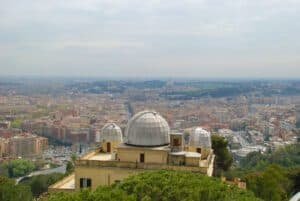
- INAF – Monte Mario Observatory in Rome900 m
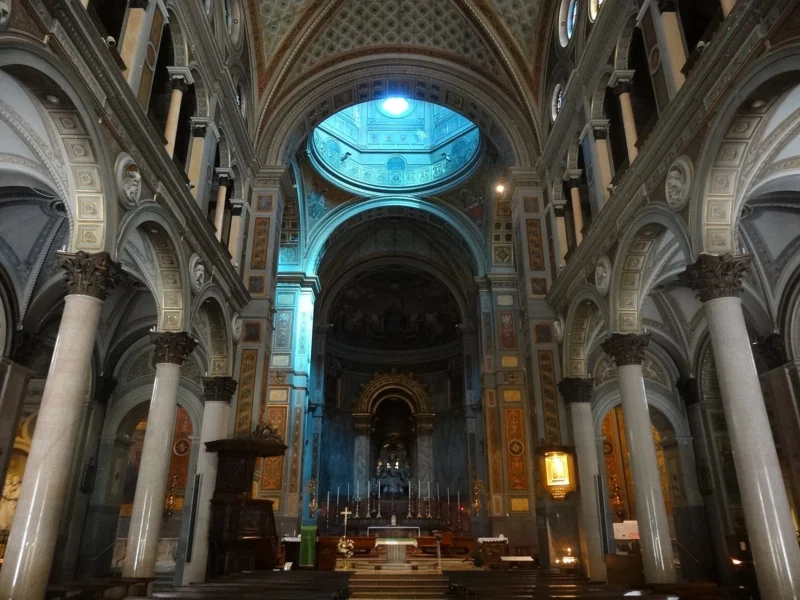
- San Gioacchino in Prati900 m

Upcoming events nearby
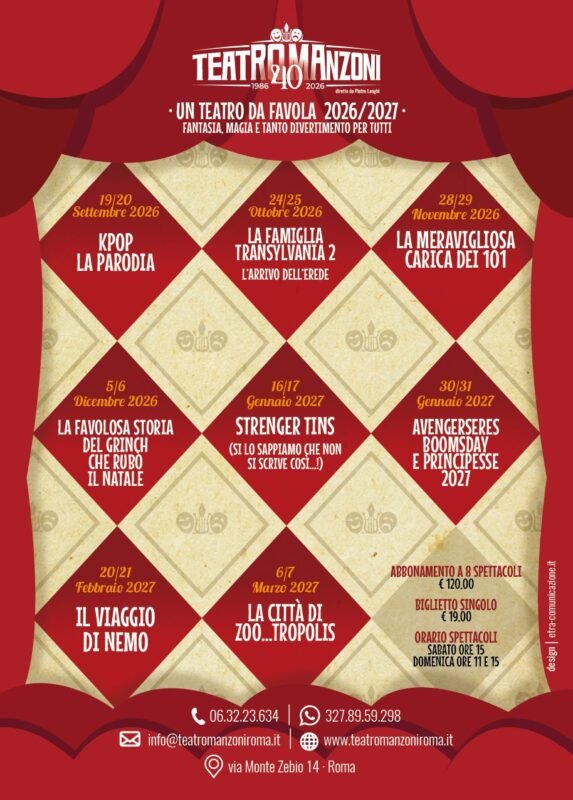
- Un teatro da favola, kids’ season at Teatro Manzoni, October 24, 2026 to March 7, 2027600 m
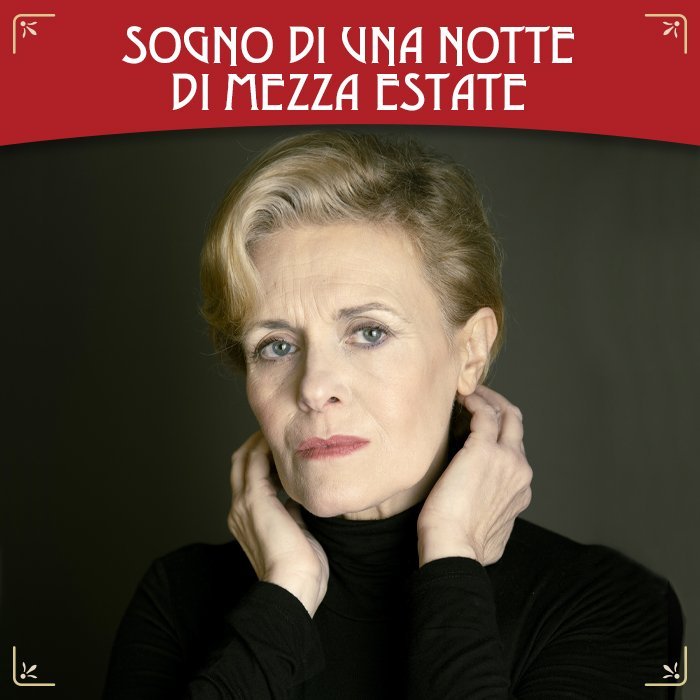
- A Midsummer Night’s Dream by Daniele Salvo at Teatro Manzoni, February 11 to 28, 2027600 m
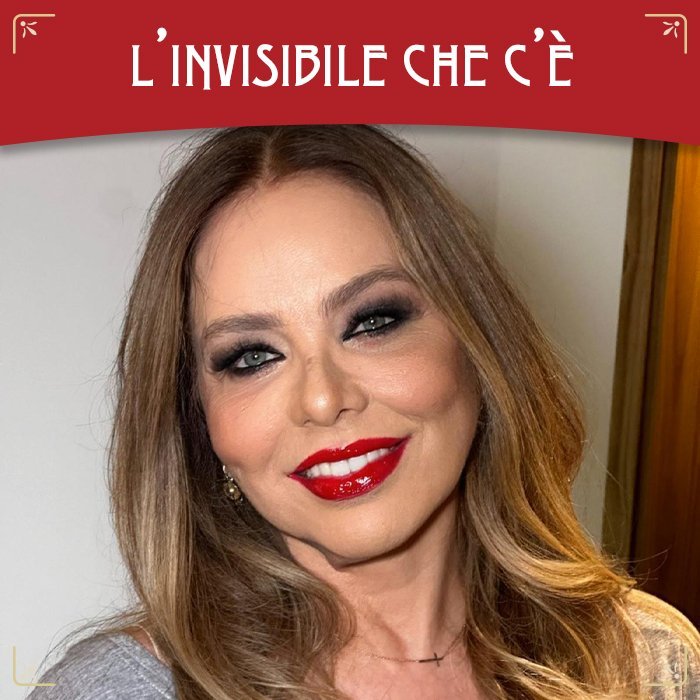
- L’invisibile che c’è with Ornella Muti at Teatro Manzoni, March 4 to 21, 2027600 m
- Il gufo e la gattina with Giobbe Covatta and Patrizia Pellegrino at Teatro Manzoni, May 6 to 23, 2027600 m

You might also like
- Diego Rivera at the Capitoline Museums: the Big Exhibition on 20th-Century Mexican Art
- Il non finito at the Capitoline Museums, the Unfinished Paintings of the Pinacoteca
- Thursdays at the GNAMC, evening openings at the Galleria Nazionale d’Arte Moderna, from September 10 to December 17, 2026
- I cattivi pensieri at Teatro Elsa Morante, performances from October 24 to November 6, 2026
- Conigli by Salvo Di Paola at Hacienda Roma, November 30, 2026
- Il medico dei pazzi by Eduardo Scarpetta with Gianfelice Imparato at Teatro Tor Bella Monaca