Sol Gabetta and Bertrand Chamayou at Auditorium Parco della Musica, November 25, 2026
In short. Sol Gabetta and Bertrand Chamayou, cello and piano, play on Wednesday, November 25, 2026 at 20:00 in Sala Sinopoli of Auditorium Parco della Musica Ennio Morricone, Viale Pietro de Coubertin 30 (00196 Rome), for the chamber season of…
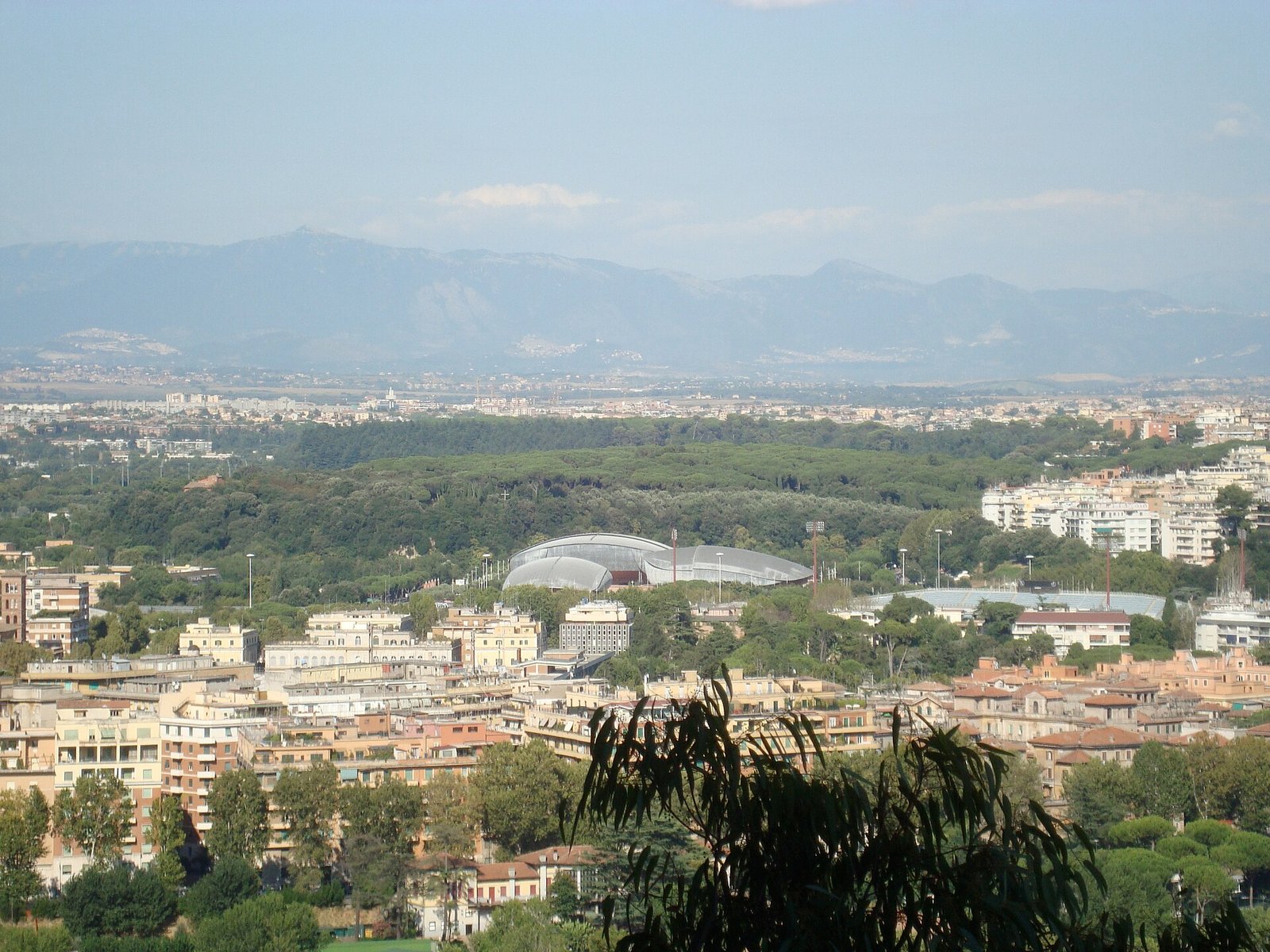
Sol Gabetta and Bertrand Chamayou, cello and piano, play on Wednesday, November 25, 2026 at 20:00 in Sala Sinopoli of Auditorium Parco della Musica Ennio Morricone, Viale Pietro de Coubertin 30 (00196 Rome), for the chamber season of the Accademia Nazionale di Santa Cecilia, with three sonatas for cello and piano: Britten op. 65, Grieg op. 36 and Rachmaninoff op. 19. You reach the Auditorium by tram 2 from the Flaminio station on metro A, Flaminia/Reni or Apollodoro stops, and by buses 910 from Termini, 53, 982 and 168. Tickets cost 38 euros in the orchestra, 26 euros in the second gallery section and 18 euros in the third, and can be bought at the box offices of the Auditorium and of Via Vittoria 6 and on the presale circuit authorized by the Accademia, reachable from the official concert page.
Two musicians born less than a month apart in 1981, she in Villa María in Argentina, he in Toulouse, who have played together for over a decade and who in 2015 released a joint record devoted to Chopin. In Rome they bring a program that crosses three countries and 60 years of music: Grieg's Norway, Rachmaninoff's Russia at the dawn of the 20th century, Britten's England in the 1960s.
Sol Gabetta and Bertrand Chamayou at Santa Cecilia: the November 25 concert
The recital by Sol Gabetta and Bertrand Chamayou is scheduled for Wednesday, November 25, 2026 at 20:00 in Sala Sinopoli of Auditorium Parco della Musica Ennio Morricone, in the 2026/2027 chamber season of the Accademia Nazionale di Santa Cecilia.
The program
Benjamin Britten, Sonata for cello and piano op. 65. Edvard Grieg, Sonata for cello and piano op. 36. Sergei Rachmaninoff, Sonata for cello and piano op. 19. Three sonatas in which the piano is never mere support: it always has a leading role.
A chamber season night
In the Accademia's chamber season the concert falls a week after the third installment of the complete Beethoven quartets with Quatuor Ebène, on November 18, and two weeks before Jordi Savall with Vivaldi, on December 9, also in Sala Sinopoli.
Punctuality
The Accademia asks for punctuality: concerts start at the stated time and latecomers aren't admitted to the hall. The full notices are published on the Avvertenze page of the Accademia's official website.
The program: three sonatas for cello and piano
The three sonatas on the program were written between 1882 and 1961, and each one comes from a personal relationship between the composer and a cellist: Grieg's brother, Rachmaninoff's friend, the great Rostropovich for Britten.
Britten, Sonata op. 65
Benjamin Britten's Sonata op. 65 was first performed on July 7, 1961 at the Aldeburgh Festival, in Suffolk. It's in five movements. In the fourth, a scherzo entirely in pizzicato, you can hear a debt to Balinese gamelan. The closing moto perpetuo uses the DSCH motif, the musical transcription of Shostakovich's initials, as a tribute to the composer who had pushed Britten to write for cello.
Grieg, Sonata op. 36
The Sonata in A minor op. 36 is Edvard Grieg's only composition for cello and piano, written between 1882 and 1883, after a period taken up by conducting the Bergen orchestra and by illness. Grieg dedicated it to his brother John, a keen amateur cellist, and first performed it at the piano in Dresden on October 22, 1883, with cellist Friedrich Grützmacher. It takes up themes from a funeral march in memory of Rikard Nordraak and from the wedding march in the music for Sigurd Jorsalfar. It lasts about 26 minutes.
Rachmaninoff, Sonata op. 19
Sergei Rachmaninoff's Sonata in G minor op. 19 was completed on November 20, 1901 and first performed in Moscow on December 2, 1901 by cellist Anatoliy Brandukov, a friend and the dedicatee, with the composer at the piano. The final version is from December 12. Rachmaninoff considered the piano the equal of the cello: most of the themes are introduced by the keyboard and then developed by the string instrument.
The sonata of rebirth
The Sonata op. 19 belongs to the years when Rachmaninoff went back to composing after the crisis that followed the failure of his First Symphony, in 1897: it's contemporary with the Suite No. 2 for two pianos and the Second Piano Concerto, with which it shares its lyricism. You can hear echoes of Orthodox church bells and of the Gregorian chant of the Dies irae.
Sol Gabetta: biography of the cellist
Sol Gabetta, born in Villa María, Argentina, on April 18, 1981, is one of the best-known cellists of her generation. Her international career began in 2004, when she won the Crédit Suisse Young Artist Award playing Shostakovich's Second Cello Concerto with the Vienna Philharmonic conducted by Valery Gergiev.
From Argentina to Basel
Born in the province of Córdoba to parents of Italian, French and Russian origin, she studied cello, piano and singing, and trained in Buenos Aires with Leo Viola. At 12 she left Argentina with her parents for Spain, where she studied at the Escuela Superior de Música Reina Sofía in Madrid, and then for Alsace. She trained further at the Basel Music Academy with Ivan Monighetti and in 2006 at the Hochschule Hanns Eisler in Berlin with David Geringas. In 1994 she debuted at Teatro Colón in Buenos Aires.
The awards
Her honors include the Natalia Gutman prize at the Tchaikovsky Competition in Moscow, a prize at the ARD competition in Munich, a Grammy nomination, Gramophone Young Artist of the Year in 2010, the Würth-Preis Jeunesses Musicales in 2012 and the instrumentalist of the year award at the 2013 ECHO Klassik, for the Shostakovich concerto recorded with the Berlin Philharmonic and Lorin Maazel.
The great orchestras
She has played with the Orchestra of the Accademia Nazionale di Santa Cecilia, the Royal Concertgebouw, the Bavarian Radio Orchestra, the Philadelphia Orchestra, the London Philharmonic, the Philharmonia and the Bolshoi orchestra. In 2014 she debuted with the Berlin Philharmonic and Simon Rattle at the Baden-Baden Easter Festival. In 2021 her participation in the concert for the Nobel Prize ceremony was announced.
The Guadagnini and the Olsberg festival
She plays a 1759 Guadagnini cello provided by a private foundation, the Rahn Kulturfonds. She has taught at the Basel Music Academy since 2005. In Switzerland she founded the Solsberg chamber music festival, in Olsberg, in the canton of Aargau, and Cappella Gabetta, a baroque orchestra led by her brother, violinist Andrés Gabetta, devoted to Vivaldi and his contemporaries.
The discography
For Sony and RCA Red Seal she has recorded the concertos of Haydn, Elgar, Dvořák and Shostakovich, the Vivaldi Project in three volumes, Gramata Cellam by Pēteris Vasks, a composer she works closely with, and the record Prayer. For Deutsche Grammophon, the recital Duo with Hélène Grimaud, in 2012.
Bertrand Chamayou: biography of the pianist
Bertrand Chamayou, born in Toulouse on March 23, 1981, is a French pianist, the only artist to have won the Victoire de la Musique Classique three times: in 2006 as revelation, in 2012 for record of the year and in 2016 as instrumental soloist.
His training
He studied at the Toulouse conservatory with Claudine Willoth, drawn early to contemporary music and composition. At 15, encouraged by pianist and conductor Jean-François Heisser, he entered the Paris Conservatoire. In the same period he worked in London with Maria Curcio and received advice from Leon Fleisher, Dmitri Bashkirov and above all Murray Perahia. At 20 he won fourth prize at the Long-Thibaud-Crespin competition.
Halls and festivals
He has played at the Théâtre des Champs-Élysées, Lincoln Center, the Herkulessaal in Munich and Wigmore Hall in London, and at the festivals of Lucerne, Edinburgh and Rheingau, New York's Mostly Mozart, the Beethovenfest in Bonn and the Klavier-Festival Ruhr. In the 2015/2016 season he debuted with the Leipzig Gewandhaus Orchestra, the Vienna Symphony and the Cincinnati Symphony Orchestra.
Ravel, Saint-Saëns, Satie and Cage
In 2016 he released on Erato Maurice Ravel's complete works for solo piano, recorded in his own Toulouse. In 2019 the record of Saint-Saëns's Concertos No. 2 and No. 5, with the Orchestre National de France and Emmanuel Krivine, won the Gramophone award for recording of the year. In recent years he has recorded Letter(s) to Erik Satie, with music by Satie, Cage and James Tenney, an album devoted to Cage and, in 2025, Schubert for four hands with Leif Ove Andsnes. He has been a Chevalier of the Ordre des Arts et des Lettres since 2015.
Chamber music
Chamayou is a regular chamber musician: his partners include Renaud and Gautier Capuçon, Quatuor Ebène, Antoine Tamestit, Vilde Frang and Sol Gabetta.
Gabetta and Chamayou together: the duo
Sol Gabetta and Bertrand Chamayou have played together as a duo at least since the 2014/2015 season, when they gave a series of recitals in Europe that led to The Chopin Album, released by Sony Classical in 2015.
The Chopin record
The Chopin Album is the recorded fruit of that collaboration: cello and piano in Chopin's repertoire, a meeting between two soloists that has lasted ever since.
Twin generations
They were born less than a month apart: Chamayou on March 23, 1981, Gabetta on April 18 of the same year. They have built their careers in parallel, among the great European festivals, and meet again after more than 10 years with a new program.
Why this program
Grieg and Rachmaninoff themselves sat at the piano for the premieres of their sonatas, and Rachmaninoff considered the keyboard the equal of the cello. It's a program designed for a duo of equals, not for a soloist with her pianist: the right choice for two musicians with solo careers at this level.
A curious fact about Sol Gabetta and Bertrand Chamayou at Auditorium Parco della Musica on November 25, 2026
The juiciest curious fact is about the birth of the Britten sonata. On September 21, 1960, at the Royal Festival Hall in London, Mstislav Rostropovich gave the British premiere of Shostakovich's First Cello Concerto, and Britten's Young Person's Guide to the Orchestra was also on the program. The two composers sat in the same box of honor. Shostakovich later told Rostropovich that he left the evening covered in bruises on his side: every time something about his playing pleased Britten, Britten elbowed him in the ribs to remark how wonderful it was. After the concert Rostropovich asked Britten to write him a piece. A year later the Sonata op. 65 was born, the first of five major works written for him.
The second curious fact comes from the letters. Britten, humble before Rostropovich's fame, wrote to him that he feared he had made some mistakes, and added that the pizzicato movement would amuse him, hoping it was playable.
The third concerns Rachmaninoff: according to a 2023 monograph, the cello's first two notes in the Sonata op. 19 allude to the German word Warum, why, a motif that returns in different forms throughout the sonata.
Sala Sinopoli at Auditorium Parco della Musica
Sala Sinopoli is one of the three large halls of Auditorium Parco della Musica Ennio Morricone, with 1,133 numbered seats: inaugurated on April 21, 2002, before the others, it's named after Giuseppe Sinopoli, who was principal conductor of the Orchestra of the Accademia Nazionale di Santa Cecilia. The general page for the complex is the one for Auditorium Parco della Musica.
The right size for chamber music
A hall of just over a thousand seats is the right size for a duo: the orchestra and the galleries stay close enough to the stage for the details of the cello to come through, Britten's pizzicato, Rachmaninoff's pianissimos. Sala Santa Cecilia, with its 2,756 seats, is designed instead for symphony orchestra.
The 2002 opening
At the opening of Sala Sinopoli, in the spring of 2002, composer Goffredo Petrassi, by then elderly, wanted to be present and heard the first performance in the new hall of his 1931 Ouverture da concerto. The smallest hall of the complex now bears his name.
Renzo Piano's beetles
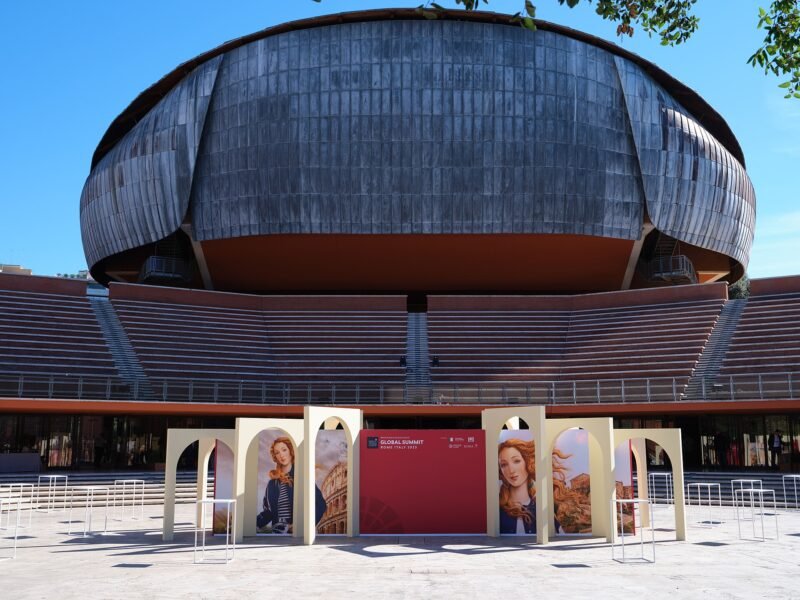
From the outside the three halls look like three big beetles, clad in lead sheets on a brick base and arranged radially around the outdoor cavea, named after Luciano Berio. Renzo Piano won the 1993 invited competition and worked with acoustician Jürgen Reinhold of the Müller-BBM firm in Munich and with landscape architect Franco Zagari.
Something nobody tells you about Sol Gabetta and Bertrand Chamayou at Auditorium Parco della Musica on November 25, 2026
What people rarely say is that the three sonatas on the program are, each in its own way, pages of new beginnings. Grieg wrote his after a period in which conducting in Bergen and illness had taken away his time to compose: the sonata marks his return to writing. Rachmaninoff composed his in the years when he was coming out of the crisis that followed the fiasco of his First Symphony, thanks in part to daily sessions with neurologist Nikolai Dahl in 1900. It's the same season as the Second Piano Concerto. Britten, finally, was returning to the cello after meeting Rostropovich, and from there a whole cycle of works for that instrument was born. Whoever hears the concert hears, in effect, three creative new beginnings.
The second rarely mentioned thing is about prices. For a duo at this level, the third gallery section at 18 euros is one of the best deals of the Roman season: in a 1,133-seat hall even the gallery stays close to the stage. The orchestra at 38 euros, on the other hand, offers a view of the pianist's hands, which matters in this repertoire.
The third is practical: the Accademia doesn't let latecomers in. If you arrive late, you follow the concert from the listening rooms, while seats last.
The Accademia Nazionale di Santa Cecilia and the chamber season
The Accademia Nazionale di Santa Cecilia, which organizes the concert, is one of the oldest musical institutions in the world: born as a congregation of musicians, it became an academy with a body of full and honorary members, a symphony orchestra and chorus and advanced training activities. Since 1998 it has been a foundation. The music director is Daniel Harding.
The Auditorium as home
Since 2003 the Auditorium has been the permanent home of the Accademia's season, which also keeps its Bibliomediateca and the Museum of Musical Instruments there. If you arrive early you can ask about the museum's opening times.
The chamber calendar
The 2026/2027 chamber season opens on October 14 at Teatro dell'Opera with Lisette Oropesa and continues at the Auditorium with, among others, Evgeny Kissin and András Schiff on November 9, Handel's Theodora on November 16, Quatuor Ebène on November 18 and January 13, Die Winterreise on January 20 and Benedetto Lupo on January 27.
The day after
If you're staying in Rome, you can go back to the Auditorium the next day for the symphony concert conducted by Daniel Harding, with Strauss and Brahms's Fourth, in Sala Santa Cecilia from November 26 to 28.
Tickets for Sol Gabetta and Bertrand Chamayou
Tickets for the Sol Gabetta and Bertrand Chamayou recital cost 38 euros in the orchestra, 26 euros in the second gallery section and 18 euros in the third section, and have been on sale since September 10, 2026.
Authorized sellers
The Accademia names as its only authorized sellers the box office of Auditorium Parco della Musica Ennio Morricone, the one at Via Vittoria 6 and the authorized presale circuit with its sales points. To buy online, start from the button under the date, on the official concert page on the Accademia's website.
Beware of unauthorized sellers
The Accademia warns that it takes no responsibility for any markups on tickets sold by unauthorized parties.
Young people and contacts
The Accademia has a section devoted to discounts for young people. For any information the infoline is 06 8082058, and the addresses are info@santacecilia.it and biglietteria@santacecilia.it.
My advice for Sol Gabetta and Bertrand Chamayou at Auditorium Parco della Musica on November 25, 2026
My advice is to listen beforehand at least to the Rachmaninoff sonata, the broadest and most songlike on the program, and read a couple of lines on the story of the Britten: knowing about the gamelan-inspired pizzicato and the DSCH motif in the finale changes the way you hear it. Grieg, with its themes taken from incidental music and a funeral march, is better appreciated knowing that it's the composer's only piece for this combination.
Second point: choose your seat based on what interests you. From the orchestra you see Chamayou's hands, and in these sonatas the piano is as much a protagonist as the cello. In the gallery the sound arrives more blended and the price is much lower. On a limited budget, the third section at 18 euros is one of the best deals of the season.
Third: arrive half an hour early. The Accademia closes the doors at the start time, and the walk from the tram stop, across the terrace, to the Sala Sinopoli entrance takes a few minutes. The extra time is also useful for the coat check and a coffee at the foyer bar.
Fourth: before going out, check how you'll get home. The concert ends late on a Wednesday evening, when transit runs less frequently.
How to get to Auditorium Parco della Musica
You reach Auditorium Parco della Musica Ennio Morricone by tram 2, Flaminia/Reni or Apollodoro stops, and by buses 910, 982, 168 and 53. The metro doesn't come this far: the nearest station is Flaminio, on line A.
Metro A and tram 2
From the Flaminio station on metro A, exit onto Piazzale Flaminio and take tram 2, which runs along Via Flaminia toward Piazza Mancini. Get off at Flaminia/Reni or Apollodoro and walk a few minutes toward Viale Pietro de Coubertin, crossing the Villaggio Olimpico.
Bus 910 from Termini
The 910 leaves from Piazza dei Cinquecento, in front of Termini station, and takes you to the Auditorium without changes. The 53 links Piazza Mancini and the center, the 982 comes from Viale XVII Olimpiade area, the 168 comes from Tiburtina station: it's a weekday line, and November 25 is a Wednesday.
By car
Viale Pietro de Coubertin is closed to traffic along the Auditorium stretch. The complex has a paid indoor parking lot, with limited spaces. On concert nights cars spill into the streets of the Villaggio Olimpico. Take the car only if there's no alternative.
Another well-known fact, and yet not often mentioned
It's well known that Sol Gabetta is an Argentine cellist. It's mentioned less often how European her training is: she left Argentina at 12, studied in Madrid, lived in Alsace, trained further in Basel and Berlin, and today has taught in Basel since 2005 and runs a festival in the canton of Aargau. Her career is in effect Swiss, with Argentine roots and a family of Italian, French and Russian origins. Her cello has an Italian story too: it's a 1759 Guadagnini.
The second rarely mentioned fact concerns Bertrand Chamayou. His name is often linked to Ravel and the French repertoire, but his first experiences at the Toulouse conservatory were with contemporary music and composition, and the records of recent years confirm it: Satie, John Cage, James Tenney. The pianist the Roman audience will hear in Rachmaninoff is also one of the most curious performers of the American 20th century.
The third is about Grieg. The Sonata op. 36 is dedicated to his brother John, an amateur cellist: a piece written within the family, which at the Dresden premiere, in 1883, was nonetheless entrusted to a great professional, Friedrich Grützmacher, with Grieg himself at the piano.
How to plan the evening
A concert at 20:00 on a Wednesday at the Auditorium is planned thinking above all about dinner and getting home.
Before the concert
Inside the Auditorium there's a bar and a café in the foyer and a bar-restaurant with access from the street too: the most convenient solution if you're coming from work and don't want to risk the doors closing.
In the neighborhood
Between the Villaggio Olimpico, Via Flaminia and Piazza Mancini there are pizzerias, trattorias and neighborhood bars, frequented more by residents than by tourists. It's best to book early and have a relaxed dinner before 19:30.
After the concert
If you'd rather eat afterward, you'll find the widest choice in the Milvian Bridge area, a few minutes away, where places stay open late.
The right photo to take at Sol Gabetta and Bertrand Chamayou at Auditorium Parco della Musica on November 25, 2026
At a chamber recital the sound of a shutter or the light of a screen is noticed throughout the hall, and the rules on photos and filming are in the Accademia's notices. The right photo, then, is taken before and after.
The first is of the outdoor cavea, between the three halls, in the late-November dark: Renzo Piano's lead beetles, lit from below, with the terrace linking them, are the most recognizable image of the complex. It's best to shoot from the edge of the cavea toward Sala Santa Cecilia, the largest.
The second is inside Sala Sinopoli, before the start, when the stage is still empty: the cello and the grand piano under the lights, waiting for the musicians, tell the story of the night better than a close-up snatched during the concert.
The third, if you arrive early, is of the remains of the Roman villa discovered during construction, visible from the terrace between Sala Santa Cecilia and Sala Sinopoli: a detail almost nobody photographs and that tells the story of the place.
Some important events that happened here in history
The land the Auditorium stands on has a much longer history than the complex. During construction the remains of a Roman villa emerged, built in the 3rd century BC on the site of a small farm from the Archaic period, of the 6th century BC. The discovery forced Renzo Piano to change the design: two of the three beetles were moved west, almost touching the Corso di Francia viaduct. The finds are displayed in a small museum under the cavea.
Modern history begins with a demolition. In 1936 the Augusteo hall was torn down, Rome's great concert hall, and for over 60 years the capital remained without an auditorium built for symphonic music. Only in 1992 did the city council choose the Villaggio Olimpico area. In 1993 Renzo Piano won the invited competition.
On April 21, 2002 Sala Sinopoli opened, the hall of the Gabetta and Chamayou concert. On December 21, 2002 the rest of the complex was inaugurated with Sala Santa Cecilia and a concert by the Accademia Orchestra conducted by Myung-whun Chung. Since 2003 the Auditorium has been the permanent home of the Accademia's season. Since 2006 it has hosted the Rome Film Fest. In 2020 the city council approved naming it after Ennio Morricone.
Who has passed through Sol Gabetta and Bertrand Chamayou at Auditorium Parco della Musica on November 25, 2026
On opening day Goffredo Petrassi passed through Sala Sinopoli, wanting to hear his Ouverture da concerto in the new hall. Through the history of the Accademia have passed the principal conductors who shaped the orchestra, from Bernardino Molinari to Giuseppe Sinopoli, after whom the hall is named, all the way to Antonio Pappano and Daniel Harding, the current music director. Luciano Berio, who led the Accademia in the years of construction, gave his name to the cavea.
Through the three sonatas on the program pass musicians who made cello history: Mstislav Rostropovich, for whom Britten wrote op. 65 and four other works. Anatoliy Brandukov, Rachmaninoff's friend and dedicatee. Friedrich Grützmacher, first performer of the Grieg sonata. And Shostakovich passes through too, with his four coded notes in Britten's finale.
Through the careers of the two performers pass Valery Gergiev and the Vienna Philharmonic, Simon Rattle and the Berlin Philharmonic, Lorin Maazel, Hélène Grimaud, Murray Perahia, Leon Fleisher, Leif Ove Andsnes, Quatuor Ebène, the Capuçon brothers. On November 25, for one night, two musicians born a month apart, she in Argentina, he in France, pass through Via Pietro de Coubertin.
The neighborhood around the Auditorium
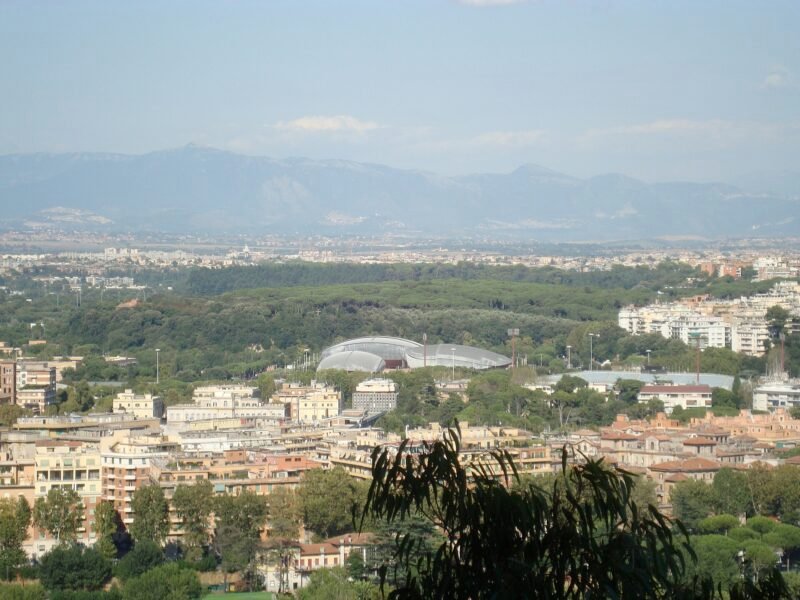
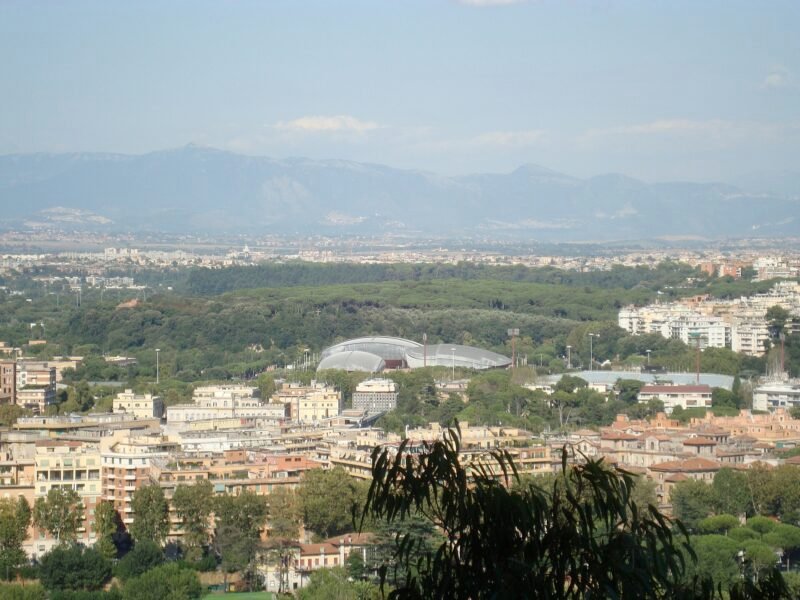
The Auditorium covers an area of about 55,000 square meters between Villa Glori, the Villaggio Olimpico, the Corso di Francia viaduct and Viale Maresciallo Pilsudski: a piece of modern Rome where contemporary architecture talks with green space.
Flaminio and MAXXI
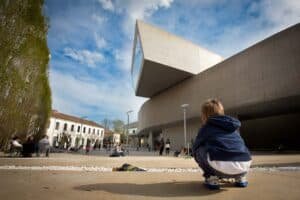
Near the Flaminia/Reni stop of tram 2 is MAXXI, the national museum of 21st-century arts. The neighborhood also has Teatro Olimpico, another historic Flaminio venue.
Toward the Tiber and the center
From the Auditorium you go down toward the river and the Ponte della Musica, the footbridge linking Flaminio to the Foro Italico. Tram 2 takes you back to Piazzale Flaminio, where Villa Borghese and the Tridente begin.
Accessibility and practical information
For accessibility needs it's best to contact the Accademia box office in advance, at the infoline 06 8082058 or at biglietteria@santacecilia.it, so you can pick the most suitable seat and know which entrance to use.
With kids
A recital of sonatas at 20:00 on a weekday isn't the ideal night for a small child. For a teenager who studies cello or piano, though, seeing two soloists of this level a few meters away, in a thousand-seat hall, is a rare formative experience. The Accademia publishes its discounts for young people.
Late November in Rome
Late November evenings can be damp and rainy, and the Auditorium is an open complex where you walk outdoors between the stop and the hall. A folding umbrella and a jacket to leave at the coat check save you surprises.
Frequently asked questions about Sol Gabetta and Bertrand Chamayou in Rome
When do Sol Gabetta and Bertrand Chamayou play in Rome?
Sol Gabetta and Bertrand Chamayou play in Rome on Wednesday, November 25, 2026 at 20:00, in Sala Sinopoli of Auditorium Parco della Musica Ennio Morricone, for the chamber season of the Accademia Nazionale di Santa Cecilia.
What do Gabetta and Chamayou play at Santa Cecilia?
The program of Sol Gabetta and Bertrand Chamayou at Santa Cecilia includes three sonatas for cello and piano: Britten's Sonata op. 65, written for Rostropovich, Grieg's Sonata op. 36 and Rachmaninoff's Sonata op. 19.
How much are tickets for Sol Gabetta and Bertrand Chamayou?
Tickets for the Sol Gabetta and Bertrand Chamayou recital cost 38 euros in the orchestra, 26 euros in the second gallery section and 18 euros in the third. You buy them at the box offices of the Auditorium and of Via Vittoria 6 and on the presale circuit authorized by the Accademia.
Where is Sala Sinopoli?
Sala Sinopoli is inside Auditorium Parco della Musica Ennio Morricone, at Viale Pietro de Coubertin 30, in Rome. You get there by tram 2 from the Flaminio station on metro A, Flaminia/Reni or Apollodoro stops, or by bus 910 from Termini.
Who is Sol Gabetta?
Sol Gabetta is an Argentine cellist born in Villa María in 1981, trained in Madrid, Basel and Berlin. She won the Crédit Suisse Young Artist Award in 2004 and Gramophone Young Artist of the Year in 2010, and plays a 1759 Guadagnini cello.
Who is Bertrand Chamayou?
Bertrand Chamayou is a French pianist born in Toulouse in 1981, the only one to have won the Victoire de la Musique Classique three times. He has recorded Ravel's complete piano works and, with Sol Gabetta, The Chopin Album in 2015.
Can you enter the concert late?
No: the Accademia Nazionale di Santa Cecilia warns that concerts start on time and latecomers aren't admitted to the hall, but they can follow the concert in the listening rooms while seats last. It's best to arrive at least half an hour early.
Final advice on Sol Gabetta and Bertrand Chamayou
Two soloists of the same age who have played together for over 10 years, three sonatas in which the piano matters as much as the cello, a hall of just over a thousand seats and prices starting at 18 euros: in our view it's one of the most successful chamber recitals of the Roman autumn, and the most accessible if you want to hear musicians of this level up close. It's best to listen to the Rachmaninoff sonata beforehand, choose the orchestra to see the hands or the gallery to save, arrive half an hour early and, if possible, come back the next day for Daniel Harding.
Article written by the editorial team of Tour Leader Pro, contact them for Private/Corporate/V.I.P. Tours and Experiences.
Planning a trip to Rome? The English guides for visiting the city are on ItalyPlanner.com.
Contact Information
Nearby
 Museum of Musical Instruments (MUSA)100 m
- Auditorium Parco della Musica100 m
- Villa Glori500 m
- Fountain of Anna Perenna500 m
- MAXXI – National Museum of 21st Century Arts700 m
- Flaminio700 m
Upcoming events nearby
- Roma Jazz Festival 2026, November 1 to 24 at the Auditorium and Casa del Jazz100 m
- Evgeny Kissin and András Schiff at Santa Cecilia, November 9, 2026100 m
- Roma Gospel Festival 2026 at Auditorium Parco della Musica, December 13, 2026 to January 1, 2027100 m
- Santa Cecilia 2026/2027 Concert Season at Auditorium Parco della Musica, October 21, 2026 to June 5, 2027100 m



You might also like
- Antonio Pappano conducts Petrassi and Tchaikovsky at Santa Cecilia, Auditorium Parco della Musica, November 19, 20 and 21, 2026
- Kirill Petrenko conducts the Santa Cecilia Orchestra at Auditorium Parco della Musica, November 12, 13 and 14, 2026
- Alexander Soddy conducts Poulenc, Prokofiev and Dukas at Santa Cecilia, November 5, 6 and 7, 2026
- Nubras Ensemble at Auditorium Parco della Musica, February 27, 2027
- Blade Runner Cine-Concert at Auditorium Parco della Musica, November 8, 2026
- Daniel Harding Conducts Ravel and Debussy at Auditorium Parco della Musica, April 8, 9 and 10, 2027