Reggia dei Volsci Museum in Carpineto Romano
In short. The Reggia dei Volsci Museum in Carpineto Romano occupies Palazzo Aldobrandini, on via della Torre Antica, at the highest point of the historic center of Carpineto Romano (RM), postal code 00032.
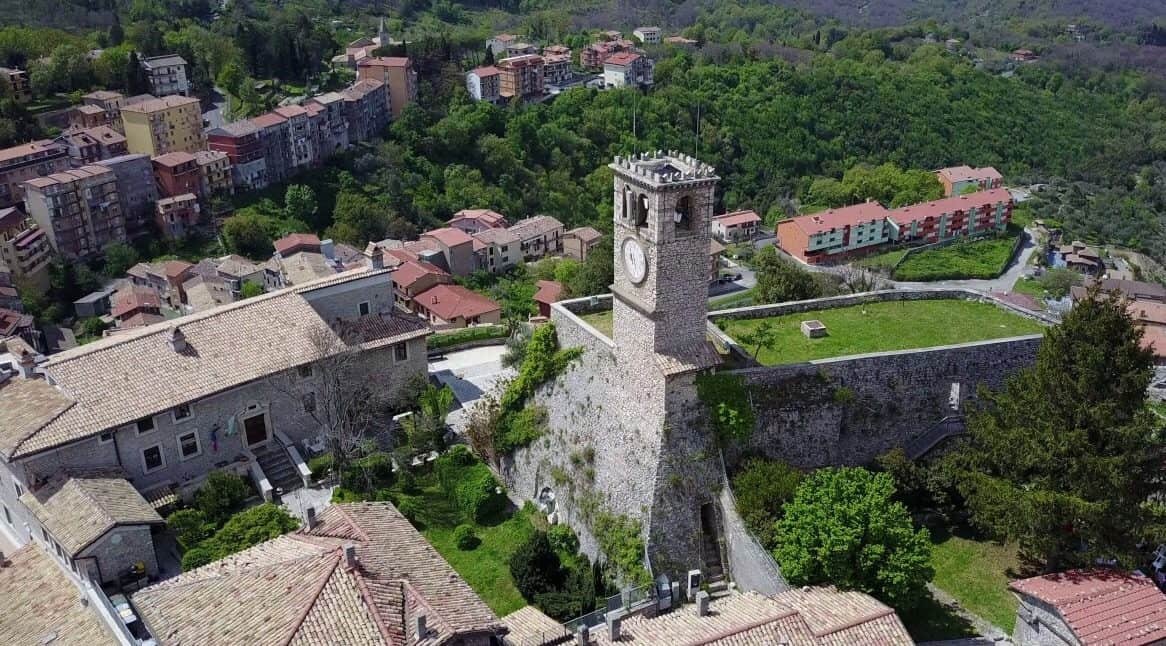
The Reggia dei Volsci Museum in Carpineto Romano occupies Palazzo Aldobrandini, on via della Torre Antica, at the highest point of the historic center of Carpineto Romano (RM), postal code 00032. In municipal address directories the venue appears as via della Torre Antica 1. The hours given by the Lepini museum circuit are Tuesday to Sunday, 10.00-12.00 and 16.30-19.30, closed on Monday. For groups, guided visits are arranged outside regular hours by prior agreement. The admission fee is not published on a stable basis and must be asked of the museum directly. The contacts are 06 9717434 and 06 97180028, fax 06 9710035, email musei.carpineto@gmail.com and museolareggia@carpinetoromano.it. The museum is municipal and belongs to the Lazio Regional Museum Organization. A phone call before leaving is advisable: it is a town museum, with reduced staffing, and in the low season the hours can vary.
Carpineto Romano is at an elevation of 550 meters, set on two hills on the slopes of Monte Capreo, about 60 kilometers southeast of Rome. By car you arrive on the Carpinetana, regional road 609, which climbs the Lepini from the Colleferro plain. By public transport you take the train to Colleferro station, on the Rome-Cassino line, and from there the Cotral bus that climbs to the Carpineto San Sebastiano terminus, or the direct Cotral from the Roma Anagnina terminal, the terminus of metro line A. The historic center is pedestrian and steep: you park below and walk up. If you want to get the context before leaving, the page on the Lepini Mountains and the one on Carpineto Romano tell the story of the mountain around the museum.

Why the Reggia dei Volsci Museum in Carpineto Romano is called that
The name is a literary borrowing, and this explains the small vertigo that catches the visitor who looks for the Volsci among the display cases and finds shepherds, looms, bells and passports instead. The title comes from an erudite 18th-century work by Antonio Ricchi, of Cori, titled La Reggia de' Volsci, ove si tratta dell'origine delle città terre e castella del Regno de' Volsci nel Lazio, reprinted in facsimile in 2006 by Arnaldo Forni in 410 pages. Ricchi belonged to that generation of local antiquarians who, with genealogy in one hand and Livy in the other, sought for every Lepini village a very ancient and possibly royal foundation.
The museum took over that title with full awareness. It does not promise a Volscian archaeological collection: it promises the reclaiming of a ducal space, the palace of the Aldobrandini lords, given back to the community that for three centuries looked at it from below. It is an operation of cultured museology, and in our view one of the most intelligent among those attempted in the civic museums of southern Lazio. Whoever arrives convinced of finding pre-Roman grave goods will be disappointed. Whoever arrives to understand how the identity of a mountain town is built will leave enriched. The volume that accompanied the opening, La Reggia dei Volsci. Museo della città di Carpineto Romano a Palazzo Aldobrandini, edited by Franca Fedeli Bernardini for Arbor Sapientiae in 2006, remains the main bibliographic reference.
Palazzo Aldobrandini, home of the Reggia dei Volsci Museum in Carpineto Romano
The palace is one of the major architectural landmarks of the village and rises in the highest part of the historic center, on a sheer rock. It was not born as a pleasure residence: it was born as a fortification, and the medieval signs are still readable in the bell tower, which the local sources date to the 13th century, and in the defensive buttresses that follow the rock instead of fighting it. The Aldobrandini, who arrived at the end of the 16th century, did not raze the castle to the ground: they dressed it up as a palace. It is a way of proceeding typical of the papal aristocracy of the early 17th century, which preferred disguise to demolition because disguise cost less and said the same thing.
The Baroque garden and the open-air theater of the Reggia dei Volsci Museum
Around the building runs a Baroque garden with an open-air theater, which in summer becomes the true atrium of the museum. The relationship between the building and the empty space is the most successful part of the complex: the rock drops away, the garden widens, the panorama over the Lepini opens suddenly. Whoever visits in July or August often finds the garden used for concerts and events of the municipal summer program, and the combination of the lit palace and the mountain behind it is worth the trip as much as the display cases.
Three floors and 600 square meters
The Reggia dei Volsci extends over three floors for more than 600 square meters. On the lower floor a dining area shares the space with some exhibition rooms. The piano nobile hosts the main route and the centralized library of the 25 Lepini communities, which gathers about 3,500 historical and literary works on the Lepini Mountains. It is an unusual density of functions for a museum of this scale, and partly explains the hours split into two slots: the staff is the same that opens and closes everything.
The Aldobrandini and the duchy of Carpineto
At the end of the 16th century the fief was bought by Cardinal Pietro Aldobrandini, born in 1571 and died in Rome in 1621, nephew of Pope Clement VIII and created cardinal in the consistory of September 17, 1593. He was camerlengo of the Holy Roman Church from 1599 and metropolitan archbishop of Ravenna from 1604: one of the most powerful men in Rome in the early 17th century, a collector, protector of poets and musicians, among them Giovan Battista Marino and Girolamo Frescobaldi. Before the Aldobrandini, Carpineto had passed through the hands of the Caetani, the family of the Anagni-born pope Boniface VIII, who acquired the fief in 1299. The first written traces of the town date to 1077.
Donna Olimpia Aldobrandini and the "bello stato"
The duchy that gives the museum its meaning was built in the 17th century. Donna Olimpia Aldobrandini, born in Rome on April 20, 1623 and died in Rome on December 18, 1681, daughter of Giovan Giorgio Aldobrandini and Ippolita Ludovisi, third princess of Meldola and Sarsina and second princess of Rossano, made Carpineto and the nearby lands her "bello stato". The duchy included the Lepini communities of Gavignano, Montelanico, Gorga and Maenza. Olimpia married Paolo Borghese in 1638. Widowed in 1646, she remarried in 1647 to Camillo Pamphilj: her dowry brought to the Pamphilj family a collection of paintings that is the core of today's Galleria Doria Pamphilj. The dress that the museum displays as the guiding object of the Palio section is the reconstruction of her gown, and it is the most elegant way of telling the people of Carpineto that the lady whose paintings are admired in Rome was also their duchess.
The Statutes of 1556
Among the guiding objects of the route are the community statutes of 1556, and it's not a detail for scholars. That body of rules still governs today, at least in form, the lottery ritual of the Palio della Carriera. A 16th-century document surviving inside a contemporary festival is exactly the kind of continuity that local museums should show and almost never manage to show.
The room-by-room visit to the Reggia dei Volsci Museum in Carpineto Romano
The route is organized in nine sections, each built around a guiding object, accompanied by labels, giant photographs, hypertexts and audio guides. It is a museographic layout of the demo-ethno-anthropological school, very Italian and very 2000s: the single object works as a gateway to a wider discourse. It works well if you accept the rules of the game and give each section the time it asks for. With one hour you leave with an impression. With two and a half hours you leave having understood a community.
Section I: space
The guiding object is the model of Carpineto, flanked by Alinari photographs. It tells the morphology of the territory, the distinction between urban space and rural space and, above all, the conflict between neighborhoods and between neighboring communities. This last point is the most honest of the whole section: in the Lepini the rivalry between districts and between bordering towns is not folklore, it is administrative history made of civic uses, grazing boundaries and firewood rights. The Alinari photographs serve to measure the distance between the town of today and that of a century ago, and the measure is merciless. Look at the relationship between built-up area and woods: everything has changed.
Section II: mythical time
The time of festival and the time of famine. The guiding object is the bell of the Valvisciolo abbey, which the museum attributes to the 13th century, together with public clocks. Valvisciolo is the abbey between Sermoneta, Ninfa and Latina Scalo, occupied and restored by the Templars in the 13th century and passed to the Cistercians after the dissolution of the order in the 14th century: the presence in Carpineto of materials from that complex is not accidental, so much so that the church of Sant'Agostino also keeps a medieval lunette from Santo Stefano di Valvisciolo. The section articulates the myths of urban foundation, the time marked between life and death, the games of childhood and the calendar of the agricultural year. A bell and a municipal clock face are enough to tell how a community passed from the time of the bell tower to the time of the work schedule. It is the chapter that visitors cross most quickly and the one that would deserve the most attention. Whoever has already seen the Museum of the City and Territory of Cori, built with a similar logic, will go deeper into the theme.
Section III: trades and the territorial habitat
Guiding object: the tools of agriculture. It reviews the products of the woods, agricultural production and agro-pastoral activities at a reconstructed sheepfold. Carpineto has 86 square kilometers of municipal territory, a large part of which is woods and high pastures, and the section makes it evident: wealth did not come from arable land, it came from the mountain. Beech, charcoal, firewood, transhumance. Whoever wants a comparison with the plain at the foot of the mountains will find it at the Pontine Land Museum, where the story told is the opposite one, of water and land reclamation.
Section IV: economy and society
Guiding objects: the tools of craftsmanship. Here you go inside the walls and look at urban trades and craft workshops, that intra moenia economy which in the towns of the Lepini has always been the urban counterpart of agro-pastoral work. Blacksmiths, shoemakers, carpenters, tailors: a fabric that in Carpineto survived until the 1960s and then dissolved in two decades. The sequence between section III and section IV is the conceptual backbone of the museum, and the layout respects it.
Section V: the Renaissance and the "bello stato degli Aldobrandini"
The declared guiding objects are the community statutes of 1556 and the San Francesco in meditazione attributed to Caravaggio, formerly in the Franciscan complex of Carpineto. The section reconstructs the Baroque century through images and frescoes. On the painting a clarification is needed, because it is the question visitors ask most often and the answer is not the one they expect: the original painting is not in Carpineto. I talk about it in the chapter devoted to it further on. What the section tells very well is the rest: how a Roman cardinal family turns a mountain castle into the capital of a small state, with statutes, magistracies, festivals and a miniature court.
Section VI: the Palio
Guiding object: the dress of Donna Olimpia Aldobrandini. The section is devoted to the glorification of women's craftsmanship through the reconstruction of the Aldobrandini Baroque costumes and to the historical reenactment of the Palio della Carriera. These are remade dresses, not originals, and the museum does not hide it: the value lies in the tailoring work of the women of the town, who every year remake, repair and complete the wardrobe of the procession. It is the section where the museum stops being a warehouse and becomes the workshop of a living community. Put plainly: it is the part of the route that visitors remember best, and there is a reason for it.
Section VII: religiosity and confraternities
Guiding objects: chasubles and confraternity sack robes. It documents aspects of institutional religiosity with objects and sacred vessels belonging to the churches and confraternities of Carpineto. The sack robes, the white or colored garments of the brothers, are the most immediate element: whoever has seen them worn by someone during a Holy Week procession understands at once that they are not costumes, they are uniforms of belonging. Many pieces come from donations of churches, convents and municipal archives, as well as of private individuals.
Section VIII: society and magisterium
Guiding object: the garment of Leo XIII. The section tells the social and urban transformation of Carpineto under the pontificate of its most illustrious fellow citizen. It is the moment when a mountain town discovers it has a direct channel to the Vatican, and you can read it in the public works, in the rebuilt churches, in the statues. The church of San Leone Magno, neoclassical with three naves, was built in 1882 on a design by Francesco Fontana, four years after the election: the chronology speaks for itself.
Section IX: emigration
Guiding object: the giant photographs of the emigrants. Photos, images and objects belonging to the emigrants of Carpineto around the world. In a short space are concentrated the painful experiences, the hopes and the disappointments of a human drama that affected entire generations. The technological devices of the layout are remarkable and are the main reason this museum is worth the trip: an artificial lowering of the perceived temperature introduces the reading of the panels devoted to the men and women who left, with their passports and the rare objects of daily life that belonged to them. An archival research gathers in a memory book the dispersion of the people of Carpineto around the world.
The secret room of the Reggia dei Volsci Museum in Carpineto Romano
At the end of the emigration section there is a narrow little door, with the giant photograph of a departing ship. You push it, and the narrowness of the door is deliberate: it reproduces the tightly controlled access to American freedom and work, the bottleneck of Ellis Island. Beyond the door appears a reconstructed New York alley, with the dark terracotta of the buildings, the shops of Carpineto people, the fire escapes on the facades and the Statue of Liberty. It is an effective synthesis of the history and work of the people of Carpineto in the world. It is not rare for adults to stop in there without saying anything for several minutes. No panel achieves that result: the narrow door does.
The Caravaggio of Carpineto Romano: where it really is
This is the story that by itself is worth the visit to the town. In the church of San Pietro in Carpineto Romano, a complex of the Reformed Franciscans built between 1610 and 1629, there was a San Francesco in meditazione, oil on canvas, 123 by 92.5 centimeters. For centuries nobody looked at it closely. In the 1960s the critics noticed it: studies linked it to Cardinal Pietro Aldobrandini, who would have commissioned it around 1606, after the Tomassoni murder and Caravaggio's flight from Rome, to donate it in 1609 to the church of Carpineto.
The delicate point is that two versions of this painting exist: the one in Carpineto and the one kept in the Cappuccini church on via Veneto in Rome, now visible in the Museo dei Frati Cappuccini. Diagnostic investigations have tipped the needle toward Carpineto: in the Carpineto canvas the X-rays reveal evident pentimenti, that is, second thoughts of the author during the work, while in the Cappuccini version there are none. A canvas with pentimenti is normally the original. A canvas without pentimenti is normally a copy, even if executed under the supervision of the artist and with interventions by the master. In June and July 2017 the Galleria Nazionale d'Arte Antica set the two versions side by side in the exhibition devoted to Caravaggio in the holdings of the Fondo Edifici di Culto, together with the two Flagellations.
Today the Carpineto painting remains the property of the Fondo Edifici di Culto and is on deposit at the Galleria Nazionale d'Arte Antica in Palazzo Barberini, in Rome. It returned to Carpineto on loan on September 4, 2010, when an exhibition curated by Rossella Vodret was inaugurated at Palazzo Aldobrandini within the celebrations for the fourth centenary of the painter's death. Whoever goes up to Carpineto hoping to find the original in front of them had better know beforehand how things stand. The museum tells the painting, explains its story, keeps it at the center of the section devoted to the Baroque century: the work, however, is seen in Rome.
The library of the 25 towns inside the Reggia dei Volsci Museum in Carpineto Romano
On the piano nobile, next to the exhibition rooms, is the centralized library of the 25 Lepini communities, with about 3,500 historical and literary works devoted to the Lepini Mountains. For those who study the territory it is a serious and little-frequented resource: gathering in one place the bibliography scattered among 25 towns in three provinces is a service that no other local institution offers. Whoever wants to consult it must make arrangements in advance, because the room has no hours independent from those of the museum.
The collection covers the three provinces over which the Lepini stretch, Rome, Latina and Frosinone, and this is its reason for being: the chain is one, the administrative boundaries cut it in three, and the local bibliography ends up reflecting that cut instead of the massif. Municipal statutes, parish monographs, conference proceedings, 19th-century erudite memoirs, studies of agrarian history: material that in Roman libraries arrives in bits and pieces and that here is gathered in full. Whoever works on civic uses, transhumance, post-Unification brigandage or Lepini religious architecture will find in one morning what elsewhere costs weeks of hunting. The placement on the piano nobile, inside the exhibition route, is a precise choice: the museum declares that exhibition and study are the same activity, carried out in two different ways.
The two sections being set up: brigandage and music
The museum project includes two further sections, announced some time ago and not yet open: one devoted to brigandage, the other to music in Carpineto, with instruments and musical manuscripts. They are the two themes that in the Lepini have the most material available and the least serious museum treatment. Post-Unification brigandage in these mountains was a mass phenomenon, not a colorful anecdote, and would deserve a layout with no discounts. The band and organ tradition of the Lepini towns is a heritage that is being lost at the speed with which the last people who knew how to play are dying. Whoever visits today will not find them: it's worth asking at the desk how far along they are.
On brigandage one more consideration is needed, because the theme is delicate and in the Lepini lends itself to two opposite readings. On one side the romantic vulgate of the gentleman bandit, which works very well at village festivals and explains nothing. On the other the documentary reality of a civil war fought in the woods between 1861 and 1870, with military repression, informing, broken families and towns that paid twice, first to the brigands and then to the State. A museum that had the courage to tell emigration without consolation has the tools to tell this too without discounts. On music the material is different and just as rich: manuscripts, instruments, the memory of the bands and organs of the churches of Carpineto, a heritage that is preserved only if someone catalogs it now.
Simulacrum and the Relics of Leo XIII, the two linked exhibitions
Two permanent exhibitions are linked to the museum, which complete the route and are a few steps away. Simulacrum, in the church of San Giacomo, offers a cross-section of the sacred art of the area. The Cimeli di Leone XIII, in the church of San Nicola, offer an itinerary through the memories of the pontiff from Carpineto. Both normally follow the museum's opening hours, but they have no staff of their own: the practice is to ask the Reggia dei Volsci, which coordinates access. Allow at least 40 more minutes to see both without hurrying.
The logic of this three-pole system deserves a word, because it is smarter than it seems. The sacred objects displayed in the seventh section of the museum, the chasubles and confraternity sack robes, have been detached from their liturgical context and brought into display cases. Simulacrum, staying inside a church, gives back the other half of the discourse, that is, sacred art in the place for which it was conceived. The Cimeli di Leone XIII, for their part, complete the eighth section: at the museum the garment and the social reading of the pontificate, at San Nicola the personal memories of the man. The visitor who stops at the Reggia dei Volsci alone takes home half the project. It is a communication flaw, not a layout flaw: no sign along the route explains it clearly, and it's best to ask the staff.
Leo XIII, the man from Carpineto who became pope
Vincenzo Gioacchino Raffaele Luigi Pecci was born in Carpineto Romano on March 2, 1810, in Palazzo Pecci, to Domenico Lodovico Pecci, who lived between 1767 and 1836, and Anna Francesca Prosperi Buzi, who died in 1824. He was one of seven siblings. His brother Giuseppe would in turn be created cardinal. He studied in Viterbo, then at the Collegio Romano between 1824 and 1832, earned a degree in canon and civil law at Sapienza in 1835 and attended the Accademia dei Nobili Ecclesiastici between 1832 and 1837. He was elected pope on February 20, 1878 and crowned on March 3 of the same year. He died in Rome on July 20, 1903, after 25 years, five months and five days of pontificate, one of the longest in the history of the Church.
The bond with the town never broke. In 1901 he had a commemorative cross placed on Monte Capreo, the mountain that overlooks Carpineto. And his fellow townspeople sent him in Rome the goat's milk of the Lepini pastures, a domestic detail that says more than many biographies. The eighth section of the museum, the one with his garment, is the museum translation of this story: a town that looks at itself in the mirror through its most famous man. The encyclical of 1891, the Rerum novarum, is the text that made Leo XIII the pontiff of Catholic social doctrine, and it is no accident that it comes from a man raised in a community of shepherds and farmers.
The Palio della Carriera as told at the Reggia dei Volsci Museum in Carpineto Romano
Section six prepares for the festival, and the festival explains section six. The Palio della Carriera is the historical reenactment of Carpineto: the lottery ritual is codified in the Statutes of 1556, the historical procession crosses the streets of the town at night and the horse race between the districts is run at the sports field. The event is spread between the second half of August and the first days of September, with the Aldobrandini hostarie open in the districts for about 10 evenings: in the 2023 edition, to give an order of magnitude, the calendar ran from August 18 to September 3, with the procession on August 27 at 21:00 and the race on September 3 at 16:00. The dates change from year to year and should be checked on the municipal calendar before planning the trip.
The advice is clear: if you can choose, visit the museum during the days of the Palio. The dresses that in the display cases look like tailoring objects go back, out in the street, to being what they are, that is, signs of belonging to a district. The museum, in those days, stops being a container and becomes the caption of the town.
A curiosity about the Reggia dei Volsci Museum in Carpineto Romano
The curiosity lies in one word: reggia. A civic museum of a town of just over 4,000 inhabitants is named after a royal palace that never existed, and does so by citing an 18th-century book that was talking about something else. Antonio Ricchi was from Cori and his Reggia de' Volsci dealt with the origin of the cities, lands and castles of the kingdom of the Volsci in Lazio: a work of regional antiquarianism, not a monograph on Carpineto. By adopting that title, the museum made a double gesture. On one side it enrolled itself in a Lepini erudite tradition that starts in the 18th century and arrives at contemporary demo-ethno-anthropological research. On the other it claimed for a community of shepherds and farmers the dignity of a court.
There is a second, subtler fold. The palace that houses the museum really was the seat of a lordship: the Aldobrandini held their "bello stato" there from the end of the 16th century to the beginning of the 19th. The reggia of the title, therefore, is not that of the Volsci but that of the dukes, and the museum takes it back in the name of the subjects. Whoever knows the history of Italian civic museums knows how rarely this operation succeeds without slipping into rhetoric. Here it succeeds, and it succeeds because the nine sections speak of work, of woods, of looms and of passports, not of coats of arms. The title is aristocratic, the content is popular: that tension is the true subject of the museum.
Something nobody tells you about the Reggia dei Volsci Museum in Carpineto Romano
The Caravaggio isn't there. Short guides, tourist portals and summary listings list among the guiding objects of the fifth section the San Francesco in meditazione, and the visitor deduces that by going up to Carpineto they will find it in front of them. It's not so: the canvas is the property of the Fondo Edifici di Culto and is on deposit at the Galleria Nazionale d'Arte Antica in Palazzo Barberini, in Rome, where the public meets it in the collection route. It returned to Carpineto for a temporary exhibition inaugurated on September 4, 2010 at Palazzo Aldobrandini, curated by Rossella Vodret in the year of the fourth centenary of the painter's death, and in 2017 it was compared with its replica from the Cappuccini in an exhibition at Palazzo Barberini.
This is not a criticism of the museum, which tells the painting correctly and makes it the pivot of its Baroque chapter. It is practical information that is worth a badly planned trip. Whoever wants to see the painting and visit the museum must plan for two separate stops, one in Rome and one in the Lepini, and the link between the two is precisely the story of Cardinal Pietro Aldobrandini. The second thing almost nobody says concerns the lower floor: some exhibition rooms share the space with a dining area, and circulation can be confusing if you arrive when the venue is in service. Ask at the entrance which floor is best to start from that day: the answer changes depending on the hour.
The advice I give you for visiting the Reggia dei Volsci Museum in Carpineto Romano
Call ahead. I write it first because it is the advice that saves the day: 06 9717434 or 06 97180028. The reference hours are Tuesday to Sunday, 10.00-12.00 and 16.30-19.30, closed on Monday, but a mountain municipal museum with reduced staff lives on seasonal variations, and the two-hour morning slot is narrow. If you are a group, ask for the special opening: the museum grants it by prior agreement, and with a guide from the house the route changes in quality.
Second piece of advice: don't make the museum the only reason for the trip. Carpineto is an hour and a half from Rome by train and bus, or a little more by car along the Carpinetana. The museum is visited well in two hours. Build a whole day. In the morning the museum, lunch in town, in the afternoon the church of San Pietro with the cloister by Francesco Serbucci of 1685 and the 28 lunettes with the Stories of Saint Francis, the collegiate church of the Sacred Heart built between 1750 and 1772 on a design by Domenico Schiera, and the fountain by Michele Tripisciano of 1890.
Third piece of advice, the most important for those bringing people along: start from the ninth section, the one on emigration, and then go back. I know it contradicts the planned route, but the secret room with the New York alley is the emotional punch of the museum, and using it as an opening instead of a closing makes you read everything else with different eyes. The display cases of farm tools, afterward, are no longer display cases of farm tools: they are the inventory of what those people left behind.
Another well-known fact, yet rarely mentioned
That Carpineto Romano is the homeland of Leo XIII everyone knows, and it is written everywhere. What almost nobody says is how much that pontificate materially rebuilt the town, and how much of that rebuilding is still visible today walking from the museum downhill. The church of San Leone Magno was built in 1882, four years after the election, on a design by Francesco Fontana, in neoclassical forms with a basilica plan and three naves. In the church of San Pietro a statue of Leo XIII by Giuseppe Luchetti was placed in 1891, and the pendentives of the dome were decorated in 1884 by Marco Adami and Virginio Monti. In the Carmelite convent of Sant'Anna, with the church of San Giovanni, Virginio Monti frescoed the apse in 1889 and Tomasz Oskar Sosnowski sculpted a marble Pietà.
Within 20 years a Lepini village equipped itself with an artistic apparatus that no municipality of that scale could have afforded. The explanation is banal and has to be said: having a fellow townsman on the papal throne meant access to commissions, to artists of the Roman circle, to funds. The museum tells it in the eighth section, the one titled "Società e magistero", but the attentive reader understands that the true room of that section is the town outside. I add a detail that closes the circle: in 1901, two years before dying, Leo XIII had a commemorative cross placed on Monte Capreo, above Carpineto. He wanted to leave a sign visible from the whole valley. He succeeded.
The right photo to take at the Reggia dei Volsci Museum in Carpineto Romano
The photograph that works is not the one of the display cases. It is the one that holds the palace and the rock together. Go out the entrance, walk down about 20 meters along the street that goes around the base of the building and look for the point where the defensive buttresses graft onto the sheer spur: from there, with a moderate wide-angle, you frame in a single shot the stratigraphy of the whole complex, the medieval fortification below, the 13th-century bell tower and the 17th-century residential cladding of the Aldobrandini. It is the photograph that explains the museum before you even enter it.
The good moment is late afternoon, when the sun hits from the west and the rock takes on a warm tone while the masonry is still readable. At noon the contrast flattens everything and the limestone of the Lepini becomes a white blotch with no detail. If you have only an hour, go in summer around 19:00, which also coincides with the second opening slot.
The second shot to bring home is from the Baroque garden toward the mountains: the open-air theater in the foreground and the Lepini chain in the background, with Monte Capreo on your right. Inside, if the staff allows it, the secret room of the ninth section gives a unique frame, the narrow little door with the giant photograph of the ship and, beyond, the dark terracotta of the New York alley: always ask first, because the rules on filming change from museum to museum and in many demo-ethno-anthropological layouts flash is forbidden to preserve the textiles.
Some important events that happened here in history
The year 1077 gives the first written traces of the existence of Carpineto. In 1299 the fief passed to the Caetani, the family of the Anagni-born pope Boniface VIII, and from there entered the game of the great papal houses. In 1556 the community gave itself the statutes that still today regulate, in form, the lottery of the Palio della Carriera. At the end of the 16th century Cardinal Pietro Aldobrandini, nephew of Clement VIII and camerlengo of the Holy Roman Church since 1599, bought the fief: the medieval castle began to become a palace.
Between 1610 and 1629 the complex of San Pietro of the Reformed Franciscans was built, meant to house the painting that the cardinal had commissioned around 1606 and destined for the church of Carpineto in 1609. In the 17th century Donna Olimpia Aldobrandini built the "bello stato" by merging Gavignano, Montelanico, Gorga and Maenza. On March 2, 1810 Vincenzo Gioacchino Pecci was born in Palazzo Pecci. On February 20, 1878 he was elected pope with the name of Leo XIII, and the town changed face: 1882 the church of San Leone Magno, 1884 the pendentives of the dome of San Pietro, 1889 the apse of San Giovanni, 1890 the Tripisciano fountain, 1891 the statue of the pontiff, 1901 the cross on Monte Capreo. On July 20, 1903 Leo XIII died in Rome.
In the 1960s the critics recognized in the San Francesco in meditazione of the church of San Pietro a Caravaggesque original, and the news projected Carpineto into the international bibliography. In 2006 the museum opened at Palazzo Aldobrandini, accompanied by the volume edited by Franca Fedeli Bernardini. On September 4, 2010 the painting returned for an exhibition in the palace itself, curated by Rossella Vodret. Between June 22 and July 16, 2017 the Galleria Nazionale d'Arte Antica compared at Palazzo Barberini the two versions of the San Francesco and the two Flagellations from the holdings of the Fondo Edifici di Culto.
Who has passed through the Reggia dei Volsci Museum in Carpineto Romano
Before hosting the museum, the palace hosted the family that governed Carpineto. Pietro Aldobrandini, cardinal since 1593, camerlengo, archbishop of Ravenna, collector and protector of Giovan Battista Marino and Girolamo Frescobaldi, is the first name on the list: he bought the fief, redesigned the castle, commissioned from Caravaggio the painting that still today carries the name of Carpineto in the catalogs. Donna Olimpia Aldobrandini, who made Carpineto the center of her "bello stato", is the second: her reconstructed dress is the guiding object of the Palio section, and her inheritance of paintings forms the core of the Galleria Doria Pamphilj in Rome.
The third name is that of Vincenzo Gioacchino Pecci, Pope Leo XIII, born a few dozen meters from here, in Palazzo Pecci, on March 2, 1810. The museum keeps a garment of his and devotes an entire section to him. The church of San Nicola houses his relics. Among the moderns, the museum carries the signature of Franca Fedeli Bernardini, the museologist who edited its opening volume in 2006 and who led the season of the demo-ethno-anthropological museums of Lazio.
In September 2010 Rossella Vodret, then head of the Roman superintendency, came up to Palazzo Aldobrandini to inaugurate here the exhibition on the San Francesco in meditazione: an afternoon when the ducal palace hosted, for once and in its own home, the painting that had been taken from it. I add the nameless visitors: the emigrants from Carpineto and their descendants, who from the United States and South America return to the town and come here to look for the family surname in the memory book of the ninth section. They are the visitors this museum has always been waiting for.
What to see around the Reggia dei Volsci Museum in Carpineto Romano
The historic center of Carpineto can be walked in an afternoon. The church of Santa Maria del Popolo, with phases from the 12th century to 1483 and works financed by Pope Sixtus IV, keeps in the chapel of San Rocco a stone altar frontal from 1485 and, in the apse, a Coronation of the Virgin from the late 15th century. Some frescoes are attributed to Melozzo da Forlì and Antoniazzo Romano, and prudence requires treating them as attributions, not certainties. The church of Sant'Agostino, of 13th-century layout, holds a marble relief of Saint Anthony Abbot from the 15th century, an altarpiece by Tito Troja from 1888, the coat of arms of Cardinal Annibaldo de Ceccano and the medieval lunette from Santo Stefano di Valvisciolo. In the church of San Pietro there is a canvas with the Stigmata of Saint Francis attributed to Simon Vouet and datable to around 1615.
Outside the town the real mountain begins. Carpineto borders Bassiano, Gorga, Maenza, Montelanico, Norma, Roccagorga, Sezze and Supino, and the highest peak of the Lepini, Semprevisa, exceeds 1,500 meters. In half a day by car you reach Segni with its polygonal walls, Cori with the Temple of Hercules, Norma overlooking the Pontine plain, Sermoneta with the Caetani castle and the Garden of Ninfa. Heading south you reach Sezze and Priverno, where the museums of Priverno tell the story of the Roman city of Privernum. Toward the interior, Anagni closes the circle of the Caetani and Boniface VIII. Whoever wants to measure how much this museum owes to Italian demo-ethno-anthropological museography can compare it with the Museo delle Arti e Tradizioni Popolari Lamberto Loria in EUR.
The Reggia dei Volsci Museum in Carpineto Romano with children
It works, and it works better than many prestigious archaeological museums. The reason is simple: the objects are recognizable. A plow, a loom, a bell, a work shoe, a passport with the photograph glued on. Children between six and 12 react well to section three and section four, where the tools have a visible function, and they react very well to the secret room of section nine, which for them is a magic door before it is Ellis Island.
The operational advice is to keep the visit under an hour and a quarter and finish it in the garden, where they can run. The two time slots, morning and afternoon, help fit the visit between lunch and the trip back. With the youngest, watch out for the stairs: the palace is on three levels with the connections of a historic building, not of a museum built from scratch, and bulky strollers are a problem.
Accessibility and services at the Reggia dei Volsci Museum in Carpineto Romano
The museum occupies a historic building on three floors, at the top of a steep historic center, and this already defines the picture. Those with mobility problems should find out beforehand, by calling the museum's numbers, which levels can be reached and by what routes: the situation of the historic Lepini buildings varies a lot and must be checked case by case. Parking should be planned too, because the final stretch of the climb is narrow.
On services, the lower floor hosts a dining area together with some exhibition rooms, and it is the most convenient solution for a break. Cloakroom and luggage storage are not guaranteed: arrive light. The support apparatus for the visit includes labels, giant photographs, hypertexts and audio guides, provided for in the original museographic project. The actual availability of the electronic devices should be asked at the entrance.
When to go to the Reggia dei Volsci Museum in Carpineto Romano
From May to October, without doubt. At 550 meters of elevation the Lepini summer is breathable even when Rome is not, and the second opening slot, from 16.30 to 19.30, coincides with the best hours for walking around the town. The last 10 days of August and the first days of September are the period of the Palio della Carriera, and whoever loves real historical reenactments finds here one of the few in Lazio in which the ritual rests on a 16th-century document.
In winter the visit remains possible but requires more caution: the two time slots are narrow, the days short, and the Carpinetana in case of snow can give problems in the upper stretch. The period I advise against is the first week of January, when many municipal institutions in the Lepini reduce activity. On Monday, in every season, the museum is closed.
Quick questions about the Reggia dei Volsci Museum in Carpineto Romano
Where is the Reggia dei Volsci Museum in Carpineto Romano
On via della Torre Antica, inside Palazzo Aldobrandini, in the highest part of the historic center of Carpineto Romano (RM), postal code 00032. In municipal address directories the street number 1 appears.
What are the hours of the Reggia dei Volsci Museum
The hours given by the museum circuit of the Lepini Mountains are Tuesday to Sunday, 10.00-12.00 and 16.30-19.30. Monday is a closing day. Since it is a municipal museum with reduced staff, it's best to confirm by phone before leaving.
How much is a ticket to the Reggia dei Volsci Museum in Carpineto Romano
The fee does not appear to be published on a stable basis on the institutional channels. It should be asked of the museum directly at the numbers 06 9717434 and 06 97180028 or at the address musei.carpineto@gmail.com.
Do you need to book to visit the Reggia dei Volsci Museum
For the individual visitor no reservation is required during opening hours. For groups the museum organizes guided visits even outside regular hours, by prior agreement: in that case the request should be sent in advance.
How do you get to Carpineto Romano from Rome
By car along regional road 609 Carpinetana, which climbs from the Colleferro plain. By public transport, train to Colleferro station on the Rome-Cassino line and Cotral bus to the Carpineto San Sebastiano terminus, or the direct Cotral bus from the Roma Anagnina terminal, the terminus of metro line A.
How long does the visit to the Reggia dei Volsci Museum in Carpineto Romano take
With nine sections and more than 600 square meters spread over three floors, one hour gives an impression, two and a half hours give a complete visit. With children it's best to stay around an hour and a quarter.
Is the Caravaggio on display at the Reggia dei Volsci Museum
No. The San Francesco in meditazione from the church of San Pietro in Carpineto is the property of the Fondo Edifici di Culto and is on deposit at the Galleria Nazionale d'Arte Antica in Palazzo Barberini, in Rome. The Carpineto museum tells its story in the fifth section.
How many sections does the Reggia dei Volsci Museum in Carpineto Romano have
Nine: space, mythical time, trades and the territorial habitat, economy and society, the Renaissance and the "bello stato degli Aldobrandini", the Palio, religiosity and confraternities, society and magisterium, emigration. Two further sections, on brigandage and on music in Carpineto, are being set up.
Why is the museum called Reggia dei Volsci
The title takes up an 18th-century erudite work by Antonio Ricchi of Cori, La Reggia de' Volsci, and alludes to the community's reclaiming of the ducal space of the Aldobrandini. It does not indicate a collection of Volscian archaeology.
What is the secret room of the Reggia dei Volsci Museum
It is the concluding room of the emigration section: you enter by pushing a narrow little door with the giant photograph of a departing ship and step into a reconstructed New York alley, with dark terracotta, the shops of Carpineto people, fire escapes and the Statue of Liberty. The bottleneck recalls the control at the entrance of Ellis Island.
Is the Reggia dei Volsci Museum in Carpineto Romano suitable for children
Yes. The objects are recognizable and narrative, and the secret room of the ninth section works as a small theater. Watch out for the stairs of the historic building and the bulk of strollers.
Can you take photographs at the Reggia dei Volsci Museum
The rules should be asked at the entrance. In museums with textiles and historic garments, flash is normally forbidden for conservation reasons.
Is the museum accessible to people with motor disabilities
The museum occupies a historic palace on three levels at the top of a steep historic center. The access conditions to the individual floors should be checked by phone before the visit.
Is there a restaurant at the Reggia dei Volsci Museum in Carpineto Romano
The lower floor of the palace hosts a dining area together with some exhibition rooms: it is the most convenient break during the visit.
What are Simulacrum and the Cimeli di Leone XIII
They are the two permanent exhibitions linked to the museum: Simulacrum, in the church of San Giacomo, devoted to the sacred art of the area, and the Cimeli di Leone XIII, in the church of San Nicola, with an itinerary through the memories of the pontiff. Access is arranged with the museum.
Can you consult the library of the Lepini Mountains
The centralized library of the 25 Lepini communities, with about 3,500 historical and literary works, is on the piano nobile. Consultation must be arranged, because the room has no hours independent from those of the museum.
Who runs the Reggia dei Volsci Museum in Carpineto Romano
It is a municipal museum, part of the Lazio Regional Museum Organization and of the network of museum systems of the Lepini Mountains.
When does the Palio della Carriera take place in Carpineto Romano
Between the second half of August and the first days of September, with the historical procession at night and the horse race at the sports field. The dates vary every year and should be checked on the municipal calendar.
What is the relationship between the museum and Pope Leo XIII
Vincenzo Gioacchino Pecci was born in Carpineto Romano on March 2, 1810 and was elected pope on February 20, 1878. The eighth section of the museum, whose guiding object is a garment of his, tells the social and urban transformation of the town during his pontificate.
Is the Reggia dei Volsci Museum in Carpineto Romano an archaeological museum
No. It is a museum of the city and the territory, with a demo-ethno-anthropological and historical-artistic layout, devoted to the agro-pastoral community of the central Lepini and to the story of the Aldobrandini duchy.
What is there to see in Carpineto Romano besides the museum
The church of San Pietro with the cloister by Francesco Serbucci of 1685, the collegiate church of the Sacred Heart built between 1750 and 1772, Santa Maria del Popolo with the altar frontal of 1485, Sant'Agostino of 13th-century layout, San Leone Magno of 1882 and the fountain by Michele Tripisciano of 1890.
How far is Carpineto Romano from Rome
About 60 kilometers to the southeast, in the Lepini Mountains, at 550 meters of elevation on the slopes of Monte Capreo.
Is the Reggia dei Volsci Museum open on Monday
No, Monday is the weekly closing day indicated by the Lepini museum circuit.
What is the bell displayed in the second section
It is the bell that the museum attributes to the Valvisciolo abbey and dates to the 13th century, and it works as the guiding object of the section devoted to time, together with the public clocks.
To close, a blunt verdict. The Reggia dei Volsci is one of the three or four territorial museums in the region that are truly worth the trip, and it is so for one reason only: it chose a point of view and held it all the way, from the model in the first room to the little door of the secret room. It does not try to be a picture gallery, it does not pretend to an archaeology it does not own, it does not hide behind the name of Caravaggio. It tells how people live, work and leave from a mountain. Go on a summer afternoon, unhurried, and step out before sunset to look at the palace from the rock.
Article written by the editorial team of TourLeaderPro, contact them for Private/Corporate/V.I.P. Tours and Experiences.
Planning a trip to Rome and the Lepini Mountains? The English guide to Carpineto Romano is on ItalyPlanner.com.