Pontine Land Museum
In short. Pontine Land Museum, Piazza del Quadrato 24, 04100 Latina, inside the building that once belonged to the Opera Nazionale Combattenti.
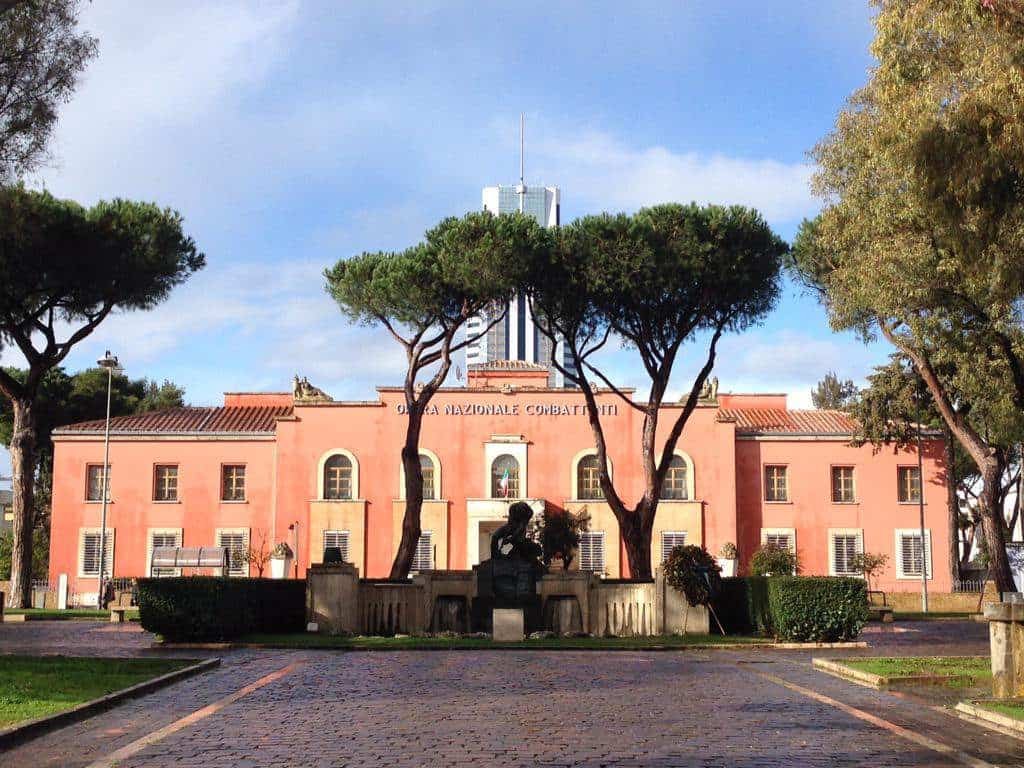
Pontine Land Museum, Piazza del Quadrato 24, 04100 Latina, inside the building that once belonged to the Opera Nazionale Combattenti. Free admission, no ticket office because none is needed. Open Tuesday to Saturday in the morning, roughly from 10:00 to 13:30, with some weekday afternoon openings. Closed Monday. On Sundays and holidays you enter by reservation, and for groups and guided visits too, reservation is the rule. Telephone 0773 400088 and 335 5286652, email museo.terrapontina@hotmail.it: it is wise to call before getting in the car, because the afternoon hours given by the institutional directories do not match each other. Latina has no subway: the railway station is at Latina Scalo, on the Rome-Formia-Naples line, and is about nine kilometers from the city center, the national record for distance between a provincial capital and its station. From there you continue by city bus or taxi. By car you arrive from Via Pontina and park on the square, which is wide and almost always free. A visit of a good hour if you walk, two and a half if you read.
If you are building an itinerary in southern Lazio, the page on tourist attractions helps you fit this stop together with the others on the Pontine plain.
What the Pontine Land Museum Is and Why It's Worth Going
The Pontine Land Museum is the first institution to have taken on, in a stable form, the task of preserving the historical memory of the Agro Pontino. It is not an art museum and it is not an archaeological museum: it is an ethnographic and historical museum, of the kind Italian museology calls demoethnoanthropological, and its subject is a story of the 1900s that within a radius of 20 kilometers changed the landscape, the population, the language spoken in the fields and even the health profile of a piece of Italy.
The collection was born from research begun in 1991 by the Associazione "Don Vincenzo Onorati" and grew almost entirely by donation: families who open a drawer, who pull out a faded photograph, a sharecropping contract, a hoe, a coal-fired iron. The exhibition open to the public dates from 1999, and in July 2024 the museum celebrated its 25th anniversary with a day titled "Il Museo comunica la sua storia". Today it has roughly a thousand pieces distributed in five sections, is accredited by the Lazio Region and recognized by the Ministry of Culture, and is part of the Agro Pontino Ecomuseum project as an interpretation center.
The verdict, without detours: it is one of the most honest museums in Lazio. Honest because it has nothing to sell, because it doesn't do stage sets, because it puts poor objects in the display case and lets them speak. Anyone who arrives expecting special effects is disappointed within 10 minutes. Anyone who arrives wanting to understand how a province is built from nothing leaves after two hours with a full head.
Where the Pontine Land Museum Is and How to Get There
The Exact Address of the Pontine Land Museum
Piazza del Quadrato 24, in Latina. The street number should be given with a little caution: the institutional directories waver between 24 and 22, and on the square the question is settled in three seconds by looking at the only historic building facing the open space. It is the building of the former Opera Nazionale Combattenti, recognizable by its compact bulk, its light plaster and the softened rationalist cut that was the signature of the architect Oriolo Frezzotti.
By Train and Public Transport to the Pontine Land Museum
The Latina station is at Latina Scalo, about nine kilometers north of the center, on the Tyrrhenian Rome-Formia-Naples line. It is an anomalous distance for a provincial capital, a consequence of the fact that the railway existed before the city: when Littoria was founded, in 1932, the track already ran there. City and suburban buses leave the station for Latina. There are taxis, but not many, and in the dead hours it's best to book them. Overall, reaching the Pontine Land Museum without a car takes patience and a margin of three quarters of an hour.
By Car and Where to Park
From Rome you take Via Pontina, State Road 148, and enter Latina from the northern side. Piazza del Quadrato is outside the curl of radiating streets of the center designed by Frezzotti, in a low-density area where parking is free and almost always available. Coming from the south, from Terracina or the Circeo, you drive the Pontina in the opposite direction and take a little over half an hour. It is one of those rare Lazio visits where the car is not a problem.
The Opera Nazionale Combattenti Building That Houses the Pontine Land Museum
The building dates from 1932 and is signed by Oriolo Frezzotti, the architect from the Marche to whom the Opera Nazionale Combattenti entrusted the urban layout of Littoria: a radial plan, streets branching from a center, a design that critics have read as a twentieth-century translation of ancient urban schemes. The O.N.C. building at the Quadrato is one of the first things built here, it precedes the city proper and explains it. It was the operational seat of the body that managed the land reclamation: offices, lodgings for the technicians, warehouses, the place where sharecropping contracts were signed.
The Fondo Ambiente Italiano has flagged the complex as a place of interest, stressing that the square and the building preserve an almost intact original harmony. It is not a convenient judgment: Piazza del Quadrato is one of the few points of the Agro where the postwar building layering has not erased the proportions of the 1930s. You stand before an artifact that is at once the container and the first exhibit of the Pontine Land Museum.
Why It's Called Quadrato
The place name has nothing Fascist about it and comes from much farther back: it indicates an agrarian measure of ancient tradition, a squared plot of land. On the maps from before the reclamation the locality appeared as Cancello di Quadrato, a reference point in the middle of the marshy nowhere. The fact that the main square of the first urban nucleus kept that peasant name, instead of receiving a celebratory one, is one of the small ironies of Pontine place names.
The Visit Route of the Pontine Land Museum, Section by Section
There are five sections and they should be walked in order, because the museum tells a story with a before and an after. Anyone who skips the first room doesn't understand the others.
The Pre-Reclamation Section of the Pontine Land Museum
You start with the Agro Pontino as it was: marshes, water-loving woods, buffalo, transhumant sheep farming, charcoal burners, and a seasonal population that came down to work and went back up before summer because in summer people died here. The objects are poor and eloquent: work tools, utensils of wood and wrought iron, land registry documents, maps showing a territory drawn by water and not by man. The section has the thankless task of dismantling two opposite commonplaces, that of the uninhabited swamp and that of the Arcadia destroyed by bulldozers: people lived here, in very harsh conditions, and the landscape had its own economy. Look carefully at the photographs in this room: they are few, often blurred, and they are the only image we have of a world that vanished in 15 years.
The Scientific Section: Malaria
This is the room nobody expects and everyone remembers. It holds the materials of the Provincial Anti-Malaria Committee of Littoria: registers, books, instruments, period drugs, packages of quinine, slides with specimens of Anopheles mosquitoes prepared for teaching and identification. Quinine here is not a picturesque detail. From 1900, with the law that facilitated the sale of quinine, the Italian state produced the drug at the Monopoly plant in Turin and distributed it at a controlled price through the salt and tobacco shops: the celebrated State Quinine, one of the first great public health interventions of unified Italy. Deaths from malaria in the country fell from about 16,000 in 1895 to 7,838 in 1905. The disease, however, held out in the Agro until after the Second World War, when the DDT campaign, carried out with American support and with Dakota aircraft spraying the plain, closed its cycle during the 1950s. If you are interested in this thread, in Rome the Battista Grassi Museum of Comparative Anatomy bears the name of the scientist who in 1898 identified the transmitting agent of human malaria and started antimalarial prophylaxis in the Agro Romano.
Agrarian Transformation and Land Allotment: the O.N.C. Section
Here the museum gets into the technical and administrative substance, and it is the part history buffs find densest. You see the plans of the farms, the models and photographs of the serial farmhouses, the contracts, the sharecropping booklets, the accounting of the Opera Nazionale Combattenti. The body had been born with decree no. 1970 of December 10, 1917 to assist the veterans of the Great War. In the 1930s it became the operational arm of the Pontine transformation. The documented numbers are impressive even 90 years later: over 450 kilometers of roads, more than 1,800 kilometers of canals, about 4,000 farmhouses, almost 3,000 farms, of which 2,953 managed by the O.N.C. and 1,748 assigned to families of Veneto and Friuli settlers. The legal framework is the law of December 24, 1928, no. 3134, the so-called integral reclamation law, and then the Serpieri law of 1933, which structured the intervention into sanitary, hydraulic and agrarian phases.
The Pioneer's Daily Life, the Anthropological Section of the Pontine Land Museum
The section most loved by the public, and the reason it's worth taking a bored teenager there. These are rooms reconstructed with the objects of domestic life and work: a large loom of rough wood, the tools for spinning and weaving, kitchen utensils, the period bicycles that were the only means of transport for an isolated farm. There are the tools of vanished trades, the pot mender who put broken crockery back together, the knife grinder, the chair maker, the rope maker. These are the itinerant trades the settlers brought with them from Veneto, Friuli and Emilia and that died out here within two generations. The museum chose not to make anything pretty: the objects are worn, the handles smooth from use, and that is as it should be.
The Artistic Section of the Pontine Land Museum
The route closes with an art collection concerning the representation of the territory: paintings, drawings, graphic materials that document how the Agro Pontino was looked at and told through images. It is the smallest section and the most delicate to read, because it also lines up the iconography of propaganda, material that today is looked at with other eyes. The museum neither hides it nor celebrates it: it exhibits it as a document. It is exactly the attitude a museum of contemporary history should take.
The Photographs, the Real Glue of the Pontine Land Museum
The thread holding the five sections together is photographic. They are often faded images, many donated by families, and they serve not to let the social actors of the story be forgotten: those settlers whom the exhibition calls pioneers and who were the material makers of the transformation. The museographic choice is declared: put the human being at the center, and use different exhibition codes held together by the anthropological thread. In practice it means that next to the display case you find the panel, next to the panel the multimedia station, and that the route can be read at several levels of depth.
The Reclamation of the Agro Pontino as Told by the Pontine Land Museum
The Essential Chronology
The reorganization of the territory begins before Fascism: in 1918 the first discussions start, in 1924 20,000 hectares are purchased, in 1926 a royal decree establishes the Agro Pontino Reclamation Consortium, which will come to include 26,567 hectares. The law of 1928 provides the tool of expropriation of unproductive land. From 1931 the Opera Nazionale Combattenti redesigns the entire plain, about 500 square kilometers. On June 30, 1932 the foundation stone of Littoria is laid. The inauguration comes on December 18 of the same year. In 1933 Littoria becomes a municipality, in 1934 a provincial capital. Sabaudia follows in 1934, Pontinia in 1935, Aprilia in 1937, Pomezia in 1939, plus 14 rural hamlets built by the O.N.C.
The Villages Named After Battles
Anyone touring the Agro Pontino today passes through Borgo Podgora, Borgo Carso, Borgo Piave, Borgo Grappa, Borgo Montello, Borgo Isonzo, Borgo Montenero, Borgo San Donato, Borgo Flora, Doganella. The place names are those of the Great War, consistent with the nature of the building body, born for the veterans. Podgora was the first and originally was called Sessano. The villages were not towns: they were service centers, with a church, school, clinic, store, and the O.N.C. farm, designed to hold together farms scattered over kilometers.
Where the Settlers Came From
The vast majority of the families came from Veneto, Friuli and Emilia-Romagna, regions that were then poor and overcrowded, with a demographic pressure that pushed small landowners to sell. The Pontine Land Museum preserves the traces of this transplant: the surnames, the dialects, the household objects, the imported farming practices. It is a story of large-scale Italian internal migration, and for many visitors from the Northeast the room on daily life works like a mirror: they recognize their grandparents' household tools 700 kilometers away.
How Historiography Reads the Pontine Reclamation Today
On the historiographic level the story has been debated for decades and should be taken for what it is: an operation of hydraulic and agrarian engineering of enormous proportions, carried out by an authoritarian regime that made it one of its most effective propaganda tools. Italian urban criticism worked on it early, with "Mussolini urbanista" by Antonio Cederna, published in 1979. Later studies such as "Mussolini architetto" by Paola Nicoloso, from 2011, and the works of historical geography by Giuliano De Vecchis have deepened the relationship between technical project, ideology and the construction of consensus. Contemporary readings insist on three points: the material value of the work, the rigidity of the social control imposed on the settlers, the national and international propaganda use of the story. At the Pontine Land Museum all this is present in watermark, in the documents more than in the commentary, and it is the best way to handle it: the archive paper is shown and the effort of judgment is left to the visitor.
A Curiosity About the Pontine Land Museum
The curiosity lies in a single word: quadrato (square). The piazza the museum faces does not take its name from a geometric form in the urban plan, as almost everyone imagines looking at the checkerboard of the Agro. It takes its name from an agrarian measure of ancient tradition, a squared plot of land, and on the maps from before the reclamation the place appeared as Cancello di Quadrato: a gap, a reference point in the middle of the marsh, material for herdsmen and charcoal burners.
From this follows something worth grasping while standing in front of the building. The Opera Nazionale Combattenti building that now houses the Pontine Land Museum dates from 1932, the same year as the city, but the building logic is reversed compared with the urban one: first the body, then the town. Here were the offices, the technicians, the accounting, the maps of the farms, and around there was still nothing. The founded city is born afterward, radial, a kilometer farther on.
There is a further detail almost nobody connects. At the Quadrato, even before the O.N.C. building, an antimalarial station was operating: the fight against the mosquito precedes the fight against the water, and that is the reason this place, and not another, became the hinge of the decisions. The museum, by hosting the section on malaria right here, closes a circle that is at once topographical and sanitary. The fact that a peasant place name survived intact the two decades of celebratory namings is, in its way, the silent revenge of the old Agro on the new one.
Something Nobody Tells You About the Pontine Land Museum
Nobody tells you that the Pontine Land Museum was not born from a resolution, but from a collection drive. The research starts in 1991 on the initiative of the Associazione "Don Vincenzo Onorati", and the bulk of the collection arrives by private donation: families handing over grandmother's loom, father's sharecropping booklet, the photograph of the farm on the day of assignment. Eight years separate the start of the collection from the opening to the public, in 1999. Eight years of houses, of cellars, of people convinced one by one.
This origin explains two characteristics the visitor perceives without knowing where they come from. The first is the documentary quality of the objects: they are not pieces bought on the antiques market to illustrate a thesis, they are objects with a known provenance, often with the family name and the farm number. The second is the total absence of rhetoric in the exhibition. Whoever donated their great-grandfather's tool will not tolerate a monument being built on top of it, and indeed the tone stays dry.
There is a practical consequence that no guide points out. The museum staff know the family stories of the objects, and if you find someone willing to tell them the visit changes in nature: you go from the display case to the biography. The direction is entrusted to Manuela Francesconi, who personally leads guided visits through the five sections. Calling ahead and asking whether a guided tour is available in that time slot is worth more than any audioguide. I'll add a firm opinion: without someone talking, this museum gives you half.
My Advice for Visiting the Pontine Land Museum
Book, even when it isn't mandatory. The Pontine Land Museum opens in short windows, with morning hours from Tuesday to Saturday and afternoon openings only on some weekdays. On Sunday it works by appointment. The institutional directories don't all report the same schedule, and a free museum run with limited resources can change its opening for a school class or a temporary exhibition. A call to 0773 400088 or 335 5286652 solves the problem in two minutes and also lets you ask for the guided visit.
Second piece of advice, on the order of the day. Put the museum in the morning and the territory in the afternoon. Leaving here, with the numbers of the reclamation still in your head, the landscape of the Agro becomes readable: the straight canals, the twin farmhouses, the villages named after battles. Lake Fogliano and the Circeo National Park preserve the patches of forest and dune that the reclamation did not touch, and they are the visual counterproof of everything you have just read in the display cases.
Third, the advice contrary to what you will read everywhere: don't take a child under seven hoping they'll amuse themselves. It works very well, instead, if you give them a task, for example finding three objects that no longer exist today and trying to guess what they were for. Fourth and last: take half an hour more, before or after, to walk around Piazza del Quadrato. The building, the square and the proportions of the 1930s are part of the collection, and no display case can give them back to you.
Another Well-Known Fact, Yet Rarely Mentioned
That the Agro Pontino was malarial everybody knows. What is rarely mentioned is the industrial and state scale of the Italian response, which the Pontine Land Museum documents with the materials of the Provincial Anti-Malaria Committee of Littoria. State Quinine was not a local expedient: after the law of July 4, 1895, promoted by Federico Garlanda, and above all after the one of December 23, 1900 due to Leone Wollemborg, the state produced quinine at the Monopoly plant in Turin and put it on sale at a subsidized price in all the salt and tobacco shops of the Kingdom. An antimalarial bought from the tobacconist, in an Italy where public health almost didn't exist.
The result is measurable: annual deaths from malaria in Italy go from about 16,000 in 1895 to 7,838 in 1905. In the Agro, however, the disease held out a long time, because drug prophylaxis reduced mortality without removing the vector. The game closed only after the Second World War with the massive spraying of DDT, carried out with American assistance and with Dakota aircraft flying low over the plain, and the endemic cycle ran out during the 1950s.
The scientific section of the Pontine Land Museum keeps the slides with Anopheles mosquitoes prepared for identification, the registers, the drug packages. It is worth lingering there longer than its size suggests: it is the point where the history of the reclamation stops being a story of bulldozers and becomes a story of public medicine. And, frankly, it is the part that best withstands the test of time.
The Right Photo to Take at the Pontine Land Museum
The best photograph is not inside, it is outside, and should be taken as soon as you arrive. Stand on the long side of Piazza del Quadrato, on the side opposite the entrance, and frame the building of the former Opera Nazionale Combattenti in full, with the open space in the foreground. You need a moderately wide-angle lens, around 24 or 28 millimeters equivalent, and you need raking light: early morning or late afternoon, when the sun cuts across the facade and gives back the depth of the cornices. At noon the light plaster burns out and the building goes flat.
Inside, the rule changes. The rooms have museum lighting and display cases, so flash off always, both out of respect for conservation and because the reflection ruins any shot. The best subject is the large rough-wood loom of the anthropological section: photograph it from three quarters, resting the camera or phone on a stable surface, and use the stretched threads as leading lines. The second subject is the wall of historic photographs, but here the photo of a photo makes sense only if you put a looking visitor into it: without the human scale it remains an unreadable document.
A piece of advice that counts double in this museum: before shooting, ask. Photography for personal use is normally allowed, but some collections donated by private individuals may have restrictions, and since this is family material, courtesy is not a formality. The best photo, in any case, remains the counterintuitive one: the period bicycles framed from below, with the window behind them. It tells the isolation of the farm better than any panel.
Some Important Events That Happened Here in History
The first event is a meeting. In April 1932, at the Cancello di Quadrato, a government delegation led by Benito Mussolini inspects the area intended to host the new center. Local sources waver between April 4 and 5, but the fact and the place are documented. On the table was the proposal of Valentino Orsolini Cencelli, president of the Opera Nazionale Combattenti, to build a city in the middle of the reclaimed Agro instead of limiting things to scattered farms. From that inspection everything else descends.
On June 30, 1932 the foundation stone of Littoria is laid. On December 18 of the same year the city is inaugurated: a little over five months of construction for a complete urban layout, a figure that at the time went around the world and was used as a propaganda argument in every forum. In 1933 Littoria becomes an autonomous municipality, in 1934 the capital of a brand-new province. After the war the name changes to Latina.
In the meantime, and for decades, the Quadrato building works: sharecropping contracts, farm assignments, agrarian accounting, censuses. In the postwar period the plain is the stage of the malaria eradication campaign with DDT, and the local antimalarial station is one of its nodes. Then the long parenthesis in which the memory of all this remains in private homes.
In 1991 the Associazione "Don Vincenzo Onorati" begins the collection. In 1999 the Pontine Land Museum opens to the public. On July 3, 2024, at 18:00, the museum celebrates 25 years with the meeting "Il Museo comunica la sua storia", accompanied by a tasting of typical products of the Agro Pontino. Among the exhibitions hosted in recent years are the traveling educational series "Voci dalle acque", dedicated to the relationship between the territory and water, and the photo exhibition "Viaggio intorno all'Agro Pontino" by Stefano Orlando.
Who Has Passed Through the Pontine Land Museum
Let's start with the place, because the building has a longer biography than the museum. In April 1932 the government delegation that decided the birth of Littoria passed through here, with Benito Mussolini and with Valentino Orsolini Cencelli, the president of the Opera Nazionale Combattenti to whom the very idea of the founded city in the middle of the Agro is owed. Oriolo Frezzotti passed through, the architect who signed the building and the radial urban plan, and so did the technicians, agronomists and accountants of the body, who kept the farm registers in these offices.
Above all, the settlers passed through. Thousands of families from Veneto, Friuli and Emilia-Romagna filed past these counters to sign the sharecropping contract, collect the keys, discuss an account. They are not famous names, but they are the real protagonists of the story, and the museum exists precisely to give them back the role that official rhetoric assigned to others. The doctors and workers of the antimalarial station passed through, who handed out quinine here and kept the case registers.
In the present, the Pontine Land Museum is visited every year by thousands of students: the schools of the territory, starting with the comprehensive institutes of Latina, work steadily with the museum on educational projects. The direction is Manuela Francesconi, who personally accompanies groups through the five sections. A committee of supporters has also formed around the museum, which nominated it for the Luoghi del Cuore of the Fondo Ambiente Italiano.
One last presence, indirect but weighty. Antonio Pennacchi, born in Latina on January 26, 1950 and died in the same city on August 3, 2021, came from one of those migrant families who arrived for the reclamation, and with "Canale Mussolini", Strega Prize 2010, he gave this story its best-known narrative form. Anyone who has read the novel finds at the Pontine Land Museum the objects the book talks about.
The Pontine Land Museum with Children and Schools
It works, as long as you pace it. The museum has structured educational services and collaborates regularly with the schools of the territory, so the staff are used to talking with kids. The section on the pioneer's daily life is the most immediate: the tools, the loom, the bicycles and the vanished trades lend themselves to the recognition game. The scientific section captures middle schoolers, because the story of the mosquito and quinine has the structure of an investigation.
For an elementary school class allow an hour and a quarter. For a middle school class, a good hour and a half. A telephone reservation is indispensable and must be made in advance, because the opening windows are narrow. A tip: ask that the visit start from the daily life room and not from the pre-reclamation one. With children the chronological order is a trap, the familiar object is the front door.
Accessibility, Services and Length of the Visit to the Pontine Land Museum
The museum has multimedia stations, educational services and a small shop of publications. On wheelchair accessibility it's best to ask directly at the museum's number before setting out: it is a historic building from 1932 and the conditions of the internal routes have to be checked case by case.
The realistic length: 40 minutes if you're in a hurry, an hour and a half for a normal read, two and a half hours if you stop on the documents and the photographs. With a guided visit allow at least an hour and a quarter. There is no internal café. The cafés are in the center of Latina, a few minutes by car. Parking in the square is free.
What to See Around the Pontine Land Museum
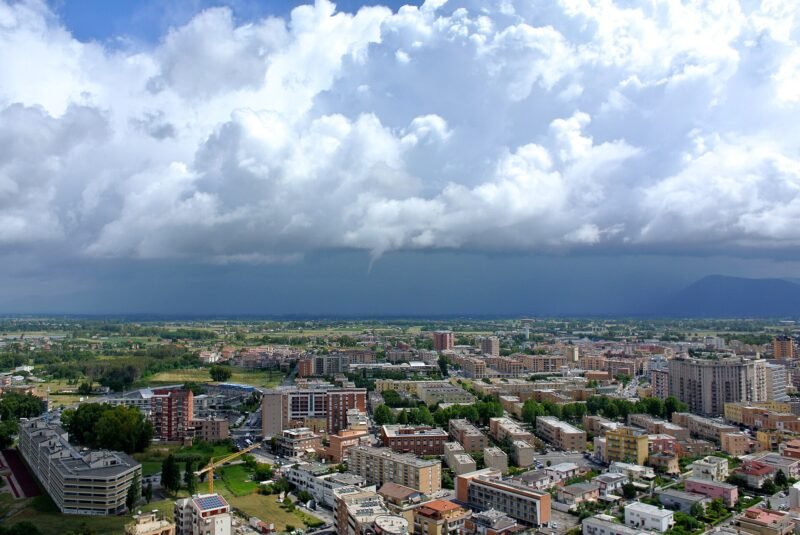
Latina, a Founded City
The center designed by Frezzotti, with the main square and the radiating streets, can be visited in an hour's stroll. In the Government Palace is kept the painted cycle by Duilio Cambellotti dedicated to the redemption of the Agro, one of the most important visual documents of the Pontine story. Latina has dedicated a civic museum to the same figure. Anyone arriving from the Pontine Land Museum has all the keys to read it.
The Reclaimed Plain and the Coast
A few kilometers away open the Lido di Latina and the coastal belt of the lakes, with Lake Fogliano, the best-preserved piece of pre-reclamation landscape. Continuing south you reach the Torre Paola beach at Sabaudia and the entire Circeo National Park, established precisely in the years of the reclamation to save what remained of the plain forest. These are the kilometers where the reading of the landscape learned at the Pontine Land Museum is put to the test: dunes, canals, planted pine woods, and close to the sea the patches that the transformation spared.
The Lepini Mountains, the Other Side of the Coin
To really understand the Agro you have to climb. The towns of the Lepini looked at the marsh from above and feared it: Sermoneta with the Caetani castle, Norma with its balcony over the plain and the ruins of Norba, Cori with the temple of Hercules and the Museum of the City and Territory. At the foot of Norma the Ninfa Garden occupies a medieval city abandoned in part because of malaria: the perfect counterpart to the scientific section of the Pontine Land Museum. Farther south, at Priverno, the civic museums and the abbey of Fossanova complete the itinerary.
A Useful Comparison in Rome
Anyone who gets passionate about anthropological museology finds in Rome, at EUR, the Museum of Arts and Popular Traditions, now part of the Museum of Civilizations: same disciplinary family, national scale, and an instructive comparison with the local dimension of the Pontine Land Museum.
When to Go to the Pontine Land Museum
From October to May, without hesitation. The Agro Pontino in summer is hot and humid, and the plain in the early morning or at sunset gives far more than at noon. The museum opens in the morning for most of the week, so the natural window is between 10:00 and 13:00. If you can choose, take a weekday with an afternoon opening and use the morning for the territory, or the other way around.
Avoid school closure periods if you want silence, because the museum works a lot with classes, and conversely look for them if you like seeing a museum that works. In the months of a temporary exhibition the spaces may be partially reorganized: the advance phone call serves for this too.
Quick Questions About the Pontine Land Museum
Where is the Pontine Land Museum?
In Piazza del Quadrato 24 in Latina, in the building that was the seat of the Opera Nazionale Combattenti, built in 1932 to a design by Oriolo Frezzotti.
How much is a ticket to the Pontine Land Museum?
Nothing: admission is free. There is no full-price or reduced ticket, and no ticket office.
What are the opening hours of the Pontine Land Museum?
Opening is concentrated in the morning from Tuesday to Saturday, roughly from 10:00 to 13:30, with afternoon openings on some weekdays. Monday is a closing day. The afternoon hours reported by the different institutional directories do not match: a phone call before leaving is the prudent choice.
Is the Pontine Land Museum open on Sunday?
On Sunday you enter by reservation. Some institutional sources report an opening on the first Sunday of the month in the morning, others indicate Sunday as a closing day: it is best to arrange access by phone.
Do you need to book a visit to the Pontine Land Museum?
For an individual visit during opening hours it is not mandatory, but it is recommended. For groups, school classes, guided visits and Sunday access, reservation is necessary.
What is the phone number of the Pontine Land Museum?
0773 400088 and, alternatively, the mobile 335 5286652. The email address given by the institutional directories is museo.terrapontina@hotmail.it.
How long does a visit to the Pontine Land Museum take?
Between an hour and an hour and a half for a normal visit, 40 minutes if you're in a hurry, up to two and a half hours if you read the documents and linger on the photographs.
How many sections does the Pontine Land Museum have?
Five: pre-reclamation. Scientific section dedicated to malaria. Agrarian transformation and land allotment of the Opera Nazionale Combattenti. The pioneer's daily life, that is, the anthropological section. Artistic section.
How many objects does the Pontine Land Museum hold?
Roughly a thousand pieces, for the most part donated by private individuals and families of the territory.
When was the Pontine Land Museum founded?
The research that gave rise to the collection starts in 1991 on the initiative of the Associazione "Don Vincenzo Onorati". The exhibition open to the public dates from 1999. In July 2024 the museum celebrated 25 years.
Is the Pontine Land Museum suitable for children?
Yes, especially from age seven up, and particularly in the section on the pioneer's daily life, where the loom, bicycles and tools of vanished trades work well. The museum has educational services and works regularly with schools.
Can you take photographs at the Pontine Land Museum?
Photography for personal use is normally allowed, without flash. Since the materials were donated by private individuals, it is good practice to ask the staff for confirmation before shooting.
Is the Pontine Land Museum wheelchair accessible?
The building dates from 1932: it is best to check the access conditions by phoning the museum before the visit.
How do you get to the Pontine Land Museum by public transport?
By train to the Latina station, which is at Latina Scalo on the Rome-Formia-Naples line, about nine kilometers from the city center, and then by city bus or taxi to Piazza del Quadrato.
Is there parking at the Pontine Land Museum?
Yes, the square is wide and parking is free. It is one of the Lazio visits where arriving by car is the better choice.
What is the difference between the Pontine Land Museum and the other museums of the Agro?
The Pontine Land Museum is the oldest and the most complete on the ethnographic and documentary side, and it is the interpretation center of the Agro Pontino Ecomuseum. The other institutions of the territory go deeper into specific aspects, from local history to archaeology.
Why is the Pontine Land Museum in Piazza del Quadrato?
Because the building that houses it was the operational seat of the Opera Nazionale Combattenti, the body that carried out the reclamation and founded the city. The Quadrato is the original nucleus from which Littoria was born in 1932.
Does the Pontine Land Museum talk about Fascism?
It talks about the integral reclamation and the colonization of the 1920s and 1930s, which were a symbolic operation of that regime. The approach is documentary: sources, objects, photographs and maps, with no celebratory tone.
Where did the settlers told about by the Pontine Land Museum come from?
In the overwhelming majority from Veneto, Friuli and Emilia-Romagna. Documentary sources indicate 2,953 farms managed by the Opera Nazionale Combattenti, of which 1,748 assigned to families from Veneto and Friuli.
What is the State Quinine displayed at the Pontine Land Museum?
The quinine produced by the State Monopoly and sold at a controlled price in the salt and tobacco shops, established with the laws of 1895 and 1900 to fight malaria. The scientific section keeps packages and documentation of it together with the materials of the Provincial Anti-Malaria Committee of Littoria.
When was malaria eradicated in the Agro Pontino?
Quinine prophylaxis reduced mortality already from the early 1900s, but the endemic cycle closed only after the Second World War, with the DDT spraying campaign carried out with American assistance and concluded during the 1950s.
Is there a café or a coat check at the Pontine Land Museum?
There is no internal café. The cafés are in the center of Latina. The museum has educational services, multimedia stations and a shop of publications.
Does the Pontine Land Museum hold temporary exhibitions?
Yes, every year it hosts exhibitions and cultural events. Among the recent ones, the traveling educational series "Voci dalle acque" and the photo exhibition "Viaggio intorno all'Agro Pontino" by Stefano Orlando.
Is the Pontine Land Museum worth visiting if you're not from the area?
Yes, and perhaps even more so. It is the quickest way to understand why the plain between Latina and the Circeo looks the way it does, and to read the landscape instead of just crossing it.
Can you visit the Pontine Land Museum with a guide?
Yes, by reservation. The guided visits through the five sections are led by the museum's management and radically change how the visit comes across.
One last thing. The Pontine Land Museum doesn't have the immediate appeal of a Roman villa or a Baroque church, and anyone looking for the wow factor will do better to go elsewhere. But if you want to understand how a piece of Italy was built from scratch in 10 years, who built it physically and at what price, here you find the most honest documentation that exists in southern Lazio. Call, ask to be accompanied, and forget about the clock.
Article written by the editorial team of TourLeaderPro, contact them for Private/Corporate/V.I.P. Tours and Experiences.
Planning a trip to Rome? The English guides for visiting the city are on ItalyPlanner.com.