Nepi Solfatara – Monte Calderone
In short. The Nepi Solfatara, which locals simply call Monte Calderone, occupies a basin in the eastern sector of the Sabatino Volcanic District, in the municipal territory of Nepi, in the province of Viterbo, in the countryside between the…

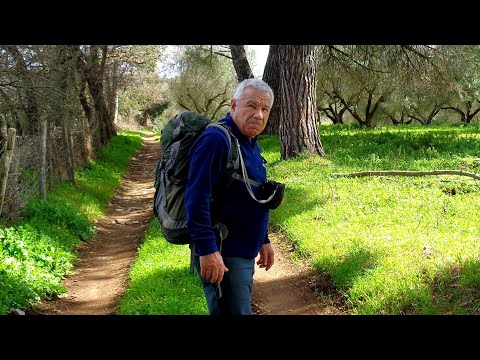
The Nepi Solfatara, which locals simply call Monte Calderone, occupies a basin in the eastern sector of the Sabatino Volcanic District, in the municipal territory of Nepi, in the province of Viterbo, in the countryside between the Cassia Cimina and the road that descends toward Sutri. Elevation around 227 meters, no street number, no ticket office, no hours: the site is not an equipped park and has no regulated entrance, it sits on private farmland and the road that skirts it is an unnamed dirt track. You pay nothing because there is nothing to pay for, and precisely for this reason there is nobody keeping watch, no sign explaining where you can walk and no rescue service within earshot. The administrative reference is the Comune di Nepi, Piazza del Comune 20, 01036 Nepi (VT), phone 0761 55811. For guided walks the reference in town is the Pro Loco, which takes groups to the solfatara during the year. Those arriving by car from Rome take Via Cassia or the Cassia bis to the Nepi interchange, then the municipal roads toward the Carnardo countryside. By public transport you reach Nepi with the regional Cotral buses from the Saxa Rubra terminal, but from the town to the basin there remain a few kilometers that can only be covered by car or on foot. Bus times change often: check them on the carrier's website before leaving.
Let's say right away the thing that matters more than all the others. The Nepi Solfatara emits gas from the ground, continuously, from holes a few centimeters wide and from the whole surface of the basin. The main component is carbon dioxide, accompanied by hydrogen sulfide, methane, nitrogen, noble gases, elemental mercury and volatile organic compounds: this is the list that researchers of the Istituto Nazionale di Geofisica e Vulcanologia published after the sampling campaign carried out here and at the Caldara di Manziana, with samples of the soil's interstitial gases at 20 and 40 centimeters depth. The same researchers write, without beating around the bush, that in unfavorable weather conditions carbon dioxide and hydrogen sulfide accumulate at ground level and reach concentrations dangerous for animals and people. It is not a token warning: those gases are heavier than air and the bottom of the basin is exactly where they collect. Those who go must stay on the high rim, with wind, must not go down into the low points, must not put their head near the holes and must not bring dogs, because a dog's muzzle travels 30 centimeters off the ground, that is inside the most concentrated layer.

That said, the place is worth the trip, and worth being told well. Few people know it by name, many have smelled it without knowing what it was: the rotten egg smell that hits you driving between Nepi and Castel Sant'Elia on a humid day comes from here. It is one of the very few places in northern Lazio where volcanism can still be felt at the surface, 50 minutes by car from the Grande Raccordo Anulare, and where a reader of this guide can see with their own eyes what the word quiescent means applied to a volcanic system.
Where the Nepi Solfatara really is and how to get there
The basin opens in the countryside northwest of the town of Nepi, in the strip of territory bounded by the Cassia Cimina and the minor roads leading toward Sutri and toward the lake. As the crow flies the provincial capital is about 27 kilometers to the northwest and Rome about 30 kilometers to the south: the position is the classic one of the Faliscan countryside, where the tuff plateau splits into deep gorges and the roads, to avoid them, take long and surprising detours. Nepi is a municipality of just under 10,000 inhabitants, about 40 kilometers from Viterbo and a little over 30 from Rome.
By car to the Nepi Solfatara
From Rome the most convenient road is the Cassia bis, exit for Nepi, then the municipal roads that branch off into the countryside: the last stretch is unpaved, with an uneven surface and dust in summer, mud in winter. You don't need an off-road vehicle, you need caution and a car you don't mind scraping underneath. You get to a gate and from there continue on foot. The exact spot is not marked by any tourist sign and satellite navigators indicate approximate positions, often off by a few hundred meters: anyone going for the first time without somebody who knows the area risks half a day of maneuvering in the fields. Parking, in the proper sense of the word, doesn't exist: you pull up at the edge of the dirt track without blocking it, because tractors use that road and nobody appreciates finding it closed.
By public transport to Nepi
The regional Cotral buses connect Nepi with Rome starting from the Saxa Rubra terminal, on the Roma Nord railway line, and with Viterbo along the Cassia route. The trip from Saxa Rubra generally takes a little over an hour, with more frequent runs at commuter times and fewer on Sundays. Once in town, though, the problem remains: no bus goes as far as the basin. Either you get a ride, or you count on a few kilometers of country roads on foot, which in summer, with the sun high and no shade, are not a stroll. That's why, for those without a car, I recommend aiming for one of the guided walks organized by the Pro Loco of Nepi, which solve the transfer, the orientation and the safety all at once.
How much time you need at the Nepi Solfatara
The visit itself is short: from the gate to the basin you walk about 20 minutes on easy terrain, and to go around the basin and observe it calmly another 40 minutes are enough. Those who photograph spend two hours without noticing. It's best not to treat it as a trip on its own: combine it with a visit to the village of Nepi, the Rocca dei Borgia and the 18th-century aqueduct, and the day fills itself.
What the Nepi Solfatara really is
A solfatara is a volcanic system in which there is a more or less extensive fumarolic field, whose activity consists mainly in the emission of steam and gas with a strong sulfurous component. It is the typical phenomenon of volcanoes in a state of quiescence or close to extinction: the magma no longer rises, but residual heat and deep fluids continue to make their way along the fractures of the crust. The Nepi Solfatara is this, on a reduced scale and in a particularly dry version.
The Sabatino Volcanic District and the Nepi sector
The Sabatini Mountains Volcanic Complex is the system that generated the basin of Lake Bracciano and that of Martignano, and its activity covered with tuffs and ignimbrites a vast sector of the Roman and Faliscan countryside. The Nepi Solfatara occupies the eastern margin of that district, in the contact zone with the Vico system, the one that produced Lake Vico. It is a geological frontier position, and it shows: the gas manifestations follow the fractures that separate the two systems and rise where the cover is most permeable.
How the degassing of the Nepi Solfatara arises
Beneath the basin circulates deep mineralized water, heated and charged with gas by a magma chamber that no longer feeds eruptions. As it rises, that water loses pressure and releases the dissolved gases, which reach the surface through holes a few centimeters wide and through the diffuse porosity of the soil. Hydrogen sulfide, reacting, deposits elemental sulfur: that explains the yellowish veins that streak the ground and the pale crusts that form around the vents. The clays you see on the surface are not river-deposit clays: they are the product of hydrothermal alteration of the volcanic rocks, that is of the same aggressive chemistry that keeps the place bare.
Why almost nothing grows at the Nepi Solfatara
The ground is arid, acidic, saturated with sulfur and crossed by asphyxiating gases: no common plant withstands those conditions. The result is a bald island in the middle of a lush green countryside, with the woods stopping at the edge of the depression as if someone had drawn a line. This contrast is the reason the place strikes whoever sees it for the first time, and it is also the reason it should be looked at with respect: where grass doesn't grow, there is usually a reason that concerns the lungs as well.
The Nepi Solfatara and the Caldara di Manziana compared
The comparison with the Caldara di Manziana comes naturally, and helps in understanding. The Caldara occupies the western sector of the same volcanic district, has very intense degassing, pools of water and mud in permanent boil and a relict birch wood all around. The sector of greatest degassing of the Nepi Solfatara is smaller, and the stable bubbling pools are missing here. Those who come to Nepi expecting the continuous boiling of Manziana are disappointed. Those who arrive knowing what to look for find a subtler phenomenon that in winter is just as spectacular.
The rhythm of the seasons at the Nepi Solfatara
This is the point that completely changes the visit, and almost no guide says it clearly: the Nepi Solfatara has two faces, and they depend on the month.
The dry summer
From June to September the basin appears completely dry and without vegetation. The floor is cracked, whitish, with the sulfur veins in evidence and the holes blowing dry. The smell is more concentrated because the water doesn't act as a buffer, and on windless days the air in the low part becomes heavy. From the photographic point of view it is the lunar version of the place: excellent for details of the ground, less for the overall view.
The bubbling winter
In winter rains stagnate on the ground made impermeable by the progressive deposition of the clays formed by the hydrothermal alteration of the volcanic rocks. The water doesn't filter, it stops, and the gases rising from below pass through it, generating an extensive bubbling of water and mud. That's where the name Monte Calderone explains itself: the reference to the boiling cauldron is not a poetic metaphor, it's a description. Those who want to see the solfatara at its maximum visible activity must come between December and March, after a few days of rain, on a clear and breezy morning.
The sound underfoot
There is a detail that no photograph conveys. Standing on the ground of the basin, in silence, you hear water flowing under the soil. It's a dull, intermittent rumble that comes from under the soles and that in winter adds to the bubbling at the surface. It's worth turning everything off and listening for a minute: it's the only acoustic proof that this motionless landscape, in reality, is at work.
Safety at the Nepi Solfatara: the rules that are not up for discussion
Here it is good to be categorical. An area with permanent gas emissions is not a meadow to spread your blanket on.
The gases of the Nepi Solfatara are heavier than air
Carbon dioxide and hydrogen sulfide have a density greater than air and tend to collect in depressions, hollows, ditches and any dip sheltered from the wind. The basin of the solfatara is, by definition, a depression. On a windless day, with a temperature inversion, the concentration at ground level can rise to dangerous values: it is the Istituto Nazionale di Geofisica e Vulcanologia that says so, not an excess of caution. Practical rule: you don't go down to the lowest points, you don't lie down, you don't lean over the holes to sniff, you don't dig. If the smell becomes pungent or you get a headache or dizziness, you move away immediately, climbing back toward the high rim, upwind.
Hydrogen sulfide fools the sense of smell
Hydrogen sulfide has a particular treachery: at low concentrations it stinks unmistakably, at high concentrations it paralyzes the olfactory receptors and stops being perceived. When the smell suddenly disappears, it is not a good sign, it is the opposite signal. Anyone accompanying someone to the Nepi Solfatara should know this, and should explain it before leaving, not on site.
Children and dogs at the Nepi Solfatara
Small children and dogs breathe a few centimeters from the ground, where the concentration of heavy gases is highest. That is the reason why, at similar sites, accidents almost always involve animals. The advice is blunt: dogs stay home or in the car with someone, children stay in arms or by the hand on the high rim, and the visit to the bottom of the basin is not made. A curious child running toward the first smoking hole is a scenario to avoid from the start.
No baths and no mud at the Nepi Solfatara
Every so often someone tells of therapeutic muds at Monte Calderone. Let me clarify: the water and mud that form in winter in the basin are not controlled waters, there is no health control, no periodic public analysis, no operator. They are stagnant waters on ground loaded with sulfur and sulfur compounds, in an area that no authority certifies as swimmable or thermal. You don't enter them, you don't immerse yourself, you don't smear anything on your body. Those looking for sulfurous waters that can be used regularly should turn to the authorized facilities in the province, where there is an operator answerable for the water quality. The free pools of the Viterbo area, such as the Piscine Carletti, are another matter: they have a history, an established following and in any case must be approached by finding out first about the conditions at the time.
Private property and common sense at the Nepi Solfatara
The land of the basin and that surrounding it is private and cultivated. There is no marked public route, no official opening to the public, no body managing visits. The fact that the gate is open is not an invitation: whoever enters does so on someone else's land and takes on all responsibility. The clean way is only one, and I gladly repeat it: go with the walks of the Pro Loco of Nepi or with a guide who knows the owners and the area. If you find a posted ban, a closed gate or a new fence, that is the final message and you turn back. No photograph is worth a complaint for trespassing on private property, and none is worth a hospital stay.

The landscape of the Nepi Solfatara, point by point
Whoever arrives finds an irregular clearing that slopes downward. The natural route crosses a series of increasingly marked depressions, until the ground narrows into a sort of small canyon that channels toward the main depression. It's an almost theatrical progression: first the ordinary countryside, then the thinning green, then the soil that changes color, finally the bare basin.
The central basin of the Nepi Solfatara
The basin has an articulated shape, not circular, and is depressed relative to all the surrounding areas. The bottom is the most active part: here the crust is pale, the sulfur veins become bright yellow and the emission holes number in the dozens. The surface of the sector of greatest degassing is small, a few dozen meters, and that explains why the place is invisible until you are right on top of it.
The gas vents and the sulfur crusts
The holes are small, often as wide as a coin, and the gas comes out with a barely audible hiss. Around the vent a crown of yellowish crystals is deposited, fragile, which one foot is enough to destroy. It should be looked at and photographed, not touched: besides the damage to the deposit, skin contact with concentrated sulfur compounds is pleasant for nobody.
The vanished lake of Monte Calderone
In the basin, once, there was stable water, a small mirror covering a good part of the floor. Then the multiplication of drilling for wells in the surrounding countryside progressively lowered the water table, and the pool shrank until it disappeared. It's a story that says a lot about the relationship between irrigated agriculture and volcanic aquifers in this corner of Tuscia, and that serves as a small lesson in applied hydrogeology: the water you see at the surface is only the outcropping part of a system that is managed, or squandered, much lower down.
The woods that stop at the edge
The margin of the basin is a sharp frontier. On one side oaks, shrubs, brambles. On the other the whitish nothing. That line is the best place to understand how selective the soil chemistry is, and it is also the recommended position to stop: high rim, feet on the grass, eyes on the basin.
Nepi, the city of waters
You can't understand the Nepi Solfatara without understanding Nepi, and Nepi is a city built on water in every possible sense.
The name of Nepi and the water serpent
Ancient Nepet, or Nepete, is said to derive its name from the Etruscan word nepa, which means water. A Faliscan city strongly influenced by Etruscan culture and then by Latin culture, Nepi thus carries in its very name the sign of this ancestral bond. The founding legend tells of a water serpent, worshipped as a deity by the ancient inhabitants, which came out into the open while the mythical founder Termo Larte, or Laerte, was tracing the furrow of the pomerium of the new settlement. The event was read as a favorable omen, and the city was consecrated to the deity that had chosen to show itself during the sacred act of foundation. Tradition places that foundation 458 years before Rome, a figure that belongs to the legendary account and not to archaeological chronology: finds in the area document human presence far older and more widespread than the legend suggests.
Another reading of the name
There is a second interpretation, which links the place name to a Middle Eastern deity with the features of a scorpion, relating that animal to the shape the streams draw around the tuff spur on which the city stands. Serpents or scorpions, in any case the reference remains water. It must be said honestly that these are scholarly hypotheses, not proven etymologies. The link between Nepi and water, on the other hand, is a fact, and you can measure it on the ground.
Ferruginous, sulfurous and mineral springs
The number of streams, springs, ferruginous, sulfurous and mineral waters and solfataras dotting this area is what sets it apart from all the surrounding countryside. The mineral water bottled in Nepi is today a product known and distributed well beyond the regional borders, and it comes from the same hydrogeological system that feeds the gas emissions of Monte Calderone. The extinct volcanism around here did not leave only tuff behind: it left a hydrothermal engine that keeps idling.
The Nepi aqueduct, a project that took two centuries
The story of the Nepi aqueduct deserves to be told because it resembles a comedy. Bringing the water of the Varano spring into the city was attempted starting in the mid-1500s, and the attempts failed one after another, including the one that involved Vignola. In 1673 Cardinal Spinola managed to bring the water as far as the walls, without however solving the problem of the difference in height. The matter was only settled in 1727, with the architect Filippo Barigioni and the patronage of Cardinal Giuseppe Renato Imperiali. The conduit runs for about three miles, almost all of it underground, but the monumental stretch that crosses the valley of the Falisco stream rests on a series of arches that come close to 20 meters in height and passes alongside the Sangallo fortifications. It is the image everyone takes away from Nepi, and it is the child of the same obsession with water that gives the city its name.
A curiosity about Solfatara di Nepi, Monte Calderone
The best curiosity of this place is hidden in the name, and almost no one catches it. Monte Calderone is not a mountain: it is a basin, a depression, the topographical opposite of a rise. The place name does not describe the shape of the ground, it describes what the ground does. Calderone points to the bubbling cauldron, to the gurgling of water on the fire, and whoever coined it did so by looking at the basin in winter, when rain stagnates on the impermeable clays and the gases pass through it, making it boil for weeks. It is a name given by the ear before the eye, in an age when nobody knew anything about carbon dioxide and hydrothermal alteration, and when the criterion for naming a place was what you heard and smelled as you walked past it.
There is a second curiosity about local nomenclature, and it still causes confusion today. On maps and in speech the same area appears as solfatara, as solforata and as solfarata, in the singular and in the plural. The solfarate of Monte Calderone, in the plural, indicate that there is more than one emission point and that the activity moves over time, opening new vents and closing others. A solfatara is not a motionless monument: it is an organism that changes from year to year, and two visits a decade apart never show exactly the same pattern of holes.
Third curiosity, which is worth it for those who like comparisons: the Solfatara di Nepi shares its mechanism with another, far more visited place in Lazio, the Solfatara di Pomezia, which however belongs to a completely different volcanic system, that of the Colli Albani, and lies about 60 kilometers to the south. They are two distinct sites with separate geological histories: calling both of them a solfatara is correct, confusing them is a mistake you often read online.
Something nobody tells you about Solfatara di Nepi, Monte Calderone
Here is one that really changes the day: the wind matters more than the season. All the descriptions of the place talk about a dry summer and a gurgling winter, and they are right to, but nobody explains that the decisive variable for the safety and comfort of the visit is the movement of the air. With a breeze, even a weak one, the gases disperse and the basin can be crossed without problems. On a clear winter morning with not a breath of wind, instead, the cold air stagnates in the depression, vertical mixing drops to zero and the layer closest to the ground becomes loaded. Those are exactly the conditions that researchers describe as critical. Before leaving it is worth checking the wind forecast, not just the rain forecast: it is a check that takes 30 seconds and is worth more than any generic advice.
The second little-known piece of information concerns scientific research. In the autumn of 2020 the Solfatara di Nepi was the subject, together with the Caldara di Manziana, of a sampling campaign conducted by the Istituto Nazionale di Geofisica e Vulcanologia: collection of interstitial soil gases at 20 and 40 centimeters, collection of point gas emissions from the bubbling waters, measurement of the fluxes of carbon dioxide, methane and elemental mercury, determination of the concentration of radon 222, analysis of the organic and inorganic fraction. Translated: this forgotten basin in the Faliscan countryside is a monitored natural laboratory, and the data it produces help us understand how much geogenic gas comes out of the subsoil of Lazio. When you look over the edge you are not looking at a scenic curiosity, you are looking at a measuring station.
Third thing, prosaic but useful: there is no drinking water, no bar, no bathroom and no reliable phone coverage in every part of the countryside around. You bring your own drinking water, you tell someone where you are going and you don't go alone. It seems obvious, and yet it is the reason why in places like this trouble, when it happens, becomes serious.
My advice for visiting Solfatara di Nepi, Monte Calderone
There is only one piece of advice and I give it without half measures: don't treat it as a stand-alone destination, and don't go improvising. The combination that works is this. You leave Rome early, arrive in Nepi around nine, visit the village calmly while it is still deserted, go down to the aqueduct for the obligatory photograph, have lunch in town and go to the basin in the early afternoon, when the low winter sun cuts across the basin sideways and the ground gives back all its shades. In summer you flip it: basin early in the morning, village in the afternoon, because at noon there isn't a meter of shade in the depression.
On the how: closed shoes with sturdy soles, never sandals, because the ground is crusty and in winter sticky. Long pants for the brambles in the first stretch. A change of clothes in the trunk, because the smell of sulfur clings to fabric and you notice it in the car on the way back. No cigarettes, and not out of moralism: you are inside an area with methane emissions and it makes no sense to light flames. No drones without authorization, because you would be flying over private land.
On the when: December, January, February and March, two or three days after rain, with wind and a clear sky. It is in those conditions that the Solfatara di Nepi shows the phenomenon it is named for. August is the worst period by far: heat, concentrated smell, no water, flat light at noon.
On the with whom: if you can, with the Pro Loco of Nepi or with a local guide. It costs little or nothing, solves the problem of access to private land and saves you from wandering for an hour among the fields looking for the right gate. The verdict is clear: the do-it-yourself visit to this solfatara is overrated as an adventurous experience and underrated as a risk. The value of the place is not in getting there on the sly, it is in understanding it.
Another well-known fact, yet rarely mentioned
Everyone knows that Lazio is a volcanic region. It is repeated about the lakes of Bracciano, Vico and Bolsena, the Colli Albani, the tuff of which half of Rome is built. What is mentioned far less is the practical consequence: that volcanism is not over, it is quiescent, and the way it shows itself today is precisely this, that is, gas emission from the ground. The Solfatara di Nepi, the Caldara di Manziana, the Tor Caldara Reserve along the coast at Anzio, the mofettes of the Colli Albani and the sulfur springs of the Viterbo area are the same phenomenon under different names. They are the slow breathing of systems that have stopped erupting but not heating.
The second aspect rarely mentioned is that this degassing has a history of real accidents in Lazio, almost always involving animals and occasionally people, and almost always under the same conditions: depressions in the ground, no wind, the curiosity of someone who gets too close. It is the reason why in some areas of the region there are fences and signs, and in others, like here, there is still nothing. The absence of a sign does not prove the absence of a risk: it only proves that nobody has put up the sign yet.
Third element, of a historical nature. The solfataras of Lazio were exploited for centuries: sulfur was used for medicine, tanning, gunpowder, vineyards. Many of these sites keep traces of quarries and small collection plants. In the case of Monte Calderone there is no documentation of industrial plants, and this needs to be verified in the local archives, without filling the gap with a plausible reconstruction. What is documented is the age-old use of the mineral and sulfurous waters of the Nepi area, which belongs to the same story.
The right photo to take at Solfatara di Nepi, Monte Calderone
The photograph to take home is not the close-up of the smoking hole. Everybody takes that one, it always comes out the same and it tells nothing. The right photograph is the comparison between the two worlds: you climb to the high edge of the basin, keep the green woods in the lower third of the frame and let the whitish basin fill the rest. It is that borderline, sharp as a cut, that explains at a glance what the chemistry of the soil does.
Light and timing for photographing the Solfatara di Nepi
The best light is the raking light of a winter morning, low and sharp, which sculpts the cracks in the ground and lights up the yellow of the sulfur veins. At noon the place becomes flat and washed out, and the photographs all look overexposed. In winter, after rain, there is an element that is rare in Nepi: the steam rising from the mud in the early hours, backlit, with the sun passing through it.
Lenses and precautions
A moderate wide-angle for the overall view, a short telephoto to isolate the vents without getting too close. The telephoto, here, is also a safety accessory: it lets you photograph details while staying on the high edge. Watch your equipment: suspended sulfur compounds are not good for electrical contacts and metal parts, so no lens changes with the basin upwind, and clean the camera once you are back home. The phone, which many people hold upside down to film the holes, should be kept in your hand, not set on the ground.
A photograph few people think of taking
The portrait of the ground at close range, from above, with the cracked crust filling the whole frame and a coin or a key to give the scale. It looks like an image from a geology textbook and in fact it is: it shows the polygonal structure of the dried clays and the yellow incrustations in the crevices. It is the photograph that, months later, will help you remember the place better than any panorama.
Some important events that took place here in history
The big history, at Monte Calderone, passed not far away and left its mark around the basin, more than inside it. The territory of Nepi was for centuries a strategic junction between Rome and inner Etruria, and the events that crossed it can still be read in the stones.
Nepi, a military outpost
Ancient sources describe Nepet as a key defensive position of the Roman system toward Faliscan Etruria: one of those places that are garrisoned because whoever controls them controls the roads. The tuff plateau surrounded by ravines is a natural fortress, and the archaeology of the area documents a presence far older than the legendary foundation, with necropolises, rock-cut roads and scattered settlements across the whole countryside, the same countryside that today holds the solfatara.
The Borgia period
In 1455 the election of Alfonso Borgia to the papal throne opens a season of urban transformation in Nepi. Between 1479 and 1483 the fortress is enlarged under the direction of a Florentine master, in all likelihood Antonio da Sangallo the Elder: residential rooms are added and a rectangular enclosure defended by four round bastions. In 1499 Alexander VI invests his daughter Lucrezia Borgia with the fief of Nepi and the fortress. Lucrezia arrives here after the murder of her husband Alfonso of Aragon and spends a period of mourning here with her son, before returning to Rome, probably at the beginning of 1501, and leaving for Ferrara as the bride of Alfonso d'Este. The death of Alexander VI in 1503 ends the Borgia presence in Nepi.
Accolti, the Farnese and the end of a duchy
After Julius II the fortress passes to Cardinal Ascanio Sforza. In 1521 Bernardo Accolti, known as l'Unico, a poet and governor of eccentric manners, becomes its lord and holds it until 1535. In 1537 Paul III creates the duchy of Castro and Nepi and entrusts it to his son Pier Luigi Farnese: this begins the season that changes the face of the city, with Antonio da Sangallo the Younger engaged on the great city wall with polygonal bastions, with emplacements for cannons, culverins and loopholes for arquebuses. After 1545 the complex passes to the Apostolic Chamber and a long decline begins, made worse by the fire set to the city by French troops in 1798. The fortress was donated to the Municipality by the Sili family in 1962 and restored to public use by long 20th-century restorations.
The disappearance of the water in the basin
The most important event to happen inside the basin in recent times has no date and no illustrious protagonists: it is the gradual disappearance of the body of water that occupied the bottom of the basin, a consequence of the multiplying wells drilled in the surrounding countryside and the resulting lowering of the water table. A landscape that existed has ended without anyone deciding it. It is worth keeping in mind, because the same pressure on the aquifers continues to be exerted on the whole area.
Who has passed through Solfatara di Nepi, Monte Calderone
Those who pass through here today are above all three categories of people, and all three deserve to be named.
The researchers
Since the autumn of 2020 the name of this basin has appeared in the documentation of the Istituto Nazionale di Geofisica e Vulcanologia, which conducted a soil gas sampling campaign here together with the one at the Caldara di Manziana. It is the geochemists and volcanologists who turned Monte Calderone from a village curiosity into a measurement point, and thanks to them we can now say precisely what comes out of those holes and why under certain conditions it becomes dangerous.
The lords of Nepi
The countryside around the basin was land under the rule of the Borgia and the Farnese. Lucrezia Borgia lived a short distance from here in 1500, in one of the darkest seasons of her life. Cesare Borgia and Alexander VI tied their names to the fortress and the fief. Pier Luigi Farnese set up a duchy here. Antonio da Sangallo the Younger redesigned its defenses. Bernardo Accolti held a bizarre court here. Cardinal Giuseppe Renato Imperiali and the architect Filippo Barigioni closed in 1727 the matter of the aqueduct that two centuries of attempts, including Vignola's, had not managed to solve. None of them, as far as is documented, left in writing that he went down into the solfatara. But the water and the sulfur of this territory were exactly the reason why that fief was worth having.
Locals, photographers and walkers
The real visitors are local: farmers who have always known the basin, groups from the Pro Loco of Nepi who bring the curious here on social walks, hiking and nature photography enthusiasts who come from the provinces of Rome and Viterbo, cavers and lovers of the Lazio underground. It is a small, informed and generally respectful public. The risk, if anything, is the opposite: that the basin suddenly becomes popular because of a lucky photo on social media and fills up with unprepared people. It has already happened elsewhere in Lazio, and it did not end well for the place.
What to see around the Solfatara di Nepi
The real reason to come all the way up here is that within a few kilometers there is one of the densest and least trodden portions of Lazio. The basin is the geological excuse. The rest is a program for two full days.
Nepi, the village and the Borgia Fortress
The village of Nepi can be visited on foot in a little over an hour and has two focal points. The Borgia Fortress, on Via Galvaligi, opens with guided tours at set times: in the summer period, from May 1 to September 30, at 11:30 and 16:30. In the winter period, from October 1 to April 30, at 11:30 and 15:00. The ticket listed by the Civic Museum is €6, free up to age 12. The contact for information and reservations is the Museo Civico di Nepi, Via Falisca 31, telephone 0761 570604. Hours and fares change with the seasons and with special openings: a phone call before leaving saves you from unpleasant surprises. In the underground rooms of the fortress there is a Roman gate with a round arch made of 15 peperino wedges, which is worth the visit by itself.
The aqueduct and the ravines
The 18th-century aqueduct that spans the Falisco valley, with its arches up to 20 meters high, is the most photographed spot in the municipality. From there you go down toward the system of ravines, the deep gorges carved by the streams in the tuff, which in the Nepi area reach considerable depths and host valley-floor vegetation completely different from that of the plateau. Whoever wants to see the same phenomenon in an even more spectacular version has to head to the Corchiano Ravines.

The Faliscan villages and the lakes half an hour from the Solfatara di Nepi
Within a few kilometers you can reach Sutri with its amphitheater carved into the tuff, Castel Sant'Elia overlooking the ravine with the Romanesque basilica at the bottom of the valley, Civita Castellana with the Cosmati portico and the Sangallo fortress, Calcata perched on its spur, Faleria, Civitella San Paolo, Ronciglione and Capranica. To the west open the two bodies of water that made the tourist fortune of the area: Lake Vico, the most intact in Lazio, and Lake Bracciano with the towns of Bracciano, Trevignano Romano and Anguillara Sabazia. Farther north the provincial capital, Viterbo, with the medieval San Pellegrino quarter and the Palace of the Popes, and the Farnese palace in Caprarola, which is the absolute masterpiece of the area. There are really many villages in the province of Viterbo worth a visit, and this corner of the Agro Falisco concentrates a disproportionate number of them compared to its fame.
The other volcanic places of Lazio
Anyone who gets passionate about the subject can build a whole itinerary around it. The Caldara di Manziana is the most similar stop and the most accessible. The Monterano Reserve, with the ghost village of Monterano and the solfatara that gives it its name, combines archaeology, cinema and geology. The Tor Caldara Reserve takes the phenomenon all the way to the sea at Anzio. The Solfatara di Pomezia is the best-known manifestation of the Alban side. To stay in the area, the Monte Gelato waterfalls and the Veio Park complete the picture of the water that shaped this territory.
When to go to the Solfatara di Nepi
The perfect month is February. The winter rains have filled the basin, the gases make the mud bubble, the low light is at its best and the surrounding countryside is bright green. January and March follow close behind. April and May are good for the village and the ravines, mediocre for the solfatara, which starts to dry out. From June to September the basin is dry and the visit loses the phenomenon that gives it meaning, besides becoming tiring because of the heat and the concentrated smell. October and November depend entirely on how much it has rained.
The ideal conditions for the visit
In four lines, the best conditions: two or three days after substantial rain, clear sky, light wind from any direction, temperature above zero to avoid ice on the clay floor, and a time between nine and 11 in the morning or between 15:00 and sunset. In those conditions the Solfatara di Nepi is one of the most unusual places an hour from Rome.
When to avoid it altogether
On muggy days with no wind, on mornings of still fog, in the middle of summer at noon and after violent storms that make the dirt road impassable. And every time the land is fenced off or marked as off limits by the owners: in that case the visit is off, no discussion.
Frequently asked questions about Solfatara di Nepi, Monte Calderone
Where exactly is the Solfatara di Nepi?
The Solfatara di Nepi is in the countryside northwest of the town of Nepi, in the province of Viterbo, between the Cassia Cimina and the minor road that leads toward Sutri, at an elevation of about 227 meters. The basin falls in the eastern sector of the Sabatino Volcanic District, about 27 kilometers from Viterbo and around 30 from Rome. It has no street address and is not marked by tourist signs.
How much does a ticket to enter the Solfatara di Nepi cost?
There is no ticket to visit the Solfatara di Nepi, because it is a free natural area not managed by a body that sells admissions. Since there is no ticket office there are no fixed opening hours either: the visit has to be organized in daylight, taking into account the safety conditions linked to the gas emissions.
What is a solfatara, really?
A solfatara like the one in Nepi is a volcanic system with a fumarolic field that emits mostly steam and gas with a strong sulfurous component. It is the typical phenomenon of volcanoes in a state of quiescence: the magma no longer rises, but residual heat and deep fluids keep making their way along the fractures of the earth's crust.
Is the Solfatara di Nepi dangerous because of the gases it emits?
Yes, the Solfatara di Nepi requires attention because carbon dioxide and hydrogen sulfide are heavier than air and tend to accumulate in depressions, holes and hollows sheltered from the wind, that is, in the main basin itself. It is not an area to linger in for long or to camp in: the safety rules must be respected without exception, especially on days without wind.
What is the best time to visit the Solfatara di Nepi?
The best month to visit the Solfatara di Nepi is February, when the winter rains have filled the basin and the gases make the mud bubble, with the low winter light at its best. January and March follow close behind. From June to September, instead, the basin is completely dry and the visit loses the phenomenon that gives it meaning.
Does the wind matter more than the season for the safety of the visit?
Yes, at the Solfatara di Nepi the movement of the air is the decisive variable for the safety and comfort of the visit, more than the season itself. With a breeze, even a weak one, the gases disperse and the basin can be crossed without problems. On a clear winter morning without wind the concentration of gases in the depression can be much greater.
What can you see around the Solfatara di Nepi?
Around the Solfatara di Nepi is one of the densest and least trodden portions of Lazio, starting with the village of Nepi itself, which can be visited on foot in a little over an hour. The Borgia Fortress, on Via Galvaligi, opens with guided tours at set times in the summer period, and the town is also known as a place tied to water from the Etruscan name it originates from, Nepet.
Is it worth visiting the Solfatara di Nepi with a guide?
For organized groups, school classes and company trips that want to include a geological stop in an itinerary in Lazio, relying on a certified tour guide is the most prudent choice, because they know the area, the owners of the land and the safety conditions linked to the gas emissions of the Solfatara di Nepi. The TourLeaderPro network organizes custom itineraries in this area too.
Visiting the Solfatara di Nepi with a guide
For organized groups, school classes and company trips that want to include a geological stop in an itinerary in Lazio, the right way is to rely on licensed professionals who know the area, the owners of the land and the safety conditions. The TourLeaderPro network works on exactly this, with certified tour guides and with the design of custom itineraries off the classic circuits too: for an international group, pairing the Borgia village with the steaming basin is a sure hit, as long as someone handles the logistics and the safety side. Anyone organizing corporate experiences or private visits for small groups will find the overview of the services in Rome and surroundings in the dedicated section.
For foreign travelers planning an itinerary in Lazio who want to understand what is worth a trip outside central Rome, the English guides of ItalyPlanner on Lazio and the collection of day trips frame distances, transport and times well. Those who stay in the city will find the curated list of things to do in Rome in the main guide.
Quick questions about Solfatara di Nepi, Monte Calderone
Where exactly is the Solfatara di Nepi?
In the countryside of the municipality of Nepi, in the province of Viterbo, in the eastern sector of the Sabatino Volcanic District, in the strip between the Cassia Cimina and the road that leads toward Sutri, at an elevation of around 227 meters. It has no street address and is not marked by tourist signs.
How much does it cost to enter the Solfatara di Nepi?
There is no ticket because there is no regulated entrance. The site is on private land and is not managed by any body: being free means no services and no supervision, not guaranteed open access.
Is the Solfatara di Nepi dangerous?
Yes, under certain conditions. Emissions of carbon dioxide and hydrogen sulfide can accumulate at ground level in calm weather and reach concentrations dangerous to people and animals, as documented by the Istituto Nazionale di Geofisica e Vulcanologia. Stay on the high edge, with wind, and don't go down into the lowest parts.
Can you bring dogs to the Solfatara di Nepi?
Better not. A dog's nose stays a few centimeters from the ground, that is, in the layer where heavy gases concentrate. It is the most exposed category of all at this type of site.
Can you swim or use the mud?
No. The waters and muds that form in winter in the basin are not controlled, not analyzed, not authorized and have no health operator. Anyone looking for sulfur waters should go to properly authorized facilities.
What is the best time to visit the Solfatara di Nepi?
Winter, between December and March, a few days after the rains, when water stagnates on the clays and the gases make it bubble. In summer the basin is completely dry.
How long does the visit to the Solfatara di Nepi take?
From the point where you leave the car it takes about 20 minutes of walking. To observe the basin calmly, 40 minutes is enough. With photographs you easily reach two hours.
How do you get to the Solfatara di Nepi from Rome?
By car, via the Cassia or Cassia bis to the Nepi exit and then on the municipal roads of the countryside: about an hour from the Grande Raccordo Anulare. The last stretch is unpaved.
Can you reach the Solfatara di Nepi by public transport?
As far as Nepi, yes, with the Cotral regional buses from Saxa Rubra or from Viterbo. From the town no public service reaches the basin: you need a ride, a bicycle or several kilometers on foot.
Is the Solfatara di Nepi suitable for children?
Only with attentive adults, staying on the high edge and giving up the descent into the basin. As a live geology lesson it is priceless. As a free playground it is entirely unsuitable.
Is it accessible for people with mobility difficulties?
No. The route is on irregular natural ground, with sloping stretches, a muddy surface in winter and a dusty one in summer, without walkways and without handrails.
Do you need a guide to visit the Solfatara di Nepi?
It isn't mandatory, but I recommend one without hesitation: it solves the problem of access to private land, orientation and safety. The walks of the Pro Loco of Nepi are the simplest way.
What is the difference between the Solfatara di Nepi and the Caldara di Manziana?
The Caldara occupies the western sector of the same volcanic district, has more intense degassing, permanently boiling pools of water and mud, and a relict birch wood. In Nepi the degassing area is smaller, there are no stable bubbling pools, and the phenomenon depends heavily on the season.
Is the Solfatara di Nepi the same thing as the Solfatara di Pomezia?
No, they are two different and distant places. The one in Pomezia belongs to the volcanic system of the Colli Albani, south of Rome. This one belongs to the Sabatini Mountains, to the north. The phenomenon is similar, the geology is not.
Why is it called Monte Calderone if it is a basin?
Because the name describes the gurgling of the water and mud that gas activity produces in winter, not the shape of the terrain. The reference is to the boiling cauldron.
What gases come out of the Solfatara di Nepi?
Carbon dioxide as the main component, then hydrogen sulfide, methane, nitrogen, noble gases, elemental mercury and volatile organic compounds, plus radon measured in the soil.
Is the Solfatara di Nepi an active volcano?
It is the surface manifestation of a quiescent volcanic system, that is, not erupting but not extinct. The magma does not rise, the hot fluids and gases do.
Can you take photographs and fly a drone?
Photographs yes, and the place deserves them. The drone no, unless with the authorization of the landowners and in compliance with flight regulations: you would be flying over private land.
Is there a bar, a bathroom or drinking water at the Solfatara di Nepi?
None of that. The nearest service is in the village of Nepi. You bring your own drinking water and suitable shoes from home.
What can you visit near the Solfatara di Nepi in a day?
The village of Nepi with the Borgia Fortress and the aqueduct, Sutri, Castel Sant'Elia, Civita Castellana, Calcata, Lake Vico and, stretching it a little, Caprarola with the Farnese palace.
Is there an official trail map?
The Municipality of Nepi publishes a trail map of the area as part of the integrated territorial project: it is the most reliable reference for getting around the countryside nearby, and it should be consulted before leaving.
One last word. The Solfatara di Nepi is not a place to conquer: it is a place to understand, and the difference shows entirely in the way you behave at the edge of the basin. Go in winter, with wind, with someone local, stay up high, look at the line where the woods surrender to the chemistry of the soil and listen to the water running beneath your feet. Then get back in the car, drive down to Nepi, have coffee in the square and go look at the aqueduct. In one day you will have understood why this city is named after water and why the volcano, here, has never really stopped breathing.
Article written by the editorial team of TourLeaderPro, contact them for Private/Corporate/V.I.P. Tours and Experiences.
Planning a trip to Rome? The English guides for visiting the city are on ItalyPlanner.com.