Hotel Butterfly
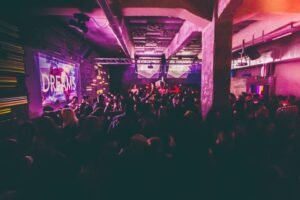
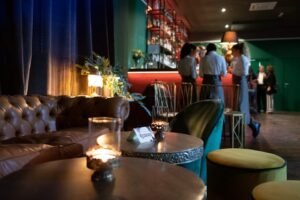
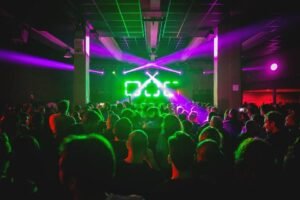
In short. Music, food, art, mixology, shopping, hairstylist, tattoo, design and more music: the formula of Hotel Butterfly can be read in this string of words, and it is a string that says more than it seems.
Hotel Butterfly
Piazza Lauro de Bosis, 3
Rome
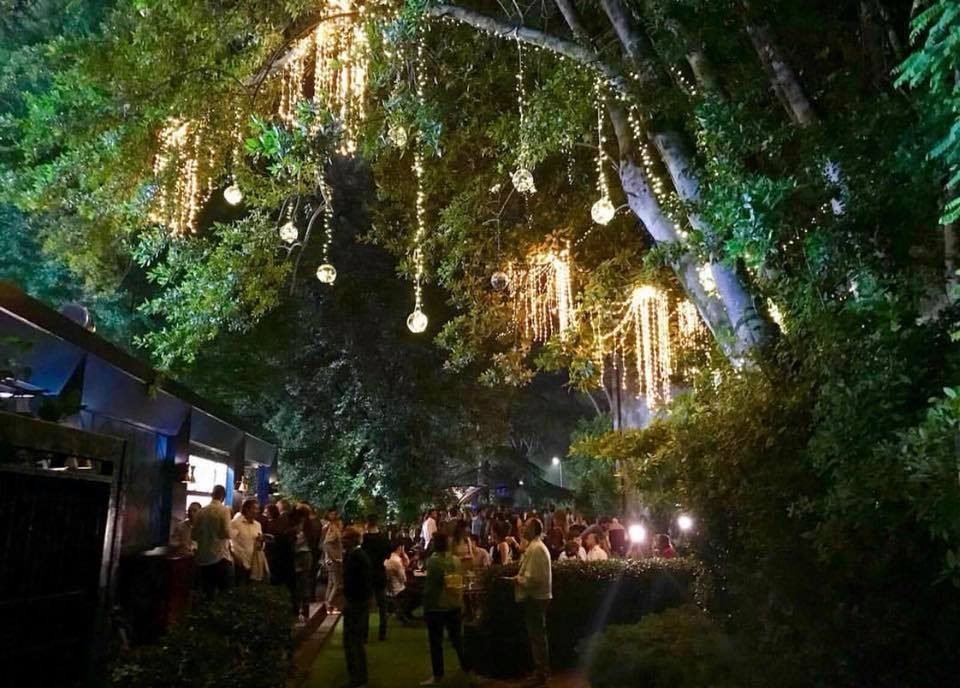
Music, food, art, mixology, shopping, hairstylist, tattoo, design and more music: the formula of Hotel Butterfly can be read in this string of words, and it is a string that says more than it seems. A summer space by the Goa Family, hosted inside the perimeter of the Foro Italico, with its entrance on the axis of Piazza Lauro de Bosis. Not a venue in the classic sense, not a festival in the strict sense: something in between, which has a long tradition in Rome and which in summer almost becomes an urban planning category of its own.
Summer spaces are one of the few Roman things on which it is hard to give definitive directions, because they change skin every season. They change location, they change name, they change formula. What does not change is the context in which certain spaces set up, and that is why it is worth telling the story of Hotel Butterfly starting from the place even before the program. The piece of the city where the address sits is one of the most loaded with history, ideology and marble in all of Rome, and anyone who arrives in the evening with the sole intention of listening to music misses half of the reason it is worth coming all the way here.
In the lines that follow I try to put the two things together. On one side, the nature of this summer space, the way it is conceived, the logic of the Goa Family that signs it, the sense of a program that holds together kitchen and tattoos, records and design. On the other, the container: the Foro Italico, the mosaic avenue, the Carrara obelisk, Stadio dei Marmi and its 60 statues, the Tiber flowing 100 meters away, the 1939 bridge that serves as the monumental entrance, and the square named after a poet who in 1931 flew over Rome to drop 400,000 leaflets and did not come back. Anyone who knows all this arrives in that area in the evening a different person.
What Hotel Butterfly Is, and Why the Name
Let's start with the obvious: it is not a hotel. The name plays with the idea of a hotel in the same way many temporary spaces play with words borrowed from other worlds: a hotel is a place where you enter, stay a while, meet people you don't know, and then leave. Applied to an open-air summer area the concept works very well, because it describes the way people really use these places. Nobody arrives at nine and leaves at three standing in the same spot: you wander, you change rooms, you go from the food counter to the record counter, from the dance floor to the table where someone is tattooing.
The second word, butterfly, adds the idea of lightness and of a short season. A butterfly lasts a short time, and a summer space lasts as long as summer. It is an honest statement of intent: these places are born to be ephemeral, and their quality should be measured by that yardstick, not by the one used for venues that open to stay for 10 years.
The Difference Between a Summer Space and a Venue
It is worth making this clear, because it conditions everything else about the experience. A venue has walls, a fixed sound system, an equipped kitchen, a coat check, bathrooms built in masonry. A summer space has a fenced area, removable structures, a system set up for the season, mobile kitchens, chemical or prefabricated bathrooms. This means three practical things: that sound behaves differently, because outdoors it doesn't bounce back and it disperses, that lines form where you don't expect them, because service points are fewer, and that the weather matters enormously, because there is no inside to take shelter in.
It also means something nice, though: that the space adapts to the place where it is set up instead of imposing a shape on it. A summer area inside a monumental complex breathes that complex. You walk on a surface that by day is something else, you look up and see real trees and not a drop ceiling, you see the sunset happen. Anyone who has experienced both knows the difference is not marginal.
The Goa Family, or the Signature
Behind Hotel Butterfly is the Goa Family. It is the collective name used by the circle born around Goa, the historic Roman club in the Ostiense area, one of the reference points of Italian electronic music of recent decades. Over time that core has produced a quantity of parallel projects: traveling nights, seasonal spaces, collaborations with kitchens and brands, formats that leave the club and go occupy areas of the city for a few months.
The underlying logic is always the same, and it helps to have it clear before going: the organizers come from a club culture, so the music is not background. I'm not talking about volume, I'm talking about attention: the musical selection is considered content, not furnishing. This translates into a program that makes choices, that doesn't put on the generic playlist to please everyone, and that on certain nights asks listeners for a minimum of openness toward something they don't already know.
Around the music, the formula adds everything else: food counters, an area dedicated to mixology, spaces for small independent retail, hairstylist and tattoo stations, design objects and crafts. It is a setup that in Rome has been growing just about everywhere over the last 15 years, and that works when the parts really talk to each other and not when they are stalls lined up in a row.
What to Expect, Without Making Anything Up
Here a point of method is needed, because it is important. The calendar of a summer space, the names of who plays night by night, the opening hours, any entrance fees and the actual location of each single season are information that the organizers publish, when they have it, and that change from one edition to the next. Roman summer spaces have a structural characteristic: they move. An area available one year may not be the next, a tender can go differently, a construction site can change the cards. The most useful advice I can give, and I give it right away so we don't come back to it, is to check the organization's official channels before setting out, exactly as you do for any open-air event series.
The Address: Piazza Lauro de Bosis, 3
The address deserves a stop of its own, because it says a great deal. Piazza Lauro de Bosis is the open space at the monumental entrance of the Foro Italico, on the river side, in line with the bridge. The street number corresponds to the accesses to the area of the sports complex, and around it is the institutional heart of Italian sport: the CONI headquarters occupies Palazzo H, the founding building of this part of the city.
Anyone arriving for the first time in the evening has trouble getting an idea of the proportions, because darkness cuts away the distances. By day the view is different: a very long avenue, entirely paved in black and white mosaic, a white marble obelisk that closes the perspective toward the bridge, and behind it the green of Monte Mario that serves as a backdrop to the whole complex. It is one of the few places in Rome where 1930s architecture can be seen whole, without later layers to confuse it.
A Part of the City That Changes Function Every Evening
The area has a peculiarity that few other places in Rome have: by day it works as an urban sports park, with people running, taking their kids to the gym, going to training, and then in the evening, when there is an event, it fills with a completely different crowd. In the very same physical space, over the course of 12 hours, two cities alternate that never meet.
The practical result is that the reference points change with the hour. The cafe that serves swimmers in the morning is closed in the evening. The parking lot that is half empty at six in the afternoon is full at nine. The directions a local gives at noon don't hold at midnight. Whoever organizes the evening would do well to take this into account.
Who Lauro de Bosis Was, and Why the Square Bears His Name
The story of the man the square is named after is one of the most extraordinary of twentieth-century Italy, and also one of the least told to people passing through. It deserves space, because it gives unexpected depth to an address that on paper seems like just a street number.
Family, Studies, Poetry
Adolfo Lauro De Bosis, called simply Lauro, was born in Rome on December 9, 1901, the youngest of seven children. His father, Adolfo De Bosis, was a poet and company executive, and founded a literary magazine, "Il Convito," in which names of the caliber of Gabriele D'Annunzio, Giovanni Pascoli and Giosuè Carducci published. His mother, Lilian Vernon, was American, the daughter of a Methodist minister, and a writer herself. At home people read and wrote, and bilingualism came naturally: it would prove decisive.
The family was of Ancona origin and kept in the Marche an old watchtower on the seashore, below the cliffs of the Conero, the Torre Clementina of Portonovo, which became a gathering place for poetry lovers. D'Annunzio stopped by too. Lauro went there to look for inspiration.
After finishing his classical studies at the Torquato Tasso high school in Rome, he graduated in chemistry in 1922, although his interests were clearly elsewhere. In 1923 a translation of his of Sophocles' Oedipus Rex was staged at the Palatine stadium, and the following year it was published. At the end of 1924 he was invited to the United States for a series of lectures on the Italian situation. From then on his life was divided between New York and Rome.
The Olympic Medal for a Work of Poetry
Here is the detail that explains why the square named after him is right in front of the CONI headquarters, and that surprises anyone who discovers it. In 1927 De Bosis wrote Icaro, a drama in verse, his only completed poetic work. In 1928 that work won the silver medal at the Amsterdam Olympics, in the dramatic literature category.
Yes, at the Olympics. At the time the Games also included artistic competitions alongside the sporting ones, and literature was one of the disciplines. In that edition the gold was not awarded, which makes that silver in effect the first prize. Lauro de Bosis is therefore an Italian Olympic medalist, and that is why his name appears in the place that is the headquarters of national sport. Anyone walking across this square without knowing it thinks the name is there because of anti-fascism. That is part of it too, but the formal reason is the medal.
The subject of the drama was suggested to him by his mother, starting from a sonnet by the French poet Philippe Desportes about the fallen Icarus, made topical in those years by Lindbergh's transatlantic flight. In the work, Icarus is a poet who sacrifices his life for the freedom denied by the tyrant. Written in 1927, published in 1930. Four years after writing it, the author would do exactly the same thing.
From America to the Opposition
An excellent connoisseur of English, from 1926 he taught Italian at Harvard, in Cambridge, Massachusetts. He translated a lot: Frazer's The Golden Bough in 1925, Sophocles' Antigone in 1927, Thornton Wilder's The Bridge of San Luis Rey in 1929, Aeschylus' Prometheus Bound in 1930. The choice of Antigone is not accidental: it is the classic text on the moral rebellion of the citizen against the cruel laws of the State, and that is where you can see his political change.
Because De Bosis, at the beginning, had not judged fascism negatively. He came to oppose it by degrees, and above all from abroad, indignant at the propaganda that abroad presented the regime as an enlightened government. His positions remained those of a conservative and monarchist liberal: his plan was to bring together monarchy, Catholics and liberals against fascism. A line that earned him distrust among the antifascists in exile, and that would never convince the Rosselli brothers.
In 1928 he became secretary of the Italy America Society. In the same period he became romantically involved with the American actress Ruth Draper, who was 17 years older than him. She would be with him, in a sense, until the end and beyond.
The National Alliance for Freedom
In 1930 he made contact in London with Don Luigi Sturzo and in July, in Rome, together with Mario Vinciguerra, he founded a clandestine association, the Alleanza Nazionale per la Libertà. The method was simple and, for the time, extremely dangerous: mailing antifascist leaflets, asking recipients to copy them and mail them on in turn. A chain of letters against the regime.
Names of no small weight joined: Senator Giovanni Antonio Colonna di Cesarò, Umberto Zanotti Bianco, the banker Romolo Ferlosio, the Jesuit Father Enrico Rosa. Gaetano Salvemini, a socialist, also drew close, though he distrusted its monarchist line. Benedetto Croce expressed closeness and collaborated briefly.
In October 1930, while De Bosis was back in the United States on a lecture tour, the association was discovered. They arrested Vinciguerra, the journalist Renzo Rendi and Lauro's mother. At the trial on December 22 the first two got 15 years in prison. His mother was acquitted after writing a letter of submission to Mussolini. It would turn out that of some 30 members, 15 were OVRA infiltrators, the regime's political police. It was the blow that embittered him most.
The Flight of October 3, 1931
From Switzerland, then from Paris, where he worked as a hotel porter to support himself, De Bosis prepared another move. Funded by the Belgian liberal daily Le Soir, in April 1931 he began taking flying lessons at a private field near Versailles. He made his first flight on May 24.
The first plan failed: on July 11 the aircraft was damaged landing in Corsica and the leaflets scattered, revealing everything. He did not give up. Passing himself off as an Englishman named Morris, in August he bought another small touring aircraft, a Klemm L 25, and trained with two German instructors. On October 2 the aircraft arrived at the Marignane airport, near Marseille, where he was waiting.
In the early afternoon of October 3, 1931 he took off toward Rome. He arrived in the evening, completely surprising the Regia Aeronautica, and over the city he dropped about 400,000 leaflets. Three texts were distributed. One was addressed to King Victor Emmanuel III, asking him to be worthy of the ancestors who made Italy. One was taken from the decalogue of the National Alliance and was directed to citizens, monarchists and republicans together. The third was the Story of My Death, written in French on the night between October 2 and 3 and mailed that same morning to a friend and to the Belgian publisher, with a sentence that has remained: "I shall be worth more dead than alive."
He flew over Rome for about half an hour, then headed toward the sea. The aircraft, most likely out of fuel, crashed into the Tyrrhenian Sea. The wreck and the body were never found. He had seven and a half hours of solo flying experience. The regime censored the news in Italy. Abroad it caused an enormous stir.
What Remains
Since 1934 Harvard has named after him the chair of Italian Civilization, the Lauro de Bosis lectureship, and an annual prize. In 1938 it was Ruth Draper herself who gave some of those lectures. At the Tasso high school in Rome, where he had graduated, there is a plaque with an epigraph taken from Icaro. On the Janiculum, near the lighthouse, there is a marble bust of him, placed next to the busts of the Garibaldian heroes but separated from them by a strip of green, almost as if to say that it continues that tradition while belonging to another era.
Piero Calamandrei dedicated to him an essay titled with his very phrase. Thornton Wilder, one of whose novels he had translated, dedicated The Ides of March to him in 1948. Iris Origo told his story in Bisogno di testimoniare. In 2021 Giovanni Grasso dedicated to him the novel Icaro, il volo su Roma. And in Rome, his name is on this square.
It is worth pausing a moment on the coincidence, because it is almost too good to be true: the monumental complex built by the regime to celebrate itself has its main entrance on a square dedicated to a poet who fought that regime until it killed him. I don't think it was designed as irony. It works anyway.
The Foro Italico, or the Container
Now the place. The Foro Italico is a vast sports complex at the foot of Monte Mario, conceived and built by Enrico Del Debbio between 1927 and 1933 and completed after the war, between 1956 and 1968. It was born with the name Foro Mussolini and changed it in August 1943, in the aftermath of the fall of the regime, when CONI renamed it for good.
The Choice of Site, and the Land Reclamation
The promoter of the operation was Renato Ricci, undersecretary for National Education and founder of the Opera Nazionale Balilla. Before choosing this area, three others were considered: the Tiburtino, where the University City would rise in 1935, Casal Palocco, and the Parioli, where the Olympic village would be built in the 1950s. All three were rejected.
The choice fell on an area along the Tiber that was then a swamp, and that had to be reclaimed to become buildable. It is a detail almost nobody knows and that changes the way you look at the place: the white marble, the steps, the mosaic avenue, all of this rests on land wrested from the water. The hill of Monte Mario that closes the horizon was placed under protection by the Superintendency of Fine Arts precisely to guarantee the complex a permanent green backdrop. Put another way: even the landscape you see when you raise your eyes is part of the project.
The First Works, Inaugurated on November 4, 1932
On November 4, 1932 the first works of the complex were inaugurated: Palazzo H, home of the male Fascist Academy of Physical Education and, since 1951, of CONI, the stele dedicated to Mussolini, Stadio dei Marmi, and Stadio dei Cipressi, which would become Stadio dei Centomila and finally today's Stadio Olimpico.
Between 1936 and 1941 Luigi Moretti, who had already designed the Fencing Academy, worked out plans to expand the Foro toward Tor di Quinto, absorbing the urban plan already carried out by Del Debbio. Those plans were never built. It is interesting to imagine what this part of the city would look like if they had been.
The Mosaic Avenue and the Obelisk
The main entrance of the Foro is to the southeast, exactly in line with Ponte Duca d'Aosta. In front of it opens a wide avenue entirely covered in black and white mosaic tiles, originally called Piazzale dell'Impero and today viale del Foro Italico. Anyone walking on it crosses a continuous surface of tiles that tell, in images and inscriptions, the story the regime told about itself: dates, feats, slogans.
Closing the perspective toward the river is an enormous Carrara marble obelisk, 17.5 meters tall not counting the base, dedicated to Mussolini and still bearing the original inscriptions. In 2015 the then President of the Chamber proposed removing those inscriptions: the proposal met strong objections from architectural experts and historians and went nowhere. The debate has come back several times. The historian Hannes Obermair has described the Foro as a sort of brutality carved in stone, arguing that instead of being removed it should be recontextualized, on the model of what was done in similar situations in Bolzano, so that this aesthetic does not continue to dominate public space without being commented on or contradicted.
I bring it up because I believe anyone who comes here for an evening of music has the right to know what they are walking on. It is not a decorative detail. It is a political artifact, still readable, and the most interesting thing one can do is neither ignore it nor be indignant in the abstract, but look at it closely, understand how it is made and what it wanted to achieve. The city around it, meanwhile, has gone over it in every sense.
The Buildings of the Complex
It is worth having the names in your head, because in the dark of a summer evening the silhouettes blur. The buildings of the original project are Del Debbio's Palazzo H, built between 1928 and 1932, which has housed CONI since 1951, Costantini's Palazzo delle Terme, from 1930-36, which besides the indoor pools also includes the GIL Music Academy, since 1995 Auditorium Rai del Foro Italico, and the Higher Institute of Physical Education, which in 2008 became the Università degli Studi di Roma Foro Italico, and Luigi Moretti's Fencing Academy, from 1934-36.
The sports facilities, besides Stadio Olimpico and Stadio dei Marmi, include the swimming complex, Stadio Centrale del Tennis, the Grand Stand Arena, Stadio Nicola Pietrangeli, the SuperTennis Arena and Circolo del Tennis. All of this inside the same perimeter. It is a density of functions with few parallels in Rome.
Stadio dei Marmi, the Most Beautiful Thing in Here
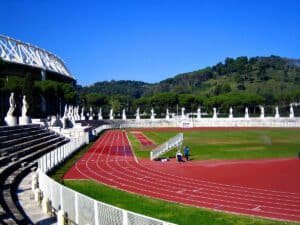
If I had to point to a single structure to see in this area, I would point to Stadio dei Marmi, today also named after Pietro Mennea. Built between 1928 and 1932 to a design by Del Debbio, it was born as an extension of the male Fascist Academy of Physical Education, for the daily training of the students. Since September 12, 2013 it carries, next to the original name, that of the sprinter who held the world record in the 200 meters for 17 years.
The perimeter stands are in white Carrara marble, obtained by raising the ground five and a half meters. Above the stands run 60 marble statues depicting different sports, plus four more in bronze. Almost all were donated by one of the provinces of Italy, which in 1935 numbered 94, and each bears on its pedestal the name of the province that gave it. It is a geographic catalog as well as a sporting one: the javelin statue comes from Perugia, the one for pallone col bracciale from Forlì.
The project explicitly provided that the facility could serve only for gymnastic and sporting events and not for soccer, and for soccer Stadio dei Centomila was later built next to it, in 1953. The capacity is about 5,280 seats, very few by today's standards, and precisely for this reason you feel inside something measured on the human being, not on the crowd.
From the late 1950s the field was assigned to field hockey in view of the 1960 Games, and during the Olympics it hosted group and semifinal matches. In 2024 it was redeveloped and used as a warm-up area for the European athletics championships held in the stadium next door. From the following year it became one of the competition venues of the Internazionali d'Italia tennis tournament.
What Has Happened Here, in Terms of Events
The list of international events hosted in the facilities of the Foro is long and gives the measure of the place: the Games of the XVII Olympiad in 1960, the European soccer championships in 1968, the European athletics championships in 1974, the Universiade in 1975, again the European soccer championships in 1980, the European swimming championships in 1983, the world athletics championships in 1987, the soccer World Cup in 1990, the world swimming championships in 1994 and then again in 2009, the first World Military Games in 1995, the beach volleyball world championships in 2011 and 2022, the European soccer championships in 2021, the European swimming championships in 2022, the European athletics championships in 2024. Since 1949 the courts of the Foro have hosted the Internazionali d'Italia tennis tournament. Since 2012 the stadium has hosted the home matches of the Italian national rugby team in the Six Nations.
And then there is the Walk of Fame, inaugurated on May 7, 2015 on viale delle Olimpiadi: 100 plaques set into the pavement with the names of as many legends of Italian sport, chosen by the CONI Athletes' Commission. If you arrive with an hour to spare, walking along that path reading the names is a better pastime than you might imagine.
The Tiber and Ponte Duca d'Aosta
The river passes about 100 meters from the entrance, and the bridge that connects the Foro to the Flaminio neighborhood is an integral part of the original project. Del Debbio had planned it as early as 1927 as a scenic entrance to the complex, in line with the marble stele.
In 1935 the Ministry of Public Works announced a design-build competition, to which 18 projects were submitted, signed by major names in Italian architecture: Vittorio Ballio Morpurgo, Pietro Aschieri, Giuseppe Vaccaro, and Del Debbio himself. The project by Vincenzo Fasolo won, with the collaboration of the structural engineer Aurelio Aureli. Work began on June 21, 1936 and lasted about three years, and the inauguration was on March 26, 1939.
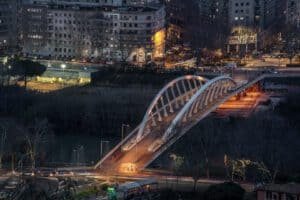
Technically it is reinforced concrete entirely clad in Tivoli travertine: 222.3 meters long, 30 wide, of which 21 is roadway and two sidewalks of four meters each. Three segmental arches, the central one with an intrados line of 100 meters spanning the river, the other two 25 meters long and conceived as vents for flood waters.
The part I recommend looking at up close is another: at the four corners, at street level, there are four pylons three and a half meters wide and five tall, clad in marble and lit at the top, whose faces carry high reliefs by the sculptors Ercole Drei, Domenico Ponzi, Oddo Aliventi and Vico Consorti. They depict scenes of World War I battles fought at the Sile, the Piave, the Tagliamento and the Isonzo by the Third Army commanded by Emanuele Filiberto of Savoy-Aosta, the Duke of Aosta after whom the bridge is named. They are four panels you can read in five minutes and that almost nobody looks at, because everyone drives past.
From each end of the bridge, wide marble stairways descend from road level to the level of the smaller arch, and from there other smaller ramps reach the river. On the southeast side the ramp near the bank has collapsed over time and spontaneous vegetation has covered it. It is a melancholy and very Roman detail: nature taking back the monumental travertine while nobody is watching.
A Curiosity About Hotel Butterfly
The best curiosity concerns the very name of the square where the address is, and it makes more sense after telling the story of Lauro de Bosis. A summer space called Hotel Butterfly, that is, named after a butterfly, has as its address a square dedicated to the first Italian who flew over Rome to drop words instead of bombs, the author of a drama in verse about Icarus, the man who flew with wings that were not his own.
Butterfly and Icarus. Light flight and tragic flight. A season that lasts a few months and a flight that lasted a few hours. There is no plan behind this coincidence, the names of summer spaces are born for reasons all their own, but whoever arrives knowing it takes home an evening of a different quality.
A Second Curiosity, on the Side
The second concerns the ground. The whole complex in which the space sets up rests on an area that before the 1920s was a swamp along the Tiber, made buildable by land reclamation. Whoever dances on this surface dances on land wrested from the water less than a century ago. And if on a summer evening here the humidity seems more insistent than in the center, the reason is not only the nearness of the river: it is the very conformation of the place.
There is then a third element that almost nobody connects. The GIL Music Academy, inside Palazzo delle Terme, has been Auditorium Rai del Foro Italico since 1995, a real concert hall with its own program. It means that in this perimeter music did not arrive with the summer spaces: there was a building designed for it already in the 1930s. The genre changes, the audience changes, the decibels change. The perimeter is the same.
The Formula, Word by Word
The list with which this space presents itself is a sort of index: music, food, art, mixology, shopping, hairstylist, tattoo, design and more music. It is worth taking it apart, because each item corresponds to a different way of occupying the evening, and anyone who arrives knowing what to expect chooses better the hour to come.
Music, at the Beginning and at the End of the List
The fact that music appears twice, at the opening and at the close, is not a typo: it is the declaration that everything else sits inside a sonic frame. In a club-rooted space the console is not an accessory, it is the point around which the topography of the area turns. The rest of the services arrange themselves according to it: the farther you get from the dance floor, the more you can talk.
This has a practical consequence I recommend keeping in mind. If the aim of the evening is to chat with someone, it is best to arrive early and take a peripheral spot before it fills up. If the aim is to listen, it is best to arrive later, when the volume rises and the central part tightens up. The two things hardly coexist in the same spot and at the same hour.
Food
Food service in Roman summer spaces has made great strides in the last 10 years. It has gone from the generic griddle to a logic of themed counters, often entrusted to brands that work elsewhere in the city the rest of the year. The consequence, for those who go, is that it is best to eat early: the counters have limited quantities and the best things run out before the evening peak.
Another warning that holds anywhere outdoors: lines all form at once, because the crowd moves in waves tied to changes at the console. Whoever goes to get food five minutes before the wave saves 20 minutes of waiting. Just watch the stage to know when it is best to move.
Mixology
The word indicates a bar where mixing is treated as a discipline, with built recipes, fresh ingredients and a person who knows what they are doing. I'll say the most useful thing right away: in a Roman summer area in July, with the humidity rising from the river, the drink that truly serves is water, and it is best to alternate it with whatever else you choose. The Roman night heat is insidious precisely because it doesn't seem like heat: the temperature drops little and the air stays still. Whoever spends four hours standing outdoors dehydrates more than they think.
Art and Design
Summer spaces gladly host installations, displays, small exhibitions. In a context like this, where the surrounding architecture is already very strong, contemporary display works when it talks to the marble instead of pretending it isn't there. The interesting game, for those who look, is exactly this: noticing how a 21st-century design object behaves 20 meters from a statue of 1932.
Shopping, Hairstylist, Tattoo
These are the three items that surprise most those who don't frequent these places, and they are also the ones that define their character. Small independent retail, craft stalls, brands selling directly: all of this turns the evening into something that looks more like a night market than an open-air disco.
The hairstylist and tattoo stations are the most characteristic element. Here I gladly make a recommendation, as someone who has seen quite a few decisions made at night: a tattoo is permanent and an evening is not. Whoever is thinking about it should think about it awake and clear-headed, look at the portfolio, ask about hygiene conditions, and if in doubt put it off. The design isn't going anywhere. For hair the reasoning is lighter, but the principle remains.
How to Get There
The Foro Italico area has a characteristic that confuses those arriving from outside: on the map it looks very close to the center, and as the crow flies it is, but direct connections are less convenient than the drawing suggests. It is best to allow more time than expected.
By Public Transport
The useful metro line is A, getting off at the Ottaviano stop or at Lepanto, and then a bus or a considerable walk. Alternatively, from the opposite side of the river, the Flaminio neighborhood has the Flaminio stop of metro A and, from there, the tram and the Roma-Viterbo railway toward the north. Several surface lines serve the area along the lungotevere and the avenue.
The recommendation concerns the return: evening service hours are more limited than daytime ones, and whoever leaves late at night must have a plan that doesn't depend on the last run. Checking beforehand is a five-minute chore that saves an hour of waiting.
On Foot, from Flaminio
It is the best option, and also the most beautiful. Whoever arrives from Piazzale Flaminio or from the Auditorium area can go up north along the river and cross Ponte Duca d'Aosta, entering the complex exactly along the axis it was designed for, with the obelisk growing in front of you as you get closer. It is a walk of 20 or 25 minutes from the Auditorium area, flat, and it offers the only entrance that conveys the sense of the original layout. Doing it at sunset, with the travertine turning orange, is worth the time spent all by itself.
By Car, Taxi, Bicycle
By car the area is reached from the lungotevere on the right bank or from the Olimpica. The problem is not getting there, it is parking: on event nights parking spreads like an oil stain into the streets of the Della Vittoria neighborhood, and the return toward the center becomes slow. A taxi works well on the way there and worse on the way back.
The bicycle is a good idea, because the lungotevere is flat and the bike path along the river covers much of the route from the center. You need a serious chain and a lit place to park.
Something Nobody Tells You About Hotel Butterfly
The thing you don't read anywhere concerns the relationship between these spaces and their locations, and it is the reason I write this piece focusing on the place more than on the calendar.
Roman Summer Spaces Move
In Rome a summer space is almost always a project without a home of its own. It lives on areas granted for a season, on tenders, on agreements with whoever manages a public or private area. The result is that the brand stays and the address changes. There are historic Roman formats that in 15 years have changed four or five locations, moving from one end of the city to the other, and each time the public has had to relearn how to get there.
Whoever has frequented these places for years knows this and takes it for granted. Whoever arrives for the first time, instead, tends to treat the address as if it were a restaurant's. It doesn't work that way. Before leaving home it is always best to check the organization's official channels for the current season: location, opening days, hours, entrance conditions. Five minutes of checking avoids a wasted trip.
The Second: The Perimeter Shapes the Acoustics
An open-air area inside a monumental complex has precise acoustic rules that leave little room for negotiation. The hard surfaces of marble and travertine reflect, greenery absorbs, the absence of a ceiling disperses the high frequencies upward and lets the low ones walk along the ground. The result is that the best place to listen is almost never in front of the console.
The right spot, as a rule, is a little behind the first row and slightly to the side, where the direct sound and the reflected sound have already recomposed. You find it by walking: three minutes of trying, stopping at four different points, are enough. Whoever does this spends an evening that sounds better than whoever plants themselves in the middle and never moves again.
The Third: The Wind from the River
The nearness of the Tiber produces, on July and August nights, a light movement of air that in the middle hours of the evening can't be felt and that after one in the morning starts to be noticed. Whoever stays late, especially if they have danced and have a wet shirt, notices it. A light shirt in the backpack is one of those banal details that make the difference between getting home well and getting home with a cold in August.
My Advice for Visiting Hotel Butterfly
The main advice is just one and I sum it up like this: arrive early and treat the Foro Italico as part of the evening, not as the parking lot of the evening.
Building the Afternoon
In summer in Rome the sunset comes late, and in the central weeks of the season the real light goes out only after nine in the evening. This opens a window almost nobody uses: arriving in the area an hour and a half before the space opens, when the complex can still be walked and the light is the good kind.
The route I recommend is simple. You arrive at Flaminio, take the lungotevere north, go up onto Ponte Duca d'Aosta and stop at the pylons at the corners to read the high reliefs. You cross over, enter the mosaic avenue and walk all of it looking at the tiles under your feet. You reach the obelisk and walk around it. Then, if access is allowed at that moment, you make a detour to Stadio dei Marmi to see the statues in low sun, which is the condition in which the white marble looks its best. By then two hours have passed, the sun has gone down and the evening can begin.
What to Bring and What to Leave at Home
Closed, comfortable shoes, because you spend hours on your feet on hard, uneven surfaces. A light long-sleeved top for the second part of the night. A water bottle or at least the habit of drinking water regularly. A power bank, because a phone with little signal and lots of photos runs down sooner than expected, and you use it to get home too.
To leave at home: bulky bags, valuables you don't need, and the idea of being able to park 100 meters from the entrance. On specific access rules, that is, what is allowed and what is not, the only reliable source is the organizers, and it changes from season to season.
The Time to Leave
The general rule of open-air spaces is that the exit is concentrated in 20 minutes, and it is the worst moment to look for a taxi or a bus. Whoever has no precise time constraint can simply let the first wave pass, stay inside a quarter of an hour longer and leave when the flow has already broken up. Whoever instead has to catch a ride at a precise hour should do the opposite, and leave early.
The Neighborhood Around
The Foro Italico sits between two neighborhoods with very different characters, and knowing them helps organize the hours before and after.
Della Vittoria and Monte Mario
On the right bank of the river, behind the complex, is the Della Vittoria neighborhood, residential, orderly, with 1930s and 1950s apartment buildings and a neighborhood commercial life. Going up higher you reach Monte Mario, which is the highest hill in Rome and offers one of the widest panoramas over the city. It is not a nightlife area: it is an area where people live. This means two things: that after a certain hour noise is a serious matter for those who live there, and that whoever leaves an event would do well to cross it speaking in a normal voice.
Flaminio, on the Other Bank
On the left bank, beyond the bridge, is Flaminio, which in the last 20 years has become one of the most interesting neighborhoods in Rome on the cultural side. Here are Auditorium Parco della Musica, the national museum of 21st-century arts, the Palazzetto dello Sport by Nervi and Vitellozzi, the 1960 Olympic village with its architecture on pilotis. It is the right place to spend the afternoon if you arrive early, and it has a density of cafes and restaurants much higher than the opposite bank.
Milvian Bridge
A little farther north is Ponte Milvio, which is both a very ancient monument and one of the hubs of Roman nightlife. The bridge already existed in its stone version in the second century BC, and in AD 312 it was the stage for the battle between Constantine and Maxentius that changed the course of European religious history. Today the area around it is full of venues and people. For those who want to stretch the evening or look for something to eat late at night it is the closest reference point.
Another Well-Known Fact, Yet Rarely Cited
The fact is this: the Foro Italico was not finished in 1933. It is a construction site that closed in 1968, that is, 35 years later, and this means that what you see today is the product of two opposite historical eras, layered on the same ground.
The first phase, between 1927 and 1933, is that of the regime: Del Debbio, Palazzo H, Stadio dei Marmi, the obelisk, the mosaic avenue, the classicist rhetoric, white marble as an ideological material. The second phase, between 1956 and 1968, is that of the Republic: the preparation for the 1960 Games, the completion of the facilities, the architectural language of postwar Italy, with other materials and other intentions.
This double nature is visible to the naked eye, and it is the thing I recommend looking for to anyone with half an hour before going in. It is enough to observe two buildings side by side and notice how the thicknesses, the finishes, the way of treating corners change. A complex that seems monolithic, and that everyone describes as such, in fact tells of an enormous historical fracture, simply by building it.
The same goes for the name. Foro Mussolini until August 1943, Foro Italico from then on, by decision of CONI taken in the aftermath of the fall of the regime. A change of name that erased nothing of the stones but changed the frame within which they are to be read, and that continues to generate discussion 80 years later.
The Right Photo to Take at Hotel Butterfly
I point out three, in order of increasing difficulty, and none of the three is the photo of the console with raised hands, which comes out the same all over the world.
The First: The Mosaic Avenue in Perspective
You stand in the middle of viale del Foro Italico, lower the phone almost to the ground, and frame the black and white tile pavement running off toward the obelisk. The geometry does everything by itself: the tiles create very strong vanishing lines and the obelisk closes the composition vertically. The right hour is sunset, when the raking light brings out the relief of the tiles instead of flattening it. If you arrive after dark, the same photo still works thanks to the artificial lighting, but you need to rest the phone on something, because exposure times get longer.
The Second: The Statues of Stadio dei Marmi Backlit
If access is possible at the moment you are in the area, the 60 statues on the stands seen from below, with the sky behind, give an image you can't get anywhere else in Rome. The trick is to get low, on the field or at any rate at the level of the playing field, and frame a single statue against the sky instead of the whole row: the row makes a documentary photo, the single figure makes a photograph. With the sky of a summer sunset the Carrara white turns pink.
The Third: From the Bridge, Toward the Complex
The hardest and the most beautiful. You stand in the middle of Ponte Duca d'Aosta, on the sidewalk on the hill side, and frame the axis that from the bridge enters the avenue and reaches the obelisk, with green Monte Mario in the background. It is the exact perspective for which the bridge was designed in 1936, and it is the reason it exists. Doing it at the blue hour, that is, in the 20 minutes after sunset, when the sky is still bright and the artificial lights are already on, gives the best result. Watch out for traffic: the sidewalk is four meters wide, there is no reason to step onto the roadway.
A Note on Context
Night photos in the middle of a crowd have two recurring problems: little light and people who haven't asked to be photographed. The first is solved by giving up the zoom. The second with common sense: architecture, details, objects, and leave other people's faces alone.
Some Important Events That Happened Here in History
The perimeter in which this space sets up has a dense chronology, and it is worth going over it because whoever knows it walks differently.
1927-1933: The Construction
Enrico Del Debbio's project starts in 1927 at the urging of Renato Ricci. The area, a swamp along the Tiber, is reclaimed. On November 4, 1932 the first works are inaugurated: Palazzo H, the stele, Stadio dei Marmi, Stadio dei Cipressi. In 1933 the magazine "Architettura" devotes a whole issue to the complex, with essays by Marcello Piacentini and Mario Paniconi: it is the moment when the operation is consecrated as an architectural manifesto.
1936-1939: The Bridge
In 1935 the design-build competition for the bridge, in 1936 the start of work, on March 26, 1939 the inauguration, during the celebrations for the 20th anniversary of the founding of the Fasci di combattimento. The complex acquires the scenic entrance for which it had been conceived.
August 1943: The Change of Name
With Mussolini fallen, CONI renames the complex Foro Italico. The stones stay, the frame changes.
1953-1960: The Olympic Phase
In 1953 Stadio dei Centomila, intended for soccer, is completed, next to Stadio dei Marmi, which by design could not host it. In 1960 Rome organizes the Games of the XVII Olympiad: Stadio dei Marmi, with the field assigned to field hockey, hosts group and semifinal matches. It is the edition that changes the international perception of postwar Italy.
From 1949 to Today: Tennis
Since 1949 the courts of the Foro have hosted the Internazionali d'Italia, which over time have become one of the main events of the world circuit. For two weeks a year this piece of the city becomes the center of European tennis, with a quantity of public that no other event here produces with the same regularity.
1974, 1987, 2024: Athletics
European athletics championships in 1974, world championships in 1987, European again in 2024, with Stadio dei Marmi redeveloped and used as a warm-up and training area. Three dates that mark the sporting continuity of the place.
1990 and 2021: Soccer
In 1990 the complex hosts matches of the soccer World Cup, with the renovation of the stadium that gives it the Teflon roof that still characterizes it today. In 2021 the European Championships arrive.
2015: The Walk of Fame
On May 7, 2015 on viale delle Olimpiadi, 100 plaques dedicated to the legends of Italian sport are inaugurated, chosen by the CONI Athletes' Commission, with the announcement that others would be added in the following years. A way of layering recent memory over ground designed to celebrate another memory.
October 3, 1931: The Flight
Outside the perimeter but inside the history of this address, on the evening of October 3, 1931 Lauro de Bosis flies over Rome and lets 400,000 leaflets fall, then heads toward the sea and disappears. The Foro, then Foro Mussolini, had been inaugurated the year before in its first works. The square that today bears the poet's name opens right onto the entrance of that complex.
Who Has Passed Through Hotel Butterfly
Here I have to be precise, because on this item more nonsense is written than on any other. The names of who plays in a summer space change every night and every season, and anyone who lists them without the official program of that specific edition in front of them is writing a novel. The program is published by the organizers, and that is where it should be looked for.
What can be said with certainty, instead, concerns the tradition this space comes from and the ground it sets up on.
The World of the Goa Family
The core that signs this project comes from Goa, a Roman club in the Ostiense area that for decades has been one of the Italian reference points for electronic music. A club of that kind, over the course of its history, has hosted hundreds of Italian and international selectors and has formed an audience community that recognizes itself in a way of listening more than in any single name. When this community moves outdoors for the summer, it brings that listening culture with it, and that is the trait you recognize on entering.
Who Has Passed Over This Ground
On the historical side, instead, the list of those who have passed through this part of the city is impressive and verifiable. Generations of Italian athletes have trained and competed here, from the 1960 Games onward. Here have played the tennis players who since 1949 come every year for the Internazionali. Here have run the athletes of the 1987 world championships and of the European championships of 1974 and 2024. Along viale delle Olimpiadi are set the plaques of 100 legends of Italian sport. And the stadium next door, in 1960 and 1990 and 2021, has hosted the whole world.
On the architectural side, those who have passed through here include Enrico Del Debbio, Luigi Moretti, Vincenzo Fasolo, Costantini, plus the sculptors who signed the 60 statues and the four pylons of the bridge: Ercole Drei, Domenico Ponzi, Oddo Aliventi, Vico Consorti. Names that can still be read on the pedestals, for those who bend down to look at them.
And finally, above all this, on the evening of October 3, 1931 a poet flew by with 400,000 sheets of paper. He did not stop, but the square bears his name.
Frequently Asked Questions About Hotel Butterfly
What is Hotel Butterfly, despite the name?
Hotel Butterfly is not a hotel, but an open-air summer space in Rome that borrows the name and the idea of the hotel as a place of passage, where you enter, stay a while, meet people and then leave. The name plays on the idea of the butterfly applied to a summer evening.
Where is Hotel Butterfly?
Hotel Butterfly is at Piazza Lauro de Bosis 3, the open space at the monumental entrance of the Foro Italico, on the river side, in line with the bridge. In the same area is the CONI headquarters, in Palazzo H.
How do you get to Hotel Butterfly by public transport?
To reach Hotel Butterfly it is best to take metro A and get off at the Ottaviano or Lepanto stop, then continue by bus or on foot to the Foro Italico. Direct connections are less convenient than the closeness on the map might suggest, so it is best to allow more time than expected.
What can you do at Hotel Butterfly?
Hotel Butterfly offers a formula that combines music, food, art, mixology, shopping, hairstylist, tattoo and design. Each item corresponds to a different way of occupying the evening, and whoever arrives knowing what to expect chooses better the hour to come.
What is the best time to go to Hotel Butterfly?
It is best to arrive early at Hotel Butterfly and treat the Foro Italico as part of the evening, not just as a destination. In summer in Rome the sunset comes late, and in the central weeks of the season the light goes out only after nine in the evening, which opens a useful window to enjoy the area of the sports complex too.
What neighborhood surrounds Hotel Butterfly?
The Foro Italico, where Hotel Butterfly is, sits between two neighborhoods with very different characters: on the right bank of the Tiber is Della Vittoria, residential and orderly, while going up you reach Monte Mario.
Who plays at Hotel Butterfly?
The names of who plays at Hotel Butterfly change every night and every season, so the program should be looked up on the official channels of the organizers. It is not possible to name specific artists with certainty without the updated calendar of that particular edition in front of you.
If the Evening Is Part of a Longer Trip
Whoever comes to Rome for a few days and puts an evening like this in the schedule does well, on one condition: treat it as a Roman evening and not as a parenthesis. The afternoon at Flaminio, the walk on the bridge at sunset, the mosaic avenue in low light, and then the music. Whoever wants to extend along the river finds another summer event in the evenings along the Tiber between Ponte Sublicio and Ponte Sisto, which is the same idea of an open-air city applied to a much more central stretch.
Article written by the editorial team of TourLeaderPro, contact them for Private, Corporate and V.I.P. Tours and Experiences. Whoever wants a guided walk in the Foro Italico and the Flaminio neighborhood, between 1930s architecture and contemporary architecture, with a licensed guide, can write from the TourLeaderPro contact page. For agencies and operators building evening and music programs in Rome there is a dedicated service in the area reserved for tour operators.
Planning a trip to Italy? The English-language guides are on ItalyPlanner.com. To set up your days in Rome the reference is the page on the best things to do in Rome, while whoever has three full days finds a ready-made plan in the 3-day Rome itinerary.
Contact Information
Piazza Lauro de Bosis, 3
Roma Roma Città, Roma Città
Nearby
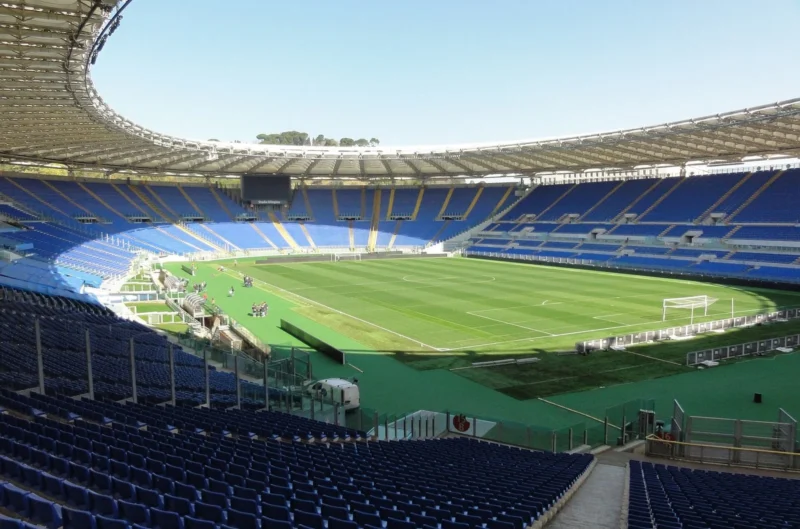
 Stadio Olimpico200 m
- Foro Italico200 m
- Ponte della Musica – Armando Trovajoli600 m
- Teatro Olimpico800 m
- Oasis in Rome 2027: the three dates at Stadio Olimpico900 m
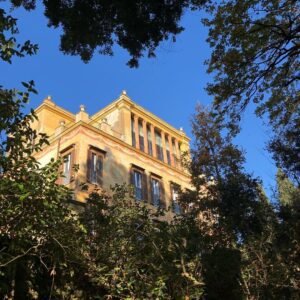
- Villa Mazzanti900 m

Upcoming events nearby
- Vasco Rossi, Residency Show at Stadio Olimpico in Rome, June 2027300 m
- Olly at Stadio Olimpico in Rome, Tour Stadi 2027300 m
- Pinguini Tattici Nucleari at Stadio Olimpico in Rome, Tour Stadi 2027300 m
- Laura Pausini at Stadio Olimpico in Rome, Io Canto World Tour 2027300 m