Handel’s Theodora with Christophe Rousset at Santa Cecilia, November 16, 2026
In short. Handel's Theodora comes to the Accademia Nazionale di Santa Cecilia on Monday, November 16, 2026 at 20:00, in Sala Sinopoli at Auditorium Parco della Musica Ennio Morricone, Viale Pietro de Coubertin 30, with the Monteverdi Choir and…
Handel's Theodora comes to the Accademia Nazionale di Santa Cecilia on Monday, November 16, 2026 at 20:00, in Sala Sinopoli at Auditorium Parco della Musica Ennio Morricone, Viale Pietro de Coubertin 30, with the Monteverdi Choir and the English Baroque Soloists conducted by Christophe Rousset. The main roles are sung by Marie Lys, Alice Coote, Iestyn Davies, Guy Cutting, John Chest and Jonathan Hanley. Tickets cost from 28 to 52 euros and are sold on the Accademia's official website, which links to the authorized presale network, or at the box offices of the Auditorium and of Via Vittoria 6. You reach the Auditorium by tram 2, Flaminia/Reni or Apollodoro stops, and by buses 910, 982, 168 and 53, and the nearest metro station is Flaminio, on line A.
Theodora at Santa Cecilia: date, time and tickets
Handel's Theodora is performed in concert form on Monday, November 16, 2026 at 20:00 in Sala Sinopoli, with tickets from 28 to 52 euros.
The time and punctuality
The Accademia warns that its concerts start on time: latecomers can't enter the hall and must wait for the first suitable moment. For an oratorio in three acts, arriving half an hour early isn't excessive caution.
Prices
The official concert page gives tickets from 28 to 52 euros, depending on the section. Discounts for young people, agreements, culture cards and the carta del docente are explained in the dedicated sections of the Accademia's website.
Where to buy
According to the Accademia, the only authorized sellers are the outlets of the presale network that the purchase button on the official page links to, the box office of Auditorium Parco della Musica Ennio Morricone and the one at Via Vittoria 6. The Accademia is not responsible for markups applied by unauthorized sellers.
Information
The Accademia's infoline answers at 06 8082058, and for the box office there's biglietteria@santacecilia.it. The official concert page is on the Santa Cecilia website.
The performers: Monteverdi Choir, English Baroque Soloists, Christophe Rousset
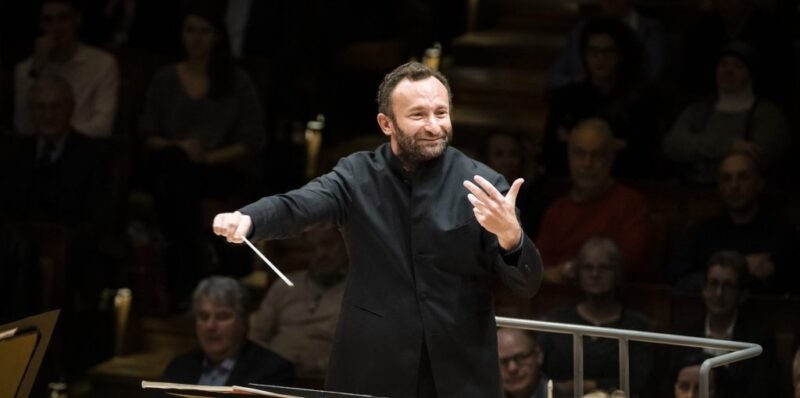
The concert brings together two British ensembles specializing in early music, the Monteverdi Choir and the English Baroque Soloists, under the direction of the French harpsichordist and conductor Christophe Rousset.
The vocal cast
The Accademia's page lists Marie Lys as Theodora, Alice Coote as Irene, Iestyn Davies as Didymus, Guy Cutting as Septimius, John Chest as Valens and Jonathan Hanley as Messenger.
The choir and the orchestra
In Theodora the choir plays a decisive role: it portrays two opposing peoples, the persecuted Christians and the pagans of Antioch. Giving it to the Monteverdi Choir means putting one of the most famous choirs in the world at the center.
Period instruments
The English Baroque Soloists play on period instruments, as befits Handel's music: strings with gut strings, natural winds, harpsichord and organ for the continuo.
Handel's Theodora: the oratorio
Theodora, catalogued as HWV 68, is a dramatic oratorio in three acts by George Frideric Handel to an English libretto by Thomas Morell, first performed at the Covent Garden Theatre in London on March 16, 1750.
The composition
Handel began working on it in June 1749, at 64, and completed it on July 31 of the same year. It came after Solomon and Susanna and is his second-to-last oratorio.
A Christian tragedy
Unlike the earlier oratorios, Theodora is a tragedy, ending with the death of the heroine and her converted companion. It is also Handel's only dramatic oratorio in English on a Christian subject, far from the Old Testament stories the London audience was used to.
The libretto
Thomas Morell, a friend of the composer and already the author of other librettos for him, drew on The Martyrdom of Theodora and of Didymus by Robert Boyle, scientist and theologian, published in 1687, and on Corneille's Théodore, vierge et martyre. Handel would leave him 200 pounds in his will.
Handel's orchestra
The score calls for strings, two flutes, two oboes, two bassoons, contrabassoon, two horns, two trumpets, timpani, harpsichord and organ. Trumpets, horns and timpani underline the Roman scenes, and the flutes appear in the prison scene.
The plot of Theodora
The story takes place in Antioch in the fourth century, during the persecution of the Christians: at its center are the noble Christian Theodora and Didymus, a Roman soldier secretly converted, who risks his life to save her.
Act one
The Roman governor Valens orders that, for the birthday of the emperor Diocletian, all citizens offer sacrifices to Venus and Flora, on pain of death, and entrusts Septimius with carrying out the decree. Didymus asks for mercy for those who cannot sacrifice to idols, but is rejected. Theodora and her friend Irene pray in secret with the other Christians, Septimius arrests them, and Theodora is sentenced not to death, which she would prefer, but to serve in the temple of Venus.
Act two
While the pagans celebrate the feast, Theodora, a prisoner, moves from fear to contemplation of eternal life. Didymus confesses to Septimius that he is a Christian and gets permission to visit her. He persuades her to exchange clothes with him and escape in his helmet and uniform, staying in her place. The Christians recall the miracle of the widow of Nain.
Act three
The Christians celebrate Theodora's return, but she feels guilty about the risk Didymus has taken. When news of his capture arrives, she gives herself up to Valens to save him. The two compete for the right to die in each other's place. Septimius asks for mercy, but Valens condemns them both. The oratorio closes with their duet and the chorus of the Christians.
The music: the choruses, the duets, the most famous aria
The music of Theodora alternates the choruses of the pagans, full of drive and brilliance, with the quiet, deep conviction of the Christian choruses, with pages of luminous beauty and characterization of the figures entrusted to the music.
Angels, ever bright and fair
At the end of the first act Theodora sings Angels, ever bright and fair, the aria in which she asks the angels to take her with them: it's the best-known page of the oratorio, often performed on its own in recitals too.
He saw the lovely youth
The chorus that closes the second act, He saw the lovely youth, tells of the resurrection of the son of the widow of Nain. It begins with slow, solemn chromatic figures in a minor key and moves to the major when the young man returns to life. Handel considered it superior even to the Hallelujah of Messiah.
Three duets
The oratorio contains three duets, and the last, Streams of pleasure ever flowing, is the one in which Theodora and Didymus go to their deaths, one of the finest pages in Handel's whole catalog.
The Monteverdi Choir and the English Baroque Soloists
The Monteverdi Choir was founded in 1964 by John Eliot Gardiner for a performance of Monteverdi's Vespers of 1610 in the chapel of King's College, Cambridge, and for more than 60 years has been considered one of the most influential choirs in the world.
The repertoire
The choir is known for its stylistic consistency and for a repertoire ranging from the Renaissance to the 20th century. It often performs with the English Baroque Soloists and the Orchestre Révolutionnaire et Romantique, both also founded by Gardiner.
The Bach pilgrimage
In 2000, for the 250th anniversary of Bach's death, choir and orchestra undertook the Bach Cantata Pilgrimage, performing almost all of the composer's sacred cantatas in more than 60 churches in Europe and the United States, following the liturgical calendar.
Recent milestones
In 2014 the choir celebrated its 50th anniversary by repeating Monteverdi's Vespers in the chapel of King's College, in 2023 it sang with the English Baroque Soloists at the coronation of Charles III, and in January 2024 it was named best choir at the Oper! Awards in Amsterdam. In July 2024 Gardiner left the artistic direction.
Handel in the catalog
The choir's discography includes several Handel titles, from the 1982 Messiah to Dixit Dominus and the live 2019 Semele. Theodora fits into a familiarity with the composer's music that goes back decades.
Who Christophe Rousset is
Christophe Rousset is a French harpsichordist and conductor born in Avignon on April 12, 1961, a scholar and performer of Baroque music on period instruments.
His training
After the piano, at 13 he discovered early music and the harpsichord. He studied in Paris at the Schola Cantorum with Huguette Dreyfus and continued at the Royal Conservatory in The Hague with Kenneth Gilbert, Bob van Asperen and Gustav Leonhardt. In 1983 he won first prize at the International Harpsichord Competition in Bruges.
His career
He began an international concert career as a soloist at early music festivals and with Baroque orchestras such as the Academy of Ancient Music, Les Arts Florissants, Musica Antiqua Köln, La Petite Bande and Il Seminario Musicale.
Les Talens Lyriques
In 1991 he founded his own ensemble, Les Talens Lyriques, with a name that pays tribute to Rameau and his opéra-ballet Les Fêtes d'Hébé ou les Talens lyriques. With the ensemble and as a soloist he has recorded many albums.
With the Monteverdi Choir
His relationship with the London ensembles is recent and documented: in December 2024 Rousset conducted choir and orchestra in the recording of a Christmas album devoted to Marc-Antoine Charpentier, released in 2025 on the choir's label.
A curious fact about Handel's Theodora with Christophe Rousset at Santa Cecilia, November 16, 2026
The most surprising curious fact is that Theodora was a flop, and that Handel loved it more than any other of his oratorios. At the premiere, on March 16, 1750, the London audience received it coldly: it was performed only three times and revived just once, in 1755, becoming the least performed of his oratorios. Two explanations have been handed down: the Christian subject, far from the biblical stories London was used to, and an earthquake about a week before the premiere, which led some of his regular supporters to leave the city.
And yet some connoisseurs understood right away. Lord Shaftesbury, after hearing it three times, judged it one of Handel's most polished compositions, and Mary Delany, one of his most loyal admirers, recalled listening to it with her sister as an intimate pleasure. And Handel himself considered the chorus He saw the lovely youth superior to the Hallelujah of Messiah.
Today Theodora is recognized as a masterpiece: time has proved the composer and the few listeners of 1750 right.
Sala Sinopoli at Auditorium Parco della Musica
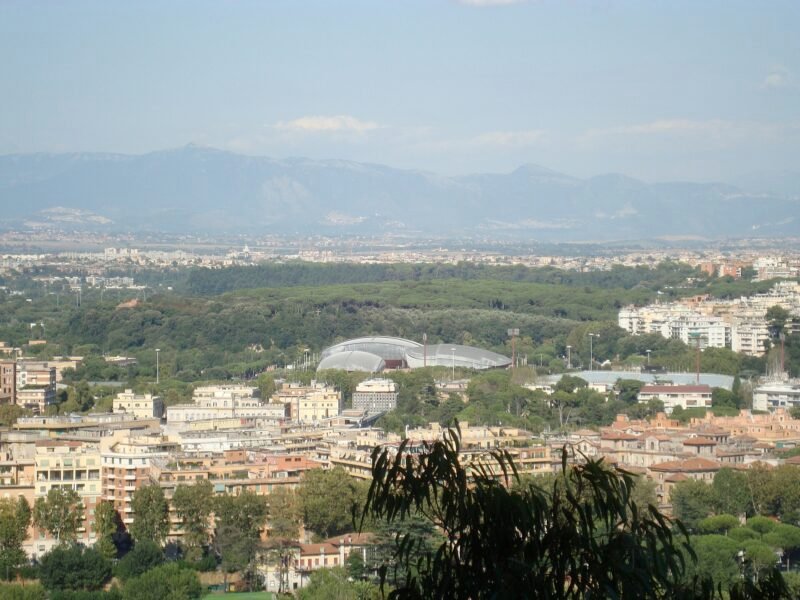
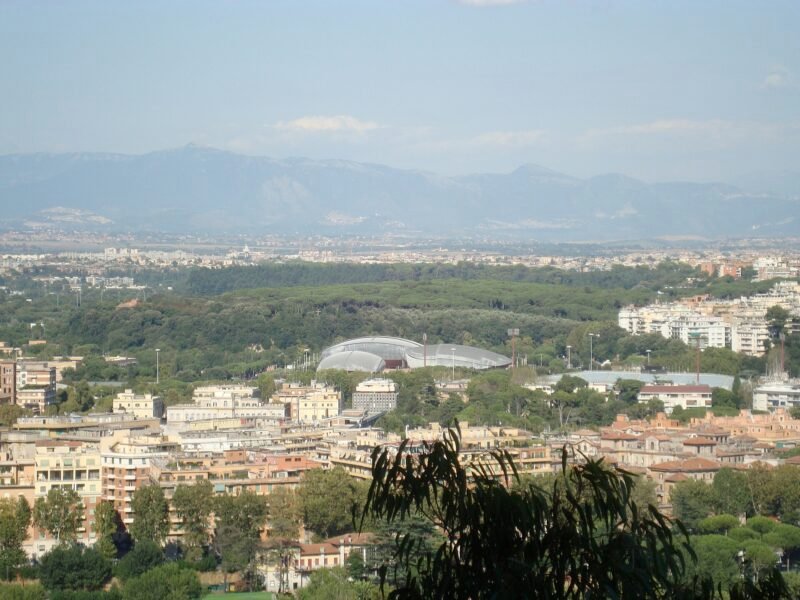
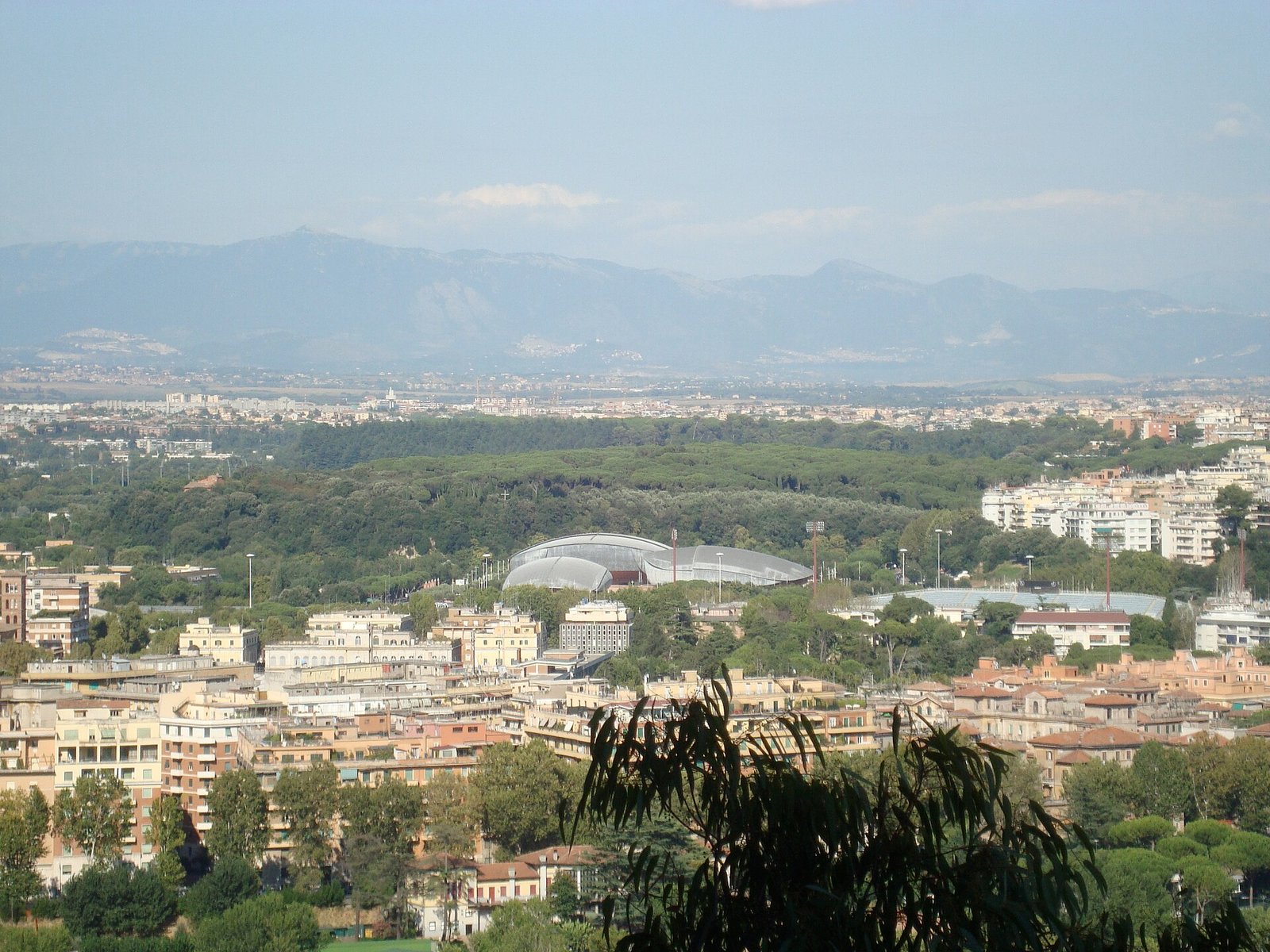
Sala Sinopoli is one of the three large halls of Auditorium Parco della Musica Ennio Morricone, the complex designed by Renzo Piano at Viale Pietro de Coubertin 30, permanent home of the Accademia Nazionale di Santa Cecilia's season since 2003.
The first hall to open
Sala Sinopoli was the first to open, on April 21, 2002, some months before the opening of the rest of the complex, on December 21, 2002, with Sala Santa Cecilia.
Three halls and a cavea
Next to Sinopoli are Sala Santa Cecilia, the largest, and Sala Petrassi, plus the open-air cavea and Teatro Studio. For a Baroque oratorio with a chamber choir and a period instrument orchestra, Sinopoli offers a more intimate size than the large symphonic hall.
The Accademia and the Auditorium
The Auditorium is the Accademia's main home, where it also keeps the Bibliomediateca and the Museum of Musical Instruments. General information on the complex is on the page on Auditorium Parco della Musica.
Something nobody tells you about Handel's Theodora with Christophe Rousset at Santa Cecilia, November 16, 2026
What few people say is that Theodora, although an oratorio, is often treated as an opera. It was staged at the Glyndebourne Festival in 1996, directed by Peter Sellars and conducted by William Christie, in a production considered a milestone, and at the Salzburg Festival in 2009. In 2022 the Royal Opera House in London presented its first production since the 1750 premiere, directed by Katie Mitchell. At Santa Cecilia, instead, the oratorio returns to the form it was born for, the concert: no sets, no costumes, all the attention on the voices, the choir and the orchestra.
The second thing rarely said concerns the role of Didymus. At the 1750 premiere it was written for an alto castrato, Gaetano Guadagni, while Theodora was sung by the soprano Giulia Frasi. In modern performances the part of Didymus is given to voices that can sustain that range, and in Rome it's sung by Iestyn Davies.
The third is practical: the Accademia is strict about punctuality. An oratorio in three acts starts at 20:00 sharp, and anyone arriving later stays outside until the first suitable moment.
My tip for visiting Handel's Theodora with Christophe Rousset at Santa Cecilia, November 16, 2026
The first tip is to prepare on the text. Theodora is sung in English: reading the plot before the concert, act by act, lets you follow the action even without sets. Morell's complete libretto is easy to find online.
The second is to listen to three pages beforehand: the aria Angels, ever bright and fair, the chorus He saw the lovely youth and the final duet. Recognizing them in the hall changes the experience.
The third is to arrive early. The concert starts at 20:00 sharp, on a Monday, and rush-hour transport is slow. Half an hour early lets you pick up your tickets, leave your coat and go up to the hall without rushing.
The fourth is to choose your seat for listening rather than for the view: in an oratorio in concert form there's no stage action to watch, and a central seat a little toward the back gives a better balance between choir, soloists and orchestra.
How to get to Auditorium Parco della Musica
Auditorium Parco della Musica Ennio Morricone can be reached by tram 2, Flaminia/Reni or Apollodoro stops, and by buses 910, 982, 168 and 53. The metro doesn't come this far: the nearest station is Flaminio, on line A.
Metro A and tram 2
From Flaminio station you come out on Piazzale Flaminio and take tram 2, which runs along Via Flaminia. You get off at Flaminia/Reni or Apollodoro and walk for a few minutes toward Viale Pietro de Coubertin, crossing the Villaggio Olimpico.
Bus 910 from Termini
The 910 leaves from Piazza dei Cinquecento, in front of Termini station, and takes you to the Auditorium with no changes: the most straightforward option if you arrive by train or are staying near the station.
The other lines
The 53, 982 and 168 complete the connections. November 16 is a regular Monday, and for the trip home in the evening it's best to check the times on the Rome transport company's journey planner.
By car
The stretch of Viale Pietro de Coubertin in front of the Auditorium is closed to traffic. The complex has a paid parking lot inside with limited spaces, and on concert nights the streets of the Villaggio Olimpico fill up early.
Another well-known fact, yet rarely mentioned
It's well known that Handel is the composer of Messiah. Less often remembered is how closely his oratorios are tied to the theater: Theodora premiered in 1750 at the Covent Garden Theatre, a performance venue, not a church. It's one of the reasons why, today, directors are happy to stage these works, from Glyndebourne to Salzburg up to the Royal Opera House, which brought Theodora back to its stage in 2022 for the first time since 1750.
Another rarely mentioned fact: the libretto of Theodora comes from a book by Robert Boyle, a leading scientist and theologian of 17th-century England. The account of the martyrdom of Theodora and Didymus, published in 1687, reached Handel through his friend Thomas Morell, who added ideas from Corneille's tragedy.
And one more: the original libretto included a scene in which Septimius in turn converted to Christianity, printed but never set to music by Handel.
The right photo to take at Handel's Theodora with Christophe Rousset at Santa Cecilia, November 16, 2026
The right photo at a Santa Cecilia concert isn't taken during the performance: an oratorio lives on silences, and a lit screen in the hall disturbs both those singing and those listening. The moment is the final applause, with the choir standing, the soloists at the front of the stage and Rousset pointing to the orchestra.
Before the concert, the photo to take is of the lit Auditorium, with the three large lead-clad volumes Renzo Piano arranged around the cavea. In the November dark, at 19:30, the lights of the foyer and the cavea outline the shapes of the buildings well.
If you arrive early you can look for a less obvious detail: from the terrace between Sala Santa Cecilia and Sala Sinopoli you can see the remains of the Roman villa discovered during construction, an image that puts ancient and contemporary side by side.
Some important events that happened here in history
The land the Auditorium stands on has a much longer history than the complex. During construction the remains of a Roman villa built in the third century BC on the site of a small archaic farm from the sixth century BC came to light, and the discovery forced Renzo Piano to change the project, moving two of the three halls. The finds are displayed in a small museum under the cavea.
The modern history begins with a demolition: in 1936 the Augusteo hall was torn down, and for more than 60 years Rome had no auditorium built for symphonic music. In 1992 the city council chose the Villaggio Olimpico area, and in 1993 Renzo Piano won the competition. On April 21, 2002 Sala Sinopoli opened, the same hall as this concert, and on December 21, 2002 the rest of the complex was opened. Since 2003 the Auditorium has been the permanent home of the Accademia's season, and in 2020 it was named after Ennio Morricone.
For the work on the program, these are the dates that count: 1687, Robert Boyle's book, June and July 1749, the composition, March 16, 1750, the premiere at Covent Garden, 1755, the only revival, 1996, the Glyndebourne production, 2009, Salzburg, 2022, the Royal Opera House, November 16, 2026, Sala Sinopoli.
Who has passed through Handel's Theodora with Christophe Rousset at Santa Cecilia, November 16, 2026
Sala Sinopoli has had important guests from day one. At its opening, in 2002, the composer Goffredo Petrassi wanted to be there and heard the first performance in the new hall of his Ouverture da concerto, and the smallest hall of the complex now bears his name. Since then the great names of chamber music and the Baroque invited by the Accademia have passed across the Sinopoli stage.
The performance history of Theodora has its own gallery of illustrious performers. At the 1750 premiere Giulia Frasi, Gaetano Guadagni, Thomas Lowe, Henry Reinhold and Caterina Galli sang. In the 20th century the oratorio was recorded by Nikolaus Harnoncourt, Nicholas McGegan, Paul McCreesh and William Christie, at Glyndebourne, in 1996, Dawn Upshaw, David Daniels and Lorraine Hunt Lieberson sang, and in 2021 Maxim Emelyanychev recorded it with Lisette Oropesa, Joyce DiDonato and Michael Spyres.
On November 16 it's the turn of Christophe Rousset, the Monteverdi Choir, the English Baroque Soloists and a cast led by Marie Lys, Alice Coote and Iestyn Davies. In the same season the Accademia hosts, among others, Evgeny Kissin and András Schiff and Kirill Petrenko.
Theodora in the Accademia's 2026/2027 season
Theodora is part of the 2026/2027 concert season of the Accademia Nazionale di Santa Cecilia, which opens in autumn and runs until June 2027, with orchestra, choir, chamber music and international guests.
The November calendar
In the same weeks the Accademia's calendar includes, among others, the Kissin and Schiff recital on November 9, the concerts conducted by Kirill Petrenko, the Quatuor Ebène with the Beethoven quartet cycle on November 18 and the duo Sol Gabetta and Bertrand Chamayou on the 25th.
The overview
The full season program is described on the page devoted to the Santa Cecilia 2026/2027 season.
Accessibility and children
For accessibility needs in Sala Sinopoli it's best to contact the Accademia's box office in advance at the infoline 06 8082058 or at biglietteria@santacecilia.it, to choose the most suitable seat and find out the access route.
People with reduced mobility
Arriving well in advance lets you ask the house staff for the best route before the line forms at the entrance.
With young people
A Baroque oratorio in English, in three acts, at 20:00 on a Monday, is a demanding evening for children. For a young person studying singing or early music, on the other hand, hearing the Monteverdi Choir live is a rare chance. The discounts for young people are published by the Accademia.
The neighborhood around the Auditorium
The Auditorium stands between Villa Glori, the Villaggio Olimpico, the Corso di Francia viaduct and Viale Maresciallo Pilsudski: a piece of modern Rome where contemporary architecture meets greenery.
MAXXI
Near the Flaminia/Reni stop of tram 2 is MAXXI, the national museum of 21st-century arts: together with the Auditorium it forms the city's most important pair of contemporary buildings.
Toward the Tiber
From the Auditorium you go down toward the river and the Ponte della Musica, the footbridge that connects Flaminio with the Foro Italico.
Toward the center
Tram 2 takes you back to Piazzale Flaminio and Piazza del Popolo, where Villa Borghese begins: a walk on the Pincio in the afternoon and then the tram to the Auditorium is a relaxing way to arrive.
Where to eat before or after the concert
Inside the Auditorium there are a bar and a café in the foyer and a bar-restaurant also accessible from the street: the most convenient option if you come straight from work.
In the neighborhood
Between the Villaggio Olimpico, Via Flaminia and Piazza Mancini there are pizzerias, trattorias and neighborhood bars. On a Monday it's best to book for 18:30 and have dinner before the concert, rather than hope for a kitchen open after 22:30.
Milvian Bridge
If you'd rather have dinner after the concert you'll find the widest choice around Ponte Milvio, a few minutes away, where several places stay open late.
Mid-November in Rome
Mid-November is the heart of Rome's concert season, with the Accademia in full swing and halls full of local audiences. November 16 is a Monday: if you're coming from elsewhere you can spend the day in the city, visit MAXXI or Villa Borghese in the afternoon and end the day with Handel. In November the evening is cool and often damp: coming out of the Auditorium, around 23:00, you'll need a coat.
Frequently asked questions about Theodora at Santa Cecilia
When is Handel's Theodora performed at Santa Cecilia?
Handel's Theodora is performed at the Accademia Nazionale di Santa Cecilia on Monday, November 16, 2026 at 20:00, in Sala Sinopoli at Auditorium Parco della Musica Ennio Morricone, Viale Pietro de Coubertin 30.
How much are tickets for Theodora at Santa Cecilia?
Tickets for Theodora at Santa Cecilia cost from 28 to 52 euros, according to the official concert page. They're sold on the authorized network indicated by the Accademia and at the box offices of the Auditorium and of Via Vittoria 6.
Who conducts Theodora in Rome?
Conducting Theodora at Santa Cecilia is Christophe Rousset, French harpsichordist and conductor and founder of Les Talens Lyriques, at the head of the Monteverdi Choir and the English Baroque Soloists.
Who sings in Theodora at Santa Cecilia?
The cast of Theodora at Santa Cecilia includes Marie Lys in the title role, Alice Coote as Irene, Iestyn Davies as Didymus, Guy Cutting as Septimius, John Chest as Valens and Jonathan Hanley as Messenger.
What language is Theodora sung in?
Theodora is sung in English, to Thomas Morell's libretto: it's a dramatic oratorio in three acts first performed in London in 1750. Knowing the plot before the concert helps you follow the action.
Can you go in late at Santa Cecilia concerts?
Concerts of the Accademia Nazionale di Santa Cecilia start on time and latecomers can't enter the hall until the first suitable moment. For Theodora it's best to arrive at least half an hour before 20:00.
The final tip on Theodora at Santa Cecilia
In our view the November 16 Theodora is one of the most important Baroque events of the Roman autumn: the masterpiece Handel loved most of all, given to a legendary choir, a period instrument orchestra and one of the most rigorous conductors in the repertoire. My tip is to read the plot, listen to Angels, ever bright and fair and the second act chorus, arrive well ahead of time and let yourself be carried, for three acts, into a tragedy that the London of 1750 did not understand.
Article written by the editorial team of Tour Leader Pro, contact them for Private/Corporate/V.I.P. Tours and Experiences.
Planning a trip to Rome? The English guides for visiting the city are on ItalyPlanner.com.
Contact Information
Nearby
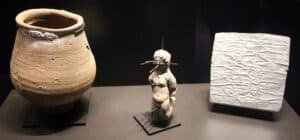
 Museum of Musical Instruments (MUSA)100 m
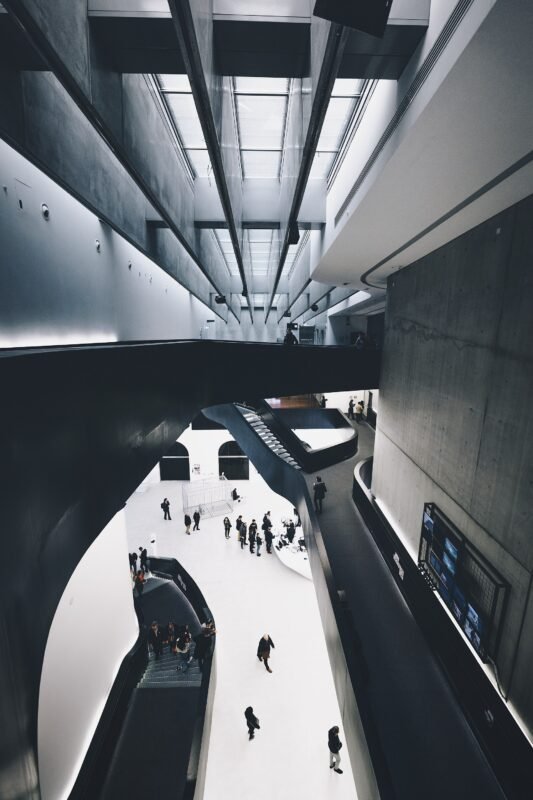
- Auditorium Parco della Musica100 m
- Villa Glori500 m
- Fountain of Anna Perenna500 m
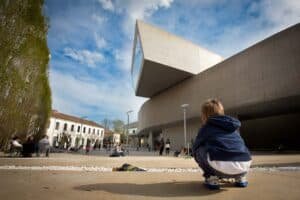
- MAXXI – National Museum of 21st Century Arts700 m
- Flaminio700 m
Upcoming events nearby
- Roma Jazz Festival 2026, November 1 to 24 at the Auditorium and Casa del Jazz100 m
- Evgeny Kissin and András Schiff at Santa Cecilia, November 9, 2026100 m
- Roma Gospel Festival 2026 at Auditorium Parco della Musica, December 13, 2026 to January 1, 2027100 m
- Santa Cecilia 2026/2027 Concert Season at Auditorium Parco della Musica, October 21, 2026 to June 5, 2027100 m



You might also like
- Antonio Pappano conducts Petrassi and Tchaikovsky at Santa Cecilia, Auditorium Parco della Musica, November 19, 20 and 21, 2026
- Sol Gabetta and Bertrand Chamayou at Auditorium Parco della Musica, November 25, 2026
- ANOHNI, Wilderness at Auditorium Parco della Musica, November 29, 2026
- Kyle Dixon and Michael Stein, The Music of Stranger Things at Auditorium Parco della Musica, November 19, 2026
- Kirill Petrenko conducts the Santa Cecilia Orchestra at Auditorium Parco della Musica, November 12, 13 and 14, 2026
- Alexander Soddy conducts Poulenc, Prokofiev and Dukas at Santa Cecilia, November 5, 6 and 7, 2026