Published on
Some links on this page are affiliate links: if you buy through them, Estate Romana receives a small commission at no extra cost to you. As an Amazon Associate, Estate Romana earns from qualifying purchases.
Saturnalia was the Roman festival in December when people exchanged gifts. It began on the 17th and, in common usage, ran until the 23rd. Courts and schools closed, slaves ate at their masters’ tables, in every house people played dice and sent each other wax candles and terracotta figurines. Many gestures of our Christmas, from the gift to the long table to the light kept on in the darkest days, have a recognizable ancestor there.
Here you’ll find how the festival worked according to the authors who lived it, where you can see its traces in Rome and, since the gift was its heart, what to give today by the same criterion as the Romans: something to eat, something to read, something to play with, a light. With a practical warning: Saturnalia begins a week before Christmas, and packages must be ordered accordingly.
Data checked on October 3, 2026 against Macrobius (Saturnalia, book I), Martial (Epigrams, books XIII and XIV), Seneca (Letters to Lucilius, 18), Varro (De lingua Latina VI, 22), on the website of the Colosseum Archaeological Park for the Roman Forum hours and on the Roma Capitale website for the reenactments.
Saturnalia at a glance
- What: Saturnalia is the Roman festival in honor of Saturn, with a public banquet, days off and an exchange of gifts.
- When: from December 17. With the days added over time it ran to the 23rd.
- Typical gifts: wax candles (cerei) and terracotta figurines (sigilla), accompanied by little notes in verse.
- The greeting: “Io Saturnalia!”
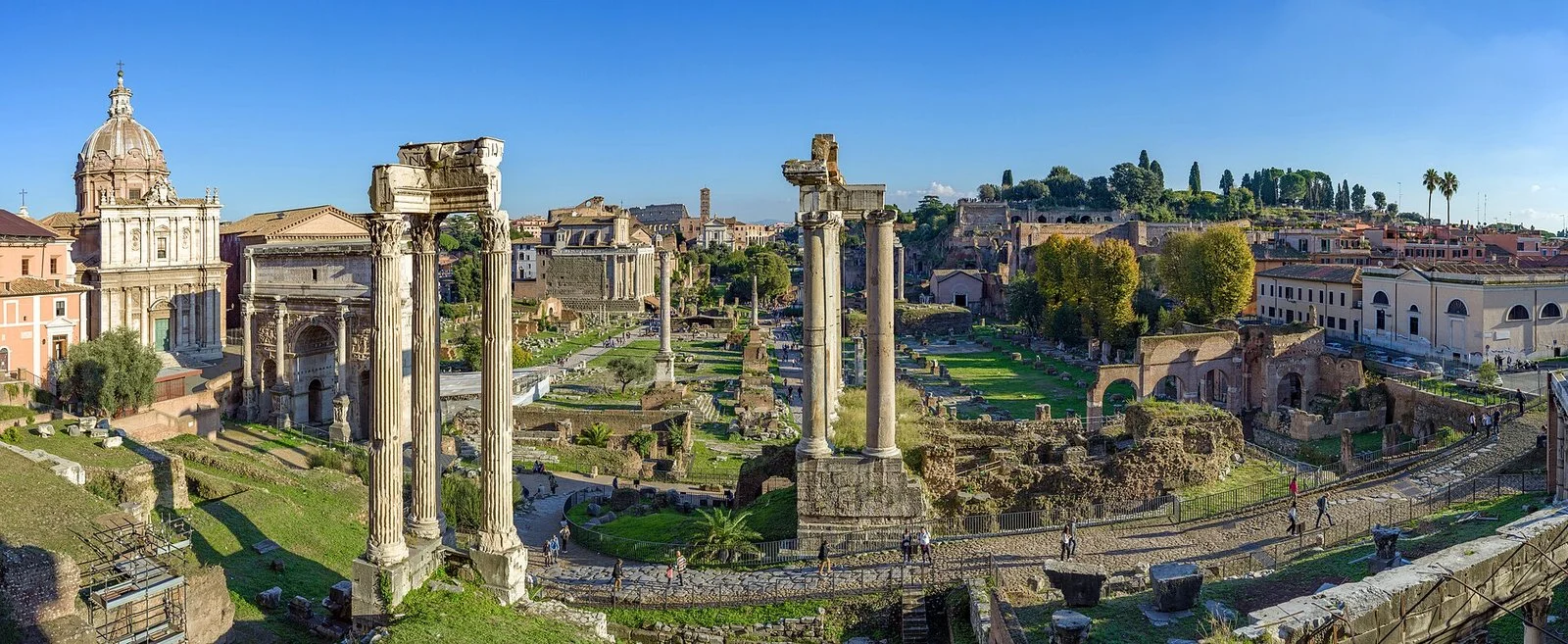
- Where in Rome: the columns of the Temple of Saturn in the Roman Forum, also visible from the Capitoline Hill.
- Today: no official festival. Reenactments are announced year by year and need to be confirmed.
What was Saturnalia and why did it last a week?
At first it was a single day. Macrobius, who in the 5th century AD devotes a whole work to the festival, explains that the day was the 14th before the Kalends of January and that, when Caesar reformed the calendar by adding two days to December, the date slipped to the 16th: our December 17. The confusion between those who celebrated on the old date and those on the new one was one of the reasons the festival began to widen.
Augustus, Macrobius tells us again, set the court holidays at three days. Then the Sigillaria were added, the market of figurines, and so the festive period reached seven days. Varro recalls that on the third day fell the Opalia, in honor of Ops, the goddess of abundance associated with Saturn. The sources don’t agree on the exact number of “official” days in different periods: three, five, seven. On the substance they do: for a week Rome worked little.
The 17th opened with a sacrifice at the Temple of Saturn in the Forum, followed by a public banquet. The statue of the god, whose feet were bound with woolen bands for the rest of the year, had its bonds loosened. Then the festival moved into the houses. The toga was set aside for a more comfortable dinner outfit, the synthesis, and on the head people wore the pileus, the felt cap of freedmen.
The world upside down: what happened at home
The rule of Saturnalia was the suspension of rules. Gambling, forbidden in public the rest of the year, became lawful, and people played dice for nuts instead of money. In every group a “king” of the festival was chosen by lot, who gave absurd orders to the others: sing, dance, be thrown into the water. Tacitus tells that one evening it fell to the young Nero.
Slaves took part in the banquet. According to some sources they ate together with their masters, according to others they were served first. They could speak with a freedom they normally didn’t have. Seneca, in letter 18, writes that in December “the whole city sweats” over the preparations and asks if a philosopher should take part or stand aside. His answer is common sense: take part, without losing yourself.
The cry was “Io Saturnalia!,” attested in Martial and in Petronius. Catullus calls the day of Saturnalia “the best of days.” And the best of days, as always, cost money: complaints about the gifts to give and to receive fill the pages of the poets.
Is Saturnalia the origin of Christmas?
Here it’s worth taking a position contrary to the one you read most often. Saying that Christian Christmas “copied” Saturnalia is an oversimplification that doesn’t hold up against the dates. Saturnalia ended on December 23. The 25th belongs to another tradition: a Roman calendar of 354 AD records on that day the Natalis Invicti, the birth of the Unconquered Sun, the god to whom Emperor Aurelian had dedicated a temple in 274. On the relationship between that festival and the date of Christmas historians still argue.
What really passed from one festival to the other are the gestures, not the day. The gift exchanged between equals and between masters and dependents. The candle. The table that lasts for hours. Schools closed. The idea that for a few days hierarchies loosen. Anyone who in December gives a candle or a nativity figurine repeats, without knowing it, a gesture of Saturnalia.
What did the Romans give each other for Saturnalia?
We know it with rare precision, thanks to Martial. Two of his books are catalogs of Saturnalia gifts, each with its little note in verse. The 13th, the Xenia, lists things to eat and drink: cheeses, olives, sausages, figs, wines. The 14th, the Apophoreta, the gifts “to take away”: over 200 objects, from writing tablets to dice, from combs to toothpicks, from a pocket-size book to a parrot.
The most typical gift remained the wax candle. Macrobius reports more than one explanation of the custom, including the one that links light to the passage from darkness to a more civilized life. The other classic gift was the terracotta figurine, the sigillum, which gave its name to the market of the last days. Macrobius himself says that those figurines were mostly a game for the smallest children.
Martial deliberately alternates the rich gift and the poor one: a precious cup and, right after, a trifle. Often gifts were drawn by lot among the guests. The value lay in the note and in the surprise. It’s an idea you can copy exactly for a dinner among friends, and it solves the problem of who doesn’t know what to buy for whom.
Where can you see the traces of Saturnalia in Rome today?
The starting point is the Temple of Saturn, at the foot of the Capitoline Hill, inside the Roman Forum. Eight granite columns remain and a piece of architrave with an inscription recalling a reconstruction after a fire. The temple was one of the oldest in the city and housed the treasury of the State, the aerarium. In front of those steps on December 17 the sacrifice was made and the banquet opened.
According to the website of the Colosseum Archaeological Park, from October 25, 2026 to February 28, 2027 the Forum opens at 9:00 and closes at 16:30, with last entry at 15:30. On December 25 and January 1 it is closed. In December it gets dark early: it’s best to enter in the morning. Tickets are bought on the official site or, with timed entry, among the Roman Forum offers on Tiqets.
Anyone who doesn’t want to go in has a free alternative. From the terrace behind Palazzo Senatorio, on the Capitoline Hill, the columns of the temple are seen from above, a few meters away. From there you go down in five minutes to the Capitoline Museums, where oil lamps, bone dice and small terracottas show what the gifts of those days were made of.

For the idea of a covered Roman market, with shops side by side, the right place is Trajan’s Markets. The Sigillaria market was held elsewhere, and the sources place it in different parts of the city depending on the period. On the Palatine Hill, finally, you walk among the houses of those who gave those banquets.

How is Saturnalia celebrated in Rome today?
There is no official festival. There are reenactments. In 2025 the Gruppo Storico Romano organized the “Io Saturnalia” festival on December 27 and 28 in Municipio IX, with free admission, as the Roma Capitale website reported. For 2026 the dates don’t appear to be published yet: they need to be confirmed by the organizer. When they come out they appear among all events
on Estate Romana.
For the rest, the week of Saturnalia coincides with the busiest period of the year: the market in Piazza Navona, the nativity scenes in the churches, the lights in the shopping streets. Anyone in the city on those days can build a route on their own: morning at the Forum, a break on the Capitoline Hill, afternoon among the museums, evening at the table. For dinner you book with TheFork. The addresses are in the Estate Romana restaurant map.
Anyone who wants a visit with explanations on site finds the tours of the Forum and the Palatine Hill among the experiences in Rome on GetYourGuide. Anyone arriving from out of town for those days compares hotels on Hotels.com and trains on Trainline: close to Christmas the best seats sell out early.
If you’re a big group traveling, an extended family, a group of friends, a company that wants a year-end dinner different from the usual, a Saturnalia-themed evening can be custom built. For private tours and events it’s best to turn to Tour Leader Pro, among the best tour operators and boutique agencies in Rome, which organizes the day with tour escorts for the logistics and, for the explanations in the Forum and the museums, licensed tour guides.
What should you give today for Saturnalia, with a Roman flavor?
The Romans’ criterion still works: something good, something to read, something to play with, a light. For each category there are several alternatives, because in December products sell out fast: if one is missing, the others hold up.
To eat and drink (today’s Xenia)
- Venchi chocolate: gift boxes to have delivered to the home of whoever you want.
- Lazio wines on Vino.com: a Cesanese from Piglio in place of Martial’s Falernian.
- A mixed case from Svinando: for those who prefer to give a taste of several wineries.
- Prosecco Cantine Borga: for the toast of the 17th.
- Chocolate Advent calendar: a gift a day, the most Saturnalian idea there is.
To read
- Macrobius, Saturnalia: the dialogue set right in the days of the festival, the source of much of what we know.
- Martial, Epigrams: books XIII and XIV are a catalog of gifts with notes, to read at the table.
- Books on the festivals of ancient Rome: for those who want the whole calendar.
- Seneca, Letters to Lucilius: number 18 is the best commentary ever written on holiday stress.
To play with
- Dice and tali (astragali): gambling was lawful only on these days.
- Ludus latrunculorum: the Romans’ strategy game, in a reproduction.
- Legionary costume for children: helmet, shield and sword, the gift that never goes out of style in Rome.
- Board games about ancient Rome: for those who prefer a long game to dice.
A light
- Beeswax candles: the cereus was exactly this.
- Roman terracotta oil lamp: a reproduction, to light on the evening of the 17th.
- Indoor LED Christmas lights: the modern version, without a flame.
- Glass tree decorations: small hanging figures, distant heirs of the sigilla.
For wrapping and for those who can’t choose
- Handmade greeting cards: for the couplet in the style of Martial, written by hand.
- Gift boxes and packaging: half the effect is in the opening.
- Experience gift boxes: a dinner or a weekend instead of an object.
- Gift voucher: the Romans gave money too, and nobody was offended.
- A ticket to a museum or a site in Rome: the gift for someone about to leave.
When should you order Saturnalia gifts so they arrive on time?
The date to keep in mind is December 17, not the 25th. Anyone who wants to give gifts “the Roman way” has one week less, and loses it right in the period when couriers are busiest. Delivery times change from store to store and from one year to the next: the estimated date that appears at the time of the order is what counts, not a habit.
The advice is to reason backward. Wine and chocolate travel well but fear crowded warehouses: it’s best to order them in the first days of December, or even at the end of November. Shipments outside Italy need a wider margin, and for alcohol the rules of the destination country must be read first. Books and small objects arrive faster, but less common titles, like an edition of Macrobius, are not always in stock.
If the gift is for someone who will be in Rome in those days, you can have it delivered to the hotel, with the guest’s name and the arrival date. Many properties accept packages for booked guests: ask the reception first. It’s the simplest way to have a bottle or a box of chocolates waiting in the room on the evening of the 17th.
Anyone who arrives at the last minute does what the latecomers of those days did, who bought a candle at the Sigillaria stalls. A nice candle and a well-written note remain a perfectly legitimate Saturnalia gift.
How do you organize a Saturnalia dinner at home?
Four rules are enough, all taken from the sources. The first: no formal clothes. The Romans left the toga in the closet. The second: a king of the festival chosen by lot, with the right to give an order to each guest. It works with a fava bean hidden in a cake or with a simple roll of the dice.
The third: gifts are drawn by lot. Everyone brings a small package, with a note of two lines that describes it without naming it, as Martial did. You read the note, guess, open. The fourth: for one evening roles are reversed. The one who usually doesn’t cook cooks, the one who is usually served serves. With children at the table it’s the part that works best.
On the menu there’s no need to chase reconstructed recipes. Olives, cheeses, nuts, sausages, Lazio wine: they’re already in Martial’s lists and can be found in any market. And a lit candle in the center, from beginning to end.
Frequently asked questions
When does Saturnalia fall?
It begins on December 17. At first the festival lasted a single day. Over time it lengthened, and counting the Sigillaria market too it ran to the 23rd. On the third day fell the Opalia, in honor of Ops. In 2026 December 17 is a Thursday, so the week of Saturnalia also covers the weekend before Christmas.
What was said as a greeting?
“Io Saturnalia!” The first word is an exclamation of joy, similar to our “hooray,” and has nothing to do with the Italian pronoun. The cry is attested in Martial and in Petronius and was the equivalent of our “happy holidays”: it was shouted in the street, at the table, at the start of the public banquet in front of the temple.
Is it true that masters served their slaves?
The sources don’t all say the same thing. Some speak of slaves and masters at the same table, others of slaves served first. In any case it was a ritual, time-limited reversal: when the festival ended everything went back to how it was. It was not a gesture of emancipation. It was a valve, letting tensions blow off without changing anything.
Can you visit the Temple of Saturn?
You see it up close by entering the Roman Forum, with the ticket of the Colosseum Archaeological Park, and from above, for free, from the terrace on the Capitoline Hill behind Palazzo Senatorio. You don’t go inside the temple: the podium and the columns of the pronaos remain. In winter the Forum closes at 16:30, with last entry an hour earlier.
What did the less rich give?
Candles and terracotta figurines, which were the cheapest and most common gifts. Martial makes fun of people who give trifles, but he lists them all with care, from nuts to toothpicks. In his catalog the poor gift and the rich one sit side by side, and often it was luck that decided who got which.
Is there a Saturnalia event in Rome in 2026?
At the date indicated at the start no dates appear published. In 2025 the Gruppo Storico Romano held the “Io Saturnalia” festival on December 27 and 28 in Municipio IX, with free admission. Any 2026 edition needs to be confirmed: it’s best to check the association’s channels and the Roma Capitale website in the first weeks of December.
Can you explain Saturnalia to children?
Yes, and they usually like it a lot. It’s enough to tell them that for a week schools were closed, you could play dice, the grown-ups obeyed a king chosen at random and everyone got a small gift. A visit to the Forum, in front of the temple columns, and a figurine to choose together make the story concrete.
Who wrote this and on what sources
The text comes from the editorial team of Tour Leader Pro, the Rome-based outfit that designs itineraries, tours and cultural events across Rome and Lazio. The ancient sources are Macrobius, Martial, Seneca, Varro, Catullus and Tacitus. The Roman Forum hours come from the website of the Colosseum Archaeological Park, the news on the reenactments from the Roma Capitale website, as of the date indicated at the start. Let us know what you find has changed.
Putting together a day in the Forum in December, with the daylight hours counted and timed entries, requires choosing your timing well and booking ahead: a useful resource for those who organize group trips is Tour Leader Pro. Rome at the holidays is also a good starting point for the nativity scenes and villages of Lazio: a useful resource for putting together a multi-day itinerary is Italy Planner.