Published on · updated on
Some links on this page are affiliate links: if you buy through them, Estate Romana receives a small commission, at no extra cost to you. As an Amazon Associate, Estate Romana earns from qualifying purchases.
Rome in the rain isn’t a lost day: it’s the Rome of museums without outdoor lines, of basilicas you visit at your leisure, of underground sites that stay dry while it pours above. The things to do indoors number in the dozens, and many are a few minutes’ walk from one another in the historic center. The secret is to build the day in clusters: three or four stops close together, linked by short stretches, instead of crossing the city in the rain chasing a single monument.
Autumn is the season to prepare for. According to the historical records of the Collegio Romano weather station, October and November are the rainiest months of the year in the center of the city, with averages of over 100 millimeters a month over the long term. Sources disagree on the record month, because it changes depending on the years considered. The practical point doesn’t change: anyone who comes to Rome between October and December should count on at least one day of real rain.
Data checked on October 3, 2026 against the website of the National Museums Directorate of the city of Rome, the page on the Rome Collegio Romano weather station and the announcements for the Kimono Tales exhibition. Hours and admission prices can change: before going out always check the website of the individual museum, especially on holidays and on free Sundays.

Rome in the rain at a glance
- What: Rome in the rain is visited indoors among state and city museums, basilicas, archaeological underground sites, covered markets, historic shopping arcades and temporary exhibitions.
- When: in Rome October and November are historically the rainiest months, with averages of about 100 millimeters a month according to the Collegio Romano records.
- Where: the historic center between the Pantheon, Piazza Navona and Via del Corso lets you chain at least five covered stops with walks of a few minutes.
- Getting there: on rainy days in Rome it’s best to get around by metro (lines A, B and C) and on foot, because surface traffic slows down a lot and taxis become scarce.
- Today: the Pantheon is open every day from 9:00 to 19:00, with a full-price ticket of €7 since July 1, 2026 and free entry for Rome residents and under-18s.
- Good to know: rain really does come into the Pantheon through the oculus, open for almost 19 centuries, and runs off through the drain holes in the floor.
Why does it rain mostly in autumn in Rome?
Rome’s climate is Mediterranean: dry summers, rain concentrated between October and March. In autumn the sea is still warm and the disturbances coming from the west find plenty of moisture, so storms are short and intense, often with one-hour downpours that flood the sampietrini and then give way to sun. The Collegio Romano, where the weather has been measured since 1782, is one of the longest weather records in Italy, and it’s where the averages cited at the top come from.
The useful detail for visitors is another: it rarely rains all day. A morning of downpour can turn into a clear afternoon, and vice versa. That’s why it pays to always keep a plan B indoors in your pocket near the outdoor stop you’re making: if the sky closes in over the Forum, Palazzo Massimo and the Baths of Diocletian are one metro stop away. If it closes in over Trastevere, Palazzo Corsini and the Farnesina are a few steps away.
Rome in the rain: 20 things to do indoors
The list follows a practical criterion: places where you stay at least an hour dry, reachable without long walks. For updated listings on hours and exhibitions, see Estate Romana’s list of the museums of Rome and the one of the exhibitions on now.
Museums and galleries
- Vatican Museums: kilometers of halls, the Sistine Chapel and the Pinacoteca. Book well in advance, because when it rains half the city has the same idea.
- Capitoline Museums: the original Marcus Aurelius, the She-Wolf and the underground passage of the Tabularium that overlooks the Forum, perfect for seeing the ruins without getting wet.
- Palazzo Massimo alle Terme: the frescoes from Livia’s villa and the Boxer at Rest, a short walk from Termini.
- Baths of Diocletian: the enormous halls of the ancient baths and the cloister, in the same area as Palazzo Massimo.
- Galleria Borghese: Bernini and Caravaggio, entry only by reservation in time slots.
- Galleria Doria Pamphilj: a private picture gallery right in the center, with Velázquez’s portrait of Innocent X.
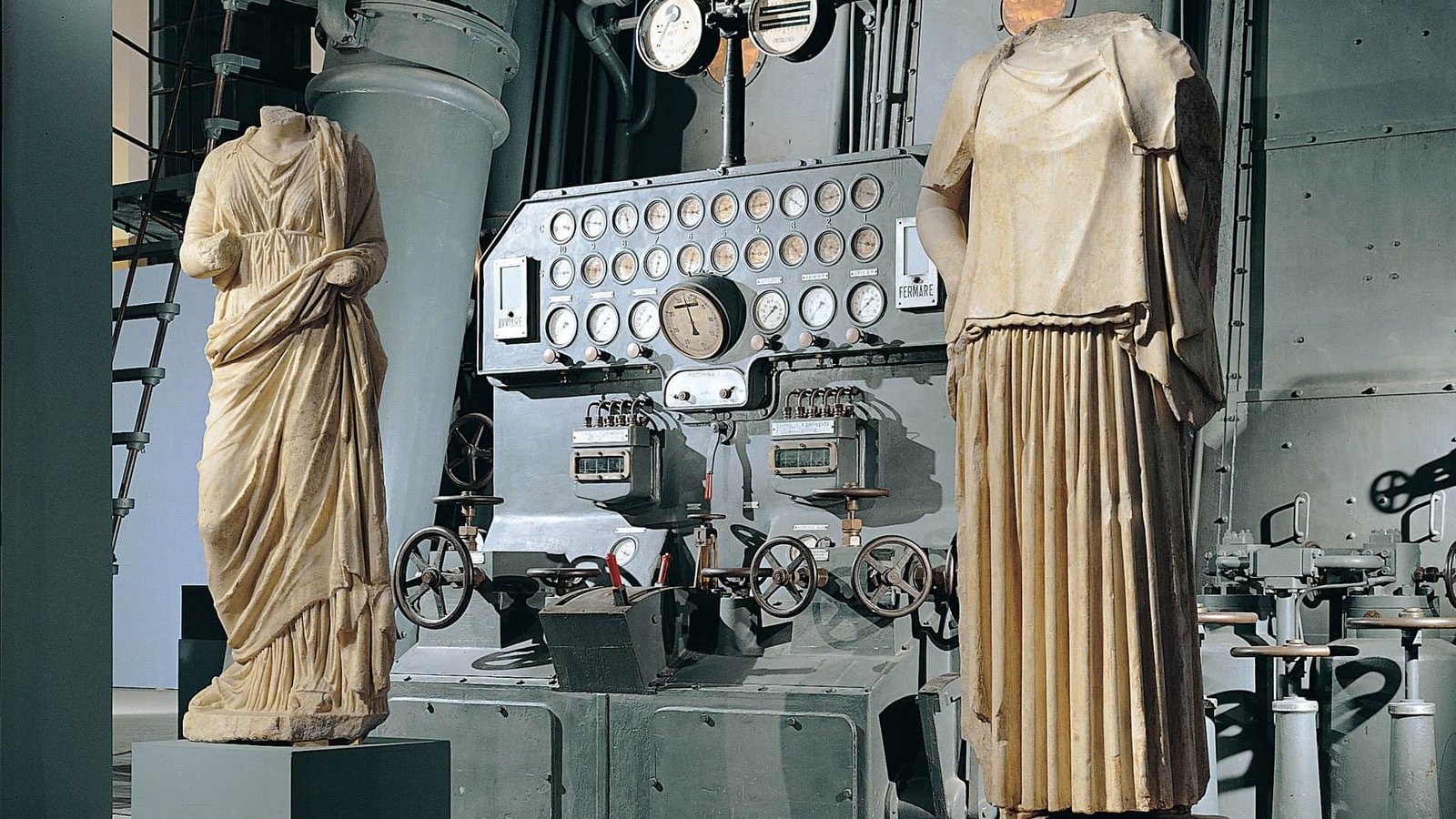
- Centrale Montemartini: ancient statues among turbines and engines of a power plant, in Ostiense, almost never crowded.
- Palazzo Altemps: collections of ancient sculpture a few meters from Piazza Navona.
- MAXXI and Galleria Nazionale d’Arte Moderna: for those who prefer the 20th century and the contemporary, with ample spaces and cafés inside.
- Castel Sant’Angelo: the internal helical ramp of Hadrian’s mausoleum, the papal rooms and the passage toward the terrace, to climb only if it stops.
Churches, underground sites and sacred places
- Pantheon: the symbolic stop on rainy days, to see the water coming down from the oculus.
- Basilica of San Clemente: three layers stacked on top of each other, from the medieval church to the early Christian basilica down to the Roman mithraeum.
- Santa Maria sopra Minerva and San Luigi dei Francesi: the first with its blue starry vault, the second with the three Caravaggios of the Contarelli chapel.
- The papal basilicas: San Giovanni in Laterano and Santa Maria Maggiore, with their immense naves. For the others, see the listings of sacred art in Rome.
Exhibitions, markets and food stops
- Kimono Tales at the Musei di San Salvatore in Lauro: Angelo Cricchi’s exhibition on four kimonos and the stories of the women who wore them, announced from September 18 to October 16, 2026 with free admission.
- Testaccio Market: covered stalls of Roman street food and fresh produce.
- Mercato Centrale at Termini: a quick indoor lunch before or after Palazzo Massimo.
- Galleria Alberto Sordi: the Liberty-style arcade on Via del Corso, for crossing a piece of the center dry.
- A cooking class: fresh pasta or tiramisu in a kitchen in the center, the activity that saves a downpour afternoon with children.
- The thermal baths of Lazio: hot water outdoors under the rain is a strange and wonderful pleasure. See the listings of the thermal baths near Rome.
Is it true that it doesn’t rain inside the Pantheon?
No, and it’s the most widespread legend about Rome in the rain. The story goes that the warm air inside the dome creates a “chimney effect” capable of turning the drops to mist before they touch the ground. Roman chronicles link the tradition to the past, when thousands of lit candles warmed the air of the church. Today, anyone who enters during a downpour sees the column of water falling from the oculus, about nine meters wide, and wetting the floor at the center of the rotunda.
The water doesn’t pool because the floor is slightly convex and has drain holes that carry it away, a system conceived already in Roman times. In our judgment this is precisely the reason to go to the Pantheon when it rains: the show of gray light and rain coming down into the heart of a 2nd-century building can’t be seen anywhere else. Official hours are 9:00 to 19:00, with last entry at 18:30, on the website of the National Museums Directorate of the city of Rome.
The full-price ticket is €7 since July 1, 2026. The reduced ticket is €2 for European Union citizens between 18 and 25. Entry is free for under-18s, residents of the Municipality of Rome and on the first Sunday of the month. The advice is to buy the ticket on the official portal indicated by the site, because many unofficial resellers with similar names circulate online.
What is overrated when it rains in Rome?
Our contrarian position is this: the Vatican Museums are the most obvious choice and often the worst for Rome in the rain. Everybody thinks of it, and so the outdoor line along the Vatican walls gets longer precisely on the days when standing in line is most uncomfortable. Inside, the most famous halls become a corridor full of dripping umbrellas. If you don’t have a ticket with a time already booked, it’s better to aim for a lesser-known museum and keep the Vatican for another day.

The second common mistake concerns the free Sundays. On the first Sunday of the month state museums are free, and the Vatican Museums are free on the last Sunday of the month according to the calendar published by the Museums themselves: when it rains these days draw huge crowds and outdoor lines. The third mistake is underestimating wet sampietrini, which get as slippery as soap: smooth soles are the real enemy, much more than the forgotten umbrella.
Finally, the idea of “waiting for it to stop” in a café in the center works only if you know where to go afterward. Better to decide the sequence of stops the night before, with an alternative for each area. If you want an overall idea of the places, Estate Romana’s site has the listings for museums, exhibitions and sacred art, useful for putting the day together area by area.
How to organize a day in Rome in the rain?
The simplest method is to divide the city into clusters. Historic center: Pantheon, Santa Maria sopra Minerva, San Luigi dei Francesi, Palazzo Altemps and Galleria Doria Pamphilj, all within a 10-minute walk. Termini and Esquiline Hill: Palazzo Massimo, Baths of Diocletian, Santa Maria Maggiore and the Mercato Centrale for lunch. Colosseum and Celian Hill: San Clemente and San Giovanni in Laterano, linked by a short stretch.
For a rainy morning and an uncertain afternoon, the advice is to start with the biggest museum and leave the churches for later, because you go in and out of them quickly if the sun comes back. A big museum takes at least two and a half hours, a basilica with its underground levels one hour, a private gallery like the Doria Pamphilj 90 minutes. Also count the time to dry off and for the coat check, which in some museums is mandatory for backpacks and long umbrellas.
For those who want to save time at the ticket desks, a combined card like Turbopass Rome bundles several admissions and public transport into a single purchase. First check which sites are included, because the conditions change. Alternatively, single museum tickets are bought on Tiqets, Rome attractions and indoor activities, like cooking classes and underground visits, on GetYourGuide.
With children, as a couple, with friends
With children, places where you walk and discover work well: the underground levels of San Clemente, the ramp of Castel Sant’Angelo, the stalls of the Testaccio Market and a cooking class with your hands in the flour. As a couple, the most successful choice is a private gallery like the Doria Pamphilj followed by a long dinner in a trattoria. With a group of friends it’s best to book a single activity for everyone, so nobody is left dripping in the street waiting for the others.
How much time you need and when to book
A whole day of Rome in the rain holds three main stops plus a long break at lunch. The Galleria Borghese and the Vatican Museums should be booked days in advance, sometimes weeks on holiday long weekends. The other museums can usually be found even on the same day. The rain kit, on the other hand, should be ordered before departure: for timing, the estimated delivery date at the time of the order is what counts, and many hotels accept packages for guests, but ask the front desk first.
Where to eat in Rome in the rain without standing in line?
When it rains, places with outdoor tables empty out and trattorias with an indoor room fill up fast, especially at lunch between 13:00 and 14:00. The advice is to book even for a simple lunch, or move it up to 12:30. The covered markets of Testaccio and Termini are the solution for those who want no constraints: you eat standing or at shared tables, dry, and you set off again right away.
To book a table at an indoor restaurant near your stop you can use
TheFork, which shows real-time availability, and consult the Estate Romana restaurant map to choose by area. Avoid places with outdoor seating covered by tarps: with the autumn wind the water comes in sideways.
Rome in the rain: the kit to stay dry
The kit for Rome in the rain has only one rule: protect your feet and your phone first. A broken umbrella is replaced from the first vendor on the corner, while soaked shoes ruin the whole day. Each category has several alternatives, because sizes and models often sell out in the autumn months.
Umbrellas and protection
- Clear dome umbrella (more): it comes down over the shoulders and lets you look at the facades without taking it off.
- Compact windproof umbrella (alternative · more): it fits in the backpack and holds up against the gusts on the lungotevere.
- Reusable rain poncho (alternative · more): it covers the backpack too and leaves your hands free for photos and maps.
- Waterproof jacket (alternative · more): the most comfortable solution for those who go from one museum to the next and don’t want to deal with the umbrella at the coat checks.
- Waterproof backpack cover (alternative · more): it protects documents and printed tickets.
On your feet
- Stylish rain shoes (alternative · more): waterproof but presentable at dinner too.
- Waterproof shoes with non-slip sole (more): for wet sampietrini, the detail that matters most.
- Merino wool socks: they keep you warm even when dampness gets into the shoe.
- Electric shoe dryer: at the hotel, in the evening, to set off with dry shoes the next morning.
For the damp cold
- Touchscreen gloves: to use the map on your phone without taking them off.
- Rechargeable hand warmer: useful in the outdoor lines in front of museums.
- Wool scarf (alternative · more): it’s colder in churches than outside, and it also serves to cover your shoulders.
Technology and reading
- Waterproof smartphone case: the phone stays usable under the downpour.
- Compact power bank: in the cold the battery drains faster.
- A printed guide to Rome: to leaf through in a café while the storm passes.
- A book on the history of ancient Rome: to arrive at the Pantheon and the Capitoline Museums knowing what to look at.
Experiences and indoor admissions
- Activities in Rome on GetYourGuide: cooking classes, underground visits and timed admissions.
- Cooking classes in Rome on GetYourGuide: fresh pasta and tiramisu indoors.
- Tickets for Rome museums on Tiqets: admissions with date and time to keep on your phone.
- Castel Sant’Angelo on Tiqets: a long visit mostly indoors.
- Turbopass Rome: a card with admissions and transport in a single purchase.
What if it stops raining midday?
It happens often, and it’s the best moment for photos: the glossy squares, the sky opening above the domes, few tourists around. Keep an outdoor stop ready near the cluster you’re in: Piazza Navona from the historic center, the Janiculum from Trastevere, the Orange Garden from the Aventine. If the rain comes back, go back into the next covered stop on the list without changing area.
If you have an extra day you can move out of town: the thermal baths of Lazio, from Tivoli to the Tuscia, are one of the few experiences where the rain doesn’t bother at all, in fact quite the opposite. Before leaving, check hours and access rules on the listings for the thermal baths: some facilities require a reservation on weekends.
Frequently asked questions
What to do in Rome in the rain in just one day?
Pick a single cluster of nearby stops. For example, in the morning Palazzo Massimo and the Baths of Diocletian, at lunch the Mercato Centrale at Termini, in the afternoon Santa Maria Maggiore and San Clemente. That way you walk in the rain for just a few minutes at a time and spend the day almost always indoors, without having to cross the city.
Does it really rain inside the Pantheon?
Yes, rain comes in through the oculus and falls at the center of the rotunda. The legend of the “chimney effect” that would stop the drops doesn’t match what you see today during a downpour. The water runs away thanks to the slight slope of the floor and the drain holes, so the visit remains possible even in a storm.
How much does it cost to enter the Pantheon?
The full-price Pantheon ticket is €7 since July 1, 2026, according to the website of the National Museums Directorate of the city of Rome. The reduced ticket is €2 for European Union citizens between 18 and 25, while under-18s, Rome residents and everyone on the first Sunday of the month get in free.
What is the rainiest month in Rome?
October and November compete for the record according to the Collegio Romano historical records, with averages of about 100 millimeters a month. Sources disagree on the record month because it depends on the period considered. In any case autumn rains are often short, intense downpours, followed by clear spells within a few hours.
Are the Vatican Museums a good idea in the rain?
Only with a ticket booked for a fixed time. Without a reservation the line stays outdoors along the walls, just when it’s raining, and the most famous halls fill up. The advice is to choose a lesser-known museum, like the Centrale Montemartini or Palazzo Massimo, and keep the Vatican for a dry day or for an already purchased entry.
What shoes to bring to Rome in autumn?
Waterproof shoes with non-slip soles, first of all. Wet sampietrini are very slippery and smooth soles, even on dress shoes, are the most common cause of falls. Add wool socks that keep you warm in the damp and, if you can, a second pair of shoes to leave at the hotel to dry.
Can you visit Rome in the rain with children?
Yes, and often the kids have more fun. The underground levels of San Clemente, the ramp of Castel Sant’Angelo, the stalls of the Testaccio Market and a cooking class are indoor activities that don’t bore. Alternate a long stop and a short one, and plan a hot snack in the middle of the afternoon.
Who wrote this and from what sources
The text comes from the editorial team of Tour Leader Pro, the Rome-based organization that designs itineraries, visits and cultural events across Rome and Lazio. Pantheon hours and prices come from the website of the National Museums Directorate of the city of Rome, the climate data from the records of the Collegio Romano station and the Kimono Tales dates from the exhibition’s announcements, as of the date given at the top. Tell us what you find changed.
Organizing a rainy day, for yourself or for a group of friends, means booking timed admissions, choosing compact areas and always having an alternative nearby. A useful resource for anyone who organizes group trips is Tour Leader Pro. If your trip in Lazio lasts several days, it’s best to alternate city, thermal baths and villages depending on the weather, and a useful resource for putting together a multi-day itinerary is Italy Planner.