Published on · updated on
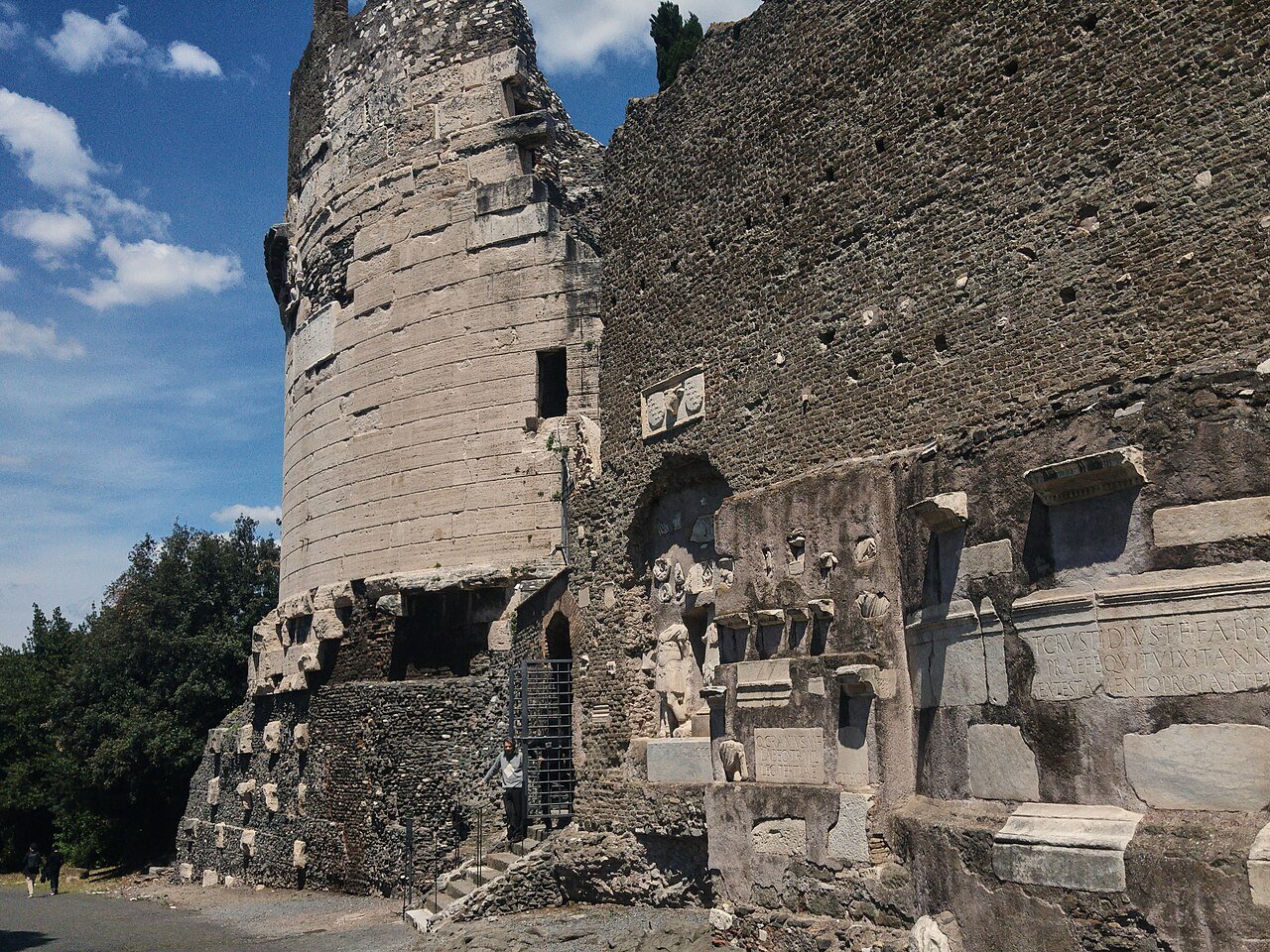
The mausoleums of Rome are not all alike: some can be visited with a ticket, others only by reservation, and others you can only look at from the street or are closed for restoration. This guide brings together 26 mausoleums and tombs in the city and its immediate surroundings. Each one has a page on Estate Romana with address, map location and visiting status.
The access details come from the official pages of the bodies that manage the monuments and are current as of October 2026. They change often, so always check before you go.
How to Get Your Bearings
For several monuments run by the Capitoline Superintendency, such as Monte del Grano, the Tomb of the Scipios and the Tombs of Via Statilia, reservations go through the Roma Capitale Contact Center, 060608. The Mausoleum of Cecilia Metella is visited with the Appia Antica Archaeological Park ticket. Many tombs along Via Appia Antica, on the other hand, can be seen freely from the outside.
The Major Mausoleums with Visitor Routes
- Mausoleum of Hadrian (Castel Sant’Angelo): Always open with a regular entrance ticket or the Carte Musei. Converted into a papal fortress, it preserves the helical ramp and the emperor’s burial chamber intact.
- Mausoleum of Augustus: Temporarily closed (since June 6, 2022) for redevelopment and urban restoration work. The largest circular tomb of the ancient world. Entrances and guided tours are suspended until it reopens.
- Mausoleum of Santa Costanza: Free to visit (part of the Sant’Agnese fuori le Mura complex). A famous circular Constantinian mausoleum with fine 4th-century early Christian mosaics in perfect condition.
- Mausoleum of Sant’Elena (Tor Pignattara): Open to visitors, with the adjoining Antiquarium and underground routes. A full restoration (PNRR) has made it fully accessible together with the catacomb complex.
- Mausoleum of Cecilia Metella: Open with the Appia Antica Archaeological Park ticket. An iconic example of a late Republican circular tomb, fortified in the Middle Ages as the Castrum Caetani.
- Pyramid of Cestius (Mausoleum of Gaius Cestius): The interior can be visited on special guided tours by reservation. The exterior is always visible from Via Persichetti and from the Non-Catholic Cemetery. A mausoleum shaped like an Egyptian pyramid, built in 330 days for the magistrate Gaius Cestius. Access is managed through Eventbrite.
- Mausoleum of Maxentius and Tomb of Romulus: Free entrance to the archaeological area of the Villa of Maxentius on the Appia Antica. An open-air archaeological area that holds the great circular dynastic tomb of the emperor Maxentius’s son.
- Mausoleum of Monte del Grano: Open by mandatory reservation through the Contact Center 060608 (€4/€3, free with the MIC card). One of the largest underground tumulus tombs in the city, hidden beneath a hill in the Tuscolano district and also accessible to visitors with disabilities.
- Mausoleums of Saxa Rubra (Tomb of Fadilla and Tomb of the Nasoni): Open on scheduled dates by reservation. Extraordinary tombs cut into the tufa along Via Flaminia, with frescoed painting cycles and wall decorations.
- Garibaldi Ossuary Mausoleum: Open every Thursday morning (9:30 to 13:30). Group visits on request. A memorial built on the Janiculum Hill to honor those who fell in the battles for Rome as capital (1849 to 1870).
- Tomb of the Scipios: Open by mandatory reservation through the Contact Center 060608 (€4/€3, free with the MIC card). A monumental underground funerary complex of the Republican era along the urban stretch of Via Appia Antica.
Visible from the Outside, Under Restoration, or Open on Special Dates
- Mausoleum of the Gordians: Visible from the outside inside the archaeological park of Villa Gordiani, along Via Prenestina. A circular brick funerary building on two floors, datable to the Diocletian era (4th century AD) or a later period.
- Mausoleum of Lucilius Paetus: Temporarily closed to the public for PNRR Caput Mundi restoration work. Visible from the outside. An imposing circular tomb sunk into the ground along Via Salaria, with a drum 34 meters in diameter.
- Mausoleum of Menenius Agrippa: Visible from the outside in a fenced green area along Via Nomentana. A turret-shaped tomb of the imperial period (1st to 2nd century AD) near Ponte Nomentano.
- Torrione Prenestino: Freely visible from the roadside on Via Prenestina. The interior is not accessible. One of the grandest tumulus mausoleums in the city, enclosed in a massive circular drum 41 meters in diameter.
- Mausoleum of Gallienus: Visible from the roadway of Via Appia Nuova at the ninth milestone. An imposing core of concrete and brick facing, identified as the tomb of the emperor Gallienus (268 AD).
- Mausoleum of the Plautii: Visible from the outside along the Aniene River near Ponte Lucano. A large cylindrical travertine tower, structurally similar to the tomb of Cecilia Metella. It is in Tivoli, close to Rome.
- Tomb of Marcus Vergilius Eurysaces: Freely visible from the outside at Piazzale Labicano (Porta Maggiore). A trapezoidal monument with bas-reliefs showing the process of making bread, built for the baker Eurysaces and his wife.
- Mausoleum of Casal Rotondo: Freely visible along the sixth milestone of Via Appia Antica. The most imposing circular mausoleum on the Appian Way, built in the 1st century BC and topped by a medieval farmhouse.
- Tomb of Priscilla: Visible from the outside at Via Appia Antica 76. The interior is open to groups on request (065135316). An imposing square base topped by a medieval cylindrical tower, built by Titus Flavius Abascantus for his wife.
- Tombs of Via Latina (Barberini, Valeri, Pancrazi): Temporarily closed for PNRR restoration work. Available through a virtual tour on MUVI Appia. An archaeological park with extraordinary underground tombs preserving frescoes, stuccoes and sarcophagi of the imperial age.
- Mausoleum of Campo Barbarico and Tomb of Sant’Urbano: Campo Barbarico is visible from the outside. Sant’Urbano was acquired by the State and integrated into the Appia Antica Park. A temple-shaped tomb on two floors, datable to the second half of the 2nd century AD.
- Tomb of Geta: Freely visible at number 41 on Via Appia Antica. A tomb made of stacked volumes. The traditional attribution to Geta has no basis, since the Severans used the Mausoleum of Hadrian.
- Mausoleum of the Medusa: Visible inside the Policlinico Umberto I hospital complex on Viale Condorelli. A monumental remnant of a suburban necropolis that stood along an ancient side road.
- Temple and Mausoleum of Minerva Medica: Visible from the outside along Via Giolitti. Open on special occasions run by the Soprintendenza. A monumental decagonal brick building belonging to the Horti Liciniani, now undergoing consolidation work.
- Republican Tombs of Via Statilia: Open on special scheduled dates by reservation through the Contact Center 060608. A complex of four late Republican tombs at the corner of Via Statilia and Via S. Croce in Gerusalemme.
The Mausoleum of the Gordians and the New Glass Structure
The Mausoleum of the Gordians, in Villa Gordiani park, is at the center of a debate after the installation of the glass structure. For the timeline of the works, the sources and the questions still open, read our in-depth article on the works at the Mausoleum of the Gordians.
Sources
The visiting information comes from the official pages of the Capitoline Superintendency, the Appia Antica Archaeological Park, the Special Superintendency of Rome and the Musei in Comune system. Where a page gives no opening hours or price, we did not invent one: use the Contact Center 060608 or the website of the managing body.