Published on · updated on
Some links on this page are affiliate links: if you buy through them, Estate Romana receives a small commission, at no extra cost to you. As an Amazon Associate, Estate Romana earns from qualifying purchases.
A walking tour in Rome rests on three things: an itinerary that doesn’t make you cross the city back and forth, a pair of shoes already broken in and a light kit that fits in a small backpack. The 25,000 steps in the title are no exaggeration: with an average stride between 60 and 75 centimeters they come to between 15 and 19 kilometers, and that’s what you rack up going from the Colosseum to St. Peter’s by way of the Pantheon and then walking back to the hotel.
The problem is that in Rome those kilometers weigh more than elsewhere. Cobblestones, lava paving stones on the Appia, staircases, climbs up the Janiculum and the Capitoline Hill, narrow sidewalks: the foot works sideways as much as forward. If you arrive with the wrong shoes, you notice by the second day, usually with a blister on the heel and the program to rewrite.
Data checked on October 3, 2026 against Estate Romana’s pages on the Appia Antica Park and Trastevere, the frequently asked questions of the Appia Antica Regional Park and Acea’s communications on the public drinking fountains. Hours and openings change with the seasons: where they are not given, the operator’s website is what counts.

Rome walking tour at a glance
- What: a walking tour in Rome is a day of sightseeing done entirely on foot, which in the historic center easily comes to 20,000-25,000 steps, that is between 15 and 19 kilometers depending on stride.
- When: the best months for walking in Rome are October, November, March, April and May, when temperatures let you stay out on the street even in the middle hours.
- Where: three routes cover almost everything: the center from the Colosseum to Piazza Navona, Trastevere with the Janiculum, and the Appia Antica with the Caffarella Valley, which alone measures about 190 hectares.
- Getting there: for the Appia Antica and the Caffarella the historic connection is bus 118, while metro A serves the park from the Colli Albani, Arco di Travertino and Anagnina stops.
- Shoes: for a walking tour in Rome you need walking shoes or light trail shoes, with a cushioned sole and already worn for at least a couple of weeks before departure.
- Good to know: Rome has over 2,500 public drinking fountains according to Acea, the nasoni, so an empty bottle to fill weighs less than three bought on the street.
How many steps do you really take on a walking tour in Rome?
It depends less on the distance between monuments and more on the movements nobody counts. From the Colosseum to Piazza Venezia it’s a few minutes, from Piazza Venezia to the Pantheon the same, and from there you reach Piazza Navona almost without noticing. On paper it’s a relaxed morning. Then there’s the inside of the sites, the lines, the detour for a coffee, the return to the metro stop, the walk around the Forum to find the right entrance.
Anyone who keeps a step counter running for a whole day of walking tour in Rome usually sees numbers between 18,000 and 25,000. The Roman Forum and the Palatine alone, walked slowly, come to quite a few kilometers on uneven ground. The Vatican Museums add very long corridors, standing and at a slow pace, which tire you more than a brisk walk. A slow pace, in fact, is the hardest on the back and on the sole of the foot.
The advice is to count in hours, not in monuments. A well-built walking tour in Rome holds about six hours of actual walking and leaves room for seated breaks every 90 minutes. Beyond that threshold the quality of the visit drops: you look less, photograph more, argue about the restaurant. If you travel with children or elderly people, you should halve the quota and pick one neighborhood per day.
Why does Rome tire your feet more than other cities?
The first reason is the sampietrini, the flint cubes that pave much of the historic center. They’re beautiful, but with every step the foot lands on a surface slightly different from the last, and the ankle keeps correcting. After a few hours the fatigue reaches the calves and knees. In the rain they become slippery, especially downhill, and a smooth city sole is a real risk here.
The second reason is the elevation change. Rome is the city of the seven hills and you find that out on foot: the climb to the Capitoline Hill, the staircase of Trinità dei Monti, the road that goes from Trastevere up to the Janiculum, the Aventine. None of these climbs is demanding on its own, but added up over a day they make the difference. On the Appia Antica, then, the stretch with the original Roman paving stones is uneven and requires a sole that absorbs shocks.
The third reason is the heat, which in Rome lasts longer than many visitors think. In September and early October the middle hours can still be hot, and asphalt and stone give the heat back even after sunset. The foot swells, cotton socks hold sweat and the rubbing does the rest. That’s why the kit matters as much as the shoes.
Which shoes to choose for a Rome walking tour?
The right shoe for a walking tour in Rome is light, cushioned, with a lugged sole that grips on wet sampietrini and a breathable upper. Urban walking shoes and light trail running shoes both work. Fit matters more than brand: try them on in the afternoon, when the foot is already a little swollen, with the socks you’ll use on the trip, and leave half a centimeter of space in front of the toes.
Here comes the contrarian position that few state: trekking boots are overrated for the city. They’re heavy, hot, and have a stiff sole designed for mountain trails and not for paving stones. They only make sense if the program includes a real excursion in the Castelli Romani or the Monti Simbruini. For the center, Trastevere and also the Appia Antica, light trekking or trail shoes are enough, much more comfortable after the 10th hour.
The most common mistake, though, is another: buying new shoes just for the trip and wearing them for the first time on the day of arrival. Even the most comfortable model has to adapt to the foot. The advice is to use them in the city at least two weeks beforehand, for short trips and then for a long walk. If after 10 kilometers at home they don’t hurt, in Rome they won’t hurt. If they do, you still have time to change them.
Gel insoles are also useful, especially for those with a high arch or who suffer from fasciitis, and so are technical socks: merino wool ones regulate sweat and stay dry longer than cotton, anti-blister ones have a double layer or reinforcements on heel and toe. A second pair of shoes in the suitcase, to alternate every day, is the simplest trick to reach the last evening without pain.
Where to do a walking tour in Rome: three walking itineraries
The first walking tour is the classic of the center: Colosseum, Imperial Forums, Capitoline Hill, Pantheon, Piazza Navona, with an optional extension toward the Trevi Fountain and Piazza di Spagna. It can be done in a day, but it’s best to book paid admissions in advance so you don’t lose an hour in line. For an overview of monuments, museums and places you can’t skip, the page on Rome’s tourist attractions collects Estate Romana’s listings with hours and directions.
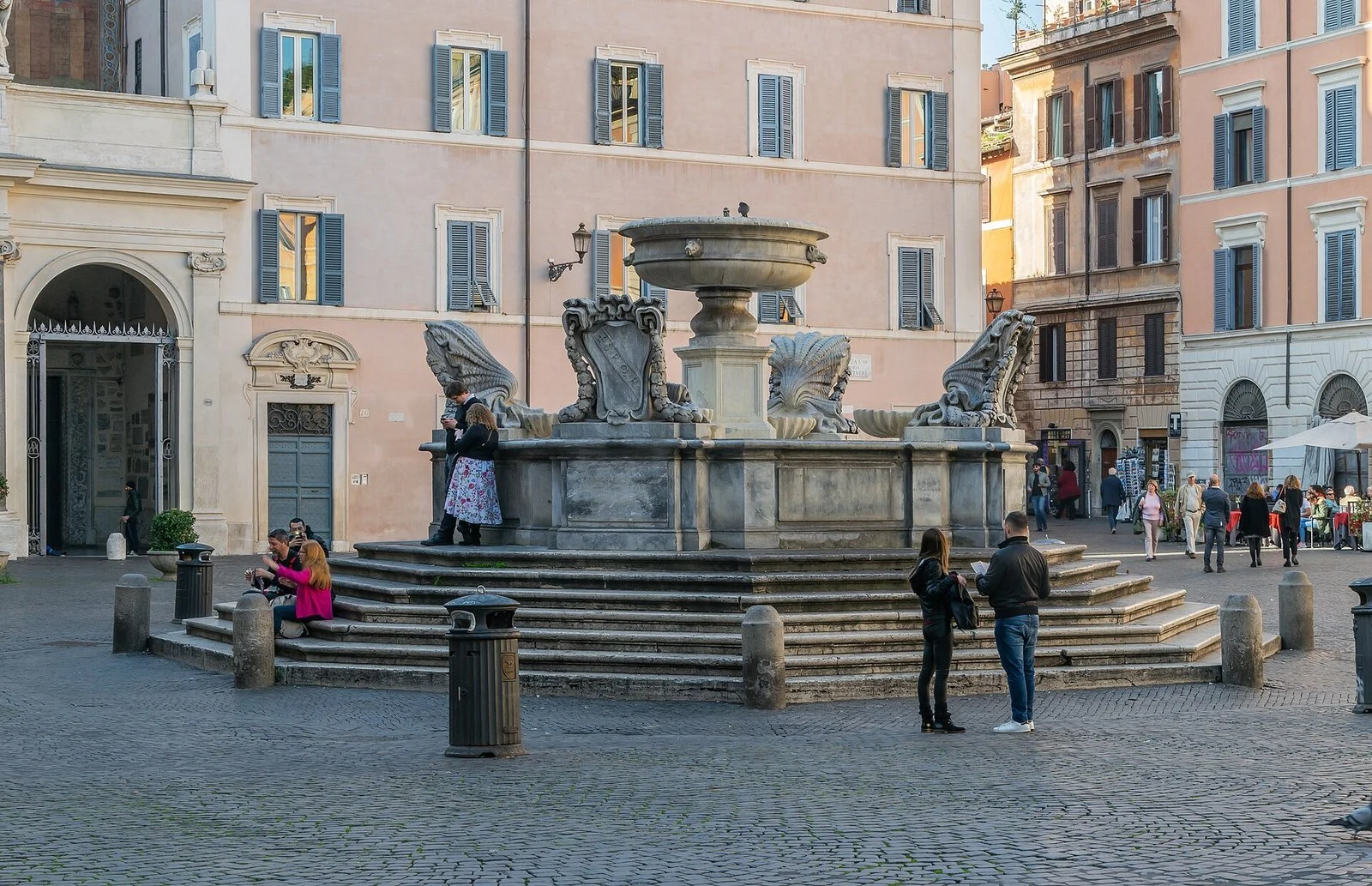
The second walking tour crosses the Tiber. Trastevere can be walked in half a day: Santa Maria in Trastevere with its 12th-century mosaics and Pietro Cavallini’s Stories of the Virgin, Santa Cecilia, San Francesco a Ripa with Bernini’s Blessed Ludovica Albertoni, Villa Farnesina with Raphael’s frescoes. Then the climb to the Janiculum, where the cannon fires every day at noon. The page on what to see in Trastevere gives updated hours and admissions.
The third walking tour is the one many skip and it is, in our judgment, the most beautiful for people who love walking. The Appia Antica Park covers about 4,580 hectares between Rome, Ciampino and Marino, with 16 kilometers of consular road. The Caffarella Valley, about 190 hectares of meadows, reed beds and monuments between the Aurelian Walls and Via Latina, preserves the Nymphaeum of Egeria, the Temple of the God Rediculus and the church of Sant’Urbano. You walk among grazing flocks a few minutes from the center.
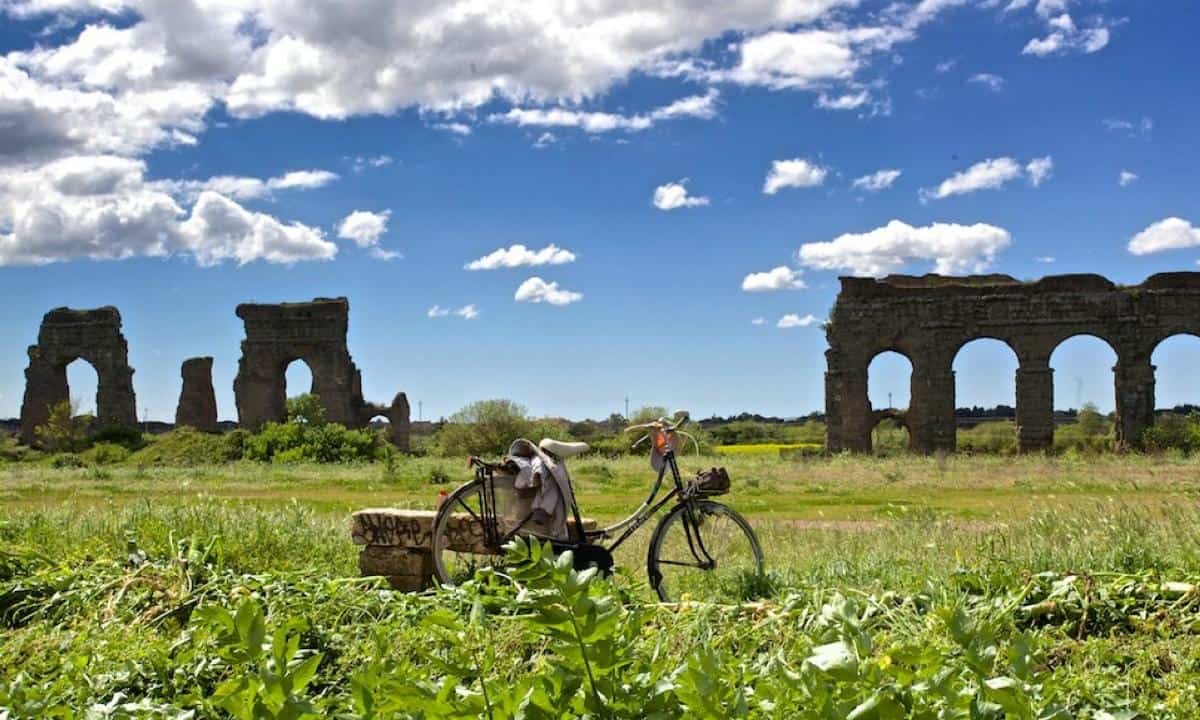
On the Appia it’s worth choosing Sunday. According to the park’s FAQ, on Sundays and holidays, under a 1997 ordinance, traffic is diverted from the Porta di San Sebastiano to the junction with Via delle Sette Chiese, and the road becomes a long promenade. The entrances to the Caffarella are several: Largo Tacchi Venturi to the north, Via Centuripe, Via Macedonia and Via della Caffarella near the Appia. The green areas are always accessible and there are drinking fountains below the Tacchi Venturi entrance and near Sant’Urbano.
How to organize: when to order and how to split the days?
If you’re reading a few days before departure, order right away what’s missing and give priority to socks, insoles and blister plasters, which need no breaking in. For arrival times, the estimated delivery date at the time of the order is what counts. New shoes, right before the trip, are a gamble: if you don’t have time to use them, leave with the old but comfortable ones and put in the gel insoles. If you’re already in Rome, ask the hotel if it accepts packages in your name before giving it as a delivery address.
To split the days of a walking tour it’s best to alternate: one heavy day in the center, a lighter one with a museum and many seated breaks, one outdoors on the Appia. With three days you can do the three itineraries described above, with two you give up something of the center, not the Caffarella. For breakfasts and dinners near the route, the Estate Romana restaurant map helps you choose a table without lengthening the walk.
If you travel in a group, among friends, large families, colleagues on a company trip, bachelor parties or wedding guests, you have different needs: paces to reconcile, breaks to schedule, admissions to book all together. In these cases it’s best to turn to Tour Leader Pro, among the best tour operators and boutique agencies in Rome, which builds tailor-made tours with professional tour leaders and, for explanations inside the sites, selected licensed tour guides. The route is designed around the group’s pace, not the other way around.
For those who prefer a ready-made tour, booking platforms offer themed walks of two or three hours: historic center, underground Rome, Trastevere at sunset, the Appia Antica by bicycle. Always read the duration, the meeting point and how much you walk, and be wary of tours that promise 10 monuments in two hours: you walk a lot and see little. If it rains, shift the day toward museums and churches, and save the Appia for the first dry day, because the Caffarella’s earth turns to mud.
Families with small children have an advantage in Rome: the parks. The Caffarella, Villa Borghese and the Janiculum let you walk without traffic and stop on a lawn. The stroller, on the other hand, suffers on sampietrini: a model with big wheels or a baby carrier backpack is best. For couples, the advice is the opposite of the race through the monuments: a walking tour in Rome at sunset, from Trastevere to the Janiculum, is worth more than three museums seen in a hurry.
The Rome walking tour kit: what to buy
We’ve divided the walking tour kit by function and, for each category, we point to several alternatives: the most requested models often sell out, especially sizes and colors, and it’s best to have a second choice ready. The links lead to updated searches, so you only see what’s available at the moment.
Shoes and insoles
- City walking shoes, men’s (more): light and cushioned, the foundation of any walking tour in Rome.
- City walking shoes, women’s (more): same criterion, choose a lugged sole for wet sampietrini.
- Light trekking shoes (more): the right alternative if you add the Appia Antica or a day trip out of town.
- Trail running shoes (alternative · more): good grip and low weight, useful on the packed earth of the Caffarella too.
- Gel insoles (alternative · more): they add cushioning even to an already worn shoe.
Socks and foot care
- Anti-blister socks (more): double layer or reinforcements on heel and toe, where rubbing starts.
- Merino wool socks (alternative · more): they regulate sweat and don’t hold odors, even after a whole day.
- Blister plasters: keep them in the fanny pack, put them on at the first discomfort and not when it’s too late.
- Anti-chafing foot cream: a thin layer in the morning reduces friction in the critical areas.
Backpacks and security
- 20-liter backpack: enough for water, jacket and hat, small enough for the bag checks at the entrances of sites.
- City anti-theft backpack (alternative · more): hidden zippers, useful on crowded buses and metro.
- Anti-theft fanny pack: documents and phone in front, always under control.
Water, sun and rain
- Insulated bottle (alternative · more): you fill it at the nasoni and it keeps the water cool for hours.
- Filter bottle (alternative · more): for those who want an extra filter outside the city or on day trips in Lazio.
- Collapsible bottle (alternative · more): empty, it takes up very little space in the backpack.
- Folding hat: indispensable at the Forum and on the Appia, where shade is rare.
- Pocket rain jacket: in autumn a downpour often arrives without warning.
- Windproof folding umbrella: an alternative to the jacket for those who prefer free hands only now and then.
Technology and accessories
- 10,000 mAh power bank (alternative · more): maps, photos and digital tickets drain the phone before evening.
- Short USB-C cable: with the power bank in your pocket, no tangles in the backpack.
- Step-counting smartband: to see how much you really walk and pace the days.
- Folding trekking poles: useful on the Appia for people with delicate knees, to leave at the hotel for the center.
To read
- Printed guidebooks to Rome: a paper map never runs out of battery.
- Books of walking itineraries in Rome: routes already drawn, to adapt to your pace.
- Books on Via Appia Antica: to understand what you come across along the paving stones.
Tours, tickets and passes
- Walking tours in Rome on GetYourGuide: themed walks with duration and meeting point given.
- Appia Antica on GetYourGuide: on foot or by bicycle, with catacombs and aqueducts.
- All activities in Rome on GetYourGuide: to compare times and available languages.
- Walking tours in Rome on Viator: an alternative to compare duration and reviews.
- Experiences in Rome on Viator: tours, admissions and day trips out of town.
- Tickets for Rome attractions on Tiqets: admissions to book beforehand, so you don’t lose steps in line.
- Appia Antica on Tiqets: catacombs and sites along the consular road.
- Turbopass Rome: a single pass for those who want to group admissions and transport over a few days.
Frequently asked questions
How many kilometers do you walk on a Rome walking tour?
A full day of sightseeing on foot in the center usually comes to between 15 and 19 kilometers, that is between 20,000 and 25,000 steps with an average stride. Organized walks of two or three hours cover much shorter distances, but they have to be added to the trips to reach the meeting point and get back to the hotel.
Can you do a walking tour in Rome in city sneakers?
Yes, if they have a cushioned, lugged sole and have already been worn a lot. Flat fashion sneakers, with a thin, smooth sole, are instead the most frequent cause of heel pain after a day on sampietrini, and they become slippery in the rain, especially on the downhills of the historic center.
Do you need trekking shoes for the Appia Antica?
No, in most cases walking shoes or light trail shoes are enough. The stretch with Roman paving stones is uneven and a cushioned sole helps, but the mountain boot is heavy and hot. After rain, in the Caffarella Valley, a lugged sole comes in handy for the mud.
When is the Appia Antica closed to traffic?
On Sundays and holidays. According to the Appia Antica Regional Park’s FAQ, under a 1997 ordinance traffic is diverted from the Porta di San Sebastiano to the junction with Via delle Sette Chiese. It’s the best day to go along the road on foot or by bicycle.
Where do you fill your bottle on a Rome walking tour?
At the public drinking fountains, the nasoni, which according to Acea number over 2,500 in the city, though published figures vary depending on what is counted. The water is the same as in the household network. In the Caffarella too there are drinking fountains, below the Largo Tacchi Venturi entrance and near Sant’Urbano.
What’s the best time of year for a Rome walking tour?
Spring and autumn, in particular April, May, October and the first half of November. In summer it’s best to walk early in the morning and after 18:00, leaving the middle hours to museums and churches. In winter the days are short but the sites are less crowded and the lines shorter.
How do you avoid blisters after a day on foot?
The most effective way is to use shoes already broken in and technical socks, in merino or double layer, never cotton. At the first discomfort you immediately apply a specific blister plaster, without waiting for the evening. Alternating two pairs of shoes on sightseeing days reduces the rubbing always in the same spots.
Who wrote this and from what sources
The text comes from the editorial team of Tour Leader Pro
, the Rome-based organization that designs itineraries, visits and cultural events across Rome and Lazio. The practical information comes from Estate Romana’s listings, the Appia Antica Regional Park’s FAQ and Acea’s communications on the drinking fountains, consulted on the date given at the top. Tell us what you find changed.
Organizing days on foot in Rome, for yourself or for a group of friends, means reconciling different paces, booking admissions at precise times and planning breaks and alternatives for rain. A useful resource for anyone who organizes group trips is Tour Leader Pro. Anyone who wants to widen the trip to the Castelli Romani, the Tuscia or the Lazio coast, alternating city and walks out of town, needs a well-distributed program. A useful resource for putting together a multi-day itinerary is Italy Planner.