Swan Lake at Teatro Ghione by Compagnia Almatanz, April 3, 2027
In short. Swan Lake at Teatro Ghione: the Compagnia Almatanz production, with choreography by Luigi Martelletta, is on Saturday, April 3, 2027 at 17:00, at Via delle Fornaci 37, between the Vatican and the slopes of the Janiculum.
Swan Lake at Teatro Ghione: the Compagnia Almatanz production, with choreography by Luigi Martelletta, is on Saturday, April 3, 2027 at 17:00, at Via delle Fornaci 37, between the Vatican and the slopes of the Janiculum. It is Pyotr Ilyich Tchaikovsky's ballet in the version signed by the company's founder, a former principal dancer of Teatro dell'Opera di Roma. You get to Ghione conveniently by regional train to Roma San Pietro station, lines FL3 and FL5, a few minutes' walk. The Metro Line A stops are in Prati, about a 20-minute walk. Prices are published on the presale network authorized by the organizer, Vela Classica Srl, where you buy tickets. Information is also available at the theater, at 06 6372294.
Language: opera sung in its original language; no English surtitles are announced, so check with the theater.
A Saturday afternoon performance, in a hall of about 500 seats, for the most famous ballet in the classical repertoire. It's a formula designed for families and for those who want to approach dance without the solemnity of the big opera houses.
Swan Lake at Ghione: date, time and tickets
Compagnia Almatanz's Swan Lake has a single performance at Teatro Ghione: Saturday, April 3, 2027, starting at 17:00.
An afternoon performance
The 17:00 time is a deliberate choice: it lets children attend without staying up late and leaves the evening free for a family dinner. You come out at aperitif time, with the neighborhood still lit by the early April sunset.
Tickets
Tickets are bought on the presale network authorized by the organizer, which for this performance is Vela Classica Srl. The network lets you choose your seat on the hall map. Prices are shown at the time of purchase.
Information at the theater
For information about the hall, accessibility and services, Teatro Ghione answers at 06 6372294 and at info@teatroghione.it. The theater notes that it accepts the culture card.
In case of cancellation
The reseller states that it is not the organizer: the terms and amount of refunds depend on the organizer, and service fees are non-refundable.
Luigi Martelletta's version: what you will see
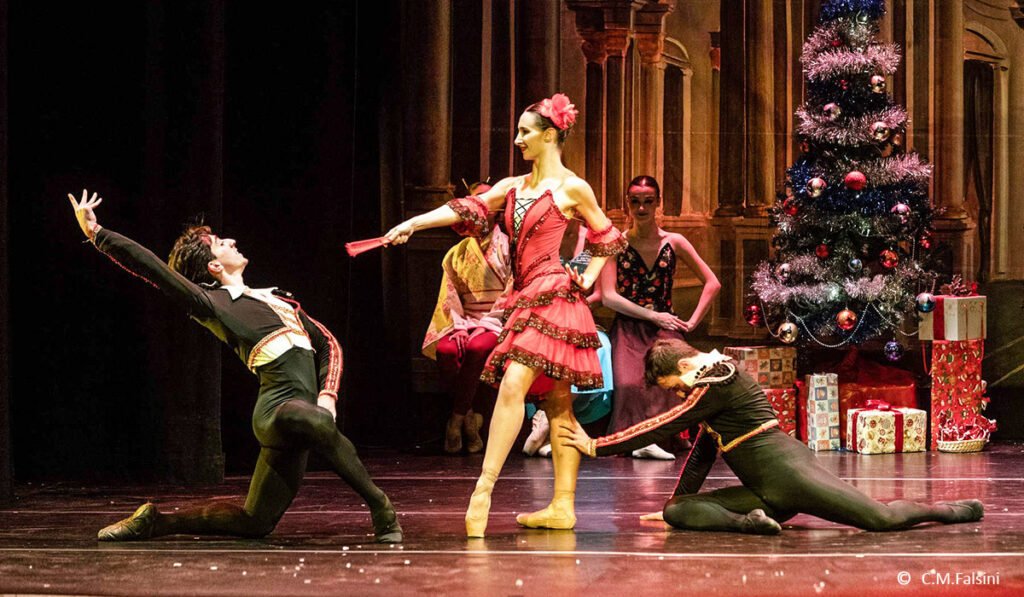
Almatanz's Swan Lake is a version signed by Luigi Martelletta, which the company presents as stylistically leaner and livelier than the tradition, while staying rooted in the academic style.
An idea pursued for a long time
The company says the show comes from an idea the choreographer had been pursuing for many years. His long career as principal dancer at Teatro dell'Opera di Roma and in other Italian and European theaters let him study, examine and dance this ballet many times, until he wanted to give it a reading of his own.
Less pantomime, more dance
The central point of the version is the lightening of the mannerisms and pantomimes that are part of the classical repertoire, which the company considers by now useless and heavy. In their place more dance, more rhythm, a more direct story: a choice that makes the ballet more accessible to those seeing it for the first time.
The expected numbers
The dances the audience knows and expects are not missing: the swans, the Spanish dance, the Russian dance, the waltz, the pas de deux. Those who arrive at Ghione with the most famous images of the ballet in mind will find them on stage.
A classic of today
The company defines this Swan Lake as a creature of the present: a reading that focuses on details and individual situations, gathered in a broad collage, aiming at a neoclassical ideal of absolute beauty. It's an ambitious statement of artistic intent, which the stage will show if it was kept.
Swan Lake: the story of the ballet
Swan Lake is the first of Tchaikovsky's three ballets, composed in Moscow between August 1875 and April 1876 and first performed at the Bolshoi Theatre in Moscow on February 20, 1877, according to the Russian calendar of the time, with choreography by Julius Wenzel Reisinger.
The plot
The story is set in Germany and tells the love story between Prince Siegfried and Princess Odette, turned into a swan by a curse of the sorcerer Rothbart. The plot is modeled on several Russian and German folk tales.
Petipa and Ivanov
Most companies base their production, for choreography and music, on the revival by Marius Petipa and Lev Ivanov for the Mariinsky Ballet, presented in St. Petersburg on January 15, 1895 according to the Julian calendar. On that occasion Tchaikovsky's music was revised by Riccardo Drigo, Kapellmeister of the Imperial Theaters. Modern versions too, like Martelletta's, dialogue with that tradition.
A libretto without a certain author
The author of the original libretto remains uncertain, as do the precise origins of the story. Influences have been hypothesized from the tale The Stolen Veil by Johann Karl August Musäus, published in 1784, based on the myth of the swan maiden. Other hypotheses attribute the story to the choreographer Reisinger or to Vladimir Begichev, then director of the Imperial Theaters of Moscow, whose name appears on a surviving copy of the libretto.
Compagnia Almatanz: 40 years of dance
Compagnia Almatanz was founded in 1982 and is based in Rome. In its first 15 years it devoted itself to projects of different kinds, across theater, dance, opera and music.
The first productions
Among its first successes the company recalls Scarpette magiche, in its national premiere at La Fenice in Venice and at Teatro Argentina in Rome. Allora? Allora cosa?, a text presented with dance, acting and singing, taped and broadcast by Rai 1 in the Maratona di danza series. And Le Corsaire with choreography by E. Poliakov, in its national premiere at the Festival dei Due Mondi in Spoleto.
Since 1998 with Martelletta
In 1998 Luigi Martelletta became its president. Since then the company has supported different lines of research, from classical to neoclassical to contemporary, with the declared goal of bringing younger people, and not just enthusiasts, closer to dance, with ballets of great dynamism and technique.
The repertoire
Alongside Swan Lake, the company offers The Nutcracker, reinterpreted as a metaphor for Clara's growing up, as well as Bolero, Carmen, told backward starting from the final scene, Sleeping Beauty, with choreography by Maria Grazia Galante, and Vento del Sud.
Who is Luigi Martelletta, the choreographer
Luigi Martelletta was a principal dancer at Teatro dell'Opera di Roma, where his artistic path began, and has danced in many other Italian and European theaters.
From the Costanzi to the company
The company stresses that Martelletta's career started from the capital's opera house: the stage of Rome Opera House is the place where he came to know the classical repertoire from the inside, including Swan Lake, which he danced many times.
The president of Almatanz
Since 1998 he has led Compagnia Almatanz, which tours his choreographies. The local press that followed the Swan Lake tour speaks of a company with more than 25 years of career behind it under his direction.
The guest stars
Over the years Martelletta has involved artists of great prestige in the productions: the étoiles Rolando Sarabia and Venus Villa for Carmen. Marjia Kicevska and Boban Kovachevski, principal dancers of the National Ballet of Macedonia, for Clara and the Nutcracker. The étoile Raffaele Paganini for Il viaggio di Zorba. Ambeta Toromani and Alessandro Macario in the summer tours from 2011 to 2013 for Vento del Sud. Letizia Giuliani, principal dancer of the Maggio Musicale Fiorentino. Monica Perego, principal dancer of the English National Ballet. Angela Kouznetsova, principal dancer of Teatro dell'Opera di Roma. Nadia Ivanova and Sergey Kuptsov, étoiles of the Kirov.
The Swan Lake principal dancers
For the Swan Lake productions the company recalls Aneliya Dimitrova, principal dancer of the Sofia Opera, and Clara Pla Ferrer, principal dancer of the Stara Zagora Opera, in Bulgaria. The names of the performers at the Rome performance are not published.
A curiosity about Swan Lake at Teatro Ghione by Compagnia Almatanz, April 3, 2027
The curiosity concerns the ballet's first performance. The Swan Lake that everyone knows today is not the one staged at the Bolshoi in 1877 with Reisinger's choreography: most companies start from the revival by Marius Petipa and Lev Ivanov, presented at the Mariinsky in St. Petersburg 18 years later, in 1895.
It's a story that explains why every choreographer feels entitled to reread the ballet. There's no untouchable original version: what the public considers traditional is already a revision, with the music retouched by Riccardo Drigo. Luigi Martelletta joins this long tradition of rereadings, with a declared choice: less pantomime, more dance.
The second curiosity is Roman. Martelletta began his career at Teatro dell'Opera di Roma, the theater that in December 2026 stages its own Swan Lake in the great hall of the Costanzi. A few months apart, the same ballet can be seen in two very different dimensions: the grand production of the opera house and the version of an independent company in an intimate hall.
Finally, the title itself: the author of the libretto is not known with certainty. One of the most-performed ballets in the world has an origin story that is still debated.
Teatro Ghione, Ileana Ghione's hall
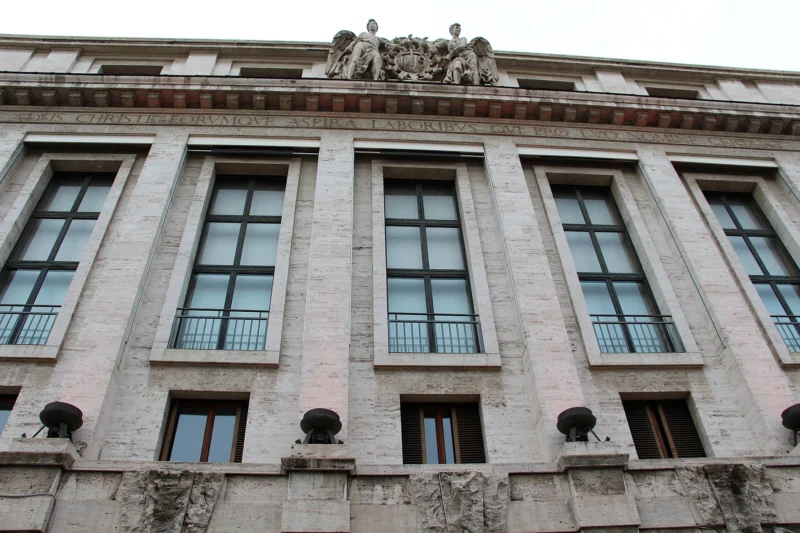
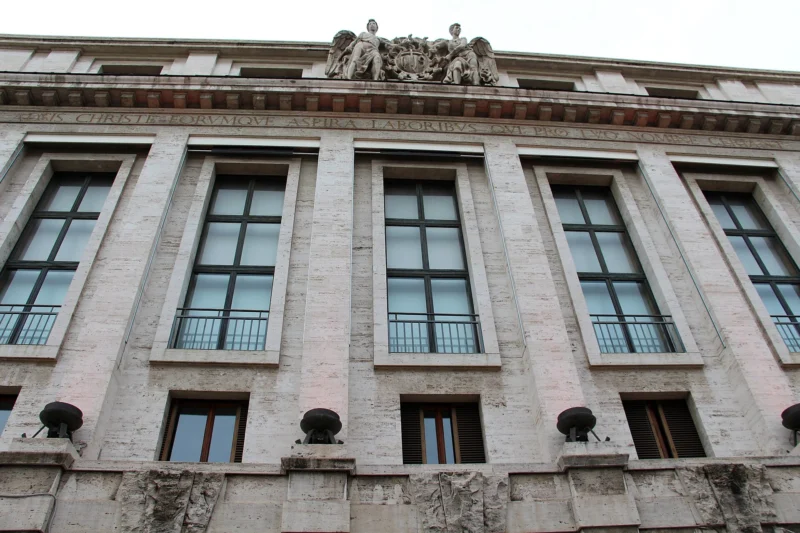
Teatro Ghione is a hall of about 500 seats on Via delle Fornaci 37, a stone's throw from the Vatican, founded and directed for 25 years by the actress Ileana Ghione.
Drama and concerts
For decades the program alternated classical drama, with Wilde, Pirandello, Shakespeare and Goldoni, with concerts. In the 2026-2027 season, among others, FlaMENcos and Giovanni Cacioppo have passed through Ghione.
Ileana Ghione
Born in Cortemilia, in Piedmont, on January 15, 1931, Ileana Ghione trained in the 1950s at the Accademia d'arte drammatica, with Sergio Tofano among her teachers. She was a face of television dramas, from Jane Eyre to David Copperfield, and she acted in Giacosa's Come le foglie with Tino Carraro. On December 9, 1980 she bought and refurbished the old theater on Via delle Fornaci, which has borne her name ever since. The general entry on the hall is that of Teatro Ghione.
A hall for dance
Ghione's size suits a ballet with the forces of an independent company: from the orchestra the dancers are seen up close, and the work of feet and arms, which gets lost in big theaters, reads clearly here.
Something nobody tells you about Swan Lake at Teatro Ghione by Compagnia Almatanz, April 3, 2027
What few people consider is that a hall of 500 seats changes the way you watch a ballet. In big opera houses Swan Lake is watched from afar: the swans' corps de ballet is a geometric design, an effect of the whole. In a theater like Ghione the distance between stage and audience shrinks, and the ballet becomes a matter of people: you see the faces, the effort, the precision of the feet.
For a child at their first time it's an enormous advantage. Dance seen up close is more understandable and more moving, and the pas de deux, in particular, take on an intimacy that big halls don't allow.
The second thing concerns the music. The organizers don't indicate a live orchestra, and anyone expecting the orchestra pit of the Costanzi would do well to find out beforehand. In any case it will be a different experience from the grand opera house: less solemn, more focused on the dance.
Third: the version is shortened in the pantomimes by the choreographer's declared choice. Those who know the ballet will notice the absence of some mimed scenes, and those who don't will gain in pace.
How to get to Teatro Ghione
The most convenient way to reach Teatro Ghione is the regional train to Roma San Pietro station, served by lines FL3 and FL5, a few minutes' walk from Via delle Fornaci.
By train
From San Pietro station, which also has a bus stop and a taxi stand, you go up Via delle Fornaci to the theater. It's the most convenient choice for those arriving from Trastevere, from Ostiense or from the north of the city along line FL3.
By bus and metro
The buses in the area converge on San Pietro station and Largo di Porta Cavalleggeri. Lines and schedules should be checked on the Rome public transport trip planner. The nearest Metro Line A stops are in Prati, about a 20-minute walk through Borgo and St. Peter's Square.
By car
Ghione's website lists three parking options in the area: a free outdoor lot, the San Pietro parking lot and the Bonifacio garage. On Saturday afternoon the Vatican area is very busy: it's best to leave with a margin.
My advice for visiting Swan Lake at Teatro Ghione by Compagnia Almatanz, April 3, 2027
My advice is to turn April 3 into a full afternoon in the St. Peter's area. A walk in St. Peter's Square after lunch, taking your time, and then the climb along Via delle Fornaci to the theater, with a quarter of an hour of margin before the 17:00 start.
For children, it's best to tell the story before going in. Swan Lake is a fairy tale with a prince, a princess turned into a swan, an evil sorcerer: knowing who's who makes the show much more engaging, also because Martelletta's version reduces the pantomimes, that is, precisely the mimed parts that explain the plot.
On choosing a seat, in a hall of this size the central orchestra is ideal for dance: you see the dancers' feet and the design of the corps de ballet together. Rows too close to the stage, for a ballet, cut the overview, and the gallery offers the best perspective on the swans' geometries.
Finally, a listen in advance. A few minutes with the swan theme and the waltz from the first act, before leaving home, prepares the ear: recognizing the music in the hall is a small satisfaction, for young and old.
Another well-known fact, yet rarely mentioned
It's well known that Swan Lake is Tchaikovsky's most famous ballet. Less often mentioned is that it was the first of his three ballets, composed in Moscow between August 1875 and April 1876, and that the version that stuck in collective memory came almost 20 years after the premiere.
The Petipa and Ivanov revival at the Mariinsky, which fixed the image of the ballet, went on stage in January 1895. The music itself was revised for the occasion by Riccardo Drigo, Kapellmeister of the Imperial Theaters: the score that many consider Tchaikovsky's original is, in reality, already a revision.
The second little-cited fact concerns the sources of the plot. Alongside Russian and German fairy tales, critics have noted similarities with other 19th-century ballets: the deceived prince recalls Albrecht in Giselle, the swan maidens recall the wilis and the sylphs of Romantic ballets. Swan Lake is, in a sense, the summa of a century of dance.
The right photo to take at Swan Lake at Teatro Ghione by Compagnia Almatanz, April 3, 2027
The right photo is taken before the start, with the curtain closed and the hall filling up: a keepsake of the first ballet, for children, is worth more than any image of the stage. During the show you don't take photos: in a dark theater a lit screen disturbs those around, and the dancers deserve full attention.
The second photo is taken on the way out, around 19:00. Going down from Via delle Fornaci toward Largo di Porta Cavalleggeri you arrive in front of the Leonine Walls, with the dome of St. Peter's not far off: in early April, at that hour, the sunset light turns the dome golden.
The third is a tribute to the ballet. Those with time can go up the Janiculum after the show and photograph the city from above in the blue hour: a way to close the day with an image of Rome that, like the finale of Swan Lake, has something suspended about it.
What to see around Teatro Ghione
Teatro Ghione is located between St. Peter's, Borgo and the Janiculum, and before an afternoon performance the morning offers many possibilities.
St. Peter's and Borgo
St. Peter's Square is a few minutes' walk away. Between the square and the Tiber stretches the Borgo district, with the Passetto reaching Castel Sant'Angelo.
The Janiculum and Villa Pamphilj
Behind the theater rises the Janiculum, with its terrace over the city. Farther south opens Villa Doria Pamphilj, the big park where children can run before sitting still for the show.
The Vatican Museums
For those with a full day, the Vatican Museums are a short distance away. The visit should be booked and planned well in advance, leaving time for lunch before the performance.
Some important events that happened here in history
The Teatro Ghione area has an ancient history. Here ran the Leonine Walls, and Porta Cavalleggeri preserves the coats of arms of the Borgias of Pope Alexander VI. On April 30, 1849 at Porta Cavalleggeri the first attack of French troops against the Roman Republic was fought, repelled by the defenders, among whom was the young actor Tommaso Salvini.
In 1894 San Pietro station is opened, on the line to Viterbo. The Vatican railway also departs from here, and the cinema has used the station as a set, with Totò, Alberto Sordi and Virna Lisi. On December 9, 1980 Ileana Ghione buys the old theater on Via delle Fornaci and reopens it under her name. On November 25, 1986 Shaw's Candida goes on stage there, directed by Silverio Blasi.
In December 2005 Ileana Ghione, while performing Euripides' Hecuba on her stage, felt ill and died shortly after. The lying in state was set up in the theater. On April 3, 2027 the same hall welcomes the most celebrated ballet in the repertoire, in the version of a choreographer raised on the stage of the Opera di Roma.
Who has passed through Swan Lake at Teatro Ghione by Compagnia Almatanz, April 3, 2027
Through Ghione have passed the classics of drama and the face of Ileana Ghione, a student of Sergio Tofano. In the surrounding neighborhood, popes and soldiers, the Borgias and the young actor Tommaso Salvini, among the defenders of the Roman Republic in 1849.
Through the history of Compagnia Almatanz have passed some important names of dance: Raffaele Paganini, Rolando Sarabia, Venus Villa, Ambeta Toromani, Alessandro Macario, Letizia Giuliani, Monica Perego, Angela Kouznetsova, Nadia Ivanova and Sergey Kuptsov, and for Swan Lake the principal dancers Aneliya Dimitrova and Clara Pla Ferrer. It's a network that links an independent Roman company to the great theaters of Europe, from the Kirov to the English National Ballet.
And through the history of the ballet pass the names of Tchaikovsky, Reisinger, Petipa, Ivanov, Drigo. In our opinion it is precisely this double genealogy, that of the ballet and that of the company, that gives meaning to the April 3 performance: a universal classic reread by a Roman dancer, in a hall born of an actress's passion.
Swan Lake with children
The 17:00 Saturday performance is the best suited to families among the classical dance offerings of the Roman spring: convenient time, intimate hall, a well-known fairy tale.
Age
The organizers don't indicate age limits. In our opinion the show is suitable for children from five or six years up, especially if they have already seen a cartoon or read a version of the story. For the youngest, the length of a full ballet can be demanding.
For those who study dance
For a girl or boy who attends a dance school, seeing a professional company up close in the most famous ballet is a motivating experience. The closeness of the stage, at Ghione, lets you observe technique as in few other halls.
During the show
The ballet has no words: children may be tempted to ask for explanations. Telling the plot before going in, and during the intermission what will happen next, helps keep their attention without disturbing other spectators.
How to plan the afternoon of April 3
For Swan Lake at Ghione the ideal day starts mid-morning in the St. Peter's area and ends with a dinner in the neighborhood, with the 17:00 performance at the center.
The morning
A stroll between St. Peter's Square and Borgo, or an hour in the greenery of Villa Doria Pamphilj if there are children who need to move around before sitting still. In early April temperatures are generally mild and the days long.
Lunch and arrival
An unhurried lunch in the neighborhood, then the climb along Via delle Fornaci. Arriving at the theater around 16:40 leaves time to pick up tickets, leave jackets and settle in before the lights go down.
After the show
On the way out, around sunset, the dome of St. Peter's is a few steps away. Those with energy left can go up the Janiculum for the view over the city, before dinner.
Two Swan Lakes in Rome in the same season
In the 2026-2027 season Rome offers Swan Lake in two very different versions: the grand production of Teatro dell'Opera in December 2026, and the performance by Compagnia Almatanz at Ghione in April 2027.
The big theater
At the Costanzi the ballet is seen with the corps de ballet of an opera house, in a large historic hall, during the holiday season. It's the solemn experience, for a big occasion.
The intimate hall
At Ghione the same story arrives with an independent company, in a hall of 500 seats, on a spring Saturday afternoon, in the lightened version of a choreographer who danced at the Costanzi as a principal dancer. It's a more intimate experience, closer to the dance.
Which to choose
In our opinion the two offerings are not in competition: whoever saw the ballet in December can find it again in April from another perspective, and whoever discovers it at Ghione will then have one more reason to go to the Opera.
Where to eat before or after the show
Around Teatro Ghione you find pizzerias, trattorias and bars on the streets between Via delle Fornaci, Via Gregorio VII and the slopes of the Janiculum, frequented mostly by people who live in the neighborhood.
Before
With the 17:00 start, lunch is taken unhurriedly and a light afternoon snack before the show is enough. The places facing Via della Conciliazione and the square are aimed mostly at tourists.
After
On the way out there's the whole evening for dinner in Borgo, Prati or Trastevere. On Saturday night places fill up early: booking in the afternoon avoids waits, especially with children.
Accessibility and practical information
Teatro Ghione is listed as accessible to people with disabilities by the Roma Capitale tourism portal, which also lists a dog-sitting service.
People with disabilities
For wheelchair users or those who need assistance it's useful to phone the theater before the performance, at 06 6372294, to find out how access is organized and where the reserved seats are.
April in Rome
In early April in Rome the days are mild and bright, and the St. Peter's area is very busy with visitors. Anyone coming from out of town for the occasion does well to book lodging in good time. Anyone who wants to build a tailor-made stay around the day can contact Tour Leader Pro, which organizes private tours and experiences.
Frequently asked questions about Swan Lake at Teatro Ghione
When is Swan Lake on at Teatro Ghione?
Compagnia Almatanz's Swan Lake is on at Teatro Ghione, at Via delle Fornaci 37, on Saturday, April 3, 2027 at 17:00. It is a single afternoon performance, with choreography by Luigi Martelletta to music by Tchaikovsky.
Who is Compagnia Almatanz?
Compagnia Almatanz is a Roman dance company founded in 1982. Since 1998 its president has been Luigi Martelletta, a former principal dancer of Teatro dell'Opera di Roma. Its repertoire includes, besides Swan Lake, The Nutcracker, Carmen, Bolero and Sleeping Beauty.
What is Martelletta's version of Swan Lake like?
Luigi Martelletta's Swan Lake is a leaner and livelier version than the tradition, which lightens mannerisms and pantomimes and keeps the most anticipated dances: the swans, the Spanish dance, the Russian dance, the waltz and the pas de deux.
Where do you buy tickets for Swan Lake at Ghione?
Tickets for Swan Lake at Teatro Ghione are bought on the presale network authorized by the organizer, where prices are shown. For information about the hall, Teatro Ghione answers at 06 6372294 and at info@teatroghione.it.
Is Swan Lake at Ghione suitable for children?
Swan Lake at Teatro Ghione is a Saturday afternoon performance at 17:00, designed for families as well. In our opinion it is suitable for children from five or six years, preferably if they already know the story of Prince Siegfried and Odette.
How do you get to Teatro Ghione?
Teatro Ghione, on Via delle Fornaci 37, is reached by regional train FL3 or FL5 to Roma San Pietro station, a few minutes' walk away. The nearest Metro Line A stop is in Prati, about a 20-minute walk. There are three parking lots in the area.
The final tip on Swan Lake at Teatro Ghione
The most famous ballet in the world, in the version of a Roman dancer raised at Teatro dell'Opera, in a hall of 500 seats a stone's throw from St. Peter's, on an April Saturday afternoon. In our opinion it's the ideal gateway to classical dance for a child, and a pleasant evening for those who want to see Swan Lake up close, without the distance of the big theaters. It's best to tell the plot before going in, choose the central orchestra and turn April 3 into a full afternoon between St. Peter's and the Janiculum.
Article written by the editorial team of Tour Leader Pro, contact them for Private/Corporate/V.I.P. Tours and Experiences.
Planning a trip to Rome? The English guides to visiting the city are on ItalyPlanner.com.
Contact Information
Nearby
 Teatro Ghione100 m
- Camposanto Teutonico300 m
- Santi Michele e Magno400 m
- Passeggiata del Gelsomino400 m
- Piazza San Pietro400 m
- Obelisco Vaticano400 m

Upcoming events nearby
- Peter Hammill at Teatro Ghione, November 10, 2026100 m
- Alteria, Belle storie di Rock’n Roll at Teatro Ghione, November 14, 2026100 m
- Le Stelle di Lucio at Teatro Ghione, November 11, 2026100 m
- Victor Patrascan, stand up comedy in broken English at Teatro Ghione, November 18, 2026100 m




You might also like
- L’invisibile che c’è with Ornella Muti at Teatro Manzoni, March 4 to 21, 2027
- Luca Ravenna Flamingo at Auditorium Conciliazione, March 19, 2027
- Alessandro Siani at Auditorium Conciliazione, March 12 to 14, 2027
- Sugo finto at Teatro Manzoni with Francesca Reggiani, April 8 to 25, 2027
- Il gufo e la gattina with Giobbe Covatta and Patrizia Pellegrino at Teatro Manzoni, May 6 to 23, 2027
- Valentina Persia Nata con la Guêpière at Auditorium Conciliazione, March 8, 2027