Svenja Deininger. On Leaning at Federica Schiavo Gallery, from October 13, 2026 to January 30, 2027
In short. Svenja Deininger, On Leaning: solo show by the Viennese painter at Federica Schiavo Gallery, Lungotevere dei Vallati 2, rione Regola, 00186 Rome.
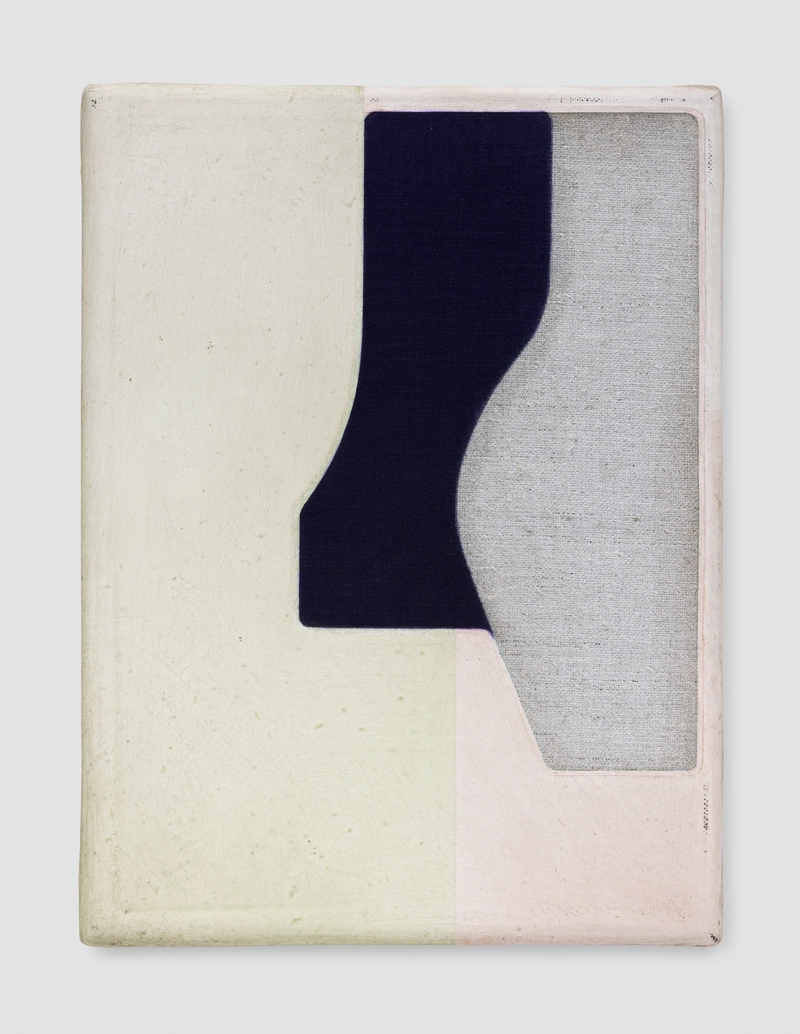
Svenja Deininger, On Leaning: solo show by the Viennese painter at Federica Schiavo Gallery, Lungotevere dei Vallati 2, rione Regola, 00186 Rome. Opening on the evening of Tuesday, October 13, 2026 (the gallery gives 18:00, the city's tourist portal 18:30), open to the public from October 14, 2026 to January 30, 2027, Tuesday to Saturday from 12:00 to 19:00. You get there by tram 8 (Arenula/Cairoli stop, a few minutes on foot) or on foot from Campo de' Fiori, the Ghetto or Trastevere across Ponte Sisto. For information the gallery answers at 06 69300800 and at info@federicaschiavo.com. All the updated news is on the official website of Federica Schiavo Gallery.
An abstract painting show in a private gallery on the Tiber, a short walk from Via Giulia, in the middle of the Roman autumn. Those who follow contemporary painting know Svenja Deininger's name for her slow canvases built in layers. Those who don't know her have the chance to meet her in an intimate room, with no lines and no ticket offices, in the stretch of the city where Renaissance, Ghetto and river meet. It's worth the detour, even for just half an hour.
Svenja Deininger. On Leaning: What You Will See
On Leaning is presented by the gallery as a special project: a solo show by Svenja Deininger that opens in Rome on October 13, 2026 and stays on view until January 30, 2027. The English title can be rendered as "sull'appoggiarsi," "sul chinarsi": a word of balance, weight and contact, which suits work made of overlapping planes that support each other.
The Guiding Image of the Exhibition
The gallery accompanies the announcement with a work from 2026: Untitled, oil on linen, 28 by 21 centimeters, photographed by Andrea Rossetti. The format is tiny, little more than an A4 sheet, and already says a lot about the artist's way of working: in Deininger's painting the small format has the same dignity as the large canvas, and often the two sizes live together in the same room. On the artist's page the gallery lists works that range from this same format, 28 by 21 centimeters, up to canvases of 230 by 150 centimeters.
Untitled Works
Almost all the canvases published by the gallery are called Untitled, followed by the year. It is a consistent choice: no titles that suggest a reading, no story. Whoever looks has to do the work on their own, and will find that the work consists mostly of looking for a long time. The measurements given often also indicate the depth of the stretcher, 2.7 centimeters: an insider's detail, yet a significant one, because the edges of the canvas matter in Deininger's painting.
A Painting of Layers
The critical text published by Federica Schiavo Gallery describes works in which colors filter through from the background across overlapping layers of paint, between geometric segments and more softly abstract modular planes, which flow together until they create new spaces on the final surface. Solids and voids, thicknesses and volumes. The decisive point, according to the gallery, is that this way of proceeding does not derive from a plan worked out beforehand: it is a pattern that is determined in the real time in which the painting takes shape.
What the Artist Says About Her Work
On the same page the gallery reports a statement by the painter. In short: she is interested in the painting being read as a process, with an earlier image resurfacing as in a collage, to the point that it is often unclear which layer is on top and which underneath. Hence the shapes that recall frames, and the white areas that suggest sources of light and are actually the plain base coat. Space, Deininger says, is born as atmosphere, and for this reason her paintings are not truly abstract. A statement worth keeping in mind in front of the canvases.
How to Look at These Canvases
The practical advice is simple: move closer and then step back. From far away the compositions look like interlocking fields of color, almost architectures. Up close you see the differences in opacity, the linen left exposed, the thicknesses. The New York gallery that represents the artist, Boesky Gallery, observes that the surfaces seem almost to deny the evidence of their making, with no visible brushstrokes, and that it is the layers of color on the edge of the canvas that tell how the work came about. Look at the edges: that is where the painting confesses.
Who Is Svenja Deininger: Biography and Career
Svenja Deininger was born in Vienna in 1974 and studied at the Kunstakademie in Münster and the Kunstakademie in Düsseldorf, two of the most important German academies for painting in the second half of the 20th century. She now lives and works between Vienna, Milan and Berlin.
The German Training
An Austrian painter trained in Germany: the fact matters. Düsseldorf and Münster are schools where reflection on the painting medium, on the support and on the surface has always been central. You can recognize this discipline in Deininger's work: no ostentatious gesture, great attention to building the painting as an object.
The Method: Paint, Revise, Repaint
The biography published by Boesky Gallery describes an improvised process of painting, revision and new painting. The compositions begin from a single shape, little more than a shadow or a memory of a shape, and develop slowly over time, as the artist reworks the surfaces and lets areas of matte color and raw linen emerge next to thick layers of paint. These are paintings that are products of time, place and process.
Solo Shows in Museums
Her work has been presented in solo shows at the Norton Museum of Art in West Palm Beach, Florida, at the Joslyn Art Museum in Omaha, Nebraska, at the Vienna Secession, at the Collezione Maramotti in Reggio Emilia, at the Kunsthalle in Krems and at the Bank Austria Kunstforum in Vienna. For an artist of her generation it is a weighty list: the Vienna Secession, in particular, is one of the symbolic places of European modernity.
The Norton Museum in 2026
The Federica Schiavo Gallery page records the exhibition at the Norton Museum of Art from March 28 to September 27, 2026. The Roman solo show therefore comes right after the American exhibition closes: Rome receives the artist at the moment of her greatest international visibility.
Two Thoughts at the Collezione Maramotti
In Italy her name is tied to Two Thoughts, the solo show hosted in the Pattern Room of the Collezione Maramotti in Reggio Emilia from March 8 to December 6, 2020. The project brought together a series of new paintings, conceived specifically for that space and placed in dialogue with four works chosen for the occasion. The Collezione Maramotti is one of the most serious private contemporary art collections in the country, and an invitation like that is a recognition.
Group Shows
Deininger has taken part in group shows at the Leopold Museum and the Belvedere 21 in Vienna, the Kunsthalle Wien, the Norton Museum of Art, the Neues Museum in Nuremberg, the Haus Konstruktiv in Zurich, the University of Michigan Museum of Art in Ann Arbor, WIELS in Brussels and the Kunstmuseum in Solothurn. In 2021 she appeared among the exhibitions Avant-Garde and the Contemporary, dedicated to the Belvedere collection, and For the Record: Celebrating Art by Women at the Norton Museum.
The Relationship with Federica Schiavo Gallery
The Roman gallery has followed the artist for years. Among the shows listed on her page are A Soft Seduction, a group show at the Milan location, and Yours Truly (working title), from April 4 to May 24, 2025. On Leaning is the new chapter of this collaboration, the first at the Roman location on Lungotevere after the American season.
Federica Schiavo Gallery on Lungotevere dei Vallati
Federica Schiavo Gallery was founded in Rome in 2009 and is now based at Lungotevere dei Vallati 2, in the rione Regola. Its program, according to the official presentation, focuses on the research and promotion of emerging Italian and international artists who work with video, performance, sculpture and painting.
From Rome to Milan and Back
In September 2016 the gallery opened a location in Milan with a solo show by Jay Heikes. At the end of 2024 it returned to Rome with a new location in the historic center, the one on Lungotevere where On Leaning opens. A path that tells the story of the Italian art market of the last 15 years well, with its center of gravity shifted to Milan and the return of some galleries to the capital.
International Fairs
The gallery has taken part in The Armory Show in New York, NADA Miami Beach and NADA New York, the Dallas Art Fair, Zona Maco in Mexico City, Frieze London, FIAC in Paris, Art Rotterdam, Art Athina, Artissima in Turin, MiArt in Milan and ArteFiera in Bologna. The résumé of a research gallery with an international vocation.
Guest Curators and Artist Projects
On individual projects the gallery relies on outside curators, among them Chris Sharp, Michele D'Aurizio and Shane Campbell, or involves the artists directly as authors of exhibitions: this is the case of Does The Angle Between Two Walls Have A Happy Ending?, curated by Ishmael Randall Weeks, and of the traveling exhibition Trieste, conceived by Jay Heikes.
A Question of Address
The gallery's website gives Lungotevere dei Vallati 2 as its location, while the city's tourist portal reports number 89. The stretch of Lungotevere is short: coming from the bridge, it's best to look for the number the gallery gives.
The Rione Regola and Lungotevere dei Vallati
Lungotevere dei Vallati runs along the left bank of the Tiber between Ponte Sisto and Ponte Garibaldi, in the rione Regola, one of the historic rioni of the center. Behind it are Via Giulia, Palazzo Farnese and Campo de' Fiori. Downstream are the Ghetto and the Tiber Island, and across the river is Trastevere.
The Tiber Walls
The lungotevere as we see them today are a work of Rome as the capital of Italy: after the flood of 1870 it was decided to enclose the river between high masonry embankments, the muraglioni, which radically changed the city's relationship with the water. The houses that went down to the bank disappeared, and in their place came the avenues lined with plane trees that still shape the center today.
Ponte Sisto
The pedestrian bridge in front of the gallery takes its name from Pope Sixtus IV, who had it built for the Jubilee of 1475. It is the most beautiful way to reach the exhibition from Trastevere: on the other side is Piazza Trilussa, with the fountain Romans call the Fontanone di Ponte Sisto.
Via Giulia
A few steps away runs Via Giulia, the straight street wanted by Pope Julius II at the beginning of the 16th century: noble palaces, churches, antique dealers and art galleries. The presence of a contemporary gallery in this corner of the city is not an oddity: Via Giulia and its side streets have for decades been one of the areas of the Roman art market.
Campo de' Fiori and Palazzo Farnese
Going up Via dei Pettinari or the side streets of Via Giulia you reach Palazzo Farnese, seat of the French Embassy, and right after it Campo de' Fiori, with the market in the morning and, at the center, the statue of Giordano Bruno, burned alive in that square in 1600.
The Ghetto
Toward Ponte Garibaldi and beyond you enter the area of the old Ghetto, established by Pope Paul IV in 1555. The Tempio Maggiore, the great synagogue on Lungotevere de' Cenci, was inaugurated in 1904. Today the neighborhood is one of the liveliest in the center, with the Turtle Fountain and the Portico d'Ottavia a few minutes away.
How to Get to Federica Schiavo Gallery
Federica Schiavo Gallery, at Lungotevere dei Vallati 2, is easily reached by tram 8, which stops in Piazza Benedetto Cairoli (Arenula/Cairoli stop) along Via Arenula, a few minutes on foot.
By Tram
Tram 8 connects Largo di Torre Argentina with Trastevere and Monteverde. From the Arenula/Cairoli stop you walk down toward the river along Via Arenula or through the streets of the rione and reach Lungotevere in a few minutes.
By Bus
Largo di Torre Argentina is the big hub for the buses of the historic center: from there you continue on foot, or take tram 8 for just one stop. For up-to-date lines it's best to check the route planner of Rome's transit company.
On Foot
From the Pantheon it takes about 20 minutes, passing through Largo Argentina. From Campo de' Fiori it takes five. From Piazza Trilussa, in Trastevere, you just cross Ponte Sisto. It's the best option: the historic center is made for walking.
By Car
The rione Regola is inside the Limited Traffic Zone of the historic center. Driving is not recommended: better to leave the car outside the center and use trams or buses.
By Bike
The bike path along the Tiber embankments passes right under Lungotevere dei Vallati. For those getting around by bike it's the most pleasant access, especially on the mild days of October.
Hours and Information for Visiting On Leaning
On Leaning can be visited Tuesday to Saturday from 12:00 to 19:00, according to the hours published on the City of Rome tourist portal. On Sunday and Monday the gallery is closed.
The Opening
The opening is Tuesday, October 13, 2026. The gallery gives 18:00, the city's tourist portal 18:30. Openings at Roman galleries are social occasions: lots of people, little room to look. If you want to see the works in peace, come back in the following days.
Contacts
Phone 06 69300800, email info@federicaschiavo.com. The gallery is also on Instagram and Facebook, where it usually posts images of the installation in the days of the opening.
How Much Time You Need
A private gallery is not a museum: the visit can last 20 minutes or an hour, depending on how much you feel like staying in front of the paintings. For painting like Deininger's, time is part of the experience. Better to plan at least half an hour.
Accessibility
For access conditions with a wheelchair or stroller, it's best to call the gallery before the visit: the buildings on Lungotevere have very different entrances from one another.
A Curiosity About Svenja Deininger. On Leaning at Federica Schiavo Gallery, from October 13, 2026 to January 30, 2027
The most interesting curiosity concerns the measurements. In the list of works published by Federica Schiavo Gallery, canvases of 28 by 21 centimeters appear repeatedly: the same format as the work chosen as the image for the Roman show, an Untitled from 2026, and as an Untitled from 2015. After more than 10 years the artist returns to the same size, small and almost domestic, as to a testing ground. Next to them, in the same list, there are canvases of 1 meter 60, of 2 meters 30. The relationship between small and large is one of the keys to her work: the compositions don't change nature by changing scale, they change the way the body of the viewer positions itself in front of them.
There is also another detail that few people notice: in the measurements the gallery often gives the depth of the stretcher, 2.7 centimeters. It isn't pedantry. In Deininger's painting the side edges of the canvas show the accumulated layers of color, and Boesky Gallery observes that precisely those edges are the only clue to how the work came about, since the front surface seems almost to deny the traces of its making. Put another way, the painting has a front and a side, and the side tells the story.
Looking at a Deininger canvas from the side is the right move, and the exhibition's title, On Leaning, almost seems to suggest it: lean, bend over, change the angle.
Something Nobody Tells You About Svenja Deininger. On Leaning at Federica Schiavo Gallery, from October 13, 2026 to January 30, 2027
What nobody says is that Rome's private galleries are the best way to see museum-level contemporary art without the fatigue of the museum. Svenja Deininger has had solo shows at the Vienna Secession, the Norton Museum of Art in Florida, the Joslyn Art Museum, the Collezione Maramotti. Here you see her in a room on the Tiber, with the light of Lungotevere and the noise of traffic muffled by the walls, with the chance to ask questions of the people who work in the gallery.
Many visitors, especially those from out of town, think galleries are places for collectors, where you go in only to buy. That's not so: the shows are open to the public during the stated hours, and someone who comes in to look is as welcome as someone who comes in to buy. The only rule is discretion: no loud conversations, no photos with flash, and say hello when you walk in.
The second thing nobody says: the dates. The gallery announces public opening from October 14, with the inauguration on the evening of the 13th, and closing on January 30, 2027. In between are the Christmas holidays, and in the weeks between late December and early January many Roman galleries reduce their hours or close for a few days. Anyone planning to go during the holidays would do well to call first.
The Advice I Give You for Visiting Svenja Deininger. On Leaning at Federica Schiavo Gallery, from October 13, 2026 to January 30, 2027
My advice is to fit the exhibition into a walk, not to make an expedition of it. Arrive in the middle of the day, after 12:00, when the gallery opens. Start from Campo de' Fiori, pass in front of Palazzo Farnese, go down Via Giulia to Lungotevere, and visit the show without hurrying. Then cross Ponte Sisto and stop in Trastevere for lunch, or head back up toward the Ghetto for an afternoon snack.
In front of the paintings, give yourself the time of the artist's work. Deininger builds her canvases in layers, reworking them for a long time: the first glance gives back only fields of color, the second starts to distinguish the thicknesses, the third discovers the raw linen, the background areas left white that act as light. It is a painting that opens only to those who stop.
If you can choose, avoid the opening evening and go on a weekday. The gallery is small compared to a museum, and with few people you look better. And if a canvas strikes you, ask the gallery for the work's information sheet: materials, measurements, year. This is information that helps you understand.
One last practical tip: bring an umbrella in November. Lungotevere with wind and rain is unforgiving.
Another Well-Known Fact, Yet Rarely Mentioned
It is well known that Rome is a city of old painting, from the Sistine Chapel to Caravaggio. It is mentioned less often that just a few steps from Federica Schiavo Gallery stands one of the most celebrated perspective illusions of Baroque art: Francesco Borromini's perspective gallery at Palazzo Spada, a colonnade that looks tens of meters long and is actually a few meters, built with columns that gradually diminish in height and a floor that rises.
The connection with Svenja Deininger's painting is less bizarre than it seems. The Viennese artist also works on the perception of space: in her words, reported by the gallery, space in her paintings is born as atmosphere, not as a translation of physical reality. Shapes of frames, white areas that suggest sources of light, planes that overlap until it becomes uncertain which is on top and which below. Borromini fools the eye with geometry, Deininger disorients it with layers.
Those who visit the show in the morning can round out the day at the Galleria Spada, a few minutes' walk away: two very distant ways, almost four centuries apart, of questioning what we see.
The Right Photo to Take at Svenja Deininger. On Leaning at Federica Schiavo Gallery, from October 13, 2026 to January 30, 2027
Inside the gallery, before photographing, ask: many galleries allow photos without flash for personal use, others prefer not. If it's allowed, the right photo is not the frontal one, which flattens the painting and gives back a blotch of color. It's the three-quarter, raking one, which shows the edge of the canvas with the accumulated layers and the front surface together. That's where you see the process the artist considers the heart of her work.
Second photo: a small format next to a large canvas, in the same frame, if the installation allows. The comparison of scale tells the show better than any caption.
Outside, the photo everyone takes is Ponte Sisto with the dome of St. Peter's in the background, at sunset. Whoever takes it is right: in October the sun sets toward the Janiculum and the raking light on the Tiber is the best of the year. For a less obvious image, go down to the river quay and frame the muraglione and the arches of the bridge from below: stone, water and shadow, three overlapping layers, like in a Deininger painting.
Some Important Events That Happened Here in History
The stretch of the Tiber in front of the gallery has seen some of the decisive moments of Rome's urban history. The first is the construction of Ponte Sisto, wanted by Pope Sixtus IV della Rovere in view of the Jubilee of 1475: the bridge, which reused the remains of a Roman bridge, was meant to ease the passage of pilgrims between the two banks.
The second is the opening of Via Giulia under Pope Julius II, at the beginning of the 16th century, on a design attributed to Donato Bramante: a long, straight street, among the first of modern Rome, which was meant to become the axis of a new representative district.
The third, dramatic, is the establishment of the Ghetto in 1555 by the will of Pope Paul IV, who shut the Roman Jewish community in an enclosure between the Portico d'Ottavia and the river. The Ghetto was abolished only with the end of the popes' temporal power.
The fourth is the flood of the Tiber in December 1870, a few months after the capture of Rome, which flooded a large part of the center. It was the decisive push to build the muraglioni and the lungotevere, changing the face of the riverbanks forever. Lungotevere dei Vallati was born from that season of great works, together with the synagogue of the Tempio Maggiore, inaugurated in 1904 a little further downstream.
Who Has Passed Through Svenja Deininger. On Leaning at Federica Schiavo Gallery, from October 13, 2026 to January 30, 2027
Artists and curators of the international scene have passed through Federica Schiavo Gallery, between Rome and Milan. Jay Heikes opened the Milan location with a solo show in September 2016 and is the originator of the traveling exhibition Trieste. Ishmael Randall Weeks curated Does The Angle Between Two Walls Have A Happy Ending? for the gallery. Among the guest curators the gallery cites Chris Sharp, Michele D'Aurizio and Shane Campbell.
Svenja Deininger herself is one of the gallery's own: it presented her work in the group show A Soft Seduction in Milan and in the exhibition Yours Truly (working title) between April and May 2025, before On Leaning.
And before the gallery, popes, pilgrims and architects passed along this stretch of river. Sixtus IV, who wanted the bridge. Julius II and Bramante, for Via Giulia. Borromini, who worked at Palazzo Spada not far away. Michelangelo, who contributed to Palazzo Farnese by designing its cornice and the top floor of the courtyard. Whoever walks from Campo de' Fiori to Lungotevere crosses five centuries of architectural history in 10 minutes.
What to See Around the Svenja Deininger Exhibition
The area around Federica Schiavo Gallery is among the richest in the historic center: within a 10-minute walk there are museums, churches, squares and the river.
Via Giulia and Its Churches
Via Giulia deserves a slow walk from beginning to end, looking at the doorways of the palaces and the facades of the churches, as far as the Farnese arch covered in ivy.
Campo de' Fiori
Campo de' Fiori is a market in the morning and a square full of little tables in the evening. For those visiting the exhibition at midday it's the natural stop before or after.
Ponte Sisto and Trastevere
Crossing Ponte Sisto you enter Trastevere. The Museo di Roma in Trastevere, in Piazza Sant'Egidio, often hosts photography exhibitions and pairs well with a day of contemporary art.
The Ghetto and the Tiber Island
Downstream you reach the Jewish Ghetto, the Synagogue and the Jewish Museum, the Turtle Fountain and the Tiber Island.
Villa Farnesina
On the other side of the river, 10 minutes away, the Villa Farnesina keeps Raphael's frescoes: a perfect classical counterpoint after Deininger's abstract painting.
Where to Eat Near Federica Schiavo Gallery
The area between Campo de' Fiori, the Ghetto and Trastevere is one of the best supplied in Rome for eating at any hour.
The Ghetto
In the streets around the Portico d'Ottavia you find a concentration of trattorias and restaurants serving Roman Jewish cuisine, with Jewish-style artichokes in season and fried food. There are also historic bakeries for a quick sweet.
Campo de' Fiori
Around the square there are bakeries, pizza-by-the-slice places, wine bars and restaurants for every budget. At midday it's the quickest solution.
Trastevere
Once you've crossed Ponte Sisto, Trastevere offers Roman trattorias, pizzerias and places for an aperitivo. In the evening it's crowded. For a quiet dinner it's best to move away from the main squares.
Svenja Deininger with Children
On Leaning is an abstract painting show in a private gallery: no workshop, no dedicated route. With curious kids it can still work as a short stop, as long as you turn it into a game: look for the shapes that recall frames, guess which color is underneath and which on top, compare the small painting with the big one. Spend 10 minutes, then head to the Tiber Island or the Fontanone di Ponte Sisto, where kids have more fun.
The Autumn of Galleries in Rome
October is the month when Rome reopens the contemporary art season: after the summer the galleries open the year's main shows, the museums present the big autumn exhibitions, and the city fills with evening openings. On Leaning fits into this calendar. Those who want to build a day around contemporary art can pair the visit with MACRO on Via Nizza, the city's museum of contemporary art, or with the autumn exhibitions at Villa Medici.
The climate of October and November is the best for walking: days still mild, low golden light. From December the show also becomes a refuge: a warm room on the Tiber on days when the tramontana blows.
Frequently Asked Questions About Svenja Deininger. On Leaning
When Can You See the Svenja Deininger Exhibition in Rome?
Svenja Deininger's On Leaning opens on Tuesday, October 13, 2026 at Federica Schiavo Gallery and is open to the public from October 14, 2026 to January 30, 2027. The published hours are Tuesday to Saturday from 12:00 to 19:00. In the weeks of the Christmas holidays it's best to call before visiting.
Where Is Federica Schiavo Gallery?
Federica Schiavo Gallery is at Lungotevere dei Vallati 2, in the rione Regola, between Ponte Sisto and Ponte Garibaldi. The city's tourist portal gives number 89: the address published on the gallery's website is the one to trust. Behind it are Via Giulia and Campo de' Fiori.
What Time Is the On Leaning Opening?
The opening of On Leaning is on the evening of Tuesday, October 13, 2026. Federica Schiavo Gallery gives 18:00, while the City of Rome tourist portal reports 18:30. To not miss the opening, it's best to arrive by 18:00.
How Do You Get to Federica Schiavo Gallery by Public Transit?
You get to Federica Schiavo Gallery by tram 8, Arenula/Cairoli stop in Piazza Benedetto Cairoli, a few minutes on foot. From Largo di Torre Argentina, the bus hub of the center, it's about a 10-minute walk. From Trastevere you just cross Ponte Sisto.
Who Is Svenja Deininger?
Svenja Deininger is a painter born in Vienna in 1974, trained at the academies of Münster and Düsseldorf, who lives between Vienna, Milan and Berlin. She has had solo shows at the Vienna Secession, the Norton Museum of Art, the Joslyn Art Museum and the Collezione Maramotti in Reggio Emilia. She paints abstract canvases built in layers.
Is the Svenja Deininger Exhibition Suitable for People Who Don't Know Contemporary Art?
The Svenja Deininger exhibition is suitable for anyone who feels like looking calmly. No specific knowledge is needed: the canvases are appreciated by moving closer and farther away, observing the layers of color and the edges. A half-hour visit is enough to get a precise idea of her work.
What Is There to See Near On Leaning?
Around the On Leaning exhibition are Via Giulia, Campo de' Fiori, Palazzo Farnese, the Galleria Spada with Borromini's perspective, the Ghetto, the Tiber Island and, beyond Ponte Sisto, Trastevere with the Villa Farnesina. All within 15 minutes on foot.
The Final Advice
The big museum shows fill the calendars, but it's the galleries that tell you what is really happening in painting today. On Leaning is one of those occasions that pass in silence in Rome and that, years later, you regret having skipped. Go during the day, on a weekday, and then cross Ponte Sisto. It's the perfect Roman autumn afternoon.
Article written by the editorial team of Tour Leader Pro, contact them for Private/Corporate/V.I.P. Tours and Experiences.
Planning a trip to Rome? The English guides for visiting the city are on ItalyPlanner.com.