Steve Hackett tells the story of Genesis in Rome, November 21, 2026
In short. On November 21, 2026 Steve Hackett tells the story of Genesis in Rome, as his name returns to a Roman bill in a particular form: not just any rock concert, but an evening built around the Genesis repertoire told and played by someone…
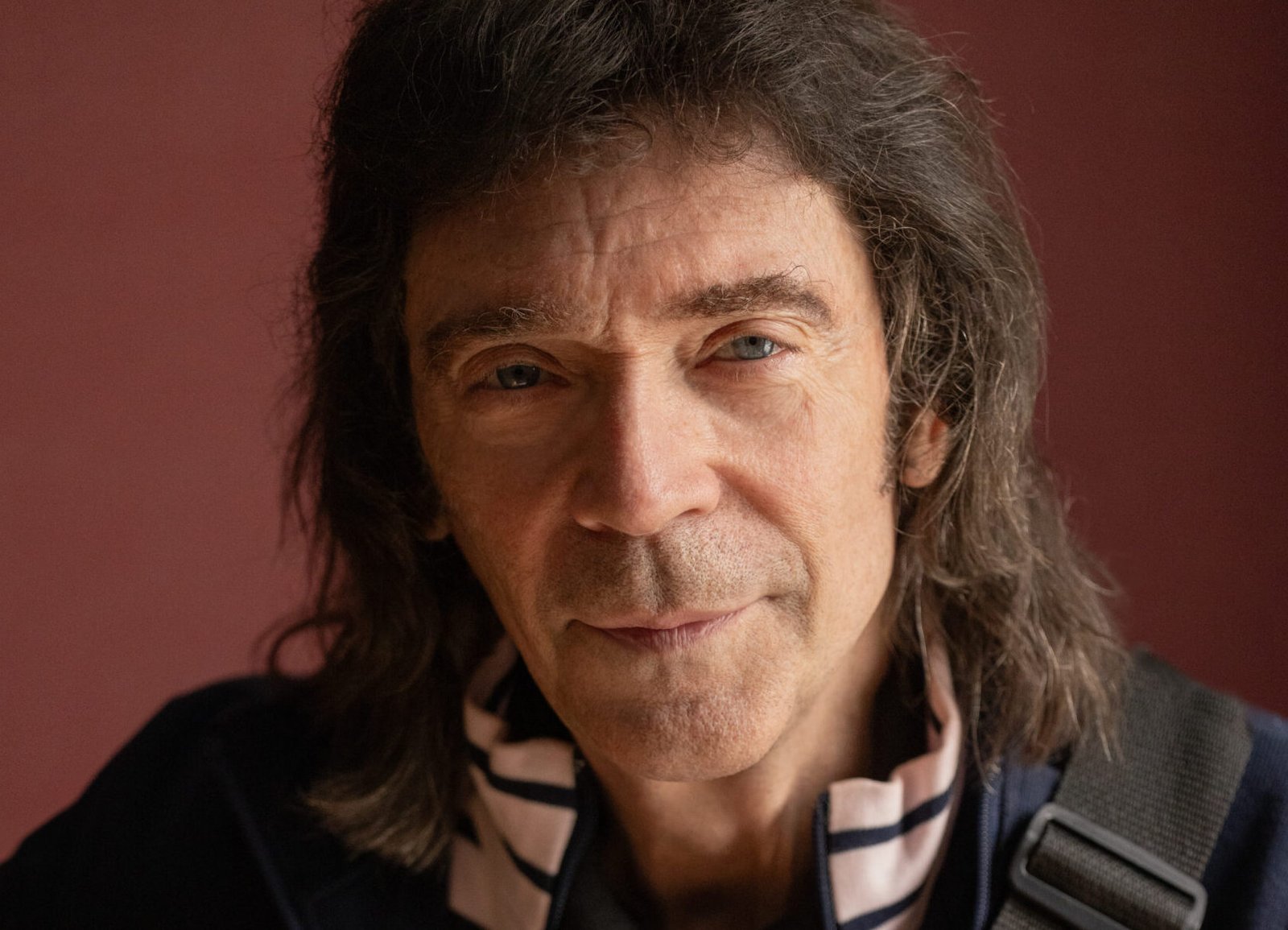
On November 21, 2026 Steve Hackett tells the story of Genesis in Rome, as his name returns to a Roman bill in a particular form: not just any rock concert, but an evening built around the Genesis repertoire told and played by someone who wrote that repertoire together with the others, live, in a 600-seat hall of Auditorium Parco della Musica Ennio Morricone. The evening is announced for Sala Petrassi, the multipurpose space of the complex on Viale Pietro de Coubertin, and with a charitable purpose in support of EMERGENCY. Anyone coming to a date like this expecting a predictable set list has the wrong approach: here the musical material is more than 50 years old, the person playing it recorded it as a young man, and the chosen hall changes the way that material reaches the ear.
The pages that follow help you prepare for the evening from three different angles. The first is musical: who Steve Hackett is, what he really did in Genesis between 1971 and 1977, why his guitar is recognizable even decades later. The second is architectural and practical: what Sala Petrassi is, how it differs from the other halls of the complex, how you get there in the evening, how entry works, what to expect in terms of accessibility. The third is about the surroundings: what there is around the Auditorium, in the Flaminio neighborhood, before and after the concert. Three levels that almost always intertwine in Rome, because live music in the capital is never consumed in a neutral container.
What this concert is
The format of an evening in which a musician "tells" a historic repertoire has a precise tradition of its own, and it's worth understanding it before buying anything or heading off toward Flaminio. It's not a tribute played by others, it's not a cover band, it's not even a celebratory concert designed at a desk by a marketing office. It's the case, much rarer than people think, in which the person who physically recorded certain guitar parts on records released between 1971 and 1977 takes the stage and brings them back to life, with the advantage and the disadvantage of knowing those notes from the inside.
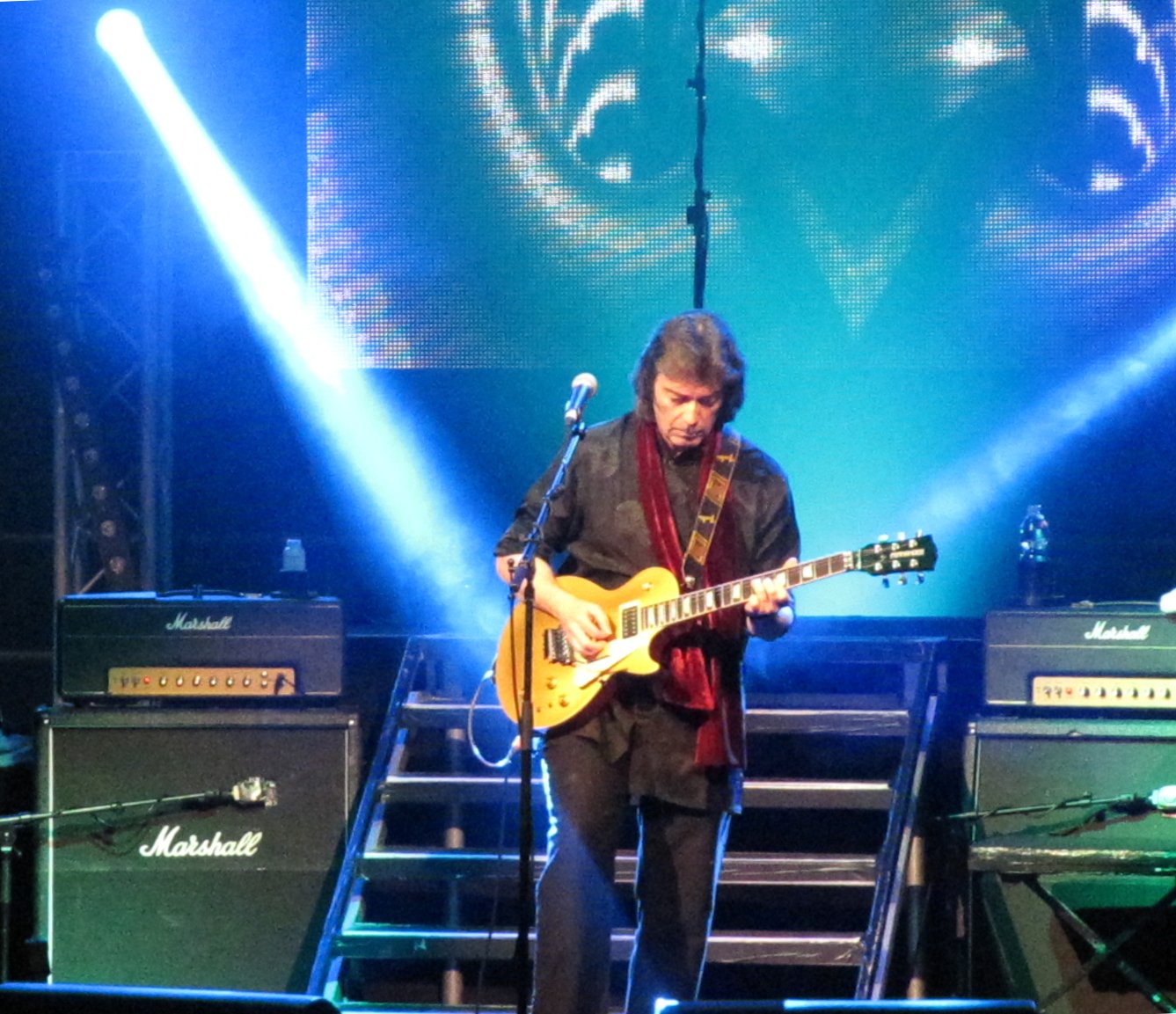
The difference between reinterpreting and redoing
The advantage is obvious: no transcriber, however good, knows why a certain note was chosen at a certain point. The disadvantage is just as real: time passes, hands change, the voice that sang those words in 1973 isn't the one that sings them today, and the temptation to photocopy the record is always lurking. Musicians who handle this exercise well tend to choose a middle way: they stay faithful to the structures, which are the interesting part of that music, and allow themselves freedom on the details, which are the living part. Anyone who comes into the hall expecting a note-for-note reproduction of a vinyl record risks being disappointed. Anyone who comes expecting a reinterpretation in which the architecture stays recognizable finds what they're looking for.
Why the "tells" format changes the evening
When a title contains a verb like "tells", the evening takes on a hybrid character between concert and storytelling. In Rome in recent years this format has caught on considerably: the stage hosts a played part and a spoken part, with anecdotes, accounts of how certain pieces were born, explanations of technical choices and stories of recording studios where tape was expensive and time was limited. In medium-sized halls it works better than in stadiums, for a simple reason of acoustics and attention: with 600 seats the spoken word reaches the audience without effort, and the distance between the stage and the last row stays human.
This also means the evening has a different rhythm from a traditional rock concert. The pauses between one piece and the next aren't dead time to be filled with tuning, they're part of the program. If you go in planning to dance you'll be thrown. If you go in planning to hear a story told with hands too, you're in the right place.
The charitable side
The evening is linked to the purpose of supporting EMERGENCY, the organization founded in 1994 by Gino Strada and Teresa Sarti that runs hospitals and health centers in areas of war and poverty, with a well-established presence in Italy too through clinics and outpatient centers. In Rome evenings set up this way aren't rare: the audience that attends them knows that part of the event's economics has a declared purpose, and this changes the atmosphere in the hall a little, which tends to be more engaged and less consumerist than usual. The precise conditions, that is, what share of sales is donated and how, should be asked of the organizers: this information changes from event to event and no outside page can guarantee it in place of the organizers.
A date in autumn, not in summer
November 21 falls in the middle of the Roman autumn, and this has practical consequences bigger than they seem. The outdoor concert season, the one that fills the Auditorium's Cavea from June to August, ended long before November. Everything moves indoors, which means numbered seats, cloakroom, stricter times and an entry system completely different from the summer one. It also means the experience depends much less on the weather and much more on the hall. For those coming from outside Rome, November also has the advantage of a less crowded city, with hotels priced differently from spring and museums you can walk through without the May lines.
Who Steve Hackett is and his relationship with Genesis
Steve Hackett was born in London in 1950 and belongs to the generation of British guitarists who grew up listening at the same time to American electric blues, European classical music and the first psychedelic experiments. It's a biographical detail that matters, because his way of playing carries the marks of all three sources and can't be reduced to any one of them.
The ad in Melody Maker
The story of how he joined Genesis has become legendary precisely because it's simple and verifiable: Hackett answered an ad in Melody Maker, the British music weekly, looking for a guitarist with songwriting skills willing to work with receptive musicians. The ad had been placed by the group, which at that time needed to replace its previous guitarist. This is the end of 1970, and Genesis are a young band with two albums behind them and a contract just signed with Charisma. Hackett joined and, together with drummer Phil Collins, who had arrived a few months earlier, completed what the public now calls the classic lineup: Peter Gabriel on vocals, Tony Banks on keyboards, Mike Rutherford on bass and 12-string, Collins on drums, Hackett on guitar.
What he actually recorded with the group
Hackett's period in Genesis covers six studio albums and two live ones, and it's worth listing them precisely because a fair amount of confusion surrounds this discography. In the studio: Nursery Cryme from 1971, his debut with the group, Foxtrot from 1972, Selling England by the Pound from 1973, The Lamb Lies Down on Broadway from 1974, a double album and the last with Peter Gabriel on vocals, A Trick of the Tail from 1976, the first with Phil Collins moved to vocals, and Wind & Wuthering from 1976. Live: Genesis Live from 1973 and Seconds Out from 1977, the latter released when his departure from the group had already been decided. Hackett left Genesis in 1977. It's barely seven years, but they're the years in which the band defined its own language.
The sound: what you recognize
Anyone who listens to those records without knowing anything about who's playing still picks out some recurring traits. The first is the use of a long, singing sustain, obtained with controlled volume and feedback, which makes the guitar sound more like a wind instrument than a plucked string instrument. The second is the use of the nylon-string classical guitar in a rock setting, anything but obvious in 1972: the instrumental Horizons, which opens side two of Foxtrot, is a miniature for solo acoustic guitar slipped into a progressive rock album. The third is an almost orchestral attention to timbre, with volume pedals, effects and harmonizations that widen the spectrum.
He is also commonly credited with a pioneering role in spreading two-handed tapping, the technique in which both hands strike the strings on the fretboard to produce fast, legato lines. Absolute authorship of a technique is always slippery ground, because similar attempts appear in different periods and settings, but the fact that Hackett used it on record in the early 1970s is documented by the recordings themselves.
The songwriting contribution
A frequent misunderstanding concerns his songwriting role. In the Genesis of those years credits were often collective, but on some pieces Hackett's contribution is explicit, as in Blood on the Rooftops on Wind & Wuthering, built around a long classical guitar introduction. Titles that regularly appear in the live repertoire include The Musical Box, Supper’s Ready, Firth of Fifth, Dancing with the Moonlit Knight, The Cinema Show, Los Endos: these are the pieces where the guitar has extended solo space, and the ones the audience immediately associates with that period. Naming them is fine. Quoting their lyrics isn't, because it's protected material, and anyone who wants to read the words will find them in the official editions of the records.
The solo career, begun before leaving the group
A detail that explains a lot: Hackett's first solo album, Voyage of the Acolyte, came out in 1975, when he was still a member of Genesis, and Mike Rutherford and Phil Collins play on it. So it's not the record of a musician slamming the door on his way out, it's the record of someone with more material than the group could absorb. His departure from the group, two years later, follows a logic consistent with this background.
As a solo artist Hackett has followed quite different paths: rock albums with electric lineups, fully acoustic works for classical guitar, forays into blues, orchestral collaborations. In 1986 he launched the GTR project with Steve Howe, the Yes guitarist, a short-lived experience but a good commercial success. Starting in the 1990s he began systematically reopening the Genesis drawer, first with the record project Genesis Revisited in 1996 and then with Genesis Revisited II in 2012, which gave rise to long concert cycles devoted wholly or partly to that repertoire. It's the same vein that leads to the Rome date in November 2026.
Why this repertoire stands the test of time
It's worth saying without rhetoric. That music holds up because it's built on long forms with thematic development, that is, on a compositional principle from the European art music tradition applied to a rock lineup. Pieces of 10 or 20 minutes aren't stretched-out jams, they're structures with sections that return transformed, with modulations, with deliberate dynamic contrasts. Heard live in a hall with controlled acoustics, this architecture comes through much more clearly than on headphones, because the space keeps the sound layers separate. That's exactly why the choice of hall, on an evening like this, matters as much as the choice of repertoire.
A curious fact about Steve Hackett telling the story of Genesis in Rome, November 21, 2026
The curious fact concerns the relationship between the music of that period and Italian concert halls, and it's one of those things younger audiences struggle to imagine. In the first half of the 1970s Italy was one of the European markets most receptive to British progressive rock, to the point that some English groups sold proportionally more records here than at home and filled arenas in cities where no one had ever seen them before. The Italian audience of those years had a hunger for complex music explained by a mix of factors: a secondary school that still taught a lot of literature and little music, a politicized generation that read rebellion into cryptic lyrics, and a surprisingly widespread network of specialist magazines.
The consequence, 50 years later, is that Italy has a layered audience for this repertoire like few others in the world: those who were there in 1974, their children who grew up with those vinyl records at home, and a third wave that came through streaming platforms, which have put long and difficult albums back into circulation, making them accessible without the filter of the record store. In a hall like the Petrassi, this layering is visible to the naked eye if you look along the rows: you often find three generations of the same family sitting together, something that almost never happens at a pop concert by a newcomer.
The second part of the curious fact concerns the hall itself. Sala Petrassi is named after Goffredo Petrassi, a composer born in Zagarolo in 1904 who died in Rome in 2003, one of the central figures of 20th-century Italian art music and for decades a composition teacher at Santa Cecilia. That the repertoire of British progressive rock, the genre that more than any other tried to bring long forms and elaborate writing into popular music, should pass through a hall named after a composer of that caliber is not a coincidence anyone sought, but it's one of those overlaps that often happen in Rome and that are worth noticing as you read the name on the wall.
The hall as a space
To understand where you'll be sitting on November 21 you need to take a step back and look at the whole, because Sala Petrassi doesn't exist as a standalone building: it's one of the halls of a larger complex, and its identity is defined by how it differs from the others.
The complex on Viale Pietro de Coubertin
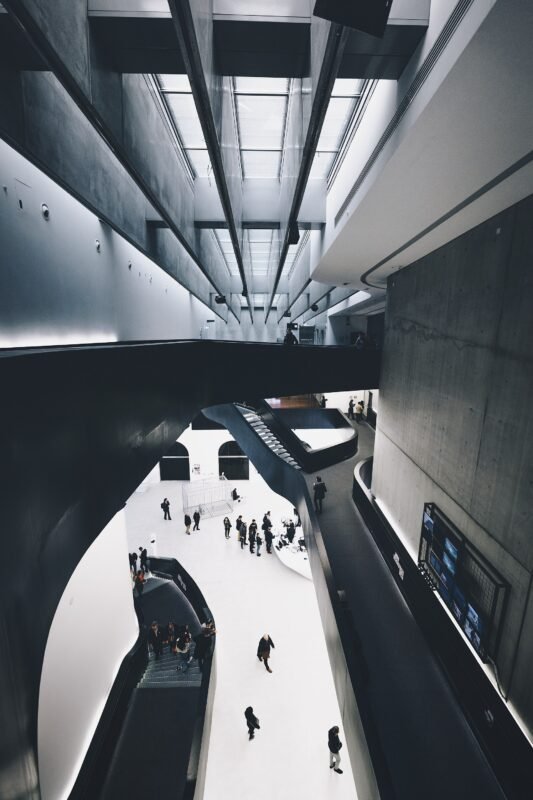
Auditorium Parco della Musica Ennio Morricone is at Viale Pietro de Coubertin 30, in the Flaminio neighborhood, north of the historic center and not far from the Tiber. The design is by Renzo Piano Building Workshop and the complex opened to the public in 2002. The general layout is recognizable even from a distance: three large curved volumes, clad in lead sheets, arranged around an open space shaped like an amphitheater. Those three volumes, which Romans have always called by an insect nickname because of their shape, are the three main halls. The open space in the middle is the Cavea, which in summer becomes the open-air theater for big concerts, while in November it remains a square crossed by the audience coming and going.
The dedication to Ennio Morricone was added in 2021, after the composer's death in 2020. The complex is managed by the Fondazione Musica per Roma, while the Accademia Nazionale di Santa Cecilia has its permanent home here with orchestra and chorus.
The four indoor halls, in order of size
Sala Santa Cecilia is the largest, with a capacity of around 2,700 seats, and it's the true symphonic hall, the one with the vineyard layout that places the audience around the stage. Sala Sinopoli, named after conductor Giuseppe Sinopoli, holds just over 1,100 and is the medium-sized hall, used for chamber ensembles, jazz, enlarged chamber music and many seated pop and rock concerts. Sala Petrassi has about 670 seats and is openly multipurpose: it was designed to be transformed, and that's precisely its strength. Teatro Studio Gianni Borgna, with about 300 seats, is the smallest and most experimental space, built below the level of the square.
What "multipurpose" means, in practice
The word appears in every description of the Petrassi and risks sounding empty, so it's worth translating it. It means the hall was designed with movable elements: the stage configuration can change, the arrangement of the front rows can be altered, the panels and volumes that govern the acoustic behavior can be adapted to the type of event. A pure symphonic hall has acoustics optimized for an unamplified orchestra and does poorly with a powerful electric system. A multipurpose hall accepts both situations at the price of not being perfect at either. For an amplified rock concert this flexibility is an advantage: the sound system works in a space that doesn't throw back unmanageable reverb at it.
Why 600 seats change the listening
This is the key point for concertgoers. In a hall of this size, the distance between the first and last row is measured in tens of meters, not hundreds. No one watches a big screen because the stage is too far away. The sound that reaches your ears is largely that of the main system, without the chains of delay speakers needed in large spaces, which means fewer artifacts and a more believable stereo image. Low dynamics survive: a passage played softly stays soft and can still be heard, while in an arena the same passage disappears into the hum.
For a repertoire like 1970s Genesis this condition counts double, because that music constantly alternates very delicate sections, often given to acoustic guitar or keyboards alone, with full sections. In the right hall you hear both. In the wrong hall you hear only the second half.
Seats, visibility, sections
The hall has numbered seats with gently sloping orchestra seating and side sections. Visibility is generally good from almost every position, given how the seating geometry is designed, but the universal rule of halls with a frontal stage applies: central seats offer the most balanced sound image, while seats far to the side in the front rows can have a perspective skewed toward one side of the stage. If tonal balance matters most to you, choose the center, even a few rows back. If you want to see the hands on the fretboard, choose the front rows, accepting that the balance will be less precise.
The archaeological area inside the complex
During construction, in the 1990s, the excavations brought to light the remains of a Roman-era villa, with walls and installations belonging to a suburban residence. The find forced a revision of the design and lengthened the schedule, and the solution adopted was to integrate the remains into the complex rather than remove or cover them. Today the archaeological area is visible within the Auditorium grounds, set between the modern halls. It's a detail that always impresses foreign visitors: the feeling of a city where you can't dig a foundation without finding something is exactly this.
Something nobody tells you about Steve Hackett telling the story of Genesis in Rome, November 21, 2026
There are at least three, and none appears in the official communications because none of them is promotional.
The first: the hall decides when you get home
A concert in Sala Petrassi ends at a different time from a concert in a large venue, and not out of the artists' kindness. The halls of the complex work on a packed schedule, with events running in parallel in the different halls on the same evening, and start times are kept with a punctuality that isn't a given on the Italian rock circuit. If you come with the mindset of a concert that starts an hour after the printed time, you risk missing the start. The other side of the coin is that the end comes at a civilized hour, almost always compatible with public transportation still running, which in autumn changes the planning of the evening quite a bit.
The second: several halls letting out at once
When two or three halls finish a few minutes apart, the Cavea square fills up all at once and the exits toward Viale de Coubertin become a bottleneck, with lines for taxis and at the tram stop. Those who know act accordingly: either they leave without lingering, or they deliberately stay 20 minutes longer inside the complex for a drink and then find the way clear. The second option, on a November evening, is much more comfortable than the first.
The third: the cloakroom is a serious variable
From mid-autumn on, the coat question becomes relevant. Many audience members keep their coats on their laps to avoid the pickup line, and with 600 people the difference between the two choices adds up to 10 or 15 minutes of waiting on the way out. If you have a train or a planned trip home, decide in advance which strategy to adopt. It's the kind of detail no poster mentions and that determines if the evening ends well or with a run.
My advice for attending Steve Hackett telling the story of Genesis in Rome, November 21, 2026
The main piece of advice is just one and should come first: treat the evening as a day in Flaminio and not as an hour and a half inside a hall. If you arrive by car 40 minutes before, go in, listen, come out and leave, you've had a concert. If you build the afternoon around the concert, you take home a completely different experience for the same ticket.
How to build the afternoon
The neighborhood around the Auditorium offers enough for a whole afternoon. MAXXI, the national museum of 21st-century arts designed by Zaha Hadid, is a few minutes' walk away and stays open in the late afternoon. The Ponte della Musica Armando Trovajoli, reserved for pedestrians and bicycles, crosses the Tiber and links the area to the Foro Italico, the 1930s sports complex with the Stadio dei Marmi. If you're traveling with children, the Explora museum is not far, toward Piazza del Popolo.
The uncomfortable advice on seats
If you can choose your seat when buying, the temptation is to go for the front row. In a 600-seat hall this temptation should be resisted. The front rows of a hall with a raised stage and an amplified sound system offer an excellent visual perspective and a mediocre sound perspective, because the sound from the main speakers passes over your head and what reaches you is largely the direct sound of the amplifiers on stage. The area that works best in halls of this size is generally between the fifth and the 12th row, in the center. It costs the same or less, and you hear twice as much.
Advice for those who know the repertoire by heart
Those who have worn out those records for decades often arrive with a mental list of expected songs and spend the evening checking if they get played. It's a guaranteed way to enjoy nothing. A live reinterpretation of a historic repertoire works if you accept that the versions are different, that some famous pieces are missing and that solo pieces appear alongside the group's. The pleasure comes from listening to what happens, not from comparing it with the set list imagined at home.
How to get there
The Auditorium is in a location that at first glance seems peripheral to the historic center but is actually well connected, as long as you know which transportation to use.
By tram
The simplest and most used connection is tram 2, which leaves from Piazzale Flaminio, just outside Porta del Popolo, and runs up Via Flaminia. The stop for the Auditorium is at the level of Viale Tiziano, at Via Apollodoro, and from there the complex is a few minutes' walk. The route is short, flat and well lit. Tram 2 is also the transportation many use to get back, because it returns to Piazzale Flaminio, where the connection with the metro network is immediate.
By metro
The useful stop is Flaminio, on line A, which is right at Piazzale Flaminio, next to the tram 2 terminus and a short walk from Piazza del Popolo. From the station to the complex it's about two kilometers, so walkable for those who like walking, in about 20 minutes along Via Flaminia, or covered by tram in a few minutes. If you're coming from Termini station, take line A toward Battistini and get off at Flaminio. If you're coming from line B, change at Termini.
By bus
Several surface lines serve the area of Viale Tiziano, Viale de Coubertin and the Flaminio neighborhood, with connections to Piazzale Flaminio, the north of the city and the neighborhoods across the Tiber. Lines and routes are updated periodically, and the sensible thing is to check them on the public transportation company's website on the day, especially on an autumn evening when there may be detours for roadworks or events.
By car
The complex has an underground parking garage with access from Viale de Coubertin. On evenings with several events at once it fills up, and looking for a spot in the surrounding streets under those conditions takes a long time. If you choose to drive, allow a wide margin. Also keep in mind that the area, although outside the historic city, is subject to the city's traffic and parking rules, which change over time: checking them beforehand avoids surprises.
By taxi and ride services
At the end of an evening with several full halls, the taxi line gets long. If you plan to use one, book ahead or walk a few hundred meters toward Viale Tiziano, where catching a car is easier than at the point of greatest crowding in front of the entrance.
How concerts work here
The organizational machine of a complex with four indoor halls and an outdoor space has rules of its own, which are worth knowing so you're not caught off guard.
Several events on the same evening
The normal situation, on a November evening, is that very different things happen at the same time in the different halls: a symphony concert in one, a music theater series in another, a rock event in the third. This means the people you cross in the square aren't all heading to the same place, the signs need to be read carefully and the right entrance depends on the hall printed on your ticket. It seems obvious, but it's the main source of confusion for first-timers.
Punctuality
The halls of the complex have a culture of punctuality that comes from classical programming. Start times are kept, and once the performance has begun, access to the hall may be allowed only at certain moments, so as not to disturb those listening. At a standing rock concert, coming in halfway through the third song bothers nobody. In a hall with numbered seats it means getting six people in your row to stand up. The difference is substantial.
Numbered seats and behavior in the hall
Assigned seating imposes an etiquette that doesn't exist on the club circuit: you stay seated at least for the first part, you may stand toward the end if the hall does so spontaneously, and you don't take seats other than your own hoping the rightful owner won't show up. Phone filming is generally tolerated if discreet, but it may be restricted at the request of the artist or the organizers: the real rule is the one announced on the evening itself.
What happens if the event changes
Date changes, hall changes and program variations are part of the normal life of a program, especially when they involve artists on international tours. The channel that counts is always that of the organizers and the official outlet where the ticket was bought. Third-party pages, including informational ones, report what they know at the time of writing and can't replace an official announcement.
Another well-known fact, yet one that is rarely mentioned
The well-known fact is that the Auditorium is the work of Renzo Piano. Everyone knows it, it's in every guide, and most visitors file it as a prestigious detail and move on. The rarely mentioned part is why those halls have that shape, which isn't an aesthetic choice but an acoustic consequence.
The halls as musical instruments
The three curved volumes are physically separated from one another and rest on independent structures. The separation isn't a compositional whim: it prevents vibrations produced in one hall from passing into the others. In a complex where three different concerts take place at the same time, mutual isolation is the technical condition that makes parallel programming possible. The lead cladding, a heavy and ductile material, works in the same direction, adding mass to the outer skin of the buildings.
Inside, wood dominates. The wooden surfaces of the halls aren't a decorative facing applied to concrete walls: they're elements that take part in the acoustic behavior, reflecting and diffusing frequencies with different characteristics depending on shape, thickness and orientation. Well-designed concert halls behave like soundboards, and the choice of materials is a musical decision before it is an architectural one.
The second rarely mentioned consequence: the construction site changed the design
The archaeological find during construction forced changes to the original design and lengthened the schedule significantly. The complex we see today is therefore the result of a negotiation between a contemporary design and an ancient constraint, a negotiation that in Rome is the norm, not the exception. If you look at the arrangement of the volumes and find it slightly irregular compared with perfect symmetry, you've noticed something true: that irregularity has a cause, and the cause lies below the level of the square.
Tickets and access in general
This part needs a clear premise: prices, availability, sections and conditions change constantly and can't be fixed on an informational page. What can be explained is the general mechanism, which does stay stable.
Where to buy
For events in the halls of the complex the reference is the Auditorium box office and the official sales network named by the event's organizers. The physical box office is inside the complex, with opening hours covering afternoons and performance evenings. Buying at the box office has two concrete advantages: you avoid the presale fees charged by online networks, and you can ask a person which section corresponds to which position, information you can't always work out from an on-screen seating map.
Seat categories
In halls with numbered seats, the box office divides the audience area into sections with different prices, generally based on distance and how central they are to the stage. In a 600-seat hall the difference between the best section and the cheapest is much less dramatic than in a historic theater with boxes and a top gallery, because the hall is small and there are no positions with truly compromised visibility. This often makes the cheap section a good deal.
Charity evenings
When an evening has a declared charitable purpose, the price structure may include special formulas, voluntary additional contributions or ways of taking part other than an ordinary purchase. Here too the source is the organizers, not an outside reconstruction. If you want to understand how the charitable side of an event works, ask the organizers and the beneficiary organization.
A warning about resale channels
It applies to any concert and it applies here too: tickets bought on unauthorized resale channels may turn out to be invalid at the check, and those who bought them have no way of getting their money back. The only safe route is the official box office and the network named by the organizers. Nothing else is needed, and there's no need to rush to buy: medium-sized halls sell out at very variable speeds, and haste is a bad advisor.
Accessibility
The Auditorium complex is a 2000s building designed to contemporary standards, which puts it in a much better position than most Roman performance venues, which often occupy historic buildings with stairs, changes in level and heritage restrictions.
Routes and levels
The links between the different levels of the complex are served by elevators and by flat or gently sloping routes. Access from the underground garage and from the outdoor square is designed to be usable by people in a wheelchair or with limited mobility. The interior routes are wide, which on crowded evenings makes a real difference compared with the narrow corridors of historic theaters.
Seats in the hall
The halls have dedicated spaces for audience members with mobility impairments, with a seat for a companion. These spaces are limited in number and must be requested when booking, not on the evening itself: contacting the box office in advance is the correct procedure, and it also lets you arrange the most convenient entrance and any assistance along the route.
People with hearing impairments
For an evening of amplified music the question arises in a particular way. If you use hearing aids with a telecoil, ask in advance if the hall in question has an induction loop system, because equipment varies from hall to hall. The same question applies if you need visual cues.
Arriving by accessible transportation
Rome's tram network has cars of different generations and not all have low floors. If you use a wheelchair, consider arriving by car, using the underground garage, or by taxi, checking that adapted vehicles are available. Flaminio metro station has lifts and escalators whose operation, as across the whole network, is worth checking on the day.
The right photo to take at Steve Hackett telling the story of Genesis in Rome, November 21, 2026
Photography inside the hall during the concert is the least interesting of all, as well as the one subject to restrictions. The images worth taking home from an evening like this are taken before and after, outside, and there are three.
The first: the three volumes from the square, after dark
It's the iconic photo of the place. Stand in the middle of the Cavea square, wait until the November sky is completely dark and frame two of the three shells with the raking light that picks out the lead sheets. Lead has a matte surface that doesn't mirror and gives back a dull grain, different from any polished metal. The best light comes in the half hour after sunset, when the sky still holds a trace of blue that sets off the outline of the volumes. After the concert the sky is pitch black and the effect is more dramatic but less legible.
The second: the archaeological area with the hall behind
Framing the ancient remains with the modern volume in the background produces the time short circuit that makes a Roman photo recognizable. It's the image that needs the least explanation for foreign friends, because on its own it tells two millennia of distance in a single shot.
The third: the detail that belongs to the evening
The poster at the entrance with the name and date, the seat number on the armrest, the empty hall seen from your seat in the minutes before the start. They're technically modest photos and they're the ones that take you back most precisely years later. A 600-seat hall still empty, with the work lights on and the instruments on stage, has a quality of anticipation you won't find in any arena.
Some important events that happened here in history
The complex is just over 20 years old, but the place is much older, and the chronology deserves to be retraced in full.
Antiquity: a suburban residence
Before it was a neighborhood, this strip of land between Via Flaminia and the Tiber was suburban countryside dotted with villas. The find made during the excavations for the Auditorium brought back structures of a Roman-era residence, with rooms and installations that testify to a good-quality farming and residential settlement. That's why the contemporary complex hosts an archaeological area inside it.
The 20th century: the birth of the Flaminio neighborhood
The area was urbanized between the 19th and 20th centuries and took on a precise identity in the 1930s, when the area across the river was equipped with the great sports complex of the Foro Italico and when on this bank public facilities began to rise. In 1960 the Rome Olympics definitively consolidated the area's vocation, with the Stadio Flaminio designed by Pier Luigi Nervi and the Palazzetto dello Sport, works that still define the urban landscape around the Auditorium today.
The 1990s: the competition and the construction site
The project for a large new home for music in Rome arose from the need to give the Accademia Nazionale di Santa Cecilia a suitable space, after decades spent in venues not designed for that purpose. Renzo Piano's design was developed in the 1990s, and construction almost immediately ran into the archaeological find, which forced revisions and lengthened the schedule.
2002: the opening
The complex opened to the public in 2002 and changed the city's cultural geography within a few years. Before it opened, Rome had many medium-sized historic theaters and no large modern symphony hall. Afterward, the city had a facility able to host different genres and formats at the same time, which translated into a substantial increase in the number of events and in audiences.
Since 2006: the Film Fest
The complex became the main venue of the Rome Film Fest, which since its first edition has filled the halls with screenings, talks and premieres, turning concert halls into movie theaters for about 10 days a year. It's one of the practical demonstrations of how multipurpose the spaces are.
Summers at the Cavea
Over the years the open-air space has taken on a central role in Rome's summer season, with series that bring big international names to an amphitheater of a few thousand seats. Roma Summer Fest is the format under which this program has been presented in recent years. These are evenings of the opposite kind from a winter date in a hall: large crowds, open sky, open-air acoustics.
2021: the dedication to Ennio Morricone
After the composer's death in 2020, the complex was named after Ennio Morricone, a figure with very close biographical and professional ties to Rome who had conducted his own compositions in the largest hall. The dedication added to the name of the space a connotation that goes beyond art music and includes the history of Italian cinema.
Recent years: a three-track program
In the latest period the complex works on three parallel tracks: the symphony season of the Accademia Nazionale di Santa Cecilia, the Fondazione Musica per Roma program with jazz, rock, music theater, dance and popular science, and outside productions hosted in the halls. An evening devoted to the Genesis repertoire falls into the third category, and its presence on the program shows well how much the boundary between genres has thinned over the last 20 years.
Who has passed through Steve Hackett telling the story of Genesis in Rome, November 21, 2026
The question deserves to be taken seriously and answered honestly, distinguishing two levels.
The level of the specific evening
A date to be held in November 2026 doesn't yet have an audience or a history. Those who will pass through it are, reasonably, the audience that follows this repertoire in Rome: longtime fans, musicians, curious newcomers who arrived through streaming, families in which listening has been handed down from one generation to the next. The lineup that will accompany the guitarist on stage, any guests and the program of the evening are information that belongs to the organizers: listing names in their place would be making things up, and it's no use to anyone.
The level of the space
It's a different matter with who has passed through the halls on Viale de Coubertin from 2002 to today, and here the numbers speak for themselves. The Auditorium is the home of the orchestra and chorus of the Accademia Nazionale di Santa Cecilia, one of the oldest music institutions in the world, with a tradition of top-flight international conductors and soloists. Over the years the halls have hosted touring foreign symphony orchestras, big names of international jazz, Italian singer-songwriters, rock bands, dance companies, literary festivals with writers from around the world, film awards and public talks.
The categories, which can be named
For Sala Petrassi in particular the typical profile is that of the medium-sized hall that takes what would be lost in the main hall: recitals, chamber ensembles, small-group jazz, music theater, screenings, presentations, shows of words and music, concerts by artists with a solid following but not an arena-sized one. It's exactly the category an evening like November 21, 2026 falls into: a repertoire much loved by a defined audience, a format that alternates music and storytelling, a size that rewards closeness.
What's around
The Flaminio neighborhood is one of the few parts of Rome where contemporary architecture has a substantial, recognizable presence, and this makes it an interesting destination even for those who have already seen the historic center several times.
Five minutes' walk away
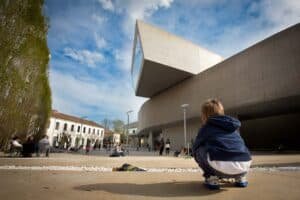
MAXXI, the national museum of 21st-century arts, occupies a building designed by Zaha Hadid and inaugurated in 2010 on the site of a former barracks. Its collection covers contemporary art and architecture, and the temporary exhibitions change regularly. Even if you don't go in, at least look at the exterior and the entrance plaza, because the dialogue between this building and the volumes of the Auditorium, a few hundred meters apart, shows two different ways of making contemporary architecture in the same city and the same decade.
Also within a few minutes are the Stadio Flaminio, a work by Pier Luigi Nervi built for the 1960 Olympics and now awaiting restoration, and the Palazzetto dello Sport, another Nervi structure from the same period, whose ribbed dome roof remains one of the masterpieces of 20th-century Italian engineering.
10 minutes away
The Ponte della Musica Armando Trovajoli, opened in 2011, crosses the Tiber and is reserved for pedestrians, bicycles and light public transportation. Walking across it at sunset, with the river below and the Monte Mario hills ahead, is one of the most pleasant urban walks in the north of the city. On the other bank you reach the Foro Italico, the 1930s sports complex with the Stadio dei Marmi, the statues, the mosaics and the Stadio Olimpico.
A quarter of an hour away
To the south, following Via Flaminia, you reach Piazza del Popolo, the point where the neighborhood meets the historic center. From there the three streets of the Tridente open out and you climb to the Pincio with its terrace overlooking the city. Not far away, on the riverbank, is the Ara Pacis in the pavilion designed by Richard Meier.
To the north, instead, you reach Milvian Bridge, one of the oldest bridges in the city, with the area of bars and restaurants around it and the market that livens up the mornings.
Other events in the same complex
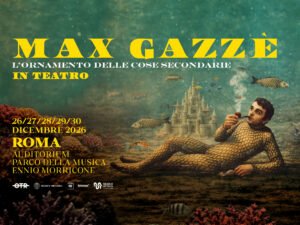
If you're in Rome at other times, you can check the rest of the program: over the year the same halls host very different evenings, from winter residencies by Italian artists like Max Gazzè to the big summer dates in the Cavea, and the general concerts page gathers the city's music events together with all the events on the calendar.
Quick questions
Which hall is the concert in?
The evening is scheduled for Sala Petrassi at Auditorium Parco della Musica Ennio Morricone, Viale Pietro de Coubertin 30. Since in multi-hall complexes the location can be changed by the organizers until shortly before, the hall printed on your ticket is the one that counts on the evening.
How many seats does Sala Petrassi have?
About 670, with numbered orchestra seating. It's the third hall of the complex by capacity, after Sala Santa Cecilia and Sala Sinopoli.
How long does an evening like this last?
Concerts in a hall in this format generally run between two hours and two and a half hours, with or without an intermission depending on the artist's choice. The exact length is announced by the organizers.
Which pieces will be played?
The program of a live evening is decided by the artist and isn't released in full in advance. Those who have followed the cycles devoted to the Genesis repertoire know that group pieces and solo material coexist, with variations from one date to another.
Did Steve Hackett really play in Genesis?
Yes. He was the group's guitarist from 1971 to 1977, and he appears on six studio albums and two live albums released in that period.
Will other members of Genesis be on stage?
There's no indication of this and it wouldn't be right to anticipate any. Concert lineups are announced by the organizers.
Where can you buy tickets?
At the Auditorium box office and through the official sales network named by the event's organizers. Buying at the box office avoids presale fees and lets you have the seating map of the hall explained.
How much do tickets cost?
Prices vary by section and by event and are set by the organizers. Check the figures at the source, because any information given elsewhere risks being out of date.
What is the most convenient public transportation?
Tram 2 from Piazzale Flaminio, getting off near Via Apollodoro and walking a few minutes. Alternatively metro line A to Flaminio and then the tram, or a walk of about 20 minutes along Via Flaminia.
Is there parking?
The complex has an underground parking garage with access from Viale de Coubertin. On evenings with several events at once it fills up early.
Is the hall accessible to wheelchair users?
The complex has elevators and accessible routes, and the halls have dedicated spaces. The number of these spaces is limited and booking must be made in advance by contacting the box office.
What time should you arrive?
About an hour before the start. The margin is for the cloakroom, for finding the right hall among those in use that evening and for crossing the square calmly.
Can you take photos during the concert?
The rules are announced on the evening itself and depend on the artist's instructions. In a seated hall, in any case, long recordings with your phone held up disturb those behind you.
What can you see in the afternoon before the concert?
MAXXI a few minutes' walk away, the Ponte della Musica with the crossing to the Foro Italico, the Villa Glori park, and going down Via Flaminia, Piazza del Popolo with the Pincio and the Ara Pacis.
Is it worth coming from outside Rome for this date?
It depends on your personal relationship with that repertoire. Those who know it deeply find in a 600-seat hall a listening condition that doesn't exist in big venues, and that alone justifies a trip. Those who are curious but not passionate should first find out about the format of the evening, which alternates music and storytelling.
In the capital the container counts as much as the content, and this evening shows it better than others. Music written in London more than 50 years ago, played by the person who recorded it then, inside a hall named after a 20th-century Roman composer, in a complex built over the remains of an ancient villa, in a neighborhood that owes its shape to the 1960 Olympics. None of these elements was put there on purpose to create an effect, and that's exactly why the effect works. The only condition for it to really work is the most banal: check the hall, time and entry conditions with the organizers in good time, and then arrive with time to look around before sitting down.
Frequently asked questions about Steve Hackett telling the story of Genesis in Rome, November 21, 2026
When is the Steve Hackett concert in Rome?
The concert in which Steve Hackett tells the story of Genesis in Rome is set for November 21, 2026, in Sala Petrassi at Auditorium Parco della Musica Ennio Morricone.
Where is the concert held?
The event is held in Sala Petrassi, one of the halls of the Auditorium Parco della Musica Ennio Morricone complex, at Viale Pietro de Coubertin 30, in the Flaminio neighborhood. Since in multi-hall complexes the location can change until shortly before, the hall printed on your ticket is the one that counts on the evening.
How many seats does Sala Petrassi have?
Sala Petrassi at the Auditorium has a capacity of about 670 seats, which makes it the smallest of the three large halls of the complex on Viale Pietro de Coubertin.
How do you get to the Auditorium for the Steve Hackett concert?
The simplest and most used connection is tram 2, which leaves from Piazzale Flaminio, just outside Porta del Popolo, and runs up Via Flaminia to the stop for the Auditorium.
Where can you buy tickets?
Tickets for events in the halls of the complex are sold at the Auditorium box office or through the official sales network named by the organizers. Prices, sections and availability change over time, so check them on the official channels.
Is the Auditorium accessible to people with limited mobility?
Yes, the Auditorium complex is a 2000s building designed to contemporary standards, in a much better position than most Roman performance venues, which occupy historic buildings with stairs and changes in level.
Why do the Auditorium halls have that curved shape?
The three curved volumes of the complex, by Renzo Piano, don't have that shape for aesthetic reasons but for an acoustic one: they're physically separated from one another precisely to isolate the sound of the different halls.
Article written by the editorial team of TourLeaderPro, contact them for Private/Corporate/V.I.P. Tours and Experiences. If you'd like a guided walk in the Flaminio neighborhood, among contemporary architecture and Olympic venues, with a licensed guide, write from the TourLeaderPro contact page. For agencies and operators who build evening and music programs in Rome, a consulting service is available in the reserved area for tour operators.
Planning a trip to the capital? The English-language guides to the city are on ItalyPlanner.com. To plan your days in Rome the reference is the page on things to do in Rome, and if you want to get out of the city there's the selection of the best day trips from Rome.
Contact Information
Nearby
 Museum of Musical Instruments (MUSA)100 m
- Auditorium Parco della Musica100 m
- Villa Glori500 m
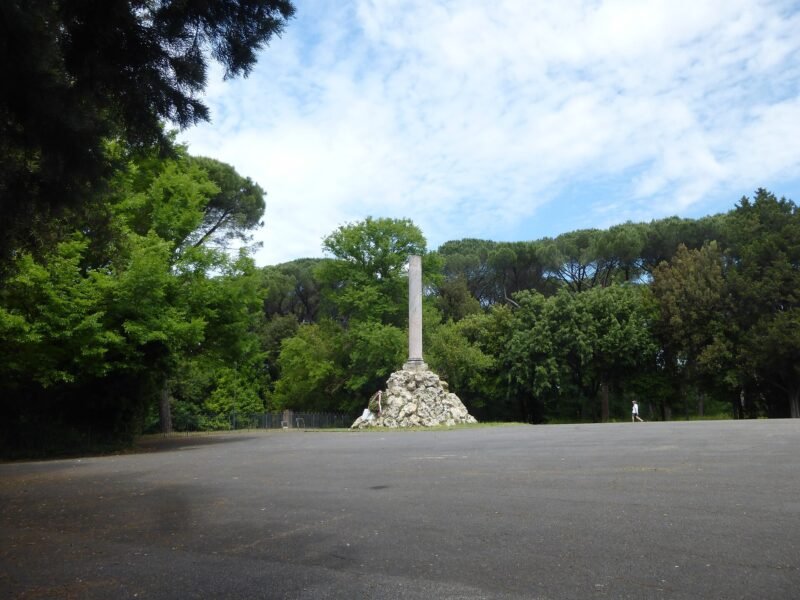
- Fountain of Anna Perenna500 m
- MAXXI – National Museum of 21st Century Arts700 m
- Flaminio700 m
Upcoming events nearby
- Max Gazzè in concert in Rome at Auditorium, December 26 to 30, 2026100 m
- Glen Hansard in Concert in Rome, December 14, 2026100 m
- Noemi in concert in Rome, December 22, 2026100 m
- Tosca in “Feminae” in Rome, December 7, 2026100 m
You might also like
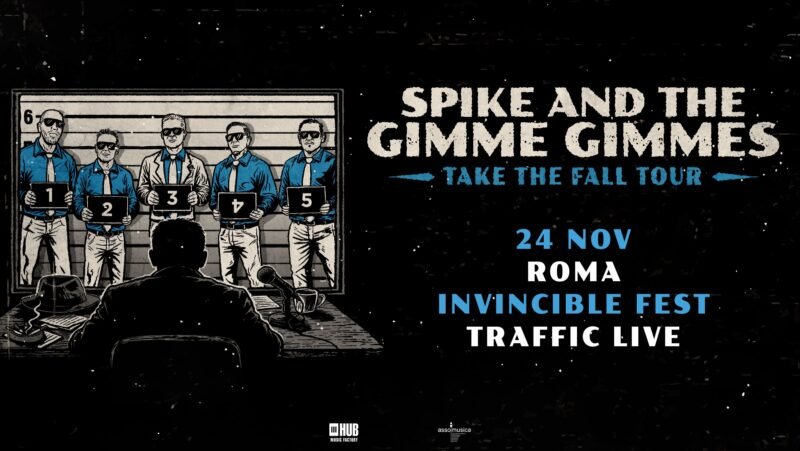
- Spike and the Gimme Gimmes at Traffic Club, November 24, 2026
- Talco Freek Tour 2027 at Hacienda Roma, April 2, 2027
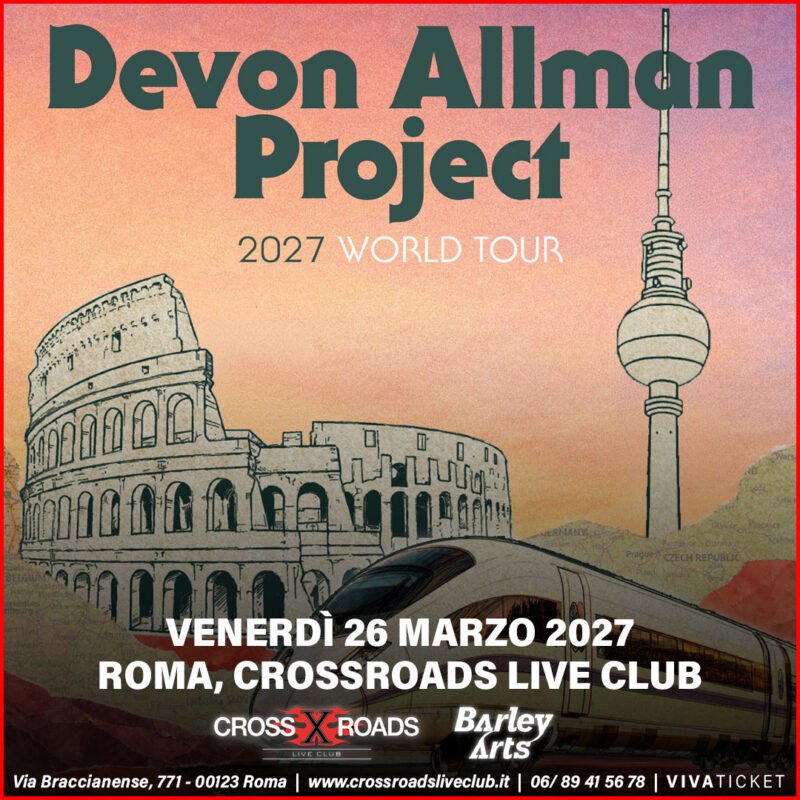
- The Devon Allman Project at CrossRoads Live Club: March 26, 2027
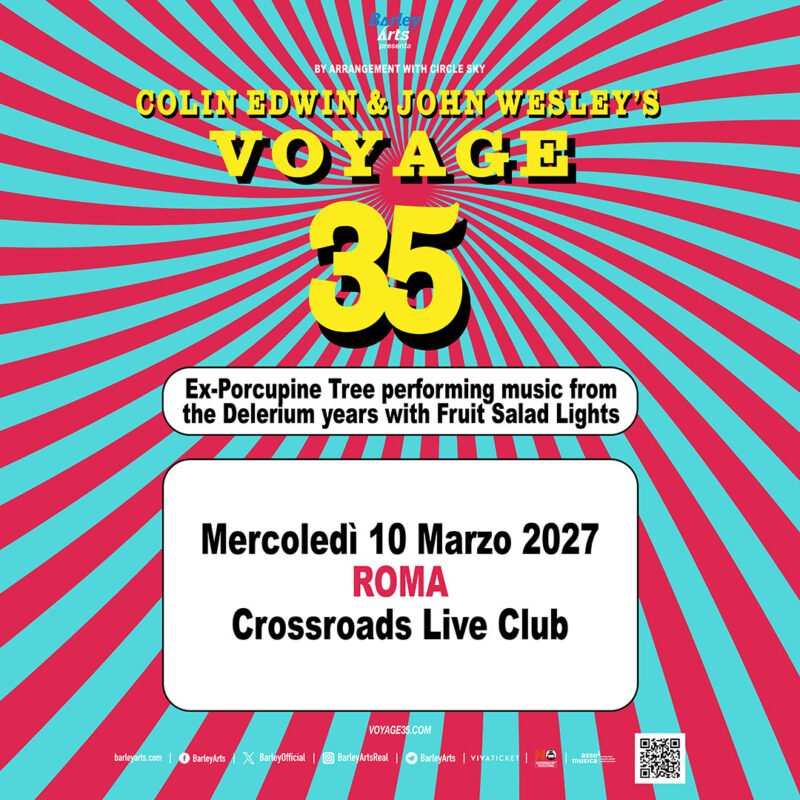
- Voyage 35 (ex Porcupine Tree) at CrossRoads Live Club, March 10, 2027
- The Molotovs at Hacienda Roma, November 11, 2026
- Lagwagon at Hacienda Roma, February 25, 2027