Glen Hansard in Concert in Rome, December 14, 2026
In short. On December 14, 2026 Glen Hansard returns to sing in Rome, and he does so in a setting that suits his way of being on stage better than any arena: an indoor hall of the Auditorium Parco della Musica Ennio Morricone, numbered seats, low…
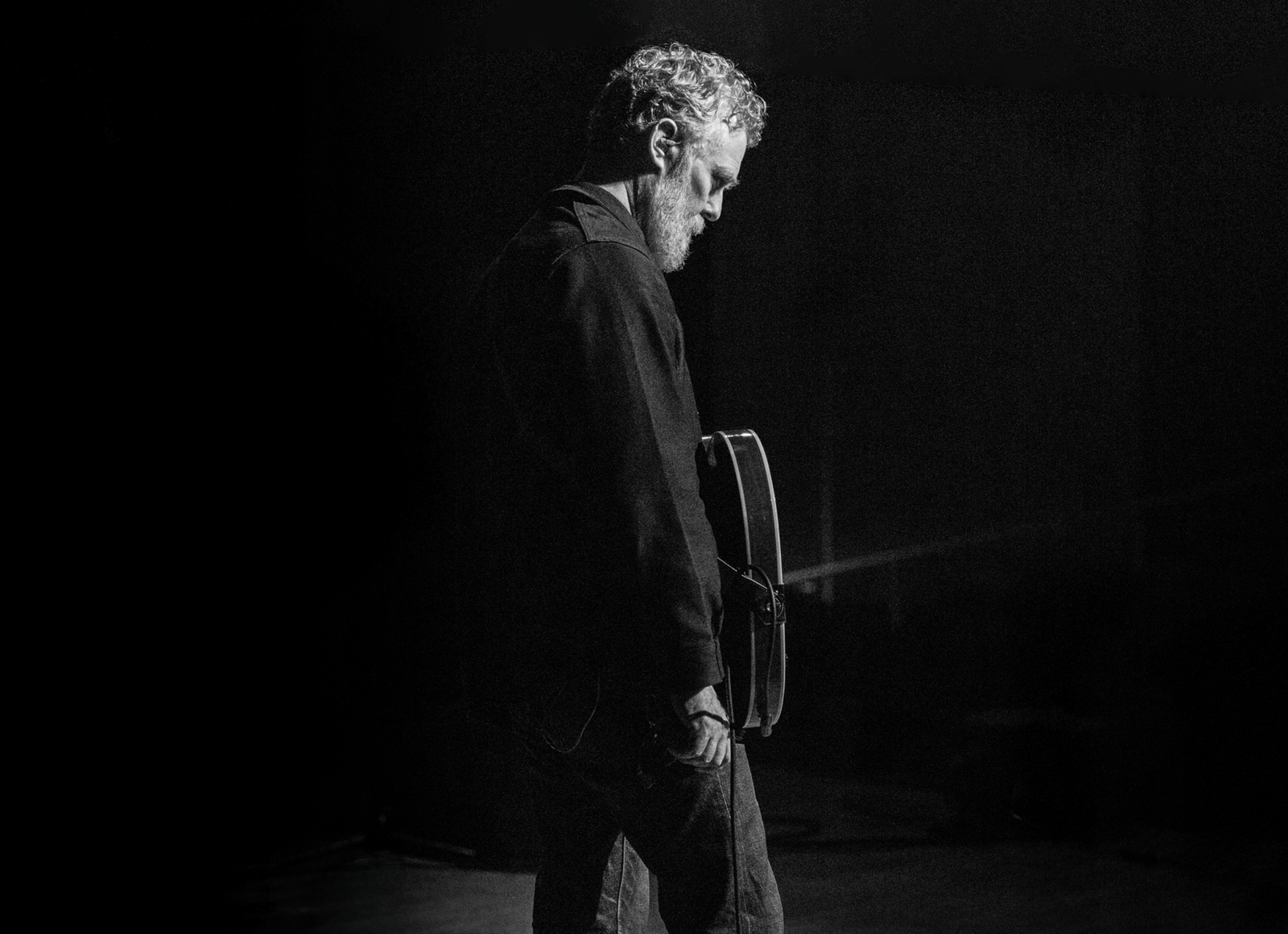
On December 14, 2026 Glen Hansard returns to sing in Rome, and he does so in a setting that suits his way of being on stage better than any arena: an indoor hall of the Auditorium Parco della Musica Ennio Morricone, numbered seats, low lights, an audience that sits down and stays quiet. The evening is announced for Sala Sinopoli, the mid-sized hall of the complex on Viale Pietro de Coubertin, the one Renzo Piano's design placed between the great symphonic hall and the more intimate multipurpose space. Anyone who knows the Irish singer-songwriter already knows what to expect in terms of atmosphere and what cannot be known in advance: Hansard's set list changes from night to night, and that is part of the pact.
The pages that follow prepare the evening from three sides. The first is musical: who Glen Hansard really is, where he comes from, why such a recognizable voice was formed on the street before the studio, and what The Frames, The Swell Season and a film shot on a shoestring in Dublin have to do with it. The second is practical and architectural: what Sala Sinopoli is, how it differs from the other halls of the complex, how to get there on a December evening, how entry works, what to expect in terms of accessibility. The third concerns the surroundings: what exists around the Auditorium, in the Flaminio district, in the hours before and after the concert. In Rome these three levels almost always intertwine, because live music in the capital is never consumed inside a neutral container.
What this concert is
It's best to clear up a misunderstanding right away. A Glen Hansard concert doesn't belong to the category of shows, those performances in which the set list is fixed to the minute, the lights are programmed by computer and the order of the songs doesn't change from Milan to Barcelona. It belongs to the opposite category, that of evenings built on the moment, in which the voice leads and everything else follows. It is a precise tradition, folk and Irish in origin, which is seen in Italy less than you might think, because it requires an audience willing to listen rather than to attend.
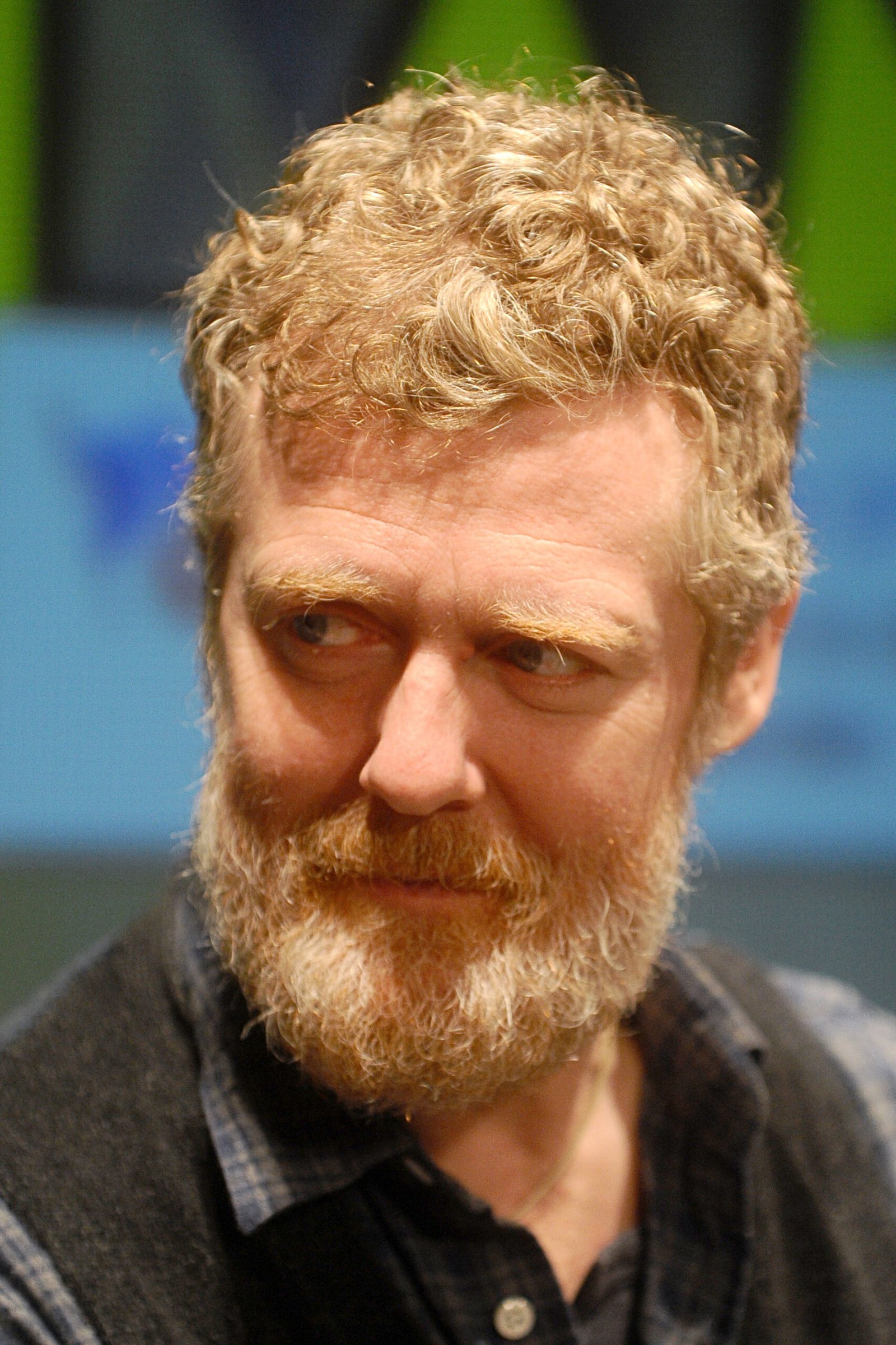
An evening of songs, not a mass spectacle
The core of such an evening is always the same: a guitar, a voice, a repertoire of songs written over 30 years, and a direct relationship with the hall. The organizers must say if Hansard appears alone or accompanied by other musicians, and no outside page can guarantee it in their place. What can be said with confidence is that the structure of the evening remains that of a singer-songwriter singing, not that of a rig performing. The songs are introduced, sometimes narrated, sometimes interrupted and resumed. It happens that the audience is invited to sing, it happens that a song is performed without amplification, in the middle of the hall or from the edge of the stage, it happens that the planned order is dropped for a request from the stalls.
Anyone who arrives with a list of favorite songs printed in their head risks a technical disappointment: nobody can promise that the list will be followed. Anyone who arrives willing to listen to what happens that specific night goes home with an evening that happened identically to no one else. It is a way of working that rewards the audience present and frustrates the audience that wants the record reproduced.
Why the guitar and voice format changes everything
In acoustic practice something interesting happens. When the stage has drums, bass, keyboards and two electric guitars, the hall is filled with sound and the audience can allow itself any behavior: people talk, stand up, drink, and the music covers it. When instead the stage has an acoustic guitar and a voice, the relationship reverses: every cough in the fourth row is heard, every vibrating phone becomes an event, and the hall must cooperate for the music to exist. It's the reason this kind of concert works in concert halls and fails in large or open-air spaces, where background noise never drops to zero.
A hall like Sinopoli is built exactly for this: studied surfaces, seats that absorb in a controlled way, a volume of air calibrated for symphonic music and therefore generous even with a single voice. Anyone sitting in such a hall to hear a singer-songwriter gets a detail that doesn't exist in rock venues: the breath before the phrase, the finger sliding on the string, the tail of a note that dies out without being cut off by artificial reverb.
What cannot be said in advance
In honesty it's best to list the things that remain unknown until the evening itself, rather than filling them with guesses. The set list isn't known. It isn't known which songs from the band repertoire will enter the program and which will stay out. It isn't known if other musicians will join him on stage, or who, if anyone, will open the evening. The final prices and the availability of seats in the coming days aren't known, because both change over time and depend on the official channels. All information the organization publishes when it has it, and which must be sought there.
What can be said concerns the form, not the content: an evening of songs in a concert hall, in December, indoors, with seats. On this we can reason, and around this we can organize the afternoon and the evening.
A December date, not a July one
December 14 falls in the middle of the Roman winter, and the difference from the Auditorium's summer season is total. From June to August the complex lives around the Cavea, the large open-air amphitheater that hosts the summer series of big concerts: you enter at sunset, stay under the sky, and the weather decides half of the experience. In December everything moves indoors: closed halls, cloakroom, numbered seats, stricter schedules, tickets with section and row printed on them.
For those coming from outside Rome, December brings two concrete advantages. The first is the city, which outside the central days of the holidays is less crowded than in April or October, with shorter lines at museums. The second is the early dark: at five in the afternoon the Flaminio already has its lights on, and the Auditorium's architecture, with its three lead-clad volumes lit from below, looks much better than in full sun. The disadvantage, just as concrete, is the cold: in the evening at the Flaminio, an open area close to the Tiber, the thermometer drops more than in the historic center, and a heavy coat should be counted on even if in the hall it then becomes an encumbrance.
Who Glen Hansard is
Glen Hansard's biography is often summed up in a single word, Once, and that's a pity because that film comes midway through his path, not at the beginning. When the film came out, in 2007, Hansard already had nearly 20 years of work behind him, a discography with a cult band and a reputation built stage by stage. Knowing the earlier part helps in understanding what you are going to hear in a Roman hall almost 20 years later.
Dublin, the street, the beginnings
Hansard was born in Dublin in 1970 and grew up in the north of the city. He left school very early, still a teenager, to play on the street: busking, the practice of performing on the public road collecting offerings, was his real training, in particular on Grafton Street, the pedestrian street that in Dublin works as a permanent stage for anyone with a guitar and a case to open on the ground.
This origin is not a colorful detail: it materially explains his way of singing. Those who play on the street must make themselves heard without amplification, over the noise of traffic and voices, and must stop people who were going somewhere else. What comes out is a vocal technique based on the extreme contrast between whisper and shout, and a handling of the acoustic guitar as a percussive rhythm instrument more than a caressed one. Hansard's guitars became famous for exactly this: worn through to a hole in the soundboard, a sign of years of heavy right hand.
The Frames
In 1990 Hansard founded The Frames in Dublin, the band that would remain the center of his activity for decades and that in Ireland has a particular status: never truly exploding in the international charts, but able to fill halls at home and build a loyal audience across half of Europe and North America, with that mix of rock, folk and stretched-out dynamics that made them recognizable. The lineup changed several times over the years, with Hansard as the constant on voice and guitar.
The band's live playing left a precise mark on the singer's later career: extended songs, arrangements that vary from night to night, long passages in crescendo and frequent grafting of other songs into their own. Anyone going to hear Hansard today still finds those habits, reduced to the scale of a guitar and a voice.
The film Once and The Swell Season
Once, released in 2007 and directed by John Carney, tells of the meeting between a Dublin street musician and a young Czech pianist. Carney came from the Frames circle, of which he had been bassist, and the film was born with a minimal budget, a reduced crew and an unusual casting choice: the two leads aren't professional actors but musicians, Glen Hansard and Markéta Irglová, who in the film play and sing their own songs. The choice to shoot with light equipment and in real settings, instrument shops, apartments, Dublin streets, gives the film a documentary quality that has a lot to do with its unexpected success.
Around the film the project The Swell Season consolidated, the duo formed by Hansard and Irglová, which recorded and toured its own repertoire. It is the phase in which the international audience discovered Hansard en masse, and in which his way of singing, until then known mostly to those who frequented the independent circuits, reached enormously wider audiences.
The Oscar for Falling Slowly
In 2008 the song Falling Slowly, written and performed by Hansard and Irglová for Once, won the Academy Award for Best Original Song. The acceptance speech remained famous above all for a detail of television direction: the orchestra cut off Irglová, who was then called back to the stage to speak. The award has a practical consequence that lasts to this day: that song became the one a part of the audience goes to hear, and which in a live evening works as a meeting point between those who have followed Hansard for 30 years and those who discovered him at the movies.
It's worth adding that a musical stage show was also drawn from the film, brought to Broadway in 2012 and then staged in many countries, with the original songs entrusted to a cast of actor-musicians. It is a step that widened the circulation of that repertoire even further, regardless of the presence of the two authors on stage.
The solo career
From 2012 on Hansard has released records under his own name. The first solo album, Rhythm and Repose, came out that year. In the following years came other works, among them Didn't He Ramble, Between Two Shores, This Wild Willing and All That Was East Is West of Me Now. The overall direction of this output is toward more layered arrangements than the image of the singer-songwriter with a guitar: horns, strings, collaborations with musicians of very different backgrounds, and in some cases sessions recorded live in the studio with large ensembles.
On stage, however, that material is regularly stripped to the bone. A song born with a brass section becomes a guitar and a voice, and changes nature. This ability to reduce without impoverishing is one of the reasons his concerts in halls hold up even when the studio repertoire goes in very orchestral directions.
Why live is different from the records
There is a clear difference, and it's best to know it before going in. Hansard's records tend toward restraint, careful production, controlled dynamics. His concerts tend toward excess: the end of a song stretches, the voice goes where in the studio it hadn't gone, a three-minute song on the record lasts seven in the hall. Anyone who knows only the records risks being surprised by the physical intensity of the thing. Anyone who knows only the concerts finds the records restrained. They are two faces of the same repertoire, and the second is the one you buy with a ticket for December 14.
A curiosity about Glen Hansard in Concert in Rome, December 14, 2026
The curiosity concerns the instrument, and it can be seen with the naked eye from the front rows. Hansard's acoustic guitars are known for being literally worn out: the soundboard, that is the wood of the front face, shows in the area below the strings a deep erosion, in some cases a real hole, produced by decades of a right hand striking the strings violently and without a soft pick. It's not a stage effect built after the fact, it's mechanical wear: the abrasion of a nail and a fingertip repeated for years on the same spot of a thin piece of wood.
The interesting detail is that this erosion has real acoustic consequences. A thinned soundboard vibrates differently from an intact one, the timbre loses some definition in the highs and gains a rougher component in the mids, which is exactly the color associated with that way of singing. Many luthiers would consider an instrument in that condition one to repair urgently. In the practice of the one who plays it, that condition has become part of the sound.
There is a second curiosity tied to the first, and it concerns the choice of hall. A guitarist playing with that intensity produces enormous swings in volume: a whispered passage and, four seconds later, a blow at full strength. In a hall with acoustics designed for symphonic music these swings are handled without electronic compression, because the space has the dynamic reserve to absorb them. In a small club with a house system the sound engineer is forced to compress, and half of the contrast disappears. The difference between hearing this repertoire in a concert hall and hearing it elsewhere is measured right there, in a technical feature the audience perceives without having the words to describe it.
The hall as a space
It's worth spending a few lines on the place, because in Rome the Auditorium Parco della Musica Ennio Morricone is an anomaly: a complex built from scratch at the end of the 20th century, in a city that almost always readapts rather than builds, and which in 20 years has become the center of gravity of live music in the capital.
The complex on Viale Pietro de Coubertin
The address is Viale Pietro de Coubertin 30, in the Flaminio district, between the Tiber and the Parioli hill, a short distance from the Foro Italico and the Stadio Olimpico, on the other bank. The design is by Renzo Piano, construction began in the 1990s and the complex opened to the public in 2002.
The shape is recognizable even from afar: three separate volumes, clad in lead, which from above resemble three musical instruments laid around a common space. Those three volumes are the three main indoor halls. Between them, and beneath them, extends the Cavea, the open-air amphitheater that in summer becomes the stage of the big concert series and in winter remains a transit space, often occupied by installations or seasonal displays.
Around the halls are distributed the foyer, the box offices, a bookshop, exhibition spaces, a bar and dining area, and the rooftop gardens named after Claudio Abbado. The complex therefore works as a small cultural district, not as an isolated theater: on the evening of a concert in the large hall there may be at the same time another event in the medium one and a third in the small one, with a flow of audience that mixes in the common areas and separates only at the entrance of the respective halls.
The indoor halls, in order of size
The complex declares four indoor spaces, plus the open-air Cavea. Sala Santa Cecilia is the largest, with a declared capacity of around 2,700 seats, and is the natural home of the great symphony orchestra. Sala Sinopoli is the intermediate one, with a declared capacity of around 1,100 seats, and hosts concerts by mid-sized ensembles, chamber music, jazz, singer-songwriters and programs that require a more contained scale. Sala Petrassi, around 670 seats, is the most flexible, with a modifiable stalls area and a multipurpose vocation. Teatro Studio Borgna, around 300 seats, is the smallest space, used for meetings, open rehearsals, presentations and small-scale productions.
The difference between these halls isn't just a matter of numbers. Each volume has its own geometry, with wooden ceilings whose shape and height were calculated for a certain kind of repertoire, and with adjustable devices that allow the reverberation time to be changed. Put simply: the same guitar sounds different in the three halls, and not by chance but by design.
What a hall of about 1,100 seats means
The size of Sinopoli places the evening in a precise range. It isn't the chamber hall where you feel almost in a living room, and it isn't the enormous space where the stage becomes a distant point either. About 1,100 seats mean a maximum distance between stage and last row that stays in the order of a few dozen meters, a face still readable from the back, and above all a level of background noise that stays manageable.
For a concert of voice and guitar alone this is a favorable size. The risk of a larger hall would be dispersion: the silence needed for a whispered passage becomes hard to obtain when the people present number in the thousands. The risk of a much smaller hall would be the opposite, the compression of the moments of greatest intensity in a space that cannot bear them. The intermediate range is the one in which this repertoire works best, and it's the reason singer-songwriters of this profile, on international tours, tend to choose halls of this size.
The archaeological area inside the complex
During the excavations for the foundations, in the 1990s, the remains of a Roman-era villa came to light with agricultural installations attached, including structures for the production of oil and wine. The find forced a revision of the project under way and a shift of the volumes, and the remains were preserved and made visible inside the complex, with an attached archaeological museum displaying the materials found.
The result is one of the most typically Roman stratifications you can see: a contemporary building that had to bend to an ancient presence that emerged beneath it, and which shows it instead of hiding it. Anyone arriving an hour early should devote 20 minutes to this part, which is included in the route of the complex and which concert audiences in most cases cross without noticing. The opening hours of the area and the museum don't necessarily coincide with those of the evening shows: they should be checked with the complex.
Something nobody tells you about Glen Hansard in Concert in Rome, December 14, 2026
Three observations on the real logistics of an evening at the Auditorium in December, which never appear in event presentations.
The first: the complex hosts more events the same evening
This is what surprises first-time visitors. You don't enter a theater, you enter a complex with several halls active at the same time. This has two consequences. First consequence: you need to know which hall you're going to, because the entrances are separate and queuing in the wrong line means losing 10 precious minutes. Second consequence, less obvious: the crowd you meet in the foyer isn't all headed where you are, and so its size says nothing about how full your own hall will be.
A simple operating rule follows: the name of the hall appears on the ticket, and that name should be read before getting in line, not after.
The second: the simultaneous exit is the real bottleneck
If two or three halls finish within the same quarter of an hour, the number of people pouring at once onto the sidewalks of Viale Pietro de Coubertin becomes considerable. In minutes: the waiting taxis run out quickly, the first departing trams are full, and those who parked in the underground garage wait in line at the payment machines and then at the exit ramp.
The countermeasure is trivial and works: for those without a train or flight to catch, staying 20 minutes longer, walking to the bridge or sitting somewhere, completely changes the quality of the trip back. For those who do have a train, the countermeasure is the opposite: know in advance that the time to leave the complex must be counted, and don't assume that the concert ends and you are immediately on the street.
The third: the cloakroom in December is not a detail
In mid-December in Rome, in the evening, you need a coat and often a scarf. In a concert hall a heavy coat on your knees is uncomfortable for you and for your neighbors, and leaving it on the seat back intrudes on the seat behind. The complex has a cloakroom service, but the cloakroom has two moments of queue: before the start and, above all, right after the end. The end-of-evening pickup can take longer than expected, in particular if other halls have finished at the same time.
The practical choice is between two options. Those in a hurry to leave keep the coat with them and resign themselves to the bulk. Those with time check it and allow for the final queue. The third way, going to hear a concert in December dressed lightly, in an open and windy area like the Flaminio, almost always turns out to be a mistake.
The advice I give you for visiting Glen Hansard in Concert in Rome, December 14, 2026
Three pieces of advice, in order of usefulness, because these evenings go well or badly for almost always predictable reasons.
How to build the afternoon
The first piece of advice is not to treat the evening as an isolated appointment to reach at the last minute. The Flaminio district, where the Auditorium is, offers enough to fill an entire afternoon and has the advantage of being compact: everything is done on foot. A route that works is this: arrive in mid-afternoon, visit the MAXXI, the national museum of 21st-century arts designed by Zaha Hadid a few minutes' walk from the Auditorium. Pass by the Ponte della Musica at sunset, which is pedestrian and offers one of the few low views of the Tiber in this part of the city. Return toward Viale Pietro de Coubertin with time to eat something before entry.
Those who prefer the ancient to the contemporary will find nearby the Etruscan Museum of Villa Giulia, one of the most important collections in the world for that civilization, which on the short days of December can be visited without the pressure of the summer crowds. The winter closing times of Roman museums are earlier than in summer and should be checked before setting out.
The uncomfortable advice on the seat
The second piece of advice is less welcome, but it holds. For a concert of voice and guitar, the front row isn't the best seat: it's the most exciting seat. The difference matters. In the front rows you are too much inside the direct sound, you hear the system more than the hall, and paradoxically you lose the depth that the acoustic design produces. The zone that works best, in a hall of this configuration, is the central one at medium distance, and it often costs less than the very first rows.
The advice for those who know the repertoire by heart
The third piece of advice concerns attitude, and touches the most delicate point. At this kind of evening the audience takes part: you may be invited to sing, part of a song may be left to the hall. The opposite also happens, that a passage requires total silence and a voice from the audience ruins it for everyone. The two things are distinct and must be distinguished in the moment: you sing when invited, not when you feel like it.
Then there is the matter of requests shouted from the stalls. In a 1,100-seat hall a voice shouting a title reaches the stage clearly, and the artist can take it up or ignore it. The point is that between one song and the next there can be a deliberate silence, which is part of the construction of the evening, and filling it with requests erases it. Anyone who truly loves this repertoire protects it by staying quiet at the right moments.
How to get there
The Auditorium is in a well-connected area but not directly served by the metro, and this is the first fact to keep in mind. The possible combinations are several, and the choice changes a lot depending on where you are staying.
By tram
The most direct connection from the center is the tram line that climbs from Piazzale Flaminio along Viale Tiziano, with a stop a short distance from the complex. Piazzale Flaminio is right next to Piazza del Popolo, so those staying in the historic center or Via del Corso area reach the starting point on foot. The route is short and the arrival stop is a few minutes' walk from the entrance.
The caution concerns evening service and works: the Roman tram network is periodically replaced by bus service for construction, and in those periods the stop and route change. Before counting on the tram it's best to check the state of the service on the specific day with the transit company.
By metro
The useful station is Flaminio, on line A, which is precisely at Piazzale Flaminio. From there you continue by tram or on foot. The walk from Piazzale Flaminio to the Auditorium takes roughly half an hour and runs largely along streets with wide sidewalks: a workable option for those who like walking and have time, less advisable at the end of the evening with the cold and the dark.
It should be remembered that the Roman metro has an evening closing time, extended on Friday and Saturday nights. December 14, 2026 falls on a Monday, so the ordinary schedule applies, and those counting on returning by metro must check the last run before entering the hall.
By bus
Several surface lines serve the area, with stops on Viale Pietro de Coubertin and in adjacent streets, and some connect the Flaminio with the Termini area and with the Parioli. Evening service is less frequent than daytime, and on nights of big events the departing vehicles are crowded. For those who don't know the network, the bus is most useful on the way there, when you can plan calmly, less so on the way back.
By car
The complex has a paid underground car park, with access from Viale Pietro de Coubertin. The capacity is large but on evenings with several halls active it fills up, and leaving at the end of the show takes time. Street parking in the area exists but in the evening hours it is hotly contested, in particular when events are held at the Stadio Olimpico or the Teatro Olimpico at the same time.
Those who decide to come by car have only one useful tip: arrive early, not close to the start time. Half an hour of margin solves the parking problem. 10 minutes does not.
By taxi and ride-hailing services
The taxi works well on the way there and is the most convenient solution for those coming from areas that aren't connected. On the way back the situation changes: in the quarter of an hour after the end of the shows demand exceeds supply, the waiting cars run out and the apps apply dynamic fares. The best strategy is to wait for the first flow to disperse, or to walk a few hundred meters away from the exit before calling.
How concerts work here
Some operating rules of the complex apply to all the halls, and knowing them avoids most of the typical first-time problems.
Times and punctuality
Concert halls work by different criteria from live music clubs. The time on the ticket is the start time, not an approximate doors-open time, and those who arrive after the show has started are generally seated only at a suitable moment, that is between songs, and in some cases in a position other than their own until the first interval. It's not a punishment, it's the condition that lets those already seated listen.
For a concert of voice and guitar the rule becomes even stricter, because an entrance during a whispered passage is heard throughout the hall. A reasonable margin is 30 minutes before the time shown: enough for the cloakroom, for finding the section, for sitting down without rushing.
Numbered seats and behavior in the hall
The seat is assigned and printed on the ticket, with section, row and number. You don't move to free seats even when they seem free, because the holder may arrive later. The phone should be put on silent and not only on vibrate, which on a hard seat produces a noise audible several rows away.
On recording, the ban on audio and video recording and on flash photography generally applies. The precise policies vary from production to production and are communicated by hall staff: the practical rule is that a discreet photo without flash before the start rarely creates problems, while a lit screen during a song disturbs anyone seated behind.
What happens if the event changes
Dates that slip, halls that change, programs that are modified: these are ordinary eventualities in live programming, and how they are handled depends on the organization and on the point of sale where you bought. The common-sense rule is to keep the purchase confirmation and to check the official communications in the preceding days, especially when the purchase was made many months in advance.
Another well-known fact, and yet rarely mentioned
The well-known fact is that the Auditorium is the work of Renzo Piano and has acoustics of international standard. What is cited far less is how that acoustics was obtained and what it means for those who sit in the hall.
The halls are instruments, not containers
The three lead-clad volumes don't have their shape for aesthetic reasons alone. Inside, the wooden shells lining the halls work as soundboards, and their geometry was calculated with acoustic consultants to obtain specific reverberation times. Some halls have movable elements, panels and suspended sails, that allow the response of the room to be modified depending on the repertoire: one configuration for the symphony orchestra, a different one for amplified music, yet another for speech.
The consequence for the audience is concrete. The same hall, the same evening, can sound different depending on how it has been prepared, and this means that the opinion collected from a friend who was there two years ago for a symphonic concert says little about how a singer-songwriter with a guitar will sound. It also means that, in such a hall, the amplification system works much less than it would elsewhere, because part of the work is done by the architecture.
The construction site changed the design
The second little-cited element concerns the genesis of the building. The archaeological find during the excavations wasn't a marginal episode: it entailed a revision of the project under way, with a shift of the volumes and longer timelines. In practice, the current arrangement of the three halls, the one that from above produces the image of the three instruments around the Cavea, also derives from a constraint imposed by a Roman villa that surfaced from the ground 2,000 years later.
It is a story that explains well a general rule of Rome, and it's worth keeping in mind when you sit in your seat: here you never build on virgin ground, and every contemporary project negotiates with what it finds beneath.
Tickets and access in general
A few indications of method, without invented numbers: the prices, the categories actually on sale and the remaining availability change over time and are information for the organizers to publish.
Where to buy
The correct channels are two: the complex's box office, which is on site and keeps its own hours, and the official points of sale indicated by the organization in the event's communication. Every other channel should be viewed with suspicion. The rule applies in particular to concerts by international artists in mid-sized halls, which by nature have a limited number of seats and therefore attract speculative resale.
The seat categories
In halls with numbered seats the stalls are divided into sections with differentiated prices, generally according to the distance from the stage and the position relative to the central axis. Reductions, when provided, usually concern specific groups of the public and must be documented at the entrance: their existence and conditions depend on the individual production, not on the hall.
A warning on resale channels
The phenomenon of resale at inflated prices now affects any concert with limited seats, and Italian legislation on named tickets and unauthorized resale has intervened precisely on this. In practice: a ticket bought on an unofficial channel may turn out to be invalid at the entrance, and the financial risk falls entirely on the buyer. If in doubt, the reference point is the organizer's communication, not an ad on some platform.
Accessibility
The complex is of recent construction and was born with accessibility criteria that simply don't exist in historic Roman buildings. This makes it, in the city's landscape, one of the most practicable performance venues for those with mobility difficulties.
Routes and levels
The common areas are served by elevators and by step-free routes, and the connection between the underground car park and the foyers is by mechanical means. The internal distances, however, are real: the complex is large and crossing it from one end to the other takes a few minutes even walking well. Those who move slowly should add margin to their arrival time.
Seats in the hall
The halls provide spaces dedicated to wheelchair users, with a seat for the companion. These spaces are limited in number and are assigned through the booking channels, not with an ordinary online purchase: the correct practice is to contact the complex's service in advance, indicating the event and the date, to check availability and arrangements. Planning weeks ahead, not days, greatly increases the chances of finding a place.
For those with hearing difficulties
For a concert of voice and guitar the deciding factor is position: a central section at medium distance offers the most balanced sound and reduces listening fatigue. The presence of any technical aids, such as individual amplification systems, should be checked with the complex, because it depends on the hall and the specific production.
Getting there by accessible means
The metro station and the surface lines have different degrees of accessibility, and the situation changes over time because of works and maintenance. For those with specific needs the taxi remains the simplest solution, with drop-off directly in front of the entrance, and the underground car park has reserved spaces. Here too, a preliminary check is worth more than any general indication.
The right photo to take at Glen Hansard in Concert in Rome, December 14, 2026
Inside the hall, during the concert, photography is generally limited or forbidden, and in any case a lit screen at an evening like this is a hostile gesture toward those listening. The good photos, this evening, are taken before and after, outside the hall. Here is where.
The first: the three volumes from the square, in the dark
In mid-December darkness falls before half past five in the afternoon, so those who show up an hour before the start already find the right conditions. The three lead-clad shells, lit from below and seen from the open space between the halls, give the most recognizable image of the complex. At night the lead takes on a warm gray that can't be seen by day. You need a surface to rest the phone on to keep it steady, because without flash the exposure times get longer.
The second: the empty Cavea in winter
The Cavea, which in summer hosts thousands of people, in December is an empty amphitheater surrounded by three lit buildings. It's an image almost nobody takes home, because the summer audience always sees it full and the winter one crosses it in a hurry. The empty steps backlit, with the volumes of the halls in the background, are the most honest portrait of what this place is out of season.
The third: the archaeological area with the hall behind
The remains of the Roman villa framed with the contemporary volume behind them produce the photograph that sums up the whole story of the building: 2,000 years and 20 years in the same frame. It's the image that explains Rome better than any caption, and it only requires finding the point where the two planes overlap.
Some important events that happened here in history
The place has a double history: the very brief one of the building, a little over 20 years, and the very long one of the ground it stands on.
Antiquity: a suburban residence
The area, in Roman times, lay outside the walls, along the line of Via Flaminia, and hosted country residences with agricultural activities attached. The remains that emerged during the excavations for the foundations belong to this type of settlement, with production structures linked to the processing of olives and grapes. It's the image of an agricultural periphery that served the city, a few miles from the ancient center.
The 20th century: the birth of the Flaminio district
The district took its current form over the course of the 20th century, and the decisive acceleration came with the 1960 Olympic Games. On that occasion the area was given the sporting and residential infrastructure that still characterizes it, including the Olympic Village, the Palazzetto dello Sport designed by Pier Luigi Nervi with Annibale Vitellozzi, and the Corso Francia viaduct. It is a district in which the architecture of the last century can be read unusually clearly for Rome.
The 1990s: the competition and the construction site
The idea of giving Rome a new large complex for music matured in the 1980s and 1990s, with an international competition won by Renzo Piano. The construction site opened and was immediately slowed by the archaeological find, with the resulting revision of the project already described. The years of construction were longer than expected, and the affair became one of the most discussed cases of Roman public building of that period.
2002: the opening
The complex opened to the public in 2002 and quickly changed the city's musical geography. Until then Rome had no modern symphonic hall suited to its main orchestra, and concerts were spread among adapted spaces. With the opening, the Accademia Nazionale di Santa Cecilia found a stable home and the city's programming concentrated in a single place.
From 2006: the Festa del Cinema
Since 2006 the complex has hosted every autumn the Rome Film Festival, which for a few days turns halls and common areas into a film festival, with screenings, meetings and a notable turnout. It is the period of the year in which the place's musical identity temporarily moves into second place.
The summers at the Cavea
Since the late 2000s the Cavea has become the summer stage for big international names, with a series that each year brings concerts of every genre to that open-air space. Those who know the Auditorium only from the summer evenings of the Roma Summer Fest have in mind a completely different place from the one you find on entering a closed hall in December.
2021: the dedication to Ennio Morricone
After the death of the Roman composer, in 2020, the complex was named in his memory and took its current name, Auditorium Parco della Musica Ennio Morricone. The dedication explicitly ties the place to the tradition of music for images, which in Rome has deep roots and which finds in the complex one of its natural homes.
Who has passed through Glen Hansard in Concert in Rome, December 14, 2026
The question requires an answer on two distinct levels, because the specific evening and the space that hosts it have different histories.
The level of the specific evening
On who will take the stage with Glen Hansard, if anyone will, there is no public information that can be honestly reported. Tour lineups change, guests are announced late or not at all, and in an evening built on improvisation the possibility that someone appears without notice is part of the game. Those who want to know in advance must follow the official channels of the artist and the organization in the days before the date.
The level of the space
The complex, instead, has a dense history: from 2002 to today its halls have hosted the city's great symphony orchestra, leading classical soloists, international jazz, Italian songwriting, folk music, literary presentations, cinema. Listing specific names with the claim of being complete would be a useless exercise full of gaps. The fact that counts is the quantity and the variety, which in 20 years have made this the reference place for live music in Rome.
The categories, which can be said
What can be stated without risk is the type. Sala Sinopoli, by size and configuration, is the hall in which Rome sees international singer-songwriters on a European tour, mid-sized jazz ensembles, chamber music and projects that require concentrated listening. It's the intermediate size, the one that doesn't require the commercial effort of filling 2,700 seats and at the same time allows a complete professional production. For an artist like Hansard it is the natural placement on the Italian circuit.
What is around
The Flaminio has a rare characteristic in Rome: it is a district in which the 20th century and the contemporary prevail over the ancient, and this makes it interesting even for those who already know the city.
Five minutes on foot
The MAXXI is a short distance away, on Via Guido Reni: Zaha Hadid's building is worth the visit regardless of the exhibitions on, and it is one of the few Roman places where contemporary architecture can be walked through rather than only looked at. In the same area is Explora, the children's museum, useful for those arriving in the city with a family who need to organize the afternoon before an evening for adults.
10 minutes
The Ponte della Musica, for pedestrians and cyclists, connects the Flaminio bank to that of the Foro Italico, the Fascist-era sports complex with the Stadio Olimpico, the Stadio dei Marmi and the mosaics of the plaza. It's a walk of great effect at sunset, and in December sunset falls comfortably in the hour before the concert.
A quarter of an hour
Going down Via Flaminia you reach the Etruscan Museum of Villa Giulia and a little farther Piazza del Popolo, with the Pincio above and the Ara Pacis a short distance away on the Lungotevere. Climbing from the Pincio you enter Villa Borghese. In the opposite direction, toward the north, you reach Milvian Bridge, which in the evening has a life of its own among bars and strolling.
Other events in the same period
December in Rome is a month full of indoor music. In the same complex Max Gazzè is scheduled in the tail end of the month. In the city, in the same weeks, the announced events include Sergio Cammariere, Mario Biondi on the same evening of December 14 but in another theater, and Noemi toward the holidays. The complete picture of music events can be consulted in the concerts section.
Quick questions
Which hall is the concert in?
The evening is announced for Sala Sinopoli of the Auditorium Parco della Musica Ennio Morricone. The definitive confirmation, with section and time, appears on the ticket and in the organization's official communication.
How many seats does Sala Sinopoli have?
The declared capacity is around 1,100 seats, which makes it the intermediate hall of the complex, between the great symphonic hall and the smallest multipurpose space.
Which songs will be played?
No set list has been published, and in the case of this artist the set list changes regularly from night to night. Anyone seeking a guarantee on a specific song won't find it anywhere.
Did Glen Hansard really win an Oscar?
Yes. In 2008 the song Falling Slowly, written with Markéta Irglová for the film Once, received the Academy Award for Best Original Song.
What is The Swell Season?
It is the musical project that unites Glen Hansard and Markéta Irglová, born around the time of the film Once and continued with its own recordings and tours.
Where do you buy tickets?
At the complex's box office and the official points of sale indicated by the organization. Unauthorized resale channels expose you to the risk of tickets that are invalid at the entrance.
How much do tickets cost?
The prices depend on the section and are published by the organization: there are no reliable indicative figures to report in advance.
What is the most convenient public transport?
The combination of metro line A to Flaminio and then the tram toward Viale Tiziano is the most straightforward for those starting from the center. The state of the tram service must be checked on the specific day.
Is there parking?
Yes, the complex has a paid underground car park with access from Viale Pietro de Coubertin. On evenings with several halls active it fills up early and leaving takes time.
Is the hall accessible to wheelchair users?
The complex was built with accessibility criteria and provides dedicated spaces in the hall, in limited number. Booking must be done in advance by contacting the complex's service.
What time is it best to arrive?
Half an hour before the time shown on the ticket is a reasonable margin, rising to 40 minutes for those arriving by car or who need to use the cloakroom.
Can you take photos during the concert?
In general audio and video recording and flash are not allowed, and the specific rules are communicated by hall staff. At an evening of this kind a lit screen seriously disturbs those listening.
What can you see in the afternoon before the concert?
Within a quarter of an hour's walk you find the MAXXI, the Ponte della Musica with its view of the Tiber, the Foro Italico on the other bank and, going down Via Flaminia, the Etruscan Museum of Villa Giulia and Piazza del Popolo.
Is it worth coming from outside Rome for this date?
For those with a bond to that repertoire, a 1,100-seat hall offers a listening condition that doesn't exist in sports arenas, and that alone justifies the trip. Those who are merely curious would do well to know in advance that it is an evening of listening, not a spectacle.
In this city the container weighs as much as the content, and an evening like this demonstrates it well. A singer-songwriter formed on the sidewalks of Dublin, singing in a hall designed by an architect from Genoa, built over the remains of a Roman agricultural villa, in a district that owes its form to the 1960 Olympics, a short walk from a museum designed by an Iraqi-born architect. None of these elements was put there to create an effect, and precisely for this reason the effect works. The only condition for the evening to succeed is the most banal: check hall, time and access conditions in good time with the organizers, arrive with the margin to look around, and then stay quiet when the guitar lowers its volume.
Frequently asked questions about Glen Hansard in Concert in Rome, December 14, 2026
When is Glen Hansard's concert in Rome?
Glen Hansard's concert in Rome takes place on December 14, 2026, at Sala Sinopoli of the Auditorium Parco della Musica Ennio Morricone.
Where is the concert held?
The concert is announced for Sala Sinopoli of the Auditorium, on Viale Pietro de Coubertin, in the Flaminio district. The definitive confirmation of hall and section appears on the ticket and in the organization's official communication.
How many seats does Sala Sinopoli have?
The declared capacity of Sala Sinopoli is around 1,100 seats, which makes it the intermediate hall of the Auditorium complex.
How do you get to the Auditorium for the concert?
The most direct connection from the center is the tram line that climbs from Piazzale Flaminio along Viale Tiziano, with a stop a short distance from the Auditorium complex.
Where do you buy tickets?
The correct channels are two: the complex's box office, which is on site and keeps its own hours, and the official points of sale indicated by the organization in the event's communication.
Is the Auditorium accessible to people with mobility difficulties?
Yes, the complex is of recent construction and was built with accessibility criteria that don't exist in historic Roman buildings: the common areas are served by elevators and by step-free routes.
What makes Glen Hansard's guitars special?
Glen Hansard's acoustic guitars are known for being literally worn out by the sound: the soundboard shows in the area below the strings a deep erosion, in some cases a real hole, produced by decades of a right hand striking the strings without a soft pick.
Article written by the editorial team of TourLeaderPro, contact them for Private/Corporate/V.I.P. Tours and Experiences. Those who want a guided walk in the Flaminio district, among contemporary architecture and Olympic facilities, accompanied by a licensed guide, can write from the TourLeaderPro contact page. For agencies and operators building evening and music programs in Rome, a consulting service is available in the reserved area for tour operators.
Planning a trip to the capital? The English-language guides to the city are on ItalyPlanner.com. To set up your days in Rome the reference is the page on things to do in Rome. For those who want to leave the city there is the selection of the best day trips from Rome.