Roma in moneta at the Vittoriano, through November 8, 2026
In short. The Vittoriano section of the exhibition Roma in moneta. Arte e potere nella storia della città eterna is open until Sunday, November 8, 2026, every day from 9:30 to 19:30 (last entry at 18:45).
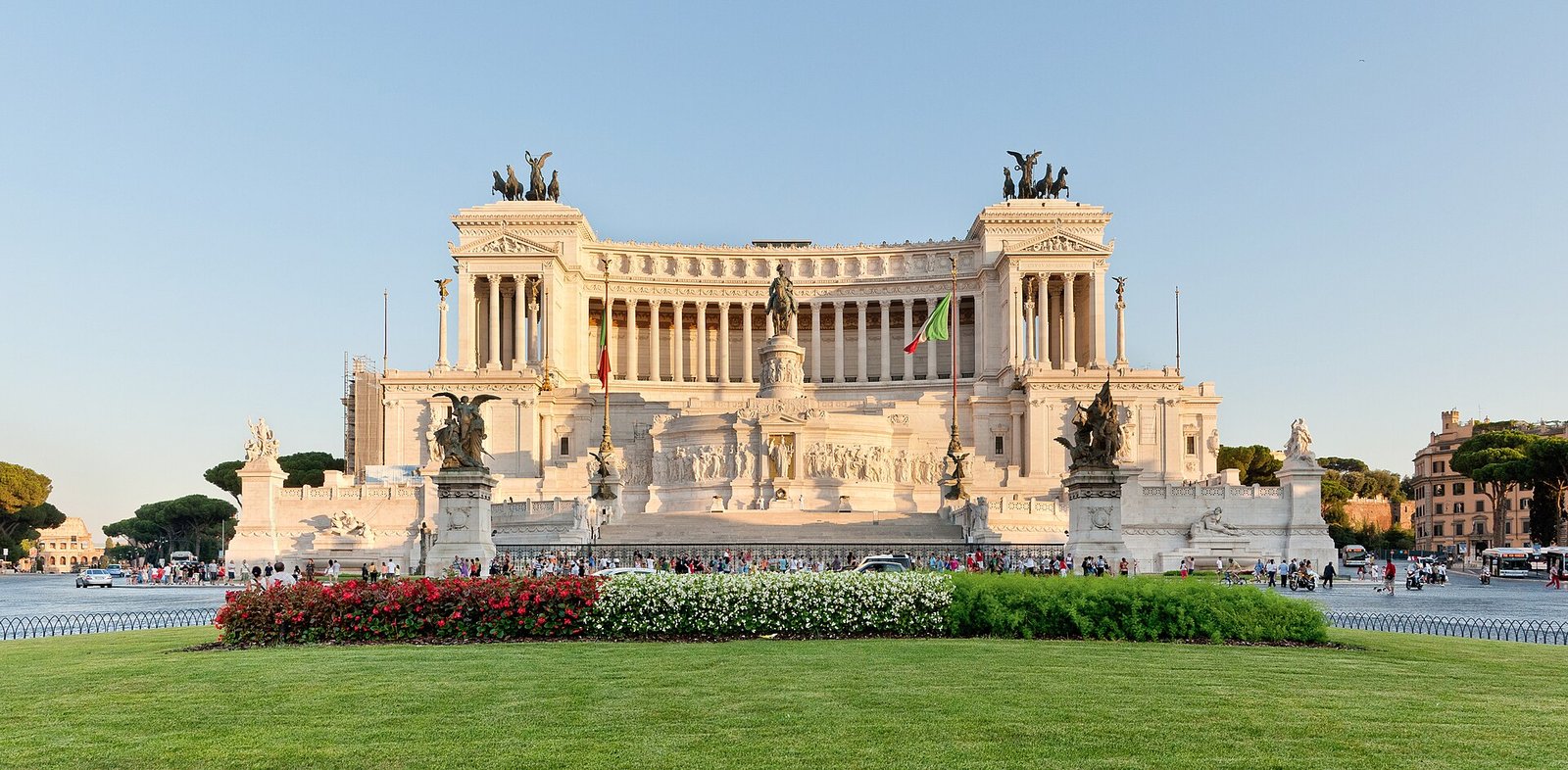
The Vittoriano section of the exhibition Roma in moneta. Arte e potere nella storia della città eterna is open until Sunday, November 8, 2026, every day from 9:30 to 19:30 (last entry at 18:45). The venue is the Vittoriano, the national monument to Victor Emmanuel II in Piazza Venezia, 00186 Rome, managed by the VIVE, Vittoriano e Palazzo Venezia. To get there by public transit, it's best to consult the ATAC route planner, because Piazza Venezia is one of the main hubs of the surface network. Entry to the exhibition is included in the VIVE admission ticket. Fares and reductions are published on the VIVE's official website, where you buy the ticket on the advance-sales circuit indicated by the institute. The other two sections of the exhibition, at the Museo Nazionale Romano and the Colosseum Archaeological Park, closed on September 27: the extension applies only to the Vittoriano.
Roma in moneta at the Vittoriano: the exhibition in brief
Roma in moneta. Arte e potere nella storia della città eterna is a multi-venue exhibition of the Ministry of Culture, open since July 2, 2026, that tells over 2,000 years of Rome's history through coinage. It is curated by Alfonsina Russo, Edith Gabrielli, Simone Quilici and Federica Rinaldi, and was conceived as a project in three chronological sections: antiquity at the Museo Nazionale Romano, in the Baths of Diocletian. The Middle Ages at the Colosseum Archaeological Park, in the Temple of Romulus. The modern and contemporary age at the Vittoriano.
The general closing was set for September 27, 2026. The VIVE decided to extend its own section until November 8, explaining the choice with the great interest of the public. The VIVE specifies that each of the three sections was designed from the start with a route that can also be enjoyed on its own: anyone who visits the Vittoriano today therefore finds a story complete in itself, even without having seen the other two parts.
In our judgment it's a smarter exhibition than the topic might suggest. The coin, here, is not an object for collectors but a lens for observing how Rome has represented itself over the centuries.
The route of Roma in moneta at the Vittoriano: from 1471 to the euro
The route of the section at the Vittoriano starts from 1471, the year of the election of Pope Sixtus IV, and arrives at the age of the euro. It is divided into nine chapters, which introduce the visitor to the transformations of the city: from the Rome of the popes to the capital of the Kingdom of Italy and then of the Republic, up to Rome's role in the European project.
Coins as witnesses
According to the VIVE's presentation, the images and inscriptions stamped on coins give back the ideas, ambitions and messages of those who produced them, while the artworks displayed alongside widen the story and make its context visible. It's a method that works: in front of a display case of papal coins, a portrait or an illuminated manuscript helps you understand who minted them and for what audience.
The main works
Among the works on display the VIVE highlights the Della Rovere Missal, decorated by Jacopo Ravaldi, and the Portrait of Pope Alexander VII Chigi by Gian Lorenzo Bernini. The section closes with Untitled by Maurizio Cattelan, placed in a chapter that invites you to look also at the Rome of the present: a leap from the Renaissance to contemporary art that, in our judgment, is the most successful coup de théâtre of the route.
Nine chapters, five centuries
The nine chapters at the Vittoriano cover more than five centuries: the temporal power of the popes, the passage to a united Italy, the Republic and finally the single European currency. The exhibition as a whole had 25 subsections, eight at the Museo Nazionale Romano, eight at the Colosseum Archaeological Park and nine at the VIVE, each devoted to a crucial episode in the history of Rome and to the cultural climate that accompanied it.
Why an exhibition on coinage: the reasons for Roma in moneta
The exhibition Roma in moneta is born, according to the curators, from the conviction that every complex human artifact is capable of telling the world that produced it. Questioned from historical, economic, social and artistic perspectives, an object stops being a simple material testimony and becomes a key to a much wider reality: the people who designed it, used it or only touched it, the institutions that regulated its production, the values and aspirations of a society.
Why Rome in particular
The curators recall that a similar project could have been done for other long-lived cities with a continuous coinage, such as Florence, Paris, London or Byzantium. The choice of Rome is due to the richness of its heritage and its very long relationship with coin production: from the first specimens of the Republican age to the euro, the coin accompanies the entire story of the city.
23 centuries of different powers
Over more than 23 centuries, the curators observe, Rome has been the capital of a monarchy, a republic, an empire, the Papal States, the Kingdom of Italy and the Italian Republic, and today it is the capital of a State within the European project. To each of these seasons correspond images, symbols and messages entrusted to coins, which preserve their memory.
Who made Roma in moneta: curators and scientific committee
Roma in moneta was curated by the Department for the Enhancement of Cultural Heritage of the Ministry of Culture, directed by Alfonsina Russo, together with the VIVE, the Colosseum Archaeological Park and the Museo Nazionale Romano. The initiative is part of a collaboration agreement between the Department and the Istituto Italiano di Numismatica, directed by Renata Cantilena.
Scientific coordination of the VIVE section
For the Vittoriano section the scientific coordination is by Francesco Benigno of the Scuola Normale Superiore di Pisa, Edith Gabrielli, director of the VIVE, and Matteo Sanfilippo of the Università della Tuscia. For the other two sections the work was done by Fabrizio Oppedisano and Massimiliano Papini for the Museo Nazionale Romano, and Sandro Carocci, Serena Romano and Dario Internullo for the Colosseum Archaeological Park.
The Coin Cabinet of the Museo Nazionale Romano
Most of the coins on display come from the Medagliere of the Museo Nazionale Romano, which the curators describe as one of the most important collections in the world, recently reopened to the public and at the center of a digitization project. Dozens of public and private institutions collaborated with loans, including the Vatican Museums, the Sovrintendenza Capitolina and civic museums such as those of Bologna and Como.
The director's words
Edith Gabrielli, director of the VIVE, justified the extension with the public's response and with the desire to offer more people a route that, through coins and artworks, tells how Rome has represented itself at different moments in its history.
The Vittoriano, home of Roma in moneta
The Vittoriano, or National Monument to Victor Emmanuel II, stands in Piazza Venezia on the northern slope of the Capitoline Hill and is the work of the architect Giuseppe Sacconi. Conceived in January 1878, right after the death of the first king of Italy, it was inaugurated in 1911, and the works ended in 1935. It encloses the Altare della Patria, born as an altar of the goddess Roma and since 1921 also the shrine of the Unknown Soldier.
The competitions and the choice of the Capitoline Hill
On May 16, 1878 Parliament approved the law for the monument. A first international competition in 1880, with 311 participants, was won by the Frenchman Henri-Paul Nénot, but the project was not carried out amid controversy and tension with France. A second competition fixed the site on the Capitoline Hill, symbol of the power of Rome, despite the opposition of figures such as Rodolfo Lanciani and Ferdinand Gregorovius. The project was entrusted to Sacconi, who led the site from 1885 until his death in 1905.
The monument's measurements
The Vittoriano is 70 meters high, 81 with the quadrigas of the propylaea, 135 wide and 130 deep. The entrance staircase is 41 meters wide and the columns of the portico are 15 high. The Botticino marble, which replaced the travertine planned by Sacconi, comes from Botticino, in the Brescia area, about 500 kilometers from Rome. Since June 2007 an elevator has led to the terrace of the quadrigas, the highest of the monument.
The VIVE
In December 2019 the Vittoriano was joined to the neighboring national museum of Palazzo Venezia in a single administration, the autonomous institute VIVE. The complex includes the Altar of the Fatherland, the Central Museum of the Risorgimento, the panoramic Terrace and the Imperial Forums Wing.
The sculptures of the Vittoriano to see before Roma in moneta
On the way up to the exhibition Roma in moneta you pass through a real iconographic program, which the Vittoriano displays along the entrance staircase and the terraces. It's worth looking at it carefully, because it anticipates the theme of the exhibition: the images with which a State tells its own story.
Il Pensiero and L'Azione
On the sides of the staircase you first meet two gilded bronze groups inspired by the thought of Giuseppe Mazzini, Il Pensiero on the left and L'Azione on the right for those arriving from Piazza Venezia. Next come two winged Lions and, at the top of the staircase, two winged Victories. On the terrace of the Altare della Patria, along the parapets toward the square, four Botticino marble groups six meters high represent La Forza, La Concordia, Il Sacrificio and Il Diritto.
The noble cities and the Victory Bulletin
The base of the equestrian statue of Victor Emmanuel II, sculpted between 1907 and 1910, carries the personifications of the 14 noble cities of Italy, the capitals of the pre-unification States: the same entities that, before unification, each minted their own coin. On the stylobate of the portico is carved the inscription with the text of the Victory Bulletin of November 4, 1918, sculpted for the burial of the Unknown Soldier.
The fountains of the two seas
On the sides of the entrance gate on Piazza Venezia are the fountains of the two seas, dedicated to the Adriatic and the Tyrrhenian, which have recycled their own water from the start. Next to the Adriatic fountain you can see the remains of the tomb of Gaius Publicius Bibulus, from the Republican age, an important reference point for the topography of ancient Rome.
Palazzo Venezia, the other half of the VIVE
Palazzo Venezia, on the west side of the square, is the oldest palace on Piazza Venezia and gives it its name. Born as a papal residence, from its balcony Pope Julius II watched the Barbary horse race, which until 1883 was run along Via del Corso and ended near the square. From 1564 to 1797 it housed the representation of the Republic of Venice to the Papal States.
In 1929 Benito Mussolini chose it as the seat of the prime minister's office, and from the balcony were announced the proclamation of the Empire on May 9, 1936 and the entry into the war on June 10, 1940. Today it is home to the Museo nazionale di Palazzo Venezia and, since 2019, forms with the Vittoriano the VIVE institute. Anyone visiting Roma in moneta can round out the day with its collections.
A curiosity about Roma in moneta at the Vittoriano, through November 8, 2026
The most interesting curiosity concerns precisely the link between metal and memory that runs through the Vittoriano. The equestrian statue of Victor Emmanuel II, architectural fulcrum of the monument, was entrusted to Enrico Chiaradia in 1889 and completed by Emilio Gallori after the sculptor's death in 1901. It was cast with bronze from some cannons of the Royal Army. It's hard to imagine a more fitting place for an exhibition that tells how metal, melted and minted, became an instrument for representing power.
A second detail concerns the underground levels. During the excavations for the foundations, a stretch of the Servian walls, from the 6th century BC, and even the remains of a mammoth came to light: both were incorporated into the structures of the Vittoriano without being destroyed. In February 1888 Sacconi proposed using the tunnels and caverns discovered in the subsoil to create the interior spaces that today house the Museo Centrale del Risorgimento and the Sacrario delle Bandiere.
Finally, the starting point of the route. The VIVE section begins in 1471, the year of the election of Sixtus IV della Rovere: the Della Rovere Missal on display recalls precisely that family, which marked the Rome of the second half of the 1400s.
One thing nobody tells you about Roma in moneta at the Vittoriano, through November 8, 2026
What is rarely said is that the exhibition has been extended only at the Vittoriano. The exhibition was born in three venues, but the Museo Nazionale Romano at the Baths of Diocletian and the Temple of Romulus in the Colosseum Archaeological Park closed their sections on September 27, 2026. From September 28 to November 8 you can visit only the part devoted to the modern and contemporary age, in Piazza Venezia.
A second little-known thing concerns the services. The VIVE reports that the ticket allows use of the restrooms by scanning a QR code. Otherwise the restrooms cost €1 per person, or you get in by showing the café receipt. Food and drinks are not allowed inside the VIVE spaces: keep that in mind before going in, especially with children.
Finally, the evening openings: between June and September the Vittoriano extended its hours until 23:30 on some dates, but the calendar ended on September 26 with the European Heritage Days. During the extension of Roma in moneta the ordinary hours apply, from 9:30 to 19:30.
My advice for visiting Roma in moneta at the Vittoriano, through November 8, 2026
My advice is to arrive at the Vittoriano in late morning on a weekday and to devote at least two hours to the visit: one for the exhibition, one for the rest of the monument. The VIVE ticket in fact includes Roma in moneta and lets you walk through the spaces of the Vittoriano, stop in front of the Altare della Patria and go up with the panoramic elevators to the terrace, as the institute itself indicates.
Inside the exhibition it's best to follow the order of the nine chapters without skipping the captions: the coins are small, and the point of the route is in the comparison between the object and the works that accompany it. A magnifying glass or your phone camera in zoom mode helps you read inscriptions and portraits.
Before or after the exhibition it's worth watching the changing of the guard at the Tomb of the Unknown Soldier, which according to the VIVE happens every hour. If you have time you can end the visit at the Central Museum of the Risorgimento, housed in the same spaces of the monument.
Another well-known fact, yet rarely cited
It's well known that the Vittoriano is the monument to Victor Emmanuel II. Less often cited is the fact that for 30 years it was closed to the public. On December 12, 1969, around 17:30, two bombs went off 10 minutes apart on the sides of the monument, at the same time as Piazza Fontana massacre in Milan. There were no victims, but one of the explosions knocked the door of the Museo Centrale del Risorgimento off its hinges and shattered the windows of the Basilica of Aracoeli. The Vittoriano stayed closed until September 24, 2000, when it reopened after a restoration promoted by the President of the Republic Carlo Azeglio Ciampi.
Just as little remembered is the fact that the Museo Centrale del Risorgimento, already provided for by a royal decree of 1906, was opened to the public only in 1970, while the Sacrario delle Bandiere became visitable on November 4, 1968. Since then the monument has become a true museum site, and the VIVE now also uses it for temporary exhibitions such as Roma in moneta.
So the exhibition venue too has a history of representation and oblivion that is in dialogue with the theme of coins: images of power that change meaning as regimes pass.
The right photo to take at Roma in moneta at the Vittoriano, through November 8, 2026
The right photo, for those visiting Roma in moneta, is the one from the terrace of the Vittoriano, reached by the panoramic elevators: the view embraces the center of Rome from the top of the national monument. On clear autumn days the afternoon light is the most suitable.
Outside, it's best to photograph the Vittoriano from Piazza Venezia, at the mouth of Via del Corso. The square was widened and made symmetrical between the late 1800s and 1911 precisely to allow a view of the monument from the square and from the Corso, by demolishing the Palazzetto Venezia and rebuilding it elsewhere. Including in the frame the fountains of the two seas, dedicated to the Adriatic and the Tyrrhenian, on the sides of the gate, adds depth to the image.
Inside the exhibition, before photographing the works, it's a good idea to check the VIVE's rules and the staff's instructions: for coins, a close-up of a detail, a portrait or an inscription tells more than a photo of the whole display case.
Some important events that happened here in history
On June 4, 1911 King Victor Emmanuel III inaugurated the Vittoriano before an immense crowd, for the 50th anniversary of Italian unification. Present were Queen Elena, the queen mother Margherita, the prime minister Giovanni Giolitti, 6,000 mayors, the veterans of the Risorgimento wars and 3,000 Roman students. On November 4, 1921 the body of the Unknown Soldier was interred in the Altare della Patria, in a ceremony attended by about a million people. Since then the tomb has been guarded by an honor guard and two eternal flames.
On May 24, 1935 the crypt of the Unknown Soldier was inaugurated, with mosaics by Giulio Bargellini. The works were completed the same year. During the ventennio the monument was the backdrop to the parades that arrived beneath the balcony of Palazzo Venezia. After the war it went back to its function as the secular temple of the nation. On December 12, 1969 it was hit by two bombs and closed for 30 years.
On September 24, 2000 the Vittoriano reopened to the public, and since November 4, 2000 it has permanently hosted the ceremonies of April 25, June 2 and November 4. In December 2019 the VIVE was born. On July 2, 2026 Roma in moneta opened, extended until November 8.
Who has passed through Roma in moneta at the Vittoriano, through November 8, 2026
Through the construction site of the Vittoriano passed the architect Giuseppe Sacconi, who directed it from 1885 to 1905, and after him Pompeo Passerini, Adolfo Cozza, Giulio Crimini, Gaetano Koch, Manfredo Manfredi and Pio Piacentini. Armando Brasini completed the interior spaces. Enrico Chiaradia and Emilio Gallori signed the king's equestrian statue.
At the 1911 inauguration were present Victor Emmanuel III, Queen Elena, the queen mother Margherita of Savoy, Maria Pia of Savoy, daughter of Victor Emmanuel II and queen mother of Portugal, and Giovanni Giolitti. In recent years President Carlo Azeglio Ciampi wanted the monument reopened, and Giorgio Napolitano continued its enhancement for the 150th anniversary of Italian unification.
With Roma in moneta, figures such as Gian Lorenzo Bernini, with the portrait of Alexander VII Chigi, the miniaturist Jacopo Ravaldi and Maurizio Cattelan have entered the Vittoriano through their works. Alongside them the curators Alfonsina Russo, Edith Gabrielli, Simone Quilici and Federica Rinaldi, and scholars such as Francesco Benigno and Matteo Sanfilippo.
How to get to the Vittoriano for Roma in moneta
The Vittoriano is in Piazza Venezia, on the northern slope of the Capitoline Hill, connected to modern Rome by the streets that fan out from the square: Via del Corso, Via Nazionale by way of Via Quattro Novembre and Via Cesare Battisti, and Corso Vittorio Emanuele by way of Via del Plebiscito.
By public transit
Piazza Venezia is crossed by many surface lines, and the best choice depends on your starting point: my advice is to use the ATAC route planner. On the ATAC website it's also worth checking for any line detours in the area of the square.
On foot
From the Colosseum you walk along Via dei Fori Imperiali, from Piazza di Spagna by going down Via del Corso all the way. The Tridente and the Forums area are limited-traffic zones and a car is not recommended.
What to see around the Vittoriano
Around the Vittoriano is concentrated a decisive part of the history of Rome: the Forums, the Capitoline Hill, the palaces of Piazza Venezia.
Piazza Venezia and its palaces
Overlooking Piazza Venezia are the 15th-century Palazzo Venezia, a papal seat and then, from 1564 to 1797, the seat of the Venetian representation, the 17th-century Palazzo Bonaparte, where Letizia Ramolino, Napoleon's mother, lived from 1818 until her death, and the Palazzo delle Assicurazioni Generali, inaugurated in 1911 like the Vittoriano.
The Capitoline Hill and the Aracoeli
Next to the Vittoriano rise the staircase of the basilica of Santa Maria in Aracoeli and the cordonata of the Capitoline Hill, with the Capitoline Museums.
The Forums and the Colosseum
From the square starts Via dei Fori Imperiali, which leads toward the Trajan's Markets and the Colosseum. Anyone who wants to retrace the whole exhibition in its original venues can also visit the Baths of Diocletian, where the ancient section was installed.
Where to eat near the Vittoriano
Inside the VIVE food and drinks are not allowed, but there is a café, mentioned by the VIVE in connection with the services. Around Piazza Venezia the offering is wide: bars and places for a quick break along Via del Corso and the streets toward the Pantheon, trattorias and restaurants in the Monti district, beyond Via dei Fori Imperiali, and in the Ghetto, toward the Portico d'Ottavia. My advice is to avoid the places on the most touristy square and move a few streets away.
Tickets and hours for Roma in moneta at the Vittoriano
The Roma in moneta section at the Vittoriano is open every day from 9:30 to 19:30, with last entry at 18:45, until November 8, 2026.
The ticket
Entry to the exhibition is included in the VIVE admission ticket, which can be bought online from the official website, which points to the authorized sales circuit. Fares, reductions and free admissions are listed on the VIVE's website.
Services and rules
The ticket allows use of the restrooms with a QR code. Otherwise they cost €1, or you get in with the café receipt. Food and drinks are not allowed in the VIVE spaces.
Accessibility
The Vittoriano has panoramic elevators up to the terrace, as the VIVE indicates. For specific accessibility needs it's best to consult the accessibility statement published on the VIVE's website or contact the institute before the visit.
Frequently asked questions about Roma in moneta at the Vittoriano
Until when is the exhibition Roma in moneta open?
The exhibition Roma in moneta is open at the Vittoriano until November 8, 2026, thanks to the extension decided by the VIVE. The other two sections, at the Museo Nazionale Romano and the Colosseum Archaeological Park, closed on September 27, 2026 as in the original calendar.
What are the hours of Roma in moneta at the Vittoriano?
Roma in moneta at the Vittoriano can be visited every day from 9:30 to 19:30, with last entry at 18:45. The Vittoriano's special evening openings ended at the end of September 2026.
How much does the Roma in moneta ticket cost?
Entry to Roma in moneta is included in the admission ticket to the VIVE, Vittoriano e Palazzo Venezia. Updated fares and reductions are published on the VIVE's official website, from which you buy the ticket online on the circuit indicated by the institute.
What can you see in the exhibition Roma in moneta at the Vittoriano?
The Roma in moneta section at the Vittoriano tells the story of Rome from 1471, the election of Sixtus IV, to the euro, in nine chapters. Alongside the coins are displayed the Della Rovere Missal decorated by Jacopo Ravaldi, the Portrait of Alexander VII Chigi by Bernini and Untitled by Maurizio Cattelan.
Can you still visit the sections of Roma in moneta at the Baths of Diocletian and at the Colosseum?
No, the sections of Roma in moneta at the Museo Nazionale Romano, in the Baths of Diocletian, and at the Colosseum Archaeological Park, in the Temple of Romulus, closed on September 27, 2026. The extension to November 8 applies exclusively to the Vittoriano.
Who curated Roma in moneta?
Roma in moneta is curated by Alfonsina Russo, Edith Gabrielli, Simone Quilici and Federica Rinaldi. For the Vittoriano section the scientific coordination is by Francesco Benigno, Edith Gabrielli and Matteo Sanfilippo. Most of the coins come from the Medagliere of the Museo Nazionale Romano.
Can you eat inside the Vittoriano?
In the VIVE spaces, including the Vittoriano where Roma in moneta is, food and drinks are not allowed. There is a café, whose receipt also gives access to the restrooms.
Is the Roma in moneta ticket also valid for the Vittoriano terrace?
Roma in moneta is included in the VIVE admission ticket, which according to the institute lets you walk through the monumental spaces of the Vittoriano and reach the terrace at the top of the monument with the panoramic elevators. For details on ticket combinations and any separate fares, check the VIVE's official website before the visit.
How much time do you need to visit Roma in moneta?
For the Roma in moneta section at the Vittoriano, plan on about an hour, because the nine chapters alternate small-format coins with artworks to be observed at leisure. With the Altare della Patria, the changing of the guard and the terrace, the overall visit to the monument takes at least two hours.
The final advice on Roma in moneta at the Vittoriano
Roma in moneta is an exhibition not to put off too long: the extension gives six more weeks, but only at the Vittoriano. My advice is to take it as an opportunity to visit the monument as a whole, combining the exhibition, the Altare della Patria, the changing of the guard and the terrace, in a weekday morning or afternoon. In our judgment the modern and contemporary section, with its route from the 1400s to the euro and the finale entrusted to Cattelan, holds up very well on its own and offers a different way of reading the history of Rome: through the objects that passed every day from hand to hand.
Article written by the editorial team of Tour Leader Pro, contact them for Private/Corporate/V.I.P. Tours and Experiences.
Planning a trip to Rome? The English-language guides for visiting the city are on ItalyPlanner.com.