Pontormo at the Scuderie del Quirinale, October 9, 2026 to February 7, 2027
In short. Pontormo at the Scuderie del Quirinale opens on October 9, 2026 and closes on February 7, 2027.
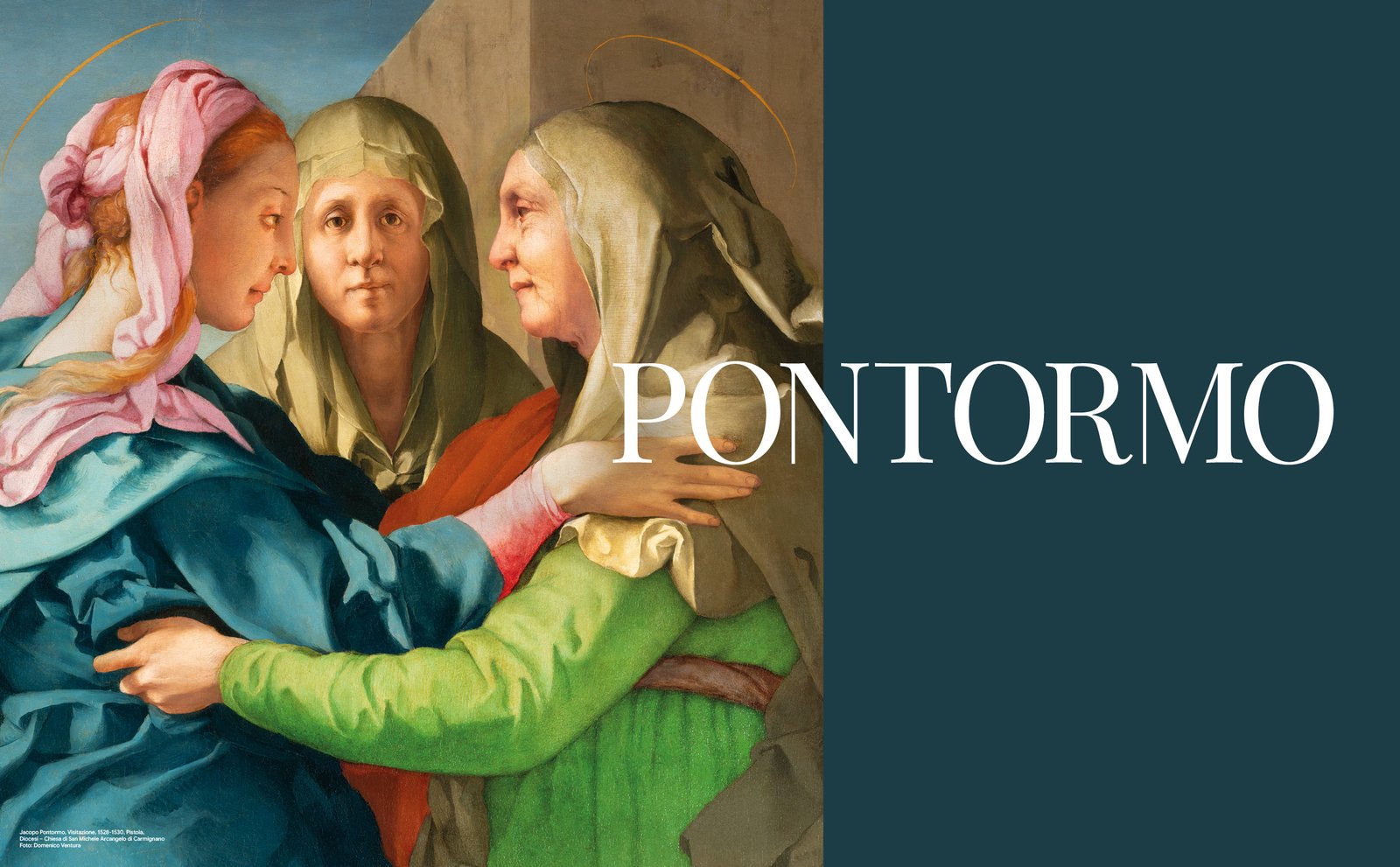
Pontormo at the Scuderie del Quirinale opens on October 9, 2026 and closes on February 7, 2027. The exhibition is staged in the Scuderie del Quirinale building, at Via XXIV Maggio 16, 00187 Rome, across from the Quirinal Palace. The hours published by the venue for the exhibition period run from 10:00 to 20:00, with last entry at 19:00. By subway you get off at Barberini (line A), about 600 meters as the crow flies. By bus the most convenient stops are Nazionale/Quirinale and Nazionale/Palazzo Esposizioni, on Via Nazionale, a stone's throw from the climb that leads to the square. The standard price list published by the venue shows a full-price ticket of €18, plus the booking fee for advance purchase. Tickets are bought on the venue's official website and through the presale network authorized by the organization, linked from the same page, or at the ticket office. For groups, reservation is mandatory.
The exhibition is sponsored by Ales, the company that runs the Scuderie, together with the Uffizi Galleries, and is produced with Electa. It is curated by Cristina Acidini, supported by a scientific committee made up of Elena Capretti, Philippe Costamagna, Bruce Edelstein and Carlo Falciani. The organizers present it as the first major monographic exhibition ever devoted to Pontormo, and at the center of the route they place the Visitation that comes from the church of San Michele Arcangelo in Carmignano. Anyone who knows the painter knows how rare it is to see so many of his works together away from Florence. Anyone who doesn't has four months ahead to make up for it, and no excuse.
Pontormo at the Scuderie del Quirinale in Brief
The Pontormo exhibition stays open for a little under four months, from October 9, 2026 to February 7, 2027, and occupies the two exhibition floors of the Scuderie. It is one of the rare occasions when the building opens for a single painter, and the essential facts are few and clear.
Pontormo Dates and Hours
Opening to the public on October 9, 2026, closing on February 7, 2027. The exhibition hours published by the venue are 10:00 to 20:00, with last entry at 19:00. For the end-of-year holidays the venue has published special hours, which you'll find further on in the chapter on hours. The visitor rules specify that you enter the rooms until one hour before closing: after that time the ticket office no longer sells.
Who Organizes the Exhibition
Ales, which runs the Scuderie del Quirinale, in collaboration with the Uffizi Galleries. Production is by Electa, which also publishes the catalogue. The curator is Cristina Acidini, whom the Scuderie describe as one of the foremost authorities on 16th-century Florentine art.
Where the Exhibition Is
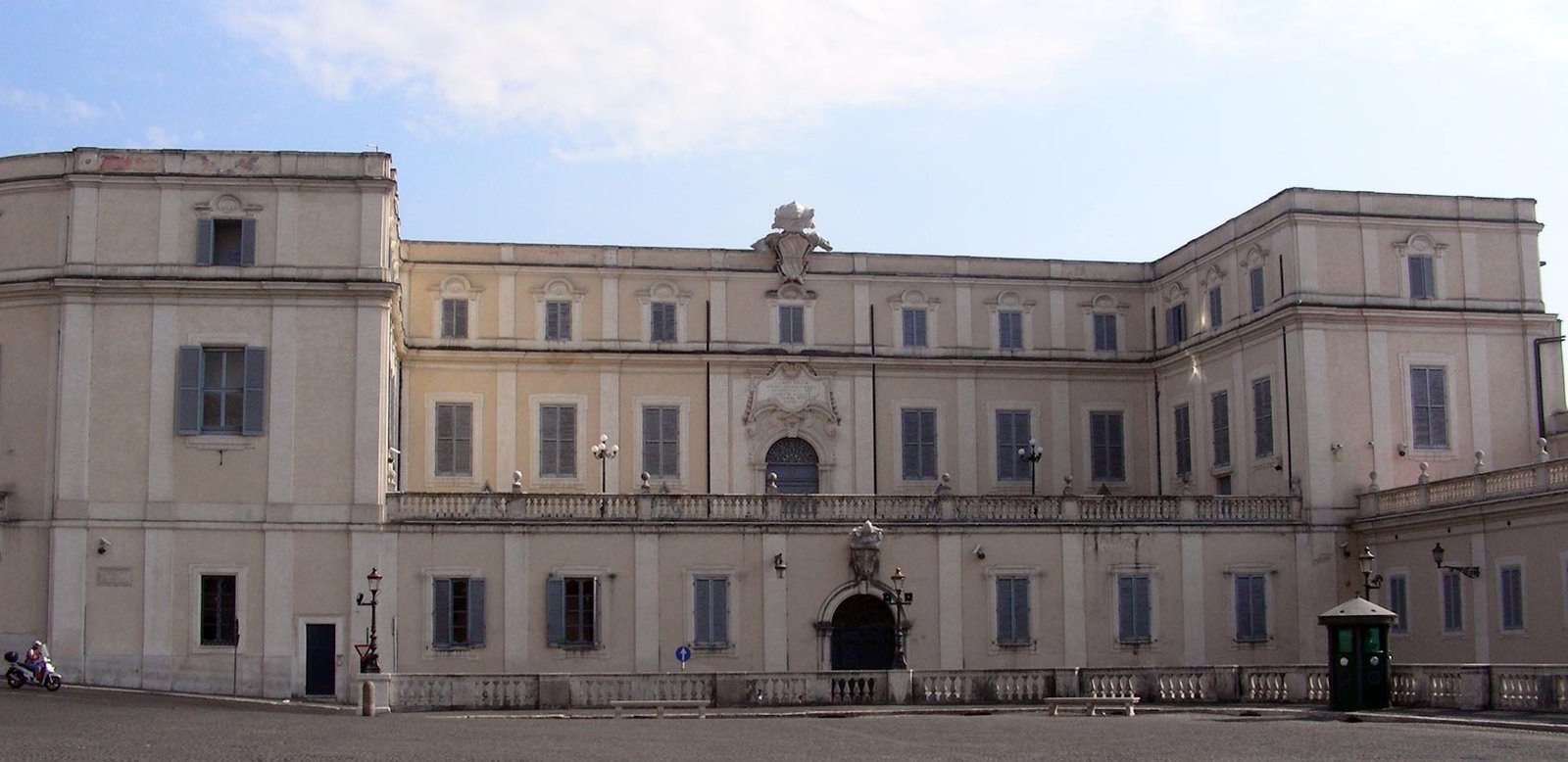
Palazzo delle Scuderie del Quirinale, Via XXIV Maggio 16, on the Quirinal Hill, in the Trevi district. The facade looks onto Piazza del Quirinale, the palace of the Presidency of the Republic and the Palazzo della Consulta. The building is open to the public only when it hosts an exhibition, and this explains why so many Romans know it only from the outside.
Who Pontormo Was, the Painter of the Exhibition
Pontormo was born in 1494 and died in 1557, and is one of the names that define 16th-century Florentine painting. The Scuderie place him at the moment of passage between the mature Renaissance and Mannerism, and insist on one point: Pontormo takes the classical language inherited from the masters who came before him and transforms it into a personal, original pictorial language, in many ways unprecedented. This is the organizers' judgment, and it is a judgment one can share: with Pontormo bodies stop obeying gravity and colors stop obeying nature, and the visitor notices it even before knowing why.
Between the Mature Renaissance and Mannerism
Mannerism is a word that textbooks use to indicate the season after Raphael and Leonardo, when painters no longer seek perfect balance and work on tension: elongated figures, compressed spaces, suspended gestures, acid or shifting colors. Pontormo is one of the protagonists of this passage in Florence, and the Roman exhibition, as it has been announced, wants to tell precisely the way his painting detaches from the classical model without ever fully disowning it. The route follows the career in mostly chronological order, with sections devoted to the main moments and to aspects of his way of working.
A Legacy That Reaches the 20th Century
The Scuderie recall that Pontormo's vision inspired generations of 20th-century artists and intellectuals, and they cite two names at opposite extremes: Pier Paolo Pasolini and Bill Viola. An Italian poet and filmmaker, an American video artist: the distance between the two says a lot about how much Pontormo still speaks to those who make images today. The organizers add that the painter is today among the most admired and sought-after masters of the Italian Renaissance, loved by scholars, collectors and the wider public.
What Is Documented and What Belongs to Storytelling
Many anecdotes circulate about Pontormo, often repeated without a source. The fixed points declared by the organizers are the dates of birth and death, the role in 16th-century Florentine painting, the passage from the mature Renaissance to Mannerism, and the influence on the 20th century. The rest, including the character traits that tradition attributes to him, belongs to storytelling and should be checked in the Electa catalogue, which the Scuderie present as an up-to-date scholarly contribution on the artist and on the context of 16th-century Florence. Anyone who wants the full biography will find the right place there. A serious guide doesn't fill the gaps with legends.
The Carmignano Visitation at the Center of Pontormo
The declared heart of the exhibition is Pontormo's Visitation, lent by the church of San Michele Arcangelo in Carmignano. Around this painting the organizers have gathered a group of paintings and drawings meant to tell the artist's creative development, his pictorial language and the richness of his imagination.
An Altarpiece That Leaves Its Church
The detail that matters, for anyone who organizes art trips, is the provenance: the Visitation does not come from a museum but from a church, that of San Michele Arcangelo in Carmignano, in Tuscany. Works kept in churches have a different audience from museums: people go to see them on purpose, often with effort, and they remain tied to a place. Seeing it in Rome, in a hall built for exhibitions, with controlled light and the time to look at it, is an occasion to be taken for what it is: an exceptional loan, for a limited time.
The Subject of the Visitation
The Visitation is the episode of the Gospel of Luke in which Mary, after the Annunciation, goes to visit her cousin Elizabeth, who is also expecting a child. It is a subject of encounter, of embrace, of glances: a theme that Italian painting treated many times, and that each painter bent to his own sensibility. In front of Pontormo's canvas I advise not to hurry: stop for a few minutes, look at how the figures occupy the space, then step to the side and look again. These are paintings that change while you look at them.
Pontormo's Works on Display and the Loans
The exhibition brings together Pontormo's most important paintings and a selection of drawings, coming from the Uffizi Galleries and from museums and collections all over the world. The list of lenders published by the Scuderie is already in itself a travel program.
From the Uffizi, the Main Core
The Uffizi Galleries, partner of the exhibition, lend a group of works that the organizers call notable. It is natural: Florence is Pontormo's city and its museums hold a decisive part of his output. Anyone who has seen the Uffizi recently will find some works again in a different setting, with space around them that is often missing in the always crowded Florentine rooms.
From Italian Museums
Among the Italian lenders the Scuderie cite the Galleria dell'Accademia, the Bargello Museums and the Istituto Centrale per la Grafica. The latter is a Roman institution devoted to graphic art and prints, and its presence confirms how much the drawings weigh in the project of the exhibition.
From Foreign Museums
The international list includes the Musée du Louvre, the National Gallery in London, the British Museum, the Metropolitan Museum of Art in New York, the National Gallery of Art in Washington, the Art Institute of Chicago and the J. Paul Getty Museum, among other institutions. Bringing together loans from Paris, London, New York, Washington, Chicago and Los Angeles takes years of work and negotiation: that is why monographic shows of this level are rare, and why it's best not to put off the visit until February.
Paintings and Drawings
The project pairs the paintings with a selection of drawings that the organizers call exceptional. For Pontormo drawing is not a preparatory exercise to be relegated to the end of the route: it is the place where you see his invention being born. My advice is to give the sheets the same time you give the canvases. Old drawings are displayed in low light for conservation reasons, so the eyes need a few seconds to adjust: don't move on too quickly.
How the Route of the Pontormo Exhibition Is Built
The route of Pontormo at the Scuderie follows a mostly chronological narrative and alternates it with thematic sections devoted to the main moments of the career and to the aspects that define the painter's artistic practice. That is how the organizers describe it, and that is how it is best approached.
A Chronology to Follow
When a monographic show is built in chronological order, the practical advice is simple: you follow the direction indicated and don't skip ahead. The sequence of the works is an argument, and the meaning of a painting from his maturity is better understood if you have just seen the youthful works. At the Scuderie the exhibition rooms are on the first and second floors, and the passage between the two floors offers a natural pause halfway through the visit.
Thematic Sections
The thematic sections serve to hold the story on a precise aspect of Pontormo's artistic practice. The titles of the sections are discovered in the rooms and in the catalogue. Read the section panels, which are few and written by the curators. The captions of each work you can read after looking, not before.
The Electa Catalogue
The catalogue is published by Electa and, in the venue's intentions, is meant to become a rigorous and up-to-date reference for the knowledge of Pontormo in the historical and cultural context of 16th-century Florence and of painting between the mature Renaissance and Mannerism. It is found in the bookshop on the ground floor, which follows the exhibition hours.
Who Curated Pontormo at the Scuderie
The curator of Pontormo at the Scuderie del Quirinale is Cristina Acidini, a scholar of 16th-century Florentine art, and with her works a scientific committee of four specialists. The team is small and highly qualified, and it usually shows in the choice of works.
Cristina Acidini
The Scuderie present her as one of the foremost authorities on 16th-century Florentine art. For visitors this means something concrete: the exhibition arises from a precise scholarly point of view, and the route is not a simple sequence of masterpieces but an argument about the artist.
The Scientific Committee
Working alongside the curator are Elena Capretti, Philippe Costamagna, Bruce Edelstein and Carlo Falciani. Four names of scholars who deal with 16th-century painting and drawing: the presence of a committee of this kind is the guarantee that the attributions and comparisons in the rooms have been discussed at length.
Ales, Uffizi, Electa
Ales is the company that runs the Scuderie del Quirinale and oversees its programming. The Uffizi Galleries are the scientific partner and the main lender. Electa produces the exhibition and publishes its catalogue. It is a formula already seen in other major Roman exhibitions, and it usually works.
A Curiosity About Pontormo at the Scuderie del Quirinale, October 9, 2026 to February 7, 2027
The rooms that host Pontormo were born for horses: the building of the Scuderie del Quirinale performed its original function as a carriage house and horse stable until 1938, when it was converted into a garage. For more than two centuries, then, the building that today welcomes the Carmignano Visitation and the drawings lent by the Louvre and the British Museum was a great stable of state, with the carriages under cover and the horses a few steps from the Quirinal Palace.
The second curiosity is underfoot. According to the venue's official description, the building leans against the wall that closes the Colonna garden and rests on the remains, partly still visible, of the grandiose Roman temple of Serapis. When you go up to the exhibition rooms it's worth remembering: you are walking over three superimposed Romes, the ancient one of the temple, that of the popes who built the stables, and that of the Republic that has turned them into an exhibition venue.
The third concerns the exhibition itself. Pontormo is a figure of Florentine painting, and the major monographic show that the organizers call the first ever devoted to him is held in Rome, in a building constructed two centuries after his death. It is the fate of painters whom their time understood only in part: they are celebrated far from home, and with a delay that says much more about us than about them.
The Palazzo delle Scuderie del Quirinale
The building of the Scuderie del Quirinale was built over a decade, between 1722 and 1732, and with the Quirinal Palace and the Palazzo della Consulta it closes the square of the Dioscuri fountain. It is one of the most successful exhibition spaces in Rome.
Alessandro Specchi and Ferdinando Fuga
The first design is due to Alessandro Specchi, who received the commission from Pope Innocent XIII: the new building was to replace the simple, modest one built by Carlo Fontana at the beginning of the 18th century. The pope's death interrupted the work for six years. In 1730 Clement XII decided to complete the work and entrusted it to Ferdinando Fuga, who kept his predecessor's architectural structure but transformed the exterior front: he raised the mezzanine floor, redesigned the facade and enriched the central portals.
The Lost Staircases
The original entrance was formed by two semi-elliptical staircases, which Fuga made even more scenographic with an elegant balustrade. They were demolished in 1865, during the works on the Monte Cavallo climb. Anyone looking at the facade today from Via XXIV Maggio has to imagine it with those curved ramps in front: an entrance worthy of a noble palace, for a building that housed horses.
Gae Aulenti's Restoration
The restoration that turned the papal stables into an exhibition venue was designed by the architect Gae Aulenti and directed by the Superintendency for architectural and environmental heritage of Rome. The work recovered a building in less than perfect condition and adapted it to its new function, enhancing spaces that for position and size have few equals in the city. Aulenti's signature is recognized above all in the large glass wall and the panoramic staircase, which I discuss further on.
How the Spaces Are Laid Out
The total surface is about 3,000 square meters spread over several floors. On the first and second floors is the exhibition area, with large spaces for about 1,500 square meters: that is where Pontormo is staged. On the mezzanine floor is the cafe. The ground floor houses the reception services, the bookshop, the shop and the spaces for initiatives tied to the exhibitions. The coat check and the wifi service are free for all visitors.
Something Nobody Tells You About Pontormo at the Scuderie del Quirinale, October 9, 2026 to February 7, 2027
At the end of the Pontormo visit there is a second exhibition, free, that almost nobody counts on: the view over Rome from the glass wall designed by Gae Aulenti. The venue describes it as a 180-degree window on the city from the highest of the seven historic hills, and it doesn't exaggerate. From the panoramic staircase you see the Altare della Patria, the domes of the churches of the center, the rooftops of the historic districts and, in the background, the green wings of the Janiculum, Monte Mario and the Pincio. In the distance you can make out St. Peter's.
Why does nobody say so? Because you come out of the rooms with your head still full of paintings, you go down quickly toward the bookshop and pass the glass wall without stopping. It's best to treat it as the last room of the exhibition. After two hours of Pontormo, with his suspended figures and colors that don't exist in nature, looking at Rome from above puts your feet back on the ground: it is the city in which the painter did not work, but which hosts him today, with the late-afternoon light that in autumn and winter comes in low and golden over the rooftops.
The second thing that is said little concerns the building itself. The Scuderie are open and visitable solely and exclusively when they host an exhibition. Between one exhibition and the next the building closes: the glass wall, the staircase, the cafe on the mezzanine are not accessible. Anyone who wants to see this building from the inside has, in practice, the time windows of the exhibitions. Pontormo is therefore also the chance to get to know one of the most beautiful buildings on the hill, which will be closed again when the works return to Florence, to Paris and to New York.
The third: the ticket has a day and a time, and they cannot be changed. The venue's visiting terms establish this. Anyone who arrives late because of some mishap has no right to move the time slot, so it's best to plan some margin, especially on rainy days, when the traffic of the center slows everything down.
Tickets and Prices for Pontormo at the Scuderie
The standard price list published by the Scuderie del Quirinale on the Tickets and hours page shows €18 for the full-price ticket, to which is added a booking fee of €2.50 for advance purchase. The exhibition's prices should be confirmed at the time of purchase on the official website of the Scuderie, which links to the presale network authorized by the organization.
The Venue's Standard Price List
According to the official page: full price €18. Reduced €16 for working teachers, active-duty law enforcement and people with a disability of up to 99 percent, with the documents indicated by the venue. Under 30 ticket at €12. Under 18, ages 6 to 17, at €5. Courtesy ticket at €3 for licensed tour guides, ICOM and ICCROM card holders, and employees of the Ministry of Culture and of Ales. Open ticket at €25. The booking fee is €2.50 for full price, reduced, open, promotions and workshops, and €0.50 for courtesy tickets.
Free Admission
Admission is free up to age 6 and for people with a 100 percent disability, with a free companion. For the latter the venue recommends booking, to be requested by email attaching the document certifying the percentage of disability, valid and with the diagnosis redacted. For children under 6 and people with a 100 percent disability the booking fee is not paid, even when the ticket is booked by parents or companions.
Special Promotions
The Italian page of the venue lists an Over 65 ticket at €12, valid only on Monday and Tuesday from 15:00 until the ticket office closes. A University Promo ticket at €8 for university students, Monday to Friday excluding holidays, from 17:00 until the ticket office closes. A Family at the Museum ticket at €13 for a maximum of two companions of children enrolled in the weekend workshop, in the 17:00 slot. The English version of the site adds a family package at €36 for two adults and two minors. Teachers can pay with the Carta del Docente, at the ticket office and online.
Individual Guided Tours
The venue offers a ticket that includes admission and guided tour at €24, a junior version at €15 and one for people with a 100 percent disability at €12. The tours take place Monday and Tuesday at 15:30 and on Saturday, Sunday and holidays at 10:30, 12:00, 16:30 and 18:00, in groups of 25 people who book individually. For those visiting alone who want a common thread, it is the most economical solution.
Groups and Schools
For groups reservation is mandatory and is made by writing to the Scuderie's groups office. A group runs from a minimum of 7 to a maximum of 25 people, escort included. The radio guide system, the so-called vox, is mandatory: at the Scuderie it is rented for €2, and it is included when the guided tour is organized by the venue, at a cost of €125 per group plus the tickets. For schools the student ticket costs €1, to which is added the school slot at €55 or the guided tour at €125. The school workshop costs €150. Accompanying teachers, up to two per group, and students with disabilities enter free.
Hours for Pontormo at the Scuderie del Quirinale
The Pontormo exhibition is open from 10:00 to 20:00, with last entry at 19:00, for the whole period from October 9, 2026 to February 7, 2027, according to the hours published by the venue.
The Standard Hours
Open 10 hours a day, with last entry one hour before closing. The visitor rules say it clearly: after that hour you no longer enter the building and the ticket office doesn't sell. The ticket, moreover, is valid for the day and time slot indicated. The venue's email reply service is active Monday to Friday from 10:00 to 18:00, with a reply within 24 or 48 hours.
Holiday Hours
For the holidays the venue has published special hours: December 24 from 09:00 to 15:00, with last entry at 14:00. December 25 from 16:00 to 20:00, last entry at 19:00. December 26 open all day. December 31 from 10:00 to 15:00, last entry at 14:00. January 1 from 16:00 to 20:00, last entry at 19:00. January 6 open all day. Christmas afternoon and New Year's afternoon are two rare moments, with the city at a standstill and the rooms often quieter than usual.
My Advice for Visiting Pontormo at the Scuderie del Quirinale, October 9, 2026 to February 7, 2027
For Pontormo the advice is clear: buy the ticket in advance, choose a weekday slot and give the exhibition at least two hours, plus half an hour for the glass wall and the bookshop. The major monographic shows at the Scuderie draw large crowds, especially on weekends and in the last weeks of opening, and entry is tied to a day and time that cannot be changed.
On choosing the moment: the venue provides reduced rates precisely in the least requested hours. The Over 65 ticket is valid Monday and Tuesday from 15:00. The ticket for university students is valid on weekdays from 17:00. It is valuable information even for those who pay full price: these are the slots that the venue itself tries to fill, and therefore the ones in which you are more likely to find rooms you can breathe in. For a group of enthusiasts, the best choice is a Tuesday at 17:00, leaving around 19:00 with Aulenti's glass wall at sunset.
The second piece of advice concerns the way of looking. Pontormo isn't understood with the gaze of someone who has to see everything. In each room pick one work, stop in front of it for three or four minutes, then move on to the others. Bring a notebook: the rules allow taking notes and drawing in the rooms, as long as you don't use fountain pens and markers. A pencil is enough. Copying a hand, a drapery, the profile of a figure from the Visitation will make you understand more than any caption.
The third: download the Scuderie's official app beforehand, available on the App Store and Google Play, and arrive with your phone charged to at least 60 percent and with earphones, as the venue asks when the app contains audio guide content. In the rooms you don't make calls, but you can use applications, with the ringer turned down.
How to Get to Pontormo at the Scuderie del Quirinale
The Scuderie del Quirinale are at Via XXIV Maggio 16, on the Quirinal Hill, and are reached by subway line A to Barberini or by the buses that run along Via Nazionale, stopping at Nazionale/Quirinale.
By Subway
The most convenient station is Barberini, on line A, about 620 meters as the crow flies from the Scuderie. The walk is uphill: from Piazza Barberini you take the direction of the Quirinale and arrive at the square, then go down a few steps on Via XXIV Maggio to the entrance. For those who have trouble with climbs, the bus is better.
By Bus
The closest ATAC stops are Nazionale/Quirinale, about 220 meters as the crow flies from the entrance, and Nazionale/Palazzo Esposizioni, about 390 meters. From Via Nazionale it's a short climb up toward the Quirinale. Many lines run along Via Nazionale connecting Termini station with Piazza Venezia. The best line number depends on your starting point, and it's best to check it with the public transport company's information service before you head out.
On foot from the center
From Piazza Venezia the Scuderie are about 400 meters as the crow flies, from the Trevi Fountain about 340, from Palazzo Barberini about 640. These are walking distances, but with a change in elevation to take into account. The Quirinale is a hill, and from any direction you arrive, except from Via Nazionale, you walk uphill. Wear comfortable shoes, for the exhibition too.
By car
I advise against the car. The historic center is largely a limited traffic zone and there are few parking spots in the area. For people with reduced or impaired mobility or sensory ability, the venue lists a reserved parking space on the sidewalk opposite the main entrance. If you're coming from outside Rome, you're better off leaving the car in a park-and-ride lot and continuing by metro.
Another well-known fact, yet one rarely mentioned
Almost everyone knows that Quirinale square is the square of the President of the Republic. Few remember that its historic name is Monte Cavallo. The Scuderie themselves, describing the square through period engravings and drawings, speak of the stories that marked the square of Monte Cavallo. At the center are the fountain, the statues of the Dioscuri and the obelisk, and they are what give the square its shape.
The second well-known and rarely mentioned fact concerns the obelisk. According to the official description from the Scuderie, the Quirinale obelisk was found in the 1800s near the Mausoleum of Augustus. So the monument we see today between the Dioscuri, in front of the presidential palace, made a journey across the city: from the Campus Martius to the highest hill. Rome is full of moved obelisks, and this is one of the most visible.
The third fact: the ascent of Monte Cavallo, the road you take to reach the Scuderie, was rearranged in 1865, and that work cost the palace the two semi-elliptical staircases by Ferdinando Fuga. Anyone walking up from Via XXIV Maggio is literally walking on the spot where the 18th-century entrance stood. If there is one place where you see how Rome keeps sacrificing a part of itself to adapt, it's this stretch of road only a few dozen meters long.
The square, says the venue, has seen popes, kings and emperors pass by in 500 years. Now Pontormo is arriving, and for four months he will be the hill's most awaited guest.
Accessibility of the Pontormo exhibition
The Scuderie del Quirinale are accessible to people with reduced or impaired mobility or sensory ability, with an entrance at Via XXIV Maggio 16 and welcome staff always present during opening hours. The venue has also published a technical accessibility report, available on the official website.
Entrance, elevator and wheelchairs
At the entrance the welcome staff assist visitors to ease the access procedures for the exhibition. Wheelchairs are available for those who ask. The elevator is reserved, for safety and out of courtesy, for people with mobility difficulties or disabilities and their companions. Other visitors use the stairs, and Aulenti's staircase, as we've seen, is worth the effort. For information the venue gives the number 06 692042.
Tickets for people with disabilities
People with a disability of up to 99 percent pay the reduced fare of €16, with a free companion if needed. Those with a 100 percent disability get in free with a companion. The venue asks for the official record certifying the percentage and accepts no other proof. There is also a ticket with an individual guided tour for €12 for people with a 100 percent disability, in the same time slots as the other guided tours.
Reserved parking
In front of the main entrance, on the opposite sidewalk, there is one parking space reserved for people with reduced or impaired mobility or sensory ability. It's only one, so if you need it, you do well to plan an alternative.
Pontormo with children
Children up to 6 get into the Pontormo exhibition free, and from 6 to 17 the ticket costs €5 according to the venue's price list. The Scuderie run workshops for children on weekends, with a Famiglia al Museo ticket for €13 for a maximum of two companions.
How the weekend workshop works
The Famiglia al Museo offer applies only to the weekend workshop. You buy together, in a single transaction and in the 17:00 time slot, the workshop ticket for the child and the one for the companions. The workshop, according to the venue's English-language website, is designed for children from 6 to 11 years old. The details of the workshops dedicated to Pontormo should be checked in the Workshops section of the official website.
Practical tips
Pontormo with children works, as long as you don't expect to see everything. A simple game works: in each room the child picks an odd color, a pink, an acid green, an orange, and looks for it in the other paintings. It's a way of really looking. The rules allow drawing with a pencil, and a small notebook works wonders. Remember that you can't eat or drink in the rooms: have the snack beforehand, at the mezzanine café or outside. Large backpacks and bulky bags must be left at the coat check, which is free.
The right photo to take at Pontormo at the Scuderie del Quirinale, from October 9, 2026 to February 7, 2027
The right photo at the Pontormo exhibition is taken from Gae Aulenti's glass wall, with Rome below. The 180-degree window onto the city from the Quirinale hill is the best-known interior viewpoint of the Scuderie. Frame the rooftops of the historic rioni, the Altare della Patria on the left and, if the day is clear, the dome of St. Peter's in the distance. The best light, between October and February, is the late afternoon light.
In the rooms the venue's rule is clear: you may take amateur photos with smartphones or hand-held cameras. Tripods and flash are not allowed. Better to photograph little and well. A detail, a hand, a face from the Visitazione tell the story of the exhibition better than 10 full-length photos, crooked and full of reflections. Stand slightly to the side of the painting to avoid the reflection of the lights, and keep the distance of one meter from the works that the rules require.
Outside, the classic photo is the façade of the Scuderie taken from the square, with the central portal enriched by Ferdinando Fuga and the sky above. An alternative that I like more: from the edge of Quirinale square, where the scenic balustrade is, turn toward the Scuderie and include the obelisk and the Dioscuri in the same frame. It's the image that puts together the three centuries of the place: the ancient, the papal, the republican. Avoid the middle hours of sunny days, when the white square burns out photographs, and prefer early morning, before the 10:00 opening, or the hour before sunset.
One last note: you are in front of the seat of the Presidency of the Republic. No drones, and respect for the security staff.
What's around the Scuderie del Quirinale
Around the Scuderie del Quirinale, within a few minutes' walk, you'll find the Palazzo del Quirinale, the Trevi Fountain, the Galleria Colonna, Sant'Andrea al Quirinale and Palazzo Barberini. It's best to build the day around the exhibition, without overloading it.
The square and the Palazzo del Quirinale
The Quirinal Palace closes off the square on the side opposite the Scuderie. Next to it is the Consulta building, about 150 meters as the crow flies. At the center of the square are the fountain, the Dioscuri and the Quirinale obelisk. If you have time, find out when the presidential palace opens for visits. It's a natural complement to the exhibition.
San Silvestro al Quirinale and the Galleria Colonna
Going down Via XXIV Maggio, about 160 meters away, is the church of San Silvestro al Quirinale. On the opposite side of the street stretches the Colonna garden, and a little farther on, on Via della Pilotta, the Galleria Colonna, about 160 meters as the crow flies: one of Rome's great private collections, with its own opening hours to check beforehand.
Sant'Andrea al Quirinale
Along Via del Quirinale, about 360 meters away, is Sant'Andrea al Quirinale. After an exhibition on 16th-century Florence, going into a 17th-century Roman church is a useful exercise in comparison. You see how much painting and architecture changed in a century.
Trevi Fountain
The Trevi Fountain is about 340 meters as the crow flies, downhill. It's crowded at every hour, and after the concentration Pontormo demands the contrast can be abrupt. If you really want to stop by, do it before the exhibition, early in the morning.
Palazzo Barberini and old master painting
Palazzo Barberini, home of the National Gallery of Ancient Art, is about 640 meters away, on the way to the metro. For anyone who wants a day devoted to Italian painting between the 1500s and 1600s, the Scuderie in the morning and Barberini in the afternoon is a solid pairing, as long as you don't overdo the hours on your feet.
Via Nazionale, the Palazzo delle Esposizioni and Monti
On the other side, on Via Nazionale, the Palazzo delle Esposizioni is about 360 meters away. Beyond Via Nazionale begins the rione Monti, with its narrow streets, shops and bars and restaurants. A guide to the neighborhood is in the entry on the rione Monti. Toward the Forums, the Trajan's Markets are about 350 meters as the crow flies.
Some important events that happened here in history
The history of the Scuderie del Quirinale can be told through dates, and the venue itself supplies them. Between 1722 and 1732 the palace is built. The design comes from Alessandro Specchi, commissioned by Pope Innocent XIII, to replace the plain, modest building that Carlo Fontana had built at the start of the 1700s. The pope's death halts the construction site for six years.
In 1730 Clement XII decides to complete the work and calls Ferdinando Fuga, who respects Specchi's structure but redoes the exterior face. He raises the mezzanine, redesigns the façade, enriches the central portals and makes the two semi-elliptical entrance staircases more scenic with a balustrade. In 1865 those staircases are demolished during work on the ascent of Monte Cavallo.
For more than two centuries the building remains what it was born to be: a shed for carriages and post horses. The function changes in 1938, when the stables are adapted as a garage. It's the passage from animal traction to the engine, seen from an 18th-century palace.
The recent history begins on February 20, 1997, when the Presidency of the Republic grants the use of the Scuderie to the City of Rome. On July 10 of the same year the City entrusts the use and management of the building to the Agenzia per il Giubileo. The restoration follows, designed by Gae Aulenti and directed by the Soprintendenza per i beni architettonici e ambientali di Roma: two and a half years of work. On December 21, 1999 the new exhibition venue is inaugurated in the presence of the President of the Republic Carlo Azeglio Ciampi, with an exhibition on the masterpieces of the Hermitage.
Since then the Scuderie have been one of Italy's most important exhibition venues. In recent years they have hosted, among others, Napoli Ottocento in the spring of 2024, Tlapitzalli. Riti e suoni del Messico antico in the summer of 2024, Guercino. L'era Ludovisi a Roma between October 2024 and January 2025, Barocco Globale. Il mondo a Roma nel secolo di Bernini between April and July 2025 and Tesori dei Faraoni between October 2025 and June 2026. Pontormo arrives on October 9, 2026, and joins this series.
Where to eat before or after Pontormo
The most convenient solution for eating during the Pontormo visit is the Scuderie café, on the mezzanine floor, open every day from 10:00 to 20:00 according to the venue, with the option of booking lunch or an aperitivo.
The Scuderie café
The café offers quick breaks, light lunches and aperitivi, with a menu published on the official website. To book lunch or an aperitivo the venue gives the number 06 692042 418. The advantage is obvious: you don't leave the palace, and you can break up the visit between the two exhibition floors without losing time. Remember that food and drinks are not brought into the rooms.
In the area
Outside the Scuderie the best options are not on Quirinale square, which is taken up by institutional palaces, but on the downhill streets. Toward Via Nazionale and the rione Monti you find trattorias, pizzerias and places for an aperitivo, with a more mixed clientele of Romans and visitors. Toward Trevi the offer is abundant but geared to passing tourism: higher prices, variable quality. My advice: head down toward Monti, go two or three streets away from Via Nazionale and choose the place where you see people speaking Roman.
Who has passed through Pontormo at the Scuderie del Quirinale, from October 9, 2026 to February 7, 2027
Architects, popes and a President of the Republic have passed through the palace that hosts Pontormo, and each left a documented mark. The first name is Carlo Fontana, author, at the start of the 1700s, of the plain, modest building that the new stables were meant to replace. Fontana is one of the central figures of Roman architecture straddling the 1600s and 1700s, and here he appears as the predecessor to be surpassed.
Then Alessandro Specchi, called by Pope Innocent XIII to design the new building. The first design is his, and the structure that will remain is his. After the pope's death and six years of standstill comes Clement XII, who in 1730 entrusts the completion to Ferdinando Fuga. Fuga is the author of the façade we see, of the enriched portals, of the raised mezzanine and of the staircases with balustrade later demolished. Two popes and two architects, then, for a building meant for horses. It's a sign of how much the Quirinale counted in the 1700s.
In the 20th century the palace changes skin with Gae Aulenti, the architect who designs the restoration and signs the glass wall and the panoramic staircase. She is the one who turned a garage into an exhibition space that holds its own against international museums. On December 21, 1999 the President of the Republic Carlo Azeglio Ciampi is present at the inauguration, and the first exhibition brings the masterpieces of the Hermitage to Rome.
Since then, through the exhibitions, the most diverse names in the history of art and civilizations have passed through the Scuderie: Guercino and the Ludovisi season, the global Rome of Bernini's century, 19th-century Naples, ancient Mexico, the pharaohs of Egypt. Now it's Pontormo's turn, and with him Cristina Acidini and the scientific committee that put the exhibition together. The square opposite, says the venue, has seen popes, kings and emperors pass by in five centuries.
Visiting rules at the Scuderie for the Pontormo exhibition
The visitor rules of the Scuderie del Quirinale also apply to Pontormo, and it's best to know them before you arrive, especially for bags, phones and photographs.
Bags, backpacks and coat check
Before the visit, bulky bags and backpacks, helmets, umbrellas and pointed or blunt objects must be handed in at the coat check. Judging what is bulky is up to the welcome staff. The visiting guidelines ask you not to bring helmets, travel bags or large bags into the palace. If you arrive with a suitcase, maybe on the day you leave, you have to plan ahead. The coat check is free.
Phone, animals, food
You may use your phone to consult apps, with the ringer turned down. You don't make or receive calls in the rooms. Animals are not allowed, of any size. You don't eat or drink in the exhibition rooms and rest areas, and smoking is not allowed anywhere in the palace.
Distances and crowding
Visitors may stop freely in the rooms but must stay at least one meter from the works and not touch cases and showcases. The room staff may ask you to slow down or speed up your visit when the rooms are too crowded. It's a rule that, in peak weeks, is really applied: one more reason to choose the less popular time slots.
Pontormo and Rome in autumn and winter
The Pontormo exhibition spans the whole Roman cold season, from October 9, 2026 to February 7, 2027, and the period changes a lot about how you visit it. October in Rome still has long, mild days, and foreign visitors are many. November is the month of rain, and an indoor exhibition becomes the perfect refuge. December brings the holidays, with the special hours published by the venue for Christmas Eve, Christmas, Santo Stefano, New Year's Eve, New Year's Day and Epiphany. January, after the 6th, is usually the quietest month of the year in the city, while the last stretch of the exhibition, until February 7, risks instead the closing effect, with the rush of those who put it off.
It's best to aim for the second half of October or for January, after Epiphany. Avoid the long holiday weekends, in particular the Immacolata one and the weeks between Christmas and New Year's, when Rome fills up with Italian visitors. And dress in layers: the rooms are air-conditioned, and the venue states that the system ensures continuous air exchange, but the climb up the Quirinale on days with the tramontana wind makes itself felt.
Frequently asked questions about Pontormo at the Scuderie
When can you see the Pontormo exhibition in Rome?
The Pontormo exhibition at the Scuderie del Quirinale is open from October 9, 2026 to February 7, 2027. The hours published by the venue for the exhibition period are 10:00 to 20:00, with last entry at 19:00. For December 24, 25, 26 and 31, for January 1 and for January 6 special hours are planned, published on the official website of the Scuderie.
How much does the Pontormo ticket cost at the Scuderie?
The standard price list published by the Scuderie del Quirinale gives €18 for full price, €16 for reduced, €12 for Under 30, €5 from 6 to 17 years and free admission under 6. For advance purchase a booking fee of €2.50 is added. It's best to confirm prices on the official website at the time of purchase.
Where do you buy tickets for the Pontormo exhibition?
Pontormo tickets are bought from the official website of the Scuderie del Quirinale, which refers to the presale network authorized by the organization, or at the ticket office, at Via XXIV Maggio 16. The ticket has a fixed day and time, which cannot be changed. For groups, from 7 to 25 people, booking is required and is done by writing to the venue's groups office.
What is the most important work in the Pontormo exhibition?
At the center of the Pontormo exhibition at the Scuderie is the Visitazione, on loan from the church of San Michele Arcangelo in Carmignano. Around this painting the organizers have gathered paintings and drawings by the artist from the Uffizi, the Galleria dell'Accademia, the Bargello, the Louvre, London's National Gallery, the Metropolitan Museum and other international museums.
Who curated the Pontormo exhibition in Rome?
The Pontormo exhibition at the Scuderie del Quirinale is curated by Cristina Acidini, a scholar of 16th-century Florentine art, with a scientific committee made up of Elena Capretti, Philippe Costamagna, Bruce Edelstein and Carlo Falciani. It is promoted by Ales, which runs the Scuderie, with the Gallerie degli Uffizi, and produced by Electa, which publishes the catalog.
How do you get to the Scuderie del Quirinale by public transport?
The Scuderie del Quirinale, at Via XXIV Maggio 16, can be reached by metro Line A, Barberini stop, about 620 meters as the crow flies with an uphill stretch. By bus the closest stops are Nazionale/Quirinale and Nazionale/Palazzo Esposizioni, on Via Nazionale. The car is not recommended because of the limited traffic zone.
Can you take photos at the Pontormo exhibition?
The rules of the Scuderie del Quirinale allow amateur photos in the rooms with smartphones or hand-held cameras. Tripods and flash are not allowed, and you must stay at least one meter from the works. Any limits for individual loans are usually posted in the room, and must always be respected.
Is the Pontormo exhibition accessible to people with mobility difficulties?
Yes. The Scuderie del Quirinale are accessible to people with reduced or impaired mobility or sensory ability. Wheelchairs are available on request, the elevator is reserved for those with mobility difficulties and their companions, and opposite the entrance there is a reserved parking space. People with a 100 percent disability get in free with a companion.
The final advice on Pontormo
At the Scuderie one rule applies, doubly so for Pontormo: you come for a few works, not for all of them. Choose the Visitazione from Carmignano as your fixed point, give the drawings the time they deserve, and at the end stop in front of Aulenti's glass wall to look at Rome from above. Book a weekday, preferably in the late afternoon, and don't wait for January: the last weeks of the big monographic shows are always the most crowded. For general information about the venue there is the entry on the Scuderie del Quirinale. For the up-to-date details of the exhibition, the official Pontormo page.
Article written by the editorial team of Tour Leader Pro, contact them for Private/Corporate/V.I.P. Tours and Experiences.
Planning a trip to Rome? The English-language guides for visiting the city are on ItalyPlanner.com.