Naturist Oasis “Le Sabbie Nere” of Macchiatonda – Santa Severa
In short. Le Sabbie Nere is the stretch of coast that runs south of Santa Severa Castle, in the territory of the Comune of Santa Marinella, and that extends to touch the edge of the Macchiatonda Nature Reserve.

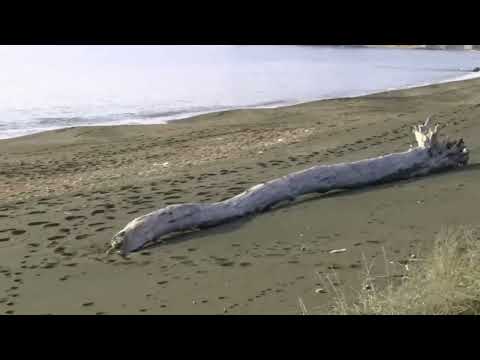
Le Sabbie Nere is the stretch of coast that runs south of Santa Severa Castle, in the territory of the Comune of Santa Marinella, and that extends to touch the edge of the Macchiatonda Nature Reserve. The name describes the thing precisely: here the sand is dark, ferrous, almost anthracite gray when wet, and changes color depending on the light and the surf. It's a piece of coast with no beach clubs, no kiosks, no showers and no rentals, and for exactly this reason it has become over the years the reference point for naturists on the coast north of Rome, the northern alternative to Capocotta. Whoever arrives here thinking they'll find an organized service makes a wasted trip. Whoever arrives knowing they bring everything from home, water included, finds one of the quietest and most spartan beaches in the province of Rome. In the lines that follow you'll find the practical information, the limits of what can honestly be said about the recognition of the naturist stretch, and the rules of behavior that matter more here than elsewhere, because next door there is a protected area and a dune that is ruined in one season and rebuilt in 10 years.
Where it is and how you really get there
The geography of this stretch is simple to read on a map and a little less so on the spot, because the landscape offers no obvious reference points once you've come down onto the beach. The fixed reference is only one, and it's the castle: a mass of dark stone planted on the waterline at kilometer 52.600 of State Road 1 (Via Aurelia). From there you look south, toward Rome, and you walk. The beach stretches low and regular, with no cliffs, no headlands, nothing that breaks the line. Behind it runs a band of low vegetation and then the countryside of the coastal plain, with the Monti Ceriti closing the horizon to the east. After a few kilometers you enter the zone belonging to the Macchiatonda reserve, whose official entrance is further back, at kilometer 49.900 of the same Aurelia.
By train: the FL5 line and Santa Severa station
The regional FL5 Roma-Civitavecchia line is the most comfortable way to arrive without a car. It leaves from Roma Termini, calls at Tuscolana, Ostiense, Trastevere, San Pietro and Aurelia inside the urban area, then heads out toward the coast with Maccarese Fregene, Torre in Pietra Palidoro, Palo Laziale, Ladispoli Cerveteri, Marina di Cerveteri, Santa Severa, Santa Marinella and finally Civitavecchia. The Santa Severa stop is the one you need: from the station forecourt you walk to the castle, and the stretch is within reach of anyone with decent legs and closed shoes, but it should be done with water in your backpack because along the road you don't find much in the middle hours. The timetables change with every seasonal change and should be checked the same day on the Trenitalia website: in summer extra runs are added on weekends, in winter some minor stops are skipped, and the difference between one train and the next on this line can mean half an hour of waiting in the sun.
The practical advice, for those coming from Rome for the day: take an early-morning train and head back before 18:00. The late-afternoon return trains on July and August weekends fill up, and whoever reaches the station an hour behind schedule risks traveling standing up with the wet towel on their shoulders.
By car: the Aurelia, the A12 and where to leave the car
From Rome the natural road is Via Aurelia, which you take from the Grande Raccordo Anulare and which then runs parallel to the sea for about 50 kilometers. Whoever prefers the motorway uses the A12 Roma-Civitavecchia and chooses the Santa Marinella toll gate, or the Cerveteri-Ladispoli one if arriving from the south and wanting to do the last stretch calmly on the Aurelia. In normal conditions from the Raccordo you arrive in a little under an hour. On Saturdays and Sundays in July and August, between 09:00 and 11:00 in the morning, the time stretches a lot and the queue forms exactly where the Aurelia narrows near the coastal towns.
Parking is the variable that ruins the most days. Around the castle and along the side streets that go down to the sea, parking is limited and in the warm months it runs out early. The regulated areas change from season to season and the rates should be read on the signs on the spot, because there is no stable price list to report. Whoever wants to play it safe leaves early, leaves the car and then walks: here the walk is part of the price of the ticket, and it's also the filter that keeps the stretch less crowded than it would otherwise be.
By bus and by bicycle
The Cotral intercity service runs on the Aurelia and links the coastal towns with each other and with Rome. The stops leave you on the state road, not on the sand, and the last stretch is done on foot anyway.
The bicycle works well on this coast, because the terrain is flat and the distances between one town and the next are contained. On the beach stretch itself, however, the bicycle should be left behind: pedaling on dry sand is tiring and pointless, and on the waterline you end up going where you shouldn't. You lock the bike where there are racks or posts in the castle area and continue on foot.

What the Sabbie Nere really are and why the sand is dark
The question always comes, usually after the first barefoot step at two in the afternoon: why is this sand black, and why is it so hot. The answer has to do with the geological history of northern Lazio. The whole coastal band from Ladispoli to Civitavecchia receives material eroded from the volcanic reliefs of the interior, that is, from the districts that built the Monti Sabatini, the Tolfa area and further north the Vulsini area. For millennia rivers and ditches have carried to the sea heavy minerals rich in iron and magnesium, which the currents then sorted and redistributed along the coast. The result is a dark, medium-grained sand, much heavier than the white, fine sand of the beaches of the Circeo or of Sperlonga.
This has two practical consequences worth knowing before leaving. The first is thermal: a dark sand absorbs more solar radiation than a light sand, and in the middle hours of July the surface becomes impossible to walk on barefoot. Flip-flops here are not a whim, they're equipment. The second is that dark sand, when the sea is rough, dirties the towel and the skin differently: it sticks, stays, and doesn't come off with a shake. Whoever is in the habit of rinsing off at the beach club shower has to change habits, because there are no showers, and the only solution is a jerrycan of water in the car.
A shallow beach, with no services and no lifeguards
The seabed drops gradually for a good stretch, then deepens. There are no outcropping rocks and no breakwater barriers on the free stretch, which makes the sea pleasant on calm days and less manageable on windy days. The point that must be said without beating around the bush: on this beach there is no lifeguard service. The free beaches of the Lazio coast do not have guaranteed swimmer assistance like the concessioned beach clubs, and on a stretch you reach only on foot, rescue, if needed, arrives in the time you can imagine. Whoever swims does so at their own responsibility, and on libeccio days it's simply better to stay on shore.
There are no cabins here, no umbrellas for rent, no bars, no stable chemical toilets and no refreshment points. There is no lighting. There is no permanent presence. This is the reason the stretch has kept its character and also the reason it should be approached with a minimum of organization: water, hat, sunscreen, an extra towel for shade, a bag to carry the trash back.
Where the naturist stretch begins and ends
This is the question that deserves the most honest answer of all, because it's the one on which the least reliable indications circulate online. Naturist practice on this coast is concentrated in the stretch that goes from the castle toward the south, that is, moving away from the built-up area of Santa Severa and approaching the edge of the Macchiatonda reserve. The real criterion, the one you observe on the spot, is the distance from the access points: in the first piece, the one closest to the castle and the convenient gaps, the attendance is mixed and mostly clothed. As you walk and the entrances thin out, the attendance becomes naturist.
Nobody will find a yellow line on the sand, a sign with coordinates or a fence. The boundary is given by use, shifts from season to season and also depends on the winter storms, which every year redraw the width of the beach and move the mouths of the paths. Whoever arrives for the first time should do one simple thing: walk, look, and take their cue from what they see. In practice you undress where you see other people doing it, and not before. The opposite is equally valid: if you arrive on the naturist stretch clothed, there is no obligation to undress, but it is appropriate not to plant your umbrella in the middle of those who have chosen differently, because coexistence here works precisely on mutual respect for distance.
The recognition: what can be said and what cannot
On the formal recognition of the stretch we need to be precise, because the difference between a beach recognized by administrative act and a beach with established naturist use is substantial. The naturist associations, in particular the Lazio branch of the Italian Naturists Union, have fought for years so that the coast north of Rome would have a naturist stretch equal to the one recognized on the southern coast, and in the associations' communication the Sabbie Nere stretch is presented as a naturist oasis. What you find on the spot is a long, stable and peaceful attendance, tolerated and widely known even to those who don't practice it.
What cannot be reported with certainty, instead, is the text, the date and the boundaries of a municipal act that delimits the stretch with exact measurements. The author is not in a position to cite a provision with number and protocol, and prefers to say so openly rather than report a piece of data that then turns out to be wrong under a check. The practical consequence for the visitor is only one and doesn't change the day much: here naturism is an established custom, not a line drawn on the map, and the prudence of undressing only where the practice is visibly under way remains the right behavior. Whoever wants administrative certainty finds it instead at Capocotta, on the Rome coast, where the recognition of the naturist sector dates to 1999 and is the first case in Italy on a free beach.
A stretch that defended itself
The story of this piece of coast is a story of patience. For decades naturist attendance continued without fuss, on a stretch that interested nobody else because it was far from parking lots and without commercial attractions. When the coast north of Rome began to be more frequented, the community that came here organized itself so as not to lose the stretch: sit-ins, letters to the administrations, constant presence in the warm months, volunteer cleaning of the beach. This is the meaning of the phrase you hear repeated on the spot, namely that they kept the beach themselves. Whoever arrives today finds a place better cared for than the total absence of services would lead you to suppose, and the credit goes to that continuity.
The rules of behavior and why they exist
The rules of a naturist beach are not a liturgy, they are the minimum needed for the place to keep existing. Whoever respects them doesn't even notice. Whoever ignores them ruins the day for everyone and, in the medium term, puts at risk the tolerance that holds up the whole situation. I list them in a dry way, because that's how they should be read.
Photographs
Photographing or filming people without their consent is forbidden. It's not a matter of etiquette: the dissemination of images of identifiable people without their consent is a violation of the personal data protection law, and non-consensual filming in a context like this can have criminal consequences. On the naturist stretch the practical rule is even simpler: the camera and the phone stay in the backpack, and if you want to photograph the landscape you do it when no one enters the frame, or framing only the sea and the dune. Whoever is caught filming others is asked to leave, and it makes sense that it is so.
Mutual respect and distance
The distance between towels is the only form of manners that counts on a free beach. You don't settle a meter from someone who was already there, you don't keep music on, you don't shout. The insistent stare is the thing that bothers most and is also the easiest to avoid. The right register is that of normality: here nudity is an ordinary condition and not an event, and treating it as such is exactly what makes the place livable even for families and for people on their own.
Anyone who is not comfortable
The stretch is open and free, so it happens that someone ends up there by chance. If it happens, the solution is trivial: keep walking or turn back toward the mixed stretch. Nobody is required to undress and nobody is required to stay. In the same way, whoever frequents the naturist stretch has no standing to make their choice weigh on those who stay clothed. Coexistence on the free beaches of Lazio has held for years precisely because this reciprocity is taken for granted.
Trash, cigarette butts and fire
There are no trash cans and no collection service on the beach. Everything you bring, you take back, cigarette butts included, and the butt is the most widespread and most harmful waste on this type of beach. Fires and barbecues on the sand must not be lit: besides the ban, behind the waterline there is dry vegetation for a good part of the summer and the risk of ignition is real, all the more in an area adjacent to a nature reserve. Whoever brings a dog picks up, always, and keeps it on a leash in the dune zone.
A curiosity about the Naturist Oasis “Le Sabbie Nere” of Macchiatonda - Santa Severa
The curiosity concerns the color, and goes beyond the geological fact. If you take a handful of this sand and pass it under a magnet, a part of the grains stays attached. They are the ferromagnesian minerals brought here by the erosion of the volcanic reliefs of the interior and concentrated by the currents along the northern coastal band of Lazio. It's an experiment that children find irresistible and that explains in 10 seconds why this beach looks like none of the light beaches you see further south.
The second part of the curiosity is that the color is not constant. After a storm surge the sea reshuffles the layers and the surface can look lighter, because the light material is redeposited on top of the heavy, after a few days of wind and selective backwash the surface goes dark again. In the first hours of the morning, with the sand still damp, the stretch looks almost black and reflects the light like a slab. At noon, dry, it turns iron gray. Regulars recognize where they are precisely from these shades, and it's not a figure of speech: on a beach with no vertical reference points the color of the sand becomes a map.
The dune, the vegetation and the Macchiatonda reserve next door
Behind the waterline runs a band of dry sand and then a low, discontinuous dune, partly eroded by storm surges and by trampling. On this type of dune grows a specialized vegetation that took centuries to fine-tune itself and that is destroyed in a season. The species most easily recognized are the sand couch grass, which with its rhizomes holds the sand and materially builds the relief, the sea rocket, the sea holly with its spiny, bluish leaves, and above all the sea daffodil, which blooms between the end of July and August with a white flower of strong fragrance. Seeing it in bloom on a frequented stretch is a good sign: it means those who pass by walk where they should.
Why you don't walk on the dune
The rule is only one and is easy to respect: you cross the dune band only on the paths already marked, in single file, without opening shortcuts and without sitting on the relief. The reason is mechanical before it is regulatory. Psammophilous plants hold the sand with superficial roots and rhizomes. Trampling breaks them, the sand is no longer held, the wind opens a gap and the next storm surge enters through that gap carrying the relief away. A new path opened in August becomes an erosion channel by November. Rebuilding that piece of dune takes years, and in many points of the Lazio coast it simply no longer gets rebuilt.
There is also a reason that concerns animals. On the beaches of the Lazio coast the Kentish plover nests on the ground, a small wader that lays in a simple depression in the sand, between spring and the beginning of summer. The nest is practically invisible and there's no way to notice it until you've already ruined it. For this reason in the nesting months it's best to stay on the damp band near the sea and leave in peace everything that is higher up, as well as keeping dogs on a leash where the dune is alive.
The Macchiatonda Nature Reserve
The stretch borders to the south the Macchiatonda Regional Nature Reserve, established in 1983 with regional law no. 54 of July 23, 1983 and covering about 244 hectares, entirely in the territory of the Comune of Santa Marinella. It's one of the few coastal wetlands to have survived on the plain north of Rome: a system of marshes, flooded meadows, canals and scrub that preserves a fragment of what the landscape of the coastal band was before the land reclamations. The reserve works as a stopover area for migratory birdlife, which finds fresh water, food and shelter there along the route toward the nesting sites. For this reason the most interesting period for a visit is not summer but the migration season, between autumn and spring.
The entrance to the reserve is at kilometer 49.900 of State Road 1 (Via Aurelia). The main routes are the Sentiero del Boschetto, the Strada Idrovora, the Sentiero della spiaggia, the Sentiero dei capanni and the access road. The hides serve for bird observation and should be used as hides are used, that is, in silence. Opening to the public is regulated and provides dedicated days and time slots, with guided visits organized mainly on weekends and in the summer period. The reference for hours, reservations and activities is the Lazio Region park ranger service, and conditions should be confirmed before turning up because they change from season to season and on the occasion of works or protection needs.
The point to keep in mind for those going to the beach: the protected area and the free beach are two different things, with different rules. You don't enter the reserve from the beach as if it were the continuation of the walk, you don't access it outside the scheduled hours and routes, and you don't bring the dog off leash into the protected areas. The adjacency of a naturist stretch and a nature reserve is a rare piece of luck on the Roman coast, and it's also a responsibility: it takes little for it to become a problem for both.

One thing nobody tells you about the Naturist Oasis “Le Sabbie Nere” of Macchiatonda - Santa Severa
The thing that is never written is that the real problem of this beach is not finding it, it's walking back in the early afternoon. The stretch is reached with a walk on the sand, and on dry, dark sand, at noon in July, that walk weighs twice what it weighed in the morning. The people you see in trouble on this coast are not the ones who swim too far out, they're the ones who underestimated the return: little water, no hat, no flip-flops, and a good kilometer to redo with the sun overhead and without a meter of shade.
The operational consequence is that here water is calculated the way you calculate it on a hike, not the way you calculate it at a beach club. A liter and a half per person for a whole day is the minimum, two if you stay past 16:00 and if you walked on the way out. Whoever has a car leaves a jerrycan in the trunk and thanks themselves on the way back. Whoever arrives by train factors in that the last piece toward the station is done on hot asphalt.
The second thing that is not said: the wind changes everything
This stretch of coast is exposed and has no shelter. With the westerly and with the libeccio the sea rises quickly and the dark sand, lifted by the wind, becomes a serious nuisance: it gets everywhere, lashes the legs, makes any towel useless. With the mistral the sea stays more orderly but the air cools even in midsummer. Reading the wind, the evening before, is worth more than any generic forecast of good weather: a sunny day with a stiff wind here is a wasted day, while an overcast day without wind can be excellent.
Then there is the topic of the winter storm surges, which doesn't concern those who come to swim but concerns those who have known the place for years. The beach changes width from one winter to the next, the access paths move, and in some points the dune retreats. Whoever returns after a few seasons finds a beach that doesn't match the memory, and is surprised by it. In reality it's the normal behavior of a sandy coast without defense works, and it's also the reason why here the dune is worth as much as a dike.
The third: solitude is not guaranteed
It must be said because it avoids disappointment. On July and August weekends even this stretch fills up, especially in the band closest to the access points. Whoever is looking for absolute silence has to come during the week, or early in the morning, or in the intermediate seasons: May, June and September are the months when this beach gives its best, with water still acceptable in September and temperatures that make the walk a stroll instead of an ordeal.
My advice for visiting the Naturist Oasis “Le Sabbie Nere” of Macchiatonda - Santa Severa
The advice is to build the day in two parts, and not to treat the beach as the only goal. Arrive early, sea and sun in the good hours, then head back toward the castle in the early afternoon and visit the cultural side when the sun is still high and the sand is unlivable. You can go back to the beach around 17:00, when the light lowers and the stretch becomes the most beautiful thing of the day. This scheme solves the heat problem, fills the hole of the middle hours and gives you a complete outing instead of six hours stretched out on a towel.
What to put in the backpack
Water in quantity, as said. Hat. High-protection sunscreen, and here a warning that matters more on a naturist beach than elsewhere: the areas of skin that are usually covered have no habit of sun and burn in very short times, so the protection should be applied before arriving and reapplied after every swim, without forgetting the feet. A big towel and a second towel or a sarong to use as improvised shade. Flip-flops or closed sandals for the scorching sand. A bag for trash. A minimal kit for small emergencies, because here there is no pharmacy 50 meters away. Small-change cash for parking, if you use a paid area.
What to leave at home
The Bluetooth speaker, first of all. On a free and silent beach one person's music is the noise of 30 people. The drone, because flying over a frequented beach that is also adjacent to a protected area is wrong on every level, and on a naturist beach it's simply unacceptable. The camera with the telephoto lens, which has no legitimate function in this context. Glass, which breaks in the sand and stays there for years. And the big inflatable, which with the wind on this coast ends up out at sea sooner than you'd think.
How to handle the first time
Whoever has never frequented a naturist beach tends to load the moment with meanings it doesn't have. The practical advice is to arrive, settle in, take a swim and take your cue without hurry. There is no obligation and no threshold to cross, and nobody looks at who arrives. If you feel uncomfortable you get dressed and stay anyway. If you feel at ease you undress and nothing in particular happens. The sense of normality you breathe here is exactly the point: it's a beach, not an event.
Services, free beach and dog area: how it really works
The picture of services sums up in one line: there are none on the naturist stretch. No beach club, no kiosk, no shower, no rental of umbrellas and loungers, no toilet. It's a choice in fact, tied to the conformation of the place and the distance from the vehicle access points, and it's also what has allowed the stretch to remain what it is. Services are found instead in the northern part, toward the built-up area and toward the castle, where the beach is equipped in a conventional way and where concessions and free gaps alternate.
The state property, the concessions and the gaps
Like all Italian maritime shoreline, this coast too is public state property. The beach clubs operate under concession on delimited portions, while the free stretches remain accessible to everyone. The waterline can always be walked. This means you can walk from north to south along the shore even passing in front of the concessions, as long as you stay on the wet band and don't occupy the conceded space. The access gaps to the sea must be maintained and signposted, and that's where you should go down when you arrive from the road.
A warning on swimming: the quality of the waters is checked by the competent bodies and the results are published on the dedicated regional and ministerial portals. It makes no sense to report a fixed judgment here, because a fixed judgment does not exist: after heavy rains and in the days following a significant weather event, on any stretch of coast it's best simply to check before swimming. Whoever wants the official figure looks it up on the bathing waters portal, and that is the only reliable reference.
The dog area
On the Santa Marinella coast, an area dedicated to dogs, the so-called Bau Beach, is set up in the bathing season, which allows you to bring the animal to the beach in an equipped and regulated space. The location, management and access conditions are defined season by season and are not a stable piece of data to report: whoever travels with a dog does well to check before leaving where it is opened that year and with what rules. On the actual naturist stretch the dog is brought with common sense, on a leash in the dune band, always picking up, and bearing in mind that in the areas adjacent to the reserve the presence of a free animal disturbs the fauna that nests on the ground.
Accessibility
It must be said clearly, because it's information that is needed: the naturist stretch is not accessible to those with mobility difficulties. You arrive only by walking on dry, deep sand, for a distance that is not trivial, without boardwalks and without support points. Whoever needs equipped routes finds better conditions in the northern part of the coast, where some concessioned facilities provide boardwalks and dedicated services, in ways that vary from one beach club to another and that must be asked about directly.
Another well-known fact, yet rarely cited
The well-known fact is that this piece of coast has never been a periphery. A few hundred meters north of the stretch, under and around the castle, is the archaeological area of Pyrgi, which in antiquity was one of the ports of the powerful Etruscan city of Caere, that is, of today's Cerveteri. Pyrgi was not just any landing: it hosted a sanctuary of international importance, frequented by merchants and sailors from all over the Mediterranean, and its fame was such as to attract even those who wanted to plunder it.
The find that made the site famous among scholars all over the world is that of the gold sheets, brought to light in 1964 during the excavations conducted by the University of Rome under the direction of Massimo Pallottino. They are three inscribed sheets, two in Etruscan and one in Phoenician, which document a dedication to the female deity venerated in the sanctuary, identified as Uni in the Etruscan world and as Astarte in the Phoenician-Punic one, by Thefarie Velianas, the figure who ruled Caere at that moment. The value of the document is twofold: on one hand it attests direct political and commercial relations between the Etruscans and the Punic world, on the other it gives scholars a bilingual text that has helped research on the Etruscan language. The sheets are kept in Rome, at the National Etruscan Museum of Villa Giulia, and whoever visits the castle and then sees them at the museum puts together the two pieces of the same story.
The thing that is rarely cited is the continuity. Between the Etruscan sanctuary, the Roman colony that settled there, the medieval watchtower, the village that grew around it and the beach you walk barefoot today there is no break: it's the same place, used in different ways for 25 centuries. Walking south knowing this changes the tone of the walk, and it applies even to those who came only for the sea.
The right photo to take at the Naturist Oasis “Le Sabbie Nere” of Macchiatonda - Santa Severa
Before the photograph, the rule that comes before all others: here you don't photograph people. None, ever, without explicit consent, and on the naturist stretch not even with consent if third parties end up in the frame. That said, the landscape of this coast is generous and the right photograph exists.
The photograph to take home is made at the water's edge, first thing in the morning or in the last hour of light, holding the camera low and making use of the film of water that stays on the sand after the wave. Wet dark sand behaves like a mirror: it reflects the sky, and in that moment the color of the stretch becomes evident even to those who look at the photograph without ever having been there. The strong subject is the contrast between the dark, reflective slab of the waterline and the white of the foam.
The composition with the castle
The second photograph is the classic one: the profile of the castle closing the frame to the north, seen from the free stretch with the beach in the foreground and the line of the shore guiding the eye. It works best in the late afternoon, when the light comes from behind the shoulders of whoever looks north and the castle takes on a warm color. If you choose the morning instead, the castle stays backlit and the result is a silhouette, which is still a good image but is a different photograph.
The dune, the flowers and the birds
The third photograph is the one almost nobody takes: the detail of the dune. The sea daffodil in bloom between the end of July and August on black sand is a subject worth the trip, and it's photographed from the path, kneeling on the already trodden passage, without putting a foot on the vegetation. Toward the reserve, in the migration seasons, the observation hides allow images of birdlife that you would never get on the beach. There too the rules of the reserve apply, that is, silence, routes and hours. The drone, I repeat it because it's the point people are most stubborn about, is not used here.

Some important events that happened here in history
The sequence of this piece of coast is long and worth putting in order, because it helps understand what you are crossing as you walk.
The sanctuary of Pyrgi
Between the sixth and fifth centuries BC Pyrgi was the maritime port of Caere and hosted a large sanctuary complex overlooking the sea. The port served the trade that linked southern Etruria with Greece, with Magna Graecia and with the Phoenician-Punic world. The sanctuary was the place where those relations were sealed on the religious and political level too. The dedications to Uni and Astarte document precisely this double cultural belonging.
The plundering of 384 BC
In 384 BC Dionysius the Elder, tyrant of Syracuse, led a naval expedition against the sanctuary of Pyrgi and plundered its treasure. The episode is recorded by the ancient sources and is one of the few dated events that directly concern this stretch of coast. It also tells how rich a place was that today is crossed without a thought. After that blow the sanctuary never returned to its former splendor.
The Roman colony and the road
With the expansion of Rome toward the Tyrrhenian coast the site became a Roman colony, inserted in the system of coastal garrisons, and the passage of Via Aurelia consolidated the role of the area as a junction between the sea and the interior. The road you still travel today to get here follows that route, and it's the reason why the Aurelia's kilometer markers remain the most precise way to indicate the access points on this coast.
The village, the tower and the name
In the Middle Ages a fortified settlement formed on the ancient port area, with a watchtower overlooking the sea and a village gathered inside the walls. The name of the place is tied to the memory of the martyr Severa, venerated on this stretch of coast, and the complex preserves layered religious evidence: an early Christian church, a baptistery and the church dedicated to Santa Maria Assunta. The tower, called Saracena, recalls the season of raids from the sea that for centuries marked the life of the coastal villages of Lazio.
The recovery of the castle and the museums
The complex is today a public cultural hub, run in collaboration between the Lazio Region, LAZIOcrea and the Comune of Santa Marinella, with the archaeological oversight of the competent soprintendenza. The recovery of the village and the opening to the public of the museum spaces are the result of long work, concluded in the second half of the 2010s. Inside you can visit the Castle Museum, the Museum of the Sea and Ancient Navigation, the Territory Museum and the Antiquarium, as well as the archaeological area. The village also hosts a hostel. Hours and tickets change with the season and should be checked on the castle's official website before leaving.
The establishment of the Macchiatonda reserve
In 1983, with regional law no. 54 of July 23, the Lazio Region established the Macchiatonda Nature Reserve on about 244 hectares of coastal wetland in the territory of Santa Marinella. It was a decisive act, because in those years the coastal plain north of Rome was under heavy building and agricultural pressure, and that portion of marshes and flooded meadows risked disappearing as almost all the rest had already disappeared. The protection of the reserve is also the reason why the adjacent beach stretch has kept a bare, little-built character.
1999 and the precedent of Capocotta
In 1999 the naturist sector of the beach of Capocotta, on the Roman coast, obtained the recognition that made it the first Italian free beach where the practice of naturism was explicitly admitted. It's the event that opened the way for everything else, including the claims for the coast north of the capital, and for this reason it should be cited even when speaking of the Sabbie Nere: without that precedent, the story of this stretch would have been different.
Who has passed through the Naturist Oasis “Le Sabbie Nere” of Macchiatonda - Santa Severa
Here it's best to be sincere: there is no list of celebrities tied to this stretch of beach, and whoever proposes one is making it up. The people who truly left a mark in this place are others, and they're more interesting.
The Etruscans, the merchants and the sailors
The first to pass through here in a systematic way were the crews who landed at Pyrgi. Etruscan, Greek and Phoenician merchants, sailors, pilgrims bound for the sanctuary: for a few centuries this strip of dark sand was a place of arrival and departure, and the trade that passed through it linked southern Etruria to the rest of the Mediterranean. The treasure that Dionysius of Syracuse came to take in 384 BC had been built up thanks to them.
Massimo Pallottino and the archaeologists
Massimo Pallottino, among the greatest Etruscologists of the 20th century, directed the excavation campaigns that in 1964 brought the gold sheets to light. Generations of students and researchers from the Roman university worked with him, and the site of Pyrgi is still a reference in international Etruscological studies. Whoever walks on this beach passes a short distance from the point where one of the most important documents of Italian archaeology of the last century was found.
The naturists who held the stretch
The third category is the one that concerns most closely the present character of the place: the people who for decades have frequented this beach and who, through the naturist associations and in particular the Lazio branch of the Italian Naturists Union, asked the administrations for recognition of the stretch and defended its continuity. They are not names known to the general public, but without their constant presence, their volunteer cleaning of the beach and their ability to keep correct behavior for years, this piece of coast would today be indistinguishable from any other.
The volunteers and park rangers of Macchiatonda
Finally there are the ornithologists, the volunteers and the staff of the reserve, who for 40 years have been counting the birds, maintaining the hides, accompanying school groups and keeping alive a fragment of wetland that elsewhere has been wiped out. It's the kind of work that doesn't end up in the newspapers and that nevertheless decides whether in 20 years there will still be something to look at here.
When to go and when it's best to avoid the stretch
The short answer: from mid-May to the end of June and all of September. The long answer requires a few more lines, because on a beach with no shade and no services the choice of period weighs more than elsewhere.
Spring
April and May are the months when this coast shows itself in its best version from the point of view of landscape: the dune is green, the vegetation blooms, the beach is wide because the winter storm surges have just finished their work, and the Macchiatonda reserve hosts the passage of migrants. The water is still cold for most people, but for walking and for photographing there is no better period. It's also the season in which ground nesting makes it more important than ever to stay on the routes and near the waterline.
Summer
July and August are the months when the stretch works worst, and not because of the sea. The heat on the dark sand is severe, the absence of shade becomes a real problem, parking runs out and on weekends the part near the access points gets crowded. Whoever can choose comes during the week, arrives by 09:00 in the morning and leaves the stretch in the middle hours. Whoever can't choose organizes with water, a towel for shade and a precise plan for the return, which is the part of the day that is always underestimated.
September and autumn
September is the month I recommend to anyone who asks me. The water is at its warmest, attendance drops sharply after the first week, the late-afternoon light is the best of the year and the walk on the sand goes back to being a stroll. In October and November the sea becomes a thing for the few, but the stretch remains excellent for walking, and the reserve enters the season in which waterbird observation gives its best results.
Winter
In winter almost nobody comes here, and it's a shame. With a heavy sea the spectacle is remarkable, the wet dark sand becomes a reflective surface worth the photograph of the year, and the castle in the background under a heavy sky is an image you don't get in summer. You come dressed warmly, with closed shoes, and you keep your distance from the waterline on storm-surge days, because waves on a low beach reach much higher than it seems.
The days to avoid
Days with a stiff wind from the west or the libeccio: sand in your face and an unusable sea. Days immediately following heavy rains, for the reasons given about swimming. The August long weekends, if you're looking for tranquility. And the hours between 12:00 and 16:00 in midsummer, on any day, because it's the moment when this beach gives its worst and when the small troubles happen that are later told as stories.
What there is around the Sabbie Nere
The naturist stretch alone fills half a day. Around it, however, there is enough to build a whole weekend, and it's worth knowing so as not to reduce the trip to a single beach.
The castle and the village
The Santa Severa Castle is the natural visit, and it's done in exactly the hours when the beach is unlivable. Inside the walls you tour the village, the churches, the tower, the archaeological area and the museums, including the Museum of the Sea and Ancient Navigation, which is the one that interests most those arriving from the beach. Hours, rates and closing days should be checked on the castle's official website, because they change with the season and with events.
The equipped beach and the nearby towns
The beach of Santa Severa in its northern part offers beach clubs, kiosks and services for those who with small children need support. A little further on is Santa Marinella, with its seafront and its coves, while to the south the coast continues with Ladispoli and the Bosco di Palo. To the north you reach Civitavecchia in a short time, which is the big cruise port of Lazio and which, for those disembarking from a ship, makes this stretch of coast reachable in a morning.
The Etruscan hinterland
Behind the coast begins southern Etruria, which is one of the territories densest in history in Italy. At Cerveteri you visit the Necropolis of the Banditaccia, the city of the dead of ancient Caere, that is, of the same city to which the port of Pyrgi belonged: it's the logical continuation of the day for those who have become passionate about the gold sheets. Further north you reach Tarquinia, with the painted tombs, and further still Vulci. Toward the interior rise the Monti della Tolfa, with the village of Tolfa and with Allumiere, where the landscape changes completely in half an hour by car. Whoever has an extra day goes down toward Lake Bracciano.
The other naturist beaches of Lazio
Whoever looks for alternatives on the Lazio coast has two main references besides this one. The first is the Naturist Oasis of Capocotta, on the Roman coast, which since 1999 has been the first Italian free beach with explicit recognition of naturist practice and which sits inside a protected dune setting. The second is the Arenauta beach at Gaeta, also known as the Beach of the 100 Steps for the staircase that links it to the road, with a traditional naturist attendance of long standing. Among the three, the Sabbie Nere are the most spartan and the quietest stretch. Capocotta is the most organized and the most accessible from Rome. The Arenauta is the most scenic and the hardest to reach.
Quick questions about the Sabbie Nere and the naturist stretch
Is naturism allowed here?
The practice appears established and peaceful for decades on the stretch south of the castle, toward the reserve, and is known to the associations and to the local community. An administrative act with measured boundaries, however, is not a piece of data that can be cited with certainty, and the difference should be known: the recognition here is de facto, not formalized in a publicly documentable way. The prudent rule remains to undress only where the practice is visibly under way.
Where exactly does the naturist stretch begin?
There is no marked boundary. You walk south from the castle and the attendance changes gradually as you move away from the access points. The criterion is observation, not the map.
Are there beach clubs, toilets or showers?
No. On the naturist stretch there are no services of any kind, and no lifeguard service. Services are found in the northern part of the coast, toward the built-up area.
Can you take photographs?
Only of the landscape, and only when no people end up in the frame. Photographing or filming anyone without consent is forbidden and can have serious consequences. Drones are not allowed.
Can you bring a dog?
With common sense and on a leash in the dune strip, always picking up after it. For the equipped dog area on the shoreline, location and rules are set each season and should be checked before you leave.
Is it suitable for children?
The shallow seabed helps, but the walking distance, the lack of shade and the scorching sand make this stretch impractical with small children in midsummer. For a family day, the equipped part to the north is more manageable.
When is the best time to come?
From mid-May to the end of June and all of September, ideally on weekdays and in the early morning. July and August are the worst months for heat, parking and crowds.
Frequently asked questions about the Naturist Oasis “Le Sabbie Nere” in Macchiatonda, Santa Severa
Where are the Sabbie Nere of Macchiatonda?
The Sabbie Nere of Macchiatonda are on the Santa Severa shoreline, along State Road 1 Via Aurelia, with Santa Severa castle, at kilometer 52.600, as a fixed point of reference. From the castle you look south, toward Rome, and walk along the beach in the direction of the Macchiatonda reserve.
Why is the sand on this beach black?
The sand at the Sabbie Nere of Macchiatonda is dark because the whole coastal strip from Ladispoli to Civitavecchia receives material eroded from the volcanic highlands of the interior, that is, from the districts that built the Sabatini Mountains. Some of the grains are made of ferromagnesian minerals, so much so that they stick to a magnet run over the sand.
Is naturism allowed at the Sabbie Nere of Santa Severa?
Naturist practice has been established and undisputed for decades on the stretch south of Santa Severa castle, toward the Macchiatonda reserve, and is known to the associations and the local community. It is not, however, an administrative act with measured and formalized boundaries: the recognition is de facto, not publicly documented with precision.
Are there services, beach clubs or showers on the naturist stretch?
No, there are no services on the naturist stretch of the Sabbie Nere of Macchiatonda: no beach club, no kiosk, no showers, no umbrella and lounger rental, no restrooms. Services are instead in the north part of the shoreline, toward the village of Santa Severa.
Can you take photos at the Sabbie Nere?
On the naturist stretch of the Sabbie Nere of Macchiatonda you do not photograph people: photographing or filming anyone without explicit consent is not allowed, and the rule applies even if the main subject is someone else who appears by chance in the frame. The landscape of the coast, on the other hand, can be photographed freely, best early in the morning or in the last hour of light.
What is the best time to go to the Sabbie Nere?
The recommended period to visit the Sabbie Nere of Macchiatonda runs from mid-May to the end of June and all of September. April and May are the months when the shoreline shows its best side from a landscape point of view, with the green dune and the wide beach.
What is near the Sabbie Nere of Macchiatonda?
Near the Sabbie Nere of Macchiatonda, a few hundred meters north of the stretch, below and around Santa Severa castle, is the archaeological area of Pyrgi, one of the ports of the ancient Etruscan city of Caere, present-day Cerveteri, which housed a sanctuary of international importance.
Planning your day
Anyone who wants to build a complete itinerary on the coast north of Rome, combining the sea, the castle and inland Etruria, will find guides and accompanying services at Tour Leader Pro, while for planning a wider trip in Italy the reference is ItalyPlanner.