Matemù Cies, G+R Di muri abbattuti e cuori aperti at Centrale Preneste Teatro, November 28, 2026
In short. G+R by Matemù, Di muri abbattuti e cuori aperti, the show by the young people of Matemù Cies inspired by Romeo and Juliet, is on Saturday, November 28, 2026, at 21:00 at Centrale Preneste Teatro, Via Alberto da Giussano 58, in the…
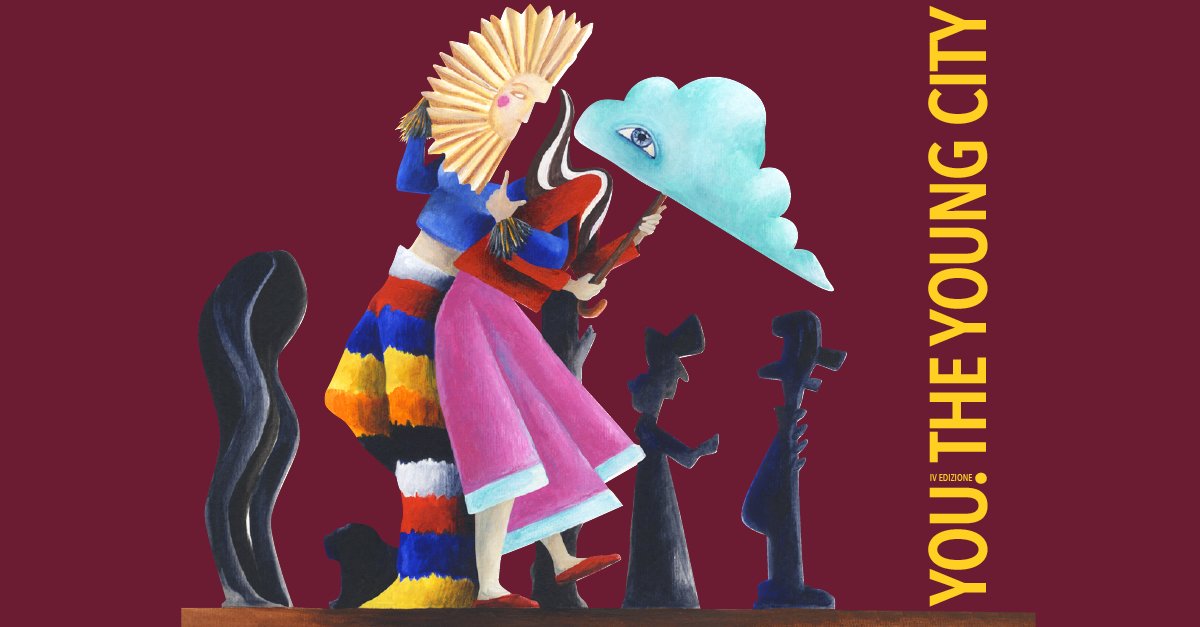
G+R by Matemù, Di muri abbattuti e cuori aperti, the show by the young people of Matemù Cies inspired by Romeo and Juliet, is on Saturday, November 28, 2026, at 21:00 at Centrale Preneste Teatro, Via Alberto da Giussano 58, in the Prenestina area of eastern Rome (Municipio V). It's the closing night of the fourth edition of YOU THE YOUng CITY. Admission is free with mandatory online booking on the official website of Centrale Preneste Teatro or by writing to info@ruotalibera.eu. On the evening itself you get in directly only if seats are left. You get there on metro C, Pigneto or Malatesta stops, on trams 5, 14 and 19, Prenestina/Giussano stop, and on buses 81, 112, 113, 213, 312, 409 and 545. For information the theater answers at 06 27801063.
Language: a performance based on dance, music or visual acts; no English version is announced, any spoken parts are in Italian.
50 young women and men, a Shakespeare tragedy, a simple and dizzying question: what is love for you? G+R is a show of music, singing, rap and breakdance born in the theater workshop of Matemù, the free youth center in Esquilino, directed by Bartolini and Baronio, with texts written by the participants themselves. It's not amateur theater in the strict sense of the term, and it's not a professional show like the others either: it's the story of a young and mixed city, which takes the words of Romeo and Juliet and puts them next to its own.
G+R, Di muri abbattuti e cuori aperti: the show
G+R, Di muri abbattuti e cuori aperti is a show of dance, music and singing inspired by William Shakespeare's Romeo and Juliet, with texts written by the 50 participants of the Matemù Cies theater workshop and directed by Bartolini and Baronio.
The title
The two initials in G+R clearly refer to Giulietta and Romeo, in reverse order compared to Shakespeare's title. It's a detail that says a lot: the girl comes first, and the story is seen from another angle. The subtitle, Di muri abbattuti e cuori aperti (Of walls torn down and open hearts), makes the rest clear. Verona was divided between Montagues and Capulets. The world of these young people is divided by other walls, and the show dreams of tearing them down.
A question as a method
The official presentation says the work started from a question, what is love for you, which guided the young people's search through conflicts, fears, dreams, identities and rebellions. The group questioned love with joy and freedom, looking for hidden voices, gestures and stories. The result is a collective dramaturgy, in which Shakespeare's words intertwine with those written by the participants.
The words of bell hooks
Among the sources of the work is the American writer and activist bell hooks, from whose pages, the company says, the young people learned that without justice there can be no love. It's a strong idea to put next to Romeo and Juliet: the tragedy of Verona comes from hatred between families, that is, from an injustice that neither of the two lovers chose.
Music, rap, breakdance
The language of the stage is the young people's own: music, singing, rap, breakdance. The cultural portal of Roma Capitale lists the show among the under-35 dance, music and singing events. Anyone expecting a Romeo and Juliet in costume will find something else, and would do well to let themselves be carried along.
Love as an act of resistance
Matemù's show proposes love as an act of resistance, art and truth, in a time that, the young people write, seems to deny it.
A world without walls
The young people's G+R dreams of a world without walls, where love is freedom and possibility. It's an idea that has a concrete meaning at Matemù: the center welcomes young people who have arrived from every part of the world and from every neighborhood of Rome, and for many of them walls aren't a metaphor but documents, borders, family distances.
The lighthouse in the storm
The presentation ends with an image: love as a lighthouse that towers over the storm and never wavers. It's an image that recalls Shakespeare, who in Sonnet 116 describes love exactly like that, as a fixed mark that looks on storms without being shaken. If you know the sonnet you'll recognize the quotation. If you don't, you have a reason to go and read it before going into the hall.
Who Matemù is: the Esquilino youth center
MaTeMù is the youth space and art school created and run by CIES ETS and housed in the premises of Municipio Roma I, at Via Vittorio Amedeo II 14, in the Esquilino district, between Piazza Vittorio and Termini station. It's completely free and open to young people between 10 and 25.
A name and a story
The center was founded in 2010 as a CIES project and takes its name from Maria Teresa Mungo, one of the founders of the organization, who dreamed of creating a popular, inclusive school in Rome and who died without managing to make it happen. The first syllables of her name, Ma, Te, Mu, became the name of the center. Then, the staff say, the first young people who arrived revealed that Matemu is also the name of an African mask, a symbol of prosperity.
The numbers
Every day MaTeMù welcomes about 60 young people. Since 2010 more than 10,000 young women and men have attended it. The center offers workshops in music, singing, rap, theater and dance, but also school support, psychological support, study and career guidance, and an Italian school for foreigners.
Art and services together
The most interesting choice in the method is running art and services at the same time. The staff saw that the young people in the greatest difficulty didn't sign up for the art courses, even though they were free, because they thought they weren't for them. So the support services take place at the same times as the workshops, and some music rooms are transparent: those who come in for a document or for help with studying meet, simply by being close, those who play or act. It's an idea of education that you understand better by seeing a show like this one.
The educational roots
The center states its references: the intercultural education of CIES, with the figure of the mediator. Paulo Freire's pedagogy of the oppressed. The work against school dropout of the Maestri di Strada in Naples. The pedagogy of expression developed at Università Roma Tre. The art education of Projeto Axé, an organization founded in 1990 in Salvador da Bahia, Brazil, where part of the staff has worked.
Matemusik Band & Crew
Over the years Matemusik Band & Crew was born inside Matemù, a group of young women and men from all over the world, musicians, rappers, breakdancers and actors, who perform in concerts, events and shows. That's the breeding ground the energy of G+R comes from.
CIES
CIES, the nonprofit organization that runs the center, has been working for about 40 years on intercultural education and mediation. Matemù is part of the Rete delle Scuole Migranti and the Rete delle Scuole Popolari di Roma. The center is funded by CIES and hosted by Municipio I: all activities, including the workshops this show comes from, are free.
The direction and the workshop
G+R is directed by Bartolini and Baronio, who led the Matemù theater workshop. The texts are written by the young women and men who took part in it, 50 in all.
50 on stage
50 participants is a huge number for a neighborhood stage. It means a directing job made of choruses, group movements, continuous entrances and exits, single voices emerging from a mass. It's a form of theater with a long tradition, from social theater to large community shows, and it lives on the energy of bodies more than on the perfection of details.
Collective writing
The texts written by the young people are the most precious part. In a workshop like Matemù's, where young Italians, children of immigrants and young people who arrived alone meet, the answer to the question about love changes depending on the language, the family, the road traveled to get to Rome. Shakespeare becomes the common point from which each person starts to say something about themselves.
YOU THE YOUng CITY: the closing night
G+R is the last of the 12 free events of the fourth edition of YOU THE YOUng CITY, the series directed by Tiziana Lucattini at Centrale Preneste Teatro from September 13 to November 28, 2026.
The series
YOU THE YOUng CITY offers theater, dance, music, social circus and training activities for a young, intergenerational and inclusive community. For more than two months the theater becomes a space of shared creation where emerging under-35 artists and leading figures of the contemporary scene meet in shows, residencies, workshops and moments of discussion open to the public.
The autumn calendar
The series opened on September 13 with the contemporary circus and tightrope walking of Los Filonautas. Then, among others, La Pietra Parla with Se verrà la guerra tutti giù per terra on October 2, Baléni by Francesca Pica on October 9, Mi ricordo by Barbe à Papa Teatro on the 17th, Menù del giorno by Compagnia Bellavita on the 24th, Qui vivremo bene by Dopolavoro Stadera and Argot Produzioni on November 13. Closing with 50 young people on stage is a choice that says everything about the meaning of the series.
Who supports it
The project is carried out with the support of the Ministry of Culture, Directorate General for Performing Arts, and won the public call Lo spettacolo dal vivo fuori dal Centro, year 2026, promoted by Roma Capitale with the Department of Culture, in collaboration with SIAE. It's thanks to this funding line that the evening is free.
Centrale Preneste Teatro and Ruotalibera
Centrale Preneste Teatro is the hall of the social cooperative Ruotalibera, active since 1977 in live performance and in social and intercultural activities for children, young people and adults. It presents itself as a theater for new generations.
A theater for young people, with young people
Ruotalibera works with children, teenagers and young adults, Italian and of foreign origin, with attention to young people referred by social services and with the involvement of families, teachers and educators. For a center like Matemù, which has the same calling, it's the most natural hall in Rome to bring a show to.
40 years of relations with institutions
For more than 40 years the cooperative has worked with the Ministry of Culture, with the ministries of Welfare and Education, with Regione Lazio, with the City of Rome, with schools and libraries. Festivals, workshops, outdoor cinema, job placement programs: the theater is the center of a much broader work.
Tiziana Lucattini and La Pietra Parla
Tiziana Lucattini has directed Ruotalibera since 1991. Her Scarpette rosse won the ETI Stregagatto award and was published in France, translated into several languages and taken from Lille to Antwerp all the way to the New York Fringe. In 2003 Il bambino che non c'è received the ETI special mention. The theater school La Pietra Parla works in the same building, founded in 2000 in Trastevere and run by Lucattini with Fabio Traversa.
A curious fact about Matemù Cies, G+R Di muri abbattuti e cuori aperti at Centrale Preneste Teatro, November 28, 2026
The nicest curious fact is about the company's name. Matemù looks like an invented word, and partly it is: it comes from the first syllables of Maria Teresa Mungo, one of the founders of CIES, who dreamed of a popular, inclusive school in Rome and didn't live to see it happen. When the center opened in Esquilino in 2010, the staff decided to dedicate it to her this way, with a name that kept hers without stating it.
Then something happened that nobody had foreseen. It was the first young people who came to the center who pointed out that Matemu was also the name of an African mask, a symbol of prosperity. A name born as a tribute to a person thus became, by chance, a bridge between cultures: exactly what the center wanted to be.
There's a second curious fact, linked to the show. The title seems to reverse the order of Shakespeare's names: not Romeo and Juliet, but G+R, with Giulietta, apparently, before Romeo. It's a small, deliberate gesture that shifts the point of view to the girl. In a tragedy in which Juliet is 13 and is promised in marriage by her father, the reversal isn't a graphic whim: it's already an interpretation.
Something nobody tells you about Matemù Cies, G+R Di muri abbattuti e cuori aperti at Centrale Preneste Teatro, November 28, 2026
What nobody tells you is that booking, for this evening, matters more than usual. Admission is free, and booking is mandatory online or by email. On the evening itself you get in only if seats are left. But a show with 50 young people on stage brings with it 50 families, friends, classmates, educators. The hall at Centrale Preneste isn't huge, and the closing night of a series also draws the theater's loyal audience. If you arrive without a booking you risk being left outside.
The second thing concerns the spirit of the evening. It's not a show to be judged by the yardstick of technical perfection. There will be moments of pure energy and moments of unrestrained emotion, and much of the audience in the hall will be personally involved. If you come as an outsider you'd do well to accept this atmosphere, which is as much part of the show as the direction: you see a group taking the floor, and that alone is worth the trip.
The third thing is logistics. November 28 is a Saturday, and Pigneto on Saturday night is one of the liveliest neighborhoods in Rome. Parking is almost impossible, the bars are full, the sidewalks crowded. Come by public transportation, and if you want to have dinner in the area, book.
My advice for seeing Matemù Cies, G+R Di muri abbattuti e cuori aperti at Centrale Preneste Teatro, November 28, 2026
My advice is to arrive prepared on the source text, but without expecting to find it again. Reread a scene from Romeo and Juliet beforehand, the balcony scene, and Shakespeare's Sonnet 116, the one about love as a fixed mark in the face of storms: the end of the show's presentation uses a very similar image. 10 minutes are enough. In the hall you'll recognize the words when they emerge between the rap and the choreography, and you'll understand better what the young people chose to keep and what to change.
Second piece of advice, if you're coming with teenagers: bring them. A show in which the performers are their age, speak their language and use their music is the best way to bring a young person closer to theater. Many of them would never go into a hall to see Shakespeare. Here they go in to see people their own age, and they come out having seen Shakespeare too.
Third piece of advice: make the evening a little trip to eastern Rome. Get to Pigneto an hour early, walk along Via del Pigneto, look at the facades of the small villas and the public housing buildings, listen to the languages spoken in the street. After the show, a drink in the area to talk about what stayed with you. That's how a neighborhood theater gives its best.
How to get to Centrale Preneste Teatro
Centrale Preneste Teatro, at Via Alberto da Giussano 58, can be reached on metro C at the Pigneto or Malatesta stops, on trams 5, 14 and 19 at the Prenestina/Giussano stop and on buses 81, 112, 113, 213, 312, 409 and 545.
Metro C
Pigneto and Malatesta stations on line C are both a few minutes' walk away. From the center you change from line A to C at San Giovanni: from there Pigneto is a few stops away.
Tram
Trams 5, 14 and 19 run along the Prenestina and stop at Prenestina/Giussano, at the start of the theater's street. The 5 and the 14 come from the Termini area via Porta Maggiore: for those coming from Esquilino, where Matemù is based, it's the most direct connection, with no changes.
Bus
Lines 81, 112, 113, 213, 312, 409 and 545 connect the Prenestina with much of the city. For the return trip after 22:00 on Saturday it's best to check the times and night lines on the transit company's website beforehand.
By car
On Saturday night, between Pigneto and Prenestina, parking is a feat. The clear advice is to leave the car at home.
Booking, entry and accessibility
Admission to G+R is free with mandatory online booking on the Centrale Preneste Teatro website or by writing to info@ruotalibera.eu. On the day of the show you get in directly only if there are still seats.
How to book
The events calendar on the theater's website lets you book online. Alternatively you write to the Ruotalibera cooperative. The offices also answer the phone, 06 27801063, Monday to Friday between 10:00 and 17:00. For a Saturday night, book by Thursday.
Accessibility
For accessibility needs, such as wheelchair access or a reserved seat, it's best to say so when booking, so the staff can arrange the welcome.
Pigneto and the Prenestina around the theater
Centrale Preneste Teatro is in the Prenestina area of eastern Rome, right next to Pigneto, the area of Municipio V between Via Prenestina, Via Casilina and Via di Acqua Bullicante.
Streets of soldiers of fortune
Via Alberto da Giussano is named after a legendary hero of the Lombard communes, and the nearby streets follow the same theme: Via Fanfulla da Lodi, Via Conte di Carmagnola, Via Romanello da Forlì recall condottieri of the 14th and 15th centuries. For a show about walls to tear down, it's a curiously warlike set of street names.
Pigneto today
In recent years Pigneto has become one of the centers of Roman nightlife, partly because of the many out-of-town students. Since 2015 Via del Pigneto has been largely pedestrian. In autumn the neighborhood hosts events like Pigneto Comedy Fest and Quartiere Vino.
From Esquilino to the Prenestina
The route the young people of Matemù take to get to the theater is a little story of Rome in itself: from the Esquilino of Piazza Vittorio, with the Porta Alchemica and Nuovo Mercato Esquilino, you pass under Porta Maggiore and head out along the Prenestina toward eastern Rome. Two intercultural neighborhoods joined by a tram line.
Where to eat before G+R
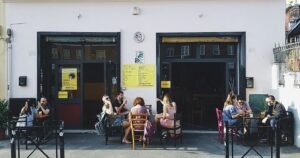
Pigneto, a few minutes' walk from Centrale Preneste Teatro, has one of the highest densities of restaurants and bars in Rome: trattorias, pizzerias, osterias, bistros and cuisines from many countries, along Via del Pigneto and the side streets.
Before 21:00
With the start at 21:00, sit down to eat around 19:30. On Saturday night the neighborhood is full: with a group, booking is essential.
After the show
Pigneto stays lively until late, and after a show like this it's easy to find a table for a drink and to talk it over. The cuisines of so many different countries, in this area, are also the most fitting continuation of an evening devoted to a Rome that mixes.
Another well-known fact, yet rarely mentioned
Everyone knows Romeo and Juliet is the tragedy of thwarted love. It's less often remembered that it is, first of all, a tragedy of very young people caught in a conflict of adults. Juliet isn't yet 14. Romeo, Mercutio, Tybalt and Benvolio are boys. The hatred between the families is something they inherited, not chose, and the final catastrophe comes because none of the adults manages to stop it. That's why the tragedy returns so often in theater workshops with teenagers: it speaks about them, and about what adults leave them as a legacy.
A second fact, mentioned even less, concerns Matemù's educational approach. Among the references declared by the center is Paulo Freire, the Brazilian educator of the pedagogy of the oppressed, for whom education isn't pouring in notions but a process in which those who learn take the floor about the world. A workshop in which 50 young people rewrite Shakespeare in their own words is the most direct application of that idea. And the link with Brazil isn't only theoretical: part of the Matemù staff worked in Salvador da Bahia with Projeto Axé, an organization founded in 1990 that uses art as an educational tool with street children. Theater, here, comes from far away.
The right photo to take at Matemù Cies, G+R Di muri abbattuti e cuori aperti at Centrale Preneste Teatro, November 28, 2026
The right photo is the final bow, when 50 young people line up on stage and the audience stands. It's the moment when the company becomes a single image, and when you understand, at a glance, the variety of origins, ages and styles the show has held together. Shoot from the center of the hall, without flash, trying to get the whole row: no close-up will tell the story of the evening better.
During the show the phone stays in your pocket. There will be relatives and friends who want to film, and the hall staff will handle the situation as they see fit. But respect for those on stage, especially the youngest, comes before any digital memory. And be careful: posting images of young people on social media, especially if they're minors, always calls for caution.
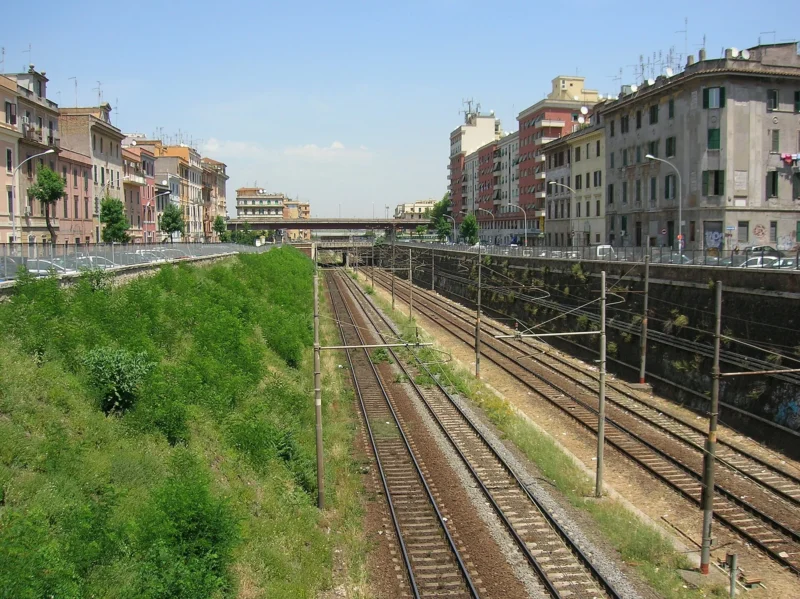
Outside, before going in, the Prenestina at night, with the tram tracks lit and the public housing buildings, is the image of eastern Rome in which the theater lives. At the end of November at 21:00 it's been dark for hours: the street lights and the lights of arriving trams give the photo a cinematic tone. It's the right backdrop for a show about the walls that divide cities.
Some important events that happened here in history
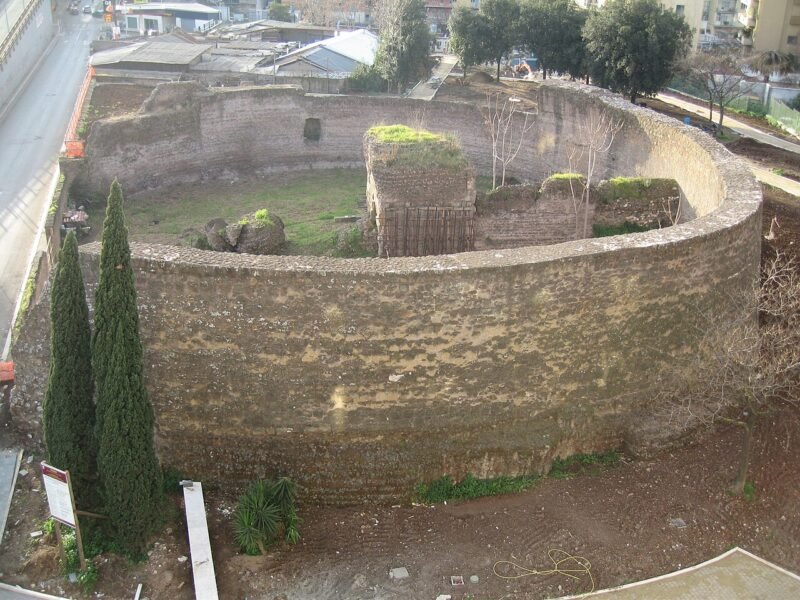
The history of the area begins with Via Prenestina, the ancient road that left Rome heading east, lined with tombs and mausoleums. At the start of its route are Porta Maggiore, from 52 AD, and the tomb of the baker Eurysaces, from 30 BC. Farther on, at the second mile, the Torrione Prenestino, a mausoleum from the 1st century BC, and at the third the tomb of Largo Preneste, from the 2nd century.
For centuries the area was countryside, vegetable gardens and vineyards. The place name Pigneto is documented as early as the 17th century. After 1870 the first settlements arrived. Between 1886 and 1891 the depot of the Società Romana Tramways Omnibus was built in Piazza Caballini, and in 1904 it became a tram depot: the trams that today bring the audience to the theater have their roots here. In 1909 the Serono pharmaceutical institute opened. In 1923 the viscose factory on the Prenestina was founded, active until 1954.
Between 1943 and 1944 Allied bombing hit the neighborhood. After the war Pigneto became a set for Italian cinema. In 1977 the Ruotalibera cooperative was founded, directed by Tiziana Lucattini since 1991. In 2000 the La Pietra Parla school was founded. In 2015 Via del Pigneto became largely pedestrian. On November 28, 2026, the 50 young people of Matemù close the fourth edition of YOU THE YOUng CITY here.
Who has passed through Matemù Cies, G+R Di muri abbattuti e cuori aperti at Centrale Preneste Teatro, November 28, 2026
An important part of Italian cinema has passed through the streets around Centrale Preneste. Pier Paolo Pasolini shot Accattone in Pigneto, with Franco Citti. Anna Magnani acted scenes of Roberto Rossellini's Rome, Open City there, alongside Aldo Fabrizi. Alberto Sordi returned there several times and Paolo Villaggio shot scenes of Fantozzi there. Pigneto, before becoming an area of theaters and bars, was an open-air set, and Accattone in particular tells the story of exactly those young people from the outskirts that Ruotalibera's theater has always put at the center.
For decades the Ruotalibera shows directed by Tiziana Lucattini, author of Scarpette rosse, have passed through Centrale Preneste. Fabio Traversa has worked there since 1995, who made his film debut with Nanni Moretti and then worked with Carlo Verdone. Generations of students of the La Pietra Parla school pass through and, with YOU THE YOUng CITY, emerging companies from Rome and the rest of Italy: in this edition Los Filonautas, Francesca Pica, Barbe à Papa Teatro, Compagnia Bellavita, Dopolavoro Stadera with Argot Produzioni.
On November 28, 50 young women and men of Matemù pass through here, with the directors Bartolini and Baronio. They come from Esquilino, but their families come from every part of the world and every neighborhood of the city.
Late November in Rome: neighborhood theater
At the end of November Rome is in full autumn, with cool evenings and darkness arriving before five. It's the period when neighborhood theaters give their best: the season has started, the audience has resumed its habits, and the series supported by the calls for performance outside the center bring to the outskirts productions that would cost a ticket elsewhere. A Saturday night in Pigneto, with a free show and dinner in one of the neighborhood's kitchens, is one of the most authentic ways to experience the city in this season.
Frequently asked questions about G+R by Matemù
When is G+R, Di muri abbattuti e cuori aperti on?
G+R, Di muri abbattuti e cuori aperti by Matemù Cies is on Saturday, November 28, 2026, at 21:00 at Centrale Preneste Teatro, Via Alberto da Giussano 58, in Rome. It's the closing night of the fourth edition of the YOU THE YOUng CITY series.
How much is the ticket for the Matemù show?
The Matemù show at Centrale Preneste Teatro is free, but booking is mandatory online on the theater's website or by writing to info@ruotalibera.eu. On the day of the show you can get in directly only if seats are still available.
What kind of show is G+R?
G+R is a show of music, singing, rap and breakdance inspired by Shakespeare's Romeo and Juliet, directed by Bartolini and Baronio, with texts written by the 50 participants of the Matemù theater workshop. The cultural portal of Roma Capitale classifies it under under-35 dance, music and singing.
What is Matemù?
Matemù is the free youth space and art school created in 2010 by CIES ETS and hosted by Municipio Roma I at Via Vittorio Amedeo II 14, in Esquilino. It welcomes young people between 10 and 25 with art workshops, school support, guidance and Italian courses.
How do you get to Centrale Preneste Teatro?
Centrale Preneste Teatro can be reached on metro C, Pigneto or Malatesta stops, on trams 5, 14 and 19, Prenestina/Giussano stop, and on buses 81, 112, 113, 213, 312, 409 and 545. On Saturday night parking in the area is very difficult.
Is the Matemù show suitable for young people?
Yes, the Matemù show is conceived and made by young people, with the languages of their generation: rap, breakdance, music. It's an excellent opportunity to bring teenagers closer to theater. The 21:00 start makes it less suitable for small children.
Who organizes YOU THE YOUng CITY?
YOU THE YOUng CITY is organized by the social cooperative Ruotalibera at Centrale Preneste Teatro, directed by Tiziana Lucattini. The fourth edition, from September 13 to November 28, 2026, is supported by the Ministry of Culture and by Roma Capitale's call Lo spettacolo dal vivo fuori dal Centro.
Our verdict on G+R
Go, and book right away. Seeing 50 young people of every origin take Shakespeare and put him back into circulation with their own words is one of those things that remind you what theater is for. Don't look for perfection: look for truth, which on evenings like this comes through unfiltered. And if you have a teenage son or daughter who says theater is boring, take them with you. They'll thank you, maybe not right away.
Article written by the editorial team of Tour Leader Pro, contact them for Private/Corporate/V.I.P. Tours and Experiences.
Planning a trip to Rome? English guides for visiting the city are on ItalyPlanner.com.
Contact Information
Nearby

Upcoming events nearby
 Centrale Preneste Teatro Kids Season 2026-2027 in Pigneto, October 11, 2026 to May 3, 2027100 m
- Qui vivremo bene by Dopolavoro Stadera and Argot Produzioni at Centrale Preneste Teatro, November 13, 2026100 m
- Giuseppe Cederna on Gianni Rodari100 m
- Mangia! by Anna Piscopo (Bam Teatro)100 m


You might also like
- Strega Bistrega by Ruotalibera Teatro at Centrale Preneste Teatro
- Periferie Umane (Human Suburbs), final performance at Teatro Sala Vignoli, Nov 21 and 22, 2026
- Bob e Singer: Missione Natura! (Mission Nature!) at Centrale Preneste Teatro, Nov 15, 2026
- Il principe delle tenebre (The Prince of Darkness) at Centrale Preneste Teatro, Nov 22, 2026
- La bella addormentata (Sleeping Beauty) at Centrale Preneste Teatro, Nov 29, 2026
- Uno spettacolo italiano at Centrale Preneste Teatro, Dec 4, 2026