Jeremy Pelt Quintet (Roma Jazz Festival) at Auditorium Parco della Musica, Teatro Studio Borgna, November 21, 2026
In short. The Jeremy Pelt Quintet plays on Saturday, November 21, 2026 at 20:00 at Teatro Studio Gianni Borgna, Auditorium Parco della Musica Ennio Morricone, Viale Pietro de Coubertin 30, in Rome.
The Jeremy Pelt Quintet plays on Saturday, November 21, 2026 at 20:00 at Teatro Studio Gianni Borgna, Auditorium Parco della Musica Ennio Morricone, Viale Pietro de Coubertin 30, in Rome. The concert is part of the Roma Jazz Festival 2026 and coincides with the European tour with which the trumpeter celebrates his 50th birthday. According to the venue, tickets start at 30 euros and are sold from the event page on the Auditorium's official website (auditorium.com) or at the box office. To get to Flaminio and the entrance, use the ATAC journey planner.
The concert
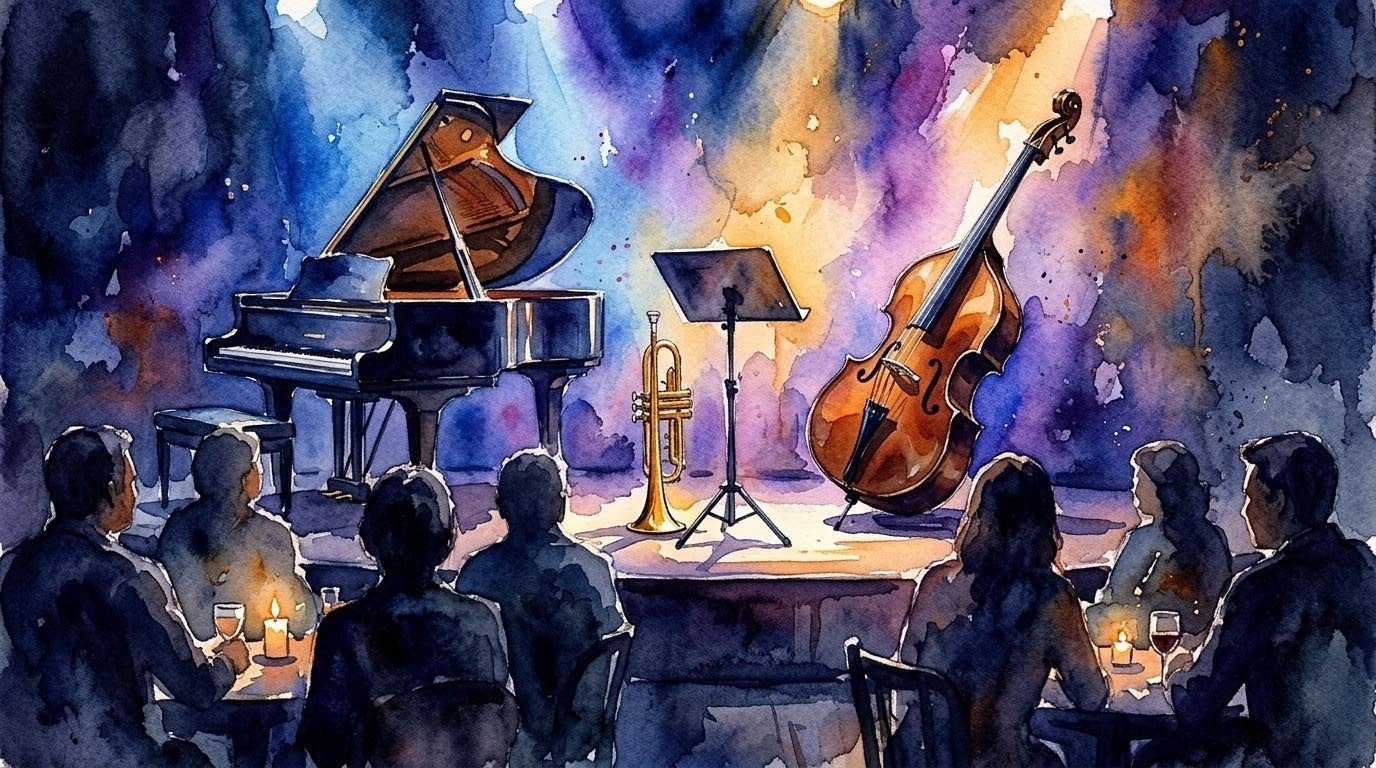
The official page presents Jeremy Pelt as the trumpet star celebrating his 50th birthday with a European tour, of which the Roma Jazz Festival is a stop. His résumé includes over 25 albums and dozens of prestigious collaborations as a sideman, enough to count him among the most important musicians of contemporary jazz.
Mingus, Hargrove, Ellington
A collaborator of the legendary Mingus Band, today he performs with major ensembles such as the Roy Hargrove Big Band and the Duke Ellington Big Band.
What the venue doesn't publish
The page lists Jeremy Pelt as the only name on the bill. The members of the quintet, the set list and the length aren't published: the information is not available.
Jeremy Pelt: studies and collaborations
Jeremy Pelt was born in California on November 4, 1976, so he turns 50 a few days before the concert. He is an American jazz trumpeter.
From classical trumpet to jazz
As a child he studied classical trumpet, and he focused on jazz after playing in a high school jazz ensemble.
Berklee
He studied at Berklee College of Music in Boston.
Who he has played with
The musicians he has performed with include Ravi Coltrane, Roy Hargrove, Greg Osby and Cassandra Wilson.
Albums as leader, year by year
Since 2002 Jeremy Pelt has released over 25 albums under his own name. An annotated list:
- 2002, «Profile» (Fresh Sound),
- 2003, «Insight» (Criss Cross) and «Close to My Heart» (Maxjazz),
- 2005, «Identity» (Maxjazz),
- 2007, «Shock Value: Live at Smoke» (Maxjazz),
- 2008, «November» (Maxjazz),
- 2010, «Men of Honor» (HighNote),
- 2011, «The Talented Mr. Pelt»,
- 2012, «Soul»,
- 2013, «Water and Earth»,
- 2014, «Face Forward, Jeremy»,
- 2015, «Tales, Musings and Other Reveries»,
- 2016, «#Jiveculture» and «High Art»,
- 2017, «The Co-Op» (Brown Brothers Recordings) and «Make Noise!» (HighNote),
- 2018, «Noir En Rouge: Live in Paris» and, with Jim Snidero, «Jubilation! Celebrating Cannonball Adderley» (Savant),
- 2019, «The Artist»,
- 2020, «The Art of Intimacy, Vol. 1»,
- 2021, «Griot: This Is Important!»,
- 2022, «Soundtrack»,
- 2023, «The Art of Intimacy, Vol. 2: His Muse»,
- 2024, «Tomorrow Is Another Day»,
- 2025, «Woven»,
- 2026, «Our Community Will Not Be Erased».
Three labels
Three phases stand out: the early years between Fresh Sound and Criss Cross, the Maxjazz years, and from 2010 the long relationship with HighNote, which released almost all the later records.
Live albums and tributes
Among the titles in the discography, some are live: «Shock Value: Live at Smoke» (2007) and «Noir En Rouge: Live in Paris» (2018).
A tribute to Cannonball Adderley
«Jubilation! Celebrating Cannonball Adderley» (Savant, 2018) is a co-led album with saxophonist Jim Snidero.
A two-volume series
The project «The Art of Intimacy» has two volumes: the first from 2020 and the second, «His Muse», from 2023.
The most recent album
The latest title listed is «Our Community Will Not Be Erased» (HighNote, 2026). The venue doesn't say if the repertoire of the Rome concert includes tracks from that record.
Pelt as a sideman
Pelt has played as a sideman on dozens of records. A few names, to give an idea of the range of settings:
- with Mingus Big Band: «Tonight at Noon...Three or Four Shades of Love» (Dreyfus, 2002) and «I Am Three» (Sunnyside, 2005),
- with Wayne Shorter: «Alegria» (Verve, 2003),
- with Vincent Herring: from «Change the World» (1997) to «Night and Day» (2015),
- with Ralph Peterson Jr.: three records for Criss Cross between 2001 and 2003,
- with Gerald Wilson: «In My Time» (2005) and «Legacy» (2011),
- with Cedar Walton, Harold Mabern, Lewis Nash, Al Foster,
- with the World Saxophone Quartet: «Political Blues» (2006).
From soul to the Boston trio
The list also includes groups far from traditional jazz, such as Soulive («Doin’ Something», Blue Note, 2001) and the singer Somi («Red Soil in My Eyes», 2007).
The Mingus Big Band
The Mingus Big Band is a 14-piece ensemble based in New York, specializing in the compositions of Charles Mingus. It was managed by his widow, Sue Mingus, along with the Mingus Orchestra and Mingus Dynasty. Besides its weekly Wednesday gig in New York, it often tours the United States, Europe and elsewhere.
Grammys
It has received seven Grammy nominations and won one in 2011 for best large jazz ensemble album, «Mingus Big Band Live at Jazz Standard».
A long list of musicians
Past members include Randy Brecker, Chris Potter, Ronnie Cuber, Vincent Herring, Wayne Escoffery, Alex Sipiagin, Craig Handy, David Kikoski and Helen Sung. Pelt appears on the records «Tonight at Noon» from 2002 and «I Am Three» from 2005.
Records
Titles include «Nostalgia in Times Square» (Dreyfus, 1993), «Live in Time» (1996), «Que Viva Mingus!» (1997), «Blues & Politics» (1999) and «The Charles Mingus Centennial Sessions» (2022).
Charles Mingus in brief
Charles Mingus Jr. (April 22, 1922, January 5, 1979) was an American double bassist, composer, bandleader and writer, a champion of collective improvisation and considered one of the greatest musicians and composers in jazz.
Essential records
He paved the way for post-bop with recordings such as «Pithecanthropus Erectus» (1956) and «Mingus Ah Um» (1959), and made big band experiments such as «The Black Saint and the Sinner Lady» (1963).
From his beginnings to Duke Ellington
Born in Nogales, Arizona, and raised in the Watts neighborhood of Los Angeles, he studied trombone and then cello before switching to double bass. In 1943 he toured with Louis Armstrong, and in 1953 he was briefly part of Duke Ellington's orchestra.
Debut Records
In 1952 he founded the label Debut Records with Max Roach. On May 15, 1953 he played at Massey Hall in Toronto with Dizzy Gillespie, Charlie Parker, Bud Powell and Roach.
The Library of Congress
In 1993 the Library of Congress acquired his papers, calling it the most important acquisition of a manuscript collection on jazz in its history. He died on January 5, 1979 in Cuernavaca, Mexico.
Roy Hargrove and his Big Band
Roy Hargrove (October 16, 1969, November 2, 2018) was an American trumpeter and flugelhorn player, winner of two Grammys, in 1998 and 2002. He played mainly hard bop, with a fondness for crossovers with hip hop, neo soul, R&B and alternative rock.
From Texas to New York
Born in Waco, Texas, and raised in Dallas, he was discovered by Wynton Marsalis at an arts school. He studied at Berklee, in Boston, then moved to the New School in New York. His first album as leader, «Diamond in the Rough», came out in 1990 on Novus/RCA.
The Big Band
In 1995 he formed the Roy Hargrove Big Band for New York's Panasonic Village Jazz Festival. The group's only album, «Emergence», is from 2009, recorded at Capitol Studios in Los Angeles.
Grammys and RH Factor
In 1998 he won the Grammy for best Latin jazz album with «Habana», and in 2002 the one for best jazz instrumental album with «Directions in Music: Live at Massey Hall», with Herbie Hancock and Michael Brecker. From 2003 to 2006 he led the group RH Factor, which combined jazz, soul, hip hop and funk.
A link with Pelt
Pelt and Hargrove appear together in the list of musicians the trumpeter has played with, and the Roy Hargrove Big Band is among the ensembles mentioned by the venue.
Mingus: the records that matter
The 1950s are considered Mingus's most fertile period: in 10 years he recorded 30 records for Atlantic, Candid, Columbia, Impulse! and other labels.
«Pithecanthropus Erectus», 1956
It was his first major work as leader and composer. The band included Mal Waldron on piano, Jackie McLean on alto sax and J. R. Monterose on tenor. The title track is a 10-minute tone poem that tells of the rise of man from his hominid ancestors to his fall, with a section of free improvisation.
«The Clown», 1957
It was the first record with drummer Dannie Richmond, who remained his favorite drummer until his death in 1979. With pianist Jaki Byard they formed the trio known as «The Almighty Three».
«Mingus Ah Um», 1959
It's one of his best-known albums. It contains «Goodbye Pork Pie Hat», an elegy for Lester Young, and the instrumental version of «Fables of Faubus», a protest against the segregationist governor of Arkansas Orval Faubus. In 2003 it was added to the National Recording Registry. It came out the same year as Dave Brubeck's «Time Out», Miles Davis's «Kind of Blue», John Coltrane's «Giant Steps» and Ornette Coleman's «The Shape of Jazz to Come».
«The Black Saint and the Sinner Lady», 1963
Described as one of the greatest achievements in orchestration in the history of jazz. Mingus asked his psychotherapist, Dr. Edmund Pollock, to write the liner notes.
«Changes», 1970s
In 1974 he formed a quintet with Richmond, pianist Don Pullen, trumpeter Jack Walrath and saxophonist George Adams: they recorded «Changes One» and «Changes Two».
The Jazz Workshop and the style
Mingus often worked with a rotating ensemble of eight to 10 members, called the Jazz Workshop. Its members included Pepper Adams, Jaki Byard, Booker Ervin, John Handy, Jimmy Knepper, Charles McPherson and Horace Parlan. Someone called the workshop a jazz «university».
Collective improvisation
Mingus championed collective improvisation, similar to that of the old New Orleans parades, and paid close attention to how each musician interacted with the group. He built his bands looking at the musicians' abilities and also at their personalities.
Duke Ellington's heir
For writing for medium-to-large ensembles he's considered Ellington's heir, with whom he recorded «Money Jungle». Dizzy Gillespie said he reminded him of «a young Duke».
Gospel and blues
His compositions kept the warm, soulful character of hard bop, drawing on Black gospel and blues, with elements of third stream, free jazz and classical music. He named Ellington and the church as his main influences.
«Epitaph»
«Epitaph» is considered one of Mingus's masterpieces: 4,235 measures, two hours of performance, one of the longest pieces in jazz. It was discovered in full by musicologist Andrew Homzy while cataloging the papers after the composer's death.
The premiere
With a grant from the Ford Foundation the score and parts were copied. The piece was first performed by a 30-piece orchestra conducted by Gunther Schuller, on June 3, 1989 at Alice Tully Hall, 10 years after Mingus's death, in a concert produced by his widow Sue Graham Mingus.
Other performances
It was revived in a few concerts in 2007, and the complete score was published by Hal Leonard in 2008.
Mingus and Joni Mitchell
At his death he was working with Joni Mitchell on an album, later titled «Mingus», with lyrics she added to his compositions, including «Goodbye Pork Pie Hat», and with Wayne Shorter, Herbie Hancock and Jaco Pastorius.
Hargrove, the records
Roy Hargrove's first record as leader, «Diamond in the Rough» (Novus/RCA, 1990), and the three that followed with his quintet were among the most commercially successful jazz recordings of the early 1990s.
«The Vibe» and the Young Lions
The third, «The Vibe» (1992), reached number two on the Billboard jazz chart. Hargrove was associated with the «Young Lions», young musicians who played mainly bebop, hard bop and standards from the Great American Songbook, and for three years in a row, from 1991 to 1993, he topped the «Rising Star Trumpet» category of the DownBeat Critics’ Poll.
Verve and «Parker’s Mood»
In 1994 he moved to Verve and recorded «With the Tenors of Our Time» with Joe Henderson, Stanley Turrentine, Johnny Griffin, Joshua Redman and Branford Marsalis. In 1995 came «Parker’s Mood», in a trio with Christian McBride and Stephen Scott, dedicated to Charlie Parker.
The Soulquarians
Between the late 1990s and the early 2000s he worked with the Soulquarians, a collective of jazz, hip hop and soul artists with Questlove, D’Angelo and J Dilla, adding horns to D’Angelo's album «Voodoo».
After his death
In July 2021 the double live album «In Harmony» came out, a duo with pianist Mulgrew Miller, and in November 2021 Hargrove was elected to the DownBeat Jazz Hall of Fame.
Hargrove: the rest of the story
In 2000 Hargrove recorded «Moment to Moment», his only album with a string section, accompanied by the Monterey Jazz Festival Chamber Orchestra. In 2001 he headlined an «Invitation Series» of four nights at the Montreal International Jazz Festival, in five different lineups.
The hybrid sound
Between 2003 and 2006 he released three albums as leader of RH Factor. The first, «Hard Groove», was called «genre-busting» by critics and opened a new era of jazz with hip hop accents. The second, «Strength», got a Grammy nomination.
The last years
After 2009 he released no more albums as leader but played a lot live and worked with Jimmy Cobb, Roy Haynes, Cyrille Aimée, The 1975, D’Angelo, Johnny O’Neal and Kandace Springs. In 2017 he told a radio station that making records no longer made «economic sense».
The Jazz Gallery
In 1995 Hargrove had helped found The Jazz Gallery in New York.
After his passing
In 2023 Jazz at Lincoln Center released the live recording of «The Love Suite: In Mahogany», a five-movement suite performed only at its 1993 debut, and in 2024 Verve announced the archival album «Grande-Terre» by the group Crisol, recorded in 1998.
Berklee: the school of Pelt and Hargrove
Berklee College of Music is a private college in Boston, the largest independent college of contemporary music in the world, known for the study of jazz and modern American music. It also offers courses in rock, hip hop, reggae, salsa, heavy metal and bluegrass.
Schillinger House, 1945
In 1945 pianist, composer and arranger Lawrence Berk, an MIT graduate, founded Schillinger House, Berklee's forerunner, at 284 Newbury Street, in Boston's Back Bay. Almost all music schools of the time focused on classical music. Schillinger House taught jazz and commercial music for radio, theater, television and dance.
The name
In 1954 Berk changed the name to Berklee School of Music, after his 12-year-old son, Lee Eliot Berk.
First degrees and guitar
The first bachelor of music degrees were awarded in 1966. In 1962 the first college course with guitar as principal instrument was offered.
Alumni
Berklee alumni have won 310 Grammy Awards, more than any other college. Since 2012 it has had a campus in Valencia, Spain, and since 2015 it has been merged with the Boston Conservatory.
Berklee, one innovation after another
Berklee's history is made of teaching firsts. In 1962 it offered the first college course with guitar as principal instrument, in 1969 the first college courses in rock and popular music, in 1973 the first electric bass course.
Duke Ellington
The school took the name Berklee College of Music in 1970, and in 1971 awarded its first honorary degree to Duke Ellington.
Firsts of the 1980s
From 1980 it had the world's first degree program in film scoring, in 1986 the first college course in music synthesis, in 1987 the first in songwriting and in 1988 the first in hand percussion.
International network and online
In 1991 it launched City Music for disadvantaged young people in Boston, in 1993 the Berklee International Network and in 2003 online courses. In 2004 it introduced a hip hop course, and in 2006 mandolin and banjo were accepted as principal instruments.
After the merger
On January 19, 2016 the school announced its merger with the Boston Conservatory, which became The Boston Conservatory at Berklee.
Teatro Studio Gianni Borgna
Teatro Studio is named after Gianni Borgna and has 308 seats. Next to it are Sala Santa Cecilia with 2,756 seats, Sala Sinopoli with 1,133 and Sala Petrassi with 673. The cavea named after Luciano Berio has 3,000.
A small hall for a quintet
Teatro Studio is the smallest hall in the Auditorium. A jazz quintet in 308 seats means a short distance between stage and audience.
What isn't published
The event page doesn't describe the setup and seating layout: the information is not available.
A curious fact: 50 years and a European tour
Jeremy Pelt turns 50 on November 4, 2026. The Rome concert is on November 21, 17 days later.
A packed calendar
The Roma Jazz Festival runs through the month: Pelt's trumpet comes after Paolo Fresu (November 1), Kurt Elling (4), Steve Coleman (5) and Hamilton de Holanda with Gonzalo Rubalcaba (6).
One date, three ensembles
The venue mentions three ensembles linked to Pelt's name: the Mingus Band, the Roy Hargrove Big Band and the Duke Ellington Big Band.
Something nobody tells you about Teatro Studio
Teatro Studio isn't one of the three beetle-shaped halls: it's a separate structure of the Auditorium, like the recording studios and the foyer.
The shared foyer
The foyer is actually the lobby shared by the halls. It has a bar, a café-bar and, with access from the street too, a bar-restaurant and a large bookstore.
Arrive early
If you want to eat or drink something before the concert, the bar-restaurant can also be entered from the street.
My advice for visiting Teatro Studio Gianni Borgna
If you don't know Pelt, first listen to a live record, «Noir En Rouge: Live in Paris» (2018), to understand how he sounds in concert. Then, if you like his side closer to soul, «Soul» (2012).
Your seat
In a 308-seat hall it's worth choosing your seat carefully and booking ahead.
Before going in
If you arrive early you can use the foyer, which has a bar, a café and a large bookstore.
A well-known fact: jazz at the Auditorium
The Auditorium hosts the seasons of four resident orchestras devoted to jazz, contemporary music and popular music. The program includes jazz, rock, pop, opera, electronic and world music concerts, theater, dance, circus and festivals.
The Roma Jazz Festival
Chiara Civello performed here back in 2006 with Michael Bublé and Laura Pausini, and the Roma Jazz Festival 2026 still hosts international artists.
Beyond concerts
The venue also organizes exhibitions, author talks and science and book festivals.
The right photo at the Auditorium
The classic subject is the exterior: the beetle-shaped halls, clad in lead on a brick base, arranged around the cavea.
The terrace
A large walkable terrace runs around the buildings. Between Sala Santa Cecilia and Sala Sinopoli you can see the remains of the Roman villa discovered during construction.
The small museum
The finds are on display in a small museum under the cavea.
Some important events that happened here in history
Sala Sinopoli opened on April 21, 2002 and the rest of the complex on December 21, with Sala Santa Cecilia. Since 2003 the Auditorium has hosted the season of the Accademia Nazionale di Santa Cecilia, and since 2006 the Rome Film Fest.
Radio and TV
On March 16, 2010 Radio Parco della Musica started, and on October 4, 2011 Auditorium TV debuted, a YouTube channel with the format «I Cinque Comandamenti».
In 2020
The city council approved naming it after Ennio Morricone.
Who has passed through here
Live recordings have been made here with Keith Jarrett, Mark Knopfler, Vinicio Capossela, Tuxedomoon and William Parker.
Live jazz
Among the albums mentioned: Enrico Rava and Joe Lovano (2014), Fennesz and Sakamoto (2005), The National (2024).
One name in the series
The festival includes other concerts in the same month. The overview is on the page for the Roma Jazz Festival 2026.
Renzo Piano and the Parco della Musica
The design is by Renzo Piano, winner of the 1993 invited competition. The complex stands in Parioli, between Villa Glori, the Villaggio Olimpico and the Corso di Francia viaduct.
The excavations changed everything
The remains of a Roman villa led to a substantial change in the design: two beetles were shifted west and Viale De Coubertin was closed to traffic.
Collaborators
For the acoustics Jürgen Reinhold of the Müller-BBM firm, for the landscape Franco Zagari.
The Ministry
The building is in the Census of Italian architecture from 1945 to today, meeting all seven criteria, like the Lingotto in Turin.
The Fondazione Musica per Roma
The Foundation, created on July 19, 2004 by transforming the 1999 joint-stock company, runs the Auditorium. It was the first transformation of a joint-stock company into a foundation allowed by the reform of company law.
The members
The founding members are the City of Rome, the Chamber of Commerce, the Province of Rome and the Lazio Region. The City has granted the use of the building for 99 years.
Numbers
In 2016 the Foundation organized 608 events, with takings of 9,702,260 euros and 287,109 tickets sold. In 2014 total visitors were estimated at more than 2 million.
Criticism
There was no shortage of problems: acoustics in the first months, expensive parking, a troubled construction site and the lack of a pipe organ.
Nearby
The Ponte della Musica, 190 meters long, links the Flaminio area to the Foro Italico. The area also has MAXXI and the Villa Glori park. The general page on the venue is Auditorium Parco della Musica.
Inauguration
The bridge was inaugurated on May 31, 2011 and has been named after Armando Trovajoli since 2013.
Practical information
- Date and time: Saturday, November 21, 2026, 20:00.
- Venue: Teatro Studio Gianni Borgna, Auditorium Parco della Musica Ennio Morricone, Viale Pietro de Coubertin 30, 00196 Rome.
- Price: from 30 euros, according to the venue.
- Artist: Jeremy Pelt (quintet).
- Length and lineup: not published.
Getting there
Lines 910, 982, 168 (weekdays only) and 53 stop in front of the entrance. The nearest metro is at Piazzale Flaminio. Use the ATAC journey planner.
Frequently asked questions about the Jeremy Pelt Quintet
When and where is the concert?
Saturday, November 21, 2026 at 20:00, Teatro Studio Gianni Borgna, Auditorium Parco della Musica Ennio Morricone, Viale Pietro de Coubertin 30, Rome.
How much does it cost?
Tickets start at 30 euros, according to the venue.
Who is Jeremy Pelt?
An American jazz trumpeter, born in California on November 4, 1976, with over 25 albums and many collaborations as a sideman, including Mingus Big Band, Wayne Shorter and Roy Hargrove.
Why is it a special concert?
Because it's part of the European tour with which Pelt celebrates his 50th birthday.
Who is playing with him?
The venue doesn't publish the quintet's lineup: the information is not available.
Is it part of the Roma Jazz Festival?
Yes, according to the venue the concert is part of the Roma Jazz Festival 2026.
How many seats does Teatro Studio have?
It has 308 seats and is named after Gianni Borgna.
How do you get there by public transportation?
Several bus lines stop in front of the entrance, and the nearest metro is at Piazzale Flaminio. Check your route with the ATAC journey planner.
Final advice on Jeremy Pelt
Before the concert, listen to a live record by Pelt and one by the Mingus Big Band, to understand where his trumpet and his way of building sound come from. Then choose your seat calmly: in 308 seats every row counts.
Article written by the editorial team of Tour Leader Pro, contact them for Private/Corporate/V.I.P. Tours and Experiences.
Planning a trip to Rome? The English guides for visiting the city are on ItalyPlanner.com.
Contact Information
Nearby
 Museum of Musical Instruments (MUSA)100 m
- Auditorium Parco della Musica100 m
- Villa Glori500 m
- Fountain of Anna Perenna500 m
- MAXXI – National Museum of 21st Century Arts700 m
- Flaminio700 m
Upcoming events nearby
- Roma Jazz Festival 2026, November 1 to 24 at the Auditorium and Casa del Jazz100 m
- Evgeny Kissin and András Schiff at Santa Cecilia, November 9, 2026100 m
- Roma Gospel Festival 2026 at Auditorium Parco della Musica, December 13, 2026 to January 1, 2027100 m
- Santa Cecilia 2026/2027 Concert Season at Auditorium Parco della Musica, October 21, 2026 to June 5, 2027100 m



You might also like
- Gaia Banfi, L’ultima Maccaia at Auditorium Parco della Musica, November 15, 2026
- Hamilton de Holanda and Gonzalo Rubalcaba, Collab (Roma Jazz Festival) at Auditorium Parco della Musica, Sala Petrassi, November 6, 2026
- Steve Coleman and Five Elements (Roma Jazz Festival) at Auditorium Parco della Musica, Sala Petrassi, November 5, 2026
- Kurt Elling and Yellowjackets, Celebrate Weather Report (Roma Jazz Festival) at Auditorium Parco della Musica, Sala Petrassi, November 4, 2026
- Atlantico Reunion by Enzo Favata at the Roma Jazz Festival, Auditorium Sala Petrassi, Nov 16, 2026
- Erik Truffaz and Antonio Lizana, New Sketches of Spain at Roma Jazz Festival, Nov 17, 2026