Hamilton de Holanda and Gonzalo Rubalcaba, Collab (Roma Jazz Festival) at Auditorium Parco della Musica, Sala Petrassi, November 6, 2026
In short. Hamilton de Holanda and Gonzalo Rubalcaba present "Collab" on Friday, November 6, 2026 at 20:00 in Sala Petrassi at Auditorium Parco della Musica Ennio Morricone, Viale Pietro de Coubertin 30, in Rome.
Hamilton de Holanda and Gonzalo Rubalcaba present "Collab" on Friday, November 6, 2026 at 20:00 in Sala Petrassi at Auditorium Parco della Musica Ennio Morricone, Viale Pietro de Coubertin 30, in Rome. The concert is a duo, 10-string mandolin and piano, and is part of the Roma Jazz Festival. According to the venue, tickets start at 35 euros and are sold through the event page on the official Auditorium website (auditorium.com) or at the box office. To plan your route to Flaminio use the ATAC route planner: the lines change, so check it the day before.
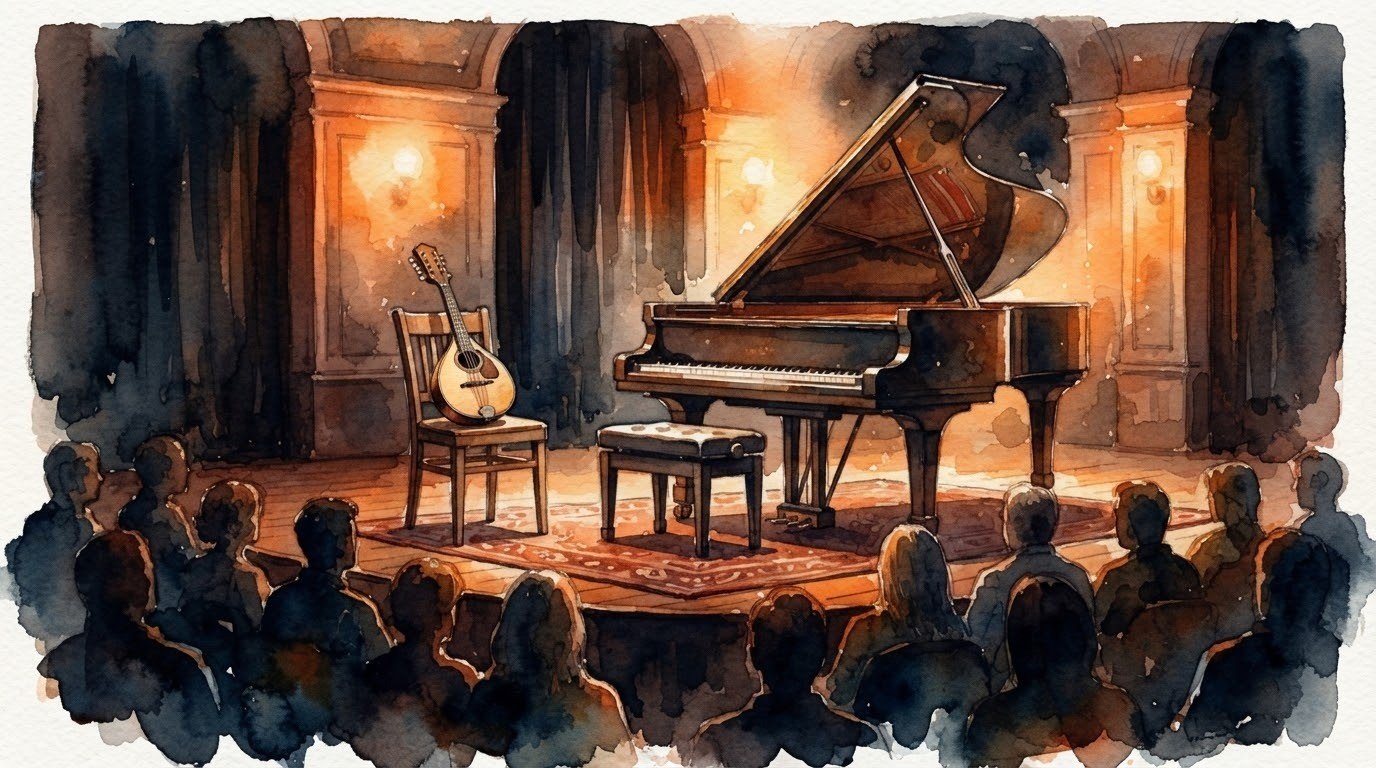
The concert: a duo between Rio and Havana
The official program speaks of the meeting of "two absolute masters of Latin jazz": the Havana pianist Gonzalo Rubalcaba, whom the venue calls a winner at the latest Grammys, and the virtuoso mandolinist from Rio de Janeiro Hamilton de Holanda. Together they present "as a world premiere" the project "Collab," an album that brings together the Afro-Cuban and Brazilian currents of jazz.
A world premiere or an album already out?
Here the sources disagree. The venue's page speaks of a world premiere of the project, while Hamilton de Holanda's discographies list "Collab" with Gonzalo Rubalcaba among the 2024 albums. What is certain is that the evening of November 6 brings the duo's work to Sala Petrassi.
Two instruments, one dialogue
The lineup listed is a duo: Hamilton de Holanda on mandolin, Gonzalo Rubalcaba on piano. The official text describes the result as an intense, electrifying musical dialogue, made of intricate melodies, rhythmic complexity and "fiery improvised exchanges."
Hamilton de Holanda, the 10-string mandolin
Hamilton de Holanda Vasconcelos Neto was born in Rio de Janeiro on March 30, 1976 and grew up in Brasília. He started playing the bandolim at five and gave his first concert at six. With his brother Fernando César he formed the group Dois de Ouro. He plays a custom-built 10-string instrument.
The instrument
The bandolim is the Brazilian form of the mandolin. In the choro tradition it's a melodic instrument, alongside flute, clarinet and cavaquinho. The venue calls him a "true master of the 10-string mandolin," who has taken it to new levels of virtuosity and innovation and inspired a new generation of players.
Awards
He has received several Latin Grammy nominations: in 2015 for "Bossa Negra," recorded with Diogo Nogueira (best samba/pagode album), and for the title track (best Brazilian song), in 2016 for "Samba de Chico" (best instrumental album), in 2017 as producer of the year, in 2021 for "Canto de Praya Ao Vivo." "Harmonize" was named one of the 25 best Brazilian albums of the first half of 2019 by the São Paulo Association of Art Critics.
Teaching
He taught at the Raphael Rabello choro school.
What choro is
Choro, which in Portuguese means "cry" or "lament," is an urban instrumental genre born in the 19th century in Rio de Janeiro. Despite the name, the music often has a fast, cheerful rhythm: virtuosity, improvisation and subtle modulations, syncopation and counterpoint.
Where it comes from
It grew out of the way Rio musicians played the polka, schottische, waltz, mazurka and habanera, already influenced by the Afro-Brazilian rhythms lundu and batuque. Like ragtime in the United States, tango in Argentina and the habanera in Cuba, it was born from the meeting of European and African influences. The origin of the name is debated: the sources suggest the fusion of the Portuguese verb chorar and the Latin chorus, the abbreviation of choromeleiros, or the word xolo, a dance of African slaves in the Brazilian countryside.
Instruments and form
The original lineup was a trio of flute, guitar and cavaquinho, and later the mandolin, clarinet, saxophone, trumpet and trombone joined. A choro usually has three parts in rondo form, AABBACCA, each in a different key.
The rodas de choro
In the 1950s and 1960s, when radio favored urban samba, choro survived in the "rodas," gatherings of friends in homes and bars, and the most famous were the one at Jacob do Bandolim's house in Jacarepaguá and the one at the bar "Suvaco de Cobra" in Penha. The composer Heitor Villa-Lobos called it the true embodiment of the Brazilian soul, and the Frenchman Darius Milhaud, who lived in Brazil in 1917, quoted about 30 Brazilian melodies in the ballet "Le Bœuf sur le toit."
Pixinguinha and Jacob do Bandolim
Two names always come up when people talk about choro and the bandolim.
Pixinguinha
Alfredo da Rocha Viana Filho, known as Pixinguinha, born in Rio on May 4, 1897 and died on February 17, 1973, was a composer, arranger, flutist and saxophonist. His pieces include "Carinhoso," "Lamento" and "Um a Zero." In 1919 he formed Os Oito Batutas and in 1921 took the group to Paris, where it played for six months at the Schéhérazade cabaret. After returning he added jazz and ragtime standards to the repertoire, and saxophones, trumpets, trombone, piano and drums to the group.
Jacob do Bandolim
Jacob Pick Bittencourt, known as Jacob do Bandolim, born in Rio on February 14, 1918 and died on August 13, 1969, was a perfectionist composer and mandolinist, known for the group Época de Ouro. He also worked as a pharmacist, insurance salesman and notary to support himself. He wrote more than 103 pieces, from the lyrical melodies of "Noites Cariocas" to the bebop-like rhythm of "Assanhado." In 2018 Hamilton de Holanda released four albums with "Jacob" in the title: "Jacob 10ZZ," "Jacob Bossa," "Jacob Baby" and "Jacob Black."
Why they matter for the concert
The official text cites "traditional choro" as the source of the brightness of Hamilton de Holanda's sound. The two masters are that tradition.
Gonzalo Rubalcaba, a pianist from a musical family
Gonzalo Julio González Fonseca, known as Rubalcaba, was born in Havana on May 27, 1963. He took his great-grandmother's surname, like his father Guillermo Rubalcaba and his grandfather Jacobo Rubalcaba, both musicians. In 1983 he traveled to France and Africa with Orquesta Aragón, and in 1985 he formed his Grupo Projecto.
The move to Blue Note
His Blue Note albums include "The Blessing" (1991), "Images" (1992), "Suite 4 Y 20" and "Diz" (1993), "Rapsodia" (1994), "Flying Colors" (1997), "Antiguo" (1998), "Inner Voyage" (1999), "Supernova" (2001), "Paseo" (2004) and "Solo" (2005).
Grammys
Award tables list Grammys in 2002 for "Nocturne" (as producer), in 2005 for "Land of the Sun" (as producer), in 2022 for "Skyline" and in 2026 for "A Tribute to Benny Moré and Nat King Cole." The page text speaks of three Grammys won and 12 nominations, but doesn't resolve the difference between the two counts.
The trio with Charlie Haden
One of Rubalcaba's most significant collaborations is the one with the double bassist Charlie Haden. The documented albums are "The Montreal Tapes" (recorded in 1989 with Paul Motian, released by Verve in 1997), "Nocturne" (2000, released in 2001), "Land of the Sun" (2003, released in 2004) and "Tokyo Adagio" (recorded in 2005 at the Blue Note Tokyo, released on Impulse! in 2015).
Other partners
The musicians he has recorded with include Ron Carter, Chick Corea ("Rendezvous in New York," 2003), Dave Holland (the 2007 Monterey Quartet, released in 2009), Richard Galliano ("Love Day," 2008) and Juan Luis Guerra ("Bachata Rosa," 1990). In 2026 he is on Melissa Aldana's album "Filin" for Blue Note.
Hamilton de Holanda on the list
Biographies of the mandolinist name Rubalcaba among his collaborators, along with Yamandu Costa, Mike Marshall, Joel Nascimento, André Mehmari, Stefano Bollani, João Bosco, Chano Domínguez and others.
Latin jazz in two currents
Latin jazz is a genre of jazz with Latin American rhythms. The two main categories are Afro-Cuban, based on Cuban dance music with a rhythm section that uses ostinato figures or the clave, and Afro-Brazilian, which includes samba and bossa nova. The title of the project, "Collab," and the venue's description, which speaks of Afro-Cuban and Brazilian currents, follow this division.
From the habanera to jazz
African American music incorporated Afro-Cuban motifs in the 19th century, when the habanera gained international popularity. Jelly Roll Morton called its Latin ingredient the "Spanish tinge." "Caravan," written by Juan Tizol and Duke Ellington and introduced in 1936, is cited as a proto-Latin jazz composition.
"Tanga," 1943
The first jazz piece in clave is "Tanga" (1943), composed by trumpeter Mario Bauzá and recorded the same year by Machito and his Afro-Cubans. Between 1948 and 1949 the musicians Howard McGhee, Brew Moore, Charlie Parker and Dizzy Gillespie jammed with Machito's orchestra at the Royal Roost, Bop City and Birdland.
Charlie Haden, the trio's double bassist
The trio with Haden deserves a closer look. Charles Edward Haden was born in Shenandoah, Iowa, on August 6, 1937 and died on July 11, 2014. He started singing at two on his family's radio show, the Haden Family, who played country music and American folk.
With Ornette Coleman
He moved to Los Angeles in 1957. In May 1959 he recorded "The Shape of Jazz to Come" with Ornette Coleman, then the quartet moved to New York, with a six-week residency at the Five Spot Café. From 1967 to 1976 he was part of Keith Jarrett's trio and American quartet.
Liberation Music Orchestra
In 1969 he founded his first group, the Liberation Music Orchestra, with arrangements by Carla Bley, and in 1970 he received a Guggenheim Fellowship on the recommendation of Leonard Bernstein. In the 1980s he formed Quartet West. The musicologist Joachim-Ernst Berendt wrote that his virtue was making the double bass "resonate."
Why it matters here
Rubalcaba recorded four albums with him, from 1989 to 2005. The two trajectories, Cuban and North American, coexist in the works mentioned above.
An Italian bridge: Stefano Bollani and Hamilton de Holanda
The pianist Stefano Bollani, born in Milan on December 5, 1972 and raised in Florence, launched his career in a duo with Enrico Rava from 1996. He has performed in concert in a duo with Hamilton de Holanda, and the album "O Que Será" (ECM, 2013) is the result of that meeting.
A pianist who meets different musicians
The musicians he has worked with include Gato Barbieri, Chick Corea, Egberto Gismonti, Richard Galliano, Caetano Veloso and Pat Metheny. He has played with the orchestra of the Accademia Nazionale di Santa Cecilia and with conductors such as Daniel Harding and Antonio Pappano.
Why we mention him
Because it shows that the meeting between piano and bandolim already has a history, and that the Accademia di Santa Cecilia, which is based in the same complex as the Auditorium, is a place where these worlds touch.
Pixinguinha beyond choro
The figure of Pixinguinha helps to read the duo's project, because he was one of the first to bring elements of jazz and ragtime into choro.
An arranger
At the end of the 1920s he was hired by RCA Victor to lead the Orquestra Victor Brasileira, and this sharpened his craft as an arranger: the demand for radio music for large ensembles required parts for every instrument. In 1939 Radamés Gnattali succeeded him.
Criticized for too much jazz
When he released "Lamentos" (1928) and "Carinhoso" (1930) he was criticized for an excess of jazz elements. Those pieces are today an integral part of the choro repertoire.
The statue
A bronze statue of Pixinguinha was unveiled in 1996, near the now closed Gouveia bar, where he often played. In 2013 a Google Doodle marked his 117th birthday.
Two discographies compared
To prepare for the concert you can start from a few titles.
Hamilton de Holanda
From 1997, "Destroçando a Macaxeira" and the albums with Fernando César, in 2005 "01 Byte 10 Strings," in 2007 "Íntimo," in 2010 "Sinfonia Monumental" with orchestra, in 2013 "O Que Será" with Stefano Bollani for ECM, in 2016 "Samba de Chico," in 2017 "Casa de Bituca," in 2022 "Chabem" with Chano Domínguez and Rubem Dantas, in 2024 "Collab" with Rubalcaba and "Tembla" with C4 Trío, in 2026 "Nova" with Salomão Soares and Thiago Big Rabello.
Gonzalo Rubalcaba
From 1987 "Mi Gran Pasión," in 1989 "Live in Havana," in 1990 "Discovery: Live at Montreux" for Blue Note, in 2008 "Avatar," in 2010 "Faith," in 2015 "Suite Caminos" and "Charlie," in 2021 "Skyline" with Ron Carter and Jack DeJohnette, in 2023 "Borrowed Roses."
From bossa nova to Afro Blue
The Brazilian side of Latin jazz runs through bossa nova, born in the mid-1950s in the well-off seaside neighborhoods of Rio de Janeiro through the work of Johnny Alf, Antonio Carlos Jobim and João Gilberto. It's a hybrid form based on the samba rhythm, but influenced by European music and American jazz, harmonically more complex and less percussive.
The international boom
The 1959 film "Orfeu Negro," with music by Luiz Bonfá, the recordings of Charlie Byrd and Stan Getz and the 1964 album "Getz/Gilberto" took bossa nova all over the world. The first big international hit single was "The Girl from Ipanema," sung by Astrud Gilberto.
The Cuban side
On the Afro-Cuban side, Mongo Santamaría recorded "Afro Blue" in 1959: it was the first jazz standard built on an African three-against-two polymeter.
Airto, Miles and Weather Report
The Brazilian percussionist Airto Moreira played in the two most important avant-garde electric jazz groups of the time, those of Miles Davis and Weather Report. It's a thread that connects the theme of the week, the Roma Jazz Festival, to the music of Brazil.
An architecture born from an absence
For more than 60 years after the demolition of the Augusteo, in 1936, Rome had no hall designed specifically for classical music. Auditorium Parco della Musica is the answer, a work by Renzo Piano on an area chosen by the city council in 1992 after a long debate. The debate had also considered the Borghetto Flaminio option.
The limits of the site
Not everyone thought it ideal, because of the size and shape of the land and the distance from the subway, since the nearest station is at Piazzale Flaminio. The complex turned out out of scale with the surrounding urban fabric, and archaeological finds forced changes to the project.
A recognition
In the Ministry of Culture's Census of Italian Architecture from 1945 to Today, the Auditorium is one of only two works in the "Buildings for cultural promotion" category to meet all seven criteria, out of 79 entries in the database.
Who runs the hall: Fondazione Musica per Roma
Fondazione Musica per Roma, based in the Auditorium offices, was born on July 19, 2004 by transforming the joint-stock company set up in 1999, and it was the first transformation of a joint-stock company into a foundation allowed by the reform of company law. The founding members are the City of Rome, the Chamber of Commerce, the Province of Rome and the Lazio Region.
Five kinds of audience
The program includes rock, pop, jazz, contemporary, opera, electronic and world music concerts, theater, dance, circus, literature and poetry series, exhibitions, author talks and science and book festivals, as well as the seasons of the four resident orchestras devoted to jazz, contemporary music and folk music.
A 99-year concession
The City granted the building to the Foundation under a 99-year concession for use.
The Roma Jazz Festival and the day of Latin jazz
The festival was born in 1976 as part of the Estate romana. Since 1996 it has been a fall festival held in halls suited to listening. The evening of November 6 closes the sequence in Sala Petrassi that began on the 4th with Kurt Elling and the Yellowjackets and continued on the 5th with Steve Coleman. The general program is at Roma Jazz Festival 2026.
A festival of traditions
The list of great names from the past includes Gato Barbieri, Tania Maria, Egberto Gismonti, Michel Camilo and Chick Corea, that is, musicians linked to jazz with Latin American roots. The Rubalcaba and de Holanda concert fits into this line.
A curious fact about Sala Petrassi
Sala Petrassi wasn't born with this name. At its opening, in 2002, it was "Sala Settecento" ("Hall 700"), after its number of seats, and it was named after Goffredo Petrassi after his death, in 2003.
A hall for the duo
With its 673 seats, the smallest of the three concert halls is the one where the sound of a mandolin and a piano can be heard up close. It's not a statement about acoustics, which we haven't verified, but a fact about scale: Sala Santa Cecilia has 2,756.
A name that tells the story of Rome
Petrassi, born in Zagarolo, near Rome, on July 16, 1904, and died in Rome on March 3, 2003, studied and taught at Santa Cecilia: the hall bears the name of a musician linked to the Accademia that today is based in the same complex.
Something nobody tells you about Sala Petrassi
The Petrassi stage has movable side walls. They are used to reduce the size of the stage and make room at the sides for the actors' entrances: a theater detail that sets it apart from halls built only for concerts.
An orchestra pit
The hall also has an orchestra pit. For a duo, like the one on November 6, this equipment isn't needed, but it shows that the hall is designed for opera, theater, dance and film as well as jazz.
Where you go in
The entrance to the halls goes through the shared foyer, which also has a bar, cafe, restaurant and bookshop. The ticket names the hall: check the name before you head in.
My advice for visiting Sala Petrassi
With a piano and bandolim duo, my advice is to choose a seat from which you can see both players' hands. In the dialogue between two such different instruments, watching who leads and who answers is part of the listening.
Before the concert
Listen to a piece by Pixinguinha or Jacob do Bandolim to get your ear used to choro, and to one of Rubalcaba's Cuban albums, for example "Supernova." Then set comparisons aside: the duo is new.
After
The concert is in the early evening: if you want to eat beforehand, keep in mind that the Auditorium has a bar-restaurant that can also be reached from the street.
Another well-known fact, yet one that's rarely mentioned
Jazz listeners know that Dizzy Gillespie jammed with Machito's orchestra in 1948 and 1949, at the origin of what the presenter Symphony Sid called Afro-Cuban jazz. Less well known is that Rubalcaba recorded an album called "Diz" for Blue Note in 1993.
National Choro Day
April 23 is National Choro Day in Brazil, officially established in 2000 after a campaign by the mandolinist Hamilton de Holanda and his students at the Raphael Rabello school. The date matched Pixinguinha's presumed birthday, and in November 2016 it was discovered that he was born on May 4, but the celebration has stayed on April 23.
The right photo to take at Sala Petrassi
Outside, the classic subject is the group of lead-clad volumes arranged radially around the cavea. Renzo Piano's "scarabs" are the symbol of the complex.
The museum under the cavea
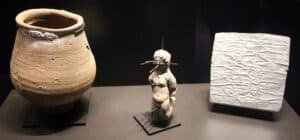
Under the cavea there's a small museum with finds from a Roman villa uncovered during construction. The remains can also be seen from the terrace, between Sala Santa Cecilia and Sala Sinopoli.
The terrace
A large walkable terrace runs around the buildings, from which you can see the lead roofs and the cavea. For photos inside, follow the venue's instructions.
Some important events that happened here
The Auditorium has a short history, with clear dates.
April 21 and December 21, 2002
On April 21, 2002 Sala Sinopoli opened, and on December 21 the other halls opened and Sala Santa Cecilia was inaugurated with a concert by the Orchestra dell'Accademia conducted by Chung Myung-whun.
From 2003 to 2006
In 2003 the concert season of the Accademia di Santa Cecilia moved permanently into the complex, and in 2006 the Rome Film Festival arrived.
A festival on a theme
From November 8 to 30, 2009 the Roma Jazz Festival was held at the Auditorium with its 33rd edition, "Jazz Labels," dedicated to jazz record labels: 70 years of Blue Note, 50 of "Kind of Blue," 40 of ECM. Two of these labels return in the discographies of the November 6 performers: Blue Note for Rubalcaba, ECM for de Holanda with Bollani.
Who has played at Sala Petrassi
There's no public record of concerts hall by hall. For the Auditorium as a whole, we can say which artists have recorded there: Keith Jarrett, Mark Knopfler, Vinicio Capossela, Tuxedomoon and William Parker.
Live albums
Fennesz and Ryuichi Sakamoto recorded "Sala Santa Cecilia" (2005), Enrico Rava and Joe Lovano "Roma" (2014), The National "Rome" (2024).
In the ER program
For the overall picture of the venue there's the page for Auditorium Parco della Musica, and for more Roman jazz the one for Casa del Jazz.
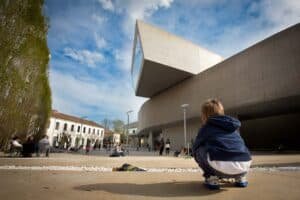
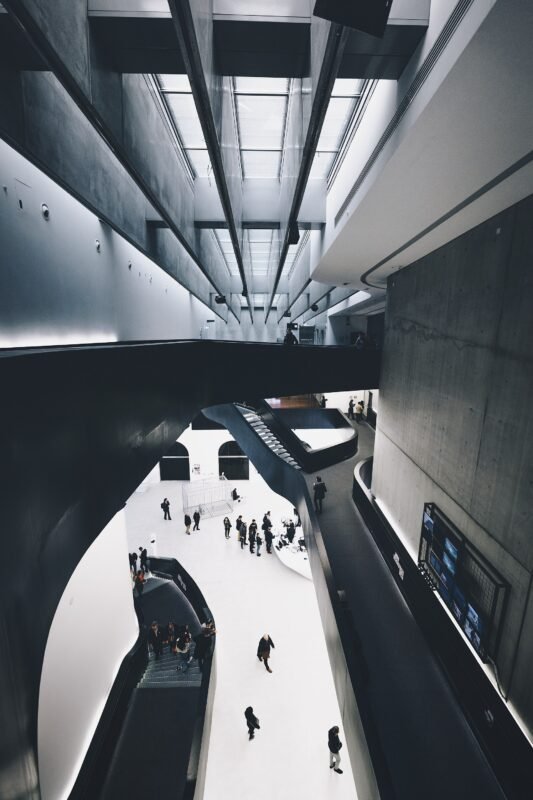
Nearby: Zaha Hadid's MAXXI
In the same Flaminio area is MAXXI, the museum designed by Zaha Hadid on the site of the former Montello barracks, next to the Basilica of Santa Croce on Via Flaminia, between Via Masaccio and Via Guido Reni. The international competition was launched in July 1998 and received 273 applications, and the jury chose Hadid's design at the end of February 1999.
An urban campus
The project is a multifunctional campus with a museum, labs, services and events. The walls are in concrete, the roof blades in fiber-reinforced cement and steel is used for the vertical connections. The museum opened on May 28, 2010 and is divided into MAXXI Arte and MAXXI Architettura, the first national museum of architecture in Italy.
Collections
The art collection includes works by Alighiero Boetti, William Kentridge, Anish Kapoor, Gerhard Richter, Maurizio Cattelan, Marlene Dumas and Kiki Smith. The ER page is here.
Practical information
- Date and time: Friday, November 6, 2026, 20:00.
- Venue: Sala Petrassi, Auditorium Parco della Musica Ennio Morricone, Viale Pietro de Coubertin 30, 00196 Rome.
- Price: from 35 euros, according to the venue.
- Tickets: event page on the official Auditorium website.
- Length and intermission: this information has not been published.
Getting there
The nearest subway station is at Piazzale Flaminio, and lines 910, 982, 168 (weekdays only) and 53 stop in front of the entrance. For up-to-date routes use the ATAC route planner. Ponte della Musica connects the area to Foro Italico, and a short distance away is the Villa Glori park.
FAQ about Hamilton de Holanda and Gonzalo Rubalcaba
When and where is the concert?
Friday, November 6, 2026 at 20:00, Sala Petrassi, Auditorium Parco della Musica Ennio Morricone, Viale Pietro de Coubertin 30, Rome.
How much does it cost?
Tickets start at 35 euros, according to the venue. The final price depends on the section and fees.
Who's playing?
Hamilton de Holanda on mandolin and Gonzalo Rubalcaba on piano: it's a duo.
What is "Collab"?
It's the duo project that the venue presents as an album bringing together the Afro-Cuban and Brazilian currents of jazz. The sources disagree on if it's a world premiere or an album already released.
What is the bandolim?
It's the Brazilian mandolin, used in choro. Hamilton de Holanda plays a custom-built 10-string model.
Do I need to know choro or Latin jazz?
No. The venue promises intricate melodies, complex rhythms and improvised exchanges. If you want to prepare, listen to a piece by Pixinguinha and an album by Rubalcaba.
Is it part of the Roma Jazz Festival?
Yes, born in 1976 and held in the fall since 1996.
Final advice on Hamilton de Holanda and Gonzalo Rubalcaba
Listen to the concert as a conversation. Two musicians from distant countries meet on new repertoire: the best part is watching how each one translates the other. The rest, from Rubalcaba's Cuba to de Holanda's Brazil, the music tells.
Article written by the editorial team of Tour Leader Pro, contact them for Private/Corporate/V.I.P. Tours and Experiences.
Planning a trip to Rome? The English-language guides for visiting the city are on ItalyPlanner.com.
Contact Information
Nearby
 Museum of Musical Instruments (MUSA)100 m
- Auditorium Parco della Musica100 m
- Villa Glori500 m
- Fountain of Anna Perenna500 m
- MAXXI – National Museum of 21st Century Arts700 m
- Flaminio700 m
Upcoming events nearby
- Roma Jazz Festival 2026, November 1 to 24 at the Auditorium and Casa del Jazz100 m
- Evgeny Kissin and András Schiff at Santa Cecilia, November 9, 2026100 m
- Roma Gospel Festival 2026 at Auditorium Parco della Musica, December 13, 2026 to January 1, 2027100 m
- Santa Cecilia 2026/2027 Concert Season at Auditorium Parco della Musica, October 21, 2026 to June 5, 2027100 m



You might also like
- Jeremy Pelt Quintet (Roma Jazz Festival) at Auditorium Parco della Musica, Teatro Studio Borgna, November 21, 2026
- Gaia Banfi, L’ultima Maccaia at Auditorium Parco della Musica, November 15, 2026
- Steve Coleman and Five Elements (Roma Jazz Festival) at Auditorium Parco della Musica, Sala Petrassi, November 5, 2026
- Kurt Elling and Yellowjackets, Celebrate Weather Report (Roma Jazz Festival) at Auditorium Parco della Musica, Sala Petrassi, November 4, 2026
- Atlantico Reunion by Enzo Favata at the Roma Jazz Festival, Auditorium Sala Petrassi, Nov 16, 2026
- Erik Truffaz and Antonio Lizana, New Sketches of Spain at Roma Jazz Festival, Nov 17, 2026