Gianola and Monte di Scauri Park (Riviera di Ulisse)
In short. The Gianola and Monte di Scauri Park (Riviera di Ulisse) is a regional nature park of 292 hectares on land plus 17 hectares of protected marine area, for a total of 309 hectares, divided between the municipalities of Formia and…
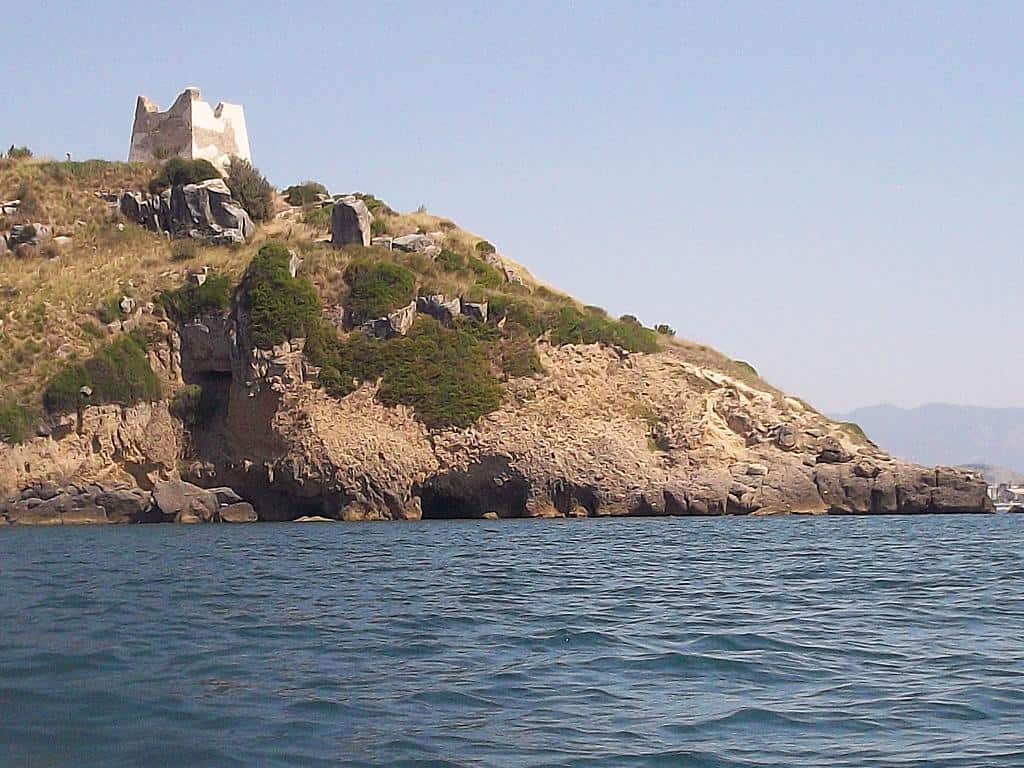
The Gianola and Monte di Scauri Park (Riviera di Ulisse) is a regional nature park of 292 hectares on land plus 17 hectares of protected marine area, for a total of 309 hectares, divided between the municipalities of Formia and Minturno, in the province of Latina. Free admission, no ticket, no reservation for independent visits of the trails. There are two main entrances: on the Gianola side, from Via Flacca and from the little streets that descend toward Via Porticciolo Romano in Formia. On the Scauri side, from the town of Minturno at the foot of Monte di Scauri. Management belongs to the Riviera di Ulisse Regional Park Authority, based at Via della Breccia 5 in Gaeta, phone 0771 743070, email parcorivieradiulisse@regione.lazio.it: it is that office you ask for the calendar of guided visits, the opening of the archaeological area and the passability of the trails after storm surges. The reference railway stations on the Rome-Naples line via Formia are Formia-Gaeta and Minturno-Scauri, both a few kilometers from the entrances. By car from Rome you take the A1 as far as Cassino and then the expressway to Formia, or Via Pontina and Via Flacca along the coast. Hours and days of the archaeological openings change by season: they must be verified on the official website of the Park Authority before getting in the car.
This is the page about the park on land: trails, cork-oak grove, Roman archaeology, views and fauna. The sea part, with the blue oasis, the Roman harbor seen from the water, the seahorse and the snorkeling, has a page of its own and is told in Gianola Blue Oasis. The administrative and landscape container of both is the regional park Riviera di Ulisse.
Where the Gianola and Monte di Scauri Park (Riviera di Ulisse) Is
The park occupies the last spur of land that the Aurunci Mountains push into the Tyrrhenian before the Garigliano plain. It is a narrow coastal tongue, a little over four kilometers long, that separates the limestone massif from the Gulf of Gaeta. To the north the real mountain, with its beech woods and its high-altitude pastures. To the south the open sea toward the islands. In between, this low green promontory, the only piece of coast between Formia and the mouth of the Garigliano left out of the pour of concrete that since the 1960s has eaten almost the whole southern Pontine coast.
Whoever arrives from Rome struggles, on the first visit, to understand where the seaside suburb ends and where the protected area begins: the little villas of Gianola almost touch the boundary of the park, and the sign of the Authority is barely noticeable. Then you take the first trail, the road vanishes behind you in 30 steps, and the noise becomes that of cicadas. This is the most precious characteristic of the Gianola and Monte di Scauri Park: the brutality of the contrast between outside and inside.
How to Get to the Gianola and Monte di Scauri Park by Car
From Rome it is about 150 kilometers and a good two hours, summer traffic excluded. The fastest road is the A1 motorway to the Cassino exit, then the expressway toward Formia and, at Formia, Via Flacca in the direction of Minturno and Scauri. The coastal alternative goes through Via Pontina, Latina, Terracina and the Flacca: it is longer and in July and August becomes a single line, but it gives the stretch between Sperlonga and Gaeta that is worth the trip by itself. Parking is never a problem off-season. In August, with the beaches full, it is best to arrive before 9:00 or after 17:00 and leave the car in the inner streets of the town, walking a few minutes more.
How to Get to the Gianola and Monte di Scauri Park by Train
Frequently Asked Questions About the Gianola and Monte di Scauri Park (Riviera di Ulisse)
How much does it cost to enter the Gianola and Monte di Scauri Park?
Access to the trails of the Gianola and Monte di Scauri Park is free, and there is no ticket office. Guided visits to the archaeological area have their own terms and are arranged with the Riviera di Ulisse Regional Park Authority, phone 0771 743070.
Do you need to book to visit the Gianola and Monte di Scauri Park?
To walk the trails of the Gianola and Monte di Scauri Park you do not need to book. You do need an arrangement with the Riviera di Ulisse Regional Park Authority to enter the underground spaces of the Mamurra archaeological area, such as the Roman cisterns.
Where is the Gianola and Monte di Scauri Park?
The Gianola and Monte di Scauri Park occupies the last spur of land that the Aurunci Mountains push into the Tyrrhenian before the Garigliano plain, a narrow coastal tongue of a little over four kilometers between the municipalities of Formia and Minturno. The park separates the limestone massif from the Gulf of Gaeta.
Are there routes to walk in the Gianola and Monte di Scauri Park?
Yes, the official hiking network of the Gianola and Monte di Scauri Park is organized on five main routes marked by the Park Authority: the Mamurra Itinerary, the Ridge Itinerary, the Porto Cofaniello Coastal Itinerary, Via Porticciolo Romano Trail, with the CAI code LH17, and the Monte d’Oro Itinerary. None of these is technically demanding.
Is the Gianola and Monte di Scauri Park suitable for children?
Yes, it works better than you would expect, on two conditions: choose the Mamurra archaeological itinerary, short and shaded, with two underground spaces to explore, which keeps children attentive for a good hour, and bring a flashlight, because the cisterns with their half-light and their echo are the highlight of the visit.
Is the Gianola and Monte di Scauri Park wheelchair accessible?
No, the Gianola and Monte di Scauri Park is a rocky promontory and its trails, with carved steps, roots and slabs, are not passable in a wheelchair. Some flat stretches in the Gianola area are easier than others, but an equipped and certified accessible route is not part of what the park offers.
What is the best time to visit the Gianola and Monte di Scauri Park?
From mid-March to late May is the best season of all for the Gianola and Monte di Scauri Park, among blooms, migrations, ideal temperatures and no crowds. September and October are worth almost as much, with the advantage of the sea still warm and the disadvantage of a less colorful scrub.
The Rome-Naples line via Formia serves both ends of the park. From Roma Termini the regional and Intercity trains stop at Formia-Gaeta in a bit under an hour and a half. The regional trains also stop at Minturno-Scauri, which is the right station to attack Monte di Scauri from the eastern side. From the stations to the park there remain a few kilometers, covered by the local bus service and by taxis. The times of the runs change often and should be checked the day before, because on Sunday the service thins out quite a bit. If you come from abroad and think in English about Italian rail connections, you will find a complete explanation of the Trenitalia system in the ItalyPlanner guide to Italian trains.
How to Get to the Gianola and Monte di Scauri Park on Foot and by Bicycle
Those staying at Gianola or Scauri reach the entrances on foot in a quarter of an hour. The bicycle works very well for getting to the park and very badly inside it: the trails are narrow, stony, partly carved in the rock, and the two-wheeler becomes a weight to push. The reasonable solution is to lock the bike at one of the entrances and continue on foot.

The Gianola and Monte di Scauri Park (Riviera di Ulisse) Within the System of Protected Areas
The regional nature park of Gianola and Monte di Scauri was born in the 1980s as an emergency response to a building speculation that had already devoured the surrounding coast. Since 1997 its management has belonged to the Riviera di Ulisse Regional Park Authority, an instrumental body of the Lazio Region established by Regional Law number 29 of October 6, 1997. The Authority administers a mosaic of protected areas distributed over six municipalities of the province of Latina: Fondi, Formia, Gaeta, Itri, Minturno and Sperlonga.
Very different things coexist within that mosaic. There is the urban park of Monte Orlando at Gaeta, with the Montagna Spaccata and the mausoleum of Lucius Munatius Plancus. There is the natural monument of the promontory of the Villa of Tiberius and of the coast of Torre Capovento at Sperlonga. There is the natural monument of Monte d’Argento at the mouth of the Garigliano. And there are the special conservation and protection zones that cover the coastal stretches, Lago Lungo, the Rio Santa Croce and the Garigliano river. The Gianola and Monte di Scauri Park is the biggest and most complete piece of the mosaic, because it is the only one that holds together, in a handkerchief of land, intact Mediterranean scrub, a centuries-old cork-oak grove, a first-rate Roman archaeological area and a stretch of protected sea.
A firm opinion: the Riviera di Ulisse is the worst-communicated regional park in Lazio. It has the material to stand comparison with the Circeo National Park, and it is presented as if it were a public garden with a view. The surprise on people’s faces, when they reach the big cistern, is always the same.
The Geology and Landscape of the Gianola and Monte di Scauri Park
The promontory of Gianola is not made of compact limestone like the Aurunci that tower over it. The dominant rock is a conglomerate: pebbles and fragments of stone carried by marine currents in remote geological epochs and then cemented together. Anyone who looks closely at a wall cut by the trail sees it clearly, because the conglomerate shows its stones set in it like raisins in a panettone. It is a detail that changes the reading of the landscape: those rocks tell of a sea that stood higher and of a coast that was elsewhere.
The conglomerate is soft and the wave works it well. This is why the sheer cliffs of the Gianola and Monte di Scauri Park are riddled with dozens of caves and cavities of marine erosion, some reachable only from the water, others visible from the viewpoints of the coastal trail. Where the conglomerate gives way, the coast recedes and leaves little nooks and pebble coves. Where it resists, it forms promontories: Monte d’Oro, the most marked, closes the bay of Porto Cofaniello to the west.
Monte di Scauri, 123 Meters That Deceive
At 123 meters above sea level, it is not a height to scare anyone. And yet Monte di Scauri, at the eastern end of the park, is the point where the landscape changes character. From the north slope, the shadier and more humid one, the cork-oak grove rises. From the south slope, exposed and beaten by the sun, the low scrub opens into clearings of bare rock from which the gaze takes in at a stroke the mouth of the Garigliano, the Minturno plain, the profile of the Massico and, on clear days, Vesuvius.
The climb from the Minturno side takes about 40 minutes of walking that is not difficult but continuous, with a total elevation gain that does not reach 150 meters. The low altitude is deceptive for two reasons: the sun, which in summer at noon beats down without mercy because shade is scarce on the ridge, and the surface, which alternates stretches of packed earth with slabs of rock polished by footsteps, slippery after rain. Whoever climbs in beach shoes regrets it at the first hairpin.
The Cork-Oak Grove of the Gianola and Monte di Scauri Park
The wood of cork oaks that covers the northern flank of Monte di Scauri is the scientific reason this park exists. Cork oaks are evergreen oaks, Quercus suber, adapted to acidic soils and to hot, dry climates, and their bark regenerates after extraction: it is the same plant that in Sardinia and Portugal produces wine corks. In southern Lazio the residual cork-oak groves can be counted on the fingers, and this is among the closest to the sea in the whole region.
Walking among those trees on a May morning is an acoustic experience before it is a visual one. The canopy filters the light differently from the holm oak, sparser, brighter, and the ground is covered by a carpet of dry leaves that returns every step. The oldest specimens have twisted, split trunks, with the cork peeling off in plates and leaving bare the bright red wood beneath. Between one trunk and the next the ground drops in sudden cliffs, and for a moment the visitor forgets being a few hundred meters from the shoreline.
The cork-oak grove also works as dormitory and pantry for migrating birds. In spring and autumn, when the routes between Africa and continental Europe pass over this stretch of Tyrrhenian coast, the wood fills with passing species that stop there to refuel. It is the period in which the Gianola and Monte di Scauri Park gives its best to those who come with binoculars.
The Mediterranean Scrub and the Spring Bloom
Outside the cork-oak grove the scrub dominates: mastic, myrtle, strawberry tree, tree heath, rockrose, broom, buckthorn, tree spurge on the most exposed ridges. In April and May the bloom turns the slopes above the cliffs into a palette that runs from the intense yellow of the brooms to the pink and white of the rockroses, with the heaths closing the background and wild gladioli popping up isolated in the grassy clearings. It lasts a few weeks, and whoever arrives in July finds the same shrubs parched and dusty: the park in spring and the park in full summer look like two different places.
Wild orchids deserve a chapter of their own for those who know how to look for them. The stony meadows and the clearings at the edges of the scrub, between March and May, host species of the genera Ophrys and Orchis, tiny, very easy to trample without noticing. They are looked at, photographed, not picked: in a protected area picking is forbidden and it would be a crime anyway against a flower that takes years to form.
The Itineraries of the Gianola and Monte di Scauri Park (Riviera di Ulisse)
The official hiking network of the park is organized on five main routes, marked and cataloged by the Park Authority: the Mamurra Itinerary, the Ridge Itinerary, the Porto Cofaniello Coastal Itinerary, Via Porticciolo Romano Trail that bears the CAI code LH17, and the Monte d’Oro Itinerary. None of these is technically demanding. All together, in a full day, they can be covered without strain: they are fewer than 10 kilometers in total, with elevation gains that do not exceed 100 meters at a time.
The Mamurra Itinerary
It is the archaeological route of the Gianola and Monte di Scauri Park, and the reason many visitors come all the way here. It crosses the area of the great Roman villa attributed to Mamurra, touching in sequence the major cistern, the cistern called of the 36 columns, the Grotta della Janara and the remains of the octagonal building recovered in recent years. The surface is good, the shade abundant, the walking time depends almost only on how long you stop in front of the masonry.
I recommend doing it first, early in the morning, for two reasons. The first is the light: inside the cisterns the low sun enters from the ventilation openings and draws sharp beams on the pillars, a spectacle that vanishes at noon. The second is practical: if you then want to go down to the sea, you arrive at the coast when the water is still calm.
The Ridge Itinerary
The inland route, the one that climbs and runs along the spine of the promontory through the cork-oak grove. It is the trail that gives the measure of the wooded part of the park and the only one from which you really understand the structure of the relief: on one side the sea, on the other the agricultural plain and the mountain. In summer it is the obligatory choice for those who walk at noon, because it is the only one with continuous tree cover.
The ridge is also the right place to stop in silence for 10 minutes. The clearings among the cork oaks are frequented by jays, woodpeckers and diurnal raptors hunting. Staying still you can hear the great spotted woodpecker drumming on dry wood, a sound that a few hundred meters from Via Flacca seems out of place.
The Porto Cofaniello Coastal Itinerary
Porto Cofaniello is the small bay that opens just past the promontory of Monte d’Oro, with a little pebble beach and rocky bottoms. From land the coastal route reaches it looking out over a panorama that covers almost 180 degrees of the Gulf of Gaeta: on the right the profile of Monte Orlando and the point of Gaeta, ahead the open sea with the Pontine islands when the air is clean, on the left the coast that runs toward the Garigliano and Campania.
The bay is the beginning of the protected marine area, where the fishing ban and the ban on motorized navigation apply. Everything about the water, the seabeds, the species and the free dives belongs to the page of the Gianola blue oasis: here suffice it to say that from dry land the color of that stretch of sea, on calm days, is the best advertisement the fishing ban could have had.
Via Porticciolo Romano Trail, CAI LH17
It bears a code of the Club Alpino Italiano, LH17, and descends from the archaeological area to sea level following the ancient route connecting the villa and its landing. It is the steepest trail in the park, with steps carved in the rock in some stretches and narrow passages between walls of conglomerate. Going down it takes a quarter of an hour, going up it takes double.
The Roman harbor, rebuilt around 1930 on the ancient structures intended for fish farming, can be seen well from above on the trail before you even reach it. From up there you understand the logic of the layout: the villa sheltered on the height, the protected landing below, and a direct link carved in the rock so that supplies went up without passing along the road.
The Monte d’Oro Itinerary
The fifth route leads to the promontory of Monte d’Oro, the western end of the Gianola and Monte di Scauri Park. It is the shortest and the most exposed: little shade, a lot of wind, and for this reason an excellent observation point on days of libeccio, when the sea slams against the cliffs and the spray rises above the edge of the promontory. In those conditions you do not go down to the coast, you just look, and it is worth the walk anyway.

The Roman Villa of Mamurra in the Gianola and Monte di Scauri Park
The Gianola archaeological area is one of the great maritime villas of the central Tyrrhenian coast, contemporary with the residences of Formia, Sperlonga and Baia, and its original extension was measured in hundreds of meters along the promontory, arranged on three terraced levels. The accepted chronology places it in the 1st century BC, with later enlargements in the imperial age. The complex included residential quarters, bath facilities, a monumental water system, an equipped landing and fishponds.
Who Mamurra Was
Mamurra was a knight from Formia of the late Republican age, praefectus fabrum in the army of Julius Caesar during the campaigns of Spain and Gaul. The praefectus fabrum was the officer responsible for engineering and supplies: a technical position that, in a long and profitable war of conquest, opened up the chances of enrichment that ancient literature did not fail to record.
On Mamurra, in fact, we have a literary source of exceptional acidity: Catullus. The poet from Verona attacks him in a series of harsh poems, gives him an obscene nickname and in poem 29 reproaches him for having squandered in luxuries the riches plundered in Gaul and Britain, dragging Caesar in as his protector. In poem 57 he puts the patron and the protégé on the same level, in one of the most violent invectives of Latin poetry. That the villa of Gianola is actually his is a traditional attribution, supported by chronological coincidence and by the richness of the layout, not a datum proved by an inscription: it is worth knowing, because it makes the difference between archaeology and legend.
There is a second literary hook, less known and more elegant. Horace, in the satire of the journey to Brindisi, calls Formia the city of the Mamurras: a sign that one generation later the name of the family alone was enough to identify the place. That line is the best way to understand how much weight this coast had in the mental geography of the Romans.
The Major Cistern
It is the most impressive monument of the Gianola and Monte di Scauri Park, and the one that visitors remember. An underground reservoir with a capacity of about 900 cubic meters of water, fed by the many springs of the nearby Aurunci Mountains. The masonry shows opus reticulatum and opus incertum carried out with care, and at the base of the pillars you can still read the plinths that held up the vaults.
A volume of 900 cubic meters, for a private residence, is a figure that has to be made digestible for the visitor. It means a reserve designed not for drinking, but to feed baths, water features, basins, fishponds and gardens on a sun-exposed promontory where in summer it does not rain for months. The Roman villa of Gianola was not a house with a view: it was a hydraulic machine disguised as a house with a view.
The Cistern of the 36 Columns
The traditional name says 36, the count says 32: square-section pillars that support groin vaults, for a capacity of about 220 cubic meters. The walls and floor were completely waterproofed with cocciopesto, the hydraulic mortar obtained by mixing lime and brick fragments, a technique the Romans used wherever water had to be held without leaks.
The discrepancy between the name and the number is not an error to be corrected on the sign: it is the sign of a popular denomination consolidated over centuries, like so many in Italian archaeology. Inside, the effect of the forest of pillars multiplying in the half-light is that of a medieval crypt, and the acoustics play tricks: a word said in a low voice in one corner arrives clean on the other side.
The Grotta della Janara
Not a natural cave, but a vaulted covered corridor, carved in the rock and equipped with small side rest areas, which connected the upper levels of the villa to the bath complex below. A monumental covered staircase, in essence, designed so that the owners could go down to the baths without crossing the service areas and without getting the sun on their heads.
The popular name deserves a note. Janara, in the Mezzogiorno, indicates the night witch. The most accredited etymology traces it back to Diana, the goddess of the woods and the moon, through the term ianara used for her priestesses. A dark, Roman, underground corridor that enters the mountain: the popular imagination needed nothing more. That the area truly preserved the memory of a Dianic cult is a hypothesis, not a documented fact, and as a hypothesis it should be told.
The Octagonal Building
The most recent investigations have brought back the remains of a building with an octagonal plan that constituted the architectural fulcrum of the whole villa. Polygonal central plans, in Roman residential architecture, indicate reception halls or prestigious living spaces, often domed and overlooking the panorama: thinking of a dining room with a view over the gulf is not rash, even if the state of the remains demands caution.
The Wounds of War on the Archaeological Area
The remains of the villa were seriously compromised by the bombings of the Second World War. It is not a marginal detail: this promontory lay right behind the Garigliano front, and in the winter between 1943 and 1944 the area was heavily pounded. Much of what today looks like natural collapse is instead the result of those months. In front of the broken masonry, the first thing to know is this: the archaeology of Gianola has two enemies, time and 1944, and the second did more damage than the first.
The Land Fauna of the Gianola and Monte di Scauri Park
Whoever arrives expecting mammals to photograph is disappointed, and does well to know it beforehand. The fauna of the park is made of small, discreet animals, almost all cold-blooded or winged. The richness is there, but it has to be sought with patience and trained eyes.
The Birds of the Gianola and Monte di Scauri Park
The ornithological component is the most interesting. The cork-oak grove and the scrub host the community typical of coastal Mediterranean woods, and in the spring and autumn passages migratory species are added that use the promontory as a stopover. The open clearings and the ridges over the sea are the best points to watch raptors in flight, especially in the middle hours when thermals form over the warm rock. A pair of 8x42 binoculars and an hour of stillness at the edge of the woods yield more than three hours of fast walking.
Reptiles and Amphibians
Wall lizards are everywhere, on the dry-stone walls, on the Roman masonry, on the conglomerate slabs warmed by the sun. There are snakes, and seeing them is normal: in the Mediterranean scrub of southern Lazio you meet mostly colubrids, harmless and very quick to disappear. The rule is simple and holds in every protected area: you do not touch them, you do not chase them, you leave them their escape route. Whoever walks with children should explain it beforehand, not after the encounter.
Butterflies and Insects
The blooms of April and May attract a remarkable quantity of Lepidoptera, and it is perhaps the most accessible natural spectacle of the Gianola and Monte di Scauri Park: no equipment is needed, no silence is needed, it is enough to stop for 10 minutes in front of a flowering rockrose bush. On the old cork oaks, in summer, you find the traces of xylophagous beetles, which find a home in dead wood and which in turn feed the woodpeckers.

Where the Land Ends and the Protected Marine Area Begins
The border between the two souls of the Gianola and Monte di Scauri Park runs along the waterline. Upslope, the 292 hectares of promontory with the trails, the cork-oak grove and the archaeology told in this guide. Downslope, the 17 hectares of protected marine area in which the fishing ban and the ban on navigation with motorboats apply, and which since 1988 has borne the name of blue oasis: that stretch of sea, its seabeds, the seahorse that has become its symbol, the harbor seen from the water and the free-diving excursions have their own dedicated page, the Gianola blue oasis, and that is where it is worth going to read.
The relationship between the two parts is one of cause and effect, and it has to be said plainly because almost nobody explains it: the marine area is well protected because behind it there is no concrete. A promontory with intact scrub means little runoff, little sewage, little turbidity. If tomorrow someone built on the 292 hectares on land, the sea in front would change in two seasons.
A Curiosity About the Gianola and Monte di Scauri Park (Riviera di Ulisse)
The real curiosity of this place is not a monument: it is a number. In the major cistern alone there are 900 cubic meters of water, plus 220 in the cistern of the 36 columns, on a promontory that has no rivers, no lakes and in summer sees no rain for weeks. How did that water get there?
The answer is the most engineering-minded and least told part of the Gianola and Monte di Scauri Park: the supply came from the many springs of the Aurunci Mountains, behind the coast. A system of catchment and conveyance carried the water from the massif to the promontory, and the cisterns worked as an accumulation lung for the whole residence. In modern terms, a private villa of the 1st century BC had a water system comparable to that of a small town.
There is a corollary that is even more striking. That water was not used only for drinking, washing and watering. It served the fishponds, that is, the fish-farming installations that the Romans of the late republic built along this coast as a sign of status: fish raised in a tank, served alive to the guests, was a luxury that Cicero himself mocked by calling piscinarii his fellow senators obsessed with their tanks. The villa of Gianola belonged fully to that world, and the submerged structures in front of the Roman harbor are its residue.
Looking at the major cistern knowing this changes the visit. It is not a warehouse: it is the heart of an economic and social machine, built by a man who had made his fortune in Caesar’s train and wanted the whole coast to know it.
Something Nobody Tells You About the Gianola and Monte di Scauri Park (Riviera di Ulisse)
That the park is, half of it, a war monument. No sign says so, no commercial guide tells it, and people walk among broken masonry convinced that 20 centuries of neglect broke it.
The truth is less romantic. Between December 1943 and January 1944 this stretch of coast lay exactly on the Tyrrhenian wing of the German defensive line that barred the road to Rome along the Garigliano. The mouth of the river is a few kilometers from Monte di Scauri. The front passed through here, with naval and aerial bombardments, barrages, mines and house-to-house fighting in the towns of Minturno and Scauri. The remains of the Roman villa came out of it seriously compromised. The landscape that looks so quiet today is a rebuilt landscape.
The second thing left unsaid concerns the present. The Gianola and Monte di Scauri Park has no ticket office, and this makes people believe it is a free and undifferentiated area. It is not so: access to the trails is free, but the archaeological area has visit terms and openings set by the Park Authority, and guided visits to the monuments are organized by contacting the offices in Gaeta. Whoever arrives on a Saturday morning hoping to enter the cisterns without having phoned first risks staying outside the gate and blaming the park, which is not at fault.
Third thing, and the most concrete: the beach of Gianola in summer is packed, and the park behind it is nearly empty. On the same August afternoon, 200 meters apart, you find a shopping-mall crush and a trail in the woods without a living soul. It is the most absurd asymmetry of the southern Pontine coast.
The Advice I Give You for Visiting the Gianola and Monte di Scauri Park (Riviera di Ulisse)
Go in April or October, and go in the morning. It is not advice of convenience: it is the difference between seeing the park and crossing it.
In April the scrub is in full bloom, the brooms and rockroses hold the slopes above the cliffs, the wild orchids are in the clearings, the migrants fill the cork-oak grove and the temperature lets you walk three hours without sweating through a shirt. In October the color is different, warmer, the sea is still usable, the tourists have vanished and the raking afternoon light does to the Roman masonry what the lighting of a museum does to a statue. July and August, instead, put together the worst heat, the worst crowd and the only season in which parking becomes a problem.
Second piece of advice, practical: closed shoes with a lugged sole. It seems pedantry for a relief of 123 meters, but the surface alternates packed earth, roots, carved steps and conglomerate slabs that after a humid night slip like glass. At Gianola ankles get twisted more than on the real Aurunci, for the simple reason that on the Aurunci people prepare and here they don’t.
Third: water. At least a liter and a half per person. In the park there are no working fountains to count on, the ridge trails have no refreshment points and the facilities of the town are outside the perimeter. Whoever counts on buying a bottle halfway along has misunderstood where they are going.
Fourth, and more important than all: give the park a real half day, not an hour. The classic mistake is to squeeze Gianola between one beach and another, rush through the Mamurra trail and leave. The archaeological itinerary, the ridge with the cork-oak grove and one of the coastal overlooks, with the stops they deserve, take four full hours. Whoever accompanies groups and wants to build a serious day on this coast finds in the network of authorized tour leaders and guides of TourLeaderPro the professionals who work steadily between Formia, Gaeta and Minturno.
Another Well-Known Fact, and Yet Rarely Cited
That the name Scauri comes from a Roman family, and almost nobody connects the two things while driving on Via Flacca reading the sign of the town.
The scholarly tradition, consolidated over centuries and taken up by the local place names, traces the name to the Aemilii Scauri, a branch of the gens Aemilia, who in the Republican age had holdings and coastal residences here. Marcus Aemilius Scaurus, consul in 115 BC and princeps senatus, was one of the most powerful men of his generation. His namesake son, aedile in 58, is remembered for having set up in Rome a temporary theater of unheard-of size and splendor. That the place name derives from their holdings on this stretch of coast is an accepted tradition, not a fact proved by an inscription found on the spot: the distinction must be kept, because the Lazio coast is full of antiquarian attributions turned into certainties by repetition.
The well-known fact, then, is that this whole coastal strip between Formia and the Garigliano was a sort of residential district of the late Republican Roman aristocracy. Cicero had his villa at Formia and was reached and killed there by hired killers in December 43 BC. Mamurra had his at Gianola. The Scauri, according to tradition, a little farther east. Tiberius, a generation later, would choose Sperlonga. It was the Riviera of the powerful, and the 292 hectares of the Gianola and Monte di Scauri Park are the only piece of that riviera where the ancient landscape can still be read without having to imagine.
Rarely cited even more: the reason for such concentration. The reason is the Appian Way. The queen of roads passed through here bound for Capua and then Brindisi, and a maritime villa on this coast allowed a senator to leave Rome in the morning and sleep by the sea in the evening, remaining reachable by the public post. The villas of Gianola and Formia are daughters of that road as much as of the view.
The Right Photo to Take at the Gianola and Monte di Scauri Park (Riviera di Ulisse)
The photo almost everyone takes is the sea seen from the coastal viewpoints: beautiful, banal, identical to 10,000 others of the Gulf of Gaeta. The right photo, the one nobody takes and that really tells the Gianola and Monte di Scauri Park, is shot inside the major cistern.
You need the light of the morning, between 8:00 and 10:00 depending on the season, when the low sun enters from the upper openings and cuts the darkness in sharp beams. You get into a corner, rest the camera or the phone on a pillar plinth, turn off the flash, raise the exposure by one stop over what the camera suggests, and frame the run of pillars toward the back, letting the beam of light enter at the top. The result is an architecture image, with the textures of the opus reticulatum readable on the wall, not the usual postcard.
Second photo, if the weather is clear: from the ridge of Monte di Scauri in late afternoon, with the cork oaks backlit in the foreground and the Garigliano plain opening in the background toward the Massico. The trick is to put a twisted trunk to the left or right of the frame as a wing: without that, the panorama goes flat and you cannot tell you are inside a wood perched over the sea.
Third, the least obvious: the detail of the conglomerate. A wall cut by the trail, side light, macro or near macro, and you get a texture of cemented pebbles that explains in one image the geology of the whole promontory. It works: people notice the rock only when they photograph it up close.
A final recommendation on etiquette: in the archaeological area you do not climb on the masonry to get the best frame, and in the cork-oak grove you do not trample the flowering clearings to photograph an orchid. A photograph is not worth permanent damage, and drones in a protected area follow rules of their own that must be verified with the Park Authority before sending them up.
Some Important Events That Happened Here in History
The promontory of Gianola has hosted no famous battles or coronations, and whoever looks for the textbook event comes away empty-handed. It has however gone through, as a very close spectator, some of the hardest passages of the history of southern Lazio.
The Construction of the Roman Villa, 1st Century BC
The founding event is the building site itself. Setting up on a conglomerate promontory a residence on three terraced levels, with cisterns of 900 and 220 cubic meters, a corridor cut in the rock to go down to the baths, an octagonal representative building and an equipped landing below, meant years of work, specialized crews and an enormous availability of capital. The wealth that made it possible, according to the ancient reading, came from Caesar’s campaigns in Gaul and Britain. Catullus made it a political case in verse: the villa of Gianola is, in this sense, the most concrete monument of a literary polemic of the 1st century BC.
The End of Cicero at Formia, December 43 BC
A few kilometers from here, in his villa at Formia, Marcus Tullius Cicero was reached and killed by the hired killers of the triumvirs on December 7, 43 BC. The episode does not belong to the territory of the park, but it defines its historical climate: in those same years, on this same coast, the protagonists of the end of the republic had houses, fish tanks and enemies. The reader who walks the Mamurra trail walks inside that season.
The Late Antique Abandonment and Reoccupation
Like all the maritime villas of the central Tyrrhenian, the one at Gianola too experienced between the 3rd and 6th centuries AD progressive abandonment, coastal insecurity and the stripping of materials. The sturdiest structures, the cisterns, survived precisely because they were underground and useless to demolish. In the following centuries the promontory went back to being land of pasture and woods, and the cork-oak grove we admire today is also the product of that long disuse.
The Harbor of 1930
Around 1930 the Roman harbor was rebuilt on the ancient structures intended for fish farming. It is an intervention we would judge invasive today and that then answered a logic of reuse and reclamation of the coast. That artifact is the reason the name Roman harbor identifies a place that, in the part visible above the water, is no longer Roman.
The Garigliano Front, Winter 1943 and 1944
The most dramatic event. The mouth of the Garigliano, a few kilometers from Monte di Scauri, constituted the Tyrrhenian wing of the German defensive line that barred the way to Rome. In the winter between 1943 and 1944 the area was the theater of bombardments, barrages and fighting. Minturno and Scauri were hit hard. The remains of the Roman villa of Gianola came out of it seriously compromised, and some masonry that is seen collapsed today owes its state to those months. It is a chapter that connects this promontory to the whole story of the Gustav Line and of the abbey of Montecassino, destroyed in February 1944 about 50 kilometers away.
The Establishment of the Park and the Blue Oasis
In the 1980s, building pressure on the southern Pontine coast had reached the breaking point. The creation of the protected land area and, in 1988, the birth of the WWF Blue Oasis on the stretch of sea in front of it stopped the concrete pour right at the last free headland. With regional law number 29 of October 6, 1997, management passed to the Riviera di Ulisse Regional Park Authority, which brought Gianola, Monte Orlando, the Villa of Tiberius headland and the other protected areas of the district under a single administration. Without those two acts, there would be rows of townhouses here today.
Who Passed Through Gianola and Monte di Scauri Park (Riviera di Ulisse)
The surest name is the one that gives the archaeological area its title. Mamurra, a knight from Formia, praefectus fabrum of Julius Caesar in the campaigns of Spain and Gaul, is the historical figure tied to this headland by the tradition and the chronology of the villa. We have no inscription that pins him to these walls, and prudence demands that we say so. We do have a literary portrait of rare ferocity, the one Catullus reserved for him in his poems, accusing him of having squandered the riches of conquest on private luxuries. Catullus never came to Gianola, as far as we know, but his venom reaches this far and makes this villa one of the few Italian archaeological sites for which we have, in effect, the contemporary pan.
Julius Caesar enters the history of the place indirectly, and precisely thanks to those verses: as Mamurra's patron, as the source of his fortune, as a parallel target of the invective. That he set foot on the headland is possible but undocumented, and it should be treated as such.
Horace certainly passed through this area. The satire of the journey to Brindisi, one of the most famous travel texts of antiquity, describes the stop in the city of the Mamurras, that is Formia, on the road that led south: the poet and his companions traveled this coast, slept here, and left us the first travel guide to southern Lazio.
Cicero belongs to the human landscape of this stretch of coast more than anyone else. His Formian villa, his letters written from the Tyrrhenian, his death in 43 BC a few kilometers from here make him the ghost that accompanies every serious visit in the area. In his letters he mocks fellow senators obsessed with fishponds: a joke that takes on a special flavor in front of the submerged structures of Gianola.
The Aemilii Scauri, according to tradition, gave their name to Scauri and lived on its coastal estates: Marcus Aemilius Scaurus, consul in 115 BC and princeps senatus, and his son of the same name, famous for the splendor of his public displays. A traditional attribution, not proven in the field.
Tiberius, finally, did not pass through here but a little further west, in his villa with the grotto at Sperlonga: his presence defines the imperial rank this coast reached in the first century AD and explains why the whole district is now called the Riviera di Ulisse, after the Homeric sculptures found in that very grotto.
In the 20th century thousands of soldiers from different armies passed through here, most of them without knowing anything about Mamurra, and in the 1980s came the volunteers and naturalists who fought to stop the bulldozers. They are, in the end, the people to whom Gianola and Monte di Scauri Park owes its continued existence.

>
Visiting Gianola and Monte di Scauri Park with Children
It works, and works better than you'd expect, on two conditions. The first is choosing the right route: the Mamurra archaeological itinerary, short, shaded, with the two underground spaces to explore, keeps children hooked for a good hour. The cisterns, with their half-light and echo, are the highlight: no child can resist the forest of pillars.
The second condition is a flashlight. A headlamp turns the visit into an expedition and solves the practical problem of poor lighting in the covered spaces. A phone works, but it takes up a hand, and in a corridor dug into the rock you need your hands.
The ridge with the cork oak grove is suitable from seven years old and up. I would avoid trail CAI LH17, steep and with cut steps, with the youngest children and with strollers, which have no chance at all in this park. A backpack baby carrier, on the other hand, works very well on the archaeological route and on the ridge.
Accessibility of Gianola and Monte di Scauri Park
The park is a rocky headland and its trails, with cut steps, roots and large slabs, can't be used in a wheelchair. Some flat stretches in the Gianola area are easier than others, but a route equipped and certified as accessible is not, at present, part of what the park offers. Anyone who needs assisted mobility should have the current situation of the individual trails checked directly with the Riviera di Ulisse Park Authority, phone 0771 743070, before planning the visit. The same goes for anyone traveling with mild mobility difficulties: the elevation change is modest, the ground isn't.
When to Go to Gianola and Monte di Scauri Park and When to Avoid It
Mid-March to the end of May is the best season by far: blooms, migrations, ideal temperatures, no crowds. September and October are almost as good, with the advantage of still-warm sea and the drawback of a less colorful scrub. November, December, January and February are perfectly doable thanks to the particularly mild Mediterranean climate of this stretch of coast, and the winter light on the conglomerates is the best of the year. The only limits are the short days and the wet ground after rain.
To avoid: Sundays in July and August, when the beaches of Gianola and Scauri clog the roads and parking becomes a treasure hunt, and the middle hours of any summer day on the ridge and coastal routes, where shade is scarce. Also avoid the period right after winter storms: the coastal stretches can have landslides and subsidence, and you need to ask the Park Authority if they can be walked.
What to See Around Gianola and Monte di Scauri Park
The park takes half a day, and the day is easily filled out. Formia is a few kilometers away and offers the so-called Tomb of Cicero on Via Appia, the remains of the Roman city and a seafront promenade that in winter is a serious walk. Gaeta is about 15 kilometers away, with the Monte Orlando urban park, the Montagna Spaccata, the Mausoleum of Munatius Plancus and the medieval old town. It is the most obvious combination and the most successful, because the two parks belong to the same authority and are read in sequence.
To the east, Minturno keeps the archaeological area of Minturnae with the Roman theater and the aqueduct, about 10 kilometers from the park. To the west, Sperlonga and the Villa of Tiberius with the museum of the Homeric sculptures are the other major archaeological destination of the district. Inland, Itri and its castle open the road toward the Aurunci Mountains Natural Park, which is the mountain behind all of this. Connections to the island of Ponza leave from the port of Formia.
Anyone building an itinerary in English for foreign visitors and looking for a way to fit this coast into a wider trip will find ready-made setups on the ItalyPlanner day trips page, while private, tailor-made experiences in Lazio, including ones designed to measure for small groups, are the business of TourLeaderPro.
Quick Questions About Gianola and Monte di Scauri Park (Riviera di Ulisse)
How much does it cost to enter Gianola and Monte di Scauri Park?
Access to the trails is free of charge, there is no ticket office. Guided visits to the archaeological area have their own arrangements and are agreed with the Riviera di Ulisse Regional Park Authority, phone 0771 743070.
Do you need to book to visit Gianola and Monte di Scauri Park?
To walk the trails, no. To enter the archaeological spaces with an accompanied visit, yes, and it's best to do it a few days ahead, because openings depend on staff availability and the season.
How long does it take to visit Gianola and Monte di Scauri Park?
Two hours for the Mamurra archaeological route alone, taking it easy. Four hours for a full visit that also includes the ridge with the cork oak grove and a coastal overlook. A whole day if you want to do all five routes and go down to the sea.
How big is the park?
292 hectares of land area plus 17 hectares of protected marine area, for a total of 309 hectares, in the municipal territories of Formia and Minturno.
How high is Monte di Scauri?
123 meters above sea level. It's the highest relief in the park and its main viewpoint.
Is Gianola and Monte di Scauri Park suitable for children?
Yes, especially on the archaeological route, which is short, shaded and has two underground spaces that children love. Trail CAI LH17 is not recommended with the youngest children. Strollers can't be used.
Can you go with a dog?
In regional protected areas dogs are generally allowed on a leash on the trails, with a ban on letting them run free to protect nesting wildlife. The specific provisions of the regulation should be asked of the Park Authority before the visit.
Can you take photos in Gianola and Monte di Scauri Park?
Yes, amateur photography is free. Drones and professional filming require specific authorizations, which are requested from the Park Authority.
Is the park wheelchair accessible?
No. The ground of the trails, between steps cut into the rock, roots and large slabs, does not allow an accessible route. It's better to check the current situation with the Park Authority for any flat stretches that can be used.
What is the difference between Gianola and Monte di Scauri Park and the Gianola Blue Oasis?
The park is the protected land area, 292 hectares of headland with trails, cork oak grove and Roman archaeology. The Blue Oasis is the stretch of sea in front, 17 hectares, created in 1988 as a WWF reserve and now under the same Park Authority: it is told on the page dedicated to the Gianola Blue Oasis.
Are there fountains or refreshment points inside the park?
You shouldn't count on anything. Water and food have to be brought from home or bought in town before entering.
What shoes do you need?
Closed shoes with a lugged sole. Sandals and beach shoes are the most frequent cause of slips on the conglomerate slabs.
Can you swim?
You get down to the sea from the coastal routes and from the Roman harbor trail, but these are pebble coves and cliffs, not beach clubs. In the protected marine area, the ban on fishing and the ban on motor navigation apply.
How do you get to Gianola and Monte di Scauri Park by train?
With the Rome-Naples line via Formia: Formia-Gaeta station for the Gianola side, Minturno-Scauri station for Monte di Scauri. From the stations you continue by local buses or by taxi.
How far is the park from Rome?
About 150 kilometers, two hours by car via the A1 and Cassino or via the Pontina and the Flacca, a little over an hour and a half by train to Formia.
When is the best time to visit Gianola and Monte di Scauri Park?
April and May for the blooms and migrations, September and October for the light and the still-warm sea. Winter is very doable thanks to the mild climate. July and August are the worst months for heat and crowds.
Can you visit the Villa of Mamurra from the inside?
The underground spaces, that is the two cisterns and the Grotta della Janara, are the heart of the archaeological visit. Access arrangements and days should be checked with the Park Authority: they are not guaranteed every day.
Why is the cistern called the cistern of the 36 columns if there are 32 pillars?
Because the name is a popular designation established over time, not a technical description. The square-section pillars counted are 32 and they hold up cross vaults, for a capacity of about 220 cubic meters.
Is there a visitor center?
The operational reference is the headquarters of the Riviera di Ulisse Regional Park Authority at Via della Breccia 5 in Gaeta, phone 0771 743070, email parcorivieradiulisse@regione.lazio.it. From there you get information on openings, guided visits and the state of the trails.
Can Gianola and Monte di Scauri Park be combined with Gaeta in a day?
Yes, and it's the best combination. Gianola in the morning, lunch in Formia or Gaeta, Monte Orlando and Gaeta's old town in the afternoon. The two parks belong to the same authority and complete each other.
Are there snakes?
Yes, as in every Mediterranean scrub of southern Lazio, and most encounters involve harmless colubrids. You don't touch them, you don't chase them, you leave them an escape route.
Is it possible to organize a guided visit for a group?
Yes, by contacting the Park Authority for access to the monuments and an authorized guide or tour leader to lead the group. Along the coast between Formia, Gaeta and Minturno work licensed professionals from the TourLeaderPro network.
I would go back to Gianola just for the half hour between half past eight and nine on an April morning, inside the largest cistern, when the light comes in from above and there is nobody else. The rest of the park is beautiful and deserves its four hours. That half hour is the reason this is the place to point to someone looking in Lazio for a spot that none of their friends has seen yet. Bring water, real shoes and the patience to stop: this headland doesn't give itself to those who rush.
Article written by the editorial team of TourLeaderPro, contact them for Private/Corporate/V.I.P. Tours and Experiences.
Planning a trip to Rome? The English guides to visiting the city are on ItalyPlanner.com.