Francesca Michielin at Auditorium Conciliazione in Rome, Live nei Teatri 2026
In short. Francesca Michielin at Auditorium Conciliazione means the singer is back live in theaters, and the Rome date is set: Saturday, November 28, 2026, at Auditorium Conciliazione in Rome, Via della Conciliazione 4, starting at 21:00.

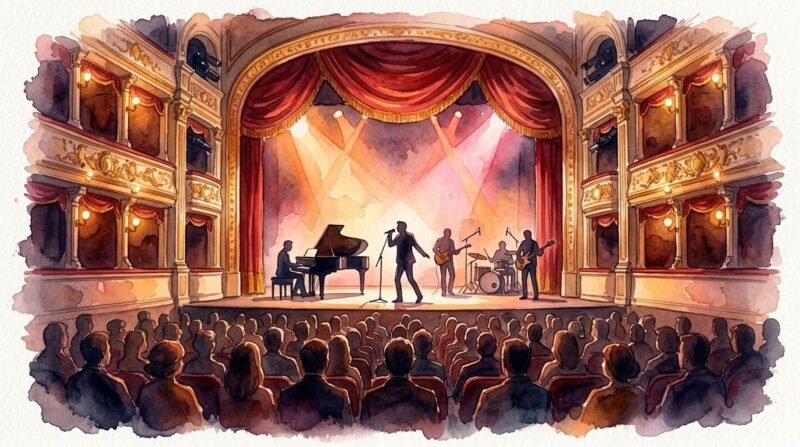
Francesca Michielin at Auditorium Conciliazione means the singer is back live in theaters, and the Rome date is set: Saturday, November 28, 2026, at Auditorium Conciliazione in Rome, Via della Conciliazione 4, starting at 21:00. After the success of her live show at the Arena di Verona, the singer-songwriter from the Veneto brings an intimate show to the stage, moving between piano, guitar and voice, alternating energy and delicacy. Anyone who has followed her for a while knows that the theater format is the one where she's at her best: it's not a winter fallback compared to summer stages, it's the place where her voice no longer has to fight against the wind and against a sound system set up for a piazza.
No special effects, lots of heart: a concert built on a direct relationship with the audience, between the best-loved songs of her repertoire and the new ones. If you love singer-songwriter music made of details and truth, it's one of the best evenings of the Roman autumn. And it's worth saying right away, because it's the thing that most often escapes people who buy a ticket without knowing it: in a hall like this the silence between one song and the next is part of the show, and anyone who arrives late or chats during a piano piece ruins it for 200 people at once.
Auditorium Conciliazione, on the street of the same name a short walk from the Vatican, is one of the most elegant concert halls in the city. Easy to reach and perfect for a theater concert. It's the hall that for almost half a century hosted the symphony concerts of Accademia Nazionale di Santa Cecilia, before the orchestra moved to Parco della Musica: a hall designed for listening, not for noise, and you can still hear it today as soon as the first note leaves the stage.
The following lines have everything you really need: how to get there without taking the wrong metro exit, where it's best to sit, what to expect from a Francesca Michielin theater concert in 2026, the history of this hall and why it's one of the few in Rome where the word auditorium means something precise. At the end there's a block of quick questions and answers, for those who just want the essentials before leaving home.
Francesca Michielin at Auditorium Conciliazione: date, time and address in two lines
When and what time
The Rome date is Saturday, November 28, 2026, with the start announced at 21:00. A Saturday night at the end of November in Rome means something very concrete: the city is full, the historic center is full, and the Vatican area is one of the few where by nine in the evening the traffic has already eased. It's still best to work backward: if the curtain goes up at 21:00, the hall usually opens an hour earlier, and anyone who wants to get in without queuing at the last minute should aim to be in front of the facade around 20:15.

Start times for concerts in Roman theaters have a real tolerance of 10 or 15 minutes, but don't count on it. In a concert hall, and this one is by birth, latecomers are let in only between songs, and sometimes only at the end of the first block. It's a rule that doesn't exist in arenas and that here is actually enforced.
The exact address
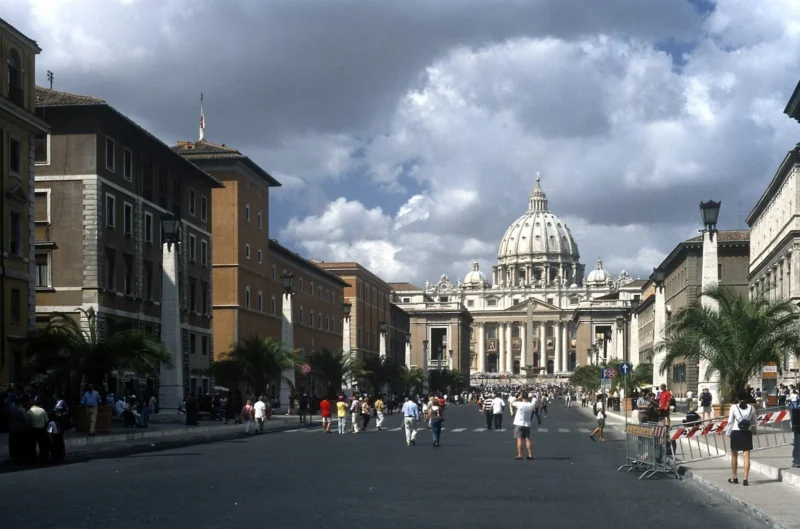
Via della Conciliazione 4, Borgo district, Rome. The public entrance is on the street, on the right-hand side if you look toward St. Peter's Basilica coming from the Tiber. The facade isn't showy: it's built into one of the large buildings that close off the street, and if you look for it expecting a theater with columns and illuminated posters you risk walking past it twice. The safest reference is the street number, not the look.
Number 4 is in the lower part of the street, toward the Tiber and Castel Sant'Angelo, not in the upper part toward the colonnade. It's a distinction that seems pedantic but in fact changes the route by 10 minutes on foot for anyone coming from the metro.
What kind of evening it is
It's a theater concert: seated audience, numbered seats, lights going down, a set that alternates piano, guitar and voice. It's not a summer stage, it's not a club, it's not a piazza. Anyone who arrives thinking of dancing under the stage ends up standing alone. Anyone who arrives knowing it's a listening evening leaves with the feeling of having seen something that wouldn't exist in a stadium.
Where Auditorium Conciliazione is and how to get there
By metro
The stop to use is Ottaviano, on line A. From there you walk down Via Ottaviano, cut across toward Piazza del Risorgimento and take Borgo Angelico or go via Via di Porta Angelica: it's 12 or 15 minutes at a normal pace, all flat, almost all on wide sidewalks. The alternative is the Cipro stop, more convenient only for those coming from the northern end of the line, but the walk gets longer.
A warning that applies to every Saturday night of the year: line A runs on Saturday night, but getting back after 23:30 becomes a gamble. If the concert ends around 23:00 and you have to cross the city, check the last train before going into the hall, not after. On Saturdays the night metro service has had different schedules over the years, and it's not wise to take it for granted based on a memory.
By bus
Via della Conciliazione and the streets around it are served by a set of lines connecting the area with Termini, the Lungotevere and Trastevere. The most useful for those coming from the center are the ones that reach Piazza Pia and Borgo Sant'Angelo, the natural terminus of this part of Borgo. If you're coming from Termini there are direct lines that run along Corso Vittorio Emanuele II and cross the Tiber, and on Saturday night they remain the simplest option. If you're coming from the Lungotevere, you get off on the riverfront and cross on foot.
The practical advice is just one: get off at Piazza Pia and no farther. From Piazza Pia to the entrance at number 4 it's a few meters, and you also walk the most beautiful stretch of the evening, with Castel Sant'Angelo behind you and the dome ahead.
On foot from the center
From Piazza Navona it's a good 20 minutes, via Via dei Coronari and Ponte Sant'Angelo. From Castel Sant'Angelo it's five minutes. From Piazza del Popolo it's a 35-minute walk along the Tiber, and on an evening at the end of November, with the river low and the lights on, it's one of the best walks Rome offers for free.
People who don't know the area always underestimate the same thing: Piazza Pia today is a pedestrian space connected directly to Castel Sant'Angelo, and the crossing that was once a chaotic intersection can be done on foot in peace. It's the most civilized way to get to a concert in this part of the city.
By car, and why it's not worth it
Not recommended, and not out of laziness. The area is a limited traffic zone at certain times, surface parking near Via della Conciliazione is practically nonexistent and spaces in the area's underground parking garages are fought over on Saturday night. If you come by car you should leave it far away, at one of the park-and-ride areas, and do the last stretch by metro. A taxi remains the sensible alternative for the return trip, keeping in mind that when a concert lets out the line at the taxi stand is long and it's best to walk five minutes toward the Lungotevere before looking for one.
Accessibility
The hall is at street level and the route from the street to the entrance has no significant steps, which is far from a given in historic Roman theaters. If you need reserved seats or a companion, though, you must say so when you buy, not on the evening itself: the dedicated seats are limited in number and are assigned at the box office, not chosen from the map.
A curious fact about Francesca Michielin at Auditorium Conciliazione in Rome, Live nei Teatri 2026
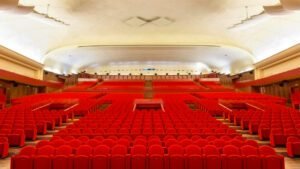
The curious fact is that this hall wasn't born as a theater and has never been, strictly speaking, a theater. It was born as an auditorium, that is, as a place designed for listening, and it was inaugurated in 1950 under the name Auditorium Pio, inside the large building that closes off Via della Conciliazione toward the Tiber, designed by Marcello Piacentini together with Giorgio Calza Bini and built between 1948 and 1950 to complete the urban project begun in 1937. There's no orchestra pit, no stage machinery of an Italian-style theater, no horseshoe tiers of boxes. There's a single hall with stalls and a balcony, made for an orchestra and for silence.
This explains something that people entering for the first time notice right away without being able to name it: the sound comes at you, it doesn't come from above. In an Italian-style theater the voice bounces between the boxes and softens. Here it goes straight, and you can hear every nuance a singer-songwriter puts at the end of a phrase. For a show like Francesca Michielin's, built on piano, guitar and voice, it's almost a gift.
There's also a detail with a touch of irony that very few people know. When the hall was handed over to Accademia Nazionale di Santa Cecilia, inside there was a large Tamburini pipe organ, designed by Fernando Germani, one of the greatest Italian organists of the 20th century. The organ belonged to the Holy See and was dismantled before the handover, to be reassembled in a church in Bologna. The hall that for 44 years was the home of Rome's most important symphony orchestra began that career by losing its biggest instrument.
One last note that explains a lot about the house rules: the building is owned by Vatican City. It's not a parlor curiosity, it's a fact that weighs on how the evening runs, on the times, on how strict the hall staff are and on how little anyone jokes about emergency exits and order in the stalls.
The hall: how it's laid out and where it's best to sit
Stalls or balcony
The hall has wide stalls and a balcony above. The general rule, for an acoustic concert like this one, is that the front rows of the stalls aren't the best: you're under the stage, you see the artist from below and you lose part of the sound balance, because the main speakers are aimed farther back. The best spot is the center of the stalls, in the band from about the seventh to the 15th row, right on the axis of the stage.
The balcony, on the other hand, is very underrated. For a voice and piano concert it's often the smartest choice: you look from above, you see the whole stage including how the musicians are arranged, and the sound arrives already mixed. It costs less and gives more. The only limit is that anyone who has trouble with heights or slopes has to reckon with a flight of steps and a steep view.
The side seats
The far side seats in the front rows should be avoided when possible. Not because you can't see, but because in a hall like this the stage is wide, and if the artist moves to the piano, which usually takes up one side of the stage, you end up looking at a back or a speaker. If you buy at the last minute and find only side seats, choose the ones farther back, not the closer ones: the difference is clear.
The acoustics
The hall has a short, controlled reverberation, which means two things. The first is that voices are intelligible: Francesca Michielin's lyrics, which are often the whole point of the song, come through word by word. The second is that mistakes can be heard, so anyone who goes on this stage knows it and prepares accordingly. It's not a forgiving hall, and that's why singer-songwriters who care come here gladly.
The foyer and facilities
The foyer is plain, with a cloakroom and a bar that works before the show and during the intermission, if there is one. In theater-format concerts there often isn't, and the evening runs straight through for 90 or 100 minutes. Plan your drinks accordingly: leaving the hall in the middle of a piano piece is the quickest way to be hated by three rows of people.
Something nobody tells you about Francesca Michielin at Auditorium Conciliazione in Rome, Live nei Teatri 2026
That theater, for her, isn't something new in 2026. Francesca Michielin has already toured Italian theaters with a whole show, Bonsoir! Michielin10 a teatro, launched in 2023 for her 10 years of career and preceded by the single Bonsoir, released in July 2022. She isn't a pop artist discovering the theater stage as a winter whim: she's someone who has already taken that format apart and put it back together, and who knows very well what works in a 1,000-seat hall and what doesn't.
There's a second level, and it's told even less. Michielin is a musician before she's a pop singer. At 12 she played bass in a student band, she learned to sing in the choir of the parish of Sant'Eusebio in Bassano del Grappa and in the multiethnic choir of the Scalabrinian Fathers' missionary center in the same town, and in February 2022 she graduated with top honors (110 cum laude) in jazz singing from Conservatorio Agostino Steffani in Castelfranco Veneto. In 2022, at the Sanremo Festival, she stepped onto the podium as conductor of the orchestra for Emma Marrone's song. Someone who conducts a symphony orchestra on live television isn't someone who only pretends to accompany herself on the piano.
The third level is the most practical and almost nobody puts it in writing. A theater show of this kind has a dramatic structure: an opening, a central section where the dynamics drop and stories are told, a build back up, a finale. If you arrive late you don't just miss two songs, you miss the setup of the whole evening, because in these concerts the first block explains everything that comes after. In an arena you can arrive halfway through and not notice. Not here.
I'll add something press releases never write: in a hall with these acoustics, the phone lit up in front of you isn't just a visual nuisance. The light of a screen in the stalls, at a voice and piano concert, reaches the stage, and the artists see it. If you want the photo, take it at the right moment, and further on I explain which one it is.
My advice for seeing Francesca Michielin at Auditorium Conciliazione in Rome, Live nei Teatri 2026
Arrive early, but not for the line
The real advice is to get to the area at least an hour and a half early, and not to be first in. It's to do the thing that makes an evening like this different from any other: walk down Via della Conciliazione in the dark, from the Tiber toward the basilica, before the concert. At the end of November at 19:30 it's already night, the streetlights are on, the dome is lit and the street is almost empty because the tour buses have left by then. It's 10 minutes of walking that are worth an admission ticket of their own.
Then you head back, go in at number 4, and reach the hall with your head already in the right evening. It's exactly the opposite of what 90 percent of the audience does, rushing in at 20:55 out of breath and spending the first three songs recovering.
Dress for a Roman November, not just for November
The Roman November is deceptive: during the day it can be mild and in the evening a dampness comes down that goes right through your clothes. The hall is heated and with the audience inside it gets warm: if you arrive in a heavy coat and there's no cloakroom available, you end up with a bundle in your arms for 90 minutes. The solution is simple and it works: light layers and an outer layer that folds up, not a mountain down jacket.
Have dinner first, and not on the street
Via della Conciliazione is a ceremonial street, not a restaurant street. The places that face onto it work almost only with the flow of pilgrims and passing tourists, and the ratio between what you pay and what you eat is almost always unfavorable. Three minutes on foot are enough to get out of it: the Borghi, that is Borgo Pio and the parallel streets behind the colonnade, have trattorias and osterias of a very different level, and on Saturday night you book. Even better, if you're not in a hurry, cross the bridge and have dinner between Via dei Coronari and Piazza Navona, which is a pleasant 20-minute walk away.
Don't buy the ticket for the seat, buy it for the axis
If you have to choose between a row farther forward on the side and a row farther back in the center, always take the center. In an acoustic concert your position relative to the axis of the stage counts more than the distance. It's advice that holds for anyone who has to choose where to sit, in this hall as at Teatro Olimpico or Brancaccio.
Stay seated until the end
The last recommendation is the most unpleasant to give and the most useful. In theater concerts the final part, the one after the fake goodbye, is almost always the best: a piece for voice and piano alone, often something that wasn't on the setlist. Anyone who gets up to beat the crowd misses exactly the moment that made it worth coming, and disturbs everyone else while doing it.
Who Francesca Michielin is: a career that starts in a parish choir
Bassano del Grappa, the bass and gospel
Francesca Michielin was born in Bassano del Grappa on February 25, 1995. She started singing in the choir of the parish of Sant'Eusebio and in the multiethnic choir of the Scalabrinian Fathers' missionary center, also in Bassano. At 12 she played bass in a student band and sang in a local gospel choir. She came to rock through her older brother Filippo, and among the names she cites as formative there's Jeff Buckley on one side and, on the other, bands like System of a Down, Incubus and Korn, which nobody would expect behind her ballads.
It's a detail that explains a lot about the way she is on stage. Someone who learned in a choir knows collective intonation and breathing. Someone who played bass in a kids' band knows tempo. The two things together produce an artist who doesn't need a prerecorded backing track to stay inside a song.
X Factor and Distratto
In 2011 she won the fifth edition of X Factor, with the final held in early January 2012, a little more than a month before she turned 17. On January 6, 2012, Sony Music released her debut single, Distratto, written by Elisa and Roberto Casalino: it reached number one on the singles chart and was later certified double platinum for more than 60,000 copies. The EP of the same name came out that same month, and in February the girl from Bassano was already a guest on the covers night of the Sanremo Festival, in a duet with Chiara Civello.
Her first album came out in the same year, 2012, followed by the singles Tutto quello che ho and Se cadrai. In March 2013 came Cigno nero, the collaboration with Fedez that sold more than 60,000 digital copies and suddenly moved her to an audience different from the talent show one.
The real apprenticeship, on other people's stages
What few people remember is the summer of 2013, which Michielin spent as an opening act: on July 20 in Gardone Riviera she opened for Gino Paoli and Danilo Rea, on July 28 in Tarvisio for Franco Battiato, on August 18 in Marina di Pietrasanta for Cristiano De André, on September 21 in Padua for Elio e le Storie Tese. Four completely different settings, four audiences that hadn't come for her. That's where you learn to hold a stage.
In January 2014 she took part in the theater show La ragazza con l'orecchino di perla in the lead role, with music by Franco Battiato, conceived by Marco Goldin and with Alice. Theater, in short, entered her biography long before 2026.
Magnifico, di20, Sanremo and Eurovision
In 2014 came Magnifico, again with Fedez, which reached six platinum records and more than 300,000 copies. In March 2015 came L'amore esiste, written by Fortunato Zampaglione, double platinum, which also earned her a Premio Lunezia. In October 2015 her second album came out, di20, produced by Michele Canova Iorfida.
In February 2016 she took part in the 66th Sanremo Festival with Nessun grado di separazione and placed second. On the covers night she performed a rearranged version of Il mio canto libero by Lucio Battisti. Since the winners declined, Rai chose her as Italy's representative at the Eurovision Song Contest 2016 in Stockholm, where she performed a shortened, bilingual version of the song and placed 16th. In February the reissue of the album came out under the title di20are.
2640, the years of maturity
In July 2017 came Vulcano, written with Dardust. In November came Io non abito al mare, cowritten with Calcutta, with the video shot at Cretto di Burri in Gibellina. Her third album, 2640, came out on January 12, 2018, and debuted at number two, with collaborations ranging from Calcutta to Dardust, from Tommaso Paradiso to Cosmo. The same year brought Fotografia, the track with Carl Brave and Fabri Fibra that became the hit of the summer and passed 150,000 copies, and in November came Femme, a song whose lyrics center on mansplaining.
It's also the year she began Il tour sopra la techno, a tour in which she performed with an electronic live set played entirely by herself. If you picture her only as voice and piano, you've seen half the character.
Feat, the second Sanremo and film
In March 2020 came Feat (stato di natura), an album built in a radical way: 11 tracks, 11 different collaborations, from Coma Cose to Måneskin, from Shiva to Fabri Fibra. In March 2021 she returned to Sanremo with Chiamami per nome, paired with Fedez, and again placed second. In October of the same year came Nei tuoi occhi, a song from the soundtrack of Marilyn ha gli occhi neri, which the following year received a David di Donatello nomination for best original song.
Her relationship with film had begun earlier: in 2019 she was at Cannes as the composer of the music for a short film by Alessandra Gonnella, her first soundtrack. It's a strand of her career that newspapers always treat as a footnote but that explains a lot about the way she builds arrangements.
TV hosting, the novel, Cani sciolti
In March 2022 she made her debut as a TV host with an environmental science program on Sky Nature, and the same month she published her first novel, Il cuore è un organo, with Mondadori. In 2022 she hosted X Factor, 10 years after winning it as a contestant, and she did it again in the following edition, which started in October 2023.
Her fifth album, Cani sciolti, came out on February 24, 2023. The summer tour that followed was cut short for health reasons: in August she had surgery to remove a kidney. It's a story she has told publicly and that changed the tone of some of the later material.
2025 and the Arena di Verona
In February 2025 she returned to the Sanremo competition for the third time with Fango in paradiso. On the covers night she sang a duet with Rkomi on a song by Cesare Cremonini. In May came the autobiographical single Francesca, which earned her a Premio Lunezia as Pop d'autore. In September came È naturale, in collaboration with Planet Funk, and on October 3 the EP Anime.
The next day, October 4, 2025, she held her first concert at the Arena di Verona, titled Michielin30 Tutto in una notte, to celebrate her 30th birthday. It sold out quickly. It's the live show every presentation of this theater tour refers to, and it's the reason why the Rome date in November 2026 comes with different expectations from those of five years ago.
2026: Magia bianca
On May 1, 2026, she released the single Una donna non può, performed in Rome during the concert in Piazza San Giovanni in Laterano. On June 5 came Strega comanda, which previewed her sixth studio album, Magia bianca, released on June 12, 2026, with eight tracks. Between June 11 and August 29, 2026, she toured Italy with the Strega comanda Summer tour, which started in Abruzzo and ended in Abruzzo, after a warm-up date in Arzachena in April.
This means, very concretely, that the Rome audience on November 28 arrives in the hall after a whole summer in which those songs were played outdoors, and will hear them in a version rethought for the theater. It's not the same setlist moved indoors: it's another show with the same repertoire, and the difference is the whole point.
Another well-known fact, yet rarely mentioned
The well-known fact is that Auditorium Conciliazione was the home of Accademia Nazionale di Santa Cecilia for 44 years. Everyone over 50 who went to symphony concerts in Rome knows it. What's almost never mentioned is why the Accademia ended up there: in the spring and summer of 1958 some stucco came away from the ceiling of Teatro Argentina, and that made it advisable to move the symphony concerts elsewhere. From the 1958/59 season the Accademia moved to Auditorio Pio on Via della Conciliazione, rented for the occasion.
Rented for the occasion. That temporary solution lasted until February 2003, when all concert activity moved to Auditorium Parco della Musica. In the meantime, in 1982, the chamber music season too, which until then had been held in Sala Accademica on Via dei Greci, had moved here. A provisional arrangement that becomes permanent for almost half a century is a very Roman story, and this hall is its monument.
There's a second, rarely mentioned aspect, and musically it's the most interesting. For 44 years this hall hosted the orchestra and chorus of Santa Cecilia, with the conductors and soloists who passed through Rome in those years. It means that the wood, the surfaces and the proportions of this space have been tested by thousands of evenings of symphonic music. When a singer-songwriter with a piano goes on stage here today, she inherits acoustics that have been put to the test by infinitely more demanding repertoires. It's an advantage the audience perceives without being able to explain it.
I'll add the note that completes the picture: the hall wasn't born on its own, it's part of a large building meant to house offices and a hotel for pilgrims, built right after the Second World War to complete the redevelopment of Via della Conciliazione. It's not a theater with its own facade and portico: it's a hall inside a building. And that's why anyone who looks for it by looking up doesn't find it.
What to expect from the concert: the theater format explained
The structure of the evening
A theater show of this kind typically lasts between 90 and 120 minutes and rests on a precise alternation: songs with the band, songs pared down to voice and piano, spoken moments. The spoken parts aren't filler: in a theater that's where the artist builds the relationship with the audience, and Michielin is particularly good at it because she has years of TV hosting behind her and isn't afraid of an open mic.
So expect sudden changes in dynamics, deliberate silences and at least one block in which the hall stays almost dark. Don't expect choreography, giant screens and confetti cannons: it's not that kind of evening and it would be out of place in this hall.
The repertoire, without promises I can't keep
The exact setlist isn't known in advance and changes from date to date, so I won't tell you which songs you'll hear. What can honestly be said is what material she has available: six studio albums, three EPs, about 15 certified singles, two Sanremo appearances in which she came second, one in which she came 21st, a repertoire of collaborations ranging from Fedez to Måneskin, and a new album released in June 2026. On this basis, a 90-minute theater concert is an exercise in cutting, not filling.
The lineup
In the theater format the band gets smaller, and often the center of the show becomes her with her instrument. Michielin plays voice, electric bass, guitar, piano and synthesizer: it's not a press kit list, it's a list of things she actually ends up doing during the same evening. People seeing her for the first time are surprised at the moment she picks up the bass, because it's not the image television has built of her.
The audience
The audience at an evening like this is more varied than you'd think: there are those who have followed her since the 2011 talent show and are now 30, those who came with Sanremo 2021, those who came with the podcast and the novel, and a substantial share of people who come for the music and nothing else. In the hall this translates into an attentive atmosphere, long applause and very little rudeness. It's one of the best audiences you'll find in Rome at this kind of concert.
The right photo to take at Francesca Michielin at Auditorium Conciliazione in Rome, Live nei Teatri 2026
The real photo is taken outside, beforehand
The right photo of this evening isn't the one from your seat in the stalls. It's the one you take 20 minutes earlier, in the middle of Via della Conciliazione, standing on the axis of the street with the illuminated dome of St. Peter's at the far end. At the end of November at eight in the evening it's fully dark, the streetlights along the street draw two converging rows and the perspective does the rest. Shoot from the center of the pedestrian roadway, keeping the dome perfectly in the middle. It's a photo that works with a modern phone, as long as you keep your elbows against your body and don't use digital zoom.
The variation from Castel Sant'Angelo
If you have an extra quarter of an hour, the second shot is taken from the Castel Sant'Angelo side, going a few meters up along the pedestrian path: you get the street at an angle, with the castle in the foreground on the left and the basilica at the end. The warm light of the streetlights against the still blue sky, in the half hour after sunset, gives a contrast you can't get at midnight. At the end of November that window falls around 17:30.
Inside the hall
Inside, the rule is simple and all theaters follow it: during the show no flash photography and no filming. The photo you can take without doing any harm is the one of the empty stage before the start, with the service lights on, the instruments ready and the piano in place. It's an image that tells the story of the evening better than a grainy close-up taken from 15 rows away, and it doesn't bother anyone.
If you really want the artist in the frame, wait for the finale, when taking photos is almost always allowed and the audience is on its feet: that's the moment when a shot makes sense, because the hall is lit and there's applause. Take one, two, and then put the phone away and enjoy the rest.
A technical tip that always applies
In a theater the light is pinpoint and harsh on the subject, and the rest is dark: if you leave your phone on automatic, the sensor meters the darkness of the hall and burns out the face. Lock the exposure by tapping on the lit face and lower it by one or two steps. It takes three seconds and turns an unreadable photo into a decent one.
Some important events that happened here in history
From 1948 to 1950: construction
The building that contains the hall was built between 1948 and 1950, designed by Marcello Piacentini and Giorgio Calza Bini, to complete the redevelopment of Via della Conciliazione begun in 1937. The auditorium, then called Auditorium Pio, was inaugurated in 1950, the year of the Holy Year. So it was born within the logic of the great Jubilee events, which in Rome is the real unit of measure for construction sites.
1958: the arrival of Santa Cecilia
In the spring and summer of 1958 some stucco coming away from the ceiling of Teatro Argentina made it advisable to move the symphony concerts of Accademia Nazionale di Santa Cecilia elsewhere. From the 1958/59 season the Accademia moved here, to a hall rented for the occasion. Before the handover the large Tamburini pipe organ designed by Fernando Germani, owned by the Holy See, was dismantled, and it ended up reassembled in a church in Bologna.
1982: chamber music too
In 1982 the Accademia's chamber music season too, which until then had been held in Sala Accademica on Via dei Greci, moved to Via della Conciliazione. From then until the early 2000s, this hall was for all intents and purposes the center of classical concert life in Rome.
February 2003: the move
Starting in February 2003 all of the Accademia's concert activity moved to Auditorium Parco della Musica, the new music complex designed in the northern part of the city. For the hall on Via della Conciliazione a second, much more varied life began: pop and jazz concerts, theater shows, conferences, ceremonies, TV productions.
The David di Donatello
Over the years the hall has hosted the David di Donatello ceremony, one of the most prestigious awards in Italian cinema. It's a fact that says a lot about its nature: a hall chosen when you need a place that's large, central, elegant and presentable on television.
Since 2020: the Concerto di Natale
Since 2020 Auditorium Conciliazione has hosted the Concerto di Natale broadcast on Canale 5, the Christmas TV event that for years was one of the most watched programs of the season. If the hall looks familiar even though you've never been inside, that's probably why.
Who has passed through Francesca Michielin at Auditorium Conciliazione in Rome, Live nei Teatri 2026
Orchestras and conductors
In the 44 years in which it was the home of Santa Cecilia, the entire symphonic repertoire performed in Rome between the late 1950s and the early 2000s passed through this hall, with the Accademia's orchestra and chorus and with the conductors and soloists who came through the capital in that period. It's not a list that can be reconstructed on one page, but it's the reason why Italian musicians, when they hear the Conciliazione mentioned, think first of classical music and then of the rest.
Italian cinema
The David di Donatello ceremony brought here, on different evenings, a large part of contemporary Italian cinema: directors, actresses, actors, producers. For one evening a year this hall was the living room of the national film industry, with the cameras, the carpet and the stalls full of familiar faces.
Pop and singer-songwriter music
From 2003 on, the hall became one of the regular stops of Italian theater tours. On the Roman calendar it sits alongside the other big halls that host this kind of evening: Teatro Brancaccio, Teatro Olimpico, Teatro Sistina, Teatro Sala Umberto and, for larger-scale music, Auditorium Parco della Musica. Anyone who follows the season of Roman theaters knows well the difference in character between these halls, and knows that the Conciliazione is the one with the most marked concert vocation.
Television
Since 2020 the Concerto di Natale has brought an international cast of musical guests to this stage every year, in front of the cameras of a live broadcast. It's a use of the hall that the audience coming for a singer-songwriter concert never associates with it, and yet today it's one of its most visible activities.
And now her
On November 28, 2026, this list gets one name longer: a singer-songwriter from Bassano del Grappa who at 16 sang in a parish choir, who won a talent show and who 15 years later arrives on a stage where symphony orchestras played for half a century. Put like that it sounds like rhetoric. Seen from inside the hall, it's simply the normal story of how music works when it works.
Borgo and Via della Conciliazione: where you're setting foot
The street
Via della Conciliazione is the great straight axis that connects the Tiber to the square in front of St. Peter's Basilica. It's a 20th-century project, cut through the fabric of the Borgo district, and it has a debated and debatable urban planning history that there's no need to reopen here. What you do need to know is one thing: the street is wide, lit, completely safe to walk at any hour of the evening, and in the evening it's almost empty. It's the exact opposite of the daytime experience.
Piazza Pia and Castel Sant'Angelo
At the river end, Piazza Pia is today a pedestrian space that connects the street directly to Castel Sant'Angelo and the bridge. If you arrive with time to spare you should walk that stretch, if only to see the castle up close in the evening light. The bridge with the statues is 100 meters away, and at the end of November at eight o'clock it's one of the most beautiful places in Rome precisely because there's almost nobody there.
The Borghi behind the street
Behind Via della Conciliazione, on the north side, there's Borgo Pio with its narrow streets and its restaurants and bars. It's the place to have dinner before a concert here, and it's three minutes' walk from the entrance. On Saturday night you book: it's a small, very busy area, and showing up at 19:30 hoping for a table is optimism.
The rest of the area
Within a 20-minute walk there are the Vatican Museums, which are closed in the evening, though, and the climb toward the Janiculum, which is the right choice if you want to spend the afternoon before the concert: the lookout, the walk and then the descent toward Borgo. It's a half-day program that ends in the hall at nine in the evening.
If you're visiting Rome for a few days and want to fit the concert into a sensible itinerary, you can rely on people who organize visits and guided tours professionally, like the network of tour leaders of TourLeaderPro, who work in this part of the city every day.
Tickets, entry and practical rules
Where to buy them
Tickets for concerts in this hall are bought through the official channels of the organizer and the hall. The rule that always applies, and that I repeat every time because every time someone falls for it: if a resale channel asks for much more than the face value for a date that's still available on the official channels, you're not buying a privilege, you're paying a markup for nothing. And if a date is sold out everywhere, the profiles promising tickets by hand on the day are a risk that isn't worth the concert.
The numbered seat
The seat is numbered and must be respected. It seems obvious, but at pop concerts in a hall it often happens that someone moves forward taking advantage of empty rows: in theaters the hall staff notice and send you back, usually at the most embarrassing moment possible.
Cloakroom, bags and checks
There's a check at the entrance, as in all performance venues. Bulky backpacks, glass bottles and long umbrellas cause problems: bring the bare minimum and allow for a few minutes in line. With an audience that all arrives in the last 10 minutes, the bottleneck always forms there.
If the concert is moved
If a date is postponed or moved to another hall, official communications come from the channels of the organizer and the hall, and the ticket generally remains valid for the new date. It's worth checking the official channels the day before, especially for a concert that falls in late November.
November in Rome: how to fit the concert into a weekend
The weather, without illusions
Late November in Rome is the season when anything can happen: clear, mild days at 15 degrees and days of persistent rain with seven degrees in the evening. The practical difference, for an evening like this, is the walk. In the rain, Via della Conciliazione becomes a very long and very exposed street, and the recommended walk before the concert is off. A folding umbrella in your bag solves it.
Saturday in the center
On a Saturday at the end of November the center of Rome is full: it's the period when the Christmas lights go up and the autumn tourist flow hasn't dried up yet. If you plan to go shopping in the afternoon and then get to the concert at a relaxed pace, allow plenty of margin: getting from the Tridente to the Vatican on Saturday at seven in the evening takes longer than the map suggests.
Making a whole weekend of it
The combination that works best is this: Saturday afternoon Castel Sant'Angelo, aperitivo in the Borghi, concert at 21:00. Sunday morning St. Peter's Basilica early, when the line is still reasonable, and then the rest of the day on the other side of the river. If you're coming from out of town and want to organize a stay in Rome well, ItalyPlanner has English guides to the city, useful especially if you're traveling with friends or relatives who don't speak Italian.
Other events in Roman theaters in the same period
November 28 falls in the busiest part of the Roman theater season, and if you love this concert format there's plenty to choose from in those weeks. In the same hall, a few weeks earlier, Malika Ayane at Auditorium Conciliazione is on the calendar, which is exactly the same kind of evening and allows an interesting comparison between two different ways of being on stage with few instruments.
In the same period, at Brancaccio, there's Michele Bravi and, in December, Mario Biondi. Sala Umberto hosts the long residency of Francesco De Gregori, which in this city is an event of its own. If you want the full picture of the hall, you can start from the page on Auditorium Conciliazione.
Who to go with
As a couple
It's the perfect evening for two, and I say it without rhetoric: it lasts the right amount of time, it ends at an hour when you can still have dinner or a drink, it's in an area that's beautiful in the evening, and the repertoire is full of songs that work better if you listen to them sitting next to someone.
With friends
It works, with one precaution: buy your seats together and in a row, not scattered. At a theater concert you don't move around, you don't meet up halfway through the evening, you don't swap seats. A group split over three sections is a group that spends the evening apart.
With kids
From 12 or 13 years old up it's a suitable evening, and in fact it's one of the best ways to show a teenager what a real concert is, without giant screens and without four-hour waits on your feet. Below that age the format doesn't hold up well: 90 minutes sitting in the dark is a lot for a child who doesn't know the songs.
On your own
It's one of the few evenings when going alone isn't strange and is actually advisable. In a concert hall nobody looks at you, all the attention is on the stage and individual listening is what this format was invented for. Get a seat in the balcony, in the center, and you won't regret it.
Frequently asked questions about Francesca Michielin at Auditorium Conciliazione
When is the concert?
Saturday, November 28, 2026, with the start announced at 21:00.
Where is it?
At Auditorium Conciliazione, Via della Conciliazione 4, Borgo district, Rome.
What time should you arrive?
In the area an hour and a half early, in front of the entrance around 20:15. Doors normally open an hour before the start.
What's the nearest metro stop?
Ottaviano, on line A: 12 or 15 minutes on foot, on the flat. Alternatively Cipro, but the walk is longer.
Can you get there by bus?
Yes. It's best to get off at Piazza Pia or Borgo Sant'Angelo and walk the last stretch of Via della Conciliazione.
Is it worth coming by car?
No. Between traffic restrictions and the lack of surface parking, the car is the worst option. Better to leave it at a park-and-ride hub and use the metro.
How long is the concert?
A theater show of this kind typically lasts between 90 and 120 minutes. The exact length isn't announced in advance.
Is there an intermission?
In theater-format concerts there often isn't one and the evening runs straight through. Plan your drinks accordingly before going in.
Are the seats numbered?
Yes, the hall is entirely numbered seating, in the stalls and the balcony.
Where is it best to sit?
In the center of the stalls, roughly between the seventh and the 15th row, or in the center of the balcony. Side seats very far forward are the worst choice.
Is the balcony worth less than the stalls?
It costs less but for an acoustic concert it often gives more: the sound arrives already balanced and you see the whole stage.
Can you take photos during the concert?
No flash and no video. The sensible photo is the one of the stage before the start, or the one of the finale with the hall lit.
Is the hall accessible to people with mobility difficulties?
Access is at street level. Reserved seats are limited and must be requested when you buy, not on the evening itself.
What kind of show is it?
A theater concert with a seated audience: voice, piano, guitar, spoken parts, low lights. It's not an arena concert.
What will she sing?
The setlist isn't released in advance and changes from date to date. The repertoire available covers six studio albums, three EPs and 15 years of singles and collaborations.
Who is Francesca Michielin?
A singer-songwriter born in Bassano del Grappa on February 25, 1995, winner of the fifth edition of X Factor, twice second at the Sanremo Festival in 2016 and 2021, Italy's representative at the Eurovision Song Contest 2016.
What instruments does she play?
Voice, electric bass, guitar, piano and synthesizer. She graduated with top honors (110 cum laude) in jazz singing from Conservatorio Agostino Steffani in Castelfranco Veneto in February 2022.
What's her latest album?
Magia bianca, her sixth studio album, released on June 12, 2026, with eight tracks, previewed by the single Strega comanda.
Has she played in theaters before?
Yes. In 2023 she toured the theater show for her 10 years of career, preceded by the single Bonsoir released in July 2022.
What was the concert at the Arena di Verona?
Michielin30 Tutto in una notte, her first concert at the Arena, held on October 4, 2025, for her 30th birthday and sold out quickly.
Why does Auditorium Conciliazione have such good acoustics?
Because it was born as a concert hall in 1950 and for 44 years, from 1958 to 2003, it was the venue for the concerts of Accademia Nazionale di Santa Cecilia.
Who designed the building?
Marcello Piacentini with Giorgio Calza Bini, between 1948 and 1950, to complete the redevelopment of Via della Conciliazione begun in 1937.
Who owns the hall?
The building is owned by Vatican City.
What was it called before?
Auditorium Pio, and in some sources Auditorio Pio or Auditorium della Conciliazione.
What other events does it host?
It has hosted the David di Donatello ceremony and, since 2020, it hosts the Concerto di Natale broadcast on Canale 5.
Where can you eat before the concert?
Not on Via della Conciliazione. Better the Borghi behind the street, three minutes' walk away, with a booking. Or the area between Via dei Coronari and Piazza Navona, a 20-minute walk.
What's the weather like in Rome at the end of November?
Changeable: it ranges from mild, clear days to rainy, damp evenings. Light layers and a folding umbrella are the right solution.
Is it suitable for children?
From 12 or 13 years old up, yes. Below that age 90 minutes sitting in the dark, with a repertoire they don't know, get long.
Can you go alone?
Yes, and in fact it's one of the best formats for doing so. A seat in the center of the balcony and the evening works beautifully.
What do I do if it rains?
Skip the walk along Via della Conciliazione and go straight to the entrance. The uncovered stretch between the bus stop and the door is short.
I'll leave you with the thing that really matters. A Francesca Michielin theater concert isn't judged by the setlist, or even by the number of hits that fit into the 90 minutes. It's judged by one precise moment, which always comes in these evenings: the one when the band stops, the piano remains, and 1,000 people in a hall built in 1950 to listen to symphonic music stop breathing at the same time. If at that moment your phone is in your pocket and not in your hand, you've done everything right.
Article written by the editorial team of TourLeaderPro, contact them for Private/Corporate/V.I.P. Tours and Experiences.
Planning a trip to Rome? English guides for visiting the city are on ItalyPlanner.com.
Contact Information
Nearby
 Academy of the History of the Healing Arts100 m
- Rione Borgo100 m
- Leonardo da Vinci Experience Museum, Via della Conciliazione100 m
- Auditorium Conciliazione100 m
- Santa Maria in Transpontina100 m
- Church of Santo Spirito in Sassia100 m
Upcoming events nearby
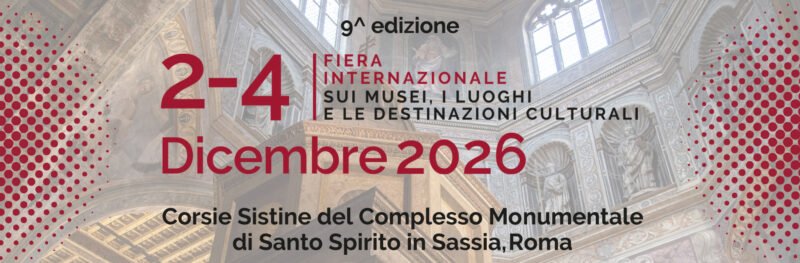
- RO.ME Museum Exhibition 2026 at Santo Spirito in Sassia, December 2 to 4, 2026100 m
- Malika Ayane in concert in Rome at Auditorium Conciliazione, November 3, 2026100 m
- Brunori Sas at Auditorium Conciliazione in Rome, November 5 to 7, 2026100 m
- Enrico Brignano at Auditorium Conciliazione: Bello di mamma!, November 10 to 22, 2026100 m

You might also like
- Sulle note di Ultimo e Baglioni at Teatro Ghione, November 3, 2026
- C’era una volta Morricone at Teatro Ghione, April 10, 2027
- Omaggio a Morricone, Musiche da Oscar at Auditorium Conciliazione, April 20, 2027
- Margherita Vicario Live 2027 at Auditorium Conciliazione, February 8, 2027
- Le Stelle di Lucio at Teatro Ghione, November 11, 2026
- Alteria, Belle storie di Rock’n Roll at Teatro Ghione, November 14, 2026