Published on
Some links on this page are affiliate links: if you buy through them, Estate Romana receives a small commission at no extra cost to you. As an Amazon Associate, Estate Romana earns from qualifying purchases.
The Christmas markets in Rome are few, different from one another and almost all concentrated between late November and January 6. The oldest and most visited is the one in Piazza Navona, which Romans still call the festa della Befana. Alongside it are the paid village at Villa Borghese, the Christmas at Auditorium Parco della Musica and a series of neighborhood fairs. Outside the city, in Lazio, the best markets are in the villages: Greccio, with its nativity scene, and the towns around Lake Bracciano.
The dates of the 2026 edition have not yet been published by the organizers as we write. For this reason, next to each event, you’ll find the dates of the 2025-2026 edition as a reference and the phrase “expected dates, to be confirmed by the organizer”. The calendar of Roma Capitale and those of the individual promoters usually come out right before the opening: it’s best to check again the week before you leave.
Data checked on October 3, 2026 on Turismo Roma, Roma Capitale, Wanted in Rome, RomaToday, the website of Fondazione Musica per Roma and the pages dedicated to the history of the festa della Befana. The notes on products to buy ahead of the Christmas markets in Rome are at the end, separate from the rest: if you’re only interested in dates and how to get there, you can stop before that.
Christmas markets in Rome at a glance
- What: the Christmas markets in Rome are mainly three: the festa della Befana in Piazza Navona, the Christmas World village at Villa Borghese and Christmas at Auditorium Parco della Musica, plus smaller fairs in the neighborhoods.
- When: in the 2025-2026 edition Piazza Navona was open from December 1 to January 6. The 2026 dates are expected for the same period but must be confirmed by the City.
- Where: the historic market is in Piazza Navona, in the Parione district, a few minutes on foot from the Pantheon and from Campo de’ Fiori.
- How to get there: Piazza Navona has no metro stop nearby. You get there on foot or by the buses that run on Corso Rinascimento and Corso Vittorio Emanuele II.
- Today: Piazza Navona market has stalls of sweets, toys, decorations and nativity figurines, a carousel, shows for kids and, on January 6, the arrival of the Befana.
- In Lazio: the Christmas market most tied to history is the one in Greccio, in the province of Rieti, the village where in 1223 Francis of Assisi set up the first nativity scene.
- Good to know: entry to Piazza Navona and Greccio is free, while Christmas World at Villa Borghese is visited with a timed ticket to buy online.
Where does Piazza Navona market come from?
The Roman Christmas fair began far from Piazza Navona. For much of the 19th century the stalls of toys, sweets and whistles were set up in Piazza Sant’Eustachio, a stone’s throw from the Pantheon, in the days of Epiphany. It was a noisy festival. Giuseppe Gioachino Belli dedicated more than one sonnet to it, and Giggi Zanazzo, collecting Roman customs and traditions, described the crowd making a “ruckus” among the lit-up shops.
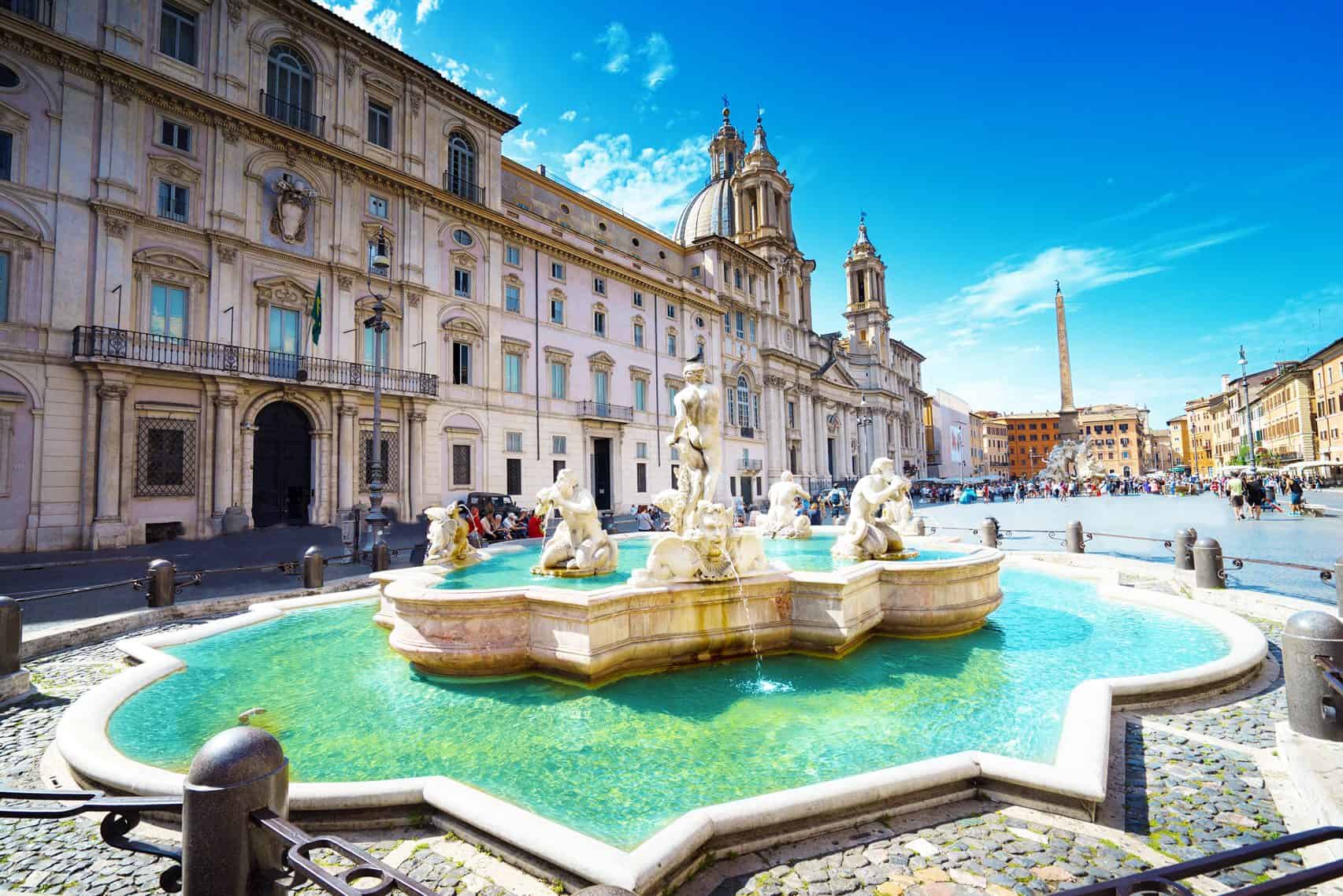
Piazza Navona, meanwhile, hosted the city market, moved here from the Capitoline Hill in 1477. In 1869 the market was moved to Campo de’ Fiori and the square was left free. In 1872, with Rome now the capital of the Kingdom of Italy, the Befana fair left Sant’Eustachio, too narrow, and found a home in the elongated space of the ancient stadium of Domitian. Since then the Christmas market and the Befana have been one and the same.
The shape of the square explains a lot about today’s experience. The stalls follow the perimeter of the ancient track, leaving the center to the three fountains, the carousel and the crowd. If you look for the Christmas market in Rome expecting a cozy village, you find instead a long walk, made for going back and forth, with Bernini and Borromini as the backdrop.
The myth of the “200 years”
Many websites, including some institutional ones, present the Befana market as a tradition renewed for over 200 years. It’s true if you count the Sant’Eustachio fair. In Piazza Navona, instead, the Christmas stalls have been there since 1872, that is, for about a century and a half. The detail matters little to someone buying nougat, but it helps to understand that the tradition is Roman and 19th-century, not Nordic, and that its heart is the Befana more than Christmas.
What are the Christmas markets in Rome and where are they?
The map of Christmas markets in Rome changes a little every year, because public land concessions and the programs of the private villages are renewed from time to time. The fixed appointments, however, are three, to which the neighborhood fairs are added. For the updated calendar of everything that happens in the city during the holidays, the reference page is all Estate Romana events.
Piazza Navona: the Befana market
It’s the market almost everyone looks for when they type “Christmas markets Rome”. In the 2025-2026 edition, according to the program released by Roma Capitale and picked up by Wanted in Rome, it opened on December 1 and stayed active until January 6, with the official inauguration by the mayor on December 6. For 2026 these are expected dates, to be confirmed by the organizer. At the stalls you find wooden toys, sweets, food products from Lazio, books, leather goods, ceramics and handmade decorations. The page on Piazza Navona tells the story of the square in the rest of the year.
The side program of the last edition included readings and workshops by the Biblioteche di Roma for kids, puppet theater, street artists and concerts. The most awaited moment remains January 6, when the Befana arrives in the square with the help of the fire department and hands out candy to the kids. That day the square is full from the morning: those with small children would do well to choose another day for the walk among the stalls and come back on the 6th only for the arrival.
Villa Borghese: Christmas World
Christmas World is a private village, fenced and paid, set up in the spaces of the Galoppatoio of Villa Borghese. In the 2025-2026 edition, according to RomaToday, it was open from November 29 to January 11, with light installations that recreate corners of cities of the world, shows and food stands. For 2026 the dates are expected, to be confirmed by the organizer. Hours and tickets are on the operator’s website, by time slot. The villa is covered on the page on Villa Borghese.
Auditorium Parco della Musica: Christmas at the Auditorium
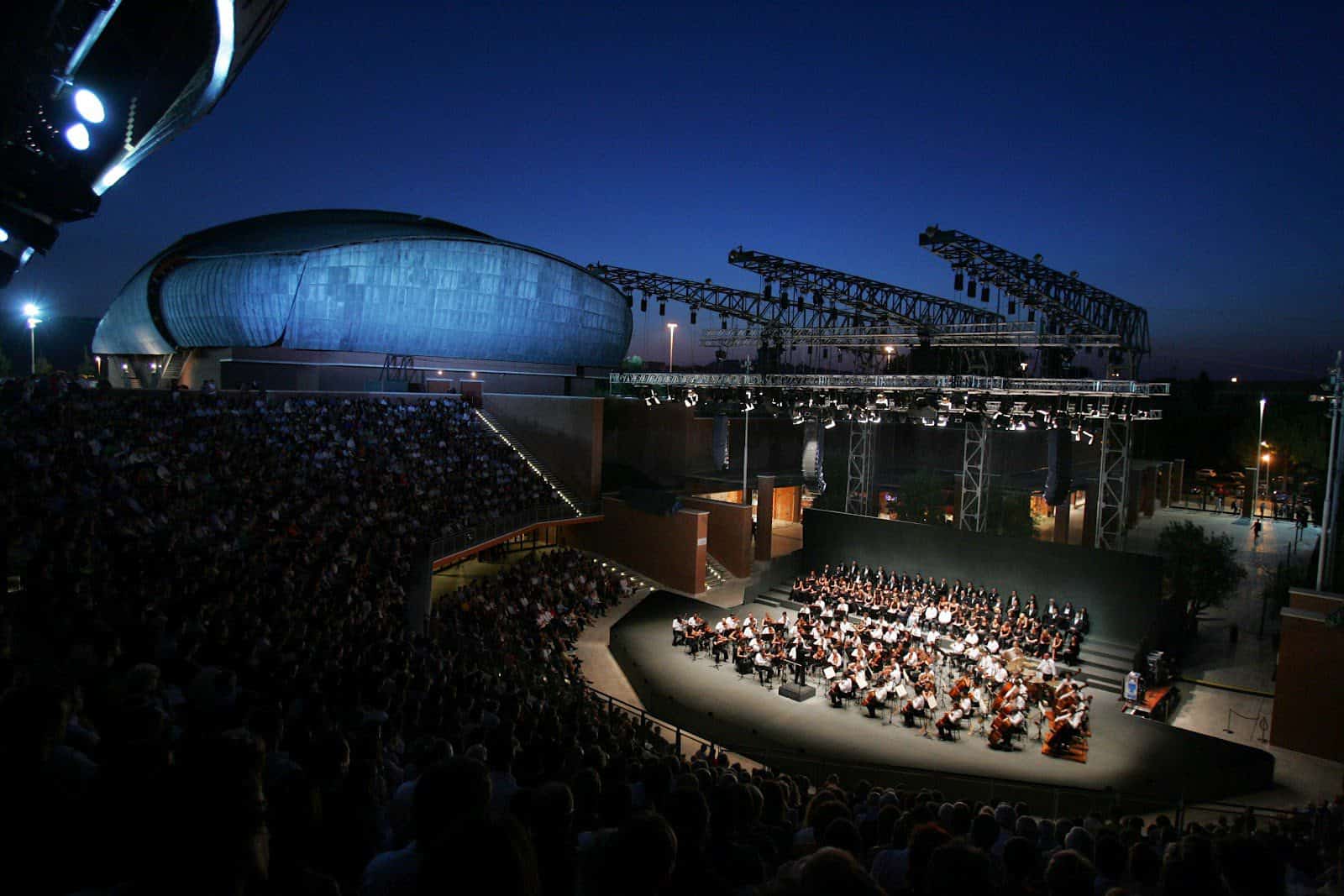
In the Flaminio district, Fondazione Musica per Roma turns the Auditorium Parco della Musica every year into a Christmas village with concerts, gospel, exhibitions, an ice rink and craft huts. The 2025-2026 edition ran from December 4 to January 6. The 2026 one is expected in the same period, with dates to be confirmed by the organizer on the website auditorium.com. It’s the best market when it rains: a large part of the program takes place indoors.
Neighborhood fairs and scattered stalls
On December weekends smaller markets appear in several neighborhoods, from the squares of San Giovanni and Appio to the coast of Ostia, often organized by merchants’ associations. They’re useful for last-minute gifts and for those who live far from the center, but they change location and dates every year: my advice is to look for them in the week’s events calendar, not to plan a trip around them.
Which Christmas markets are worth the trip out of Rome?
If you expect wooden huts, mulled wine and snow, the Christmas markets in Rome will seem different from what you have in mind. In Lazio the village atmosphere exists, but it’s found in the hills and mountains, an hour or two away by road. The proposals are collected in the near Rome section. Here we point out the destinations that also make sense for people coming from outside the region.
Greccio, the village of the first nativity scene
Greccio, in the province of Rieti, is the place where at Christmas 1223 Francis of Assisi had the Nativity scene set up in a cave, an episode told by Thomas of Celano in his first biography of the saint. In the 2025-2026 edition the village hosted, from November 29 to January 6, the market show of crafts and nativity-scene items, with free entry and open on set days, together with the live nativity performances. For 2026 these are expected dates, to be confirmed by the organizer.
The calendar of the Greccio market is not continuous: in the last edition the show opened on weekends and holidays, not every day. Before you leave, check the opening days on the website of the Comune or the Pro Loco, otherwise you risk finding the village quiet and the stalls closed. The Franciscan sanctuary, just below the town, is worth the visit in any case.
Bracciano and the lake villages
Around Lake Bracciano the Christmas markets are concentrated on a few weekends. In 2025 the one in Bracciano was held from December 11 to 14, according to the regional event calendars. The 2026 dates are expected, to be confirmed by the organizer. The advantage over Greccio is the distance: from Rome you get there by train on the regional line to Viterbo, with times on the Trenitalia website, and the day ends with a stroll on the lakefront.
The other destinations in Lazio
Many towns in the Tuscia, the Castelli Romani and the Ciociaria organize in December a market, a live nativity or a village for kids. The quality is very uneven: some are good-quality fairs of local products, others a row of gazebos with the same goods as any shopping mall. Our criterion is simple: go if the village is worth the trip on its own, and consider the market a bonus.
How do you get to the Christmas markets in Rome and Lazio?
For Piazza Navona the rule is one: no car. The historic center is a restricted traffic zone, parking is very scarce and in December the streets around Corso Vittorio Emanuele II are congested. From Termini you walk in about half an hour through Via Nazionale and the Quirinale, or you take a bus to Corso Rinascimento. The lines in service change and it’s best to check the Atac website the same day.
For Villa Borghese the most convenient metro stops are Flaminio and Spagna on line A, with a walk uphill in the park. For the Auditorium, tram 2 from Piazzale Flaminio works. If you come from another city, the train is almost always the best choice: tickets and times on Trainline, which compares Frecce and Italo on the same screen.
For Greccio and the villages of the Sabina a car really helps, because public connections on holidays are sparse. If you don’t have a car in Rome you can rent one for a day with Free2move, also useful for short trips in the city, or compare car rental agencies with EconomyBookings, handy if you pick up the car at the airport. Leave early: on December weekends the parking lots of the villages fill up by late morning.
When to go and how to organize
The best time for Piazza Navona is a weekday afternoon in the first half of December, toward sunset: the lights are on, the crowd is still bearable and the stalls are complete. The weekends of December 8 and those right before Christmas are the most crowded. In the last edition the market stayed open until late at night, but the 2026 hours will have to be read on the Comune’s website.
For a couple an afternoon is enough: an hour among the stalls, a walk to the Pantheon and Piazza Sant’Eustachio, where the festival was born, and dinner in the area. With kids it’s better to aim for the Auditorium or Christmas World, which have spaces designed for them and accessible restrooms. A group of friends who also want to see Greccio should plan on a full day outside Rome.
If it rains, the Auditorium is the safest choice, followed by the museums open during the holidays. Tickets for exhibitions and attractions are booked on Tiqets, while for evening tours of the Christmas lights and themed walks the widest catalog is that of GetYourGuide. For tickets to Villa Borghese and the nearby museums you can also look on
Tiqets under Villa Borghese.
Where to eat around the markets
Around Piazza Navona the places with the photographed menu and the waiter at the door are many, and in December they work mostly with people who don’t know the area. It’s best to move a few streets away toward Via dei Coronari or Governo Vecchio and book: tables and reviews are on TheFork, and to get your bearings there is the Estate Romana restaurant map. In the villages of Lazio, instead, the market itself often has local food stands.
When to order what you need
This article comes out about two weeks before the Christmas markets in Rome open: it’s the right time to get what you need for the walk and for the decorations at home. Order gloves, folding bags and Advent calendars now, which at the end of November sell out first. For arrival times, the estimated delivery date at the time of the order is what counts. If you’re staying at a hotel, ask the front desk first if it accepts packages in your name.
What is overrated at the Christmas markets in Rome?
In our view the most frequent disappointment comes from the comparison with South Tyrol or Germany. Piazza Navona is not a Tyrolean market and doesn’t try to be: it’s a Roman fair, with sweets, toys, figurines and the carousel. Those who take it for what it is spend a pleasant hour. Those who arrive convinced they’ll find wood crafts at every stall are let down, because many stalls sell ordinary goods.
The second mistake is buying the important gift in the square. The nativity figurines and a few craft objects are worth it, but otherwise the prices in the historic center in December are not good and the assortment repeats. Better to use the market for the spirit, a sweet and a photo, and do the serious shopping in the shops of Via dei Coronari or in the market shows of the villages.
Third: don’t show up on January 6 hoping for a quiet walk. It’s the day of the Befana, the best for kids and the most tiring for everyone else. If you want to see the stalls at your ease, go earlier. If you want to see the Befana, resign yourself to the crowd and hold the kids by the hand.
What to buy before going to the Christmas markets in Rome?
Below are some useful searches for the evening at the markets and for Christmas at home. We listed several alternatives for each category, because in November many items sell out: if the first one you like isn’t there, you’ll find other similar ones.
For the walk in the cold
- Wool gloves: December evenings in Rome are damp and the cold is felt on the hands more than anywhere else.
- Touchscreen-compatible gloves: to photograph the lights without taking them off.
- Wool scarf: useful in the evening, when you go down from the square toward the Tiber.
- Christmas sweater: for those who go to the markets with friends or family and want the themed group photo.
- Thermos for hot drinks: for tea or hot chocolate during the trip to the villages.
To take your purchases home
- Foldable backpack: it folds into a pocket and leaves your hands free among the stalls.
- Foldable shopper bag: for sweets and fragile decorations.
- Anti-theft fanny pack: in the crowd of Piazza Navona keeping documents and phone in front of you is a good habit.
To eat and drink
- Mulled wine mug: to recreate the market drink at home.
- Mulled wine spices: cinnamon, cloves and orange peel already measured out.
- Chocolate Advent calendar: to be bought before December 1, when the markets open.
- Befana stocking: the Roman tradition of January 6, to fill at home.
To decorate the house
- Glass tree decorations: alternatives to the plastic baubles of the stalls.
- Indoor LED Christmas lights: for the tree or the window, low power use.
- Nativity scene figurines: to complete the ones bought at Piazza Navona or Greccio.
To read
- The sonnets of Giuseppe Gioachino Belli: inside there is also the Rome of the Sant’Eustachio festivals.
- Zanazzo, customs and traditions of the people of Rome: the classic source on Roman traditions.
- Books about the Befana for kids: to prepare them for January 6 in the square.
Frequently asked questions
When do the Christmas markets in Rome open in 2026?
The official 2026 dates have not been published yet. As a reference, in the 2025-2026 edition Piazza Navona opened on December 1, Christmas World on November 29 and Christmas at the Auditorium on December 4. All closed between January 6 and 11. For 2026 these are expected dates, to be confirmed by the organizer.
Is entry to Piazza Navona market free?
Yes, Piazza Navona market has free entry because it takes place in a public square. You only pay for purchases, the carousel and individual shows when applicable. The case of Christmas World at Villa Borghese is different, a fenced village with a timed ticket, to be bought on the operator’s website.
What is the best Christmas market near Rome?
For history and atmosphere the most interesting is the one in Greccio, in the province of Rieti, tied to Francis of Assisi’s first nativity scene of 1223. The market show opens on set days, mostly weekends and holidays, so the calendar has to be checked first. For a shorter trip, the villages of Lake Bracciano can also be reached by train.
When is Piazza Navona least crowded?
Weekday afternoons in the first half of December are the quietest times. The December 8 long weekend, the weekends before Christmas and above all January 6 are the most crowded days. If you want to look at the stalls at your ease, pick a Tuesday or a Wednesday and arrive before sunset.
Is there mulled wine at the Christmas markets in Rome?
Yes, but it’s not the central element as in the markets of the North. At Piazza Navona sweets, nougat, cotton candy and roasted chestnuts prevail. Mulled wine is easier to find in the villages of Villa Borghese and the Auditorium and in the village markets. Those who look for it as the main experience will be more satisfied outside the city.
Can you go to the markets with small children?
Yes, but it’s best to choose the place. The Auditorium and Christmas World have spaces designed for kids and partly covered. Piazza Navona is wonderful for them on January 6, with the arrival of the Befana, but on peak days the crowd makes it hard to move with a stroller: better a baby carrier or a weekday.
What is worth buying at Piazza Navona market?
The most typical things are nativity figurines, Christmas sweets and wooden toys. My advice is to walk the whole square before buying, because several stalls sell similar items. For more refined craft gifts the shops of the nearby streets and the market shows of the villages of Lazio are better.
Who wrote this and from which sources
The text comes from the editorial team of Tour Leader Pro
, the Rome-based outfit that designs itineraries, visits and cultural events across Rome and Lazio. We compared the programs of Roma Capitale and of Turismo Roma, the news from Wanted in Rome and RomaToday, the website of Fondazione Musica per Roma and the pages on the history of the festa della Befana, on the date indicated at the start. Tell us what you find changed.
Organizing a tour of the Christmas markets means fitting together dates that come out late, a crowded city and, if you go to the villages, hill roads with early dark. For yourself an afternoon is enough. For a group of friends or an extended family you need reservations and a plan for transfers, and a useful resource for people organizing group trips is Tour Leader Pro. If you want to combine Rome, the Sabina and the Tuscia in a few days of vacation, you need a wider picture, and a useful resource for putting together a multi-day itinerary is Italy Planner.