Published on · updated on
Some links on this page are affiliate links: if you buy through them, Estate Romana receives a small commission, at no extra cost to you. As an Amazon Associate, Estate Romana earns from qualifying purchases.
The Ludi Plebei were the public games that Rome dedicated to Jupiter and, in a political sense, to the plebs. In the calendar of the late Republic they filled the days from November 4 to 17, with theatrical shows, the sacred banquet of Jupiter on November 13, a review of the horses on the 14th and races in the circus on the last three days. They were organized by the plebeian aediles, magistrates elected by the plebeians, and the place tradition links to the Ludi Plebei is the Circus Flaminius, in the southernmost part of the Campus Martius.
Today nothing official is celebrated, and of the Circus Flaminius not a single grandstand is left standing to point at. Yet November is a good month to find the Ludi Plebei on foot: the area where the circus stood coincides with the streets between the Portico of Octavia, the Theater of Marcellus and the Tiber, and the Capitoline Hill, where the banquet of Jupiter was held, is a few minutes away.
Data checked on October 3, 2026 on Livy (Ab Urbe condita, book XXIII), on William Smith’s Dictionary of Greek and Roman Antiquities, on the encyclopedia entries dedicated to the Ludi Plebei and the Circus Flaminius and on the website of the Sovrintendenza Capitolina for the area of the Theater of Marcellus. Where ancient and modern sources disagree, we say so in the text.

Ludi Plebei at a glance
- What: the Ludi Plebei were public games of ancient Rome in honor of Jupiter, organized by the plebeian aediles and documented every year since at least 220 BC.
- When: according to the epigraphic calendars collected in the Corpus Inscriptionum Latinarum, the Ludi Plebei ran from November 4 to 17.
- Where: tradition places the Ludi Plebei at the Circus Flaminius, between today’s Via del Teatro di Marcello, Piazza Cairoli, Via del Portico d’Ottavia and the Tiber.
- The banquet: on November 13, the day of the Ides, the Epulum Iovis was held on the Capitoline Hill, the sacred banquet offered to Jupiter during the Ludi Plebei.
- Getting there: the area of the Circus Flaminius is a few minutes’ walk from Piazza Venezia, heading down toward the Theater of Marcellus.
- Today: there is no official reenactment of the Ludi Plebei. The archaeological area of the Theater of Marcellus and the Portico of Octavia is free to enter.
- Good to know: in 200 BC Plautus’s Stichus was staged for the first time at the Ludi Plebei, as the comedy’s didascalia records.
What were the Ludi Plebei and why did they begin?
The Ludi Plebei are the plebeian answer to the Ludi Romani of September, the oldest games in the city. The ancient sources don’t agree on the origin. A late commentator on Cicero, known as Pseudo-Asconius, links them to the freedom the plebs obtained after the expulsion of the kings, or to the secession to the Aventine. Smith’s Dictionary, back in the 19th century, already judged the first explanation to have no historical support and preferred to read them as the memory of the reconciliation between patricians and plebeians after the first secession.
The most solid fact is another: from 220 BC the Ludi Plebei are recorded as celebrated every year. This is the era of Gaius Flaminius, the popular politician who as censor had the area of the circus that bears his name laid out and built Via Flaminia. Modern sources place the work between 221 and 220 BC, and don’t agree on the exact year. The British historian T. P. Wiseman has proposed that the games already existed earlier, as an assertion of the identity of the plebs.
Who paid? The plebeian aediles, with public funds and often with their own money. Putting on generous Ludi Plebei was an electoral investment: the public remembered who had offered better shows when it came time to vote for later offices. That’s why the games grew longer over the centuries, up to the good two weeks of the Augustan-era calendars.
When were the Ludi Plebei held and how were the days divided?
The painted and inscribed calendars that have come down to us, collected in the Corpus Inscriptionum Latinarum, assign the days from November 4 to 17 to the Ludi Plebei. The sequence reconstructed by scholars is this: from November 4 to 12, stage shows, meaning comedies, mimes and performances. On November 13, the Epulum Iovis. On the 14th, the parade and inspection of the horses, the equorum probatio. From the 15th to the 17th, the games in the circus with the chariot races.
A useful clarification for anyone reading older texts: Smith’s Dictionary, published in 1875, gives November 16, 17 and 18 as the dates, because it relied only on literary testimony and on a shorter duration, that of the early days. It’s not a mistake to correct with a red pencil: the games lengthened over time, and the two sets of dates capture different eras. If you find the Ludi Plebei dated differently in two books, this is almost always the reason.
The dates weren’t untouchable. Livy tells us that in 216 BC the plebeian games of the aediles Marcus Aurelius Cotta and Marcus Claudius Marcellus were «ter instaurati», repeated three times. A ritual error, a wrong formula or an interruption was enough for the celebration to be redone from scratch. It was a very concrete way of seeing religion: the pact with the gods only held if every gesture was carried out in the right order.
Theater at the Ludi Plebei: Plautus and the Stichus
The longest part of the Ludi Plebei, the one with the stage days, has left a precise literary trace. The didascalia of Plautus’s Stichus, the ancient note that accompanies the text, records that the comedy was performed at the Ludi Plebei of 200 BC, under the aediles Gnaeus Bebius and Gaius Terentius. It’s one of the few certain dates in Plautine chronology.
The Stichus tells of two sisters waiting for their husbands, who left on business, and of a father who would like to get them remarried. It closes with a party of slaves full of wine and songs. Reading it today, even in translation, gives an idea of the tone of plebeian shows: direct comedy, music, little solemnity. It’s the perfect counterweight to the banquet of Jupiter on the Capitoline.
What was the banquet of Jupiter on November 13?
The Epulum Iovis was the most solemn moment of the Ludi Plebei. On November 13, the day of the Ides, sacred to Jupiter, a banquet was set up on the Capitoline Hill in which the gods were the guests. Valerius Maximus describes the scene with a detail that sticks in the mind: Jupiter was invited lying on a banquet couch, Juno and Minerva seated on chairs. They were the statues or images of the Capitoline triad, arranged as diners.
Beside the gods ate the senators and the magistrates. For the people the banquet was above all a show to watch and a sign of order: the public offices sat at table with Jupiter, on the same day the plebs celebrated their own games. A similar epulum was held on September 13 during the Ludi Romani, and the repetition says a lot about how much the Ludi Plebei wanted to put themselves on a par with the patrician ones.
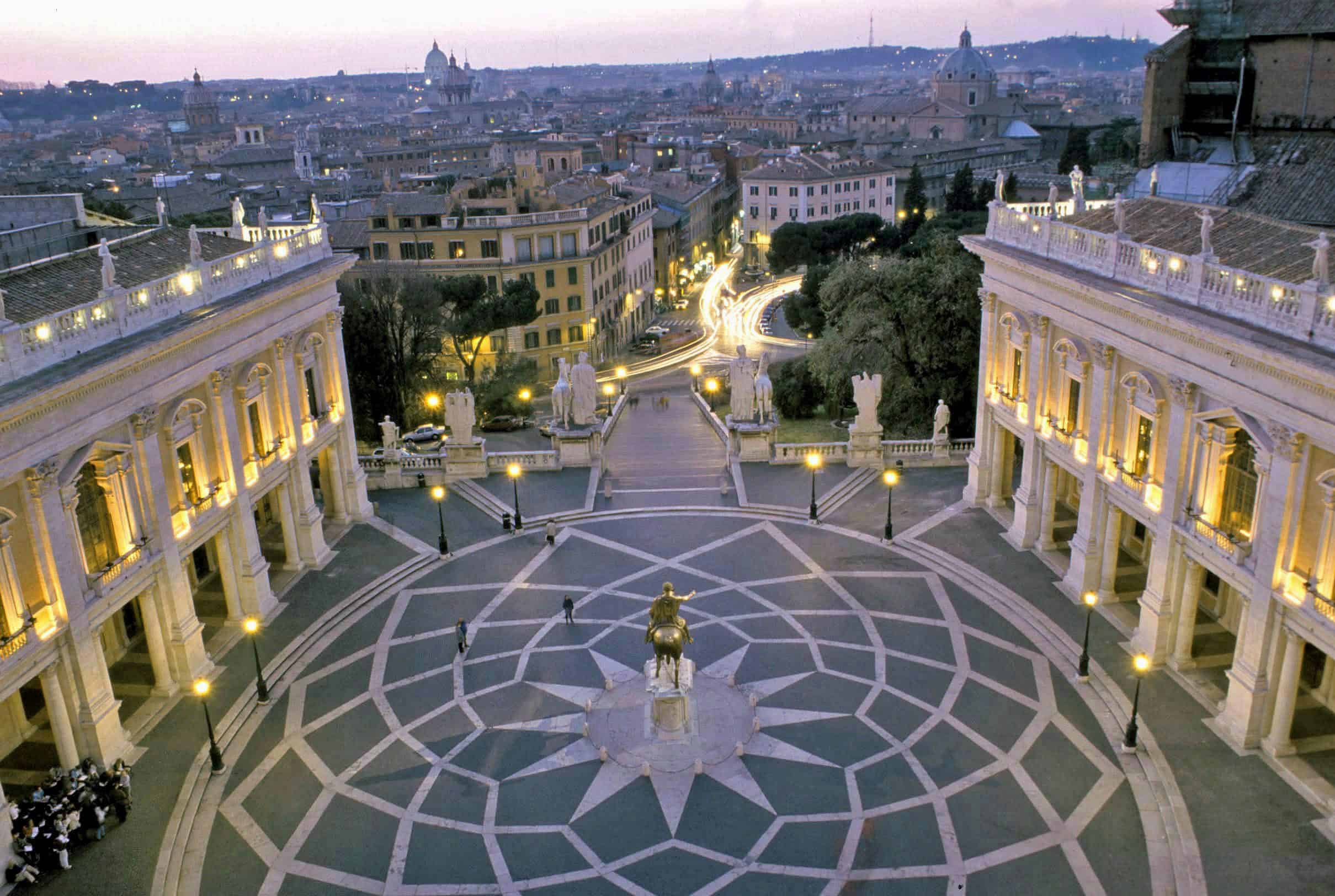
If you want to find the place, go up to Piazza del Campidoglio. The great temple of Jupiter Optimus Maximus is gone, but its remains can be seen inside the Capitoline Museums, in the Palazzo dei Conservatori. For an overview of the hill, with the viewpoints and the stairways, there’s our page on the Capitoline Hill.
Where was the Circus Flaminius and what is left today?
The Circus Flaminius occupied the southernmost part of the Campus Martius, near the bank of the Tiber. On today’s map the area lies between Via del Teatro di Marcello, Piazza Cairoli, Via del Portico d’Ottavia and the river. At the start it was about 500 meters long. By the 3rd century AD, squeezed by the temples, porticoes and theaters built around it, it had shrunk to about 300.
And here’s our contrarian position: anyone who imagines the Ludi Plebei as a November copy of the Circus Maximus, with packed stands and teams of four horses at full gallop, is almost certainly wrong. The Circus Flaminius was more a big open square than a stadium, without the permanent seating of the Circus Maximus, and some scholars doubt it had a proper track for chariot races. Where the equestrian contests of the last days took place, the sources don’t say clearly.
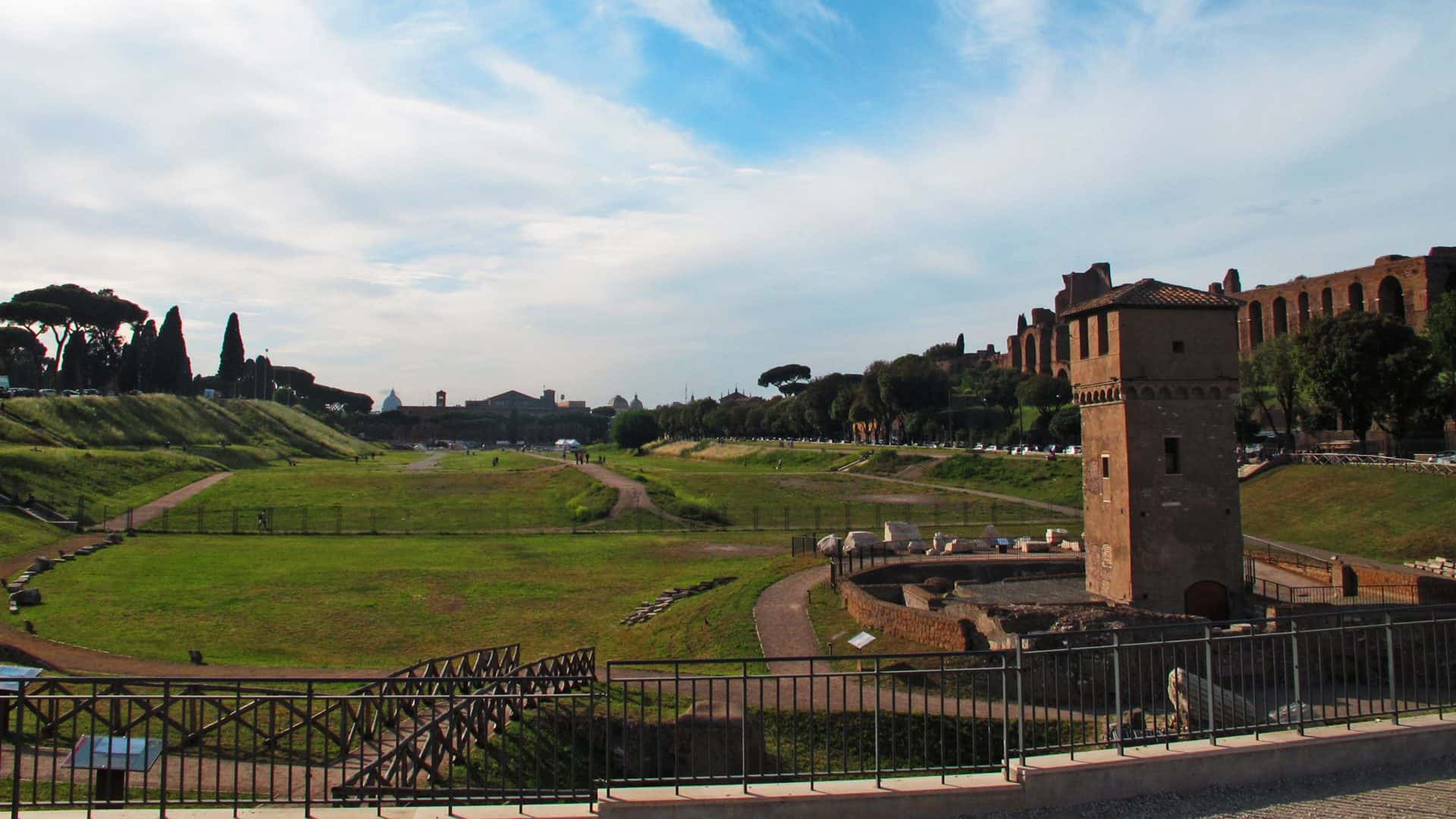
As a result, in Rome you won’t find a ruin with a sign saying “Circus Flaminius.” You’ll find instead the monuments that grew up around it: the Theater of Marcellus, the Portico of Octavia, the columns of the temple of Apollo Sosianus. Our page on the Campo Marzio district helps connect these pieces with the rest of the area, from Piazza Navona to the
Pantheon.
Where to go in Rome to experience the Ludi Plebei today?
The most sensible route starts from the Theater of Marcellus, which Augustus completed right at the edge of the ancient circus. The archaeological area of the Theater of Marcellus and the Portico of Octavia is free to enter, with paved paths and ramps. Hours change between summer and winter and the Sovrintendenza publishes them on the official page of the Theater of Marcellus and the Portico of Octavia. In case of exceptionally bad weather the area may stay closed.
From there, following Via del Portico d’Ottavia, you reach the Portico of Octavia, in the heart of the Jewish quarter. Walk knowing that under your feet was the open space of the Ludi Plebei. It’s one of the few cases where an ancient layout can still be read in the curve of the streets and the alignment of the houses. Continuing toward Via delle Botteghe Oscure you find the Crypta Balbi, another page of the southern Campus Martius.
To complete the comparison you need the Circus Maximus, the real racing stadium, about 20 minutes on foot passing through the Forum Boarium. Seeing the two places on the same day makes the difference in scale clear right away. Nearby is also the Mouth of Truth, and for anyone who wants to go underground, the Mithraeum of the Circus Maximus, which can be visited by reservation under the operator’s rules.
A half-day itinerary through the places of the Ludi Plebei
The advice is to dedicate a morning or an afternoon to the places of the Ludi Plebei, without rushing. Start from Piazza del Campidoglio, where the Epulum Iovis was held, and if you have time go into the Capitoline Museums for the remains of the temple of Jupiter. Then go down the Cordonata stairway toward Via del Teatro di Marcello. The next stretch, between the theater, the portico and the riverside road, is the circus area.
From the Portico of Octavia you can continue toward the Roman Forum or turn south toward the Circus Maximus. Allow two and a half to three hours without museums, four or five if you go into the Capitoline. November in Rome has short days: darkness comes early in the afternoon, and it’s best to finish the outdoor part in the light. For evenings, the calendar of events in Rome lists shows and special openings.
With kids a different logic works better: tell the story of the games in front of the Circus Maximus, where the open space makes everything clearer, and leave the Campus Martius for later. For a couple, instead, the natural order is the opposite: the Campidoglio at sunset, then dinner in the Jewish quarter. For a group of friends it’s better to split the walk into two half days, so whoever gets tired doesn’t drag the others down.
What to do if it rains during the days of the Ludi Plebei?
November is one of the rainiest months in Rome, and the outdoor walk suffers for it. The solution most in keeping with the Ludi Plebei is the Capitoline Museums: you stay indoors, you see what remains of the temple of Jupiter and you rediscover the religious dimension of the games, which is the part usually forgotten. The museums of Rome in our list also offer alternatives close to the Campus Martius.
A common mistake is giving up on the Theater of Marcellus altogether because it’s raining. The area is small, it takes half an hour to walk, and with a folding umbrella and shoes that don’t mind water it’s no problem. If instead the weather is really bad, the area may stay closed. In that case move that stretch to the next day and keep the museum as the main plan.
How to get organized: tickets, orders and lead time
If you’re thinking of going during the days of the Ludi Plebei, from November 4 to 17, you have about 12 days from the publication of this article to the start of the games. That’s enough to book an entry to the museums or a third-party guided visit, less so for items that arrive from far away. For products ordered online, what counts is the estimated delivery date at the time of the order. Check it before paying, especially if you want them delivered to your hotel.
Anyone organizing for a group of friends or an extended family should fix the entry time at the Capitoline and build the rest around it. The Theater of Marcellus is free to enter and needs no reservation, so it can act as a buffer: if the group arrives late, that part gets shortened. Museum hours should be checked on the operator’s website in the days before the visit.
The most common mistakes about the Ludi Plebei
The first mistake is confusing the Ludi Plebei with the Saturnalia or other popular year-end festivals. The Saturnalia fell in December and had a different spirit, made of role reversals and gifts. The Ludi Plebei were instead a public festival organized by the state, with magistrates, priests and a program set by the calendar.
The second mistake is thinking they were a festival reserved for plebeians. The name indicates who organized them, the plebeian aediles, and the political meaning, not an entry ban: anyone could attend the shows. The third, already seen, is imagining the Circus Flaminius as a second Circus Maximus.
What to buy for the Ludi Plebei: books, games and gear
Below you’ll find what you need to read, play and walk during the days of the Ludi Plebei. We’ve put several alternatives for each category, because individual products often sell out. Prices change constantly: you see them when you click.
To read
- Books on the Roman plebs: to understand the secessions and struggles the Ludi Plebei come from.
- Paper guides to Rome: useful for the Campus Martius, where phone maps don’t show the ancient buildings.
- The comedies of Plautus: the Stichus was staged at the Ludi Plebei of 200 BC.
- Livy, History of Rome: the source that tells of the games repeated three times in 216 BC.
To play at home
- Board games about ancient Rome: for a themed evening before or after the walk.
- Ancient Rome puzzles: good for kids who want to see the city as it was.
- Chariot race games: to tell the story of the races on the final days.
Food and drink
- Venchi chocolate: a sweet to bring to a dinner themed on the banquet of Jupiter.
- Italian wines on Vino.it: for the table on November 13, the day of the Epulum Iovis.
- Red wines from Lazio: a local alternative if the first shop doesn’t have what you’re looking for.
- Ancient Roman cookbooks: reconstructed recipes for a banquet at home.
For walking in the city in November
- Comfortable city shoes: the sampietrini of the Ghetto are slippery when it rains.
- Anti-theft backpacks: useful in the crowded areas between Piazza Venezia and the Campidoglio.
- 10000 mAh power bank: to keep digital tickets and maps charged.
- Insulated bottles: in November they’re for a hot drink more than for cold water.
- Foldable hats: they fit in a pocket and protect from low sun and drizzle.
- Windproof folding umbrellas: on the riverside road you feel the wind.
Experiences and tickets
- Circus Maximus experiences on GetYourGuide: to see the great racing stadium.
- Guided tours of the Jewish quarter on GetYourGuide: the area of the ancient Circus Flaminius.
- All experiences in Rome on GetYourGuide: if the first two are sold out.
- Capitoline Museums tickets on Tiqets: for the remains of the temple of Jupiter.
- Circus Maximus tickets on Tiqets: an alternative if you prefer this platform.
- Rome attractions on Tiqets: to build the rest of the day.
Frequently asked questions
When were the Ludi Plebei celebrated?
The Ludi Plebei were celebrated from November 4 to 17 according to the epigraphic calendars of the Augustan era. In the early days they lasted less, which is why some 19th-century texts, like Smith’s Dictionary, give only November 16, 17 and 18. The two datings describe different phases of the same festival.
Who organized the Ludi Plebei?
The Ludi Plebei were organized by the plebeian aediles, magistrates elected by the plebeian assembly. They used public funds but often added their own money, because well-run games helped a political career. It was one of the quickest ways to get known by voters before running for higher offices.
What was the Epulum Iovis?
The Epulum Iovis was the sacred banquet offered to Jupiter on the Capitoline Hill on November 13, during the Ludi Plebei. According to Valerius Maximus, Jupiter was invited lying on a couch, Juno and Minerva seated. Senators and magistrates took part in the dinner. A similar banquet was held on September 13 for the Ludi Romani.
Can you still see the Circus Flaminius in Rome?
No, no recognizable structures of the Circus Flaminius remain on the surface. You can, though, walk over its area, between Via del Teatro di Marcello, Piazza Cairoli, Via del Portico d’Ottavia and the Tiber. The Theater of Marcellus and the Portico of Octavia, built at the edge of the circus, can be seen and are free to enter.
Is there a reenactment of the Ludi Plebei in November?
There is no official, fixed reenactment of the Ludi Plebei. Initiatives by cultural associations or lectures on Roman festivals may come up, but they need to be checked year by year on the organizer’s website. The simplest way to experience them remains a walk between the Campidoglio, the Theater of Marcellus and the Circus Maximus.
How much time does it take to visit the places of the Ludi Plebei?
You need two and a half or three hours for the outdoor walk, from the Campidoglio to the Portico of Octavia and on to the Circus Maximus. If you add the Capitoline Museums, count four or five hours in all. In November it gets dark early, so it’s best to start in the morning or early afternoon.
Were the Ludi Plebei only for plebeians?
No, the Ludi Plebei were open to the whole Roman public. The name indicates who organized them and their political meaning, tied to the struggles of the plebs for their rights, not an access rule. Citizens of every class attended the theatrical shows and the races, as was the case for the Ludi Romani.
Who wrote this and from what sources
The text comes from the editorial team of Tour Leader Pro, the Rome-based company that designs itineraries, tours and cultural events across Rome and Lazio. We used Livy, William Smith’s Dictionary of Greek and Roman Antiquities, the encyclopedia entries on the Ludi Plebei and the Circus Flaminius and the website of the Sovrintendenza Capitolina, consulted as of the date shown at the top. Let us know what you find has changed.
Organizing a day around the Ludi Plebei, for yourself or for a group of friends, means fitting together a museum with an entry time, an outdoor walk and the short light of November. A useful resource for anyone organizing group trips is Tour Leader Pro. If the trip widens to Lazio, with Tivoli, Ostia Antica or the Castelli Romani, a useful resource for putting together a multi-day itinerary is
Italy Planner.