Published on
Some links on this page are affiliate links: if you buy through them, Estate Romana receives a small commission at no extra cost to you. As an Amazon Associate, Estate Romana earns from qualifying purchases.
Which water bottles should you bring to Rome if you spend the day on foot? The advice is simple: a steel bottle of half a liter or a bit more, light, with a cap that doesn’t drip, to fill at the nasoni along the way. Rome puts water bottles to the test in a specific way: lots of kilometers on cobblestones, security checks at the entrance to sites, public drinking fountains a few hundred meters apart in the center. Below you’ll find 12 types of water bottles for walking in Rome, divided by use, plus the accessories you really need on a day of walking.
Let’s start from a fact that changes the whole choice: in Rome drinking water is free on the street. According to Acea, the water utility operator, the city has over 3,000 dispensing points between nasoni and drinking fountains, more than 200 in the historic center alone, and the first cast-iron nasone was installed in 1874 on the initiative of Mayor Luigi Pianciani. That’s why water bottles for Rome don’t need to hold much: they need to be easy to fill often.
Data checked on October 3, 2026 on the Acea website dedicated to the nasoni, on the visitor regulations of the Colosseum Archaeological Park and on the official FAQ of St. Peter’s Basilica. The access rules of museums change: before going out always check the website of the place you’re visiting.
Water bottles for Rome in brief
- What: water bottles for walking in Rome are reusable containers to fill at the nasoni, the public cast-iron drinking fountains run by Acea.
- How many water points: Acea reports over 3,000 dispensing points in the city, of which more than 200 in the historic center.
- Since when: the first nasone was installed in Rome in 1874, ordered by Mayor Luigi Pianciani.
- How to find them: Acea’s Acquea app, free on Google Play and the App Store, shows nearby nasoni, drinking fountains and case dell’acqua.
- Good to know: the regulations of the Colosseum Archaeological Park ban glass bottles, so for that visit a steel or plastic bottle is best.
- The right size: for a day in the historic center 500-750 ml is enough, because you refill often and the weight on your shoulders matters more than capacity.
Why do you need different water bottles in Rome than the ones at home?
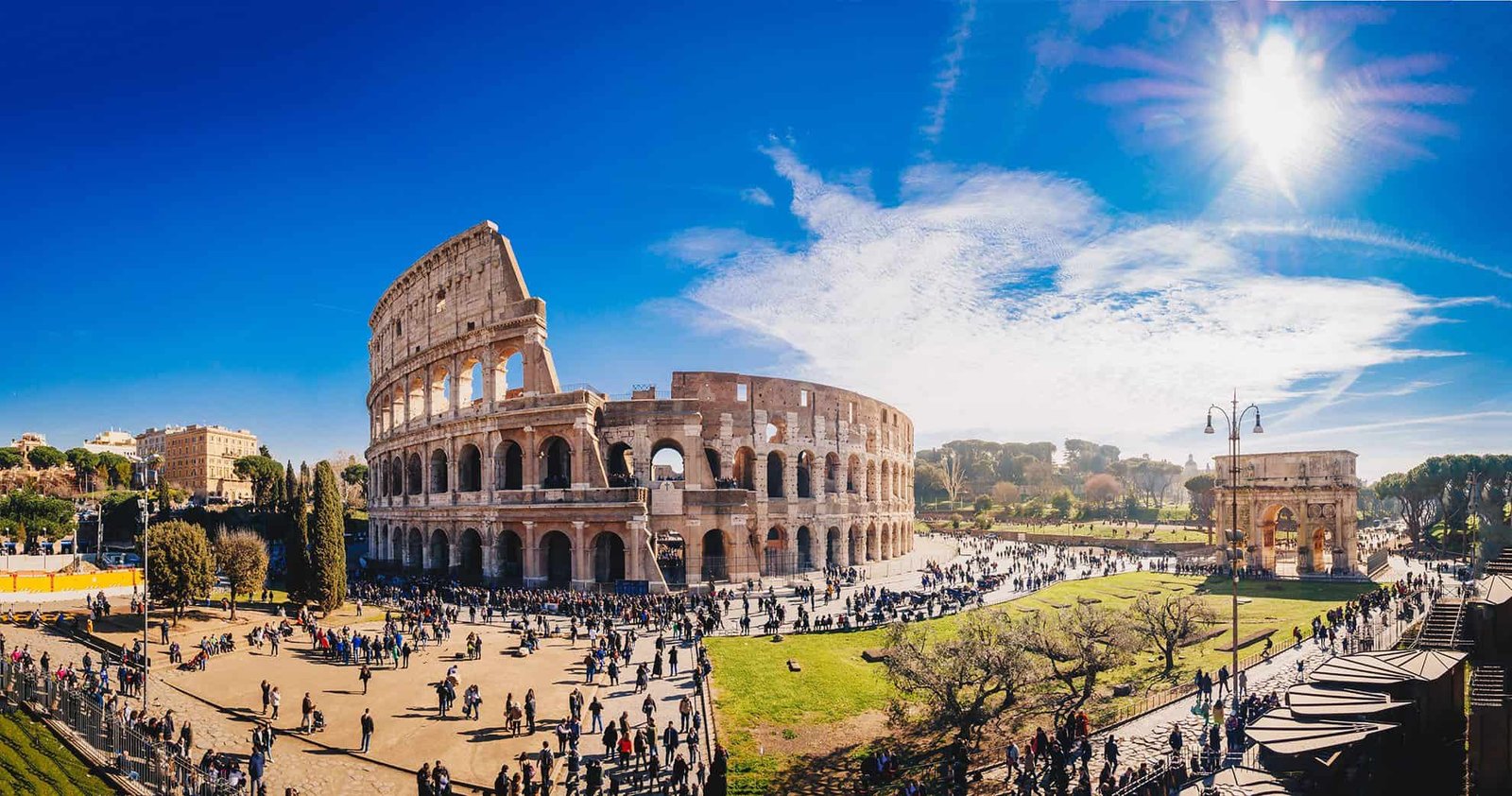
Three things make the difference. The first is distance: a classic itinerary through the Colosseum, Forums, Capitoline Hill, Pantheon and Trevi easily goes over 10 kilometers, with short but steep climbs and a lot of time on your feet in front of monuments. The second is the heat, which in Rome doesn’t end at the end of August: September and often the first days of October stay warm at noon, and on the paving of the Forums the sun beats down. The third is the checks at the entrance of museums and archaeological areas, where the type of container matters.
So Rome asks for water bottles that are light, with an opening wide enough to fill under the stream of a nasone without wetting your shoes, and with a reliable cap, because they end up in the bag next to the phone and the tickets. A detail that’s underrated: the carabiner or the loop. Bottles that clip on outside the backpack get filled in 10 seconds. The ones buried under the jacket stay empty, because stopping to dig around after three hours of walking is the last thing you feel like doing.
Where do the nasoni that fill the water bottles come from?
The nasone is the cylindrical cast-iron drinking fountain with the curved spout, the one that gave the object its popular name. Acea notes that the first ones were introduced in 1874, on the initiative of Mayor Luigi Pianciani, with a hygienic purpose: bringing public drinking water to the neighborhoods of the capital that had just become one. The oldest models had dragon-head spouts. The ones you see today are mostly of the simpler type, with a smooth spout and the small hole on top.
That hole is the secret every Roman knows: you block the spout outlet with a finger and the water squirts upward from the little hole, like a drinking fountain. Acea describes it exactly that way on its dedicated page. To fill water bottles, though, the normal stream is better: you put the neck of the bottle under the spout and wait. In recent years Acea has also launched the Nasone 4.0 project, which turns some fountains into daily monitoring points of the water network.
Besides the nasoni there are the case dell’acqua, dispensers that in some neighborhoods provide still and sparkling water, and the artistic fountains, which Acea counts at around 90 between monumental fountains and drinking fountains. Not all decorative fountains are made for drinking, though: the big ones in the squares have recirculated water. The practical rule is to fill water bottles only where there’s a stream meant for drinking, nasone or drinking fountain, and leave the basins alone.
Do water bottles with a filter really make sense in Rome?
Here’s the contrarian position, which in our opinion saves space in your backpack: for a city walk, bottles with a filter are overrated. The water from the nasoni is the same as the public network, controlled by the operator, and many Romans have always drunk it straight from the spout. The legend that “the water from the fountains isn’t good” comes from the taste, sometimes chalky, and from the temperature, not from a documented drinkability problem on the fountains in operation.
The filter makes sense in other cases: if your stomach is sensitive to limescale, if you leave the city for a hike in the hills where you find springs and rural fountains with no signs, or if you want a single bottle for the whole trip, including places where tap water isn’t recommended. In the center, though, the filter slows the flow when you drink, weighs more and has to be replaced. If you find a sign saying the water is not drinkable, respect it: those are flagged cases, not the rule.
Water bottles in Rome and museums: what can you bring at the entrance?
The point where people go wrong most often is glass. The visitor regulations of the Colosseum Archaeological Park list glass bottles among the items not allowed, along with knives, spray cans and other dangerous objects. Glass water bottles, nice to look at and pleasant for the taste, are therefore the least suited to a day that includes the Colosseum, Roman Forum and Palatine. In the same park, in 2024, three new nasoni were inaugurated, reported by the press on the occasion of the 150 years of the drinking fountains.

For St. Peter’s Basilica the official FAQ say that food and drinks can’t be brought into the Necropolis, but that in the summer months a small bottle of water is allowed. For the Vatican Museums the sources don’t agree on the type of container allowed, and the rules on metal bottles and plastic bottles should be read on the Museums’ official website before the visit. The advice is to bring empty or nearly empty bottles to the checks: you get through faster and you fill them afterward.
One last detail on size: many museums have limits on backpacks and large bags, which have to be left in the cloakroom. If you have a one-and-a-half-liter bottle clipped to a trekking backpack, you risk being separated from it exactly when you need it. Better a compact city backpack and a half-liter bottle that fits in a side pocket.
Where to take your water bottles: the longer walking routes
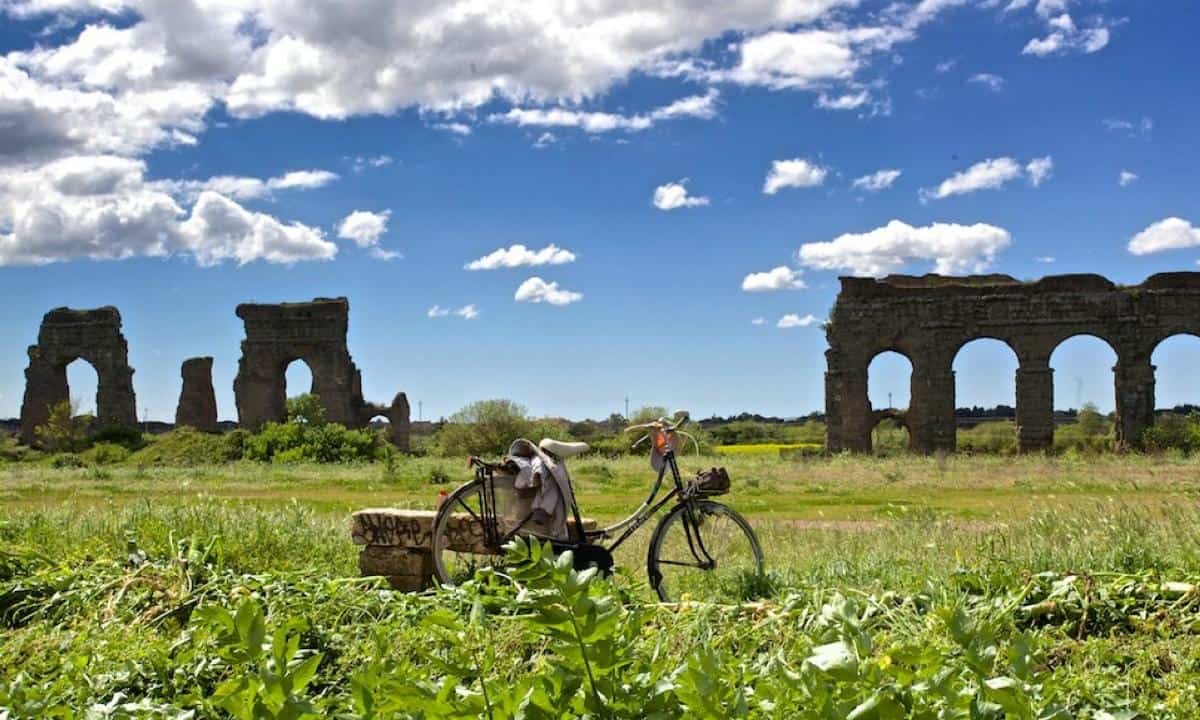
The days when a good water bottle makes the difference are the outdoor ones. The archaeological route through the Colosseum, Roman Forum and Palatine is the first: little shade, many steps, hours of walking. Then the Appian Way, where the kilometers get longer and the water points thin out compared to the center. Finally the parks, from Villa Borghese to Villa Doria Pamphilj, where the nasoni exist but you have to look for them. To choose what to see, on the page of tourist attractions in Rome on Estate Romana
you’ll find the listings of the places with addresses and practical information.
Less obvious routes also call for water. An afternoon among the contemporary art galleries of the Trieste and Salario neighborhoods, like the one in the photo on Via di Tor Fiorenza, is done on foot from one space to the next, and in those residential neighborhoods the nasoni are less frequent than in the center. The same goes for Ostiense and Garbatella, for the uphill Janiculum and for walks along the Tiber. Insulated bottles give their best here, because they keep the water cool even after an hour in the sun.
If you prefer a visit with a booked ticket and timed entry, which cuts the lines in the sun, you can look for the attractions of Rome on Tiqets or the walking tours of Rome on GetYourGuide, third-party services with conditions and hours set by each operator.
Which water bottle to choose for families, couples and runners?
For families with small children, the best solution is two different bottles: one for the adults, 750 ml, and one for each child, with a straw spout and a snap closure, that doesn’t spill in the stroller. Kids drink more often and less at a time: a bottle of their own, light and colorful, makes them independent and cuts down on stops. It’s best to pick dishwasher-safe models, because on vacation nobody feels like scrubbing a spout with a toothbrush.
For couples who walk a lot, an insulated steel bottle each is the most comfortable compromise: cool water for a long time, no plastic taste, resistance to knocks on the cobblestones. Those who jog early in the morning along the Tiber or at the Circus Maximus will prefer a soft sports bottle, with a bite valve, to hold in the hand. Those traveling with carry-on luggage only can go for foldable silicone bottles, which when empty take up the space of a wallet.
For those organizing a trip with friends, the advice is to agree beforehand: similar capacities and a gathering point to fill all the bottles together at every nasone. It seems like a detail, but it avoids the group that stretches out every 10 minutes. And if it rains? The bottles are still useful: in museums you walk a lot, the air is dry and the cafés inside are often crowded.
When to order water bottles before the trip?
Order them before leaving, not on the last day. For online purchases, the estimated delivery date shown at the time of the order is what counts, which changes depending on the seller, the product and the delivery address. If you’re already in Rome, some hotels accept packages for guests: ask the front desk before giving the hotel as the address, and write your name and arrival date in the notes field.
A practical tip: try the bottle at home at least once. Fill it, turn it upside down in a bag for an hour, wash it. Many new models have a slight factory smell that goes away after two washes with hot water and baking soda. Better to find out in the kitchen than at the first nasone on Via dei Fori Imperiali.
The most common mistakes with water bottles in Rome
The first mistake is leaving the hotel with full bottles and carrying around a kilo of water all morning, when the first nasone is often around the corner. The second is choosing glass for the Colosseum day. The third is buying the biggest bottle possible: over a liter, in the city, you only carry weight. The fourth is forgetting to wash it: after a day with tea or juice it should be rinsed the same evening, otherwise the smell stays.
Then there’s a timing mistake. Many think that in October you don’t need water anymore. That’s not so: you walk a lot even in cool weather, and thirst comes anyway, only later. The time budget to count for filling the bottles is minimal, a minute per nasone, but it’s best to do it at every chance instead of waiting to have an empty bottle in the middle of the Palatine.
Water bottles for walking in Rome: 12 models and travel accessories
The links lead to searches on Amazon and not to a single product: the best-selling water bottles often sell out and change from month to month, so you always have more alternatives to choose from in the same category. Read the reviews on how well the cap seals, the detail that disappoints most often.
Water bottles for walking in the city
- Insulated water bottle (alternative · more): double-wall steel, keeps the water cool for hours under the sun of the Forums.
- 1 liter steel water bottle (alternative · more): for the Appian Way and the parks, where the nasoni are farther apart.
- 500 ml steel water bottle (alternative · more): the most comfortable size for the historic center, it fits in the side pocket.
- Sports water bottle (more): light, with a spout, for those who run in the morning along the Tiber.
- Foldable water bottle (alternative · more): silicone, rolls up when empty and doesn’t take space in carry-on luggage.
Special water bottles
- Water bottle with filter (alternative · more): useful out of town and on hikes, less essential in the center.
- Water bottle with infuser (more): for iced tea or flavored water with lemon and mint prepared at the hotel.
- Glass water bottle: neutral taste, for the hotel and the desk. Leave it at home on Colosseum day.
- Water bottle for kids: straw and snap closure, so the stroller doesn’t get wet.
- Steel water bottle for kids: more resistant to drops on the cobblestones.
- Tritan water bottle: rigid BPA-free plastic, very light, an alternative to steel.
- Soft running water bottle: you squeeze it in your hand and it flattens as it empties.
Water bottle accessories
- Crossbody water bottle holder: keeps the bottle within reach even without a backpack.
- Water bottle carabiner: clips it outside the backpack, so you fill it at every nasone.
- Bottle cleaning brush: reaches the bottom and the spout, even at the hotel.
Tech for the day on foot
- 10000 mAh power bank (alternative · more): light, enough for a full phone charge between maps and photos.
- 20000 mAh power bank (alternative · more): for those traveling as a pair or staying out until evening.
- Europe eSIM: for those arriving from abroad who want data active as soon as they land.
- AirTags and trackers (alternative · more): in the suitcase or the backpack, to find them if they get lost.
- Universal adapter (alternative · more): for those arriving from countries with outlets different from the Italian ones.
- Noise-canceling headphones: for the trip by train or plane and for audio guides on your smartphone.
To bring and to read
- Anti-theft city backpack (alternative · more): hidden zippers and a side pocket for the water bottle, useful on crowded buses and metro.
- Anti-theft fanny pack: for documents and phone, when the backpack stays in the museum cloakroom.
- Guidebooks to Rome: to prepare the walking itineraries the night before.
- Books of walking itineraries for Rome: themed routes neighborhood by neighborhood.
Experiences to book
- Colosseum tickets on Tiqets: timed entry, to check against the Park’s rules.
- Vatican Museums tickets on Tiqets: to avoid the line in the sun in front of the walls.
- Walking tours of Rome on GetYourGuide: routes by third-party operators in the historic center.
- Appian Way by bike on GetYourGuide: the day when the 1 liter bottle really comes in handy.
Frequently asked questions
Can you drink the water from the nasoni in Rome?
Yes, the water from the nasoni is the public network water managed by Acea, which handles its distribution and quality checks. Romans drink it straight from the spout or use it to fill their water bottles. If a sign flags non-drinkable water on a single fountain, respect it: that’s a specific case, not the rule for the fountains in operation.
How many nasoni are there in Rome?
According to Acea there are over 3,000 dispensing points in Rome between nasoni and drinking fountains, more than 200 of them in the historic center. Other press sources speak of around 2,800 cast-iron nasoni: the difference depends on what is counted. To find them on the spot you can use Acea’s Acquea app, free for Android and iPhone.
Can I enter the Colosseum with a water bottle?
The visitor regulations of the Colosseum Archaeological Park expressly ban glass bottles, while they don’t list metal water bottles among the banned items. The advice is to show up at the checks with a steel or plastic bottle, empty or nearly empty, and fill it afterward at the nasoni in the area. The rules can change: check the official website before the visit.
What capacity is best for a day in the center?
For the historic center a 500 to 750 ml bottle is best, to fill often at the nasoni. The 1 liter size makes sense for the Appian Way, the big parks and bike rides, where the drinking fountains are farther apart. Beyond a liter you mostly carry weight, which you feel on your shoulders after a few hours of walking.
Are insulated water bottles worth the difference?
Yes, if you walk in the hot hours: the water from the nasoni comes out cool, but in a plain bottle it warms up quickly in the sun. The double steel wall keeps it cool for a long time and doesn’t cause condensation in the bag. The downside is the slightly higher weight compared to plastic or foldable silicone bottles.
How do you drink from the nasone without getting wet?
You block the spout outlet with a finger: the water comes out of the small hole on top and squirts upward, like a drinking fountain. Acea describes exactly this gesture on its page about the nasoni. To fill water bottles, though, you leave the normal stream and put the neck of the bottle under the spout, keeping your feet a bit back.
Who wrote this and from what sources
The text comes from the editorial team of Tour Leader Pro, the Rome-based company that designs itineraries, visits and cultural events across Rome and Lazio. The data on the nasoni come from the Acea website, the data on access from the regulations of the Colosseum Archaeological Park and from the FAQ of St. Peter’s Basilica, consulted as of the date given at the top. Tell us what you find has changed.
Organizing a day on foot in Rome, alone or with a group of friends, means calculating distances, timed entries, breaks and water points, and keeping different paces together: a useful resource for anyone who organizes group trips is Tour Leader Pro. If instead the trip widens to Lazio, among the Castelli Romani, Tivoli and the coast, a useful resource for putting together a multi-day itinerary is Italy Planner.