Swan Lake at Nuovo Teatro Orione, December 2, 2026
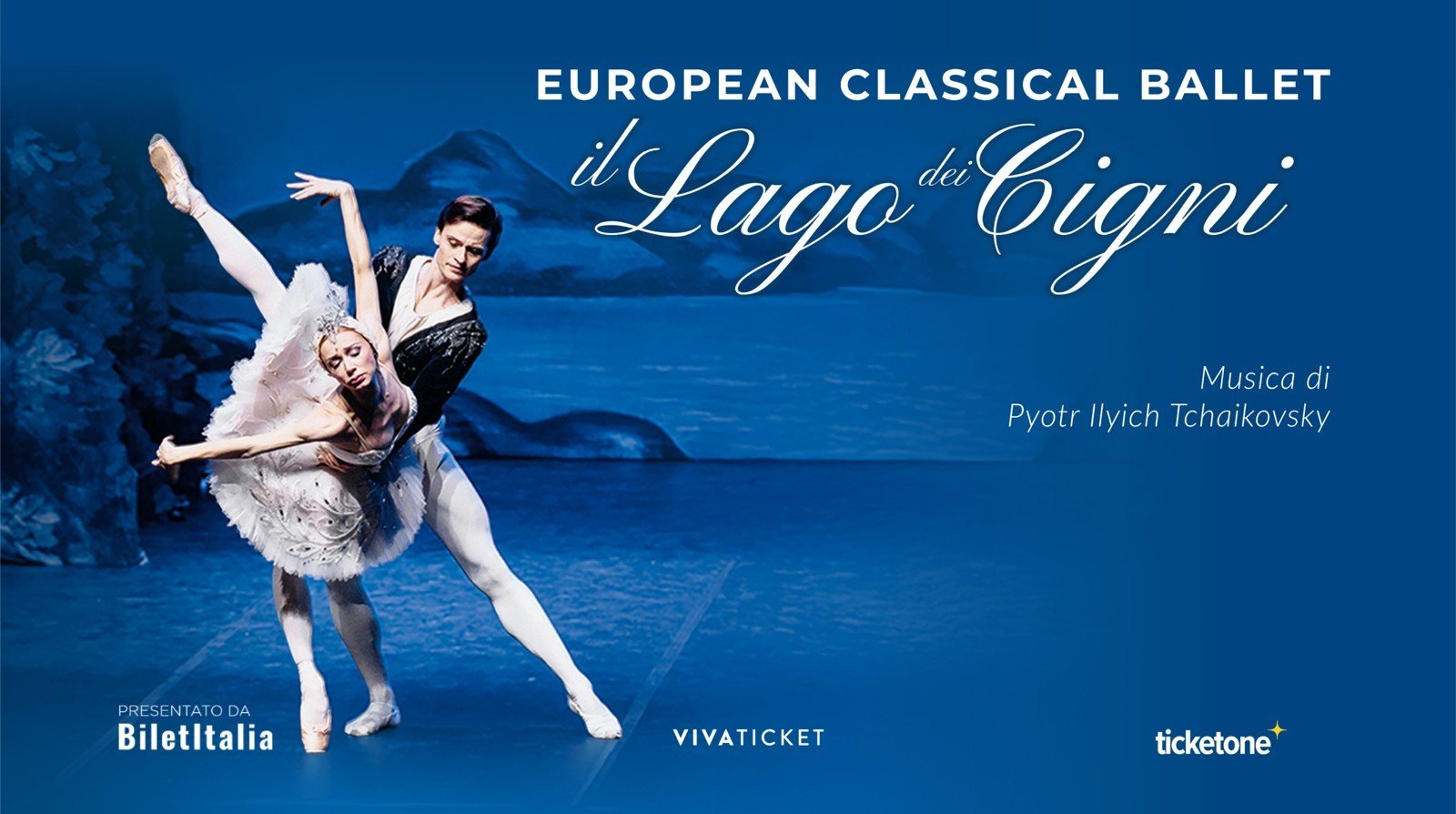
In short. Tchaikovsky's Swan Lake comes to Nuovo Teatro Orione on Wednesday, December 2, 2026, performed by the company European Classical Ballet, as shown by the show image on the theater's website and by the event listing published by Turismo Roma.
Tchaikovsky's Swan Lake comes to Nuovo Teatro Orione on Wednesday, December 2, 2026, performed by the company European Classical Ballet, as shown by the show image on the theater's website and by the event listing published by Turismo Roma. The theater's address is Via Tortona 7, 00183 Rome, in the Appio-Latino neighborhood. The official website places it a few minutes from the Re di Roma stop on metro line A and mentions a large parking area reserved for the audience. Time and prices aren't published either on the theater's website or on the Turismo Roma listing. Tickets can be bought starting from the show card on teatrorione.it. For information there's the office phone, 06 83546662, and the address info@teatrorione.it. The best route from home or your hotel can be calculated with the ATAC journey planner.
Language: opera sung in its original language; no English surtitles are announced, so check with the theater.
Swan Lake at the Orione: dates, venue and tickets
The information below comes from the Nuovo Teatro Orione program and from the listing on Turismo Roma, the City's tourism portal. Where the sources are silent, we say so.
The date
A single performance, Wednesday, December 2, 2026. The start time isn't published.
The hall
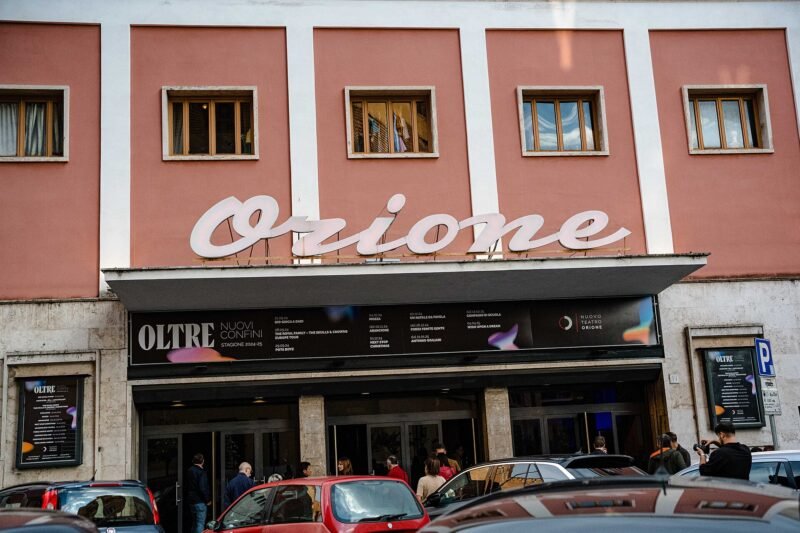
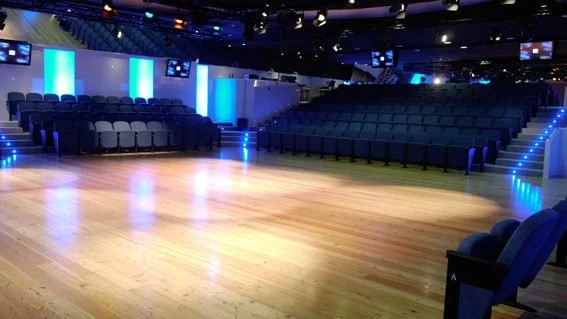
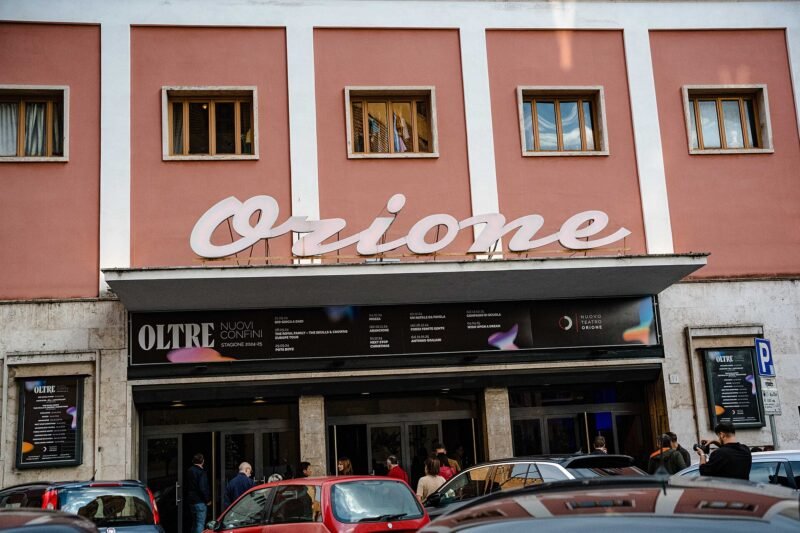
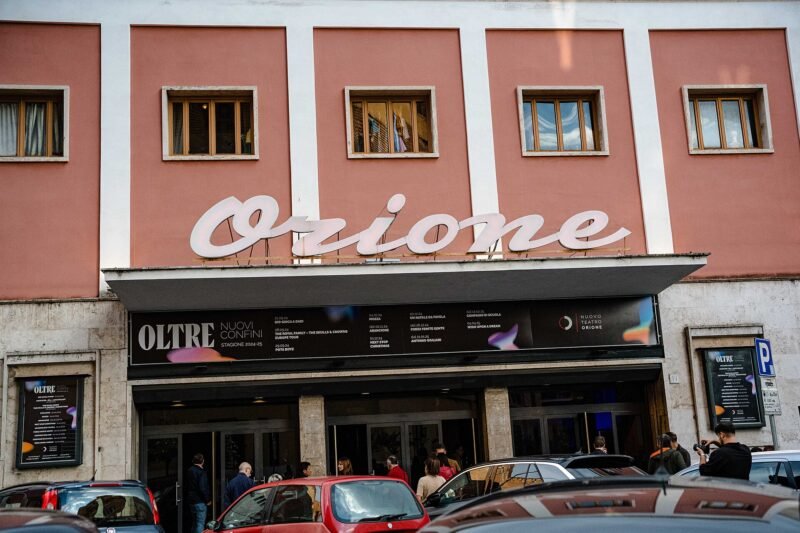
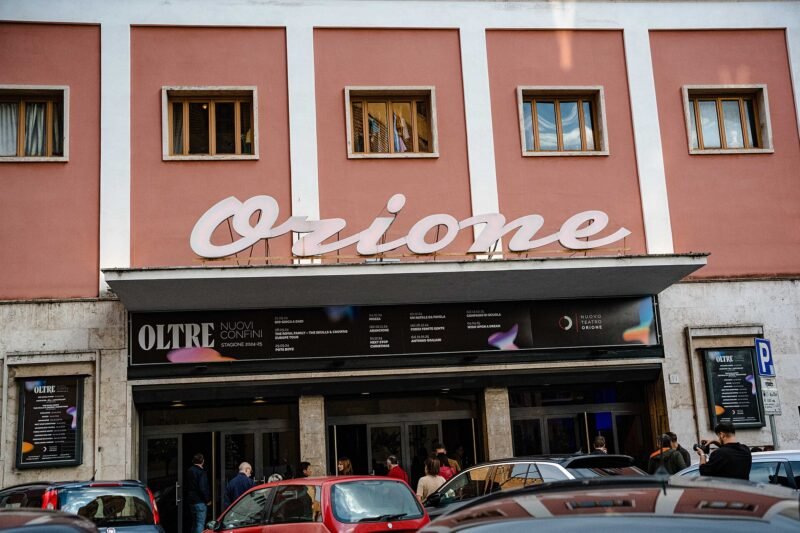
Nuovo Teatro Orione, Via Tortona 7, 00183 Rome. A hall with stalls and gallery, built in the 1950s.
The company
European Classical Ballet: the name is written on the image of the show card on the theater's website, with the words «presented by BiletItalia», and it also appears in the Turismo Roma listing. The official presentation speaks of classical choreography, carefully made sets and costumes and dancers from major European schools and theaters.
How to book
From the «il lago dei cigni» card on teatrorione.it, purchase button. Alternatively, Turismo Roma gives direct contact with the theater at 06 83546662. The price isn't published.
European Classical Ballet: what we know about the company
The Turismo Roma listing describes a traditionally staged show, with the story of Prince Siegfried and Princess Odette turned into a swan by the sorcerer Rothbart, and the deception of the Black Swan, Odile. The definition chosen to present it is simple: «A timeless ballet, able to move and enchant», reads Turismo Roma.
The 2025 Italian tour
A year earlier the same company had brought the title to Italy with a six-date tour between November 6 and 12, 2025, from Turin to Montecatini, with a Rome stop at Auditorium Conciliazione on November 8. Quotidiano di Sicilia, which reported it, described it as an international classical dance company directed by Andrey Scharaev, with 35 professionals from several countries, Italy included, and with the choreographic version by Marius Petipa and Lev Ivanov.
What isn't published for 2026
In 2025 the lead roles were given to Jana Salenko, in the double role of Odette and Odile, and Kalle Wigle as Siegfried, both from the Berlin State Ballet. For the Orione performance no official source gives the performers, the number of dancers or the choreographic version: so it isn't possible to say if the cast will be the same.
How the ballet was born: Tchaikovsky in Moscow
Swan Lake is the first of Pyotr Ilyich Tchaikovsky's three ballets, followed by The Sleeping Beauty and The Nutcracker. The composition dates to the period between August 1875 and April 1876, in Moscow, where the composer taught theory and harmony at the Conservatory, a post he held until September 1878.
The composer
Tchaikovsky was born in Votkinsk on May 7, 1840 and died in St. Petersburg on November 6, 1893. After studying law he enrolled at the newly founded St. Petersburg Conservatory, graduating in 1866. From 1877 he was financially supported by Nadezhda von Meck, with whom he kept up a correspondence that lasted until 1890 without ever meeting her in person. His best-known works include the last three symphonies, the Pathétique included, the opera Eugene Onegin and Piano Concerto No. 1.
A libretto with no certain father
The original libretto is attributed to Vladimir Begichev, director of the Imperial Theaters in Moscow, and to the dancer Vasily Geltser, but there's no definitive proof of who devised the plot. One of the most credited hypotheses is an adaptation by Julius Reisinger of the German fairy tale Der geraubte Schleier, The Stolen Veil.
The 1877 premiere: a half failure
The ballet was staged at the Bolshoi Theater in Moscow on February 20, 1877 by the Julian calendar, March 4 by the Gregorian, with choreography by Julius Wenzel Reisinger and Pelageya Karpakova in the lead. The reception was lukewarm: reviewers complained of problems with the score, choreography judged banal and a weak staging.
The critics of the time
The Theatrical Gazette of February 22, 1877 wrote that the music was «rather monotonous, boring». It's one of the most quoted verdicts in dance history, precisely because the score's later success proved it wrong.
The Bolshoi revivals
The title returned to the stage in Moscow on July 13, 1880, with choreography by Joseph Hansen, and on October 28, 1882 with Lydia Geiten, but these revivals also had poor results. A thorough revision was needed, which the composer didn't live to see.
Petipa and Ivanov: the version we see today
The ballet's rebirth took place in St. Petersburg, at the Mariinsky Theater, on January 15, 1895 by the Julian calendar, January 27 by the Gregorian, about a year after Tchaikovsky's death. It was promoted by Prince Vsevolozhsky, director of the Imperial Theaters.
Two choreographers for four acts
Marius Petipa handled the first and third acts, the court acts. Lev Ivanov created the white acts, the second and fourth, set on the lake. Riccardo Drigo worked on the music, also inserting piano pieces by the composer orchestrated for the occasion. The libretto was revised by Modest Tchaikovsky, the musician's brother: Odette becomes a princess, Siegfried gains a more positive character and Rothbart takes on the role of main antagonist.
Pierina Legnani and the fouettés
The 1895 version was a success and entered the repertoire of St. Petersburg, Moscow and then theaters around the world. Quotidiano di Sicilia, presenting European Classical Ballet's 2025 tour, recalls that the lead in that debut was the Italian Pierina Legnani, to whom the famous sequence of 32 fouettés is attributed.
The main characters
Before taking your seat it's worth having the roles clear, because in ballet the story can be read only through gestures and costumes.
Siegfried and the Queen Mother
Prince Siegfried is the male lead, in love with Odette. The Queen Mother pushes him toward marriage and leaves him the choice of a bride at the court ball. Beside him is Benno, the friend who follows him on the hunt.
Odette, Odile and Rothbart
Odette is the queen of the swans, bewitched along with her companions and recognizable by her magic crown. Odile, in black, is the sorcerer's daughter. Rothbart is the evil magician who turned the maidens into swans and who in the 1895 revision becomes the main antagonist. The swan maidens, the corps de ballet of the white acts, complete the picture.
The plot act by act
The story follows the pattern of the Romantic fairy tale, with a love tested by a spell and a deception.
Act one: the prince's birthday
Siegfried celebrates with friends and peasants. The Queen Mother gives him a crossbow and reminds him that at the ball the next day he must choose a bride. As evening falls the prince and his companions follow a flock of swans in flight.
Act two: the lake
On the shore the swans turn into maidens. Odette, the queen of the swans recognizable by her crown, tells how the sorcerer Rothbart bewitched them and that only a promise of love can break the spell. Siegfried swears fidelity.
Act three: the ball at court
At the castle the candidates for the throne parade, then Rothbart arrives with his daughter Odile, who looks like Odette. Siegfried, deceived, promises to marry her.
Act four: the storm
Rothbart transforms and the castle plunges into darkness. Siegfried runs to the lake, where Odette welcomes him, weeping over her fate. In the original version a storm sweeps both away.
Odette and Odile, the double role
The ballet hinges entirely on the resemblance between the two figures. Odile is Rothbart's daughter, made identical to Odette by her father's magic. The audience tells her apart by her black costume, set against the white of the swan maidens. In stage practice the same ballerina often dances both parts, and that's the most awaited test of every production: the restrained gentleness of the second act against the brilliant seduction of the third.
The Black Swan
The «black swan» pas de deux, in the third act, is the virtuoso moment of the show. The tradition linked to Legnani places the series of fouettés there, the technical passage the audience waits for most.
The music: the pieces to recognize
Even if you've never seen the ballet, you'll recognize some pages of the score. The opening theme, called the first swan theme, is built on descending scales and returns at key moments.
Waltzes and character dances
Among the best-known numbers are the waltz of the first act, the swan dances of the second, which reuse material from the early opera Undina, the pas de six with the variations of the six candidates and the series of national dances of the third act: Hungarian czardas, Russian dance, Spanish, Neapolitan and mazurka.
The little swans
The numbering of the score also includes the Danse des petits cygnes, the dance of the little swans, one of the most recognizable pages of the ballet even outside the theater.
Three endings for the same story
Swan Lake has changed its ending several times. In the 1877 original Odette dies in Siegfried's arms and a storm engulfs the two lovers, while a group of swans reappears on the lake. In the 1895 version Siegfried stabs himself, Rothbart's spirit falls dead, the lake disappears and an apotheosis follows. In 1953, in the Soviet era, Bourmeister's version opted for a happy ending: Siegfried defeats Rothbart and Odette becomes human again.
Which ending we'll see at the Orione
The official presentation of the Rome performance doesn't say which ending will be used: it's one of the details you only discover in the hall.
From Swan Lake to The Nutcracker: Tchaikovsky's three ballets
Swan Lake opens a trilogy the composer completed in less than two decades. After the 1877 Moscow premiere, Tchaikovsky returned to ballet more than 10 years later with The Sleeping Beauty, begun in 1888, and finally with The Nutcracker, commissioned in 1891 to be performed on the same evening as the opera Iolanta.
A symphonic composer lent to dance
In the same years Tchaikovsky was writing the symphonies and operas that made him famous. His writing for ballet, symphonic and rich in recurring themes like the swan theme, was one of the reasons for its poor initial success: the Theatrical Gazette found it monotonous, and only with Drigo's revision and Petipa and Ivanov's choreography, in 1895, did the score find the success it hadn't had in Moscow.
Two titles in three days at the Orione
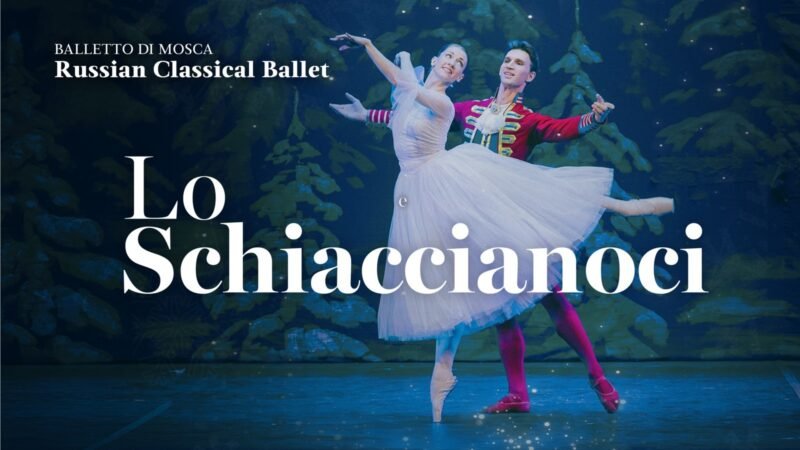
The Orione's program puts the first and the last of the three ballets in a row: Swan Lake on December 2 and The Nutcracker on December 4, 2026. For the second title, the image on the show card on the theater's website names the Russian Classical Ballet, presented as the Moscow Ballet.
A curious fact about Nuovo Teatro Orione
The theater's website claims a record in numbers: the fourth-largest theater in Rome by capacity, with 548 seats in the stalls and 428 in the gallery. Adding them up gives 976 seats, while in another passage the same page speaks of 980 seats. Beyond the small discrepancy, for a touring ballet it means an audience of almost 1,000 people in a single evening.
A gallery of more than 400 seats
The gallery alone has more than 400 seats. For a show like Swan Lake, in which the geometric arrangement of the corps de ballet counts as much as the soloists' dancing, it's a real advantage.
Something nobody tells you about Nuovo Teatro Orione
Few remember that for years the Orione was also a cinema, with its own open-air arena. The theater's history page says that in the 1960s its use as a movie theater grew and the Arena was opened, an adjacent space for summer screenings. In the 1980s its art-house cinema activity declined, and in the 1990s film use was abandoned altogether.
A hall used to change
Theater, cinema and summer arena coexisted for decades at the same address on Via Tortona. Today the new management says the building will undergo a thorough revaluation, without describing the planned works in detail.
My advice for visiting Nuovo Teatro Orione
For Swan Lake my advice is to go for the gallery. Ivanov's white acts are built on lines, diagonals and circles of swans that you can only truly appreciate from above: from the stalls you see faces and footwork better, from the gallery you understand the design. If you can choose, take a central seat, so you have the stage straight ahead.
The intermission
The hall's foyer has a bar and a café, listed by Turismo Roma. The length of the evening and the number of intermissions at the Orione aren't published: ask at the box office, and meanwhile take advantage of the bar before the start.
If you're seeing it for the first time
Ballet has no words and there are few scene changes: reading the plot of the four acts before going in, perhaps during the metro ride, lets you immediately recognize the shift from the court party to the lake and not confuse Odette with Odile when, in the third act, the black costume appears.
Parking and metro
The theater's reserved parking area is a real convenience for a weeknight evening. Alternatively, the Re di Roma stop on metro line A is a few minutes' walk away.
Another well-known fact, yet rarely mentioned
The link between the Orione and dance isn't new to the 2026/2027 season. As early as the 1950s, the theater's website says, the hall hosted great dance evenings with the ballerina Ivana Gattei. And in the 2000s, in a period without real artistic direction, the theater had become a reference point for dance events and for a circuit of amateur and professional clients.
A vocation that returns
The December 2 ballet, followed two days later by The Nutcracker, thus fits into a 70-year tradition. After the era of dance events for amateur and professional audiences, the stage on Via Tortona returns to hosting two great repertoire titles in the same week.
The right photo to take at Nuovo Teatro Orione
With the curtain down, the hall seen from the last row of the gallery conveys well the proportions of a theater of almost 1,000 seats. The Orione's rules on photos and filming during the show aren't published, so before taking any shot with the lights down, ask the hall staff.
At the metro exit
In the hall of Re di Roma station, the mosaics by François Morellet and Carla Accardi, created for the Artemetro Roma prize, offer an abstract art backdrop well suited to a portrait before the show.
Some important events that happened here
Going through the history told by the theater and the sources on the neighborhood, a few dates help you get your bearings.
1950s: opera and operetta
The hall opened in that decade as a cultural reference point for Appio-Latino. The program alternated opera and operetta titles and, alongside musical theater, there were the great dance evenings recalled by the website: a classical repertoire, well before the era of musicals and concerts.
1980: the metro arrives
On February 16, 1980 Re di Roma station came into service, part of the first section of line A between Anagnina and Ottaviano. Since then the theater has been directly connected to the rest of the line.
1990s: television
Once cinema was abandoned, in the 1990s the Orione's stage hosted television productions, largely for the Mediaset network, according to the theater's history page.
2024: the new direction
On September 19, 2024 the new artistic direction of Carlo Oldani, Claudio Romano Politi and Gabriele Figus opened the season Oltre, Nuovi confini, presenting the Orione as a multipurpose space with a double stage and an off space. In the same season the foyer became Scena, a social club open Monday to Wednesday.
Who has passed through Nuovo Teatro Orione
The theater's history page lines up very different names. For dance, the ballerina Ivana Gattei in the 1950s. For puppet theater, the Piccoli di Podrecca in the 1960s: the company founded in Rome in 1914 by Vittorio Podrecca, which came to count up to 1,000 marionettes and called on painters such as Enrico Prampolini to design its sets.
Cinema and drama
In the 1970s Edwige Fenech and Oreste Lionello shot scenes of the film La pretora here. In the 1980s the hall hosted rehearsals for the great productions of Gigi Proietti and Ugo Tognazzi.
The current season
Among the most recent guests, on estateromana.com you'll find Royal Family Europe with Defend the Throne and The Orchestra, Lords of the Sound, scheduled for 2027.
Appio-Latino: the theater's neighborhood
Via Tortona is part of the Appio-Latino neighborhood, named after Via Appia and Via Latina. It has a very long history: Via Appia was decreed in 312 BC, between the 2nd century BC and the start of the 3rd century AD five aqueducts were built in the area of today's Via del Mandrione, and at the turn of the 19th and 20th centuries the Alberone was born, with its public housing, among the first working-class districts in Rome. The name comes from a large holm oak, cut down in 1980-81.
From the walls to the Appian Way
The neighborhood borders to the north on the Aurelian Walls between Porta Metronia and Porta San Giovanni and stretches as far as the Appia Antica Park, with the Caffarella valley and, further south, the Mausoleum of Cecilia Metella. Within its borders is also the park of Villa Lazzaroni, with access from Via Appia Nuova.
More swans and more Tchaikovsky in Rome
In the Roman season the title appears several times, in different halls and versions. If you want to compare, look at Swan Lake at the Teatro dell'Opera di Roma in December 2026 or the one at Teatro Ghione in 2027. To hear Tchaikovsky in a concert hall there's Antonio Pappano with Petrassi and Tchaikovsky at Santa Cecilia.
The great 20th-century versions
The best-known new readings include Alexander Gorsky's for the Bolshoi in 1901, the first complete production outside Russia, in Prague in 1907, the one-act version by Diaghilev's Ballets Russes at Covent Garden in 1911, and those by Frederick Ashton (1963) with Margot Fonteyn, John Neumeier in Hamburg (1976) and Matthew Bourne at Sadler's Wells (1995), with the swans danced by men.
Swan Lake in Europe, America and Italy
After 1895 the title traveled all over the world, and its history is made of many versions. Alexander Gorsky's revival at the Bolshoi, in 1901, was the basis of later Moscow productions, including those of 1956 and 1969.
The first productions outside Russia
The first complete version outside Russia was Achille Viscusi's in Prague, in 1907. Then came Olga Preobrajenska in London in 1910, Diaghilev's Ballets Russes at Covent Garden on November 30, 1911 with a single act, and Nicholas Sergeyev with the Vic-Wells Ballet in 1934.
The 20th century and beyond
George Balanchine made a one-act version for New York City Center on November 20, 1951. John Cranko reread it in Stuttgart in 1963 and Kenneth MacMillan in Berlin in 1964. In Italy Fredy Franzutti created a version for Balletto del Sud in Lecce on November 26, 1999, while in Stockholm, on December 2, 2011, Fredrik Rydman presented Swan Lake Reloaded, mixed with street dance.
The Orione after its relaunch
Since 2024 the theater has presented itself with an identity openly welcoming all genres. On the website the management lists among its goals to reach within two years at least two major in-house productions, a concert every month and work with high schools and schools. Turismo Roma stresses its attention to new productions and emerging groups.
The hall's technical setup
For dance, lighting and visibility matter most. The official website describes a top-level lighting system combined with a Funktion One audio system built around the hall's characteristics. Among the reviews selected by the theater, the comfort of the seats and the acoustics come up often.
Practical information
- Show: Swan Lake, music by Pyotr Ilyich Tchaikovsky.
- Company: European Classical Ballet (image of the card on the theater's website and Turismo Roma).
- Date: Wednesday, December 2, 2026.
- Time: not published.
- Theater: Nuovo Teatro Orione, Via Tortona 7 (postal code 00183), Rome.
- Purchase: button on the ballet's card on teatrorione.it. The price isn't published.
- Contacts: 06 83546662, info@teatrorione.it.
- Transport: metro line A, Re di Roma, a few minutes away according to the theater's website. Reserved parking. Route with the ATAC journey planner.
Frequently asked questions about Swan Lake
Who dances Swan Lake at the Orione on December 2?
The company is European Classical Ballet, as shown by the image on the card on the theater's website and by the Turismo Roma listing. On the 2025 Italian tour the company was directed by Andrey Scharaev and fielded 35 dancers, with Jana Salenko and Kalle Wigle of the Berlin State Ballet in the lead roles. For the 2026 Rome performance the performers aren't published, so we don't know if the cast will be the same.
What time does the show start?
The time isn't published either on the Nuovo Teatro Orione website or on the Turismo Roma listing. It usually appears on the sales page linked from the purchase button on the theater's website. Alternatively you can call the office at 06 83546662. Check a few days before, because detailed information often arrives close to the date.
How much is a ticket?
The price isn't published by the official sources available, namely the theater's website and the Turismo Roma listing. You'll see it at the time of purchase, starting from the show card on teatrorione.it. To find out in advance if there are discounts for children or groups, ask the theater office.
Which choreography is used?
For the December 2 performance the official presentation speaks generically of classical choreography. In 2025 the company declared the Marius Petipa and Lev Ivanov version, the one born at the Mariinsky in 1895 that then entered the international repertoire. That the version is identical in 2026 too isn't published.
How long is Swan Lake?
The running time of the Orione performance isn't published. The ballet is in four acts, but how the company spreads them over the evening and any intermissions aren't indicated. To plan your way home, especially with children or by public transport, ask the box office for the running time or read it on the sales page.
What's the difference between Odette and Odile?
Odette is the princess turned into a swan by the sorcerer Rothbart, the white swan of the second and fourth acts. Odile is Rothbart's daughter, made identical to her by her father's magic and recognizable by her black costume: she's the one who deceives Siegfried during the third-act ball. The two roles are often given to the same ballerina.
What's the theater's correct email address?
The address published by the official website and by Turismo Roma in the venue listing is info@teatrorione.it, with a single «o». In the event listing, however, Turismo Roma gives info@teatroorione.it, with two «o»s: to write to the office, use the form given on the theater's website, teatrorione.it.
Is Swan Lake suitable for children?
The story is a fairy tale, with princes, spells and a sorcerer, and the music contains very well-known pages, like the swan theme and the dance of the little swans. The theater doesn't publish a recommended minimum age or the length of the evening: for younger children, ask the office how long the performance lasts and what time it ends, before buying.
How do you get to Via Tortona?
From Re di Roma station, on line A, the theater is a few minutes' walk away, according to the official website, which also mentions a large parking area. For the full route from home or your hotel, including any buses, use the ATAC journey planner, which also takes evening service times into account.
Final advice on Swan Lake
Swan Lake is today one of the most performed titles in classical dance, yet it was born from a failure: seeing it knowing that the Theatrical Gazette found it boring in 1877 adds a subtle pleasure to the evening. At the Orione you can see it in a large hall, with a wide gallery that shows off the geometry of the white acts, and with the convenience of on-site parking on a December weeknight. Before buying, check time and price on the purchase page linked from the theater's website. If you enjoy comparisons, also note The Nutcracker, scheduled in the same hall two days later, on December 4, for two back-to-back evenings devoted to Tchaikovsky.
Article written by the editorial team of Tour Leader Pro, contact them for Private/Corporate/V.I.P. Tours and Experiences.
Planning a trip to Rome? The English-language guides to visiting the city are on ItalyPlanner.com.
Contact Information
Nearby
 Nuovo Teatro Orione, theater in San Giovanni100 m
- Il Palco, ARCI club in Appio Latino400 m
- Teatro Golden600 m
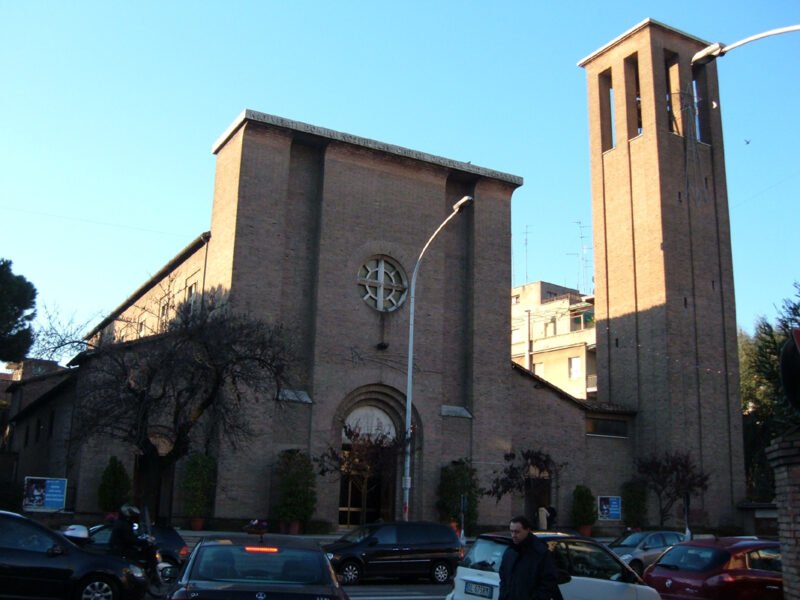
- Romanian Orthodox Church in Rome900 m
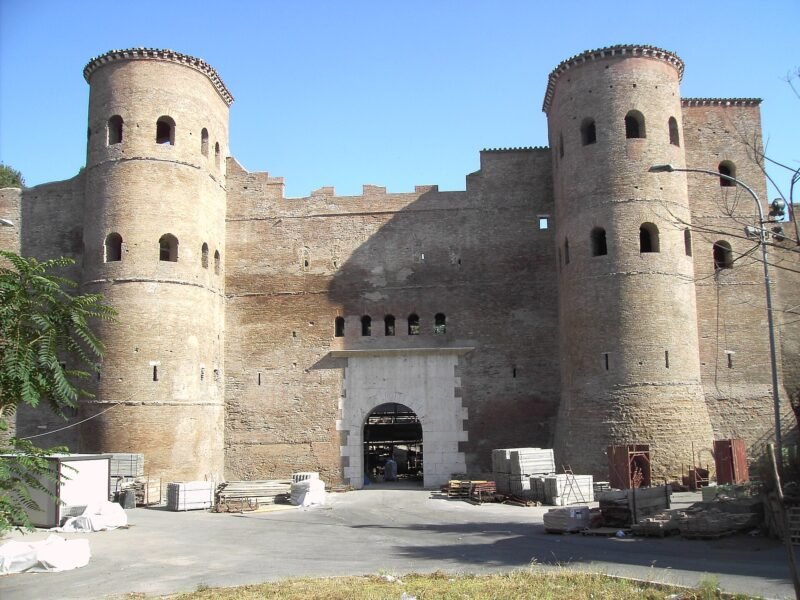
- Porta Asinaria900 m
- Hypogeum of Via Dino Compagni900 m

Upcoming events nearby
- Arteteca in Operazione Cicogna at Nuovo Teatro Orione, November 15, 2026100 m
- Morgan Jay at Nuovo Teatro Orione, May 26, 2027100 m
- Girls in Hawaii at Nuovo Teatro Orione, November 17, 2026100 m
- Michele Mezzanotte, Tutto ok at Nuovo Teatro Orione, April 20, 2027100 m

You might also like
- The Nutcracker at Nuovo Teatro Orione, December 4, 2026
- La scommessa at Teatro Golden, November 12 to 22, 2026
- Ripetizioni d’amore at Teatro Golden, November 5 and 6, 2026
- Shamzy in Wasabi at Nuovo Teatro Orione, April 2, 2027
- Un ponte per due with Antonello Costa and Paolo Caiazzo at Teatro Golden, January 7-17, 2027
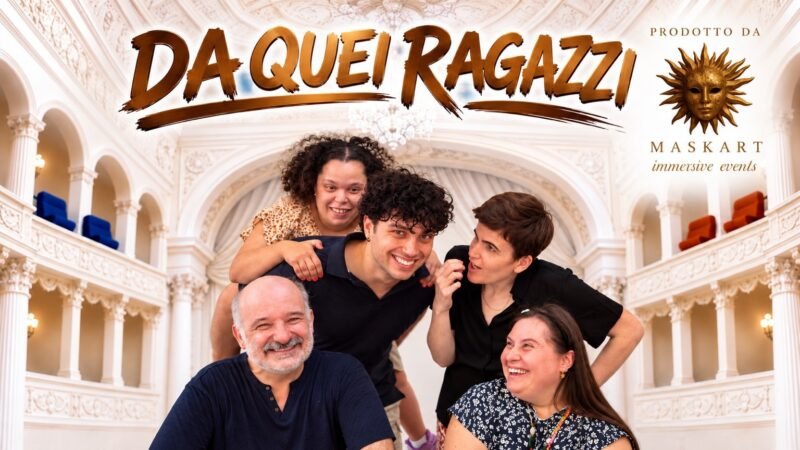
- Da quei ragazzi at the Nuovo Teatro Orione, December 18 to 20, 2026