Teatro Golden
In short. Teatro Golden is at Via Taranto 36, in the heart of the Appio Latino neighborhood, a few hundred meters from the Basilica of San Giovanni in Laterano and from the web of streets leading to Via Sannio Market.
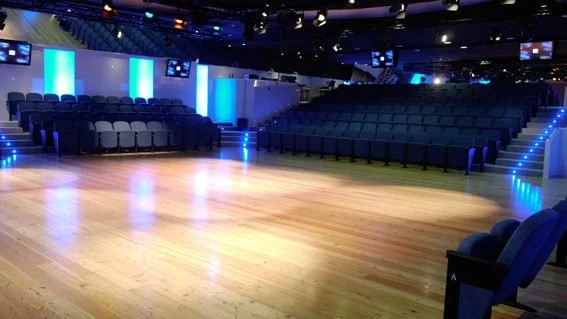
Teatro Golden is at Via Taranto 36, in the heart of the Appio Latino neighborhood, a few hundred meters from the Basilica of St. John Lateran and from the web of streets leading to Via Sannio Market. It's a theater born inside a building that has lived through almost 80 years of Roman entertainment history, first as a movie theater and then, after a long period of abandonment, as a theater and training academy for actors, singers and dancers. The programming today alternates drama, comedy, musicals and shows for families, with a declared vocation for training young performers, who here often share the stage with professionals.
Teatro Golden on Via Taranto, Between San Giovanni and Appio Latino
Anyone walking along Via Taranto, the axis linking Piazza di Porta Furba to the San Giovanni junction, comes across a corner building with a sign bearing the name of the old cinema that occupied this same space in the postwar years. Teatro Golden occupies a lot of about 2,000 square meters between Via Taranto and the neighboring streets of Appio Latino, a neighborhood built largely between the two wars and grown further after World War II around the axis of Via Appia Nuova.
A Transit Neighborhood Between San Giovanni and Via Appia Nuova
Appio Latino is not one of the most photographed neighborhoods in Rome, but it's one of the most lived-in: tree-lined streets, buildings from the 1930s and 1940s, a dense and continuous commercial fabric. The theater is halfway between two poles very different from each other, the Basilica of San Giovanni in Laterano with its baptistery and the Scala Santa on one side, and the working-class neighborhood that develops around Via Appia Nuova and Cinecittà on the other. This in-between position partly explains the Golden's audience: very local, very tied to the neighborhood, with a growing share of families who bring their children to lessons at the school attached to the theater even before bringing them to see a show in the auditorium.
The neighborhood takes its name from the ancient Via Appia and from Via Latina, two of the great consular roads that left Rome toward the south, and still preserves today several stretches of Roman paving visible in the Aqueduct Park and along the route of the Appia Antica, a little south of Via Taranto. The urban fabric surrounding the theater was born largely between the 1920s and the 1940s, as a residential expansion meant for a white-collar middle class that worked in the historic center and sought larger and cheaper homes than the historic rioni. It's a transit neighborhood in the literal sense too, crossed by some of the routes that lead out of Rome toward the Castelli Romani and the southern coast, but with a quiet residential heart that quickly moves away from the traffic of the main arteries.
San Giovanni in Laterano and the Scala Santa a Short Walk From the Theater
Anyone arriving at Teatro Golden with some time to spare can easily include in the evening a visit, even just from the outside, to the Basilica of San Giovanni in Laterano, the cathedral of Rome and seat of the city's bishop, a few minutes' walk from Via Taranto. Next to the basilica is the Scala Santa complex, traditionally identified with the staircase that Jesus is said to have climbed in the praetorium of Pontius Pilate in Jerusalem and that pilgrims still climb on their knees today, step by step. The closeness between these places of worship, among the most important in Christendom, and a theater born from an old neighborhood cinema tells well the layering typical of Rome, where the sacred and the popular live in the same block.
The History of the Building: From Cinema Golden to Theater
The building that now houses Teatro Golden was built between 1946 and 1947 to a design by the engineer Ernesto Francesconi, at a time when Rome was reopening its neighborhood theaters after the war. It was born as a cinema, and for almost 50 years it worked as one of the reference movie theaters of Appio Latino, with a capacity of more than 1,000 seats.
The years immediately following the end of World War II were, for Rome, a period of intense construction of neighborhood movie theaters. Cinema was then the main popular entertainment, before the spread of television in the 1950s, and every residential area of the city tried to equip itself with its own hall, often generously sized and with an architectural care that today, decades later, is being rediscovered with interest by scholars and enthusiasts of 20th-century Roman architecture. Cinema Golden fit into this context as one of the reference halls of Appio Latino, in a neighborhood that was then still being completed in urban terms and that saw in the new movie theater one of its first points of social gathering.
The Closure, the Failed Bingo Hall and the Abandonment
Cinema Golden remained active until the mid-1990s, when the crisis of neighborhood theaters, already hit by the spread of commercial television and then multiplexes, led to its closure. At the end of the 1990s the building was taken over to be turned into a bingo hall, an entertainment model that in those years was spreading in several Italian cities on the American model. The project didn't take off. American-style bingo didn't find the hoped-for audience and the structure stayed closed and unused for more than a decade, one of the many Roman neighborhood cinemas that ended up abandoned between the 1990s and the 2000s.
The Reopening as a Theater in December 2009
The turning point came at the end of the 2000s, when the building was recovered and converted to a cultural function. In October 2009 the school opened, the Golden Star Academy, and in December of the same year Teatro Golden made its public debut, under the direction of the producer Andrea Maia, who is its founder and still its artistic director. At the opening an honorary committee was also formed, chaired by the actor Gigi Proietti, a presence that gave the new theater immediate symbolic weight in the Roman theater scene. The recovery of the former Cinema Golden was presented at the time as an example of reuse of a central and strategic space in the neighborhood, given back to the city after more than 12 years of closure.
The recovery project didn't just put the hall back into operation for shows. It redesigned the entire building around a precise idea: a theater that would also be a factory of new performers. Within a few years of opening, the Golden carved out a recognizable place among medium-sized Roman theaters, becoming a reference point for those looking for accessible programming and a direct relationship with the neighborhood audience, far from the more institutional dimension of the big theaters in the center such as the Sistina or the Eliseo. The choice to focus on an area like Appio Latino, which until then lacked a reference theater, has proven over time to be one of the project's winning cards.
Why the Name Stayed Golden
A detail that tells of the continuity between the building's two lives is the choice to keep the cinema's original name for the theater too. It wasn't a foregone conclusion: many spaces recovered in Rome in those years changed names along with their use. Keeping the Golden sign meant instead explicitly claiming a link with the neighborhood's memory, with generations of Appio Latino residents who for decades had known that building as the cinema downstairs before they knew it as a theater.
The Auditorium and the Theater's Activity Today
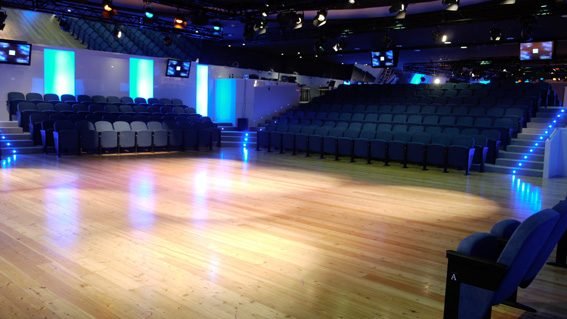
Teatro Golden has an auditorium of small size compared with the big theaters of central Rome, designed for a close relationship between audience and stage. The available sources don't agree on the exact number of seats, and for this reason it's always best to verify the capacity directly with the theater's box office when booking. The structure, which occupies the entire building of about 2,000 square meters, includes besides the theater hall three rehearsal rooms for dance and acting, a recording room, four classrooms for the study of singing and music, workshops for the technical arts, dressing rooms and an in-house bar.
The layout of the hall, with the stage integrated with the orchestra in an arrangement that favors closeness between audience and performers, picks up solutions typical of small and medium theaters born from the recovery of existing movie theaters, an operation that in Rome has involved several other 20th-century buildings, converted to a new theatrical life after the decline of neighborhood cinemas between the 1980s and 1990s. Compared with the original layout of the cinema, which at its peak exceeded 1,000 seats, the theater's current hall has been significantly scaled down, a choice consistent with the need for a more intimate setting, suited to drama and chamber musicals more than to big productions.
Theater and Academy Under the Same Roof
What distinguishes the Golden from most Roman theaters is the coexistence, in the same building, of a performance hall and a structured training school in three branches, acting, dance and music, for both professional students and enthusiasts and children. Many of the shows on the bill are born precisely from this double track: student recitals and productions alternate with professional drama, comedy and musicals, often with the participation of actors known to the Roman television and theater audience.
The Golden Actors division handles the training of actors, with courses ranging from basic acting to diction, from vocal technique to preparation for film and television. The Golden Dance division covers the dance disciplines, from classical to modern, often with recitals that fill the entire hall in the spring months. The Golden Music division, finally, is devoted to singing and music, with the four classrooms dedicated to this purpose hosting individual and group lessons throughout the week. This three-part structure makes the theater a place open every day, not just on show nights, with a continuous comings and goings of students, teachers and families that brings constant life to the building on Via Taranto.
A Model Found Outside Rome Too
The name Golden is not associated only with the Roman theater on Via Taranto. There are other venues with the same name in other Italian cities, including a Teatro Golden in Palermo, entirely independent of the Roman one and tied to different management. It's a namesake that can cause some confusion for those looking for information online, and it's always best to check, when consulting a source, that it is talking about Teatro Golden on Via Taranto in Rome and not about venues of the same name in other regions.
In Rome as well, moreover, there is no shortage of theaters of similar size born from comparable recovery paths, as happened with some halls in the Prenestino neighborhood or the Testaccio area, converted over the years from disused industrial or cinema spaces. The Golden fits into this line of second-generation Roman theaters, born not from the 19th-century theatrical tradition of the great historic theaters, but from a more recent operation of urban reuse, typical of the last two decades.
How to Get to Teatro Golden
Teatro Golden is easy to reach by public transportation, as it is in an area well served by both metro line A and several bus lines running along Via Taranto and the neighboring arteries of Appio Latino.
By Metro
The nearest stop is Re di Roma, on line A, from which the theater is a walk of about 10 minutes through the streets of Appio Latino. The San Giovanni stop, also on line A and an interchange point with line C, is reachable on foot in a time slightly longer, and has the advantage of being right by the Lateran basilica, for those who want to combine the evening at the theater with a visit.
By Bus and by Car
Several Atac bus lines link Via Taranto and the neighboring streets to the rest of the city, with stops a short distance from the theater. It's advisable to check the updated times on the Atac website on the same day, because surface service changes with relative frequency. Those arriving by car find paid parking in the blue lines on most of the residential streets of Appio Latino. On weekdays during show hours the availability of free spots is generally acceptable, while on weekends, with Via Sannio Market area busier, it's best to allow a few more minutes to find parking.
For those arriving from outside Rome by car, the Appio Latino neighborhood is easy to reach from the Grande Raccordo Anulare by taking the exit toward Via Appia Nuova or toward Via Tuscolana, and then continuing toward the center until you cross Via Taranto. Those arriving from outside the region by train can use Roma Termini station, which is a few kilometers from the theater, covered by metro with a single change, or Roma Tuscolana station, closer as the crow flies but less direct in surface connections to Via Taranto.
On Foot From San Giovanni
One of the most recommended experiences for those with time to spare is to reach the theater on foot from the San Giovanni area, crossing Piazza di Porta San Giovanni and the first side streets of Appio Latino. The route, of about a kilometer and a half, lets you observe up close the residential architecture of the neighborhood, among buildings from the 1930s with wrought-iron balconies and inner courtyards glimpsed through open doorways on the warmest evenings.
What to See Around Teatro Golden
Anyone planning an evening at Teatro Golden can easily build around the show a small itinerary in the surroundings, taking advantage of the theater's position between San Giovanni and Appio Latino, two areas rich in points of interest often overlooked by the more classic tourist routes.
San Giovanni in Laterano and the Baptistery
The Basilica of San Giovanni in Laterano is the cathedral of Rome, seat of the city's bishop and therefore, from the liturgical point of view, the most important church of the capital, even more than Saint Peter's Basilica. Next to the basilica is the Lateran Baptistery, among the oldest baptismal buildings in the Christian world, and the Scala Santa already mentioned. This group of buildings, reachable on foot in a few minutes from Via Taranto, represents one of the most significant concentrations of religious history in Rome outside the historic center proper.
The Aqueduct Park and the Appia Antica
A little south of the Appio Latino neighborhood lies the Aqueduct Park, part of the larger Appia Antica Regional Park, where you can still walk today among the remains of some of the great aqueducts that supplied water to ancient Rome. Anyone with a whole day available can combine a visit to this park, reachable by metro line A, with an evening at Teatro Golden, building a route that joins Roman archaeology and live performance in a single area of the city.
Cinecittà and the Memory of Roman Cinema
Not far away, to the southeast, is the Cinecittà neighborhood, historically tied to the film studios that gave the area its name and that produced, over the course of the 20th century, some of the most important films in the history of Italian cinema. The link between Cinema Golden, born in the same years as the great season of postwar Roman cinema, and nearby Cinecittà is no accident: both belong to the same era of expansion of the city and its entertainment industry, even though they followed very different paths in the following decades.
When to Go: The Teatro Golden Season
The Golden's theater season generally runs from October to June, with the summer break typical of Roman drama theaters. The bill changes from year to year and includes drama, light comedy, musicals and shows designed for families, often by subscription. To learn the program of the current season and the show times, it's best to consult the theater's official website directly or contact the box office, because the calendars are updated at regular intervals during the year.
School Shows and Matinees
Alongside the evening programming, the Golden devotes part of its calendar to shows designed for school groups, in the morning, an activity that naturally ties in with the training vocation of the academy attached to the theater. Families in the area often choose it for this reason too, as their children's first theater before tackling the bigger halls in the center.
Over the years the Golden's season has also included thematic cycles, festivals devoted to a single genre or a single author, and special evenings tied to anniversaries or city events. This variety of formats makes it useful, for those planning a visit, to consult the updated calendar rather than rely on generic information about the season, because the distribution of shows among drama, musicals and family events changes noticeably from one year to the next depending on the productions available.
Days Off and Typical Times
Like most Roman drama theaters, the Golden also generally observes one weekly day off, typically Monday, with shows concentrated between Thursday and Sunday. Evening times follow the custom of Roman theaters, with the show generally starting between 20:30 and 21:00, while school matinees are normally held in late morning. Here too, since these are details that can vary from one show to another, the safest reference remains the calendar published on the theater's official website.
How Much a Ticket to Teatro Golden Costs
The price of a Teatro Golden ticket varies according to the show, the day of the week and the formula chosen, subscription or single ticket, and for this reason there is no fixed fare valid for the whole season. The most reliable way to learn the updated price is to consult the page of the specific show on the theater's official website or to contact the box office directly at the phone number published on the site, because the fares of Roman drama theaters change frequently depending on the production hosted.
Subscriptions and Discounts
Like many medium-sized Roman theaters, the Golden generally offers season subscription formulas too, designed for those who want to follow several titles over the theater year at a lower overall cost than buying single tickets. Discounts are often also provided for specific categories of audience, such as students, over 65 or groups, but the exact conditions, like their availability, change from one season to the next and should be checked directly with the theater's box office at the time of purchase.
How to Buy Tickets
Tickets for Teatro Golden shows are generally bought online through the main theater presale networks, or directly at the box office on the days and at the hours it is open to the public. For the most anticipated shows of the season, especially on weekends, it's advisable not to rely on last-minute purchase, since the hall's small capacity makes the available seats sell out faster than at the big theaters in the center.
Teatro Golden With Kids
Teatro Golden is a natural choice for those who want to take children to the theater without facing the big halls of the historic center. The double nature of theater and academy makes the setting familiar from the entrance, with an audience used to the presence of children and teenagers both in the orchestra seats and on stage, in the productions of the school's students. Shows designed for families take up a steady part of the bill, particularly on weekends and during school vacations, and the small hall allows a close view of the stage even from the seats farthest from the screen.
Courses for Children and Teenagers
Besides the shows, the Golden offers acting, dance and singing courses aimed specifically at children and teenagers, organized by age group within the academy's three divisions. Many families in the neighborhood enroll their children in these weekly courses and end up knowing the theater first as a school and then as a performance hall, the reverse of the more common path at other Roman theaters. The end-of-year recitals of these courses, open to the public, are often the occasion when families see their own children on a real theater stage for the first time.
Accessibility of the Hall
The hall and the theater's common areas have services designed for the accessibility of audience members with disabilities, including accessible restrooms, something that is still useful to check with the box office when booking for those with specific mobility needs, so as to agree in advance on the most suitable seat in the hall.
Where to Eat Near Teatro Golden
Appio Latino is one of the Roman neighborhoods with the highest density of trattorias, pizzerias and traditional Roman cooking restaurants, and you can find a place to have dinner before or after the show without going too far from Via Taranto. The area around Via Sannio Market, a historic market for secondhand goods and clothing a few steps from the Basilica of San Giovanni in Laterano, is particularly rich in cheap places frequented by residents, while along Via Appia Nuova you find more structured restaurants suited to dinner before an evening show. Those who prefer to stay in the immediate vicinity of the theater find along Via Taranto and the neighboring side streets several pizza-by-the-slice shops and bars open late, handy for a quick aperitivo before the show starts.
Via Sannio Market in the Morning, the Restaurants at Night
Via Sannio Market, open every morning except Sunday, is one of the historic markets of Rome devoted to clothing, with stalls of new and used garments that over the years have also won a fair amount of fame among tourists looking for an unusual souvenir. It's not a place meant for the evening, so anyone arriving at the theater in late afternoon finds it already closed, but its presence explains why in the area between San Giovanni and Via Taranto there's a concentration of bars and places for the lunch break, many of which also stay open in the evening to serve the show audience.
A Neighborhood Made for an Unhurried Dinner
Unlike the more touristy areas of the historic center, where prices tend to rise near the big theaters, Appio Latino keeps a lower price level and a food offering aimed mainly at residents. It's an advantage for those looking for an authentic Roman dinner before the show, without the markup typical of the areas with the highest tourist density, but it also requires moving with a minimum of lead time, because many neighborhood places don't take last-minute reservations on the busiest evenings.
Appio Latino, the Neighborhood of Teatro Golden
Understanding the neighborhood where Teatro Golden stands also helps to understand the theater itself better, because Appio Latino has never been, in its history, a neighborhood designed for tourism or nightlife, but a residential neighborhood born to meet a concrete demand for housing in a Rome that was growing rapidly in the first half of the 20th century.
From the First Subdivisions to Postwar Rome
The first subdivisions of the area date to the 1920s and 1930s, when Rome's urban fabric began to expand beyond the Aurelian Walls along the lines of the ancient consular roads, including the Appia and the Latina that give the neighborhood its name. The most intense growth, however, came after World War II, in the same years the building that now houses Teatro Golden was being built, in a period of strong demographic expansion of the capital, with the arrival of families from other Italian regions looking for work in the Rome of reconstruction.
A Neighborhood of Clerks and Shopkeepers
Unlike other Roman neighborhoods born in the same period with a more markedly working-class character, Appio Latino was characterized from the beginning as a residential area for families of clerks, shopkeepers and the petty bourgeoisie, a social profile still reflected today in the type of buildings, mostly small apartment buildings of four or five floors with a doorman, and in the dense network of neighborhood shops that marks the main streets of the neighborhood, from Via Taranto to Via Terracina, up to Via Appia Nuova.
The Border With San Giovanni and the Historic Center
The neighborhood borders to the north the San Giovanni area, historically considered part of the Esquilino rione and later become a neighborhood in its own right, and through San Giovanni it connects directly to the historic center of Rome, a few kilometers away. This relative closeness to the center, combined with a residential quality of life superior to more peripheral areas of the city, has made Appio Latino in recent decades a sought-after area for those looking for a compromise between centrality and quiet, a factor that has indirectly also contributed to consolidating the Teatro Golden audience, often made up of residents who don't want to travel to the center for an evening at the theater.
A Curiosity About Teatro Golden
Few of those who attend a show at the Golden today know that, for more than a decade, that same building stayed closed after a failed attempt to turn it into an American-style bingo hall. The project, launched at the end of the 1990s, bet on an entertainment model then considered promising in several Italian cities, but the Roman public didn't reward it. The bingo hall never really opened, and the former cinema stayed with its signs dark until the end of the 2000s. It's a curious parenthesis in the history of a building that, first as a cinema and then as a theater, has always had a popular vocation, and that found that very vocation again when it went back to being a place for live performance.
Something Nobody Tells You About Teatro Golden
What is rarely told is that Teatro Golden wasn't born as an initiative of a public body or a historic foundation, but as the private project of a producer, Andrea Maia, who bet on an abandoned building in a neighborhood peripheral to the traditional theater circuits of the center. The choice to pair the theater with a training school is not a secondary detail. It's the economic and cultural model on which the entire structure stands, because the academy's students represent at the same time a steady audience and, in many productions, the very performers of the shows on the bill. Anyone expecting a theater in the most traditional sense of the term, with a resident company and entirely professional programming, might be surprised to discover how much the Golden's daily life is tied to the courses, the lessons and the recitals held in the rooms attached to the orchestra.
A Model That Held Up Where Others Closed
During the 2000s and 2010s several Roman neighborhood halls, born as cinemas or minor theaters, closed for good under the weight of operating costs and competition from the big multiplex chains and the historic theaters of the center. The Golden instead found in the combination of performance hall and academy an economic balance that allowed it to stay active for more than 15 consecutive years since reopening, a figure that is not a given for a private theater located outside the tourist circuit and without the support of a large national theater group.
Another little-told aspect concerns the relationship between the theater and the neighborhood that hosts it. Unlike many theaters in the historic center, whose audience comes largely from other areas of the city or from outside Rome, the Golden has built over the years a close bond with the residents of Appio Latino, who make up a significant and steady share of its spectators. This local rootedness, more than big productions, is probably the real reason the theater has kept going for more than a decade and a half in a neighborhood with no other reference theaters.
My Advice for Visiting Teatro Golden
The most useful advice, for those who don't yet know the neighborhood, is to arrive with some time to spare before the show starts so you can take a short walk along Via Taranto and the neighboring streets of Appio Latino, a neighborhood that's good to visit on foot and that offers glimpses of Roman architecture from the first half of the 20th century little visited by tourism. Anyone arriving by metro from the San Giovanni stop can extend the route by a few minutes to pass in front of the Basilica of San Giovanni in Laterano and the Scala Santa, two places that deserve a stop even just from the outside before continuing toward the theater. A second practical tip concerns booking: since it is a small hall, for the most in-demand shows of the season it's best to buy the ticket some time ahead of the date, especially on weekends, when the hall tends to fill up faster.
Don't Rely Only on Word of Mouth for the Capacity
Information on the exact capacity of the hall circulates online in versions that are not always consistent with each other, and the same goes for some technical details such as the seating layout or the features of the stage. The practical advice is not to trust a single list found online, but to check directly with the theater's box office, especially if you're organizing a large group or have specific needs for position in the hall, such as closeness to the stage or accessibility.
Pair the Theater With a Walk Around the Neighborhood
Anyone visiting Rome as a tourist and choosing the Golden for an evening off the beaten path would do well to devote the rest of the day to Appio Latino too, a neighborhood that rarely appears in standard itineraries but offers a more authentic perspective on everyday Roman life than the historic center. A walk that joins the Basilica of San Giovanni in Laterano, the residential neighborhood around Via Taranto and dinner in a local trattoria gives an image of Rome different from the glossy one of postcards, but just as true.
Another Well-Known Fact, Yet Rarely Mentioned
It's known to fans of Roman theater, but rarely highlighted in presentations of the Golden, that the theater's opening in December 2009 took place under an honorary committee chaired by Gigi Proietti, one of the best-loved figures of Roman theater and cinema. Proietti's presence at the inauguration was not a mere symbolic gesture: it gave the new theater immediate credibility in an environment, that of Roman drama, where the opening of a private hall in a peripheral neighborhood would otherwise have risked going unnoticed. This link with some of the most recognizable figures of Roman entertainment has accompanied the theater in later years too, with the participation of actors known to the television audience in several productions hosted on the bill.
The Role of Neighborhood Theaters in Rome's Entertainment Scene
An equally well-known fact among those who work in Roman theater, but little cited in tourist guides, is the role that halls like the Golden play in keeping theater culture alive outside the historic center. Rome concentrates most of its historic theaters, from the Sistina to the Argentina, in a relatively small area around the center, while peripheral and semi-peripheral neighborhoods like Appio Latino often remain without a comparable offering. Private theaters like the Golden partly fill this imbalance, bringing drama and musicals to areas of the city where otherwise the only alternative would be a trip of half an hour or more toward the center.
A Building That Changed Function Several Times in the Same Century
It's worth remembering, because it is a fact that sums up well the recent history of many Roman neighborhood halls, that the building on Via Taranto changed function three times over a little more than 60 years: from cinema to a bingo hall project never really started, and finally to a theater with an attached academy. Few structures in the city have gone through as many transformations while always remaining, at bottom, tied to entertainment and live performance.
The Right Photo to Take at Teatro Golden
The facade of Teatro Golden, with the sign that still today picks up the name of the old cinema of the 1940s, is the most natural subject for a photograph that tells in a single image the double history of the building, from neighborhood movie theater to contemporary theater. Anyone who wants a wider shot can photograph the building from the other side of Via Taranto, including the urban context of Appio Latino that surrounds it, with the residential buildings of the 1930s and 1940s that characterize this whole part of Rome. For those attending a show, the hall itself, seen from the orchestra toward the stage before the start, conveys well the cozy and intimate size of a theater designed for a close relationship with the audience.
The Best Light and the Right Moment
As with many 20th-century Roman buildings, the Golden's facade looks best in the warm light of late afternoon, when the low sun lights the sign and the architectural details of the facade from the side without the overly sharp contrasts of a sun straight overhead. Those arriving at the theater for an evening show often find in just that time slot, shortly before the hall opens, the best moment for a photograph of the exterior, with the neighborhood still lively with late-afternoon traffic but without the crush of rush hour.
A Detail Not to Miss: The School Entrance
Less photographed than the main hall, but just as representative of the Golden's identity, is the entrance dedicated to the academy, often busy with children and teenagers coming out of afternoon courses. It's an image that tells the theater's double life better than many others, suspended between the daily school and the evening shows, and that is hard to find in the official photographs of the big theaters of the historic center.
The Contrast Between Inside and Outside
One last idea for those who love stage photography is to capture the contrast between the building's sober exterior, in line with the surrounding residential construction of Appio Latino, and the interior of the hall, where the stage lights, the stage and the orchestra seating give an atmosphere completely different from that of the street. It's a contrast typical of many theaters born from the recovery of buildings not originally designed for performance, and at the Golden it is particularly evident precisely because of the sobriety of the facade on Via Taranto.
Some Important Events That Happened Here
The history of Teatro Golden unfolds in clearly distinct stages, from its birth as a movie theater to its transformation into a contemporary theater, by way of a long period of closure that could have marked its definitive end.
From 1946 to 1995: The Cinema Years
Built between 1946 and 1947 to a design by the engineer Ernesto Francesconi, Cinema Golden operated for almost 50 years as one of the reference halls of the Appio Latino neighborhood, until its closure in the course of the 1990s, a fate shared by many Roman neighborhood movie theaters in that decade.
1999: The Failed Bingo Attempt
At the end of the 1990s the building was handed over for management to be turned into a bingo hall. The project, which bet on an entertainment format then new to Italy, didn't find the hoped-for audience and the hall never reached a stable opening, remaining in effect unused.
December 2009: The Birth of Teatro Golden
After more than a decade of abandonment, the building was recovered and converted into a theater. In October 2009 the attached school opened, the Golden Star Academy, and in December of the same year Teatro Golden officially debuted, under the artistic direction of Andrea Maia, founder of the project, with an honorary committee chaired by Gigi Proietti guaranteeing visibility and credibility to the new opening in the Roman theater scene.
The 2010s and 2020s: Continuous Seasons
Since its debut in 2009 Teatro Golden has continued its activity with annual seasons that run, apart from the interruption caused by the 2020 health emergency common to all Italian theaters, from October to June. The theater's official website collects the season archives starting from 2009 and 2010, a time span that testifies to a continuity of activity not common for a private neighborhood theater, now exceeding 15 consecutive years of programming since reopening.
The Neighborhood and the Theater: A Parallel Story
The trajectory of Teatro Golden intertwines with that of the neighborhood that hosts it: Appio Latino, grown in the postwar period as a residential area without major cultural attractions of its own, found in the theater a reference point it didn't have before. It's not an isolated case in Rome's urban history, where several semi-peripheral neighborhoods have built over the years a cultural identity of their own around a single space, often born from the recovery of a disused building, as happened here with the former Cinema Golden.
Who Has Passed Through Teatro Golden
Over the course of its seasons, Teatro Golden has hosted shows with actors known to the wider Roman television and theater audience, alongside productions entirely entrusted to the students of the attached academy. The formula that has characterized the theater since its opening in 2009 provides that seasons include both professional shows by outside companies and recitals and productions of the school directed by Andrea Maia, in a continuous interweaving of training and staging. For the precise list of performers and companies hosted in the individual seasons, including the most recent ones, the most reliable source remains the archive of shows published on the theater's official website, which collects the bills season by season starting from the 2009 and 2010 debut.
The Honorary Committee of the Founding
Besides Gigi Proietti, who chaired the honorary committee formed for the theater's opening in December 2009, the inauguration of the Golden involved other figures from the Roman entertainment world, called on to give visibility to a project that was born outside the city's most established theater circuits. This initial support helped make the new theater known also to an audience that normally wouldn't have considered a hall in Appio Latino as a regular stop of its theater season.
The Companies and Productions of Later Seasons
Over the course of the 2010s and 2020s, the Golden's bill has hosted drama and musical companies of both Roman and national production, alternating classic and contemporary titles, light comedies and musical shows designed for a wide audience. The programming has kept over time a balance between titles meant to attract a general audience and more experimental productions tied to the school's work, a feature that distinguishes the Golden from theaters of similar size focused on a single genre.
For those interested in building a complete picture of past seasons, including the productions of the pandemic years and the later resumption of theater activity in Rome, the theater's online archive remains the most up-to-date tool, since the press releases and press reviews of the time, however useful, give a partial picture compared with the full calendar of the seasons.
Frequently Asked Questions About Teatro Golden
Where is Teatro Golden?
Teatro Golden is at Via Taranto 36, in the Appio Latino neighborhood of Rome, a short walk from the Basilica of San Giovanni in Laterano. The area is served by both metro line A and several surface bus lines running along Via Taranto and the neighboring streets.
How do you get to Teatro Golden by metro?
The metro line A stop closest to Teatro Golden is Re di Roma, from which you reach the theater with a walk of about 10 minutes through the streets of Appio Latino. You can also get off at San Giovanni, also on line A, walking a few minutes more but passing in front of the Lateran basilica.
Was Teatro Golden really a cinema?
Yes, the building that now houses Teatro Golden was built between 1946 and 1947 as a movie theater and operated as a neighborhood cinema until the mid-1990s. After a failed attempt to turn it into a bingo hall, it stayed closed for more than a decade before reopening as a theater in December 2009.
How much does a ticket to Teatro Golden cost?
The price of a Teatro Golden ticket changes according to the show, the day of the week and the purchase formula chosen, single or subscription. To learn the updated fare for the show you're interested in, you need to consult the dedicated page on the theater's official website or contact the box office directly.
Who founded Teatro Golden?
Teatro Golden was founded by the producer Andrea Maia, who is still its artistic director. The theater debuted in December 2009 with an honorary committee chaired by the actor Gigi Proietti, who accompanied the opening of the new hall in the Roman theater scene.
When does the Teatro Golden season run?
The Teatro Golden season generally runs from October to June, on the model of most Roman drama theaters, with a pause in the summer months. The bill includes drama, comedy, musicals and shows for families, and is updated every year on the theater's official website.
Is Teatro Golden suitable for children?
Yes, Teatro Golden devotes a steady part of its programming to family shows and to matinees designed for school groups, and it is a theater much frequented by residents of the Appio Latino neighborhood, including with small children. The small hall allows a close view of the stage from any seat.
Where do you eat near Teatro Golden before a show?
In the immediate vicinity of Teatro Golden, along Via Taranto and the side streets of Appio Latino, there are pizza-by-the-slice shops, bars and trattorias with Roman cooking suited to a quick dinner before the show. A little farther away, toward Via Sannio Market and the Basilica of San Giovanni in Laterano, the choice of places widens further.
Does Teatro Golden have parking?
Teatro Golden has no private parking reserved for spectators, and those arriving by car have to rely on street parking in the streets of Appio Latino, regulated mostly by paid blue lines. On weekdays the availability of spots is generally good, while on weekends, helped along by the liveliness of Via Sannio Market area, it's best to allow a few more minutes to find a free spot.
Anyone organizing a stay in Rome and wanting to build an itinerary that includes an evening at the theater along with the city's other offerings will find useful planning tools at Tour Leader Pro, designed for those who work in group accompaniment and in managing complex itineraries, and at Italy Planner, a practical resource for building a trip to Italy that includes theaters, neighborhoods less trodden by tourism and cultural events like those of Teatro Golden.
More than 15 years after its reopening, Teatro Golden remains a fixed point of the cultural life of Appio Latino: a building that went through neighborhood cinema, a failed entertainment project and finally a second life as a theater and school, in a Roman neighborhood that rarely appears in tourist guides but that continues to offer lively programming rooted in the local fabric. For those seeking a theater experience less trodden than the big names of the center, but just as authentic, Via Taranto deserves a stop.
Anyone organizing a weekend or a longer stay in the capital can easily fit an evening at the Golden into a broader itinerary that includes San Giovanni in Laterano, the Scala Santa and a walk through Appio Latino, perhaps pairing the visit with a morning at Via Sannio Market, before the stalls close. It's a way to see a piece of everyday Rome, far from the crowds of the historic center, with a theater that since 2009 has continued to tell, show after show, the life of a neighborhood that managed to turn an old abandoned cinema into one of its most identity-defining places.