Alberto Biasi at Tornabuoni Arte Roma, September 16 to November 21, 2026
In short. The solo show of Alberto Biasi at Tornabuoni Arte Roma is open from September 16 to November 21, 2026 at the gallery's Rome location, at Via Bocca di Leone 88, in the Campo Marzio district, a few minutes' walk from Piazza di Spagna.
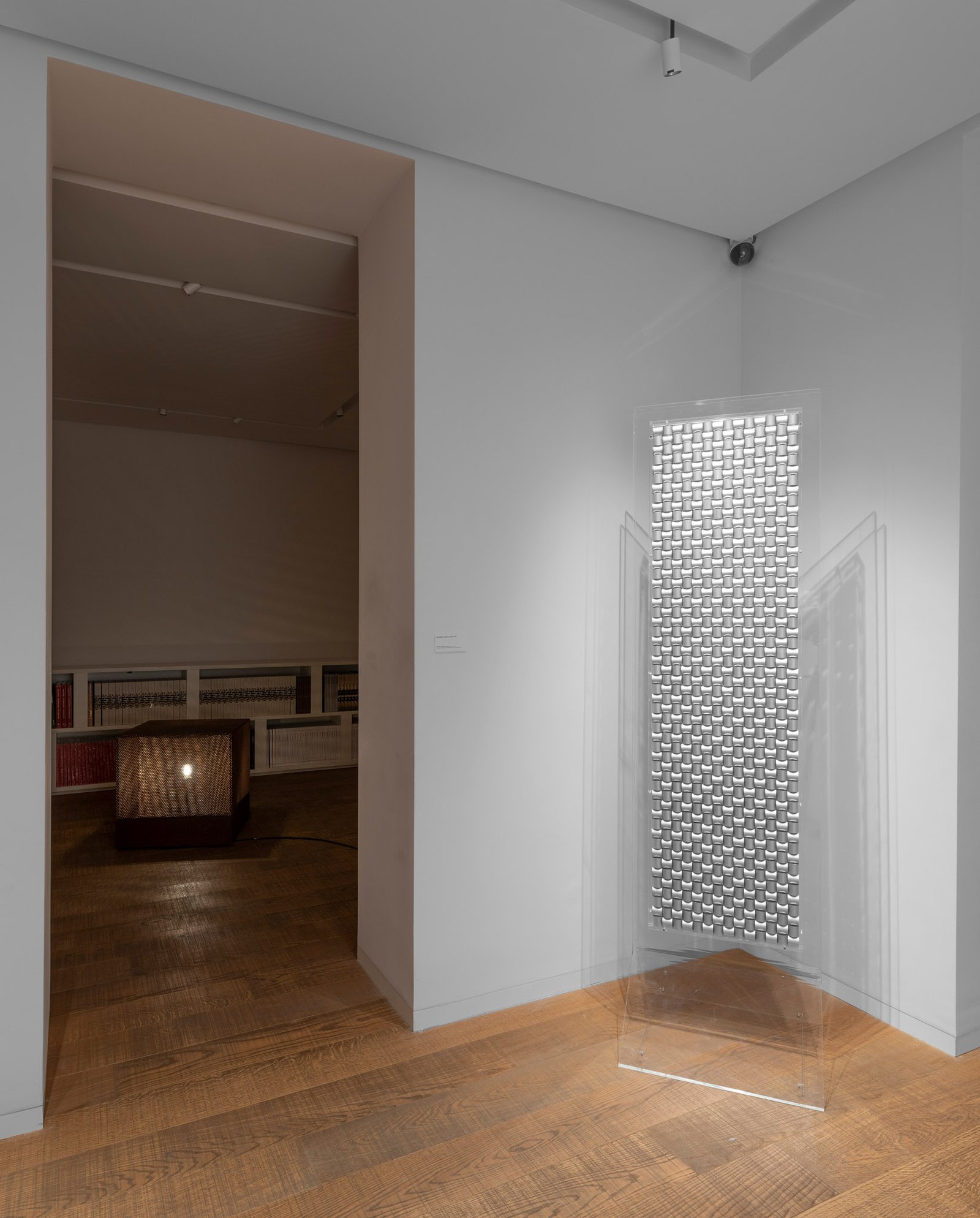
The solo show of Alberto Biasi at Tornabuoni Arte Roma is open from September 16 to November 21, 2026 at the gallery's Rome location, at Via Bocca di Leone 88, in the Campo Marzio district, a few minutes' walk from Piazza di Spagna. The Roma Capitale tourism portal gives opening Tuesday to Saturday, from 10:00. By public transport the most convenient option is Metro A to the Spagna stop, then on foot. For the route from your starting point, it's best to use the ATAC route planner. The admission cost is not given in the official sources: for visiting terms and information, contact the gallery directly, through the contacts published on its website. On view are more than 20 works spanning more than 60 years of research, with archive materials on the relationship between the artist and Rome and a cahier with an unpublished interview.
Alberto Biasi at Tornabuoni Arte Roma in brief
Tornabuoni Arte Roma opens the 2026-2027 exhibition season with Alberto Biasi, born in Padua in 1937, one of the protagonists of Arte Programmata and of international optical-kinetic art. It is a show small in size and large in historical weight.
Dates and hours
The show opened on Wednesday, September 16, 2026 and can be visited until Saturday, November 21, 2026. According to the Roma Capitale tourism portal the gallery is open every Tuesday, Wednesday, Thursday, Friday and Saturday from 10:00. Sunday and Monday do not appear among the opening days indicated.
What to expect
More than 20 works, from the historic research of the 1960s to the environments of the 1970s up to recent works, and a selection of invitations, catalogs, photographs and documents that reconstruct Biasi's relationship with Rome. The visit takes less than an hour, but asks for attention: these works change depending on where you stand.
The cahier
The show is accompanied by a cahier with an unpublished interview with Alberto Biasi, made for the occasion. For an artist who is almost 90 and keeps working, it is a document worth asking for at the gallery.
What you see in the Alberto Biasi show
The path at Tornabuoni Arte Roma crosses more than 60 years of research and highlights, in the gallery's words, the extraordinary coherence and vitality of an investigation into movement, perception and the interaction between work and viewer.
The Trame
The starting point is the Trame, made between 1959 and 1960: reticular and permeable objects, made of superimposed perforated papers. Seen up close they are grids. Seen while moving, they become surfaces that vibrate. They are the works with which a 20-year-old architecture student in Padua begins to question the fixity of the image.
The Rilievi ottico-dinamici
Alongside the Trame Biasi soon places the Rilievi ottico-dinamici, in which lamellar structures are superimposed on panels of contrasting colors. This is where the optical effect becomes full: the picture changes appearance depending on the angle of observation, and the viewer has the impression that the surface is moving.
The Torsioni
The first Torsioni date from the same period, built on classical geometric forms, square, circle, triangle and rectangle, with PVC slats on panel. Here too the work is completed by the viewer's movement: it is the viewer who sets the image in motion.
Light Prisms and Ambienti
In 1962 Biasi designs the Light Prisms, which in 1969 become environments on an architectural scale. The Roman show gives space to the Ambienti of the 1970s, that is to the phase in which the work is no longer a hanging object but a space you enter. In the installation photo released by the gallery you see a perforated cube lit from inside, which projects a lattice of light onto the floor and walls.
Politipi and Assemblaggi
After the Gruppo N ended, Biasi continues alone and at the end of the 1960s develops the first Politipi. At the end of the 1990s come the Assemblaggi. The gallery cites them among the most significant cycles, together with Trame, Rilievi, Torsioni and Light Prisms: so the whole trajectory is in the show.
The Roman archive
Alongside the works, invitations, catalogs, photographs and documents reconstruct the artist's relationship with Rome and with some protagonists of Italian art of the second half of the 20th century. It is the part of the show that a Roman visitor should read most attentively, because it tells a little-known story of the city.
Arte programmata and kinetic art: the words to understand Biasi
Arte programmata and optical-kinetic art are the two labels to which Alberto Biasi's name is tied, and it's best to have them clear before going into the gallery. They are not synonyms, but in Biasi's story they overlap.
Programmata
The expression was born with the 1962 show Arte programmata, promoted by Olivetti with Bruno Munari and Giorgio Soavi. It indicates a work that develops from a method, from a designed structure, more than from the expressive gesture of the artist. The Gruppo N, born in Padua among architecture students, brought to this research the habit of design: the grid, the module, repetition.
Optical-kinetic
Kinetic art is art in which movement is part of the work. In Biasi's case the movement is almost always optical: the surfaces do not truly move, but change appearance depending on the angle of observation, giving the illusory sensation of movement. Slats, perforated papers, superimposed structures and contrasting colors are the tools of this illusion.
The viewer at the center
The common point, which the Tornabuoni show puts in the foreground, is the active involvement of the person looking. The gallery speaks of research that questions the fixity of the image and asks the viewer to take part in building the visual experience. Put simply: without someone moving in front of the work, the work is incomplete. It is an idea that anticipates many themes of contemporary art, from installation to interactive art, and that makes Biasi surprisingly current.
Alberto Biasi and Rome: a story that begins in 1960
The show renews a link between Biasi and Rome that, according to the gallery, goes back to the beginnings of his career. The steps are documented and precise, and give the show a meaning that goes beyond the retrospective.
The Galleria Trastevere and Piero Manzoni
In 1960 Biasi takes part in the show Sculture tascabili, componibili, trasportabili, istantanee, organized by Piero Manzoni at the Galleria Trastevere directed by Topazia Alliata. It is one of the first occasions for comparison, in the capital, among the new Italian experimental research.
Arte Programmata in Via del Tritone
Two years later the Gruppo N, of which Biasi is a cofounder, is a protagonist of the historic show Arte Programmata promoted by Bruno Munari and Giorgio Soavi for Olivetti. It is a traveling show, set up in the Olivetti stores, which also stops at the Roman location in Via del Tritone, in the center of the city.
L'Obelisco, the Palazzo delle Esposizioni, the Quadriennale
In the following years Biasi shows at the Galleria L'Obelisco of Irene Brin and Gaspero del Corso, takes part in Vitalità del negativo curated by Achille Bonito Oliva at the Palazzo delle Esposizioni, and takes part in three editions of the Quadriennale di Roma. His works enter the collections of the Galleria Nazionale d'Arte Moderna, then directed by Palma Bucarelli.
From the Ara Pacis to Via Bocca di Leone
In 2021 the Museo dell'Ara Pacis devoted to him the show Tuffo nell'arcobaleno. Five years later, the solo show at Tornabuoni ideally closes a circle: from Trastevere to the Tritone, from the Quadriennale to the Ara Pacis, up to the Tridente.
Who Alberto Biasi is: biography
Alberto Biasi was born in Padua on June 2, 1937, where he lives and works. He is among the cofounders of the Gruppo N and one of the main exponents of Italian kinetic and programmed art, known for works built on precise optical illusions.
The Gruppo N
In 1959, with some fellow architecture students his age, he founded the Gruppo Enne-A in Padua. In 1960 he showed with Agostino Bonalumi, Enrico Castellani, Piero Manzoni and other European artists at the Galleria Azimut in Milan. In the same year he formed the Gruppo N with Ennio Chiggio, Toni Costa, Edoardo Landi and Manfredo Massironi. In 1961 he joined the Nuove Tendenze movement.
Arte Programmata
In 1962 he showed with the Gruppo N at the Arte programmata show in the Olivetti store in Milan, alongside Bruno Munari, Enzo Mari and the Gruppo T of Giovanni Anceschi, Davide Boriani, Gabriele Devecchi, Gianni Colombo and Grazia Varisco. The show continued to Venice, Rome and Trieste: it is the public birth certificate of a current that Italy then long forgot.
International recognition
In 1964 he took part in the 32nd Venice Biennale. In 1965 he was among the artists of the big show The Responsive Eye at the Museum of Modern Art in New York, which marks the season of greatest popularity of optical-kinetic art. He took part several times in Nove Tendencije in Zagreb, from 1961 to 1969, and in Nouvelle Tendance at the Musée des Arts Décoratifs in Paris in 1964.
The major retrospectives
In 1988 the Museo Civico degli Eremitani in Padua devoted a retrospective to him. In 1995 the retrospective Biasi e il Gruppo Enne was at the Venice Biennale. In 2006 about 30 historic works were shown at the Hermitage in Saint Petersburg. In 2007 the Diocesan Museum of Barcelona devoted a solo show to him. Ljubljana in 2011, Ravenna and Buenos Aires in 2014, Catanzaro in 2015 and Cittadella in 2016 followed.
In museums
His works are in the collections of the Peggy Guggenheim Collection in Venice, the National Gallery of Modern and Contemporary Art in Rome, the Museion in Bolzano, the Centre Pompidou in Paris, the Hermitage, MoMA in New York and the Museum of Contemporary Art in Zagreb.
Tornabuoni and Biasi
The relationship with the gallery isn't new: in 2015 the Galerie Tornabuoni Art in Paris dedicated a solo show to him, with a catalog edited by Serge Lemoine. The Rome show continues that collaboration at another of the group's locations.
Tornabuoni Arte: the gallery and the Rome location
Tornabuoni Arte is a network of galleries with locations in Florence, on Lungarno Benvenuto Cellini, in Milan, on Via Fatebenefratelli, in Forte dei Marmi, in Crans Montana, in Paris, on Avenue Matignon, and in Rome, at Via Bocca di Leone 88.
A program between masters and research
In 2026 the gallery presented the show Picasso Morandi Parmiggiani. Still Lifes in Venice, at the Istituto Fondazione Bevilacqua La Masa, from May 7 to July 25, and announced a new location in Milan. The Rome location opens the fall season with Biasi: a choice that confirms the group's attention to Italian masters of the second half of the 20th century.
A gallery, not a museum
Let's be clear: Tornabuoni is a private gallery, and the works on view are also works for sale, as the information requests linked to the selection published on the site show. This takes nothing away from the quality of the show, but it changes the tone of the visit: you enter a more intimate space, where it's normal to ask the staff for information.
A curiosity about Alberto Biasi at Tornabuoni Arte in Rome, from September 16 to November 21, 2026
The nicest curiosity is topographical. In 1962 the show Arte Programmata, promoted by Olivetti with Bruno Munari and Giorgio Soavi, also stopped at Olivetti's Rome location on Via del Tritone. The works of Gruppo N, and so of Biasi, were displayed in a store, among the products of an industrial company. 64 years later Biasi returns to the center of Rome, in a gallery in the Tridente.
The second curiosity concerns the name of the movement. Programmed art means that the work comes from a program, from precise rules that generate the effect: there is no artist's hand painting, there is a system that produces movement. That the show was promoted by a company like Olivetti says a lot: in those years art and industry were looking for the same language.
The third is about age: Biasi founded his first group, Enne-A, at 22, with fellow architecture students. Anyone looking at the Trame of 1959 is looking at the work of a young man who was still studying, and who within a few years would arrive at MoMA in New York.
Something nobody tells you about Alberto Biasi at Tornabuoni Arte in Rome, from September 16 to November 21, 2026
Nobody says it, but these works can't be understood standing still. The Optical-Dynamic Reliefs and the Torsions are built so that the image changes as you move: in front of them you have to walk, come closer, step back, crouch down. Anyone who plants themselves in the middle of the room and looks the way you look at a painting sees half the work. It's an invitation, not a detail: Biasi has worked for 60 years on the active involvement of the viewer, and the show says so explicitly.
The second thing nobody mentions is that photographs betray these works more than any others. A photo fixes the image from a single point of view, that is, it does exactly what Biasi tries to avoid. Anyone who knows Biasi only from reproductions will find a different artist in the gallery, more mobile, more alive.
Third: the gallery is open through Saturday. Anyone who works during the week mostly has Saturday available, and it's worth keeping that in mind when planning the visit before November 21.
My advice for visiting Alberto Biasi at Tornabuoni Arte in Rome, from September 16 to November 21, 2026
My advice is to go on a weekday, late in the morning, when the Tridente is still livable, and to give the show a real 40 minutes. Start with the archive: the invitations and photographs of Rome in the 1960s give you the context. Then move on to the works, and in front of each one take at least three steps, to the right, to the left, forward. You'll see the surfaces move.
Ask the gallery for the cahier with the unpublished interview: reading Biasi talk about his own work, at almost 90, is the best way to take the show home with you.
If you have an hour more, round out the day with the National Gallery of Modern and Contemporary Art, which holds works by Biasi and has devoted shows to programmed and kinetic art, or with the Ara Pacis, where the artist exhibited in 2021. Combining the private gallery and the public museum is the most complete way to understand what Rome owes to this artist from Padua.
Another well-known fact, yet rarely mentioned
It's well known that Op Art had its moment of glory in the mid-1960s, with the show The Responsive Eye at MoMA in New York in 1965. It's less often mentioned that the artists in that show included the Italians of Gruppo N, and among them Alberto Biasi. The history of optical art is often told as an American and French story. The Italians are there from the start, and in a leading role.
The role of Olivetti is also rarely mentioned. The 1962 show Arte programmata was born inside a company, promoted by Bruno Munari and Giorgio Soavi, and was set up in the brand's stores in Milan, Venice, Rome and Trieste. It's a rare case of industry producing artistic avant-garde, and the fact that the Rome stop was on Via del Tritone makes this show at Tornabuoni a kind of homecoming.
Finally, rarely mentioned is Biasi's link with the Galleria Nazionale d'Arte Moderna in Rome, where his works entered when the director was Palma Bucarelli and where, in 1996 and in 2012, cinevisual and programmed art was the subject of dedicated shows.
The right photo to take at Alberto Biasi at Tornabuoni Arte in Rome, from September 16 to November 21, 2026
The right photo, with Biasi, is a video. A few seconds shot while walking slowly in front of an Optical-Dynamic Relief or a Torsion give back what a photo can't: the movement of the image. Ask the staff first if filming is allowed, and do it without disturbing the other visitors.
If you prefer a photo, look for the angle where an Environment projects its light onto the walls: in the installation photograph released by the gallery, a perforated cube lit from inside draws a luminous grid on the floor. It's the image that best tells the story of the show.
Outside, the photo to take is the street: Via Bocca di Leone with its shop windows, a few steps from Piazza di Spagna. It tells the context of an art gallery in the commercial heart of the Tridente, the same city where, in 1962, programmed art arrived with the Olivetti show.
How to get to Tornabuoni Arte on Via Bocca di Leone
Tornabuoni Arte Roma is at Via Bocca di Leone 88, in the Campo Marzio district, Municipio I. The area is pedestrian or limited-traffic, and the easiest way to get there is the metro.
By metro
The Spagna stop on metro line A is the most convenient: you come out in Piazza di Spagna and continue on foot. For those coming from other parts of the city, the ATAC route planner shows the most suitable bus and metro combinations.
On foot
If you're already in the center, you can easily walk from Piazza di Spagna, Via del Corso or Piazza del Popolo. It's the best way to fit the show into a walk through the Tridente.
By car
The area is inside the ZTL of the historic center: better to leave the car outside and use the metro or a taxi.
How to organize your visit to the Alberto Biasi show
How much time you need
For the works and the archive, 40 minutes to an hour is enough. The show is intimate, and it fits easily into a morning or an afternoon in the center.
When to go
The gallery is open Tuesday through Saturday. Weekdays are quieter. On Saturday the Tridente is very crowded, but the gallery stays a calm space.
Before your visit
For updated hours, possible closures and visiting conditions, write to the gallery at the Rome address listed on its official site.
Accessibility and visiting with children
Accessibility
The official sources give no information on the accessibility of Via Bocca di Leone location. Anyone with specific needs would do well to contact the gallery before the visit.
With children
Optical-kinetic art is one of the best suited to children: the moving surfaces, the lights of the Environments and the optical illusions work even without explanations. A private gallery does call for care, though: the works aren't to be touched, and with the little ones it's best to hold hands. A simple game is to ask the children to discover what changes as they walk in front of a work.
Some important events that took place here in history
1937: Alberto Biasi is born in Padua on June 2.
1959: he founds Gruppo Enne-A in Padua with some peers who are architecture students, and makes the first Trame.
1960: in Rome he takes part in Piero Manzoni's show Sculture tascabili, componibili, trasportabili, istantanee at Topazia Alliata's Galleria Trastevere. In Padua he founds Gruppo N.
1962: Gruppo N is a protagonist of Arte Programmata, promoted by Olivetti, which also stops at the Rome store on Via del Tritone. Biasi designs the Light Prisms.
1964-1965: he takes part in the 32nd Venice Biennale and in The Responsive Eye at MoMA in New York.
1973 and 1986: he takes part in the 10th and 11th Quadriennale d'Arte di Roma.
1985: he exhibits at Palazzo Venezia in Rome in the show Artisti oggi tra Scienza e Tecnologia.
1996 and 2012: his works are in the shows on cinevisual and programmed art at the Galleria Nazionale d'Arte Moderna e Contemporanea.
2015: the Galerie Tornabuoni Art in Paris dedicates a solo show to him.
2021: the Ara Pacis Museum presents Alberto Biasi. Tuffo nell'arcobaleno.
September 16, 2026: Tornabuoni Arte Roma opens the season with his solo show, on view through November 21.
Who passed through Alberto Biasi at Tornabuoni Arte in Rome, from September 16 to November 21, 2026
More than the people who passed through the gallery, what counts is who passed through Biasi's Roman story, and the show tells it through the archive. There is Piero Manzoni, who in 1960 organized at the Galleria Trastevere the show Biasi took part in, and there is Topazia Alliata, who ran that gallery. There are Bruno Munari and Giorgio Soavi, who promoted Arte Programmata for Olivetti and brought it to the store on Via del Tritone.
There are Irene Brin and Gaspero del Corso, founders of the Galleria L'Obelisco, one of the liveliest places in postwar Rome, where Biasi exhibited. There is Achille Bonito Oliva, who wanted him in Vitalità del negativo at the Palazzo delle Esposizioni. And there is Palma Bucarelli, under whose direction his works entered the Galleria Nazionale d'Arte Moderna.
Next to them, the traveling companions of Gruppo N, Ennio Chiggio, Toni Costa, Edoardo Landi and Manfredo Massironi, and those of Gruppo T, Giovanni Anceschi, Davide Boriani, Gabriele Devecchi, Gianni Colombo and Grazia Varisco, with Enzo Mari. It's a gallery of portraits of the Italian avant-garde of the second half of the 20th century, and the show on Via Bocca di Leone lines them up with documents, invitations and photographs.
What to see around Via Bocca di Leone
The gallery is in the Tridente, one of the densest quarters of Rome for monuments, museums and walks.
Piazza di Spagna and Trinità dei Monti
A few minutes away are Piazza di Spagna and the staircase that climbs to Trinità dei Monti. On the square you'll also find the Keats-Shelley House.
Via dei Condotti and Via del Babuino
Via dei Condotti, with the Antico Caffè Greco, and Via del Babuino, the street of antique dealers that leads to Piazza del Popolo, complete the walk.
Casa di Goethe and Piazza del Popolo
Nearby is the Casa di Goethe, and farther north Piazza del Popolo and the climb to the Pincio.
Ara Pacis
Toward the Tiber, the Ara Pacis and the Mausoleum of Augustus: the museum where Biasi exhibited in 2021.
Where to eat near Via Bocca di Leone
The Tridente has everything, from historic cafés to elegant restaurants, with the highest prices in the historic center.
A café
For a break before or after the show, the Antico Caffè Greco on Via dei Condotti is a historic stop a few steps away. The bars on the side streets are less scenic and cheaper.
For lunch
The streets around Piazza di Spagna and toward Piazza del Popolo have trattorias, wine bars and restaurants for every budget, even if prices stay those of the center. Anyone looking for a simpler lunch should move a few streets away from the shopping streets.
Rome in fall: the period of the show
The Biasi show covers the Roman fall, from mid-September to the end of November: the period when galleries reopen their seasons, museums inaugurate the big shows and the city returns to a temperature that lets you walk. It's the best time for a contemporary art itinerary in the historic center, between private galleries and public museums. November brings the first rains: in that case an intimate gallery like Tornabuoni is a perfect refuge.
Frequently asked questions about Alberto Biasi at Tornabuoni Arte Roma
Until when is the Alberto Biasi show in Rome open?
The Alberto Biasi show at Tornabuoni Arte Roma is open from September 16 to November 21, 2026, at Via Bocca di Leone 88 location. According to the Rome Capital tourist portal, the gallery is open Tuesday through Saturday, from 10:00.
Where is Tornabuoni Arte in Rome?
Tornabuoni Arte Roma is at Via Bocca di Leone 88, 00187 Rome, in the Campo Marzio district, a few minutes on foot from Piazza di Spagna. The most convenient metro stop is Spagna, on line A.
How much does it cost to see the Alberto Biasi show at Tornabuoni?
The admission cost for the Alberto Biasi show at Tornabuoni Arte Roma isn't given in the gallery's official sources. For visiting conditions, updated hours and information, it's best to contact the Rome location through the official Tornabuoni Arte site.
Which works by Alberto Biasi are on view in Rome?
At Tornabuoni Arte Roma there are more than 20 works by Alberto Biasi on view, from the Trame to the Optical-Dynamic Reliefs, from the Torsions to the Light Prisms, up to the Environments and the Assemblages. Archive materials on the relationship between the artist and Rome complete the show.
Who is Alberto Biasi?
Alberto Biasi is an artist born in Padua in 1937, co-founder of Gruppo N and a protagonist of Arte Programmata and optical-kinetic art. He exhibited at the Venice Biennale and at The Responsive Eye at MoMA in New York in 1965. His works are at the Centre Pompidou, at MoMA and at the Galleria Nazionale in Rome.
What link does Alberto Biasi have with Rome?
Alberto Biasi's link with Rome begins in 1960, with Piero Manzoni's show at the Galleria Trastevere. Then come Arte Programmata in the Olivetti store on Via del Tritone, L'Obelisco, the Palazzo delle Esposizioni, three Quadriennali and, in 2021, the show at the Ara Pacis.
Is the Biasi show suitable for children?
The Alberto Biasi show at Tornabuoni Arte suits children well, because the optical-kinetic works change as you move and the lights of the Environments catch their attention. In a private gallery, though, the works aren't to be touched, and with the little ones you need to pay attention.
Final advice on Alberto Biasi at Tornabuoni Arte
Go with comfortable shoes and the idea of moving, not standing still. Biasi is one of those artists that photographs don't convey, and in our view the show, small and precise, gives him back for what he is: a master who for 60 years has asked the viewer to take part. On your way out onto Via Bocca di Leone, it's worth remembering that right in the center, in 1962, programmed art arrived in Rome inside an Olivetti store.
Article written by the editorial team of Tour Leader Pro, contact them for Private/Corporate/V.I.P. Tours and Experiences.
Planning a trip to Rome? The English-language guides to visiting the city are on ItalyPlanner.com.