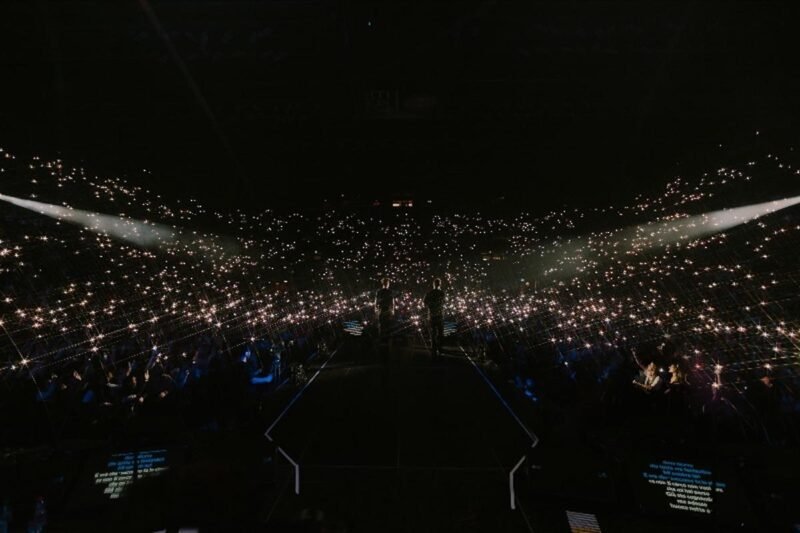
Afterhours, “Quello che non c’è Tour 2027” at Atlantico Live, February 17 and 18, 2027
In short. Afterhours return to Rome with the “Quello che non c'è Tour 2027”: two nights at Atlantico Live, in Viale dell'Oceano Atlantico 271, in the EUR neighborhood, on Wednesday, February 17 and Thursday, February 18, 2027, starting at 21:00 on both dates.
Afterhours return to Rome with the “Quello che non c'è Tour 2027”: two nights at Atlantico Live, in Viale dell'Oceano Atlantico 271, in the EUR neighborhood, on Wednesday, February 17 and Thursday, February 18, 2027, starting at 21:00 on both dates. On the event's official ticketing page the February 17 date is listed as sold out, while tickets for February 18 are still on sale. The price isn't published on the event page, so it's best to check the authorized ticketing channel directly, where you'll also find information on ticket delivery and points of sale. To get to Atlantico Live from anywhere in the city you can use the ATAC route calculator, which takes updated metro and bus schedules into account.
The concert: two nights for two anniversaries
The Rome tour revolves around two anniversaries that the Milan band has chosen to celebrate together. The first is the 40th anniversary of the first 45 rpm single, “My Bit Boy,” released in 1987 and regarded as the group's record debut. The second is the 25th anniversary of “Quello che non c'è,” a 2002 album that the organizers themselves call a fundamental piece of the band's history and of Italian music. Rome is one of the Italian stops on a calendar of 15 dates, spread between January and February 2027.
Why the album “Quello che non c'è”
The album came out on April 5, 2002 and brought the group to a much wider audience. The single “Non sono immaginario” pulled the record to fourth place on the FIMI sales charts, and the lyrics of the title track won an Italian Music Award for best Italian lyrics. The tour that followed was long and saw the band joined, on some occasions, by American bands such as Mercury Rev.
The lineup on stage
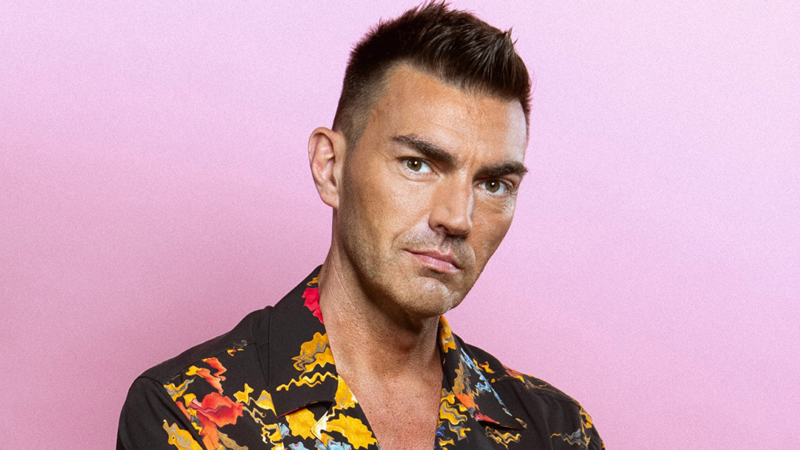
Alongside frontman Manuel Agnelli (vocals and guitar), the stage will see Andrea Viti on bass, Dario Ciffo on violin and guitar, Giorgio Prette on drums and Giacomo Rossetti as multi-instrumentalist. It's a lineup that takes up the one from the 2025 tour for the 20th anniversary of “Ballate per piccole iene,” a cycle of concerts that, according to the organizers, drew over 100,000 spectators.
The European and Italian calendar
The tour starts in Amsterdam and continues to Brussels, London, Paris and Berlin. In Italy it stops at Nonantola, in the province of Modena, then Zurich, Brescia, Padua, Florence, Venaria Reale near Turin, Naples and Cesena. Rome is the second-to-last city on the route and the closing is entrusted to Milan, the band's hometown.
What to expect from the setlist
An official setlist isn't published. Given the double anniversary, it's reasonable to expect a telling of the career that touches the beginnings in 1987 and the repertoire of “Quello che non c'è,” but the organizers haven't released the list of songs, and in the absence of official data it's best not to anticipate it.
Who Afterhours are
Afterhours are an Italian alternative rock band born in Milan in 1986 from an idea of Manuel Agnelli. Together with Marlene Kuntz they are considered an iconic group of Italian alternative rock, and Agnelli has been its only constant member since the beginning. The starting dates vary: 1986 is the year of formation, while the record debut with the single dates to 1987 and the 30th anniversary was celebrated in 2017.
The name and the debt to the Velvet Underground
The name was meant as a tribute to Lou Reed's Velvet Underground, authors of a song titled precisely “After Hours.” The reference to New York rock remains a constant in the group's path: on the record “Ballads for Little Hyenas,” the export edition of “Ballate per piccole iene,” there is a version of Lou Reed's “The Bed.”
The first lineup
The debut lineup included Paolo Cantù on guitar, Lorenzo Olgiati on bass and Alessandro Pelizzari on drums, later replaced by Max Donna. The first work was the 1987 single “My Bit Boy,” followed in 1988 by the album “All the Good Children Go to Hell,” both released by Toast Records and sung in English. The record was presented in Turin, in early July, with a concert at Parco della Pellerina.
From English to Italian
For the first years the language choice was English. The switch to Italian happens in 1993 with a version of Rino Gaetano's “Mio fratello è figlio unico,” and is completed with the 1995 album “Germi,” the first entirely in Italian.
Manuel Agnelli, frontman and man of the stage
Manuel Agnelli, whose birth name is Manuele Italo Agnelli, was born in Milan on March 13, 1966. A singer-songwriter, multi-instrumentalist and record producer, he is also a television personality. His solo path has always run alongside the band's, but it is with Afterhours that he builds his public identity.
Producer and label founder
In 1989 he founded, with other musicians including Mauro Ermanno Giovanardi of La Crus, the label Vox Pop, which in five years produced about 90 records. As an artistic producer he works with Cristina Donà, whose first two albums he oversees, and with Massimo Volume, Verdena and other names of the independent scene. In November 2001 he receives in Milan the recognition as best Italian producer at the Italian Music Awards.
The Tora! Tora! festival
On June 10, 2001 the Tora! Tora! Festival, conceived and organized by Agnelli, starts in Rimini. It runs for five editions, until 2005, and hosts bands such as Marlene Kuntz and Subsonica. At the end of 2001 the Meeting of Independent Labels in Faenza gives him the award for live event of the year.
Books, radio and film
In 1999 he makes his debut as a writer with “I racconti del tubetto,” reissued by Mondadori as “Il meraviglioso tubetto.” Since September 2022 he hosts the program “Leoni per Agnelli” on Radio24. In 2018 he lends his voice to Caravaggio in the film “Caravaggio - L'anima e il sangue.”
The television face: X Factor
In 2016 he joins the 10th edition of X Factor as a judge, where his contestant Eva comes in third. He returns as a judge in 2017, 2018, 2020, 2021 and 2024. Also on television, in 2018 he hosts the program “Ossigeno” on Rai 3, dedicated to the written and sung word.
The first solo album
In 2022 he releases through Universal “Ama il prossimo tuo come te stesso,” his first solo album, preceded by the singles “Proci” and “Signorina mani avanti.” In 2021 he had written “La profondità degli abissi” for the film “Diabolik” by the Manetti Bros., a song that won both the David di Donatello and the Nastro d'argento for best original song.
The Afterhours discography
The studio albums released to date are 11, with EPs, compilations and live records in addition. The overview that follows proceeds in chronological order and shows how wide the material is that a celebratory concert draws from.
The years in English: from 1988 to 1993
“All the Good Children Go to Hell” (1988), “During Christine's Sleep” (1990) and “Pop Kills Your Soul” (1993) are the three albums sung in English. The 1991 mini LP “Cocaine Head” is the first work with Giorgio Prette on drums. In 1990 the American magazine Alternative Press names “During Christine's Sleep” record of the month and the band is invited to represent Italy at the New Music Seminar in New York.
“Germi” and the switch to Italian
“Germi” comes out in 1995 on Vox Pop and is the first record in Italian. It's a very experimental work, with a direct sound and noise, psychedelic and post-punk influences. After its release, Mina includes on her album “Leggera” a reinterpretation of “Dentro Marilyn,” titled “Tre volte dentro me.”
“Hai paura del buio?” (1997)
Released by Mescal on October 20, 1997, it is considered by many the band's masterpiece and a milestone of Italian alternative rock. Among the tracks are “Dea,” “Voglio una pelle splendida,” “Male di miele” and “Veleno.” According to a jury of journalists, the album wins the title of best independent record of the last 20 years, and in 2013 it gave its name to a traveling festival conceived by Agnelli.
The album “Non è per sempre” (1999)
Released on May 13, 1999, it changes direction from the two previous records: the sound is less rough and more refined, with the permanent entry of Dario Ciffo's violins and Roberta Castoldi's cello. Among the most representative tracks are “Milano circonvallazione esterna” and “Non si esce vivi dagli anni '80.” During the tour, on July 11, the band shares the stage in Bologna with R.E.M.
The album “Quello che non c'è” (2002)
The record whose 25th anniversary is being celebrated comes out on April 5, 2002. After Xabier Iriondo's departure, the band doesn't replace him with a new member but with a full-time session musician, Giorgio Ciccarelli. The single “Non sono immaginario” takes the album to fourth place on the FIMI charts.
“Ballate per piccole iene” (2005)
Released on April 15, 2005, with production by Greg Dulli, it comes out with four different covers and places second on the FIMI charts. It contains tracks such as “Ci sono molti modi,” “Ballata per la mia piccola iena” and “La sottile linea bianca.” In 2025 a tour celebrated the album's 20th anniversary with the 2005 lineup.
From “I milanesi ammazzano il sabato” to “Folfiri o Folfox”
“I milanesi ammazzano il sabato” is from May 2, 2008. “Padania,” co-produced by Manuel Agnelli and Tommaso Colliva, is from April 17, 2012 and wins the Targa Tenco as album of the year. “Folfiri o Folfox” is a double album from 2016 with 18 tracks. It takes its title from two chemotherapy treatments that Agnelli's father had undergone, and debuts at number one on the FIMI chart.
Live and compilations
Live records include the 2001 double “Siam tre piccoli porcellin” and “Noi siamo Afterhours,” released on January 25, 2019 and taken from the April 10, 2018 concert at Mediolanum Forum in Assago, which closed the celebrations for 30 years of career.
Sanremo, awards and collaborations
The history of Afterhours is dotted with awards and encounters with other artists, often far from their world. Listing them helps in understanding the band's weight on the Italian scene.
Sanremo 2009: “Il paese è reale”
In February 2009 they take part in the 59th Sanremo Festival at the express request of host Paolo Bonolis. With the song “Il paese è reale” they are eliminated in the first round, but win the “Mia Martini” Critics' Award. The song doesn't appear on the festival's official compilations. It comes out on the album “Afterhours presentano: Il paese è reale (19 artisti per un paese migliore?),” which collects 18 other previously unreleased songs written by artists of the alternative scene.
The return to Sanremo with “Argentovivo”
In 2019 Manuel Agnelli collaborates with Daniele Silvestri and Rancore on the song “Argentovivo,” presented at the 69th Sanremo Festival. The song receives the “Mia Martini” Critics' Award, the “Lucio Dalla” press room award and the one for best lyrics, and later wins the Targa Tenco as best single song.
May Day in Rome
In 1998 Afterhours take part for the first time in the traditional May Day concert in the capital. 14 years later, on May 1, 2012, their performance, scheduled for 23:06, is canceled at the last minute for exceeding the time limit imposed by the noise pollution rules, and a controversy ensues.
International collaborations
On tour the band has shared the stage with Mercury Rev in 2002 and with Greg Dulli's Twilight Singers in 2004. Dulli produced “Ballate per piccole iene.” At a Rome date at Villaggio Globale, remembered by the sources, Dulli and Mark Lanegan shared the stage with the band. The sources don't agree on the year: the entry on the band gives 2006 in the chronology and 2005 in the section on awards.
Awards and recognitions
In 2012 “Padania” wins the Targa Tenco as album of the year and the PIMI as best group, and receives the Critics' Award from Musica e dischi. In 2018 “Folfiri o Folfox” gets the Premio Lunezia Rock d'Autore. In 2009 “Il paese è reale” had already received the Premio Lunezia della Critica.
The 2027 tour in Rome: times, dates and tickets
Dates and times
The two Rome dates are Wednesday, February 17 and Thursday, February 18, 2027, both at 21:00. The doors opening time isn't published on the event page, so it's best to check the organizer's communications in the days before.
Sales status
At the time the ticketing page was consulted, February 17 was sold out and February 18 was available for purchase. The situation can change at any moment: should both nights sell out, the only safe channel remains the official one, avoiding unauthorized intermediaries.
Ticket prices
The price isn't published on the event page. For this reason no figure is given here.
Where to buy tickets
Tickets are bought through the event's authorized ticketing channel, indicated on the organizer's official page. On the same page are the sections dedicated to venue information, ticket delivery and physical points of sale.
Atlantico Live: the concert venue
The venue hosting the Rome tour is Atlantico Live, in Viale dell'Oceano Atlantico 271, in the EUR neighborhood, south of the historic center. On open maps the name appears as “Atlantico Live!” with street number 271/d, in Municipio Roma IX, in the Fonte Ostiense area. It is a large hall for concerts, shows and private events.
A place built for live music
The hall is designed as a flexible space, with a standing floor in front of the stage and side balconies. The configuration changes depending on the event, and as a result the declared capacity also varies from one concert to another. The figures given range between about 2,500 and 4,000 seats, and the number valid for an evening is the one communicated by the organizer.
A long history of live concerts
Atlantico has hosted live concerts for over 15 years, as one documented case shows. Singer-songwriter Fabrizio Moro recorded the closing concert of his tour there on November 19, 2010, from which came the live album titled “Atlantico Live,” released in November 2011 with two CDs and a DVD.
Why the venue is called Atlantico
The name refers to the street it stands on, Viale dell'Oceano Atlantico, one of the streets of EUR dedicated to the great seas and continents. It's a street-naming choice consistent with the neighborhood, designed in the 1930s for a universal exposition that was never held.
What's around
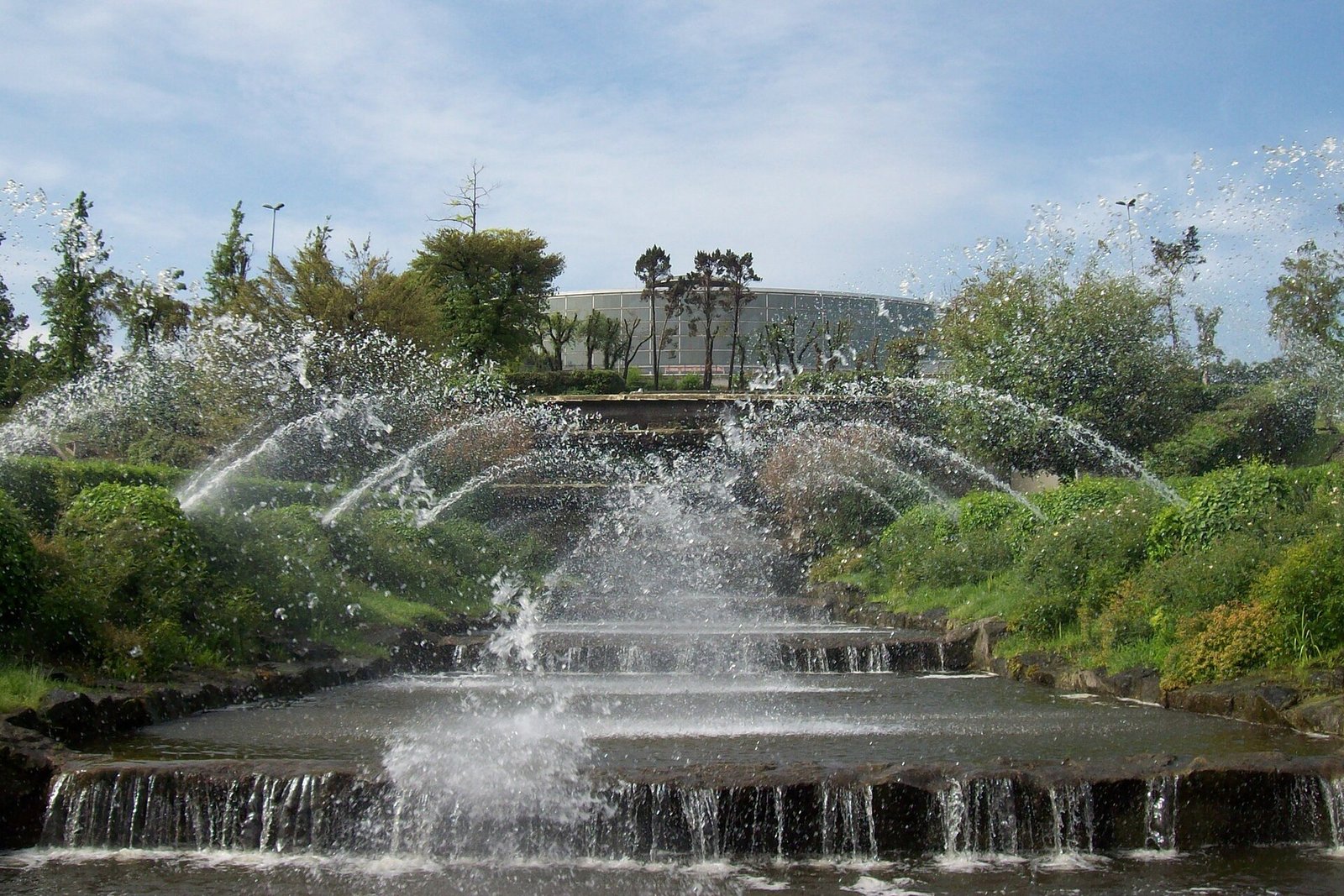
Around Atlantico are some of the best-known buildings of modern Rome: Palazzo dello Sport, Laghetto dell'EUR, Square Colosseum and Fuksas Cloud. Those who arrive a bit early can spend a few minutes on a walk around the neighborhood, keeping in mind that the venue is in an area mostly of offices and sports facilities.
EUR: the neighborhood of the exposition that never opened
The acronym EUR stands for Esposizione Universale di Roma, formerly E42, that is, the universal exposition planned for 1942 and never held. The neighborhood was born in the 1930s as the city's third pole of expansion toward the southwest and was meant to connect, ideally, the imperial Rome of the Baths of Caracalla to the Tyrrhenian Sea along Via Imperiale, today Via Cristoforo Colombo. To learn more about the neighborhood there is the page EUR: what to see, while the story of its birth is told in Esposizione Universale di Roma.
From the 1935 plan to the 1937 construction sites
In 1935 the governor of Rome Giuseppe Bottai proposed to Mussolini to put forward the capital as host of the 1942 exposition. The Tre Fontane area was chosen and work began on April 26, 1937, when Mussolini planted a Roman pine on the site of the future neighborhood. Technical coordination was entrusted to Marcello Piacentini, with the collaboration of many Italian architects.
Square Colosseum
The symbol of E42 architecture is the Palazzo della Civiltà Italiana, nicknamed “Colosseo Quadrato.” The page dedicated to it is Square Colosseum. Its style, inspired by classical Roman urban planning and Italian Rationalism, uses white marble and travertine to evoke temples and buildings of imperial Rome.
The postwar restart
After the work was interrupted in 1942 and the German occupation of 1944, the project restarted in the 1950s. The Palazzo della Civiltà Italiana, the church of Saints Peter and Paul and the Palazzo dei Ricevimenti e dei Congressi were completed, while the museums moved into the buildings of Piazza Italia, today brought together in the Museum of Civilizations.
EUR today
Today the neighborhood is one of the capital's most important financial and tertiary hubs. In 2004 it hosted the European Union's intergovernmental conference and, in October 2021, the G20 at the Nuovo Centro Congressi, Massimiliano Fuksas's Nuvola, described on the page Fuksas Cloud.
Palazzo dello Sport: the neighbor from 1960
A few steps from Atlantico stands Palazzo dello Sport, a facility designed in 1956 by Marcello Piacentini with structural consulting by Pier Luigi Nervi and built between 1958 and 1960 for the Rome Olympic Games. It belongs to EUR S.p.A. and is also known as PalaSport or PalaEur.
Nervi's structure
The building has a circular plan, with a diameter just under 100 meters, and is built entirely in reinforced concrete. The roof is a spherical dome only 9 centimeters thick, while the continuous glass facade gives it its typical cylindrical shape. The stands, on two tiers, offer about 12,000 seats.
From PalaLottomatica to today
Between 1999 and 2003 the facility was renovated by ForumNet with financing from Lottomatica, and until 2018 it carried the commercial name PalaLottomatica. In addition to the Olympic basketball and boxing competitions, it hosted a European basketball championship in 1991 and two world championships, in 1978 and 2010.
The relationship with Laghetto
Palazzo dello Sport faces the area of Laghetto dell'EUR, where as early as 1937 a monumental installation was planned, the Palazzo dell'Acqua e della Luce, which was never built.
Practical information for the evening
How to get to Atlantico Live
For updated directions on metro, buses and last-run times, it's best to use the ATAC route calculator, entering the concert date. Since both nights start at 21:00 and end at night, checking the schedule of the last vehicle is a sensible precaution.
Arriving by car and taxi
EUR can be reached from the Grande Raccordo Anulare and from Via Cristoforo Colombo. Parking availability depends on the event taking place in the area, so it's useful to check the organizer's indications and consider a taxi for the return.
Entry rules
The rules on bags, permitted items and documents are communicated by the organizer for each event and aren't reported on the page consulted. Those with accessibility needs can contact the organizer before buying.
Evening schedule
The concert is set for 21:00. The doors opening time isn't published, while the length of the show isn't declared by the organizer.
A curiosity about Atlantico Live
One of the best-known live recordings tied to this hall carries its name. On November 19, 2010 Fabrizio Moro closed his tour here and had the concert recorded, which became two CDs and a DVD released on November 8, 2011 with the title “Atlantico Live” and two previously unreleased tracks, “Respiro” and “Fermi con le mani.” The name of the hall, in short, ended up on the cover of a record.
A name that is a street
The reference to the ocean is not a musical allusion but a street-naming one: Viale dell'Oceano Atlantico is one of the streets of the neighborhood named after seas and continents.
Something nobody tells you about Atlantico Live
The number of seats is not the same for every night. The hall changes layout from event to event, with a standing floor or with seating, and the figures given vary. For this reason the figure that applies to the Afterhours nights is only the one the organizer indicates in the ticketing system.
The confusing street number
The official address shows number 271, but on open maps the hall is registered with number 271/d. If your navigation app doesn't find the entrance right away, it's best to search for “Atlantico Live” by name and not by street number.
A walk longer than it looks
EUR is a neighborhood designed with wide spaces and notable distances. Calculating the time from the stop to the gate with caution, especially on a winter evening, avoids missing the first songs.
The advice I give you for visiting Atlantico Live
My advice is to arrive in the area at least an hour before 21:00 and take a short walk around the neighborhood before going in: Palazzo dello Sport, Laghetto and Colosseo Quadrato are close to each other and worth the stop. Then, for the return, check the schedule of the last vehicle beforehand with the ATAC calculator.
Dress in layers
February is a cold month, and a hall full of people warms up fast. Dressing in layers, with a coat that's easy to take off, is a practical choice for an evening spent standing.
Eat first
Around the hall there isn't the same range of places as in the historic center: it's better to plan dinner before getting to EUR or in one of the neighborhood's places, choosing ahead of time.
Another well-known fact, yet rarely mentioned
It's known that Afterhours are a Milanese band, but it's less remembered that their name comes from a tribute to a Velvet Underground song and that for years they sang exclusively in English. The first album in Italian, “Germi,” arrives only in 1995, eight years after the first 45 rpm single.
The debt to Mina
Another little-cited detail: their consecration with the wide public also went through Mina, who included on her album “Leggera” “Tre volte dentro me,” a rereading of “Dentro Marilyn” from “Germi.” In 2009 Agnelli sang a duet with her on “Adesso è facile.”
The right photo to take at Atlantico Live
The most successful photograph of the neighborhood isn't taken inside the hall, where the rules on cameras and phones depend on the event, but outside, in the hours before the concert. A good choice is the Palazzo della Civiltà Italiana, the Colosseo Quadrato, with its travertine arches, at winter dusk.
Palazzo dello Sport at sunset
An alternative is the circular dome of Palazzo dello Sport, which with its glass facade and cylindrical shape lends itself to symmetrical framing, especially when the interior lights come on.
Laghetto with its reflection
On a windless day Laghetto gives back the reflection of the trees and nearby buildings: it's a good spot for a group photo before the evening.
Some important events that took place here in history
The neighborhood that hosts Atlantico has a history dense with events, all documented. Here they are in chronological order.
1937: Mussolini's pine
On April 26, 1937 work on E42 began and Mussolini planted a Roman pine where the neighborhood was to rise.
1942 and 1944: the exposition that never was
The universal exposition was never held and work stopped in 1942. In 1944 the area was occupied by German forces, who turned the Palazzo della Civiltà Italiana into a repair workshop and the workers' village into barracks. On June 2, 1944 the Allies took over.
1951: Commissioner De Gasperi
In 1951 Prime Minister Alcide De Gasperi appointed Virgilio Testa extraordinary commissioner of the EUR body, and from then on the neighborhood resumed development. Testa remained in office until 1973.
1955: the three metro stations
From 1955, the date the three metro stations opened, ministries and large companies settled in the neighborhood.
1960: the Olympics
For the 1960 Rome Olympics the neighborhood went through further urban and architectural development: Palazzo dello Sport hosted the basketball and boxing competitions.
2004 and 2021: conferences and the G20
In October 2004 EUR hosted the European Union's intergovernmental conference. In October 2021 the Nuovo Centro Congressi, the Nuvola, was the venue of the G20.
Who has passed through Atlantico Live
The history of concerts at Atlantico is only partly documented. One certain appearance is that of Fabrizio Moro, who recorded his live album there on November 19, 2010.
Afterhours and Rome
As for Afterhours, their relationship with Rome is a long one. On May Day 1998 they took the stage of the big May Day concert for the first time, and in 2013 the “Hai paura del buio?” festival had a date at Auditorium Parco della Musica. The documentary film drawn from the 2018 concert was presented at the Rome Film Fest. In October 2014 they brought the same festival to L'Aquila.
Other historic guests of the neighborhood
Palazzo dello Sport has hosted concerts and major sporting events for decades. Its musical vocation is recalled by the soundproofing of the inner dome, designed from the planning stage to host song and theater events.
Frequently asked questions about Afterhours at Atlantico Live
When are the Afterhours concerts in Rome?
The dates are Wednesday, February 17 and Thursday, February 18, 2027, starting at 21:00. They are part of the “Quello che non c'è Tour 2027,” which has 15 dates between January and February, with Rome as the second-to-last city and the closing in Milan. The doors opening time isn't published.
Where are the concerts held?
At Atlantico Live, in Viale dell'Oceano Atlantico 271, in the EUR neighborhood of Rome. It is a large concert hall, a short distance from Palazzo dello Sport and Laghetto dell'EUR. For the exact address on maps it's best to search for the name of the hall, which appears as “Atlantico Live!”
How much is a ticket?
The price isn't published on the event page, so no reliable figure can be given. You find it out by choosing the date and the section on the authorized ticketing channel. It's best to avoid any unauthorized reseller, since one of the two nights is already sold out.
Are there still tickets?
When the official page was consulted, February 17, 2027 was sold out, while tickets for February 18 were still on sale. Availability can change quickly: the only up-to-date source is the ticketing page authorized by the organizer.
Who plays in the tour lineup?
With Manuel Agnelli on vocals and guitar there are Andrea Viti on bass, Dario Ciffo on violin and guitar, Giorgio Prette on drums and Giacomo Rossetti as multi-instrumentalist. It's a lineup that recalls the one from the tour for the 20th anniversary of “Ballate per piccole iene.”
Why is this tour called “Quello che non c'è”?
Because it celebrates the 25th anniversary of the album “Quello che non c'è,” released in 2002, and 40 years since the first 45 rpm single “My Bit Boy,” from 1987. The album marked an important step for the band, reaching fourth place on the FIMI sales charts.
How do you get to Atlantico Live?
Updated directions on metro and buses are obtained with the ATAC route calculator, which lets you enter the date and time of the return. The EUR neighborhood is also connected to the Grande Raccordo Anulare via Via Cristoforo Colombo. Checking the schedule of the last vehicle in advance is a useful precaution after an evening concert.
Who are Afterhours?
They are an alternative rock band born in Milan in 1986 and led by Manuel Agnelli. The first 45 rpm single dates to 1987, “Hai paura del buio?” from 1997 is considered by many their masterpiece, and the group took part in the Sanremo Festival in 2009 with “Il paese è reale.”
Final advice on Afterhours at Atlantico Live
If a ticket is still available for the February 18 night, it's best to choose it through the official channel without waiting, because one of the two dates is already sold out. Arrive early, enjoy the EUR neighborhood in the hour before the concert and let the double anniversary do the rest. To organize a complete Roman stay, including private or corporate experiences, you can contact Tour Leader Pro.
Article written by the editorial team of Tour Leader Pro, contact them for Private/Corporate/V.I.P. Tours and Experiences.
Planning a trip to Rome? The English guides for visiting the city are on ItalyPlanner.com.
Contact Information
Nearby
 Atlantico Live Club Roma100 m
- Palazzo dello Sport1.1 km
- Laurentino – Acqua Acetosa Nature Reserve1.4 km
- Laghetto dell’Eur1.5 km
Upcoming events nearby
- Litfiba in Concert in Rome at Atlantico Live, December 2, 2026100 m
- Mobrici at Atlantico in Rome: 10 years of Avete ragione tutti, November 20 and 21, 2026100 m
- 22simba in Concert in Rome at Atlantico Live, November 22, 2026100 m
- Eugenio in Via Di Gioia at Atlantico Live, November 25, 2026100 m
You might also like
- Zero Assoluto at Palazzo dello Sport in Rome, May 21, 2027
- Elodie at Palazzo dello Sport in Rome, April 29 and 30, 2027
- Gazzelle at Palazzo dello Sport, April 10, 11, 13 and 14, 2027
- Gabry Ponte Circotron at Palazzo dello Sport in Rome, March 12 and 13, 2027
- Gianna Nannini at Palazzo dello Sport in Rome: March 31, 2027
- Massimo Pericolo at Palazzo dello Sport in Rome, March 23, 2027