Published on · updated on
Some links on this page are affiliate links: if you buy through them, Estate Romana receives a small commission, at no extra cost to you. As an Amazon Associate, Estate Romana earns from qualifying purchases.
The Fontinalia were the Roman festival of springs and fell on October 13: on that day, writes Varro, wreaths of flowers were thrown into fountains and wells were crowned in honor of Fons, the god of springs. In 2026 October 13 is a Tuesday, and the Fontinalia are a great excuse for a day on foot among the fountains of Rome, from the Trevi Fountain to the neighborhood nasoni, with a water bottle in hand instead of the usual little plastic bottle.
Here you’ll find the true story of the occasion, the one you read in ancient sources and not the one circulating on social media, then a route of 12 fountains to do in a day, with hours, access rules and walking times. At the end there’s a selection of bottles, books and accessories for those who want to gear up. The first two parts can be read without buying anything.
Data checked on October 3, 2026 against Varro (De lingua Latina, Book VI) and Cicero (De natura deorum and De legibus) in The Latin Library editions, Roma Capitale’s website for the Trevi Fountain rules and the Sovrintendenza Capitolina for fountain authors and dates. Where sources disagree we say so.
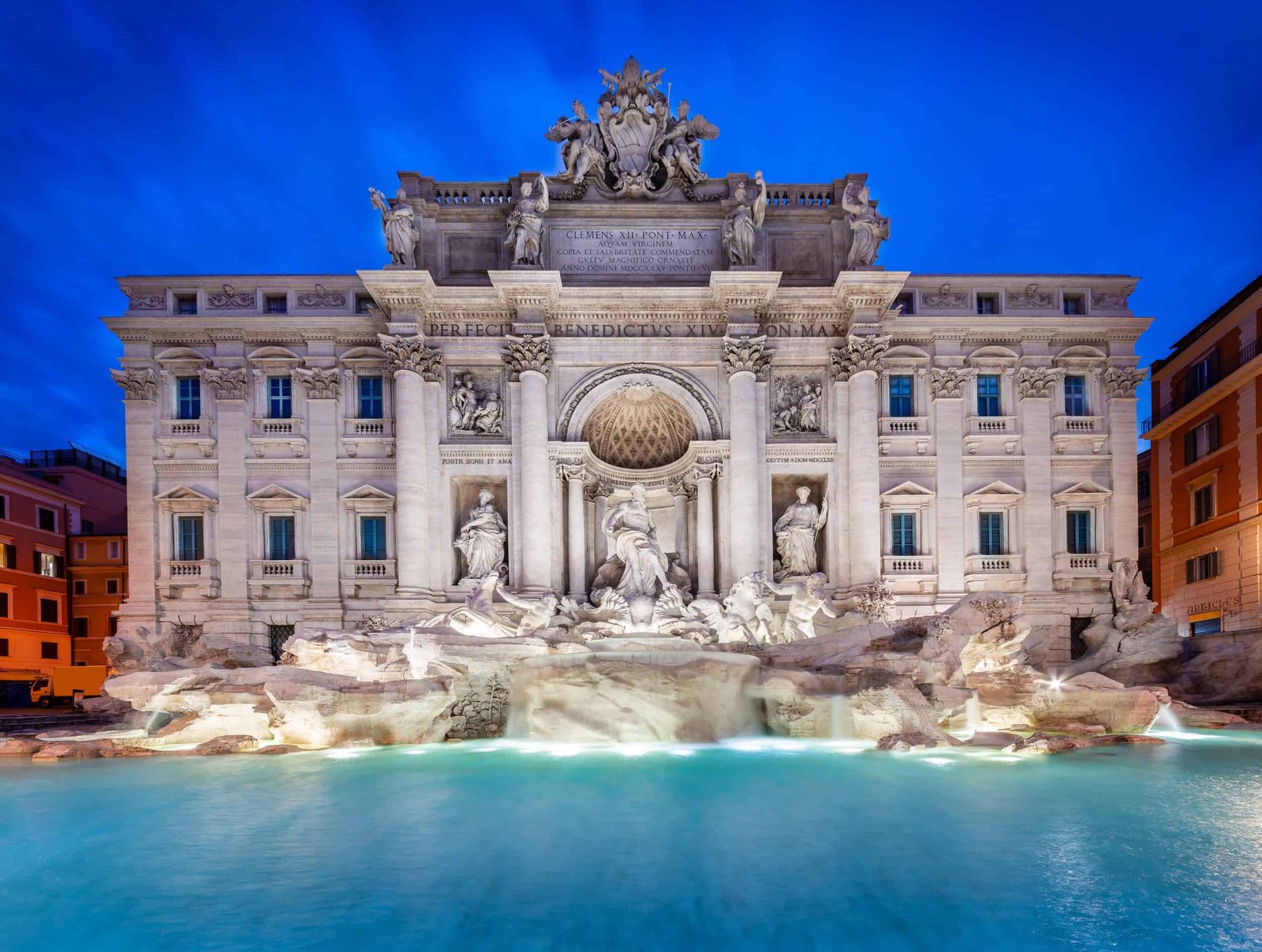
Fontinalia at a glance
- What: the Fontinalia were the Roman religious festival dedicated to Fons (or Fontus), the god of springs, during which wreaths of flowers were thrown into springs and wells were garlanded.
- When: the Fontinalia fell on October 13, and in 2026 October 13 is a Tuesday.
- Where: the cult of Fons in Rome had an altar on the Janiculum, near the tomb attributed to King Numa, and a sanctuary dedicated by consul Gaius Papirius Maso after the victory in Corsica.
- Ancient source: Varro, in Book VI of De lingua Latina, writes that on that day “wreaths are thrown into the springs and wells are crowned.”
- Today: there is no official Fontinalia celebration in Rome. The most sensible way to live it is a walking route among the historic fountains and the nasoni, drinking the public water.
- Good to know: since February 2, 2026 the inner area of the Trevi Fountain requires an entry ticket of €2 for non-residents, from 9:00 to 22:00 (Mondays and Fridays from 11:30), free after 22:00.
What were the Fontinalia and who was the god Fons?
The clearest testimony on the Fontinalia is a line by Marcus Terentius Varro, a scholar of the 1st century BC: “Fontanalia a Fonte, quod is dies feriae eius, ab eo tum et in fontes coronas iaciunt et puteos coronant.” Translated: the Fontinalia take their name from Fons, because that day is his festival. For him wreaths are thrown into the springs and wells are crowned. It’s little, but it’s precise. No bloody sacrifices described, no processions: flowers, water and the gesture of honoring the point where the water comes out.
Fons was a small, very concrete deity. Rome, before the aqueducts, drank from springs, wells and the Tiber, and every clean source was a matter of survival. Cicero, in the second book of De legibus, recalls that King Numa was supposedly buried in a tomb “not far from the altar of Fons,” on the Janiculum. In De natura deorum he adds that Gaius Papirius Maso dedicated a temple to Fons after the Corsican campaign: Maso was consul in 231 BC, so the cult had a stable place at least from the end of the 3rd century BC.
Linked to the festival’s name is also the Porta Fontinalis, one of the gates of the Servian walls, mentioned by Livy. Its exact position is debated: it’s usually placed on the side of the Capitoline Hill facing the Campus Martius, more or less where the Vittoriano stands today, but scholars don’t agree on the precise point. A late tradition, reported by the Christian apologist Arnobius, makes Fons the son of Janus and the nymph Juturna. It’s a literary genealogy, not a cult fact, and it’s best taken as such.
What remains, then, of the Fontinalia? The idea remains: one day of the year to thank the water that arrives in the city. In Rome it makes more sense than elsewhere, because here public water is still a visible, free, daily service. The Acqua Vergine, brought to the city by Agrippa in 19 BC, still feeds the Trevi Fountain, the Barcaccia and the Fountain of the Four Rivers. It’s hard to find a more direct thread between Varro’s Rome and today’s.
Do the Fontinalia have anything to do with the coin in the Trevi Fountain?
No, and this has to be said clearly because it’s the most repeated mistake on the subject. Many sites present the coin toss at Trevi as “the legacy of the Fontinalia.” The ancient sources on the festival speak of wreaths of flowers thrown into springs and garlanded wells, not of coins. The custom of throwing coins into sacred waters exists in the ancient world, but it’s a widespread, generic habit, not a rite tied to October 13.
The Trevi coin, in the form we know, is a modern tourist ritual, made popular worldwide by post-World War II cinema. It works very well, and the proceeds go to charity, but linking it to the Fontinalia is a leap without a bridge. In our judgment it’s more honest, and also more beautiful, to remember the Fontinalia with the gesture the sources actually describe: a flower left next to a fountain, or, more simply, filling your bottle at the nasone and not buying bottled water for a day.
The 12 fountains of Rome to see for the Fontinalia
The route that follows takes a day at an easy pace, starting from the Janiculum, where the altar of Fons stood, and ending at Trevi in the evening, when access to the basin becomes free again. Dates and authors are those of the Sovrintendenza Capitolina. For more on each place you’ll find Estate Romana’s listings, and for a wider overview there’s the page on Rome’s tourist attractions.
1. Acqua Paola Fountain, Janiculum
The “Fontanone” was built under Paul V by Giovanni Vasanzio and Giovanni Fontana, in the early 17th century. It’s the ideal starting point for the Fontinalia: the Janiculum is the hill where Cicero places the altar of Fons and the tomb of Numa. The view over Rome, early in the morning, pays off the climb.

2. Any nasone, along the descent
As you descend toward Trastevere you’ll meet the first cast-iron drinking fountain. The nasoni of Rome date to 1874, under Mayor Luigi Pianciani, and today there are over 2,500. The trick for drinking: plug the lower hole with your finger, and the water comes out of the little hole at the top.
3. Turtle Fountain, Piazza Mattei
Designed by Giacomo della Porta and executed by Taddeo Landini between 1581 and 1588, in the Ghetto. It’s small, elegant, and almost always without crowds. The listing for the Turtle Fountain tells the story of the turtles added later.
4. Fountain of the Four Rivers, Piazza Navona
Gian Lorenzo Bernini’s Baroque masterpiece, fed by the Acqua Vergine like Trevi. In Piazza Navona there are two other fountains, of the Moor and of Neptune: look at all three, each tells a different era of the square.

5. Pantheon Fountain, Piazza della Rotonda
Also designed by Giacomo della Porta in the late 1500s, with the obelisk added later. It’s a short stop, but it lets you combine the Fontinalia with a visit to the Pantheon, five minutes from Piazza Navona.
6. Facchino Fountain, Via Lata
One of Rome’s “talking statues,” a water carrier with a barrel. The Sovrintendenza dates it to the mid-1600s. It’s the perfect portrait of the trade that the Fontinalia, deep down, celebrated: bringing water where it’s needed.
7. Babuino Fountain, Via del Babuino
A reclining Silenus so ugly that the Romans called it a baboon, and the street took its name from the statue. Born as a semi-public fountain, it’s another talking statue. It sits halfway between Piazza del Popolo and Piazza di Spagna.
8. Barcaccia Fountain, Piazza di Spagna
Commissioned by Urban VIII Barberini and built between 1626 and 1629, at the foot of the staircase of Piazza di Spagna. The low pressure of the Acqua Vergine explains the shape: a half-sunken boat, because the water couldn’t rise high.
9. Triton Fountain, Piazza Barberini
Bernini made it between the end of 1642 and the middle of 1643. The Triton blows water from a shell, in the middle of traffic: look at it from the sidewalk on the side toward Via Veneto, where there’s less noise.
10. Moses Fountain, Piazza San Bernardo
The monumental fountain of the Acqua Felice, built between 1585 and 1589 for Sixtus V. The central Moses has always been criticized for its clumsy proportions, and it’s a criticism you can share without guilt.
11. Naiads Fountain, Piazza della Repubblica
Tied to the Acqua Pia Marcia commissioned by Pius IX in the second half of the 19th century, with the bronze naiads added later. In the evening, lit up, it’s one of the most photographed fountains outside the tight historic center.
12. Trevi Fountain, in the evening
The grand finale. Clement XII launched the project in 1732, choosing Nicola Salvi’s design, and the work was completed by Giuseppe Pannini. Two reliefs tell the legend of the virgin who points out the spring to the soldiers and Agrippa ordering the aqueduct. The listing for the Trevi Fountain explains the access rules in detail.
How are the Fontinalia celebrated in Rome today?
Let’s start with an honest premise: on October 13 in Rome there is no official Fontinalia festival. Some reenactment association sometimes organizes meetings or readings, but we have no published calendar to point to. The most sensible way to celebrate is therefore do-it-yourself: a walking route among the fountains, your bottle filled at the public water, maybe a flower left on a stone edge, as Varro wrote.
The route of the 12 fountains is about seven kilometers long, if you do it all. Count on a whole day with breaks, or split it in two: the morning from the Janiculum to Piazza Navona, the afternoon from Via del Babuino to Trevi. The advice is to keep Trevi for last and get there after 22:00, when the inner area goes back to free access for everyone and the crowd thins out. Before 22:00 non-residents pay the €2 ticket, which can be bought online on the official website fontanaditrevi.roma.it or at the entrance by card.
Walking six or seven hours you drink a lot, even in October. With a half-liter bottle and the nasoni along the way you don’t need to buy water. The water from the nasoni is the same as the city aqueduct, monitored by Acea, which also publishes an interactive map of the drinking fountains. The historic center alone counts more than 200.
The Fontinalia with family
With small children the whole route is too long. Keep the Turtles, Pantheon, Navona stretch, which takes an hour and a half with stops. Have the kids fill their own bottle at every nasone and turn the tour into a hunt: who finds the next fountain first.
The Fontinalia as a couple or with friends
For a couple the evening version works best: lit-up Naiads, Triton, then Trevi after 22:00 and dinner nearby. Among friends it’s best to split the jobs: one carries the fountain map, one tells the story of each stop reading from a book on Rome, one keeps time. If you’re many, avoid arriving all together at the Trevi entrance at peak hours: lines get long fast.
What if it rains?
October 13 may be rainy. In that case plan B is to stay indoors without losing the theme: the Capitoline Museums, on the hill where the Porta Fontinalis is usually placed, keep in the courtyard of Palazzo Nuovo the Marforio, an ancient river statue long used as a fountain. Alternatively pick a museum from the page of the museums of Rome and put off the fountain tour to the first dry afternoon: the Fontinalia are in no hurry.
An evening at the theater
If you want to end the day differently, you can look at the program of the Teatro Quirino, on Via delle Vergini, a few minutes’ walk from Trevi. The theater was built in 1871 on the initiative of Prince Maffeo Sciarra. Programs and times of the October shows are on the theater’s website: what they publish is what counts.
When to get organized and when to order for the Fontinalia?
This article comes out nine days before the Fontinalia. If you want a new bottle, or one for each family member, order it right away: the estimated delivery date you see at the time of the order is what counts, and it’s best to choose a model that arrives with a few days’ margin, so you can try it first. If you’re in Rome at a hotel, ask the front desk if it accepts packages in your name and put your name and the dates of your stay in the address.
For ticketed visits the logic is different. The Trevi ticket can also be bought on the spot, but for the Pantheon, the Capitoline Museums or other sites on the route, online booking avoids lines precisely in the October days, when many shoulder-season travelers arrive. If you want an on-site explanation, booking platforms offer third-party guided visits dedicated to the fountains and the water of Rome: read the duration, meeting point and cancellation conditions carefully before booking.
Last point: the time budget. In our judgment the most common mistake is wanting to see all 12 fountains in one afternoon. It doesn’t work: you rush, you don’t drink, you arrive at Trevi tired and in the most crowded hour. Better eight fountains seen well than 12 in a rush. The Fontinalia were a slow festival, made of simple gestures, and the tour should be done in the same spirit.
What to bring for the Fontinalia: bottles, books and accessories
Below you’ll find a selection by category. We don’t give prices because they change often, and for each category we offer several alternatives, because the most requested models sell out. Bottles are the heart of the list: for a Fontinalia tour you need ones that are light, easy to fill at the nasone and easy to clip onto a backpack.
Bottles for every need
- Insulated stainless steel bottle: keeps the nasone water cool all day, even in the sun of a warm October.
- Insulated bottle, other models: more choice of capacities and colors, useful if the first model is sold out.
- Filter bottle: for those who also travel outside Rome and want an extra margin when the water isn’t from the mains.
- Collapsible silicone bottle: empty, it takes up the space of a wallet, ideal for those traveling with carry-on only.
- Kids’ bottle: with a spout and shoulder strap, so the youngest can fill it themselves at every fountain.
- Personalized bottle: with a name or a date, it’s a sensible gift for those celebrating the Fontinalia with family.
- Glass bottle: it doesn’t hold flavors, for those who want to taste the nasoni water as it is.
- Lightweight aluminum bottle: the best choice for weight for those who walk all day.
- Bottle carabiner: it keeps it outside the backpack, ready for the next nasone.
To read
- Guidebooks to Rome from the bookstore: to read the story of each fountain on the spot, without draining the battery.
- Books on the fountains of Rome: illustrated monographs on the historic fountains and the aqueducts that feed them.
- Books on Roman aqueducts: to understand where the water you drink at the nasone comes from.
- Essays on Roman religion and festivals: to put the Fontinalia in their calendar, next to the other October festivals.
For walking all day
- City anti-theft backpack: hidden zippers, useful in crowded squares like Trevi and Navona.
- 10,000 mAh power bank: maps and photos for a whole day drain the battery before evening.
- Windproof folding umbrella: in mid-October a downpour is possible, and it fits in a pocket.
- Travel fanny pack: an alternative to the backpack for those who only want documents, phone and tickets at hand.
Tickets, passes and third-party visits
- Rome fountain tours on GetYourGuide: walks by third-party operators dedicated to the fountains and squares of the center.
- Roman aqueduct experiences on GetYourGuide: for those who want to see the aqueducts outside the center, after the fountains.
- All activities in Rome on GetYourGuide: to round out the day with a museum or an evening tour.
- Pantheon tickets on Tiqets: useful if you include stop 5 and want to avoid the line at the ticket desk.
- Rome attractions on Tiqets: museums and sites with bookable entry, handy as a plan B if it rains.
- Rome tourist passes on Turbopass: for those staying several days who want to combine transport and admissions in a single purchase.
Frequently asked questions
When are the Fontinalia celebrated?
The Fontinalia were celebrated on October 13. The date is given in Roman calendars and confirmed by Varro, who explains the festival’s name with the god Fons. In 2026 October 13 falls on a Tuesday, a weekday: for a tour of the fountains it’s best to take a half day off or move it to the following weekend.
What was done during the Fontinalia?
During the Fontinalia, wreaths of flowers were thrown into springs and the mouths of wells were garlanded. That’s what Varro writes in Book VI of De lingua Latina. Other details circulating online, like offerings of wine or flatbreads, don’t appear in the oldest sources on the festival and should be taken with caution.
Is there an official Fontinalia celebration in Rome today?
No, the City of Rome does not organize an official Fontinalia celebration. Some historical reenactment groups sometimes offer meetings, but there’s no stable calendar. The simplest way to experience it is a free route among the historic fountains and the nasoni, drinking the public water.
How much does it cost to see the Trevi Fountain up close?
The entry ticket to the inner area of the Trevi Fountain is €2 for non-residents, under Roma Capitale’s rules in force since February 2, 2026. The ticket is needed from 9:00 to 22:00, on Mondays and Fridays from 11:30. Residents of Rome and the Metropolitan City, children under 6 and people with disabilities with a companion get in free. After 22:00 access is free for everyone.
Is nasoni water safe to drink?
Yes, nasoni water is drinkable: it’s the same as the city aqueduct, managed and monitored by Acea. There are more than 2,500 fountains in the whole city and over 200 in the historic center alone. To drink without bending down, plug the lower hole with a finger: the water comes out of the upper little hole.
Does the coin in the Trevi Fountain come from the Fontinalia?
No, there’s no evidence that the coin toss at Trevi derives from the Fontinalia. The ancient sources on the festival speak of wreaths of flowers, not coins. The Trevi rite, as we know it, is a modern tourist habit, made famous in the 20th century by the movies.
Where was the Porta Fontinalis?
The Porta Fontinalis was a gate of the Servian walls, usually placed on the side of the Capitoline Hill facing the Campus Martius, in the area of today’s Vittoriano. Its exact position is debated by scholars and no visible trace of it remains. The name ties it to a spring or to the cult of Fons, but its precise relation to the Fontinalia is not documented.
Who wrote this and from what sources
The text comes from the editorial team of Tour Leader Pro, the Rome-based organization that designs itineraries, visits and cultural events across Rome and Lazio. We checked the data on Varro and Cicero in the editions of The Latin Library, on the access rules published by Roma Capitale
and on the Sovrintendenza Capitolina’s fountain listings as of the date given at the top. Tell us what you find changed.
Organizing a Fontinalia tour for yourself is simple: comfortable shoes, a bottle, a sensible time for Trevi. With a group of friends or an extended family a few more agreements are needed on pace, breaks and meeting points, and a useful resource for anyone who organizes group trips is Tour Leader Pro. If instead the fountains of Rome are only one stop of a broader trip in Lazio, between Tivoli, the Castelli and the Tuscia, a useful resource for putting together a multi-day itinerary is Italy Planner.