Published on
Some links on this page are affiliate links: if you buy through them, Estate Romana receives a small commission at no extra cost to you. As an Amazon Associate, Estate Romana earns from qualifying purchases.
An Ostiense walking tour works well in half a day: you start from the Pyramid of Cestius, pass by the Non-Catholic Cemetery, go down Via Ostiense to the Gazometro and Centrale Montemartini, and if you still have legs you get to the Basilica of St. Paul Outside the Walls. It’s the neighborhood where ancient Rome and industrial Rome sit on the same sidewalk, and to understand it you have to walk it, not cross it on a bus.
The Ostiense walking tour we suggest is made for people going alone, as a couple or with a couple of friends, without booking anything if they don’t want to. It works all year, but autumn is the right season: long, low light on the bricks, walking temperatures, fewer people than in summer. Here you’ll find the route stop by stop, the hours that matter and, at the end, the kit to put in your backpack.
Data checked on October 3, 2026 on the official websites of Centrale Montemartini and the Non-Catholic Cemetery, on the encyclopedia entries devoted to the Pyramid of Cestius and the Gazometro and on the Estate Romana entries. Entrance prices and special openings change often: where we don’t cite a figure it’s because it’s best to read it on the day on the operator’s website.
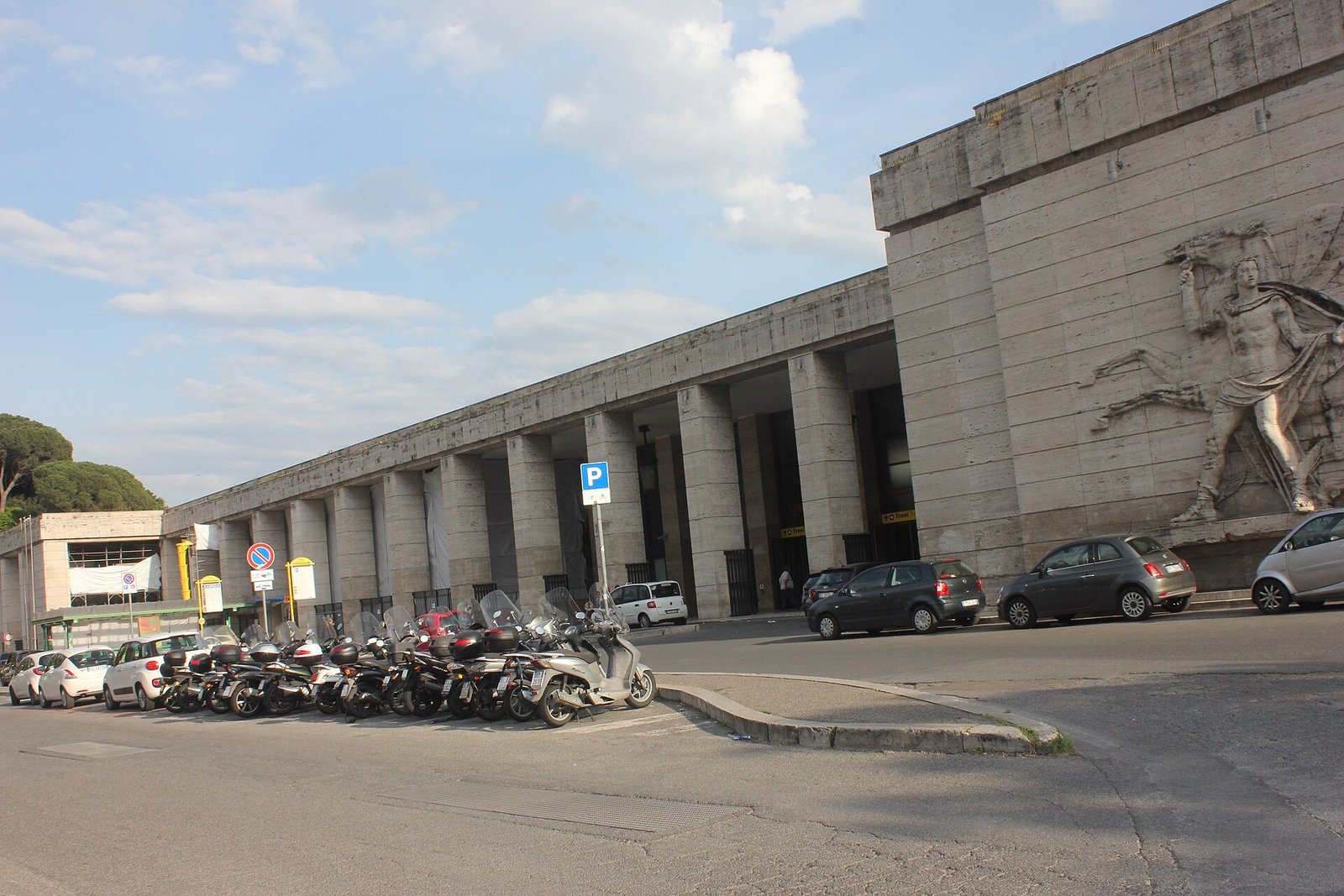
Walking tour Ostiense at a glance
- What: the Ostiense walking tour is a stroll of about half a day among the Pyramid of Cestius, the Non-Catholic Cemetery, the Gazometro, Centrale Montemartini and, if you want, the Basilica of St. Paul Outside the Walls.
- When: you can do it all year. Centrale Montemartini is open Tuesday to Sunday from 9:00 to 19:00, so it’s best to avoid Monday.
- Where: the route starts from Piazzale Ostiense, next to the Pyramid of Cestius, and goes south along Via Ostiense to number 106, where Centrale Montemartini is.
- How to get there: the start is at the Piramide stop on metro line B. To come back you use the Garbatella or Basilica San Paolo stops on the same line.
- Today: the Gazometro and Mercati Generali can only be seen from outside, while Centrale Montemartini and the Non-Catholic Cemetery can be visited at regular hours.
- Good to know: the Non-Catholic Cemetery closes at 17:00 Monday to Saturday and at 13:00 on Sunday, with last entry half an hour earlier.
Why do an Ostiense walking tour and not stay in the center?
Because Ostiense tells a Rome that the historic center doesn’t show. Here, between the late 1800s and the 1930s, the city put its industries: the power plant, the gasometer, the general markets, the warehouses along the Tiber. The neighborhood grew around a very ancient road, the one that led to Ostia and the sea, and it keeps both. On an Ostiense walking tour of three or four hours you go from a pyramid-shaped tomb of the 1st century BC to a steel cylinder nearly 90 meters tall, and the distance between the two is covered in half an hour of walking.
There’s a practical reason too. The center, in high season, is hard to walk. Ostiense has wide sidewalks, few organized groups, bars where you sit down without waiting in line. For anyone who has already been to Rome and seen the big monuments, this is the ideal second visit, the one that gives an idea of how the city really lives. Our entry on what to see in Ostiense lists all the stops in the neighborhood. This article puts them in line in a single route.
What history lies behind the stops on the route?
The first stop is the oldest. The Pyramid of Cestius is the tomb of Gaius Cestius Epulo, praetor, tribune of the plebs and member of the college of the septemviri epulones, one of Rome’s great religious colleges. It was built between 18 and 12 BC and, according to the inscription, completed in 330 days. It measures 100 Roman feet per side at the base, about 29.6 meters, and 125 in height, about 37. Between 271 and 275 AD it was incorporated into the Aurelian Walls as a bastion, and that’s why it has survived to us. The restoration completed in 2015 was financed by the Japanese entrepreneur Yuzo Yagi.
Right behind the Pyramid opens the Non-Catholic Cemetery, at Via Caio Cestio 6. Since the 18th century, non-Catholics who died in Rome were buried here: artists, diplomats, travelers of the Grand Tour. The English poets John Keats and Percy Bysshe Shelley rest here, and the thinker Antonio Gramsci. It’s one of the quietest places in the city, and for many visitors it’s the stop that stays most impressed. Our entry on the Non-Catholic Cemetery of Rome tells the main tombs one by one.

Then the leap of centuries. Centrale Montemartini was inaugurated on June 30, 1912 as the first public plant of the Azienda Elettrica Municipale, the ancestor of Acea. Decommissioned, in 1997 it became the second site of the Capitoline Museums with the exhibition “Le macchine e gli dei,” which in its essential lines is still there: ancient statues next to turbines and boilers. The Gazometro, instead, was built starting in 1935 by Ansaldo with the German firm Klönne and went into operation in 1937: almost 90 meters high, 63 in diameter.
What is the best route for an Ostiense walking tour?
The advice is to walk from north to south, that is, from the Pyramid toward San Paolo. You start by metro, go down a slight slope, and at the end you take metro B again at another stop, without retracing your steps. Here is the Ostiense walking tour in the version that, in our opinion, pays off most, with indicative stop times. We measured the distances on the map: from the Pyramid to Centrale Montemartini it’s a little over 2 kilometers on foot, to San Paolo a couple more.
Stop 1: Pyramid of Cestius and Porta San Paolo
Get out at the Piramide stop and you’ll have in front of you the tomb of Cestius and, next to it, Porta San Paolo, the ancient Ostiense gate of the Aurelian Walls. The Pyramid of Cestius can be viewed from outside at any time. The interior opens only on scheduled dates and by reservation, with a calendar published by the official channels of the Ministry of Culture. Give this stop 20 minutes, the time to walk around the monument.
Stop 2: Non-Catholic Cemetery
Following the walls along Via Caio Cestio you reach the cemetery. Entrance is free, with a suggested voluntary donation, and the hours are tight: Monday to Saturday from 9:00 to 17:00, Sundays and holidays from 9:00 to 13:00, last entry half an hour before closing. That’s why it’s best to put it at the start of the day. Allow three quarters of an hour: Keats’s tomb is in the old part, toward the Pyramid, and Gramsci’s in the more recent area.
Stop 3: Via Ostiense, Mercati Generali and Gazometro
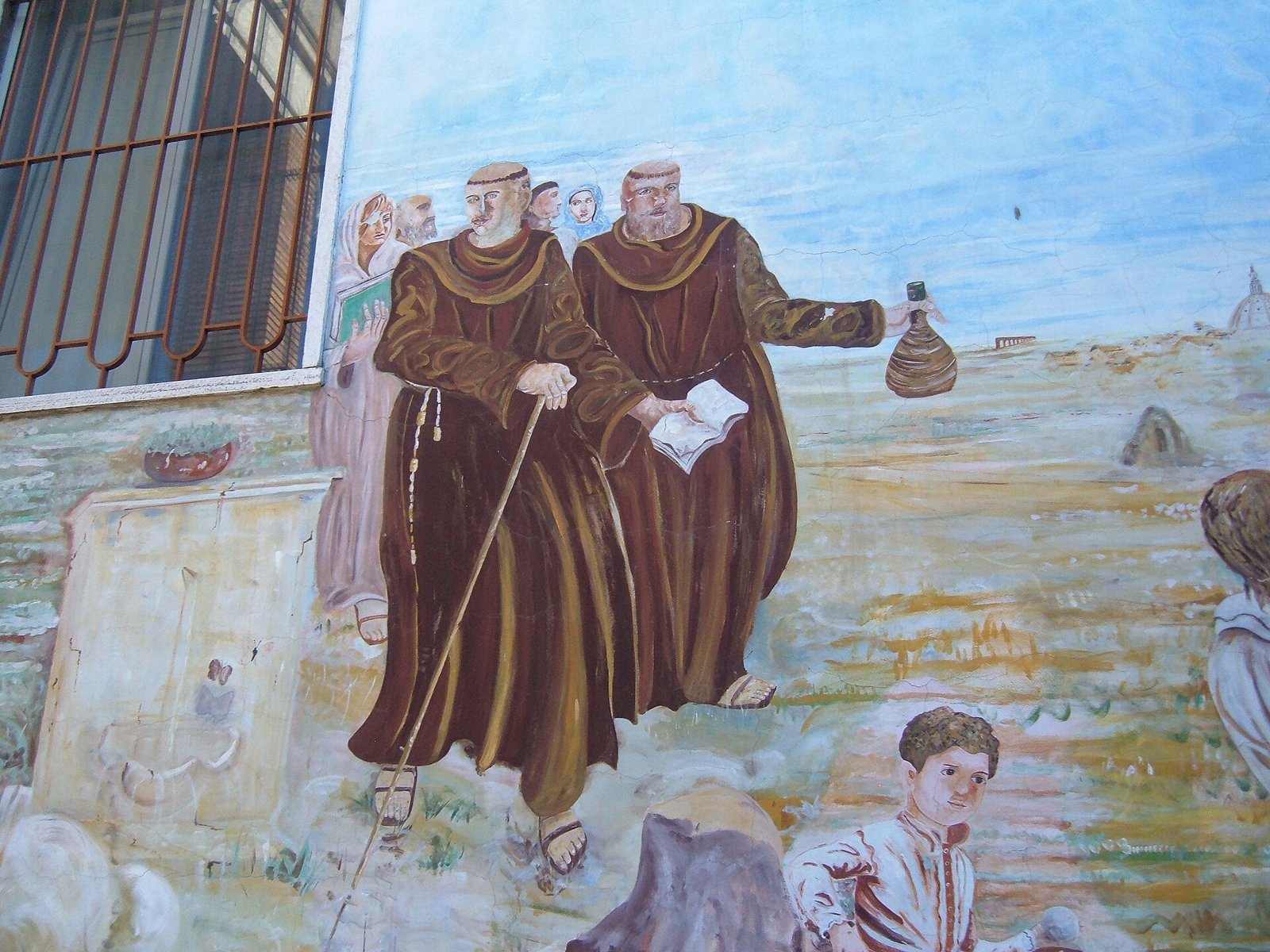
Back on Piazzale Ostiense, take Via Ostiense southward. On the left you meet the long front of Mercati Generali, today a construction site closed to the public. Going on, the Gazometro starts to dominate the horizon. You can’t go in: it’s a private area. The best spot to look at it is the Lungotevere, or one of the bridges over the river in the area. It’s also the stop where you see the best-known murals of Ostiense street art, scattered between Via del Porto Fluviale and the side streets.
Stop 4: Centrale Montemartini
At number 106 on Via Ostiense is the stop that justifies the walking tour all by itself. The Centrale Montemartini is open Tuesday to Sunday from 9:00 to 19:00. It closes on Monday, May 1 and December 25. Rates are on the official website of Centrale Montemartini, along with the free admissions. Count on an hour and a half: the rooms are few but every statue deserves a pause, and the boiler room is one of the most photographed museum spaces in Rome.
Stop 5, optional: Garbatella or San Paolo
From the Centrale you have two possible endings. The first climbs toward Garbatella, the garden district of the 1920s, with its lots, its staircases and its urban gardens. The second continues on Via Ostiense to the Basilica of St. Paul Outside the Walls, built over the tomb of the apostle, with the cloister and the medallions of the popes. Both end near a metro B stop.
How is Ostiense lived today, between lunch, exhibitions and evening?
Ostiense is not a museum neighborhood. By day universities, offices and workshops operate here. In the evening it fills up with venues, especially in the area between Via del Gazometro, Via del Porto Fluviale and Via Libetta. For an Ostiense walking tour the practical consequence is simple: if you start in the morning you find quiet streets and neighborhood bars, if you start in the early afternoon you can finish with an aperitivo and dinner without moving. To choose the restaurant use
the Estate Romana restaurant map and book with TheFork, which often offers discounts on weekdays.
Anyone with more time can extend toward Testaccio, which is on the other side of the Pyramid. Monte dei Cocci, the hill made of broken amphorae of the Roman age, the Nuovo Mercato Testaccio for a quick lunch and the Ex Mattatoio, today home to exhibitions and university spaces, add well at the head of the route. Our entry on what to see in Testaccio helps you choose. For a picture of all the other destinations in the city there is the list of tourist attractions in Rome.
What are the most common mistakes in Ostiense?
The contrarian view, first of all: the Gazometro is overrated as a “stop.” It’s a beautiful image and deserves the photo, but you don’t visit it, it has no entrance, and there’s nothing to see up close that you don’t see better from afar. Whoever builds the walking tour around the Gazometro ends up at the fence and is disappointed. The heart of the neighborhood is Centrale Montemartini, and that’s where the time should be invested. The Gazometro is a backdrop, and it works as a backdrop.
Second mistake: relying on street art maps that are a few years old. The murals of Ostiense have been painted, covered, repainted. Some of the most famous ones are no longer like the photos circulating online, others are new. Take the maps as an indication, not a guarantee. Third mistake: starting on a Monday, when the Centrale is closed, or on a Sunday afternoon, when the cemetery has already closed at 13:00. Fourth: walking the whole stretch on the busiest side of Via Ostiense, at midday in summer. The route is better done in the early morning or late afternoon, alternating with the parallel streets.
Walking tour for families, couples or friends: how does it change?
With children the Ostiense walking tour should be shortened. The ideal version for a family starts from the Pyramid, which children always like for its unexpected shape, continues by metro to Garbatella and ends at Centrale Montemartini, where the enormous machines next to the statues catch even the youngest. The cemetery, because of its nature and the silence required, is best left to the adults. With a stroller, the sidewalks of Via Ostiense are wide but not always in good condition.
As a couple you can do the opposite: start in the afternoon, visit the Centrale and finish with an aperitivo toward the Gazometro, when the lights come on. With a group of friends the long version works, with Testaccio at the start and dinner in Ostiense. Anyone who prefers to have someone else tell the story of the murals and the industrial history finds experiences already organized on platforms like GetYourGuide and Viator. Read the reviews and the duration carefully.
What if it rains or it’s too hot?
Ostiense has an advantage over the center: the main stop is indoors. On a rainy day the Ostiense walking tour easily turns into a long visit to Centrale Montemartini, with a quick pass by the Pyramid on arrival and an indoor lunch at Nuovo Mercato Testaccio. The cemetery in the rain is beautiful, but the paths get slippery: you need shoes with a decent sole. On hot days, instead, the stretch of Via Ostiense between Mercati Generali and the Centrale is the most exposed to the sun. Start early, bring water and a hat, and take breaks in the bars along the way.
When should you get organized and what should you order beforehand?
The walking tour doesn’t require reservations, except in two cases: the interior of the Pyramid, which opens only on fixed dates, and the experiences with a guide’s commentary included, which fill up on weekends. For everything else the right shoes and a minimum of gear are enough. If you order online, the estimated delivery date at the time of the order is what counts. If you’re in a hotel you can have it shipped there, but it’s best to ask the reception first if they accept packages in guests’ names.
If the walking tour is part of a stay of several days, consider a city card: Turbopass
bundles entrances and transport, while city museums like Centrale Montemartini are part of the Roma Pass circuit. For single tickets to other attractions there’s Tiqets, with digital tickets to show on your phone. Do the math on the stops you actually want to see: a card is worth it only if you really use it.
The walking tour kit: what to bring?
The walking tour in Ostiense requires little, but that little makes the difference between a nice morning and a morning of blisters. We divided the kit into groups and put at least three alternatives for each, because products often sell out. The links lead to searches, not to a single item: choose based on reviews and size.
To wear
- Urban walking shoes: cushioned sole for the asphalt of Via Ostiense and the sampietrini around the Pyramid.
- Comfortable city shoes: for those who want a model that looks presentable at the evening aperitivo too.
- Technical socks: they reduce friction and blisters on walks of several hours.
- Hat: the stretch between Mercati Generali and the Centrale is almost all in the sun.
- Folding hat: it fits in a pocket when you go into the museum or the cemetery.
- Light windbreaker: useful in autumn, when along the Tiber you feel the wind.
To carry with you
- Water bottle: in Rome the nasoni, the public drinking fountains, let you fill it along the route.
- Insulated water bottle: it keeps water cool in summer and tea hot on autumn mornings.
- Collapsible water bottle: it takes up little space when empty.
- Anti-theft waist pouch: documents and phone within reach, on the metro and in crowded places.
- Anti-theft city backpack: with hidden zippers, for those who also carry a jacket and water.
- Light folding backpack: you take it out only if you feel like buying something at the market.
Tech
- Power bank: maps, photos of the murals and digital tickets use up the battery before evening.
- Power bank, 10000 mAh: a good compromise between weight and recharges.
- Short charging cable: less bulk in a pocket or in the waist pouch.
- Bluetooth earbuds: to listen to an audio guide or a podcast about the neighborhood while you walk.
To read
- Books on Ostiense: industrial history, the neighborhood and recent transformations.
- Rome guidebooks in print: to fit Ostiense into a broader itinerary.
- Books on street art in Rome: useful for recognizing the artists and styles of the murals.
- Industrial archaeology in Rome: to understand the Gazometro, the power plant and the markets before seeing them.
Experiences and tickets
- Ostiense street art tour on GetYourGuide: for those who want the story of the murals and the artists.
- Experiences in Rome on GetYourGuide: to round out the stay with other visits.
- Experiences in Ostiense on Viator: an alternative if the dates you need are already full.
- Activities in Rome on Viator: a wide catalog for the rest of the city.
- Centrale Montemartini on Tiqets: check the availability of digital tickets for the main stop.
- Attractions in Rome on Tiqets: for the other museums of the trip.
- Turbopass city pass: to consider if you add many other stops to Ostiense in a few days.
- Book dinner with TheFork: to end the walking tour at the table without waiting.
Frequently asked questions
How long does a walking tour in Ostiense take?
The basic route takes three or four hours, stops included. From the Pyramid to Centrale Montemartini you walk a little over 2 kilometers. The rest of the time goes to the visits, above all the museum and the cemetery. If you add Testaccio or San Paolo the day stretches to five or six hours, and it’s best to include a sit-down lunch break.
What is the best day for the walking tour?
Tuesday to Saturday, in the morning. On Monday Centrale Montemartini is closed, on Sunday the Non-Catholic Cemetery closes at 13:00. Starting around 9:00 from the Pyramid you do both the cemetery and the museum calmly, and you reach lunchtime in the southern part of the neighborhood, where the choice of places is wide.
Is the Ostiense walking tour suitable for children?
Yes, if shortened. The Pyramid and Centrale Montemartini, with the turbines next to the statues, appeal even to the youngest. It’s best to use metro B to skip the busiest stretch of Via Ostiense, avoid the hot hours and leave the cemetery to the adults, because it requires silence and a slow pace that children put up with poorly.
Can you go inside the Gazometro?
No, the Gazometro cannot be visited. It sits in a private area and is seen only from outside, from Via Ostiense, from the Lungotevere or from the nearby bridges. That’s exactly why it’s not worth building the route around it: it’s a spectacular backdrop for photos, while the real visit of the neighborhood is the one to Centrale Montemartini.
Do you need to book Centrale Montemartini?
Usually not, but tickets can be bought online from the official website of the Sistema Musei di Roma Capitale. A reservation becomes useful on free admission days and during temporary exhibitions. Updated hours and rates are on the Centrale’s website and at number 060608, active every day from 9:00 to 19:00.
What should you see of the street art in Ostiense?
The murals are concentrated between Via del Porto Fluviale, Via del Gazometro and the streets around the Centrale. Many works have changed in recent years, some repainted, others new: the most reliable map is the most recently updated one. Our entry on Ostiense street art lists the spots to look for and should be read before leaving.
Who wrote this and on what sources
The text comes from the editorial team of Tour Leader Pro, the Rome-based outfit that designs itineraries, tours and cultural events across Rome and Lazio. Hours and conditions come from the official website of Centrale Montemartini and from that of the Non-Catholic Cemetery, the historical dates from the encyclopedia entries on the Pyramid of Cestius, the Centrale and the Gazometro, all checked as of the date indicated at the start. Let us know what you find has changed.
A walking tour in Ostiense can be organized in a few minutes for yourself, but with a group of friends you have to reconcile different paces, museum hours and a table for dinner: a useful resource for those who organize group trips is Tour Leader Pro. If Ostiense is just one day of a longer trip across Rome, Ostia Antica, the Castelli and the Tuscia, a useful resource for putting together a multi-day itinerary is Italy Planner.