Published on
Some links on this page are affiliate links: if you buy through them, Estate Romana receives a small commission, at no extra cost to you. As an Amazon Associate, Estate Romana earns from qualifying purchases.
Santa Cecilia is celebrated in Rome on November 22, and in 2026 the feast falls on a Sunday. The heart of the feast is the Basilica of Santa Cecilia in Trastevere, built according to tradition on the martyr’s house, where the Benedictine nuns keep Stefano Maderno’s statue, the crypt and Pietro Cavallini’s Last Judgment. The other half of the day belongs to music: Cecilia is the patron saint of musicians and the institution that carries her name, Accademia Nazionale di Santa Cecilia, plays at the Auditorium in the week of the feast.
The best way to live it is simple: the morning in Trastevere, between the basilica and the streets around it, a concert in the evening. Below you’ll find the history, the hours, the concerts already on the calendar and what it’s best to prepare beforehand.
Data checked on October 3, 2026 on the Turismo Roma website, on the website of the Benedictine monastery of Santa Cecilia, on the official calendar of Accademia Nazionale di Santa Cecilia and on the encyclopedia entries dedicated to the saint and the Accademia. Where a figure isn’t published we say so, and the celebrations on the day of the feast are marked as to be confirmed.

Santa Cecilia in Rome at a glance
- What: the feast of Santa Cecilia remembers a young Roman noblewoman and martyr, venerated as the patron saint of music and musicians since the late Middle Ages.
- When: the liturgical memorial of Santa Cecilia falls on November 22. In 2026 it’s a Sunday, so the basilica follows its holiday hours.
- Where: the Basilica of Santa Cecilia in Trastevere is at Piazza di Santa Cecilia 22, in the Trastevere district, a few minutes on foot from the Tiber.
- How to get there: from Piazza Venezia, tram 8 takes you up Viale Trastevere. From the central stops on the avenue you walk toward the river to the basilica.
- Today: Accademia Nazionale di Santa Cecilia has on its calendar the Quatuor Ebène with Beethoven on November 18, 2026 and Sol Gabetta with Bertrand Chamayou on November 25, 2026, at 20:00 in Sala Sinopoli.
- Good to know: entry to the basilica is free, while the crypt with the excavations and Cavallini’s Last Judgment are visited separately and only in reduced time slots.
Who was Santa Cecilia, and what do we really know?
Almost everything that is told about Cecilia comes from a Passio, a hagiographic account written centuries after the events. According to this text Cecilia was a Christian Roman noblewoman, given in marriage to a young man named Valerian. On the wedding night she told him she had consecrated her virginity to God. Valerian converted, and with him his brother Tiburtius. The two were arrested for burying the bodies of Christians and condemned by the prefect Almachius, together with an official named Maximus.
Then it was Cecilia’s turn. The Passio tells that she was shut in the hot bath of her own house to die suffocated by the steam, and that she survived. The executioner then struck her three times on the neck with the sword, the maximum allowed, without managing to sever her head. The saint would have remained in agony for three days. Tradition places her death around 230, but historians have no certain date and not even the name of the reigning emperor is certain. On this point the sources don’t agree.
What is historical is the cult. A church dedicated to Cecilia already existed in Trastevere in late antiquity, and in the 9th century Pope Paschal I had her body moved there from the catacombs, having himself portrayed in the apse mosaic with a model of the basilica in his hand. The mosaic is still there: Christ blessing in the center, with Peter, Paul, Cecilia, Valerian and Agatha.
Why is Santa Cecilia the patron saint of music?
Because of a misunderstanding, most likely. In the story of the wedding there’s a Latin sentence, “cantantibus organis, Cecilia virgo in corde suo soli Domino decantabat”: while the instruments played, the virgin Cecilia sang in her heart only to the Lord. The instruments were those of the wedding feast, and Cecilia, in the text, distanced herself from them. In any case the saint played nothing.
The passage, which entered the liturgy as an antiphon, was read literally: Cecilia singing among the organs. From the 1400s painters portray her with a portable organ in her hands, then with the violin, the harp, the lute. From there the patronage of musicians and the date of November 22 becoming the feast of choirs, bands and music schools all over Europe.
In Rome the link becomes an institution in May 1585, when Pope Sixtus V signs the bull “Ratione congruit” and recognizes the Congregation of Musicians under the protection of the Virgin and of Saints Gregory and Cecilia. Among the first 19 members was Giovanni Pierluigi da Palestrina. The first seat was the Pantheon. For a few years, from 1652, the congregation met in Santa Cecilia in Trastevere itself. Today’s Accademia Nazionale di Santa Cecilia was born from that association of musicians.
What to see in the Basilica of Santa Cecilia in Rome?
Inside the basilica, the eye goes straight to the high altar, under the Gothic canopy by Arnolfo di Cambio, and to the white marble statue lying at its feet. It’s the work the church is famous for, and it deserves to be looked at up close and without hurry.
In 1599 Cardinal Paolo Emilio Sfondrati, titular cardinal of the basilica, had work done under the altar and found the chest with the saint’s body. The following year the young Stefano Maderno sculpted the statue you see today: Cecilia lies on her side, her face turned toward the ground, her neck marked by the sword cut. With the fingers of one hand she indicates three, with the other one, a reference to the Trinity that all pilgrims notice.
Under the church you go down into the crypt and the excavation area, where you see remains of Roman-era buildings on which tradition places the house of Cecilia and her husband. On the upper floor, in the nuns’ choir, is the most precious piece: Pietro Cavallini’s Last Judgment, frescoed at the end of the 13th century and rediscovered in 1900.
Hours, tickets and how to get there
According to the Turismo Roma website, the basilica and the excavations are open Monday to Saturday from 10:00 to 12:30 and from 16:00 to 18:00. On holidays from 11:30 to 12:30 and from 16:00 to 18:00. The choir with Cavallini’s frescoes opens only in the morning, on weekdays and for one hour on holidays. On the weekday opening time the sources don’t agree: some say 10:00 and others 10:30.
Entry to the church is free. The crypt and the frescoes each have a separate ticket, paid on site. For the updated price, the website of the Benedictine monastery of Santa Cecilia is what counts, and it also answers at the phone number given in the Turismo Roma page. On November 22, a day of masses and celebrations, visiting hours may change: the liturgical events of the 2026 feast are expected, but should be considered to be confirmed with the monastery.
To get there, the reference point is Viale Trastevere, served by tram 8 which leaves from Piazza Venezia. From the stop you walk toward the river, through the quieter streets of the district. If you arrive from outside Rome by train you can get off at Roma Termini and continue by public transport, or consider the Trastevere station, closer to the district. For routes, schedules and connections, the website of the public transport operator is what counts.
Which concerts are there for Santa Cecilia in Rome in 2026?
The Accademia’s concerts are not held in the basilica but at the Auditorium Parco della Musica, in the Flaminio district, on the other side of the city. It’s the most common mistake: some people show up in Trastevere with the ticket in their pocket. The 2026/27 season opened on October 21, 2026 with Wagner’s Siegfried conducted by Daniel Harding, and November is one of the busiest months of the year.
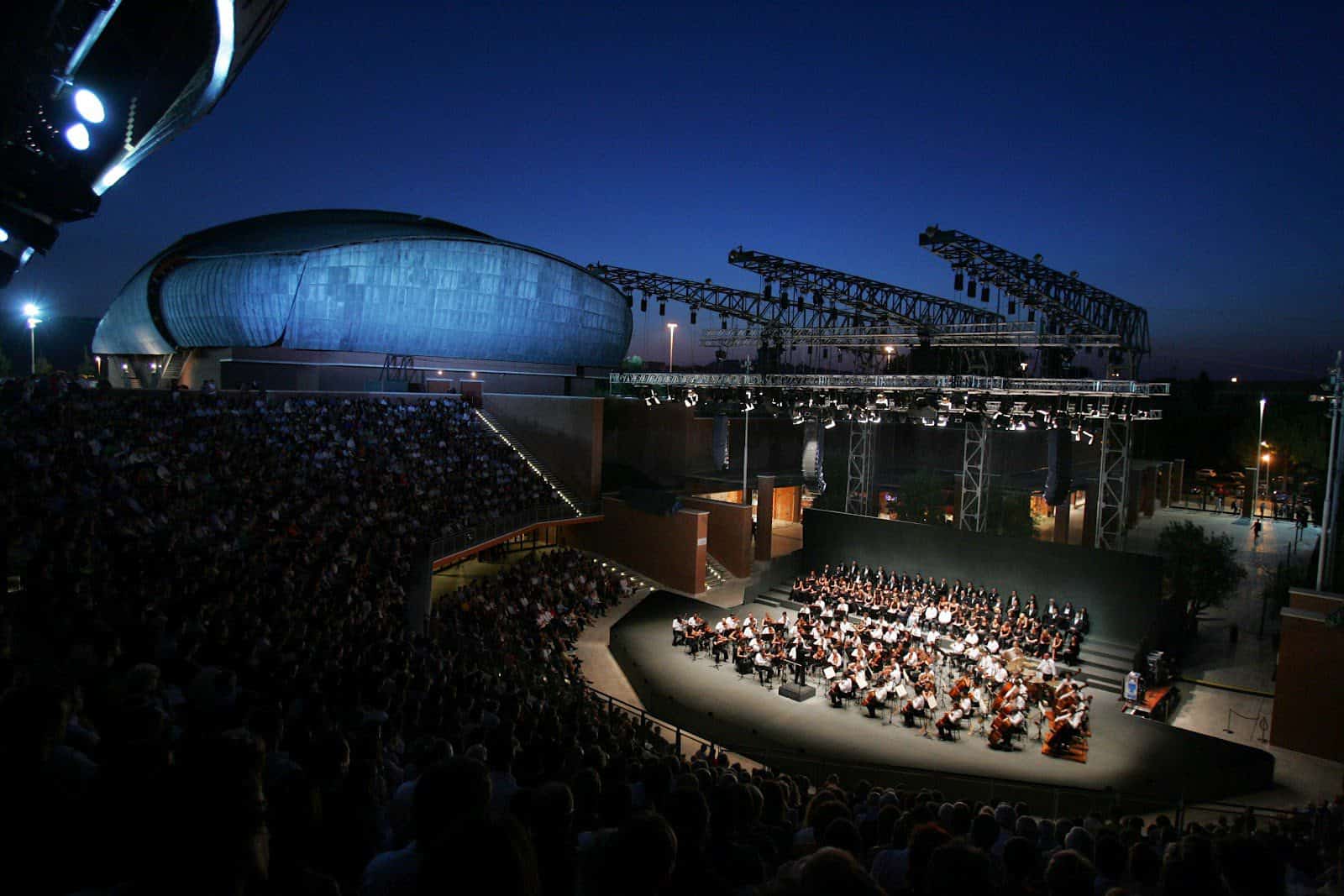
In the official calendar consulted there are, for the symphonic season, Kirill Petrenko on November 12, 13 and 14 in Sala Santa Cecilia, with Hindemith, orchestral Lieder by Richard Strauss and Schumann’s “Rhenish” Symphony. On November 16 Handel’s Theodora in Sala Sinopoli. For chamber music, on November 18 at 20:00 the Quatuor Ebène continues the complete cycle of Beethoven’s quartets and on November 25, again at 20:00, Sol Gabetta and Bertrand Chamayou play.
For the weekend of November 21 and 22 the symphonic calendar was not yet published at the date of checking: any concerts dedicated to the feast are expected, to be confirmed by the organizer. The Estate Romana concerts section collects the city’s musical events, from choirs in churches to smaller halls, and in the week of Santa Cecilia many music schools and bands organize open performances.
How to live the Santa Cecilia feast in Rome, in practice
The advice is to split the day in two. The morning, with the best light, in Trastevere: the basilica, the crypt and, if the schedule allows, the Cavallini, which on holidays opens for just one hour. Then a walk in the district, where the part south of Viale Trastevere stays quieter and more residential than the one around Santa Maria. If you have time you can add the Villa Farnesina, with Raphael’s frescoes, about 20 minutes on foot along the river.

Lunch in Trastevere is part of the ritual, but the area is also the most trodden by tourists. To choose without ending up in the first place with the menu photographed on the door, it’s best to consult the Estate Romana restaurant map and book the table on TheFork. On Sunday at lunch, in November, the good seats fill up early.
In the evening, the Auditorium. From the center you get there by public transport. The recommended route is shown on the Accademia’s website. If there’s no concert you like on the 22nd, no problem: the feast lends itself well to a concert on nearby days, and on November 18 or 25 Sala Sinopoli offers two chamber music evenings that are already confirmed.
Families, couples, musicians: three different ways
With children the most successful part is the crypt: going down under a church and finding walls from 2,000 years ago works better than any explanation. Maderno’s statue, with the story of the three sword blows, should be told with some restraint to the youngest. For the afternoon, the Accademia has concerts dedicated to the little ones on November 28, 29 and 30, in the series “Tutti a Santa Cecilia!”, with different age groups.
For a couple the formula is the most classic: basilica in the morning, long lunch, a walk on the Lungotevere at sunset and a concert in the evening. If you come from outside, sleeping in Trastevere or the historic center lets you do everything on foot except the Auditorium. Hotels can be compared on Hotels.com, filtering by area.
For those who play, the feast has an extra meaning. Many amateur choirs and orchestras choose the weekend of Santa Cecilia for a concert or a sung mass, and the basilica hosts a School of Liturgical Music linked to the monastery. If you’re in a group, even just of friends, and want to sing or play in a church, you need contacts with the parish and permits obtained in time: move weeks ahead, not days.
The three overrated things about Santa Cecilia in Rome
In our opinion the most resistant legend is that of the organist saint. In the accounts of many websites and even some school textbooks Cecilia “played the organ”: it isn’t true, and the instrument as we know it didn’t exist in 3rd-century Rome. The second: the statue is not the saint’s body. It’s a work of art from the 1600s that reconstructs the position described at the moment of the discovery.
The third concerns the feast itself. Whoever expects processions and stalls will be disappointed: Santa Cecilia is a quiet, liturgical feast, tied more to musicians than to the neighborhood. The real mistake, though, is another: arriving on Sunday afternoon convinced you’ll see Cavallini’s Judgment, which on holidays opens only one hour in the morning. If Cavallini is the reason for the visit, the advice is to go on a weekday of the previous week.
What if it rains?
November in Rome is often rainy, but the feast lends itself well to bad weather: basilica, crypt, nuns’ choir and Auditorium are all indoors. With a folding umbrella the walk in the district stays pleasant. Otherwise, the
museums of Rome offer whole afternoons under cover, and the calendar of all the events shows what’s happening in the city on those days.
On the time budget: the basilica with crypt and Cavallini takes a good hour and a half, counting the waits for opening. The transfer from Trastevere to the Auditorium, in the evening rush hour, can take more than you’d think: leave a wide margin and have dinner after the concert, not before.
When to get organized and when to order?
We’re about 10 days from the feast, and it’s the right time to close three things: the concert tickets, the table for Sunday lunch and the hotel, if you’re coming from outside. For the train, dynamic prices reward those who buy earlier: routes to Rome can be compared on Trainline, which puts the different operators together.
For useful items and gifts, order now: for delivery the estimated date at the moment of the order is what counts, and close to a weekend times can get longer. If you’re staying in a hotel you can have the package shipped there, but tell the reception first and put your name and arrival dates on the recipient line. For those who want to add a visit to the district, there are walks organized by third parties on GetYourGuide and tickets for the city’s attractions on Tiqets.
What to buy for the Santa Cecilia feast
None of these items is necessary to enjoy the feast. They’re the ones that, in our opinion, make a day on foot between Trastevere and the Auditorium more comfortable, plus a few gift ideas for those who play or sing, since November 22 is also the musicians’ feast. Each category has several alternatives, because the most requested products sell out.
For music lovers
- Headphones: to listen again on the road to the concert program before hearing it live.
- Concert gift tickets: ideas for packaging a theater ticket as a gift for the musicians’ feast.
- Classical music vinyl records: the most fitting gift for someone with a turntable who loves the symphonic repertoire.
- Folding music stand: useful for those who play in a choir or a band and move around often.
To read
- Books on Santa Cecilia: to go deeper into the Passio, the cult and the saint’s iconography.
- Guides to Rome: to find your way around Trastevere, the historic center and Flaminio.
- Books on the history of Trastevere: to understand the district beyond the nightlife streets.
- Histories of music: a gift to go along with the concert ticket.
For the day on foot
- Anti-theft city backpack: crowded trams and narrow streets call for hidden closures.
- Comfortable city shoes: the sampietrini of Trastevere don’t forgive thin soles.
- Foldable hat: it takes little space and protects from the low sun or the November dampness.
- Windproof folding umbrella: in November it’s more useful than the hat, and on the Lungotevere you feel the wind.
Tech and accessories
- 10000 mAh power bank: the phone is needed for the digital concert tickets, so better not to run dry.
- Insulated bottle: it keeps an herbal tea hot on cold days, and in Rome the drinking fountains let you refill it.
Frequently asked questions
When is Santa Cecilia celebrated in Rome?
Santa Cecilia is celebrated on November 22, which in 2026 falls on a Sunday. The center of the celebrations is the Basilica of Santa Cecilia in Trastevere, with the masses of the day. The precise liturgical program should be checked with the Benedictine monastery, which looks after the church and its visits.
Why is Santa Cecilia the patron saint of musicians?
Because of a sentence in the Passio, “cantantibus organis”, read literally. In the text Cecilia sings in her heart to God while the instruments of the wedding feast play. From the late Middle Ages painters show her with an organ and from there the patronage of music was born. No ancient source says she played.
Do you pay to enter the Basilica of Santa Cecilia?
No, entry to the basilica is free. You do pay a ticket for the crypt with the excavations and a separate one for the nuns’ choir with Cavallini’s Last Judgment. The updated prices are the ones communicated by the monastery, paid directly on site at the entrance.
When can you see Cavallini’s Last Judgment?
Only in the morning. On weekdays the choir is open until 12:30, on holidays only from 11:30 to 12:30, according to Turismo Roma. So, if the fresco is the reason for the visit, it’s best to choose a weekday near the feast instead of Sunday, November 22.
Are Accademia di Santa Cecilia concerts held in the basilica?
No. Accademia Nazionale di Santa Cecilia plays at Auditorium Parco della Musica, in the Flaminio district, in Sala Santa Cecilia and Sala Sinopoli. The Trastevere basilica hosts the liturgy and, at times, concerts by different choirs and groups, which should be checked year by year.
Where to stay for the Santa Cecilia feast?
Trastevere is the most convenient choice for the part of the feast tied to the basilica, because it lets you do everything on foot. Those who focus mainly on the concerts can consider the historic center or Flaminio, closer to the Auditorium. In both cases it’s best to book a few weeks ahead.
Who wrote this and from which sources
The text comes from the editorial team of Tour Leader Pro, the Rome-based company that designs itineraries, visits and cultural events across Rome and Lazio. We used the Turismo Roma website, the website of the Benedictine monastery of Santa Cecilia, the official calendar of Accademia Nazionale di Santa Cecilia and the main encyclopedia entries on the saint, as of the date shown at the top. Let us know what you find has changed.
Organizing Santa Cecilia in Rome for yourself is easy. For a group of friends or a choir that wants to sing in a church you need contacts, permits and tickets obtained in time, and a useful resource for people organizing group trips is Tour Leader Pro. If the feast is just one stop in a longer trip between Rome, the Castelli and the Tuscia, a useful resource for putting together a multi-day itinerary is Italy Planner.