Nayt at Palazzo dello Sport
In short. Nayt at Palazzo dello Sport in EUR: the date is Monday, November 9, 2026.
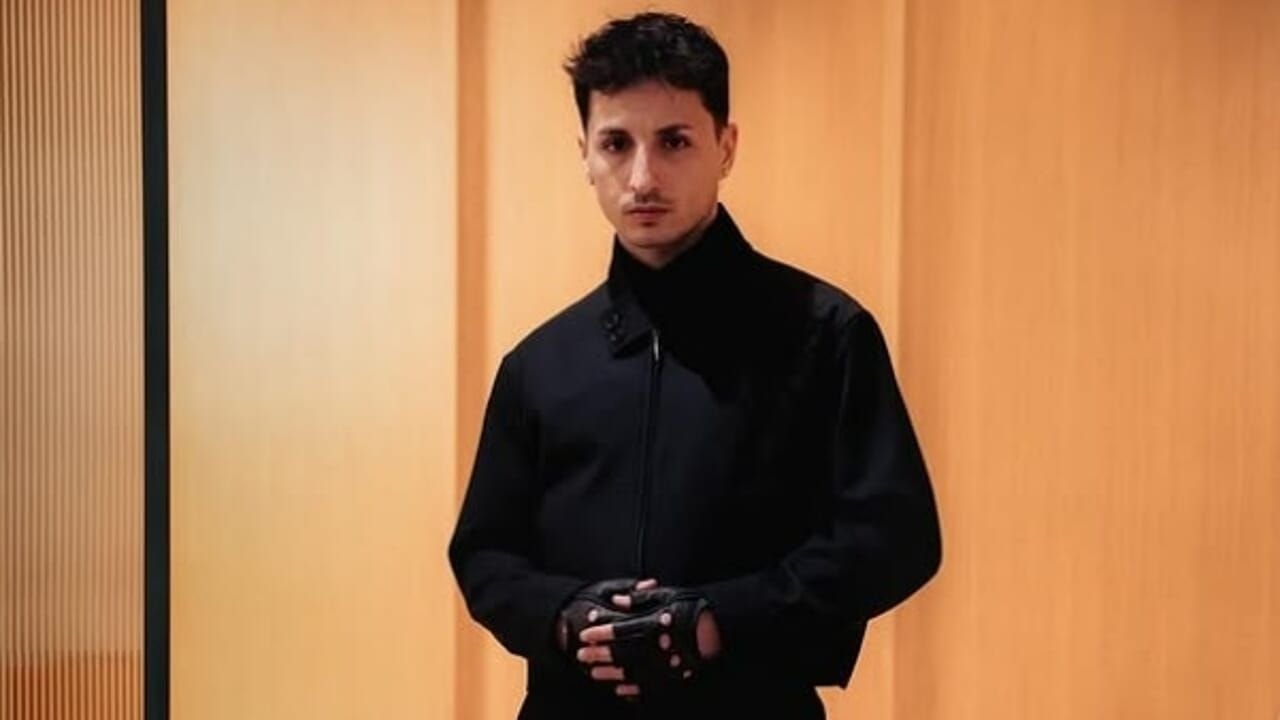
Nayt at Palazzo dello Sport in EUR: the date is Monday, November 9, 2026. It's the most anticipated Rome date of his season, and it falls in a year that changed the scale of his audience: in February 2026 the rapper competed at the Sanremo Festival for the first time with Prima che, finishing sixth, and on March 20 he released Io individuo. People buy tickets for two reasons that coexist without contradicting each other: a repertoire built album after album by those who have followed him for years, and a song that in February was also heard by people who before the festival didn't know who he was.
Palazzo dello Sport is Rome's largest indoor arena, it's in EUR and it's served by metro line B. On sold-out nights it's best to arrive well ahead of the time printed on the ticket, because security checks at the entrances take time and the line starts forming long before the gates open. Below you'll find everything you need to plan the evening: who Nayt is and where his Roman audience comes from, what happens when a repertoire written largely for solitary listening is brought inside a reinforced concrete dome holding 11,000 people, how to get there and where to leave the car, what to do in the two hours before the start, and what it means for everyone to leave through the same ring of turnstiles around midnight.
What the November 9, 2026, concert is
It's Nayt's Rome date at Palazzo dello Sport in Rome, set for Monday, November 9, 2026. The address is Piazzale dello Sport 1, in the EUR district, in the southern part of the city. On some tickets and in some communications you'll see Piazzale Pier Luigi Nervi instead, named after the engineer who designed its structures: it's the same place. In the city, though, the word that really works as an address is neither of the two, it's Palaeur. If you say it to a taxi driver or type it into the GPS, you'll get there. If you say Palazzo dello Sport, nine times out of 10 you'll get there anyway, but someone will ask you to confirm, because Rome has two sports palaces and the other one, the Palazzetto, is on the other side of the city, near the Villaggio Olimpico.
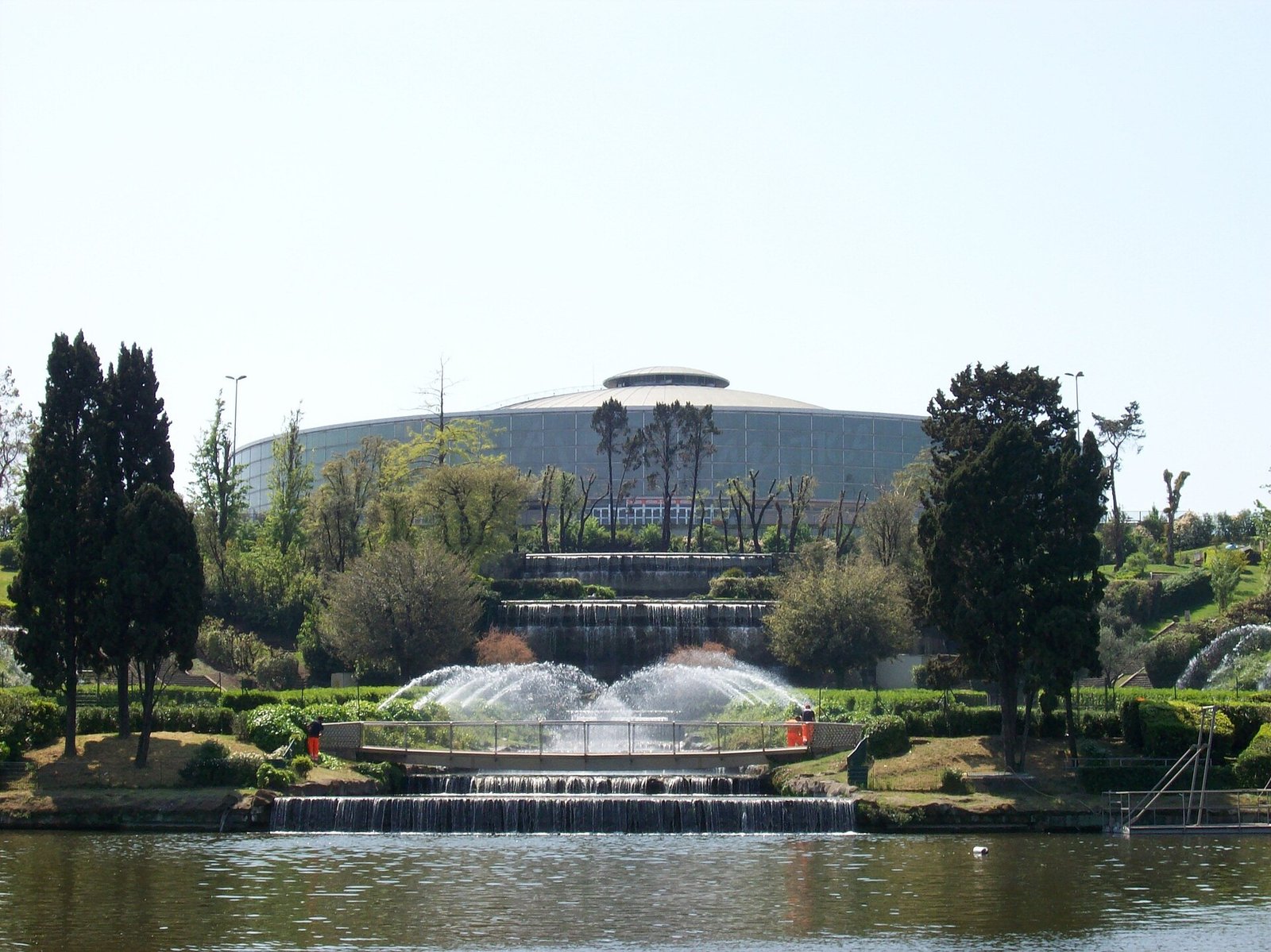
For Nayt this isn't the first time in this arena. In the fall of 2025, at the end of the concert run tied to the album Lettera Q, the rapper had already brought his show here. That evening and this one, though, belong to two different moments of his story: in between came the festival, a new album and a number of streams that can't be compared. Those who were there then will find a partly changed set list and an arena filled with a wider and more varied audience. Those who weren't will arrive for the first time in a space with very specific features that are worth knowing beforehand, because they greatly affect the quality of the evening.
The date falls on a Monday, and in Rome that changes several things. On Monday evenings the city is less congested than on Fridays, the critical traffic window toward EUR ends earlier, and finding a table in a neighborhood restaurant after the concert is easier because some Roman restaurants work with fewer customers on Mondays. On the other hand, the next morning is a normal working day, and that weighs on anyone coming from outside Rome who has to get back. It's worth working it out in advance, especially if you plan to take a train after midnight: Termini station can be reached from EUR by metro, but the service has a closing time that on weeknights doesn't leave much margin.
Concerts at Palazzo dello Sport normally start at 21:00, with doors opening about two hours earlier. It's the model the venue almost always uses, but it should be read as a rough guide and not as a train timetable: on sold-out nights the start can slip by 10 or 15 minutes, and an opening set by another artist pushes the start of the main part back further. The exact time for the individual evening is the one shown on the ticket and on the promoter's channels in the days just before. At rap concerts, moreover, an opening act is almost customary, and it's often not announced far in advance: sometimes the name of the first guest circulates only a few days before, or appears directly on stage.
Who Nayt is, from the beginning
William Mezzanotte was born in Isernia, in Molise, on November 9, 1994, and grew up in Rome from his very first years. The stage name everyone knows him by, Nayt, has been with him since he started writing, in 2009, at 15. His first single, No Story, came out independently in 2011. Right after that he signed with an independent label, 40 Ladroni Records, and under that banner he released his first album, Nayt One, on May 7, 2012, and his first mixtape, Shitty Life Mixtape, on February 14, 2013.
The decisive step came in 2014. Nayt went independent again and founded his own label, VNT1 Records, together with his producer and friend 3D, pseudonym of Davide D'Onofrio. It's a choice that explains a lot of what came next: it means keeping control of your own catalog and your own timing, deciding when to release and what, and building a direct relationship with listeners without going through filters. On February 21 of that year the EP Six of 16 came out, then on May 28, 2015, the second mixtape, Raptus, from which several singles were taken, including the track that gives the collection its title, Noi due, Dal cielo, Mama, Come vuoi and L'antidoto. On January 12, 2016, came the second album, Un bacio, which in May was reissued in an expanded version with the six tracks of the EP, an unreleased track and two acoustic versions.
On June 27, 2017, Raptus 2 came out. On March 15, 2019, Raptus volume 3 came out, closing the trilogy begun four years earlier. The album was again released on VNT1 Records, under an exclusive license to Jive Records with distribution by Sony Music, and became the rapper's biggest success up to that point: it reached number two on the weekly chart of Federazione Industria Musicale Italiana. On May 10 that year the whole trilogy was reissued in a box set, Raptus Collection. On November 7 Good Vibes came out, featuring Gemitaiz.
2020 was a year of intense work. On January 24 Passala came out, on February 7 Come me with Jamil, on February 27 Fight! with Il Tre, on March 14 Trip with Nicola Siciliano. On October 13 he published an autobiographical book, Non voglio fare cose normali, with Mondadori Electa. On December 4 the album Mood came out, announced by the singles Grazie prego scusa and Musica ovunque. Less than a year later, on October 8 and 15, 2021, came Mortale and La mia noia, which previewed Doom, released on October 29, 2021, and conceived as a companion album to the previous one.
The trilogy closed on June 8, 2023, with the single Provare qualcosa and on June 16 with the album Habitat. On August 4 came Fatto da sooooolo, added as an appendix to the album. In December 2023 Nayt featured on Gemitaiz's Ballon d'Or, included on QVC 10. In April 2024 he appeared on three tracks of Empirìa, the album by producer 3D: Vite da sogno, La guerra dei mondi with Danno and Nevada with Mezzosangue and Shari.
On June 14, 2024, Danimarca came out, part of his first live album, Habitat: tour, released on July 5 and containing three more new tracks. On November 22, 2024, came his eighth studio album, Lettera Q, previewed on November 8 by Certe bugie and accompanied on release by Non è fortuna. The following months were taken up by the concert run called La grande fuga tour: the March 2025 dates sold out in advance, and they were followed by 11 more in several Italian cities between July and October of the same year.
On October 3, 2025, the single Un uomo came out. In the same month Nayt appeared on Autoritratto, a track by producer Charlie Charles on the album La bella confusione, and on Dani Faiv's Que pasa with Salmo, in the reissue of the mixtape Teoria del contrario mixtape vol. 3. These are two collaborations that say something precise about his position: he's called in both by those who produce and by those who rap, and in both cases as a recognizable voice and not as a name to put on the cover.
Overall, by 2026, the count is nine studio albums, one live album, two mixtapes, one EP, one compilation and one book, plus a number of singles and collaborations that would take long to list. His music is usually placed in the area of conscious rap, a definition that's useful only up to a point: it serves to say that at the center of the lyrics there isn't money or conflict, but more often the way a person tries to put things in order inside themselves. Those who have followed him for years describe him exactly that way.
2026, Sanremo and Io individuo
In February 2026 Nayt competed at the Sanremo Festival for the first time, at its 76th edition, with the song Prima che. He finished the competition in sixth place. The edition was won by Sal Da Vinci.
A rapper with this profile taking part in the festival isn't a given, and it's worth understanding why. Nayt built 15 years of career outside the mainstream circuits: his own label, an audience built listen after listen, very little television. Going to the Ariston means accepting a rule that isn't your own: three minutes, an orchestra, an audience that applauds differently from a club crowd, a jury. Above all it means accepting being heard by millions of people who have no context for understanding where that writing comes from. Sixth place, in that setting, is a solid result. What matters most, though, happened afterward: the song kept circulating, and with it the whole earlier catalog.
On February 27, in the fourth evening dedicated to covers, Nayt sang a duet with Joan Thiele on Fabrizio De André's La canzone dell'amore perduto. The version was released as a single the following day. It's the choice that, once the festival was over, many cited as the most successful moment of his week: a song from 1966, writing that has nothing to do with rap in form and a great deal to do with it in content, and two voices that don't try to force it.
On March 20, 2026, the album Io individuo came out, 13 tracks, with only one collaboration, with Elisa. The number is more interesting information than it seems. An Italian rap album released after a Sanremo appearance, in the streaming economy, is usually filled with guests: each name brings its own audience, and the math of the platforms rewards this arithmetic. 13 tracks and only one guest is the opposite choice, and consistent with the title.
A curious fact about Nayt at Palazzo dello Sport
On November 9, 2026, the day of the concert, Nayt turns 32. He was born on November 9, 1994, and the Rome date of his arena run falls exactly on his birthday.
It's not a detail for the program notes. Those who organize concert tours know that dates are fitted together based on venue availability, travel between one city and the next and the promoter's needs, and that making a date coincide with a birthday takes either considerable luck or a clear intention. Either way, the practical consequence for those in the arena is the same: an evening like this tends to go off the track of the planned show. Anything can happen and nothing can happen, but the probability that at some point an audience of 11,000 people sings something that has nothing to do with the set list is much higher than average.
There's one more coincidence, for anyone who wants to pick it up. Palazzo dello Sport was built for a specific occasion and with an unmovable deadline, the 1960 Olympic Games, and it was inaugurated on June 3 of that year. A building that exists because it had to be ready for a date, and an artist celebrating his own inside it: it's the kind of symmetry neither of the two looked for, and that remains all the same.
A practical note for anyone who wants to bring something. Small banners and signs are normally allowed, rigid poles aren't, and the same goes for any object staff might consider dangerous in a packed crowd. If you're planning to make a sign for the occasion, keep it a size that fits in a small backpack and don't mount it on anything rigid: it'll get through without arguments.
What to expect from the show
A rap concert in an arena doesn't work like a singer-songwriter concert in the same space, and it doesn't work like a rock concert either. It's worth explaining in what sense, because those who arrive with the wrong expectation leave with the wrong impression.
The first difference is the relationship with the audience. At a rap concert a large part of the result depends on how well the crowd knows the lyrics. It's not a folkloric detail: whole sections of songs are often left to the collective voice, and the moment when the microphone is lowered and 11,000 people carry on by themselves is part of the show, not an interruption of it. Those who know Nayt's catalog know that his lyrics are dense and fast, and this creates a particular situation: the audience that has followed him for years knows them by heart to an extent that surprises first-timers.
The second difference is the sound structure. On the stage of a rap concert the backing can be handled by a producer at the controls, by a band, or by a combination of the two, and this choice greatly changes how it's perceived inside a reinforced concrete dome. A band sounds wider and fills the long spaces of a circular hall better, while a studio-built backing track is more precise but also more exposed to reverb. The long working relationship between Nayt and producer 3D suggests an attention to the music that goes beyond accompaniment, but the exact stage setup for this evening isn't information that can be given in advance without making it up, and so I won't give it.
The third difference concerns the dynamics of the evening. Rap concerts tend to have a less linear shape than those built on the classic crescendo: high-intensity blocks alternate with moments where almost only the voice remains, and the latter are often the ones that stick most. In Nayt's repertoire these moments are plentiful, because a good half of his catalog works on low registers and slow tempos. Anyone going in expecting two straight hours at high volume will probably be thrown by the first pause. Anyone who knows how his albums are built will find exactly what they expect.
There's no news on the set list, and there's no point in anyone writing it now. It's reasonable to expect Io individuo to take up an important part of the evening, being the most recent album, that Prima che will come in a prominent position for obvious reasons, and that the trilogies will be represented. Everything else you find out in the arena, which is the reason you go in the first place.
Something nobody tells you about Nayt at Palazzo dello Sport
The dome of Palazzo dello Sport is a spherical reinforced concrete shell nine centimeters thick. Nine. It's a figure usually cited as an engineering curiosity, because it is one: in the 1950s covering a circular space almost 100 meters in diameter with a shell that thin was a feat, and Pier Luigi Nervi's signature on that calculation is one of the reasons the building is studied in architecture schools around the world.
What almost nobody mentions is the acoustic consequence. A spherical shell is, from the point of view of sound, a concave mirror: it sends the waves back toward the geometric center of the hall. Whoever designed the building realized this right away, and to make the venue usable for singing and theater events too, they had the ribs of the inner shell covered with sound-absorbing material. That correction has existed since 1960, and in the renovation around the turn of the millennium the acoustics received further work.
There remains, though, a fact that anyone who goes to this arena has experienced firsthand, and that changes the evening in a tangible way. In Palazzo dello Sport the sound isn't uniform. There are areas where the voice comes through clean and clear, and areas where the reverb blurs the words. For most concerts the problem is marginal. For a rap concert it becomes central, because in a rap song the intelligibility of the lyrics isn't a detail, it's the content. A blurred hook is annoying. A blurred 16-bar verse is a lost verse.
The worst areas, generally speaking, are the far sides of the upper ring and those behind the supporting structures. The best areas are the central part of the stands, more or less facing the stage, at a middle height: high enough not to have heads in front of you, central enough to receive the main sound of the system and not its reflection. If you can choose your seat when buying, this is the information to keep in mind, and it's worth much more than a few meters less distance from the stage.
There's a second aspect nobody mentions in advance, and it concerns the temperature. The hall has an air-conditioning system designed for a completely closed building, and with 11,000 people inside the climate changes fast. In November you arrive in a coat, because in EUR the temperature drops in the evening, and half an hour after the concert starts the coat becomes a problem to deal with. There is a coat check, but on full nights it turns into a long line on the way out. The compromise that works best is to dress in layers, with a thin, packable outer layer you can tie around your waist or stuff into a small backpack.
Palazzo dello Sport as a concert venue
It's worth knowing where you're going in, because it's a building with a history and a shape that affect the evening much more than in halls built specifically for music.
The design dates from 1956, signed by architect Marcello Piacentini for the architectural part and by engineer Pier Luigi Nervi for the structural part. The two had already crossed paths 20 years earlier, and not in an entirely friendly way: in the late 1930s, for the area above the lake, a competition had been held for a monumental building called Palazzo dell'Acqua e della Luce. Nervi came second, the evaluating committee, chaired by Piacentini, then decided to take on the commission directly, and Nervi stepped back. The work was never built, the war stopped everything, and 20 years later the two found themselves working together on the same ground.
Construction took place between 1958 and 1960, ahead of the Olympic Games Rome had been awarded in 1955. The building is circular, with a maximum diameter of just under 100 meters and an area of about 7,800 square meters, entirely in reinforced concrete. The stands are on two tiers, for a total of about 12,000 seats in the original configuration, and they are supported by inclined pillars that also serve as the connection to the roof. Above all this is the nine-centimeter shell. Around it, a continuous glass facade hides the curved line of the stands and the slant of the pillars, and gives the building its characteristic cylindrical shape. All the reinforced concrete work was carried out by Nervi's company.
The entrances are reached through 16 doors spaced along the circumference, about 20 meters apart. The upper part of the dome is raised and forms a skylight that by day lights the interior with evenly distributed natural light. The total cost of the work was estimated at the time at about one billion 900 million lire.
It was inaugurated on June 3, 1960. The next day the venue hosted the first professional boxing match in its history, with Italian Giulio Rinaldi beating Frenchman Gérminal Ballarin in front of about 15,000 spectators. A few weeks later came the Olympics, for which Palazzo dello Sport was one of the venues for the basketball and boxing tournaments.
Between 1999 and 2003 the building underwent modernization and work to bring it up to safety standards. The structure and the overall appearance remained the same as ever: the systems, the acoustics and the services changed. Bars and a restaurant were built, and on the side facing Rome, the one above the cascade feeding the EUR lake, a panoramic terrace of about 2,700 square meters was created. Along the outer perimeter architect Massimiliano Fuksas created an installation with fluorescent lamps reproducing the numbers of the lottery according to the Neapolitan smorfia, as a tribute to whoever was financing the work. The work was overseen by architects Luca Braguglia and Antonello Ricotti. The first concert in the renovated hall was Carlos Santana's, on September 20, 2003.
From 2003 to 2018 the venue carried a commercial name linked to the sponsor that had financed the renovation, and many Romans still call it that out of habit. Today the name has gone back to the original. The property belongs to the company that manages the district, the hall is run by a specialized operator, and the building, together with the Forum in Milan, is part of the European association that brings together the continent's largest indoor arenas.
A useful clarification: the website dedicated to the venue, the one with the historic domain, isn't responding at the moment. Official information on the individual evening should therefore be looked for on the concert promoter's channels and on the platform where the ticket was bought, not on a venue website that currently can't be accessed.
The geometry of the hall and where to sit
In concert configurations the hall doesn't use all the seats available in the sports version, because the stage takes up a portion of the ring and because the areas without a view behind and beside the stage are closed. The actual capacity of music nights is therefore around 11,000, with variations depending on the type of setup.
The floor plan is circular, the stage is placed on one side, and in front of the stage is the floor area, which at rap concerts is almost always standing. Around it, the stands rise in two tiers. This geometry produces four very different experiences.
The standing floor is the most physical position. You're close, you see well if you arrive early and win a decent spot, and you're inside the only part of the hall where the concert is a collective thing and not a show being watched. The price to pay is that if you arrive five minutes early, you end up at the back behind a wall of people and see much less than someone who paid half as much for a seat up high. For the floor, arriving early isn't advice, it's a condition.
The central first ring, facing the stage, is the best position for anyone who wants to listen. You see everything, you're at a height that lets you take in the stage as a whole, and the sound reaches you directly. If I had to choose just one section for a rap concert in this hall, I'd choose this one.
The side first ring is a good compromise, with the caveat that the further you move toward the sides of the stage, the more you lose the frontal projection of the sound and the more you see the artist at a three-quarter angle. In the far side positions you end up seeing the screen better than the stage.
The second ring is the upper part. You see the whole picture, you have a perspective on the entire hall that has its own value, and the price is lower. Up high, the sound has farther to travel and more surfaces to meet. In the highest and far side rows the sound is the worst in the building. In the low rows of the second ring, in the center, it's still very good.
One last recommendation about the seating map: when buying, check if the seat you're getting is marked as limited view. In a circular hall with inclined pillars this label exists for a reason, and the savings almost never make up for the annoyance.
How to get to Piazzale dello Sport
The metro is the most sensible way to get there, and there isn't much debate about it. Line B has two useful stops, Eur Palasport and Eur Fermi. The first bears the venue's name and is the closest: from the exit it's a five-minute walk, slightly uphill. The second is a little farther and is often the better choice when leaving the concert, because on full nights the first one gets predictably congested.
This is the strategy that works best: get off at Eur Palasport on the way there, and walk to Eur Fermi on the way back. It's 10 more minutes on foot that save you 20 minutes in line at the turnstiles and for the first train, and in between you cross a piece of the neighborhood that has its own appeal in the evening.
Watch out for the metro's closing time. On weeknights the last useful run is earlier than many people expect, and a concert ending around half past 11 leaves a margin that isn't huge, especially if you have to change lines at Termini. If getting home depends on the metro, check the time of the last run in the direction you need beforehand, and keep a backup plan in your pocket.
Several buses serve EUR and connect the district with the Ostiense area, with Laurentina and with the center. In the evening they run less often, and when a concert lets out the stops near the venue are crowded. They're still a good option for anyone moving within the southern part of the city.
By car you arrive from Via Cristoforo Colombo or from the Grande Raccordo Anulare. The district has very wide streets and more parking than the Roman average, which makes arriving relatively easy. The problem isn't arriving, it's leaving: on sold-out nights several thousand cars leaving at the same time onto the same main roads produce a good half hour of traffic. The countermove is simple and it works: park far from the venue, eight or 10 minutes on foot, on a side street that isn't on the main exit route. You walk a bit more and get out 20 minutes earlier.
A taxi at the exit, on full nights, is hard to find right near the venue. If you book one through an app, set the meeting point a few blocks away, maybe toward Palazzo dei Congressi or toward Viale Europa: the driver reaches you without getting stuck and you wait less.
My advice for seeing Nayt at Palazzo dello Sport
Arrive early, and I don't mean 10 minutes before. I mean two hours ahead of the start, with a plan for those two hours.
The practical reason is the usual one: 16 entrances seem like a lot, but 11,000 people arriving almost all in the same half hour create lines at security that don't clear quickly, and those with floor tickets win or lose their spot in exactly that head start. The less obvious reason is that EUR, between 19:00 and 21:00, is one of the most interesting places in Rome, and almost nobody makes use of it.
Here's how to use it. Get off at Eur Fermi instead of Eur Palasport and walk the last 10 minutes past the lake. In the evening the water reflects the lights of the buildings around it, and the walk around the perimeter is one of the most peaceful things you can do in this city in November. From there you head up toward Palazzo dello Sport, which appears from below with its lit cylindrical silhouette and the cascade in front.
If you have time left, it's worth the detour to Palazzo della Civiltà Italiana, the one everyone calls the Square Colosseum. In the evening it's lit up, and seen from below with its stacked arches it creates an effect that's lost by day. It's 10 minutes on foot from Palazzo dello Sport, slightly uphill.
About food: eat before, and eat early. Inside the venue there are bars and food stands, but on full nights the lines are long and the choice is what it is. Around EUR, in Viale Europa area and the side streets, there are places of every level, and it's an area that at 19:00 serves you without making you wait, which isn't a given in Rome. If you want something quick, the neighborhood options work. If you want to sit down, book, because on concert nights tables run out.
One last thing, and it applies especially to this evening. Charge your phone before leaving home and bring a small power bank. With 11,000 people in the same building the mobile network struggles, the phone uses more battery looking for a signal, and if the ticket is digital you need the screen on at the entrance and you need it again if you have to call someone on the way out. Even better: take a screenshot of the ticket before setting off, so you're covered even if the network doesn't respond.
Tickets and access
Tickets for concerts at Palazzo dello Sport are bought through the authorized sales networks indicated by the event promoter. For a concert like this, in a year when the artist went through Sanremo, availability can run out well in advance: it's best to move early.
A recommendation worth repeating because it affects many people every year. The named ticket, for concerts subject to this system, must show the name of the person entering, and an ID may be requested at the entrance. If you buy tickets for friends, put each one in the name of the person who will use it, and if you need to change a name, check the official name-change procedure provided by the platform. It's a hassle that takes five minutes to sort out beforehand and that at the entrance, with a line behind you, becomes a serious problem.
The second point concerns the secondary market. Buying tickets from unauthorized channels exposes you to two concrete risks: the ticket may be invalid, and even when it's valid it may be in someone else's name and therefore unusable. The only safe channels are those indicated by the promoter.
About bags: the venue's rules limit the size of what you can bring in, and large backpacks normally don't get through. A storage area exists but it has limited capacity and fills up on full nights. The solution that works is to arrive with the bare minimum: ID, ticket, phone, a small power bank, a little cash for the kiosks. Bottles don't get in, caps are removed even when bottles would be allowed, and rigid or sharp objects are confiscated.
About photography: the rules vary from event to event and are decided by the production, not the venue. A phone always gets through. Cameras with interchangeable lenses, as a rule, don't. If you have a compact camera and care about it, count on the possibility of having to leave it outside.
Accessibility
Palazzo dello Sport has seats reserved for people with disabilities and dedicated entrances. Booking these seats follows a specific procedure, to be started through the sales network or by contacting the event organizers directly, and almost always requires stating the need in advance. The number of seats is limited, so the same principle as the rest of the box office applies: the sooner you move, the better.
The Eur Palasport metro station has elevators, but in metro networks elevators go through periods out of service, and before counting on them it's best to check the service status on the day itself. The walk from the station to the venue has a slight slope and largely even surfaces, but there are a few stretches of uneven pavement.
Those arriving by car who are entitled to reserved spaces will find them in the surrounding area, though not many: here too, arriving early is the deciding factor. Anyone accompanying a person with mobility difficulties would do well to plan to drop them off as close as possible to the entrances and park afterward.
For anyone sensitive to high volumes, a concrete note: at a rap concert the sound pressure level stays high for a long time, and very pronounced low frequencies are part of the language. Foam earplugs, which cost very little and can be found in any pharmacy, lower the volume without erasing the definition and make the evening bearable even for those who would otherwise leave after half an hour. It's not a detail for delicate people: many musicians use them.
Another well-known fact, yet seldom mentioned
On February 14, 1975, a Lou Reed concert was scheduled in this building. It never took place. Outside the venue very violent clashes broke out between the police and groups of protesters who wanted to boycott the show, accusing the promoter, David Zard, of profiting unfairly from music and of shutting out those who couldn't afford a ticket. The clashes were so violent that they caused serious damage to the building and got the concert canceled. Of the whole evening, only Angelo Branduardi, one of the artists who were supposed to open, managed to perform.
The less cited part is what came after. For several years, as a result of that night and other similar episodes, foreign bands and singers stopped including Italian cities in their schedules. It wasn't a declared boycott: it was a practical decision made by those who organized the tours, who weighed the risk and chose elsewhere. The result is that a generation of people in Italy, in the years right after, had no chance to see live a great many artists who were playing regularly all over Europe.
The reason I bring it up on a page about a 2026 rap concert is that the story concerns a question that has never stopped being relevant: how much a concert should cost, and who is left out. In 1975 part of the audience's answer was to smash the glass walls of a Nervi building, and the cost of that answer was paid mostly by others. Today the debate takes other forms, it's about dynamic pricing, the secondary market, the cost of the best seats. But it's the same debate, and this hall has already seen it end in the worst possible way.
The right photo to take at Nayt at Palazzo dello Sport
I'll give you three options, one outside, one inside and one on the way out, and for each the explanation of why it works.
The first, and for me the best, is the building seen from below, from the lake side, an hour before the concert. From that position you frame the cascade in the foreground, the lit glass front behind it, and the cylindrical silhouette standing out against the sky, which in November at half past six is already dark. It's the photo nobody takes, because everyone arrives from the other side, from the plaza, and shoots the entrance with the line in front. To get it right takes two things: resting the phone on a railing to make up for the lack of light, and shooting before the plaza fills up.
The second is inside, and it's not the one you think. The photo to take in a hall like this isn't the stage from far away, which always comes out the same and always badly. It's the dome. When the house lights are still on, before the start, Nervi's shell seen from below is a surface of ribs converging toward the center with a regularity that works beautifully in photos. Point your phone upward, keep the framing symmetrical, and you have an image that tells where you are much better than a blurry stage. If a piece of packed stands gets into the bottom corner, even better: it gives the scale.
The third is on the way out, and it's the one people keep. Not the artist: the crowd leaving. 11 thousand people flowing out of 16 doors onto a lit plaza, with their breath visible in November, is an image with a movement and a density you won't find inside. You take it by turning toward the building after walking 50 meters, with the building behind and the stream of people in front.
Two rules that always apply. During the concert flash photography is useless: at that distance the flash lights up the heads in front of you and nothing else. And long video recordings, besides often being forbidden by the production, are the most reliable way to bring home a grainy memory and a concert watched through a screen. 30 seconds of the song you care about and then the phone goes back in your pocket: that's the compromise that works.
What's around, in EUR
EUR isn't a neighborhood like the others in Rome, and anyone who comes for a concert has the chance to see at least a piece of it. It was born as the site of a World's Fair planned for 1942 and never held, and this origin explains everything else: very wide streets, isolated monumental buildings, very large green spaces, a scale that has nothing to do with that of the historic center. For some people who pass through it's the coldest neighborhood in the city, for others it's the most interesting. Both reactions are legitimate.
The lake is a few minutes from the venue and it's artificial, which takes nothing away from the fact that it's one of the most pleasant places in this part of Rome. You can walk around the perimeter in about 20 minutes, there are willows, and there's the cascade running down toward Palazzo dello Sport.
Palazzo della Civiltà Italiana is the symbol of the district, the one with 54 arches on each facade. Lit up in the evening it has a presence that by day is colder. It's about 10 minutes on foot.
Palazzo dei Congressi is on the other side of the lake, with its staircase and large glass atrium, and it's one of the most successful buildings in the whole district. Fuksas's Nuvola is the contemporary addition, a suspended shell inside a glass case that the district took years to accept and that is now part of the landscape.
Viale Europa is the district's shopping street, with arcades, shops and restaurants, and the church of Santi Pietro e Paolo closes it at the end with its dome visible from afar. It's the area where it's best to look for something to eat before the concert.
Some important events that happened here
In 66 years this building has hosted a number of things that rarely come together in the same place.
The 1960 Olympics. Palazzo dello Sport was one of the venues for the basketball and boxing tournaments of the Games of the 17th Olympiad, the ones it had been built for. It was inaugurated on June 3 of that year and the next day hosted the first professional boxing match in its history, with about 15,000 spectators in the stands.
Boxing in the 1960s and 1970s. For about 15 years this hall was one of the main European stages of top-level boxing. In 1964 it hosted the first world title fight between two Italian boxers, Sandro Mazzinghi against Fortunato Manca, for the junior middleweight title. In 1965 Mazzinghi himself faced Nino Benvenuti here, and Salvatore Burruni met Pone Kingpetch for the flyweight crown. In 1966 Carlos Hernández and Sandro Lopopolo fought. In 1968 Mazzinghi defended his title against American Freddie Little. In 1969 Benvenuti and Luis Rodríguez fought the first bout in Rome for the middleweight world title, and the following year Benvenuti defended the title against Carlos Monzón. In 1970 and 1971 Bruno Arcari won two junior welterweight titles here, and between the two dates the hall also hosted the first world title fight held in Italy between two foreigners, Mexican Vicente Saldívar against French-Australian Johnny Famechon.
The Rolling Stones, 1970. It was one of the very first concerts hosted by the venue, with 12,000 spectators and takings of 26 million lire of the time.
February 14, 1975. Lou Reed's canceled concert, the clashes, the damage to the building, and the consequences described above.
The 1976 Christian Democracy congress. For decades this hall was also the place where Italian politics held its mass assemblies, and in the memory of people of a certain age the image of the Palasport full of delegates is as strong as that of the Palasport full of fans.
The 1978 volleyball world championship. The final saw Italy beaten three sets to zero by the Soviet Union in front of 18,000 spectators, a figure the hall could hold in its sports configuration.
Basketball in the 1980s and 1990s. From the 1982-1983 season to the 1999-2000 season, Palazzo dello Sport hosted the city's basketball team's home games without interruption, and in this very hall the team won the 1982-1983 championship and the following year the European Champions Cup. In 1991 the venue hosted all the games of the European championship, with Italy reaching the final and losing to Yugoslavia.
Rock in the 1980s and 1990s. Depeche Mode in 1987 and 1990, the Cure in 1987, Paul McCartney in 1989, Iron Maiden in 1990 and then again in 1995 and 1998, Dire Straits in 1992.
The renovation and reopening in 2003, with Carlos Santana's concert on September 20 inaugurating the renovated hall.
Volleyball in the 2000s. The 2005 European championship, with Italy winning the final against Russia three sets to two. The 2004 World League. The 2010 world championship. Some games of the 2014 women's world championship. And, in 2023, the semifinals and final of the men's European championship, which had originally been awarded to Bologna.
February 2011, when pianist Giovanni Allevi chose this hall for the opening night of one of his concert tours, and the venue hosted a solo piano concert for the first time in its history. In a hall built for boxing and basketball, a piano on its own is an acoustic test that's hard to pass.
Who has passed through Nayt at Palazzo dello Sport
The list of those who have played here is long and nobody can exhaust it, but some names tell better than others what kind of venue it is.
Renato Zero is the Italian artist who has appeared most often on this stage. He first came in 1978, with the tour tied to Zerolandia, and since then he has come back many times, often with several consecutive nights on the same tour. The most recent series of shows dates back to November 2019. Nobody else has such a long relationship with this building.
Pooh came through for the first time in 1990, then in 2006 for the tour celebrating 40 years of career, then again in November 2010. And they came back in October 2026, for their 60th anniversary.
Francesco De Gregori played here for the first time in 1996 and then in 2003.
The Rolling Stones in 1970, Depeche Mode in 1987 and 1990, the Cure in 1987, Paul McCartney in 1989, Iron Maiden on three occasions between 1990 and 1998, Dire Straits in 1992, Carlos Santana in 2003. These are the names that appear in any account of this hall's musical history.
As for the current season, Palazzo dello Sport is one of the busiest venues on the Roman calendar. In 2026 and in the months right after, it has hosted or will host Giorgia, Pooh, Gigi D'Alessio, Shiva, Lucio Corsi, Irama, Anna, Marco Masini and Max Pezzali.
One thing is worth noting about this list. Within a few weeks the same hall hosts a 32-year-old Roman rapper, an even younger female rapper, another rapper who grew up in the Milan area, a Tuscan singer-songwriter, a Neapolitan artist who has been filling arenas for 20 years and a band celebrating 60 years of activity. It's a sign that the arena, as a format, stopped belonging to a single genre a long time ago. For Italian rap in particular, the move from clubs to arenas happened in just over 10 years, and it's one of the fastest changes live music in this country has known.
November in Rome, around this date
November in Rome is an underrated month. Temperatures stay mild compared to much of Europe, the days are short but the afternoon light is the best of the year, and the city is much less crowded than in spring or summer. It rains, but it rains on and off, and anyone who comes prepared has no problems.
For an evening at Palazzo dello Sport this means three practical things. First: at 18:00 it's already dark, so the walk in EUR before the concert is a night walk, with everything that means in terms of photos and atmosphere. Second: the evening temperature in the district is lower than in the center, because the spaces are open and windy, and you can feel the wind on the plaza. Third: a small folding umbrella gets through security without problems and can save the evening, while a long umbrella with a rigid tip risks staying outside.
In the same week and the weeks nearby the city offers plenty, if you want to build a weekend around the concert. Sticking with live music, in November Blue, Michele Bravi, Aiello, Malika Ayane and Belle and Sebastian come through Rome. Among the theaters, Francesco De Gregori is holding a long series of nights at Sala Umberto until the middle of the month.
If you're coming from out of town and have the next day free, keep in mind that November 9, 2026, is a Monday: on Tuesday morning the museums are open and the lines are the shortest of the week. It's the best time to do the things that on the weekend cost two hours in line.
Quick questions
What time does the concert start. The usual time for concerts in this hall is 21:00, with doors opening about two hours earlier. The exact time for the individual evening is the one shown on the ticket.
How long it lasts. An arena concert normally lasts between one hour and 40 minutes and two and a half hours, depending on the set list and on if there's an opening act. For the trip home it's best to count on an end around half past 11, with some margin.
How do I get there without a car. Metro line B, Eur Palasport or Eur Fermi stops. The first is closer, the second is more convenient on the way out.
Is the floor standing. At rap concerts, normally yes. If you have a floor ticket, arriving early is the difference between seeing and not seeing.
Which section is best. For listening, the central part of the first ring facing the stage. For intensity, the floor, as long as you arrive early.
Can I bring a backpack. Only a small one. Large backpacks don't get through and the storage area fills up on full nights.
Can I take photos. With a phone, almost always yes. With professional cameras, almost always no. The rules are decided by the event production.
Are there seats for people with disabilities. Yes, in limited numbers and with a dedicated booking to be started in advance through the sales network or the organizers.
Where do I eat beforehand. In Viale Europa area and the side streets. Book, because on concert nights tables run out.
And if it rains. The hall is completely covered. The only problem is the walk from the metro, just under 10 minutes. A small folding umbrella.
Frequently asked questions about Nayt at Palazzo dello Sport
When is Nayt's concert at Palazzo dello Sport?
Nayt's concert at Palazzo dello Sport in Rome is set for Monday, November 9, 2026, a date that coincides with the artist's 32nd birthday, since he was born on November 9, 1994. It's the Rome date of his arena tour after taking part in the Sanremo Festival in February of the same year.
Where is Nayt's concert held?
The concert is held at Palazzo dello Sport, Piazzale dello Sport 1, in the EUR district in Rome. The address also appears as Piazzale Pier Luigi Nervi, named after the engineer who designed its structures, but it's the same building: in the city the reference that works as an address is Palazzo dello Sport anyway.
What time does the concert start?
The usual time for concerts at Palazzo dello Sport is 21:00, with doors opening about two hours earlier. The exact time for the evening of November 9, 2026, is still the one shown on the ticket, and that's the reference to follow when planning your arrival.
How long is the show?
An arena concert like this one normally lasts between one hour and 40 minutes and two and a half hours, depending on the set list and on if there's an opening artist. For the trip home after the show it's therefore best to count on an end around half past 11.
How much does a ticket cost?
This page doesn't give the ticket price ranges for this date: tickets for concerts at Palazzo dello Sport are bought through the authorized sales networks indicated by the promoter, and that's the source to check for updated prices before buying.
How do you get to Palazzo dello Sport by public transit?
The most sensible way to get to Palazzo dello Sport is metro line B, which has two useful stops: Eur Palasport, the closest, about a five-minute walk slightly uphill, and Eur Fermi, a little farther but often the better choice when leaving the concert to avoid the congestion at the first one.
Is Palazzo dello Sport accessible to people with disabilities?
Yes, Palazzo dello Sport has seats reserved for people with disabilities and dedicated entrances. Booking these seats follows a specific procedure to be started through the sales network or by contacting the event organizers directly, stating the need in advance, since the number of seats is limited.
Wrapping up
An evening at Palazzo dello Sport depends almost entirely on three decisions made beforehand: which section, what time to arrive, how to get home. If you sort them out in advance, the concert is just the concert. If you leave them to chance, you spend half the evening dealing with lines and the other half wondering if the train is still running.
For November 9, 2026, here's the summary. Arrive two hours early and use them for the lake and the lit-up Square Colosseum, two things that in the evening are worth the trip on their own. Choose, if you can, the center of the first ring, because in a hall with a nine-centimeter dome your position matters more than your distance from the stage. Dress in layers, because outside it's November and inside there are 11,000 people. Leave by walking toward Eur Fermi instead of crowding into Eur Palasport. And keep in mind that on that evening the artist turns 32 inside a building inaugurated in 1960 for another deadline: it's the kind of coincidence that at some point in the evening someone, from the stage or from the stands, will point out.
If you're building a trip around this date and need itineraries, travel times and advice on how to put your days in Rome together, you'll find useful material on Italy Planner. If instead you organize groups, accompany people or work in tourism and need professional tools to build and manage experiences, Tour Leader Pro is the place to start.