Marco Masini at Palazzo dello Sport
In short. Marco Masini comes to the Palazzo dello Sport in EUR on Friday, November 13, 2026.
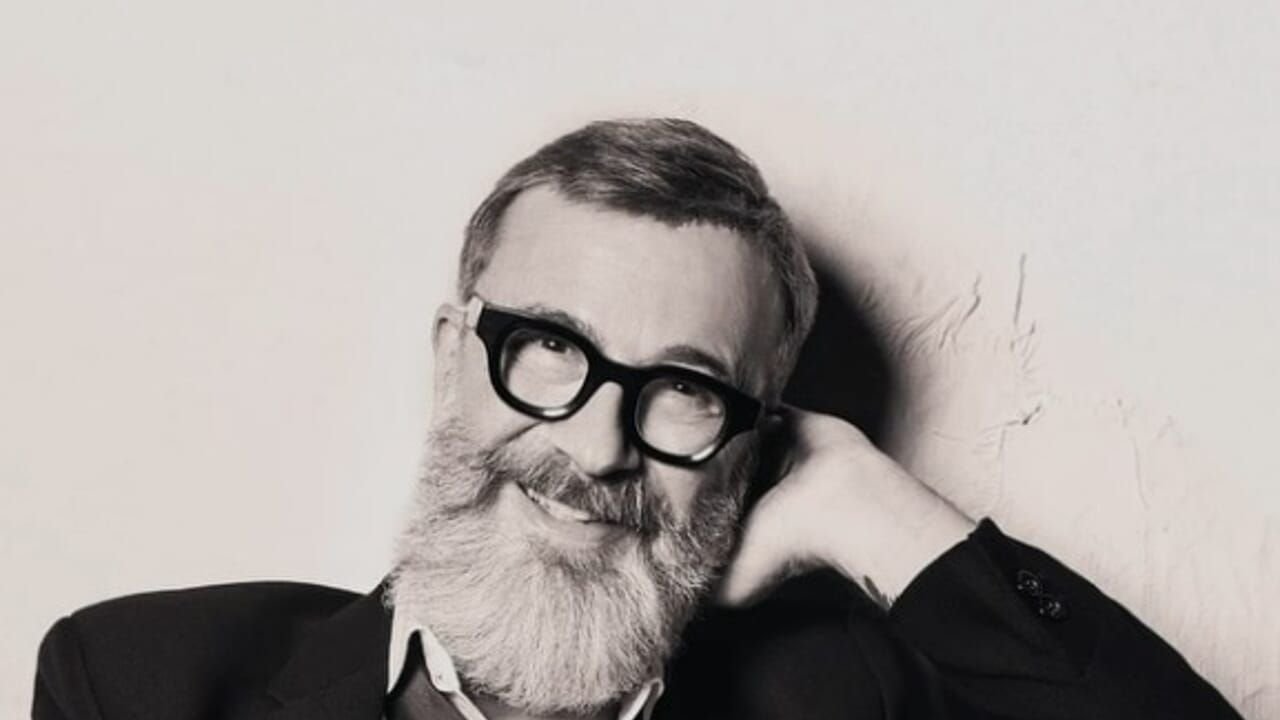
Marco Masini comes to the Palazzo dello Sport in EUR on Friday, November 13, 2026. It's the Rome date of his arena tour, and it comes in the year the Florentine singer-songwriter returned to the center of the national conversation: fifth place at the 2026 Sanremo Festival with Male necessario, sung as a duo with Fedez, the Premio Sergio Bardotti for best lyrics, a single that went straight to number one on the Italian chart and a new album, Perfetto imperfetto, released on March 6. People buy a ticket for two different and overlapping reasons: a repertoire more than 35 years old, and a new song everyone heard in February.
Palazzo dello Sport is the largest indoor venue in Rome, it's in EUR and it's served by metro line B. For sold-out nights it's best to set off well before the time on the ticket, because entrance checks take time and the line starts forming well before the gates open. Below you'll find what you need to plan the evening: who Masini is and why his Roman audience is the way it is, what happens on stage when a repertoire born for radio and theaters is brought into an 11,000-seat reinforced concrete dome, how to get there and where to leave the car, what to do in the two hours before the start, and what it means for everyone to leave through the same ring of turnstiles at a quarter to midnight.
What the November 13, 2026 concert is
It's the Rome stop of Marco Masini's arena tour, set for Friday, November 13, 2026 at Palazzo dello Sport in Rome. The address is Piazzale dello Sport 1, in the EUR neighborhood, in the southern part of the city. Some listings give Piazzale Pier Luigi Nervi instead, from the name of the engineer who designed its structure: it's the same place, and in the city the word that works as an address is neither of the two, it's Palaeur.
The 2026 arena tour is the first Masini has taken on in this format after a long season of theaters, town squares and two-voice shows. The decade just past saw him mostly in intimate venues: the tour for his 30 years of career in a piano and voice version, the series of electro-acoustic nights, the two years of theater show with Giorgio Panariello, the live recording at Teatro della Pergola in Florence. The return to big halls has a precise meaning, and it's the direct result of what happened between January and March 2026.
The date falls on a Friday, which in Rome changes quite a few things. On Friday evening the city works until the afternoon and then pours out all at once: traffic between 18:00 and 20:00, on the route toward EUR, is the worst of the week. On the other hand the next day isn't a working day for most people, and this takes away the worry about getting home for those coming from outside Rome and for those who'd otherwise have to get up early the next morning. It's worth adding a calendar detail that Palaeur regulars know well: the next day, Saturday, November 14, the same venue has announced the concert by Gigi D’Alessio. Two consecutive nights with two audiences that partly overlap and partly don't, and a neighborhood that for two nights in a row absorbs tens of thousands of people within the same 300-meter radius.
The start time for concerts at Palazzo dello Sport is normally 21:00, with doors opening about two hours earlier. It's the model the venue applies almost always, but it should be read as a rough guide and not as a train timetable: on sold-out nights the opening part can slip by 10 or 15 minutes, and any opening act moves the start of the main part further forward. Anyone who wants to know the exact time of their evening will find it on the ticket and on the promoter's channels in the days just before.
Who Marco Masini is, briefly and in full
Marco Masini was born in Florence on September 18, 1964. He started playing as a boy, put a band together in high school, left his accounting studies in the fourth year to make music and paid for that choice with years of family friction. His mother died when he was 19, and anyone who knows his repertoire knows that this loss is one of the underground veins running all the way through it. Before being a singer he was a music craftsman in the noblest sense of the term: arranger, keyboard player, guide vocalist on demos, studio man.
The meeting that changed his life was with Giancarlo Bigazzi, in 1986. Bigazzi was one of the greatest Italian songwriters of the second half of the 20th century, and he took him into his team. Masini worked on film soundtracks, including those of Mediterraneo, Mery per sempre and Ragazzi fuori. He was the guide vocalist on the demo of Si può dare di più, the song Morandi, Ruggeri and Tozzi would take to Sanremo. He toured with Umberto Tozzi, and in 1988 he went on stage with him at the Royal Albert Hall in London. He did arrangements for Tozzi and worked on an album by Raf. All this before releasing anything under his own name.
His debut came at Sanremo in 1990, in the Novità section, with Disperato, written with Bigazzi and Beppe Dati. He won the section and the critics' award, and the single stayed near the top of the chart for over seven months. The album of the same name, released in May, sold over 800,000 copies and stayed on the chart until February of the following year. In 1991 he returned to Sanremo with Perché lo fai and came third, behind Cocciante and Renato Zero. Right after came Malinconoia, a made-up word fusing malinconia and paranoia (melancholy and paranoia): over a million copies, the best-selling album of all of 1991 in Italy, a win at the Festivalbar and, the following year, the award for best-selling Italian artist at the World Music Awards.
What follows is the part of his story worth telling accurately, because it was told badly for years. From his second album onward, rumors began to circulate about him, amplified by part of the press of the time, that claimed he brought bad luck and that his songs hurt those who listened to them. There was nothing verifiable in those rumors, no facts, no episodes: there was a very young artist writing about depression, addiction and relationships gone wrong, in a decade when Italian song preferred metaphor on those topics. The rumor did real damage. Masini answered it in 1993 with a song with an openly insolent title, which was censored on radio and television and has become one of his best-known songs, and he kept working.
The bill came anyway. Il cielo della vergine, from 1995, started well but held up less than the previous ones. Scimmie, in 1998, produced by a label he founded himself, was praised by critics and ignored by the market: 100,000 copies in two months, a figure that for someone coming from a million equals a failure, partly because of a rock record that threw his followers and a music video blocked by TV advertising. His return to Sanremo in 2000 with Raccontami di te ended in 15th place. Uscita di sicurezza, in 2001, came out and disappeared in four weeks.
On April 17, 2001 Masini announced his retirement as a singer-songwriter. He explained it by speaking openly of persecution against him by critics, censorship and part of the industry, which in his view kept him from accessing promotional channels. The following month, as a guest of Adriano Celentano on television, he repeated the point and wanted to pay tribute to Mia Martini, who 20 years earlier had been the victim of exactly the same mechanism, by singing Gli uomini non cambiano. In the same period he sued his record company, accusing it of not promoting his last three albums and of not protecting him in his dealings with the media.
He came back in fall 2003 with a rearranged collection and three new songs, pushed also by pressure from his fans. And in February 2004 he took the Ariston stage for the fourth time, with L’uomo volante, and won the Sanremo Festival. In terms of the history of Italian song that win is worth more than the many that came before and after it, because it closed with a public verdict a story that had been built out of rumors.
From then on his career went on without breaks: Il giardino delle api in 2005, the two-voice album with Umberto Tozzi in 2006, the theater show Il brutto anatroccolo in 2008 in which he retraces his life through his songs, the return to Sanremo in 2009 with L’Italia, Niente d’importante in 2011, sixth place at Sanremo in 2015 with Che giorno è, 13th in 2017 with Spostato di un secondo, 15th in 2020 with Il confronto. In between, the Lunezia award, the win at the 2021 Zecchino d’Oro as author of Superbabbo, the role of TV coach, the two years on the road with Panariello. In September 2024 the single Allora ciao came out and a month later the album 10 amori, his first of new songs in seven years. In all he has taken part in the Sanremo Festival 10 times and won two editions, and according to the reference biography he has sold over 7 million copies worldwide.
2026, Fedez and the return to arenas
The pairing with Fedez was born in February 2025, on the covers night of that year's Sanremo Festival: the two brought to the Ariston a rewrite of Bella stronza, Masini's 1995 song, in which almost all the original verses are replaced by rap lines written and sung by Fedez. The duet came third in that night's ranking and was at the same time the most talked-about moment of the festival. Since its release the song has been the target of recurring criticism for the content of its lyrics, and on the eve of the performance an equal opportunities officer wrote to RAI asking that it not be allowed. Masini, back in 2020, had answered the accusations by arguing that in the song the violence is imagined and not carried out. The debate didn't close then and hasn't closed since: it's part of the way this repertoire is heard today, and anyone going to the concert should know it.
A year later the pair competed again. In February 2026 Fedez and Masini took part in the 76th Sanremo Festival with Male necessario, written by the two together with Alessandro La Cava, Antonio Iammarino and Federica Abbate, and produced by Nicola Lazzarin, known as Cripo. The song debuted at the top of the best-selling singles chart in Italy. On the fourth night, the covers night, the two performed with the cellist Stjepan Hauser on Gianna Nannini's Meravigliosa creatura, and the next day that version was released as a single. On the final night the duo placed fifth and won the Premio Sergio Bardotti for best lyrics.
On March 6, 2026 came Perfetto imperfetto, Masini's 13th studio album, which entered the Italian album chart at number eight. It has 10 tracks in the digital edition and two more in the physical edition, including Male necessario itself. The single that previewed the record, E poi ti ho visto cadere, had come out at the end of January. It's the album the 2026 tour is taking around, and it's why the November setlist can't be just a string of hits.
A curious fact about Marco Masini at Palazzo dello Sport
The curious fact concerns a coincidence of dates that I don't think is random. Marco Masini was born on September 18. The Rome date of his arena tour falls on November 13, less than two months after his birthday, and almost exactly halfway between the March album release and the end of the year. It's not an anniversary and nobody will celebrate it from the stage, but its position in the calendar shows how Italian tours work today: the record comes out in spring, summer is spent in town squares and festivals, and the real reckoning comes in the fall, when the indoor cities decide if an artist fills 11,000 seats in a single night or not.
The second part of the curious fact is more interesting and concerns Rome. Masini's first solo tour, the 1991 one after Malinconoia, was so successful that it had to double its dates in two cities: Florence, his home, and Rome. And the first Rome show of that tour was held at Teatro Tendastrisce, which anyone who followed live music in this city in the 1990s remembers well: a big tent on the Cristoforo Colombo, a capacity of a few thousand people, questionable acoustics and an audience that arrived on scooters. Between that tent and the concrete dome in EUR lie 35 years and a distance worth measuring in your mind, if you're one of those who were there.
Then there's a third element, which concerns the sentimental geography of his Roman audience. Masini has never been a historic-center artist: his typical listener in Rome is more likely to live in the neighborhoods of the first and second ring than inside the walls, and for him Palaeur isn't an exotic place reachable only by metro, it's a place you've always driven to. You can see this, on his concert nights, in the makeup of the parking lot and in the number of people who arrive in groups rather than in couples.
What to expect from the show
No setlist had been made public at the time of writing, and I'd be wary of anyone circulating one in advance. What can be said with reasonable certainty concerns the structure, not the titles. A Masini concert in an arena rests on three different materials, and the way they alternate is the real craft of the evening.
The first material is the songs of the 1990s, the ones the audience knows word for word and would sing even without amplification. They're songs built on broad melodies, with the piano up front and choruses written to be repeated: in an 11,000-person hall they work on their own, and the artist at those moments takes a step back and lets the audience sing. It's the effect known in the trade as the choir, and in a circular venue like Palaeur it has a particular result, because the sound of the voices bounces back toward the center instead of dispersing toward the back.
The second material is the mature repertoire: the records from 2004 onward, less known to the general public, better suited to an intimate performance. Here the risk, in a big hall, is a drop in tension. Anyone who has seen Masini's recent concerts knows that the usual solution involves a smaller lineup and a more intimate central section, almost theatrical, that picks up the approach of his piano and voice shows of recent years.
The third material is the present: the songs from Perfetto imperfetto and, inevitably, Male necessario. About the latter there's a question everyone asks and that can't be answered with certainty: if and how it will be performed live without Fedez on stage. The possible solutions vary, from rewriting the rap part to an arrangement that turns it into something different, to a possible guest. At the moment there's no public statement on this for the Rome date, and anyone buying a ticket counting on a specific appearance does so at their own risk.
As for length, the average for an evening of this kind is between two hours and two hours and a quarter, encores included. If the start is at 21:00 and there's an opening act, the end realistically falls between 23:00 and 23:30. Keep that in mind if you have a train to catch, and don't trust the optimistic calculation.
Something nobody tells you about Marco Masini at Palazzo dello Sport
The thing that's almost never said concerns the makeup of the audience and its practical consequences. Masini's audience, in 2026, is largely over 45. A sizable part bought the first album in 1990 as teenagers and today comes to the concert with grown children, sometimes with the children themselves. This fact, which sounds like armchair sociology, determines three very concrete things about the evening.
The first is how the standing floor works. On nights with a young audience the standing floor fills up early and stays packed until the end. On nights like this, instead, a significant share of those who bought floor tickets discover around halfway through the show that two and a half hours standing on a hard floor is tiring, and start moving toward the sides, toward the aisles, toward spots where you can lean. The result is that the central part of the floor becomes more comfortable in the second hour than it was at the start, and the side passages get crowded. Anyone who expects not to manage the effort should choose a numbered seat in the stands outright, not the floor with the idea of making do.
The second is the pattern of demand at the refreshment points. An adult audience drinks less, eats before coming in and lines up less during the show, but concentrates it all in two moments: right after the gates open and in the 15 minutes before the start. If you need something, get it as soon as you go in or do without, because in that window the line at the counter closest to your entrance can take a good 20 minutes.
The third concerns leaving, and it's the most useful. An adult audience leaves all together and right away: it doesn't linger in the square, doesn't stretch the evening out in front of the venue, it heads straight for the car or the metro. This means that Palazzo dello Sport's exit peak, on nights like this, is sharper and shorter than at a concert with a young audience. In the first 10 minutes after the last note the square and the metro stop take in almost everyone who was in the hall. Anyone who stays seated to applaud five minutes longer, or allows themselves a 10-minute walk toward the lake before moving, finds a completely different and more civilized situation. It's advice that applies to any concert at Palaeur, but here it counts double.
I'll add a fourth element, less practical and more honest. People who go to hear Masini today very often go with a personal story attached to two or three specific songs. They're songs about loss, breakups and hard times, and they were listened to during hard times. In an 11,000-person hall this produces something that those who don't go to this kind of concert find surprising: at the right moments, a noticeable number of adults in the audience cry, quietly and unashamedly, while they sing. It's not a colorful detail, it's the reason this repertoire has lasted 35 years.
Palazzo dello Sport as a concert hall
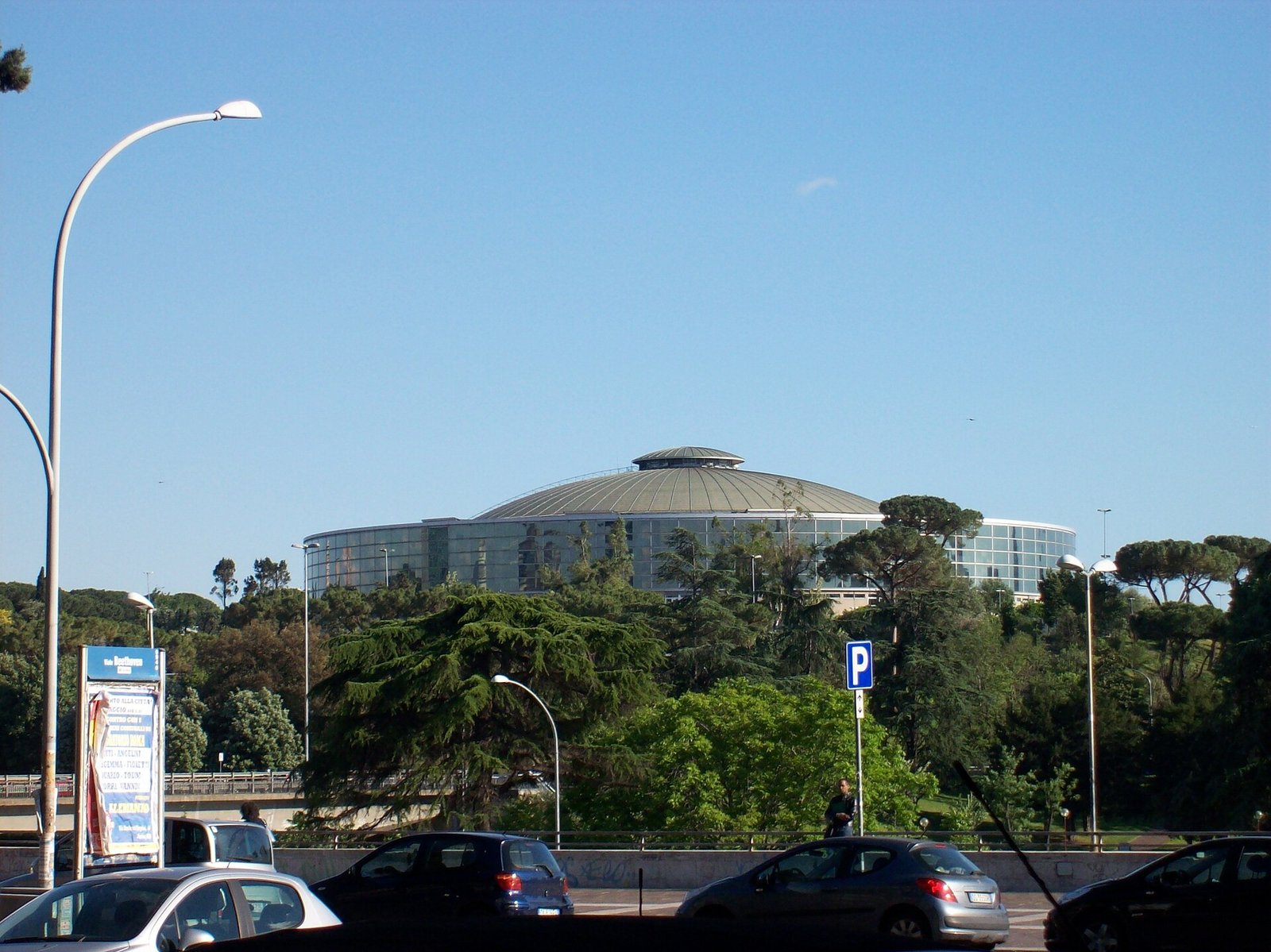
The building was born as an Olympic venue and this, for anyone listening to amplified music, is a technical fact before a historical one. It was designed starting in 1956 by Marcello Piacentini for the architecture and by Pier Luigi Nervi for the structure, and built between 1958 and 1960 for the Games of the 17th Olympiad. The plan is circular, with a maximum diameter of just under 100 meters. The stands are on two tiers, for about 12,000 seats in the original sports configuration, and are supported by inclined pillars that also connect to the roof. The roof is a spherical reinforced concrete dome nine centimeters thick: a number that looks like a typo but is exact, and it's one of the reasons the building is considered among the most successful works of Nervi's career.
A little-known detail that matters a lot for music: already at the design stage it was decided to make the venue suitable for singing and theater events too, and for this reason the ribs of the inner dome were covered with sound-absorbing material. It's not a later adaptation, it's a 1956 choice. The whole building was also equipped with air conditioning, and the original sound system was made by the Italian branch of Siemens. A sports arena designed with the voice in mind too, in boom-era Italy, was far from a given.
There are 16 entrances, spread along the circumference about 20 meters apart. This geometry, for anyone going in, translates into a simple rule: your ticket assigns you a specific entrance, and that entrance is the closest to your seat. Showing up at the wrong entrance means walking part of the circumference of a building that measures over 300 meters around, and doing it through everyone else's line. Look at the letter or number printed on your ticket before you get close, not after.
In 1999 the venue was renovated, with structural consolidation and upgrades to safety standards, construction of bars and a restaurant, and work on the acoustics and the exterior surface. On the side facing the city, the one above the waterfall that feeds the lake, a panoramic terrace of about 2,700 square meters was built. Those who arrive early and know the building use it: it's the best place to spend the last half hour before the doors open, much better than the square.
For years the structure carried a sponsor's name, which is why you still find different commercial names in conversation and on some signs today. The name on official documents is still Palazzo dello Sport, the one in everyday use is still Palaeur, and in recent years the commercial name has changed more than once. If you happen to read three different names for the same evening, it's always the same building.
On capacity it's worth being precise, because it's the figure with the most different numbers going around. The original configuration had about 12,000 seats on two tiers of stands. In concert configurations the actual capacity depends on the stage, on if there's a standing floor, on how many sections are made unusable by the position of the stage structure and on the safety requirements of the specific evening. For a concert with an end stage, the figure usually quoted for Palaeur is around 11,000 spectators, but it isn't a constant and changes from production to production.
The geometry of the hall and where to sit
The point nobody explains before you buy is that a circular building designed for basketball and boxing has its visual center at the geometric center of the hall, while a concert with an end stage moves the point of interest to one side. The stands, however, still face the center. Practical consequences follow that anyone buying a ticket by price alone only discovers on the night.
The high side sections, the ones that look reasonable on the map because they're neither behind the stage nor very far away, have an oblique viewing angle and in some cases part of the stage hidden by structures. The sound, in those spots, arrives later and more reflected, because the dome sends the wave back toward the center of the hall. The front sections, even if numerically further from the stage, usually offer a better experience both visually and acoustically.
The first ring, in the central portion facing the stage, is the choice I recommend for anyone over 40, anyone who cares more about sound than closeness and anyone who intends to hear the piano songs in the conditions they were written in. It usually costs less than the floor, has an assigned seat, lets you go out and come back without losing your spot and is close to the restrooms. The floor makes sense for anyone who wants the physical experience of the front row and accepts arriving three hours early to get it. For everyone else it's a choice paid for dearly in fatigue.
Anyone coming with children or elderly people has no reasonable alternative to a numbered seat in the stands. The same goes for anyone who doesn't cope well with crowds: the Palaeur floor, when it's full, is packed and getting out of it halfway through the show takes patience and some determination.
How to get to Piazzale dello Sport
The metro is the right solution, and this isn't generic advice. Line B serves EUR with several stops, and the venue can be reached on foot in a few minutes from the nearest station. From Termini the trip takes about 25 minutes in normal conditions. On event nights the platforms toward Laurentina, between 19:00 and 20:30, are crowded but moving. The problem isn't getting there, it's getting back.
For a Friday evening the metro's evening service covers the end of the show reasonably well, but the margin isn't as wide as it seems. The calculation goes like this: last note, 10 minutes to get out of the hall, 10 or 15 minutes to reach the platform and manage to board a train that isn't already full, 25 minutes to Termini. That's 40 to 45 minutes, not 25. Anyone who has a train to catch should check this before buying the concert ticket, not on the night.
By car the situation is the typical one for Rome's big venues. Palazzo dello Sport has parking areas right nearby, but for an event of 10,000 people and more the capacity is far from enough, and above all getting out of the nearby lots at the end of the show is the worst part of the evening: you can sit still in the square for as long as 40 minutes before managing to merge onto the main roads. There's only one countermeasure and it always works: park far away, even a kilometer, in the streets of residential EUR, and walk. 10 minutes on foot on the way there are worth 40 minutes saved on the way back, and EUR is one of the few Roman neighborhoods where walking in the evening is pleasant instead of painful.
If you're coming from the Grande Raccordo Anulare ring road there are dedicated exits toward EUR with clear signs. The advice, for a Friday evening, is to get to the area by 19:00: after that time incoming traffic adds to normal weekend traffic and all predictions go out the window. If you're coming from the center and don't want to use the metro, keep in mind that the actual distance is modest, but travel time at rush hour can triple.
My tip for visiting Marco Masini at Palazzo dello Sport
The main tip is just one and concerns arrival time. Aim to be in the area by 19:30, even though the concert starts at 21:00. Not to get in among the first, which with assigned seats is pointless, but because that hour and a half completely changes the quality of the evening. By 19:30 you still find reasonable parking, the entrance checks move, you have time to work out which of the 16 entrances is yours, you can have a drink without a line and you can step out onto the panoramic terrace overlooking the waterfall and the lake. After 20:15 all these things become hard work, one by one.
The second tip concerns choosing your seat, as mentioned: if you're over 40, if you care about hearing well and if the songs you love are the ones with the piano up front, take the front first ring and not the floor. It costs less, saves you two and a half hours on your feet and gives you better sound. The floor is for those who want the physicality of the front row and are willing to plan their afternoon around it.
The third is about dinner, which in EUR is a real problem. The neighborhood has few places compared to the number of people a Palaeur night brings to the area, and on concert nights they all fill up at the same time. If you want to eat before, book days ahead, or settle for something quick and move the real dinner to afterward, heading back toward the city. The sensible alternative is Garbatella or Ostiense, a few stops further north on the same line, where the choice is incomparably wider and prices more reasonable. If you arrive in the city in the afternoon and want to eat early, you can also consider the Nuovo Mercato Testaccio, which however closes in the early afternoon.
The fourth tip is about clothing and seems trivial until you've been through it. In November in Rome, at 19:30, a jacket is fine. Inside a full Palaeur, with 11,000 people and air conditioning set for a full hall, you'll be hot after half an hour. The cloakroom, when available, means a line on the way out that wrecks any exit strategy. The solution regulars use is to dress in light layers and keep your coat on your lap or on the back of the seat.
The fifth and last is the most important and concerns getting home. Don't move with the crowd. Stay seated for 10 minutes after the end, let the aisles clear, leave calmly and, if you parked far away as suggested, walk. 10 minutes of voluntary delay are worth half an hour gained, and they close the evening with a better memory than the last image of a line stuck in front of a barrier.
Tickets and entry
Tickets for concerts at Palazzo dello Sport are issued in the holder's name for the most popular nights, and the rule of the name on the ticket is now established practice for major Italian events. This has two consequences to keep in mind. First, you must bring your ID, and it must match the printed name: it's not a theoretical check, it's actually carried out at the Palaeur entrances. Second, changing the name, when allowed, is done through the seller's official procedures and by a set deadline. Buying a named ticket from a private individual at the last moment, in someone else's name, means risking being left outside.
On the secondary market the rule is simple: reselling tickets for shows at a markup is prohibited by Italian law, and tickets bought on unauthorized platforms can be canceled. Anyone who finds themselves without a ticket close to the date has only one sensible route, which is the official exchange platform when the promoter activates it, or giving up.
As for price categories, the typical structure for an evening like this includes the standing floor, possibly numbered sections at the front, the first ring and the second ring, with sometimes significant differences between front and side sections within the same category. Before choosing, look at the map and find where the stage is: two seats in the same category at the same price can offer very different experiences.
On permitted items, the rules of Italian arenas agree on a few fixed points: no glass bottles, no cans, no long umbrellas, no selfie sticks, small bags only. Professional cameras and interchangeable lenses are normally excluded, while phones are obviously allowed. The exact rules are published by the promoter for the individual evening, and they change from event to event: taking a look the night before takes two minutes and saves you a trip back to the car.
Accessibility
Palazzo dello Sport has seats reserved for people with disabilities and their companions, with a dedicated entrance and route. The booking procedure doesn't go through normal online sales: it must be requested through the channels given by the promoter for the individual date, usually a few days in advance and with documentation proving eligibility. The number of seats available is limited and runs out quickly, so the request should be made as soon as the date goes on sale, not close to the show.
On the approach, the nearest metro station and the area in front of the venue can be covered without significant changes in level, but the square is large and with big crowds the route can be slow. Anyone arriving by car with a person with disabilities should check in advance with the promoter which vehicle access is allowed for the evening, because on event nights traffic around the venue is rerouted and some normally open streets are closed.
Another well-known fact, yet not often mentioned
The well-known fact is that Palazzo dello Sport was built for the 1960 Olympics and that during those Games it hosted the basketball and boxing tournaments. Everyone knows it, it appears in any description of the building, it's repeated every time it comes up. What almost nobody mentions is the consequence that origin still has today on the way you hear music inside.
A building designed also for boxing has its focus at the exact center of the plan, because that's where the ring goes. The stands are designed to look at the center, not toward one end, and the dome reflects sound toward that point. At concerts with an end stage, which are almost all of them, a significant share of the seats therefore looks at an angle and receives sound that has traveled further than it should. It's not a construction flaw, it's a building used for a job different from the one it was designed for. But it explains why two tickets at the same price can give two different evenings, and why regulars have learned to always choose the front sections.
There's a second well-known fact that deserves the same treatment, and it concerns the artist. Everyone knows Masini won Sanremo in 1990 in the Novità section and in 2004 among the Campioni. Almost nobody remembers that before 1990 his work was already on some of the most-listened-to Italian songs of the decade, without his name appearing. The guide vocal on Si può dare di più, the arrangements for Umberto Tozzi, the soundtrack work, the presence on tours as a musician. When in 1990 the public discovered him as a newcomer, he was new only to the public: he had already been working in the studio for four years with Giancarlo Bigazzi's team, that is, with the most prolific hit-maker of Italian song in those years.
The third little-mentioned fact concerns numbers, and it's the one that explains why an arena date in Rome is sustainable. Between 1990 and 1995 Masini sold quantities that no longer exist in the Italian market today: over 800,000 copies of the first album, more than a million of the second, which was the best-selling record in Italy in 1991. That audience hasn't disappeared, it has aged along with him, and on nights like this it shows up in force. That's why an artist who doesn't come up on 20-somethings' streaming platforms still fills 11,000 seats on a November night.
The right photo to take at Marco Masini at Palazzo dello Sport
The right photo isn't the one of the stage. Inside the hall, with your phone, you'll get a distant bright smudge on a black background, like everyone, and you'll never look at it again. The photo worth taking at this concert is taken outside, and it's taken beforehand.
The spot is the panoramic terrace on the side of the building facing the city, the one built during the 1999 renovation, above the waterfall that feeds the EUR lake. In mid-November, around 17:30, the sun sets and for about 20 minutes the light cuts low across the water and lights up the pale concrete of EUR. If you arrive early, as recommended, you have one of the most underrated urban views in Rome at your fingertips: the water below, the rationalist neighborhood around, Nervi's dome behind you. Put the building in the background and a person in the foreground, and you have a photo that tells the evening better than any shot of the stage.
The second option, for architecture lovers, is the view of the building from Viale America or Piazzale Pakistan: from there the dome reads for what it is, a cylindrical volume closed by a cupola, and the scale of the building compared to the people walking in front of it becomes obvious. With a phone it's best to go down a couple of steps below the level of the square and shoot from below, because the roofline draws a sharp circle against the sky.
The third is the photo that always works at Palaeur and that almost nobody thinks of taking: the audience coming in. 16 entrances along the circumference, thousands of people converging from different directions, and in this case an audience that recognizes each other in the street and says hello. On an evening like this, when many arrive in groups and many met 30 years ago listening to these very songs, the square before the concert is the most photogenic part of the evening.
During the concert, if you really want to shoot, the only moment that works is when the hall lights up with phones. Don't frame the stage: turn around and photograph the ring. 11,000 lights arranged along a circumference, seen from inside a dome, are an image this building's geometry gives you and that a rectangular hall can't.
A common-sense recommendation, meant as a general rule and not as a disclaimer: long video recordings are prohibited at almost all Italian concerts, the staff step in, and above all a lit screen in front of your face ruins the evening for whoever is sitting behind you. Two shots and done.
What's around EUR, before and after
EUR is a neighborhood that deserves the recommended hour and a half head start, and not just to fill time. It's the part of Rome built from the late 1930s for a world's fair that never took place, completed after the war and then grown into a business and residential district. Walking through it in the evening, when the offices have emptied, gives a particular impression: very wide streets, geometric volumes, few people, lots of artificial light on travertine.
A few minutes' walk from the venue is the Palazzo della Civiltà Italiana, which everyone calls Colosseo Quadrato: six tiers of nine arches on each side, one of the most reproduced images of 20th-century Italian architecture. Lit up at night it holds its own against any monument in the center, and there's never the line there is in the center. Nearby is the Palazzo dei Congressi, and further on, toward the Eur Fermi station of line B, the Fuksas Cloud, the contemporary conference center that changed the neighborhood's skyline.
The lake, right below the terrace of Palazzo dello Sport, is the place to spend half an hour before going in. Walking around it takes about 20 minutes at a slow pace, there are benches, and from the opposite shore you can see the venue's dome in full. In November it's cool but not cold, and the walk is one of the few in Rome without cars around.
On food it's worth repeating what was said above, because it's the point where most people get it wrong: EUR's restaurant offer is sized for offices, not for concerts. On event nights the neighborhood's places fill up by 19:30. Booking solves it. Not booking means waiting in line or settling. If you prefer to eat after the show, take comfort in the fact that in Rome, on a Friday night, heading back up toward Ostiense and Testaccio, kitchens stay open late.
Some important events that happened here in history
The first event is the one the building exists for. Palazzo dello Sport was inaugurated on June 3, 1960, a few weeks before the opening of the Games of the 17th Olympiad. The very next day it hosted its first professional boxing match, with the Italian Giulio Rinaldi beating the Frenchman Gérminal Ballarin in front of about 15,000 spectators. During the Olympics it hosted the basketball and boxing tournaments.
The boxing era, in the 1960s and 1970s, is the richest chapter of the venue's sports history. Many world title fights were held here, featuring the likes of Sandro Mazzinghi, Nino Benvenuti and Bruno Arcari. In 1964 the Palazzo hosted the first world title fight between two Italian boxers, Mazzinghi against Fortunato Manca for the junior middleweight title. The following year Mazzinghi met Benvenuti in the same category. In 1969 Benvenuti and Luis Rodríguez fought here the first Rome bout for the world middleweight title, and in 1970 Benvenuti again defended the title against Carlos Monzón. Between 1970 and 1971 Arcari won and defended the junior welterweight title. In between came the first world title fight held in Italy between two foreigners, the Mexican Vicente Saldívar against the French-Australian Johnny Famechon.
Music arrived early. Among the very first concerts the venue hosted was the Rolling Stones in 1970. But the date that people involved in live music in Italy remember first is another one, and it's a dark date: on February 14, 1975, at a scheduled Lou Reed concert, Palazzo dello Sport was the scene of very serious clashes between police and groups trying to boycott the show, accusing the organizer of profiting from music and of excluding those who couldn't afford concerts. The damage to the building was serious, the concert was canceled and only Angelo Branduardi, one of the scheduled opening artists, managed to perform. The result was that for years many foreign bands avoided Italian cities altogether. Anyone who walks into Palaeur today, calmly passing through a metal detector, should know that the normality they enjoy is the result of a story that started very badly.
On the sports side, from the 1982-1983 season until 2000 the venue hosted, without interruption, the home games of the city's main basketball team, which won the 1983 championship right here and then the European Champions Cup. It hosted the final of the men's volleyball world championship in 1978, in front of 18,000 spectators, and again in 2010. In 1991 it was the venue for all the games of the European basketball championship. In 2004 the volleyball World League, in 2005 the final of the European volleyball championship won by Italy, in 2007 two games of the American professional basketball league's European tour, in 2014 some matches of the women's volleyball world championship. Since 2021 the venue has once again regularly hosted a top-level team, in women's volleyball.
Then there are the events that are neither sports nor music, and which left the most lasting mark on this building. In 1976 Palazzo dello Sport hosted a national congress of the Democrazia Cristiana. In March 1989, under the new secretary Achille Occhetto, it hosted the 18th congress of the Partito Comunista Italiano, the congress of the so-called new course, a few months before the turning point that would lead to the birth of the Partito Democratico della Sinistra. In 2005 the renovated building hosted the congress of the Democratici di Sinistra and, a few months later, the second national congress of the Unione di Centro. For a generation of Italians, the inside of this dome is linked to TV images of political assemblies more than to a concert.
Who has passed through Marco Masini at Palazzo dello Sport
The list of those who have taken this stage is as long as the history of live music in Italy. Among foreign artists, besides the Rolling Stones in 1970, the venue has hosted The Cure, Paul McCartney at the end of the 1980s, Iron Maiden on several occasions between 1990 and 1998, Dire Straits in the early 1990s. Among Italians, the most frequent visitor of all is Renato Zero, at Palazzo dello Sport since 1978 and back many times, often with several nights on the same tour. Pooh have played there from 1990, then for their 40th anniversary tour and again in the following decade. Francesco De Gregori has played there since the mid-1990s.
In the current season, the venue hosts a run of dates that captures Italian music today well. In 2026 Palazzo dello Sport has hosted or is expecting, among others, Giorgia in September, Pooh in October for their 60 years of career, Shiva at the end of November, Lucio Corsi and Irama in December, Anna before Christmas, Nayt, and in January the long series of nights by Max Pezzali. The night after the Masini date, as already mentioned, it's the turn of Gigi D’Alessio.
As for those who have stood beside Masini in his story, the name that matters most is Giancarlo Bigazzi, the songwriter who discovered him in 1986, brought him into his team and wrote with him the songs that defined his repertoire. Along with him, Beppe Dati, co-writer from the beginning and for over 20 years, and Mario Manzani, guitarist and friend from the early days. Then Umberto Tozzi, with whom Masini played as a musician before recording a joint album together. And, in recent years, the composer Antonio Iammarino, co-writer of much of the material from 2011 onward and among the writers of the 2026 Sanremo song as well.
On the Ariston stage Masini has crossed paths with many careers: he accompanied Povia on the 2010 duets night, he reinterpreted a song by Red Canzian in 2018, he recorded a version of Ci vorrebbe il mare as a duet with the soprano Montserrat Caballé in 1997, he sang with Enrico Ruggeri, he wrote for Noemi. From 2023 to 2024 he toured Italian theaters and squares with Giorgio Panariello in a two-man show alternating comedy and songs. And since 2025, of course, there's Fedez.
November in Rome, around this date
Mid-November in Rome is one of the best windows of the year for visitors. Temperatures are mild, the city has worked through the fall influx, museums are accessible without the spring lines and the afternoon light is that low, warm light that makes travertine photogenic. It's also the rainy season, so packing something waterproof is wiser than hoping.
In the same month the city offers other nights of live music, in venues very different in size and character. If you're staying in Rome a few days you'll find, among others, Malika Ayane at the start of the month, Michele Bravi at Brancaccio in late November and Belle and Sebastian in Ciampino. The same night as November 13, in a club of a completely different size, Aiello plays: it's the kind of overlap that happens every weekend in a city like Rome and that's worth knowing about before deciding.
If the concert is the reason for the trip and you have a whole day to fill, EUR allows a self-contained morning without moving: the neighborhood has museums, architecture and a walk around the water that no other part of the city offers. If you want the center instead, keep in mind that the same metro line takes you to the Colosseum in a quarter of an hour, and that heading back toward EUR in the late afternoon is easier than the reverse.
Quick questions
What time it starts. The reference time for concerts at Palazzo dello Sport is 21:00, with doors usually opening two hours earlier. The exact time of the evening is the one on the ticket.
How long it lasts. Between two hours and two hours and a quarter, encores included, with a possible opening set by another artist.
How do I get there without a car. Metro line B, stop in EUR a few minutes' walk from the venue. From Termini it's about 25 minutes.
Where do I park. There are parking areas near the venue, but they fill up early and leaving at the end is very slow. The best choice is to leave the car eight or 10 minutes' walk away, in the streets of residential EUR.
Is the ticket in my name. For major events yes, and your ID is checked. Changing the name, when allowed, goes through the seller's official procedures.
Can I bring a camera. Professional equipment and interchangeable lenses are normally excluded. Phones are allowed, long video recordings aren't.
What's the weather like in mid-November. Mild by day, cool in the evening, with a chance of rain. Inside the full hall, on the other hand, it's hot.
Will Fedez be on stage. There's no announcement to that effect for the Rome date. The pairing exists on records and on the Sanremo stage, but the arena tour is Marco Masini's.
Is it suitable for children. Yes, with two precautions: a numbered seat in the stands instead of the floor, and ear protection for the youngest.
FAQ about Marco Masini at Palazzo dello Sport
When is Marco Masini's concert at Palazzo dello Sport?
Marco Masini's concert at Palazzo dello Sport is on Friday, November 13, 2026, as the Rome stop of his tour of Italian arenas.
Where is Palazzo dello Sport?
Palazzo dello Sport is at Piazzale dello Sport 1, in the EUR neighborhood, in the southern part of Rome. Some listings also give Piazzale Pier Luigi Nervi, from the name of the engineer who designed its structure, but it's the same place.
How do you get to Palazzo dello Sport by public transportation?
Palazzo dello Sport is easy to reach on metro line B, which serves EUR with several stops, with the venue a few minutes' walk from the nearest station. From Termini the trip takes about 25 minutes in normal conditions.
What time does Marco Masini's concert at Palazzo dello Sport start?
The reference time for Marco Masini's concert at Palazzo dello Sport is 21:00, with doors usually opening two hours earlier. The concert lasts between two hours and two hours and a quarter, encores included, with a possible opening set by another artist.
Is the ticket for Marco Masini at Palazzo dello Sport in the holder's name?
Yes, tickets for concerts at Palazzo dello Sport, including Marco Masini's, are in the holder's name for the most popular nights. You must bring ID and it must match the name printed on the ticket, because it's checked at the entrances.
Are there seats reserved for people with disabilities at Marco Masini's concert?
Yes, Palazzo dello Sport has seats reserved for people with disabilities and their companions, with a dedicated entrance and route. Booking doesn't go through normal online sales but must be requested through the channels given by the promoter for the individual date, usually a few days in advance.
Final thoughts
An evening like this is worth it for two different reasons. The first is the repertoire: 35 years of songs that a sizable part of the Italian public knows by heart, performed in a big hall by an artist who in the meantime has learned to be on stage better than he could at 25. The second is the moment: 2026 is the year Masini returned to center stage, with a placing and an award at Sanremo, a single that reached number one and a new album. The two things together make a date that doesn't feel like a celebratory concert, and it's a difference you can hear.
The final suggestion is to treat November 13 as a whole evening and not as two hours inside a hall: arrive early, walk around the lake, watch the sunset from the terrace, go in calmly, choose a front seat, and on the way out let the first quarter of an hour go by. EUR, on a November evening, is one of the strangest and most beautiful places in Rome, and most people who come to Palaeur never notice because they arrive at 20:50 and leave at 23:35.
If the concert is the excuse for a few days in the city or in Italy, two useful addresses. Anyone who organizes trips for others, leads groups or works in incoming travel will find on TourLeaderPro tools designed for those who build trips professionally. Anyone planning for themselves, who wants to fit a date like this into an Italian itinerary that makes sense, will find on ItalyPlanner the material to put together the days before and after without wasting them.