Museo Laboratorio della Mente
In short. The Museo Laboratorio della Mente occupies Pavilion 6 of the Santa Maria della Pietà complex, at Piazza di Santa Maria della Pietà 5, 00135 Rome, in the Monte Mario Alto neighborhood, and it is run by ASL Roma 1 within its own Department of Mental Health.
The Museo Laboratorio della Mente occupies Pavilion 6 of the Santa Maria della Pietà complex, at Piazza di Santa Maria della Pietà 5, 00135 Rome, in the Monte Mario Alto neighborhood, and it is run by ASL Roma 1 within its own Department of Mental Health. Admission is open and free: there is no full-price ticket, no reduced ticket, and no museum card is needed. Booking is mandatory only for groups of 10 participants or more, for schools and for associations, and is requested by writing to prenotazionimuseo@aslroma1.it. The regular hours are Tuesday to Saturday, 9:00 to 17:00, with last entry at 16:00. It is closed on Sundays, Mondays, public holidays and for the whole month of August, with reopening indicated by the official website as September 1, 2026. You get there with ATAC buses 46, 49, 913 and 990, which all pass through Piazza Santa Maria della Pietà, or with the regional train FL3, getting off at Roma Monte Mario station, the terminus of three of those lines. The phone number given by the museum is 0660106915, the secretariat answers at segreteriamuseo@aslroma1.it, and the website is museodellamente.it.
If you are organizing a day in Rome around this visit, the page on tourist attractions in Rome helps you fit the hours together, because the Museo Laboratorio della Mente has a calendar that looks like that of no other museum in the city.
Let me say one thing up front. This is the hardest museum in Rome to recommend. It is not a museum of beautiful objects. It is a museum that tells how Italy treated, for four and a half centuries, the people it called mad, and it does so inside the building where that treatment took place. You come out different from how you went in. If you want a light afternoon, take the bus and get off at the Vatican. If you want to understand something about Rome that no illustrated guide tells, stay.
Where to Find the Museo Laboratorio della Mente and How to Get There
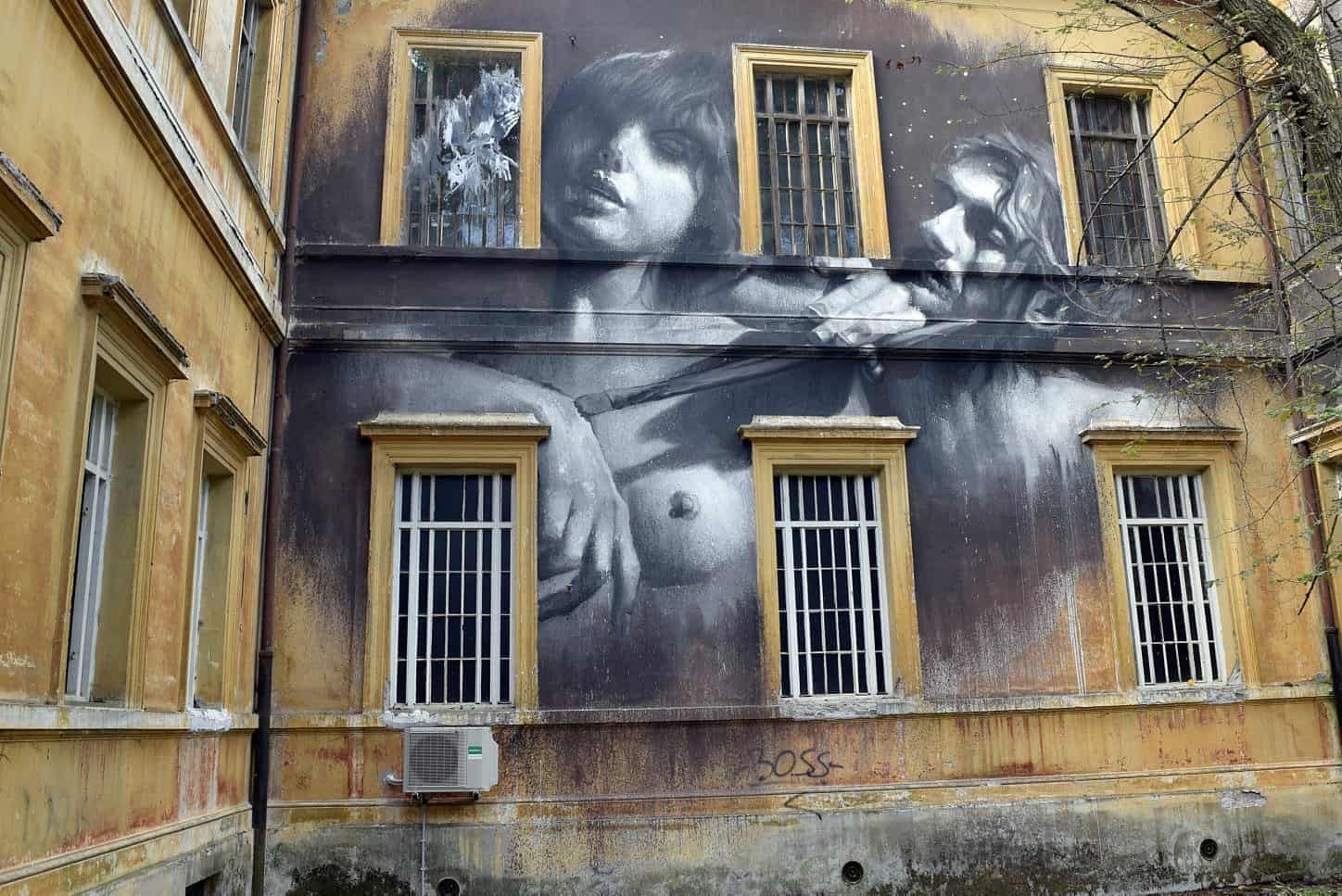
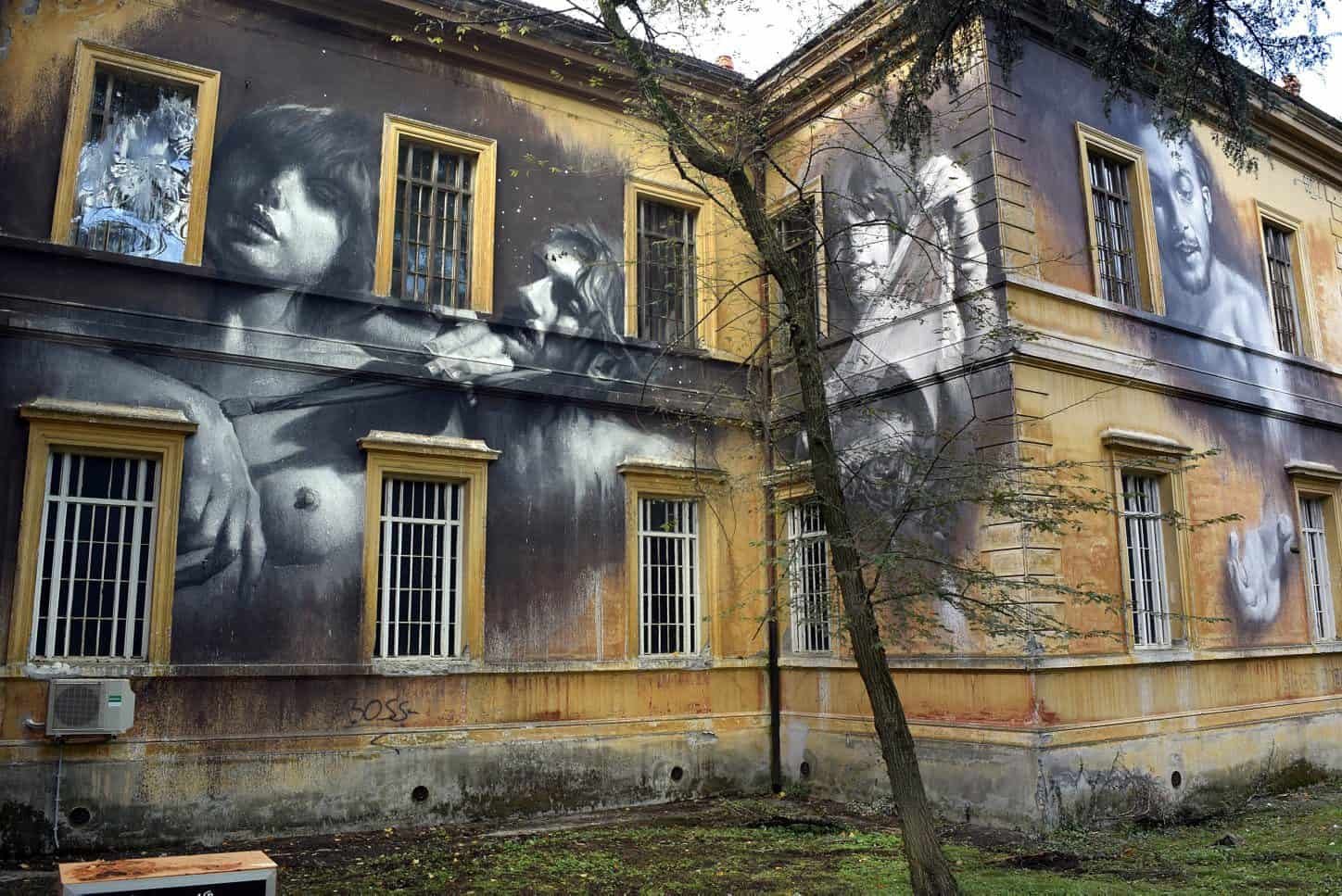
The Santa Maria della Pietà complex extends over about 130 hectares on the northern slopes of Monte Mario, between Via Trionfale and Via di Torrevecchia, in an area that in 1913 was countryside and today is fully city. The museum occupies Pavilion 6, one of the buildings of the first layout, and it is not the most conspicuous: you recognize it by the murals painted on the outer walls, which can be seen from far away as you cross the park.
The Exact Address and Pavilion 6
The address to give the taxi driver or to type into the navigator is Piazza di Santa Maria della Pietà 5. Once you pass the gate, though, the address is of little use: inside there is a road network of its own, with a ring road of a little over a kilometer that goes around the central square and distributes the pavilions asymmetrically. Pavilion 6 is indicated by the internal signs. Anyone arriving for the first time should count on a good 10 minutes of walking from the gate to the museum entrance, on a slight uphill and in the shade of holm oaks, oaks, pines and firs that are more than a century old.
A note that nobody makes and that says a lot: the internal roads and those immediately around them carry the names of people who fought the asylum institution. Via Vincenzo Chiarugi recalls the doctor from Empoli (1759-1820) who at the Bonifazio hospital in Florence, in the regulation of 1789, required the madman to be treated as a sick person and not as a prisoner. Via Franco Basaglia carries the name of the psychiatrist to whom we owe the law that abolished the Italian asylums. Walking toward the Museo Laboratorio della Mente along streets named after those who wanted to close it is one of the best-turned ironies of Roman street naming.
Bus and Train to the Museo Laboratorio della Mente
The ATAC lines that pass through Piazza Santa Maria della Pietà, checked against the routes in force, are the 46 (terminus Roma Monte Mario station, with the current diverted route that goes through Via Trionfale, Via Vincenzo Chiarugi and the square), the 49 (Ospedale San Filippo Neri - Piazza Cavour, with a dedicated stop Santa Maria Pietà), the 913 (Roma Monte Mario station - Piazza Cavour, via Via Sebastiano Vinci, the square, Via Vincenzo Chiarugi and Via Franco Basaglia) and the 990 (Roma Monte Mario station - Lungotevere Marzio). From the historic center you have the 49 from Piazza Cavour and the 913 from the same terminus: it is about 50 minutes of ride, and it is worth knowing before leaving at 15:30 thinking you will make it for last entry.
By train, the regional line FL3 has a stop called Roma Monte Mario, the terminus of the 46, the 913 and the 990: from there you take a bus or you walk. The old abbreviation FM3, which still appears on quite a few signs and some printed materials, indicates the same line under the name it had before the reorganization of the regional railways of Lazio.
By Car, by Bicycle and by Metro
By car you get there without ZTL problems, because the complex is outside any limited traffic zone of the center, and parking along the streets of the neighborhood is easier than in any central area. The weak point is Via Trionfale at rush hour, which jams with a dismal regularity between 8:00 and 9:30 and again between 17:30 and 19:00. By bicycle there is a nice route: the Monte Ciocci bike path, which climbs along the route of the old railway, connects the Valle Aurelia area to the Santa Maria della Pietà and San Filippo Neri axis, and for once you ride away from cars. The metro does not come up here: anyone counting on line A has to get off anyway and take a bus, and at that point the FL3 train is quicker.
Hours, Free Admission and Booking at the Museo Laboratorio della Mente
Here it is worth being pedantic, because more legends than data circulate about this museum's calendar.
The Real Hours of the Museo Laboratorio della Mente
Tuesday to Saturday, 9:00 to 17:00. Last entry at 16:00, and the hour of margin is not a whim: the full route, done properly, uses up all of that hour. Closed Sunday, closed Monday, closed on holidays, closed all of August. The official website indicates reopening after the summer break on September 1, 2026. In July 2026 the museum tried out three extraordinary evening openings, on the 15th, the 23rd and the 30th, from 16:00 to 20:00 with no booking: anyone passing through Rome in summer should check the official website before taking the morning-only schedule for granted.
How Much It Costs to Enter the Museo Laboratorio della Mente
Nothing. Zero euros, for everyone, always. Admission to the museum is open and free, as declared by the health authority that runs it. There is no ticket office, no advance sale, no authorized online reseller because there is nothing to sell. Anyone who finds a site around offering "tickets for the Museo della Mente" should stay away: what it sells is someone else's guided visit, not admission.
Museum Cards Are Not Needed at the Museo Laboratorio della Mente
It is worth clarifying because it is a source of constant misunderstandings. The MIC Card, the card that for 5 euros a year opens the civic museums to residents of the Metropolitan City of Roma Capitale, is not needed here and does not apply: the Museo Laboratorio della Mente is not a civic museum, does not belong to the Musei in Comune network and is not even a state museum of the Ministry of Culture. It is a facility of the regional health service, an operating unit of the Department of Mental Health of ASL Roma 1, part of the Regional Museum Organization of Lazio. The same goes for cumulative tourist cards and for state museum passes: they are irrelevant, because there is no ticket to discount. The first Sunday of the month, which in state museums means free admission, has no effect here for an elementary reason: on Sunday the museum is closed and admission is free the rest of the week anyway.
Who Has to Book and Who Does Not
Individual visitors, couples and families enter without booking during opening hours. Booking becomes mandatory for groups of 10 participants or more, for school classes and for associations, and is requested by email at prenotazionimuseo@aslroma1.it. The same address is used to make an appointment for the exhibits located in Pavilion 26, which follow a different calendar from the museum's. Anyone accompanying a school group should write weeks ahead: the mornings in May and October fill up early, and the staff is that of a health service, not a tourist machine.
What the Museo Laboratorio della Mente Really Is
The definition the museum gives of itself is "narrative museum", and for once the label is not advertising. The Museo Laboratorio della Mente opened in 2000, the same year the Rome asylum closed its doors for good, with the task of documenting the history of the asylum institution and keeping alive a reflection on the relationship between health and illness, on otherness, on social inclusion, on care policies. In 2008 it replaced the original installation with an exhibition route designed together with Studio Azzurro, and since then it has become a case study for European museologists.
A Museum Without Display Cases
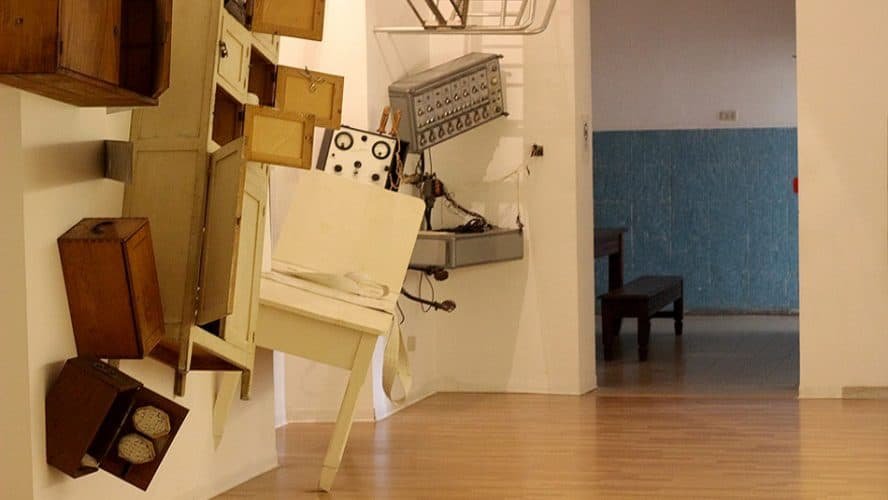
The visitor who enters expecting cases with straitjackets and restraint instruments is thrown off in the first 30 seconds. The objects are there, but they are not the center. The center is the narrative device: life-size projections, touch-sensitive surfaces, environments that change if you move, a dramaturgy that forces you to take a position. It is a precise museographic choice and, I would add, a courageous one: telling the asylum through its display cases would have produced yet another museum of horrors, the kind you visit for the thrill. Here the thrill, when it comes, comes because you have understood something, not because you have seen a rusty iron.
Studio Azzurro and the Transparent Wall
Studio Azzurro is the Milanese collective founded in 1982 by Fabio Cirifino, Paolo Rosa and Leonardo Sangiorgi, which practically invented in Italy the genre of the narrative multimedia museum, from the Museo Audiovisivo della Resistenza in Fosdinovo to the rooms of the Museo del Mare in Genoa. At Pavilion 6 their central device is a long transparent wall that cuts through the entire installation and that, depending on where you stand, becomes object, projection surface, barrier, display case. It is the wall that divides the inside from the outside, which is the question on which the asylum rested for a century. The formula that accompanies the project, entering outside and exiting inside, is not a gratuitous play on words: it describes exactly what happens to those who walk through the rooms.
The credits of the installation tell a collective work. The concept is by Pompeo Martelli, director of the museum. The ground floor route has direction by Paolo Rosa, photography by Fabio Cirifino, video shooting by Rocco Cirifino and Mario Coccimiglio, general coordination by Reiner Bumke, interactive systems by Stefano Roveda, Marco Barsottini, Lorenzo Sarti and Alessandro Pecoraro. The first floor route is directed by Fabio Cirifino, with video editing by Riccardo Lazzarato, Silvia Pellizzari, Francesca Roncato and Michelangelo Sangiorgi. The architectural design is by the architect Elisabetta d'Amato. These are names that in a museum of paintings would appear on the labels. Here they appear in the credits because the work is the installation itself.
The Awards of the Museo Laboratorio della Mente
In 2010 the museum received the ICOM Italia Museum of the Year Award in the public relations category, a recognition that the regional register of the museums of Lazio continues to report in its record. The museum is an institutional member of ICOM Italia and belongs to the thematic museum system DEMOS. Put in a less bureaucratic way: the Italian museum community considers it a model, and colleagues who design museums of memory come here to see how it is done.
Santa Maria della Pietà, the Asylum City That Surrounds the Museo Laboratorio della Mente
To understand the museum you have to understand the place, and the place has a history that begins long before Monte Mario.
1548: The Hospital for the Poor Mad at Piazza Colonna
The institution was born in 1548 on the initiative of the priest Ferrante Ruiz, of Sevillian origin, together with Angelo Bruno and his son Diego. The seat was in Piazza Colonna, right in the center, and the starting idea was to gather and assist poor foreigners who lost their reason in Rome. It must be said clearly, because the detail is always lost: in the 16th century nothing like it existed. Madness was a matter for families, prisons, public charity. A dedicated place, with a confraternity that takes care of it permanently, is an invention of Counter-Reformation Rome, and it is owed to three people whose names we know.
From the Lungara to Monte Mario
In 1725 the hospital was merged with the Arcispedale di Santo Spirito by the will of Pope Benedict XIII and moved to Via della Lungara, where it would remain for almost two centuries, in buildings that today belong to a quite different urban landscape. Anyone who wants to see what the air was like in Roman health care in those centuries can get an idea by passing through the Santo Spirito in Sassia complex, the mother hospital of the papal system of assistance.
At the beginning of the 20th century the Lungara was insufficient, overcrowded and indefensible. Senator Alberto Cencelli promoted in 1909 the move to open countryside, following the model of the pavilion asylum that Europe then considered the last word in science: air, light, greenery, separation of patients by pathology, farm work as therapy. The project is by Edgardo Negri and Silvio Chiera. The new complex began to operate on July 28, 1913 and was officially inaugurated on May 31, 1914 by Victor Emmanuel III.
A Self-Sufficient City for a Thousand People
The numbers tell the ambition of the project better than any adjective. About 130 hectares, more than 40 buildings of which 24 were inpatient pavilions, a ring road of 1,060 meters as the main artery, a little over a thousand beds in the initial configuration. Inside there was everything: administrative offices, a church, kitchens and refectories, the laundry, the blacksmith's forge, the carpentry shop, the print shop, the bindery, a convent for the nuns who assisted the patients. From 1933 also a separate pediatric institute for minors under 14. It was a closed city that produced almost everything it needed, and that like cities had its hierarchies, its trades, its internal economy.
The model of pavilions immersed in greenery was born from a humanitarian intention and ended up becoming the opposite. As admissions increased the complex exceeded 2,000 inmates, double the intended capacity. At that point space, air and greenery stopped being therapy and became the frame of overcrowding. It is exactly the passage that the museum stages in the room on the postures of the body.
Law 180 and the Closure of 2000
The law of May 13, 1978, no. 180, the one everyone calls the Basaglia law, made Italy the first country in the world to abolish psychiatric hospitals by law, banning new admissions and designing the community services that were supposed to replace them. Banning new admissions, however, is not the same as emptying a building where thousands of people live who often no longer have a family outside. The Santa Maria della Pietà kept operating for 22 years after the law, and the gates opened for the last time on January 14, 2000. Anyone who has the idea in mind that in 1978 the Italian asylums closed overnight should stop for five minutes in front of this date: it says everything there is to know about the distance between a reform written and a reform done.
Today the complex is a public park. The pavilions house services of ASL Roma 1, offices of Municipio XIV, cultural associations, and five of them were restored for the Jubilee of 2000. Others remain empty, with walled-up windows and trees taking over the space. The contrast between the recovered pavilions and the abandoned ones is the most eloquent thing about the place, and nobody designed it.
The Exhibition Route of the Museo Laboratorio della Mente, Room by Room
It follows the real order of the sections. Those who want to arrive prepared should read, those who prefer surprise should skip to the next chapter: the route works better if you don't know what waits behind the wall.
Entering Outside, Exiting Inside
The first section gives its name to the idea that holds everything up. A wall runs through the entire installation and divides the rooms, marking a symbolic limit between the outside and the inside of the asylum. Transparent and at the same time impassable, it reproduces the fundamental condition of the total institution: separation. The visitor soon understands that his position relative to the wall is not neutral, and that the museum will make him change it several times.
Ways of Feeling
A reflection on the concepts of normality and diversity, historically and culturally defined. It is the most conceptual section of the route and also the most necessary: before telling what was done to the mad, you have to tell how it was decided who they were. The categories change with the centuries, with social classes, with scientific fashions. The museum does not explain it with a panel, it makes you experience it.
Portraits: The 24 Paintings of Romolo Righetti
24 paintings made in the 1930s by the psychiatrist Romolo Righetti while he worked at Santa Maria della Pietà. They are portraits of patients, painted by a doctor who painted. The key to reading them, and here the museum is honest to the point of harshness, is that those faces were looked at through the filter of the phrenological and physiognomic theories then current, according to which the shape of the skull and the features of the face revealed illness and dangerousness. They are works of quality and at the same time documents of a gaze that we reject today. Standing in front of those 24 faces is the most uncomfortable experience of the ground floor, and the most instructive: you literally see a scientist classifying people with a brush.
Dwellings of the Body
A section dedicated to the postures that overcrowding and progressive depersonalization induced in the bodies of the patients. The body of the inmate, forced into overcrowded spaces, deprived of personal objects, without tasks and without time of his own, takes on recognizable and recurring attitudes, which photographs of European asylums show identical from Rome to Vienna. They were not symptoms of the illness. They were effects of the institution. The museum demonstrates it with the visitor's body, inviting him to take on those same positions, and it is the moment when groups stop chatting.
Inventors of Worlds: Baieri and Nannetti
Two stories of confinement, that of Gianfranco Baieri and that of Oreste Fernando Nannetti. Baieri is present with his paintings. Nannetti is the figure who most strikes those who come in here for the first time, and he must be told precisely, because his story does not belong to Rome.
Oreste Fernando Nannetti, born in Rome on October 3, 1927 and died in Volterra on January 24, 1994, arrived in 1958 at the Ferri pavilion of the psychiatric hospital of Volterra, the judicial ward, and stayed there until his death. During the exercise hours, when the weather allowed, he engraved on the plaster of the outer wall a continuous text about 180 meters long and 2 meters high, using the metal buckle of his uniform belt. He wrote in capital letters, in an arched hand, and signed himself NOF4, an abbreviation of his own name with the addition of a number that, according to current readings, refers to the pavilion or to his position among imaginary brothers. The graffito was documented and saved thanks to the nurse Aldo Trafeli and the sculptor Mino Trafeli, and from the 1985 publication it entered the history of international art brut. The Rome museum presents it as testimony of an invention of a world inside confinement: whoever looks for the original wall has to go to Volterra, here you find his story and his writing.
The Closed Institution
Objects and testimonies bring back the memories of the asylum. It is the section that most resembles a traditional museum, and it is placed at just the right point: when you get here you have already understood the mechanism, and the objects stop being morbid curiosities and become evidence. The keys, the registers, the tools of internal work, the personal effects that were taken away at admission. Taking away personal effects was the first act of depersonalization, and the museum shows it without commenting on it.
The Factory of Change
On a wall scroll the dates that mark the stages of the process of closing the asylum, accompanied by film materials. It is the political chapter of the museum: the journalistic investigations, the anti-institutional movement, the parliamentary debate, the 20 years of tail that separate the law from the actual closure. I advise stopping longer than planned: the sequence of dates, read in a row, explains better than any essay why a reform can be right and at the same time very slow.
Up Close, Nobody Is Normal
50 people have donated their own testimony about the lived experience of mental distress. The figures are projected life-size and stop when the visitor touches them, offering their voice. The title quotes the phrase that became the slogan of the Italian anti-asylum movement. It is the section that visitors remember years later, and not for the technology: because it is the only moment when, inside a museum about the asylum, the people speak in the first person.
The Labyrinth
It is not a tangle in which to get lost, it is a welcoming path in which to find yourself again. The distinction, which the museum makes explicit, works as a statement of poetics: the classic labyrinth punishes those who take the wrong way, this one accompanies. After the previous sections it is needed, and it works as decompression.
The Community That Cares
Interactive tables collect the testimonies of staff, patients and family members of the Department of Mental Health of ASL Roma 1. Here the museum stops talking about the past and starts talking about today, which is the reason the ASL keeps it open: the community services born from Law 180 have 40 years of history of their own, made of successes, of struggles and of unresolved problems, and this section lines them up without reticence.
Archive
A space to go deeper into the themes raised by the bearers of stories. It closes the route and opens the door to the least visited and most precious part of the complex, the documentary one.
The First Floor and the New Installation Healthy Carriers of Diversity
Pavilion 6 was renovated and expanded with a construction site started in January 2022 and finished in the spring of 2026. The museum reopened to the public on May 7, 2026, with a ceremony on May 6.
What They Redid
The funding combined different resources: 960,000 euros from the PNRR for the restoration of the facade, 855,000 euros from the Regione Lazio for the interior works, 650,000 euros from Lazio Innova for the new installation. The exhibition project, titled Portatori sani di diversità, completes the museum route on the upper floor of Pavilion 6 and carves out an area dedicated to temporary activities: exhibitions, series, scientific and cultural events. It also includes innovative computer applications and technological installations shared with the Museo della Salute Mentale of the ASL of Rieti, including a hologram born from that collaboration.
Bearers of Stories
On the first floor the main installation is titled Da vicino nessuno è normale - Portatori di storie, made in 2012: life-size projections in which staff, users and family members stop when the visitor touches them and tell their stories. The direction of the floor is by Fabio Cirifino. Those who visited the museum before the construction site find this part with more space around it and with rethought lighting. Those who enter for the first time find it simply in its place.
An Opinion on the Re-Installation
I'll say what I think. The expansion solved the most serious problem of the old route, which was the line: 40 people in a pavilion calibrated for 20 turned an intimate experience into a crush. Now the space breathes. The addition of the most recent technologies, hologram included, is the part on which I suspend judgment: the museum was already extremely powerful with a transparent wall and 50 recorded voices, and the risk of every technological update is that it makes itself looked at instead of making you look. Go and judge for yourselves, which is the way this museum wants to be used anyway.
The Historical Archive, the Cencelli Library and Pavilion 26
The part that hurried visitors ignore and that is worth the trip by itself.
200,000 Medical Records
The archive of the former psychiatric hospital Santa Maria della Pietà is one of the most imposing health collections in Italy. The recorded data speak of a general archive of 290 linear meters with 4,892 units, and of a series of medical records that alone measures 840 linear meters for about 200,000 files. The chronological extremes run from 1561 to 1978. The computerized database covers the records from 1853 to 1913, with documents going back to 1803. The collection is divided into two sub-collections, Administration and Medical Direction, each subdivided by institutional periods, from the old regime to the Restoration to the post-unification age. The documentation is kept in Pavilion XXVI of the complex, at the Centro studi e ricerche Santa Maria della Pietà of ASL Roma 1.
200,000 files mean 200,000 people, each with a name, a diagnosis, an admission date and often a date of death inside those walls. When people say an archive is a monument, it is usually a metaphor. Here it is not.
The Alberto Cencelli Scientific Library
The library holds 9,600 volumes, of which 1,154 make up the Fondo Antico and 8,446 the Fondo Moderno, as well as a collection of journals made by users of mental health services. The texts cover anatomy, neurology, psychopathology, psychiatry, psychology and psychotherapy, and are cataloged in the Servizio Bibliotecario Nazionale. Access and on-site consultation are open to everyone, lending is not provided, and it is possible to ask for reproductions of articles or parts of volumes in compliance with copyright. The location is Pavilion 26, first floor, at the same address as the museum. The phone number given is 0660106575 and the email biblioteca.cencelli@aslroma1.it. The declared hours are Tuesday and Thursday from 9:00 to 16:30, Monday, Wednesday and Friday from 9:00 to 13:00, with summer closure in August.
The name is that of the senator who wanted the move to Monte Mario. Naming after him the library of the museum that tells the failure of his model is a choice whose lack of hypocrisy I appreciate.
Pavilion 26: Remembering the Future and Voices from the Archives
In Pavilion 26 there are two permanent exhibits, Ricordare il futuro and Voci dagli archivi, accessible by appointment Monday to Friday from 9:00 to 13:00, booking at prenotazionimuseo@aslroma1.it. They are the documentary rib of the main route: the archive that speaks with the voice of those who passed through it. If you have time for only one thing more besides Pavilion 6, choose this.
The Park Around the Museo Laboratorio della Mente
The museum is the entry point to a public park of 130 hectares that is at once a historic garden, an open-air archive and a piece of city lived in by the neighborhood.
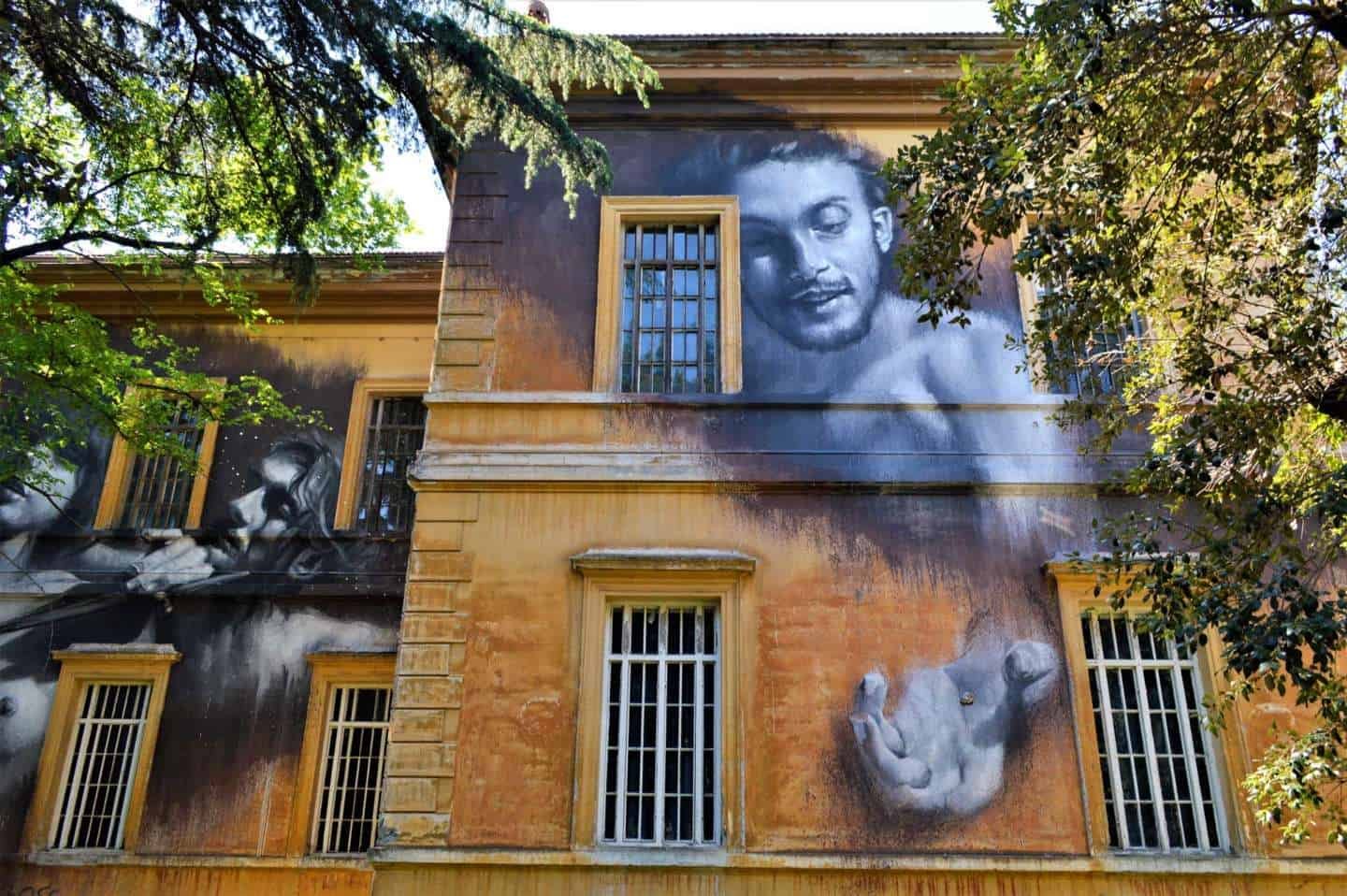
The Murals on the Pavilion Walls
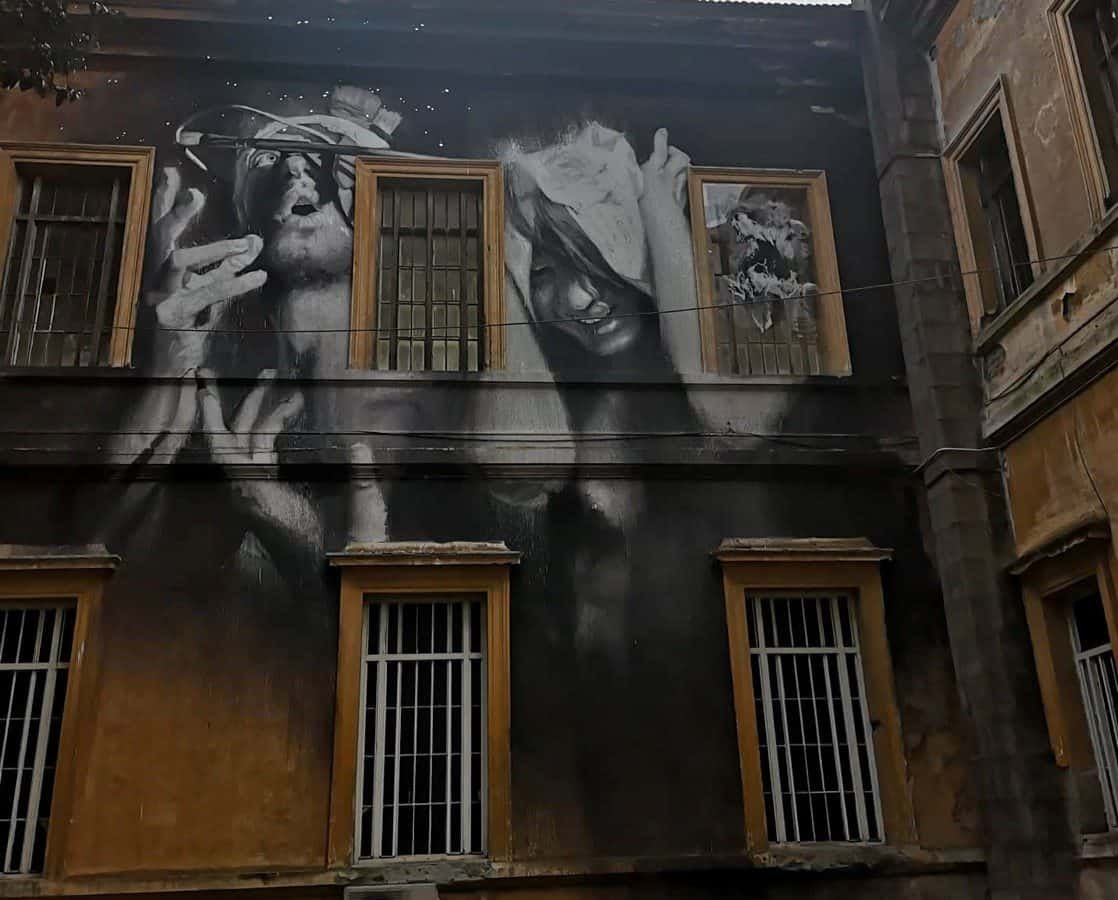
The outer walls of the museum carry the murals of the artist Gomez, whose inspiration is close to the contents of the museum: faces, figures, fragments of writing that dialogue with what you see inside. Over the years the complex has become one of the Roman places where mural painting has found the most room, with works spread over several pavilions. It is public art in the proper sense, because the public that looks at it every day is that of the neighborhood: people who walk the dog, who run, who take their kid to practice.
Trees, Avenues and Empty Pavilions
The park was designed as part of the therapy, with tall-trunk species, oaks, holm oaks, pines and firs, and a road network designed so that patients could walk. Today those trees are more than a century old and the avenues are the same. Walking along the ring road, with the numbered pavilions following one another, some full of offices and others with closed shutters, is an experience worth as much as the visit to the museum. Frank advice: give it half an hour after the exhibition route, not before. Before, it is a park. After, it is something else.
Guided Park Tours and Summer Cinema
In summer 2026 the museum led free guided tours of the park every Thursday from July 3 to 24 at 18:30, lasting about an hour and a half, retracing the history of the institution from its origins to 1999 and the life of the people who inhabited the place, with a stop at the exhibits Ricordare il futuro and Voci dagli archivi. Booking was done by email at the museum's booking address. The tours were held on the opening days of the cinema arena set up in the complex, in collaboration with the Fondazione Cinema per Roma and Zetema Progetto Cultura and with the volunteers of the Servizio Civile Universale of ASL Roma 1. Anyone who wants to understand how that series works will find the details on the page dedicated to the free arenas of Santa Maria della Pietà, Corviale and Tor Marancia.
Lo Spiraglio, the Mental Health Film Festival
The museum promotes Lo Spiraglio, the mental health film festival, which in 2026 reached its 16th edition and was hosted from April 15 to 18 in the spaces of the MAXXI. It is the occasion when the museum's reflection leaves the pavilion and meets documentary and fiction cinema. Those who visit the museum in winter and want to come back in spring with a different occasion should mark it in the calendar, and in the meantime can take a look at the program of the MAXXI.
A Curiosity About the Museo Laboratorio della Mente
The least told curiosity about this place is not inside the museum: it is in the act of reaching it. To get to Pavilion 6 you walk along streets named after the men who worked to demolish the institution that those streets served. Via Vincenzo Chiarugi carries the name of the doctor born in Empoli on February 17, 1759 and died in Florence on December 22, 1820, who in 1788 became head nurse of the Bonifazio hospital and the following year signed the regulation of the royal hospitals of Santa Maria Nuova and Bonifazio, the text that for the first time in Italy requires the madman to be considered a sick person with a right to dignity and not a subject to be contained. Chiarugi published between 1793 and 1794 the treatise Della pazzia in genere e in specie, translated into German in Leipzig two years later and reprinted in a revised edition in 1808: it is the first Italian attempt at a clinical classification of mental illnesses built on observation and not on superstition.
A few dozen meters farther, Via Franco Basaglia names the access to the complex after the psychiatrist who gave his name to the law of 1978, the one that made Italy the first country in the world to abolish psychiatric hospitals by law. Between the two plaques run 190 years of the history of psychiatry, and the visitor crosses them on foot in three minutes without noticing. The Museo Laboratorio della Mente begins there, on the sidewalk, even before the entrance door. It is worth stopping under the Chiarugi plaque: it costs two minutes and changes the tone of the whole visit.
Something Nobody Tells You About the Museo Laboratorio della Mente
That it is closed when all the other museums are open, and open when nobody thinks of going. The Museo Laboratorio della Mente keeps the calendar of a health service, not that of a tourist attraction: it opens Tuesday to Saturday from 9:00 to 17:00 and closes on Sunday, on Monday, on all public holidays and for the entire month of August. Sunday, which in the rest of Italy is the museum day by definition, is here the day when the gate of Pavilion 6 stays shut. Monday, the canonical closing day of Italian museums, coincides for once. August, when Rome fills with visitors looking for cool interiors, is a month entirely lost: the reopening indicated by the official website is September 1, 2026.
The practical consequence is that the foreign tourist, who typically organizes Sunday as a museum day, almost never manages to get in. And the less obvious consequence concerns Romans: Saturday morning, the only non-working opening day, is the best window of the entire week. I add an operational detail worth gold. The exhibits of Pavilion 26, Ricordare il futuro and Voci dagli archivi, are visited by appointment Monday to Friday from 9:00 to 13:00: so not on Saturday. Anyone who wants to see everything must choose a weekday morning, book Pavilion 26 and then go on to Pavilion 6. Nobody writes it in a single place, and most visitors discover the existence of Pavilion 26 when it is already too late to go.
The Advice I Give You for Visiting the Museo Laboratorio della Mente
Go on a Tuesday or Wednesday morning, entering at 9:00 sharp. It is not a whim: it is the only way to have the transparent wall all to yourself. The Studio Azzurro route is built on individual reactions, on surfaces that respond to the touch of one person at a time, on voices that activate one at a time. With 10 visitors in the same room the device works by half, because all the figures speak at once and you listen to none. With two or three people it works as it was designed, and the difference is not 20 percent: it is the difference between having seen the museum and not having seen it.
Second piece of advice: allow 90 minutes for Pavilion 6, not the 40 you imagine reading the list of rooms. The sections Portraits, Dwellings of the Body and Up Close, Nobody Is Normal require standing time, not walking time. Third: book Pavilion 26 with the same email as the bookings and put it first, from 9:00 to 11:00, then move on to the museum. Fourth: leave Pavilion 6 and walk the ring road, half an hour, without hurry.
A warning that no official site will give you, and that is nonetheless needed. This is not a museum for every state of mind. Anyone with a recent history of psychological suffering in the family should weigh the moment carefully: some sections touch raw nerves. It is not a flaw of the museum, it is its nature. If you have doubts, go accompanied, and plan to sit in the park for a quarter of an hour after leaving. By contrast, it does teenagers an enormous amount of good: it is one of the few places that manages to talk to them about mental health without a preachy tone.
Another Well-Known Fact, Yet Rarely Mentioned
Everyone knows that Law 180 closed the Italian asylums in 1978. Almost nobody knows that the Rome asylum kept operating for another 22 years, and that its gates closed on January 14, 2000.
The fact is well known in the sense that anyone who looks into it finds it. It is rarely mentioned because it ruins a comfortable narrative, that of the courageous reform that solves a centuries-old problem with a parliamentary vote. The law of May 13, 1978, no. 180, banned new admissions and new asylums, and entrusted community services with the task of replacing them. It had no power, however, to give a home, an income and a family network to the thousands of people who had lived inside those walls for decades, many of whom had no one left outside. The actual dismantling of the Italian asylum remnants was completed only after 1994, with the Progetto Obiettivo on the protection of mental health.
Those 22 years are the real subject of the section The Factory of Change, and that is why that wall of dates deserves more time than it seems. You read in it how reforms really work: first the rule, then the void, then the services, then the people, and years later the gates. Anyone who knows only the title of the Basaglia law holds half the story. The other half is written on the walls of the complex that surrounds the Museo Laboratorio della Mente, where the recovered pavilions and the walled-up ones still coexist today 50 meters from each other.
The Right Photo to Take at the Museo Laboratorio della Mente
Outside, not inside. The photograph you will take home is that of the Gomez murals on the outer wall of Pavilion 6, shot from the avenue with enough distance to get a piece of the park into the frame as well: the crowns of the holm oaks at the top, the painted wall in the center, the avenue at the bottom. The right light is that of late afternoon in the spring and autumn opening months, when the sun cuts in at a slant and the colors of the painted faces stop being flat. At summer noon the same wall becomes a white slab and the photo has no depth.
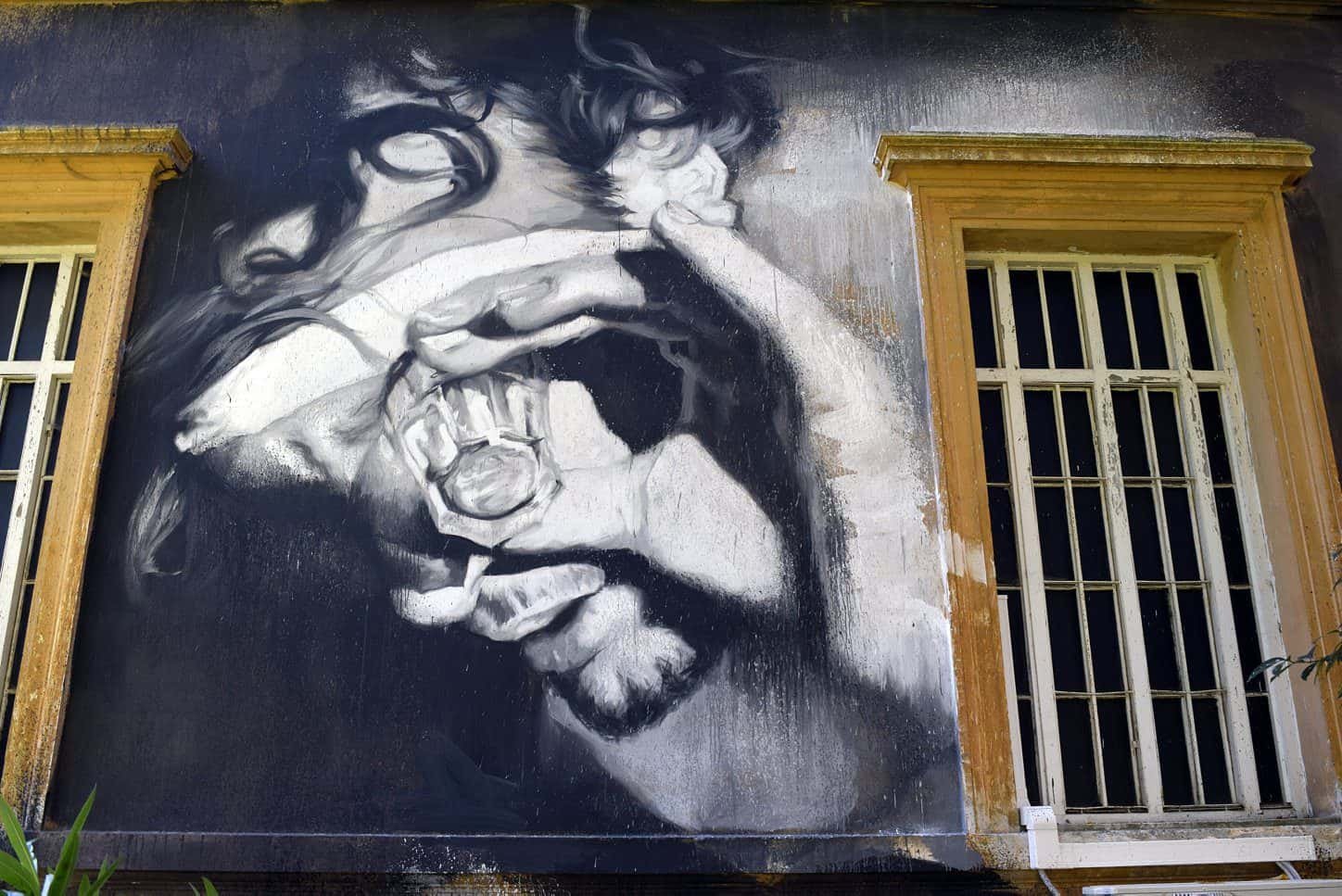
The second frame, the one good photographers look for and tourists don't see, is the sequence of pavilions along the ring road: a recovered building with lit windows and, right next to it, an empty pavilion with closed shutters and ivy climbing. Position yourself so as to have both in the same image. It tells the whole complex better than any caption, and requires no equipment.
Inside the situation changes, and not only for technical reasons. The route is dark, built on projections and backlit surfaces: flash ruins the atmosphere for those next to you and produces poor images anyway, while long handheld exposures produce blur. The real constraint, though, is another, and it concerns respect. In those rooms there are the faces of patients painted by Righetti and the testimonies of 50 people who have lived mental distress and agreed to tell it. They are not material for a quick shot. The rules on filming should be asked at the entrance, where the staff explains them without problems. The advice is to put the phone away for 90 minutes and take it out again once you are outside, in front of the murals.
Some Important Events That Happened Here in History
The Santa Maria della Pietà complex has a chronology that reads like a history of Italy in miniature.
1548. The Sevillian priest Ferrante Ruiz, with Angelo Bruno and his son Diego, founds in Piazza Colonna the shelter for poor foreigners deprived of reason: it is the birth certificate of the institution.
1725. Pope Benedict XIII merges the hospital with the Arcispedale di Santo Spirito and orders its transfer to Via della Lungara, where it will remain almost two centuries.
1909. Senator Alberto Cencelli promotes the move out of the city. The design of the new provincial pavilion asylum is entrusted to Edgardo Negri and Silvio Chiera.
July 28, 1913. The Monte Mario complex goes into operation and receives its first patients.
May 31, 1914. Official inauguration in the presence of Victor Emmanuel III. The provincial asylum of Rome is then among the most modern in Europe, with over a thousand beds, 24 inpatient pavilions and a city of internal services.
1933. The pediatric institute opens, reserved for minors under 14, a section separate from the rest of the complex.
1930s. The psychiatrist Romolo Righetti paints at Santa Maria della Pietà the 24 portraits that today occupy a room of the museum.
Middle decades of the 20th century. The number of patients exceeds 2,000, double the designed capacity. The model of pavilions immersed in greenery turns into its opposite.
May 13, 1978. Law no. 180 bans new admissions to psychiatric hospitals and requires the building of community services. From 1979 the complex slowly begins to change function and open to the neighborhood.
1994 and following years. The Progetto Obiettivo starts the actual liquidation of the Italian asylum remnants.
January 14, 2000. Definitive closure of Santa Maria della Pietà. In the same year five pavilions are restored for the Jubilee and the Museo Laboratorio della Mente is born.
2008. The museum inaugurates the new exhibition route designed with Studio Azzurro, the one with the transparent wall.
2010. ICOM Italia Museum of the Year Award in the public relations category.
2012 and 2019. The first floor route takes shape, with the installation Da vicino nessuno è normale - Portatori di storie and the credits of the upper installation.
January 2022. The renovation and expansion site of Pavilion 6 opens.
May 6 and 7, 2026. Ceremony and reopening to the public of the renovated museum, with the new installation Portatori sani di diversità.
Who Passed Through the Museo Laboratorio della Mente
The most illustrious name to set foot in this place belongs to the history of Italy: Victor Emmanuel III inaugurated the provincial asylum on May 31, 1914, with the complex already operating for 10 months. It was a ceremony of the Savoy regime in full form, with the king blessing the most modern pavilion in Europe: none of those present imagined that 86 years later that model would be dismantled as a mistake.
Before him, the senator Alberto Cencelli, promoter in 1909 of the move to the countryside, and the designers Edgardo Negri and Silvio Chiera, authors of the pavilion layout that the visitor still crosses today walking along the ring road. The scientific library of the museum carries Cencelli's name.
In the 1930s the psychiatrist Romolo Righetti worked here, who made 24 oil portraits of the patients: a doctor with a brush, whose paintings are today the most ambiguous and most precious document of the collection.
Among the figures the museum tells about without their ever having been interned in Rome is Oreste Fernando Nannetti, born in Rome on October 3, 1927, interned from 1958 in the Ferri pavilion in Volterra and died there on January 24, 1994: his 180-meter graffito, engraved with the belt buckle, entered the history of art brut thanks to the nurse Aldo Trafeli and the sculptor Mino Trafeli. Next to him the museum displays the works of Gianfranco Baieri.
Since 2008 Pavilion 6 bears the signature of Studio Azzurro: Paolo Rosa, director of the ground floor route, Fabio Cirifino, photographer and then director of the first floor, Leonardo Sangiorgi, together with the interactive systems team led by Stefano Roveda, the architect Elisabetta d'Amato and the coordination of Reiner Bumke. The concept of the museum is by Pompeo Martelli, who directs it.
At the reopening of May 6, 2026 those present were Francesco Rocca, president of the Regione Lazio, the regional councilor for culture Simona Renata Baldassarre, the Roma Capitale councilors Maurizio Veloccia and Giuseppe Battaglia, the president of Municipio XIV Marco della Porta, Laura Tassinari for Lazio Innova, the medical director of ASL Roma 1 Gennaro D'Agostino and the director of the Department of Mental Health Giuseppe Ducci.
Finally there are the 50 people who donated their own testimony to the section Da vicino nessuno è normale, and the roughly 200,000 names kept in the medical records of Pavilion XXVI. They are the real protagonists of the place, and the museum, rightly, does not treat them as extras in someone else's story.
How to Really Visit the Museo Laboratorio della Mente
How Long the Visit to the Museo Laboratorio della Mente Takes
90 minutes for the exhibition route of Pavilion 6, if you do it seriously. 60 if you are in a hurry, but then you skip the interactive sections, which are the museum. Add 45 minutes if you also book Pavilion 26, and another 30 if you walk the ring road of the park. A whole morning from 9:00 to 12:30 covers everything calmly.
The Museo Laboratorio della Mente with Children and with Schools
The museum works a great deal with schools and receives school groups by booking. Under 11 years old the route works poorly: the themes require an abstraction that children do not yet have, and the sections on the postures of the body risk being misunderstood as a game. From 11 years up the matter changes radically, and with high school students the museum is one of the most effective teaching tools that exist in Rome on these subjects. Families with small children looking for a museum designed for them will find a more suitable answer in Explora, the children's museum of Rome.
Accessibility of the Museo Laboratorio della Mente
The museum declares total accessibility of the exhibition route and of the services. The pavilion layout, born to let stretchers and wheelchairs circulate, works in its favor: the interior spaces are wide and the level changes limited. The outdoor park has paved avenues and gentle slopes, with a few uphill stretches between the gate and Pavilion 6. Anyone with specific needs should make a phone call to the museum beforehand, which is the quickest way to get an exact answer.
What State of Mind to Enter With
With curiosity and without hurry, and possibly without another visit planned in the following two hours. The Museo Laboratorio della Mente works by accumulation: the first rooms seem conceptual and a bit abstract, then toward the middle of the route everything tightens, and the section of testimonies hits you. Leaving and rushing to another museum means wasting the best part, which happens in your head in the following half hour.
What to See Around the Museo Laboratorio della Mente
The area is not the postcard one, and for that very reason it works well for those who have already done the round of the classics.
A few minutes away, on the same hill, the Monte Mario nature reserve offers the largest urban woodland in Rome and a view of the city that you don't get from the Janiculum. On the summit, the Monte Mario astronomical observatory adds a scientific stop that pairs well with the day. To the north, the Parco del Pineto and the Insugherata reserve complete the green crown of this sector of the city.
Anyone who has taken up the thread of the history of medicine has in Rome a solid itinerary, and it is best to take it on different days. The Museo di Storia della Medicina of the Sapienza reconstructs ancient laboratories and pharmacies. The Museum of Pathological Anatomy holds a 19th-century collection that must be approached with the same respect you bring here. The Accademia di Storia dell'Arte Sanitaria, housed in the Santo Spirito complex, closes the circle on Roman health care. The old apothecary of Santa Maria alla Scala in Trastevere shows how medicines were prepared before industrial chemistry.
Among disused health-care architecture, anyone struck by Santa Maria della Pietà finds a parallel in the former Carlo Forlanini hospital, the great rationalist sanatorium of Monteverde, another piece of city built around an illness and then emptied. For a complete change of register, the Museo di Roma in Trastevere and the Museo storico della Liberazione on Via Tasso remain two places where the city tells its story without softening it.
Quick Questions About the Museo Laboratorio della Mente
How Much Is a Ticket to the Museo Laboratorio della Mente?
Nothing. Admission is open and free for everyone, with no ticket office and no advance sale.
What Are the Hours of the Museo Laboratorio della Mente?
Tuesday to Saturday, 9:00 to 17:00, with last entry at 16:00.
When Is the Museo Laboratorio della Mente Closed?
On Sundays, Mondays, public holidays and for the whole month of August. The official website indicates reopening on September 1, 2026.
Do You Need to Book to Visit the Museo Laboratorio della Mente?
No for individual visitors and families. Yes, and it is mandatory, for groups of 10 participants or more, for schools and for associations, by writing to prenotazionimuseo@aslroma1.it.
Where Exactly Is the Museum?
In Pavilion 6 of the Santa Maria della Pietà complex, Piazza di Santa Maria della Pietà 5, 00135 Rome, Monte Mario Alto neighborhood.
Who Runs the Museo Laboratorio della Mente?
ASL Roma 1, through a unit of its Department of Mental Health. The museum is part of the Regional Museum Organization of Lazio and is an institutional member of ICOM Italia.
Is the MIC Card Valid at the Museo Laboratorio della Mente?
No, and it is not needed. The MIC Card opens the civic museums of Roma Capitale, while this is a museum of the regional health service. Admission is free for everyone anyway.
Is Entry Free on the First Sunday of the Month?
The question does not arise: on Sunday the museum is closed and admission on the other days is always free.
How Long Does the Visit to the Museo Laboratorio della Mente Take?
About 90 minutes for the exhibition route of Pavilion 6. With Pavilion 26 and a walk in the park you comfortably reach three hours.
Can You Take Photographs Inside the Museum?
The rules on filming are asked at the entrance. In any case the route is dark and built on projections: flash disturbs other visitors and produces poor images, and many sections contain personal testimonies that deserve privacy.
Is the Museo Laboratorio della Mente Wheelchair Accessible?
The museum declares total accessibility of the exhibition route and of the services. For particular needs it is best to phone beforehand the number given by the museum.
Is It Suitable for Children?
From 11 or 12 years up it works very well. Under that age the themes are difficult to handle.
How Do You Get to the Museo Laboratorio della Mente by Public Transport?
With ATAC buses 46, 49, 913 and 990, which pass through Piazza Santa Maria della Pietà, or with the regional train FL3 to Roma Monte Mario station.
Is There a Metro Near the Museum?
No. Line A does not reach this area: from the metro you need a bus anyway, and the FL3 train is quicker.
Can You Park?
The area has no limited traffic zones and parking in the neighborhood is easier than in the center. The problem, if anything, is the traffic on Via Trionfale at rush hour.
What Do You See on the Exhibition Route?
11 sections: Entering Outside Exiting Inside, Ways of Feeling, Portraits, Dwellings of the Body, Inventors of Worlds, The Closed Institution, The Factory of Change, Up Close Nobody Is Normal, The Labyrinth, The Community That Cares, Archive.
Who Designed the Installation?
Studio Azzurro, the Milanese collective founded in 1982 by Fabio Cirifino, Paolo Rosa and Leonardo Sangiorgi, on a concept by the museum director Pompeo Martelli.
What Is Pavilion 26?
The building that houses the historical archive, the Alberto Cencelli Scientific Library and two permanent exhibits, Ricordare il futuro and Voci dagli archivi, accessible by appointment Monday to Friday from 9:00 to 13:00.
Can You Consult the Medical Records of the Former Asylum?
The archive of the former psychiatric hospital holds about 200,000 files with chronological extremes from 1561 to 1978, partly computerized. Consultation takes place at the Centro studi e ricerche of ASL Roma 1. The procedure and the conditions of access must be agreed with the archive, which answers at archivio.smp@aslroma1.it.
Can You Visit the Museum Online?
Yes, the museum offers a free virtual tour, useful for preparing for the visit or for those who cannot reach Monte Mario.
Has the Museum Been Renovated Recently?
Yes. Pavilion 6 was renovated and expanded with works started in January 2022 and the museum reopened to the public on May 7, 2026 with the new installation Portatori sani di diversità.
Is There a Cloakroom or Luggage Storage?
The museum is not equipped like a large city museum. Anyone arriving with bulky backpacks should ask the staff at the entrance and not take storage for granted.
Is There a Line to Get Into the Museo Laboratorio della Mente?
Practically never, except when it coincides with a booked school group. In that case the wait is not about entry but about using the interactive rooms, and it is best to let the class go ahead.
What Is the Difference Between This Museum and a Museum of Medicine?
A museum of medicine displays instruments and scientific collections. The Museo Laboratorio della Mente tells the story of an institution and the people who passed through it, using multimedia narration in place of display cases, and it does so inside the building where that story took place.
Can You Visit the Park Even When the Museum Is Closed?
The Santa Maria della Pietà complex is a public park and can be walked freely. The guided tours of the park, when the museum schedules them, are free and by booking.
Are There Events Linked to the Museum During the Year?
Yes. The best known is Lo Spiraglio, the mental health film festival, which in 2026 reached its 16th edition and was hosted from April 15 to 18 at the MAXXI. In summer the complex hosts a free cinema arena, accompanied by guided tours of the park.
One last thing. Museums that tell you how good we were, we have dozens, and they are wonderful. Museums that tell you how cruel we have been to the most fragile people, and do it without self-satisfaction and without moralizing, there is only one in this city. The Museo Laboratorio della Mente costs zero euros, asks for 90 minutes of a Tuesday morning and gives back something that no 20-euro ticket can buy. Bring a teenager. Bring someone who says the mad should be locked up. And then walk the ring road on foot, under the holm oaks, in silence.
Article written by the editorial team of TourLeaderPro, contact them for Private/Corporate/V.I.P. Tours and Experiences.
Planning a trip to Rome? The English guides to visiting the city are on ItalyPlanner.com.