Luca Moscariello, Quasi ombra at z2o Project, from October 1 to November 14, 2026
In short. Quasi ombra, the first solo show by the Bolognese painter Luca Moscariello at the Roman gallery z2o Sara Zanin, opens on Thursday, October 1, 2026 with a vernissage from 18:00 to 21:00 and can be visited until Saturday, November 14, 2026.
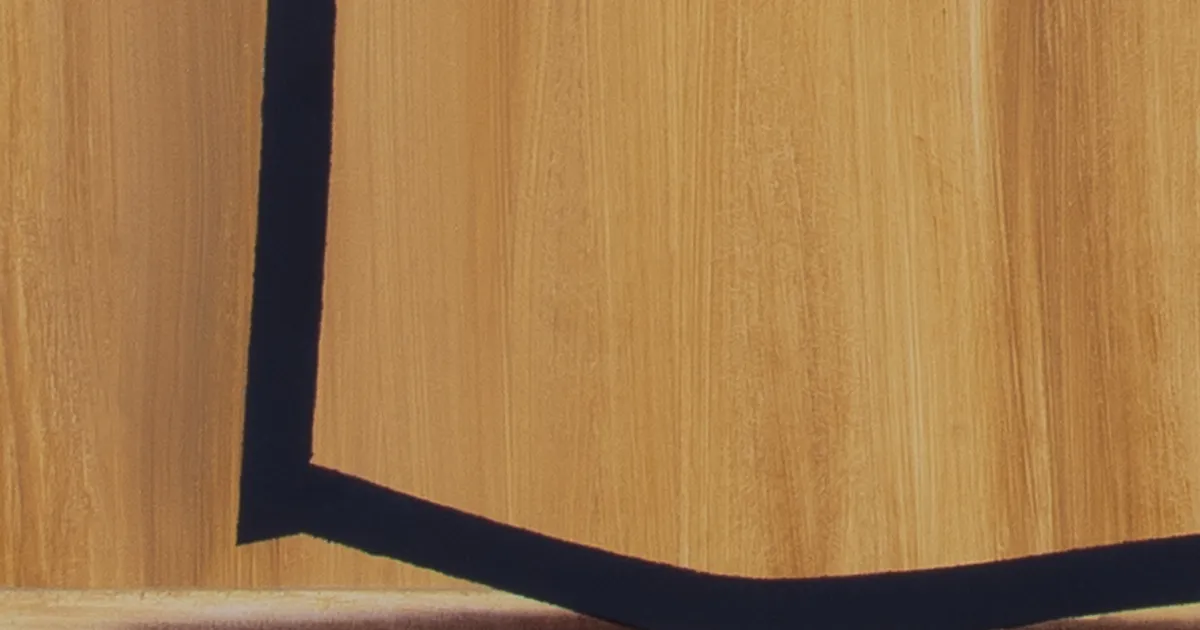
Quasi ombra, the first solo show by the Bolognese painter Luca Moscariello at the Roman gallery z2o Sara Zanin, opens on Thursday, October 1, 2026 with a vernissage from 18:00 to 21:00 and can be visited until Saturday, November 14, 2026. The venue is z2o Project, the gallery's second space, at Via Baccio Pontelli 16, first floor, 00153 Rome, in the San Saba neighborhood, a few minutes on foot from the Pyramid of Cestius. You get there by metro line B at the Piramide or Circo Massimo stops, by tram 3 which runs along Viale Aventino, by the Roma Lido railway at Porta San Paolo station or by regional trains at Roma Ostiense station. The hours given by the gallery and by the official calendars are from 12:00 to 19:00. The days of the week it is open should be checked on the gallery's website before setting out, because public calendars report different indications. The exhibition is accompanied by a critical text by Saverio Verini. The access conditions and any appointments by reservation are indicated directly by z2o Sara Zanin on its official website.
Quasi ombra by Luca Moscariello in Brief
Quasi ombra is a painting exhibition that works on a single knot, and digs into it all the way: the point where the eye stops trusting itself. The gallery's press release describes Moscariello's research as work on perception and on the capacity of painting to put the boundary between reality and artifice in crisis, carried out through a personal use of trompe l'oeil. In the new works presented in Rome, the grain of wood and thin linear marks become the center of the game.
Put in simple words: from afar you believe you see a wooden board crossed by thin sticks or suspended threads, each with its own cast shadow. Up close you discover that the wood is painted, that the marks are painted and that even the shadows are painted on the same surface. Everything that seemed to have thickness is flat. It is a physical experience, even before an intellectual one, and for this reason it works even with people who don't frequent contemporary art galleries.
The dates to mark
The vernissage is Thursday, October 1, 2026 from 18:00 to 21:00: it's the evening when you meet the artist and when the gallery is most crowded. The exhibition closes Saturday, November 14, 2026. A good six weeks, which allow you to come back a second time, something I sincerely recommend with this kind of painting.
Where exactly it is
z2o Project is on the first floor of Via Baccio Pontelli 16. The door is that of a residential building in the San Saba neighborhood: no street window, no showy sign. You have to ring the buzzer or follow the gallery's directions. Those who know the historic venue of z2o Sara Zanin at Via Alessandro Volta 34, in Testaccio, should know that this exhibition is not there, but in Via Baccio Pontelli space.
What You See in Quasi ombra
The gallery's press release, signed together with Saverio Verini's text, clearly indicates the elements of the exhibition: wooden surfaces observed, broken down and rebuilt through a painting with a disorienting hyperrealistic effect, and thin lines that cross the paintings like suspended forms, at times similar to ideograms or to the signs of a language not immediately decipherable.
The wood that isn't wood
The grain of wood is one of the oldest subjects of pictorial deception. Renaissance inlay makers used it to build fake bookcases and fake cabinets in church choirs and in princes' studioli. Still life painters used it for the shelf on which to rest fruit and glasses. Moscariello takes it and brings it to the foreground: the wood is no longer the support or the background, it is the subject. The surface is analyzed like a landscape, with its knots, its flames, its growth lines, and then rebuilt with the brush with a precision that disorients.
The suspended marks and their shadows
Over this painted wood run thin lines. Thanks to precisely constructed shadows, says the press release, these presences seem to acquire thickness and detach from the plane. Here is the heart of the work, and here you understand the title: they are plausible and coherent shadows, but they are artifices, almost shadows. The attentive visitor always makes the same gesture, and it's worth doing it without embarrassment: he moves close from the side, lowers his head, looks for the relief. He doesn't find it.
A language to decipher
The gallery's text compares those lines to ideograms. It's a useful indication: look at the paintings also as pages written in a language you don't know. Some forms repeat, others seem to answer each other from one canvas to another. There is no hidden message to find, but there is a rhythm, and the rhythm is better caught by going around the room twice, the first time in a rush and the second slowly.
The text by Saverio Verini
The exhibition is accompanied by a critical text by Saverio Verini. The text is the best companion for the visit: read it after looking at the works, not before, because Quasi ombra is built so that the eye makes mistakes on its own.
Luca Moscariello: Biography and Career
Luca Moscariello was born in 1980 in San Giovanni in Persiceto, in the province of Bologna, and lives and works in Sala Bolognese, also in the plain northwest of the Emilian capital. His official biography, published on the artist's website, lists more than 15 years of solo and group shows in Italian and foreign museums, foundations and galleries. Quasi ombra at z2o Project is his first solo show at the Roman gallery.
The beginnings and the first group shows
In 2015 his name appears in a series of group shows that tell well the geography of young Italian painting of those years: Siam come le lucciole at Palazzo Gromo Losa and the Museo del Territorio Biellese in Biella, curated by S. Gavioli, then taken up again in Castellina in Chianti. Circolare at the Autostazione in Bologna. The Biennale di Soncino at Palazzo Stanga in Cremona. Milano Città Mondo at the Fabbrica del Vapore in Milan, dedicated to young emerging artists. In 2016 he is among the candidates in the section reserved for under 40 artists of the 40th edition of Arte Fiera in Bologna and enters the Civica raccolta del disegno of Salò with the new acquisitions 2011-2016.
The museum solo shows
From 2017 the institutional solo shows begin: L'erbario mancante, in dialogue with Giacomo Cossio, at the Galleria Civica di Arte Contemporanea in Viadana. Fasmidi at the CRAG Chiono Reisova Art Gallery in Turin. The title Fasmidi is revealing: stick insects, animals that survive by blending in with branches, are the perfect metaphor for a painting that camouflages itself. In 2018 come Mirabilia at Martina's Gallery in Giussano, participation in the Premio Combat at the Museo Fattori in Livorno and in the 10th Biennale d'Arte Giovani of the MAM in Gazoldo degli Ippoliti. In 2019 the MAC, Museo d'Arte Contemporanea in Lissone, dedicates Minime dinamiche di mimetizzazione to him, curated by A. Zanchetta, and in Pietrasanta he exhibits in the Vetrina Banco BPM.
Recent years
In 2020 he takes part in Pittori fantastici nella Valle del Po at the PAC in Ferrara, curated by C. Langone, and holds the solo show A riveder le stelle for Banca Sistema Arte in Milan. In 2021 he exhibits with Accesso Galleria in Pietrasanta (Guarda oltre) and with Federico Rui Arte Contemporanea at ArtVerona. In 2022 the Museo Ebraico in Bologna presents Puzzle, in 2023 the Fondazione Stelline in Milan hosts Gerico, again curated by A. Zanchetta. 2024 is the most intense year: Trompe l'oeil at the Torre di Moresco Centro Arti Visive, Reassuring the sudden at the Hidden Garage in Bologna during Art City, Moduli strategici per imbastire equivoci at the Centro Culturale Mercato in Argenta, plus the group show Another world is possible in Cluj Napoca, Romania, and the presence at Art Miami with Galleria Barbara Paci.
From 2025 to Quasi ombra
In 2025 Moscariello presents Sublimi incertezze at Kappa Noun in San Lazzaro di Savena and the second chapter of the same exhibition at Otto Gallery in Bologna, plus La pittura rovesciata for Mediolanum Banca. In 2026, before Rome, the Museo Lercaro in Bologna dedicates Il drappo e l'uva to him, curated by Gabriele Salvaterra. The titles, lined up, already tell the poetics: misunderstandings, camouflage, uncertainties, reversals. Quasi ombra is the Roman chapter of this long investigation.
Trompe l'oeil, an Ancient Tradition
Trompe l'oeil, literally "deceive the eye," is a painting technique that aims to make what is painted seem real. In Rome this tradition is met everywhere, and knowing where to look at it makes the visit to Quasi ombra richer.
From Pliny to fake domes
Pliny the Elder tells of the contest between Zeuxis and Parrhasius: birds peck at the grapes painted by the first, but the second fools the rival himself with a painted curtain that Zeuxis tries to draw aside. The story became the founding myth of illusionistic painting. In 17th-century Rome the tradition reaches famous heights: the fake dome by Andrea Pozzo in the church of Sant'Ignazio, the quadrature of Baroque ceilings, Borromini's perspective gallery at Palazzo Spada.
Where Moscariello stands
Compared with this tradition Moscariello steps aside: he doesn't build architecture, he doesn't open windows onto the sky. He works on a few centimeters of apparent thickness, on the minimum possible gap between plane and relief. It's a harder choice and, in our view, a more modern one: the deception doesn't serve to amaze but to make you reflect on how we see. The perspective gallery of Palazzo Spada fools you for a few meters. Moscariello fools you for two millimeters, and that's where the doubt remains.
The z2o Sara Zanin Gallery and the z2o Project Space
z2o Sara Zanin is a Roman contemporary art gallery with two venues, both in postal code 00153: the main venue at Via Alessandro Volta 34, in Testaccio, and z2o Project at Via Baccio Pontelli 16, first floor, in the San Saba neighborhood. Quasi ombra is installed in this second space.
Who runs it
The gallery bears the name of its founder, Sara Zanin, listed on the website as director and owner. Alongside her works Gabriele Gaspari as director, with a staff of gallery managers. The program alternates solo shows by Italian and international artists, participation in art fairs and publications.
What z2o Project is like
z2o Project occupies an apartment on the first floor of a residential building. It's a very Roman type of space: the gallery in an apartment, with rooms of domestic size, natural light from the windows, period floors. For a painting like Moscariello's it is an ideal condition: the works are looked at from close range, without the coldness of big white cubes, and the deception works better when you are a step from the painting.
Recent exhibitions
Before Quasi ombra Via Baccio Pontelli space hosted a solo show by Giovanni Kronenberg, opened in mid-September. The numbering of the exhibitions on the gallery's website has passed 130: a long archive, worth browsing to understand the line of the program.
How to Get to z2o Project
z2o Project is at Via Baccio Pontelli 16, in the San Saba neighborhood, between Viale Aventino and the Pyramid of Cestius: the area is among the best served by public transport in southern Rome.
By metro
Metro line B has two useful stops: Piramide, on Piazzale Ostiense, and Circo Massimo, at the end of Viale Aventino. From both you arrive on foot in a few minutes. Coming from Termini, take the B in the direction of Laurentina and get off at Circo Massimo or Piramide.
By tram and train
Tram 3 runs along Viale Aventino and links the area with the Colosseum on one side and with Porta San Paolo and Trastevere on the other. From Piazzale Ostiense leave the trains of the Roma Lido railway, from Porta San Paolo station, and next to it is the Roma Ostiense railway station, served by regional trains and by the connection to Fiumicino airport.
By car and bicycle
San Saba is a residential neighborhood with paid blue-line parking and few free spots, especially in the afternoon. Those arriving by car do well to look for parking along the wider avenues around Piazzale Ostiense. By bicycle the area is convenient: the climb to the Piccolo Aventino is short and the route from Testaccio or the Circo Massimo is pleasant.
San Saba and the Gallery's Surroundings
San Saba is the neighborhood built in the early 1900s on the so-called Piccolo Aventino, and it remains one of the quietest in the city: villini, quality public housing and tree-lined streets a few steps from the traffic of Viale Aventino.
The basilica of San Saba
The neighborhood takes its name from the basilica of San Saba, a very ancient church tied to the Eastern monks who lived on the height in the early Middle Ages. A stop before or after the gallery is worth it, even just for the portico and the quiet of the square.
The Pyramid and Porta San Paolo
Going down toward Piazzale Ostiense you meet the Pyramid of Cestius and Porta San Paolo, two of the most recognizable monuments of the southern stretch of the Aurelian Walls. Inside the gate is the Museo della Via Ostiense, small and little visited.
The Non-Catholic Cemetery
Next to the Pyramid opens the Non-Catholic Cemetery, one of the quietest and most literary places in Rome. For those coming out of the exhibition with their head full of painted shadows, it's the right walk.
The Aventine and the Baths of Caracalla
On the opposite side, going north, you reach the Aventine and the Circus Maximus. To the east, beyond Viale Aventino, open the Baths of Caracalla. A whole afternoon of ancient and contemporary art can be put together without taking any transport.
Testaccio, Ostiense and the Gallery System
The area between Testaccio, Ostiense and San Saba has been for years one of the liveliest areas for contemporary art in Rome, with private galleries, independent spaces and public institutions within a short distance of each other.
Two venues for one gallery
The main venue of z2o Sara Zanin is in Testaccio, at Via Alessandro Volta 34. Those with time can combine the two venues in a single outing: from Piazzale Ostiense to Via Volta it's a few minutes on foot, crossing the neighborhood.
The Mattatoio and the Centrale
In Testaccio the former Mattatoio hosts exhibitions, shows and artistic research. Toward Ostiense, the street art on the neighborhood's facades tells another face of Roman creativity. For the market and neighborhood food, the Nuovo Mercato di Testaccio remains a reference.
How to Plan the Visit to Quasi ombra
The visit to Quasi ombra takes between 20 minutes and an hour, depending on how much you feel like staying in front of the paintings. It's best to fit it into an afternoon dedicated to the Piramide area.
The right moment
The vernissage on October 1 is a party: nice for the atmosphere, not suited to looking with attention. For Moscariello's painting the best moment is a weekday afternoon, with natural light coming in from the windows and the room almost empty. The light changes the perception of the painted shadows, and the difference shows.
How much time it takes
Half an hour is the right time for the exhibition alone. With the walk to the Pyramid and the Non-Catholic Cemetery you comfortably reach two and a half hours.
The rules of a private gallery
A private gallery is not a museum: you ring, you say hello, you ask if you can take photos. The staff is usually available to talk about the works and to provide the critical text. Don't touch the surfaces, even if the temptation to check the relief is strong: it is exactly what the artist wants to provoke, but the checking must be done with your eyes.
Tickets, Hours and Practical Information
Quasi ombra can be visited from October 1 to November 14, 2026 during the 12:00 to 19:00 hours given by the gallery. The weekly opening days are published on the z2o Sara Zanin website.
Admission
Private contemporary art galleries don't sell tickets like museums. The access conditions, and any need to make an appointment, are indicated by z2o Sara Zanin on the official website and through the gallery's contacts.
Contacts
The gallery answers at the email address published on its website and at the phone number given on the contacts page. Before going on the borderline days of the week, a phone call is advisable.
Accessibility and Visiting with Kids
z2o Project is on the first floor of a residential building: those with mobility difficulties or traveling with a stroller should ask the gallery in advance how to access the spaces.
With kids
Quasi ombra is a surprisingly good exhibition for kids from eight years old and up. The game is immediate: tell me what is real and what is painted. Ask the kids to find the spot from which the relief seems most convincing and the spot from which the deception is discovered. It's a lesson in visual perception that no book can give with the same force.
With a group
The spaces of a gallery in an apartment are compact: large groups need to be announced and split into shifts. With 10 people in front of a painting nobody sees anything.
Where to Eat near z2o Project
Around the gallery, between Viale Aventino, Piazzale Ostiense and Testaccio, the choice for eating is wide and covers every price range.
Testaccio for Roman cooking
Testaccio is one of the historic neighborhoods of Roman cooking, with trattorias that work on the quinto quarto tradition, pizza-by-the-slice places and the covered market with its street food stalls. For a lunch before the exhibition, which opens at noon, it's the most natural choice.
Around the Pyramid
Along the streets around Piazzale Ostiense and Viale della Piramide Cestia you find wine bars, butcher shops with a kitchen and neighborhood restaurants, suited to an aperitivo after the 19:00 closing.
Ostiense
A little further south, along Via Ostiense, the neighborhood comes alive in the evening with younger places and international cuisines.
Fall in Rome and the Season's Exhibitions
October and November are the best months for Roman galleries: the exhibition season restarts after the summer, the openings concentrate in the first weeks and the climate allows walking from one space to another.
The weather
In October in Rome the days are still mild and bright. In November the first rains arrive. For a walk among San Saba, the Pyramid and Testaccio, October is the ideal month.
The other exhibitions of the season
In the same period MACRO and the city's big museums present their fall programs, and the Romaeuropa Festival brings dance, theater and music to several spaces in Rome. A small, precise exhibition like Quasi ombra is the right counterweight to the big events.
A Curiosity about Luca Moscariello, Quasi ombra at z2o Project, from October 1 to November 14, 2026
The most instructive curiosity about Quasi ombra concerns the title of an earlier Moscariello exhibition: Fasmidi, presented in 2017 at the CRAG Chiono Reisova Art Gallery in Turin. Fasmids are stick insects and leaf insects, animals that have made camouflage a way of existing: motionless on a branch, they are indistinguishable from the branch itself. Two years later, in 2019, the MAC in Lissone titled his solo show Minime dinamiche di mimetizzazione.
Camouflage is therefore the keyword of the whole path, and Quasi ombra is its most refined evolution. At first the deception concerned objects, which blended with the background. Now it concerns the shadow, that is, the very proof that an object exists in space. The shadow is what tells us a thing has a body. If even the shadow is painted, there is nothing left to hold on to.
In the history of painting the shadow has always been a clue to truth: Pliny tells that painting was born when a girl of Corinth traced on the wall the outline of her lover's shadow. Moscariello reverses the myth. His shadows don't certify a body, they invent it. It's a small conceptual revolution that plays out in the palm of a hand, and that is worth observing up close, possibly with someone beside you to ask: what do you see?
Something Nobody Tells You about Luca Moscariello, Quasi ombra at z2o Project, from October 1 to November 14, 2026
What almost nobody says, and what you discover only by going, is that the exhibition is not at the Testaccio venue. The city's tourism portal gives as the address the main venue of z2o Sara Zanin, Via Alessandro Volta 34. The gallery's press release, instead, places Quasi ombra in the spaces of Via Baccio Pontelli 16, first floor, that is, at z2o Project. The two venues are close, less than 20 minutes on foot, but whoever shows up at the wrong door loses time and risks finding it closed.
The second thing nobody says concerns light. Moscariello's painted shadows are constructed with a precise direction of light, coherent within each painting. In a domestic space with windows, the real light coming in from outside can agree or disagree with the painted one. When the two lights coincide, the illusion is almost perfect. When they diverge, the deception is revealed sooner. Going at two different moments of the day means seeing two different exhibitions.
The third: don't be in a hurry to understand. The first instinct in front of a trompe l'oeil is to solve the riddle, discover the trick and move on. Here the trick is discovered right away, but the doubt remains. Even knowing that everything is painted, the eye keeps reading the relief. It is this persistence of the illusion, more than the illusion itself, that is the real subject of the exhibition.
My Advice for Visiting Luca Moscariello, Quasi ombra at z2o Project, from October 1 to November 14, 2026
It's worth doing the visit in three stages, as you do with a sculpture. First stage: walk in and look at each work from the distance the room naturally puts you at, two or three meters, without reading anything. Let the eye build the relief, the shadows, the woods. Second stage: move to 30 centimeters, step to the side, look at the surface edge-on, against the light if possible. This is the moment when the deception is discovered. Third stage: go back and look again from afar. You'll find that, even knowing, the illusion comes back.
This exercise takes 20 minutes and is the key to the whole exhibition. Only afterward read Saverio Verini's text, which the gallery makes available: the critic's words will have a different meaning after you have had the experience on your own.
A practical tip: bring a friend or a family member and act as guinea pigs for each other. Ask the other to point out from which spot the relief seems truest. You'll find that everyone has a different spot, because perception depends on eye height, distance, eyesight. It's a small experiment in the psychology of vision that turns a gallery visit into a conversation. And at the end, going down toward the Pyramid, look at the real shadows of the trees on the sidewalk: they won't seem so obvious anymore.
Another Well-Known Fact, Yet Rarely Mentioned
It is well known that the Pyramid of Cestius, a few steps from the gallery, is a Roman tomb: it was built between 18 and 12 BC by Gaius Cestius Epulo, a member of the priestly college of the septemviri epulones, riding the Egyptianizing fashion that swept Rome after the conquest of Egypt in 30 BC. Less often cited is the reason it has come down to us so intact: in the 3rd century the emperor Aurelian incorporated it into the city's new walls, of which it became a bastion. The other funerary pyramids that stood in Rome have vanished. This one survived because it became a piece of fortification.
Even less known is that the monument has just become visitable again. After about three years of closure for works funded by the PNRR within the Caput Mundi program, the Pyramid was reopened to the public on September 4, 2026 with a route renewed in terms of accessibility. The restoration of the exterior surfaces, completed back in 2014, had received the Europa Nostra award for conservation in 2017. The interior is visited with scheduled openings by reservation, through the Soprintendenza Speciale di Roma.
Putting together a visit to the Pyramid and one to Quasi ombra in the same afternoon is a small short circuit of two millennia: a monument built to last forever and a painting built to make you doubt what you see.
The Right Photo to Take at Luca Moscariello, Quasi ombra at z2o Project, from October 1 to November 14, 2026
The right photo at Quasi ombra is not the frontal one. A frontal photograph of a successful trompe l'oeil is indistinguishable from the photograph of a real object, and whoever looks at it on a phone will never understand where the deception was. The photo that really tells the exhibition is the edge-on one, shot a few centimeters from the surface, with the phone almost parallel to the canvas: in that position the painted shadow reveals its flat nature, and the relief disappears.
My advice is to take two shots as a pair: a frontal one, from two meters, and a raking one, of the same painting. Placed side by side they tell the exhibition better than any caption. Always ask the staff if photography is allowed and if there are works the artist prefers not to see circulated.
Outside the gallery, the right photo is the one of the Pyramid of Cestius seen from Piazzale Ostiense at sunset, when the white marble takes on a warm light and the monument's shadow lengthens over the walls. It's a classic photograph, but after the exhibition you'll look at it with different eyes: there too there is a game of volumes, lights and shadows, built by Roman architects 2,000 years ago to impress those entering the city.
Some Important Events That Happened Here in History
The San Saba and Porta San Paolo area has a long history, and some episodes help you look at it with more attention. The first is the construction of the Aurelian Walls, between 271 and 275 AD, when the emperor Aurelian had Rome ringed with a new defensive circuit. The Pyramid of Cestius was incorporated into the route, and the gate on Via Ostiense, today Porta San Paolo, became one of the main accesses of the city toward the sea and toward the basilica dedicated to the apostle.
The second episode is medieval: on the height of the Piccolo Aventino, where the neighborhood stands today, a community of Eastern monks settled, and the church of San Saba is its heir. For centuries the area remained countryside dotted with vineyards and gardens inside the walls.
The third belongs to the 20th century. On September 10, 1943, two days after the armistice, Italian soldiers and Roman civilians tried at Porta San Paolo itself to stop the advance of the German troops entering the city. The battle of Porta San Paolo is considered one of the first acts of the Roman Resistance, and the plaques on the gate recall it. In the same century, in the first decades of the 1900s, the San Saba neighborhood was born on the Piccolo Aventino, with villini and small apartment buildings that still define its quiet character today.
Who Has Passed Through Luca Moscariello, Quasi ombra at z2o Project, from October 1 to November 14, 2026
Through the gallery on Via Baccio Pontelli have passed, before Moscariello, the artists of the z2o Sara Zanin program: the last, in September 2026, was Giovanni Kronenberg with a solo show. The gallery, led by Sara Zanin with director Gabriele Gaspari, has built in more than 130 exhibitions a network of Italian and international artists, and the two venues in Testaccio and San Saba have become regular stops for collectors and curators who frequent Rome.
Through the surrounding area, instead, half the history of European culture has passed. In the nearby Non-Catholic Cemetery rest the English poets John Keats and Percy Bysshe Shelley, Goethe's son August, and Antonio Gramsci. Generations of Grand Tour travelers drew and described the Pyramid of Cestius, and its image is found in the engraved views of Giovanni Battista Piranesi.
Who has passed through Quasi ombra, in the end, is you: the visitor is the real protagonist of an exhibition based on the error of the gaze. Saverio Verini signs the text that accompanies the show. The vernissage on October 1, from 18:00 to 21:00, is the chance to meet the Roman contemporary art public that frequents the gallery and, if present, the artist who came from the Bolognese plain, to ask him how you build a shadow that doesn't exist.
Frequently Asked Questions about Quasi ombra by Luca Moscariello
When can you see Quasi ombra by Luca Moscariello in Rome?
Quasi ombra by Luca Moscariello can be visited from October 1 to November 14, 2026. The vernissage with the artist is Thursday, October 1 from 18:00 to 21:00. The hours given by the gallery are from 12:00 to 19:00. The opening days of the week are published on the z2o Sara Zanin website, and it's best to check them before setting out.
Where is the Quasi ombra exhibition?
The Quasi ombra exhibition is at z2o Project, the second space of the z2o Sara Zanin gallery, at Via Baccio Pontelli 16, first floor, in the San Saba neighborhood. It is not at the main venue at Via Alessandro Volta 34 in Testaccio, reported by some calendars. The two venues are close anyway.
How do I get to z2o Project by public transport?
You reach z2o Project by metro line B, Piramide or Circo Massimo stops, and by tram 3 which runs along Viale Aventino. From Piazzale Ostiense also pass the Roma Lido railway, Porta San Paolo station, and the regional trains of Roma Ostiense station. From all these stops you arrive on foot in a few minutes.
Do you need a ticket to see Quasi ombra?
Quasi ombra is installed in a private contemporary art gallery, which doesn't run with a ticket office like a museum. The access conditions and any appointments are indicated by z2o Sara Zanin on its official website and through the gallery's contacts, which it's best to write to for groups or visits outside opening hours.
Who is Luca Moscariello?
Luca Moscariello is a painter born in 1980 in San Giovanni in Persiceto, in the province of Bologna, who lives and works in Sala Bolognese. He works on trompe l'oeil and perception, and has exhibited at the MAC in Lissone, the Fondazione Stelline in Milan, the Museo Ebraico and the Museo Lercaro in Bologna.
What do you see in the Quasi ombra exhibition?
In the Quasi ombra exhibition you see new paintings in which the grain of wood and thin linear marks are rendered with a hyperrealistic effect. The shadows, precisely constructed, make what is flat look like it's in relief: only by moving close do you discover that everything, even the shadow, is entirely painted.
Is the Quasi ombra exhibition suitable for kids?
Quasi ombra is suitable for kids from eight years old and up, who experience trompe l'oeil as a game: figuring out what is real and what is painted. The space is on the first floor of a residential building, so those traveling with a stroller do well to ask the gallery beforehand how to access it.
What can you see near the z2o Project gallery?
Near z2o Project are the Pyramid of Cestius, reopened to the public in September 2026, Porta San Paolo with the Museo della Via Ostiense, the Non-Catholic Cemetery, the basilica of San Saba, the Aventine and the Baths of Caracalla. Testaccio, with the gallery's main venue, is a few minutes on foot.
My Take on Quasi ombra
People remember above all the moments when they doubted their own eyes: the fake dome of Sant'Ignazio, Borromini's gallery, the keyhole on the Aventine. Quasi ombra belongs to this family, on a domestic scale and with a language of today. Go on a weekday afternoon in October, do the visit in three stages, then go down to the Pyramid and look at the real shadows. It's an hour well spent.
Article written by the editorial team of Tour Leader Pro, contact them for Private/Corporate/V.I.P. Tours and Experiences.
Planning a trip to Rome? The English guides to visiting the city are on ItalyPlanner.com.