Falvaterra Caves and Rio Obaco
In short. The Falvaterra Caves and Rio Obaco Natural Monument is in the municipality of Falvaterra, in the province of Frosinone, on the northern slopes of the Ausoni mountains, a handful of kilometers from the Ceprano exit on the A1 motorway.
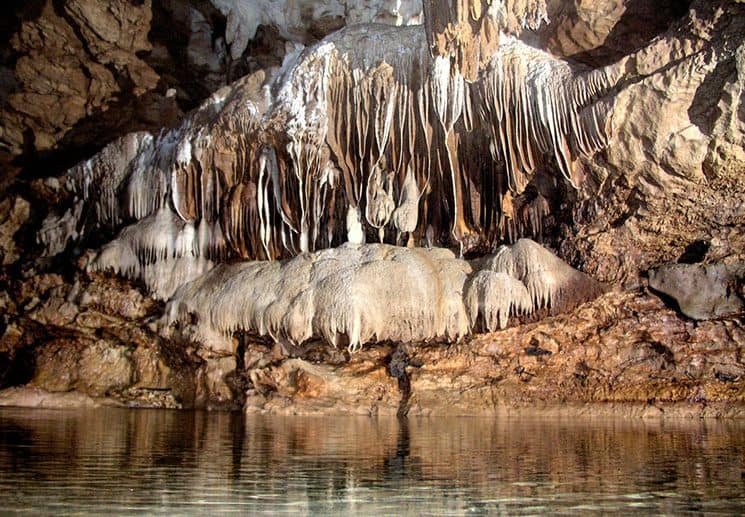
The Falvaterra Caves and Rio Obaco Natural Monument is in the municipality of Falvaterra, in the province of Frosinone, on the northern slopes of the Ausoni mountains, a handful of kilometers from the Ceprano exit on the A1 motorway. The protected area covers 133 hectares and was established by decree of the President of the Lazio Region of October 19, 2007, number 680, published in the Official Bulletin of the Lazio Region on November 20, 2007. The managing body is the Municipality of Falvaterra. Visits are booked with the organization of the natural monument, which answers at the email address mngrottedifalvaterra@gmail.com. The official website of the protected area is grottedifalvaterra.it, and that is where hours, fees and the updated calendar should be checked before getting in the car, because the visit program changes with the season and with the hydrological conditions of the cave. You don't go into the caves alone: access is allowed only with the guides of the natural monument, and the routes that go beyond the equipped stretch require technical equipment. This is not an organizational whim, it is the consequence of the fact that inside Monte Lamia flows a real torrent, with flows that in flood are measured in cubic meters per second.
If you are looking for other corners of water and rock in the same province, the page of the natural monument Mola della Corte, Settecannelle and Capodacqua tells of a twin spring setting, and the one on Collepardo covers the Hernican side of Ciociaria's karst.
Where the Falvaterra Caves and Rio Obaco Are and How to Get There
Falvaterra is a small town, a few hundred inhabitants, perched on the southern edge of the Valle Latina, the one old maps still call the Valle dei Latini. The natural monument occupies the slope that descends from the town toward the floor of the Sacco river valley, and the cave entrance opens at the base of the hill of Monte Lamia, at a point where the limestone gives back the water it swallowed kilometers farther upstream. Whoever arrives from Rome for the first time almost always makes the same mistake: sets the navigator on the historic center of the town and then ends up maneuvering in alleys where a compact car struggles. The entrance of the natural monument is lower down, along the road that leads toward the Sacco.
By Car from Rome to the Falvaterra Caves and Rio Obaco
The simplest route is the A1 motorway toward Naples, exit Ceprano. From there you continue a few kilometers south, following the signs for Falvaterra and for the natural monument. The overall trip from Rome is a good 100 kilometers, and it is almost all motorway: this means that, traffic permitting, the visit to the Falvaterra Caves and Rio Obaco is a comfortable day trip, not an expedition. The professional advice is to leave early, because the Roma sud-Colleferro stretch of the A1 in the late morning clogs up with depressing regularity.
By Train to Ceprano and Then
Ceprano has a station on the Roma-Cassino-Napoli railway line, served by regional trains leaving from Roma Termini and Roma Tiburtina. The problem, as always in Ciociaria, is the last mile: from the station to the natural monument there is no dedicated shuttle, and the local bus service does not have frequencies designed for tourists. If you come by train, plan on a taxi or a ride arranged in advance with whoever manages the visits. Saying it openly is more honest than pretending you can get there by bus as easily as you reach Villa Adriana.
The Parking Lot and the Last Stretch on Foot
The parking area is outside the natural monument, and from the parking lot to the cave entrance you walk. It is not a demanding climb, but it is an outdoor path: in the rain it becomes slippery, and whoever arrives in loafers regrets it within 10 meters. Closed shoes with a sole that grips, always, even for the tourist route alone.

What the Falvaterra Caves and Rio Obaco Natural Monument Really Is
The administrative formula tells the reader little, so it is worth unpacking. A natural monument, in the regional legislation of Lazio, is the most targeted form of protection: not a park extending over tens of thousands of hectares, but a narrow perimeter around a specific natural asset that cannot be reproduced. Here the asset is double, and the name says so: on one side the underground system of the caves, on the other the surface watercourse, the Rio Obaco, with its basin. Protecting one without the other would make no sense, because it is exactly the same water.
The 2007 Establishment and the 133 Hectares
Decree number 680 of the President of the Lazio Region is dated October 19, 2007 and was published in the regional Official Bulletin on November 20 of the same year. The protected area is 133 hectares. It is a little over a square kilometer: a measure that, to someone used to the numbers of national parks, seems ridiculous, and instead is the right size for an asset that develops vertically and in depth more than horizontally. Under those 133 hectares run kilometers of tunnels.
The Municipality of Falvaterra as Managing Body
Management of the natural monument is entrusted to the Municipality of Falvaterra. It is a fact that explains a lot about the character of the place: the scale is local, the organization is artisanal in the best sense of the word, and whoever accompanies you into the cave is often someone who has frequented that karst system for years out of passion before profession. Don't expect the war machine of a big museum site. Expect people who know where the water goes when it rains.
The Perimeter: The Rio Obaco Basin Down to the Sacco
The protected area includes the whole catchment basin of the Rio Obaco, that is, all the surface that collects and channels water toward that torrent, down to the confluence with the Sacco river. Within this perimeter very different environments coexist: the damp valley floor, the cliffs, the slopes of Mediterranean scrub, the cultivated hills. The diversity of environments and microenvironments is the reason the area's interest is not only speleological but also biological.
The Geology of the Falvaterra Caves and Rio Obaco
A little patience is needed here, because without geology the caves remain just a scenic backdrop. Monte Lamia is made of limestone, a rock that rainwater, made slightly acidic by carbon dioxide, slowly dissolves along fractures and bedding planes. The process is very slow on a human scale and very fast on a geological scale: the forms you pass through today in the Falvaterra Caves and Rio Obaco are the result of work measured in the order of a million years.
The Limestone of Monte Lamia
The underground system carved inside Monte Lamia exceeds five kilometers of surveyed development. It is not a single corridor: it is a network, with active branches run by water, fossil branches abandoned by the river, shafts, narrow passages and wide chambers. The brilliant white concretions seen in the calmest stretches are calcite deposited drop by drop by percolating water, and they are the signature of the sectors where the water regime has been stable for a long time.
Swallow Hole and Resurgence: Why Pastena and Falvaterra Are the Same Story
This is the point that makes the site important and that almost no visitor grasps before going in. The famous Pastena Caves, a few kilometers away, represent the swallow hole of the system: the point where the waters coming from the karst basins upstream slip underground. The Falvaterra Caves and Rio Obaco represent instead the resurgence, that is, the point where those same waters return to the light. Between the two ends runs an underground path of about two and a half kilometers. Put differently: Pastena and Falvaterra are the mouth and the outlet of the same hidden river.
The official portal of the protected areas of Lazio classifies the Pastena Caves as a through cave, passable in full from the water entrance to the resurgence, with some branches reserved for expert cavers. The main entrance of Pastena is an arch about 20 meters high and a dozen wide, known locally since time immemorial. Exploration carried out with professional criteria begins in 1926 and the opening to tourism dates to 1927. The two caves, in short, have had very different tourist fortunes while being two ends of the same rope.
Active and Fossil Stretches in the Falvaterra Caves and Rio Obaco
Inside Falvaterra you pass through both conditions. The active stretches host a perennial underground river: flowing water, waterfalls, rapids, noise. The fossil stretches correspond to old and higher courses of the same river, abandoned when the stream cut deeper. There, calcite concretion dominates and the interior climate is much more stable. Passing from one environment to the other within a few meters is the best educational experience this cave offers, and the reason it is worth more than many celebrated caverns where you walk on dry concrete for half an hour.
The Underground Torrent of the Rio Obaco
The underground river is not a decorative brook. At some times of the year it floods, with flows of a few cubic meters per second, and then it feeds with a roar waterfalls and rapids that from the tourist route are admired from comfortable metal walkways. It is a rare spectacle among Italian show caves, where the water is almost always still, reduced to the mirror of a small pond or entirely absent.
When the Water Rises
The practical rule to keep in mind is simple: after days of heavy rain the system fills up, and some internal routes are closed. It is not a whim. Inside an active resurgence the water rises fast and without warning, and the low sectors can flood in times that leave no margin. If you call and they tell you the caving route is not running today, don't insist: they are doing you a favor.
Waterfalls, Rapids, Gorges and Lakes
The full route of the Falvaterra Caves and Rio Obaco alternates active areas rich in water, with waterfalls and rapids dominated by brilliant white concretions, with calmer and partly fossil zones, where narrow gorges and lakes appear, with stalactites that adorn walls and ceiling. The morphological variety is the real heritage of this cavity: within a few hundred meters you read the entire grammar of karst.
Siphons and Pseudosiphons
Along the route you meet a series of pseudosiphons on the side facing Pastena, and a central siphon about a kilometer from the Falvaterra entrance. A pseudosiphon is a stretch where the vault lowers until it almost touches the water: you get through, but with your head grazing and no room for second thoughts. A true siphon, instead, is completely flooded and is passed only by diving. This is where the difference arises between what an accompanied visitor can do and what an equipped cave diver can do.
The Tourist Visit to the Falvaterra Caves and Rio Obaco
The tourist route covers the first 250 meters of the cavity. It is equipped with metal walkways, lit, and lets you observe the underground torrent, the concretions and the first concreted chambers without technical equipment. The flow of visitors is around 10,000 a year: a number that, translated into practice, means you never get the line of the Grotta Azzurra here, but that in summer and on weekends the groups fill up and arriving without a reservation is a gamble.
The First 250 Meters and the Walkways
The walkways are no small detail: they let you cross the active branch staying dry and lean over the water from a safe position. It is the solution that made touristic a cave that by nature would not be. Walking above the torrent you physically understand the concept of resurgence, and believe me, it is something no panel can explain as well.
Accessibility of the Falvaterra Caves and Rio Obaco
The tourist stretch of the first 250 meters can also be walked by people with motor disabilities. It must however be agreed in advance with whoever manages the visits, because the outdoor trip from the parking lot to the entrance and the conditions of the day matter quite a lot. A phone call or an email before leaving avoids disappointment.
Duration, Temperature and Clothing
The interior temperature of a cave with a perennial torrent stays low and constant all year, and the humidity is close to saturation. In August, with 30 degrees outside, you enter an environment that has many fewer: a sweatshirt or a fleece is not an excess of caution, it is the difference between enjoying the visit and counting the minutes. Closed shoes with a lugged sole, always.

The Cave-Tourism Routes of the Falvaterra Caves and Rio Obaco
Beyond the 250 meters of the equipped stretch another story begins. The cave-tourism visit reaches the first 600 meters of the cavity and has no walkways: you walk in the water, you duck, you pass the pseudosiphons. You need a helmet, a headlamp and suitable clothing, and you have to accept getting wet. The organization of the natural monument handles flows of over a thousand cave visitors a year, so the formula is tried and tested. But it remains an activity carried out under the guidance of expert staff, never on your own.
The Intermediate Route Up to 600 Meters
It is the proposal I recommend to those with decent legs, no claustrophobia and the desire to understand what an active cave really means. You don't need to be a caver: you need to be willing to put your feet in cold water and advance in single file, listening to instructions. The qualitative leap from the tourist route is enormous, and not because of technical difficulty, but because of the relationship with the environment. On the walkways you look at the cave. Here you are inside the cave.
Cave Tourism and Canyoning: The Right Season
Cave-tourism and canyoning activities are concentrated mainly in the period from May to September, when flows are smaller and more predictable. It is not impossible, however, to do simple cave-tourism visits in autumn and winter too, with careful checking of weather conditions: the adventure in that case is more real and the group numbers lower. If the date is flexible, September and early October are the best window: water still manageable, outside heat gone down, small groups.
The Traverse from Pastena to Falvaterra
At some times of the year, excursions are organized that cross the entire active sector, passing from Pastena to Falvaterra. It is the highlight of the system and also the most selective: to pass the siphons you need cave-diving equipment and specific training. It is not a trip. It is a technical activity for trained people. Whoever offers it as an experience to try once in a lifetime with no prior skills, quite simply, doesn't know what they are talking about.
Safety: Why You Enter the Falvaterra Caves and Rio Obaco Only Accompanied
It has to be said without beating around the bush, because it is the most important thing of all. The Falvaterra Caves and Rio Obaco are not a dry, tamed cavity: they are the exit mouth of a perennial underground torrent, with floods measured in cubic meters per second, with siphons and pseudosiphons, with branches that connect all the way to Pastena. Entry is allowed solely within the guided visits organized by the natural monument. Showing up and trying to get in on your own means putting yourself in a condition of real risk, and hindering the work of those who watch over that system.
The Equipment
For the 250-meter tourist route you don't need special equipment: closed shoes and something warm are enough. For the cave-tourism routes you need a helmet with a light and technical clothing. What the organization provides and what the participant must bring is defined at the time of booking, because it depends on the type of route chosen. Ask explicitly when you book, together with the sizes available: it is the question that makes the difference between a successful day and a half-suffered one.
The Weather, Which Here Is a Safety Parameter
In a resurgence cave the weather of the previous 24 hours counts more than the weather of the day itself. Rain that fell on the upstream basins takes hours to arrive, and can swell the underground torrent while the sun shines outside. This is why the organization confirms or cancels the internal routes based on a careful check of conditions, and why the booking must always be reconfirmed close to the date.
The Minimum Age and Who Can Take Part
The minimum age is not the same for all routes: the tourist stretch is accessible to children too, while for cave tourism and canyoning the limits are higher and are communicated at the time of booking together with the physical requirements. Any health conditions that make effort or enclosed spaces inadvisable must also be reported beforehand, not on the threshold of the cave.
How Much It Costs and How to Book the Visit to the Falvaterra Caves and Rio Obaco
Fees differ by type of route, and the opening calendar follows the season: the updated price list and hours are on the official website of the natural monument, grottedifalvaterra.it, and are confirmed by writing to mngrottedifalvaterra@gmail.com, which the regional portal of protected areas lists as the area's contact. Booking is the rule, not the exception: groups have a fixed number, guides are few and the internal routes require organization. Showing up without warning, especially on spring weekends and in August, is the surest way to go home having seen only the parking lot.
The Tip on Saving Money
If you are a group, ask for the formula for parties and families when you make contact: in a facility run by the municipality the conditions are agreed by talking, not by clicking. And if you intend to visit Pastena too in the same weekend, find out whether combined options exist: the two caves belong to the same hydrogeological system and the paired visit is, from the point of view of understanding, the right way to approach them.
The Visitor Center of the Falvaterra Caves and Rio Obaco
Inside the perimeter of the natural monument, in an abandoned and redeveloped quarry, the area's reception facility was inaugurated in May 2009. Reclaiming a disused quarry as the gateway of a protected area is an interesting choice for anyone involved in landscape management: an industrial wound turned into the point from which the mountain that same industry had attacked is told.
The Redeveloped Quarry and the 2009 Inauguration
The facility includes a shop of handcrafted products and hosts a speleological museum, with an ecomuseum planned for setup. The work was overseen by the XVI Mountain Community of the Monti Ausoni, based in Pico, thanks to Docup funding obtained from the Lazio Region. The Docup were the single programming documents through which, in the era of European structural funds of those years, precisely this kind of intervention was financed.
Panels, Finds and Publications
The current display offers illustrative panels of the underground complex, accompanied by images also of the innermost part, the one the ordinary visitor will never see with their own eyes. There are fossil, archaeological and geological finds, and specialist publications. Give it 20 minutes before going into the cave, not after: the images of the deep branches make what you are about to cross understandable, and the visit gains a great deal from it.
The Unicursal Labyrinth of 2013
In March 2013, near the Visitor Center of the Falvaterra Caves and Rio Obaco, a labyrinth was built, conceived by the researcher and writer Giancarlo Pavat and requested by Professor Augusto Carè. The structure is made of rocks, mosses, stones and plants, and is built in unicursal form: that is, with a single path, no forks and no possibility of getting lost, like the ancient labyrinths of medieval floors and unlike 18th-century garden mazes. It is a detail that escapes almost everyone and that, explained to children before going in, keeps them busy for a good quarter of an hour.
The Underground Fauna of the Falvaterra Caves and Rio Obaco
The cave is inhabited, and this is perhaps the most underrated aspect of the natural monument. The underground environments host a specialized biological community, made of organisms that have lost pigments and eyes because in the absence of light they are not needed, and that in exchange have developed extremely refined tactile and chemical senses.
The Bats
Bats belonging to several species live inside the Falvaterra Caves and Rio Obaco. They are protected animals and extraordinarily vulnerable to disturbance: a colony woken during hibernation burns energy reserves it cannot rebuild, and this is enough to kill it. This is why in the cave you don't shout, you don't aim flashes at the vaults, and you don't leave the marked route. Whoever does it is not an exuberant type, they are someone who does damage.
Dolichopoda and Beetles
On the walls, with a little attention, you notice the dolichopoda: orthopterans with very long legs and endless antennae, which in Italian caves are the threshold animal par excellence, present by the dozens in the twilight zones. Deeper in live small beetles adapted to underground life, often of millimeter size, which represent the highest level of specialization of this fauna.
The Niphargus and University Research
In the interior waters, species of transparent crustaceans of the genus Niphargus have been found, subject of study by the University of Tor Vergata in Rome. The Niphargus are unpigmented amphipods, adapted to life in underground waters, and their distribution is a precious indicator for reconstructing the connection between different water systems. To put it bluntly: they are tiny white shrimp that tell you, better than any tracer dye, where the water goes.
The Outdoor Landscape of the Falvaterra Caves and Rio Obaco Natural Monument
It would be a mistake to reduce the protected area to its subsoil. The outer part, located in the northeastern sector of the Ausoni mountains, offers routes that lead to the hills overlooking the cliffs of the Rio Obaco. From up there the view takes in the Valle dei Latini as far as the Ernici and Simbruini mountains: a reading of the inland Lazio landscape that you get with this clarity nowhere else.
The Trails Above the Cliffs
The outdoor routes are short but not trivial: they run on natural terrain, with stretches exposed to the sun and passages over rock. Bring water, especially in summer, and don't tackle them in the heat of early afternoon. The best light for the panorama comes in the two hours before sunset, when the Ernici mountains take on a color worth the trip.
Mediterranean Scrub, Flora and Surface Fauna
The outdoor environment is dominated by wild nature, with examples of flora and fauna tied to the Mediterranean scrub. The variety of environments and microenvironments gathered in a little over a square kilometer is the biological reason for the protection: arid slopes and damp valley floors coexist a few hundred meters from each other, and each brings its own retinue of species.
The Polygonal Walls of Monte Castellone and Costa Marione
From the outer area of the natural monument you can reach two archaeological sites, Monte Castellone and Costa Marione, where polygonal walls have been identified. These are structures in polygonal masonry, the building technique of shaped limestone blocks fitted together without binder that characterizes the fortified centers of pre-Roman central Italy and that in Ciociaria has its most famous examples at Alatri and Anagni. The dating of these circuits remains one of the open problems of central Italian archaeology: the learned tradition attributed them to very remote peoples, modern research tends to place a large part of them between the fourth and the second century BC, in relation to Roman control of the territory. In the specific case of the two sites of the natural monument, the documentation available on the spot is what to consult, and visits to the archaeological sites must be arranged with the organization of the area.
The setting is worth the walk anyway: an unspoiled environment, wild nature and, below, the Valle dei Latini opening to the horizon. Whoever likes this kind of stone will find material on the page of the archaeological museum of Frosinone too.
A Curiosity About the Falvaterra Caves and Rio Obaco
The best curiosity concerns the way this system was opened to people, and it concerns water. The entrance to the Falvaterra complex, as the town's old-timers knew it, was blocked by a siphon: a completely flooded stretch, more than 20 meters deep, which made the resurgence impenetrable to anyone not able to dive. In July 1964 the cave divers of the Gruppo URRI of Rome, Lamberto Ferri Ricchi and Carlo De Gregorio, passed that siphon and found themselves on the other side, inside a complex of tunnels that, as would be understood later, communicates with the Pastena Caves through an underground path of almost two and a half kilometers.
It is worth pausing a moment on what doing underwater caving meant in 1964. No dive computer, weak lighting, guide lines as the only Ariadne's thread, heavy and unwieldy breathing apparatus, and ahead a flooded conduit inside the rock, with no surface over your head for 20 meters of depth. On the walkways of the first 250 meters it is worth remembering that this comfortable, lit corridor exists because two men decided to slip into a hole full of black water. The curiosity, in short, is not a stalactite: it is the fact that this cave was conquered by swimming.
A note of method, because it is rarely written: the resurgence is almost always the hardest door of a karst system, precisely because it is the point where the water comes out and therefore the point where the conduits are flooded. The show caves of the world almost all open from the swallow hole side, which is dry. Falvaterra, from this point of view, is an exception that pays off: entering from a resurgence means going up the river, that is, seeing the system in the opposite direction to the one in which it formed.
Something Nobody Tells You About the Falvaterra Caves and Rio Obaco
That the best time to understand this cave is not when the water is low and comfortable, but immediately after a flood, when the torrent is still full and the tourist route stays open while the internal ones are closed. On those days, from the walkways, you witness a phenomenon that in most Italian show caves is never seen: the cave at work. The noise changes completely, the air moves, the waterfalls that in summer are a veil become a jet. If you call and they tell you the caving route is suspended but the tourist visit is running normally, that is the good day, not the bad one.
The second thing almost nobody says concerns the numbers. 10,000 visitors a year on the tourist route and over a thousand on the caving routes mean that, proportionally, this is one of the Italian caves with the highest share of visitors choosing the demanding version. One in 10, more or less. In an ordinary show cave that ratio is infinitely lower. It follows that the facility is calibrated for an informed public, and that the guides are used to people who ask real questions. Take advantage of it: here the guide answers gladly and on the substance.
Third thing, the least romantic and the most useful: there is no ticket office open indefinitely. Access works by shifts, with departures at set times and groups with a fixed number. Whoever arrives at 11 hoping to go in at five past 11 has misunderstood the mechanism. You call, you book a slot, you arrive a quarter of an hour early.
Frequently Asked Questions About the Falvaterra Caves and Rio Obaco
Where exactly are the Falvaterra Caves and Rio Obaco?
The Falvaterra Caves and Rio Obaco are in the municipality of Falvaterra, in the province of Frosinone, on the northern slopes of the Ausoni mountains, at the base of the hill of Monte Lamia. The reference motorway exit is Ceprano, on the A1.
How much does it cost to visit the Falvaterra Caves and Rio Obaco?
Fees to visit the Falvaterra Caves and Rio Obaco differ depending on the route chosen, tourist or cave-tourism, and the opening calendar follows the season. The updated price list and hours are on the official website grottedifalvaterra.it, and booking is the rule, not the exception.
Can you visit the Falvaterra Caves and Rio Obaco without a guide?
No, entry to the Falvaterra Caves and Rio Obaco is allowed solely within organized guided visits, because the cavity is not dry and tamed but the exit mouth of a perennial underground torrent, with floods measured in cubic meters per second and internal siphons.
What is the difference between the tourist route and the cave-tourism route?
The tourist route of the Falvaterra Caves and Rio Obaco covers the first 250 meters of the cavity, equipped with metal walkways and lit, with no need for technical equipment. The cave-tourism route reaches the first 600 meters, without walkways, walking in the water and passing the pseudosiphons, with a helmet and headlamp.
Are the Falvaterra Caves and Rio Obaco suitable for children?
The tourist route of the first 250 meters of the Falvaterra Caves and Rio Obaco works very well with children from school age up, because the water flowing under the walkway holds their attention for a long time. In the outer perimeter there is also a unicursal labyrinth and a speleological museum with finds, suitable for rounding out half a day.
When is the best time to visit the Falvaterra Caves and Rio Obaco?
The best window for the internal routes of the Falvaterra Caves and Rio Obaco runs from May to September, when water flows are small. Within this window the second half of September is the preferred choice, because the water is still low, the outside heat has dropped and the groups have thinned out.
What do you need to bring to visit the Falvaterra Caves and Rio Obaco?
For the tourist route of the Falvaterra Caves and Rio Obaco you need closed shoes with a lugged sole, a sweatshirt or a fleece even in August and a bottle of water for the outdoor stretch. For the cave-tourism routes the equipment is defined at the time of booking, but plan on a complete change of clothes because you get wet.
Are the Falvaterra Caves and Rio Obaco accessible to people with mobility difficulties?
The 250 meters of the tourist route equipped with metal walkways are the indicated choice for small children, older people and people with mobility difficulties, while the longer cave-tourism route involves walking in water and getting through narrow passages, and is therefore reserved for those with adequate legs and breath.
My Advice for Visiting the Falvaterra Caves and Rio Obaco
The advice is just one and I give it without nuance: don't settle for the tourist route if you have the legs and breath for the cave-tourism route. The 250 equipped meters are beautiful and educational, and for small children, older people and people with mobility difficulties they are the right and complete choice. But the jump to 600 meters is not an increase in difficulty: it is a change in the nature of the experience. On the walkways you look at the cave. Beyond the walkways the cave washes over you, cold, loud, alive. It costs a few tens of euros more and a wet afternoon, and it is worth 10 times as much.
The second piece of advice concerns building the day. Book the visit for the afternoon, arrive in Falvaterra mid-morning, give an hour and a half to the outdoor trails and the cliffs of the Rio Obaco with the high light, have lunch in town, and go down into the cave when it is hottest outside. This way the thermal contrast plays in your favor, and above all you come out of the cave at the hour when the valley takes on the good color for photographs. The classic mistake is the reverse: cave first thing in the morning, out at noon with the sun overhead and the urge to go home.
Third: call the day before even if you have already booked. Hydrological conditions change, and a 30-second reconfirmation saves you 200 kilometers for nothing. And if you then want to build the day professionally, with transfer and guide, the network of tour guides of TourLeaderPro works on exactly this kind of outing outside Rome.
Another Well-Known Fact, Yet Rarely Cited
That the Falvaterra Caves and the Pastena Caves are connected many people know. That the connection means something precise in terms of protection few say. A single, continuous karst system means that what enters the Pastena swallow hole comes out of the Falvaterra resurgence: every substance that ends up in the upstream waters resurfaces two and a half kilometers downstream, inside a natural monument. This is why the protection perimeter includes the whole catchment basin of the Rio Obaco down to the confluence with the Sacco, and not just the mouth of the cave. Protecting a resurgence means protecting everything that arrives above its head.
The second aspect rarely cited is the role of the Sacco river. The Valle del Sacco has for decades been one of the heaviest environmental cases in Lazio, and the contrast between an industrialized valley floor and an intact karst system a few hundred meters away is one of the elements that makes this natural monument interesting even apart from tourism. The 2007 protection was born in a context in which the Lazio Region was building the network of minor protected areas: small surfaces, targeted objectives, management entrusted to local authorities. 133 hectares make no news. But without that decree, today, the basin of the Rio Obaco would have a different story.
Third: the system extends for over five surveyed kilometers, but the visitable part is a tiny fraction of the total. When you come out, remember that the cave you saw is the tip of something much bigger, still being explored.

The Right Photo to Take at the Falvaterra Caves and Rio Obaco
The photograph almost everyone tries is the stalactite lit from below, and almost everyone gets it wrong, because the flash flattens the concretion and reduces it to a white blotch with no volume. The right photograph, in this cave, is another one: the underground torrent shot from the walkway, with a long exposure time, so that the water becomes a continuous ribbon and the surrounding rock stays sharp. You need a stable support, and the metal railing provides it. You need to turn off the flash. You need a self-timer or a two-second delay so as not to shake the camera. Even a recent phone, in night mode, gives a decent result if you rest it and don't hold it in your hand.
The second image to take home is not underground. It is the panorama from the hills overlooking the cliffs of the Rio Obaco, with the Valle dei Latini in the foreground and the chain of the Ernici and Simbruini in the background. Go there in the last hour and a half of light: the valley haze lights up, the ridges layer into successive planes and the image tells exactly what this territory is, a plain between two mountain systems. With the sun high, the same framing is flat and says nothing.
Three rules of behavior, because photography in a cave has an etiquette that is enforced here. No flash aimed at the vaults, where the bats rest. No tripods blocking the walkway while the group passes. Nothing leaned on the concretions: calcite gets dirty from the grease of skin and never goes back to the way it was. Ask the guide where you can stop: they will gladly tell you, and it will also spare you the disappointment of impossible framings.
Some Important Events That Happened Here in History
The documented history of this place is short and dense, and it is concentrated in barely 60 years. The first event is from July 1964: the cave divers of the Gruppo URRI of Rome, Lamberto Ferri Ricchi and Carlo De Gregorio, pass the entrance siphon, more than 20 meters deep, and open the Falvaterra complex to exploration. It is the speleological birth date of the site. From that moment begins the survey work that will lead to recognizing the connection with the Pastena Caves along an underground path of almost two and a half kilometers, and to establishing that Pastena functions as the swallow hole and Falvaterra as the resurgence of the same system.
The second event is administrative and changes the fate of the area: on October 19, 2007 the President of the Lazio Region signs decree number 680 establishing the Falvaterra Caves and Rio Obaco Natural Monument, published in the regional Official Bulletin on the following November 20. From that day 133 hectares of slope and subsoil enter the system of protected areas of Lazio, with the Municipality of Falvaterra as managing body.
The third event is May 2009, with the inauguration of the reception facility inside an abandoned and redeveloped quarry: shop of handcrafted products, speleological museum, ecomuseum being set up, work overseen by the XVI Mountain Community of the Monti Ausoni of Pico with Docup funding from the Lazio Region. The fourth is March 2013, when near the Visitor Center the unicursal labyrinth conceived by Giancarlo Pavat and requested by Professor Augusto Carè is built, made with rocks, mosses, stones and plants.
There is then a parallel story that concerns the other end of the system and helps frame the context: at the Pastena Caves, exploration carried out with professional criteria begins in 1926 and the opening to the public dates to 1927. During World War II those same cavities offered refuge to hundreds of displaced people. The Ciociaria of the winter of 1943 and 1944 was a land of front line and flight, and the caves of these mountains were, literally, the shelter of last resort of entire communities. It is worth remembering this while walking on a metal walkway on a pleasure outing.
Who Has Passed Through the Falvaterra Caves and Rio Obaco
No emperor and no pope passed through here, and it would be dishonest to invent one. The names that count, in this place, are those of whoever first went in and of whoever studied it. Lamberto Ferri Ricchi and Carlo De Gregorio, of the Gruppo URRI of Rome, remain the protagonists of the feat of July 1964: it was they who passed the entrance siphon and made the complex accessible. Ferri Ricchi is a well-known figure in the history of Italian underwater exploration, tied to research in inland waters and to underwater caving in a season when this discipline in Italy was being invented from scratch.
After them came generations of cavers from the Lazio groups, who surveyed, mapped and joined the branches until reconstructing the connection with Pastena. They left no statues, they left topographies: which in caving is the highest form of signature.
Then came the researchers. The University of Tor Vergata in Rome studied the species of transparent crustaceans of the genus Niphargus found in the interior waters, and this continuing scientific presence is what distinguishes the Falvaterra Caves and Rio Obaco from a mere attraction. Among the people tied to the recent life of the natural monument, we should remember the researcher and writer Giancarlo Pavat, who in 2013 conceived the unicursal labyrinth of the Visitor Center, and Professor Augusto Carè, who wanted that labyrinth.
Finally, every year, 10,000 visitors pass through on the tourist route and over a thousand cave tourists. It seems a statistical detail, and instead it is the most important figure: a minor protected area, run by a municipality of a few hundred inhabitants, that manages to move numbers like these is a case study in good local management. In Lazio, believe me, it is not the norm.
Falvaterra, Ciociaria and What to See Around the Falvaterra Caves and Rio Obaco
A day in Falvaterra is easy to build because around it, within half an hour by car, there is material to fill a whole weekend. We are in southern Ciociaria, where the Valle Latina narrows between the Ernici mountains to the north and the Ausoni and Aurunci to the south, and where every town keeps a gate, a circuit of polygonal masonry or a church that would deserve the detour by itself.
Ceprano, the Gate of the Valley
Ceprano is the closest logistical reference: motorway exit, train station and the bridge over the Liri that for centuries marked the border between the Papal States and the Kingdom of Naples. The name appears in Italian history and literature tied to precisely that function as a threshold. In the surroundings is the archaeological area of Fregellae, the Latin colony destroyed by Rome in 125 BC after the revolt led by Lucius Papirius: one of the harshest pages in the history of Roman expansion in this valley.
Fossanova and the Cistercian Abbey
In under an hour, heading down toward Priverno, you reach the abbey of Fossanova, the first Cistercian Gothic building in Italy and the place where Thomas Aquinas died in 1274 while on his way to the Council of Lyon. The complex, with the church, the cloister and the chapter house, is one of the most important medieval buildings in southern Lazio. The page on Priverno and the one on the museums of Priverno tell the context around the abbey.
Pico, Campodimele and the Riviera di Ulisse
Toward the south the road climbs the Ausoni and reaches Pico, home of the Mountain Community that oversaw the work on the visitor center, and farther on Campodimele, the walled village known for the longevity of its inhabitants and for its perfectly preserved medieval circuit. Going farther down you reach the sea of the Riviera di Ulisse, between Gaeta, Sperlonga and Formia: barely an hour of curves, and the change of landscape is total.
The Other Waters: Mola della Corte, Posta Fibreno, Isola del Liri
Whoever is fascinated by the theme of water has the rest of the province at their disposal. The natural monument of Mola della Corte, Settecannelle and Capodacqua protects another system of karst springs. The lake of Posta Fibreno is a basin fed by underground springs with the famous floating island, in the territory of Posta Fibreno. At Isola del Liri the river plunges in a waterfall of over 20 meters inside the town, an almost unique case in Italy.
The Villages: Veroli, Alatri, Anagni, Castro dei Volsci
Going up the valley you meet Veroli, Alatri with its acropolis in polygonal masonry among the most imposing in Europe, Anagni with the cathedral and the crypt of San Magno, and Castro dei Volsci perched on its spur. Toward the Ernici mountains Collepardo offers another piece of karst, with the Pozzo d'Antullo and the Grotta dei Bambocci, and Fumone dominates the valley from its fortress. If you prefer to stay close to Rome, the page on the Castelli Romani Park offers the most convenient hill alternative.
The Falvaterra Caves and Rio Obaco with Kids
The tourist route of the first 250 meters works very well with children from school age up, and for a precise reason: there is flowing water. A dry cave bores a child in eight minutes. A cave with a torrent roaring under the walkway keeps them glued. Add the unicursal labyrinth outside and the speleological museum with its finds, and the half day holds up without effort.
The precautions are few and obvious. Cover them up: the interior temperature is low and constant, and children get cold before adults. Closed shoes, never sandals. Explain the rule about bats beforehand, because it works better than any scolding: children like knowing they are part of those who don't disturb. And forget strollers, which on the walkways and the outdoor trail are unmanageable: much better a baby carrier backpack for the smallest.
For the cave-tourism routes the situation changes: age limits are higher and must be checked at the time of booking. It isn't worth forcing it: a chilled child inside a narrow conduit turns a nice day into a bad memory, and the tourist route will already have given them everything they need.
When to Go to the Falvaterra Caves and Rio Obaco
The best window for the internal routes runs from May to September, when flows are small and the program is richer. Within this window, though, the best period is the second half of September. The water is still low, the outside heat has dropped, the groups have thinned out and the afternoon light on the valley is the best of the year.
August works for the thermal contrast, which is the real luxury of a cave in summer, but it is also the busiest month: book well in advance. Spring is splendid outside, with the scrub in bloom on the slopes, but it is also the season when floods are most frequent and closures of internal branches most likely. Autumn and winter remain practicable for simple cave-tourism visits, with careful checking of weather conditions: fewer people, more adventure, more uncertainty. Whoever has only one date available and can't risk it should choose the tourist route, which is the one least exposed to surprises.
What to Put in Your Backpack for the Falvaterra Caves and Rio Obaco
For the tourist route: closed shoes with a lugged sole, a sweatshirt or a fleece even in August, a bottle of water for the outdoor stretch and a phone with a charged battery if you plan to photograph in low light. No umbrellas, which on the walkways are bulky and useless.
For the cave-tourism routes: what you need you define at booking, but plan on a complete change of clothes to leave in the car, a towel, a waterproof bag for the phone and documents, and footwear that can get wet without drama. The dry change is the thing beginners always forget and that everyone, on the way out, regrets not having brought. If the trip to Falvaterra is part of a longer journey in Italy, ItalyPlanner's guide to day trips from Italy's big cities frames well the reasoning about timing and transport.
Quick Questions About the Falvaterra Caves and Rio Obaco
Where exactly are the Falvaterra Caves and Rio Obaco?
In the municipality of Falvaterra, in the province of Frosinone, on the northern slopes of the Ausoni mountains, at the base of the hill of Monte Lamia. The reference motorway exit is Ceprano, on the A1.
When was the Falvaterra Caves and Rio Obaco Natural Monument established?
By decree of the President of the Lazio Region of October 19, 2007, number 680, published in the Official Bulletin of the Lazio Region on November 20, 2007.
How big is the protected area?
133 hectares, which include the catchment basin of the Rio Obaco down to the confluence with the Sacco river.
Who manages the Falvaterra Caves and Rio Obaco?
The Municipality of Falvaterra is the managing body of the natural monument.
Can you enter the Falvaterra Caves and Rio Obaco alone?
No. Access is exclusively with the guided visits organized by the natural monument, and for the routes beyond the equipped stretch technical equipment is required. A perennial torrent flows inside, which in flood reaches flows of a few cubic meters per second.
How long is the tourist route?
250 meters, equipped with metal walkways and lit.
How far does the cave-tourism route go?
To the first 600 meters of the cavity, on natural terrain and with passages in water.
How much does the visit to the Falvaterra Caves and Rio Obaco cost?
Fees change based on the route chosen: the updated price list should be consulted on the official website of the natural monument, grottedifalvaterra.it, or requested by writing to mngrottedifalvaterra@gmail.com.
Do you need to book?
Yes. Groups have a fixed number and departures are at set times. Booking is the rule, and it is best to reconfirm the day before.
What are the hours?
The calendar follows the season and the hydrological conditions: hours and opening days should be checked on the official website before setting out.
Is there a minimum age?
For the tourist route no, it is suitable for children too. For cave tourism and canyoning the limits are higher and are communicated at booking.
Are the Falvaterra Caves and Rio Obaco wheelchair accessible?
The tourist stretch of the first 250 meters can also be walked by people with motor disabilities. It must be agreed in advance with the organization, also for the outdoor stretch from the parking lot.
What is the temperature inside?
Low and constant all year, with high humidity: you need a sweatshirt or a fleece even in the middle of summer.
Do you get wet?
On the tourist route no, thanks to the walkways. On the cave-tourism routes yes, and it is part of the experience: bring a complete change of clothes to leave in the car.
How long does the visit last?
The tourist route takes part of a morning or an afternoon. The cave-tourism routes take much longer. The exact duration of each formula should be asked at booking.
Can you take photographs in the Falvaterra Caves and Rio Obaco?
Yes, with common sense: no flash toward the vaults where the bats rest, no tripods that block the walkway, nothing leaned on the concretions.
What animals live in the caves?
Bats of several species, dolichopoda, small underground beetles and, in the interior waters, transparent crustaceans of the genus Niphargus studied by the University of Tor Vergata in Rome.
Is it true that the Falvaterra Caves connect with the Pastena Caves?
Yes. Pastena functions as the swallow hole and Falvaterra as the resurgence of the same system, connected by an underground path of about two and a half kilometers.
Can you do the traverse from Pastena to Falvaterra?
At some times of the year excursions are organized crossing the entire active sector, but passing the siphons requires cave-diving equipment and specific training.
How long are the Falvaterra Caves and Rio Obaco?
The underground system exceeds five kilometers of development inside the hill of Monte Lamia.
Who discovered the caves?
In July 1964 the cave divers of the Gruppo URRI of Rome Lamberto Ferri Ricchi and Carlo De Gregorio passed the entrance siphon, more than 20 meters deep, opening access to the complex.
What is the labyrinth near the Visitor Center?
A unicursal labyrinth built in March 2013 with rocks, mosses, stones and plants, conceived by the researcher and writer Giancarlo Pavat and requested by Professor Augusto Carè.
What can you see in the Visitor Center museum?
Illustrative panels of the underground complex with images of the innermost parts, fossil, archaeological and geological finds, and specialist publications. The facility was inaugurated in May 2009 inside an abandoned and redeveloped quarry.
Are there outdoor routes inside the natural monument?
Yes: trails that climb to the hills overlooking the cliffs of the Rio Obaco, with a panorama over the Valle dei Latini as far as the Ernici and Simbruini mountains, and access to the archaeological sites of Monte Castellone and Costa Marione with their polygonal walls.
When is it best to go to the Falvaterra Caves and Rio Obaco?
From May to September for the internal routes, with the second half of September as the ideal window. Autumn and winter remain practicable for simple cave-tourism visits, weather conditions permitting.
How many visitors does it receive each year?
About 10,000 people on the tourist route and over a thousand on the cave-tourism routes.
Can you get there by train?
As far as Ceprano, on the Roma-Cassino-Napoli line. From the station to the natural monument there is no dedicated public connection: you need a taxi or a ride arranged in advance.
What can you visit in the surroundings?
Ceprano with the archaeological area of Fregellae, the abbey of Fossanova toward Priverno, Pico, Campodimele, the villages of the Valle Latina and, barely an hour away, the sea of the Riviera di Ulisse.
Why are visits canceled even in good weather?
Because in a resurgence what counts is the rain that fell on the upstream basins in the preceding hours: the water takes time to arrive and can swell the underground torrent while the sun shines outside.
One last thing. The Falvaterra Caves and Rio Obaco do not compete with the postcard caves, the ones where you walk half an hour on dry concrete looking at color-lit concretions. They compete on another terrain: here the cave is alive, the water flows, the system breathes, and the visit leaves you with the physical sensation of having gone inside the workings of the mountain. If you have an afternoon and 100 kilometers of motorway to drive, this is one of the places in southern Lazio that repays the trip best. And if you can, go beyond the walkways: the best part begins where the comfortable ends. To build the outing professionally, with transfer and guide, the reference is the network of TourLeaderPro in Rome. For those planning a broader trip, the English guide to the best things to do in Rome helps fit the days together.
Article written by the editorial team of TourLeaderPro, contact them for Private/Corporate/V.I.P. Tours and Experiences.
Planning a trip to Rome? The English guides to visiting the city are on ItalyPlanner.com.