Communia
In short. Communia is a self-managed social space in the San Lorenzo neighborhood of Rome, born from an occupation on April 7, 2013 with the declared aim of offering services for the neighborhood and for the students of the nearby Sapienza university.
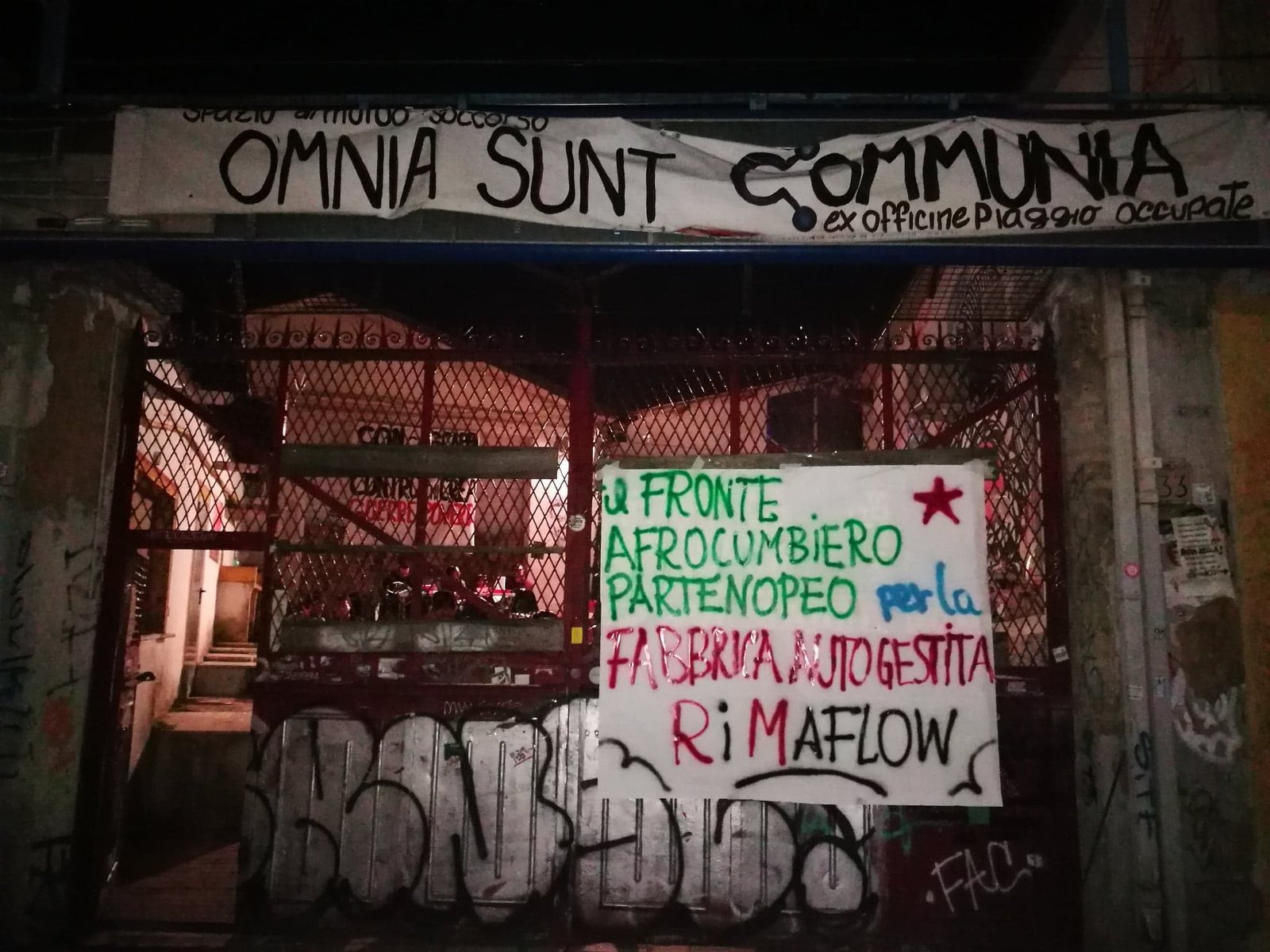
Communia is a self-managed social space in the San Lorenzo neighborhood of Rome, born from an occupation on April 7, 2013 with the declared aim of offering services for the neighborhood and for the students of the nearby Sapienza university. During that same year, in a neighborhood that in the 2010s saw several occupations for social purposes, the experience consolidated in the buildings of the former industrial complex of the Officine Piaggio, on Viale dello Scalo di San Lorenzo. Since then Communia has carried on activities of mutual aid, cultural self-production outside the commercial circuit and initiatives aimed at the neighborhood, remaining one of the reference points of the network of occupied spaces that in recent decades has marked the identity of San Lorenzo, together with Container San Lorenzo and the nearby Palestra Popolare San Lorenzo, a distinct entity that shares the same spirit of self-management but not the spaces. The story of Communia, over the years, has intertwined with that of the properties it occupies: a judicial auction concluded in December 2021 and a long political negotiation over the area, still open according to the most recent sources available, make it today as much a stop of social and cultural interest as a case study on the urban planning and real estate dynamics of a piece of contemporary Rome.
Communia: What to Know Before You Go
Anyone arriving at Communia for the first time must bear in mind one simple thing: it's not a museum, it's not a venue with fixed hours to look up on an institutional site, and it's not designed for the tourist who spends an hour and leaves. It's a political and social space run by a collective of activists, open to the neighborhood through assemblies, events, help desks and cultural initiatives that follow one another according to a calendar communicated from time to time on the collective's social channels. Those looking for an experience to fit into a classic tourist itinerary of Rome will find something different here: a living piece of the recent history of the city, useful for understanding San Lorenzo beyond the postcard of the university district and the nightlife.
What Communia Is and Where It Is
The address that recurs in journalistic sources, from 2019 onward, is Viale dello Scalo di San Lorenzo 33, in the stretch between this street and Via dei Lucani, inside what in San Lorenzo is called the quadrilatero, the area of the old freight yard and the disused factories next to the railway. The occupied buildings are the former sheds of the Officine Piaggio, an industrial complex that stopped producing decades ago and that the collective has redeveloped with self-managed cleaning, painting and securing work, without public funds. The definition the collective gives of itself, repeated by the outlets that have covered it, is that of a social space of self-organization and mutual aid, a laboratory for off-market self-production and independent culture.
How Self-Management Works at Communia
The organizational model of Communia is the typical one of Italian social centers and occupied spaces born between the 1990s and the first decade of the 2000s: a collective of activists runs the space through periodic assemblies, with no recognized formal hierarchies and without profit, financing the activities with donations collected during events, with social dinners and with the volunteer work of those who frequent the space. There is no ticket to buy in advance, there is no office with office hours, and decisions on programming, on the management of the internal spaces and on the initiatives to support go through the public assemblies periodically announced on the collective's channels. It's a way of working that those used to booking an event well in advance on an online platform may find disorienting, but which is the norm for this type of space throughout Italy, from Milan to Naples, and which in San Lorenzo has coexisted for decades with the more conventional offer of the university district.
From 2013 to Today: The Story in Brief
The documented chronology begins on April 7, 2013, the date on which a group of activists occupies a building in San Lorenzo announcing the opening of services for the neighborhood and for students, as reported by RomaToday the same day. A few months later, on August 15, 2013, another property occupied by the collective in the same period, the former Bastianelli foundries on Via dei Sabelli, is cleared in a dawn raid during the Ferragosto long weekend, as il manifesto tells in an article of August 16, 2013: the occupation had been born as a protest against the demolition of the foundries and the construction of a prestigious residential building in their place, and the eviction prompted protests from the neighborhood committees. The available sources don't reconstruct in detail the passage between the different occupied sites in the course of 2013, but it is documented that the experience called Communia then stabilized in the buildings of the former Piaggio complex on Viale dello Scalo di San Lorenzo, where it was already active in 2018, when il manifesto told of it in an article of October 25 of that year dedicated to the role of the occupied space as a safe place for the women of the neighborhood.
From that base, in the following years, Communia continued to host public initiatives: a DINAMOpress article of May 22, 2019 announces two days of events, from May 24 to 25 of that year, with a public assembly on the defense of the neighborhood, a socially inclusive soccer tournament, a workshop on self-determination and rights aimed at women and LGBTQI+ identities, poetry readings by the Scuola di Italiano per Migranti and a solidarity dinner. RomaToday, in a video report dedicated to the space, described it as a place that ranges from the study room open until evening to the tailoring shop for migrants, passing through a union help desk, thus summarizing the three most stable functions over time: study, tailoring work and protection of workers' rights.
The Murals and Street Art on the Facade of Communia
One of the most photographed aspects of Communia, regardless of attending a specific event, is the outer facade of the former Piaggio sheds, entirely covered with murals, political writings and street art works that have overlaid one another over the years. It is not a public art project commissioned by an institution, as happens for some better-known murals in Rome, but a spontaneous and collective work, updated on the occasion of the different phases of the space's story: among the works documented by the local press is a mural made in December 2021, right in the days of the judicial auction of the properties, a sign of how the outer wall of the space also works as a visual bulletin board of its most recent battles.
For those interested in Roman street art, San Lorenzo as a whole is one of the densest neighborhoods in the city for mural interventions, not only thanks to Communia: the phenomenon involves dozens of facades, shutters and boundary walls across the whole quadrilatero, and has grown in parallel with the university and youth transformation of the neighborhood. A walk starting from Communia and continuing toward Via dei Volsci and Via degli Equi lets you see a good part of this informal heritage without needing a specific map, simply following the streets most frequented by students.
How to Get to Communia
San Lorenzo is one of the most central neighborhoods of Rome and Communia, being in the part of the neighborhood closest to Termini station, is among the occupied destinations easiest to reach without a car in the whole city.
By Train and Metro
The reference point is Roma Termini station, from which the San Lorenzo neighborhood is a walk of about 15 or 20 minutes, passing Via Tiburtina and Via dei Reti. Those who prefer the metro can get off at the Policlinico stop on Line B, which faces the opposite side of the neighborhood from the rail yard, and from there continue on foot for about 10 minutes through the grid of streets named after peoples of ancient Italy, like Via dei Sabelli, Via dei Marsi and Via dei Volsci, which also gives its name to the neighborhood's historic social center. Alternatively, Roma Tiburtina station, served by high-speed and regional lines, is about a 10-minute walk to the west.
By Bus and Tram
Several Atac surface lines connect San Lorenzo with the rest of the city via Via Tiburtina or Via dei Volsci: the area is served by buses heading to the historic center, to the Nomentano and to the Esquilino. Frequency and line numbers should be checked on the Atac app or on Google Maps the same day, because urban routes are subject to changes more frequent than on a rail line.
By Car, Bike and on Foot
Arriving by car makes sense only if you come from outside Rome, because the neighborhood falls largely within limited traffic zones and free parking is scarce during weekday daytime hours. Those who get around by bicycle find in San Lorenzo one of the most suitable neighborhoods in the capital, with short distances to the historic center, to Sapienza and to the Esquilino. On foot, the neighborhood can be crossed from one end to the other in less than 20 minutes, which makes Communia easy to fit into a walk that also takes in the rest of San Lorenzo.
From Outside Rome: Airports and Main Stations
Those arriving in Rome for the first time and planning a stop at Communia within a broader itinerary can orient themselves with the distances from the two main airports: Fiumicino airport, connected to Termini by the Leonardo Express train in about half an hour, and Ciampino airport, smaller and served by buses to Termini or to the Anagnina metro stop. From Termini, as said, San Lorenzo can be reached on foot in a good quarter of an hour. For those arriving by train from other Italian cities, both Termini and Tiburtina are convenient, but Tiburtina, being closer to the western side of the neighborhood, toward the historic freight yard, is in some cases the quickest choice to reach Viale dello Scalo di San Lorenzo directly.
When to Go to Communia
Not being a place with opening hours to the public comparable to a museum or a shop, the right question to ask is not when it is open, but when something is happening. The collective organizes assemblies, presentations, concerts, social dinners and themed initiatives with a calendar that changes from week to week and is communicated through the space's social channels, in particular the Facebook page and the profile the collective uses for public announcements. Those who want to attend a specific event must therefore check the announcements in the preceding days, rather than showing up without information.
The hours and days given in reports of individual events, like the two days in May told by DINAMOpress in 2019, hold for that specific occasion and should not be considered a fixed schedule: they are snapshots of a precise moment, not a rule stable over time. For the same reason, weekly hours that are not confirmed by a dated source are not reported on this page.
From a seasonal point of view, the neighborhood life of San Lorenzo, and with it the frequency of public events organized by spaces like Communia, tends to slow down in the hottest summer months, when the university is closed and part of the student population leaves the city, and to intensify between October and May, in step with the Sapienza academic year. It's not a rule written anywhere, but a pattern consistent with the rest of the neighborhood's university life, and it's reasonable to expect a denser calendar of initiatives in the non-summer months than in July and August.
San Lorenzo, the Neighborhood That Explains Communia
To understand why spaces like Communia still exist in San Lorenzo you have to look at the urban history of the neighborhood, which is different from that of most of the rioni of central Rome. San Lorenzo was born in the late 19th century as a working-class neighborhood, built right next to Termini station and the railway freight yard to house the workers of the factories and infrastructure that were rising in post-unification Rome: from here come both the name of the neighborhood, tied to the early Christian basilica around which it developed, and the grid of streets dedicated to peoples of pre-Roman Italy, Via dei Sabelli, Via dei Marsi, Via dei Volsci, Via dei Peligni, which still structures the area today.
The working-class character of the neighborhood was dramatically marked by the Allied bombings of July 19, 1943, one of the gravest episodes suffered by Rome during the Second World War, which hit San Lorenzo hard precisely because of its proximity to the railway yard, a strategic target of the raids. In the postwar period the neighborhood long kept a working-class social fabric, with a rate of blue-collar employment above the city average, before undergoing, from the 1990s on, a deep transformation tied to its closeness to the Sapienza University City: low rents and the central position attracted first out-of-town students, then an ever denser offer of evening venues, until San Lorenzo became one of the symbol neighborhoods of Roman nightlife.
It is in this passage, between the working-class neighborhood of the 20th century and the university and nightlife neighborhood of today, that the story of San Lorenzo's social occupations fits, of which Communia is one of the longest-lived and most written about by the local press. The phenomenon doesn't concern only Communia: in the same quadrilatero, in the same years, other self-managed realities like Container San Lorenzo occupied disused spaces of the same industrial district, giving life to a network of places that, though with different stories and legal vicissitudes, share the same origin in the closing of the factories and freight yards that once gave work to the neighborhood.
How Much Communia Costs
Communia is a self-managed, non-profit space: entry to the assemblies and to most public initiatives is generally free or by donation, while some specific activities, like the social dinners organized on the occasion of themed events, call for a contribution. In the case of the solidarity dinner organized by Fattoria42 during the two days in May 2019 told by DINAMOpress, the contribution requested was 15 euros, a figure referring to that specific evening and not a fixed price to expect on every occasion. As with hours, any sum tied to a specific event must be verified on the announcement of that initiative, because it varies from occasion to occasion and there is no stable price list for access to the space.
It's worth adding a clarification for those used to the prices of Rome's historic center: even when an initiative calls for a contribution, these are generally sums meant to cover the direct costs of the event, like the food of a social dinner or the fee of those performing at a concert, and not a commercial margin. It is a different logic from that of a private venue, consistent with the non-profit nature of the space, and explains why the figures that appear in reports of individual events generally stay modest compared with the average prices of dining or ticketed shows in the rest of the city.
Communia with Children
Communia was born as a political and social space aimed mainly at the neighborhood, at students and at the migrants who turn to the union help desk or the tailoring shop, more than as a destination designed for families with small children. Some initiatives, like the socially inclusive soccer tournaments documented in 2019, have a community slant that can also involve kids and teenagers from the neighborhood, but there are no sources describing a stable and structured offer of activities designed specifically for childhood, such as an educational workshop or a permanent play space. Those traveling with small children who still want to stop in San Lorenzo will find other, more suitable stops in the neighborhood, starting with the large park of nearby Porta Maggiore and the pedestrian squares around Sapienza, while for a specific Communia initiative that also targets younger people the safest choice remains to check in advance the program published on the collective's channels.
An exception to keep in mind is socially inclusive soccer, documented as part of the initiatives organized by the collective on at least one public occasion in 2019: these are activities that, when they appear in the calendar, can also involve teenagers and kids from the neighborhood, in a community context different from a traditional sports center. For the rest, a family with very small children will find in San Lorenzo a pedestrian and quiet neighborhood during the day, but without a specific entertainment offer for childhood comparable to that of a theme park or a family museum, and it's best to arrive aware of this difference before planning the day.
Where to Eat Near Communia
San Lorenzo is one of the Roman neighborhoods with the highest concentration of lunch and dinner venues, a direct result of its history as a working-class and then university neighborhood: pizza-by-the-slice shops, historic trattorias, bakeries, wine bars and evening venues line Via dei Sabelli, Via dei Volsci, Via degli Equi and Via Tiburtina side, a few minutes' walk from Communia. It is an area where the more traditional offer, tied to Roman cooking and to the neighborhood's historic bakeries, coexists with the younger one, born to serve the Sapienza student population, which is a few blocks away. Not being a tourist area in the strict sense of the term, prices generally stay lower than in the historic center, and the most useful choice for those arriving without a specific reservation is to walk along the axis of Via dei Sabelli and Via degli Equi, where the density of venues open for lunch and dinner is highest.
Quick Lunch and Historic Bakeries
For a quick lunch, San Lorenzo still keeps some bakeries and pizza-by-the-slice shops with a tradition of decades, frequented both by long-time residents and by students: they are the reference point for those looking for an informal meal, with no assigned table, to eat perhaps while walking to Communia or to the Verano. The neighborhood is also one of the places in Rome where it's easiest to find bakeries that still work with traditional methods, a direct inheritance of its origin as a working-class and artisan neighborhood.
Dinner and Evening Life
From late afternoon on, the offer in San Lorenzo changes register: trattorias with Roman-cuisine menus, ethnic restaurants tied to the historic presence of foreign communities in the neighborhood, and wine bars serving by the glass open in sequence along the same streets that by day host the simpler offer. It is the same fabric of venues that, rising in intensity in the later hours, makes San Lorenzo one of the reference neighborhoods for Rome's youth nightlife, together with Trastevere and Pigneto. Those who attend Communia for an evening event find, therefore, just outside the gate of the occupied space, the other contemporary face of the same neighborhood.
A Curiosity About Communia
The name chosen by the collective directly recalls the Latin omnia sunt communia, everything is common, a motto tied to the tradition of the self-management and mutual aid movements that over the years has accompanied more than one battle of the space, including the title chosen by il manifesto for one of its commentary articles dedicated precisely to Communia, Omnia sunt communia: non c'è sgombero che tenga. The lesser-known curiosity concerns instead the physical place occupied: the former sheds of the Officine Piaggio were not tied to the production of two-wheeled vehicles as one might think from the brand, but were part of a broader industrial district of the San Lorenzo freight yard, one of the railway and production hubs that between the 19th and 20th centuries made the neighborhood one of the first working-class suburbs of Rome, even before it became the university and nightlife neighborhood it is today.
One Thing Nobody Tells You About Communia
What Rome's tourist guides don't tell is that San Lorenzo, the neighborhood of university nightlife photographed every evening on social media, still bears the marks of its popular and working-class origin, and Communia is one of the few places left that keep that memory alive in an active way, not as a museum. The neighborhood was designed in the late 19th century to house the workers of the nearby factories and railway yards, was hit hard by the Allied bombings of July 19, 1943, one of the most tragic events in Rome's recent history, and went through decades of housing and social occupations before turning, from the 1990s on, into the neighborhood of nightlife and university rentals that visitors know today. Communia, with its story of occupation, documented evictions and negotiations with the city administration, tells that layering better than any information panel, because it doesn't explain it: it is still living it.
There is then a practical aspect that those arriving from outside Rome tend to underestimate: the distance between Communia and the most photographed places of the historic center is minimal, a few bus stops or 20 minutes on foot from Termini, and yet the register of the neighborhood changes sharply. There are no multilingual tour guides at the gate, there is no bookshop with postcards, and practical information must be looked for on the collective's social channels rather than on an institutional site with hours and tickets. It's a discontinuity that many visitors, used to monumental Rome, find disorienting in the first minutes, and which is instead an integral part of what makes San Lorenzo a neighborhood different from the rest of the historic city.
The Advice I Give You for Visiting Communia
The most honest advice is not to treat Communia as a stop to tick off a list of things to see in Rome, but as an opportunity to seize when the calendar coincides with your visit. Before heading to Viale dello Scalo di San Lorenzo, it's best to check the announcements on the collective's social channels to see if in those days an open assembly, a presentation, a concert or a social dinner is scheduled: these are the moments when the space tells its story best, much more than an off-hours visit in front of a closed gate. Those who only stroll through the neighborhood without a specific event on the program can still see from outside the murals and writings that cover the facades of the former Piaggio sheds, an open-air visual archive of the collective's battles, including the mural made in December 2021 on the occasion of the auction of the properties, as documented by RomaToday. For those planning an itinerary in San Lorenzo, it's best to pair the stop with a broader walk through the neighborhood, one that holds together the university side, the evening nightlife side and the less-told one of self-management.
A second piece of advice concerns respect for the spaces: since it is a political place run by a collective and not a tourist attraction with staff dedicated to welcoming visitors, whoever takes part in an event does well to behave as they would in someone else's home, asking before taking photographs of the people present and respecting the rules communicated at the entrance on the occasion of each single initiative. It's a precaution that applies to any self-managed social space in Italy, not just Communia, but which in San Lorenzo, a neighborhood used to the passing of students and visitors, helps distinguish those who take part with real interest from those who are only looking for a photo to share.
The third piece of advice is organizational: if the visit to Communia is planned as part of a broader day in San Lorenzo, it's best to leave the stop at the occupied space for last, perhaps in the late afternoon or early evening, so as to make the timing coincide with the possible opening of a public initiative and then continue naturally toward dinner in the neighborhood's venues. In the morning, when the programming of a space like this is harder to catch, it makes more sense to devote the time to the basilica of San Lorenzo fuori le mura, to the Verano or to the Sapienza museums, and then return toward Communia in the afternoon.
Another Well-Known Fact, Yet Rarely Cited
That San Lorenzo is a neighborhood marked by social movements is known to more or less all Romans. What tends to be forgotten is how much the story of Communia is intertwined with the real estate and urban planning dynamics that have transformed the neighborhood in the last 20 years. The properties occupied by the collective, like much of the disused industrial district of the San Lorenzo quadrilatero, were for years the object of private redevelopment projects never fully carried out, helped by the bankruptcy of the owner companies that had acquired them. It is a script that has repeated in several points of the same neighborhood, from Via dei Lucani, where the City finally decided to proceed with an expropriation for public interest, the owners' adhesion to the agreed redevelopment project not having been reached, to the very Piaggio sheds where Communia operates. Understanding this background helps to read the occupied space not as an isolated episode, but as part of a broader and still open negotiation among city administration, private property and collectives, on the fate of an entire piece of the city.
A second element little cited is the scale of the quadrilatero involved. It is not a single building, but an entire district between Viale dello Scalo di San Lorenzo, Via dei Lucani and the neighboring streets, for decades occupied by warehouses, sheds and depots tied to the railway freight yard. The legal vicissitudes that have affected the different properties of this area, among corporate bankruptcies and auctions that went unsold or were awarded to investment funds, kept the district for years in a condition of urban planning suspension, with redevelopment projects announced and never fully carried out. It is in this frame of prolonged uncertainty that spaces like Communia were able to consolidate over time, in the absence of a decisive intervention by the owners or by the City.
The Right Photo to Take at Communia
The image that best conveys this place is not an architectural detail, because the former Piaggio sheds make no aesthetic claims, but the facade covered with murals, political writings and posters that overlay one another over time, restored and rewritten with every new battle of the space. It is a visual layer that changes from year to year and that alone tells more neighborhood chronicle than any caption: a frontal shot of the facade on Viale dello Scalo di San Lorenzo, perhaps in the late afternoon when the raking light brings out the colors of the murals, is the image that best sums up what Communia is today. Those who prefer a more narrative approach can look for the framing that holds together the occupied facade and, in the background, the tracks and railway infrastructure of the historic freight yard from which the neighborhood and the street itself take their name: it's the most direct way to show in a single image the passage from working-class and railway neighborhood to a stronghold of contemporary self-management.
Some Important Events That Happened Here in History
The first documented event is the birth of the space itself, on April 7, 2013, when a group of activists occupies a building in San Lorenzo announcing services for the neighborhood and for students, as reported by RomaToday the same day: it is the date the collective continues to celebrate as its own anniversary, as confirmed by the RomaToday article on the 10 years of Communia, which places the anniversary on April 7 with celebrations in the following days.
The second event is the eviction of August 15, 2013 of a property occupied by the collective in the same period, the former Bastianelli foundries on Via dei Sabelli, told by il manifesto in an article of the following day: a dawn raid during the Ferragosto long weekend, with the reaction of the neighborhood committees, who accused the administration of lack of transparency and of having sided with real estate speculation against those claiming social rights.
The third event concerns the ownership of the properties on Viale dello Scalo di San Lorenzo occupied by Communia: on December 20, 2021 the judicial auction of four warehouses at the address concludes, awarded to a US real estate investment company, as documented by RomaToday. The auction comes after the bankruptcy of the previous owner company and reopens the question of the future of the occupied space, with the concrete risk, noted by the sources of the time, of an eviction should the new owner decide to proceed.
The fourth event is political and administrative: in November 2021 RomaToday reconstructs how the previous city government had approved an allocation of 20 million euros for an expropriation of public interest of the area, without however arriving at a conclusive vote in the Assemblea Capitolina, leaving the decision as an inheritance to the next administration. In the following years, the urban planning councilor of the Gualtieri administration, Veronica Veloccia, has repeatedly ruled out the expropriation route, declaring the intention to work on a shared enhancement project through dialogue with the owner, as reported by RomaToday in an article dedicated precisely to the auction award.
The fifth event is the 10-year anniversary of the space, in 2023, which RomaToday told by describing a birthday party marked by uncertainty about the future of the area, with the US fund that in the meantime had presented a project for building new apartment blocks in the quadrilatero area. The most recent sources available on this affair, including the 2023 reports, do not report a later eviction of the space on Viale dello Scalo di San Lorenzo, but note a property and urban planning situation still open, with different positions among the collective, the owner and the city administration: on this specific point the sources do not agree on what the final outcome will be, and those looking for more up-to-date news must refer to the most recent local reports.
A sixth element, more of a frame than a specific news item, concerns the neighborhood as a whole: on July 19, 1943 San Lorenzo was hit by a heavy Allied bombing that caused hundreds of civilian victims, one of the most dramatic events in Rome's recent history. It does not directly concern the story of Communia, born 70 years later, but explains why the neighborhood in which the occupied space arose still bears today, in its place names and its collective memory, the marks of a popular history marked by events far graver than the real estate vicissitudes of recent years.
Who Has Passed Through Communia
Communia is not a place tied to historical figures or the remote past, but its brief and intense contemporary history has been taken part in above all by collectives, neighborhood committees and realities from the world of Roman associations that shared its battles: from the San Lorenzo committees that protested against the eviction of the former Bastianelli foundries in August 2013, to the network of groups that in 2019 animated the two days of events told by DINAMOpress, with the participation of the Scuola di Italiano per Migranti and of Fattoria42 for the social dinner. On the institutional front, the story of Communia has crossed several times the names of city administrators called to decide on the fate of the occupied properties, from the urban planning department of the Raggi administration, which passed the first allocation for a hypothetical expropriation, to councilor Veronica Veloccia of the Gualtieri administration, who has publicly commented several times on the issue, ruling out that route.
A separate chapter concerns the migrants who over the years have found in Communia's union help desk and tailoring shop a concrete point of reference, beyond the political news tied to the occupation of the properties. It is the side least told by the mainstream outlets, more attentive to the legal and urban planning vicissitudes, but it is the one that, according to the available sources, has guaranteed the space a continuity of real users in the neighborhood, distinct from occasional participation in single public events.
What Is Around Communia
San Lorenzo offers a good number of stops a few minutes' walk from Communia. The most imposing is the Basilica of San Lorenzo fuori le mura, one of the seven Jubilee churches of Rome, which gives the neighborhood its name and which preserves inside architectural layers from the early Christian and medieval periods. Next to the basilica stretches the monumental Verano Cemetery, one of the largest monumental cemeteries in Europe, where artists, intellectuals and protagonists of Roman history of the last two centuries rest.
On the opposite side of the neighborhood, toward the Policlinico, is the Sapienza University City, with its museums open to the public: the Gipsoteca of Classical Art, the MLAC Contemporary Art Museum Laboratory and the G. Sergi Anthropology Museum, three little-known stops even for those who have lived in Rome for years. A little farther, toward Porta Maggiore, is the Underground Basilica of Porta Maggiore, one of the most enigmatic underground monuments of the ancient city. Toward the Esquilino, finally, you reach the Nuovo Mercato Esquilino, one of the most multiethnic markets in Rome, and the curious Alchemical Gate of Piazza Vittorio. Staying in the neighborhood, a short distance from Communia are also Container San Lorenzo and the Palestra Popolare San Lorenzo, two other realities of the neighborhood born from experiences of self-management, distinct from Communia but part of the same social fabric.
Those with more time can widen the itinerary beyond San Lorenzo: toward the historic center, past Porta Maggiore, you reach in a few minutes the area of Piazza Vittorio Emanuele II, with its large public garden and the nearby Church of Sant'Ivo alla Sapienza, a Baroque masterpiece by Francesco Borromini not far from the heart of the university district. It's a useful combination for those who want to build a day that holds together Baroque Rome, the archaeological Rome of Porta Maggiore and the contemporary and social Rome of San Lorenzo, without ever straying too far from Termini station.
Quick Questions About Communia
What is Communia?
A self-managed social space born from an occupation on April 7, 2013 in San Lorenzo, today housed in the former sheds of the Officine Piaggio on Viale dello Scalo di San Lorenzo.
Where exactly is Communia?
At Viale dello Scalo di San Lorenzo 33, in Rome, in the San Lorenzo neighborhood, between this street and Via dei Lucani.
Is Communia open to the public every day?
Not with fixed hours comparable to a museum: the activities follow a calendar of assemblies, events and initiatives communicated from time to time on the collective's social channels.
How much does it cost to get into Communia?
There is no entrance ticket: access to public initiatives is generally free or by donation, while single events, like social dinners, may call for a specific contribution to be verified on the announcement of the initiative.
How do you get to Communia from Termini?
On foot in about 15 or 20 minutes crossing San Lorenzo, or by metro to the Policlinico stop on Line B, from which the space is about 10 minutes on foot.
Has Communia ever been evicted?
An eviction is documented on August 15, 2013 and concerned another property occupied by the collective in the same period, the former Bastianelli foundries on Via dei Sabelli. The current base, in the former Piaggio sheds on Viale dello Scalo di San Lorenzo, does not appear to have been evicted in the most recent sources consulted, but the ownership of the properties passed in December 2021 to a real estate investment company after a judicial auction, and the situation remains the subject of negotiation with the city administration.
What activities take place at Communia?
Journalistic sources describe a study room open until evening, a union help desk, a tailoring shop for migrants, as well as public assemblies, concerts, social dinners and cultural initiatives organized periodically by the collective.
Is Communia suitable for a visit with children?
It is not designed as a destination for families with small children: it is a social space aimed mainly at the neighborhood, at students and at migrants, with occasional community-style initiatives more suited to kids and teenagers.
Where do you eat near Communia?
In the rest of the San Lorenzo neighborhood, which concentrates pizzerias, trattorias and evening venues along Via dei Sabelli, Via dei Volsci and Via degli Equi, a few minutes' walk from the space.
Is the Palestra Popolare San Lorenzo part of Communia?
No, they are two distinct realities born from self-management experiences in the same neighborhood, but they share neither the spaces nor the management.
Where does the name Communia come from?
It recalls the Latin motto omnia sunt communia, everything is common, a direct reference to the tradition of the self-management and mutual aid movements the collective draws on.
Who is the current owner of the properties occupied by Communia?
Following a judicial auction concluded on December 20, 2021, the properties were awarded to a US real estate investment company, according to what RomaToday documented. The city administration has discussed several times the hypotheses of expropriation or of shared enhancement projects, without the available sources indicating a definitive solution.
Why does San Lorenzo have so many occupied spaces and social centers?
Because the neighborhood was born as an industrial and working-class area right next to the railway freight yard, and in recent decades much of that productive fabric has been abandoned: the sheds and warehouses left empty became, from the 1990s on, the ground on which collectives and committees built self-management experiences like Communia, in parallel with the transformation of the same neighborhood into a university and nightlife hub.
Does Communia have an official website?
The sources consulted point mainly to the collective's social channels, in particular the space's Facebook page, as the reference point for announcements of events and initiatives.
Can you visit the former Piaggio sheds without attending an event?
The facade on Viale dello Scalo di San Lorenzo, with its murals, can be seen by walking by from outside at any time. Access to the interior spaces depends instead on there being an initiative open to the public that day.
What is the difference between Communia and Container San Lorenzo?
They are two distinct occupied spaces, born from different collectives in the same disused industrial quadrilatero of San Lorenzo: they share the origin and the spirit of self-management, but not the buildings, the management or the events program.
Is it worth visiting Communia if you have only one day in Rome?
In a one-day itinerary in Rome, entirely focused on the monuments of the historic center, a stop at Communia is unlikely to find room. It becomes instead a sensible addition for those staying more days and wanting to devote half a day to San Lorenzo, perhaps pairing the basilica of San Lorenzo fuori le mura, the Verano and an evening dinner in the neighborhood.
Does Communia organize guided tours?
The sources consulted do not describe a structured guided-tour service comparable to that of a museum: access to the space goes through participation in the public initiatives announced from time to time by the collective.
What is the relationship between Communia and Sapienza?
It is not an institutional relationship, but one of proximity and users: Communia was also born with the declared aim of offering services to students, and the Sapienza University City, with its faculties and its colleges, is a few minutes' walk from the occupied space, feeding over the years a constant turnover of students among those who frequent the neighborhood and those who take part in the collective's initiatives.
Frequently Asked Questions About Communia
What is Communia?
Communia is a self-managed social and political space, born from an occupation on April 7, 2013 in San Lorenzo, today housed in the former sheds of the Officine Piaggio. It is run by a collective of activists and offers assemblies, events, help desks and cultural initiatives, without the fixed hours of a museum or a commercial venue.
Where exactly is Communia?
Communia is at Viale dello Scalo di San Lorenzo 33, in Rome, in the San Lorenzo neighborhood, between this street and Via dei Lucani, in the part of the neighborhood closest to Termini station.
Is Communia open to the public every day?
No, Communia has no opening hours to the public comparable to a museum or a shop: the right question to ask is not when it is open, but when something is happening, because the calendar of assemblies, presentations and concerts changes from week to week and is communicated on the space's social channels.
Do you pay to get into Communia?
Communia is a self-managed, non-profit space: entry to the assemblies and to most public initiatives is generally free or by donation, while some specific activities, like the social dinners organized on the occasion of themed events, call for a contribution.
How do you get to Communia by public transport?
The reference point for getting to Communia is Roma Termini station, from which the San Lorenzo neighborhood is a walk of about 15 or 20 minutes, passing Via Tiburtina and other streets of the neighborhood, to reach Viale dello Scalo di San Lorenzo.
Where does the name Communia come from?
The name chosen by the collective directly recalls the Latin omnia sunt communia, that is everything is common, a motto tied to the tradition of the self-management and mutual aid movements, also picked up by outlets like il manifesto in articles dedicated to the space.
Article written by the editorial team of TourLeaderPro, contact them for Private/Corporate/V.I.P. Tours and Experiences. For a guided walk in the less-trodden neighborhoods of Rome, with a licensed tour leader, start from the TourLeaderPro contacts page. Tour operators building itineraries on contemporary Rome will instead find the consulting service in the section dedicated to tour operators.
Planning a trip to Rome? The English-language guides for visiting the city are on ItalyPlanner.com. For those thinking in terms of days out of the city there is the guide to the best day trips from Rome.
Contact Information
Viale dello Scalo di San Lorenzo, , 4
Roma Roma Città, Roma Città