Catastrophe and Wonder. AQVA at the Vatican Apostolic Library, September 25, 2026 to May 14, 2027
In short. Catastrofe e Meraviglia. AQVA is the exhibition with which the Vatican Apostolic Library opens a five-year cycle dedicated to the threats that loom over books.
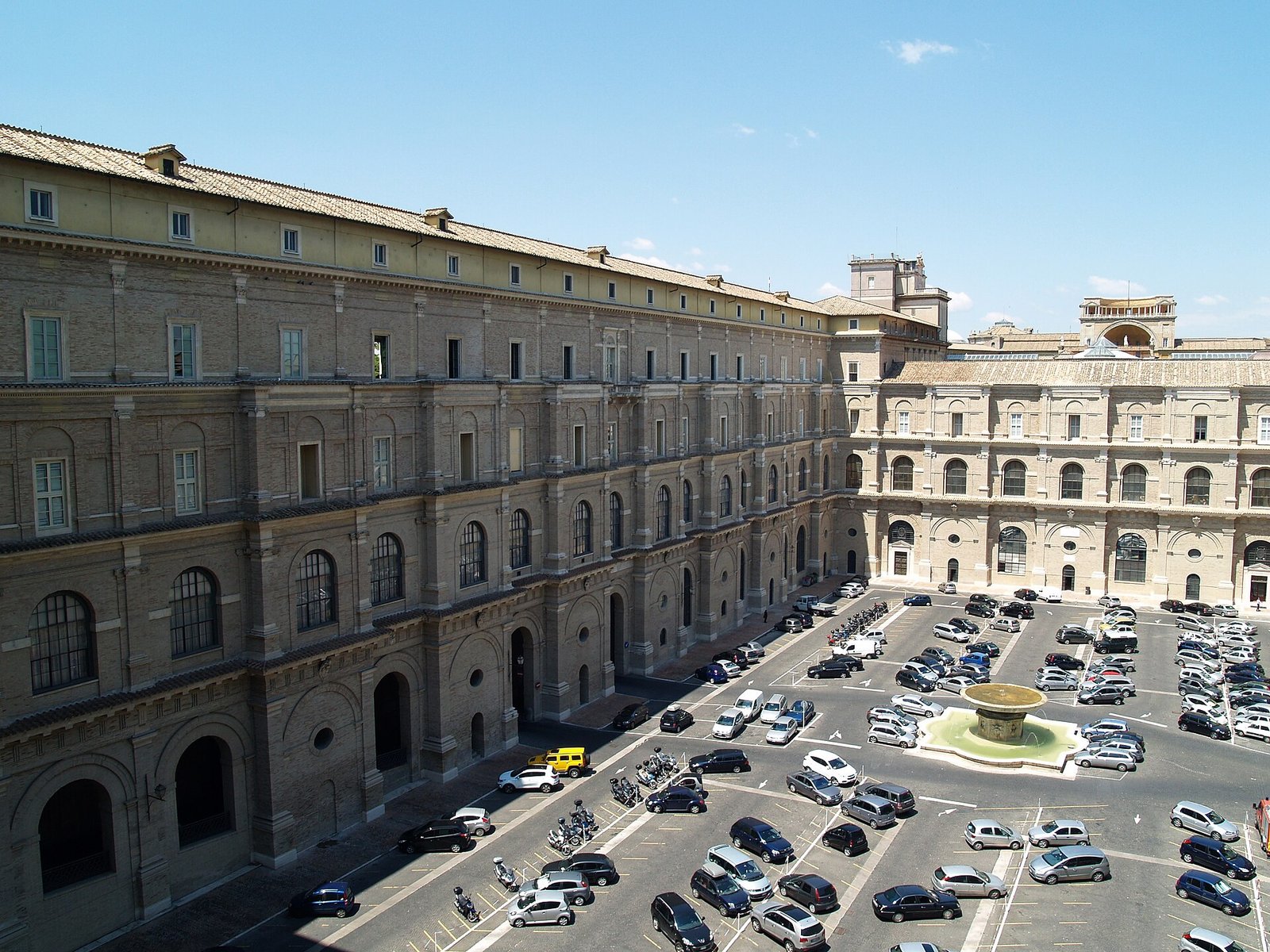
Catastrofe e Meraviglia. AQVA is the exhibition with which the Vatican Apostolic Library opens a five-year cycle dedicated to the threats that loom over books. It can be visited from September 25, 2026 to May 14, 2027 at the Library's seat, Cortile del Belvedere, 00120 Vatican City. Regular visits take place on Saturdays, according to the calendar, from 10:00 to 20:00, with eight shifts of 25 people at most (first entry at 10:00, last at 18:45, maximum duration one hour and 10 minutes, audio guide in Italian and English included). On Friday evenings, from 18:00 to 20:00, there are special visits for small groups. The full ticket costs €15, the reduced €10 (fees not included). The special Friday visits are sold as packages, from €150 for a group of up to five people. You enter on foot through Porta Sant'Anna, on Via di Porta Angelica, a quarter of an hour before your shift. You get there by Metro A, Ottaviano-S.Pietro stop, by buses 590, 32 and 19 or by train to San Pietro station. Tickets are bought only online, on the presale network indicated by the official website of the exhibition.
An exhibition inside the Pope's library, on a Saturday, in groups of 25, with an ID document recorded at the time of purchase: the way you get in already tells you this is not an exhibition like the others. The Vatican Apostolic Library is normally reserved for professors and researchers. Here it opens its rooms to anyone who has booked, and it does so with a theme that for a librarian is almost a taboo: fear. The first fear chosen is water. The result is a route that holds together a gigantic wave by JR, the fish of Ippolito Salviani engraved in the 16th century, the volumes wounded by the Florence flood and the recipes of Apicius.
Catastrofe e Meraviglia: the Vatican Library's five-year cycle
Catastrofe e Meraviglia is a five-year exhibition cycle conceived by the Vatican Apostolic Library: each year an exhibition dedicated to a threat to the book heritage, starting with water with AQVA (2026-2027). The question the project starts from is simple and disorienting: what really frightens those who guard the memory of humanity?
A librarian's fears
For anyone, a summer downpour, a flying insect, a pen mark or a small tear are normal things. For a librarian, the curators explain, each of these episodes is a possible alarm. From this awareness the cycle was born: instead of hiding the dangers, the Library puts them on show, tells their story and turns them into an occasion for discovery.
The book that inspired the title
The declared reference is a 1756 treatise by Gaetano Volpi, Del furore d'aver libri, which the official presentation describes as a merciless and sarcastic X-ray of the bibliophile's manias. It is an ancestry that says a lot about the chosen tone: no catastrophic tones, rather a learned, library-style irony.
The five stages
The announced program has five chapters, one per year: Water, Light and Air, Fire, insects and microorganisms, and Man. AQVA is therefore the first step of a path that, if the calendar is respected, will bring visitors into the Library for five seasons in a row, each time in front of a different enemy.
AQVA: the exhibition route, room by room
The AQVA exhibition tells the double face of water, a principle that generates and a force that destroys, through eight moments: from JR's monumental installation on the facade to the Sala Barberini turned into a place of contemplation. Here is the sequence announced by the Library.
The impact: Diluvium on the facade
The route begins outside, on the 16th-century facade of the Library, the so-called Sistine facade. Here JR has installed Diluvium, a monumental work inspired by Gustave Doré's illustrations of the Great Flood: a wave that sweeps away and evokes the risk of the loss of knowledge and the fragility of culture. It is the first image you see, and the one that stays.
The fear: the Florence flood
The second stop is dedicated to water inside the library, that is, the quintessential disaster. The display recalls the Florence flood of November 4, 1966, whose 60th anniversary falls in 2026. The photographs of those days, kept in the collections, bring back to memory the books dragged by the mud and the work of those who ran to save them.
A Wunderkammer of water
Then the tone changes. A corridor of wonders shows water as an ally of knowledge: marine bestiaries, a treatise on navigation on the Tiber, ancient coins of the strangest shapes, a 16th-century booklet bound in shark skin. It is the most playful section, and the best suited to those who arrive knowing nothing about manuscripts.
Science and typography: the Aquatilium
The heart of the exhibition is the Aquatilium animalium historia by Ippolito Salviani, which turns 470 in 2027. Two copies are on view, one of them entirely hand-watercolored, next to the books of its predecessors, including the De piscibus romanis by Paolo Giovio.
Typographic art: Bill Moran's fish
On the walls swim the alphabetic fish of the American artist Bill Moran, built with the types of the Tipoteca Italiana: sea creatures made of letters, numbers and punctuation marks.
Taste and geography
A gastronomic section runs through the cookbooks kept in the Vatican, from Apicius to Pellegrino Artusi, and closes with the stories of the chef Fulvio Pierangelini.
Technology and restoration
The Library's Restoration Lab shows how water, the enemy of books, also becomes the tool to heal them.
The ocean of the mind: Undae in the Sala Barberini
The route ends in the Sala Barberini, where JR has set up Undae, a video installation with the moving image of a wave filmed at São Conrado, in Brazil. The idea, the curators explain, is to synchronize your breathing with that of the sea: nature cannot be tamed, the inner journey can. The regular ticket also includes the Salone Sistino.
Ippolito Salviani's Aquatilium, the heart of AQVA
Ippolito Salviani's Aquatilium animalium historia was conceived during the long conclave of 1549-1550, financed by the Vatican Apostolic Library itself and finished printing in 1557. It is the book around which the whole exhibition revolves.
A physician with three talents
Salviani, whom the exhibition website calls "the Tifernate physician," is described as a man of triple wit: a competent physician, a versatile man of letters and a lover of the good life. His treatise puts together the science of Pliny and Galen with practical, nutritional and gastronomic information on each species. It is a science book that also reads like a cookbook.
The copper engravings
It was one of the first volumes to use copper-engraved plates to depict fish with precision. The copperplates were so beautiful that they were also sold separately, as art prints. In front of the hand-watercolored copy you understand why: scales, fins and reflections are rendered with a care that no photograph replaces.
The predecessors
Next to Salviani the Library displays the volumes of those who came before him, including the De piscibus romanis by Paolo Giovio: a way to show that Renaissance Rome looked at the fish of the Tiber and the Tyrrhenian Sea with the eye of a naturalist and a gourmet together.
The treasures of the Vatican Library on show in AQVA
For AQVA the Vatican Apostolic Library has chosen from its collections a series of manuscripts, prints, coins and objects that are rarely seen together. These are the pieces announced on the official website.
Apicius's De re coquinaria
A 9th-century manuscript of the Roman cookery treatise attributed to Apicius, one of the two oldest and most authoritative witnesses in the world. The curiosity, underlined by the curators themselves, is that it was written and decorated as if it were a liturgical text.
Ramusio and Pietro Querini's shipwreck
From the travel accounts collected by Giovanni Battista Ramusio comes the story of the Venetian merchant Pietro Querini, shipwrecked on the coast of Norway. There he discovered the practice of salting and sun-drying certain fish, the "stocfisi": hence the Italian word stoccafisso.
Manuel Philes's bestiary
A 16th-century manuscript of the De animalium proprietate by the Byzantine scholar Manuel Philes, copied by the calligrapher Angelo Vergezio and illustrated with miniatures, some on marine themes.
Coins, shells and a sperm whale tooth
From the Numismatic Cabinet come coin blocks from the Baths of Vicarello, cowrie shells used as money in Asia and Africa, silver coins shaped like fishhooks and bronze coins from Laos shaped like dugout canoes. The section is completed by a woodcut matrix by Tranquillo Marangoni dedicated to the Polesine flood and a sperm whale tooth donated to Pius XII.
The cabinet of matrices
A large French piece of furniture from the early 20th century with 160 small drawers, which holds the matrices of the Vatican Press for casting the types of many alphabets of the world: it served to print texts destined for every corner of the planet.
Artusi, first and last edition
Of Pellegrino Artusi's La scienza in cucina e l'arte di mangiar bene you can see the first edition of 1891 and the last one edited by the author, of 1911, lent by Vittorio Maltoni of the Casa Artusi Foundation.
Water that heals: the Vatican Restoration Lab
A section of AQVA is dedicated to the Restoration Lab of the Vatican Apostolic Library, where water goes from enemy to tool for healing books.
Water as enemy
When a book gets wet from a flood or a seepage, the fibers of paper and parchment swell and devastating molds start. The exhibition includes volumes damaged by events of this kind, together with the techniques used to save them: deep-freezing, which stops the degradation and the proliferation of molds, and then freeze-drying, which makes ice pass directly to the vapor state. Only afterward can the restorers intervene.
Water as ally
Two films show the Lab's work. In the first, a controlled immersion makes it possible to detach the old 19th-century veilings applied to repair the damage of iron gall ink. In the second, water mixed with cellulose pulp is used to rebuild the gaps left in the sheets by insects and microorganisms. Seeing an old sheet immersed in a tub makes you flinch. It is the daily work of those who give legibility back to memory.
Who is JR, the artist of Diluvium and Undae
JR is a French artist known worldwide for monumental public art installations that turn urban spaces into places of dialogue. For AQVA he signs the two key works, Diluvium on the Sistine facade and Undae in the Sala Barberini.
The beginnings: Portrait of a Generation
JR established himself in the early 2000s with Portrait of a Generation (2004-2006): giant photographic portraits of kids from the Paris suburbs pasted on walls, to challenge media stereotypes and offer another account of identity.
Projects in difficult places
In the following years he works in politically and socially delicate contexts. Face 2 Face (2007) places portraits of Israelis and Palestinians side by side along the separation wall. Kikito (2017) is the monumental image of a child looking over the border between the United States and Mexico. The long-term project at Tehachapi (2019-2022) was developed together with inmates.
Inside Out and participation
The involvement of communities is central to his work. With Inside Out, launched in 2011, over half a million people around the world have shared their story through large black-and-white portraits.
Cinema, covers and performance
JR co-directed with Agnès Varda the documentary Faces Places (2017), nominated for an Oscar, and directed Paper and Glue (2021), nominated for an Emmy. His works also include the mural for the cover of Time The Gun Chronicles (2018) and a large dance performance on the facade of the Palais Garnier in Paris (2023). His works have been exhibited at the Brooklyn Museum, the San Francisco Museum of Modern Art and the Venice Biennale.
Who is Bill Moran, the artist of the typographic fish
Bill Moran is a third-generation letterpress printer, teacher and historian of typography, American artist and designer. In AQVA he exhibits his Letterfish, sea creatures composed entirely of typographic characters.
Raised in a print shop
Moran grew up in the family print shop in Wisconsin, where from childhood he learned to consider the typographic character a living material, able to generate forms and stories as well as words.
LetterBugs and LetterFish
The LetterBugs series, insects made of letters, was first presented in 1999 at the Saint Paul Art Crawl in Minnesota and has since been exhibited and acquired by institutions and collections in the United States and Europe. LetterFish is more recent and was born precisely in dialogue with the heritage of the Vatican Apostolic Library. On view, on paper and plexiglass, are octopuses that look like dancing girls, smiling rays and playful sharks, composed with 19th-century types from the archives of the Tipoteca Italiana in Cornuda.
A guardian of traditional printing
Moran teaches Typography and History of the Alphabet at the College of Design of the University of Minnesota and is a cofounder of TipoItalia, an international training program based in Cornuda. From 2009 to 2021 he was artistic director of the Hamilton Wood Type and Printing Museum, considered the main center in the world for the preservation of wooden type. His website dedicated to the project is letterfish.press.
Who is Fulvio Pierangelini, the chef of AQVA
Fulvio Pierangelini, born in Rome in 1953, is the chef who closes the gastronomic section of AQVA with some previously unpublished stories of his and two works from the Vatican chosen by him.
From studies to the kitchen
As a university student, to support himself, Pierangelini worked as a laborer, a night porter, a sailing instructor. After graduating he chose the kitchen, and decisive for his training was the experience at Mougins, on the Côte d'Azur, with Roger Vergé.
Il Gambero Rosso
In 1980 he took over a small trattoria on the port, the Gambero Rosso: an adventure that lasted about 30 years and took him to the top of the restaurant world, with the recognition of best cook in Italy from the main guides. His signature dish is the chickpea puree with shrimp. He is also known for putting everyday dishes like pasta with tomato on the menu, giving dignity back to simple ingredients.
Rocco Forte Hotels
Since 2009 he has been Creative Director of Food for the bars and restaurants of Rocco Forte Hotels. He signs the menus of hotels in Italy and abroad, including the Hotel de Russie, the Hotel de la Ville and the Hotel Savoy. In the exhibition his presence is literary before it is culinary: stories that the curators describe as declarations of love for the raw ingredient, seasoned with irony.
The Vatican Apostolic Library: history of the seat
The Vatican Apostolic Library was officially established by Pope Sixtus IV with the bull Ad decorem militantis Ecclesiae of June 15, 1475. The current seat, in the transverse wing of the Cortile del Belvedere, was built between 1587 and 1589 by Domenico Fontana for Sixtus V.
The origins
Ancient sources already speak in the 4th century of a Scrinium, the archive of the Church of Rome, and in 784 a bibliothecarius named Teofilatto appears. The medieval collections, however, were scattered with the moves of the papal seat, as far as Avignon.
Nicholas V and Sixtus IV
It was the humanist Tommaso Parentucelli, Pope Nicholas V from 1447 to 1455, who conceived a modern library: in 1451 he opened consultation to scholars in a room on the ground floor of the Vatican, and at his death the codices numbered about 1,200. Sixtus IV made it an institution: the first custodian was the humanist Bartolomeo Sacchi, known as Platina, and the works, 2,500 at the start, were placed in four rooms decorated by Melozzo da Forlì, Antoniazzo Romano and the brothers Domenico and David Ghirlandaio.
The Salone Sistino
A century later the rooms were no longer enough. Sixtus V entrusted Domenico Fontana with a new building across the Cortile del Belvedere. On the upper floor the Salone Sistino was born, a two-aisle hall of about 70 meters by 15, entirely frescoed. Among the painters was Andrea Lilli, author of the Burning of Arius's Books. The Salone is included in the regular AQVA visit.
The collections
Today the Library holds about 80,000 manuscripts, thousands of incunabula, hundreds of thousands of coins and medals, prints, drawings and photographs. Among the famous pieces: the Codex Vaticanus, from the 4th century. Papyrus Hanna 1, with the Gospels of Luke and John almost complete. The Gutenberg Bible. Galileo's Sidereus Nuncius. Frederick II's treatise on falconry. The gold coin placed by Charlemagne on the tomb of Peter in 781.
How to get to the Vatican Apostolic Library for AQVA
For the AQVA exhibition you enter on foot through Porta Sant'Anna, on Via di Porta Angelica, and from there you reach the Library in about three minutes, accompanied by the exhibition staff.
By metro
The stop indicated by the organizers is Ottaviano-S.Pietro on line A. From there you go down toward Via di Porta Angelica and the colonnade.
By bus
The lines indicated on the official website are the 590, the 32 and the 19. For updated schedules, use the ATAC route planner, especially on Saturdays.
By taxi
There is a taxi area on Via Stefano Porcari, at the corner with Via del Mascherino. Alternatively you can book with the ItTaxi app.
Punctuality and waiting
The rules ask you to show up at Porta Sant'Anna 15 minutes before your shift, and not earlier: those who arrive earlier have to wait outside the Vatican City State. Those who arrive late risk losing the visit. At the Gendarmerie guardhouse the staff welcome the groups and accompany them to the Library.
Tickets and hours for Catastrofe e Meraviglia. AQVA
AQVA tickets are bought only online, up to 48 hours before the visit, and cannot be canceled or refunded.
Regular Saturday visits
Eight shifts per Saturday, with 25 people at most, first entry at 10:00 and last at 18:45. The visit lasts one hour and 10 minutes at most and includes the exhibition route and the Salone Sistino, with an audio guide in Italian or English. Full price €15, reduced €10, fees not included.
Reductions and free admission
The reduced price applies to over 65s, under 26s, people with a disability above 50 percent, holders of a Vatican pass or Library card, ICOM and ICOMOS members and licensed tour guides. Children under six, the companion of a person with a disability above 75 percent and journalists enter free. Proof of eligibility must be shown at the entrance.
Special Friday visits
On Fridays from 18:00 to 20:00 there are private visits for groups of 5, 10 or 15 people, led by Library staff, in Italian, English or French. Besides the route and the Salone Sistino they include the Sala degli Scrittori and other rooms normally closed to the public. Packages of €150 (up to 5 people), 270 euros (6 to 10) and €390 (11 to 15), fees not included.
What to bring
The digital ticket, printed or on your phone, and a valid ID document: the details of each visitor must be entered at the time of purchase. The exhibition bookshop accepts only electronic payments.
A curiosity about Catastrofe e Meraviglia. AQVA at the Vatican Apostolic Library, September 25, 2026 to May 14, 2027
The tastiest curiosity of AQVA is linguistic, and concerns stockfish. Among the texts on display are the travel accounts collected by Giovanni Battista Ramusio, and among them the story of the Venetian merchant Pietro Querini. Shipwrecked on the coast of Norway, Querini saw that the inhabitants salted and dried in the sun the flesh of certain fish, which they called "stocfisi." From that word comes the Italian stoccafisso. It is the kind of discovery AQVA keeps giving: a travel book that becomes a cookbook, a shipwreck that becomes etymology.
The second curiosity concerns the Apicius manuscript. It is one of the two oldest witnesses in the world of the Roman cookery treatise, dates to the 9th century, and yet was written and decorated like a liturgical book. A Carolingian monk treated the recipes of the ancient Romans with the same care given to a missal. Those who love the history of cooking will do well to stop in front of that display case longer than expected.
One thing nobody tells you about Catastrofe e Meraviglia. AQVA at the Vatican Apostolic Library, September 25, 2026 to May 14, 2027
What nobody says is that AQVA is not visited like a museum. You don't enter when you want, you don't stay as long as you want and you don't arrive well ahead of time to get in first. The rule is clear: at Porta Sant'Anna you show up 15 minutes before your shift, no more, and those who arrive too early wait outside Vatican territory. Those used to queuing at the Vatican Museums need to change mindset: here entry is by named reservation, with the ID of each visitor recorded at the time of purchase.
The second thing you discover only by reading the instructions is the dress code. The exhibition is in the Vatican City State, and shorts and tank tops are not allowed. In October or May, on warm days, it's easy to forget.
The third concerns guides: in the exhibition the only authorized guides are members of the Library staff. An outside guide must be requested and authorized in advance by writing to eventi@vatlib.it. For an organized group it's a detail that changes the planning.
Finally, the bookshop accepts only Visa and Mastercard cards. Those who think of buying the catalog with cash will be disappointed.
My advice for visiting Catastrofe e Meraviglia. AQVA at the Vatican Apostolic Library, September 25, 2026 to May 14, 2027
My advice is to book the first Saturday shift, the one at 10:00. You arrive at Porta Sant'Anna at 9:45, with the city still quiet, and you come out shortly after 11:00 with the whole day ahead of you: St. Peter's, Borgo, Castel Sant'Angelo are a few steps away. The morning shift has another advantage: the light on the Sistine facade, where JR has set up Diluvium, is still soft.
Second piece of advice: take your time with the Aquatilium. The visit lasts one hour and 10 minutes at most, and the risk is rushing through the very room that is worth the exhibition. Salviani's hand-watercolored copy deserves five minutes of slow looking, fish by fish.
Third: if you are traveling in a small group of friends or colleagues, consider the special Friday evening visit. Divided among five people, the rate of the base package comes to €30 each, fees not included, and it opens the Sala degli Scrittori and rooms that normally nobody sees. It's a rare opportunity, and for those who love books it's worth more than an elegant dinner.
Last piece of advice, a practical one: buy well in advance. 25 places per shift and eight shifts on Saturday mean a few hundred people a week.
Another well-known fact, yet rarely cited
It is well known that the Vatican Library holds priceless treasures. It is cited less often that it was one of the first libraries open to scholars. As early as 1451 Nicholas V allowed his codices to be consulted by scholars and men of letters, in a room on the ground floor of the Vatican next to the so-called Courtyard of the Parrots. The Pope's library was born, that is, with a public vocation, albeit for a restricted public of learned men.
A second fact known to specialists and little told: the Salone Sistino, which the AQVA ticket lets you walk through, measures about 70 meters by 15 and is entirely frescoed. Wanted by Sixtus V and built by Domenico Fontana between 1587 and 1589, it is the place where for three centuries the volumes were kept in order, inside cabinets made for the purpose. Among the frescoes is Andrea Lilli's Burning of Arius's Books: a scene of burning books painted in the hall that was meant to protect them. In an exhibition dedicated to the fears of librarians, it is a detail that makes you smile.
The right photo to take at Catastrofe e Meraviglia. AQVA at the Vatican Apostolic Library, September 25, 2026 to May 14, 2027
The right photo is the one of Diluvium, JR's monumental wave on the 16th-century facade of the Library. It is the first image of the exhibition and the most powerful: a wave inspired by Gustave Doré's engravings of the Flood that seems about to sweep away the building that guards the books. Frame the whole facade, with a margin of sky above, to give the scale: the effect comes from the contrast between the orderly architecture and the motion of the water.
Second choice, more intimate: a detail of Bill Moran's Letterfish. Get close until you can read the letters that make up an octopus or a ray, and shoot so that it's clear those fins are commas and those eyes are letters. It's a photo that also works very well on social media, because it asks the viewer to stop.
Before photographing, though, ask the staff if and where it is allowed: the Library is an institution of the Holy See, with delicate works, and the rules may vary from room to room. No flash, in any case, in front of manuscripts and engravings.
Some important events that happened here in history
On June 15, 1475 Sixtus IV signed the bull Ad decorem militantis Ecclesiae, the official birth certificate of the Vatican Apostolic Library. Three days later, on June 18, the work of the first custodian began, the humanist Bartolomeo Sacchi known as Platina, with three collaborators and a bookbinder. The works numbered 2,500 and became 3,500 in six years, divided among four rooms: Latina, Graeca, Secreta and Pontificia.
Between 1549 and 1550 the long conclave took place during which, according to the Library, Salviani's Aquatilium was conceived, later financed by the Library itself and finished printing in 1557. The book at the center of AQVA was therefore born here, within the Vatican walls, at a time of sede vacante.
Between 1587 and 1589 Sixtus V had Domenico Fontana build the new building across the Cortile del Belvedere, with the Salone Sistino. In the 18th century the artistic and antiquarian collections were born: the coin cabinet in 1738, the collections of Christian antiquities in 1755, many coming from the Roman catacombs.
In 1612, with the birth of the Vatican Archive, the post of archivist began to be assigned almost always to the librarian. In 1891 a part of the books collected at Avignon by John XXII returned to the Holy See, with the library of the Borghese family. Since 2010 the digitization of the manuscripts has been under way.
Who has passed through Catastrofe e Meraviglia. AQVA at the Vatican Apostolic Library, September 25, 2026 to May 14, 2027
Some of the greatest names of European culture have passed through the Vatican Apostolic Library, as librarians, painters or authors of the works kept there. The first is Platina, humanist and first custodian from 1475. Melozzo da Forlì portrayed him in the fresco in which Sixtus IV appoints him prefect. Melozzo, Antoniazzo Romano and the brothers Domenico and David Ghirlandaio painted the first rooms.
Among the librarians of the Holy Roman Church were Cardinal Marcello Cervini, elected pope in 1555 as Marcellus II. The historian Cesare Baronio. Scipione Caffarelli Borghese. Francesco Barberini, who led the Library from 1626 to 1633. Angelo Mai. In the 20th century the prefects were Achille Ratti, later Pius XI, and Giovanni Mercati. Cardinal Eugène Tisserant was librarian for a long time. More recently the Library has been led by Cardinal José Tolentino de Mendonça.
And then there are the names the Library hosts on its shelves: Galileo with the Sidereus Nuncius, Michelangelo with his writings, Frederick II with the treatise on falconry. In the autumn of 2026 JR, Bill Moran and Fulvio Pierangelini are added: a French street artist, a Midwest printer and a Roman chef, inside the library of the popes.
What to see around the Vatican Library after AQVA
Leaving Porta Sant'Anna you are a few steps from the colonnade of Piazza San Pietro, the natural starting point to complete the day.
St. Peter's and the Vatican Museums
The St. Peter’s Basilica and the Vatican Museums, with the Sistine Chapel, each take half a day: better not to add them to AQVA on the same day, if you want to remember anything.
Borgo and the Passetto
The Borgo district can be crossed on foot in a few minutes, with the Passetto di Borgo guiding your gaze toward the Tiber.
Castel Sant'Angelo
Castel Sant'Angelo ideally closes the walk on the Tiber.
Prati
Toward the north, beyond the Ottaviano metro, Prati begins. A practical guide to the neighborhood is at what to see in Prati and Borgo.
Where to eat near the Vatican Library
The area around Porta Sant'Anna is among the most touristy in Rome, and the rule is simple: walk a few streets away from the colonnade.
Toward Prati
The streets of Prati, behind the Ottaviano stop, offer neighborhood trattorias, pizza by the slice places and bakeries used by people who work in the area. It is the safest choice for a lunch after the morning shift.
Accessibility and visiting with children
The Library asks that the presence of people with reduced mobility be reported in advance by writing to eventi@vatlib.it: it is the essential step to organize their reception.
People with disabilities
The reduced ticket applies to people with a disability above 50 percent. The companion of a person with a disability above 75 percent enters free. The way from Porta Sant'Anna to the Library is pedestrian, about three minutes.
With children
Under six you enter free. For kids the most suitable section is the Wunderkammer: coins shaped like fishhooks and dugout canoes, a booklet bound in shark skin, a sperm whale tooth. Bill Moran's fish made of letters please all ages. The visit, held to a little over an hour, is manageable even for an eight- or 10-year-old child.
Frequently asked questions about Catastrofe e Meraviglia. AQVA
When can you visit the AQVA exhibition at the Vatican Library?
The AQVA exhibition is open from September 25, 2026 to May 14, 2027. Regular visits take place on Saturdays, according to the calendar, from 10:00 to 20:00, with eight shifts: first entry at 10:00, last at 18:45. On Friday evenings, from 18:00 to 20:00, there are special visits for small groups.
How much is the ticket for Catastrofe e Meraviglia?
The ticket for Catastrofe e Meraviglia. AQVA costs €15 full price and €10 reduced, fees not included, with audio guide included. The special Friday visits cost €150 for a group of up to five people, 270 euros for 6 to 10 and €390 for 11 to 15.
Where do you buy tickets for AQVA?
Tickets for AQVA are bought only online, on the network indicated by the official website catastrofeemeraviglia.it, up to 48 hours before the visit. No tickets are sold on site and those purchased cannot be canceled or refunded.
Where do you enter the Vatican Apostolic Library for the exhibition?
For the exhibition you enter the Vatican Apostolic Library through Porta Sant'Anna, on Via di Porta Angelica, 15 minutes before your shift. The staff welcome visitors at the Gendarmerie guardhouse and accompany them on foot to the Library, in about three minutes.
How do you get there by public transport?
You get to the AQVA exhibition by Metro A, Ottaviano-S.Pietro stop, by buses 590, 32 and 19 or by train to San Pietro station. There is also a taxi area on Via Stefano Porcari, at the corner with Via del Mascherino.
What can you see in the AQVA exhibition?
In the AQVA exhibition you see two installations by JR, Bill Moran's Letterfish, the stories of the chef Fulvio Pierangelini and the treasures of the Library: Salviani's Aquatilium of 1557, a 9th-century Apicius, the first editions of Artusi, coins, a booklet in shark skin. The visit includes the Salone Sistino.
Is there a dress code to visit AQVA?
Yes, to visit AQVA in Vatican City appropriate clothing is required: shorts and tank tops are not allowed. A valid ID document is also needed, and the details of each visitor must be entered when the ticket is purchased.
Is AQVA suitable for children?
AQVA is also suitable for children, who enter free up to age six. The Wunderkammer with curious coins and the sperm whale tooth, and Bill Moran's fish made of letters, are the sections that attract the youngest the most. The visit lasts one hour and 10 minutes at most.
Final advice on Catastrofe e Meraviglia. AQVA
There are many exhibitions in Rome, and very few that open a door normally closed. AQVA, in our view, is one of them. My advice is to book a Saturday morning, arrive on time at Porta Sant'Anna, give the Aquatilium and the Salone Sistino the time they need, and leave on foot toward Borgo. And it pays to note down the cycle: if the Library keeps to the calendar, in the coming years light, fire, insects and man will return. It's worth following from the beginning.
Article written by the editorial team of Tour Leader Pro, contact them for Private/Corporate/V.I.P. Tours and Experiences.
Planning a trip to Rome? The English guides for visiting the city are on ItalyPlanner.com.