Aquino (FR)
In short. Aquino is in the province of Frosinone, in the Liri Valley, about 130 kilometers southeast of Rome and less than 20 kilometers from Cassino.

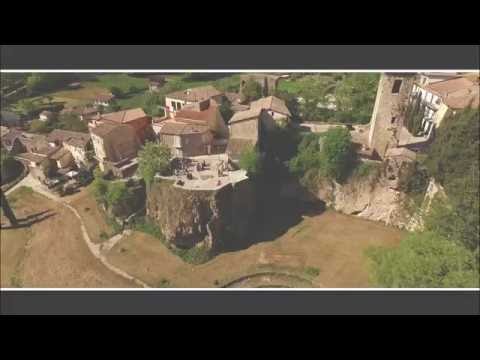
Aquino is in the province of Frosinone, in the Liri Valley, about 130 kilometers southeast of Rome and less than 20 kilometers from Cassino. The medieval historic center rises on a spur of rock at 106 meters above sea level, overlooked by the limestone wall of Monte Cairo. To reach it by car you take the A1 motorway (Cassino exit) and then Via Casilina northward. Or you come down from the Pontecorvo exit and go back up the state road along the Liri. The regional Rome-Naples train (slow line) stops at Castrocielo-Aquino, about 4 kilometers from the center. There is no ticket office on site: access to the open-air archaeological area is free during daylight hours. The Museo della Citta di Aquino has opening hours and fees that are best checked directly at the museum's number or on the cultura.gov.it portal before the visit, because they may vary seasonally. A visit to the archaeological site and the museum takes at least two and a half hours. Adding the main churches and the medieval village, you comfortably reach half a day.
Those organizing a guided tour in Ciociaria can turn to the professionals of TourLeaderPro, specialized in private and group experiences in Lazio and surroundings.

Aquino (FR) and its origins: from Volscian city to Roman Aquinum
The name derives from the Latin Aquinum, which refers to the abundance of spring waters and watercourses that still characterize the territory today. The settlement has roots going back to the Neolithic, but the real urban organization took shape in the 4th century BC with the Volsci, who defended the site against the Samnites before yielding to Rome's expansion. The first certain mention of Aquinum in Roman literary sources is from 211 BC, when Hannibal, on his march toward Rome after the victory at Cannae, crosses the territory without meeting resistance: Aquino remained loyal to Rome and was rewarded with civic and commercial benefits.
In 125 BC nearby Fregellae, today in the present territory of Arce, was razed by the Romans after a revolt: Aquinum inherited the role of main center in the valley between Rome and Capua, controlling the road junction of Via Latina. In the Augustan era the city reached its demographic peak, estimated at around 30,000 to 40,000 inhabitants, with a regular urban layout, aqueduct, forum, theater, amphitheater, public baths and many suburban villae. In 211 BC Aquino had already shown its loyalty to Rome by refusing to open the gates to the Carthaginian. That choice was rewarded with the title of Urbs, a prerogative that at the time belonged to Rome alone. In the imperial era it was a municipium with the right to mint coins until the 3rd century.
Aquino gave birth to two figures that ancient historiography remembers with pride: the satirical poet Decimus Junius Juvenalis, active between the late 1st and early 2nd century AD, and the emperor Pescennius Niger, who in 193 AD proclaimed himself emperor, challenging Septimius Severus in a civil war destined to end badly. The third illustrious figure, Saint Thomas Aquinas, was technically born in Roccasecca, in the family tower, but the house of the Counts of Aquino had its main seat right here, and the saint's name is inseparably tied to this city.
The archaeological area of Aquinum: a heritage brought to light
The archaeological area of Aquinum can be visited freely along the routes open to the public: it extends within the modern town of Aquino and in the surrounding countryside, with remains that surface among cultivated fields, vegetable gardens and the edges of municipal roads. It is not a fenced, uniform site, but a layered landscape where Roman ruins coexist with medieval buildings and with the daily life of the town. This makes it different from the big archaeological parks of central Italy, and in part more authentic, though less easy to read without a guide.
Porta San Lorenzo and the stretch of Via Latina
The most representative monumental entrance of Aquinum is the Porta Romana, also known as Porta San Lorenzo from the name of the nearby medieval church. It is a single-arch gate in opus incertum and travertine blocks, flanked by the remains of the towers that controlled the northwest access to the city. In front of the gate about 300 meters of original paving of Via Latina are preserved, the great consular road that connected Rome to Capua: cart wheels cut deep grooves into the limestone, and walking on that stretch gives a physical sense of ancient traffic that no museum caption can convey. The paving can be walked and is one of the most evocative elements of the whole visit.
The Arch of Marcantonio
A short distance from the gate rises the so-called Arch of Marcantonio, datable to the second half of the 1st century BC and traditionally attributed, without documentary proof, to a figure of the family of Mark Antony. It is a single-arch honorary arch, in ashlar travertine, partially incorporated into medieval structures. The popular name is almost certainly wrong, but it has been part of local usage for centuries and nobody has an interest in changing it. What matters is the quality of the stonework and the position, which in antiquity marked a point of note on the urban route.
The Roman theater of Aquinum
The theater of Aquinum is datable to the middle of the 1st century BC and was enlarged in the Augustan era. It had a diameter of about 64 meters and the radial supports of the media cavea in opus reticulatum are still partly standing, visible among the spontaneous vegetation and the private property walls that over the centuries have absorbed the ruins. The original capacity must have been several thousand spectators. The scaenae frons has been lost almost entirely, but the curve of the cavea is still legible in the shape of the terrain. It is not a theater restored and made scenically usable like the one at Ostia Antica or Ferento, but precisely for that reason it keeps a historical roughness that the most attentive visitors find precious.
The amphitheater
The amphitheater of Aquinum was of the Augustan era and had an unusual feature: it was dug into the ground rather than built above ground, a solution adopted in sites where the clayey soil allowed saving material. The construction of the railway and then of the Rome-Naples motorway destroyed the northern part of the ellipse, and today the visible remains are fragmentary. Nonetheless, the layout has been reconstructed through geophysical surveys and drone flights, and the approximate perimeter is marked by signs along the pedestrian route of the urban park.
Porta Capuana
Porta Capuana is perhaps the best-preserved monument of Aquinum structurally: an arch with a double passage, still almost intact at the springing, with the original paving stones of the thresholds where you see the grooves of the hinges on which the wooden leaves of the gate turned. It is in ashlar blocks of local limestone, more rustic than Porta San Lorenzo but more intact in its lower parts. Passing through it gives the sense of a threshold that thousands of people crossed over five centuries of intense urban life.
The Capitolium and the baths
Of the Capitolium, the temple dedicated to the Capitoline triad (Jupiter, Juno, Minerva), the foundations in opus incertum remain and some travertine blocks reworked into the surrounding medieval walls. It was the religious heart of the forum of Aquinum, and its position in the upper part of the ancient urban center coincides with the area where the medieval core of the town stands today. The public baths, indicated by fragments of lead piping and marble facings recovered from the excavations, were located northeast of the forum. The exact extent is not yet entirely clarified by systematic excavations.
Recent discoveries: the head of Julius Caesar?
Since 2009 drone surveys have identified in the northern area of the forum the remains of a large porticoed building, probably the civil basilica that flanked the forum. Excavations conducted by the Museo della Citta have yielded three valuable marble heads: one identified with Hercules, one with a veiled female figure, and one, with great caution on the part of the archaeologists, hypothetically attributed to Julius Caesar, based on its resemblance to known portraits. The attribution is not documented and should be treated as a working hypothesis, not as certainty. The heads are displayed at the Museo della Citta di Aquino.
The Museo della Citta di Aquino: history in order
The Museo della Citta di Aquino, opened in December 2000 and run by the Ministry of Culture, is housed in a modern building inside the large garden surrounding the central archaeological area. The address for the visit can be verified on cultura.gov.it. The exhibition route covers the phases from Prehistory to the modern era, with a section dedicated to the prehistoric settlement of the territory, one to the Volscian and Samnite era, the richest part dedicated to Roman Aquinum (ceramics, coins, inscriptions, architectural elements, sculpture), and a final one illustrating the medieval and modern events of the town.
Among the pieces of greatest interest are the Aquinum coins of the Republican period, a sign of the high rank of the municipium, and a series of slabs with inscriptions documenting local magistrates and the public benefactors who financed buildings and shows. The three marble heads of the Augustan and Julio-Claudian era found in the latest excavations hold a prominent place in the room dedicated to the Augustan monumentalization of the city. The graphic reproductions of the buildings should also be noted, which help non-experts get their bearings on the territory.
A visit to the museum before walking the archaeological area is the most efficient way to understand what you see around: the site map displayed at the entrance lets you locate each monument relative to the others and to the ancient urban structure.

The churches of Aquino (FR): medieval architecture and living liturgy
The Church of Santa Maria della Libera
The church of Santa Maria della Libera is the most beautiful medieval monument in Aquino, and one of the most significant in Ciociaria. It has been declared a national monument. The building stands on the remains of a Roman temple dedicated to Hercules the Liberator, hence the Madonna's title, in a central position relative to the archaeological zone, almost marking the sacred continuity of the place between the pagan and Christian eras. The Romanesque construction dates to the 11th to 13th centuries, with later alterations.
The facade, simple and sober in its proportions, is enhanced by the main portal, which incorporates a mosaic with the Madonna and Child and the depiction of two female figures identified as the founders of the church. The square-plan bell tower is one of the most vertical elements in the landscape of the lower village. Inside, the column capitals show different workmanship for each element, a common practice in medieval building sites that reused Roman materials, and some column bases are clearly ancient spolia. The semicircular apse, with its masonry of squared blocks of different origin, tells of the medieval builders' ability to synthesize heterogeneous materials without losing formal coherence.

The Co-Cathedral Basilica of San Costanzo Vescovo and San Tommaso
The co-cathedral basilica is the mother church of the Aquino community and the seat of the Diocese of Sora-Cassino-Aquino-Pontecorvo. The current building was designed by the architect Giuseppe Breccia Fratadocchi after the 18th-century cathedral was destroyed by the bombings of the Second World War, along with much of the historic center. Reconstruction was necessary and urgent, and Breccia Fratadocchi managed to combine a traditional basilica plan with a modern language that does not appear incongruous in the context. Inside are preserved significant works of modern art: the painted decorations by Carlo Maria Mariani and the sculptures by Angelo Biancini, commissioned to give the church a visual identity worthy of its history.
On September 14, 1974, on the 700th anniversary of the death of Saint Thomas Aquinas, Pope Paul VI made a solemn visit to this basilica: one of the very few papal visits to Ciociaria in the 20th century, which seals the link between the diocese and the memory of the Doctor Angelicus. The visit is documented by photographs displayed inside.
Santa Maria degli Angeli, known as San Costanzo Vecchia
At the edge of the Parco del Vallone, along Via Romana, stand the remains of what scholars consider the second medieval cathedral of Aquino: Santa Maria degli Angeli, known locally as San Costanzo Vecchia for the devotion to the 6th-century Holy Bishop who was housed there. The building was an episcopal seat from late antiquity until its abandonment in the 17th century, when the diocese transferred its functions to the new cathedral of the upper village. Since 2015 it has been the object of systematic research and excavations by the Museo della Citta, which have yielded materials of great interest for understanding the ecclesiastical topography of medieval Aquino.
The other churches
The religious heritage of Aquino also includes the Church of San Pietro Vetere, the Church of San Marco in the district of the same name north of the center, the Church of the Sacro Cuore in the locality of Valli, and the so-called Tower of Saint Thomas Aquinas, which in local tradition marks the spot where the future saint is said to have lived during his Aquino years. Each of these structures has its own history and varying degrees of architectural interest. A visitor with enough time will find in each one a specific note of this community's religious character.
Saint Thomas Aquinas and the link with this land
Thomas Aquinas was born around 1225 in the castle of Roccasecca, a fief of the family of the Counts of Aquino, but the house had its seat of power and identity in this city. His father, Landolfo count of Aquino, was lord of an extensive territory that included Aquino, Loreto, Acerra and many dependencies. His mother, Theodora of Chieti, was of Norman stock. The young Thomas was sent as an oblate to the Abbey of Montecassino at five years old, following a common practice in the noble families of the medieval south, then studied in Naples at the university founded by Frederick II, then in Cologne and Paris under Albertus Magnus.
His entry into the Dominican Order, against the will of the family who had destined him for a brilliant abbatial career at Montecassino, was an act of spiritual will that his mother Theodora tried to prevent by holding him by force in the castle of Roccasecca for over a year, between 1244 and 1245. The episode is documented by ancient biographical sources and is one of the most novelistic in the life of a man who lived entirely for study and prayer. Thomas managed to reach his confreres and never again returned permanently to Ciociaria.
He died on March 7, 1274 in the Abbey of Fossanova, a few hours' walk from Priverno, while on his way to the Council of Lyon convened by Pope Gregory X. He was canonized in 1323 by John XXII. His main work, the Summa Theologiae, remains one of the most complex and influential philosophical and theological texts produced by medieval Western thought. The Church celebrates him on January 28.
In Aquino his feast is celebrated on March 7, the date of death, with a procession and the lighting of the "faoni," ritual fires that on the previous day (March 6) light up the streets of the town in a rite of ancient origin, probably predating the Christianization of the cult and adapted to Thomistic devotion.

The medieval village of Aquino (FR): the castle and the House of Saint Thomas
The medieval village occupies a spur of rock between two lake basins that in the 16th century were drained and reclaimed, transforming what was an island defended by water into a plateau surrounded by cultivated plain. The urban structure of the historic center preserves the perimeter of the counts' walls and the remains of the castle of the Counts of Aquino, with the watchtower that dominates the landscape toward the Liri. The castle was partially dismantled over the centuries following the end of the counts' power, and the stones were reused in the village's civil building.
The so-called House of Saint Thomas is a medieval building of the 10th century, built according to local tradition under Count Atenolfo II, which tradition indicates as the dwelling of the Aquino family in the period when Thomas was a child. It is not a house in the modern residential sense, but a building complex with an attached tower that over the centuries has accumulated different functions. The visit to the upper village is essentially a walk through the medieval fabric, with glimpses of the Liri valley and Monte Cairo that by themselves justify the route.
The Parco del Vallone and the Liri Valley
Aquino faces south onto the Parco del Vallone, the natural area that preserves the bed of the Forme stream and the wet margins that were once fed by the lakes now drained. The park is a peri-urban green space, not equipped for mass tourism but walkable along informal paths, with riparian vegetation that hosts aquatic birdlife and some botanical species of interest. It is the right place to recover silence after the visit to the archaeological site and the churches.
The Liri Valley, in which Aquino sits, is one of the most productive alluvial plains of southern Lazio. The Liri flows west of the built-up area before joining the Garigliano toward the sea. The valley has been the stage of decisive historical events: the battles between Rome and the Samnites, the destruction of Fregellae, the passages of medieval condottieri, and then the front of the Gustav Line in the Second World War. The city of Cassino is less than 20 kilometers away, and the famous Abbey of Montecassino dominates the landscape from above to the southeast: a geographic triangle, Aquino, Cassino, Montecassino, that synthesizes almost 2,000 years of southern Lazio history.
Aquino (FR) and the Thomas Aquinas International Prize
Every year in March, coinciding with the saint's feast, Aquino hosts the Thomas Aquinas International Prize, an award given to figures from the world of culture, philosophy and theology who have made significant contributions to the dialogue between faith and reason, between tradition and modernity. The prize does not have the media resonance of the big national literary prizes, but in the field of scholastic philosophy and contemporary Catholic thought it is a reference event. In the same week the Veritas et Amor Competition is held, aimed at Italian high school students on themes of Thomistic philosophy.
In parallel, in October, the Iuvenaliana dedicate a series of cultural events to the satirical poet Juvenal, with public readings, conferences and educational activities in local schools. The complete cycle of Aquino cultural initiatives, which includes the Certamen Iuvenalianum in May, the International Prize in March and the Iuvenaliana in October, builds a cultural calendar that, considering the size of the municipality, is quite respectable. It is a sign of a community that has not given up on producing quality local culture, despite the demographic crisis and the competition from bigger urban spaces.
Ciociaria gastronomy in Aquino (FR)
The cuisine of Ciociaria is one of the most hearty and recognizable in Lazio, with a peasant tradition that has not yielded to the homogenization of mass restaurant dining. In Aquino and the neighboring towns fresh pasta is the absolute protagonist: the sagne 'mpastucchiate, a local variant of pasta with legumes, and the frascarelli, a type of small pasta worked by hand, are the most identity-defining formats. Legumes, Atina beans and Santo Stefano lentils, have received quality recognition and appear on local menus as leading ingredients, not as side dishes.
The cured meats of Ciociaria include aged guanciale, sausage with wild fennel and the headcheese coppa prepared in the winter months. The most characteristic cheese is the caciofiore, made with vegetable rennet obtained from the flower of the wild artichoke, with a soft paste and an intense flavor. The most common local wine is the Cabernet from the Atina area, which has obtained DOC status: dry, structured, suited to the game dishes that appear in autumn in country restaurants.
In Aquino the Borgo diVino festival is held in September, dedicated to wine and local gastronomy, drawing visitors from all of Ciociaria and from the capital. In July the Cultura Ciociara event (July 16 to 17) offers tastings and shows tied to the local food and wine tradition.
Aquino (FR) and nearby villages: recommended itineraries in Ciociaria
Aquino's geographic position makes it a natural hub for exploring one of the Lazio provinces richest in history and least frequented by mass tourism. Ciociaria, a term that informally identifies the territory of the province of Frosinone and the mountain zone surrounding it, has a very strong cultural identity, marked by peasant life, religious devotion, the Lombard and Norman heritage layered over the Roman one, and a cuisine that has not yielded to fashions.
Less than 15 kilometers away are Arpino, where Cicero and Gaius Marius were born, with its megalithic acropolis of the 4th century BC and the well-preserved medieval village. 10 kilometers to the northeast Roccasecca offers the castle of the Counts of Aquino where Saint Thomas was born, which you visit by climbing a panoramic path with a view over the Liri Valley. Continuing north, the classic itinerary of medieval Ciociaria touches Anagni, the city of the popes, with the Romanesque cathedral and the frescoed crypt among the most beautiful of the Italian Middle Ages, and Alatri, whose historic center is ringed by polygonal walls of the Volscian-Samnite era that rival those of Segni and Norba in size and state of preservation.
For those moving east, Fumone has a medieval castle where Pope Celestine V died a prisoner, the Dantean figure of the "great refusal," in 1296. The route to the southwest leads instead to Priverno and the nearby Abbey of Fossanova, a 12th-century Cistercian abbey, where Saint Thomas Aquinas died in March 1274 during the journey to Lyon: one of the most authentic and least crowded places of Thomistic memory in Italy.
A two-day itinerary based in Aquino allows you to visit all these centers at leisure, adding Cassino and Montecassino on the second day. Those who prefer to rely on a professional so as not to miss the most important historical details can count on the experience of TourLeaderPro, which organizes private and group guided experiences in this part of Lazio.
Traditions, festivals and the Aquino calendar
The calendar of Aquino is dense with liturgical and civic events that reflect the cultural layering of the village. The lighting of the "faoni" on March 6 in honor of Saint Thomas is probably the oldest rite, with roots that go back beyond Christianization: purifying and propitiatory fires that the towns of Ciociaria light in different forms for their patron saints. The Feast of Saint Thomas on March 7 and the Palio della Contea di Aquino on the first weekend of September are the two events of greatest appeal. The Palio recalls the feudal system of the County of Aquino through costume parades, contests between districts and historical games that involve the whole community.
The Certamen Iuvenalianum, an international Latin-language competition dedicated to the poet Juvenal, is held in May and draws students and Latinists from all over Europe. It is a niche but quality event, which says a lot about the Aquino community's will to keep alive its relationship with its classical past.
The Feast of the Madonna di Canneto (August 23) and the return of the pilgrims from the sanctuary of Canneto sull'Erba, in the Matese, where devotion to the Madonna goes back to the Middle Ages. The Feast of the Madonna della Libera on the first Sunday of October takes place in front of the Romanesque church, with religious services and a procession in the archaeological site.
The Diocese of Aquino: a thousand-year history
The presence of an episcopal see in Aquino is attested from at least the 5th century: the first documented bishop is a certain Constantine, mentioned in sources of the mid-5th century. The diocese survived the Lombard devastation of the 6th century and the following centuries of instability, maintaining an institutional continuity that makes it one of the oldest dioceses in southern Lazio. During the Middle Ages the Aquino see was repeatedly united with and separated from those of neighboring Pontecorvo and Sora, following the political events of the border between the Papal States and the Kingdom of Naples.
Today the diocese is officially called the Diocese of Sora-Cassino-Aquino-Pontecorvo, as evidence of the mergers that took place during the 20th century. The Co-Cathedral Basilica of San Costanzo and San Tommaso in Aquino is one of the seats of the diocese, together with the cathedral of Sora. The memory of Bishop Constantine, patron of the city together with Saint Thomas, is celebrated on September 1 with a feast that gathers the oldest and most deeply rooted devotion of the community.

Juvenal, the satirist born in Aquinum
Decimus Junius Juvenalis was born in Aquinum around 55 to 60 AD and probably died after 127 AD. His Satires, 16 compositions in hexameters divided into five books, are the fiercest and most learned testimony of the corruption of imperial Rome, the decay of morals, the condition of women and foreigners in the city. Juvenal's tone is very different from that of his predecessor Horace: where Horace ironized lightly, Juvenal cries out in moral indignation. His third satire, the one in which the foreigner Umbricius leaves Rome declaring he can no longer bear its decadence, is one of the most quoted texts of Latin literature and has influenced writers from the modern era to today.
The connection with Aquinum is documented by the satire itself: Juvenal cites Ceres Helvina and Diana in the Aquino context, clearly indicating his local origin. The area of the suburban villa where, according to tradition, the poet was born has been identified near the amphitheater, and epigraphic fragments mentioning the Iunia family have been found in the area. The Certamen Iuvenalianum celebrates every year this link between the city and its most combative son.
Aquino (FR) and the Second World War: the Gustav Line
Aquino's position along the north-south axis of the Liri Valley made it a strategic node of the Gustav Line, the German defensive system that in the spring of 1944 blocked the Allied advance for more than five months. The city was subjected to aerial and artillery bombardments that destroyed much of the medieval historic center, already seriously damaged by the construction of the motorway in the 1930s. The civilian population was evacuated and found refuge in the neighboring towns, living months of hardship and uncertainty. When the front moved north with the liberation of Cassino (May 1944), Aquino was almost completely destroyed.
For this conduct during the occupation, the city received the Silver Medal for Civil Merit. The official citation reads: "A strategically important municipality, located on the Gustav line, occupied by German troops, it was subjected to violent bombardments and fierce reprisals that caused many civilian victims and the almost total destruction of the town. The citizens, forced to find refuge in the surrounding towns, withstood with great fortitude hardship and the harshest suffering in order to undertake, afterward, the difficult work of moral and material reconstruction."
The Gustav Line touches the whole area: those visiting Aquino can fit the stop into the itinerary of Second World War sites that includes Cassino and the Abbey of Montecassino, destroyed and then rebuilt, today an ideal starting point for guided tours in Ciociaria organized by professionals in the field.
How to get to Aquino (FR) and what to visit around
From Rome by car you take the A1 to the Cassino exit, then follow Via Casilina (SS6) northward for about 15 kilometers. Alternatively, those coming from the north can exit at Frosinone and follow the Casilina southward. The regional Roma Termini - Cassino train stops at Castrocielo-Aquino: from the station you reach the center by taxi or, in season, by local connections. For those renting a car, Aquino combines easily with nearby stops: Arpino (15 km away), homeland of Cicero and Marius, and Roccasecca (10 km away), where Saint Thomas was born in the castle of the Counts of Aquino, are the two most immediate destinations. Further north are Alatri with its Cyclopean walls, Anagni with the cathedral and the crypt of Boniface VIII, and the medieval villages of Fumone, Alatri and Priverno with the nearby Abbey of Fossanova, where Saint Thomas died.
For those who want to go deeper into the history of Ciociaria with an expert guide, the services of TourLeaderPro include private and corporate tours in the Frosinone area and surroundings, with guides specialized in the Roman and medieval history of southern Lazio. The guides on ItalyPlanner.com (in English) are an excellent resource for foreign visitors who want to get their bearings in planning a stay in Lazio.
A curiosity about Aquino (FR)
Aquino is one of the few Italian cities that minted its own coins in the Roman Republican era. Until Augustus's monetary reform, municipia of high rank could issue local small bronzes with their own symbols: the coins of Aquinum show on one side the head of a deity (identified with Jupiter or with Minerva depending on the specimen) and on the other the name of the city in Oscan or Latin characters. These pieces circulated in the local economy alongside standard Roman coins, and today they are collectors' items of fair rarity. The Museo della Citta preserves some specimens, and their presence in the collection is one of the most telling details about the civic dignity Aquinum had reached before the end of the Republic.
The fact that a relatively small center like Aquino, not a big metropolis like Capua or Benevento, had the right to mint coins says a lot about its strategic position in the network of trade along Via Latina and about the loyalty shown to Rome in difficult moments. Coinage is not just a means of exchange: it is an act of sovereignty, and Aquinum exercised that limited sovereignty until Rome decided to centralize that function too.
Something nobody tells you about Aquino (FR)
Most visitors who come to Aquino do so for Saint Thomas or for the archaeological area. Very few know that in the Aquino territory, in one of the Roman suburban villae identified near the amphitheater, Pescennius Niger was born, one of the unluckiest emperors in Roman history. Gaius Pescennius Niger was proclaimed emperor by the legions of Syria in 193 AD, the same year in which Pertinax was assassinated by the praetorian guards and Rome saw three emperors in a few months. Pescennius clashed with Septimius Severus in a series of battles in present-day Turkey and was defeated and killed in 194 AD, after reigning de facto for little more than a year.
His Aquino origin is attested by ancient sources (the Historia Augusta, with its inaccuracies) and by inscriptions found in the area. Yet in the museum's educational panels and in Aquino's tourist routes the name of Pescennius Niger rarely appears, overshadowed by the fame of Juvenal and the sanctity of Thomas. He is a defeated emperor, and history is written by the victors: Septimius Severus, after eliminating him, took care to erase his official memory. The fact that two such different figures, a mocking satirist and a losing emperor, were born a few kilometers from each other says something about the culturally lively environment that Aquinum knew how to produce.
The advice I give you for visiting Aquino (FR)
Don't come to Aquino only for a photo of the arch or to tick the "Roman site" box on the list of Ciociaria stops. The site is worth a carefully planned visit, and the order in which you walk it makes a difference. The advice is to start from the Museo della Citta, where the map of the ancient site and the graphic reconstruction of the buildings provide a frame of reference. Then go out and walk the stretch of Via Latina in front of Porta San Lorenzo, which is the most physically involving moment of the visit. Then climb back up to the medieval village for the castle and the House of Saint Thomas. And finish with Santa Maria della Libera, which deserves a long stop.
If you have an extra half day, the combination with Roccasecca, where you see the castle where Saint Thomas was born, and with Arpino, which has a Samnite and medieval acropolis of great beauty, is one of the most compact and coherent itineraries in Ciociaria. Avoid August afternoons: the Liri plain accumulates heat and the open-air archaeological area becomes uncomfortable without shade. Early morning, even in summer, is ideal. From October to April the site can be walked in excellent conditions, and the afternoon light on the travertine stone of the Roman monuments is among the most beautiful in the entire province of Frosinone.
For those who prefer to rely on an expert guide who knows the details of the site and the minor stories the panels don't tell, TourLeaderPro organizes private and group experiences in this area of Ciociaria.
Another well-known fact, yet rarely cited
The Abbey of Montecassino, about 20 kilometers from Aquino, is universally known as the founding place of the Benedictine order and as one of the symbols of the Second World War. Much less known is the relationship Aquino had with Montecassino in the Middle Ages: the Tower of Saint Gregory the Great, of which remains survive in the Aquino territory, was a dependency of the abbey, part of the network of properties and spiritual outposts with which Montecassino controlled the territory of the Liri Valley. The Benedictines had landholdings in Aquino from the 8th century, and the monastery exerted influence on local religious life well before the Dominicans arrived with Saint Thomas.
Aquino was therefore a node in two different and successive monastic networks: the Benedictine one, which had marked its medieval religious character, and the Dominican one, which had produced its most universal thinker. The two traditions coexist in the city's sacred landscape (Santa Maria della Libera has Benedictine influences in its layout, the co-cathedral basilica celebrates a Dominican) without this layering normally being emphasized in tourist visits.
Another fact that rarely appears in guided routes: in 1461 the condottiero Onorato Caetani, lord of Sermoneta and Priverno, kept a temporary mint in Aquino to strike coins in support of the Angevin pretender John of Anjou, who contested the succession to the throne of Naples. A war mint, to finance a failed military campaign. The city had become, for a few months, the point of convergence of a struggle for southern power that had nothing medieval in the romantic sense of the term.
The right photo to take at Aquino (FR)
The most effective photograph in Aquino is the one that puts the paving of Via Latina in perspective in front of Porta San Lorenzo, with the travertine blocks in the foreground and the arch of the gate in the background. The best moment is early morning, when the raking light brings out the texture of the stone and the grooves left by the carts. In the late afternoon the light comes in sideways and creates shadows that make the perspective interesting but less sharp. It's an image that works even with a smartphone: the geometry of the paving does all the compositional work.
The second recommended photograph is that of the portal of Santa Maria della Libera with the mosaic: the combination of the rough stone of the Romanesque facade and the golden mosaic of the lunette creates a color contrast that holds up well even in frontal light. The third shot, for those with a bit of patience, is that of the medieval village seen from the plain at sunset, with the castle tower standing out against the profile of Monte Cairo: a composition that existed identical in the 19th century, when Grand Tour painters reached this part of Ciociaria for their landscape sketches.
Some important events that happened here in history
211 BC marks the first moment in which Aquinum enters history with an act of political will: Hannibal, fresh from the victory at Cannae and marching toward Rome, crosses the territory without finding the gate open. The city refuses to join the Carthaginian victor and chooses loyalty to Rome at a time when that loyalty was anything but a given. The choice was rewarded with civic privileges, but before that it constituted an act of resistance that history remembers.
In 125 BC the destruction of Fregellae at Roman hands, an allied city that had rebelled demanding Roman citizenship, leaves Aquinum the space to become the main center of the Liri Valley. It was not a fluke: the city was already structured enough to absorb that role and to multiply its commercial and administrative functions. From that moment Aquinum enters the period of its greatest splendor.
The Lombard devastation of the late 6th century, documented by ecclesiastical sources, marks the end of the ancient city as a continuous urban entity. The Lombards did not limit themselves to plundering: they cleared forests, set fires, deported part of the population. The city took centuries to reorganize itself in the new medieval setup, and many of the Roman buildings were systematically stripped to obtain building material.
In 1252 Conrad IV of Swabia, son of Frederick II, destroyed the medieval settlement of Aquino during military operations against the pro-papal barons of the region. It was a deliberate and total destruction: the city that was reborn afterward developed exclusively on the rocky promontory of the upper village, abandoning the valley-floor sectors that still recalled the Roman layout. The Aquino family, which was in open conflict with Conrad IV, saw its possessions reduced and scattered.
The Battle of Cassino (January to May 1944) is the most recent chapter of this history of destruction and reconstruction. Allied bombardments and the German defensive line devastated the Liri Valley: Aquino was one of the hardest-hit centers, with significant civilian losses and the almost total destruction of the historic center. The silver medal for civil merit awarded to the city recognizes not only the losses suffered but the dignity with which the population faced the occupation.
Who has been through Aquino (FR)
Juvenal was born here, probably around 55 to 60 AD, and even though we know nothing specific about his years in Aquino (the Satires speak of Rome, not Ciociaria), his rhetorical and literary education took place in a cultural context that must have been that of a well-off municipium with good schools. His cutting irony about Roman social climbing is hard to imagine in a man raised in the poorest province. Aquinum was a place where one could afford a serious education.
Pescennius Niger, proclaimed emperor in 193 AD, had his family roots in Aquinum. His military career took him away from this land well before the imperial proclamation, but the original link is attested. Defeated by Septimius Severus in Bithynia in 194 AD, Pescennius was executed and his official memory erased by the victor. Aquinum could not afford to keep celebrating an emperor whose mention was dangerous: that is why his local history has fallen into shadow.
Saint Thomas Aquinas is the best-known figure, although the precise link with Aquino and with Roccasecca needs clarifying: born in the castle of Roccasecca, he was the son of the Count of Aquino and grew up in the cultural sphere of this city and of the Abbey of Montecassino. His relationship with Aquino is that of an aristocrat with the seat of his own house. He died in March 1274 in the Abbey of Fossanova, near Priverno.
Pope Paul VI visited Aquino on September 14, 1974 for the 700th anniversary of the death of Saint Thomas. It was one of the very few apostolic journeys of Paul VI in Lazio outside Rome, and his visit to the Co-Cathedral Basilica is documented by photographic materials kept in the church. Another pontiff, John Paul II, did not visit Aquino but paid homage to Saint Thomas Aquinas in his teaching with a force comparable only to that of Leo XIII, who in 1879 had made Thomism the official method of Catholic philosophy.
During the 19th-century Grand Tour, some painters and antiquarians documented the ruins of Aquinum in their notebooks. The city was not on the main route of northern European travelers, who preferred Naples, Rome and Florence, but those who ventured toward Cassino and Montecassino often passed through this valley and left a written note or a sketch. The ruins of the theater and the Roman gates were already visible in the 19th century in the same form in which they are found today, and were described with the same mix of admiration and melancholy that the attentive visitor feels today.
Quick questions about Aquino (FR)
How far is Aquino (FR) from Rome?
About 130 kilometers along the A1 motorway, an hour and 40 minutes of driving without traffic. By train, the regional Roma Termini - Cassino stops at Castrocielo-Aquino: the trip takes about an hour and 50 minutes. The station is 4 kilometers from the historic center.
What absolutely must you see in Aquino (FR)?
The paved stretch of Via Latina in front of Porta San Lorenzo, the Roman arch called Marcantonio's, the Romanesque church of Santa Maria della Libera, the Museo della Citta di Aquino and the medieval village with the remains of the castle of the Counts of Aquino. That's five stops on a half-day route.
Is the Museo della Citta di Aquino free?
The museum is run by the Ministry of Culture and on some days offers free admission (the first Sunday of the month for Italian state museums). For hours, updated fees and closing days, check directly on cultura.gov.it or at the museum's number before the visit.
Is Aquino (FR) suitable for families with children?
Yes, with a few precautions. The open-air archaeological route is flat and can be walked with strollers. The paved stretch of Via Latina and the theater are visually very engaging for children. The museum has accessible educational panels. Bring water and a hat in the summer months.
Is there parking in Aquino?
Yes, there are free parking areas near the archaeological area and the museum. The medieval village can be partly reached by car, but some narrow streets require leaving the vehicle at the edges and continuing on foot.
When is Saint Thomas Aquinas celebrated in Aquino?
The main feast is March 7, with the procession and solemn Mass in the basilica. On March 6 the "faoni" are lit, the ritual fires in the town's streets. In January (28th) the universal liturgy celebrates the saint, but the local feast follows the date of death.
Can you visit the Roman theater of Aquinum?
The remains of the theater are visible and partly accessible in the area open to the public. It is not a fenced site with a guided route like the theater of Ostia Antica: you enter freely during the day, following the signs on the educational panels of the archaeological area.
Is Aquino (FR) on the Gustav Line?
Yes. Aquino was a strategic node of the German front in the spring of 1944. The city was heavily bombed and the population evacuated. The silver medal for civil merit recognizes its sacrifice. Those visiting Aquino can include it in the Gustav Line itinerary together with Cassino and Montecassino.
How many inhabitants does Aquino (FR) have?
Aquino has about 5,000 inhabitants. It is a small municipality of Ciociaria, in demographic decline like much of the Lazio interior, but with an active civic fabric and a cultural calendar that attracts visitors from all over the province.
Where does the Certamen Iuvenalianum of Aquino start from?
The Certamen Iuvenalianum is an international Latin competition dedicated to the satirical poet Juvenal, born in Aquinum. It generally takes place in May, with participants from schools and universities across Europe. The competition is organized by the Aquino community in collaboration with local cultural bodies.
What are the "faoni" of Aquino?
The "faoni" are ritual fires lit on March 6 in honor of Saint Thomas Aquinas. The rite probably has origins predating the Christianization of the cult, purifying and propitiatory fires tied to the seasonal cycle, later adapted to Thomistic devotion. Similar fire-lighting is found in other centers of Ciociaria for their respective patron saints.
Does Aquino (FR) have a direct connection with Cassino?
Yes, the distance between Aquino and Cassino is about 18 kilometers along Via Casilina. By car it takes less than 20 minutes. The two centers can easily be combined in a single day, adding the stop at the Abbey of Montecassino.
Is the Church of Santa Maria della Libera always open?
The church of Santa Maria della Libera is a national monument, generally open to visitors during daylight hours. To verify opening hours, especially off season or on weekdays, it's advisable to contact the parish or the Municipality of Aquino before the visit.
Is Aquino (FR) wheelchair accessible?
The medieval village has stretches with uneven paving and some slopes. The museum area and the flat route of the lower archaeological area are generally accessible. For details on accessibility at individual monuments, check with the Museo della Citta di Aquino before the visit.
Are there typical restaurants in Aquino (FR)?
Aquino and its surroundings offer some trattorias and farm stays with Ciociaria cuisine: fresh pasta, legumes, local cured meats, soft cheeses. The Borgo diVino festival in September and the Cultura Ciociara event in July are the best occasions to taste the local food and wine production in a festive setting.
How much time do you need to visit Aquino (FR)?
A complete visit (museum, archaeological area, main churches, medieval village) takes at least three hours. Those who add detailed reading of the panels and photo stops easily reach half a day. Combining it with Roccasecca or Arpino takes a full day.
Is Aquino (FR) reachable by train?
Yes. The Castrocielo-Aquino station is on the regional Roma Termini - Cassino line, with hourly frequency at peak times. From the station forecourt to the center of Aquino it is about 4 kilometers, so it's best to have a taxi booked or a car available.
What is there to see around Aquino (FR)?
Within a 30-kilometer radius you find: Roccasecca (castle where Saint Thomas was born), Arpino (Samnite acropolis, homeland of Cicero), Cassino (new city on the ancient site), Abbey of Montecassino, Fumone (medieval castle), Alatri (polygonal walls), Anagni (the city of the popes, with the cathedral crypt), and Priverno with the nearby Abbey of Fossanova. A geographically compact area but historically very layered.
Does Aquino (FR) host international cultural events?
Yes. The Thomas Aquinas International Prize (March), the Veritas et Amor Competition (March), the Certamen Iuvenalianum (May) and the Iuvenaliana (October) are events that draw participants from abroad and that give Aquino a cultural profile above its demographic size.
Where do you pay the ticket for the Aquinum archaeological area?
The route of the open-air archaeological area is freely accessible during the day. The Museo della Citta di Aquino has an internal ticket office. For updated fees, refer to the official cultura.gov.it portal or contact the museum directly.
Aquino (FR) and the ancient historical sources: Juvenal, Livy, Pliny
Aquinum appears with fair frequency in Roman literary sources, and this frequency says a lot about its perceived importance. Livy mentions it in the context of the Second Punic War to point out its loyalty. Pliny the Elder, in his encyclopedic Naturalis Historia, cites Aquinum among the productive centers of inland Campania, with a specific reference to the quality of Aquino purple: the dye works of this city produced a prized purple color obtained from the river murex of the Liri, and the product circulated in the markets of Via Latina as an article of intermediate quality between Tyrian purple (the most precious and most expensive) and dyes of lesser rank. The presence of a specialized textile industry explains part of the municipium's commercial prosperity.
Juvenal, the most famous son of Aquinum, cites his native city in the tenth satire with an irony typically his own: when he enumerates illustrious fellow citizens, he does so with that mocking distance he applies to everything. But the very fact that he cites them (the Aquino Diana, the Ceres) indicates a pride of origin that never entirely left him, even in the Rome he so despised and so loved. The Satires circulated in the Middle Ages and the Renaissance as school texts, and the name of Aquinum continued to appear in the grammar classrooms of half of Europe: an unintentional way of keeping alive the memory of a city that in the meantime had become a medieval village of a few thousand inhabitants.
Strabo, the Greek geographer of the 1st century BC, describes the Liri Valley as one of the most fertile of south-central Italy, with a density of urban settlements that reflects its agricultural wealth. Aquinum is on that list as a medium-sized center, solid and productive, without the grandeur of Capua or Benevento but with a functional continuity that guarantees its survival through crises.
Aquino (FR): a city that tells its own story without needing emphasis
What strikes you about Aquino, after a visit made with attention, is the density of history this city brings to the surface without ostentation. It is not a site set up for mass tourism, it has no souvenir boutiques in front of the Roman theater, no audio guides with special effects. What it has is a paving worn down by cart wheels for five centuries, a gate through which armies and pilgrims and merchants have walked for 2,000 years, a church that used the stones of a pagan temple without feeling the need to hide it. Whoever comes here with the right disposition goes home with something you don't find on tourist review sites.
Article written by the editorial staff of TourLeaderPro, contact them for Private/Corporate/V.I.P. Tours and Experiences.
Planning a trip to Rome? The English-language guides to visiting the city are on ItalyPlanner.com.